Aqueduct at Beit Hananya

September 25, 2015

In perusing some homeschooling curriculum on the Roman Empire there was a heading entitled “Amazing Architects.”

The Romans were among the best builders in history. They built things that served practical purposes, such as canals, bridges, sewers, harbors, and roads. But it was perhaps in constructing aqueducts that their engineering skills were most impressive.

Aqueducts were developed by the Romans. They are channels for carrying water that were mostly dug into the earth, following the contours of hills. Where this was not possible, the Romans build arches made of concrete and stone. It took great skill to build an aqueduct. The water channels had to slop at exactly the right angle all the way along its length to give a steady flow of water. (Peter Chrisp, Ancient Rome, p.46).

Many sections of the ancient Roman aqueducts still survive in various parts of the former Roman Empire. The aqueduct that emptied into Caesarea on Israel’s coast is a prime example. Caesarea was the capital of Judea during the ministry of Jesus. See our post here.

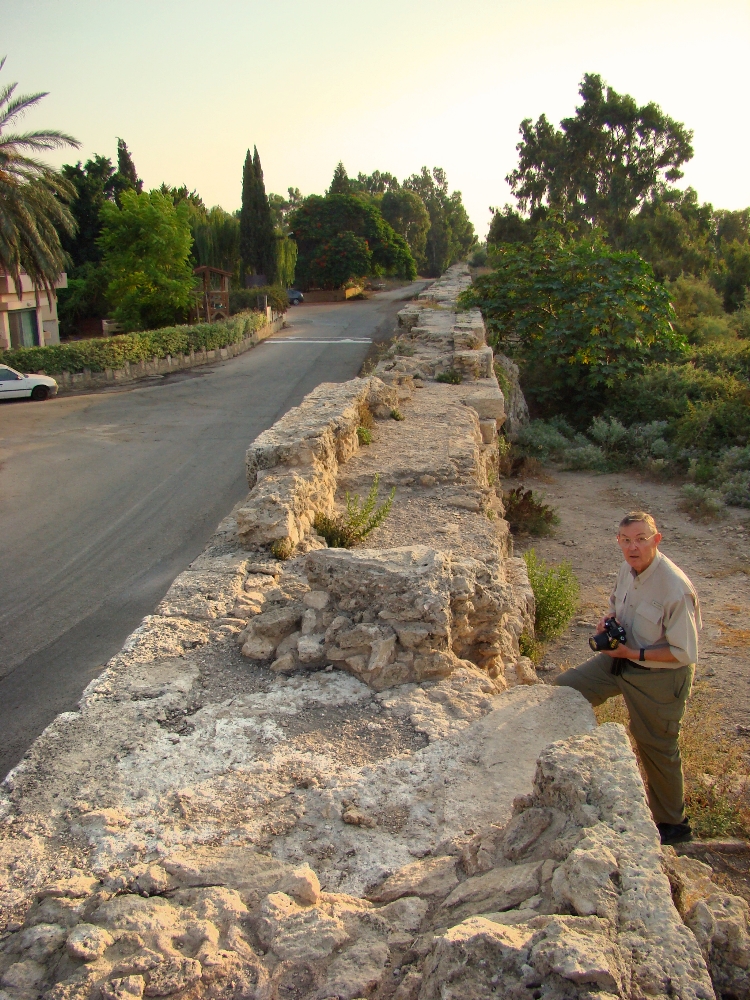
In Sept. 2011, Ferrell Jenkins & I made a personal study trip to Israel that included a stop at Beit Hananya, in the biblical “Plain of Sharon,” where a portion of the aqueduct can still be seen. This is north of Caesarea by a few miles. (Fresh water was channeled to Caesarea  from a distance of 8.5 miles).

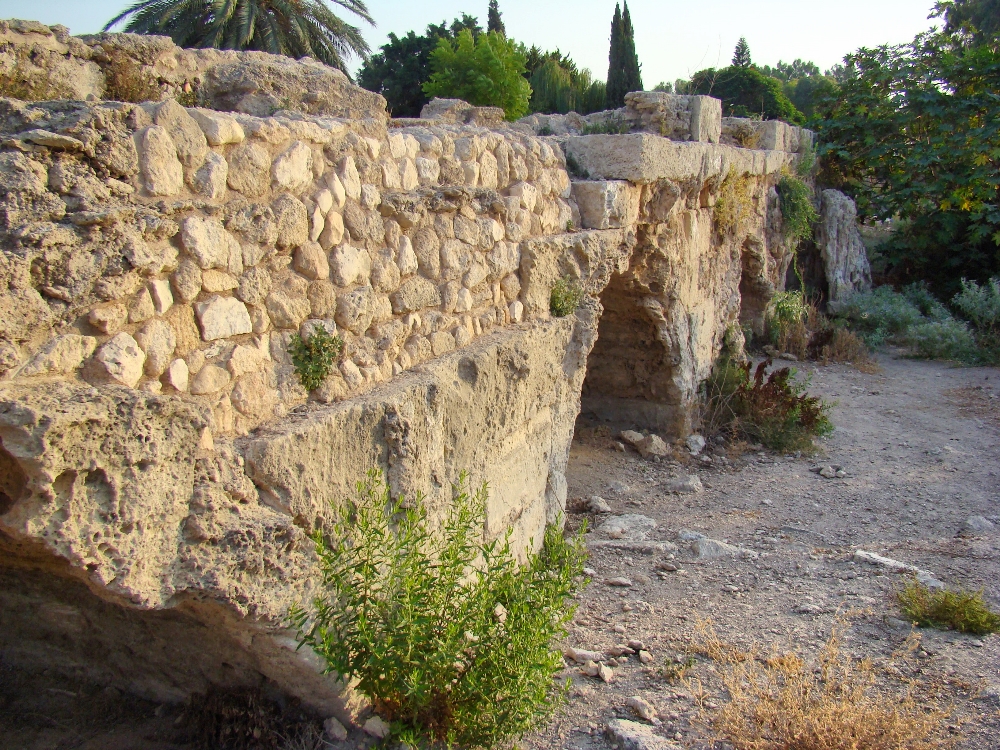
Roman Aqueduct at Beit Hananya, north of Caesarea. Photo by Leon Mauldin.

Roman Aqueduct at Beit Hananya, north of Caesarea. Photo by Leon Mauldin.

Beit Hananya Aqueduct as seen from top. Photo by Leon Mauldin.

Beit Hananya Aqueduct as seen from top. Photo by Leon Mauldin.

The water was channeled to course down the top of the aqueduct.

Click photos for larger view.


The Greek Goddess Hera

August 25, 2015

While taking a group to Italy (2012) I had the occasion to visit the Vatican Museum in Rome, where among other many artifacts, I photographed a statue of the Greek goddess Hera.

Hera, Vatican Museum. Photo by Leon Mauldin.

Hera, Vatican Museum. Photo by Leon Mauldin.

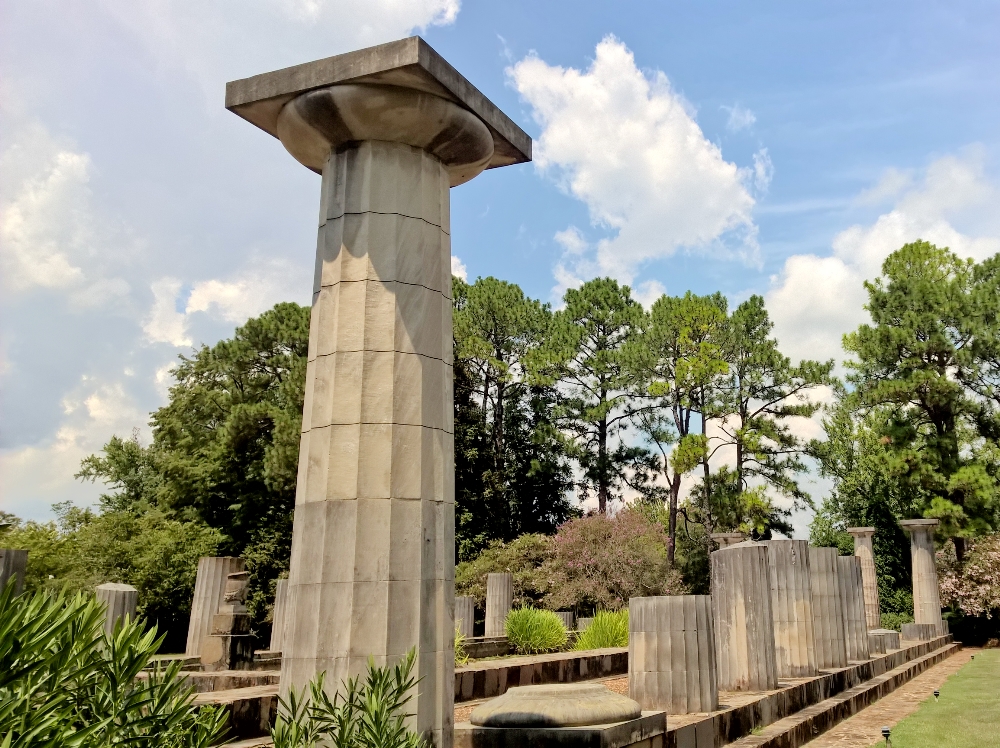
There is a replica of the temple of Hera in central Alabama:

Hera Temple at Wetumpka, AL. Photo by Leon Mauldin.

Hera Temple at Wetumpka, AL. Photo by Leon Mauldin.

Jasmine hill gardens and outdoor museum, “Alabama’s little corner of Greece,” now features over 20 acres of year-round floral beauty and classical sculpture, including new statuary honoring Olympic heroes.

The Olympian center welcomes visitors with a video presentation of jasmine hill’s history and a display of Olympic memorabilia from the games of past years. a tour of jasmine hill, now completely accessible to visitors with disabilities, offers spectacular and ever-changing views, including our full-scale replica of the temple of Hera ruins as found in Olympia, Greece, the birthplace of the Olympic flame. http://www.jasminehill.org/

Wikipedia:

Hera is the wife and one of three sisters of Zeus in the Olympian pantheon of Greek mythology and religion. Her chief function was as the goddess of women and marriage. Her counterpart in the religion of ancient Rome was Juno. The cow, lion and the peacock were considered sacred to her. Hera’s mother is Rhea and her father Cronus.

Portrayed as majestic and solemn, often enthroned, and crowned with the polos (a high cylindrical crown worn by several of the Great Goddesses), Hera may bear a pomegranate in her hand, emblem of fertile blood and death and a substitute for the narcotic capsule of the opium poppy. Scholar of Greek mythology Walter Burkert writes in Greek Religion, “Nevertheless, there are memories of an earlier aniconic representation, as a pillar in Argos and as a plank in Samos.” Hera was known for her jealous and vengeful nature against Zeus’s lovers and offspring, but also against mortals who crossed her, such as Pelias. Paris also earned Hera’s hatred by choosing Aphrodite as the most beautiful goddess.

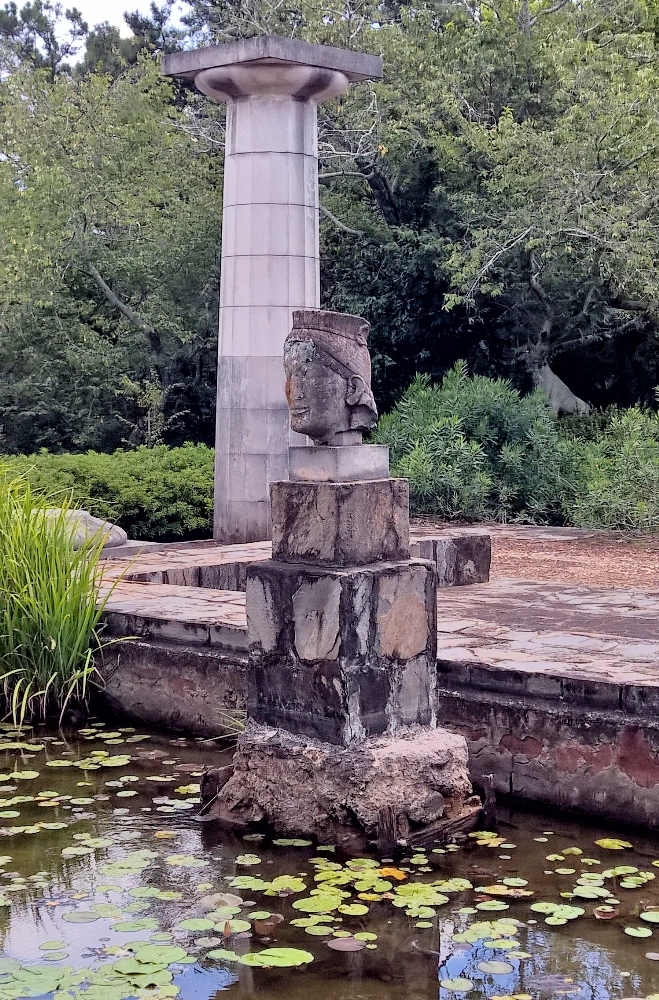
Bust of the Greek goddess Hera at temple site. Photo by Leon Mauldin.

Bust of the Greek goddess Hera at temple site. Photo by Leon Mauldin.

SA′MIA (Σαμία), a daughter of the river-god Maeander, and wife of Ancaeus, by whom she became the mother of Samos. (Paus. vii. 4. § 2.) Samia also occurs as a surname of Hera, which is derived from her temple and worship in the island of Samos. (Herod. iii. 60; Paus. vii. 4. § 4; Tacit. Ann. iv. 14; comp. HERA.) There was also a tradition that Hera was born or at least brought up in Samos. (Paus. l. c.; Schol. ad Apollon. Rhod. i. 187.) (Dictionary of Greek and Roman Biography and Mythology, Vol. 3, p. 702).

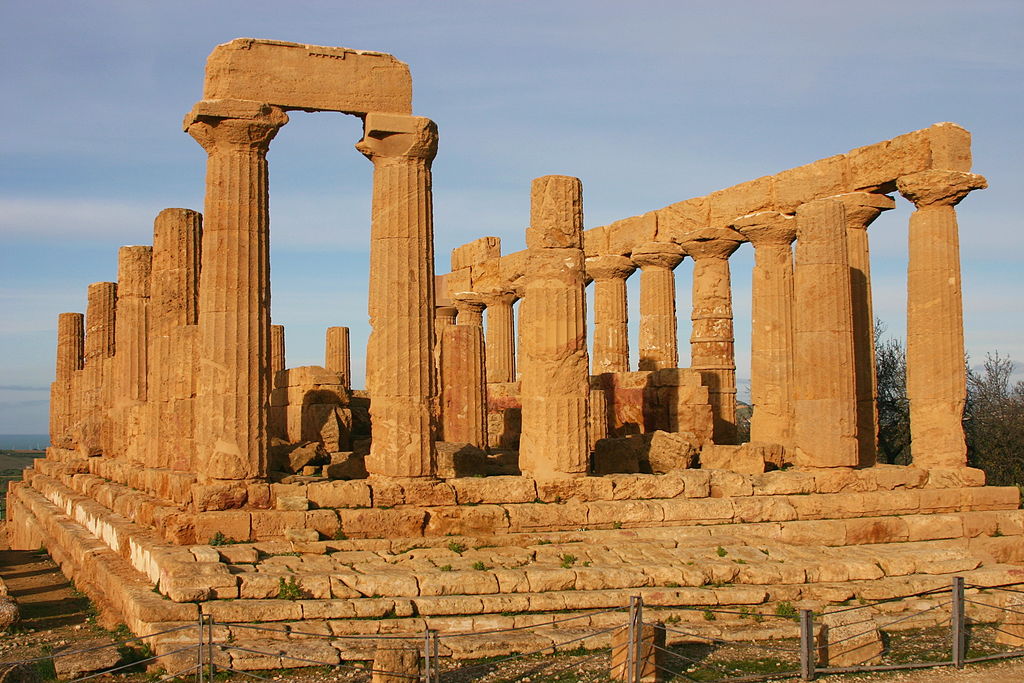
There are the ancient remains of a temple devoted to Hera at Agrigento, a city on the southern coast of Sicily. (That location is included in my planned itinerary for Sicily/Italy March 2016.)

Temple of Hera, Agrigento, Sicily. Photo by Jose Luiz.

Temple of Hera, Agrigento, Sicily. Photo by Jose Luiz.

Personal note: We have not been posting much for the last several weeks due to some family sickness and deaths, and the priority which that rightly requires. We hope to be posting more regularly now in the near future. Thank you for your patience.


“Like a Cylinder Seal over Your Heart”

July 17, 2015

While running some biblical references yesterday I came across a text in Song of Solomon 8:6: “Set me like a cylinder seal over your heart, like a signet on your arm. For love is as strong as death, passion is as unrelenting as Sheol. Its flames burst forth, it is a blazing flame” (NET Bible).

The NET Bible with its translation notes has some very useful material on the significance of the similes cylinder seal and signet as used in this passage:

In the ancient Near East (khotam “seal”) was used to denote ownership and was thus very valuable (Jer 22:24; Hag 2:23; Eccl 17:22). Seals were used to make a stamp impression to identify the object as the property of the seal’s owner (HALOT 300). Seals were made of semi-precious stone upon which was engraved a unique design and an inscription, e.g., LMLK [PN] “belonging to king […].” The impression could be placed upon wet clay of a jar or on a writing tablet by rolling the seal across the clay. Because it was a valuable possession its owner would take careful precautions to not lose it and would keep it close to him at all times.

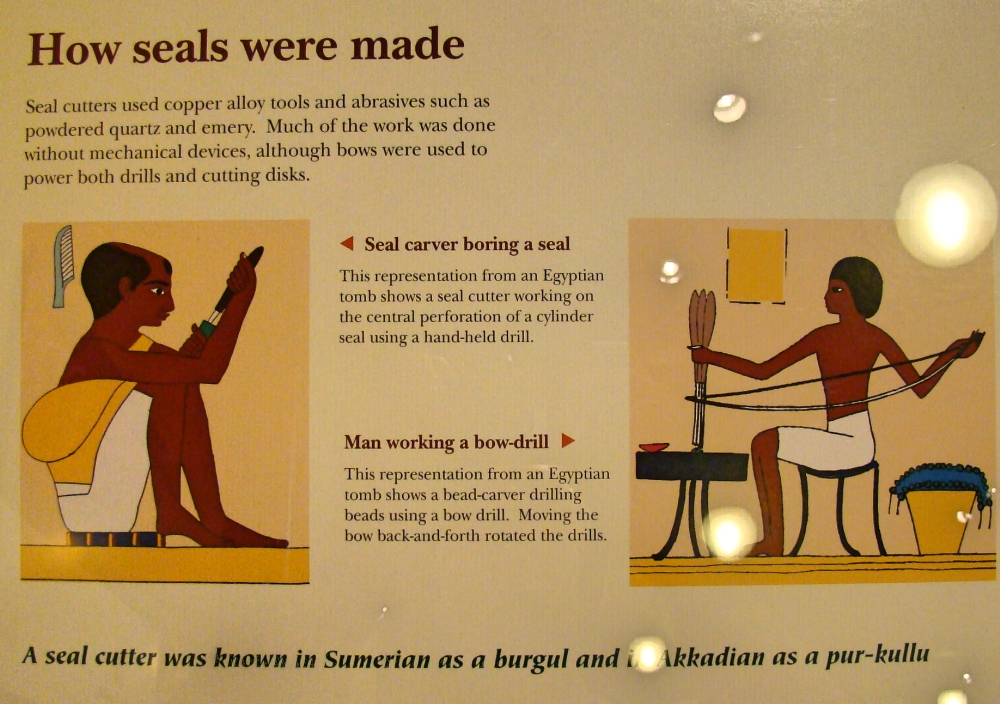
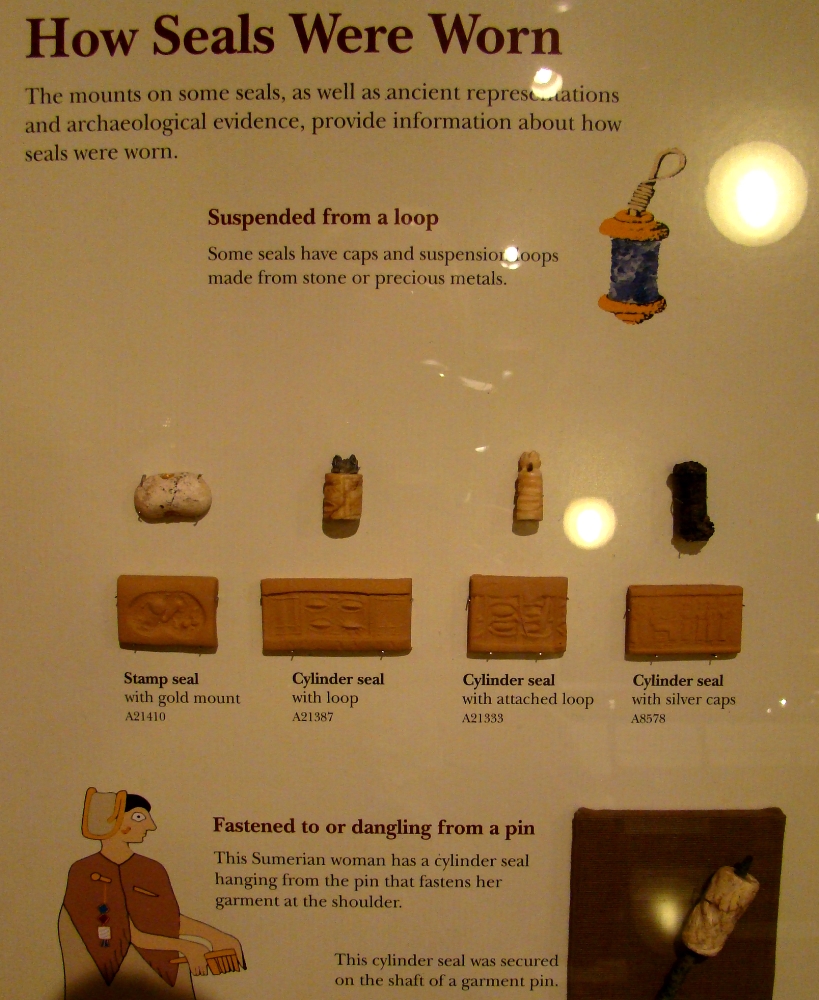
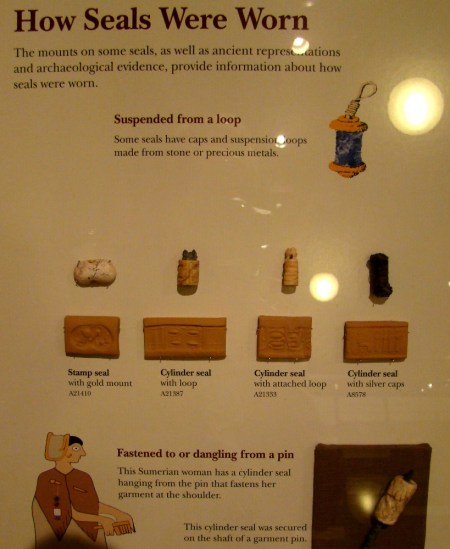
The Oriental Institute Museum of the University of Chicago has some helpful displays of ancient seals, how they were made, how worn, along with several examples of actual seals and their imprints.
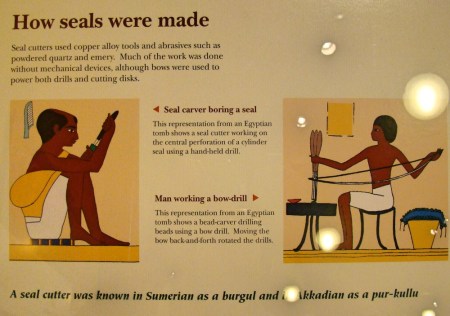
How Seals Were Made. Oriental Museum Chicago. Photo by Leon Mauldin.
How Seals Were Made. Oriental Museum Chicago. Photo by Leon Mauldin.

Seals, How Worn.  Oriental Institute. Photo by Leon Mauldin.

Seals, How Worn. Oriental Institute. Photo by Leon Mauldin.

Note that this above display shows both the stamp seal as well as cylinder seal. The Hebrew word for seal, khotam or chothamoccurs twice in our text, characteristic of the parallelism of Hebrew poetry. The NET Bible renders the same word khotam as cylinder seal and then signet in the verse (Song of Solomon 8:6).

There were two kinds of cylinder seals in the ancient Near East, namely, those worn around one’s neck and those worn around one’s wrist. The typical Mesopotamian seal was mounted on a pin and hung on a string or necklace around one’s neck. The cylinder seal hung around one’s neck would, figuratively speaking, rest over the heart (metonymy of association). The Beloved wished to be to Solomon like a cylinder seal worn over his heart. She wanted to be as intimate with her lover as the seal worn by him (W. W. Hallo, “‘As the Seal Upon Thy Heart’: Glyptic Roles in the Biblical World,” BRev 2 [1985]: 26). (NET notes).
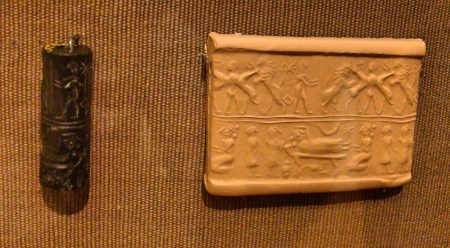
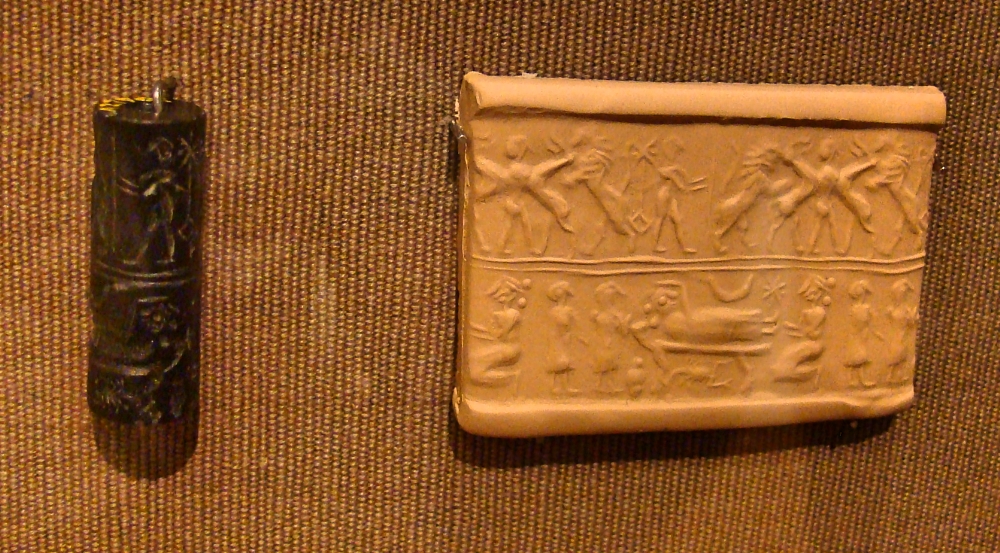
Seal on display, Oriental Institute. Photo by Leon Mauldin.

Seal on display, Oriental Institute. Photo by Leon Mauldin.

This cylinder above has a contest scene at top and what may be a childbirth scene at bottom.
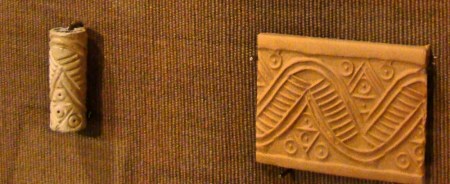
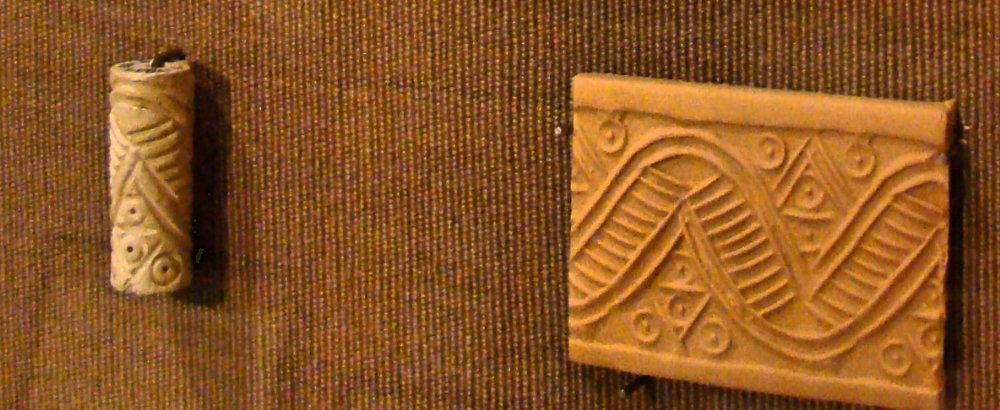
Ancient seal Oriental Institute. Photo by Leon Mauldin.

Ancient seal Oriental Institute. Photo by Leon Mauldin.

This seal is dated at 2,900-2,750 BC according to its accompanying placard.

More on Khotam:

Literally “cylinder-seal” or “seal.” The term (khotam, “cylinder-seal”) is repeated in Sol 8:6 for emphasis. The translation above uses the terms “cylinder seal” and “signet” simply for the sake of poetic variation. The Beloved wanted to be as safe and secure as a cylinder seal worn on the arm or around the neck, hanging down over the heart. She also wanted to be placed on his heart (emotions), like the impression of a cylinder seal is written on a document. She wanted to be “written” on his heart like the impression of a cylinder seal, and kept secure in his love as a signet ring is worn around his arm/hand to keep it safe. (NET notes).

Finally re: the word rendered “arm,” (Song of Solomon 8:6) zeroa:

Alternately, “wrist.” In Palestine cylinder seals were often hung on a bracelet worn around one’s wrist. The cylinder seal was mounted on a pin hanging from a bracelet. The cylinder seal in view in Song 8:6 could be a stamp seal hung from a bracelet of a type known from excavations in Israel. (NET notes).

Click images for larger view.

Setting of King Saul’s Final Battle

June 25, 2015

1 Sam. 28:4: “So the Philistines gathered together and came and camped in Shunem; and Saul gathered all Israel together and they camped in Gilboa.”

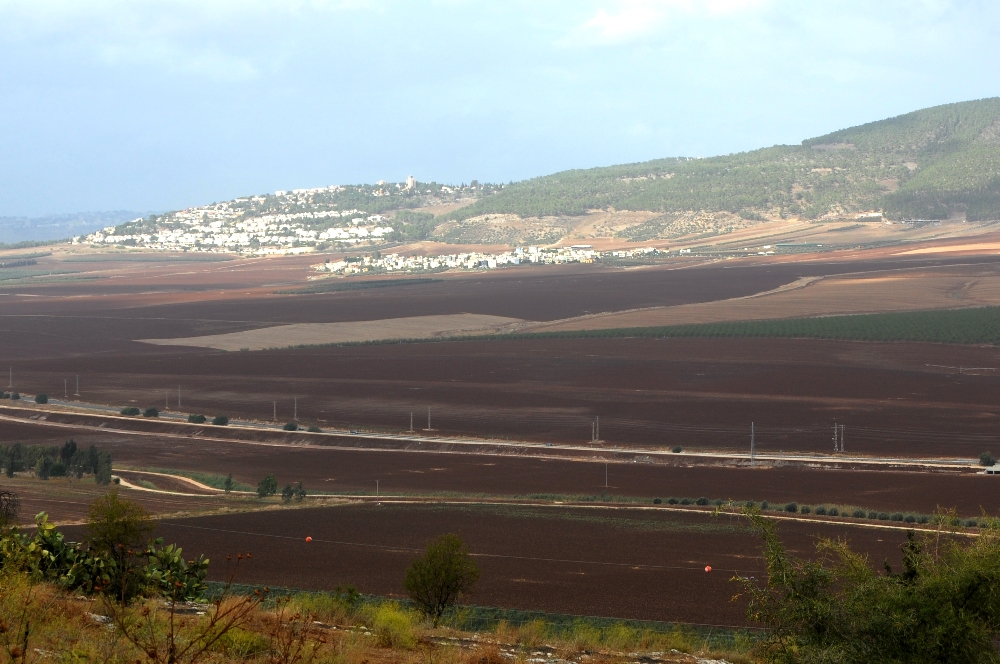
The horizontal cluster of white buildings in the upper center of photo mark the spot of ancient Shunem, the site of the Philistine encampment referenced in our text.

Shunem, note white buildings upper center. Photo by Leon Mauldin.

Shunem, note white buildings upper center. Photo by Leon Mauldin.

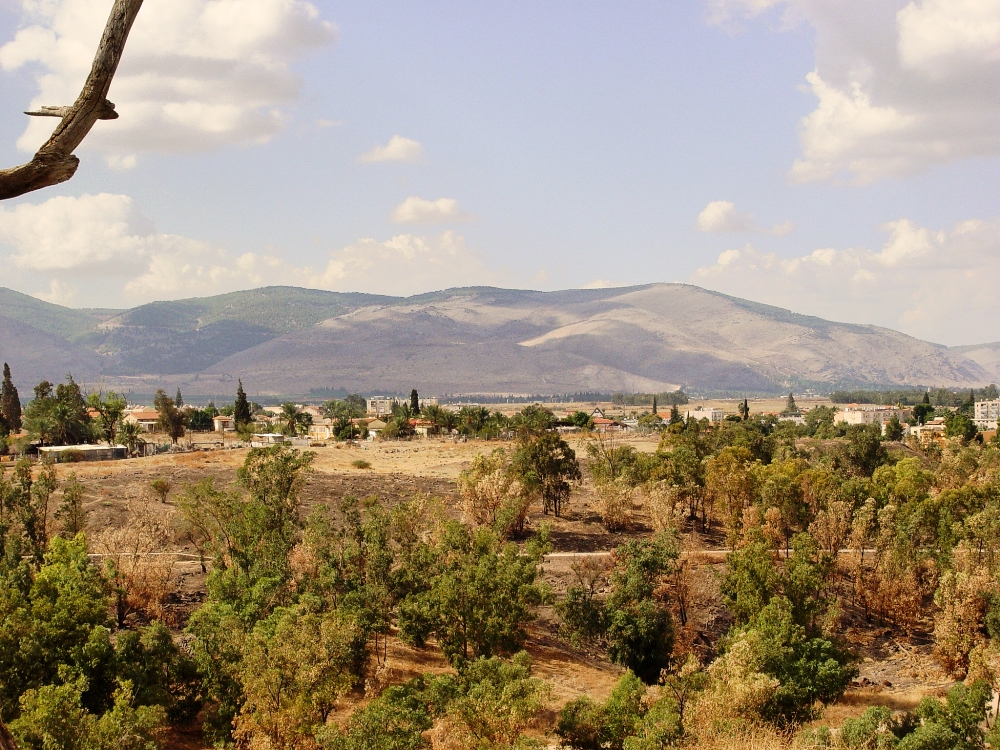
Saul and the forces of Israel were encamped at Gilboa. This view of Gilboa is from Beth Shan.

Gilboa as seen from Beth Shan. Photo by Leon Mauldin.

Gilboa as seen from Beth Shan. Photo by Leon Mauldin.

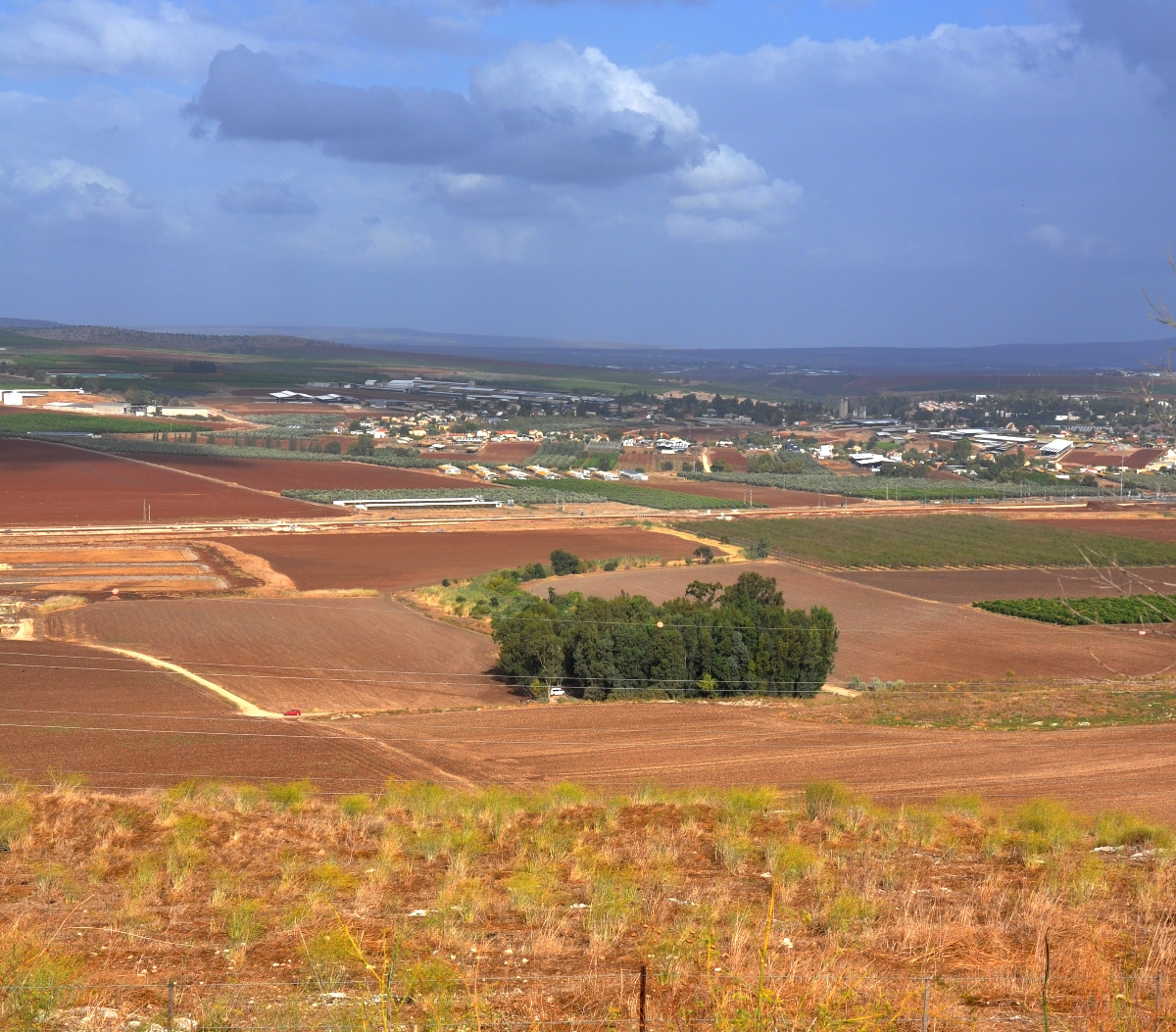
As the 1 Samuel narrative continues, the next chapter states, ” Now the Philistines gathered together all their armies to Aphek, while the Israelites were camping by the spring which is in Jezreel” (29:1) We have previously posted photos/articles on Aphek here and here, where the Philistines at this time gathered all their armies. At Jezreel one can see the spring mentioned here in 1 Sam. 29:1.

Jezreel Spring. Note greenery at center.  Tel Jezreel is in foreground. Photo by Leon Mauldin.

Jezreel Spring. Note greenery at center. Tel Jezreel is in foreground. Photo by Leon Mauldin.

Saul and his three sons (including David’s best friend Jonathan) died at Mt. Gilboa, a great victory for the Philistines. It was a sad day for Israel:

8 It came about on the next day when the Philistines came to strip the slain, that they found Saul and his three sons fallen on Mount Gilboa. 9 They cut off his head and stripped off his weapons, and sent them throughout the land of the Philistines, to carry the good news to the house of their idols and to the people. 10 They put his weapons in the temple of Ashtaroth, and they fastened his body to the wall of Beth-shan. (1 Sam. 31:8-10).

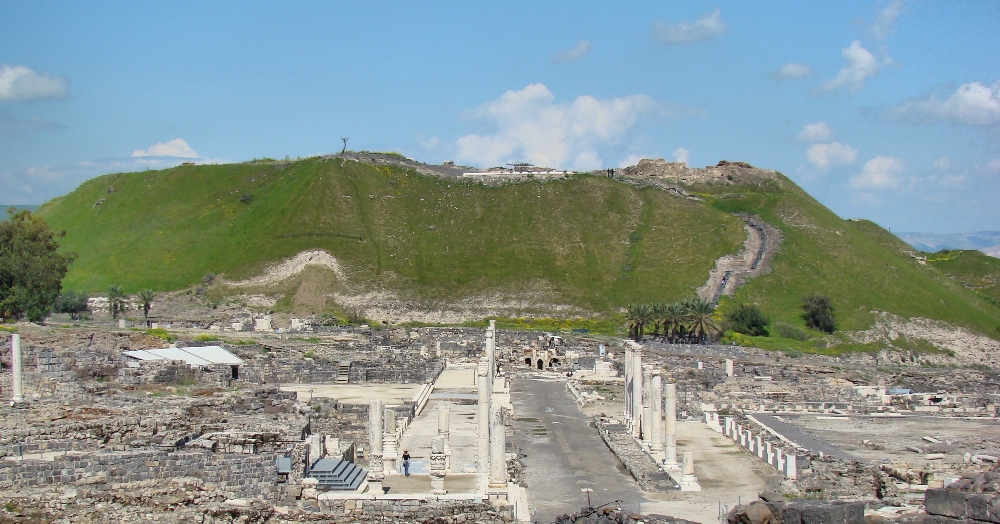
We are told that also the bodies of Saul’s sons were nailed to the walls of Beth Shan (1 Sam. 31:12).

Beth Shan, where the Philistines nailed the bodies of Saul & sons. Photo by Leon Mauldin.

Beth Shan, where the Philistines nailed the bodies of Saul & sons. Photo by Leon Mauldin.

These photos may be used along with maps to show where the events of 1 Sam. 28-31 transpired. Click on images for larger view.


The Brook Besor

June 9, 2015

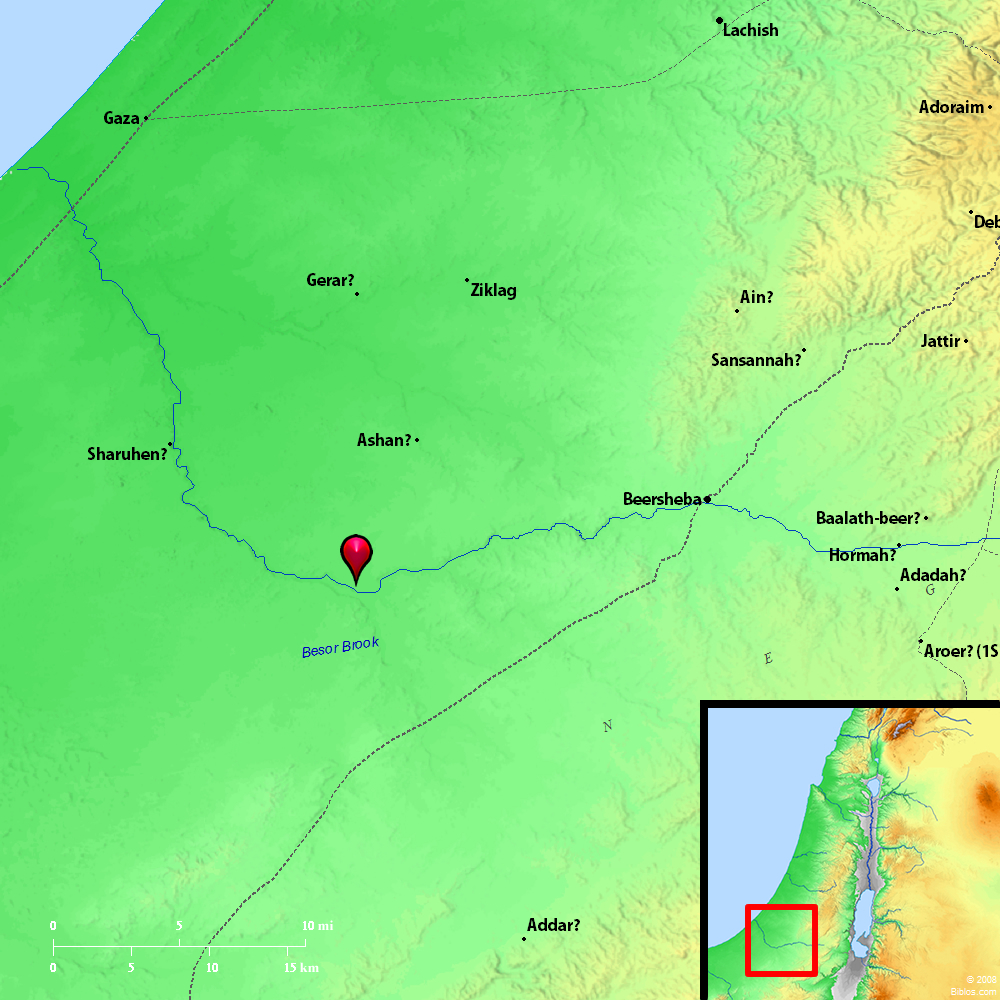
1 Samuel 18-31 details an extensive period of David’s life when his major concern was escaping King Saul’s efforts to kill him. At one point David left Israel’s territory to live in Philistia, where he and his men were given the city of Ziklag. While David was away, Amalekites invaded the South including Ziklag (1 Sam. 30:1). They burned the city, and took the women and children as captives. Upon returning and learning what had transpired, David and his men pursued. The text states:

So David went, he and the six hundred men who were with him, and came to the Brook Besor, where those stayed who were left behind. 10 But David pursued, he and four hundred men; for two hundred stayed behind, who were so weary that they could not cross the Brook Besor (1 Sam. 30:9-10).

Brook Besor. Map by BibleAtlas.org.

Brook Besor. Map by BibleAtlas.org.

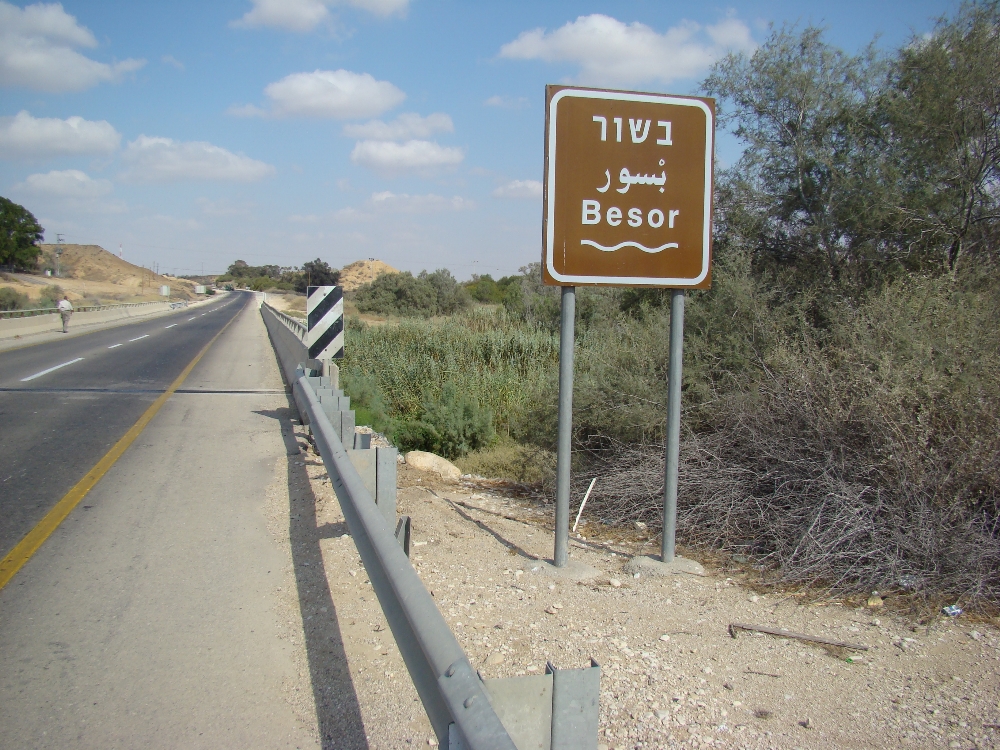
The Brook Besor, mentioned in the text, has been identified as Wâdī Ghazzleh, and empties into the Mediterranean south of Gaza.

Bridge crossing the Besor. Photo by Leon Mauldin.

Bridge crossing the Besor. Photo by Leon Mauldin.

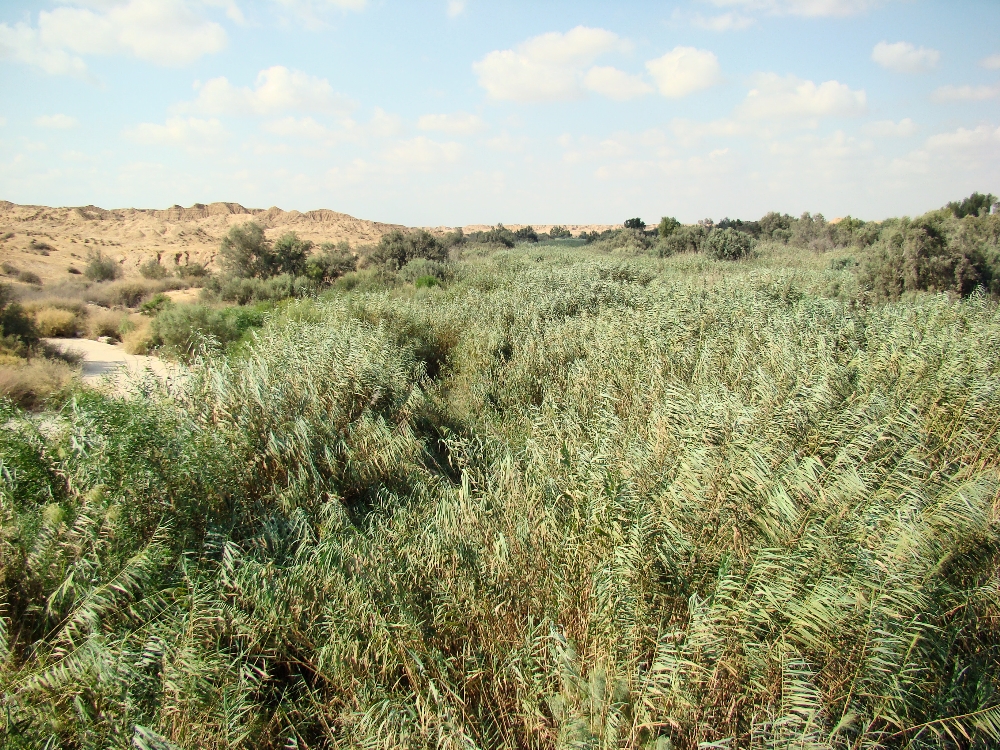
The brook is mostly filled with reeds.

Brook Besor. View from bridge. Photo by Leon Mauldin.

Brook Besor. View from bridge. Photo by Leon Mauldin.

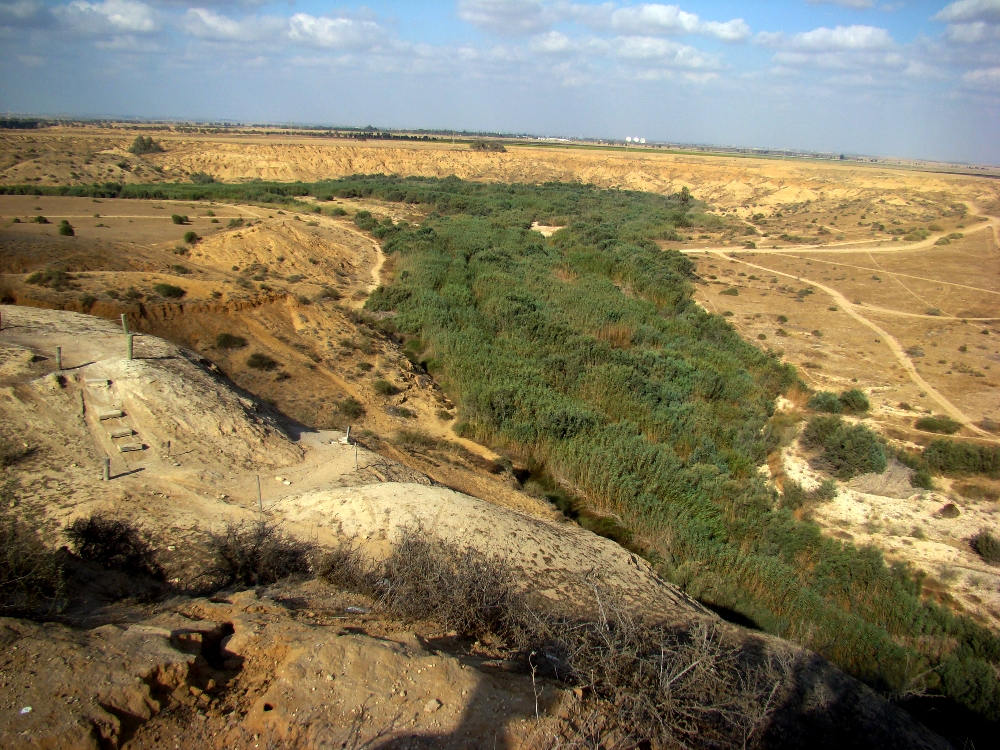
Here is a view from the tel at Besor. The green vegetation in a desert area is always an indication of water.

Besor. View from tel. Photo by Leon Mauldin.

Besor. View from tel. Photo by Leon Mauldin.

The text goes on to state that David and the 400 men who were able to pursue were successful in their recovery of persons and possessions (1 Sam. 30:11-20). Upon returning to the Brook Besor, here’s what happened:

Now David came to the two hundred men who had been so weary that they could not follow David, whom they also had made to stay at the Brook Besor. So they went out to meet David and to meet the people who were with him. And when David came near the people, he greeted them. 22 Then all the wicked and worthless men of those who went with David answered and said, “Because they did not go with us, we will not give them any of the spoil that we have recovered, except for every man’s wife and children, that they may lead them away and depart.” 23 But David said, “My brethren, you shall not do so with what the LORD has given us, who has preserved us and delivered into our hand the troop that came against us. 24 “For who will heed you in this matter? But as his part is who goes down to the battle, so shall his part be who stays by the supplies; they shall share alike.” 25 So it was, from that day forward; he made it a statute and an ordinance for Israel to this day (1 Sam. 30:21-25).

It is exciting as well as educational to see such landmarks as the Brook Besor that are mentioned in the biblical text.

Click images for larger view.


Troas of Biblical Asia Minor

May 12, 2015

In our previous post we referenced Acts 16:11, “So putting out to sea from Troas, we ran a straight course to Samothrace, and on the day following to Neapolis.” It was at Troas that Paul saw in a vision a man from Macedonia pleading and urging him to “come over and help us” (16:9). This was on the 2nd Missionary Journey. Today biblical Troas is in western Turkey.

Fant and Reddish have this to say about Troas:

Called Alexandria Troas to distinguish it from other cities named Alexandria, the city is often referred to simply as Troas. (“The Troad” is the name used for the area around the ancient city of Troy.) What was once a large and important city on the western coast of Asia Minor has today been reduced to a few ruins overgrown by trees and shrubs, receiving only a cursory visit from a small number of sightseers. (A Guide to Biblical Sites in Greece and Turkey)

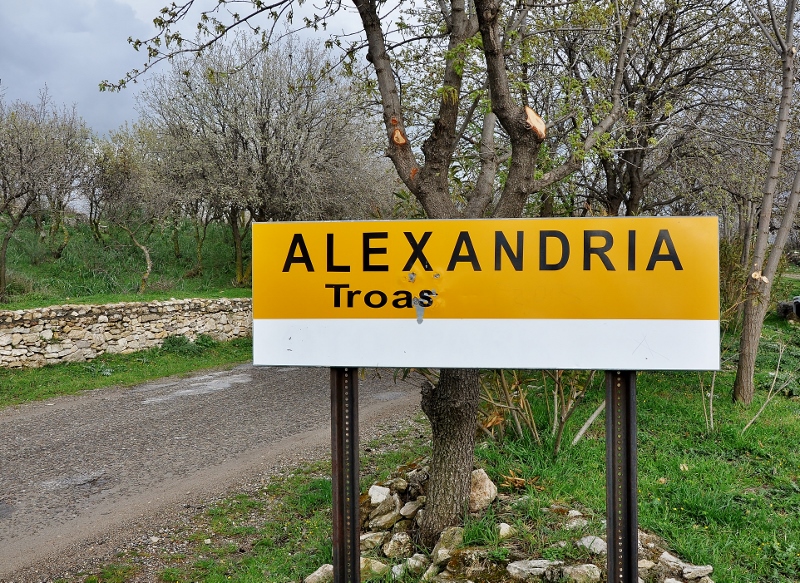
Troas Sign. Photo by Leon Mauldin.

Troas Sign. Photo by Leon Mauldin.

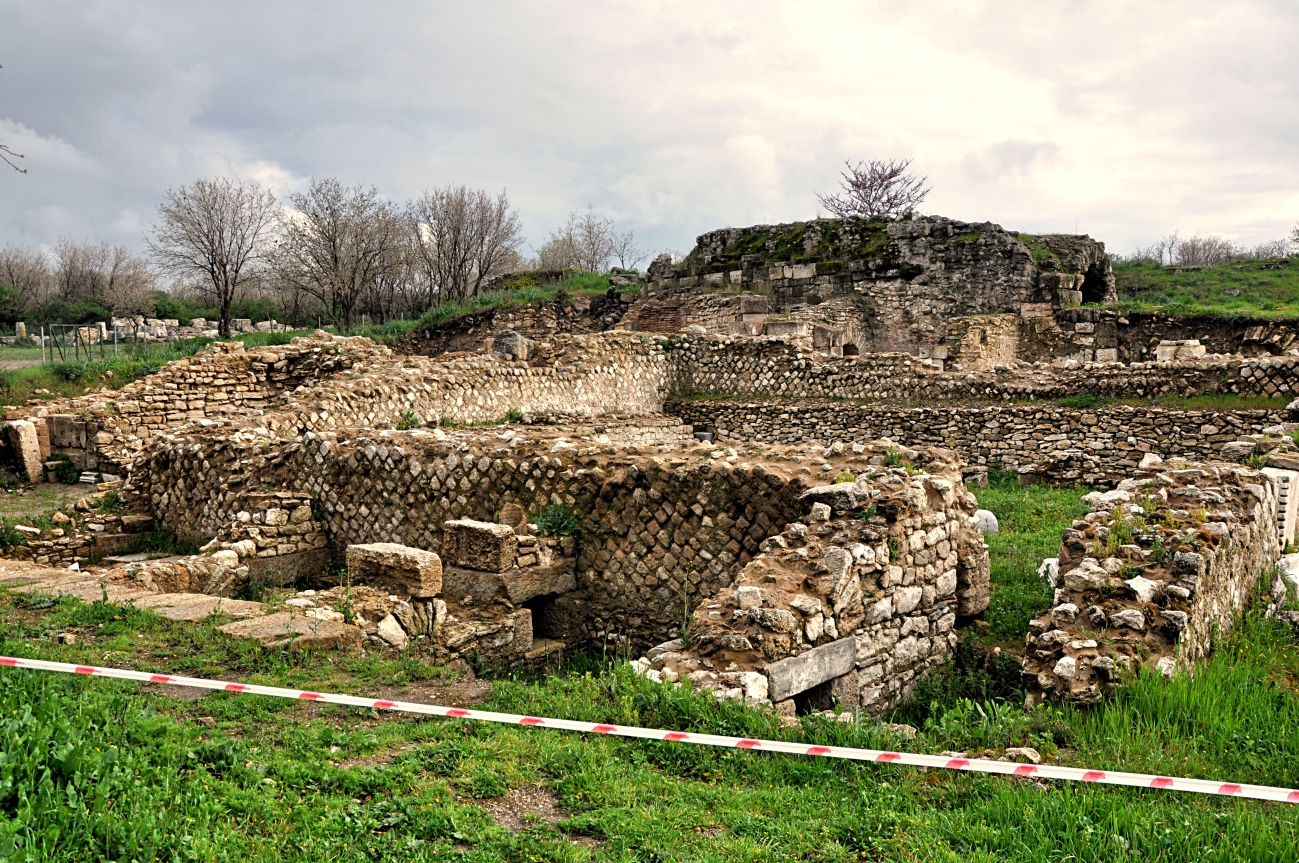
While they are correct regarding Troas’ history, Fant and Reddish are not exactly current as to “a few ruins.” When we had opportunity to visit Troas (Mar. 29, 2015), there was cloud cover and not the best lighting, but you can still see some of the recent excavations there.

Troas Excavations. Photo by Leon Mauldin.

Troas Excavations. Photo by Leon Mauldin.

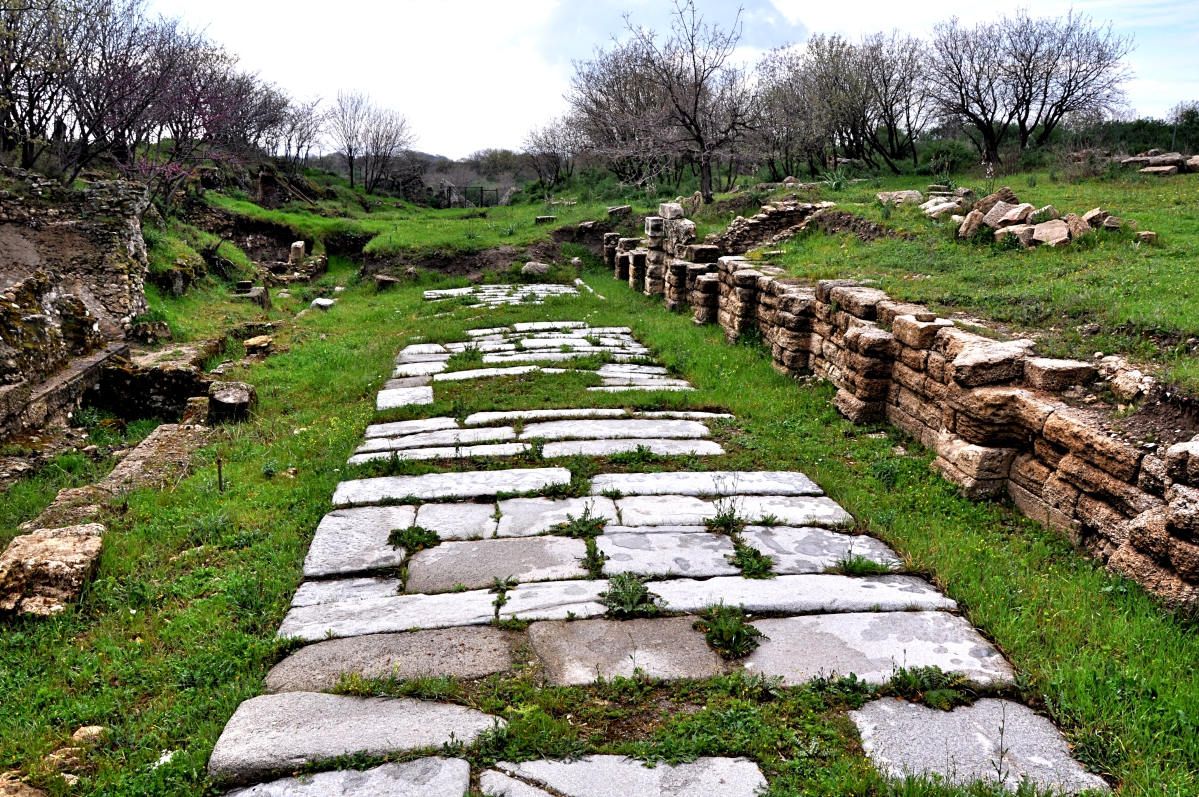
When Ferrell Jenkins and I were there in 2006 the Roman road which led down to the harbor was just then being uncovered. More has been excavated since then. It is thought that this is the road that Paul would have walked on to make use of the harbor down below.

Roman Road at Troas. Led down to the harbor below. Photo by Leon Mauldin.

Roman Road at Troas. Led down to the harbor below. Photo by Leon Mauldin.

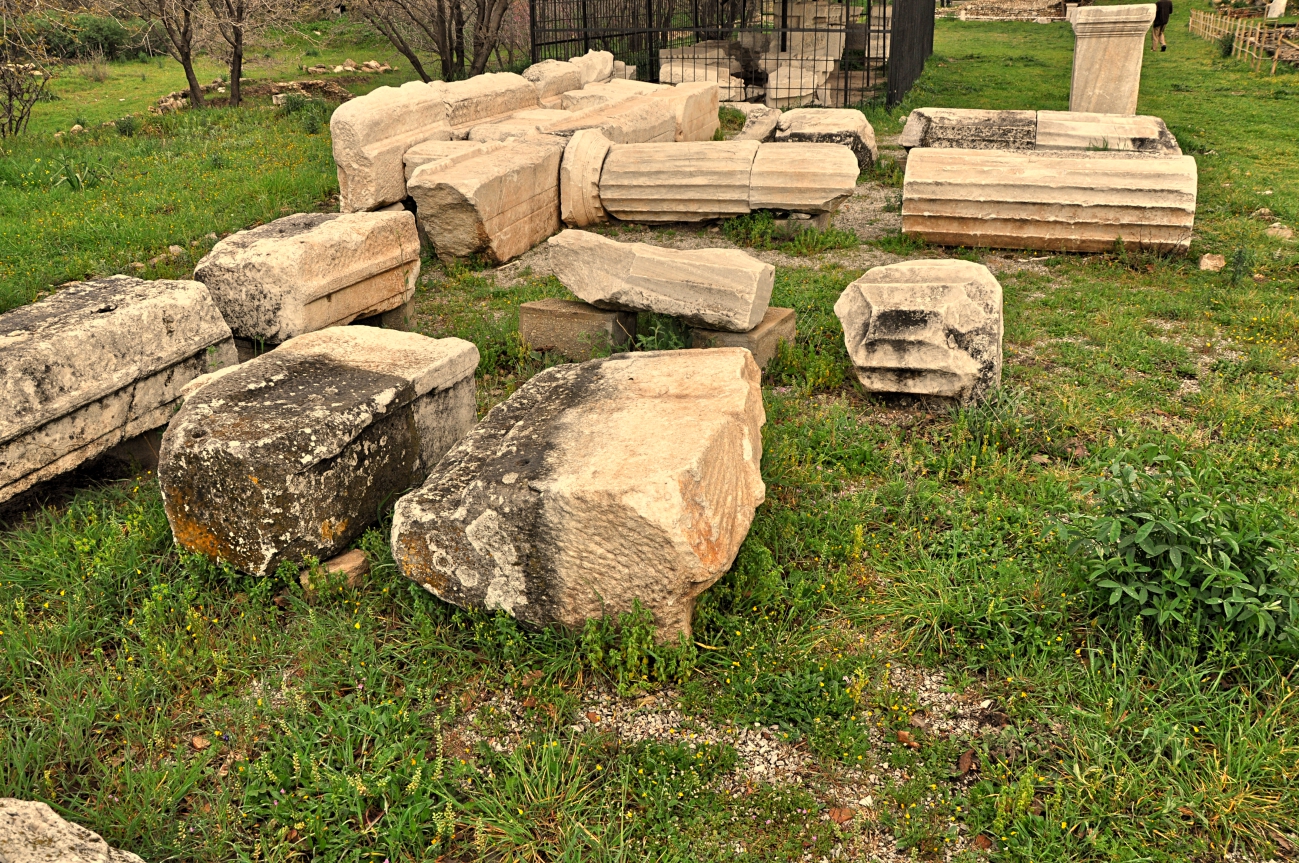
Several fragments of Roman columns and other remains have been discovered.

Some of the remains discovered at Troas. Photo by Leon Mauldin.

Some of the remains discovered at Troas. Photo by Leon Mauldin.

I love to travel in Turkey. While Fant and Reddish may be right about the “small number of sightseers” who visit here, I will assure you that it is a worthwhile stop for any who wish to enhance their understanding of Bible history and geography!

Click on images for larger view.


Neapolis, Greece, Port City to Philippi

May 9, 2015

During the 2nd Missionary Journey, a milestone was reached when Paul left Troas (of Asia Minor) to sail across the Aegean to preach on European soil. The text reads, “So putting out to sea from Troas, we ran a straight course to Samothrace, and on the day following to Neapolis” (Acts 16:11).

We had the occasion recently to visit Neapolis, modern Kavala. Neapolis was colonized by the Athenians in the 5th Century BC.  It was taken by Philip of Macedon in the 4th century BC. Neapolis served as the port to Philippi, where Paul first preached on European soil, and it continues to serve as an important port today.

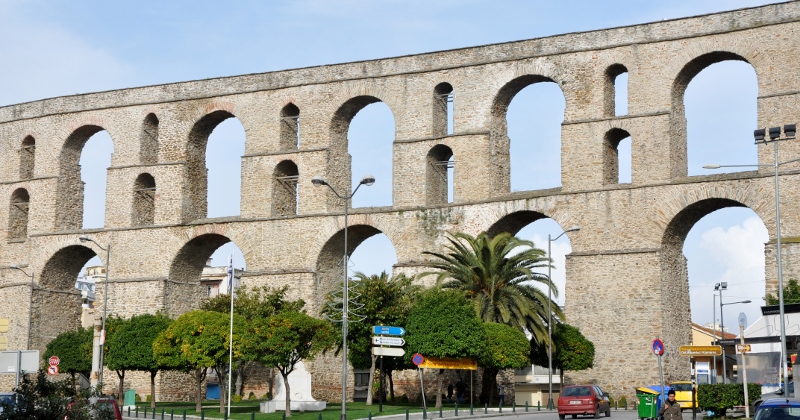
One impressive site is the aqueduct of  Suleiman the Magnificent, AD 16th century built. This landmark was built on the remains of the previous Roman aqueduct.

Aqueduct of Suleiman the Magnificent at Neapolis.

Aqueduct of Suleiman the Magnificent at Neapolis. Photo by Leon Mauldin.

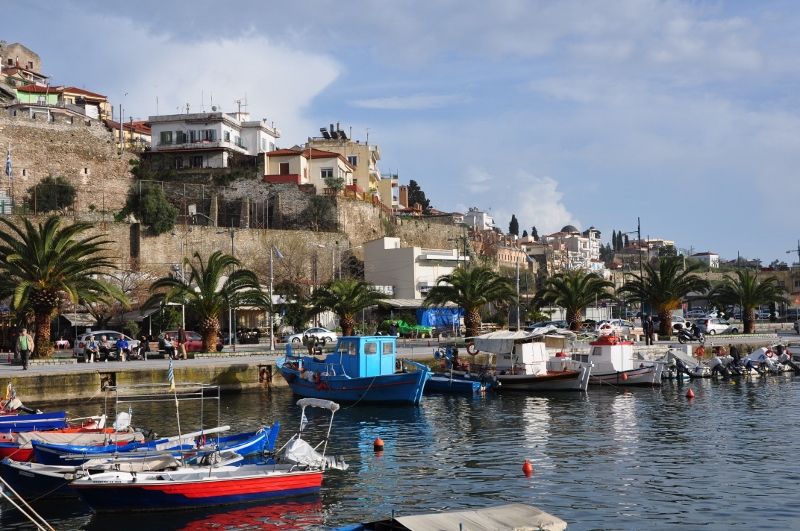
Here is a view of the harbor of Neapolis/Kavala. It is thrilling to know that Paul used this port city in his travels.

Neapolis Harbor. The site mentioned in Paul's travels in Acts 16:11. Photo by Leon Mauldin.

Neapolis Harbor. The site mentioned in Paul’s travels in Acts 16:11. Photo by Leon Mauldin.

A portion of the acropolis may be seen in background at left.

Click on images for larger view.


The Cult of the Mother Goddess Cybele

May 4, 2015

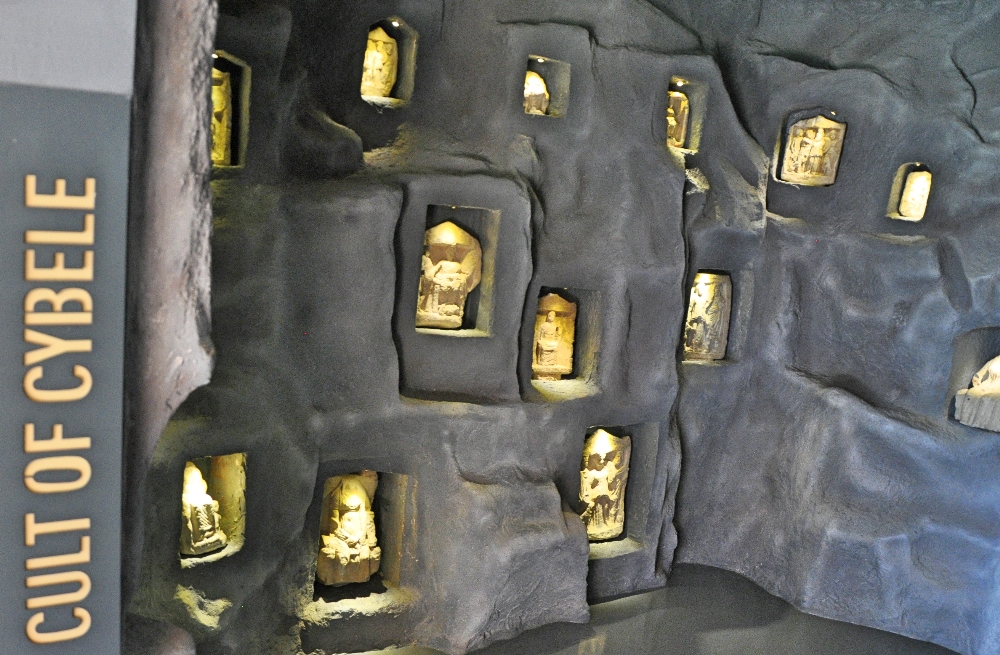
In pagan mythology, Cybele was a nature goddess in Asia Minor, the great “mother of the gods,” the patroness of nature and fertility, and came to the western world from Phrygia. In the Ephesus Museum there is a display devoted to the cult.

Cult of Cybele. Ephesus Museum. Photo ©Leon Mauldin.

Cult of Cybele. Ephesus Museum. Photo ©Leon Mauldin.

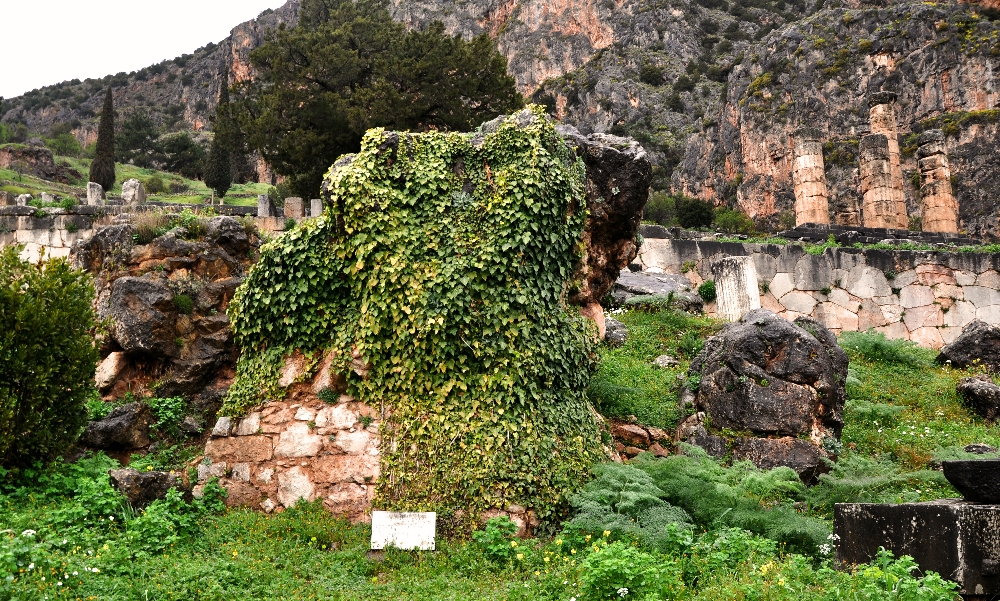
On our recent trip to Greece at Delphi we saw the remains of a site devoted to the worship of Cybele.

Temple of Cybele at center.  In behind you can see ruins of temple of Apollo. Photo ©Leon Mauldin.

Temple of Cybele at center. Ruins of temple of Apollo in behind. Photo ©Leon Mauldin.

At first this cult was not very popular in Rome, since it was accompanied by ecstatic excesses. By the beginning of the imperial era, however, its influence increased, especially when the emperor Claudius extended his patronage to it. From that time Roman citizens could become priests of Cybele. (The New Testament Milieu).

The worship of Artemis and Cybele in the process of time morphed into one.

Two remarkable aspects of Hellenistic religion are syncretism and the role of the mystery religions. When, as a result of Alexander the Great’s conquests, the city-state disappeared from Greece and the national borders were blurred, the frontiers between the domains of the various deities were also effaced. In Alexander’s world empire and in the large Hellenistic kingdoms of his successors, an enormous cultural and religious commingling gradually occurred. People came to know one another’s gods and accepted them as their own, because they no longer regarded them as alien forces. They were simply worshipped under other names and with different rites in the various countries. So the Greek goddess Artemis and Cybele of Asia Minor were equated: they were no longer regarded as two different goddesses, but as one and the same divinity with various names. (ibid.)

Click image for larger view.


Monastery of Rousanou, Meteora, Greece

April 9, 2015

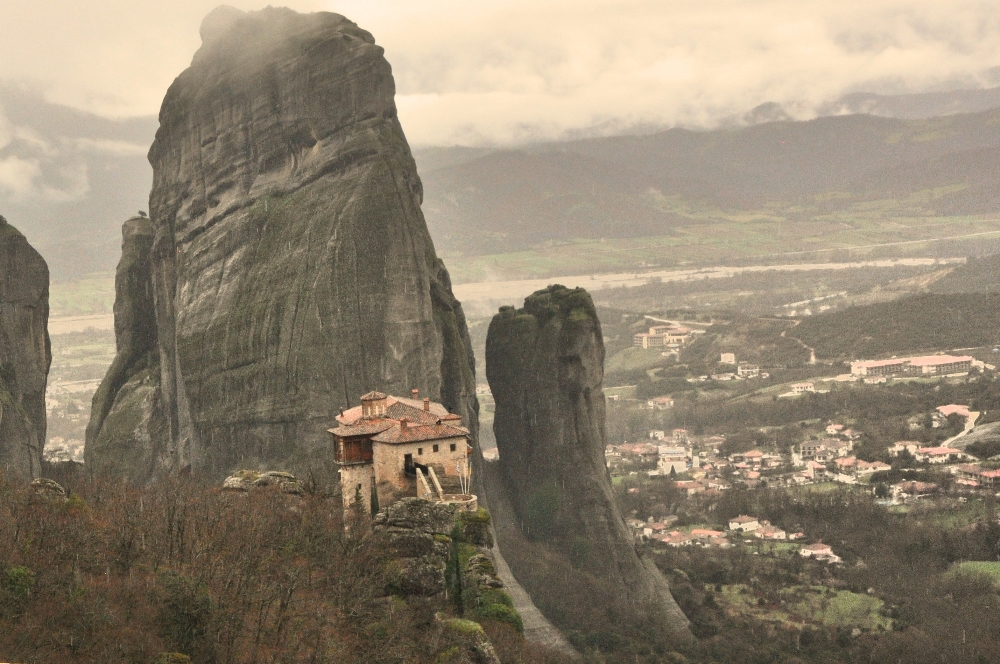
We recently referenced Kalambaka, Meteora in a previous post. In our Greece/Turkey trip, Kalambaka served as  a logistically good overnight stay after leaving Athens, and en route to Thessaloniki. When we left Kalambaka early morning, there was eerie mist and fog as we drove past the stupendous rock formations, many of which are crowned with monasteries.

Our photo here shows the Monastery of Rousanou.

Roussanou Monastery at Mereora, Greece. Photo by Leon Mauldin.

Rousanou Monastery at Mereora, Greece. Photo by Leon Mauldin.

History of Rousanou Monastery

Rousanou (Ρουσανου) Monastery was founded around 1545 by Maximos and Ioasaph of Ioannina. The reason for the monastery’s name is not known – it is actually dedicated to St. Barbara – but may reflect the name of a hermit who occupied the rock. It soon declined and became subject to Varlaam Monastery by 1614.

The monastery once again fell into disrepair for the two centuries prior to the 1940s, when it was damaged in World War II then plundered by the Germans. It was later repaired by the regional archaeological service and since 1988 it has been occupied by a small community of 13 nuns.

What to See at Rousanou Monastery

Rousanou Monastery stands on a low rock and is easily accessible by a bridge built of wood in 1868 and replaced by more solid material in 1930. Despite this, its situation is still quite dramatic, with the rock dropping off sharply on all sides.

The monastery covers the entire surface of the rock and consists of three levels: the church and cells occupy the ground floor, while the two upper floors house the guest quarters, reception halls, an exhibition room, and more cells.

The frescoes in Rousanou’s Church of the Transfiguration of Christ, which is essentially a smaller version of Varlaam’s church, date from 1560. The narthex is decorated primarily with gruesome scenes of martyrdom, as at other Meteora monasteries. (http://www.sacred-destinations.com/greece/meteora-roussanou-monastery)


At Amphipolis, the Strymon River

April 6, 2015

Our recent Greece/Turkey tour included Amphipolis, briefly mentioned in Acts 17:1: “Now when they had passed through Amphipolis and Apollonia, they came to Thessalonica, where there was a synagogue of the Jews.” This biblical reference takes up where Paul and his companions left Philippi and were on their way to Thessalonica, 2nd Missionary Journey.

Fant and Reddish observe:

The modern, small village of Amphipolis belies the importance of the ancient city whose name it bears. Located strategically along the Strymon River and on the Via Egnatia, Amphipolis was one of the most important cities of Macedonia in antiquity. The site of ancient Amphipolis is located between Thessaloniki and Kavala, about 65 miles east of Thessaloniki. From highway E90 there are signs that point the way to Amphipolis. The ancient city sits on a bend on the east bank of the Strymon River, surrounded by the river on three sides. This geographical feature gave rise to the name of the city, since Amphipolis means “around the city.”

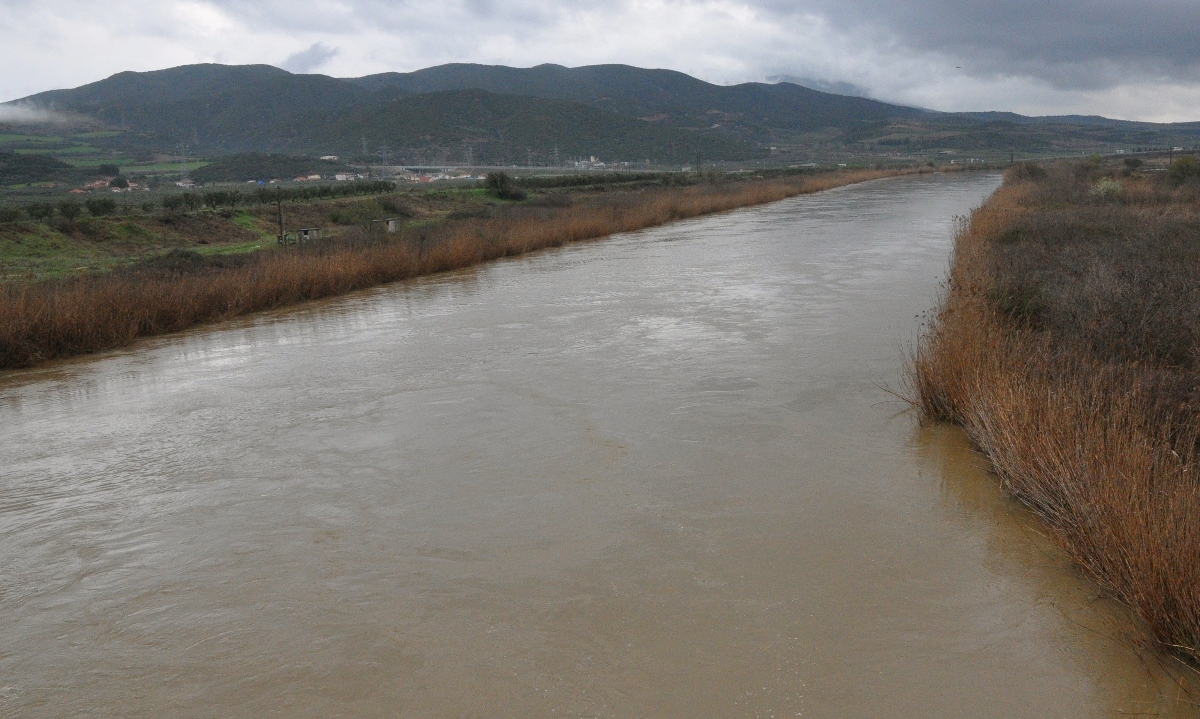
Here is a view of the Strymon River.

Strymon River at Amphipolis. Photo by Leon Mauldin.

Strymon River at Amphipolis. Photo by Leon Mauldin.

In addition to our above Acts 17:1 reference which specifically mentions Amphipolis, Todd Bolen in his notes in his excellent Pictorial Library collection quotes Acts 20:1-3, 6a (KJV) “And after the uproar was ceased, Paul called unto him the disciples, and embraced them, and departed for to go into Macedonia. And when he had gone over those parts, and had given them much exhortation, he came into Greece, and there abode three months. And when the Jews laid wait for him, as he was about to sail into Syria, he purposed to return through Macedonia…And we sailed away from Philippi after the days of unleavened bread.” Then Bolen notes: “Although no details are given of the stops Paul made during his 3rd missionary journey in this region, it is probable that he passed through Amphipolis, both on his way into and out of Macedonia as he left via Philippi.”

Click photo for larger view.