Gan Hashlosha (near biblical Beth-shan), Israel

April 12, 2016

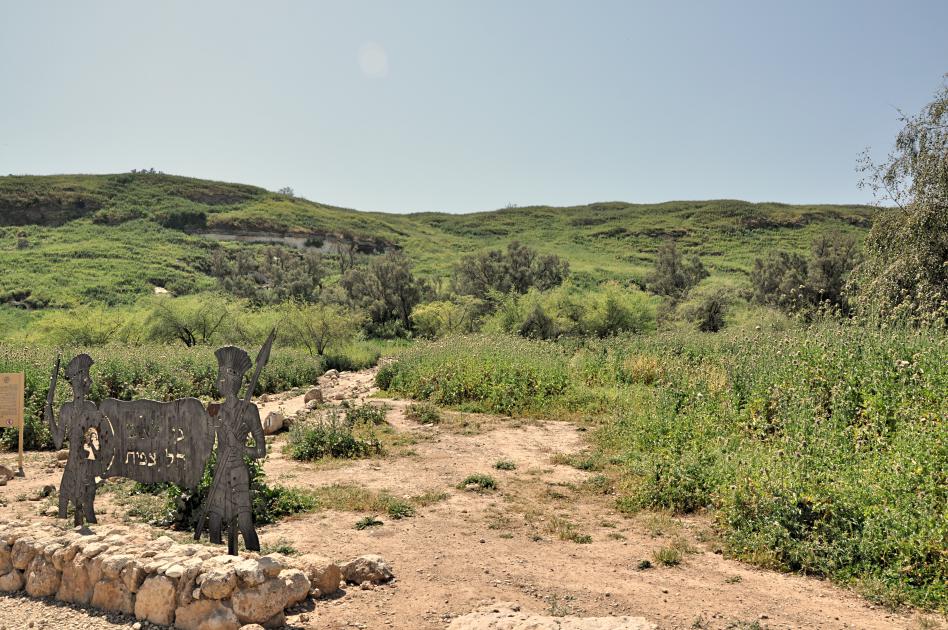
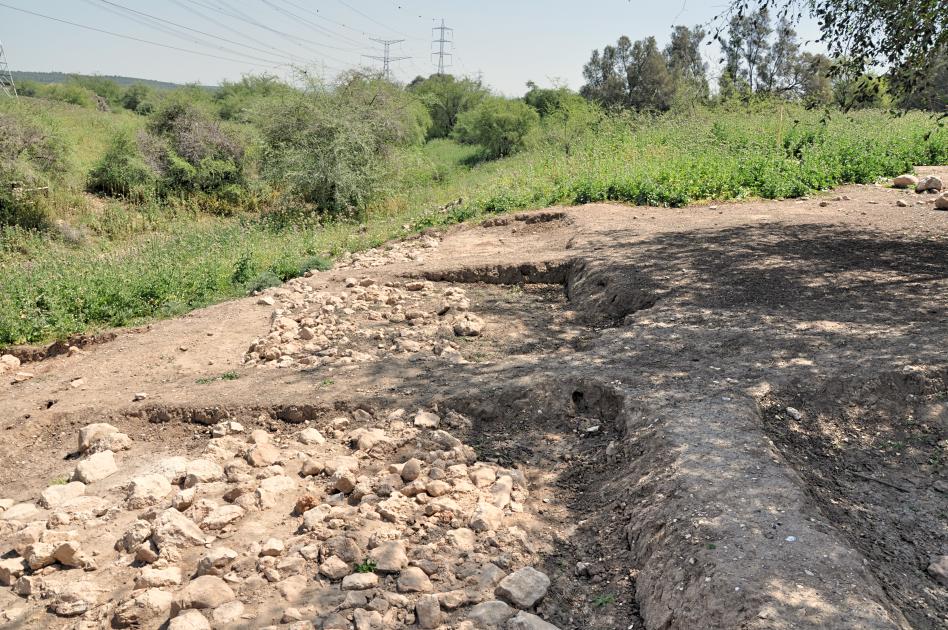
Today’s travels took us from the Sea of Galilee down the Jordan Valley to the Dead Sea area, then west on back to Jerusalem. Along the way we made some interesting stops, including while still in the north, Gan Hashlosha, in the vicinity of Beth-shan. Beth-shan was the city where the bodies of King Saul and three of his sons were fastened after their deaths (1 Sam. 31). Amal Stream, the spring water that emerges in the western part of the park maintains a constant, year-round temperature of 28 degrees Celsius.
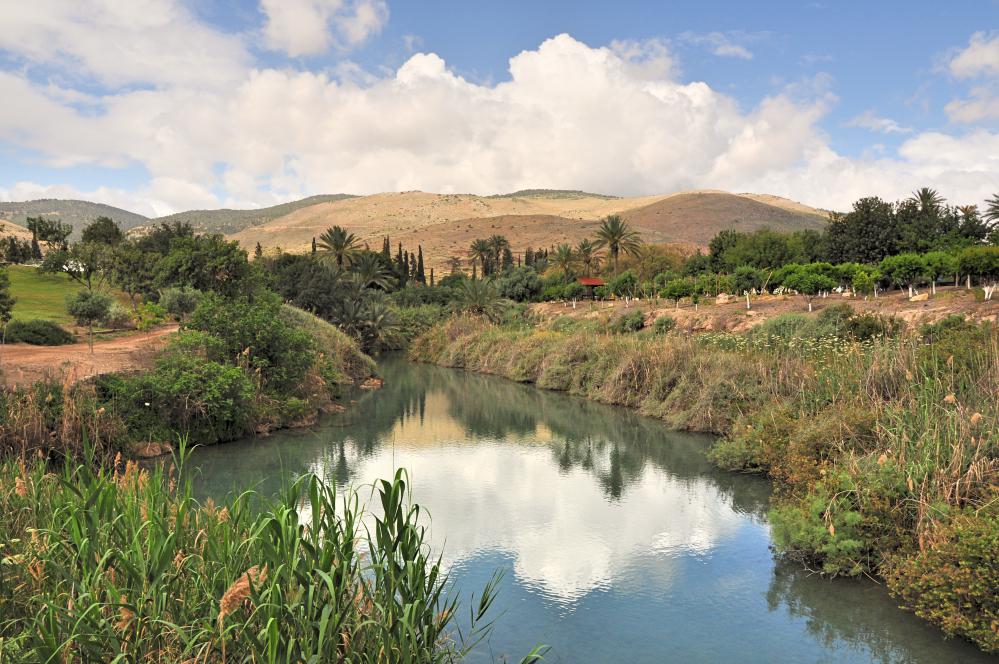
Beautiful Gan Hashlosha, Israel. Photo by Leon Mauldin.

Beautiful Gan Hashlosha, Israel. Photo by Leon Mauldin.

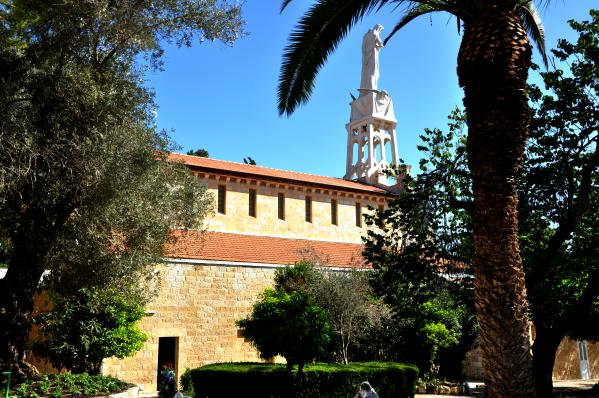
Our real interest in stopping here was the Museum of Regional & Mediterranean Archaeology, which has some unique artifacts from the Beth-shan area, as well as rare finds from the Mediterranean region. The displays feature Canaanite, Israelite, Grecian, Etruscan, Persian and Egyptian collections.

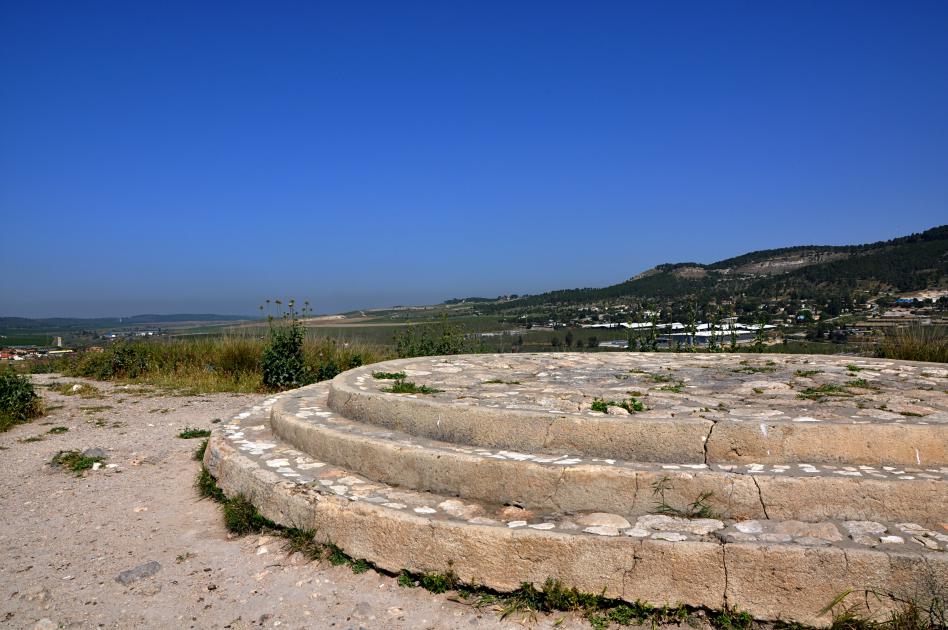
We also drove along the top of Mt. Gilboa, where we had some good views of the Plain of Jezreel, where so many biblical events occurred.

Click image for larger view.


Banias Falls, near Caesarea Philippi

April 11, 2016

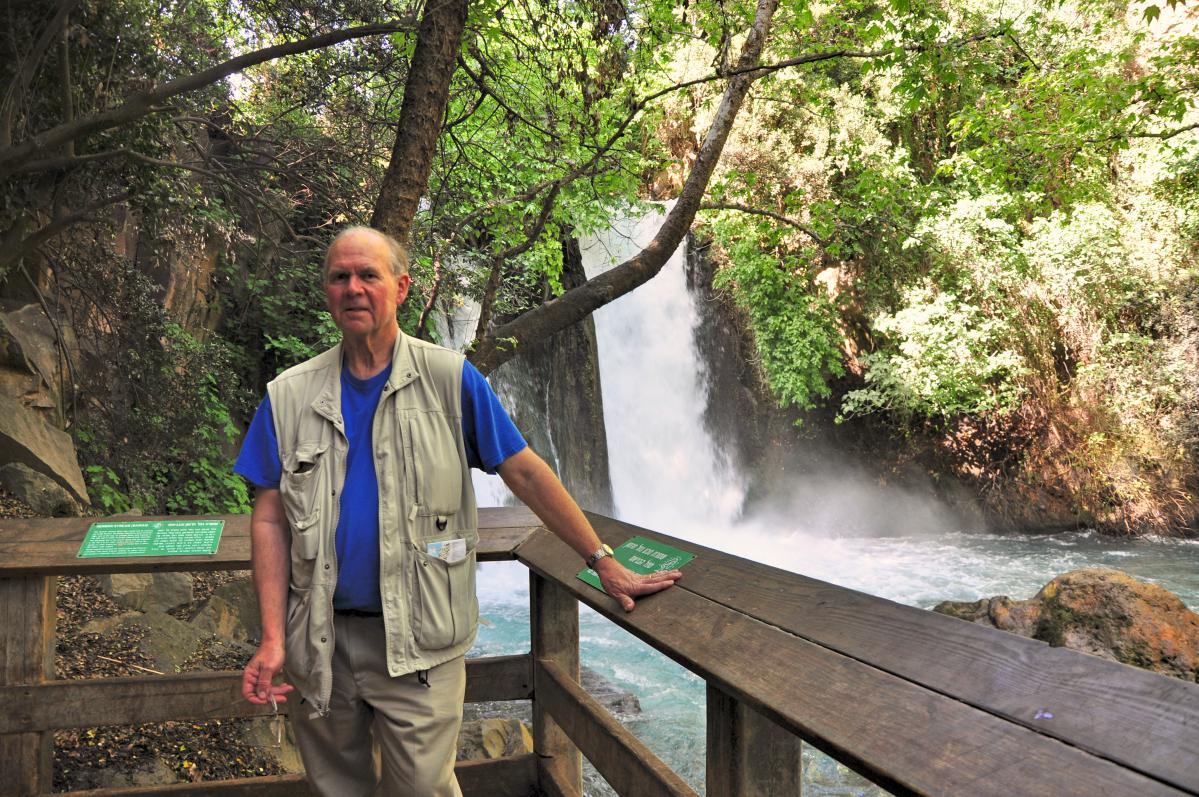
Today’s travels in northern Israel took us to Lake Hula (migratory birds pass through here, to and from Africa-Turkey) and then past Abel-beth-maacah (see 1 Kings 15:20) to the border of Lebanon. We also saw the Senir River and Banias River, two of the main sources that converge to form the Jordan River. The Banias Spring emanates at Caesarea Philippi. Downstream from there are the Banias Falls.

Banias Falls near Caesarea Philippi. One of the major sources of the Jordan River.

Banias Falls near Caesarea Philippi. One of the major sources of the Jordan River.

Jesus was in this area during His “Retirement Ministry,” in that time-frame when He was trying to spend more private teaching/training time with the apostles for the great evangelistic work for which He had chosen them. Text–Matthew 16:

13 Now when Jesus came into the district of Caesarea Philippi, He was asking His disciples, “Who do people say that the Son of Man is?” 14 And they said, “Some say John the Baptist; and others, Elijah; but still others, Jeremiah, or one of the prophets.” 15 He said to them, “But who do you say that I am?” 16 Simon Peter answered, “You are the Christ, the Son of the living God.” 17 And Jesus said to him, “Blessed are you, Simon Barjona, because flesh and blood did not reveal this to you, but My Father who is in heaven. 18 “I also say to you that you are Peter, and upon this rock I will build My church; and the gates of Hades will not overpower it. 19 “I will give you the keys of the kingdom of heaven; and whatever you bind on earth shall have been bound in heaven, and whatever you loose on earth shall have been loosed in heaven.”


Israel: Up the Jordan Valley and on to Galilee

April 10, 2016

Yesterday we made our way from Jerusalem down to the Jordan Valley and on up to Galilee. Visibility was not the best due to winds from the east and south bringing dust and haze.

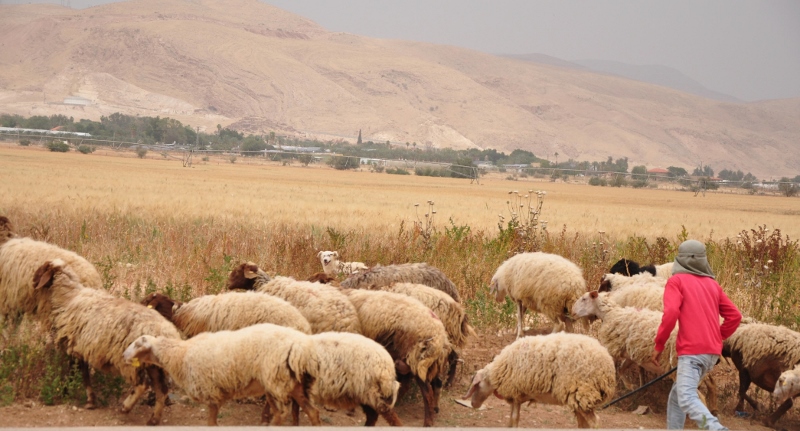
We stopped a couple of times along the way to photograph shepherds with their sheep. That is a scene I never tire of. This location was just north of Jericho. We are looking west.

Sheep in Jordan Valley. Photo by Leon Mauldin.

Sheep in Jordan Valley. Photo by Leon Mauldin.

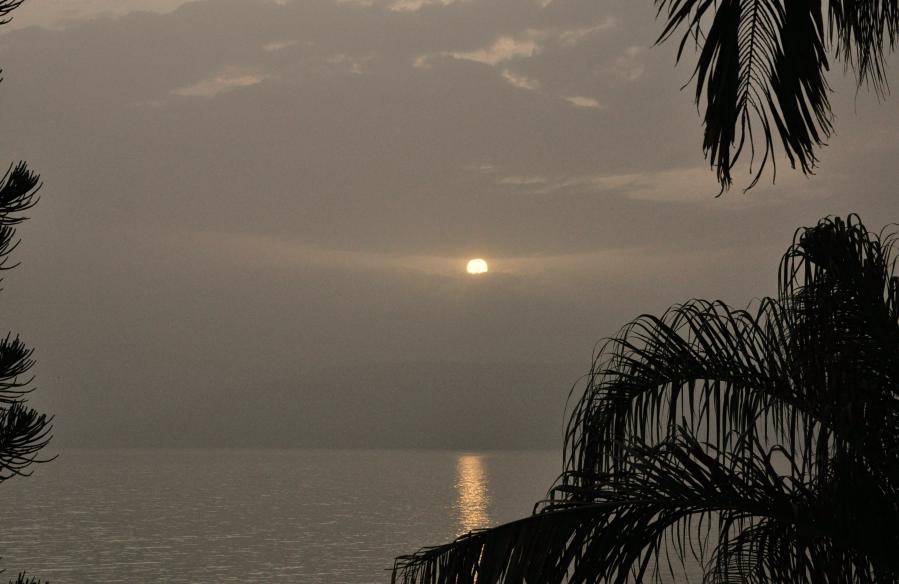
Sunrise at the Sea of Galilee this morning consisted of the sun barely peaking through some clouds and dust.

Sunrise at Sea of Galilee April 10, 2016. Photo by Leon Mauldin.

Sunrise at Sea of Galilee April 10, 2016. Photo by Leon Mauldin.

There is no doubt that during His ministry on earth Jesus and His disciples saw mornings like this on occasion also.

After worship this morning in Nazareth, Ferrell Jenkins and I went on to the Hecht Museum at Haifa University, where we both took several hundred photos. It is a very nice museum of artifacts that covered biblical/historical periods from Chalcolithic on down through Roman. Neither of us had been there before.

So our travels today took us from Tiberias to Nazareth, up the Plain of Jezreel, to the Carmel range and on to Haifa (biblical Acco). We had a good view of the Plain of Acco down to the Mediterranean; then back to Tiberias. It’s been a good day. Our hotel is the Ron Beach Hotel, right on the Sea. My favorite place to stay in the Galilee.

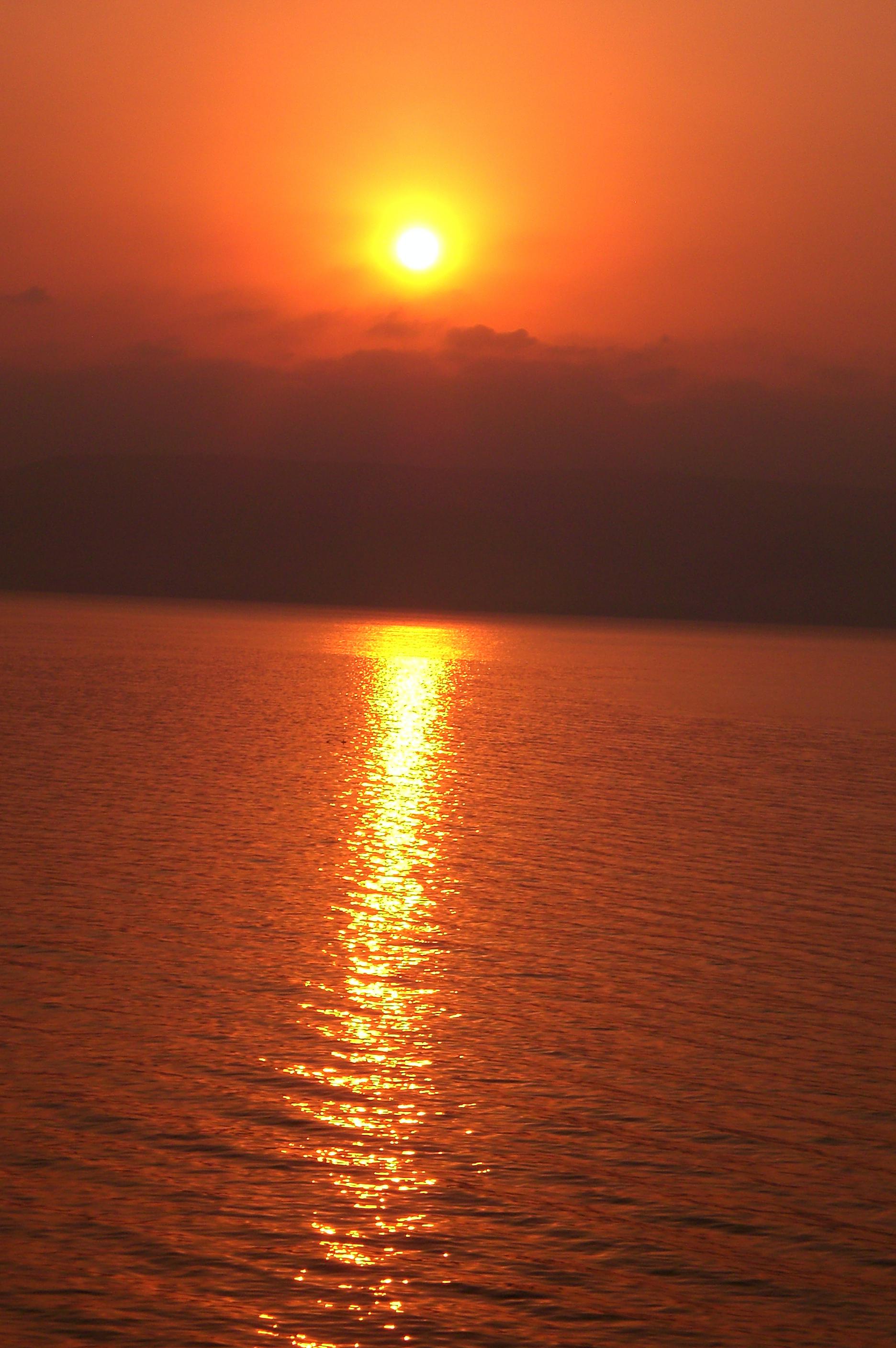
Just for good measure I wanted to share a sunrise photo from Sept, 2011.

Sunrise at Sea of Galilee, Sept. 2011. Photo by Leon Mauldin.

Sunrise at Sea of Galilee, Sept. 2011. Photo by Leon Mauldin.


Biblical Sites in Israel: Gath of the Philistines

April 9, 2016

A visit to the biblical site of Gath, Tel es Safi, on Israel’s coastal plain is worthwhile. Gath was the land of giants (Josh. 11:22). Goliath was from Gath: “Then a champion named Goliath, from Gath, came out from the Philistine camp. He was nine feet, nine inches tall” (1 Sam. 17:4, Holman’s Christian Standard Bible).

It is sad to read how that David (after killing Goliath) had to flee from Saul. He fled to Gath of the Philistines, but there, fearing for his life, pretended to be insane (1 Sam 21:10-15; cf. Psalms 34 and 56). Later David again fled to Gath and was given refuge (1 Sam. 27); the king of Gath gave David and his 600 men the city of Ziklag.

When David was residing when he heard news of the death of King Saul, and his three sons (1 Sam. 31) he composed a song which included the words “Tell it not in Gath, Proclaim it not in the streets of Ashkelon — Lest the daughters of the Philistines rejoice, Lest the daughters of the uncircumcised triumph” (2 Sam. 1:20).

Our photo here gives a view of the large tel.

Tel Gath of the Philistines. Photo by Leon Mauldin.

Tel Gath of the Philistines. Photo by Leon Mauldin.

We were also able to see some of the excavations of the cities lower wall.

Recent Excavations at Gath. Lower wall of city. Photo by Leon Mauldin.

Recent Excavations at Gath. Lower wall of city. Photo by Leon Mauldin.

I have previously posted on Gath here (aerial photo).

Dr. Aren Maeir maintains a blog here devoted to news about Gath, Tel es Safi.

Tonight we are at Tiberias, on the Sea of Galilee; more photos and info to come. Thanks for following our travels.


Kiriath-jearim and Beth-shemesh in Israel

April 8, 2016

Today Ferrell Jenkins and I visited sites in Jerusalem, but for our post for now I wanted to note a couple of biblical sites we visited yesterday.

One was Kiriath-jearim. This location is of importance because the Ark of the Covenant was there from the days of Samuel (after Eli’s death and the Philistine destruction of Shiloh 1 Sam. 4-5). We read in 1 Samuel 6:21, “So they sent messengers to the inhabitants of Kiriath-jearim, saying, ‘The Philistines have brought back the ark of the LORD; come down and take it up to you.'”

At Kiriath-jearim. Our Lay of the Ark of the Covenant. Photo by Leon Mauldin.

At Kiriath-jearim. Our Lay of the Ark of the Covenant. Photo by Leon Mauldin.

Once the ark was returned to Israel by the Philistine enemies, ca. 1100 BC, it would remain there until King David made Jerusalem his capital, ca. 1003 BC, i.e. for 100 years. But first the ark came to Beth-shemesh. The biblical narrative explains how the hand of God was involved as two milk cows, with their calves kept behind, pulled a cart carrying the ark straight from Ekron of the Philistines to the border town of Beth-shemesh of Israel (1 Sam. 6).

Beth Shemesh, where the ark was returned from the Philistines. Photo by Leon Mauldin.

Beth-shemesh, where the ark was returned from the Philistines. Photo by Leon Mauldin.

Our photo shows the suggested site in Beth-shemesh (in foreground) where the cows pulling the ark were slain as sacrifices. Our view looks toward Philistia in the distance (left from center), the direction from which the ark would have come. As stated above (1 Sam. 6:21), from Beth-shemesh the ark was taken to Kiriath-jearim, where it remained until the days of King David.

We have previously posted here on Kiriath-jearim and here on Beth-shemesh, with aerial photo.


Traveling in Israel: Gibeon and More!

April 7, 2016

Today was a delightful day in Israel. We were able to see biblical sites from Jerusalem westward all the way to the coastal Philistine city of Gath.

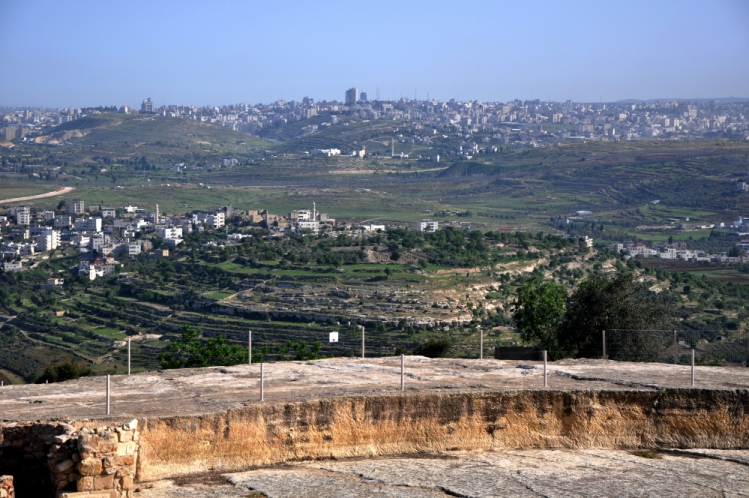
Just north of Jerusalem (OT territory of Benjamin) is Gibeon, (Arabic El-Jib). This was formerly the Canaanite city that deceived Joshua and the men of Israel by pretending to be from a great distance, and thus entered into a covenant with Israel during the days of the Conquest (Joshua 9). There are subsequently several biblical references to this site.

Gibeon. Many OT texts refer to this site. Photo by Leon Mauldin.

Gibeon at center of photo. Many OT texts refer to this site. Photo by Leon Mauldin.

We have previously posted on Gibeon here and here.

Today we also saw Kiriath-Jeariam and  numerous sites in the Shephalah, including the valley of Elah, where David killed Goliath, Lachish, Beth-Shemesh, and the Philistine city of Gath, plus others. More on these later!


Odeion at Troy

April 1, 2016

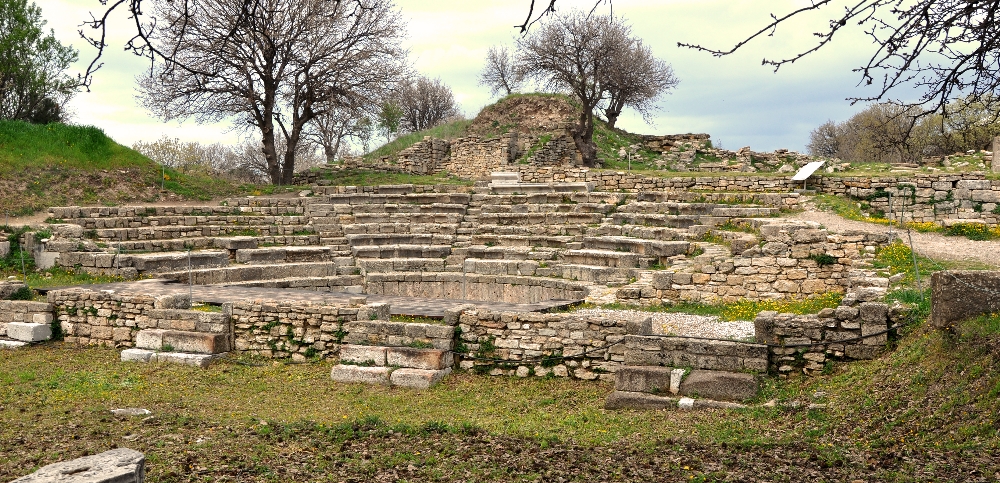
Ancient Troy has been made famous by Homer’s Iliad. Troy is located within the province of Çanakkale, located in extreme western Turkey. Troy’s extensive remains are the most significant and substantial evidence of the first contact between the civilizations of Anatolia and the Mediterranean world. This past Spring, 2015, we were able to visit Troy. Among the fascinating ruins there was the Roman Odeion, a small theater where concerts, lectures and other events took place.

Roman Odeion at Troy, Turkey. Photo by Leon Mauldin.

Roman Odeion at Troy, Turkey. Photo by Leon Mauldin.

The skene, stage building included a larger-than-life statue of the Emperor Hadrian (AD 117-138). Also, a sculpted head of Augustus was found at the odeion, causing some to surmise that this may have been erected in honor of his visit here in 20 BC. Beyond the odeion at the back you can see a portion of the fortification wall of Troia VI.

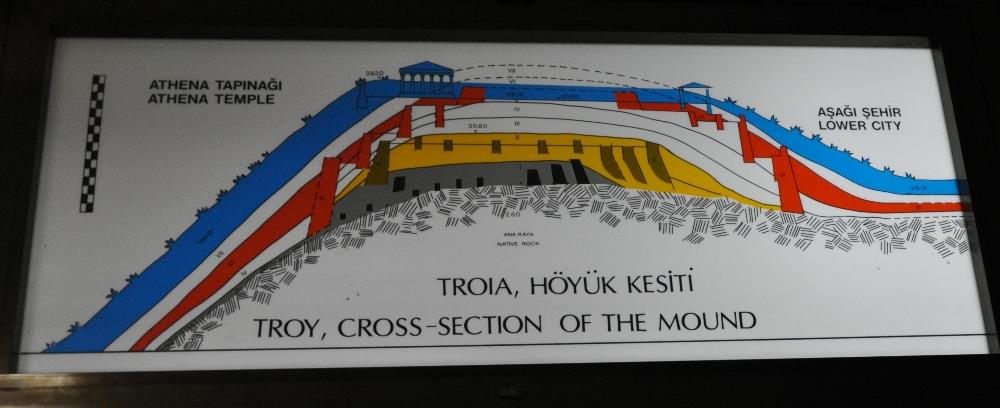
The Roman odeion is in Troy’s Level IX. Over the centuries there were nine levels of occupation.

Cross-section of Troy, showing 9 occupation levels. Istanbul Museum. Photo by Leon Mauldin.

Cross-section of Troy, showing 9 occupation levels. Istanbul Museum. Photo by Leon Mauldin. 

Wikipedia has this helpful chart:

Troy I 3000–2600 BC (Western Anatolian EB 1)
Troy II 2600–2250 BC (Western Anatolian EB 2)
Troy III 2250–2100 BC (Western Anatolian EB 3 [early])
Troy IV 2100–1950 BC (Western Anatolian EB 3 [middle])
Troy V: 20th–18th centuries BC (Western Anatolian EB 3 [late])
Troy VI: 17th–15th centuries BC
Troy VIh: late Bronze Age, 14th century BC
Troy VIIa: c. 1300–1190 BC, most likely setting for Homer’s story
Troy VIIb1: 12th century BC
Troy VIIb2: 11th century BC
Troy VIIb3: until c. 950 BC
Troy VIII: c. 700–85 BC
Troy IX: 85 BC–c. AD 500

Biblical significance: It was here at Troy (Ilium) at the temple of Athena that Xerxes (Ahasuerus) of the book of Esther sacrificed 1,000 head of cattle en route on his march through the Hellespontine region towards Greece. This was 480 BC.

We have previously posted on Troy here.


At Rome

March 16, 2016

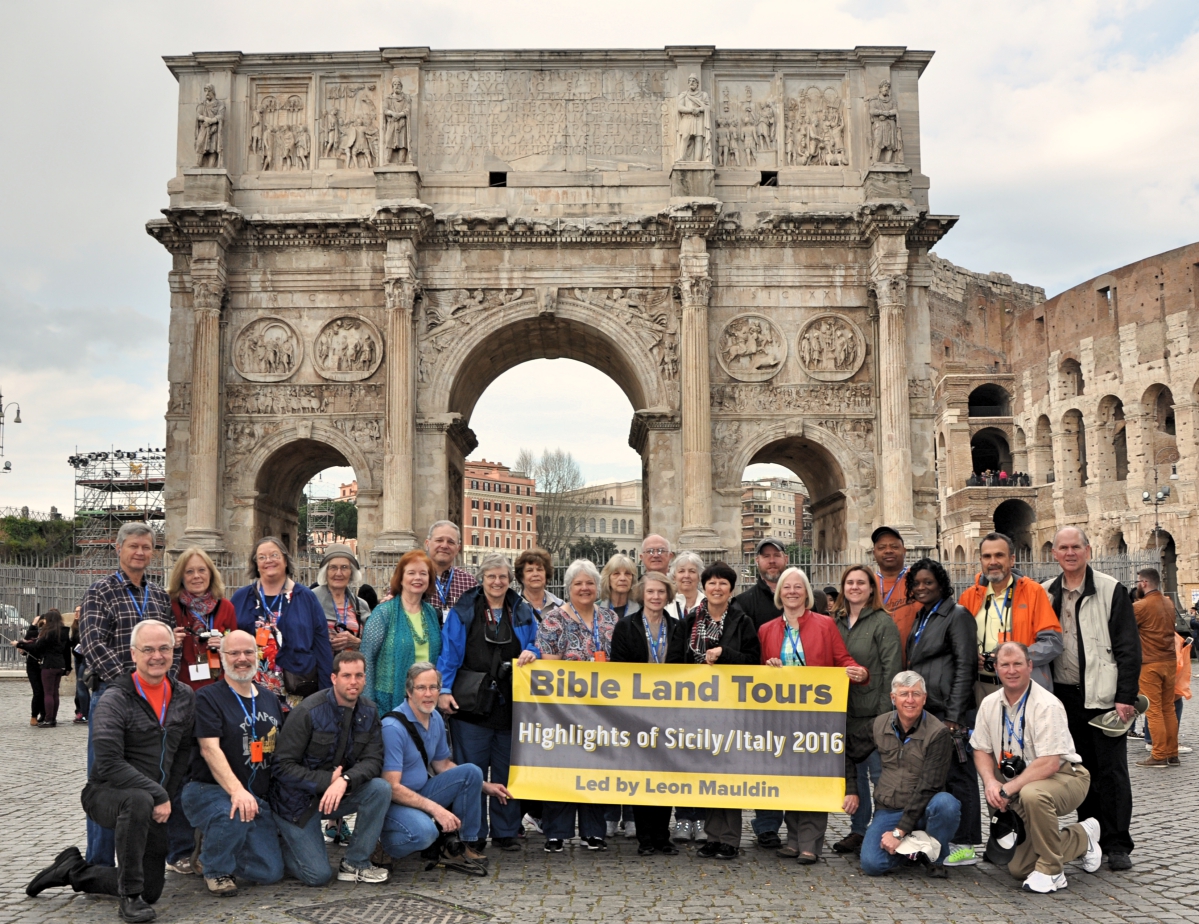
Tonight I thought I’d share a group photo taken today in front of the Arch of Constantine. The Colosseum can be seen at right.

Group photo at Colosseum in Rome.

Group photo at Colosseum in Rome.

There is 3,000 years of history in Rome. More later. Thanks for following our blog.


Sorrento/Pompeii

March 15, 2016

Yesterday morning we crossed the Straits of Messina, leaving Sicily and arriving at the toe of the “boot” of Italy. From there we went south to biblical Rhegium (Acts 28:12-13), then going north to Sorrento, where today we are to visit Pompeii and then make our way to Rome, making some stops along the way.

Last night we had opportunity to see Eliodoro Ruggiero(4th from left) and his bride Rosaria. Eliodoro preaches at nearby Poggiomarino.

Eliodoro and Rosaria Ruggiero

Eliodoro and Rosaria Ruggiero


Syracuse, Mt. Etna, and Taromina, Sicily

March 13, 2016

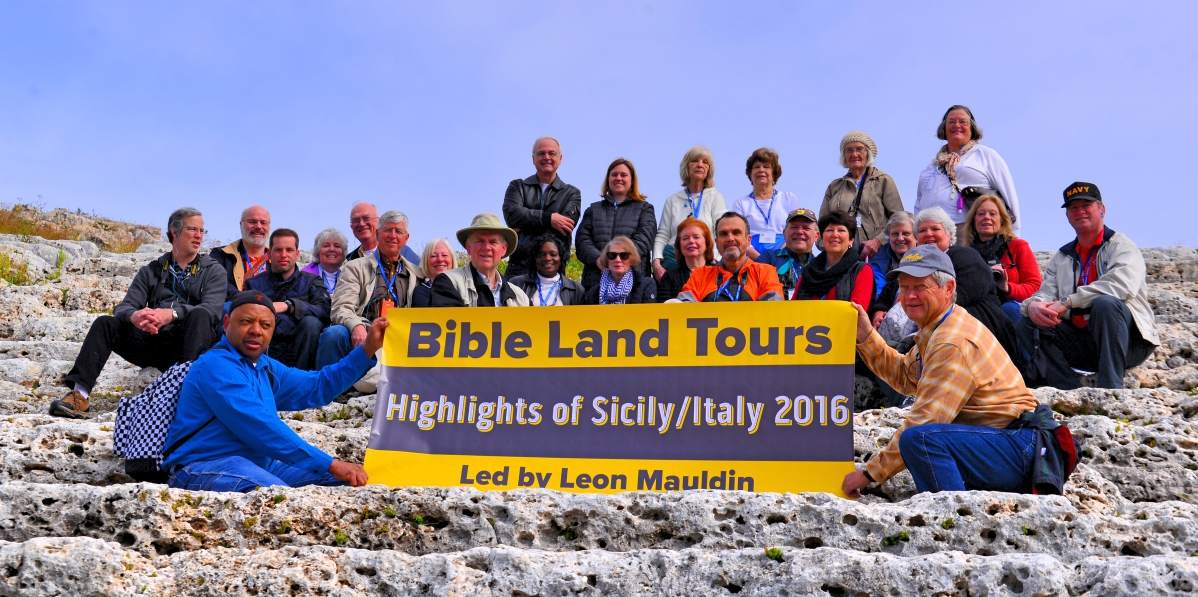
Yesterday (Saturday) we visited the archaeological sites Syracuse, Sicily, and from there went on to Mt. Etna (Europe’s most active volcano), and then to Taromina. While at the Greek theater at Syracuse we took this group photo.

Group photo at Greek Theater at Syracuse, Sicily. Photo by David Deason.

Group photo at Greek Theater at Syracuse, Sicily. Photo by David Deason.

This theater was built in the 5th century BC.

The city of Syracuse was founded in 733 BC by Greek settlers from Corinth. Some names associated with Syracuse include Aeschylus, considered the father of the Greek tragedy. The philosopher Plato was in Syracuse. Syracuse was the birthplace of Archimedes, the famous mathematician and most influential scientist of the ancient world.

But actually none of those names brought us to this ancient site; rather it was its biblical mention in connection with Paul’s journey (as a prisoner) to Rome. Of that point in the journey Luke writes, “And landing at Syracuse, we stayed three days” (Acts 28:12).