The Island of Patmos

March 19, 2010

Greetings from Athens, Greece.  Our ship arrived at the Athens Piraeus Habor this morning, having visited the islands of Patmos, Rhodes, Crete, and Santorini.  On Paul’s 2nd Missionary Journey, when he left Beroea because of persecution, Luke writes:  “Then the brothers immediately sent Paul off on his way to the sea, but Silas and Timothy remained there” (Acts 17:14, ESV). Paul apparently sailed from Beroea to Athens, and likely would have used the large Piraeus Harbor.

In our travels, our group has seen the cities of the Seven Churches of Rev. 2-3: Ephesus, Smyrna, Pergamum, Thyatira, Sardis, Philadelphia and Laodicea. It was the island of Patmos from which John wrote the book of Revelation, having been exiled there because of his faith.  He was exiled on the island of Patmos “because of the word of God and the testimony of Jesus” (1:9).

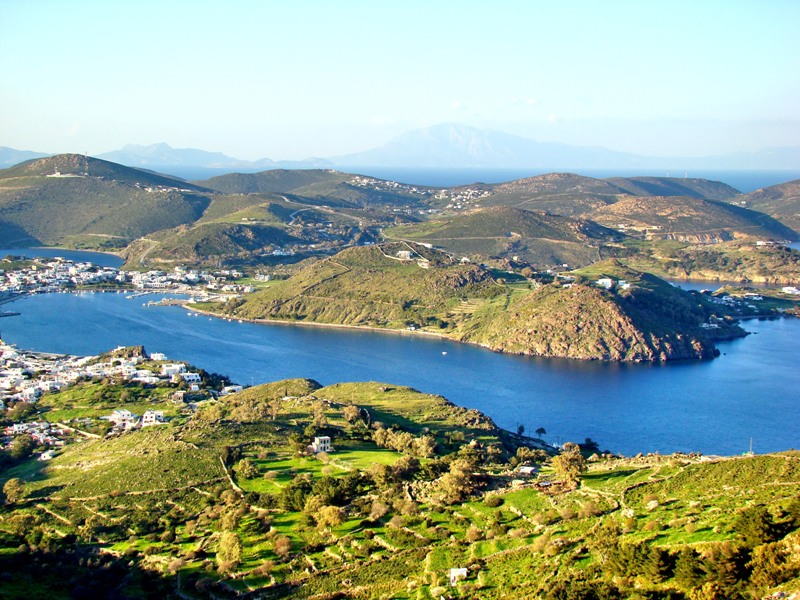
Pictured here below is Patmos. You can see the harbor of Scala in the center.

Island of Patmos. Photo by Leon Mauldin

Today we visited Mars Hill, the acropolis, and the Athens Museum.  Tomorrow we are to go to Corinth.  I did not have a workable system while on the Med. cruise, so I am a bit behind on the blog.  I plan to post some more photos of the sites of the Seven Churches, and other sites in Turkey, as well as some on Athens and Corinth, so continue to check the blog.


Ephesus and Miletus

March 16, 2010

Thank you for checking out our blog.  Internet access may be limited as we board our ship in a while, so we’ll have to see how that goes.

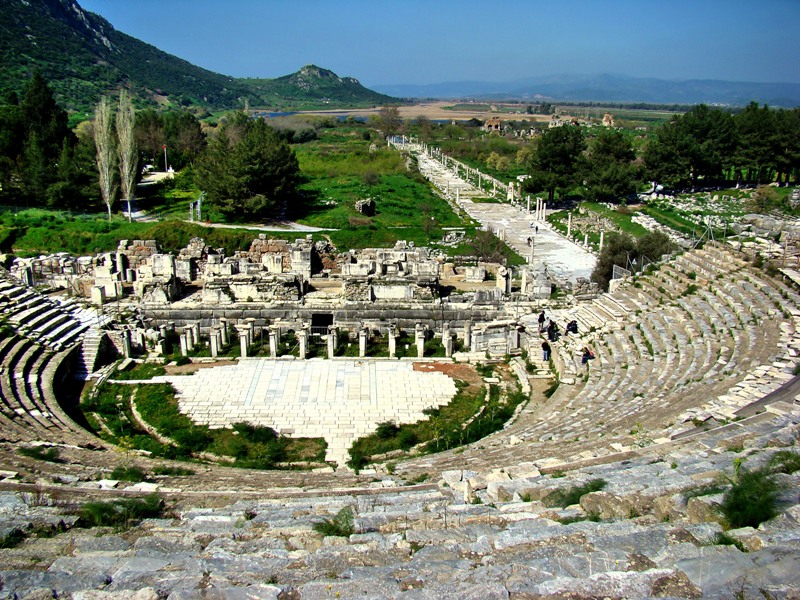
I plan to post some photos later from Laodicea, Colossae and Aphrodisias, but for now I wanted to share some from Ephesus and Miletus.  This is the theater mentioned in Acts 19, the site where thousands assembled and for 2 hours chanted, “Great is Dianna of the Ephesians!”  This was in response to Demetrius stirring up the crowd as he saw the logical consequences of Paul’s preaching: [1] No longer would Dianna/Artemis hold her divine place of honor, but also [2] Demetrius and the other craftsmen would be out of the business of making the silver shrines and idols of Artimis, items that were purchased by people from everywhere as they made the pilgrimage to see the Artemis temple, one of the Seven Wonders of the World.  The theater holds 24,000-25,000 people.

Ephesus Theater. View toward ancient harbor. Photo by Leon Mauldin.

Notice in the distance the Street of the Curetes, which led to the harbor.  Paul would have used that street to access the harbor.  The Cayster River served as the conduit for ships traveling to and from the Agean Sea.  Though now the river is silted in, our photo shows some water there where the river once flowed.  (BTW you can click on image for larger view.)

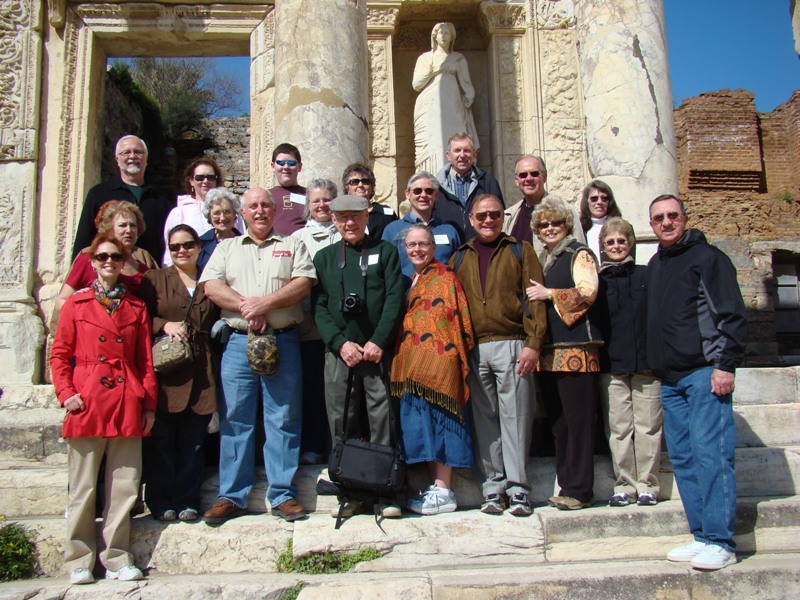
I thought I’d include another group shot.  The location here is the famous library of Celcus, originally built in A.D. 110, by Consul Gaius Julius Aquila, in honor of his father, Gaius Julius Celsu Polemaeanus, governor of Asia A.D. 105-107.

Some suggest that the school of Tynannus may have been located to your left (Acts 19:9).

Group Shot Library of Celcus, Ephesus. Photo by Orhan.

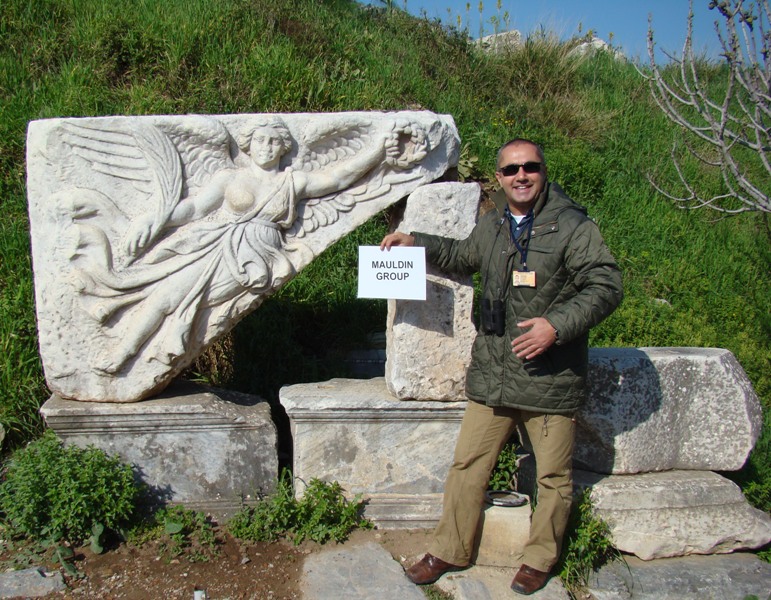
Everyone has enjoyed our guide, Orhan.  He is leaving us today, because he is a Turk; when we board our ship we will be on Grecian territory.  He is standing beside the goddess Nike, the mythical goddess of victory.

Orhan Beside Nike. Photo by Leon Mauldin

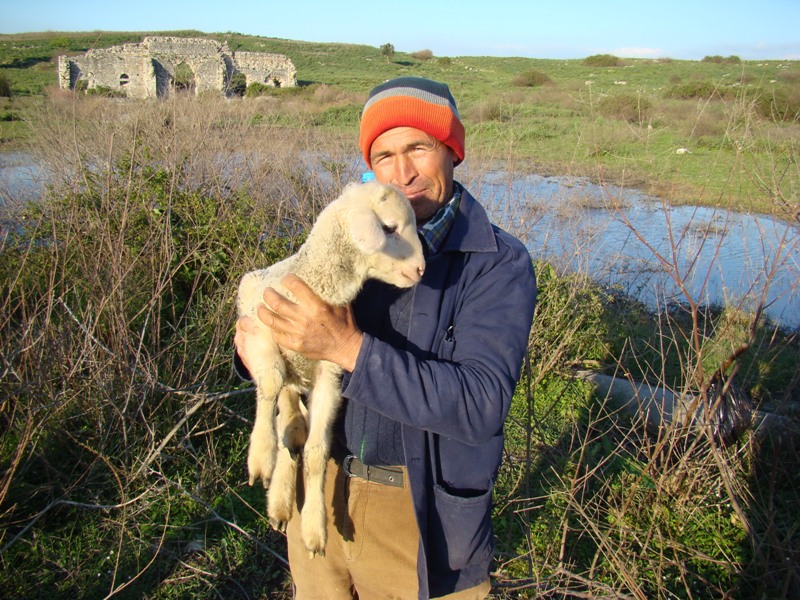
For the selection from Miletus I’ve selected a shot of a local shepherd with a lamb.  It reminded me of texts such as John 10:7ff., where Jesus spoke of the care that the Good Shepherd has for His sheep.

Miletus Shepherd. Photo by Leon Mauldin


Sardis, Philadelphia and Hierapolis

March 13, 2010

As we continued our visitation and study of the cities of the Seven Churches (Rev.2-3), we began the day today at Sardis, the former capital of the Lydian Empire.  Sardis has an interesting history. The inhabitants felt overly secure because of their seemingly impenetrable location, and fell to the Persians under Cyrus and later to the Greeks led by Alexander.  The spirit of the community tends to spill over into the church.  The church at Sardis had a name that they were alive, but Jesus said they were dead. Using their history of being caught off-guard as a springboard, Jesus told the church there to “be watchful, and strengthen the things which remain, that are ready to die, for I have not found your works perfect before God” (Rev. 3:2).

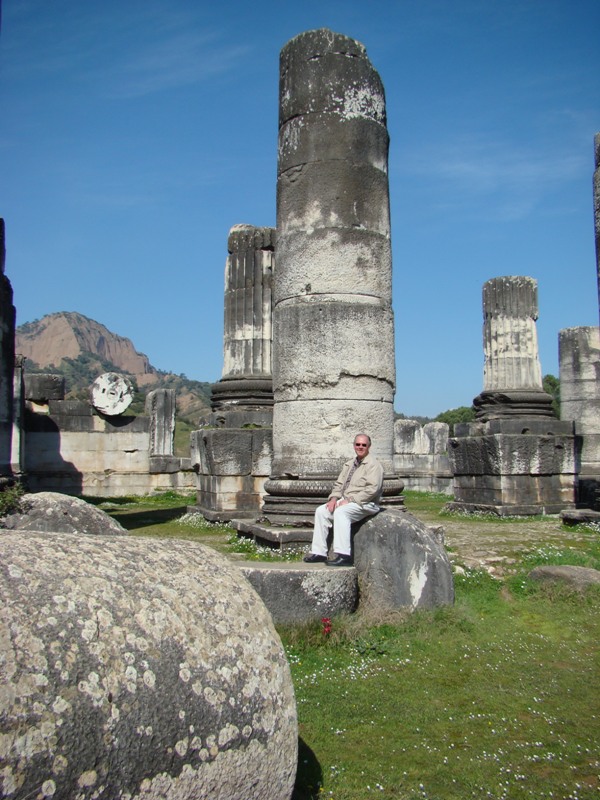
Pictured here is the temple of Artemis at Sardis:
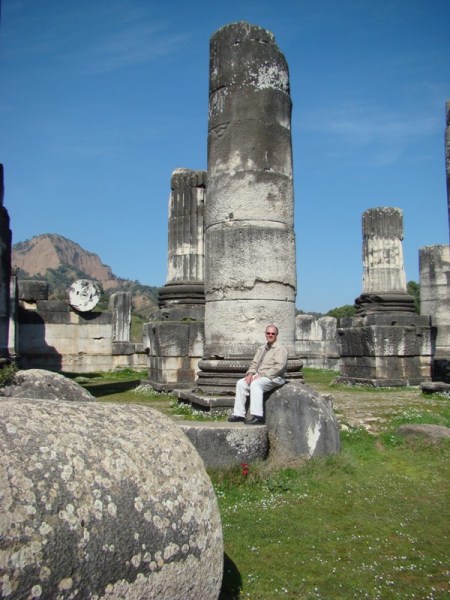
Sardis Temple of Artemis. Photo by Martha Felker

Sardis Temple of Artemis. Photo by Martha Felker.

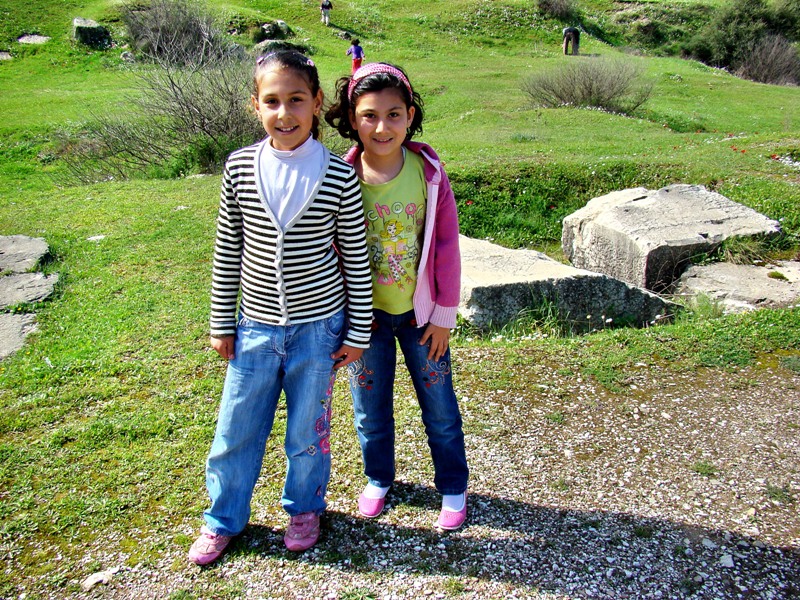
It seems that most kids, like these girls, like to have their picture taken.
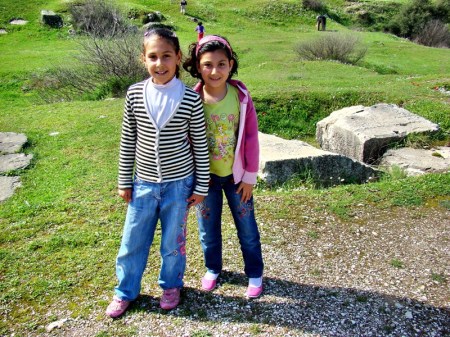
Little Girls at Sardis. Photo by Leon Mauldin

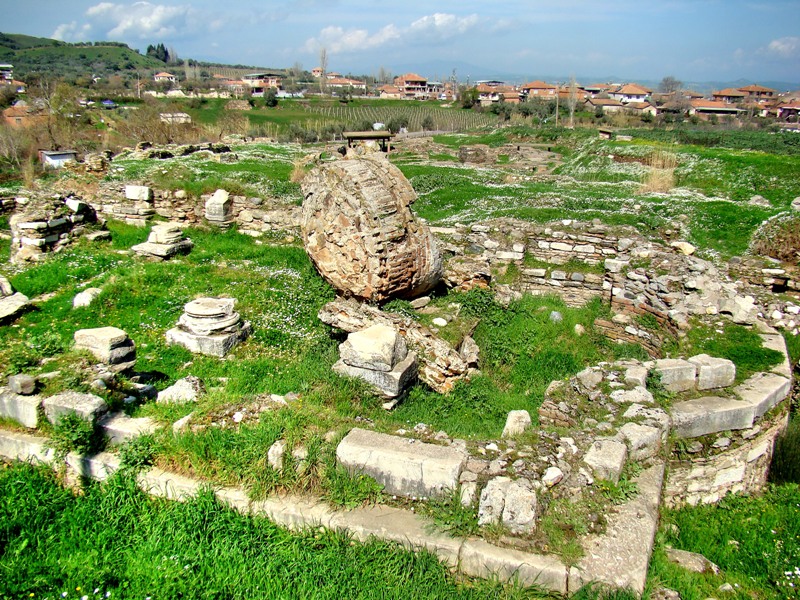
Coinage was invented here at Sardis.  Pictured here is the site of the gold mining operation.Sardis Gold Mining.  Photo by Leon Mauldin.
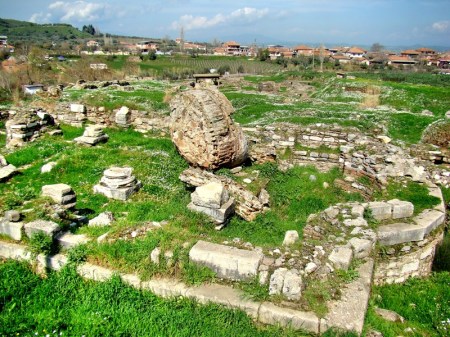
Next we went to Philadelphia.  The church at Philadelphia had an “open door,” Jesus said.  This church and the one at Smyrna were the two which Jesus only commended and of which He had nothing to condemn.  The promise, “He who overcomes, I will make him a pillar in the temple of My God, and he shall go out no more” (Rev. 3:12), is likely a reference to the frequency of earthquakes in the area.  It is a promise of stability and strength.  Historically, the people would have to flee out of the city until the tremors had stopped; hence the promise, “he shall go out no more,” depicting safety and security for the faithful.

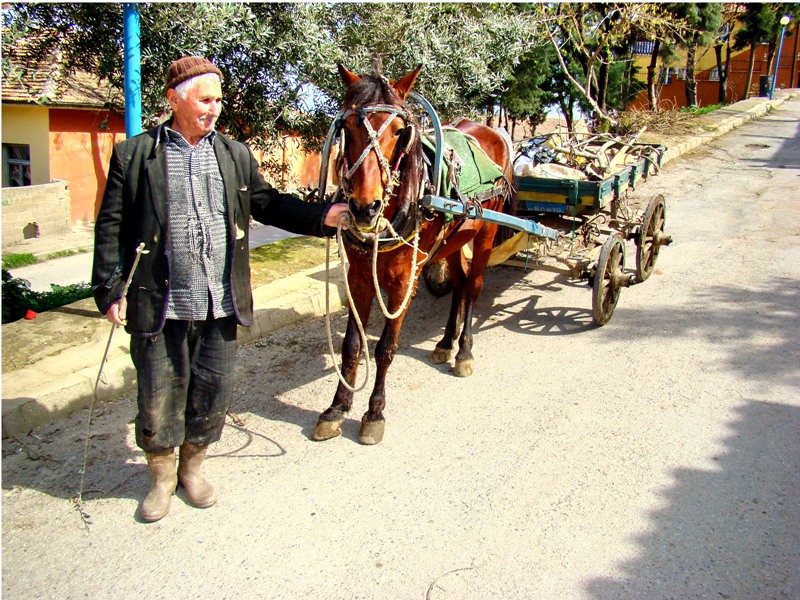
I thought I would post a couple of human interest photos from Philadelphia.Walking up to the acropolis we were met by an older gentleman with his horse.  He was very willing for me to take his photo.
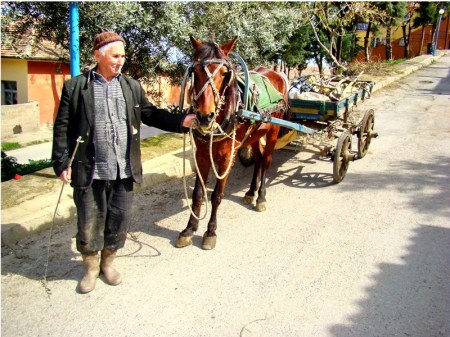
Philadelphia Old Gentleman and Horse. Photo by Leon Mauldin.

Philadelphia Old Gentleman and Horse. Photo by Leon Mauldin.

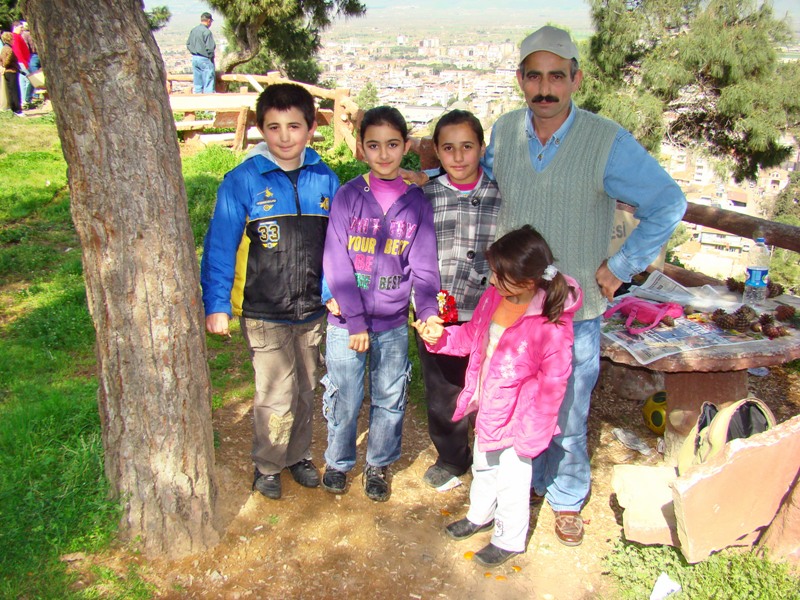
This photo was taken at the acropolis of Philadelphia.
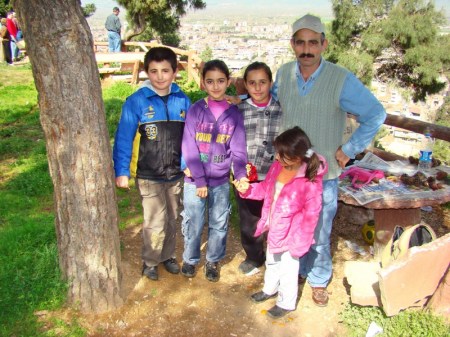
Philadelphia Family Picnic. Photo by Leon Mauldin.

Philadelphia Family Picnic. Photo by Leon Mauldin.

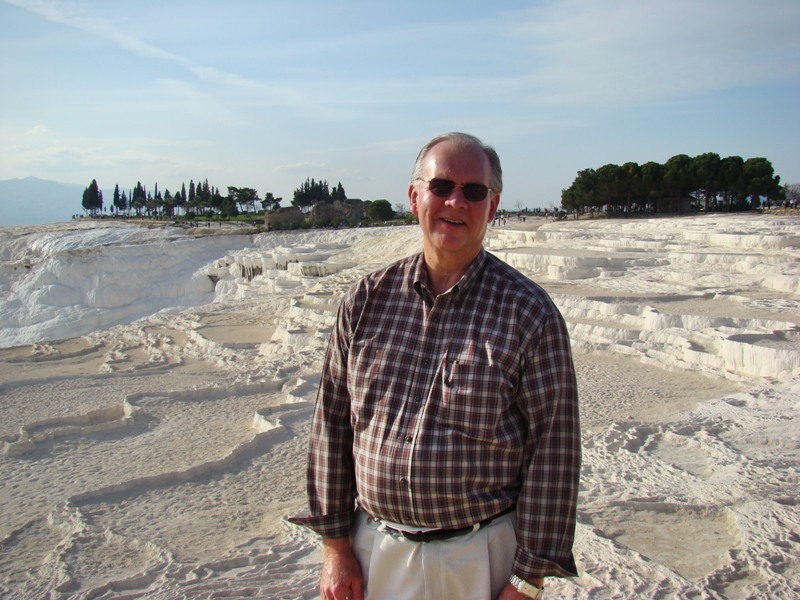
Next we traveled on to Hierapolis, just north of the Lycus River.  Hierapolis is not one of the Seven Churches, but is nearby Laodicea and Colossae.  Each of those three cities had New Testament churches, and are referenced in Col. 4:13-16.  Hierapolis was/is known for its medicinal thermal springs.  The warm water coursing down the slopes leaves behind white calcified limestone formations. Today the town is called Pamukkale, which means “cotton castle” or “cotton fortress.”
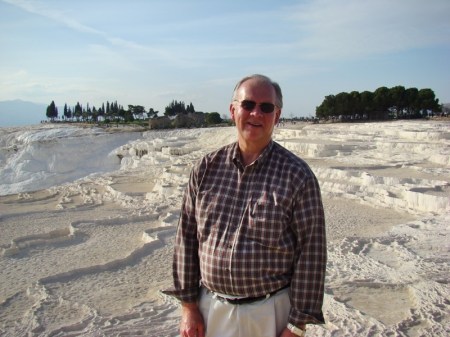
Leon at Hierapolis.  Photo by Johnny Felker.

Leon at Hierapolis. Photo by Johnny Felker.

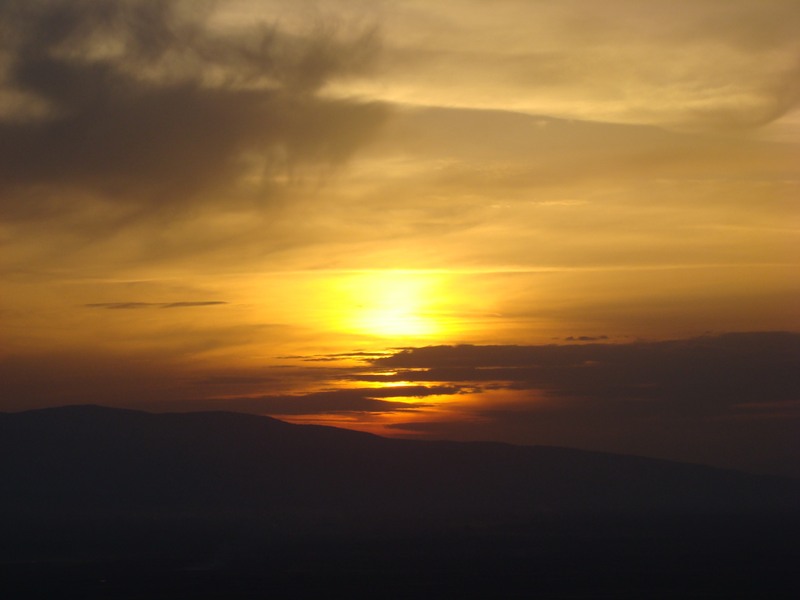
For tonight I’ll leave you with a sunset photo.
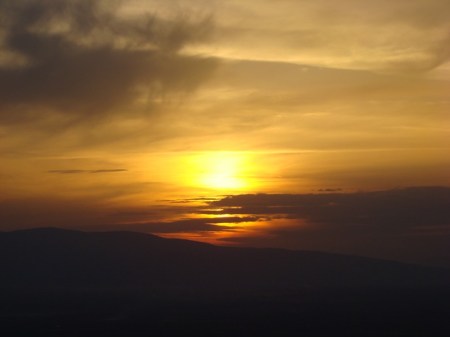
Hierapolis Sunset.  Photo by Leon Mauldin
Hierapolis Sunset. Photo by Leon Mauldin


Pergamum, where Satan’s throne was located

March 12, 2010

Today we visited the sites of Pergamum and Thyatira.  En route to Pergamum Harold Comer read the text from Rev. 2 which contains the letters to the churches in those respective cities, and made appropriate comments.  Jesus said that Pergamum was the place where Satan’s throne was.  He may have had reference to the altar of Zeus which was so prominent in the city.  Others suggest that the worship of Roman emperors was meant.  There were also temples to Athena, Dionysus, Serapis, Asclepius and others, so it could be that all of these combined meant that Satan’s influence was deeply entrenched there. Sometimes people are heard to say that if they had lived in the 1st century it would have been much easier and simpler to be a Christian then; that is simply not true!  Christians at Pergamum were called upon to live holy lives in the midst of idolatry, immorality, and false religion.

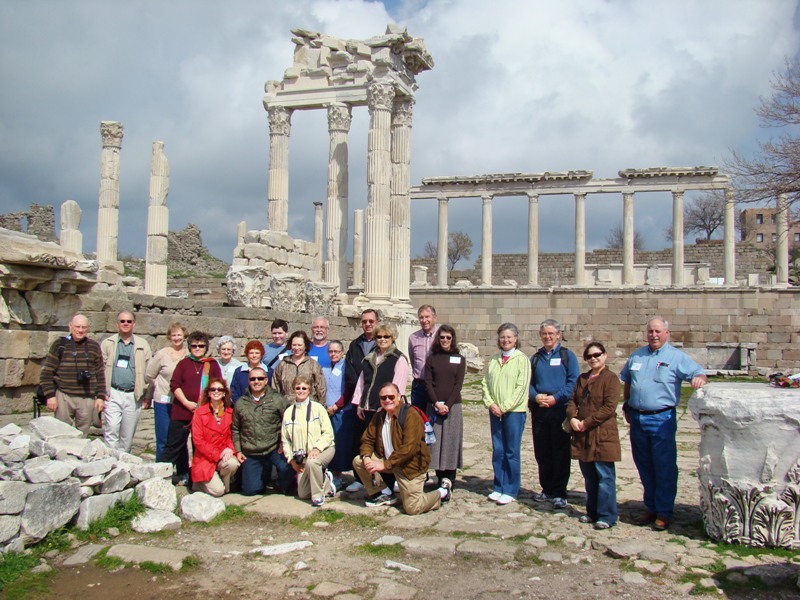
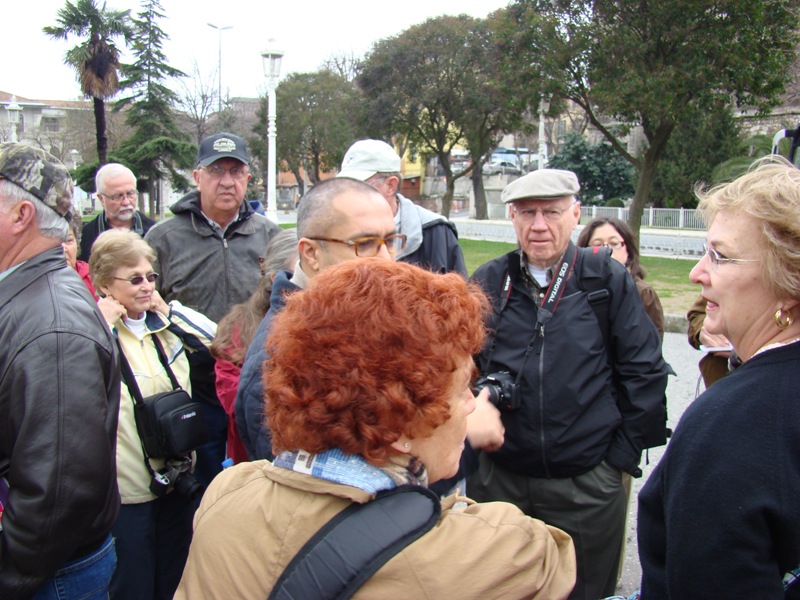
Here is a group shot which shows the temple of Emperor Trajan (reigned A.D. 98-117) in the background.

Group Shot at Pergamum.

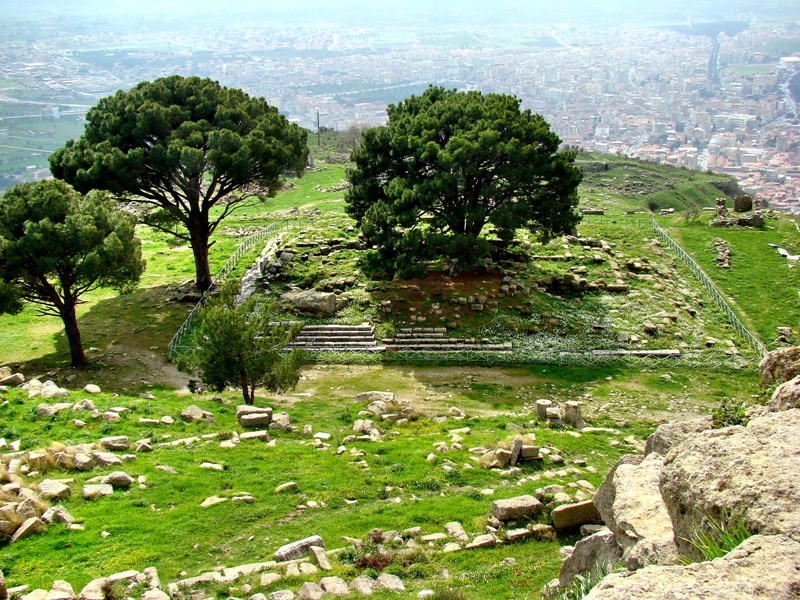
The altar of Zeus would have been seen for miles around.  The friezes of the battle scenes were disassembled and removed to Berlin where they are on display. You can see the steps leading up to the altar as well as the square outline of its parameter in this photo:

Altar of Zeus at Pergamum. Photo by Leon Mauldin

Altar of Zeus. Photo by Leon Mauldin.

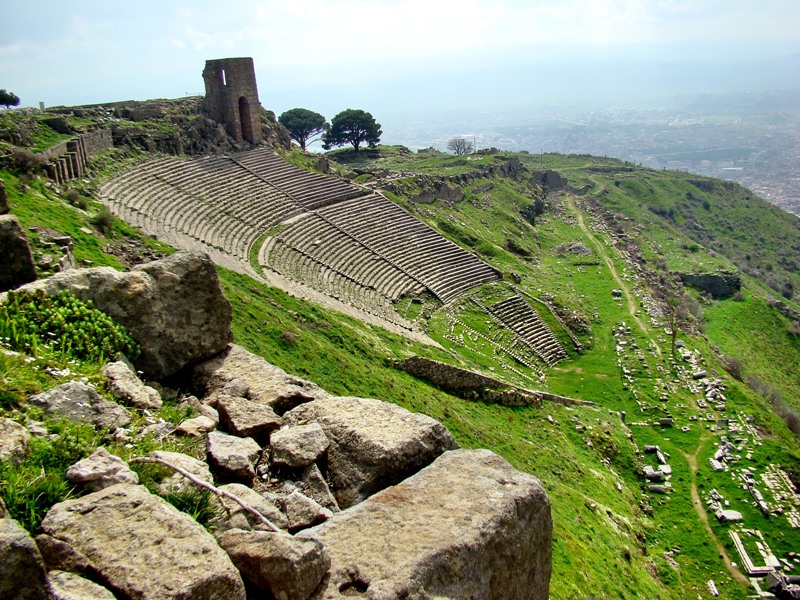
Pergamum has the steepest theater in the world; it follows the natural incline of the slope.

Pergamum Theater. Photo by Leon Mauldin

Tomorrow we are to continue our biblical study tour as we journey to Aphrodisias, Philadelphia, and Hierapolis.


Visit to Smyrna

March 11, 2010

This morning we flew from Istanbul to Izmir to begin our visitation of the cities of the Seven Churches of Rev. 2-3.  Modern Izmir is biblical Smyrna.  We saw the harbor from Mt. Pagos, the acropolis of the city.  Unlike the harbors of Ephesus and Miletus, which have long since silted up, the harbor at Smyrna continues to be operational; it is in fact Turkey’s 2nd largest port city after Istanbul.

We also saw the ancient agora (market place) which dates back to the 2nd century A.D.

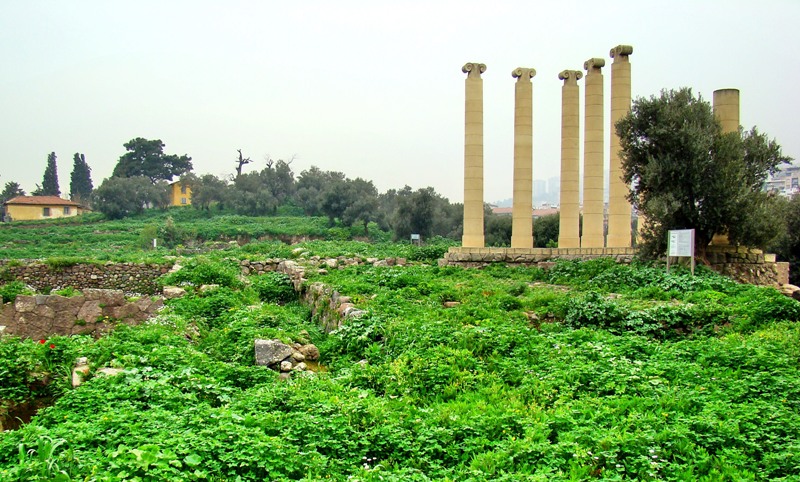
A highlight of our day today was a visit to the temple of Athena.  Actually the site is closed but we obtained permission to enter and take photos.  This temple’s history dates back to the 7th century B.C.  The site was quite overgrown, but we were very glad to be able to see it, from the standpoint of historical and biblical interest.

photo by Leon Mauldin

Temple of Athena in Smyrna. Photo by Leon Mauldin

New Testament Christians at Smyrna were surrounded by idolatry, and yet were expected by the Lord to have nothing to do with it.  Not only was there the worship of various gods and goddesses, but also Smyrna was the center for  Imperial worship.  (Today we planned to see a statue of a priest of the Imperial cult in the Izmir Museum, but we learned it was temporarily on loan to Moscow!) There was also persecution brought on by unbelieving Jews. It was the church at Smyrna that received instructions in the midst of such trying circumstances to “remain faithful even to the point of death” (NET, Rev. 2:10).

Tomorrow we are to travel to Pergamum (Bergama), where there is much to see of biblical interest.  From there we will travel to Thyatira (former home of Lydia of Philippi) .  All in our group continue to be well, and for that we are thankful.


Greetings from Istanbul

March 10, 2010

Greetings from Istanbul. Our group arrived safely at Istanbul Tues. PM.  Today has been a full day of touring, including the Blue Mosque, the Hagia Sophia, the Archaeological Museum, Grand Bazaar, and a boat ride on the Bosphorus. Tomorrow morning we are to fly out early to Smyrna (Izmir) to begin our visit of the cities of the Seven Churches. This shot shows our guide Orhan giving our group some info before entering the Blue Mosque.

Group shot at Istanbul. Photo by Leon Mauldin.

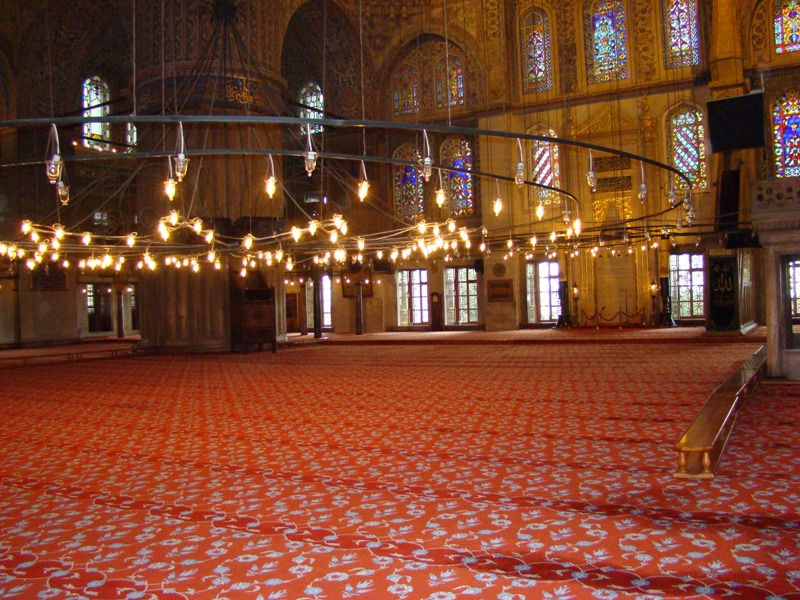
The Blue Mosque was built in the early 17th century for Sultan Ahmet I and is probably the most famous mosque in Turkey.  Its interior walls are covered with blue Iznik tiles.

Interior of Blue Mosque at Istanbul. Photo by Leon Mauldin

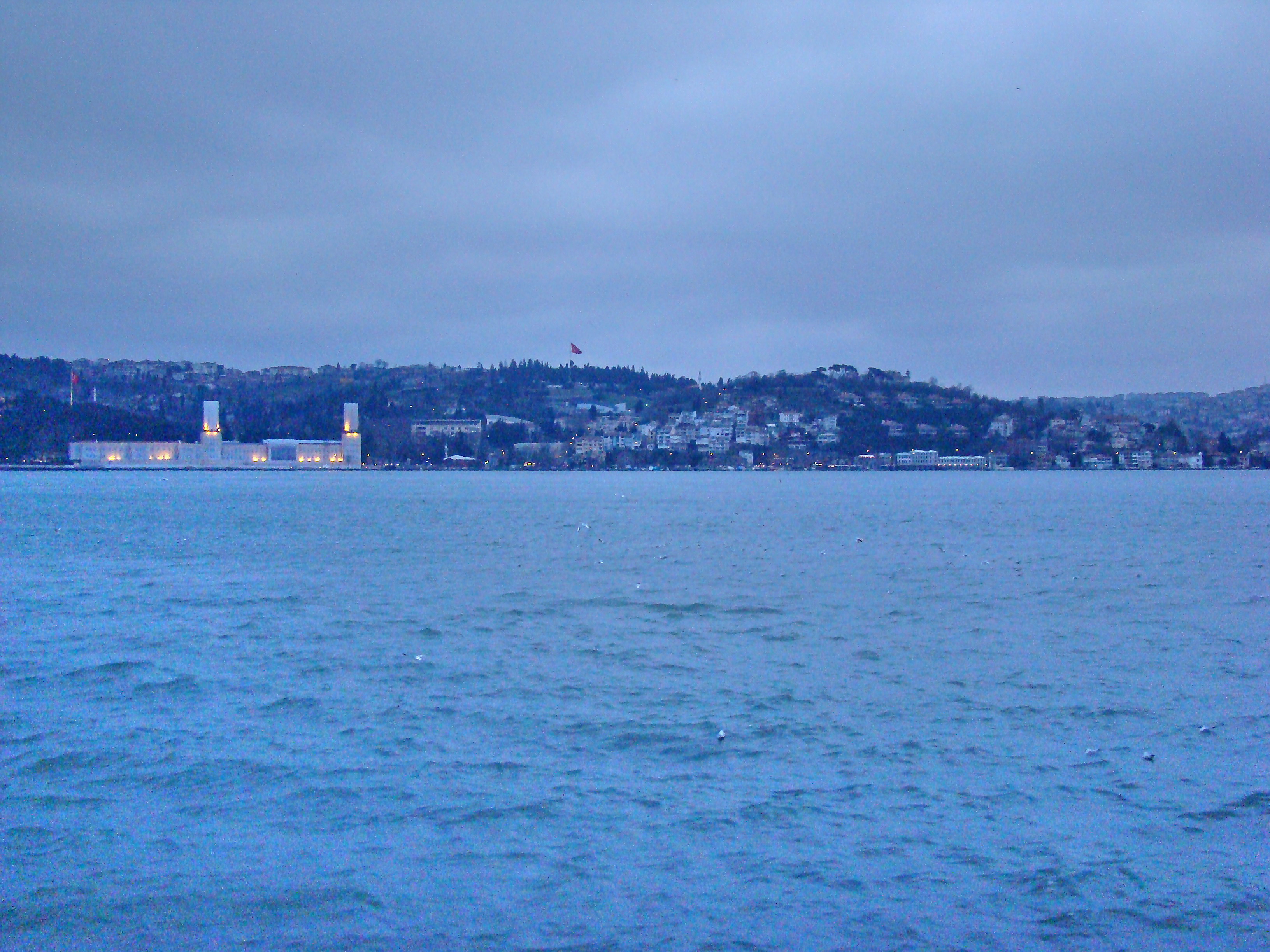
The Bosphorus Sea connects the Sea of Marmara with the Black Sea.  About 600 ships per day pass through this narrow strip of water separating the continents of Europe and Asia.  As you look east in the photo below, to the Asian side, you are looking at biblical Bithynia (1 Pet. 1:1).  This shot was taken as light was fading.

Bosphorus Sea Looking East. Photo by Leon Mauldin.

I hope to share more photos tomorrow.