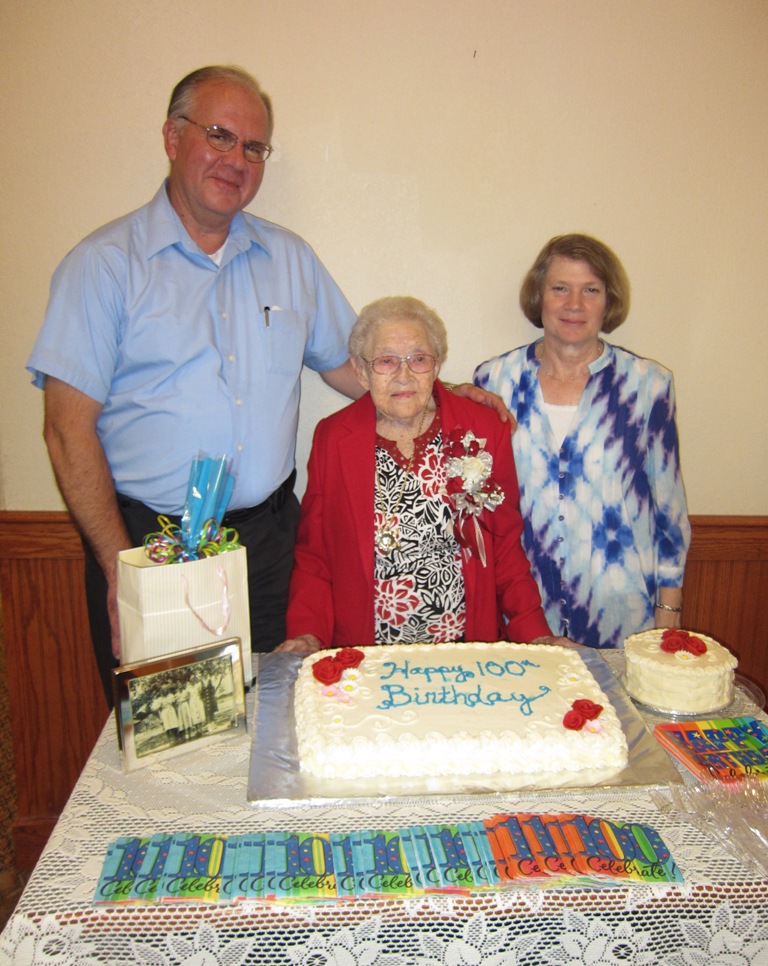
Muradiye Falls, in Van District in Turkey

January 17, 2012

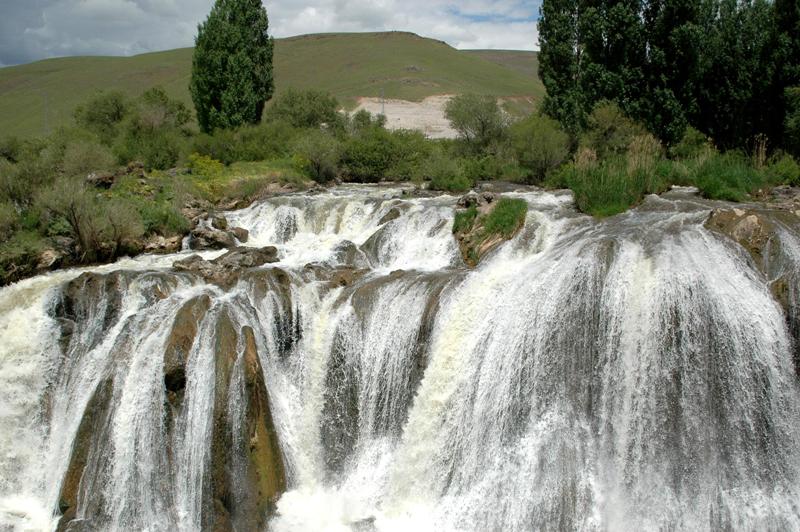
Yesterday we posted a sunset photo of Lake Van. As one passes by the lake en route to the Ararat Mountains he can enjoy the Muradiye Falls.

Muradiye Falls, in Van District of Eastern Turkey. Photo by Leon Mauldin.

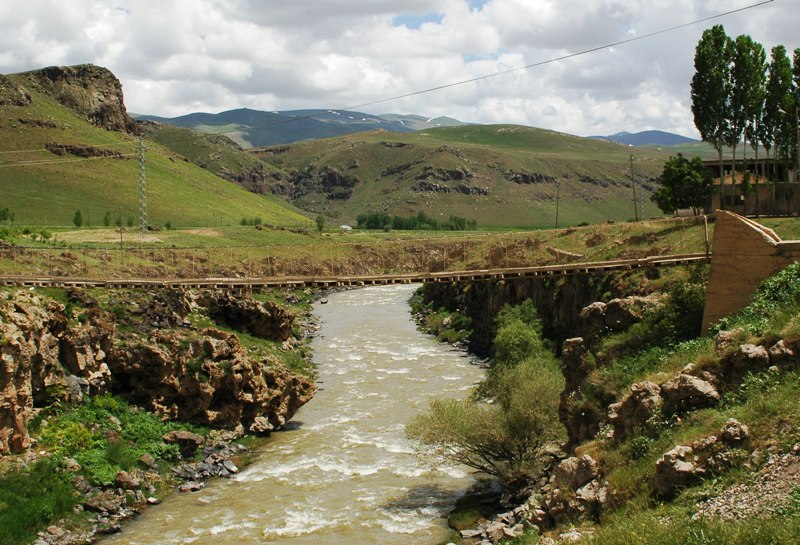
I took the above photo from this swinging bridge.

Swinging bridge below Muradiye Falls. Photo by Leon Mauldin.

You are not far from the Iranian border in this part of the world.

Muradiye Falls, much of which comes from snow melt. Photo by Leon Mauldin.

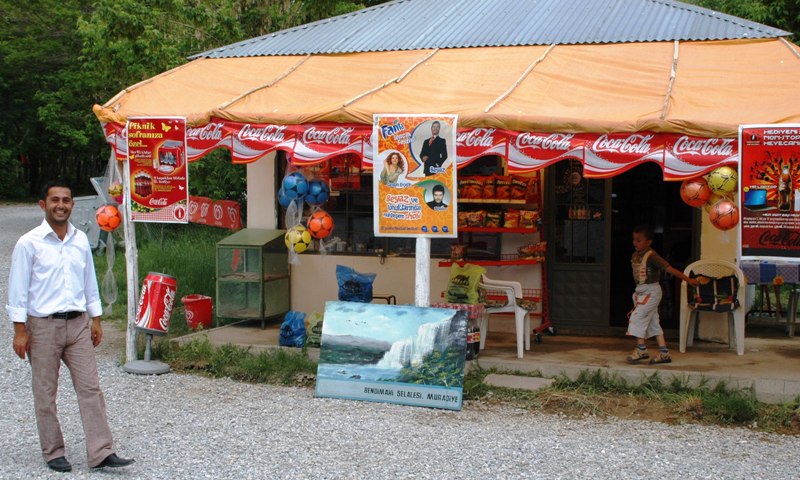
A little store is conveniently located on site.

Store at Muradiye Falls. Friendly people. Photo by Leon Mauldin.

Click on photos for larger view.


Sunset at Lake Van, Turkey

January 16, 2012

Lake Van is the largest lake in Turkey. It is located in Eastern Turkey in the Van District. This site is not far from the Ararat mountain range, where the ark came to rest (Gen. 8:4).

Lake Van at Sunset, Eastern Turkey. Photo by Leon Mauldin.

Click on photo for larger view.


Running the Race

January 4, 2012

Hebrews 12:1 states, “Therefore since we also have such a large cloud of witnesses surrounding us, let us lay aside every weight and the sin that so easily ensnares us, and run with endurance the race that lies before us” (CSB).

David McClister comments,

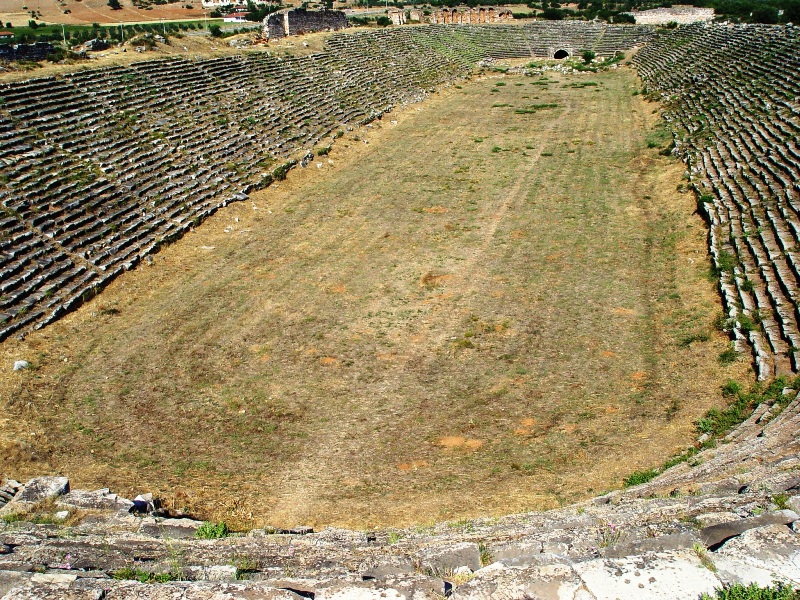
The idea of a race with a finish line in the distance before us suits well the picture of a faith that is forward-looking and that requires determination. Josephus spoke of ‘those who have a prize before them’ and how, when they are zealous about it, they do not stop working for it. Races in Greco-Roman times were held in a public venue called a stadium, of which several ancient examples survive (Olympia, Athens, Rome, Tyre, Laodicea, Pergamum, Ephesus, Priene, Miletus, Aphrodisias, Perge, Sardis, etc.). On each side of the race course was seating for spectators. The shortest races were about 210 yards, the longest were about 5,000 yards (2.8 miles), so stamina was needed for any one of them. The point of the imagery here is not about speed or who crosses first, but about endurance and running in the best possible way so as to finish what was started (A Commentary on Hebrews, p.441).

One of the best preserved Roman stadiums is at Aphrodisias (western Turkey), included in those mentioned above. This helps us understand the imagery used in the biblical text.

Roman Stadium at Aphrodisias Illustrates the text of Hebrews 12:1. Photo by Leon Mauldin.

In running this spiritual race, the inspired writer goes on to say, “keeping our eyes on Jesus, the source and perfecter of our faith, who for the joy that lay before Him endured a cross and despised the shame, and has sat down at the right hand of God’s throne” (v.2, CSB).

Click on image for larger view.


Dietary Restrictions in Leviticus

January 2, 2012

We recently referenced the book of Leviticus and its theme of holiness here. Chapter 11 lists the dietary restrictions which Israel was to follow. The basic rule of thumb was this: an animal must have a divided hoof and chew the cud; both were required.

3 Whatever parts the hoof and is cloven-footed and chews the cud, among the animals, you may eat. 4 Nevertheless, among those that chew the cud or part the hoof, you shall not eat these: The camel, because it chews the cud but does not part the hoof, is unclean to you. 5 And the rock badger, because it chews the cud but does not part the hoof, is unclean to you (ESV).

Two examples of animals which met one requirement, but not both, were the camel and the rock badger.

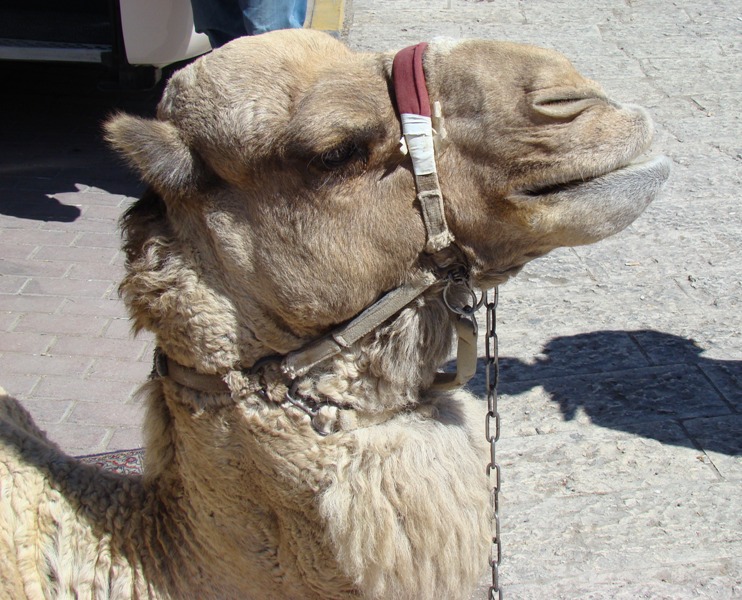
Camel, forbidden in Israel's diet. Photo by Leon Mauldin.

This camel which I photographed in Bethany earlier this year would have been forbidden as food under Mosaic law because though it chews the cud it does not have a divided hoof.

The rock badger was also forbidden.

Rock Badgers at Ein Gedi. Photo by Leon Mauldin.

These rock badgers were at Ein Gedi, where such are commonly seen. Again, such was forbidden in ancient Israel’s diet. Like the camel, it chews the cud, but does not have a parted hoof.

On the other hand, the pig has the parted hoof, but does not chew the cud, so it was unclean also (Lev. 11:7). It occurs to me that I have not photographed any pigs in Israel.

Two observations:

1. God employed such means as these dietary restrictions to mold and shape a special people for His own possession. Such were not the end but the means to an end.

2. In the New Testament such distinctions have been removed.  Jesus said,

Do you not see that whatever goes into a person from outside cannot defile him, since it enters not his heart but his stomach, and is expelled?” ( Thus he declared all foods clean.) (Mark 7:18-19, ESV).

Click on images for larger view.


A Workable Bible Reading Schedule

January 1, 2012

I’ve tried different Bible reading schedules, but the last 2 or 3 years I’ve used the one by Mark Roberts. I’ve found it to be the most practical, and I like the arrangement Mark has worked out. He made this post earlier:

As we come to the close of 2011 many will be making plans to read the Bible regularly in 2012. I hope you will consider using the Five Day Bible Reading Schedule to help you reach your goal. The Five Day Schedule allows you to read through the entire Bible or the NT in one year by reading only five days a week. This allows time for you to catch up if you get behind, or do other reading for Bible class etc.

Many Christians have successfully read the Bible with the Five Day Schedule and you can too.

The Five Day Schedule is a FREE download and is available absolutely free for individuals and churches to use and to make copies.

Get yours here:

Note: we have a Kindle edition available from Amazon.com this year but it is not free (as Amazon charges to process materials). Search “Five Day Reading Schedule” or use the links at BibleClassMaterial.com to get this Schedule on your Kindle!

A schedule of this nature disciplines the reader. You will read passages that you might otherwise neglect. I recommend this good resource.


2011 in Review–Thank You to our Readers

January 1, 2012

The WordPress.com stats helper monkeys prepared a 2011 annual report for this blog.

Here’s an excerpt:

The concert hall at the Syndey Opera House holds 2,700 people. This blog was viewed about 49,000 times in 2011. If it were a concert at Sydney Opera House, it would take about 18 sold-out performances for that many people to see it.

Click here to see the complete report.


Lessons from Leviticus?

December 30, 2011

In his preface to his commentary on Leviticus in the New International Commentary on the Old Testament, Gordon Wenham wrote,

Leviticus used to be the first book that Jewish children studied in the synagogue.  In the modern Church it tends to be the last part of the Bible anyone looks at seriously (vii).

The first time I read that statement I did a double-take. Studying Leviticus first in synagogue? What did they see back then that might be overlooked today?

In my lecture at Florida College (entitled “Trusting in gods that Cannot Save,” 2010) I made reference to the above quote and then observed,

The real heart of Leviticus is contained in verses such as 20:26: “Thus you are to be holy to Me, for I the LORD am holy; and I have set you apart from the peoples to be Mine.” Everything about how to approach God in worship, what to eat, wear, plant, along with all the other laws, had to do with that one principle: by all of these things God was teaching them that they were different from the world; they were His special people; they were to partake of His holiness.  Do you agree that this is not a bad idea, to teach a child from infancy that he is special to the Lord; that we are different from the world; that our concern is to be seeking and doing God’s will? (p.76).

The book of Leviticus was not just for the priests. In the opening verses, God said,

Speak to the sons of Israel and say to them, ‘When any man of you brings an offering to the LORD, you shall bring your offering of animals from the herd or the flock (Lev. 1:2, NASB).

The instructions are to the sons of Israel. Re: “Any man of you” the NET notes,

It is the Heb “a man, human being” (‘adam), which in this case refers to any person among “mankind,” male or female, since women could also bring such offerings.

So here is a book that was for everyone during that dispensation, whether priests or other Israelites, men or women.

We are not contending that we are under the specific legislation of that time, but Romans 15:4 teaches,

For whatever was written in former days was written for our instruction, that through endurance and through the encouragement of the Scriptures we might have hope (ESV).

Perhaps you would like a brief outline and chapter content for the book of Leviticus:

Leviticus Outline and Chapter Content

I.          LAWS OF SACRIFICE 1-7

II.        HISTORICAL 8-10

III.       LAWS OF PURITY 11-15

IV.       ANNUAL DAY OF ATONEMENT

V.        HOLINESS OF PEOPLE 17-20

VI.       HOLINESS OF PRIESTS & LAWS RE: SACRIFICES 21-22

VII.     LAWS CONCERNING FEASTS 23-25

VIII.    PROMISES & WARNINGS 26

IX.       LAWS CONCERNING VOWS 27

1. Burnt offering

2. Meal offering

3. Peace offering

4. Sin offering

5. Trespass offering

6-7 Laws of Sacrifice given to priests

8. Consecration of priests

9. Priests begin to serve

10. Death of Nadab & Abihu

11. Clean & unclean foods

12. Purification after childbirth

13-14. Laws concerning Leprosy

15. Laws concerning normal & abnormal issues

16. Day of Atonement

17. Eating of blood forbidden

18. Laws of moral purity

19. Miscellaneous laws

20. Punishment for disobedience

21-22. Laws of holiness for priests; laws re: sacrifices

23. Sabbath, 3 annual feasts, day of atonement

24. Lamps, showbread; punishment for blasphemy

25. Year of Jubilee

26. Blessings of obedience; consequences of disobedience

27. Laws concerning vows

Shechem, Tel Balata, East Gate

November 17, 2011

In September we had the opportunity to revisit Shechem, Tel Balata. The site had seen further excavation and cleanup since our last visit there (Dec. 2009).

Shechem is located on the West Bank, situated 2.5 km SE of city center of Nablus. The Park brochure states,

In the past urban development and lack of appropriate management threatened the archaeological site of Tell Balata and the main goal of the Tell Balata Archaeological Park project is to safeguard it. It is a potential World Heritage Site as a part of ‘Old Town Nablus and its environs’ and is listed ont he Inventory of Cultural and Natural Sites of Potential outstanding Universal Value in Palestine.

The project aims to make a sustainable heritage management plan for the site and to make it accessible to visitors.

We previously posted on Shechem here. Review this to see somewhat of the biblical significance of this site.

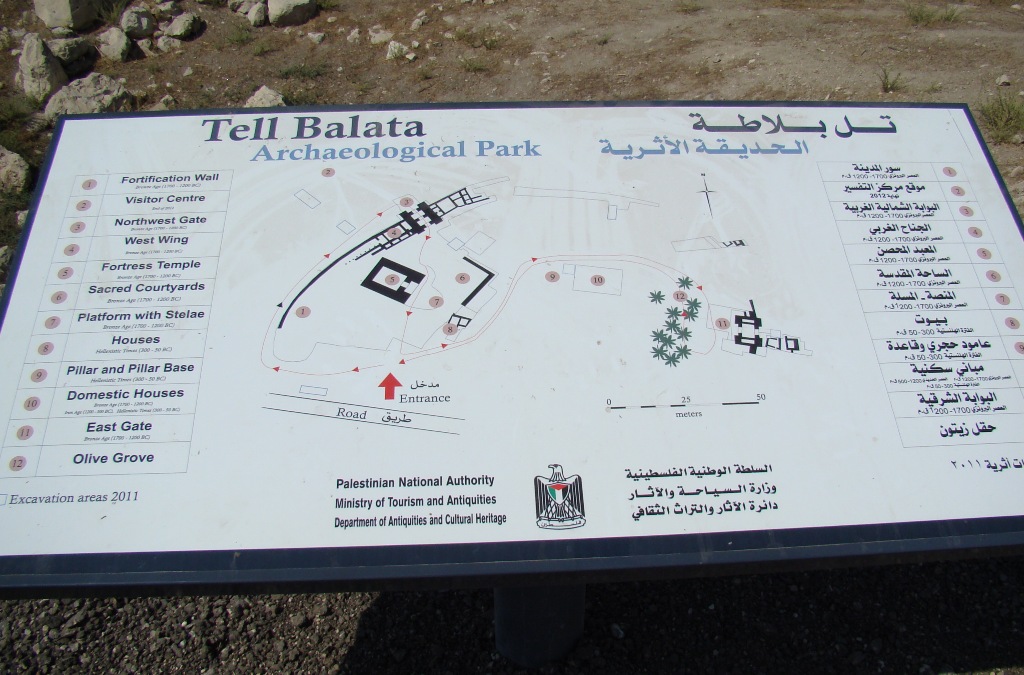
There is a helpful sign as you enter Shechem.

Shechem, Sign at Entrance. Photo by Leon Mauldin. Click for larger view.

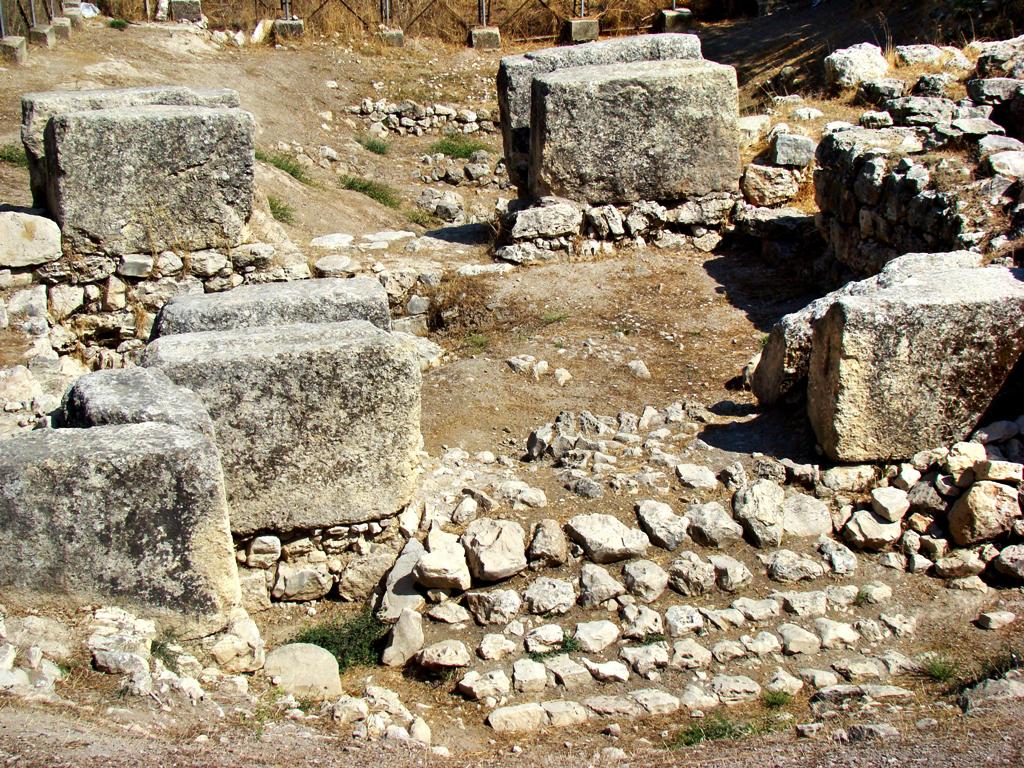
Ferrell Jenkins and I wanted to see the old Canaanite gate at the east side of the site.

Shechem, Canaanite Gate on East Side of city. Photo by Leon Mauldin.

Dr. Rasmussen observes, “The gate, like the associated Cyclopean Wall, dates to the end of the Middle Bronze Age (ca. 1650-1550 BC) and continued in use during the Late Bronze Age.”


DVD of Sandra Waldron’s Memorial Service

October 16, 2011

I previously posted a tribute to Sandra Waldron, wife of evangelist Bob Waldron, on Leon’s Message Board which you may see here.

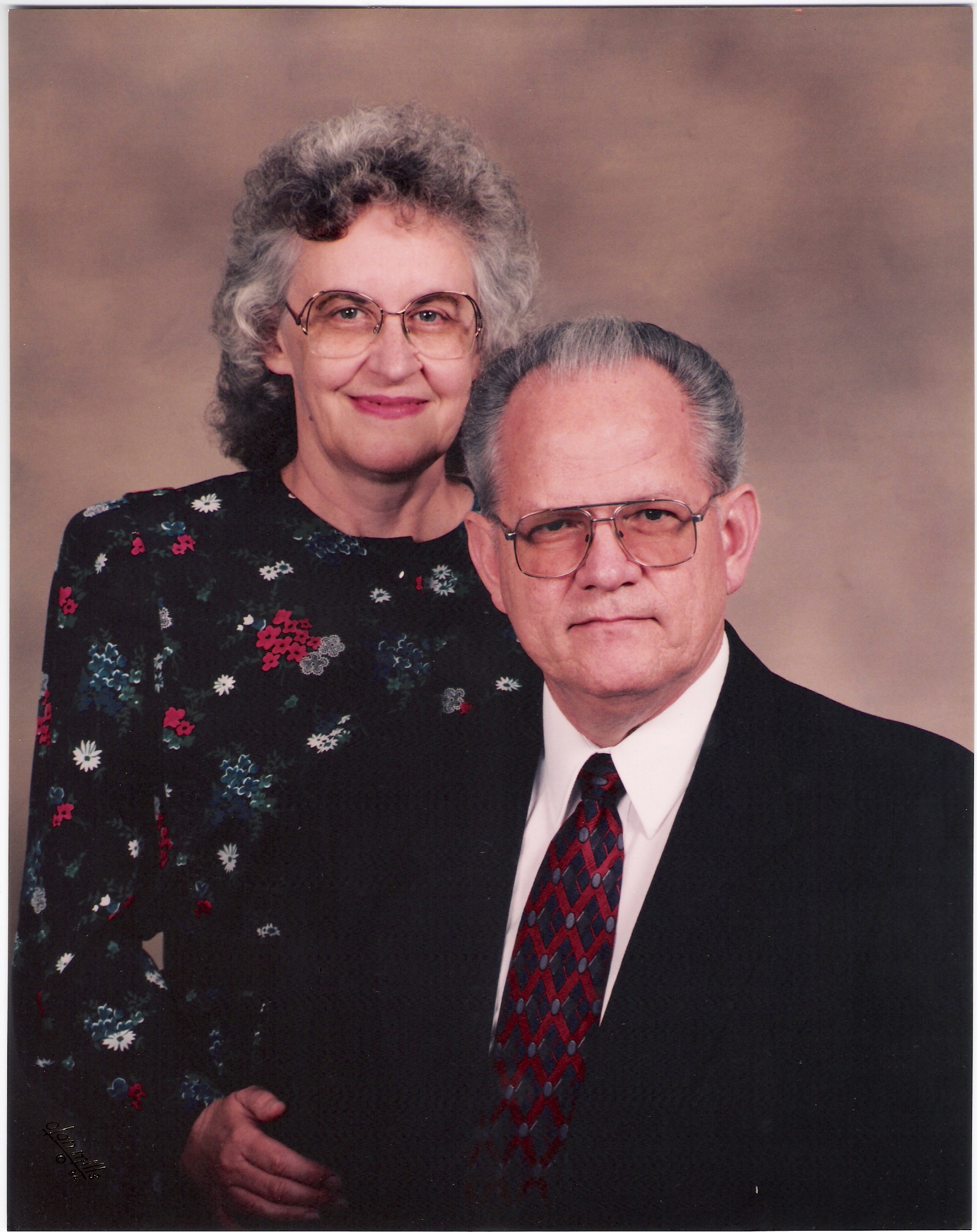
Bob and Sandra Waldron

I have recently received a DVD of the memorial service for Sandra, conducted by Bob Waldron and myself, in Athens, AL, on Tues., Sept. 13, 2011.

Bob requested that I make this available for those who would be interested. When I converted the DVD for uploading, it was rendered into three parts, which are here below in consecutive order:


Error
This video doesn’t exist
Error
This video doesn’t exist
Error
This video doesn’t exist


Things To Do At Age 100

October 11, 2011

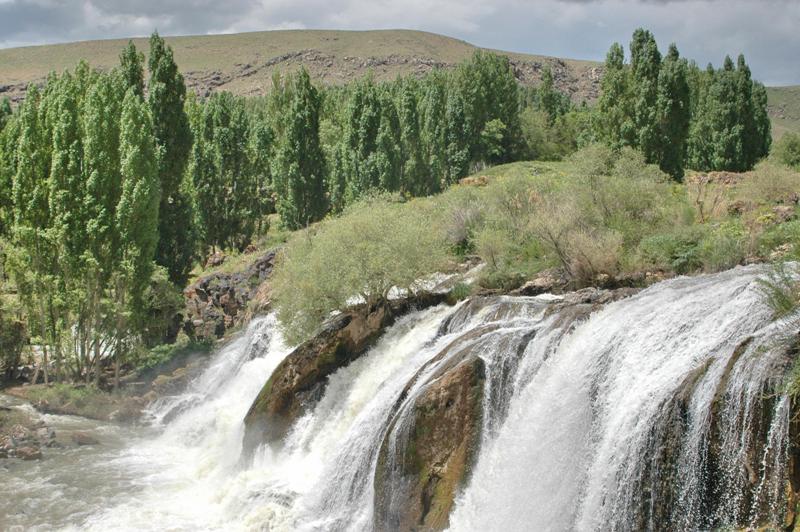
One of our church members, Mrs. Elma Bradford, celebrated her 100th birthday today with a large gathering of family and friends from church.

Mrs. Bradford is a resident of the Nursing Home in Hanceville, AL. Her mind is as sharp as a tack.

Leon Mauldin, Elma Bradford, Linda Mauldin. Photo by Nancy Picogna.

Before we ate, I made a brief tribute to this sweet lady. In summary, I said:

Tribute to whom tribute, honor to whom honor. We are here to honor Mrs. Bradford on her 100th birthday. Here are some things you can do when you are 100.

1. Set a good example. Mrs. Bradford has done and continues to do that.

2. Maintain a sense of humor. Once while visiting her at the nursing home, I began a sentence, ‘Well . . .’ She immediately said, ‘Where ya gonna dig it?’ That’s rather typical for her.

3. Read your Bible. On many occasions when I have gone to her room, and she could have no idea I would be coming, I would find her reading her Bible. She loves the Lord. She loves the Lord’s people. Her hope is set on heaven.

So in case you’re wondering, these are some things you can do at age 100.

BTW, none of the above happen accidentally; people who do these things choose to do so.