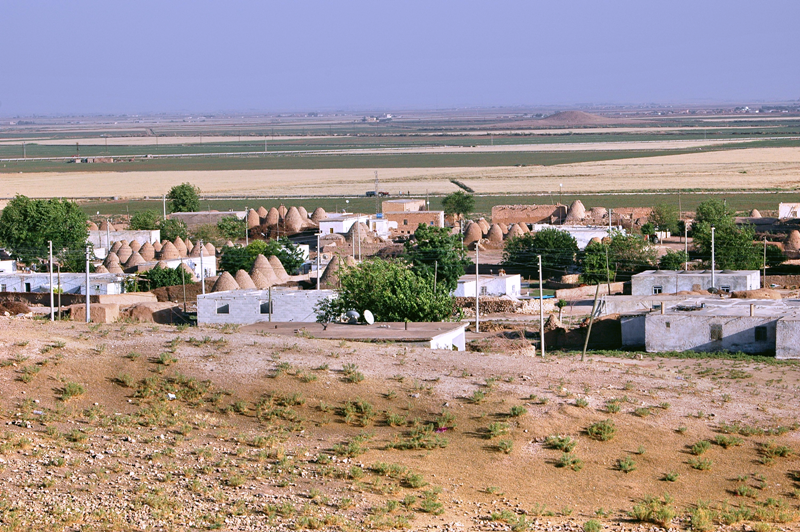
Temple of Apollo at Corinth

December 28, 2010

The church at Corinth, which received two of the New Testament letters, 1 & 2 Corinthians, was situated in a world of sin and degradation.  By “church,” I’m not referring to the place that they met, but rather the people who had turned from their lives of sin and had been washed, sanctified, and justified “in the name of the Lord Jesus and by the Spirit of our God” (1 Cor. 6:9-11).

A visual example of the idolatry so prevalent at Corinth can be seen in our photo, which shows the ruins of the temple of Apollo.
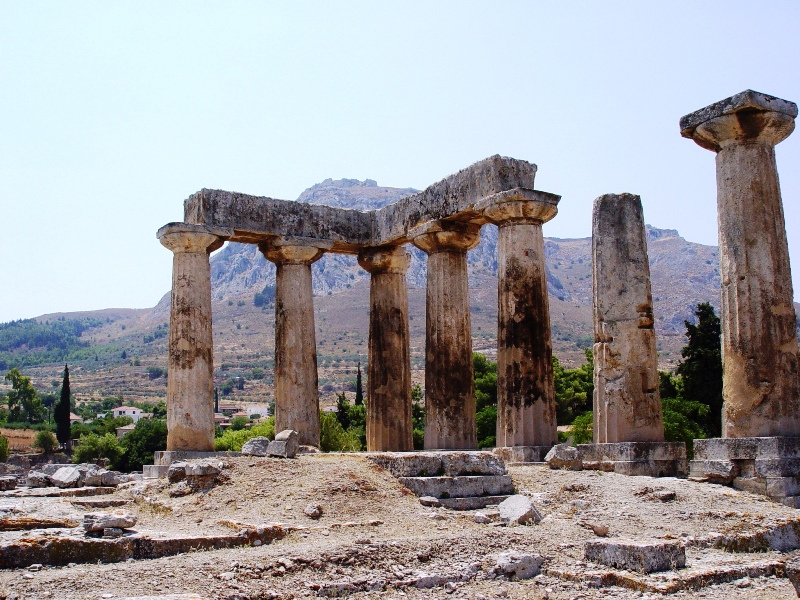
Temple of Apollo at Corinth. Photo by Leon Mauldin.

Regarding this site BAS says,

The Temple of Apollo at Corinth was 700 years old by Paul’s time. On the hill directly overlooking the Roman city’s main forum, its sturdy Doric columns served as a dramatic reminder of Corinth’s ancient grandeur. But the temple was already in ruins; to Paul it would have served merely as a sermon illustration of the impotence of the Greeks’ “pagan” gods.

As noted above, the temple was in ruins in the days of Paul, but the centuries of pagan idolatrous influence was still very much there.

The Acrocorinth may be seen in the background.  It was there that the temple of Aphrodite was situated in ancient times.

The Apollo temple originally had 38 columns of the Doric order.  Today seven are standing.

Click on image for higher resolution.


The Diolkos At Corinth

December 23, 2010

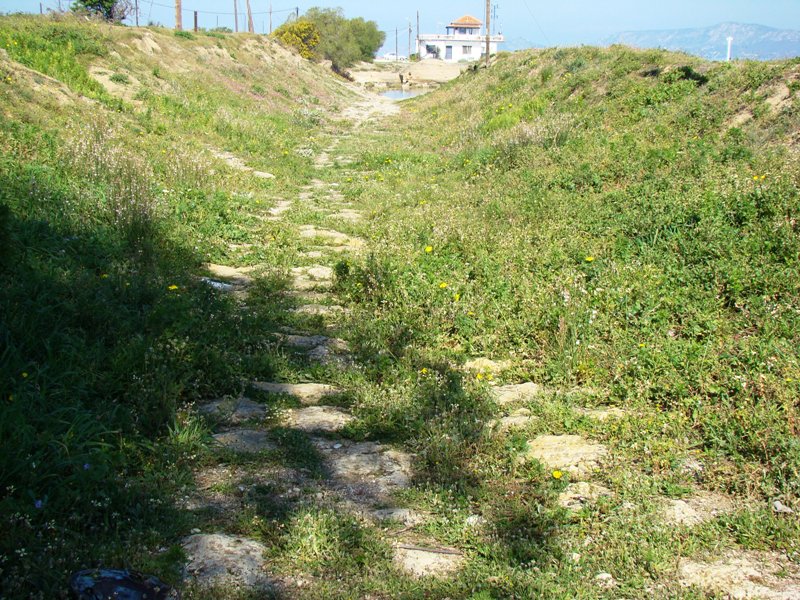
In our previous post we referenced the canal that cuts through the Isthmus of Corinth connecting the Ionian Sea with the Aegean Sea.  In ancient times there was a paved road that stretched across the isthmus, called the diolkos, which enabled cargo and smaller ships to be hauled overland, thus avoiding the dangerous circumnavigation of the Peloponnese.

Our photo shows a portion of the western end of the diolkos. To the right and out of view, the canal runs parallel.

Diolkos at Corinth. Photo by Leon Mauldin.

The BAS has this information re: this site in their collection, The Biblical World in Pictures commenting on their photo taken in the same area as mine above:

In Paul’s day a stone-paved sledway, called the Diolkos, was used to haul ships and their cargoes across the isthmus. At both ends of the road the pavement continued down beneath the waterline, allowing the shallow-draft ships to be floated onto and off of the sleds. The sleds were then pulled out of the water and across the isthmus by mule-power.

This view of the Diolkos is near the western end, looking beyond to the Gulf of Corinth (and the mountains along its northern coast sheltering the oracle shrine of Apollo at Delphi). At the right can be seen the western outlet of the modern canal. The stone pavement of the Diolkos clearly shows the ruts formed by sled runners over centuries of use. Corinth, of course, controlled the Diolkos traffic. Moreover, since ship crews and passengers using this route had to leave their vessels temporarily at Corinth anyway, they had less reason to make an additional port-call at Athens’ harbor on the Piraeus. Thus, many more travelers of the Roman era passed through Corinth than through Athens.

The diolkos was paved with hard limestone.

Click on image for higher resolution.


More on Corinth

December 18, 2010

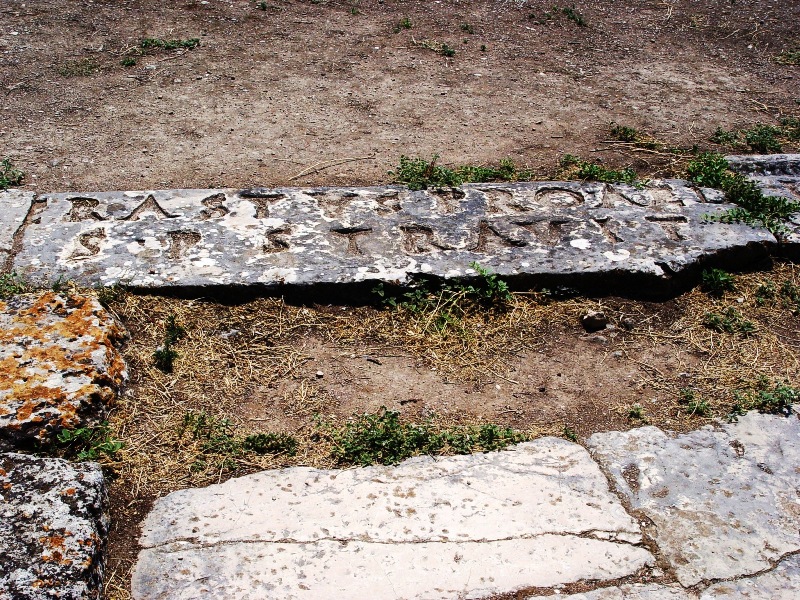
Our last post featured a photo of the Erastus inscription. We referenced the biblical text of Romans 16:23.  Additionally, Erastus is mentioned in two other passages.  In Acts 19:22 we read, “And having sent into Macedonia two of his helpers, Timothy and Erastus, he himself stayed in Asia for a while” (ESV).  Lastly in, 2 Tim. 4:20, Paul observes, “Erastus remained at Corinth, and I left Trophimus, who was ill, at Miletus” (ESV).

Here is a closer view of the inscription:

Closeup of Erastus Inscription at Corinth. Photo by Leon Mauldin.

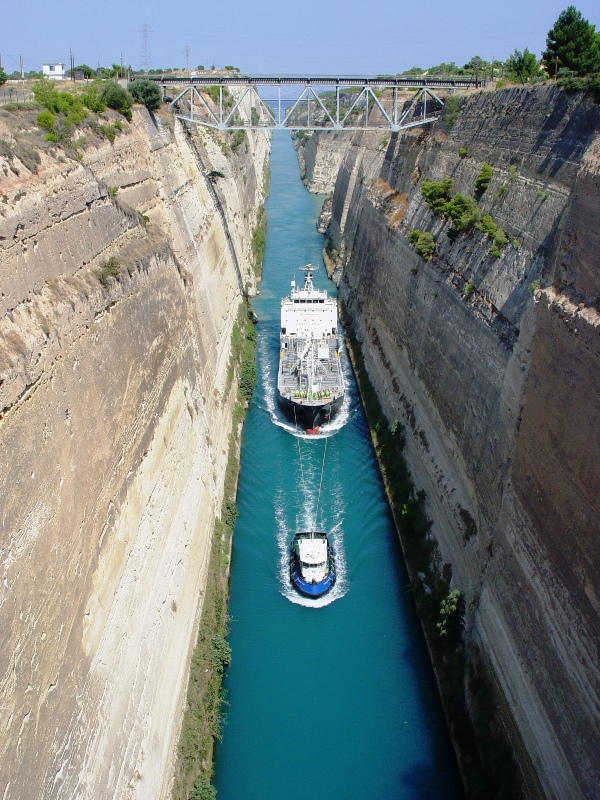
The narrowest point of the isthmus of Corinth is only 4 miles wide.  A canal was engineered and completed between 1882 and 1893.  Nero (A.D. 67) had the idea of building a canal at that exact route utilized by the modern engineers.  He planned to use 6,000 Jewish prisoners as his work force, but the idea was abandoned.

Canal at Corinth. Photo by Leon Mauldin.

The canal separates the Peloponnesian peninsula from the Greek mainland.  It connects the Gulf of Corinth with the Aegean Sea.

Click on images for higher resolution.  More to come on Corinth.


Lachish, cont’d.

December 3, 2010

Our previous post shows an aerial shot of Lachish.  Today’s post will get us back on ground level.

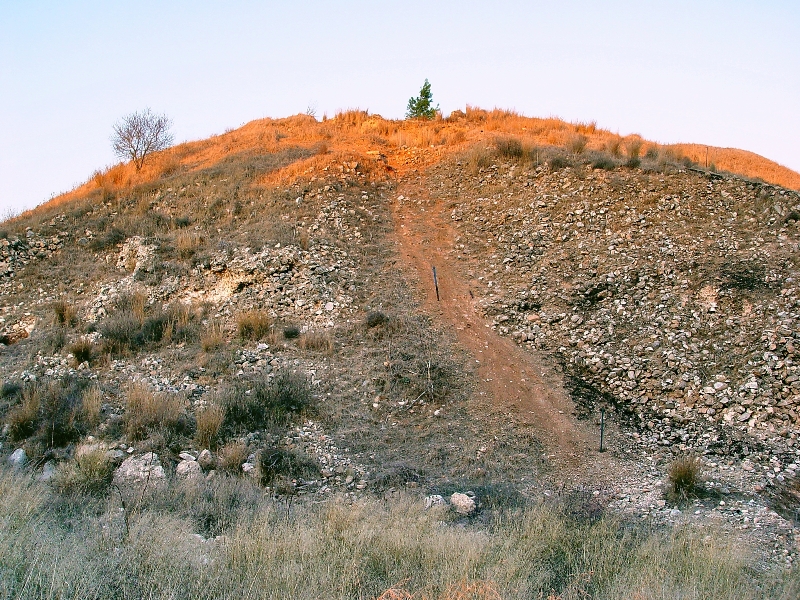
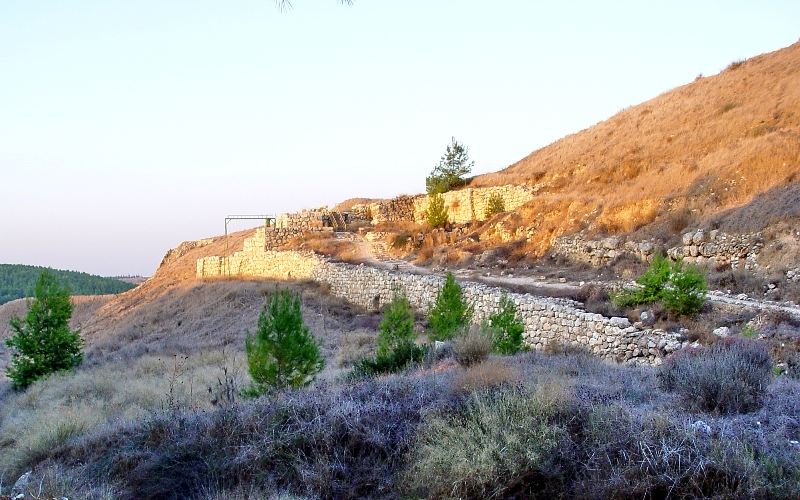
I mentioned in that previous post that you can see the siege mound laid by the Assyrians in 701 BC.  Our photo below shows the mound.


Siege Mound at Lachish. Sennacherib was the Assyrian King. Photo by Leon Mauldin


As you ascend the western side of the city, you can see a portion of the ancient wall, as well as the entrance to the city gate.


Western Wall of Lachish. Photo by Leon Mauldin


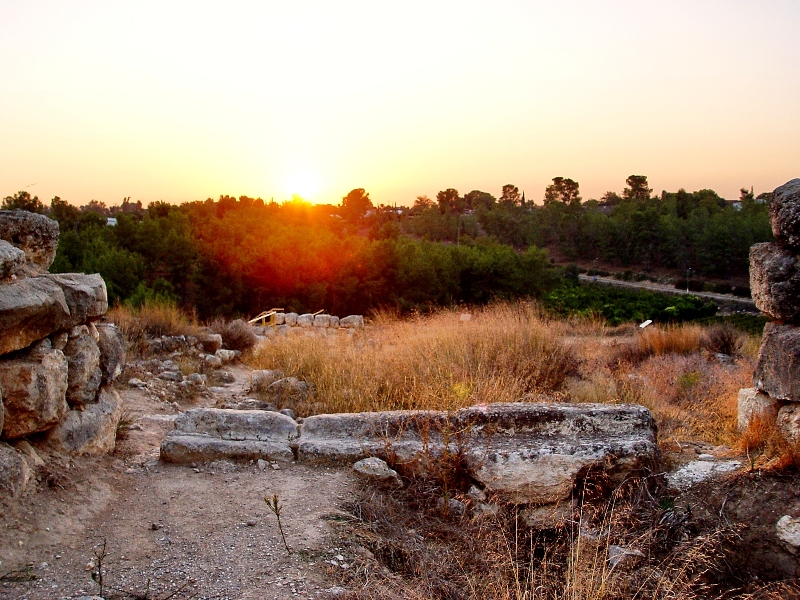
Finally, here is a sunset view from inside the city gate of Lachish.


City Gate at Lachish at Sunset. Photo by Leon Mauldin.

Click on images for higher resolution.


Lachish

November 30, 2010

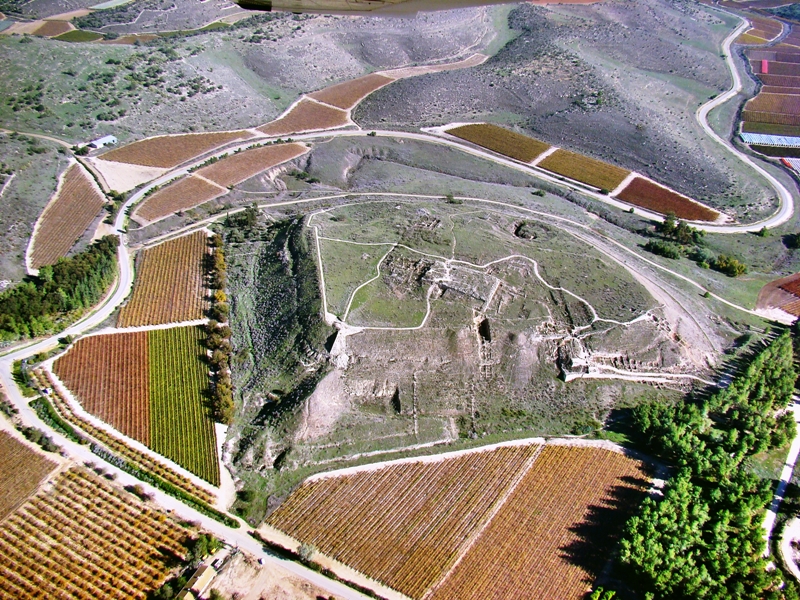
The city of Lachish (Tell ed-Duweir in Arabic) was located about 30 miles southwest of Jerusalem, nestled in the foothills, the Shephelah, of Judah.  The site covers about 18 acres. It was previously a principle Canaanite city and then after the conquest under Joshua, it was one of the most important Israelite cities.

Our photo gives an aerial view of biblical Lachish.

Aerial of Lachish, one of Judah's most important cities. Photo ©Leon Mauldin.

On the far right the siege mound built by the Assyrians under Sennacherib in 701 B.C. can still be seen. You can also see the ancient wall of the city and the gate complex.

Passages:

1. Rehoboam, Solomon’s son, rebuilt Lachish as a city for defense, a fortified city (2 Chron. 11:5-11).

2. Later, King Amaziah of Judah, following his apostasy from God (he began worshiping the gods of Edom), was killed while hiding in Lachish (2 Kgs. 14:19; 2 Chron. 25:27).

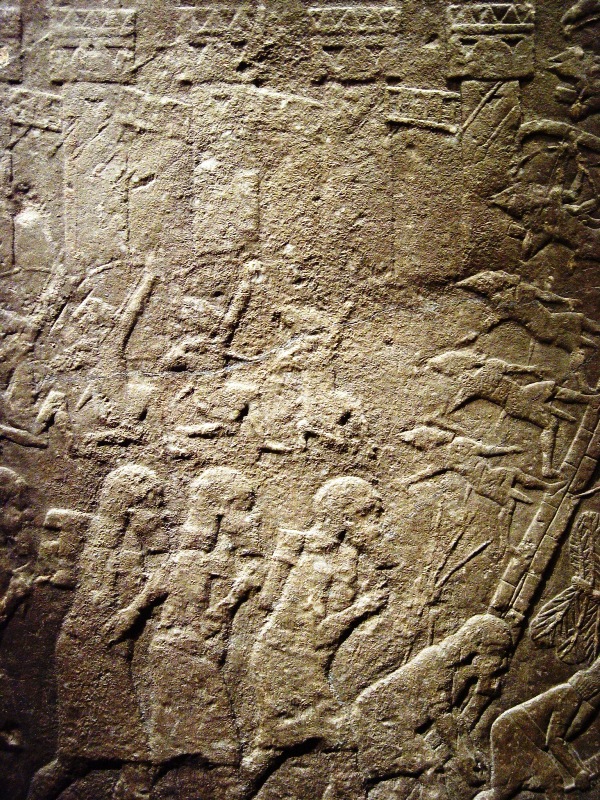
3. Sennacherib, king of Assyria, captured Lachish (2 Kgs.18:13-17; 2 Chron. 32:9).  He considered its capture to be of such significance that he depicted it in elaborate relief on the wall of his palace at Nineveh, as illustrated in our photo here below.  Note the Assyrian archers; others are scaling the wall by means of a ladder.

Lachish Relief. Metro Museum NY. Photo ©Leon Mauldin.

Additionally, Lachish is known for the “Lachish Letters,” twenty-one pottery sherds on which were written letters in clear Hebrew information regarding the attack on Lachish and Jerusalem by Babylon in 586 B.C. One of those letters says that the signal fires from Azekah could no longer be seen. Just prior to that, Jeremiah had observed that only Lachish and Azekah were left as fortified cities in Judah (Jer. 34:7).

Click on images for higher resolution.


Jacob & Family at Shechem

November 26, 2010

After Jacob and his family had a happy meeting/reunion with his brother Esau,  Jacob journeyed to Succoth and built a house there (Gen. 33:17).  The time is not specified, but it must have been some years.  Then Jacob made his way to Shechem (v.18).

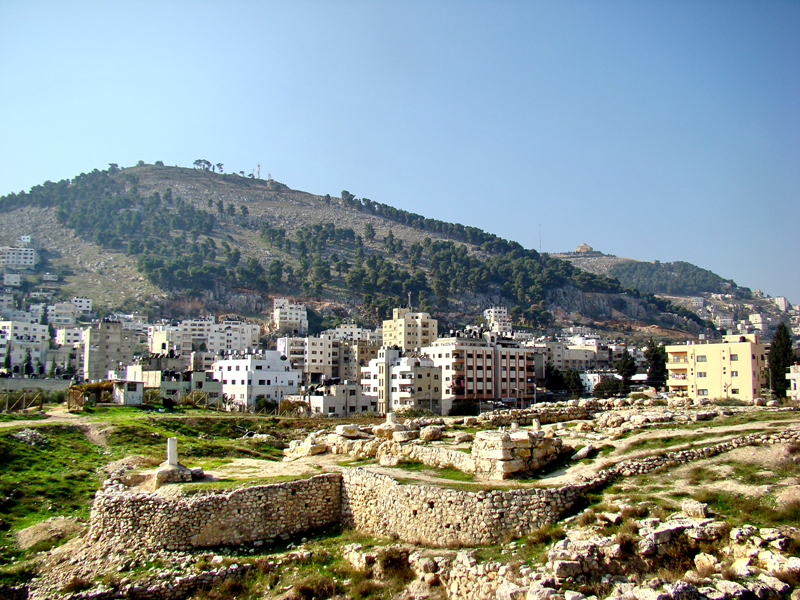
Shechem was the very location where Abram was when God promised him the land of Canaan (Gen. 12:6,7). It would turn out that Shechem was the site for many significant biblical events.

Shechem was the site for many impt biblical events. Photo ©Leon Mauldin.

Our photo shows the city of Shechem in the foreground.  In the distance you can see Mt. Gerizim, the mountain referenced by the woman of Samaria as she conversed with Jesus in John 4 (v.20).

Jacob bought a parcel of land at Shechem (Gen. 33:19); it was here to his sorrow that his daughter Dinah was violated (Gen. 34:2). Later when the family was residing to the south in Hebron, the sons of Jacob tended sheep at Shechem before moving their flocks on to Dothan where they sold Joseph into slavery (Gen. 37:12-28).

One of the more fascinating events at Shechem was the confirmation of the covenant during the Conquest of Canaan. Shechem is situated between Mt. Ebal and Mt. Gerizim.  Prior to the Conquest, Moses instructed the nation of Israel that when they crossed over the Jordan, they were to journey to this location.  Six tribes were to stand on Mt. Gerizim (for blessing), and the other six on Mt. Ebal (for cursing).  All of the words of the law, the blessings and the curses, were to be read.  All the people were to answer, “Amen.”  Immediately, after the conquest of Jericho and Ai (Josh.6-8), Joshua led the people north to these two mountains, where they obeyed God’s instructions (Deut. 27; Josh 8:30-35).  Think of it! At the very spot where childless Abram stood when God made the land promise, now were 701,730 men of war, plus women and children, there to stake their claim on the land!

Shechem would also be the gathering point for all of Israel for Joshua’s farewell address.  It was here that he challenged the people to fear the LORD and serve Him in sincerity and in truth, and to put away all the idols and false gods that were among them.  His own choice has been an encouragement to many down through the years: “but as for me and my house, we will serve the LORD” (Josh. 24:14,15). Their covenant with God was then renewed there at Shechem (Josh. 24:25). Later in that same chapter, notation is made that Joseph was buried in Shechem (Josh. 24:32).

Click image for higher resolution.


Gezer

November 18, 2010

I’m currently attending the ETS and SBL meetings in Atlanta, and enjoying sharing a room with bro. Ferrell Jenkins.

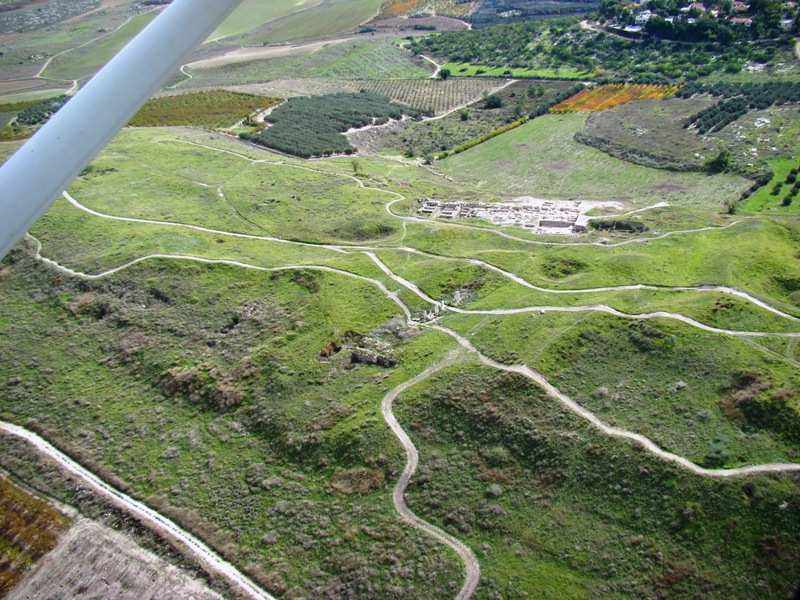
A couple of the presentationstoday have been on biblical Gezer.  This city was given as a dowry to Solomon by Pharaoh when he married Pharaoh’s daughter.  Gezer became a fortress city, guarding access to the south. Excavation is ongoing.

Today’s post features an aerial photo of Gezer, taken last year (Dec. 2009).

Aerial photo of Gezer. Photo ©Leon Mauldin.

In the center of the photo you can see Gezer’s “standing stones.”  Upper right show an important area of excavation, including the six-chambered gate.


From Gilead to Shechem

November 15, 2010

After Jacob lived in Haran for a total of twenty years (see our previous couple of posts) he made his way back to Canaan.  Besides the fact that he was ready to leave Haran for personal reasons (Gen. 31:1-2), the Lord instructed him, “Return to the land of your fathers and to your kindred, and I will be with you” (Gen. 31:3). He left, along with his wives (four!) and eleven sons (plus Dinah), picking the opportune time when Laban was gone shearing his sheep (Gen. 31:19).

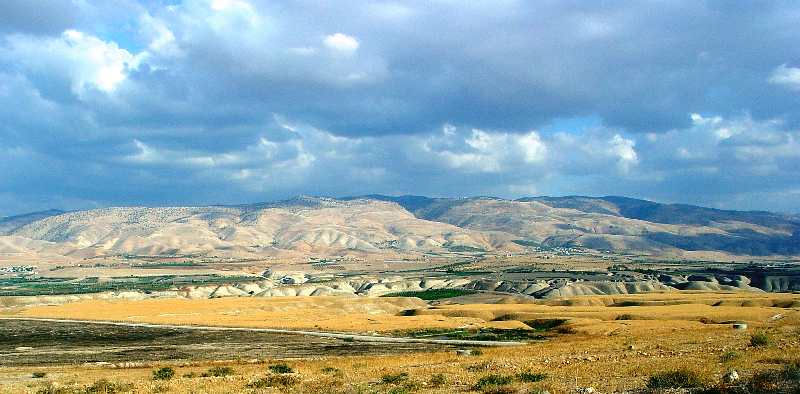
It was on the third day that his father-in-law Laban learned of these events. It took seven days’ travel to overtake Jacob. The text says, “and he overtook him in the mountains of Gilead” (Gen. 31:23). Our photo below shows a view of some of the mountains of Gilead, as viewed from the west side of the Jordan.


Mountains of Gilead. Photo ©Leon Mauldin.


After he and Laban came to an understanding, Laban returned home to Haran and Jacob continued his journey to Canaan. After what turned out to be a cordial meeting with his formerly estranged brother Esau, Jacob lived a while in Succoth, then made his way to Shechem.

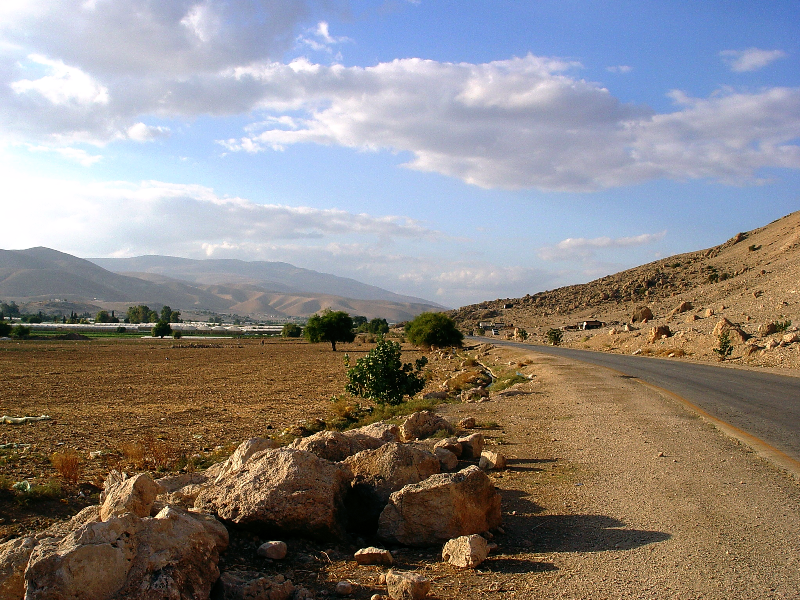
Our photo below shows the pass that leads from the area of Succoth (which would be to our backs) toward Shechem.  This is the route Jacob and his family and servants would have taken to Shechem.  On the right of the photo you can see the modern road which follows this ancient pass.


Pass to Shechem. Jacob would have taken this route. Photo ©Leon Mauldin.

Click on images for larger view.


Haran, cont’d.

November 10, 2010

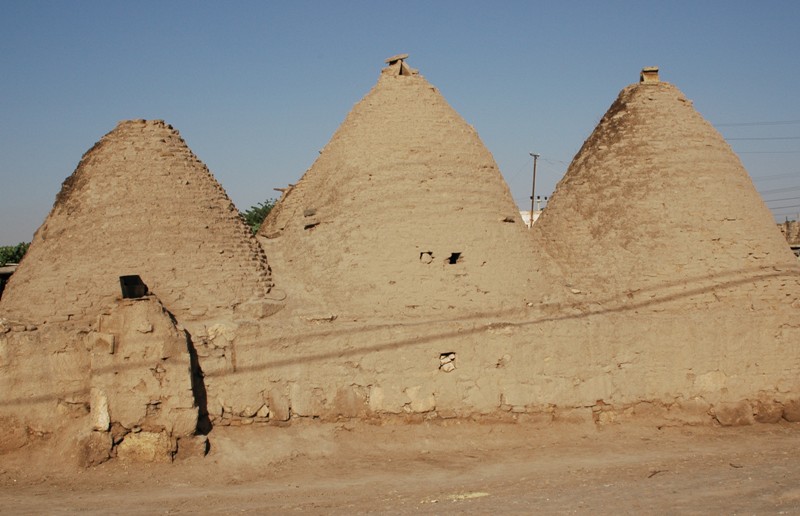
At Haran (Harran) one can see bee-hive houses that are said to be about 200 years old, but built on the same pattern as in the days of the Patriarchs.  On the back of the house on your left you can see the oven.


Bee-Hive structures at Haran. View of Oven. Photo ©Leon Mauldin.


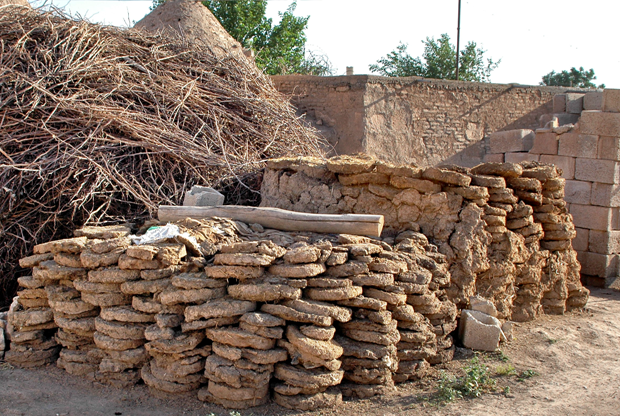
The fuel for such ovens would be wood and/or dung, as seen in photo below.


Fuel for the Fire. Dung cakes & wood for oven fires. Photo ©Leon Mauldin.


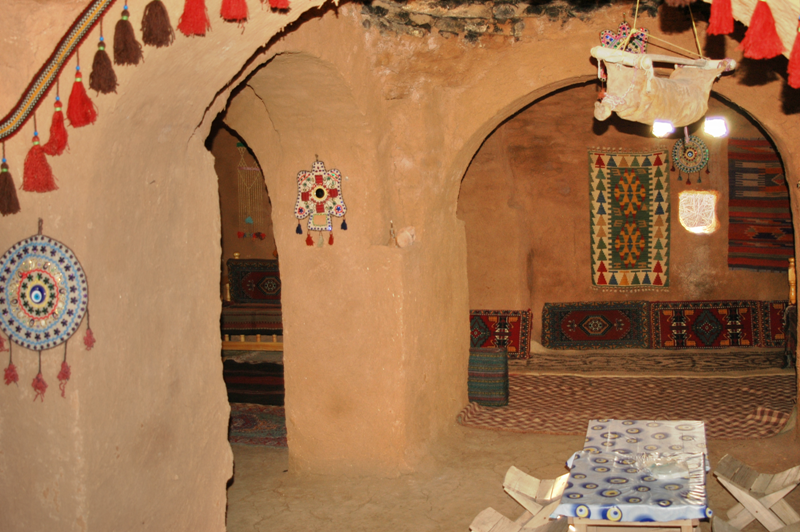
I was able to go inside one of the houses in Haran.  It was quite nice.


Inside a bee-hive house at Haran. Photo ©Leon Mauldin.

Click on image for larger view.


Jacob’s Sojoun in Haran

November 9, 2010

In our previous post we made reference to Jacob’s watering Laban’s flock.  Genesis 28 tells of his flight from Canaan to Haran of Mesopotamia: “Now Jacob went out from Beersheba and went toward Haran” (v.10).  Jacob’s mother Rebekah had said, “Now therefore, my son, obey my voice: arise, flee to my brother Laban in Haran. And stay with him a few days, until your brother’s fury turns away” (Gen. 27:43-44).  Ironically, those “few days” would turn into a sojourn of some twenty years!

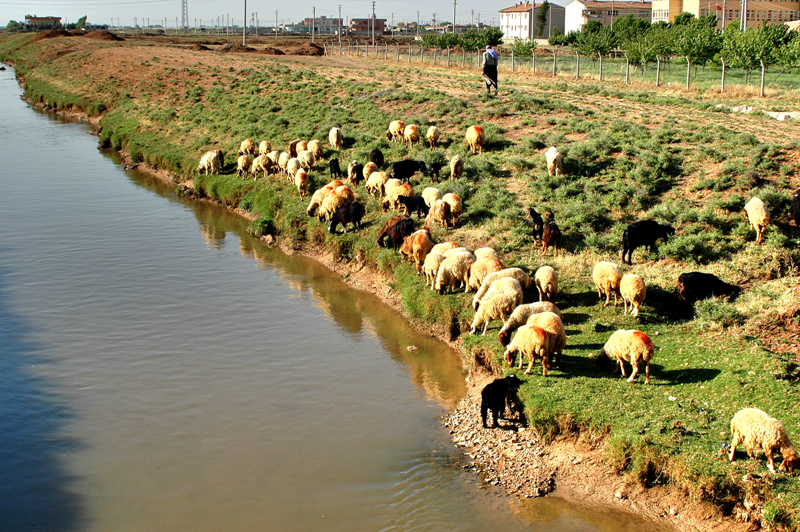
Previously we showed a photo of an ancient well to illustrate how Jacob watered the sheep as mentioned in Gen. 29:10. Our photo today was taken at Haran (modern spelling is Harran). Shepherds continue to lead their sheep to water and grazing these thousands of years later.

Shepherd w/Sheep at Haran. Photo ©Leon Mauldin.

Jacob agreed to work seven years as a shepherd for Laban in order to marry Rachel.  When the time quickly passed the wedding night arrived. But the next morning Jacob awoke to discover that he was married to Leah, Rachel’s sister.  When he demanded an explanation from Laban, he told his immeasurably shocked son-in-law that it was not their custom to marry the younger daughters before the older.  But he had a solution: let Leah have her one-week wedding festivities, then marry Rachel, on the condition that you work seven more years!  Jacob agreed to those terms.  After those fourteen (total) years had passed, Jacob worked another six years for Laban, making the total of twenty years we referenced above in our post.

Photo below shows the site of biblical Haran.

Biblcial Haran. Jacob sojourned in this area 20 years. Photo ©Leon Mauldin.

Later, when Isaac died, Jacob and Esau buried him.  But there is no mention of all of Jacob’s seeing his mother after sending him away to Haran for what she thought would be just a short while.

Click on photos for larger view.  Also, see our post of May 4, 2010:
https://bleon1.wordpress.com/2010/05/04/mah-zzot-what-is-this/