Psalm 127 is attributed to Solomon, who wrote, “Behold, children are a heritage from the LORD, The fruit of the womb is a reward. Like arrows in the hand of a warrior, So are the children of one’s youth. Happy is the man who has his quiver full of them” (v. 3-5a). Psalm 128 goes on to say, “Yes, may you see your children’s children. Peace be upon Israel!” (v.6). We would also include Proverbs 17:6, which states, “Children’s children are the crown of old men, And the glory of children is their father.”
These verses speak to the fact that our children and grandchildren are blessings from God, from Whom all blessings flow! In our tours to biblical and historical sites over the years, we have been privileged to have family travel with us, including some of our grandchildren. In our recent tour of Greece and Turkey we had two of our grandsons (and two of our children). It was their (these grandsons) first time traveling internationally.
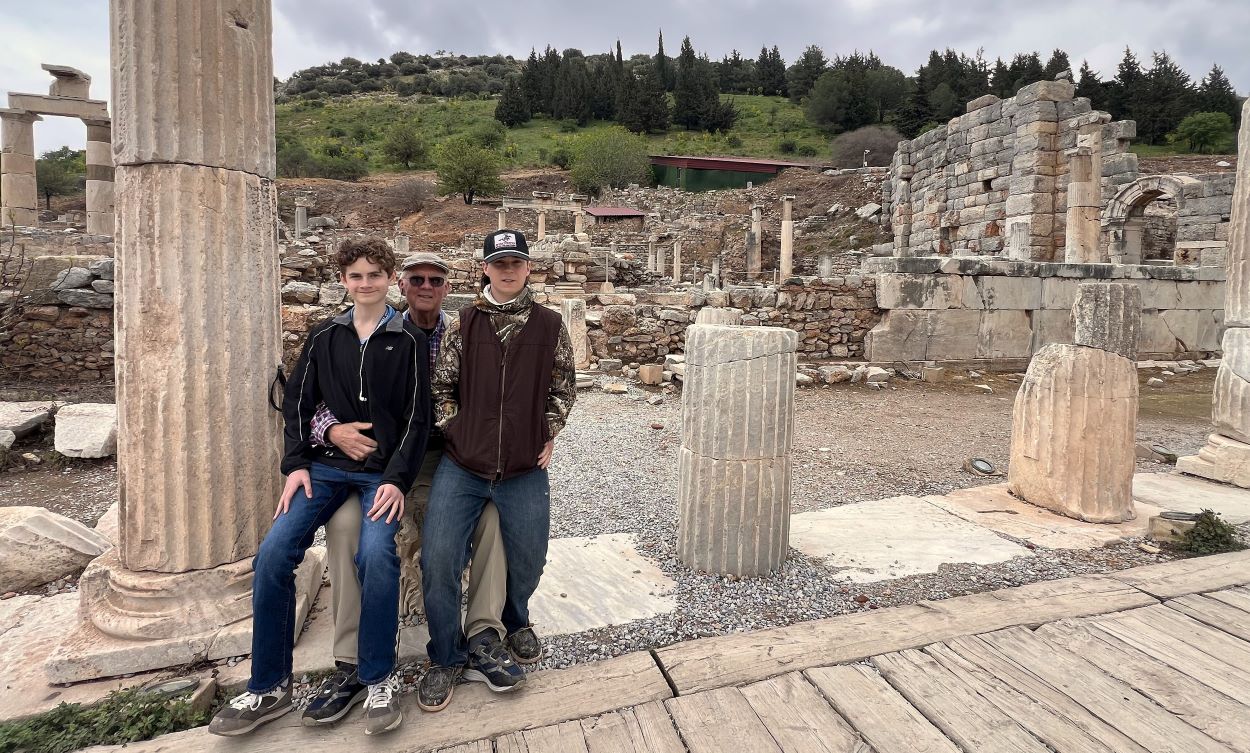
Keegan (left) and Little Leon (right) at Ephesus.
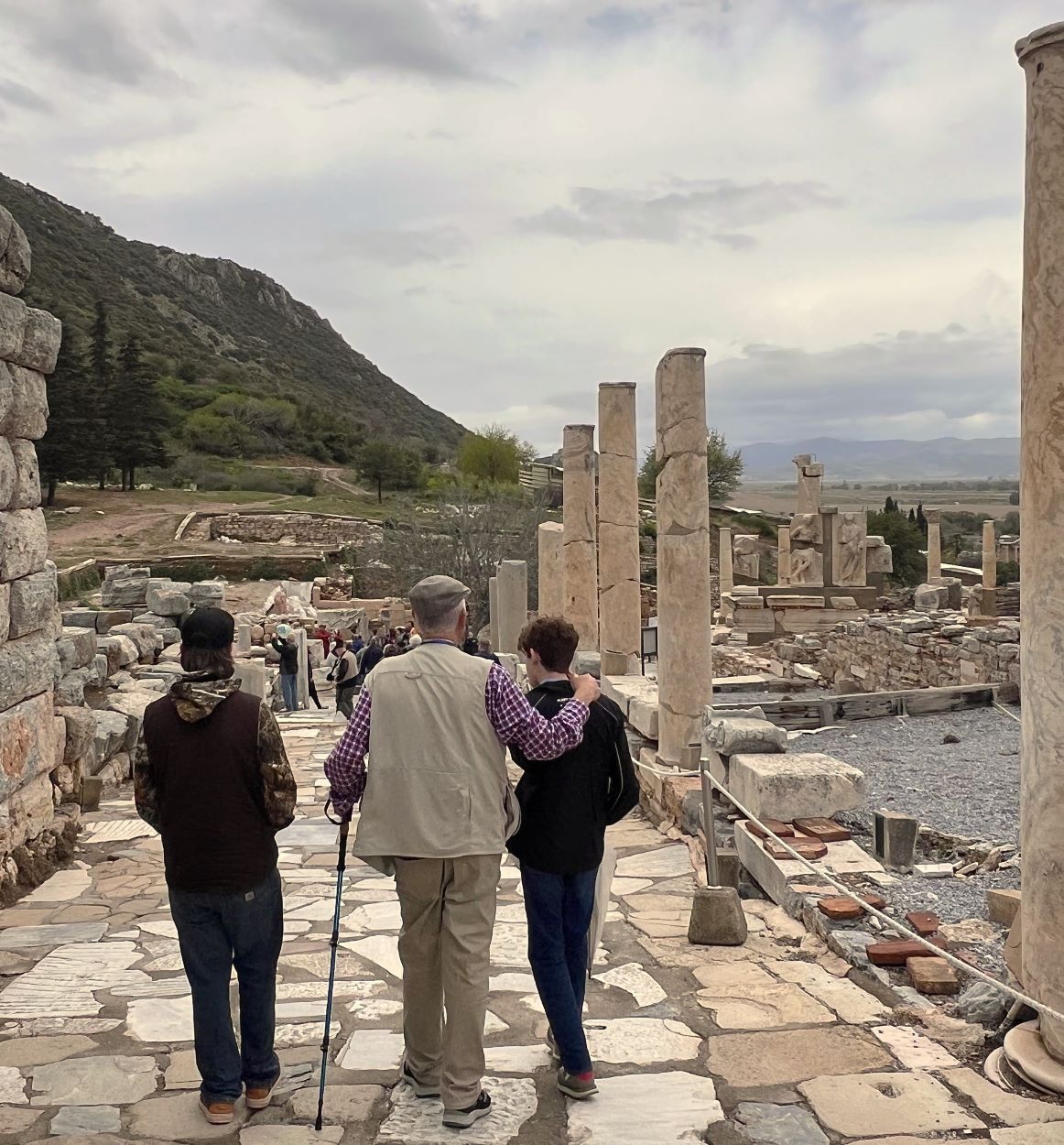
Walking down Curetes Street, Ephesus. Photo by Alysha Montgomery.
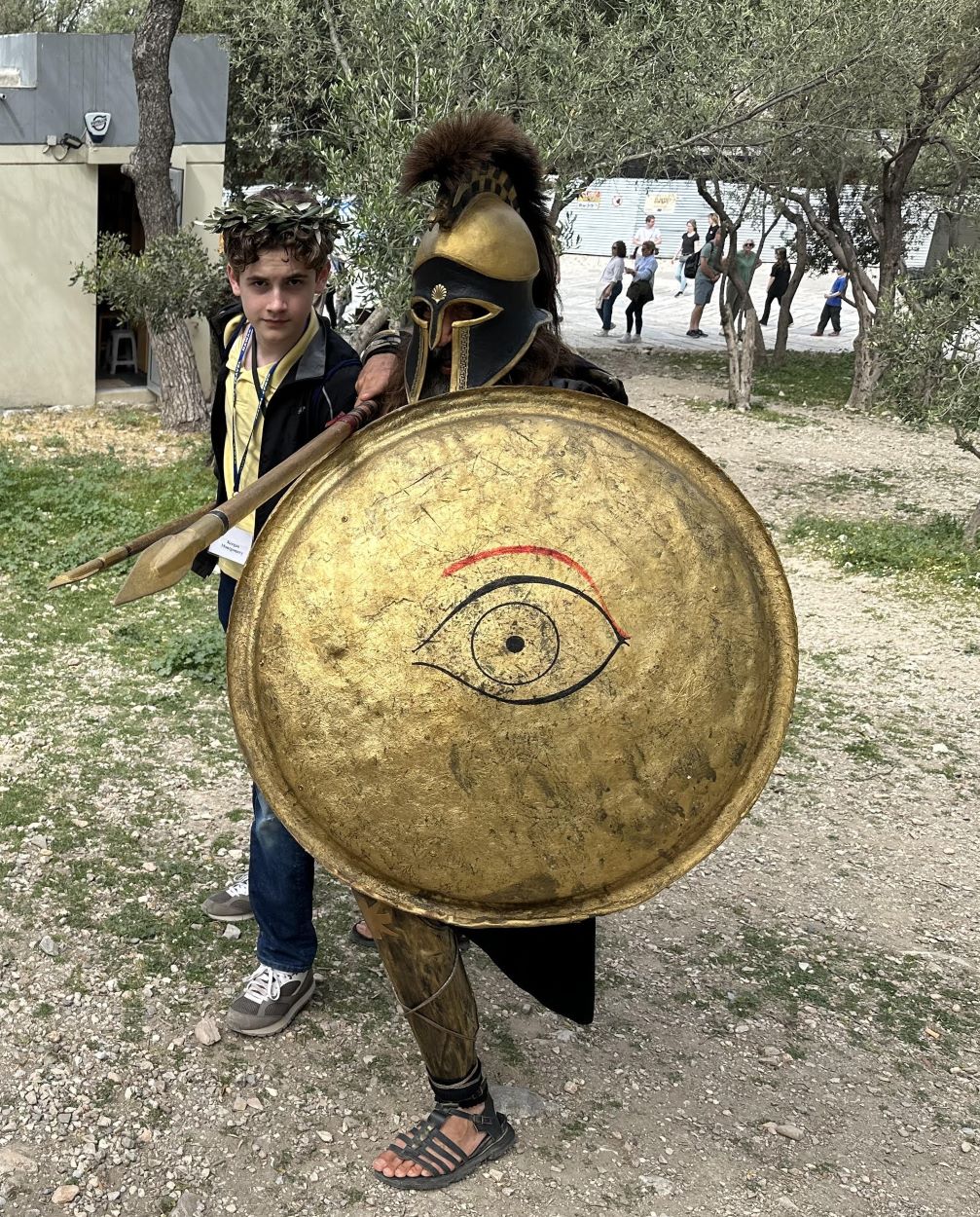
When we were in Athens Keegan posed with a “Greek soldier,” complete with hopite armor. Keegan is wearing the stephonos (victor’s) crown.
Keegan with Greek soldier, dressed in hoplite armor. Acropolis at Athens, Greece. Photo by Leon Mauldin.
I want to fortify the faith of our grandchildren. I want them to know that the Bible is true. That it speaks of real people, real places, and real events. Travel in the Steps of Paul and John can contribute to that. We are blessed!
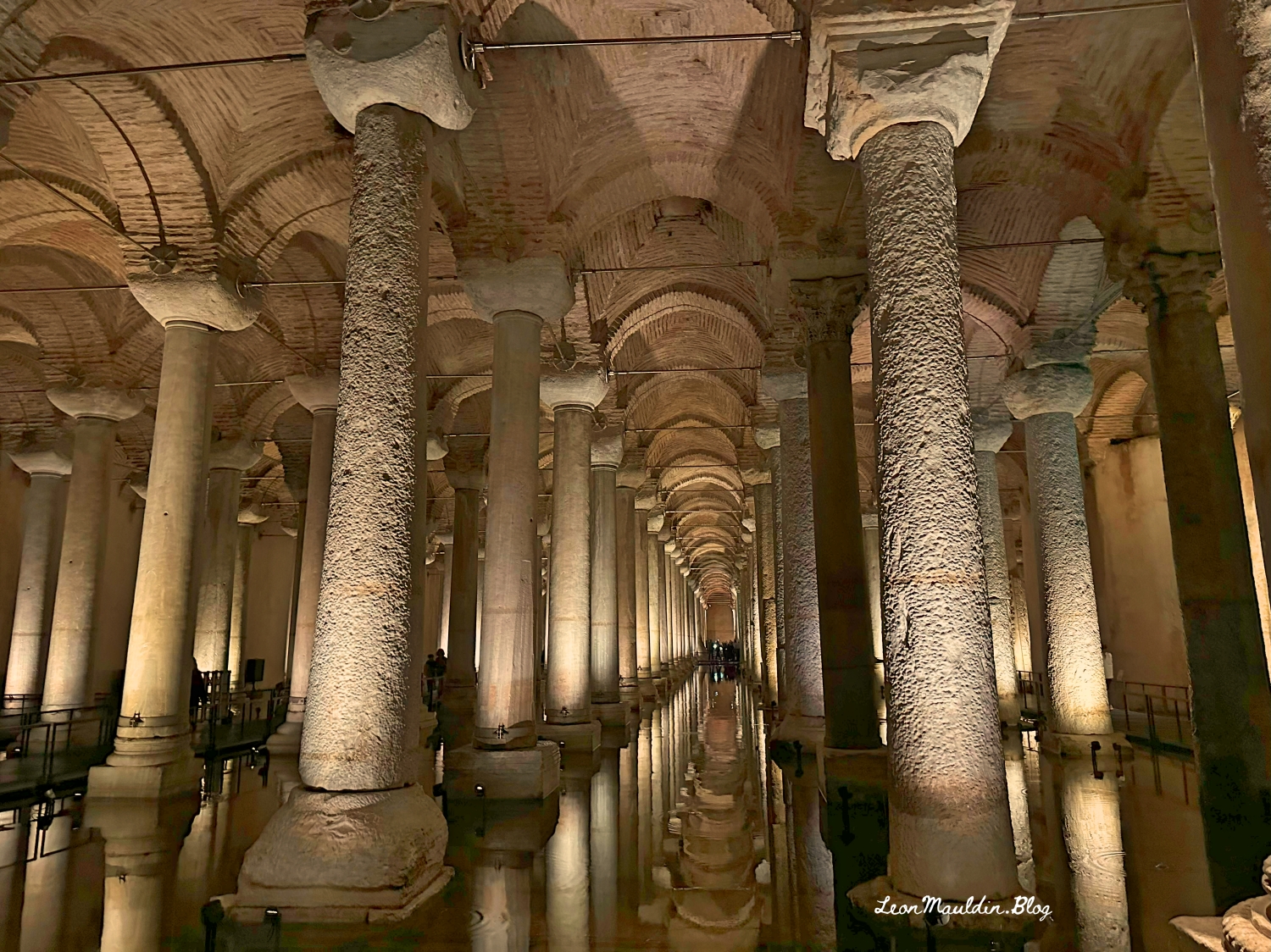
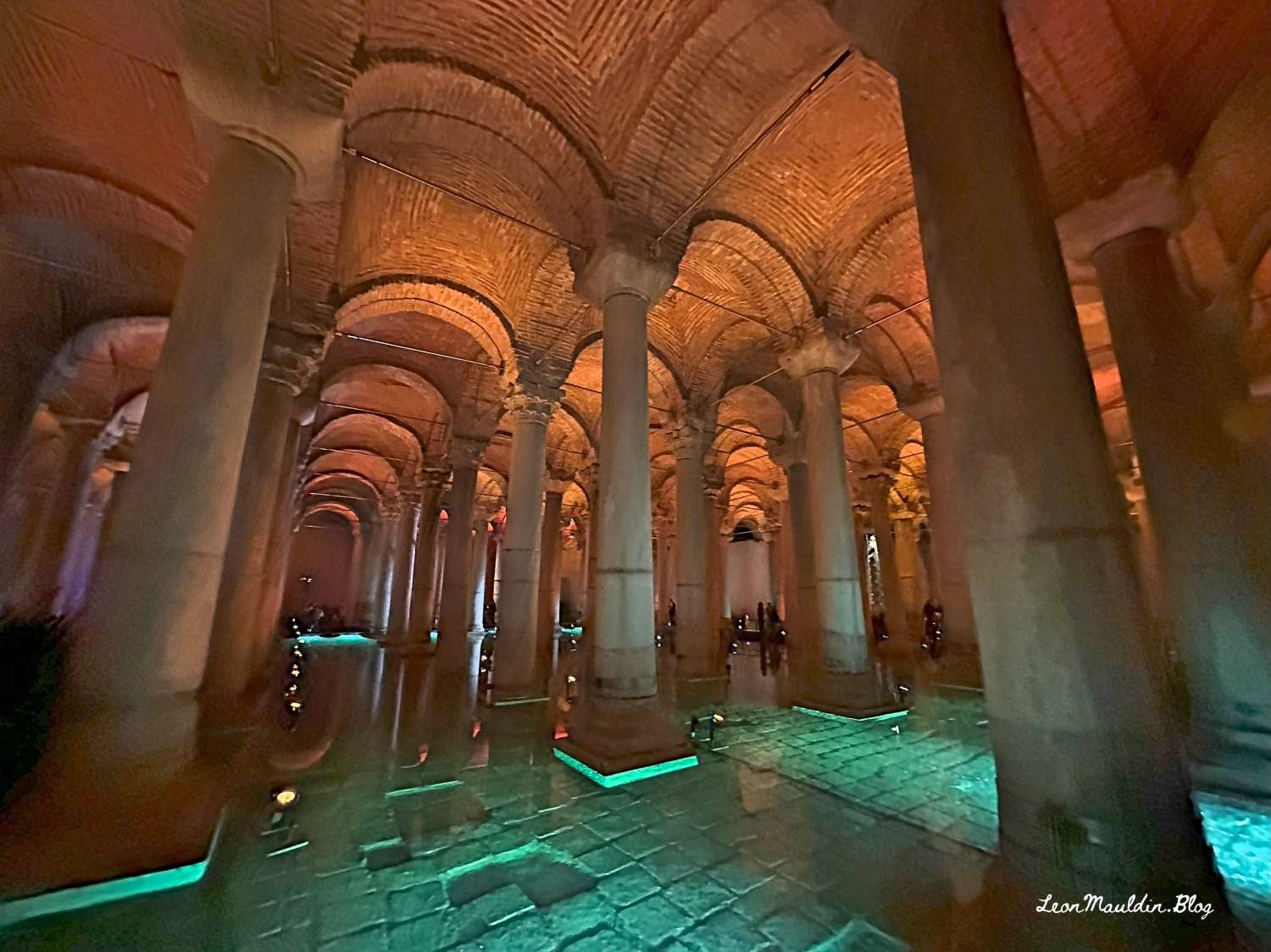
Our recent tour visiting biblical sites in Greece and Turkey concluded in the city of Istanbul (Byzantion, Byzantium, Constantinople). Sites on this final leg of our itinerary included the Chora Church, the Yedikule Fortress, the dungeon, the city walls, and one of the underground water systems. (The Fall 2023 issue of Biblical Archaeology Review had a feature article on this city, which it entitled, “Explore Christianity’s First Capital.”)
The underground cistern we visited (the Basilica Cistern) is presently beneath Istanbul’s streets (rediscovered in 1545 by Petrus Gyllius). It was built by Justinian I in the 6th century BC, and supplied water to Justinian’s palace, the Hagia Sophia, and other major structures of Constantinople. It has 336 marble columns and holds up to 20 million gallons of water. Justinian believed in “recycling.” He used architectural elements from other buildings, as illustrated here:
Lonely Planet Istanbul notes that “the cistern has played a starring role in innumerable motion pictures (remember From Russia with Love?) and is now one of the city’s best-loved tourist attractions” (p. 25). The authors lists the Basilica Cistern as among “Istanbul’s Top 10” attractions to visit.
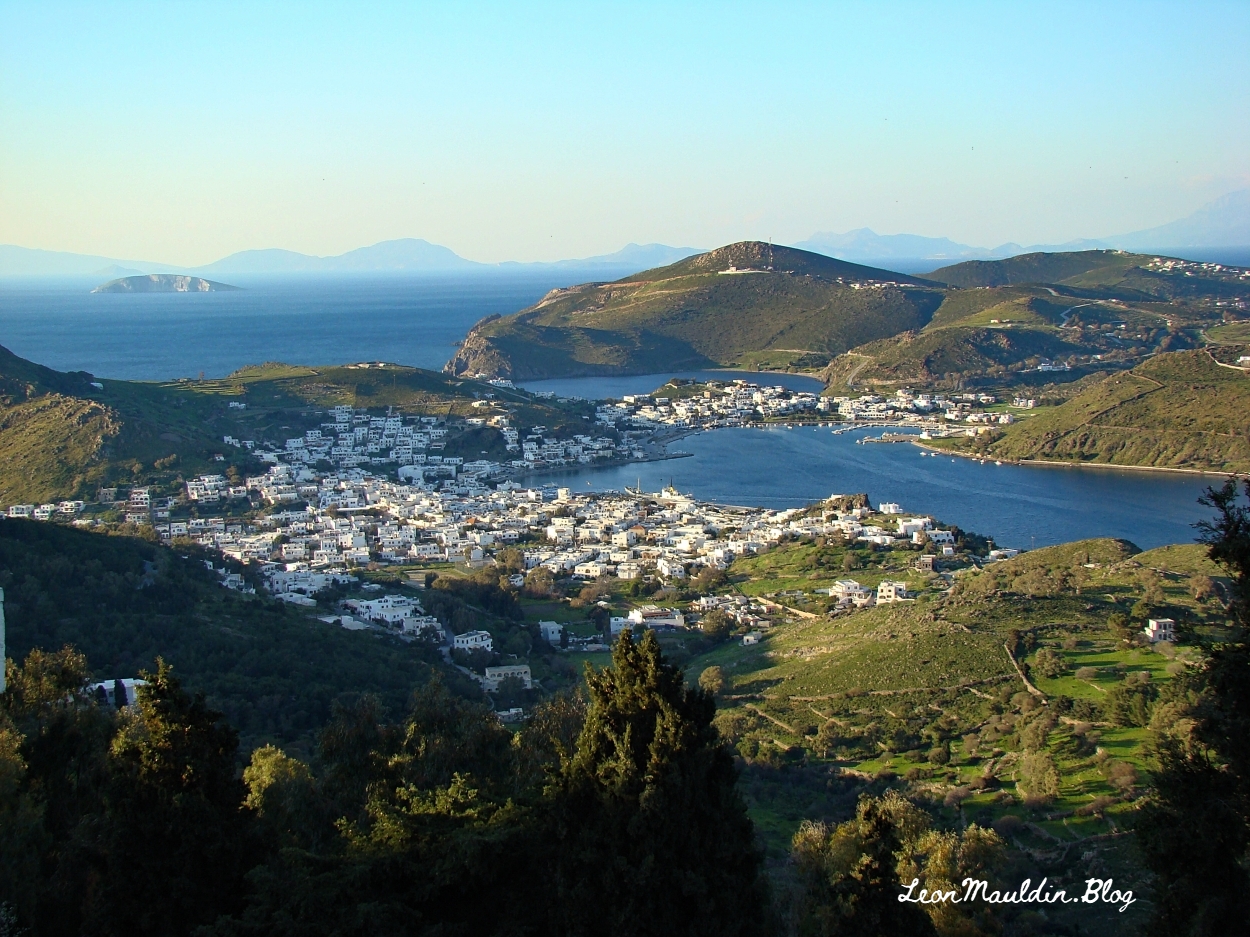
In our local congregation we are continuing to explore the Seven Churches of Asia, of Revelation 2-3. John the Apostle received the Revelation on the Island of Patmos.
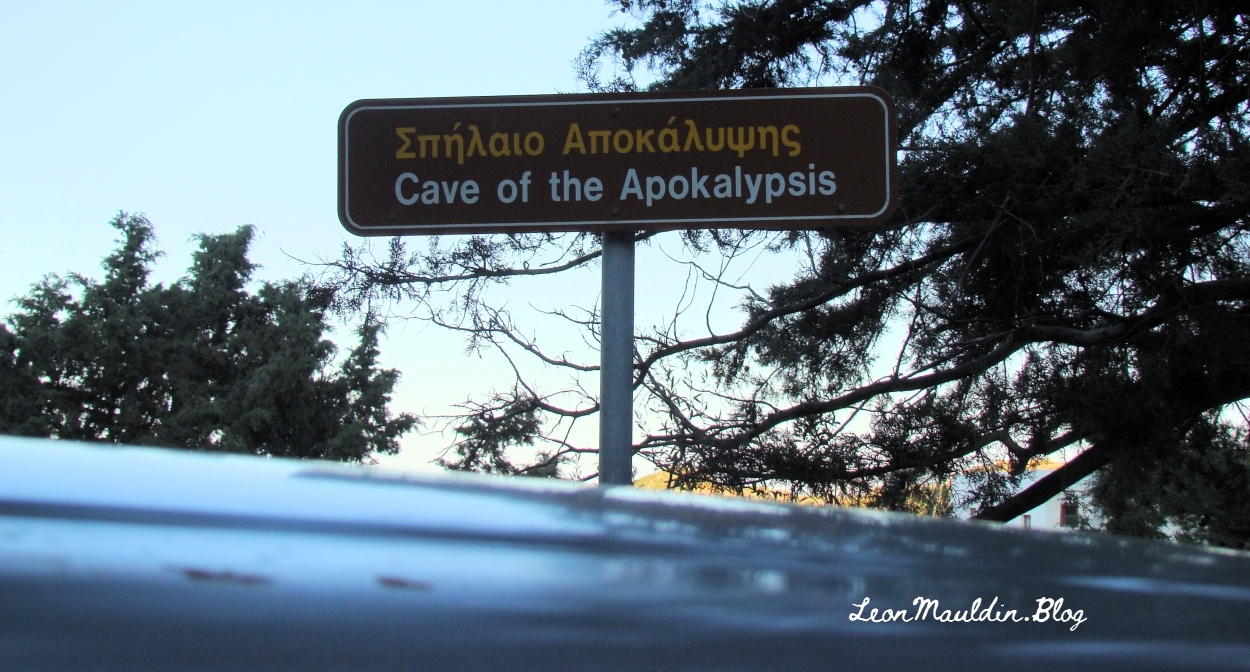
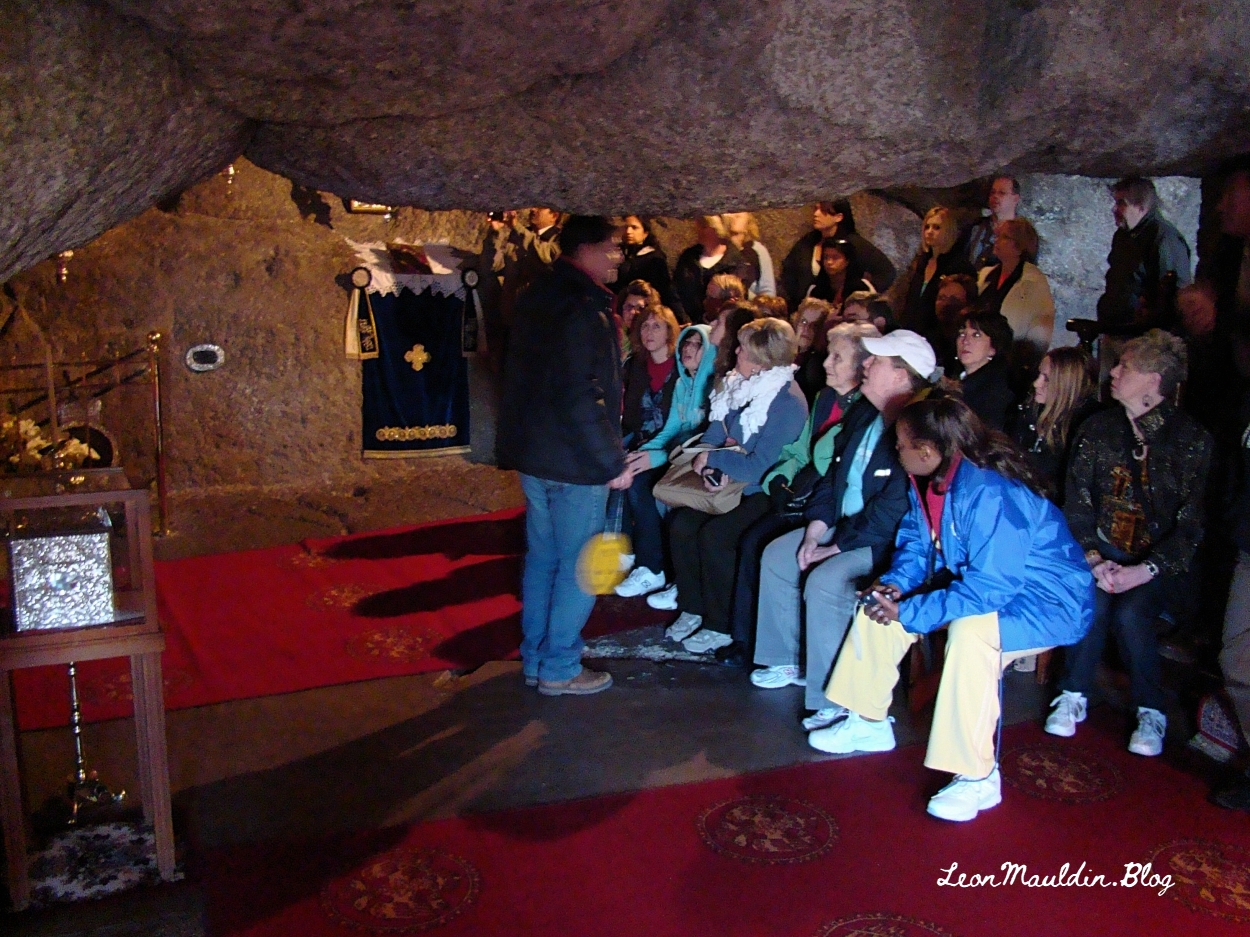
While we cannot know the exact spot on the island where John was when he was “in the Spirit on the Lord’s Day” and told, “What you see, write in a book and send it to the seven churches which are in Asia” (Rev. 1:10-11), visitors to Patmos are shown a “traditional” location, known as the “Cave of the Apocalypse.”
The church at Pergamum lived “where Satan’s throne is . . . where Satan dwells (Rev. 2:13). There have been many suggestions as to the basis of this designation. Pergamum was known for its worship of Asklepios (god of healing), Serapis, Athena, Dionysus, Demeter, as well as being a center for the Imperial Cult (emperor worship).
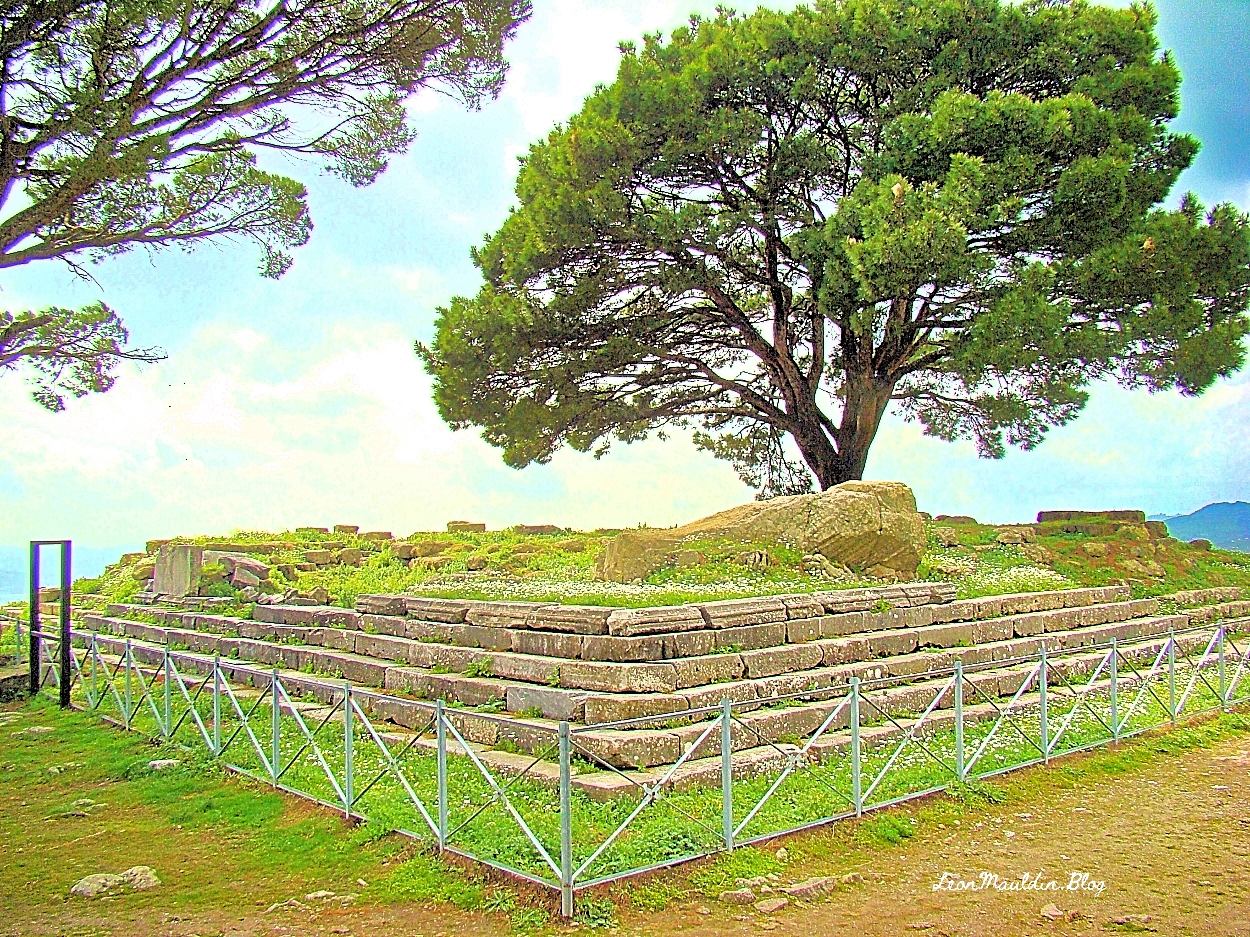
David A. DeSilva suggests: “[T]he distinctive altar of Zeus on the brow of the acropolis may have been more in John’s view” (The Social and Geographical World of Pergamum (Revelation 1:11; 2:12–17). In B. J. Beitzel, J. Parks, & D. Mangum (Eds.), Lexham Geographic Commentary on Acts through Revelation (p. 638). Lexham Press).
The altar of Zeus, located on the southern crest of the acropolis, was without a doubt the most distinctive and most prominently visible structure overlooking Pergamum. Construction was begun in the early- to mid-second century BC under Eumenes II, possibly in connection with his victory over the invading Galatians. The massive throne-like altar complex resembled an open-air temple, complete with columned porticoes surrounding its staircase and inner courtyards. The whole had a footprint of about 120 by 110 feet (36.5 × 33.5 m), and it rose to a height of 40 feet (12 m). The sacrificial altar proper sat within the inner courtyard, which was approached by a wide, grand staircase. The reconstructed monument now sits in the Pergamum Museum in Berlin. The altar was adorned with nearly four hundred linear feet (122 m) of frieze, its scenes carved about seven feet (2 m) high. The frieze around the structure’s perimeter depicted the mythological battle between the Olympian gods and the giants, with Zeus and Athena prominently featured on the front side. An interior frieze told the story of Telephus, the mythic founder of Pergamum. An L-shaped agora or forum was set just below the precincts of the altar of Zeus. The identification of some of the buildings as warehouses makes it likely that this particular forum served as a commercial center in the old city.
deSilva, D. A. (2019). The Social and Geographical World of Pergamum (Revelation 1:11; 2:12–17). In B. J. Beitzel, J. Parks, & D. Mangum (Eds.), Lexham Geographic Commentary on Acts through Revelation (pp. 645–646). Lexham Press.
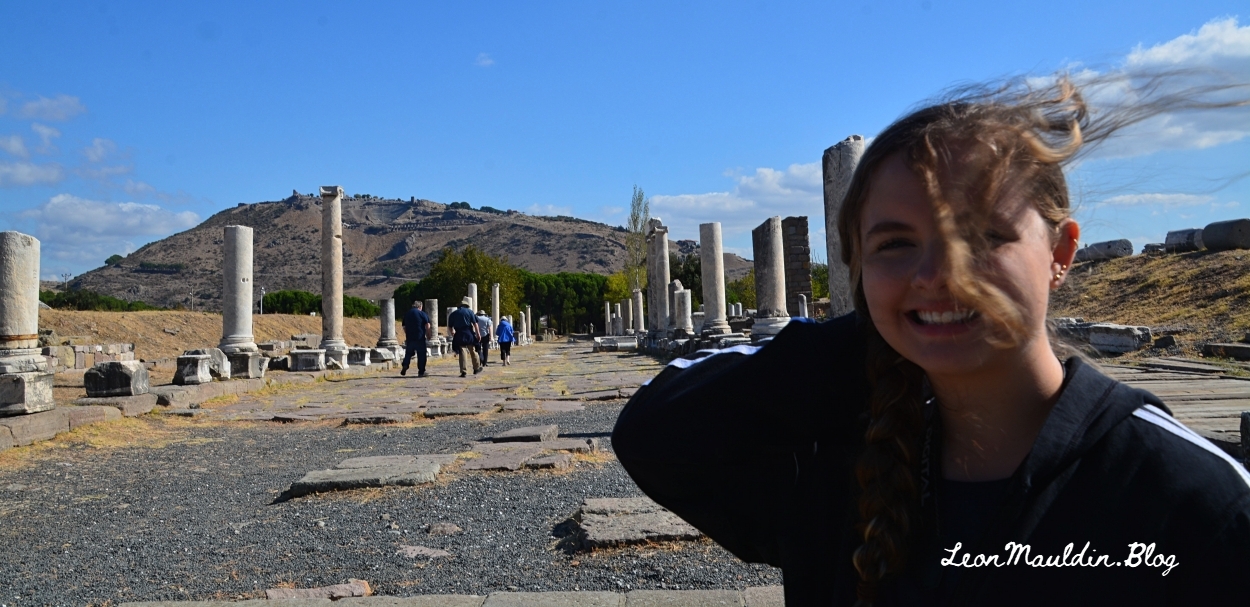
Here is a photo of the acropolis of Pergamum, with the Asklepion at our back. Sometimes it gets windy on our tours (as my granddaughter can attest).
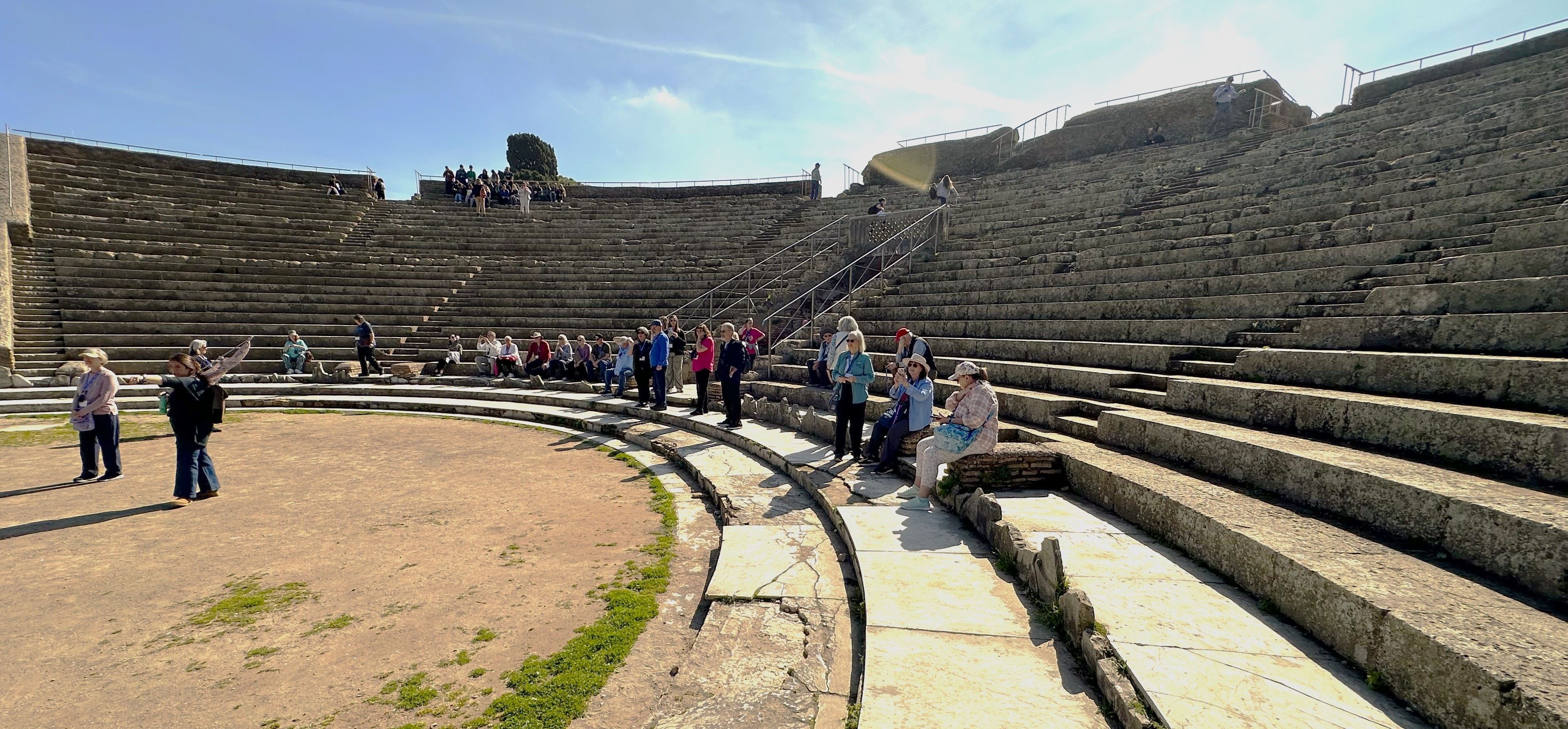
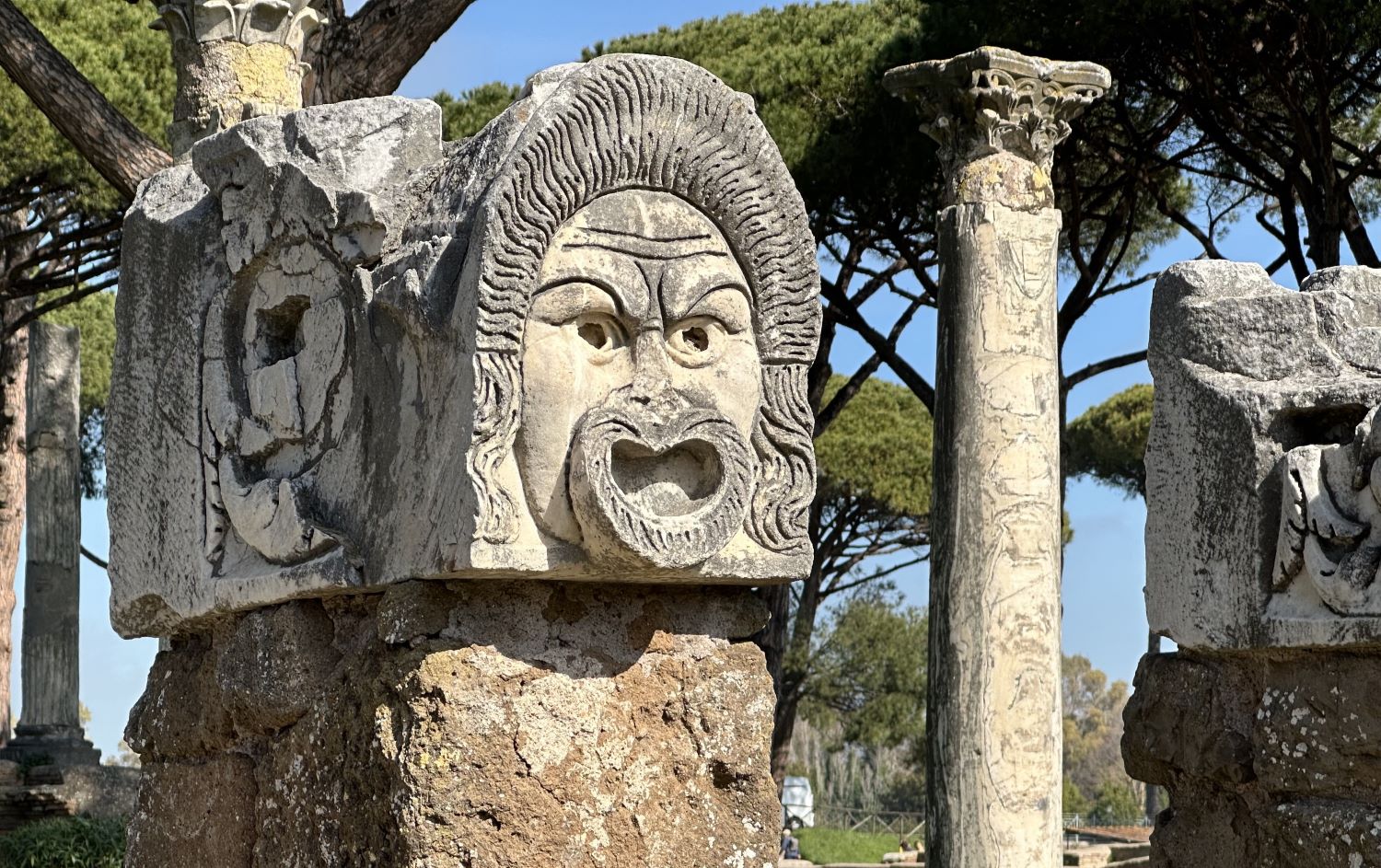
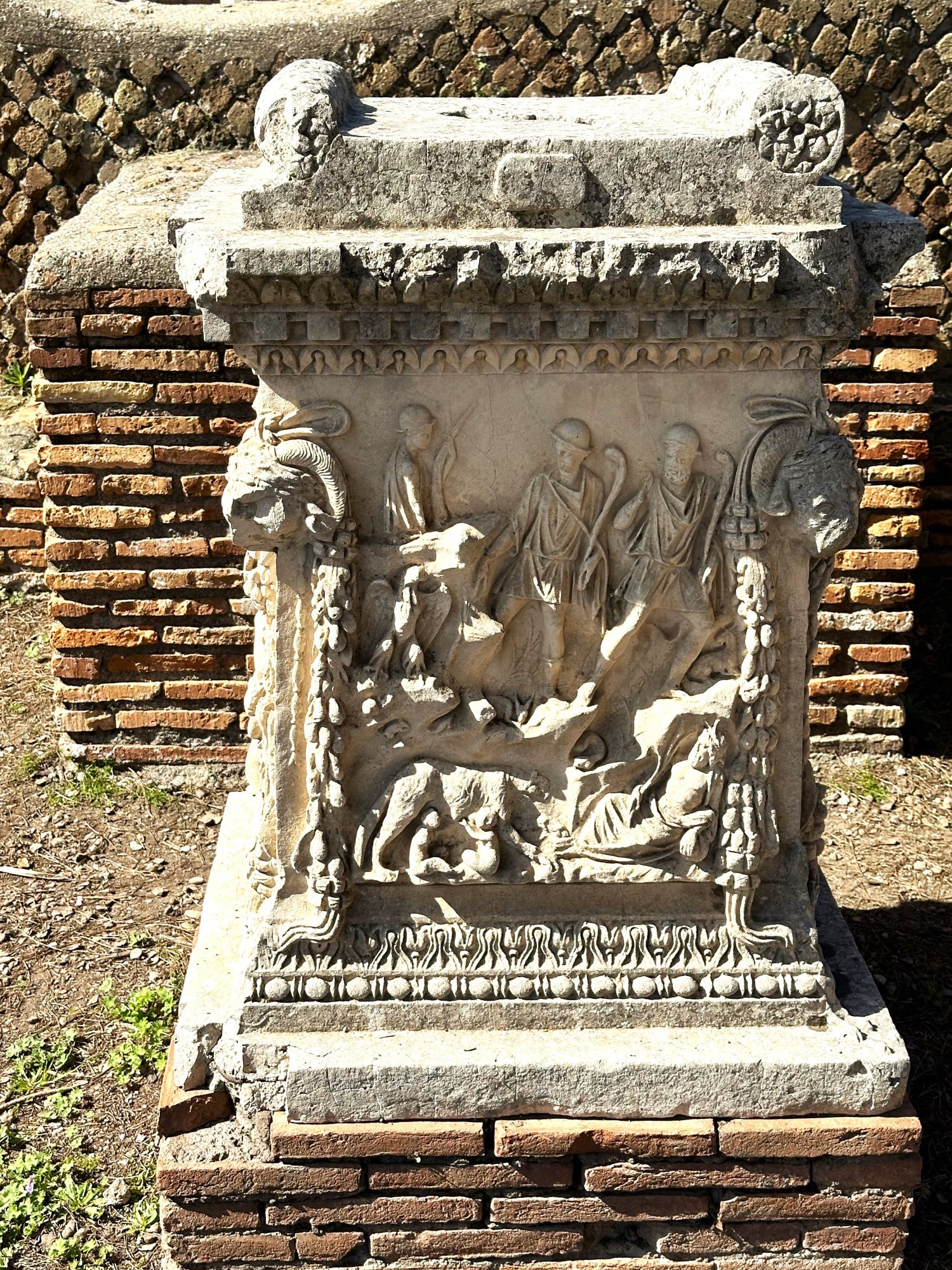
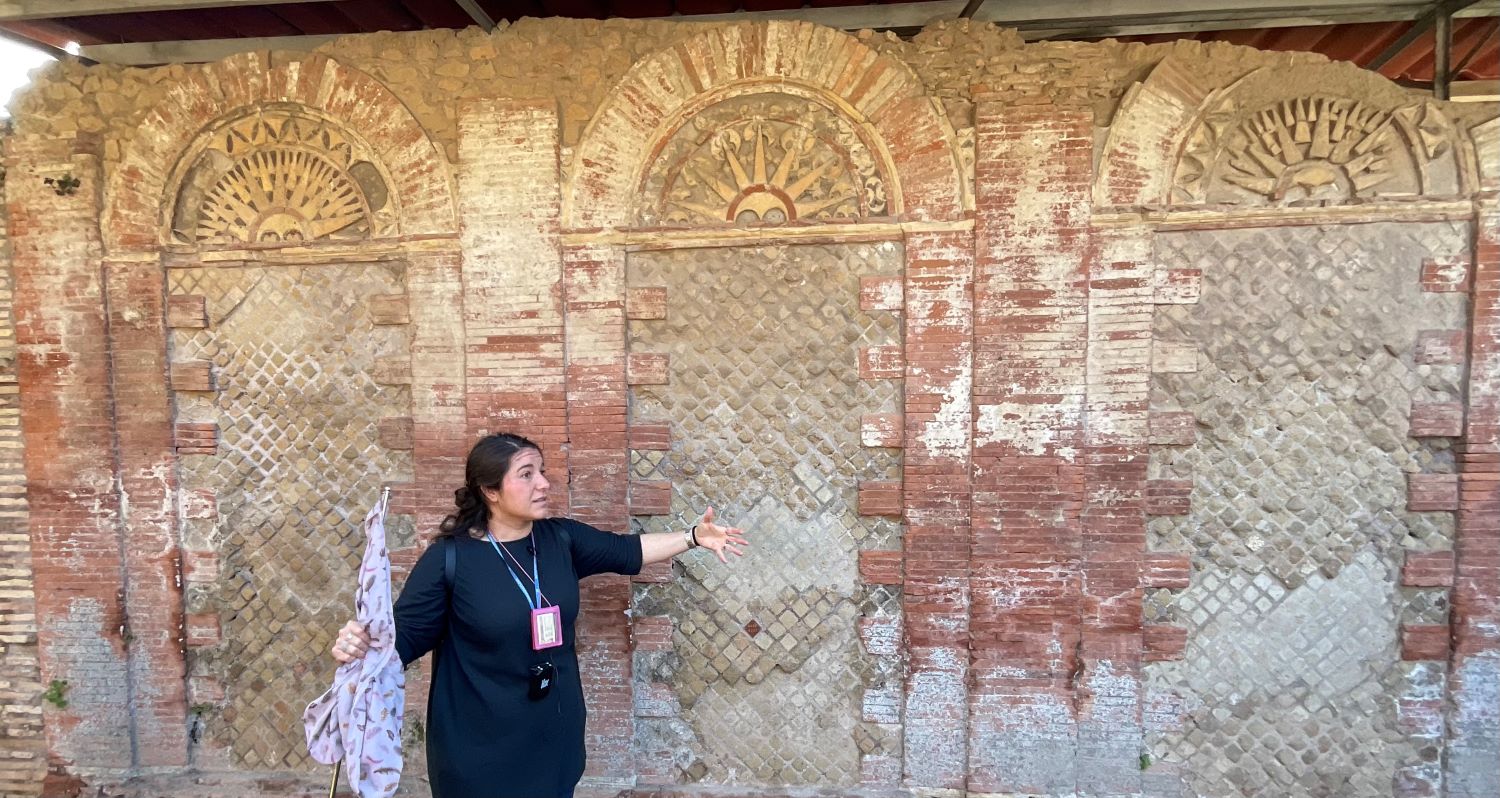
Today my tour group visited Ostia Antica, and saw some of the excavations there. Over time, the port silted up, but in antiquity it was of vital importance to Rome. The Lexham Bible Dictionary has the following information:
OSTIA An ancient port of Rome located at the mouth of the Tiber River. A vital strategic and commercial site of the Roman Empire.
Location and Biblical Relevance
Ostia was the nearest port that granted access to Rome for seafaring travelers of the New Testament world. Its name is derived from the Latin term ostium, meaning “doorway” or “entryway.” The name encapsulates the importance of the site, for it served as the maritime gateway to the capital of the Roman Empire.
The city and port of Ostia was located 22 miles (35 km) downstream from Rome at the mouth of the Tiber River. It was associated with sea trade, which brought in wares and cultural goods from throughout the Mediterranean.
Ostia was also an early base for Roman naval activities. In its first centuries, the city was hardly more than a Roman army camp populated by citizen colonists (Salmon, Roman Colonization, 26–27). Ostia was not an excellent harbor; its anchorage was exposed, leaving it vulnerable to storms and pirates. These problems would not be solved until the first and second centuries ad, when the rival port of Portus was constructed.
Brand, S. The Lexham Bible Dictionary. Lexham Press.
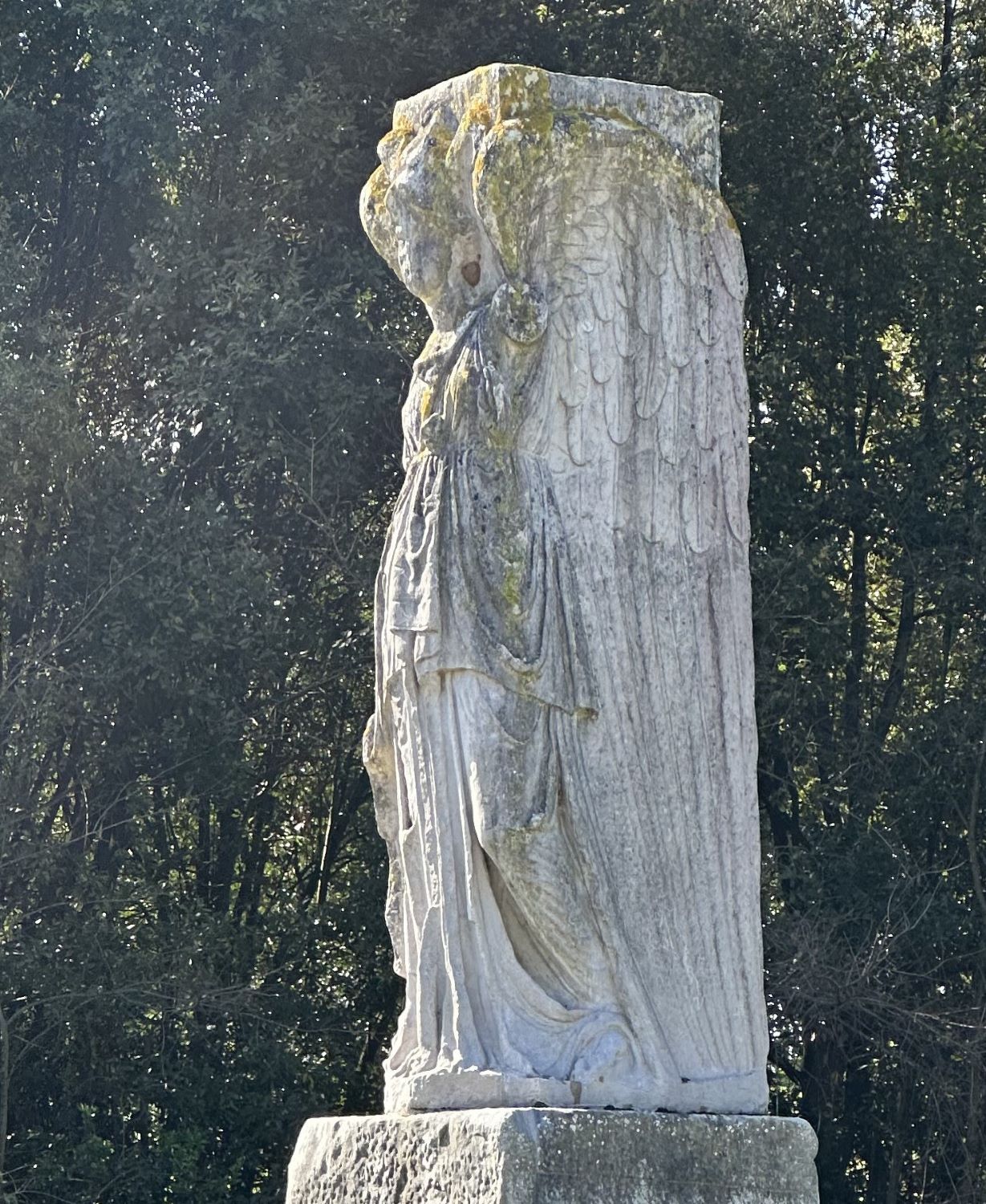
As one first enters the archaeological area, there is a statue of Minerva-Victory.
We are looking forward to again touring Sicily/Italy in March 2024, the Lord willing. I was recently reviewing some photos from previous trips and wanted to share a few of these. Pompeii was covered with volcanic ash by the eruption of Mount Vesuvius (August AD 79).
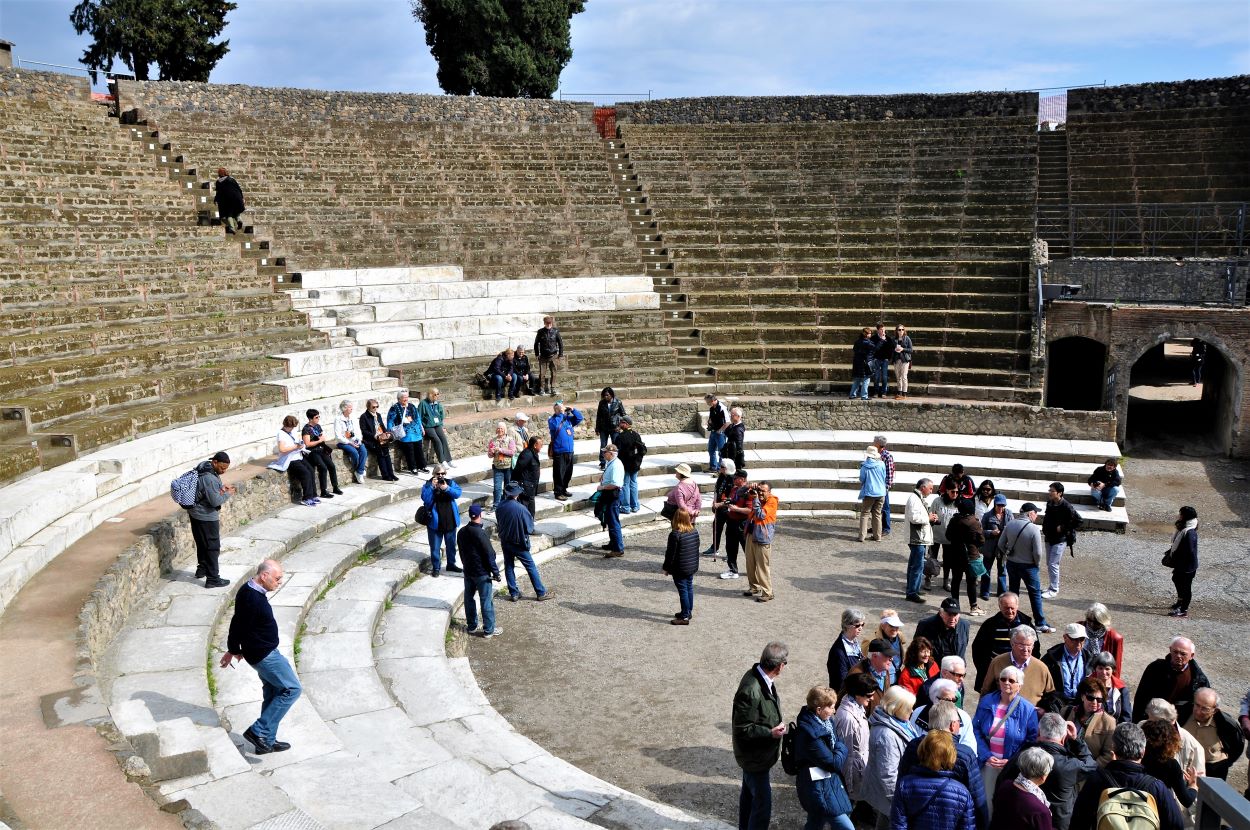
In this post we will look at the Odeum at Pompeii. Here is the view of Pompeii just inside the entrance (Mt. Vesuvius is in the background):
The city had two theaters, the large theater, which seated about 5,000 spectators, and the small theater, the odeon. The seating capacity of this small theater was about 1,000 people. A pyramid-shaped roof would have covered it. It would have been used for musical performances and mime.
An inscription at the site states that the duumviri C. Quintius Valgus and M. Porcius, two leading citizens of Pompeii, financed the construction of the theater. In 80 BC Pompeii became a Roman colony with the name of Colonia Cornelia Veneria Pompei.
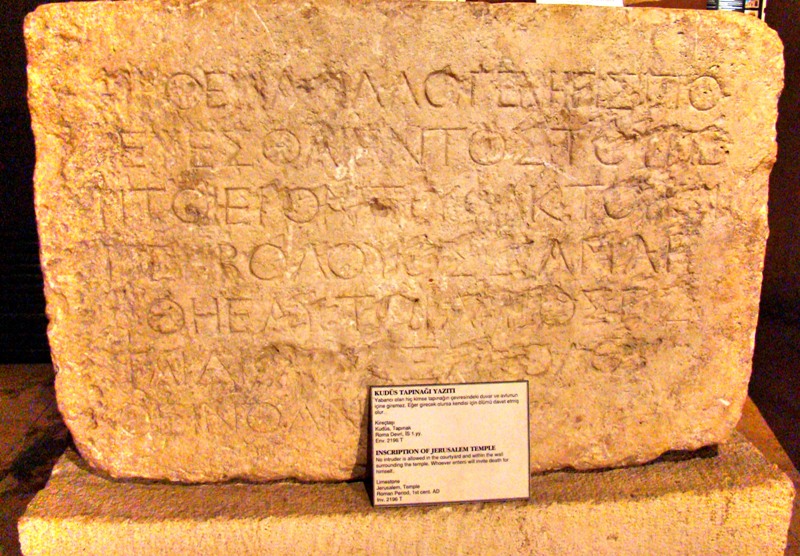
Some biblical texts are especially illuminated by archaeological finds. For example, Acts 21:28 records the false charge against Paul, “He also brought Greeks into the temple and has defiled this holy place” (v.28). The next verse shows this they “supposed” (NET “assumed). Ephesians 2:14 speaks of Jesus’ death breaking down “the middle wall of separation” between Jews and Gentiles.
Temple Inscription Fragment. Israel Museum. Photo by Leon Mauldin.
Our photo shows one of the warnings posted marking the boundary within the temple complex beyond which no Gentile could proceed. The inscription read, “NO FOREIGNER IS TO GO BEYOND THE BALUSTRADE AND THE PLAZA OF THE TEMPLE ZONE. WHOEVER IS CAUGHT DOING SO WILL HAVE HIMSELF TO BLAME FOR HIS DEATH WHICH WILL FOLLOW.” I took this photo earlier this month in the Israel Museum.
A complete tablet is housed in the Istanbul Museum, as seen in our photo here:
Complete Temple Inscription. Istanbul Archaeology Museum. Photo by Leon Mauldin.
So the Acts 21 text means that Paul was charged with taking a Gentile beyond the balustrade marked off by signs just like thsee.
The Ephesians 2 text shows that with Jesus’ death on the cross, reconciliation is made possible between men (Jew and Gentile) and God, and those reconciled unto God are reconciled to each other. The reconciled are in one body (the church, Eph. 1:22-23). That distinction epitomized by the wall of separation, and reflected by these warning signs, has been removed!
Our last couple of posts have dealt with Pharaoh Tirhakah, the Cushite (Ethiopian) king of Egypt’s 25th dynasty, and mentioned by name in 2 Kings 19:9, in correction with Judah’s good King Hezekiah, and the Assyrian King Sennacherib. We noted, “In some translations (i.e., NKJV) Tirhakah is said to be king of Ethiopia. “Ethiopia” here refers to southern Egypt, and is rendered Cush in CSB, ESV, NASB (Hebrew is כּוּשׁ, transliterated kûš).” Cush is also called the land of Nubia, with Nubia being the more modern name.
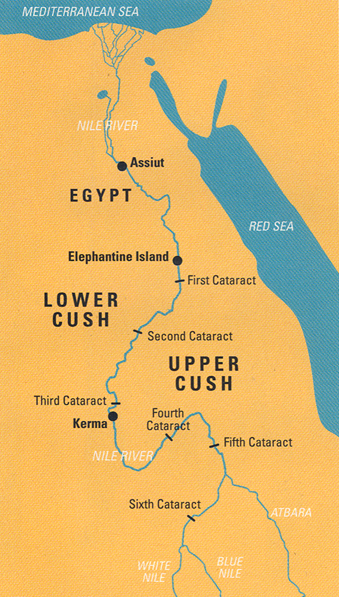
On our recent tour of Egypt (Oct. ’22) we had the opportunity to go south of Aswan (positioned “First Cataract” here on map below), where the ancient border separated Egypt from Cush.
Map of Egypt and Cush. Cush, to the south of Egypt, is biblical Ethiopia.
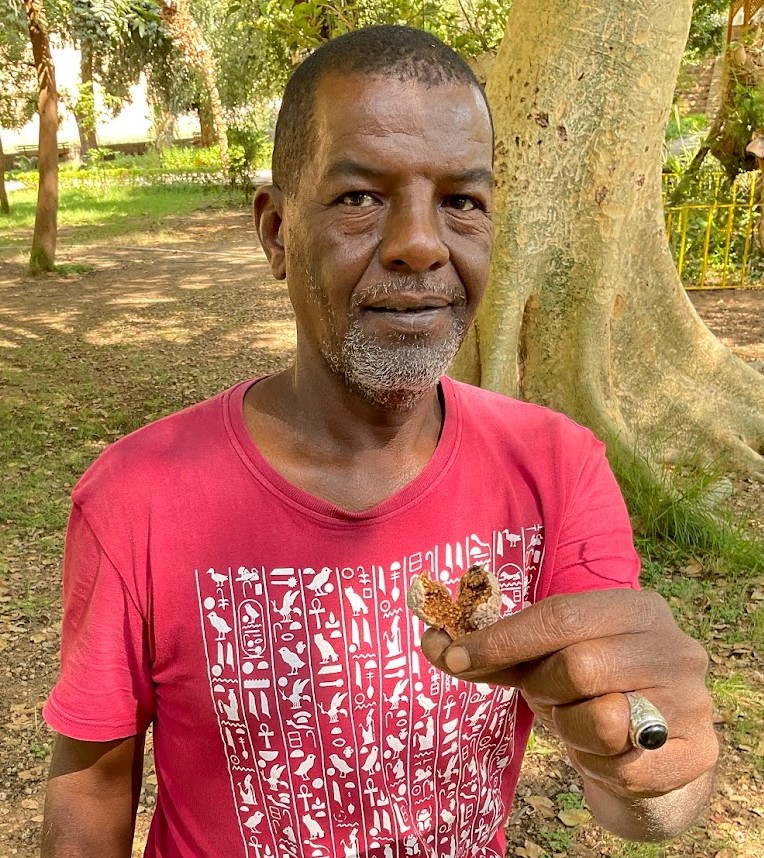
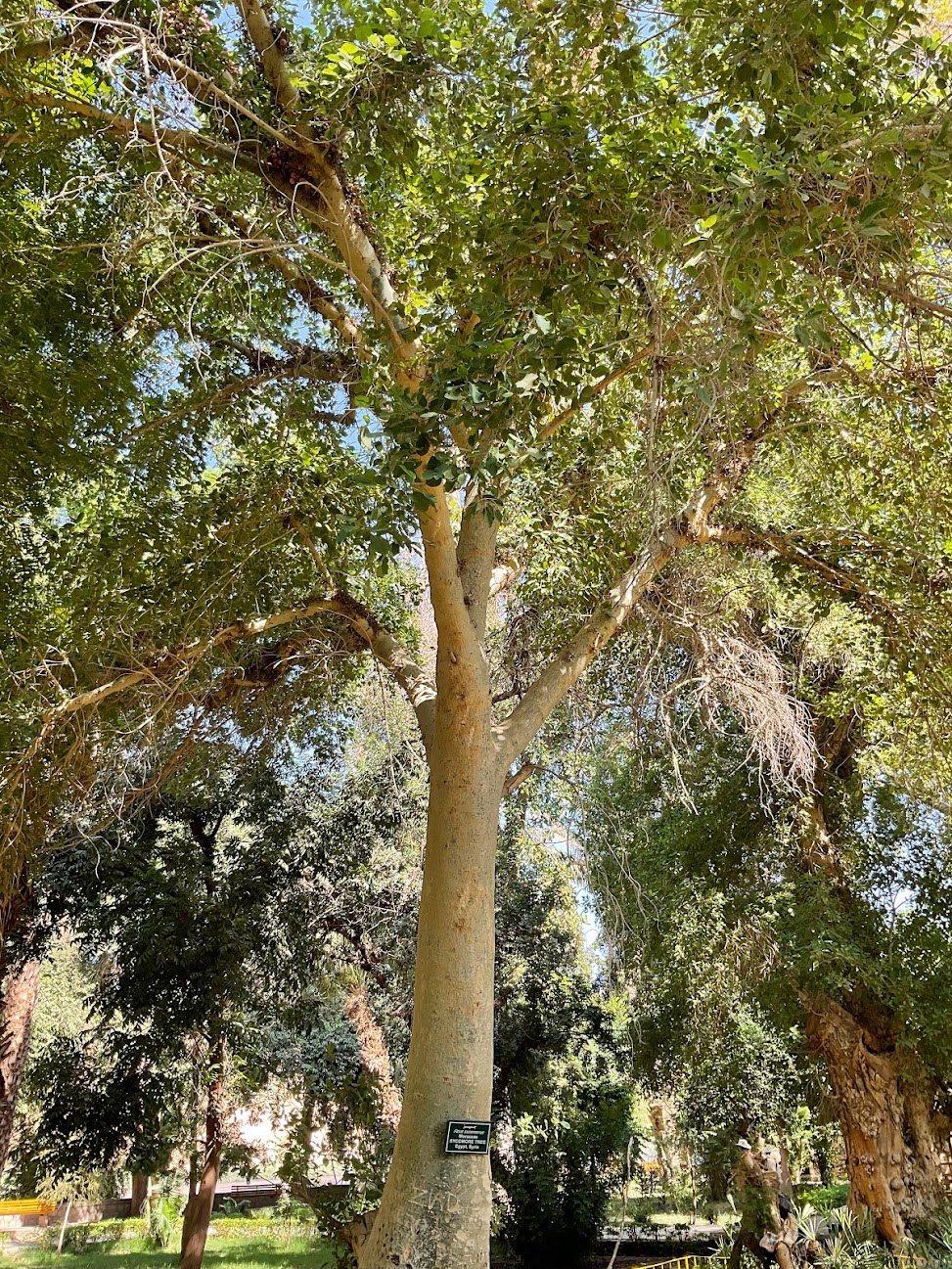
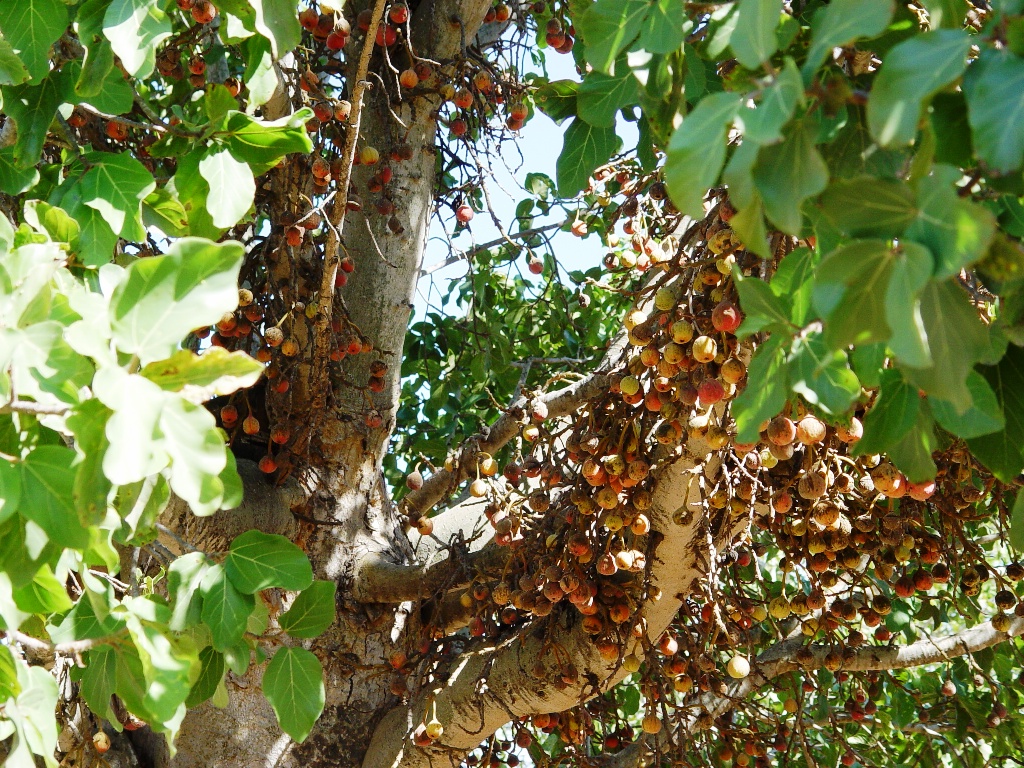
Earlier when our group stopped for a visit at Kitchener Island in the Nile, we saw trees and plants from many locations. It is used as a research station called the Botanical Research Institute. While there we saw a sycamore tree, which is referenced many times in the scripture. Unlike the sycamore tree of my home in Alabama, the biblical sycamore produced figs (see Amos 7:14-17). I was explaining to some of our group nearby as to the significance of the tree, when a gentleman who also was listening (apparently an employee) approached. He picked up a fig, broke it open, to let our folks better see. This was very helpful. He also very emphatically said, “I am Nubian.”
Here is a sycamore tree in Israel at Neot Kedumim, the Biblical Landscape Reserve in Israel. (Located near Modi’in, midway between Jerusalem and Tel Aviv, Israel).
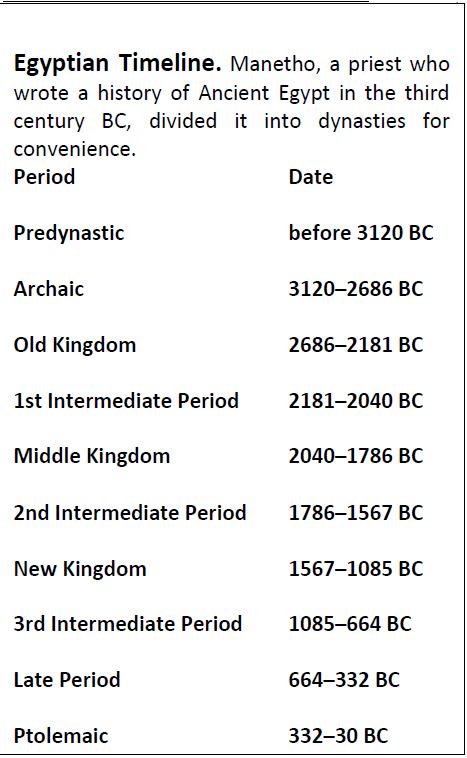
In this post we will give consideration to the first of the pyramid Builders, in the context of Egypt’s Old Kingdom (2686-2181 BC). For your convenience we share the following chart (keep in mind that dates are approximate and may vary):
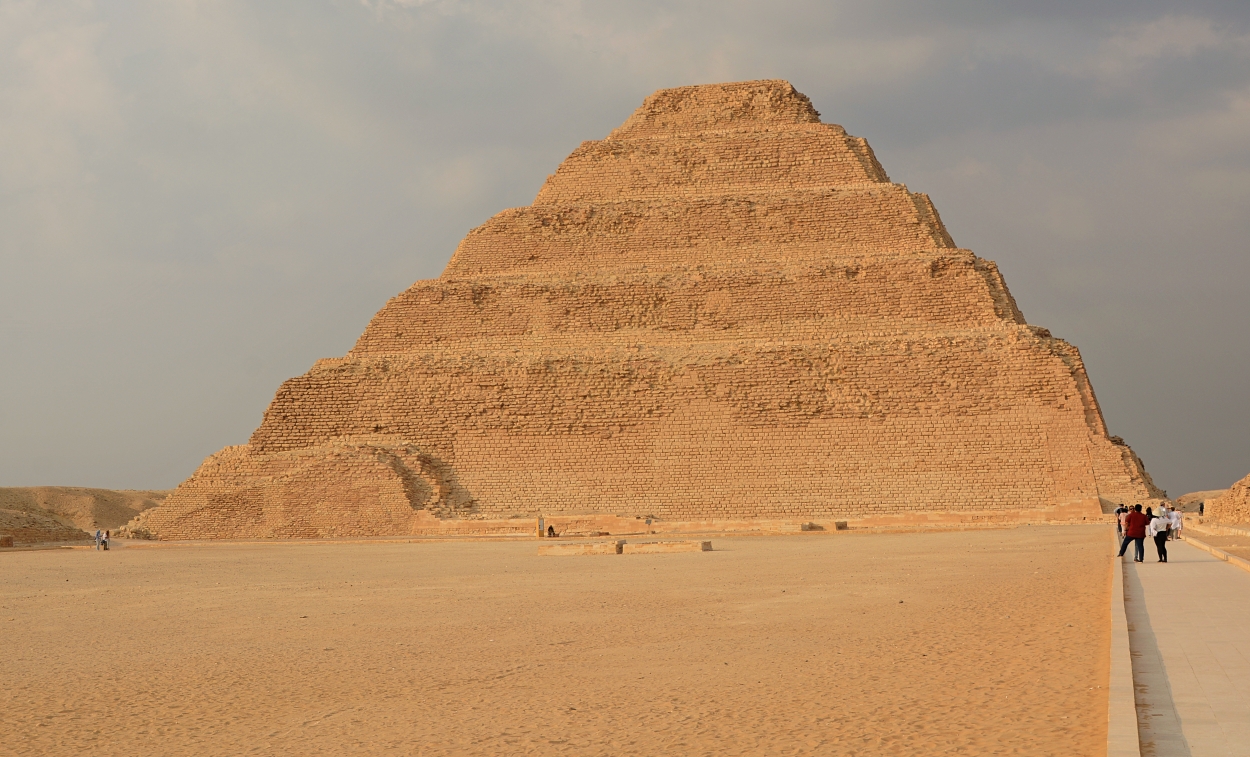
“Djoser’s pyramid and its surrounding mortuary complex is recognized as the first stone building in the world” (Chronicles of the Pharaoh’s, by Peter Clayton, p. 33), built by his vizier, Imhotep. Though begun “as a simple tomb, the structure was enlarged in height and breadth on five occasions, eventually rising to its present 197 feet. Unlike Egypt’s other pyramids, the Step Pyramid was built with comparatively small limestone blocks” (BAR Nov/Dec 1990, Richard Nowitz).
The pyramid, known as the Step Pyramid, began as a mastaba (an ancient Egyptian tomb rectangular in shape with sloping sides and a flat roof) “but was subsequently subject to several major enlargements, adding one mastaba upon another, until it consisted of six unequal steps rising t to 204 ft 962 m). Its base area is 358 X 411 ft (109 X 125 m)” (Clayton, p. 34).
The statue was found in a small chapel on the north face of the pyramid.
We should note that many have the mistaken notion that the Israelites were used as slave labor to build the pyramids. The pyramids were built some centuries before Israel came into being. They were built prior to the time of Abraham!
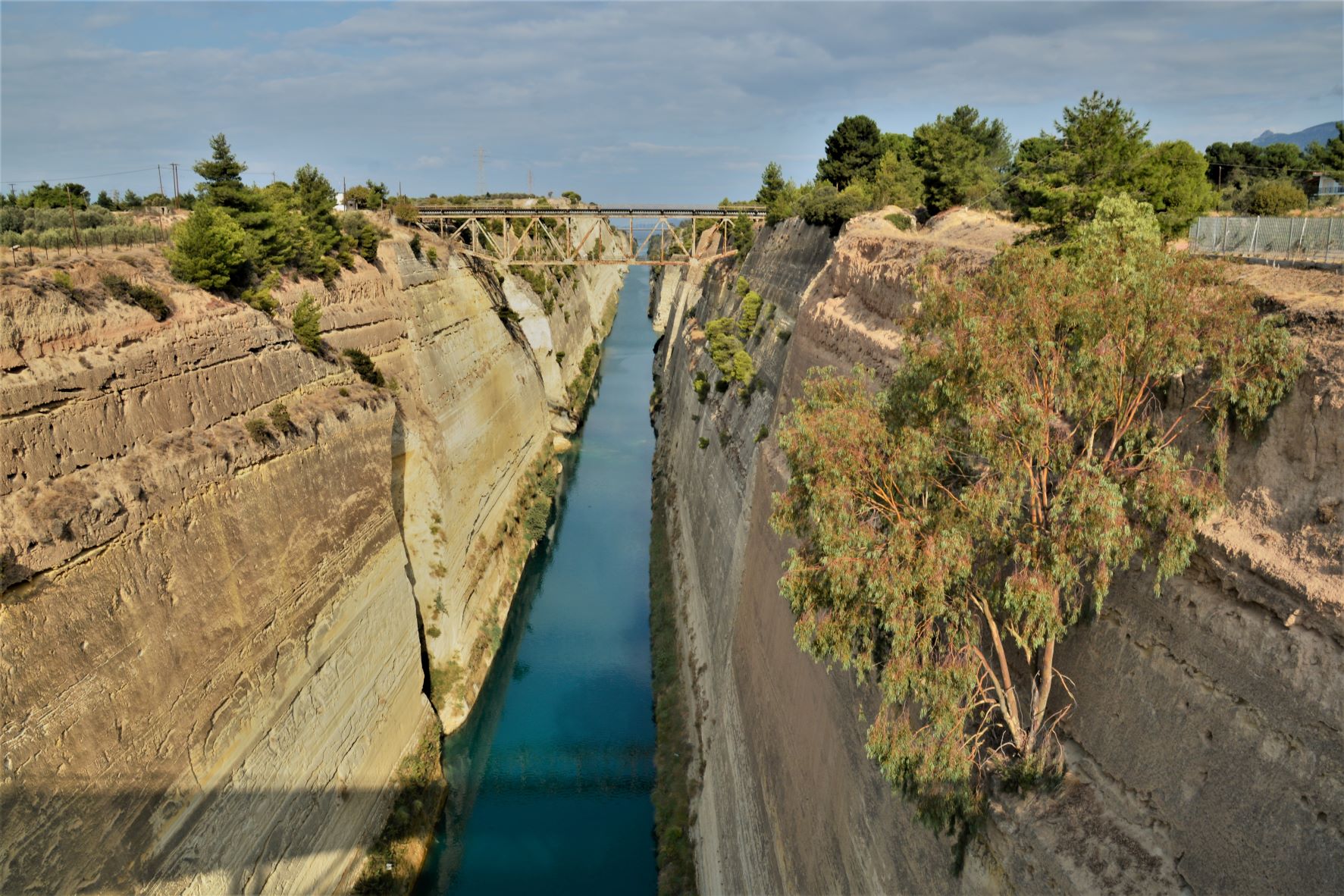
On our way to the archaeological site of Corinth our group made a couple of very important stops. The first was to see the Corinth Canal.
The narrowest point of the isthmus of Corinth is only 4 miles wide. A canal was engineered and completed between 1882 and 1893. Nero (A.D. 67) had the idea of building a canal at that exact route utilized by the modern engineers. He planned to use 6,000 Jewish prisoners as his work force, but the idea was abandoned.
Corinth Canal. Photo by Leon Mauldin
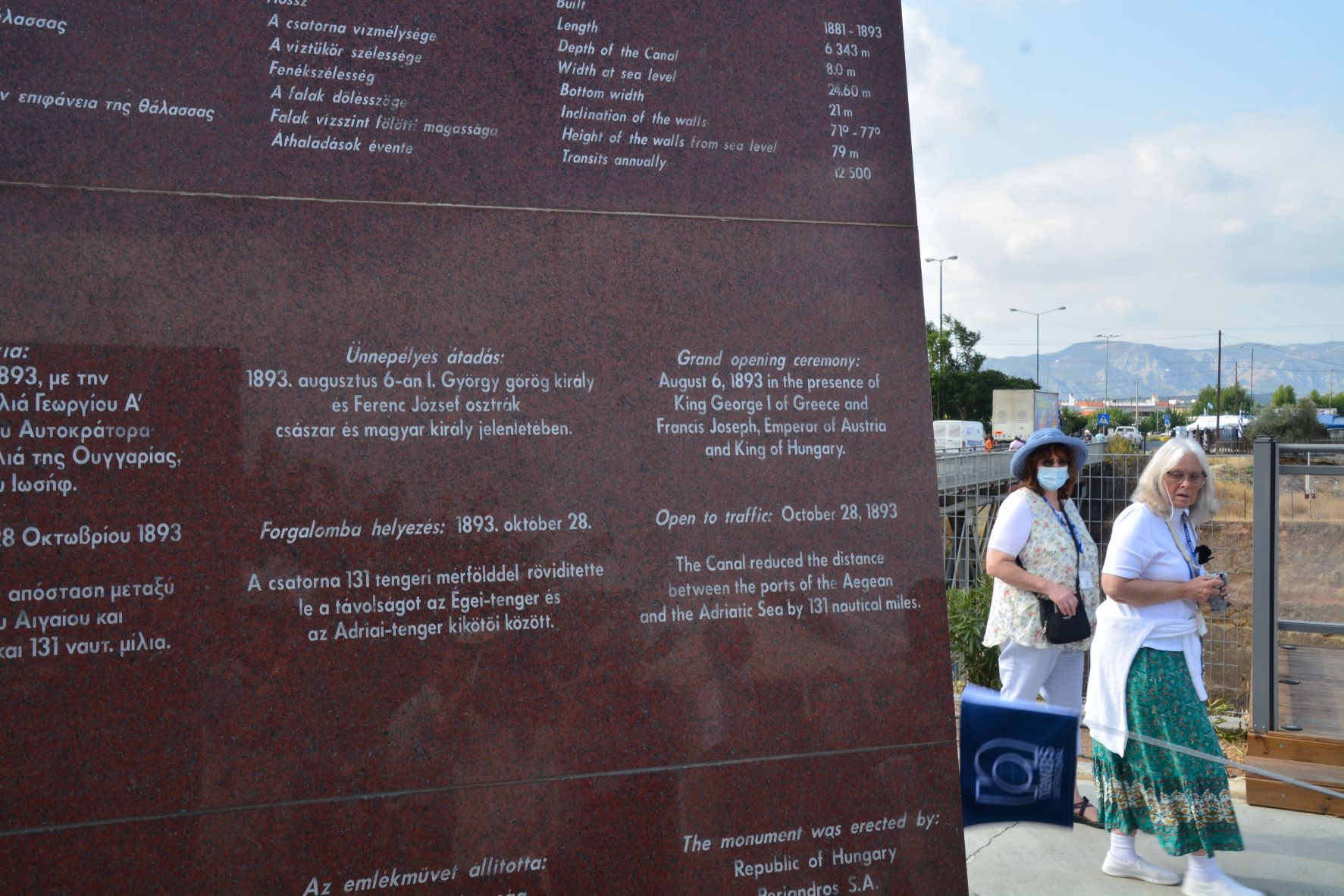
The canal cuts through the Isthmus of Corinth, separating the Peloponnesian peninsula from the Greek mainland. It connects the Gulf of Corinth with the Aegean Sea. On the site is a sign with info:
Info sign at Canal. Photo by Leon Mauldin.
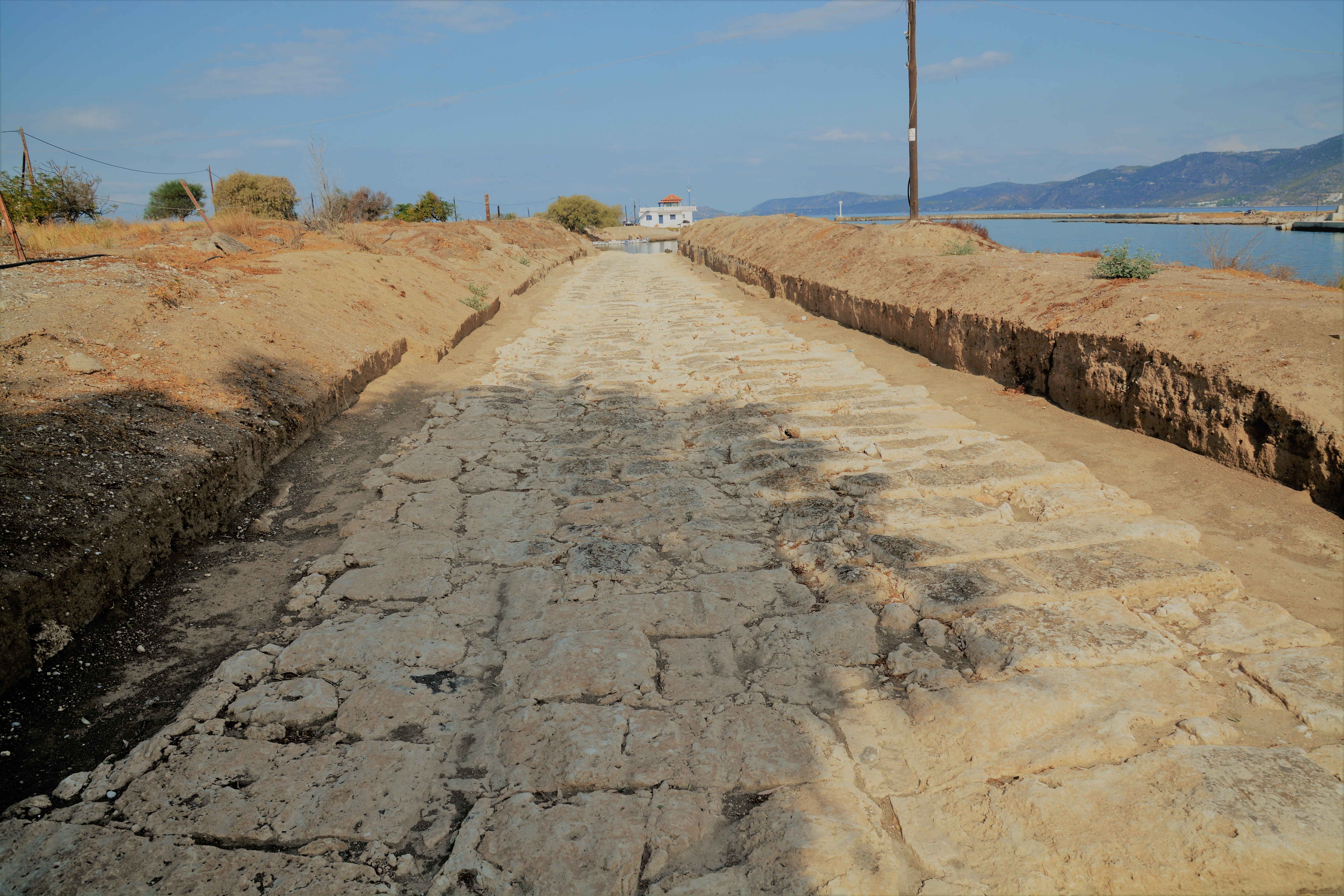
In ancient times there was a paved road that stretched across the isthmus, called the diolkos, which enabled cargo and smaller ships to be hauled overland, thus avoiding the dangerous circumnavigation of the Peloponnese.
Our photos below show two remaining portions of the western end of the diolkos. Photos are on the south side of the canal.
On this pavement cargo could transferred across the Isthmus. Built in 600 BC. Photo by Leon Mauldin.
The BAS has this information re: this site in their collection, The Biblical World in Pictures commenting on their photo taken in the same area as mine above:
In Paul’s day a stone-paved sledway, called the Diolkos, was used to haul ships and their cargoes across the isthmus. At both ends of the road the pavement continued down beneath the waterline, allowing the shallow-draft ships to be floated onto and off of the sleds. The sleds were then pulled out of the water and across the isthmus by mule-power.
This view of the Diolkos is near the western end, looking beyond to the Gulf of Corinth (and the mountains along its northern coast sheltering the oracle shrine of Apollo at Delphi). At the right can be seen the western outlet of the modern canal. The stone pavement of the Diolkos clearly shows the ruts formed by sled runners over centuries of use. Corinth, of course, controlled the Diolkos traffic. Moreover, since ship crews and passengers using this route had to leave their vessels temporarily at Corinth anyway, they had less reason to make an additional port-call at Athens’ harbor on the Piraeus. Thus, many more travelers of the Roman era passed through Corinth than through Athens.
We are thankful for safe arrival in Athens, Greece early afternoon, to begin our tour “In the Steps of Paul and John,” seeing biblical sites in Greece and Turkey. Forty-five passengers make up our group. This afternoon is free time, getting settled in our hotel and having dinner, and hopefully a full night’s rest (our time zone is 8 hours ahead of Central Standard Time, though our group is from all over the US.).
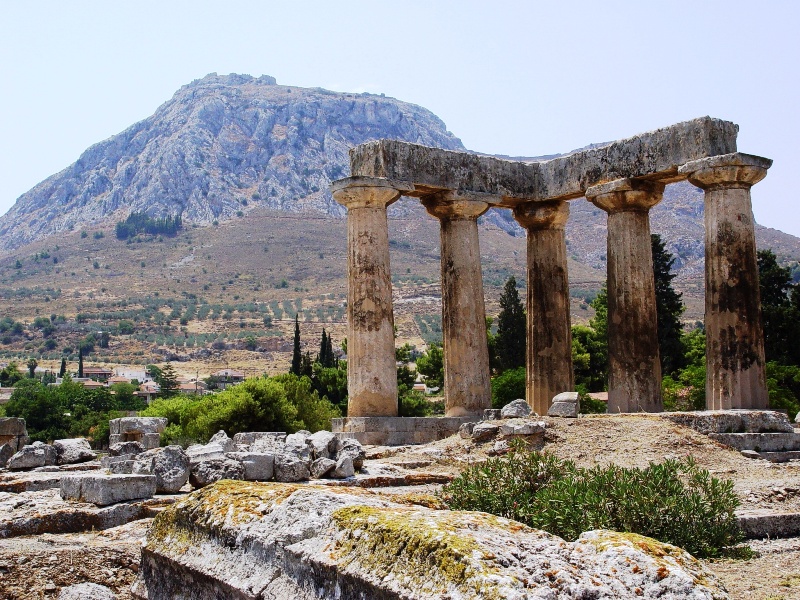
Tomorrow we begin with a visit to Corinth. In this photo below you can see the ruins of the temple of Apollo, and in the background, the acrocorinth.
Temple of Apollo at Corinth. Photo by Leon Mauldin.


 Posted by Leon Mauldin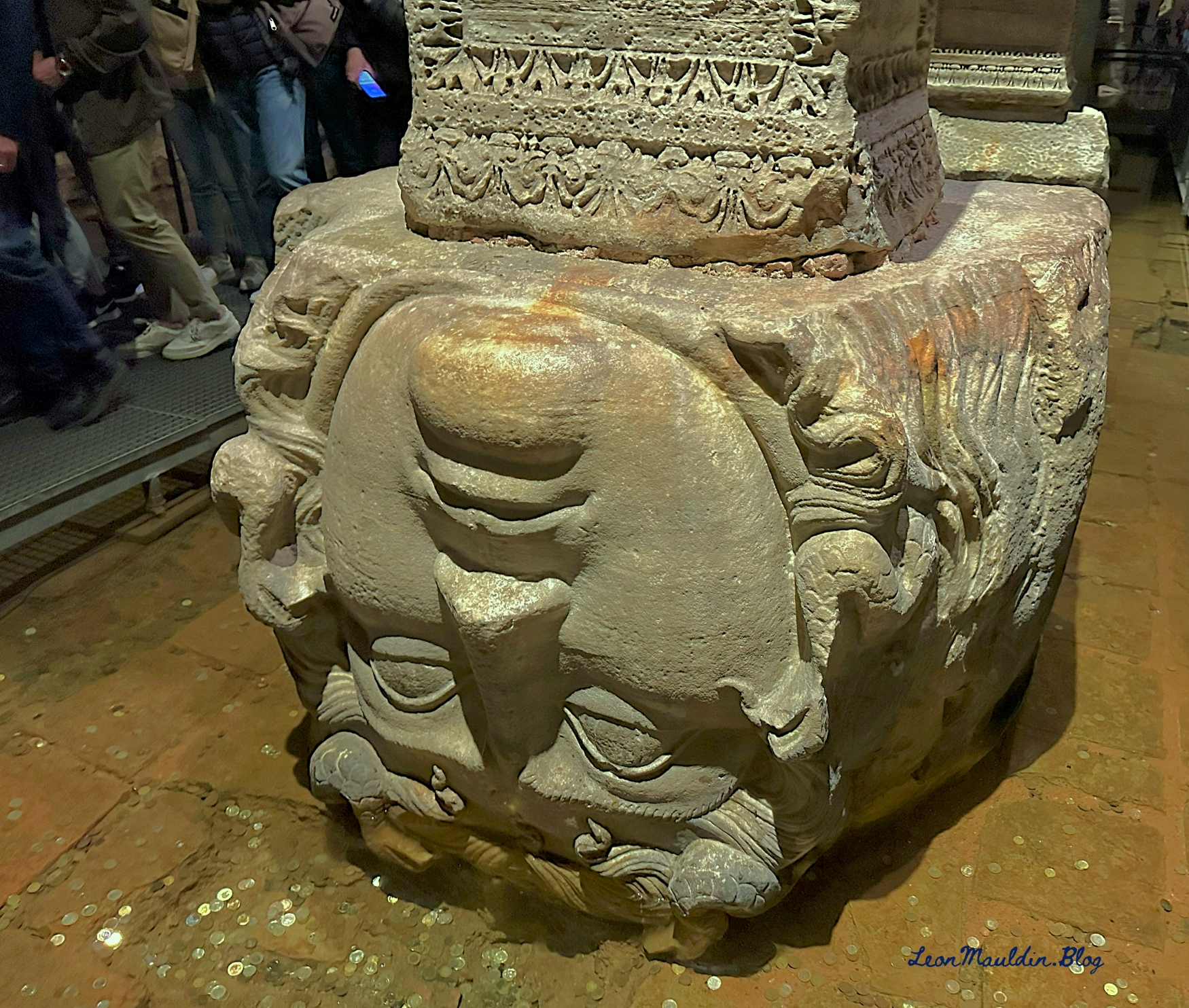






 leonmauldin.blog