Qumran and the Dead Sea Scrolls

December 2, 2015

“The Dead Sea Scrolls are undoubtedly the most important discovery found in Israel in the field of the Bible and history of Judaism and Christianity.”1 Fragments of about 900 scrolls from the 2nd Temple period (some dating as early as 3rd century BC) were found in the Qumran caves (NW shore of Dead Sea), between 1947 and 1956. Every book of the Old Testament (except Esther) were represented in the finds, including one complete copy of Isaiah.
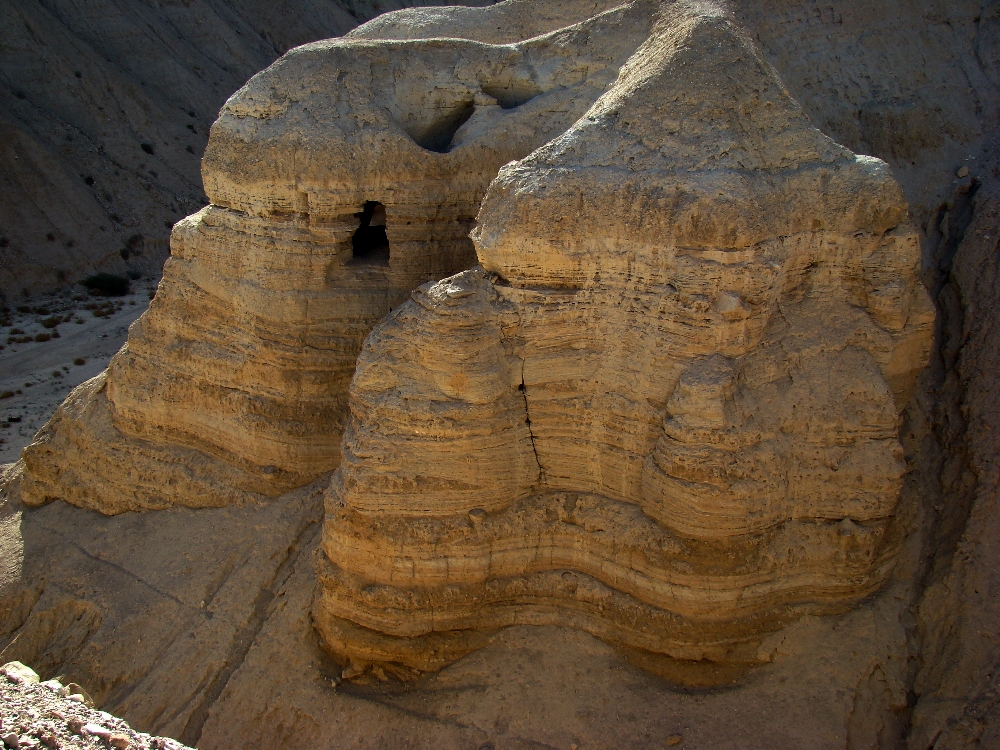
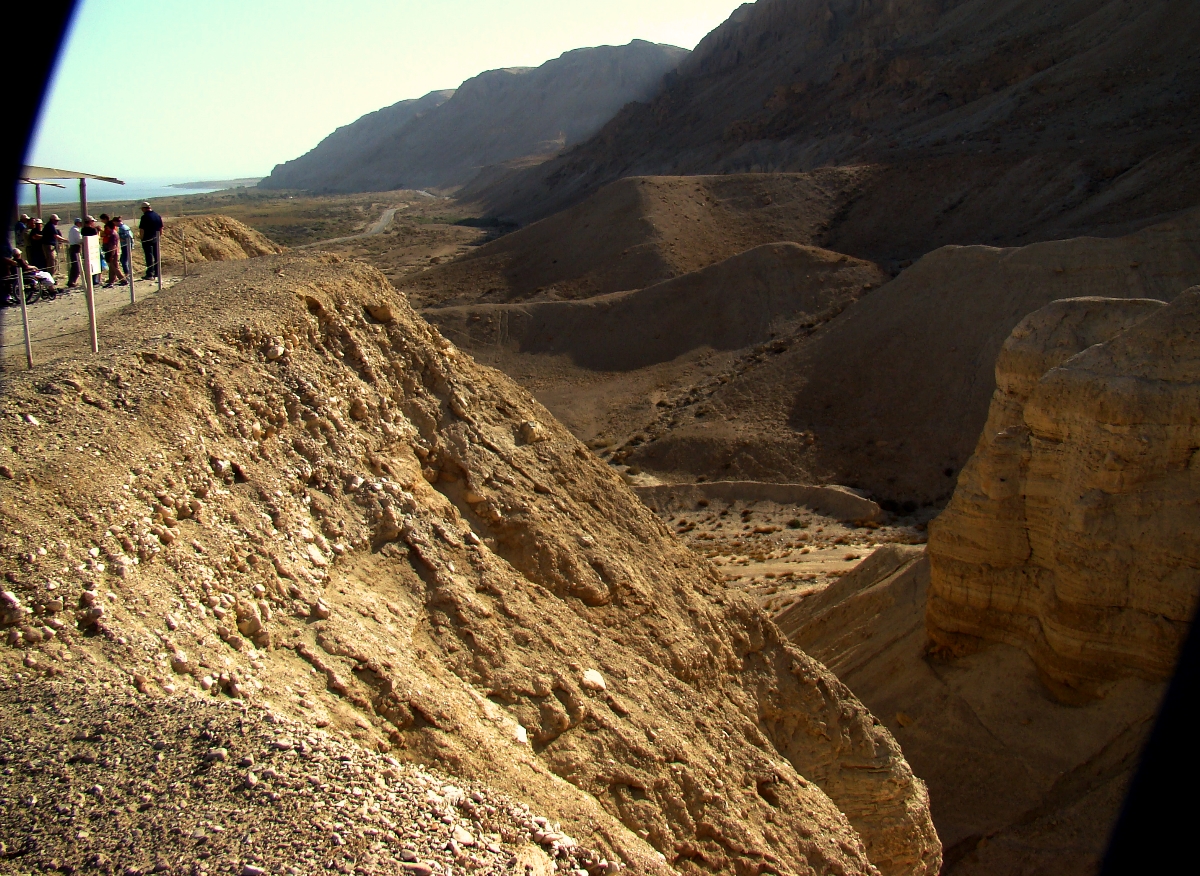
Some of the Qumran Caves where the Dead Sea Scrolls were discovered (1946ff.). Photo by Leon Mauldin.

Some of the Qumran Caves where the Dead Sea Scrolls were discovered (1946ff.). Photo by Leon Mauldin.

I remember when studying archaeology under the late Dr. James Hodges that he said the main value of the Dead Sea Scrolls was in the discipline of apologetics. The scrolls were about 1,000 years older (!) than the previously available manuscripts with which translators had to work. The huge find of fragments provided abundant samples with which to compare our Hebrew manuscripts. The result was:

it may now be more confidently asserted than ever before that the modern Hebrew text faithfully represents the Hebrew text as originally written by the authors of the Old Testament. Dead Sea discoveries have enabled us to answer this question with much greater assurance than was possible before 1948.2

Dr. Hodges pointed out that no new translations had to be made as a result of the discovery of the scrolls; they confirmed the accuracy of transmission of what we already have.

Another contribution:

“As a result of Dead Sea Scroll discoveries, it is no longer possible to date portions or entire Old Testament books as late as some scholars used to do. It is impossible to date any biblical work or any extensive part of one later than the early second century B.C. Fragments of the Pentateuch and the prophets date from the second century B.C. Ecclesiastes, sometimes believed to have been composed in the second or first century B.C., appears in a Cave 4 manuscript dating from 175 to 150 B.C. A second-century B.C. Copy of the Psalms indicates that the collection of Psalms was fixed by Maccabean times. A manuscript of Daniel dating about 120 B.C. brings into question the alleged Maccabean date of its composition. Moreover, the Dead Sea Scrolls do not support the existence of a deutero- or trito-Isaiah, at least during the second century B.C. The complete Isaiah and the long fragment of Isaiah from Cave 1 (second century B.C.) treat the book as a unit.”

View from Qumran looking south. Dead Sea is in upper left of photo. Photo by Leon Mauldin.

View from Qumran looking south. Dead Sea is in upper left of photo. Photo by Leon Mauldin.


Click photos for larger view.

1 Yigael Yadin quoted by Hanan Eshel in Qumran: Scrolls∙Caves∙History (p.7)

2 See F. B. Bruce, Second Thoughts on the Dead Sea Scrolls (pp.61-69)

3 Bible and Spade (1978), 7(1), pp.12–14.


Solomon’s Song of Songs

November 19, 2015

At ETS in Atlanta this afternoon I heard Dr. Tremper Longman III, professor of Biblical Studies at Westmont College in Santa Barbara, California, and prolific author (including commentaries on the  Song of Solomon), lecture on the Song of Solomon. His view of the book is that it is an anthology of love poems, rather than a narrative with a plot; a collection of poems that both celebrate sexual love (within marriage) but also give warnings. It was an interesting lecture.

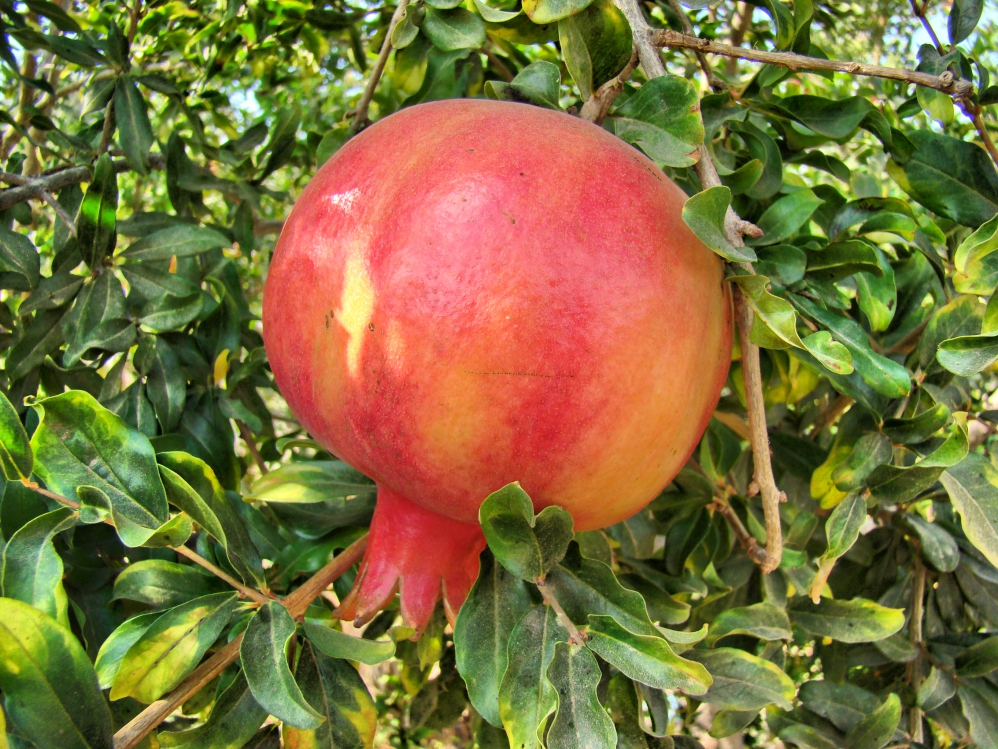
He read from Song of Solomon 4:3, which includes this compliment: “Your lips are like a scarlet thread, And your mouth is lovely. Your temples are like a slice of a pomegranate Behind your veil.” You might want to remember this text when you wish to praise your wife for her beauty.

Pomegranate such as that referenced in Song of Solomon 4:3. Photo by Leon Mauldin.

Pomegranate such as that referenced in Song of Solomon 4:3. Photo by Leon Mauldin.

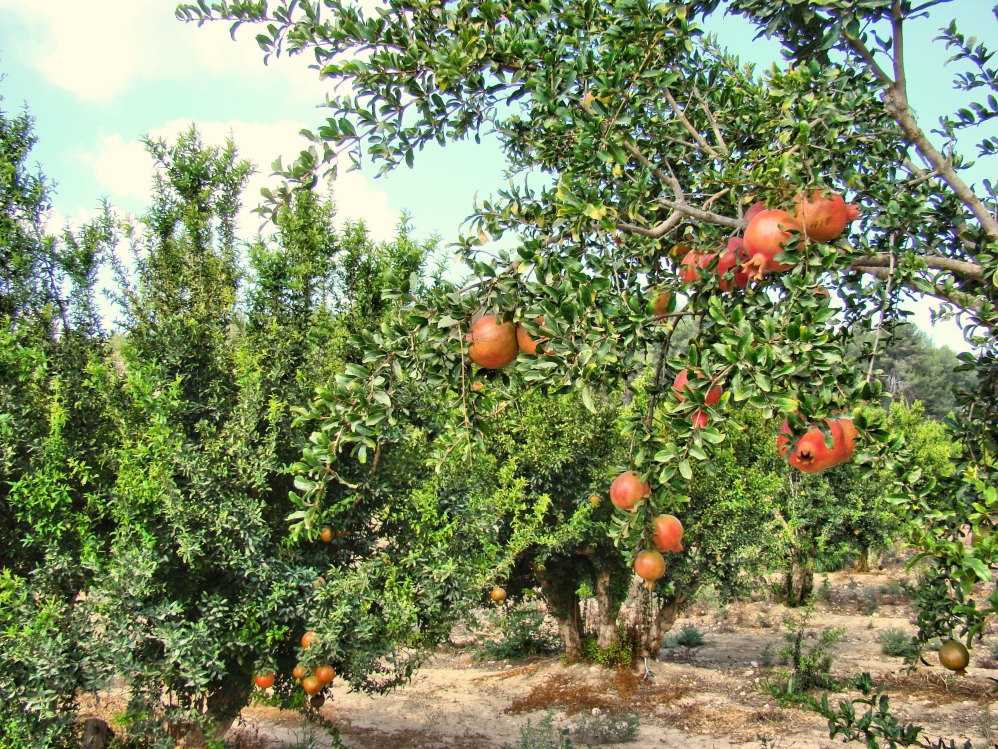
This pomegranate orchard is located near biblical Lachish.

Pomegranate orchard near Lachish in southern Israel. Photo by Leon Mauldin.

Pomegranate orchard near Lachish in southern Israel. Photo by Leon Mauldin.

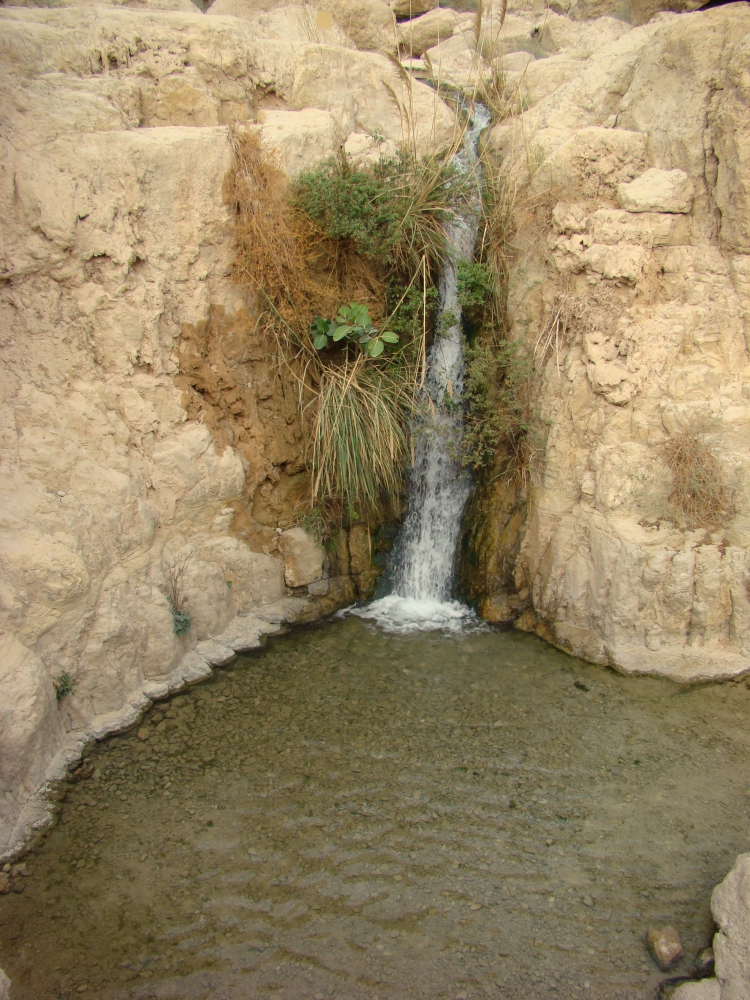
One of the geographical references in the Song of Solomon is found in 1:14, where the young woman/bride says, “My beloved is to me a cluster of henna blossoms In the vineyards of Engedi.” Pictured here is a beautiful waterfall at Engedi, located on the west side of the Dead Sea.

Waterfall at Engedi. Photo by Leon Mauldin.

Waterfall at Engedi. Photo by Leon Mauldin.

I have a previous post making a brief reference to the pomegranate here.

Click images for larger view.


Assos, In the Steps of Paul

November 18, 2015

On Paul’s return trip on his 3rd Missionary Journey, after departing from Troas, he walked on to Assos and rejoined his traveling companions there. Today at noon (ETS meeting, ATL) Dr. Mark Wilson did a very informative presentation on that segment of Paul’s travel.

11 Now when he [Paul] had come up, had broken bread and eaten, and talked a long while, even till daybreak, he departed. 12 And they brought the young man [Eutychus] in alive, and they were not a little comforted. 13 Then we went ahead to the ship and sailed to Assos, there intending to take Paul on board; for so he had given orders, intending himself to go on foot. 14 And when he met us at Assos, we took him on board and came to Mitylene (Acts 20:11-14).

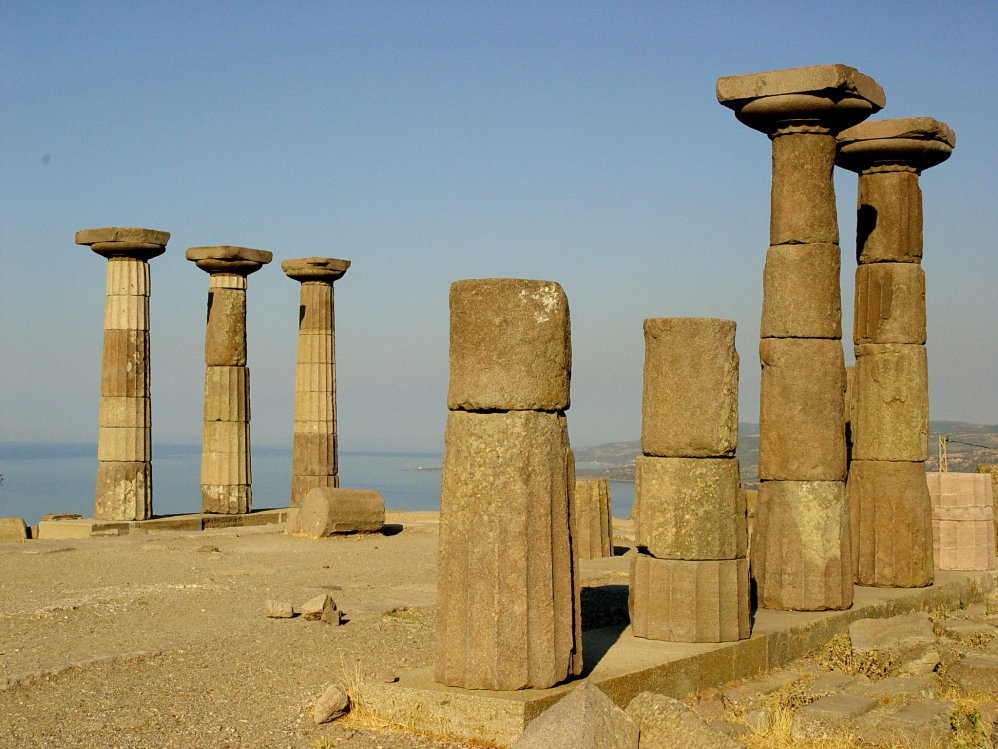
At the acropolis of Assos there are some well-preserved ruins of the temple of Athena.

Assos, temple of Athena. Photo by Leon Mauldin.

Assos, temple of Athena. Photo by Leon Mauldin.

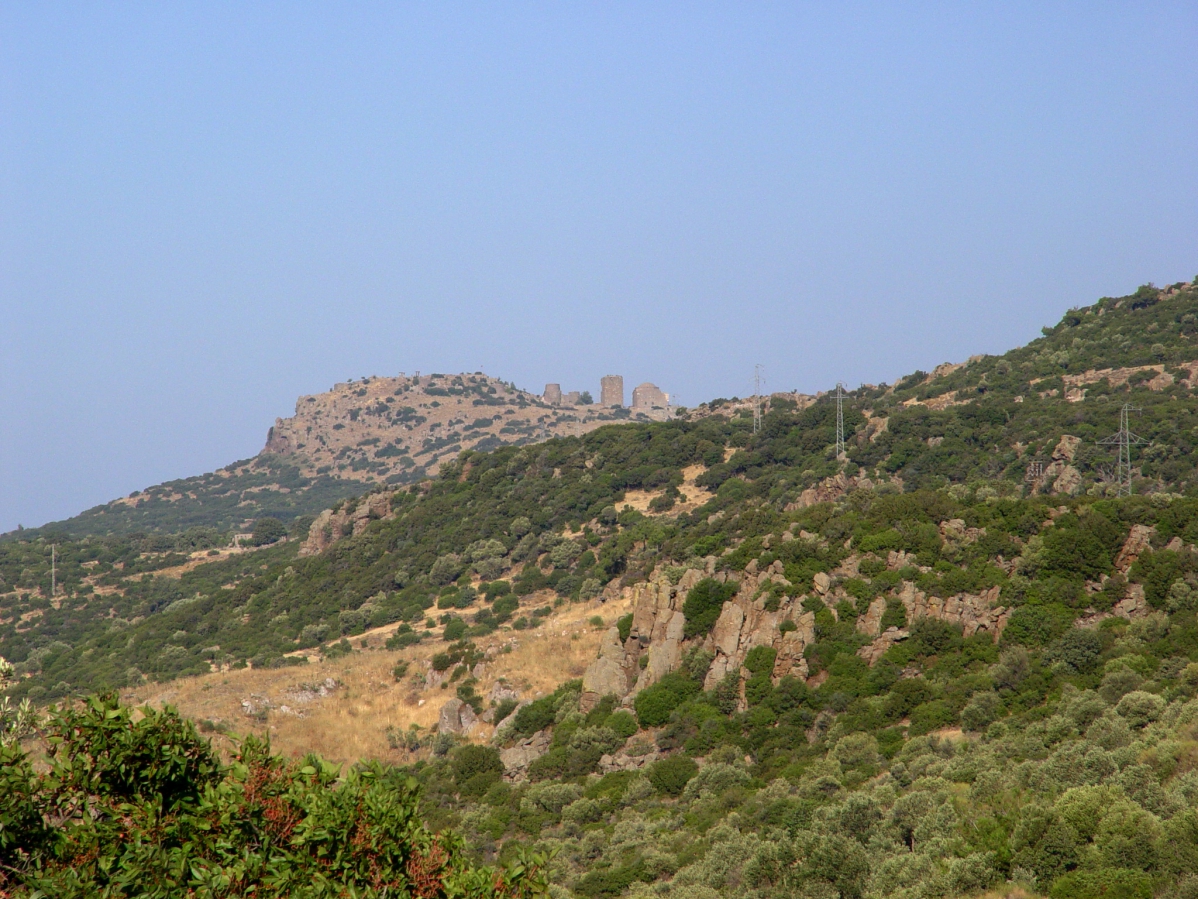
Here is a view of the Acropolis:

Acropolis of Assos. Photo by Leon Mauldin.

Acropolis of Assos. Photo by Leon Mauldin.

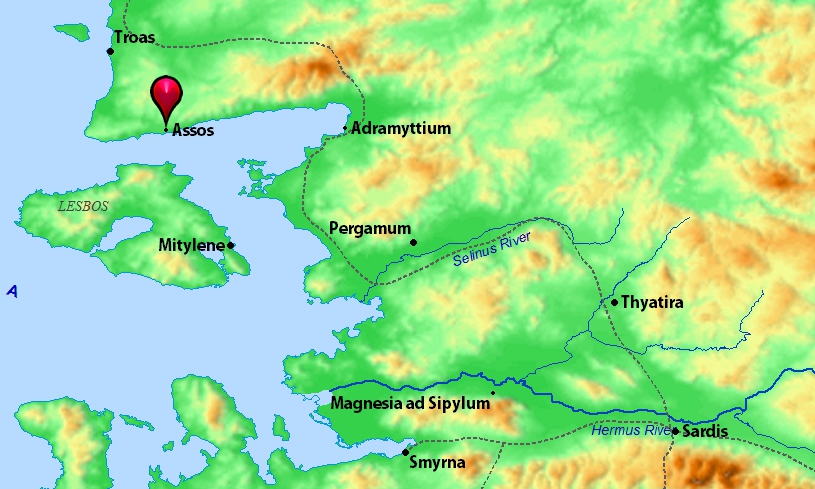
While the distance from Troas to Assos as the crow flies is about 20 miles, Dr. Wilson pointed out that the Roman road on which Paul would have traveled would have been about 31 miles, and would have taken two days.

Map by BibleAtlas.org.

Map by BibleAtlas.org.

Mark said that Assos was one of his top 10 favorite places in Turkey to visit. I have to agree!

I have a previous post on Assos here.


Gezer, Ongoing Excavations

November 17, 2015


In ATL, attending meetings of the Near East Archaeological Society. Two of the eight sessions I attended today were on biblical Gezer. A great deal of archaeological work has been done here for the past several seasons, including the ancient tunnel/water system, with more yet scheduled.

There are several Old Testament references to this site. It was one of the cities King Solomon fortified:

Now this is the account of the forced labor which King Solomon levied to build the house of the LORD, his own house, the Millo, the wall of Jerusalem, Hazor, Megiddo, and Gezer. 16 For Pharaoh king of Egypt had gone up and captured Gezer and burned it with fire, and killed the Canaanites who lived in the city, and had given it as a dowry to his daughter, Solomon’s wife. 17 So Solomon rebuilt Gezer and the lower Beth-horon 18 and Baalath and Tamar in the wilderness, in the land of Judah, 19 and all the storage cities which Solomon had, even the cities for his chariots and the cities for his horsemen, and all that it pleased Solomon to build in Jerusalem, in Lebanon, and in all the land under his rule. (1 Kings 9:15-19).

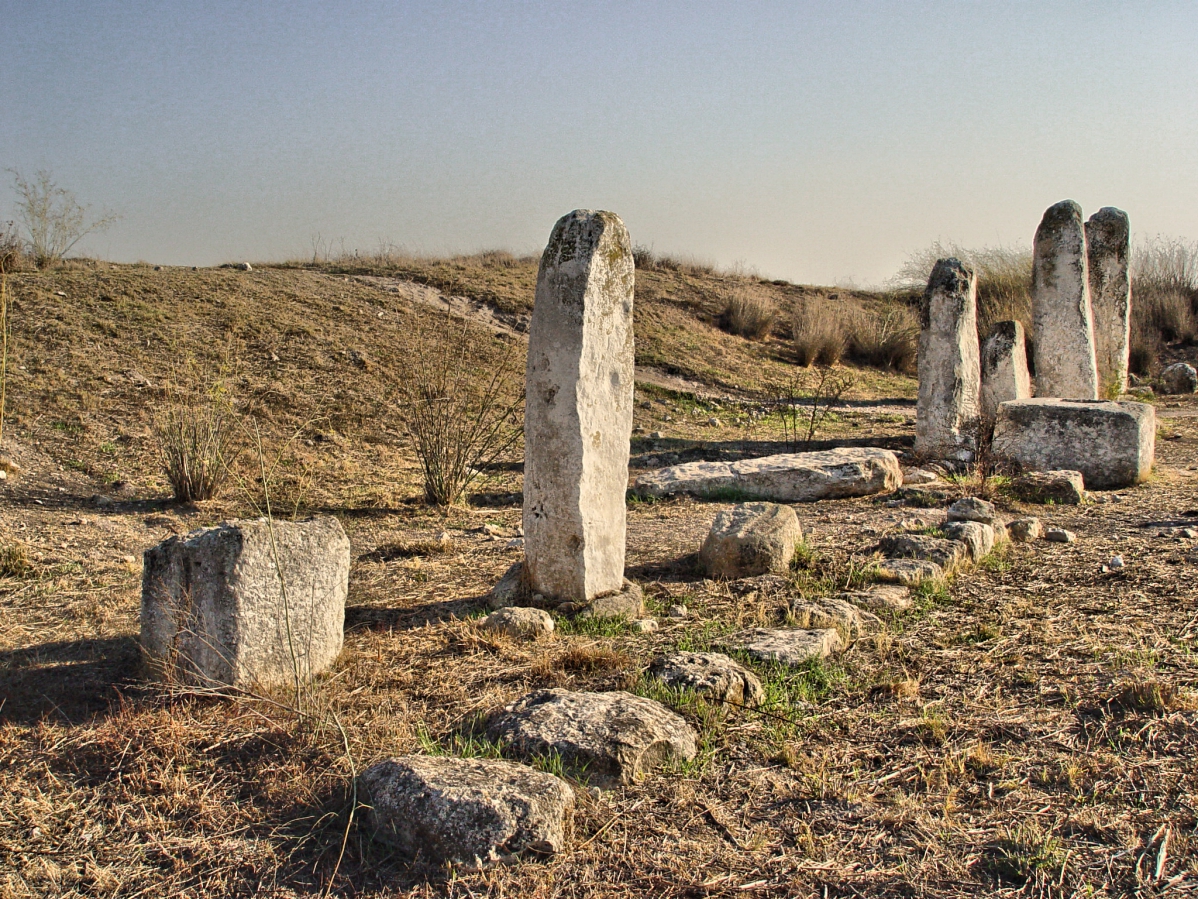
Our photo here shows the standing stones at the high place at Gezer.

Standing Stones at Gezer. Photo by Leon Mauldin.

Standing Stones at Gezer. Photo by Leon Mauldin.

Gezer guarded the entrance into the Shephelah region. It is located approximately thirty kilometers northwest of Jerusalem. Gezer was strategically situated at the junction of the Via Maris, the international coastal highway, and the highway connecting it with Jerusalem through the valley of Ajalon.

I have several previous posts with photos & info here, here, here, here, and here.

Hint: pronounce Gezer with “short” e, not GEEzer (def.: old man).


Damascus Gate in Jerusalem

November 10, 2015

It is fascinating to view the gates of Old Jerusalem!

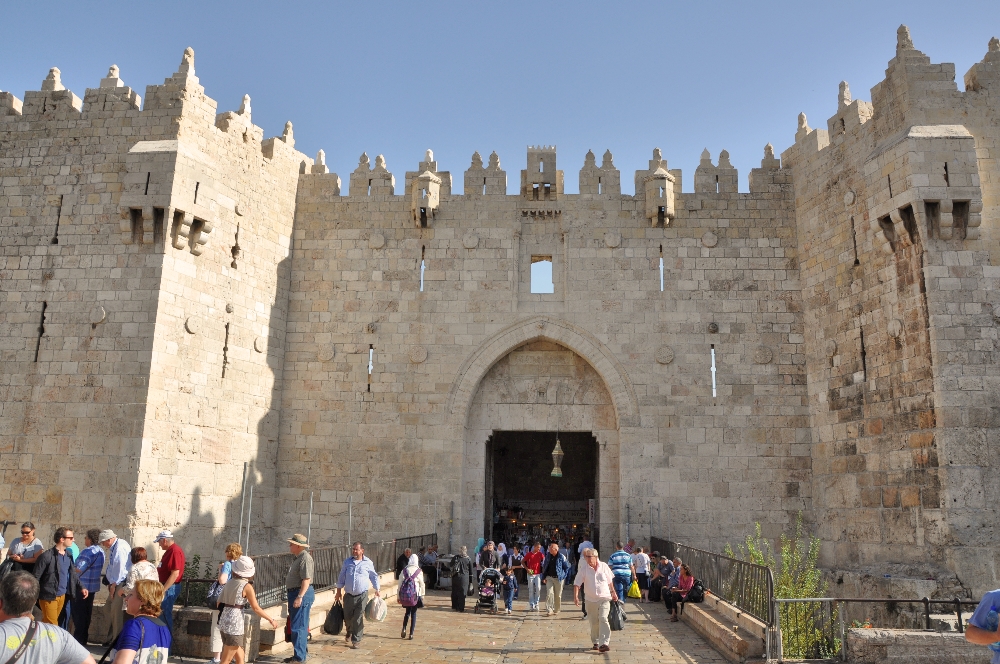
The Damascus Gate is located on the north side of Jerusalem, so named because this would be the direction going out of Jerusalem to Damascus, ca. 150 miles NNW. The Jews call this gate the Shechem Gate, and the Arabs call it Bab el-Amud.

Damascus Gate Jerusalem. North entrance. Photo by Leon Mauldin.

Damascus Gate Jerusalem. North entrance. Photo by Leon Mauldin.

This entrance gate

along the present north wall dramatically accents the spot that has been the main north entrance to Jerusalem for almost two millennia. R. W. Hamilton’s sounding here in 1937 and Basil Hennessey’s excavations in the 1960s; have revealed, below the modern entrance, layer upon layer of earlier gateways, reaching back through Arab, Crusader and Byzantine constructions to Roman Age foundations. The earliest certain construction here dates to Aelia Capitolina, the second to fourth-century C.E. city of Hadrian, but both Hamilton and Hennessey felt they found evidence that Hadrian’s gateway was built on foundations that went back to the Second Temple period. BAS Biblical World in Pictures. (2003).

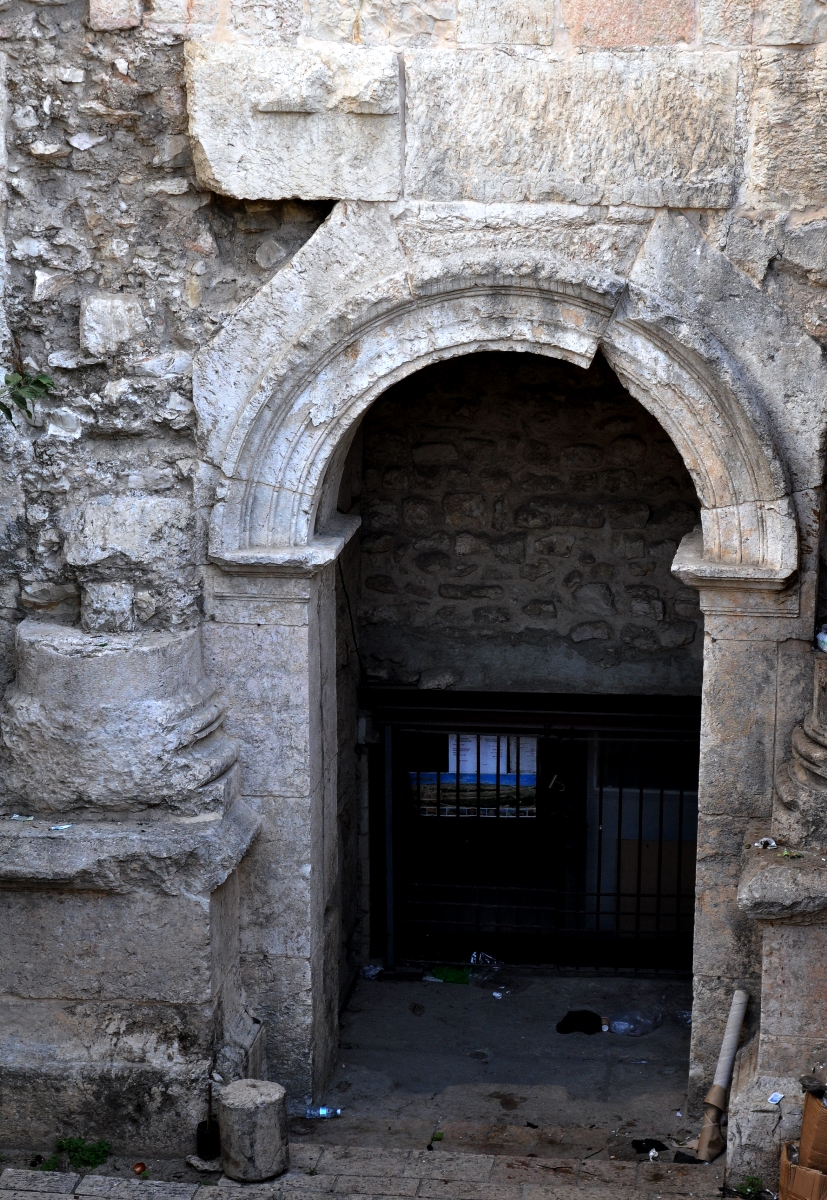
Hadrian had built a triple-arched gateway to serve as entrance here. The eastern arch is well-preserved.

Hadrian Gate, eastern arch. ca. AD 135. North wall, Jerusalem. Photo by Leon Mauldin.

Hadrian Gate, eastern arch. ca. AD 135. North wall, Jerusalem. Photo by Leon Mauldin.

The Latin inscription above the keystone of the arch says, “…according to the decurians [the city council] of Col[onia] Ael[ia] Cap[itolina],” Hadrian’s designation for Jerusalem.

Click images for larger view.


Monastery of Barnabas at Salamis, Cyprus

October 2, 2015

On the 1st Missionary Journey, the Apostle Paul accompanied by Barnabas first preached in Salamis on the island of Cyprus: “So, being sent out by the Holy Spirit, they went down to Seleucia and from there they sailed to Cyprus. When they reached Salamis, they began to proclaim the word of God in the synagogues of the Jews; and they also had John as their helper” (Acts 13:4,5).

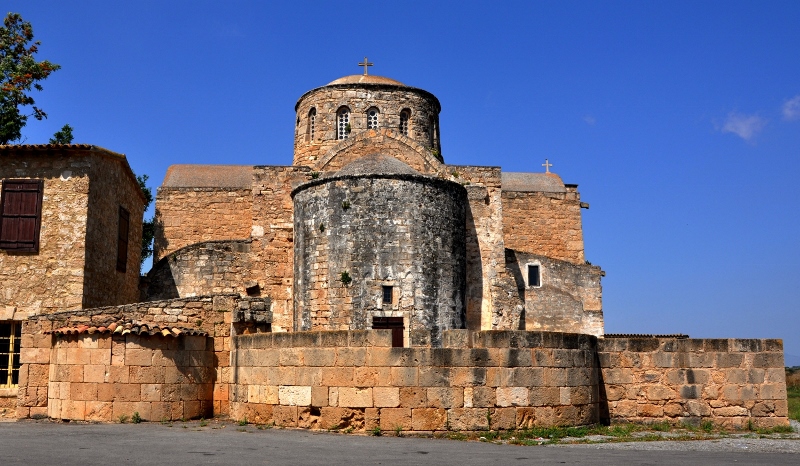
Our photo shows the “Monastery of St. Barnabas,” at Salamis, Cyprus. While the monastery itself is not a “biblical site” its presence bears testimony to the fact that Barnabas was indeed here.

Salamis, Cyprus. Monastery of St. Barnabas. Photo by Leon Mauldin.

Salamis, Cyprus. Monastery of St. Barnabas. Photo by Leon Mauldin.

The Biblical Archaeological Society has this information:

This monastery dedicated to St. Barnabas at Salamis, Cyprus, marks the first stop on Paul’s initial missionary journey. The earliest buildings of the monastery date to 477 C.E.

Perhaps Paul and Barnabas went first to Cyrus because it was Barnabas’s homeland (Acts 4:36), perhaps also because the island is large and strategically located. Cyprus served as a stepping stone on the trade routes that crossed the eastern Mediterranean. Archaeological remains from as early as the Early Bronze Age (3rd millennium B.C.E.) show it to have been a cultural meeting ground and “melting pot” for the successive cultures that flourished on all sides of it.

Salamis was the main port and principal city of the island in the Roman age. Located about five miles north of modern Famagusta, on its great bay, the city has yielded extensive Roman remains, including a theater, gymnasium, baths and a forum.

Paul’s visit to Salamis established a pattern for his missionary strategy that would continue through the rest of his travels. Heading for the major city of the region, Paul went immediately to proclaim the new “word of God” in the Jewish synagogues (Acts 13:5). We know from literary accounts that Jews settled in Salamis at least as early as the 3rd century B.C.E., and at such a flourishing city there undoubtedly would have been several synagogue communities. (BAS Biblical World in Pictures, 2003).

See our previous article on the theater in Salamis here.

Click image for larger view.


High Place at Dan

October 1, 2015

A study of the biblical “Divided Kingdom” period is challenging, (1 Kgs. 11ff. and 2 Chron. 11ff.) to say the least. The 1st of Israel’s kings, Jeroboam, made several (unauthorized) changes in the pattern for worship that Yahweh had revealed (see our previous post here). Jeroboam’s motive was to solidify his power, and to prevent his subjects from going south to Jerusalem to worship, which he thought would likely cause their loyalty to shift.

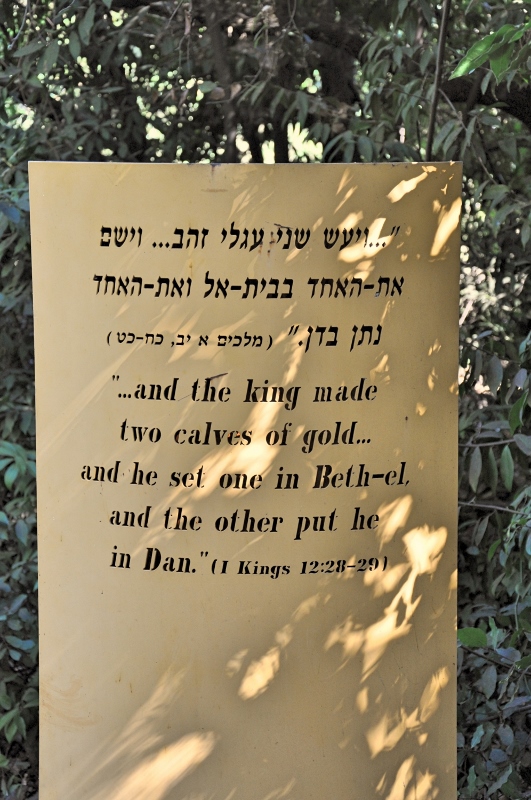
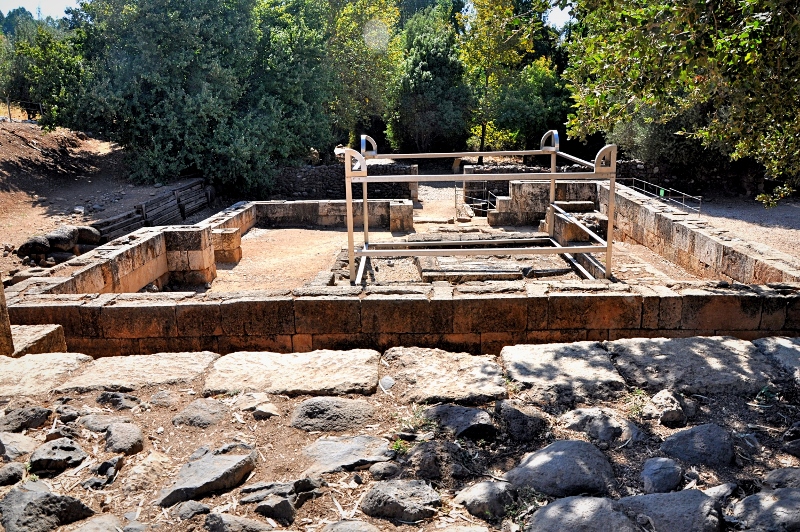
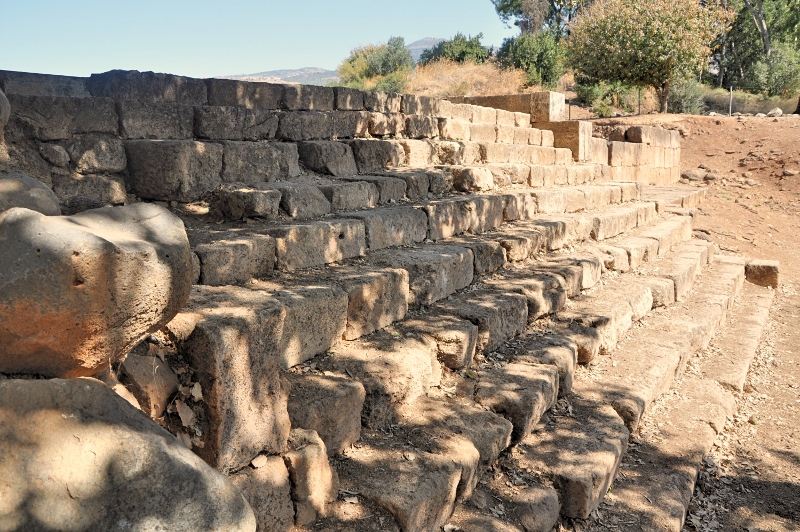
At Dan it is possible today to see the site referenced so many times in scripture, that of the high place where Jeroboam placed his golden calf. cf. 1 Kings 12:30: “Now this thing became a sin, for the people went to worship before the one [golden calf] at Dan.” “This event became sin to the house of Jeroboam, even to blot it out and destroy it from off the face of the earth” (13:34). Reference is made to the sins of Jeroboam “which he committed and with which he made Israel to sin” (14:16).

Info Sign at High Place at Dan. Photo by Leon Mauldin.

Info Sign at High Place at Dan. Photo by Leon Mauldin.

View of the altar where sacrifices were offered. Photo by Leon Mauldin.

View of the altar where sacrifices were offered. Photo by Leon Mauldin.

Steps leading up to the platform where the golden calf was enshrined. Photo by Leon Mauldin.

Steps leading up to the platform where the golden calf was enshrined. Photo by Leon Mauldin.

Click images for larger view.


Aqueduct at Beit Hananya

September 25, 2015

In perusing some homeschooling curriculum on the Roman Empire there was a heading entitled “Amazing Architects.”

The Romans were among the best builders in history. They built things that served practical purposes, such as canals, bridges, sewers, harbors, and roads. But it was perhaps in constructing aqueducts that their engineering skills were most impressive.

Aqueducts were developed by the Romans. They are channels for carrying water that were mostly dug into the earth, following the contours of hills. Where this was not possible, the Romans build arches made of concrete and stone. It took great skill to build an aqueduct. The water channels had to slop at exactly the right angle all the way along its length to give a steady flow of water. (Peter Chrisp, Ancient Rome, p.46).

Many sections of the ancient Roman aqueducts still survive in various parts of the former Roman Empire. The aqueduct that emptied into Caesarea on Israel’s coast is a prime example. Caesarea was the capital of Judea during the ministry of Jesus. See our post here.

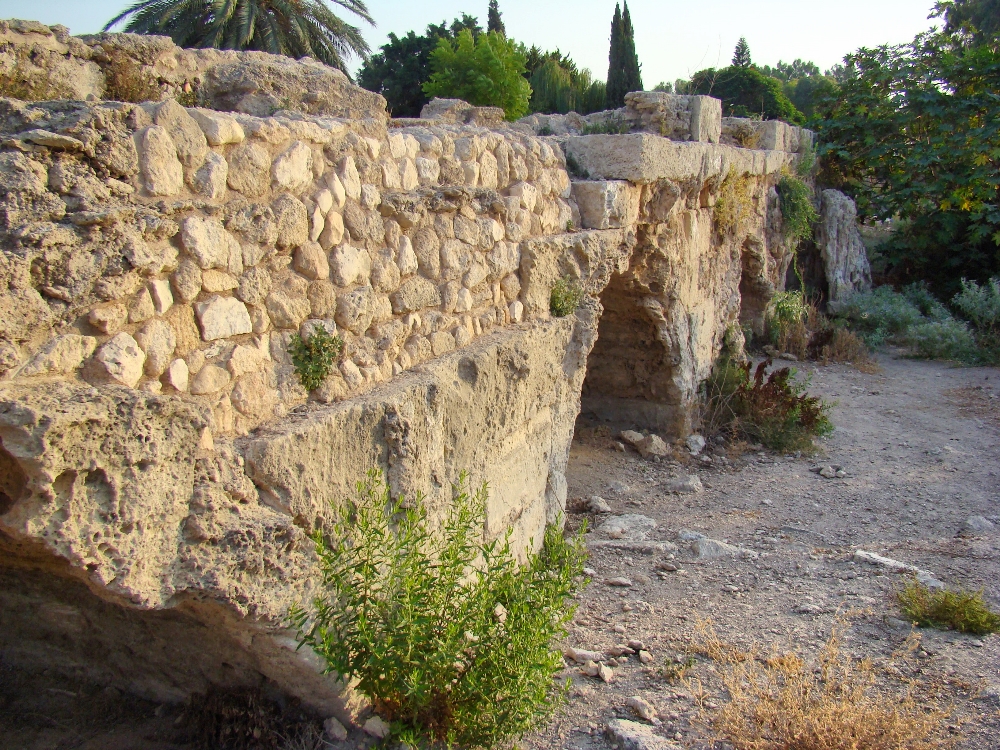
In Sept. 2011, Ferrell Jenkins & I made a personal study trip to Israel that included a stop at Beit Hananya, in the biblical “Plain of Sharon,” where a portion of the aqueduct can still be seen. This is north of Caesarea by a few miles. (Fresh water was channeled to Caesarea  from a distance of 8.5 miles).

Roman Aqueduct at Beit Hananya, north of Caesarea. Photo by Leon Mauldin.

Roman Aqueduct at Beit Hananya, north of Caesarea. Photo by Leon Mauldin.

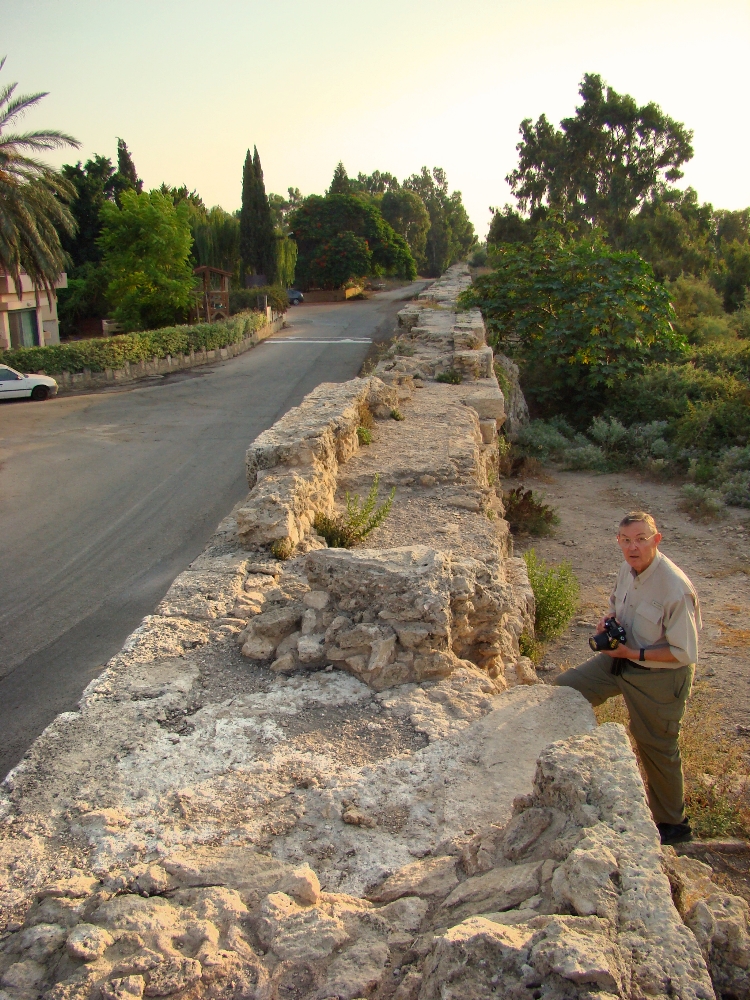
Beit Hananya Aqueduct as seen from top. Photo by Leon Mauldin.

Beit Hananya Aqueduct as seen from top. Photo by Leon Mauldin.

The water was channeled to course down the top of the aqueduct.

Click photos for larger view.


The Greek Goddess Hera

August 25, 2015

While taking a group to Italy (2012) I had the occasion to visit the Vatican Museum in Rome, where among other many artifacts, I photographed a statue of the Greek goddess Hera.

Hera, Vatican Museum. Photo by Leon Mauldin.

Hera, Vatican Museum. Photo by Leon Mauldin.

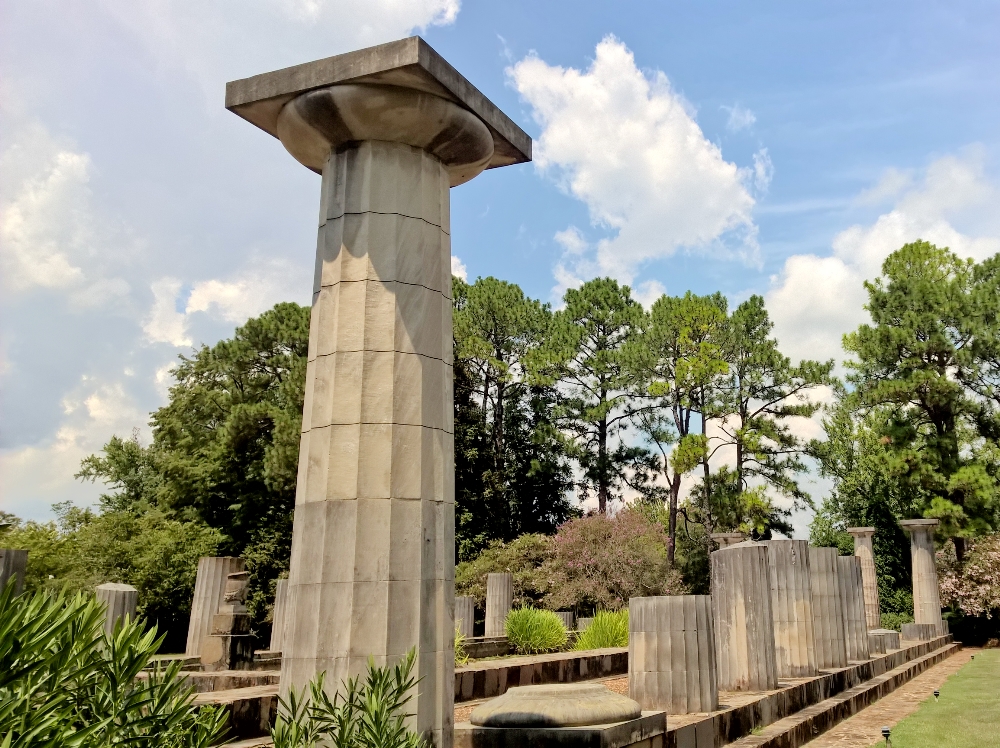
There is a replica of the temple of Hera in central Alabama:

Hera Temple at Wetumpka, AL. Photo by Leon Mauldin.

Hera Temple at Wetumpka, AL. Photo by Leon Mauldin.

Jasmine hill gardens and outdoor museum, “Alabama’s little corner of Greece,” now features over 20 acres of year-round floral beauty and classical sculpture, including new statuary honoring Olympic heroes.

The Olympian center welcomes visitors with a video presentation of jasmine hill’s history and a display of Olympic memorabilia from the games of past years. a tour of jasmine hill, now completely accessible to visitors with disabilities, offers spectacular and ever-changing views, including our full-scale replica of the temple of Hera ruins as found in Olympia, Greece, the birthplace of the Olympic flame. http://www.jasminehill.org/

Wikipedia:

Hera is the wife and one of three sisters of Zeus in the Olympian pantheon of Greek mythology and religion. Her chief function was as the goddess of women and marriage. Her counterpart in the religion of ancient Rome was Juno. The cow, lion and the peacock were considered sacred to her. Hera’s mother is Rhea and her father Cronus.

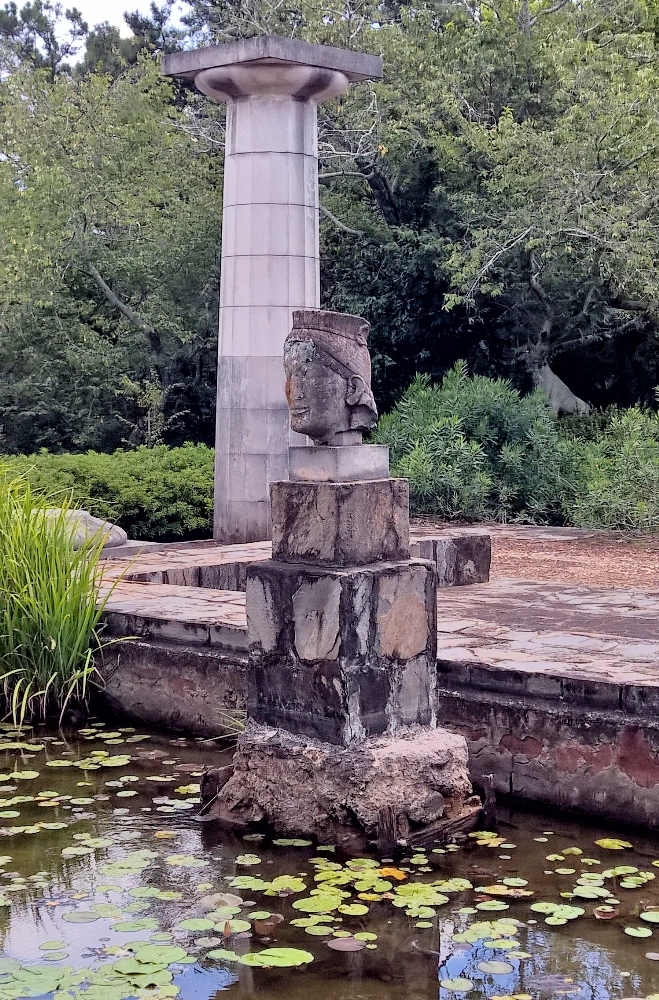
Portrayed as majestic and solemn, often enthroned, and crowned with the polos (a high cylindrical crown worn by several of the Great Goddesses), Hera may bear a pomegranate in her hand, emblem of fertile blood and death and a substitute for the narcotic capsule of the opium poppy. Scholar of Greek mythology Walter Burkert writes in Greek Religion, “Nevertheless, there are memories of an earlier aniconic representation, as a pillar in Argos and as a plank in Samos.” Hera was known for her jealous and vengeful nature against Zeus’s lovers and offspring, but also against mortals who crossed her, such as Pelias. Paris also earned Hera’s hatred by choosing Aphrodite as the most beautiful goddess.

Bust of the Greek goddess Hera at temple site. Photo by Leon Mauldin.

Bust of the Greek goddess Hera at temple site. Photo by Leon Mauldin.

SA′MIA (Σαμία), a daughter of the river-god Maeander, and wife of Ancaeus, by whom she became the mother of Samos. (Paus. vii. 4. § 2.) Samia also occurs as a surname of Hera, which is derived from her temple and worship in the island of Samos. (Herod. iii. 60; Paus. vii. 4. § 4; Tacit. Ann. iv. 14; comp. HERA.) There was also a tradition that Hera was born or at least brought up in Samos. (Paus. l. c.; Schol. ad Apollon. Rhod. i. 187.) (Dictionary of Greek and Roman Biography and Mythology, Vol. 3, p. 702).

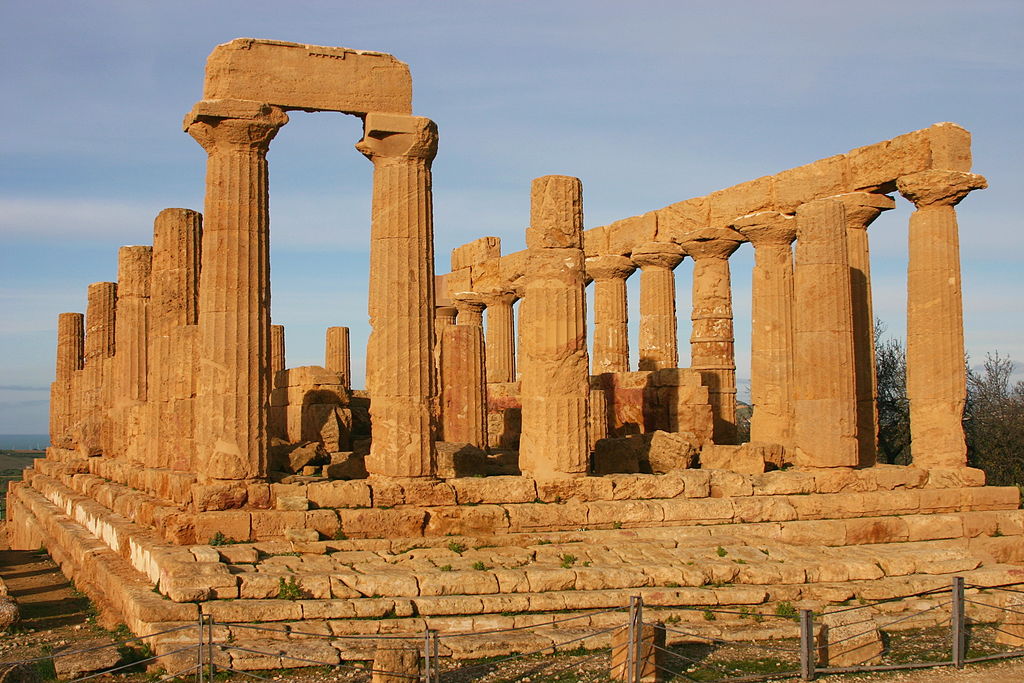
There are the ancient remains of a temple devoted to Hera at Agrigento, a city on the southern coast of Sicily. (That location is included in my planned itinerary for Sicily/Italy March 2016.)

Temple of Hera, Agrigento, Sicily. Photo by Jose Luiz.

Temple of Hera, Agrigento, Sicily. Photo by Jose Luiz.

Personal note: We have not been posting much for the last several weeks due to some family sickness and deaths, and the priority which that rightly requires. We hope to be posting more regularly now in the near future. Thank you for your patience.


“Like a Cylinder Seal over Your Heart”

July 17, 2015

While running some biblical references yesterday I came across a text in Song of Solomon 8:6: “Set me like a cylinder seal over your heart, like a signet on your arm. For love is as strong as death, passion is as unrelenting as Sheol. Its flames burst forth, it is a blazing flame” (NET Bible).

The NET Bible with its translation notes has some very useful material on the significance of the similes cylinder seal and signet as used in this passage:

In the ancient Near East (khotam “seal”) was used to denote ownership and was thus very valuable (Jer 22:24; Hag 2:23; Eccl 17:22). Seals were used to make a stamp impression to identify the object as the property of the seal’s owner (HALOT 300). Seals were made of semi-precious stone upon which was engraved a unique design and an inscription, e.g., LMLK [PN] “belonging to king […].” The impression could be placed upon wet clay of a jar or on a writing tablet by rolling the seal across the clay. Because it was a valuable possession its owner would take careful precautions to not lose it and would keep it close to him at all times.

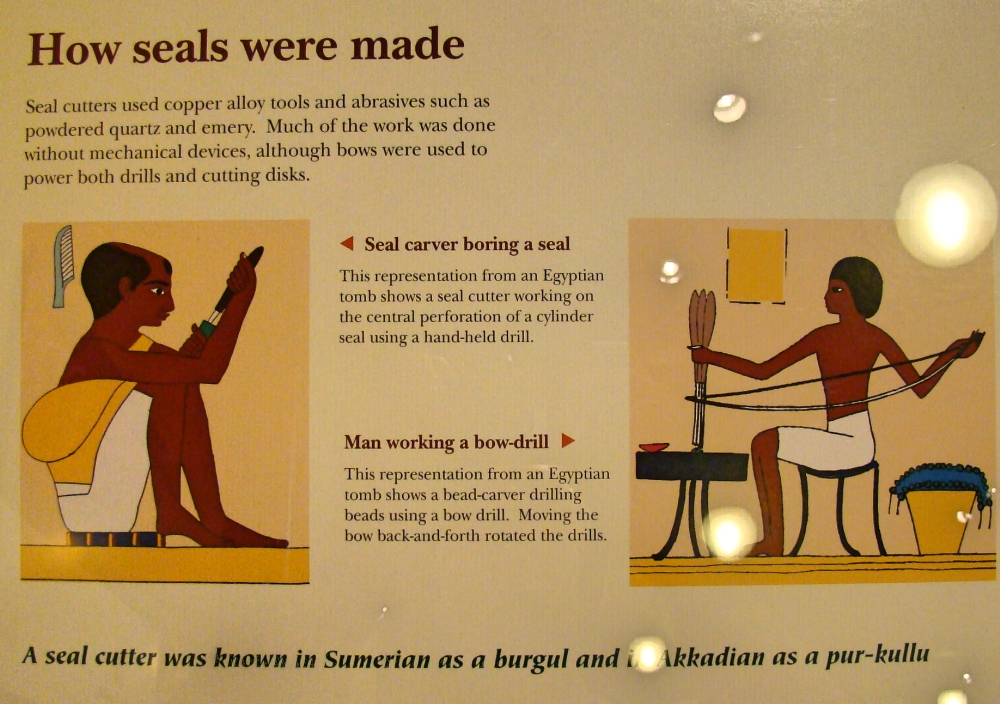
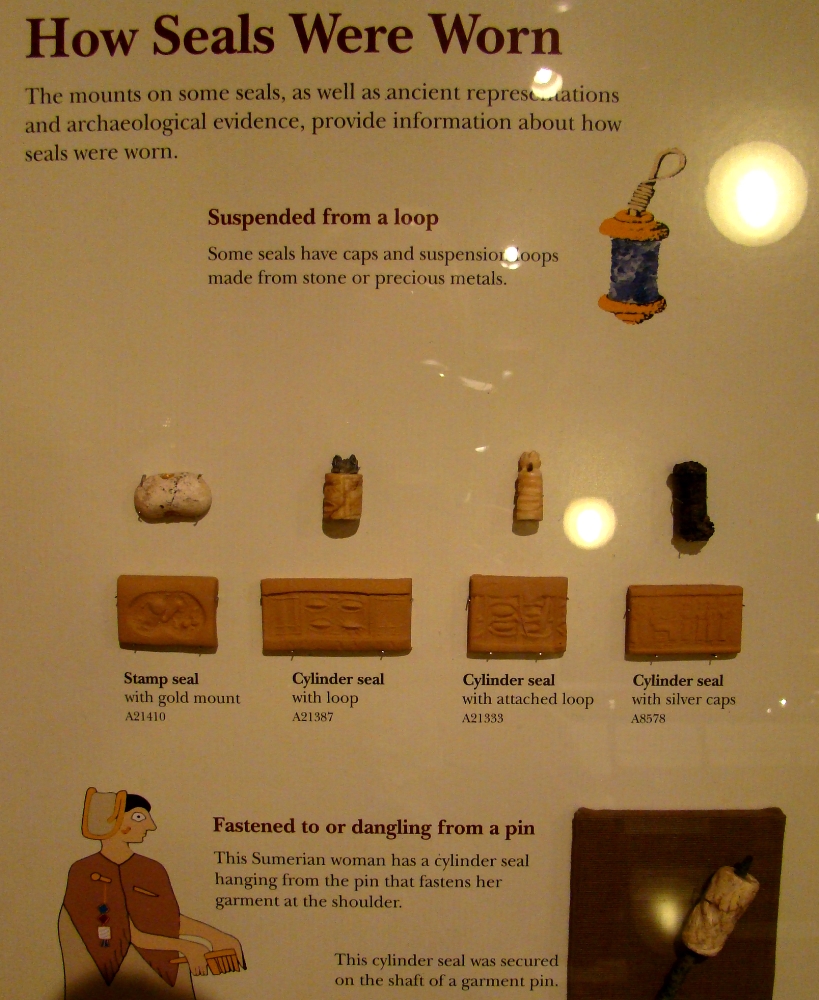
The Oriental Institute Museum of the University of Chicago has some helpful displays of ancient seals, how they were made, how worn, along with several examples of actual seals and their imprints.

How Seals Were Made. Oriental Museum Chicago. Photo by Leon Mauldin.

How Seals Were Made. Oriental Museum Chicago. Photo by Leon Mauldin.

Seals, How Worn.  Oriental Institute. Photo by Leon Mauldin.

Seals, How Worn. Oriental Institute. Photo by Leon Mauldin.

Note that this above display shows both the stamp seal as well as cylinder seal. The Hebrew word for seal, khotam or chothamoccurs twice in our text, characteristic of the parallelism of Hebrew poetry. The NET Bible renders the same word khotam as cylinder seal and then signet in the verse (Song of Solomon 8:6).

There were two kinds of cylinder seals in the ancient Near East, namely, those worn around one’s neck and those worn around one’s wrist. The typical Mesopotamian seal was mounted on a pin and hung on a string or necklace around one’s neck. The cylinder seal hung around one’s neck would, figuratively speaking, rest over the heart (metonymy of association). The Beloved wished to be to Solomon like a cylinder seal worn over his heart. She wanted to be as intimate with her lover as the seal worn by him (W. W. Hallo, “‘As the Seal Upon Thy Heart’: Glyptic Roles in the Biblical World,” BRev 2 [1985]: 26). (NET notes).

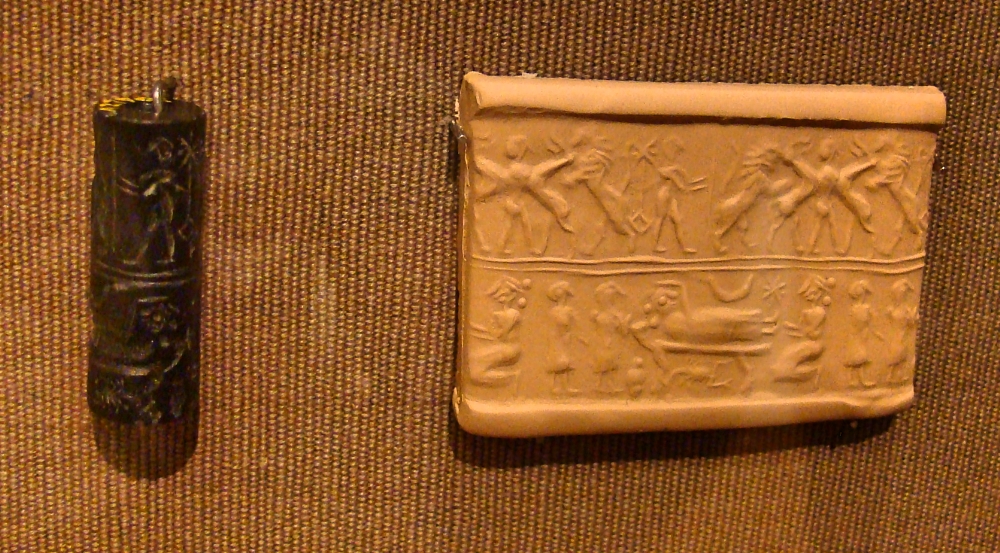
Seal on display, Oriental Institute. Photo by Leon Mauldin.

Seal on display, Oriental Institute. Photo by Leon Mauldin.

This cylinder above has a contest scene at top and what may be a childbirth scene at bottom.

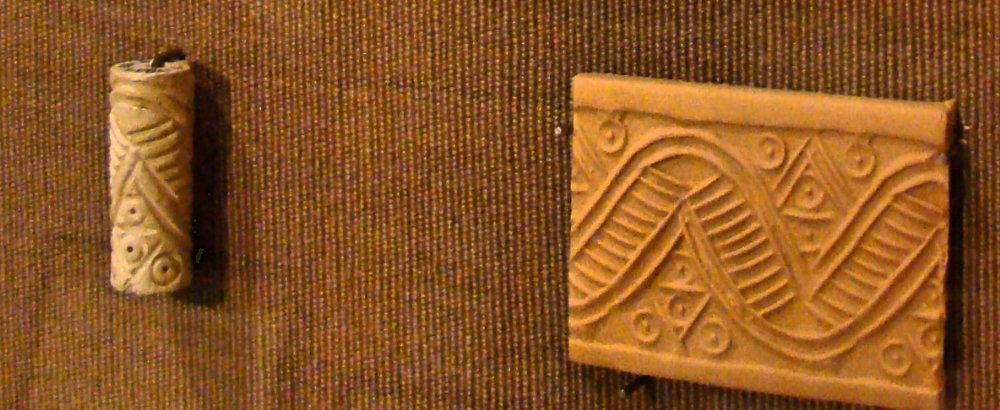
Ancient seal Oriental Institute. Photo by Leon Mauldin.

Ancient seal Oriental Institute. Photo by Leon Mauldin.

This seal is dated at 2,900-2,750 BC according to its accompanying placard.

More on Khotam:

Literally “cylinder-seal” or “seal.” The term (khotam, “cylinder-seal”) is repeated in Sol 8:6 for emphasis. The translation above uses the terms “cylinder seal” and “signet” simply for the sake of poetic variation. The Beloved wanted to be as safe and secure as a cylinder seal worn on the arm or around the neck, hanging down over the heart. She also wanted to be placed on his heart (emotions), like the impression of a cylinder seal is written on a document. She wanted to be “written” on his heart like the impression of a cylinder seal, and kept secure in his love as a signet ring is worn around his arm/hand to keep it safe. (NET notes).

Finally re: the word rendered “arm,” (Song of Solomon 8:6) zeroa:

Alternately, “wrist.” In Palestine cylinder seals were often hung on a bracelet worn around one’s wrist. The cylinder seal was mounted on a pin hanging from a bracelet. The cylinder seal in view in Song 8:6 could be a stamp seal hung from a bracelet of a type known from excavations in Israel. (NET notes).

Click images for larger view.