Megiddo Stables

April 17, 2011

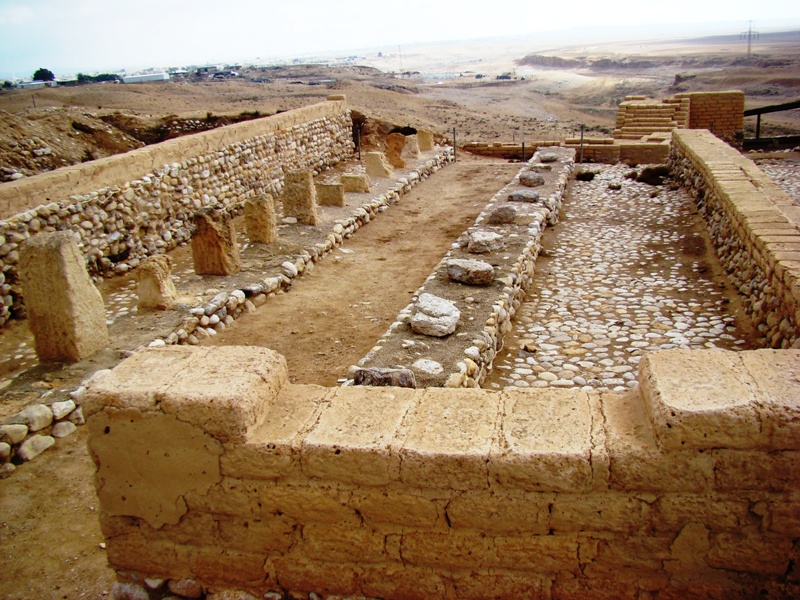
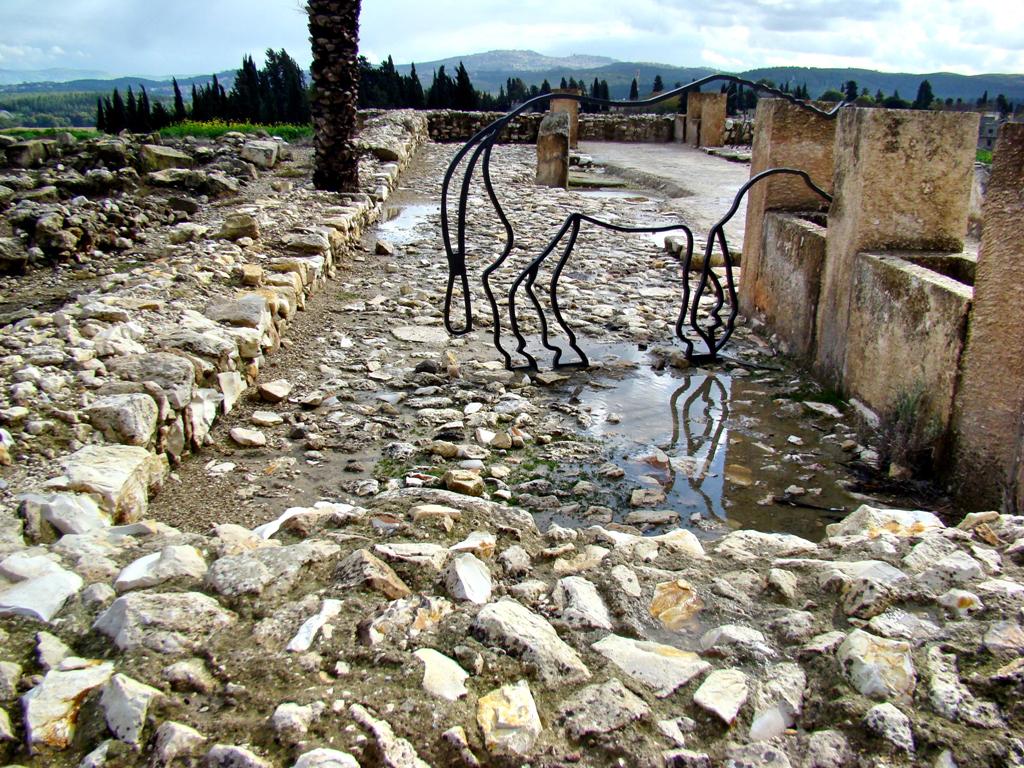
Another interesting discovery at Megiddo is the area which many believe were used for horse stables. The area seen in this photo is sometimes called “Solomon’s stables,” though many believe this should be dated a bit later to the time of King Ahab.

Stables at Megiddo. Photo by Leon Mauldin.

You can see the metal outline of a horse in our photo. Some suggest this site may have been used for barracks, market places, storage facilities, or other usages.

Click on photo for higher resolution.


Megiddo Water System

April 16, 2011

It would be hard to overemphasize the importance of the city of Megiddo. We have referenced the strategic location in our two previous posts. Crucial battles were fought here.

Excavations conducted at Megiddo have been “large and extensive,” and include the efforts of the German Society for Oriental Research (1903-1905), the Oriental Institute of Chicago (1925-1939). Excavations were interrupted with the outbreak of WWII, but were renewed by the Institute of Archaeology at the Hebrew University of Jerusalem (1960, 1961, 1966, 1967, and 1971) under the leadership of Y. Yadin (The New Encyclopedia of Archaeological Excavations in the Holy Land, Vol. 3, pp. 1005-1005).

More recent excavations have been undertaken by Tel Aviv University, with Pennsylvania State University as the senior American partner (ibid. Vol. 5, pp. 1944ff.).

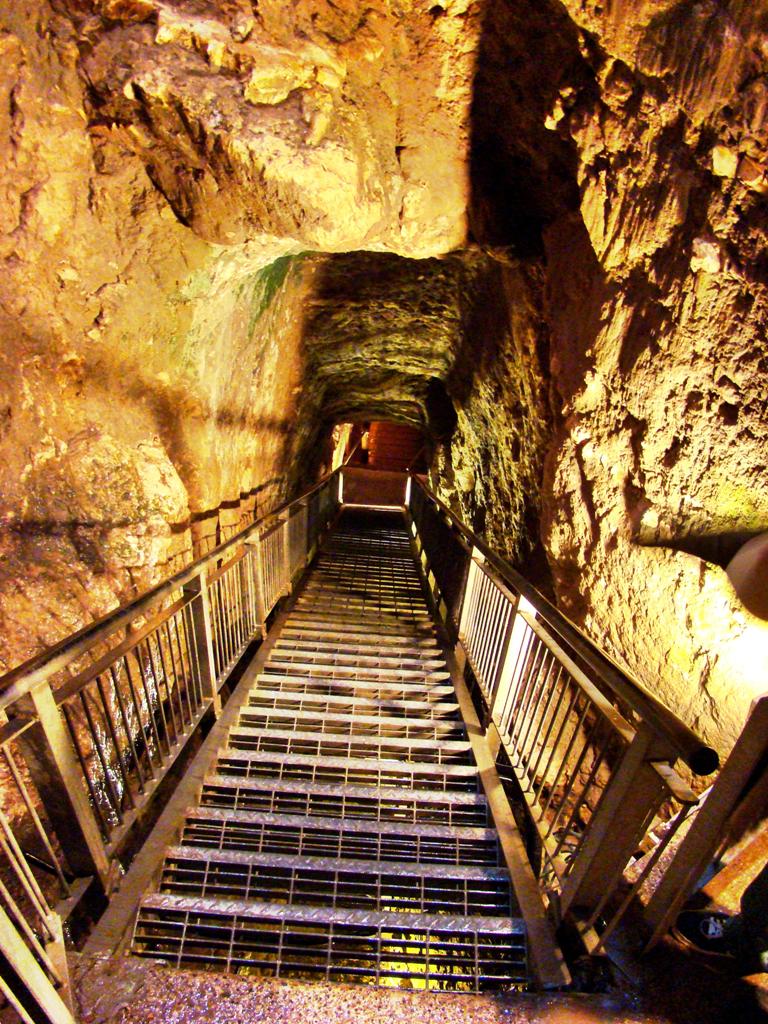
Among the more interesting discoveries is Megiddo’s water system. A 70 meter tunnel hewn through rock led down to the spring.

Megiddo. Tunnel to city spring. Photo by Leon Mauldin.

This dates back to the time of Israel’s king Ahab (874-853 BC). Prior to this engineering feat, it was necessary to go outside the city walls to access the spring.

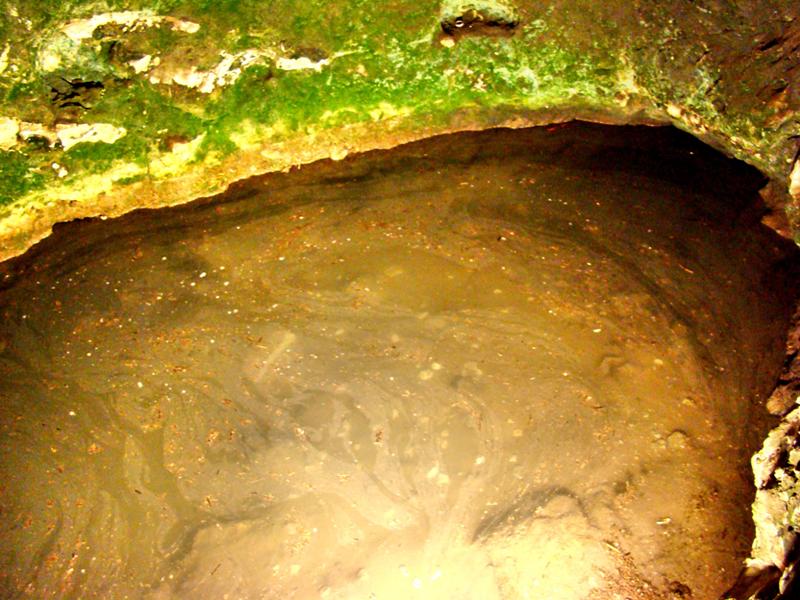
Megiddo Spring. Citys water supply. Photo by Leon Mauldin.

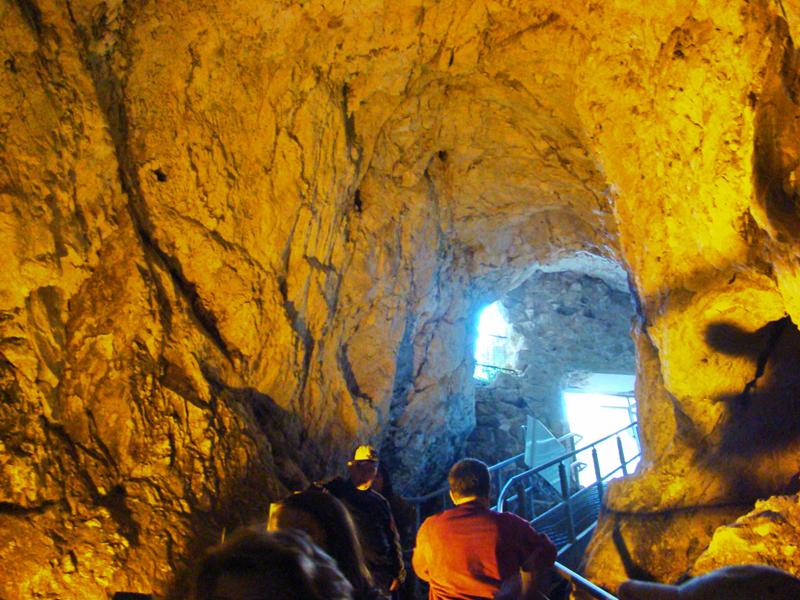
Here is a view from going up from the spring as you exit:

Megiddo. Exit from spring. Photo by Leon Mauldin.

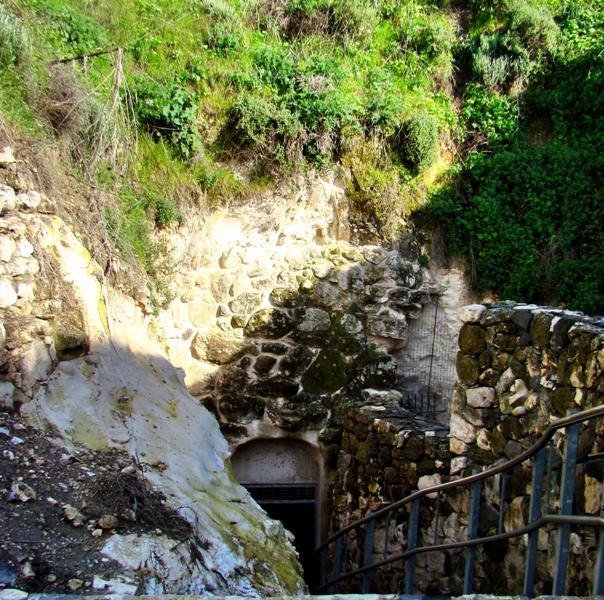
And finally, a view back to the exit of the spring.

Megiddo. Outside Water System Exit. Photo by Leon Mauldin.

In our next post we plan to feature the stables of Megiddo.


Canaanite Altar at Megiddo

April 13, 2011

Archaeologists have discovered more than 20 layers of occupation at the ancient city of Megiddo.The city was strategically situated on the route that came to be known as the Via Maris, the ancient trade route that connected Egypt with Syria and Mesopotamia.

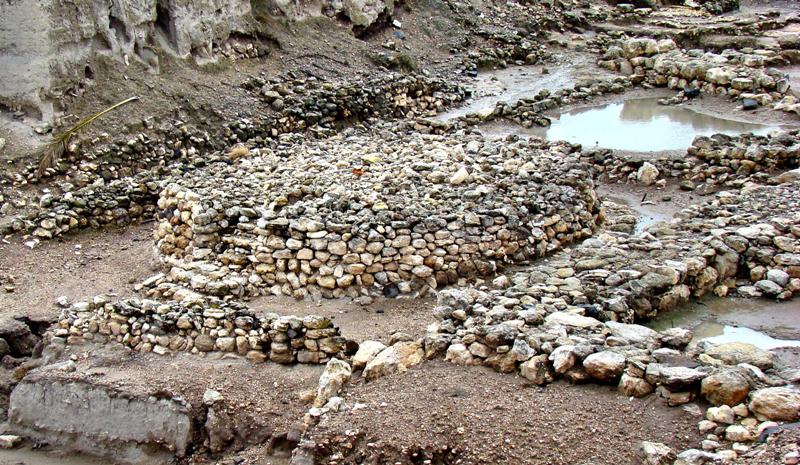
One of the more interesting finds is the circular Canaanite altar. It is nearly 26 feet in diameter and about five feet in height. This would have been used by the Canaanites in their pagan worship, and very likely was the site of human sacrifice. You can see the altar in the center of our photo.

Canaanite Altar at Megiddo. Photo by Leon Mauldin.

This illustrates the kind of thing God had in mind when He commanded Moses, “. . . you are to tear down their altars and smash their sacred pillars and cut down their Asherim” (Ex. 34:13). Likewise, in Deut. 12:3, “You shall tear down their altars and smash their sacred pillars and burn their Asherim with fire, and you shall cut down the engraved images of their gods and obliterate their name from that place.”

In the foreground of the photo and also to the right of the altar you can see the outline of the Canaanite temple.


Megiddo

April 6, 2011

Megiddo is first mentioned in Scripture in Joshua 12:21 as one of the cities captured under the leadership of Joshua and assigned to the tribe of Manasseh (17:11). Nelson’s NIBD speaks of the importance of this site:

Megiddo was situated on the main road that linked Egypt and Syria. Overlooking the Valley of Jezreel (Plain of Esdraelon), Megiddo was one of the most strategic cities in Palestine. All major traffic through northern Palestine traveled past Megiddo, making it a strategic military strong-hold.

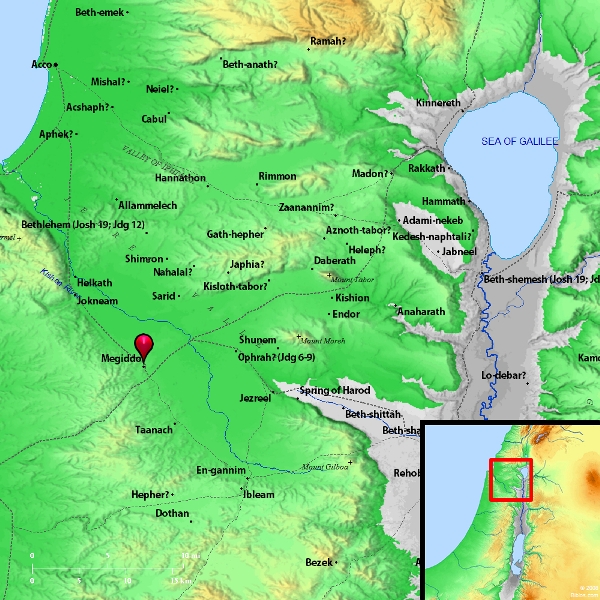
Therefore it was a great loss when Israel subsequently did not retain this city (Judges 1:27), whose location can be seen in the map below:
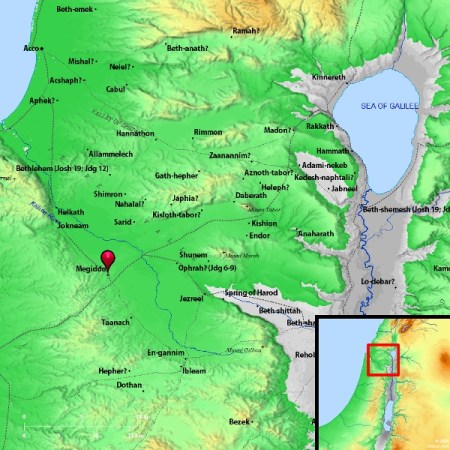
Megiddo. Map courtesy of BibleAtlas.org

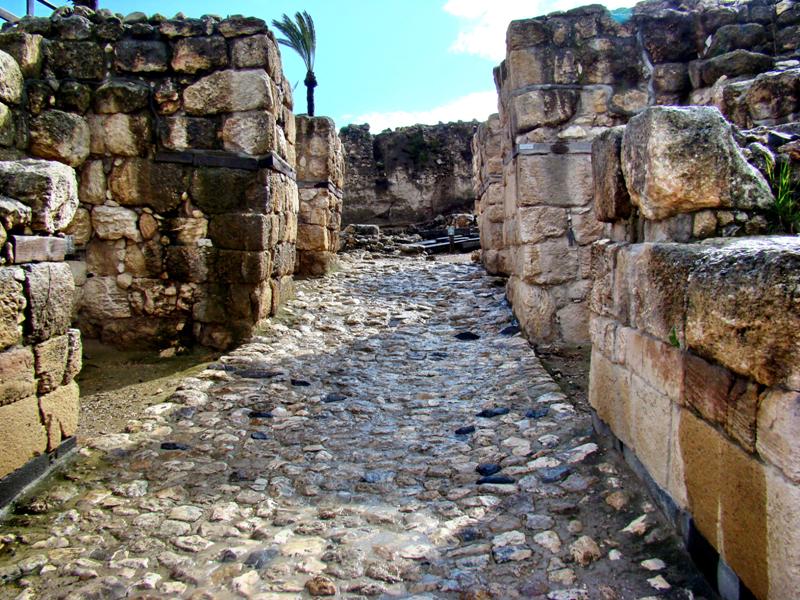
Megiddo was a city of great antiquity. The impressive Canaanite gate can be seen here in our photo:
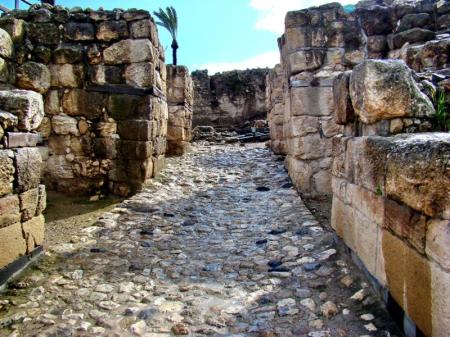
Canaanite Gate at Megiddo. Photo by Leon Mauldin.

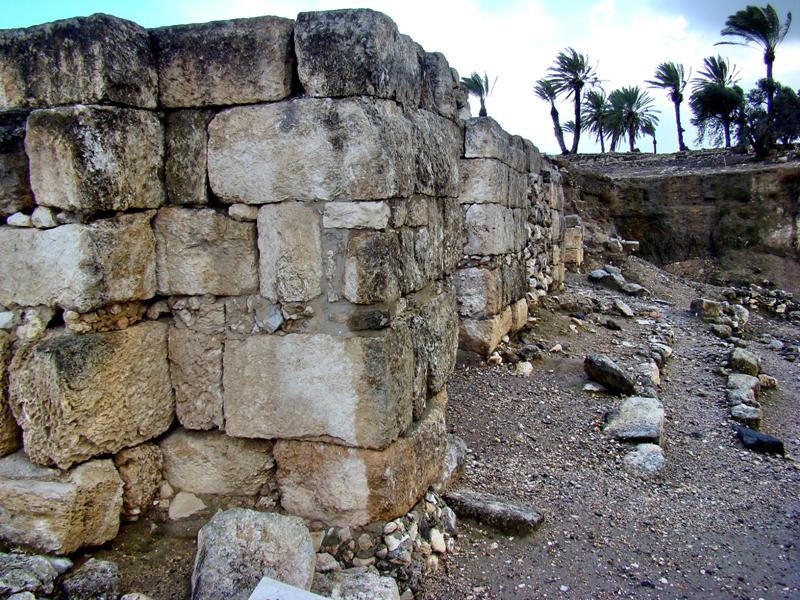
This was one of the cities later fortified by King Solomon (1 Kings 9:15) during the United Kingdom period (Iron Age). The Solomonic gate was here:
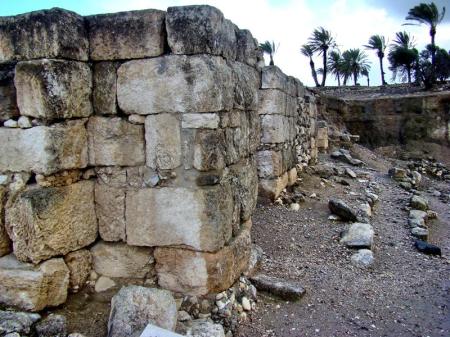
Solomonic Gate at Megiddo, a fortress city. Photo by Leon Mauldin.

Crucial battles were fought here or near here.

1.During the time of the Judges, Barak’s forces (Deborah was the Judge and Prophetess) defeated the Canaanite enemy near here (Judges 4-5). From Megiddo one can easily see Mt. Tabor, mentioned in the account (4:14) ; Judges 5:19 refers to the “waters of Megiddo.”

2. In 2 Kings 9:27, Judah’s king Ahaziah died here by the hand of Jehu; the year was 841 BC.

3. Good King Josiah (also of Judah) was killed here by Pharaoh Necho of Egypt; the year was 609 BC.

4. The word Armageddon (Rev. 16:16) is rendered Har-Magedon by the NASB and means The Mount of Magedon, i.e., Mt. Megiddo.

Click on images for higher resolution.

Jokneam in Carmel

March 24, 2011

Sometimes people ask what is my favorite place to see in Israel. I don’t know the answer to that. But one of my favorites is Mt. Carmel, not only because of Elijah’s victory over the Baal prophets which took place there (1 Kings 18), but also because of the view from there. From Mt. Carmel you can see the Jezreel Valley, trace the flow of the Kishon River, see Mt. Tabor (Judges 4-5), the Hill of Moreh (Judges 7), the pass to Gilead, Mt. Gilboa (1 Sam. 31), the central hill country of Samaria, and the Mediterranean coast! Also you can see the ruins of Jokneam, one of the city states named in the conquest listing of Joshua 12:21.

Jokneam in Carmel, listed in Joshua 12:22. Photo by Leon Mauldin.

The tel of Jokneam is in the center of our photo. The Archaeological Encyclopedia of the Holy Land has the following info re: Jokneam:


A city whose ruler was among the 31 Canaanite kings defeated by Joshua (Josh. 12:22), one of the Levitical cities of the family of Merari (Josh. 21:34).

One of the most important Canaanite city-states, it appears in the list of conquests made by Tuthmosis III; it was possibly conquered later by Tiglath-Pileser III. The site was also settled in the Roman period, when Eusebius knew it as Kammona, ‘a large village in the Great Plain, 6 miles to the north of Legio, on the way to Ptolemais (Acco)’. Identified with Tel Qaimin, an exceptionally large mound at the entrance to Wadi Milh, one of the important passes leading into the Jezreel Valley.

Since 1977 excavations have been carried out at Tel Yokneam under the direction of A. Ben-Tor on behalf of the Hebrew University, as part of a regional research project of the western part of the Jezreel Valley. This mound is outstanding by virtue of its continuous occupation. The following periods were found to be represented at the site: Ottoman, Mameluke, Crusader, early Arab, Byzantine, Roman, Hellenistic, Persian, Iron Age and Late Bronze Age. On the surface were also found potsherds of the Middle Bronze and Early Bronze Ages.

One is benefited by seeing not only the well-known sites, but also the more obscure! Note that the above entry states that Jokneam was one of Canaan’s most important city states.

Click on image for higher resolution.


Gibeon, El-Jib

March 14, 2011

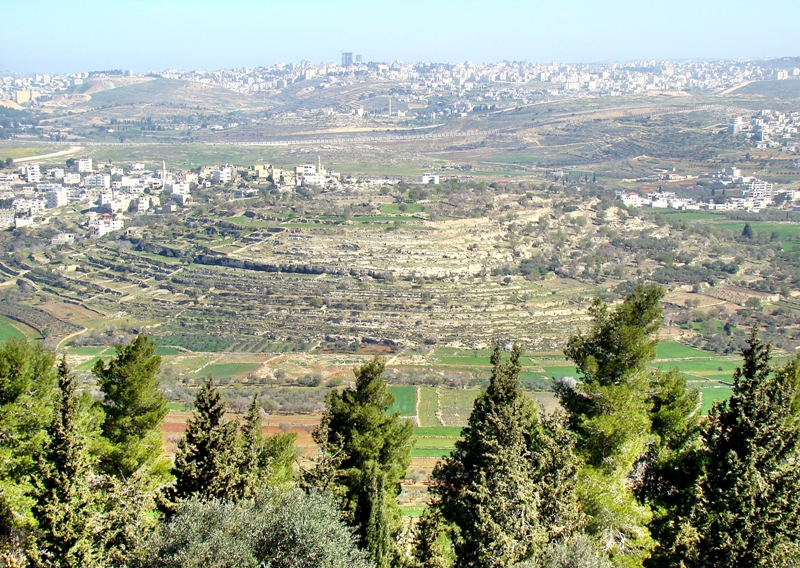
Today’s biblical sites included Gibeon. Gibeon is the Canaanite city whose residents (the Hivites Josh. 9:7) pretended to be a long distance away from the land of Canaan, as they approached Joshua and the men of Israel in the days of the Conquest. They brought old dry, moldy bread and wore worn out clothes, and said the bread was fresh when they left, and their garments had worn out along the way. The text says, “Then the men of Israel took some of their provisions; but they did not ask counsel of the Lord” (Josh 9:14).

Later the Israelites found out they had been deceived. They honored their covenant with the Gibeonites, but made them wood cutters and water carriers for the house of God (v.23).

Because the Gibeonites had made a treaty with Israel, a coalition of kings to the south, led by the king of the Jebusites (ancient Jerusalem), attached. They sent to Joshua for help, and he responded, defeating these southern kings. Needed extra daylight to make the victory complete, Joshua prayed to the Lord, and the day was lengthened, giving the necessary time to defeat Israel’s enemies. “Sun, stand still over Gibeon; and Moon, in the Valley of Aijalon. So the sun stood still, and the moon stopped, Till the people had revenge upon their enemies” (Josh. 10:12-13).

Our photo today shows the tel of Gibeon, which is the Arab village of El-Jib. This photo was taken from Nabi Samwil.

Tel of Gibeon. Modern Arab El-Jib. Photo by Leon Mauldin.


When the land was distributed, Gibeon became part of the tribal territory of Benjamin (Josh. 18:25), and was designated as a Levitical city (Josh. 21:17).

Click image for higher resolution.


Nuzi Tablets and the Patriarchs

March 5, 2011

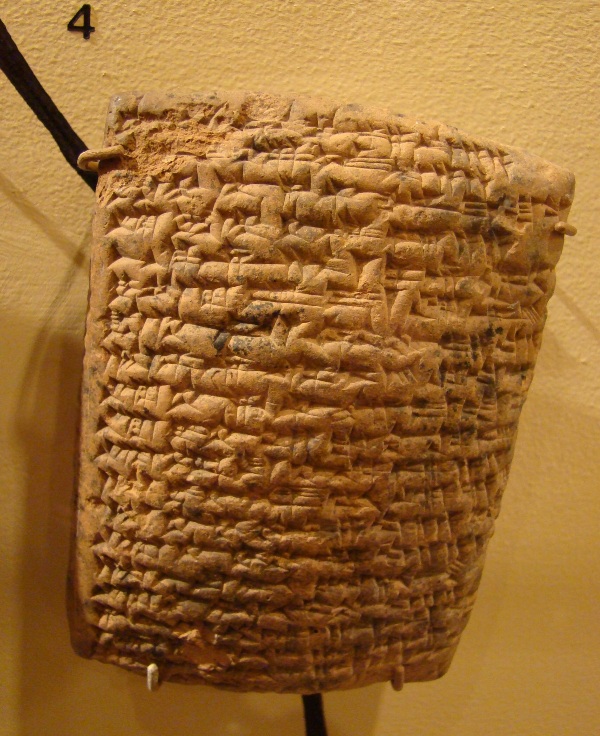
Many in the scholarly world are dismissive about the historicity of the patriarchs. One source that is helpful in understanding the world of the biblical patriarchs is that of the Nuzi Tablets.

Nuzi was a Hurrian administrative center not far from the Hurrian capital at Kirkuk in northern Iraq. The Hurrians are equivalent to the Horites in the Old Testament, also called Hivites and Jebusites. Excavations were carried out at Nuzi by American teams from 1925 to 1933. The major find was more than 5,000 family and administrative archives spanning six generations, ca. 1450–1350 BC. They deal with the social, economic, religious and legal institutions of the Hurrians. (Bible and Spade 18:32).

Nuzi Tablet. Semitic Museum. Photo by Leon Mauldin.

The tablets tell of practices similar to those in Genesis such as adoption for childless couples (Gn 15:2–3), children by proxy (Gn 16; 21:1–21), inheritance rights (Gn 25:29–34), marriage arrangements (Gn 28–31) and levirate marriage (Gn 38; Dt 25:5–10). They also demonstrate the significance of the deathbed blessing (Gn 27; 48–49) and household gods (Gn 31:14–19, 30–35). Some Nuzi tablets, called “tablets of sistership,” have agreements in which a man adopted a woman as a sister. In the society of the Hurrians, a wife enjoyed both greater protection and a superior position when she also had the legal status of a sister. In such a case, two separate documents were drawn up, one for marriage and the other for sistership. This may explain why both Abraham (Gn 12:10–13; 20:1–2) and Isaac (Gn 26:7) said their wives were their sisters. It is possible that they had previously adopted them to give them higher status, in accordance with the custom of the day.

Family records were highly valued at Nuzi, being passed down from father to son for as many as six generations. Nowhere else in the ancient Near East is this kind of reverence for family documents illustrated, except in the Old Testament. Indirectly, the practice at Nuzi supports the position that Genesis and the other books of history in the Old Testament are grounded in actual family, clan and tribal records carefully passed from generation to generation.

As with Mari, the Nuzi records demonstrate that the cultural practices recorded in the book of Genesis are authentic. The accounts are not fictional stories written at a much later time, as some critics claim, since the customs were unknown in later periods (ibid.).


Also, and ultimately, it is important to remember that Jesus endorsed and taught the historicity of the patriarchs! cf. Matt. 8:11; 22:32, etc.

Click on image for higher resolution.


Arad in the Negev

February 21, 2011

Arad is first mentioned in Scripture in Numbers 21:1, “The king of Arad, the Canaanite, who dwelt in the South, heard that Israel was coming on the road to Atharim, then he fought against Israel and took some of them prisoners.” This was in the last year of the 40 years wilderness wandering.  Israel prayed for deliverance and the LORD gave them victory.

Map by Bibleatlas.org

BAR notes:

The Israelite fortress at Arad is unique in the Land of Israel. It’s the only site excavated with modern archaeological methods that contains a continuous archaeological record from the period of the Judges (c. 1200 B.C.) to the Babylonian destruction of the First Temple (580 B.C.). This distinction promises to make Arad the type-site for pottery chronology, especially in southern Israel, against which pottery from other sites can be confidently tested and dated. Not only is the pottery sequence continuous, but the timelines between the various strata during which the Israelite fortress was built and rebuilt are for the most part clear and can often be connected with well-known historical and datable events.

Arad is also special for other reasons. The Israelite fortress there was found to contain the only Israelite temple ever discovered in an archaeological excavation.

The excavation of the fortress also yielded a unique series of inscriptions. The inscriptions, written for the most part with ink on potsherds—called ostraca (singular, ostracon)—include political, administrative and sometimes even religious documents. Other sites have yielded ostraca collections—for example, the Lachish letters and the Samaria ostraca—but each of those collections belonged to only one major stratum and time period. At Arad the inscriptions span a period of 350 years and cover six different strata. In all, more than one hundred texts and fragments were recovered. (13:02 March/April 1987).

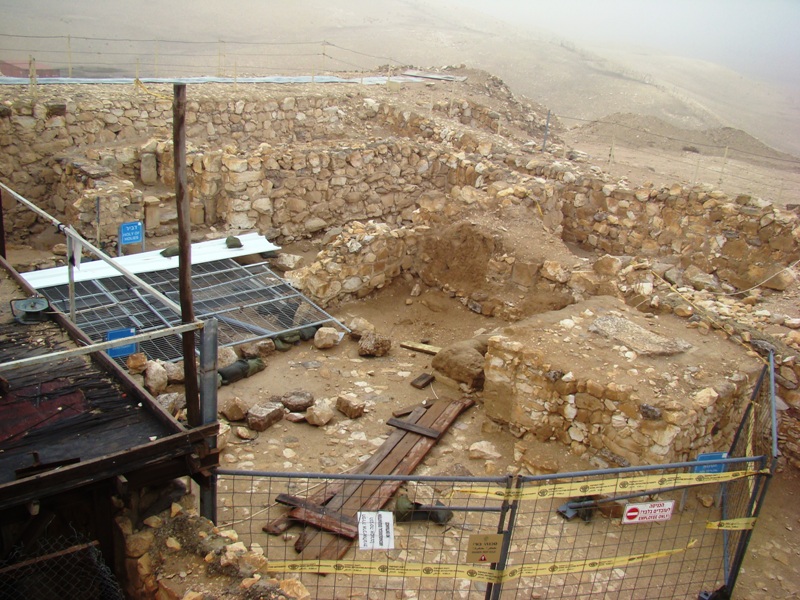
The 2nd paragraph in our quote above mentioned the Israelite temple which has been excavated at Arad. The ruins can be seen in our photo:

Israelite Temple at Arad. Photo by Leon Mauldin.

The raised square platform at right was the altar. This temple was destroyed either in the reforms of Judah’s good king Hezekiah or perhaps Josiah.

Click on images for higher resolution.


Beersheba, cont’d.

February 16, 2011

Beersheba was to become the chief city of the Negev. Unfortunately it would also become a center for idolatrous activity. When the 8th century BC prophet Amos cried out against idolatrous cities he warned, “But do not seek Bethel, nor enter Gilgal, nor pass over to Beersheba, for Gilgal shall surely go into captivity, and Bethel shall come to nothing” (Amos 5:5). Instead, “Seek the LORD and live” (v.6).

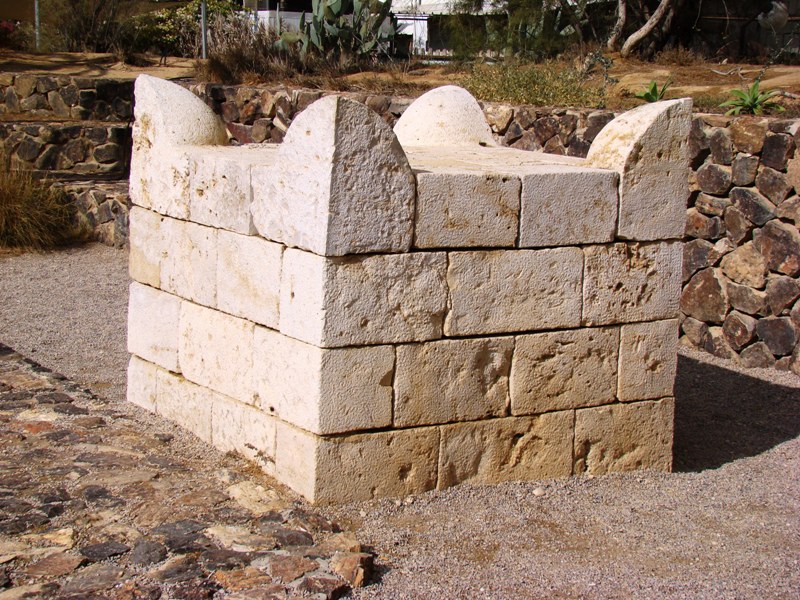
Altar at Beersheba. Photo by Leon Mauldin

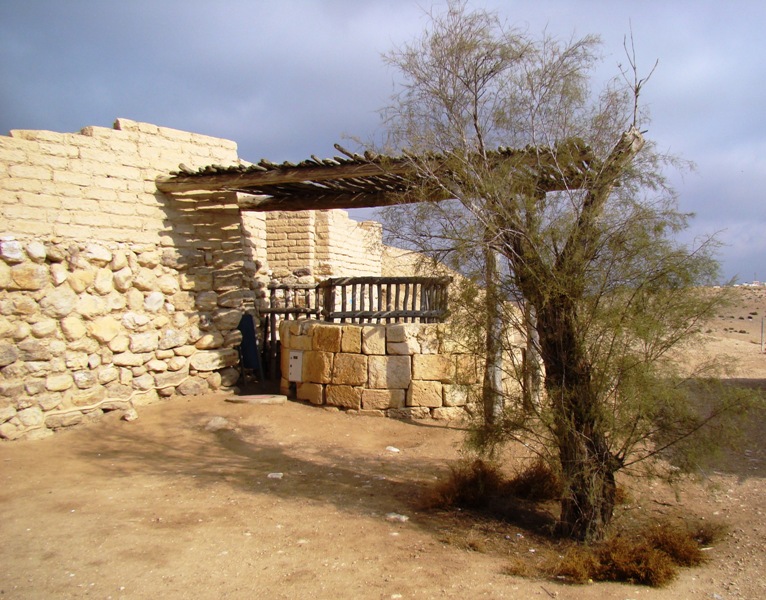
Our photo shows a replica of an altar discovered in Beersheba; the original was broken in pieces. Many believe the destruction of the altar here may have been during the reformation by good king Hezekiah.

Beersheba is a small tel, comprising only about three acres. A good deal of excavation has been done. Our photo below shows what many believe to be storage room; others believe this to have been stables.

Storage rooms or possibly stables at Beersheba. Photo by Leon Mauldin.

View is to the southeast. Remember to click on photos for higher resolution.


Beersheba, Home of the Patriarchs

February 15, 2011

Beersheba received its name when Abraham made a covenant with the Philistine king Abimelech. Included in that covenant was the recognition of Abraham’s ownership of the well he dug at that site, which was confirmed by Abimelech’s reception of seven lambs from Abraham. “Therefore he called that place Beersheba, because the two of them swore an oath there” (Gen. 21:31). Beersheba means, Well of the Oath or Well of the Seven.

“Then Abraham planted a tamarisk tree in Beersheba, and there called on the name of the LORD, the Everlasting God” (Gen. 21:33). Our photo was taken outside the gate of Beersheba, and shows a well there, and also a tamarisk tree.

Beersheba in the Negev. Photo by Leon Mauldin.

Beersheba is mentioned several times in the days of the Patriarchs. Abraham continued to live there after returning from Moriah to “sacrifice” Isaac (Gen. 22:19; cf. CSB: “And Abraham settled in Beer-sheba” (emp. mine, LM). Years later, when Isaac moved there the text tells us that “the LORD appeared to him the same night” and repeated the Abrahamic promises. “So he built an altar there and called on the name of the LORD” (Gen. 26:23-25).

Later still, when Jacob moved his family to Egypt it was at Beersheba that God appeared to him and said, “I am God, the God of your father; do not fear to go down to Egypt, for I will make of you a great nation there” (Gen. 46:1-3). God had told Abraham, Isaac and Jacob that He would make of them a great nation. It is in this passage that we learn that He would not do so in Canaan, the Promised Land, but it would be in Egypt. It had amply been demonstrated that the Canaanites were very willing to intermarry with Jacob’s family, and that was reciprocated (Gen. 32,38). Had they remained there they would have been assimilated into Canaanite culture, and never would have become the separate people of God.