Build a Parapet on Your Roof

December 7, 2013

Reading recently in Deuteronomy I came across the following text: “When you build a new house, you shall make a parapet for your roof, that you may not bring the guilt of blood upon your house, if anyone should fall from it” (22:8, ESV). The NET renders, “guard rail.”

It  would be difficult to understand the meaning of that passage if we only read through 21st century eyes. The roof on my house is steep. It is much too steep for me to consider walking on it, or anybody else for that matter, except for roofers or repair men. There is no need for me to put a guard rail around my roof.

But roofs in biblical times were generally different (both Old and New Testament), being flat, and serving as a sort of “patio” or additional room. This is illustrated by the reconstructed two-story Talmudic house at Katzrin in the Golan:
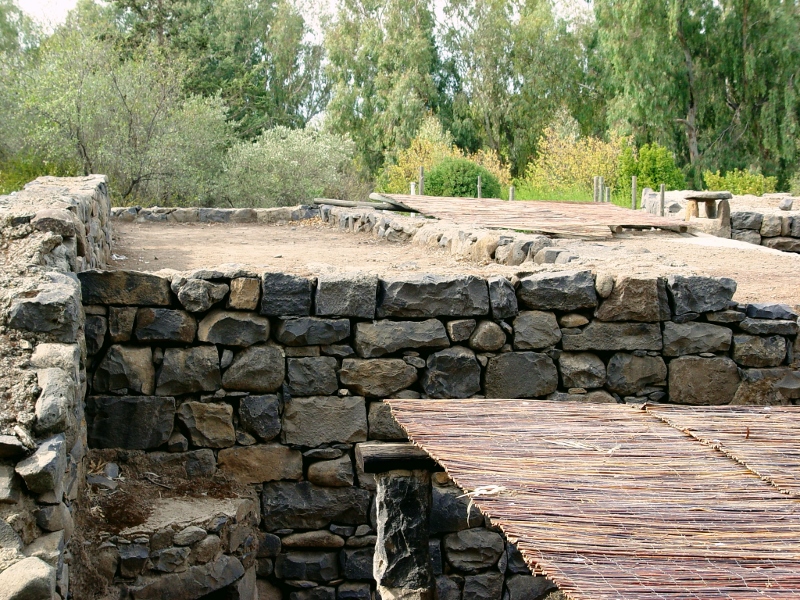
Housetop at Katzrin in the Golan. Photo by Leon Mauldin.

Housetop at Katzrin in the Golan. Photo by Leon Mauldin.

It is not hard to visualize how several people might be on a housetop such as this. I might note that the above photo does not have a guard rail around the housetop, but does illustrate the need for one and the practical nature of the command in the Deuteronomy text.

Understanding this can make several biblical texts come alive:

Proverbs 21:9 It is better to live on a corner of the housetop than in a house in company with a quarrelsome wife.

Looking ahead to the Roman destruction of Jerusalem, Jesus said, “Whoever is on the housetop must not go down to get the things out that are in his house” (Matt. 24:17).

Acts 10:9: “On the next day, as they were on their way and approaching the city, Peter went up on the housetop about the sixth hour to pray.” Context: Men from Cornelius of Caesarea sent down the coast to Joppa where Peter was residing, to ask him to come to Caesarea to preach the Gospel there.

Click image for larger view.

We have previously posted on Katzrin here.


The Tabernacle at Shiloh

November 23, 2013

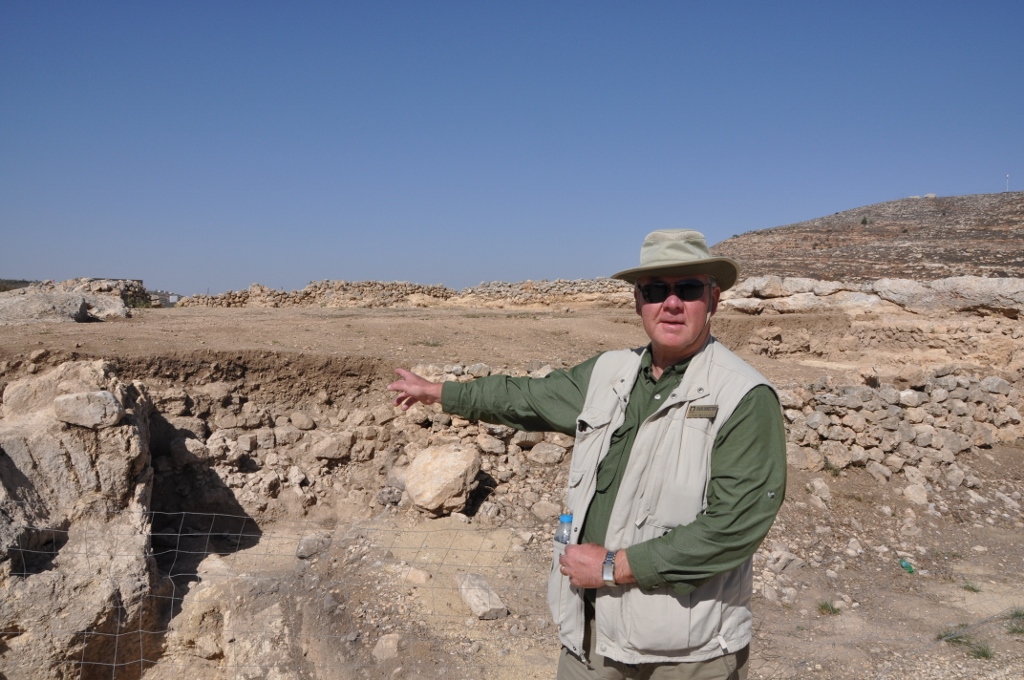
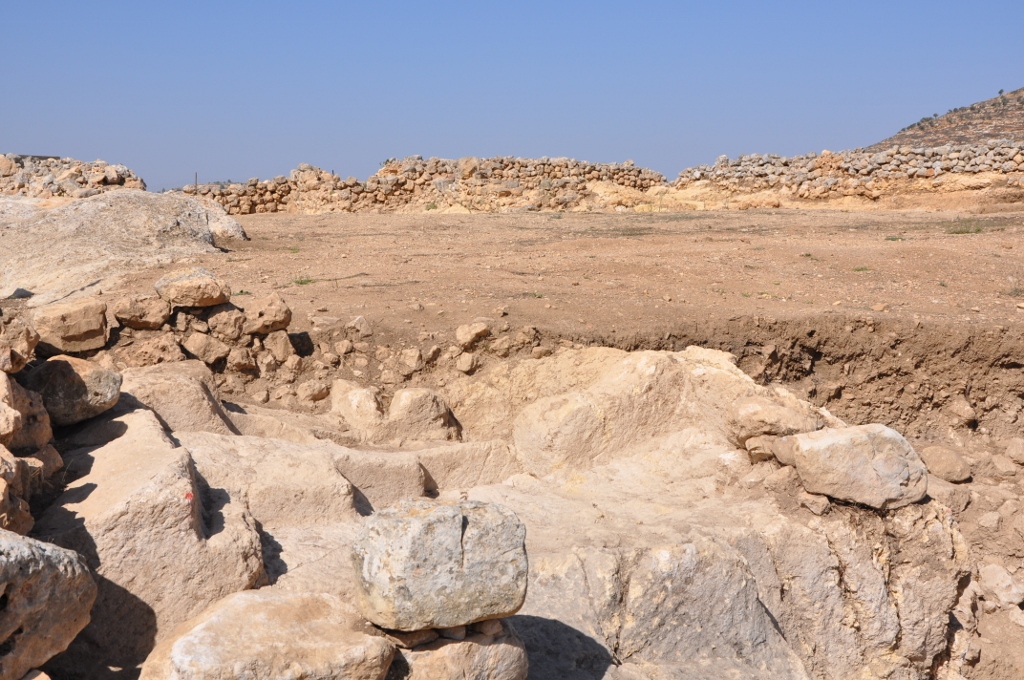
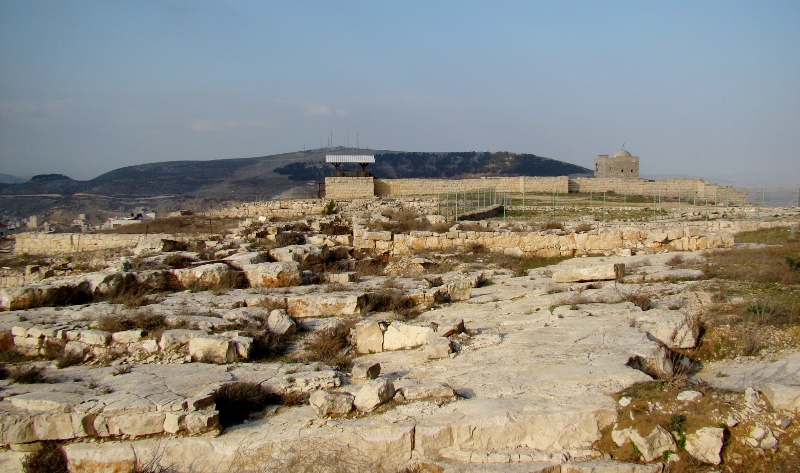
I had the occasion to visit Shiloh while in Israel last month. A special area of interest is the proposed site of the tabernacle.

Proposed site of Tabernacle at Shiloh. Photo by Greg Picogna.

Proposed site of Tabernacle at Shiloh. Photo by Greg Picogna.

The tabernacle stood here for about 400 years, from its installment during the Conquest (Josh. 18:1), to its destruction in the days of the Judges by the Philistines (1 Samuel 4), during the final days of Eli.

Site of Tabernacle at Shiloh. Photo by Leon Mauldin.

Site of Tabernacle at Shiloh. Photo by Leon Mauldin.

Todd Bolen reports that recent excavations have discovered an altar at Shiloh, and provides the link here.

We have previously posted several articles on Shiloh here and here and here.

At this point there are very few info signs on the site.

It is truly an exciting place to visit.

Click on images for larger view.


Hebron, Third City of Refuge

November 8, 2013

Our previous two posts have featured cities of refuge on the western side of Jordan, Kedesh and Shechem. Several passages discuss the cities of refuge, but the one that gives the most information is Numbers 35.

The cities of refuge were Levitical cities. Unlike the other tribes, which were assigned allotments of land for their inheritance, the Levites were given a total of 48 cities, 6 of which were the cities of refuge. “The cities you give the Levites will include six cities of refuge, which you must provide so that the one who kills someone may flee there; in addition to these, give 42 other cities” (Num. 35:6, CSB). Further Moses instructed, “Select three cities across the Jordan and three cities in the land of Canaan to be cities of refuge”(v.14).

The three cities of refuge in Canaan are set forth as follows, “So they designated Kedesh in the hill country of Naphtali in Galilee, Shechem in the hill country of Ephraim, and Kiriath-arba (that is, Hebron) in the hill country of Judah” (Josh. 20:7, CSB).

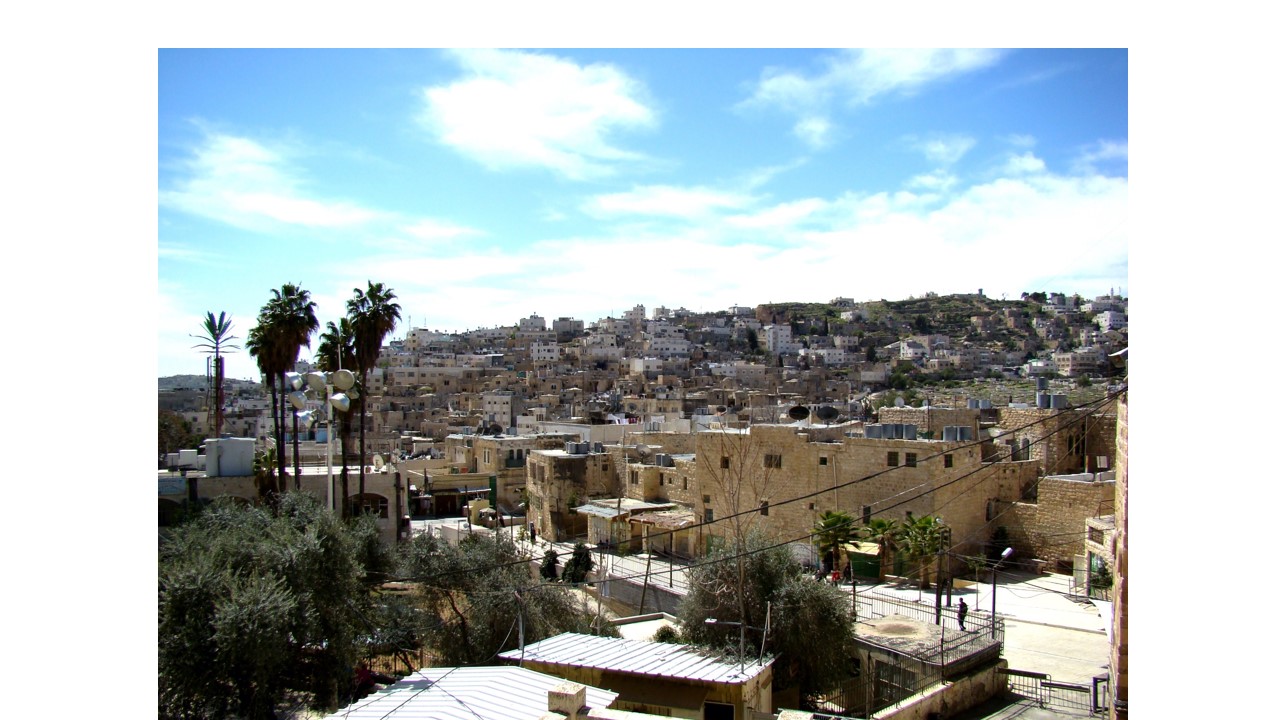
Hebron has a lot of history pertaining to the patriarchs. Not only was it a dwelling place for many of them, it was also a burial-place (Gen. 23:16-20). Our photo here at Hebron was taken with the cave of Machpelah at our back.

Hebron, a city of refuge. Photo by Leon Mauldin.

Hebron, a city of refuge. Photo by Leon Mauldin.

Other posts on Hebron may be viewed here and here.

For security reasons, Hebron is usually not included on tour to Israel.

Click image for larger view.


Shechem, a City of Refuge

November 6, 2013

See our yesterday’s post for a map showing all 6 cities of Refuge.

Another city of refuge was Shechem, a West Bank site known as Tel Balata.

This Old Testament city had an important history. It was here that Abraham (Abram) stood as a childless man (age 75), when God told him he would give to him (his descendants) the land of Canaan (Gen. 12:6-7).

It was here that Joshua assembled Israel with his farewell speech and uttered the famous works, “As for me and my house we will serve the Lord” (Josh. 24:15).

It was very near here that Jesus sat down weary by Jacob’s well, and skillfully led a Samaritan from a point where her only interest was drawing up the water, to a point of faith in Him as Messiah (John 4).

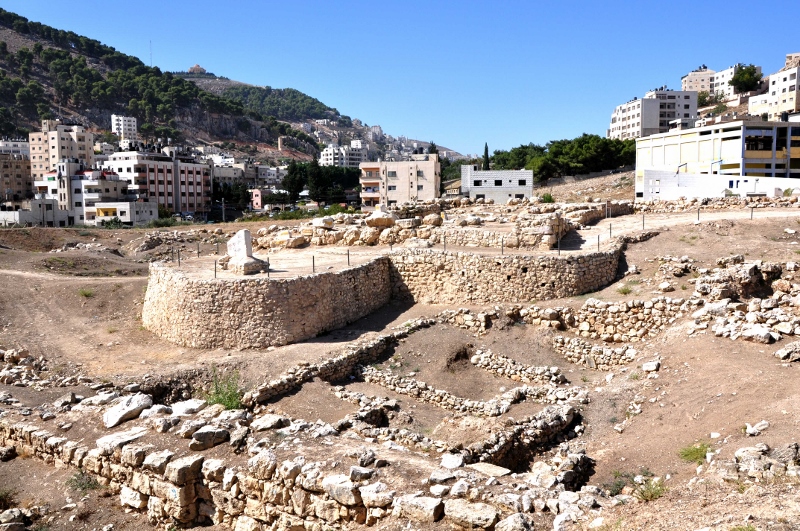
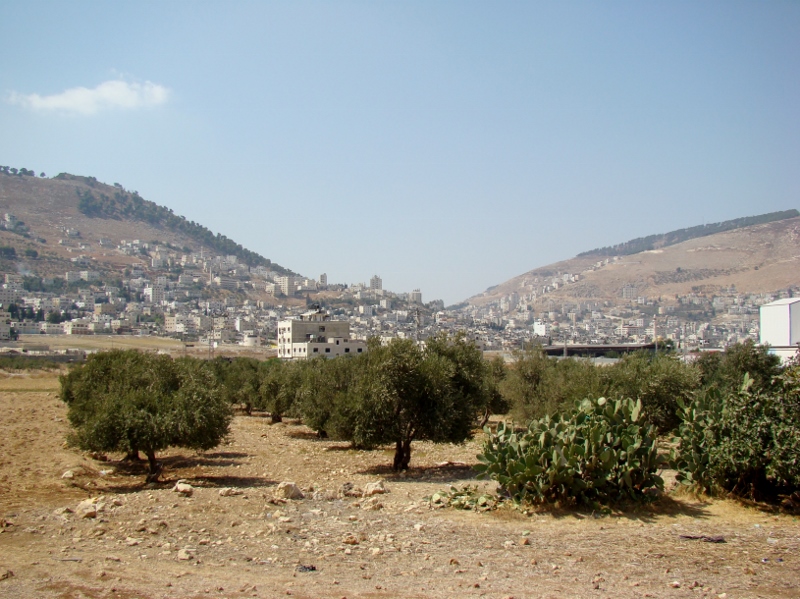
Shechem, a City of Refuge. Photo by Leon Mauldin.

Shechem, a City of Refuge. Photo by Leon Mauldin.

You can see the excavated ruins of the city. At center was the Temple of Baal-berith. At right you see a portion of Mt. Ebal, and at left is Mt. Gerizim. I took our group here Oct. 22, not only for them to see Shechem but also to have a good vantage point to take photos of the mount of cursing (Ebal) and Gerizim (blessing). See further on this in Josh. 8. Again, when cities of refuge were appointed in the days of the conquest, Shechem was the one for the central residents of the land west of the Jordan River.

For a previous post on Shechem see here and several other entries. Use search box and it will bring them all up.

Click on image for larger view.


You can see the excavated ruins of Shechem. At


Kedesh, a City of Refuge

November 5, 2013

Moses instructed the Israelites that they were to appoint three “cities of refuge” once they crossed Jordan under the leadership of Moses (Deut. 19:2). The stated purpose of these (as well as the three cities on the other (eastern) side of Jordan, was to provide a safety net for one who had accidentally killed his neighbor (an example given in the text was when the ax head flew off the handle, resulting in a fatal wound).

The city to which you would flee would be the one closest to you. You would live there until the death of the High Priest. The following map shows all 6 cities of refuge.

Cities of Refuge. Map by Scott Richardson

Cities of Refuge. Map by Scott Richardson

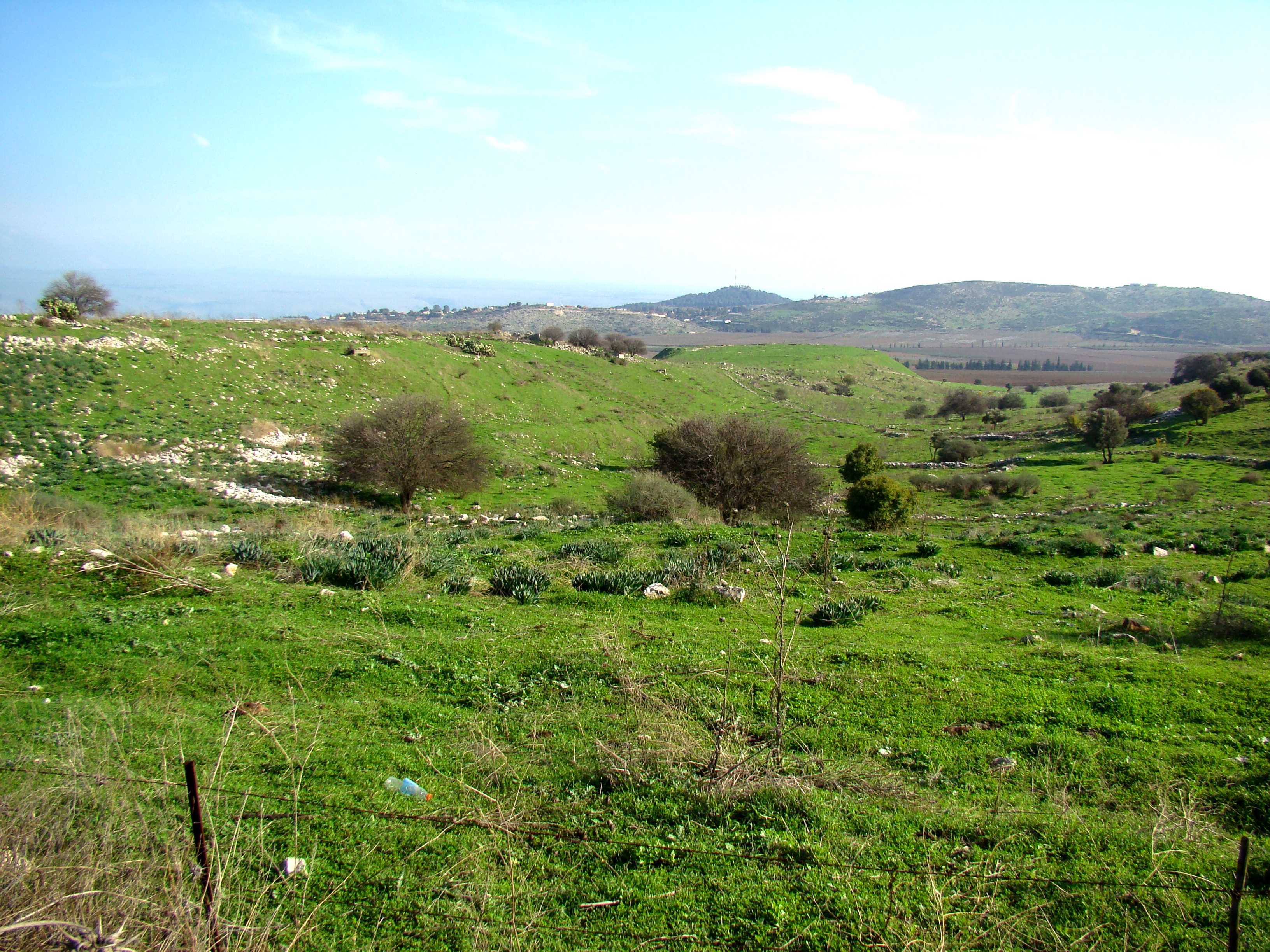
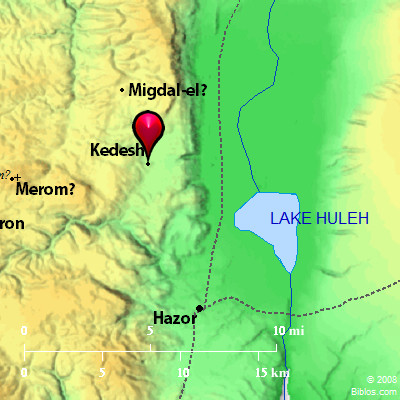
The city of refuge to the north in Galilee  was Kedesh.

Kedesh in Galilee. One of the cities of Refuge. Photo by Leon Mauldin.

Kedesh in Galilee. One of the cities of Refuge. Photo by Leon Mauldin.

In center and to the left you can see the ruins of this ancient city.

A Canaanite city in Galilee, in the territory of Naphtali, whose ruler was one of the 31 kings vanquished by Joshua (Josh. 12:22). To distinguish it from other cities with the same name it was also referred to as Kedesh in Galilee in Mount Naphtali (Josh. 20:7). It was given to the Levites and was a city of refuge (Josh. 21:32). A name which may possibly refer to Kedesh appears in the lists of Tuthmosis III and in the El Amarna letters. It was conquered by Tiglath-Pileser III, King of Assyria (2 Kgs. 15:29), who deported its inhabitants. In the Hellenistic period it is mentioned in the Zenon papyri. Josephus knew it in a different form as the name of a village in the territory of Tyre (Antiq. ii, 459; iv, 104–5). Titus pitched his camp in the vicinity of the village of Cydasa of the Tyrians, because ‘this was a strong inland village of the Tyrians, always at feud and strife with the Galileans’ (War iv, 104-f). Eusebius (Onom. 116:10) calls it ‘the city of Kydisos’, in the vicinity of Paneas, some 20 miles from Tyre. A Roman temple and a mausoleum of the same period were discovered there. Identified with Tell Qades, 12 miles north of Safed, where there are two ancient mounds, one of which was occupied from the 3rd millennium BC to the end of the Israelite period.

Since 1981 the Roman temple has been excavated by a team of Tel Aviv University under the direction of I. Roll. Little of the upper structure of the temple has survived. The entire compound was surrounded by a wall. The temple (60 feet by 54 feet) was built of exquisitely-dressed ashlars. Its eastern façade rose to a height of 33 feet. At the western wall of the shrine is an apse, apparently a later addition which may have held Jupiter’s statue. The triple doors of the temple are richly decorated. On the lintels are engraved Jupiter’s eagle, a wreath in which was a rosette, bunches of grapes, a vine trellis, acanthus leaves, a deer, and a man’s head. According to three Greek inscriptions, the temple was dedicated in AD 117/8 under Hadrian, and repairs were made in ad 214/5 and 280 (The Archaeological Encyclopedia of the Holy Land).

Kedesh, the northern city of Reguge. Map by Scott Richardson.

Kedesh, the northern city of Reguge. Map by Scott Richardson.

Click on images for larger view.


Ahab’s Water Tunnel at Megiddo

October 16, 2013

Today our group enjoyed a profitable start at Caesarea, located on the Mediterranean coast, capital of Judea during New Testament times. There is so much to see there. Leaving there we ascended Mt. Carmel, one of my personal favorites because so many biblical locations can be viewed from there. There was considerable haze in the air, so that did not lend itself to good photos.

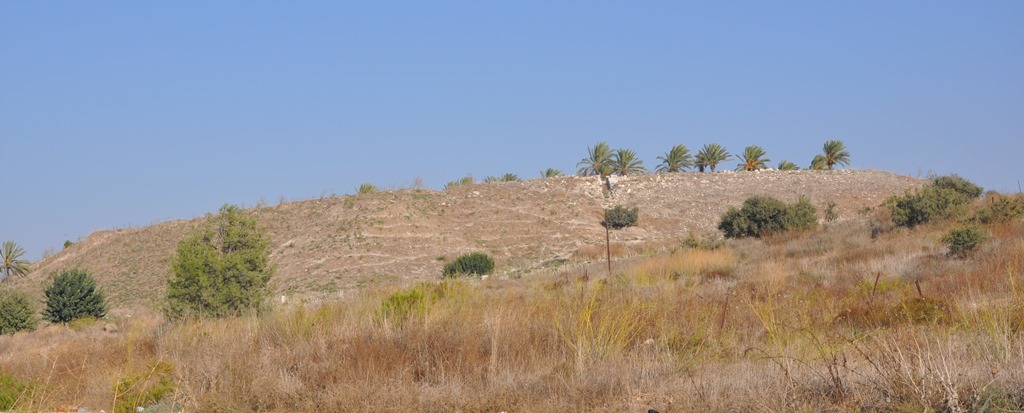
We then proceeded to Megiddo, a very strategic city formerly occupied by the Canaanites (among others) located on the international trade route which connected Egypt to Mesopotamia. Solomon made this one of his fortified cities.

Tel Megiddo. Photo by Leon Mauldin.

Tel Megiddo. Photo by Leon Mauldin.

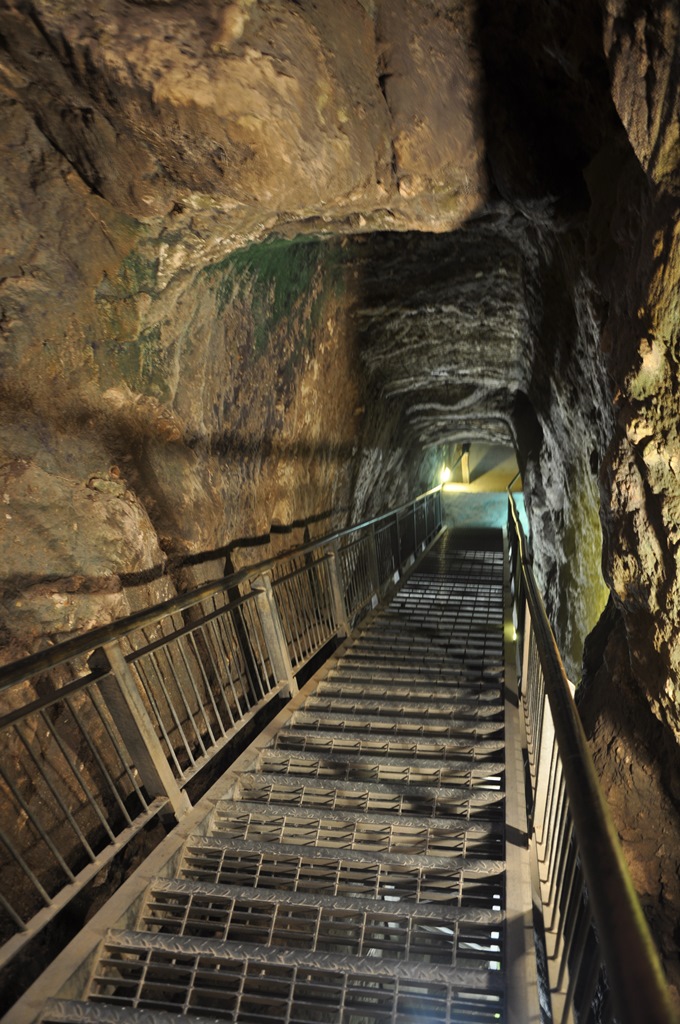
Megiddo was also an important site during the Divided Kingdom period in the days of Ahab, king of Israel. Ahab accomplished an amazing engineering feat of tunneling through solid rock down to the water supply. Our group walked through the tunnel today.

Ahab's water tunnel at Megiddo. Photo by Leon Mauldin.

Ahab’s water tunnel at Megiddo. Photo by Leon Mauldin.

We plan to post more tomorrow. Click images for larger view.


Some Sources for Dealing with Ron Wyatt’s Claims

September 28, 2013

I recently received a question from a friend, which says in part:

It concerns the crossing of the Read Sea. There is an awful lot of talk about the “traditional” Red Sea crossing maps versus the so-called “archaeological findings” purportedly found at the Gulf of Aqaba.

. . . However, some of our brethren have begun using maps and pictures that show what is believed to be possibly the “real Mt. Sinai” with charred rock covering its cap, a “split rock” in the wilderness, chariot wheels, etc… (I’m not buying it.) All of these things I see look like the work of Ron Wyatt, but all sorts of people have these things on their internet sites.

. . . All of that said, I was wondering if you had any material or resources dealing with the subject head on. I do not plan on making this an issue… nor do I plan on bringing anyone else’s name into the mix. I would just like to be able to give a “ready defense” if I am ever called upon. I’d greatly value your input on the matter. Thank you.
Others more qualified that I have dealt with the claims of Mr. Wyatt. As a starting point I can recommend the following sources: Ferrell Jenkins has an article entitled, “Pharaoh’s Chariot Wheels and Other Things that Won’t Float — Examining the Claims of the Late Ron Wyatt ,” that you can access here, plus another article entitled, “Pseudo Archaeologists” here. These articles have numerous related links for further reading. Additionally I would recommend Gordan Franz’s site, Life and Land, here. Use the search box. He has several entries under “Cracked Pot Archaeology.” The use of caution in using Mr. Wyatt’s material/claims would be prudent.
While no one can be certain of the exact location of Israel’s crossing. the best evidence would be somewhere along the Suez.

From Sinai looking across Suez to Egypt. Photo by Leon Mauldin.

From Sinai looking across Suez to Egypt. Photo by Leon Mauldin.

I took the above photo in 2003, having crossed the Suez. We are standing on the Sinai side looking back across Egypt.

I personally conclude that the traditional Mt. Sinai (Jebel Musa) best fits the biblical criteria.

Click photo for larger view.


You May Eat the Wild Goat

September 27, 2013

Under Mosaic legislation, Israel was given strict dietary guidelines. This was for a stated purpose: “For you are a people holy to the LORD your God, and the LORD has chosen you to be a people for his treasured possession, out of all the peoples who are on the face of the earth” (Deut. 14:2, ESV). The dietary restrictions were but one means that YHWH used to mold His people into a holy nation and teach them that they were uniquely His.

Deut. 14:4 lists three domestic animals which could be eaten: “These are the animals you may eat: the ox, the sheep, the goat,” (This follows v. 3 which states, “You shall not eat any abomination.”)

Then v. 5 lists seven kinds of wild animals: “the deer, the gazelle, the roebuck, the wild goat, the ibex, the antelope, and the mountain sheep.” “Some of these animals cannot be identified with certainty.” [1] One thing that obviously makes the text challenging is that three of the seven words are hapax legomena (words that appear only once in a document). The word usually translated “wild goat” (ya’el) is a different word than the one used here (aqqo).

ya’el is found in Psalm 104:18 “The high mountains are for the wild goats. . .”

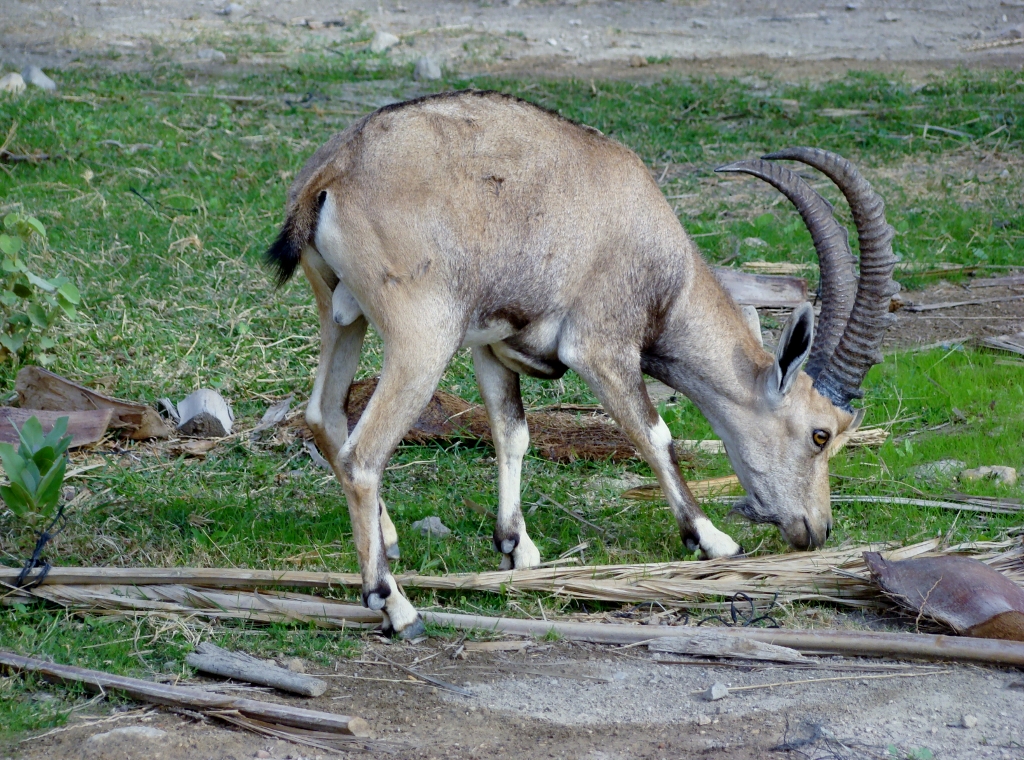
Another interesting text: “When Saul returned from following the Philistines, he was told, ‘Behold, David is in the wilderness of Engedi.’ Then Saul took three thousand chosen men out of all Israel and went to seek David and his men in front of the Wildgoats’ Rocks” (1 Sam. 24:1-2, ESV). Note that the site of Engedi is the location of the Rocks of the Wild Goats. The word Engedi means “spring of a kid,” and is located on the western shore of the Dead Sea. The biblical “wild goat” is still frequently seen there today and is most often identified with the ibex.

Goat at Engedi. Photo by Leon Mauldin.

Goat/Ibex at Engedi. Photo by Leon Mauldin.

See more on the wild goat in Ferrell Jenkin’s posts here and here.

Click on image for larger view.


[1] Christensen, D. L. (2001). Deuteronomy 1–21:9 (Vol. 6A, p. 291). Dallas: Word, Incorporated.


Mount Gerizim, the Mount of Blessing

August 24, 2013

Our previous couple of posts pertain to mounts Ebal and Gerizim, the setting of the curses and blessings of the law’s being read and accepted by all Israel as the basis of their receiving the land promise (Deut. 11:26-32; Deut. 27-28; Josh. 8:30-35).

At the top of Gerizim there are archaeological ruins that date to the Persian and Hellenistic periods, as well as a Byzantine church.

Mount Gerizim, view at top. Photo by Leon Mauldin.

Mount Gerizim, view at top. Photo by Leon Mauldin.

In distance at right you are seeing the tomb of a 12th century sheikh. The mountain in background is Mt. Ebal, the mount of cursing. Out of sight below in the valley between lies Shechem.

In later times Mt. Gerizim would become sacred to the Samaritans, and still is today. In the intertestamental period there was a temple here, but it was destroyed by John Hyrcanus (Maccabean ruler) in 111-110 BC.

When Jesus conversed with the woman at the well, she said, “Our fathers worshiped on this mountain” (John 4:20). She was speaking of Mount Gerizim, which was very much in sight of Jacob’s well, where they were talking.

Click image for larger view.

Todd Bolen has an interesting post on the acoustics of mounts Ebal and Gerizim here. See also Ferrell Jenkin’s post here.

Hopefully this info and these photos will help you visualize the events of Joshua 8, at the time of the conquest under Joshua:

33 All the people, rulers, leaders, and judges were standing on either side of the ark, in front of the Levitical priests who carried the ark of the covenant of the LORD. Both resident foreigners and native Israelites were there. Half the people stood in front of Mount Gerizim and the other half in front of Mount Ebal, as Moses the LORD’s servant had previously instructed to them to do for the formal blessing ceremony. 34 Then Joshua read aloud all the words of the law, including the blessings and the curses, just as they are written in the law scroll. 35 Joshua read aloud every commandment Moses had given before the whole assembly of Israel, including the women, children, and resident foreigners who lived among them (Josh. 8:33-35, NET). 


View of Mt. Ebal and Mt. Gerizim

August 15, 2013

In our last post we referenced some biblical texts regarding Mt. Ebal, the “mount of cursing.” Our photo today shows the view from the east of Mt. Ebal (right) and Mt. Gerizim (left). Shechem is located between the two.

Mt. Ebal (right) and Mt. Gerizim (left). Shechem is at center. Photo by Leon Mauldin.

Mt. Ebal (right) and Mt. Gerizim (left). Shechem is at center. Photo by Leon Mauldin.

When Joshua led Israel to Shechem (Josh. 8) they would have seen this view. Likewise this would have been the scene when Jesus went through Samaria en route to Galilee when he stopped here at Jacob’s well, and had that fascinating conversation with the woman who came to draw water. She left there knowing the Source of the Water of Life (John 4).

We have previously posted on Shechem here, here and here.

Click image for larger view.