Ruth the Moabitess

November 15, 2014

After studying the book of Judges, especially with the material recorded in chapters 17-21, the book of Ruth is so refreshing, like a breath of fresh air! This 4 chapter book tells how Elimelech, Naomi, and their two sons left Bethlehem in time of famine for the fields of Moab, sojourning there for ten years. The sons married women of Moab, Ruth and Orpah. Elimelech and both sons died. When Naomi determined to return to Bethlehem, Ruth made the choice to go with her. She said,

Entreat me not to leave you, Or to turn back from following after you; For wherever you go, I will go; And wherever you lodge, I will lodge; Your people shall be my people, And your God, my God. Where you die, I will die, And there will I be buried. The LORD do so to me, and more also, If anything but death parts you and me (Ruth 1:16-17).

The text narrates how Ruth met and married Boaz, describing Ruth as a hard worker, showing kindness to her mother-in-law, and known throughout the town as a virtuous woman, and depicting Boaz as equally magnanimous, walking in the fear of the LORD. But the real reason Ruth is in the Bible does not become apparent until the closing verses. Starting with Judah’s son Perez as his beginning point, the writer informs us:

Now this is the genealogy of Perez: Perez fathered Hezron. 19 Hezron fathered Ram, who fathered Amminadab.  Amminadab fathered Nahshon, who fathered Salmon. Salmon fathered Boaz, who fathered Obed.  And Obed fathered Jesse, who fathered David (Ruth 4:18-22).

Ruth is thus seen in the lineage of the Messiah! Her story is one link in the chain of God’s Old Testament promise to bring Christ into the world to accomplish His great redemptive work. Matthew begins his gospel record with the genealogy of Christ, including Ruth: “Salmon was the father of Boaz by Rahab, Boaz was the father of Obed by Ruth, and Obed the father of Jesse” (1:5).

Our photo, taken on the NW shore of the Dead Sea, looks across to the mountains of Moab, Ruth’s home.
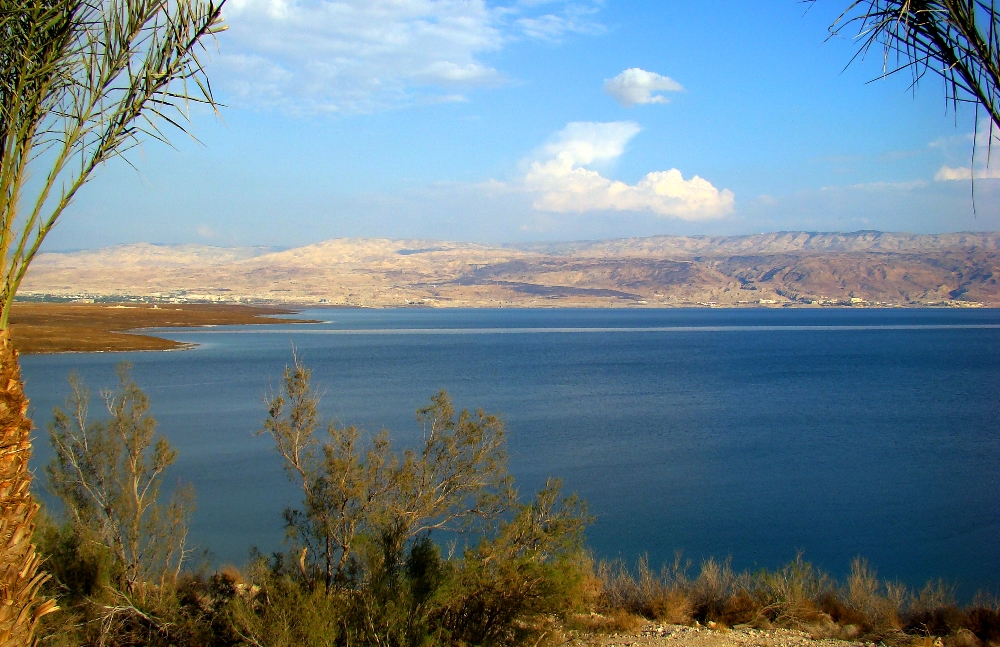
View across Dead Sea, mountains of Moab in distance. Photo by Leon Mauldin.

View across Dead Sea, mountains of Moab in distance. Photo by Leon Mauldin.

OT Moab is today the territory of Jordan.

Click image for larger view.


Corinthian Helmet

October 30, 2014

From an entry entitled, “Weapons” in the Harper’s Bible Dictionary we read:

As in the modern world, advancements in ancient technology were quickly adapted for use in instruments of war. One of the most important steps in the history of weapons was the development of carburized iron, a phenomenon that occurred in the eastern Mediterranean toward the end of the second millennium B.C., but earlier improvements in metallurgy (i.e., the production of copper and bronze) had been applied to arms production for nearly two thousand years before the Iron Age. Naturally, the shape, size, and overall durability of dagger and sword blades and spearheads and arrowheads were affected by such improvements in copper, bronze, and iron technology. Another important weapon that improved over time was the chariot, whose speed and maneuverability were increased by changes in design and construction materials, including metals. Other major steps in the development of ancient weaponry include the invention of the composite bow, piercing battle-ax, “Corinthian” helmet, and siege engines (pp. 1123-1124).

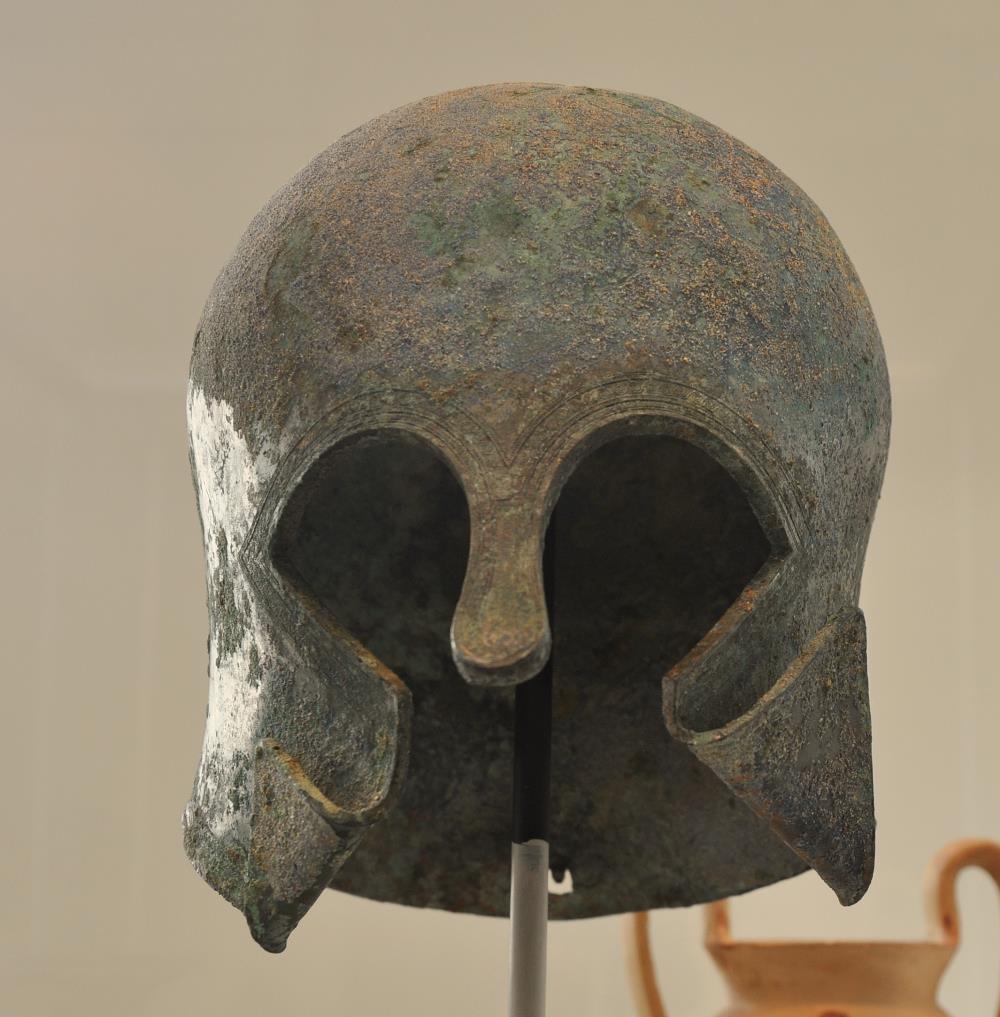
The Metropolitan Museum in NY has several such helmets on display.

Corinthian Style Helmet. Photo by Leon Mauldin. Metropolitan Museum, NY.

Corinthian Style Helmet. Photo by Leon Mauldin. Metropolitan Museum, NY.

This Grecian helmet, made of bronze and dating back to 7th-6th century BC, put me in mind of some biblical texts:

–Isaiah 59:17:  He put on righteousness like a breastplate, And a helmet of salvation on His head; And He put on garments of vengeance for clothing And wrapped Himself with zeal as a mantle. (Reference here is to the Lord, YHWH).

–Ephesians 6:17: And take THE HELMET OF SALVATION, and the sword of the Spirit, which is the word of God. The above Isaiah text provides background for this Ephesians passage. The New American Standard Bible uses all caps to indicate a quotation from the OT. The helmet is a vital part of the Christian’s armor listed in Eph. 6:10-17.

–1 Thessalonians 5:8: But since we are of the day, let us be sober, having put on the breastplate of faith and love, and as a helmet, the hope of salvation. A helmet protects the head. Here the hope of salvation possessed by Christians is said to be a helmet. Keep your helmet on. Keeping the hope of salvation constantly in the forefront of the mind serves to protect one against Satan’s devices.

I believe I’ll keep my helmet on!


The Goddess Sakhmet

October 9, 2014

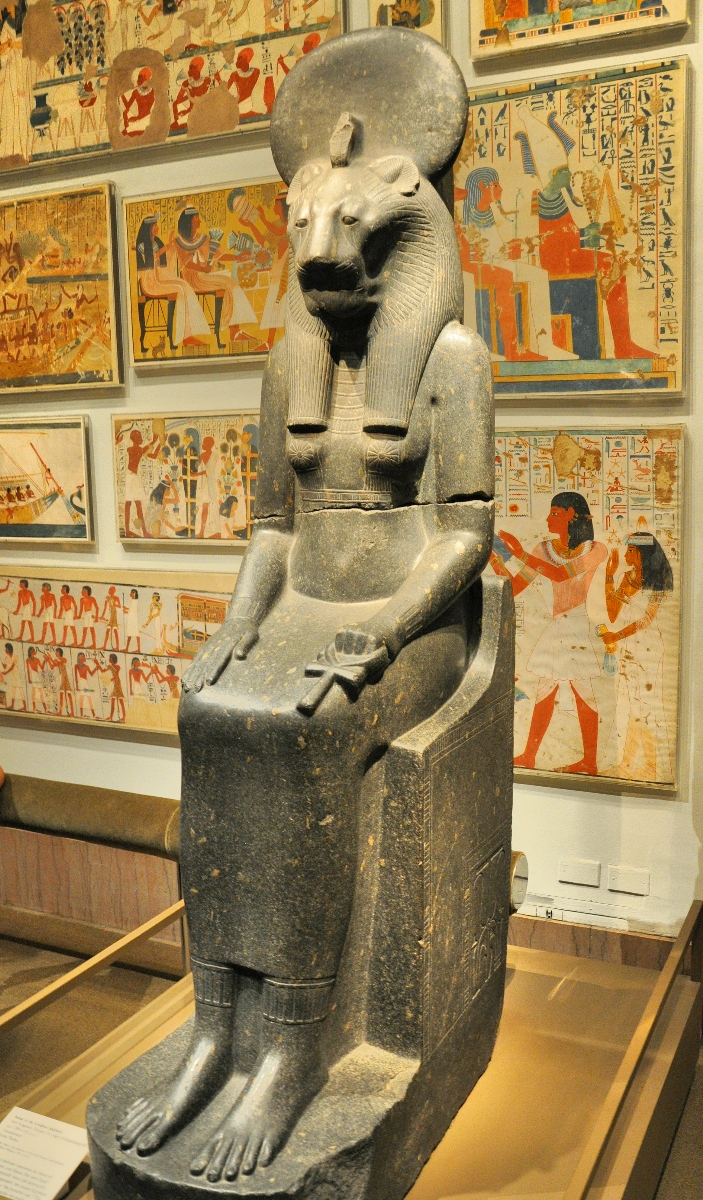
During Egypt’s New Kingdom Period, in the 18th dynasty, Amenhotep III (ca. 1390-1352 BC) commissioned hundreds of statues of the goddess Sakhmet for his mortuary temple in western Thebes. These statues were intended as monumental prayers to appease the goddess and guarantee peace and health.

Goddess Sakhmet. Metropolitan Museum, NY. Photo by Leon Mauldin.

Goddess Sakhmet. Metropolitan Museum, NY. Photo by Leon Mauldin.

“The goddess Sakhmet represents the forces of violence, disaster, and illness. Her lion’s head expresses her potentially fierce and destructive character and, appropriately, her ancient Egyptian name, Sakhmet, means ‘the powerful one.’ The sun disk on her head identifies the goddess as the daughter of the sun god Re” (from museum placard).

This puts me in mind of what YHWH said prior to the 10th of the ten plagues of Egypt: “and on all the gods of Egypt I will execute judgments: I am the LORD” (Ex. 12:12).

Click image for larger view.


Follow-up on Bethlehem of Galilee–Reader Response

September 2, 2014

In our previous post (click here) on Bethlehem of Galilee we referenced Ibzan (of Judges 12:8-10) of Bethlehem and observed: “Very likely this is the Bethlehem of Galilee, not the Bethlehem of Judah.” A reader asks, “I’ve learned about the existence of this town sometime ago, but I’ve never found out WHY it is likely that this Bethlehem is Ibzan’s hometown. Which arguments support this assumption?”

That is a good question. First, remember that Joshua 19:15 lists Bethlehem among other cities Zebulun inherited.

Wolf, in The Expositor’s Bible Commentary observes, “The Zebulun location is favored because the southern city is usually identified as “Bethlehem in Judah” (17:7-9; 19:1-2, 18)” (Vol. 3, p.459). Note that is the wording repeatedly in each of these verses. It seems consistent that when the southern Bethlehem is intended, it is indicated, for example, Judges 17:7: “Now there was a young man from Bethlehem in Judah, of the family of Judah, who was a Levite; and he was staying there” (NASB). Note the rendering of the KJV: “And there was a young man out of Bethlehemjudah of the family of Judah, who was a Levite, and he sojourned there.”

Keil & Delitzsch: “Ibzan sprang from Bethlehem,—hardly, however, the town of that name in the tribe of Judah, as Josephus affirms (Ant. v. 7, 13), for that is generally distinguished either as Bethlehem ‘of Judah’ (Judg. 17:7, 9; Ruth 1:2; 1 Sam. 17:12), or Bethlehem Ephratah (Micah 5:1), but probably Bethlehem in the tribe of Zebulun (Josh. 9:15)” (Vol 2, p. 287). To the Micah passage we could add Gen. 35:19: “So Rachel died and was buried on the way to Ephrath (that is, Bethlehem)” (see also Gen. 48:7).

Pulpit Commentary: “But as Bethlehem of the tribe of Judah is generally called Bethlehem of Judah, or Bethlehem-Ephratah, and as Elon and Abdon were judges in North-East Israel, it is perhaps more probable that Bethlehem of Zebulun is meant” (p. 136). In his comment above, author A.C. Hervey is making two points: the fuller designation (of Judah or Ephratah) is used when Bethlehem of the south is intended, and second, the context of Judges 12:8-10. Verse 11 mentions Judge Elon of Zebulun, and Judge Abdon (vv. 13-15), on the border between Ephraim and Manasseh. While it is not conclusive proof, Ibzan’s placement in the text is in the context of judges to the north. Note in this connection that Butler, in the Word Biblical Commentary observes, “The context appears to point to the northern location. . .” (Vol. 8, p. 297).

Avraham Negev states regarding Bethlehem of Galilee: “A town in the territory of Zebulun, (Josh. 19:15), the birth-place of the judge Ibzan and the place where he was buried (Judg. 12:8–10)” (The Archaeological Encyclopedia of the Holy Land).

While I do not think that truth is determined by the number of people who advocate a particular position, it is true that the majority of scholars favor Bethlehem of Zebulun of Galilee as best fitting the text and context of Judges 12:8-10.

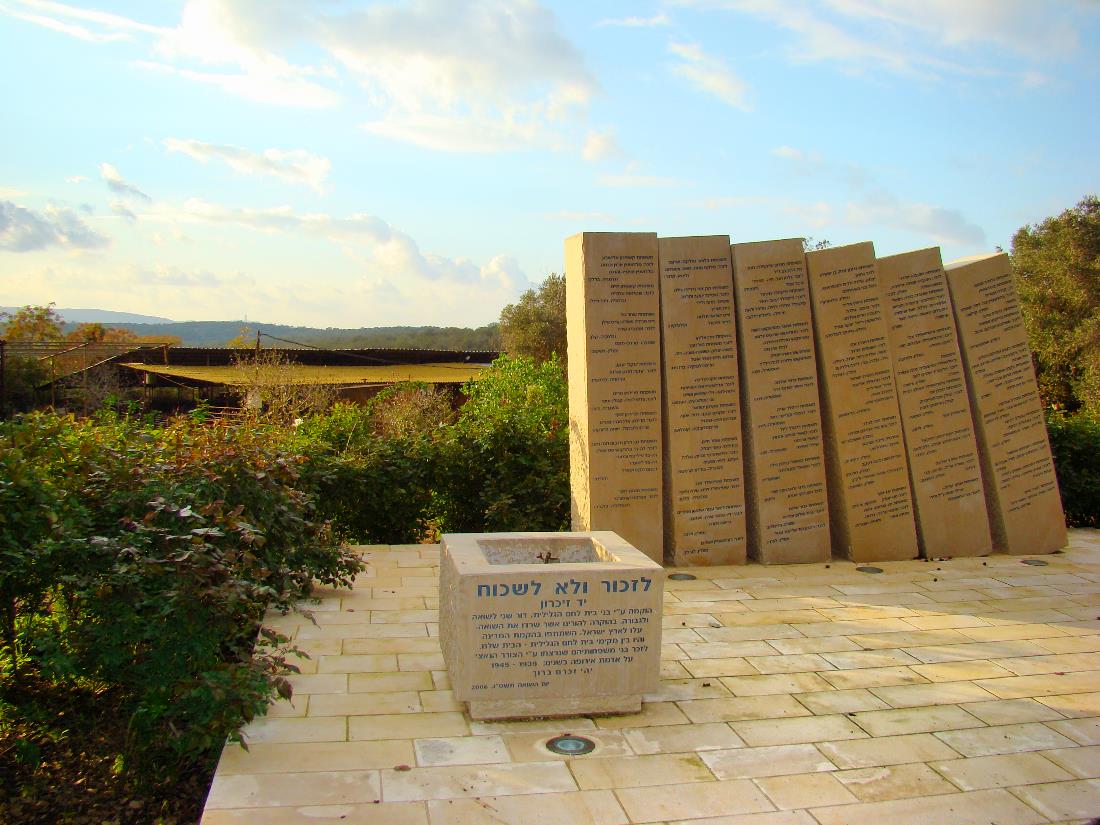
Bethlehem of Galilee. Further remains from the Templars. Photo by Leon Mauldin.

Bethlehem of Galilee. Further remains from the Templars. Photo by Leon Mauldin.

Click image for larger view.


Bethlehem of Galilee

August 28, 2014

In studying the book of Judges, brief mention is made of Ibzan of Bethlehem. The text notes that he had 30 sons and 30 daughters, and states that he judged Israel for seven years (Jud. 12:8-10). Very likely this is the Bethlehem of Galilee, not the Bethlehem of Judah, the latter being remembered of course as the birthplace of Jesus (Micah 5:2; Matt. 2:1). There were two biblical cities named Bethlehem. This is why the Bible is very specific in clarifying that Jesus was born in Bethlehem of Judah in these texts.

Joshua 19 describes the inheritance of Zebulun (of Galilee) and Bethlehem is included in the list: “Included also were Kattah and Nahalal and Shimron and Idalah and Bethlehem; twelve cities with their villages” (v.15). Note the location of the map here:

Bethlehem of Galilee. Map by BibleAtlas.org.

Bethlehem of Galilee. Map by BibleAtlas.org.

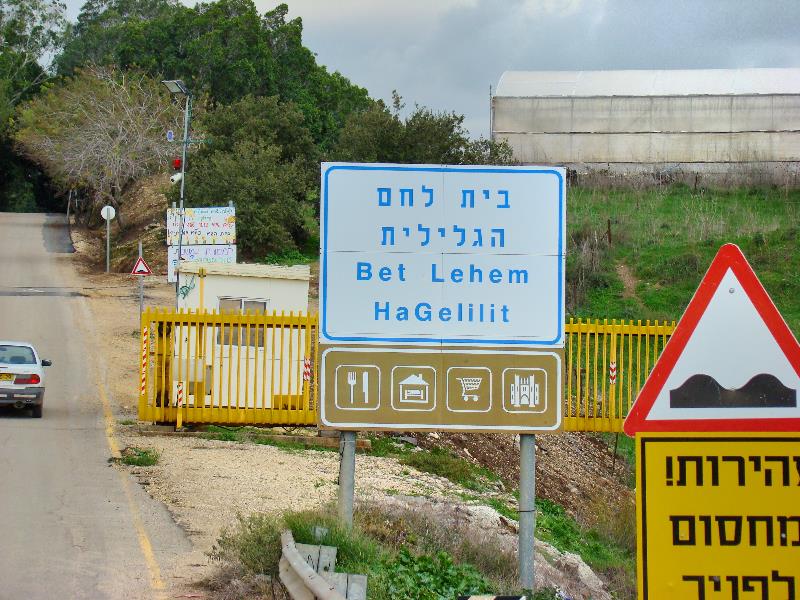
Here is a shot of the city sign upon entering from the south.

Bethlehem of the Galilee sign. Photo by Leon Mauldin.

Bethlehem of the Galilee sign. Photo by Leon Mauldin.

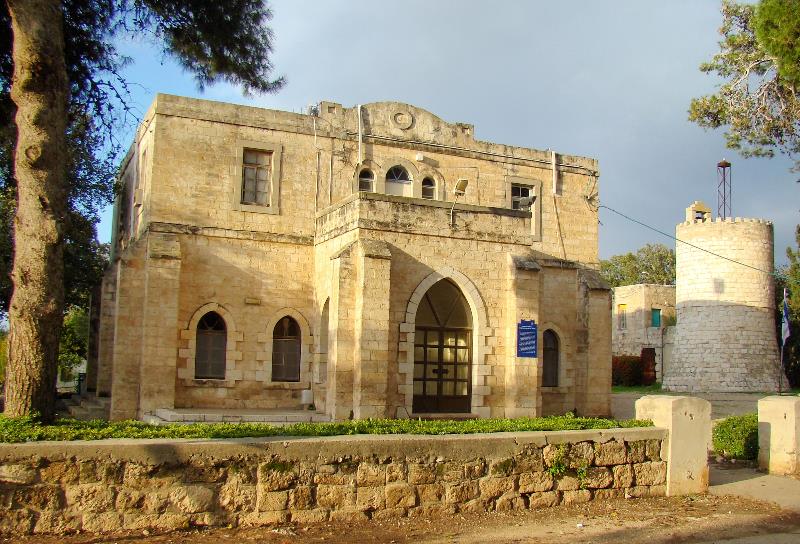
The earlier presence of the Templars may still be seen.

Bethlehem Templar Folk House. Photo by Leon Mauldin.

Bethlehem Templar Folk House. Photo by Leon Mauldin.

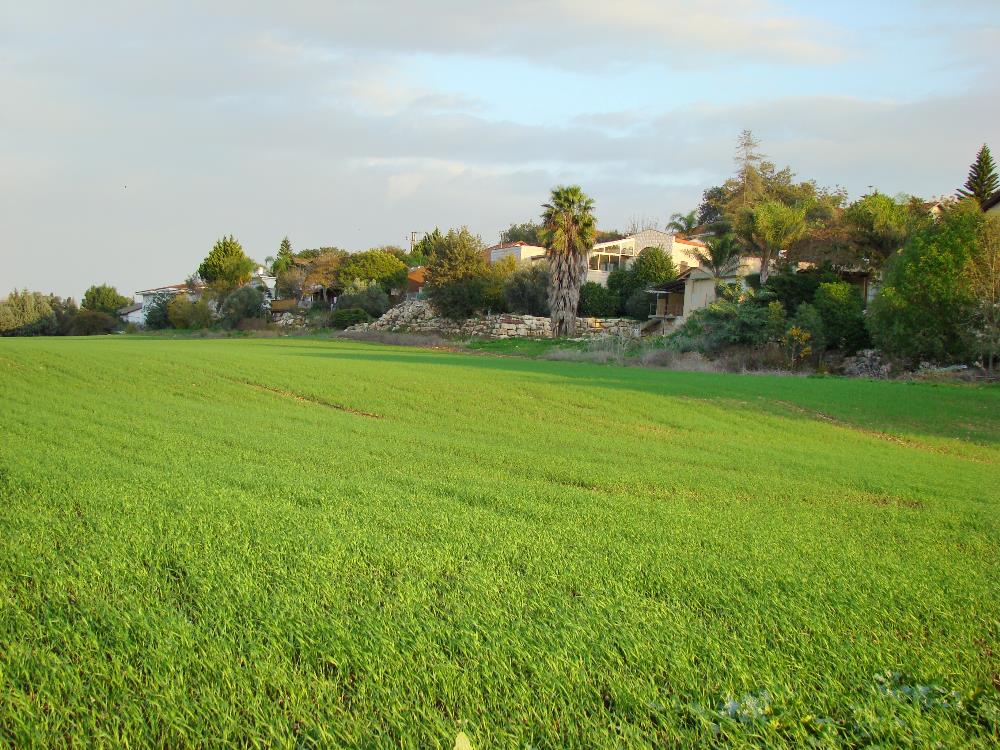
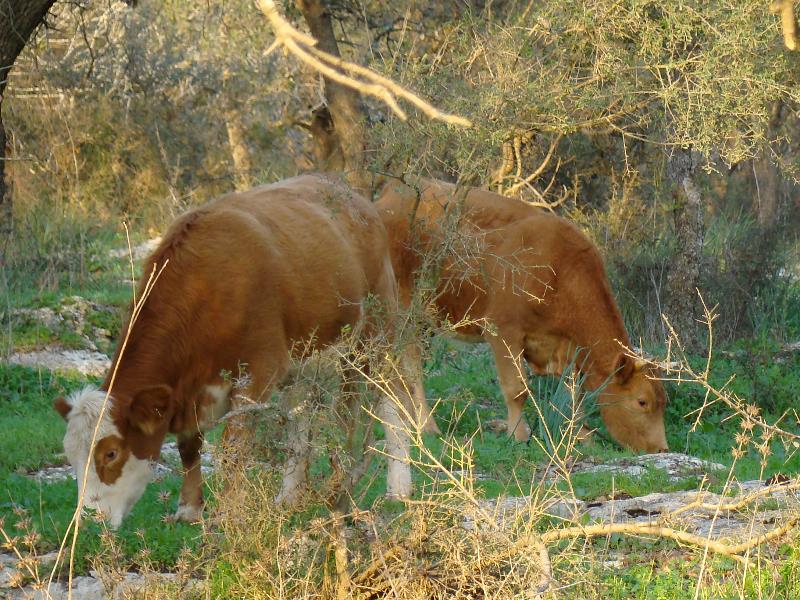
Today Bethlehem of the Galilee is a moshav, a cooperative agricultural community of individual farms.

Pasture in Bethlehem. Photo by Leon Mauldin.

Pasture in Bethlehem. Photo by Leon Mauldin.

Cattle at Bethlehem. Photo by Leon Mauldin.

Cattle at Bethlehem. Photo by Leon Mauldin.


King Eumenes, Brother of Attalus II

July 1, 2014

The biblical city of Philadelphia, one of the seven churches of Asia Minor (Rev. 3:7-13) was founded by Attalus II, king of Pergamum (159–138 BC).

W.M. Ramsay tells us that Attalus II’s “truth and loyalty to his brother Eumenes won him the epithet Philadelphus” (The Letters to the Seven Churches of Asia, p. 391). Hence the name of the city, Philadelphiawhich means brotherly love.

“Because of its strategic location, it [Philadelphia] served as a vital link in communication and trade between Sardis and Pergamum to the west and Laodicea and Hierapolis to the east. It was a center of agriculture, leather production, and textile industry” (Harper’s Bible Dictionary). Today Philadelphia is called Alaşehir.

Attalus II was also the founder of Attalia, mentioned in Acts 14:25-26 in connection with Paul’s return trip on his 1st Missionary Journey. This is the site of today’s Antalya, one of Turkey’s largest cities.

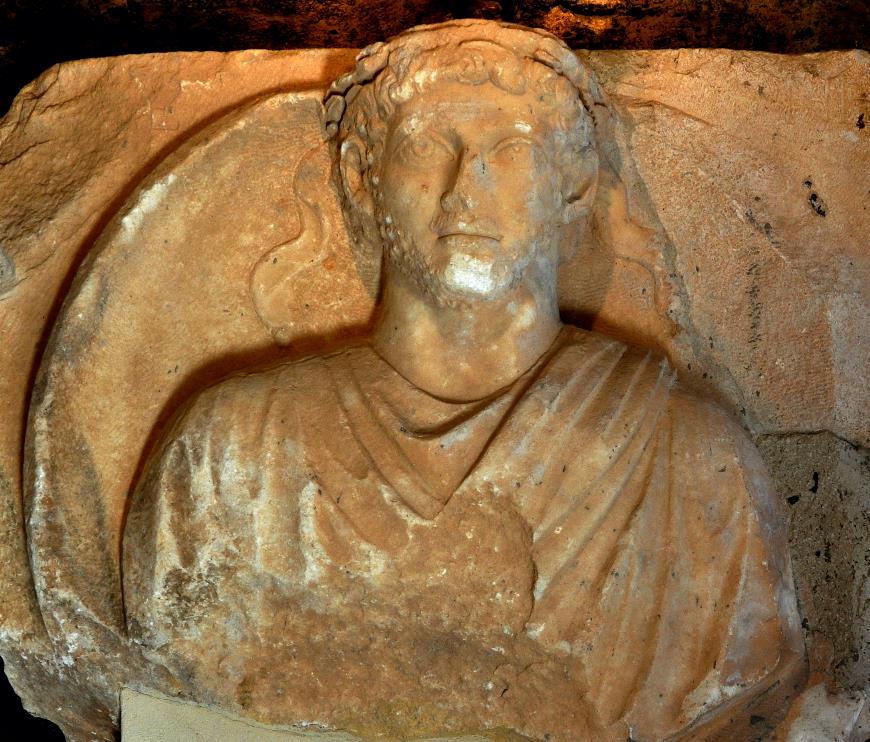
Eumenes, brother of Attalus II, was king of Pergamun 197-157 BC. He was the founder of the city of Hierapolis (Col. 4:13). It is fitting that there is a bust of Eumenes in the museum at Hierapolis.

King Eumenes II, brother to Attalus II Philadelphus. Photo ©Leon Mauldin.

King Eumenes II, brother to Attalus II Philadelphus. Photo ©Leon Mauldin.

Click image for larger view.


Harran, Home of the Patriarchs and More

May 24, 2014

Bible students think of Haran (today’s spelling: Harran) as temporary home to Abraham (Gen. 12:4) after he left Ur but before arriving in Canaan. This was also home to Rebekah (Gen. 27) wife of Isacc and mother of Jacob & Esau. Haran would be Jacob’s home for 20 years (Gen. 28-29), where he married his wives and had 11 of his 12 sons (Benjamin later would be born near Bethlehem, at which time Rachel died).

Location of Haran in Mesopotamia. Map by BibleAtlas.org.

Location of Haran in Mesopotamia. Map by BibleAtlas.org.

But like many other biblical locations, Harran was of strategic significance, as indicated by this entry from Wikipedia:

By the 19th century BCE, Harran was established as a merchant outpost due to its ideal location. The community, well established before then, was situated along a trade route between the Mediterranean and the plains of the middle Tigris. It lay directly on the road from Antioch eastward to Nisibis and Ninevah. The Tigris could be followed down to the delta to Babylon. The 4th-century Roman historian Ammianus Marcellinus (325/330–after 391) said, “From there (Harran) two different royal highways lead to Persia: the one on the left through Adiabene and over the Tigris; the one on the right, through Assyria and across the Euphrates.” Not only did Harran have easy access to both the Assyrian and Babylonian roads, but also to north road to the Euphrates that provided easy access to Malatiyah and Asia Minor.

According to Roman authors such as Pliny the Elder, even through the classical period, Harran maintained an important position in the economic life of Northern Mesopotamia.

Harran was also an ancient center for worship for the moon god Sin. This excavated mud brick site has been suggested as the location for a temple for the god that predates the well known later temple.

Haran Mud Brick Building. Proposed site of temple to moon god Sin. Photo ©Leon Mauldin.

Haran Mud Brick Building. Proposed site of temple to moon god Sin. Photo ©Leon Mauldin.

Our original flight this afternoon to Antalya was cancelled, which will result in a much later arrival this evening than previously scheduled. Those things happen when traveling. We are both well. Thanks for following our trip.


Traveling in Eastern Turkey

May 23, 2014

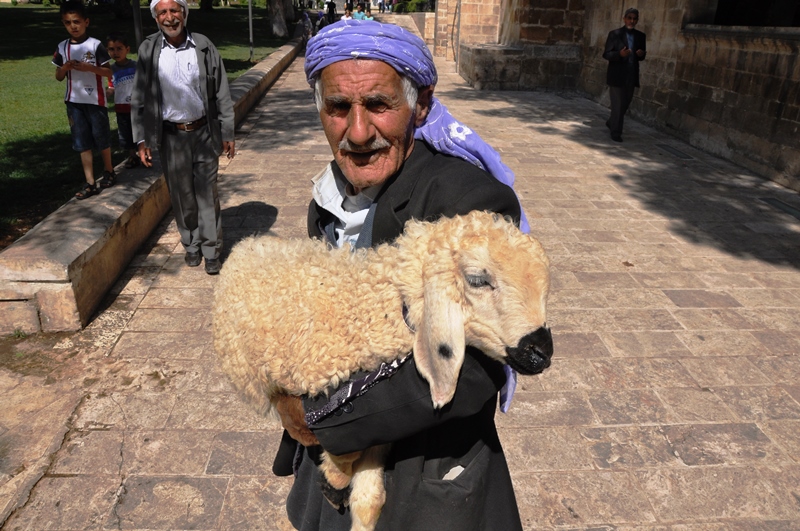
Yesterday upon our arrival in Gaziantep Ferrell Jenkins & I rented our car and from there went to Zeugma where we saw the Euphrates and the excavations of the temple of Dionysus. From there we drove to the ancient city of Haran, home (for a while) to Abraham; home to Jacob for twenty years. We overnighted in Sanliurfa, a strategically important city in upper Mesopotamia known as Edessa in Grecian and Roman times. This morning at Sanliurfa I photographed a man carrying a sheep.

At Sanliurfa, Turkey. Photo by Leon Mauldin.

At Sanliurfa, Turkey. Photo by Leon Mauldin.

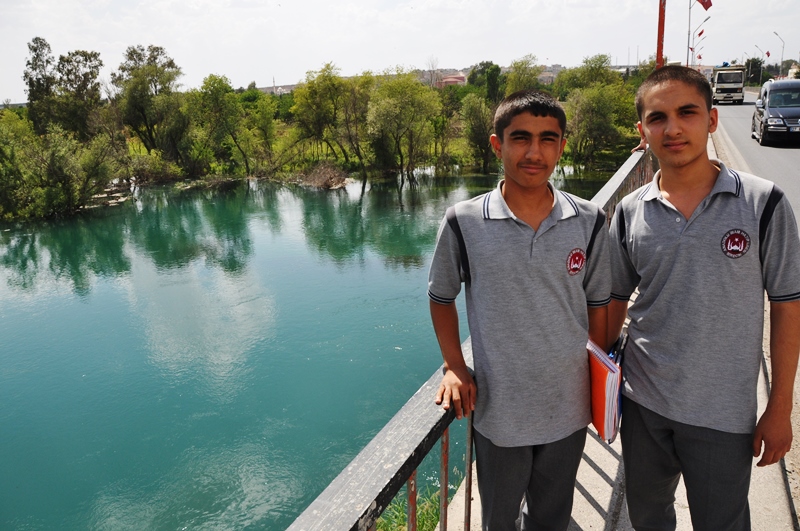
At Gobekli Tepe we saw the oldest known temple remains to be discovered thus far. From there we went on to Birecik for another view of the Euphrates as we made our way on to Carchemish.

High school boys at Belcik, Turkey, on bridge crossing Euphrates. Photo by Leon Mauldin.

High school boys at Birecik, Turkey, on bridge crossing Euphrates. Photo by Leon Mauldin.

We were able to see Carchemish from several vantage points and took lots of photos. We could see over into Syria. Tonight we are in Gaziantep.


Achzib on the Mediterranean

May 16, 2014

I love to study the book of Joshua. After Joshua led Israel in the Conquest of Canaan, the book bearing his name lists two biblical cities known as Achzib.

Josh. 15:44 lists Achzib among the cities with their villages designated as Judah’s tribal inheritance. The prophet Micah also mentions Achzib (Mic. 1:14), referencing this same southern city.

The other Achzib (featured in this post) was on the Mediterranean coast, and was included in the inheritance given to the tribe of Asher. “Then the boundary turns to Ramah, reaching to the fortified city of Tyre. Then the boundary turns to Hosah, and it ends at the sea; Mahalab, Achzib” (Josh. 19:29, ESV). Of course the “sea” mentioned in this verse is the Mediterranean Sea.

Note the location on the map:

Achzib. Map by BibleAtlas.org.

Achzib. Map by BibleAtlas.org.

Achzib was a significant settlement dating back to the Middle Bronze age (approximate time of Abraham), when it was a fortified harbor town.

Information Sign at Achzib. Photo ©Leon Mauldin.

Information Sign at Achzib. Photo ©Leon Mauldin.

But this city with its coastal access, and location on a major international route, was unfortunately not retained by Israel. Achzib is listed among seven cities not possessed within Asher’s inheritance: ” Asher did not drive out the inhabitants of Acco, or the inhabitants of Sidon or of Ahlab or of Achzib or of Helbah or of Aphik or of Rehob” (Judges 1:31). For much of its history Achzib was a Phoenician city.

Achzib was listed in Assyrian records as one of the cities during Sennacherib’s campaign in Syria and Palestine in 701 BC. In Roman times it was a thriving coastal town known as Ecdippon or Ecdippa.

Today it is just barely south of Israel’s border with Lebanon. Our photo here below was taken at Achzib looking south toward Acco (see above Judges text).

At Achzib looking south toward biblical Acco. Photo ©Leon Mauldin.

At Achzib looking south toward biblical Acco. Photo ©Leon Mauldin.

Click on images for larger view.


Battle at Michmash (1 Samuel 13-14)

March 27, 2014

Last evening a grandson, along with my wife & me, were reading his daily Bible reading which was in 1 Samuel 13-15. Chapters 13-14 record a battle between Israel and the Philistines, which was initiated by the faith of King Saul’s son Jonathan. A site repeatedly mentioned in the text is that of Michmash.

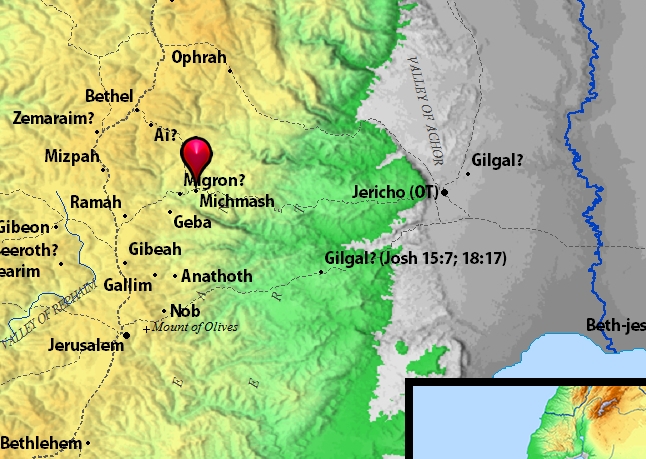
Michmash. Map by BibleAtlas.org.

Michmash. Map by BibleAtlas.org.

Michmash is about seven miles north and slightly east of Jerusalem. Consider how far into Israel’s territory the coastal Philistines had advanced at this point. Further, Israel’s forces were greatly outnumbered. The Philistines had 30,000 chariots and 6,000 horsemen, and “people as the sand which is on the seashore in multitude,” and were also “encamped in Michmash (1 Sam. 13:5). Jonathan had 1,000 men with him (at Gibeah at the point of 1 Sam. 13:2). Saul had only 2,000 men (ibid.) but as the chapter continues that number had shrunk down to a mere 600 men (v.15).

But Jonathan’s faith was not in numbers, but in YHWH. He told his armorbearer, “Come, let us go over to the garrison of these uncircumcised; it may be that the LORD will work for us. For nothing restrains the LORD from saving by many or by few” (1 Sam. 14:6). The two of them climbed up the steep pass to Michmash on hands and knees, attacked the Philistines, and “that first slaughter which Jonathan and his armorbearer made was about twenty men within about half an acre of land” (1 Sam. 14:14). The Philistine camp went into confusion. “So the LORD saved Israel that day” (v.23). Israel drove “back the Philistines that day from Michmash to Aijalon” (v.31).

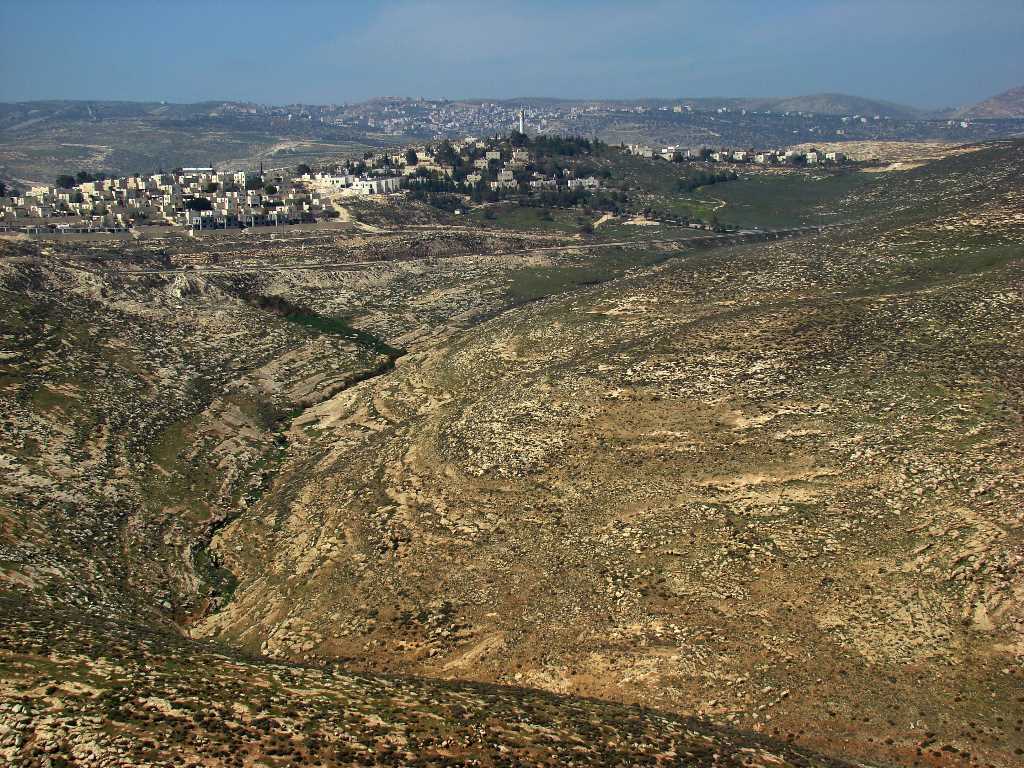
Michmash. Area of battle between Israel and Philistines. Photo by Leon Mauldin.

Michmash. Area of battle between Israel and Philistines. Photo by Leon Mauldin.

After we read the biblical narrative, I showed my grandson some photos of the Michmash area, such as the one here above, and was able to say that what we just read took place in this area. He responded, “Have they found any skeletons there?” “Wouldn’t it be cool if they found skeletons there?” Also, “Do they still fight battles there?”

While I don’t know of any skeletal remains, this area was the site of an important battle between Britain and the Turks during WWI. Major Vivian Gilbert, in his book The Romance of the Last Crusade, “relates the story of an unnamed brigade major who was reading his Bible while contemplating the situation against the Ottoman forces. The brigade major remembered a town by the name of Michmash mentioned somewhere in the Bible. He found the verses, and discovered that there was supposedly a secret path around the town. He woke the brigadier general, and they found that the path still existed and was very lightly guarded. The British forces used this path to outmaneuver the Ottomans, and so took the town” (Wikipedia, referencing pp. 183-186).

The use of maps and photos of biblical sites helps children (and the rest of us) to better visualize and understand the biblical events.