American Cemetery at Ostia, Italy

July 4, 2024

During our recent tour of Sicily and Southern Italy we were able to tour the area of the ancient port of Ostia, at the mouth of the Tiber River, and while in that area visit the American Cemetery. Though I had intended to post this earlier, as today is Independence Day I thought it would be appropriate to share at this time.

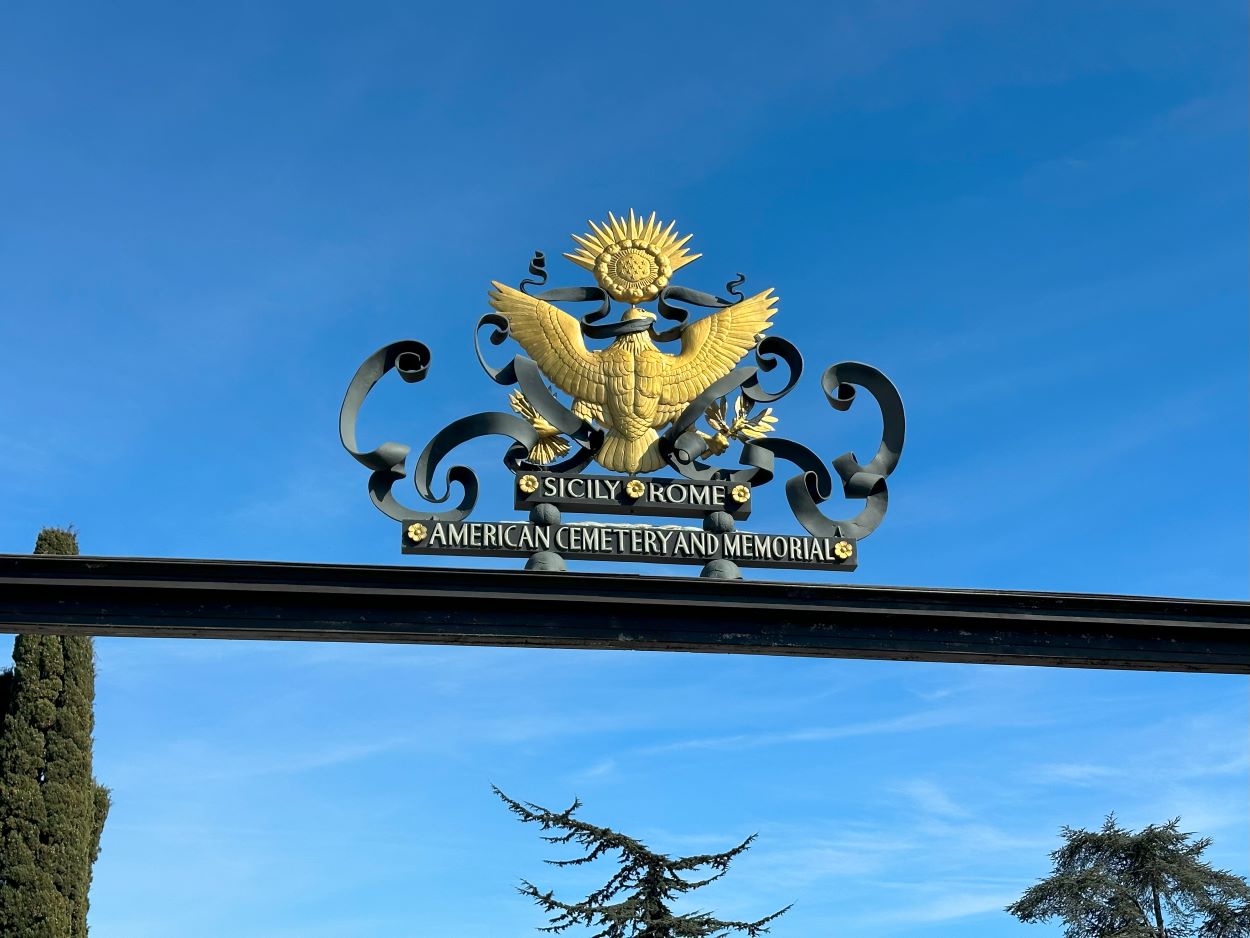
Sign at entrance to Cemetery. Photo ©Leon Mauldin.

The cemetery is located about 38 miles south of Rome.

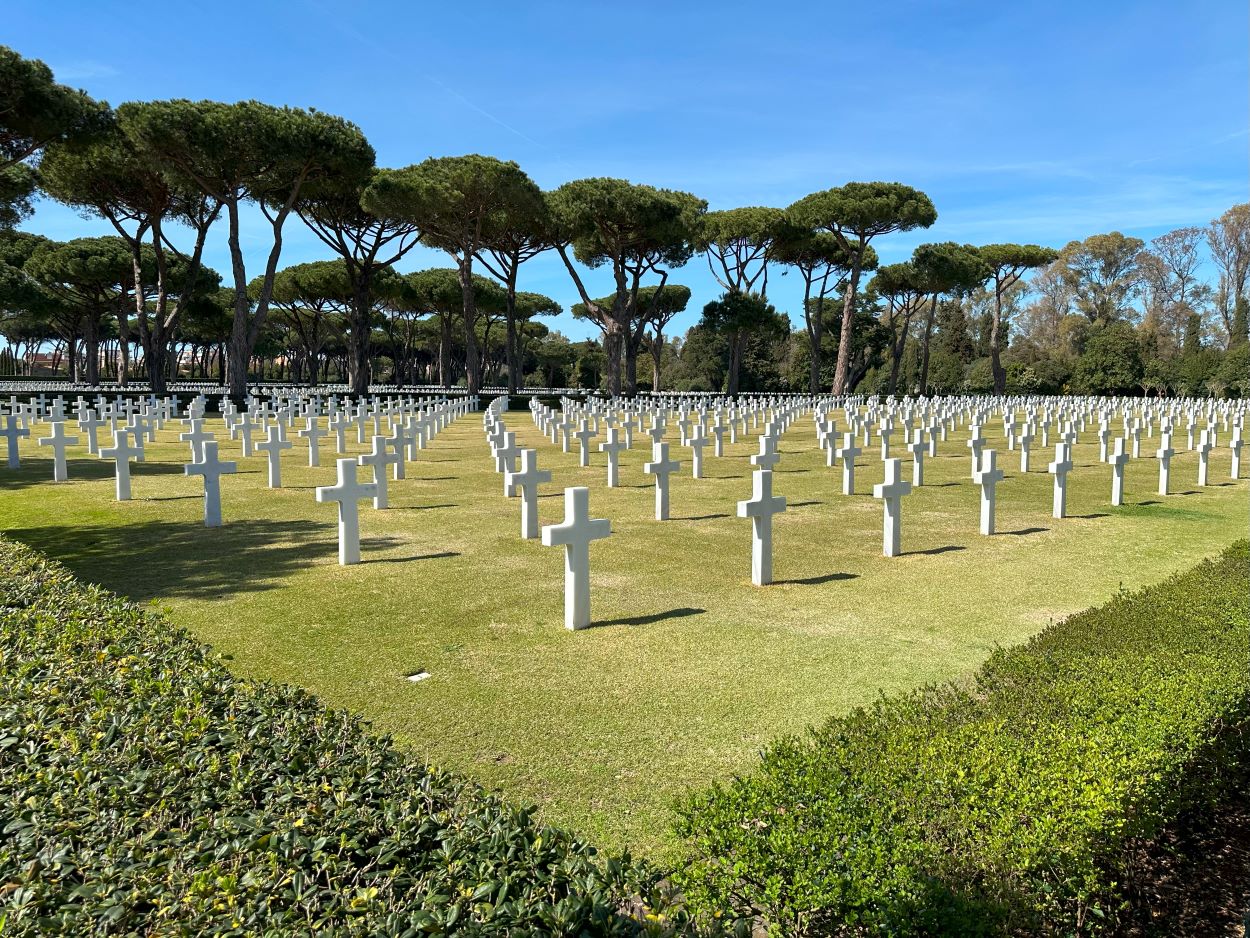
The World War II Sicily-Rome American Cemetery and Memorial site in Italy covers 77 acres, rising in a gentle slope from a broad pool with an island and cenotaph flanked by groups of Italian cypress trees. Beyond the pool is the immense field of headstones of 7,845 of American military war dead, arranged in gentle arcs on broad green lawns beneath rows of Roman pines. The majority of these individuals died in the liberation of Sicily (July 10 to August 17, 1943); in the landings in the Salerno Area (September 9, 1943) and the heavy fighting northward; in the landings at Anzio Beach and expansion of the beachhead (January 22, 1944 to May 1944); and in air and naval support in the regions. Source: https://www.abmc.gov/Sicily-Rome

The Cemetery has 7,845 headstones of American military. Photo ©Leon Mauldin.

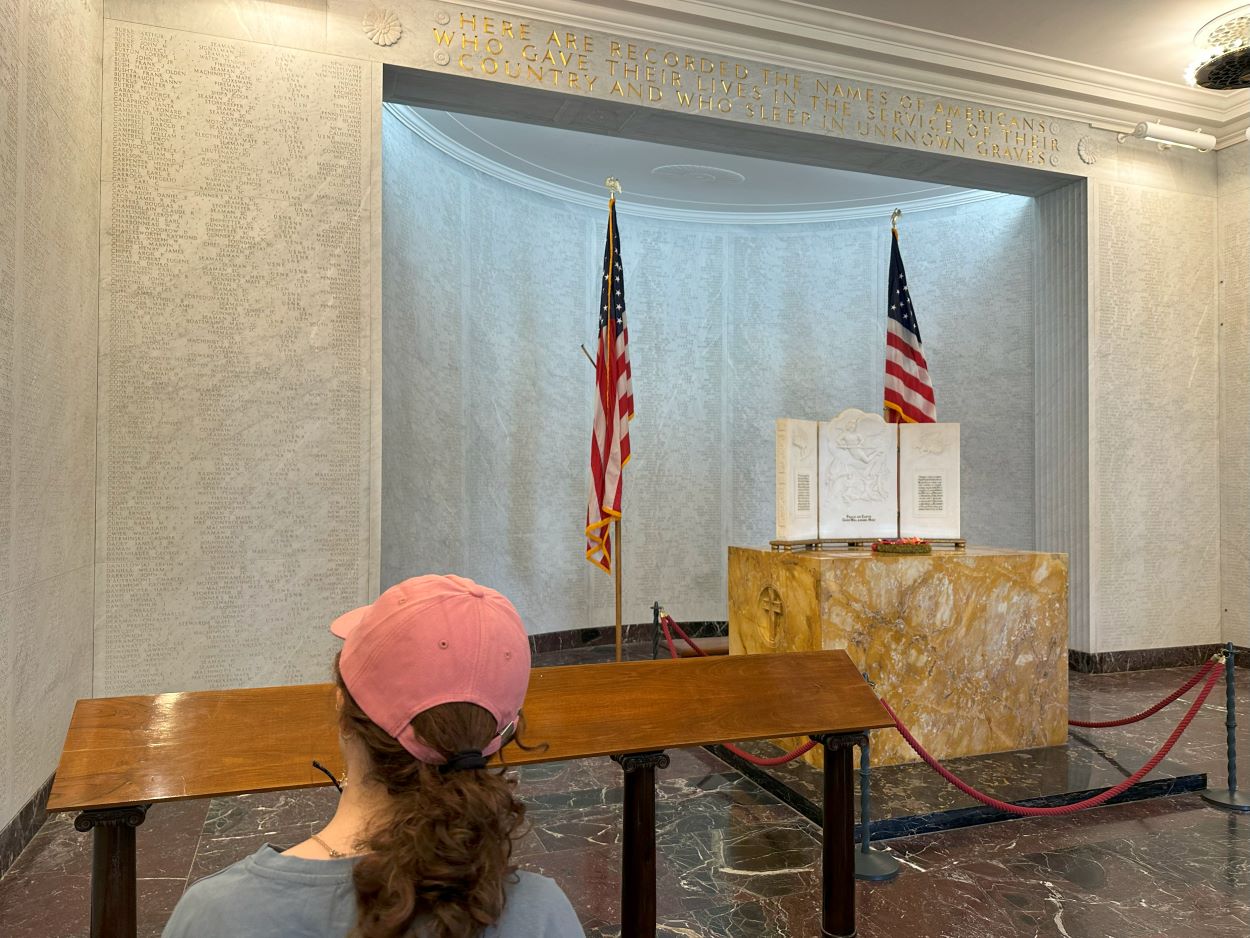
Here is a view inside the chapel:

Inside the chapel. 3,095 names of the missing are honored here. Photo ©Leon Mauldin.

A wide central mall leads to the memorial, rich in works of art and architecture, expressing America’s remembrance of the dead. It consists of a chapel to the south, a peristyle, and a map room to the north. On the white marble walls of the chapel are engraved the names of 3,095 of the missing. Rosettes mark the names of those since recovered and identified. Source: https://www.abmc.gov/Sicily-Rome

Click photos for larger view.


In Ostia, Italy, Rome’s Ancient Port

March 21, 2024

Today my tour group visited Ostia Antica, and saw some of the excavations there. Over time, the port silted up, but in antiquity it was of vital importance to Rome. The Lexham Bible Dictionary has the following information:

OSTIA An ancient port of Rome located at the mouth of the Tiber River. A vital strategic and commercial site of the Roman Empire.

Location and Biblical Relevance

Ostia was the nearest port that granted access to Rome for seafaring travelers of the New Testament world. Its name is derived from the Latin term ostium, meaning “doorway” or “entryway.” The name encapsulates the importance of the site, for it served as the maritime gateway to the capital of the Roman Empire.

The city and port of Ostia was located 22 miles (35 km) downstream from Rome at the mouth of the Tiber River. It was associated with sea trade, which brought in wares and cultural goods from throughout the Mediterranean.

Ostia was also an early base for Roman naval activities. In its first centuries, the city was hardly more than a Roman army camp populated by citizen colonists (Salmon, Roman Colonization, 26–27). Ostia was not an excellent harbor; its anchorage was exposed, leaving it vulnerable to storms and pirates. These problems would not be solved until the first and second centuries ad, when the rival port of Portus was constructed.

Brand, S. The Lexham Bible Dictionary. Lexham Press.

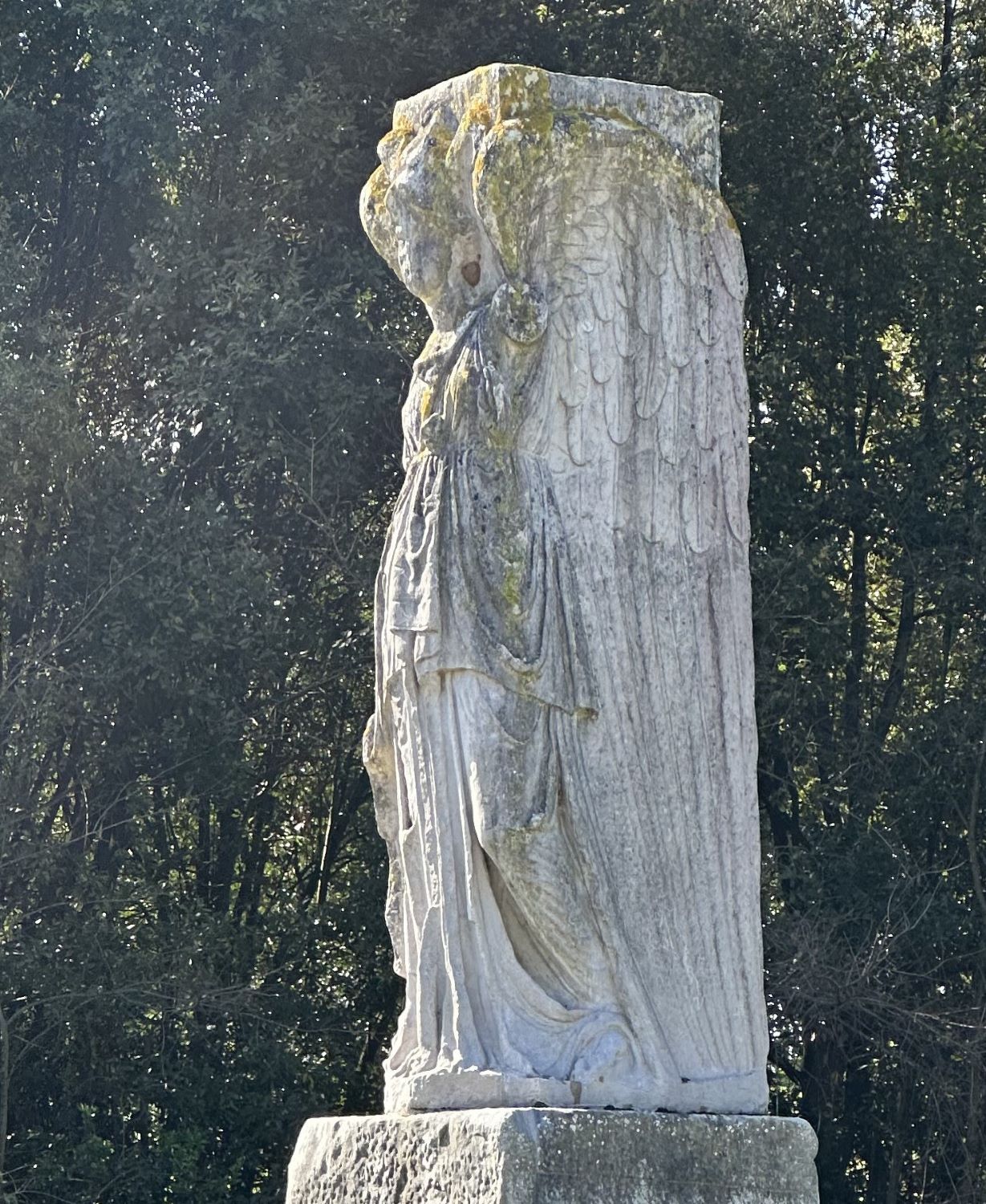
As one first enters the archaeological area, there is a statue of Minerva-Victory.

Minerva-Victory Statue. Photo ©Leon Mauldin.

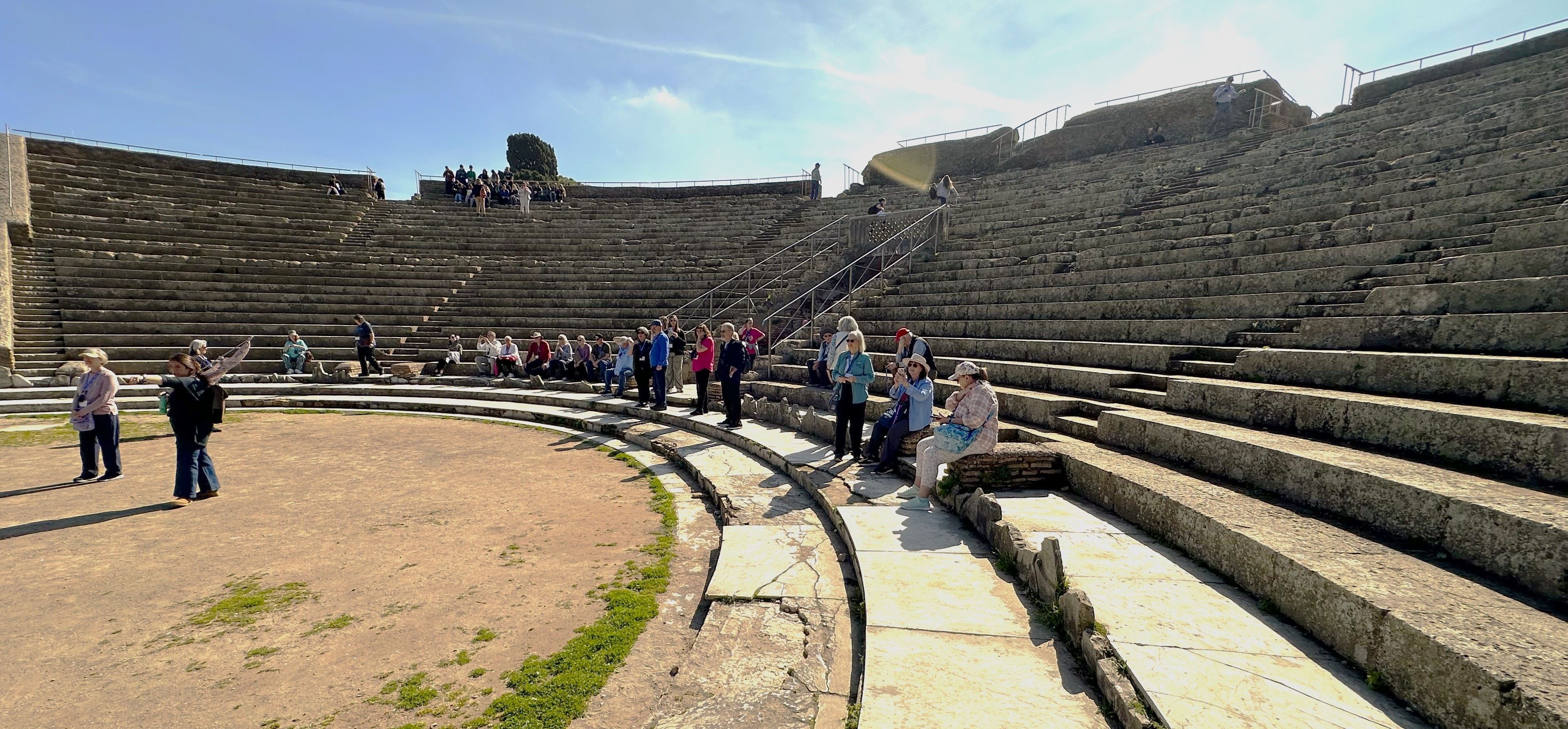
The theater was constructed at the directive of Caesar Augustus, and was enlarged by Commodus and restored by Septimius Severus.

Ostia Theater. Photo ©Leon Mauldin.

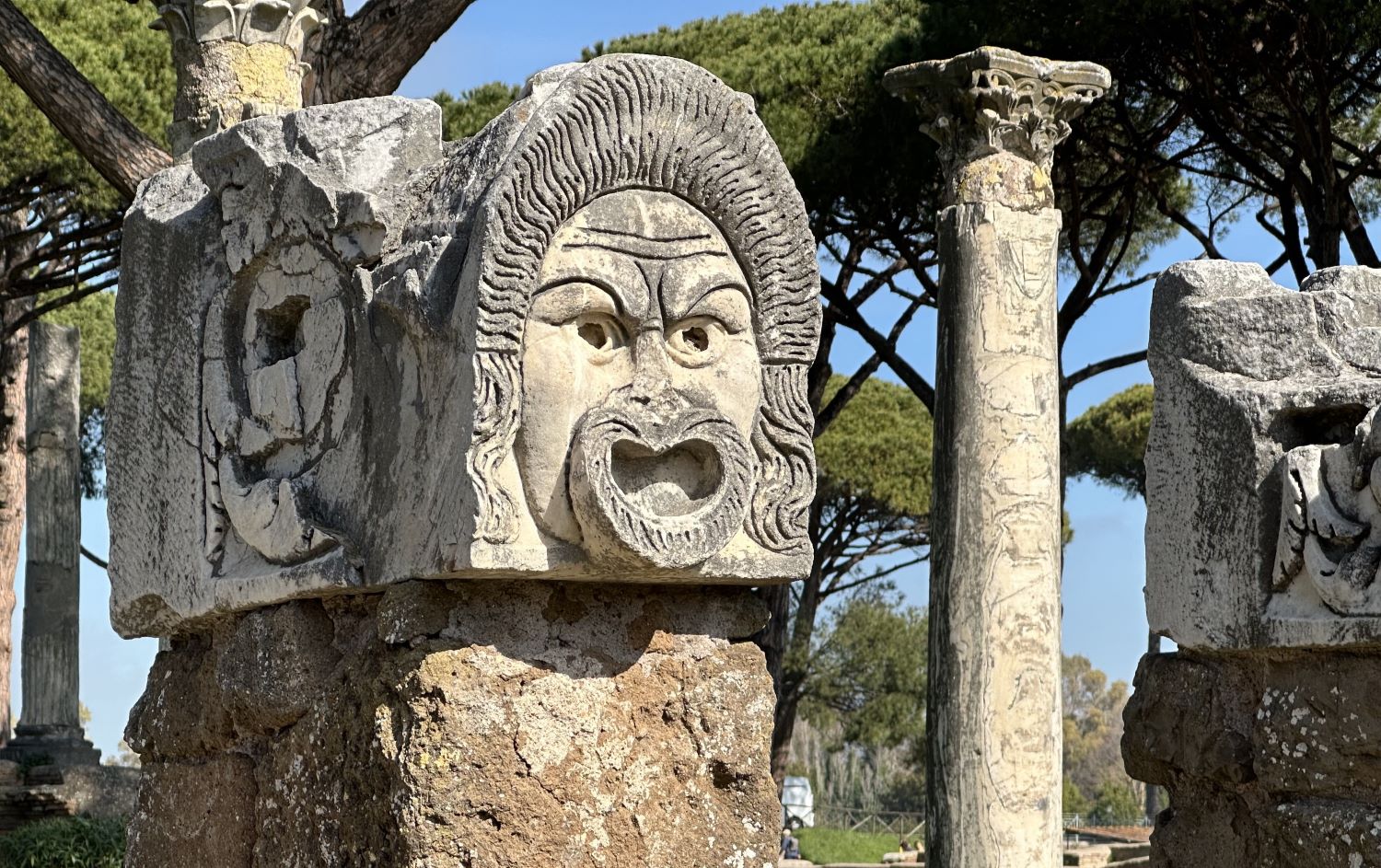
There are some typical masks on site behind the stage area.

Theactrical mask. Photo ©Leon Mauldin.

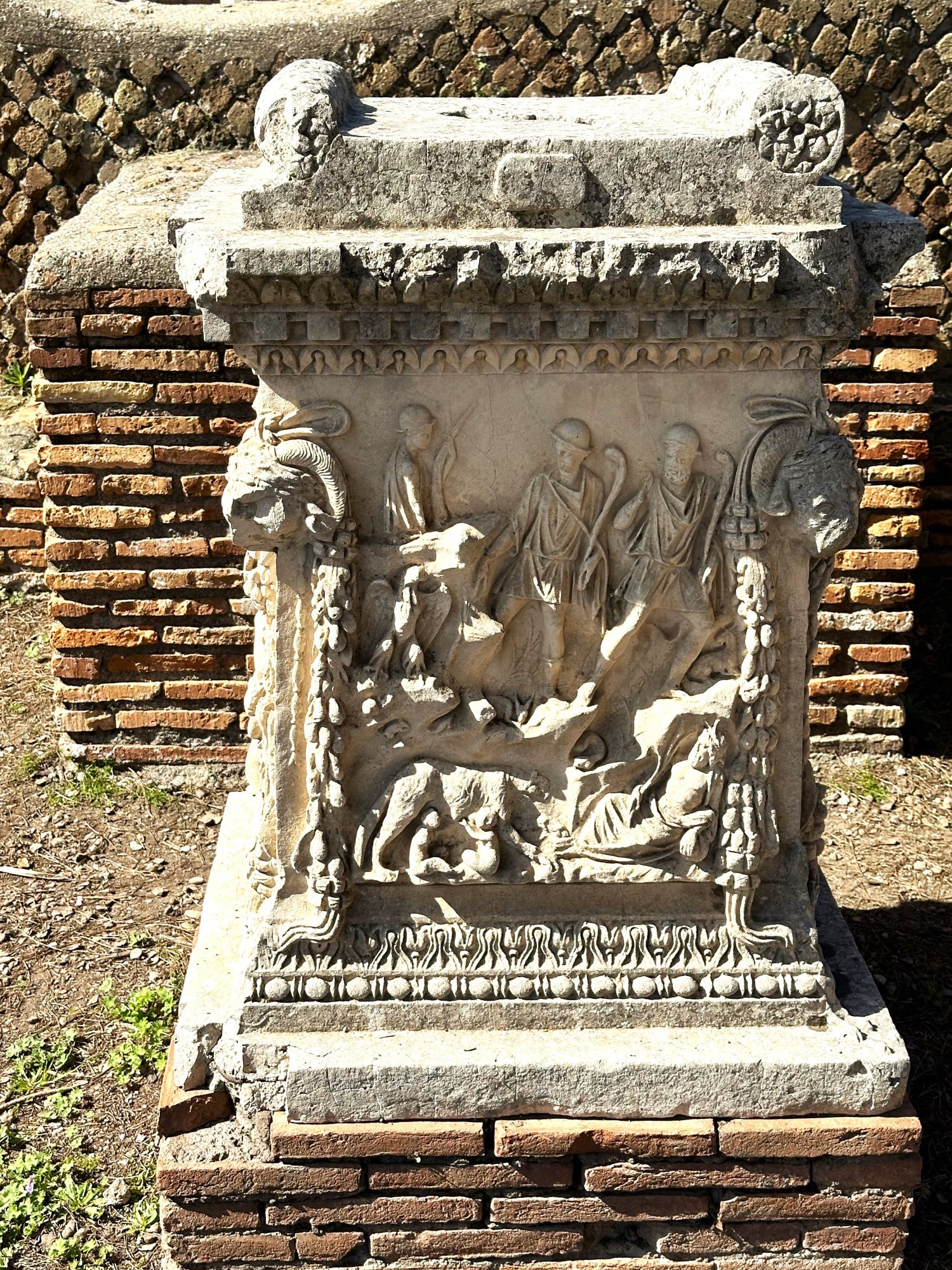
We also saw an altar dedicated to Mars and Venus with the representation of the Tiber river god, the she-wolf and the twins Romulus and Remus.

Altar dedicated to Mars and Venus. Photo ©Leon Mauldin.

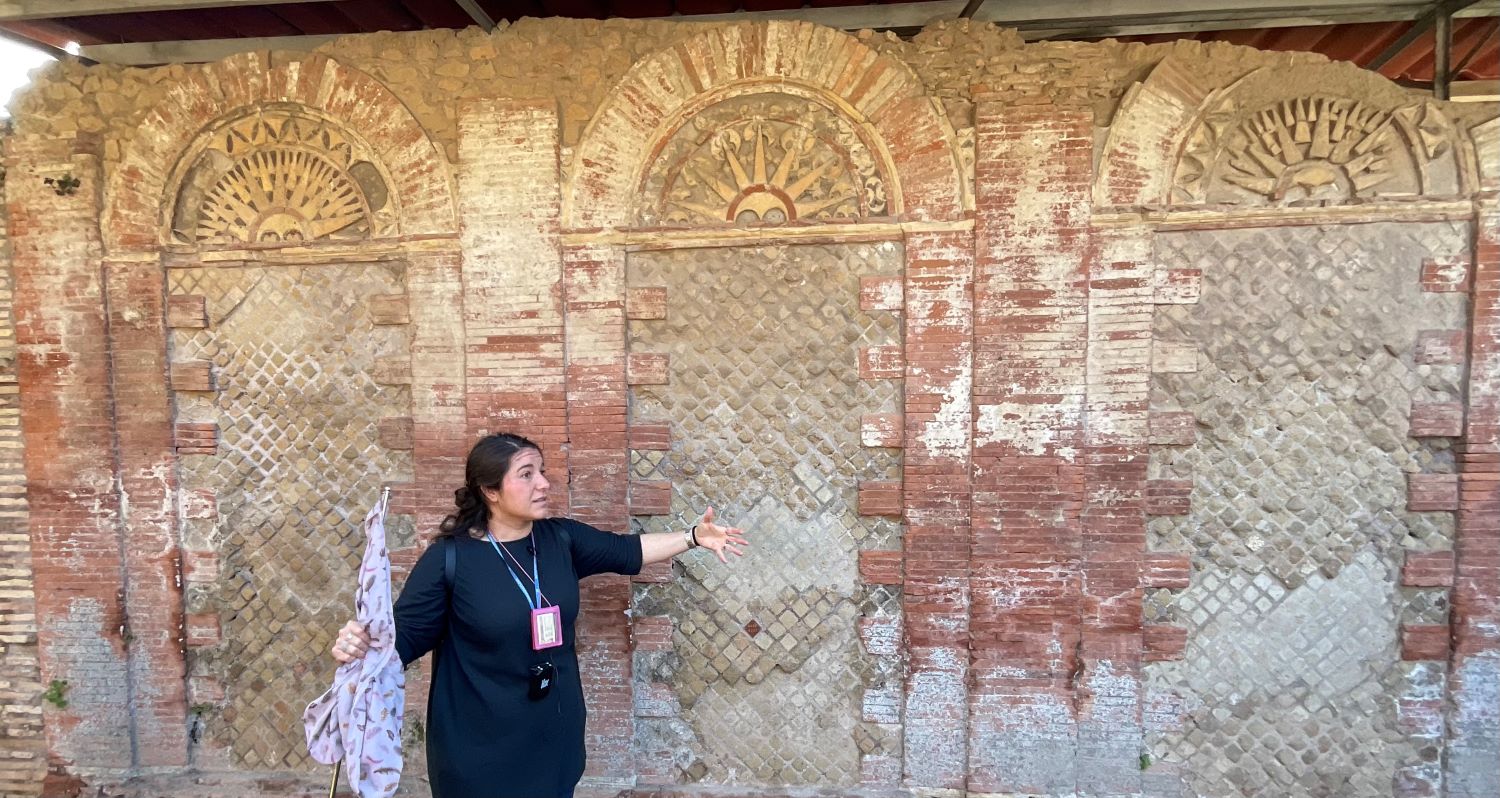
At the necropolis there are numerous sepulchral buildings, including the Tomb of the Little Arches.

Tomb of the Little Arches. Photo ©Leon Mauldin.

Click on photos for larger view.


Arch of Constantine Inscription

January 4, 2024

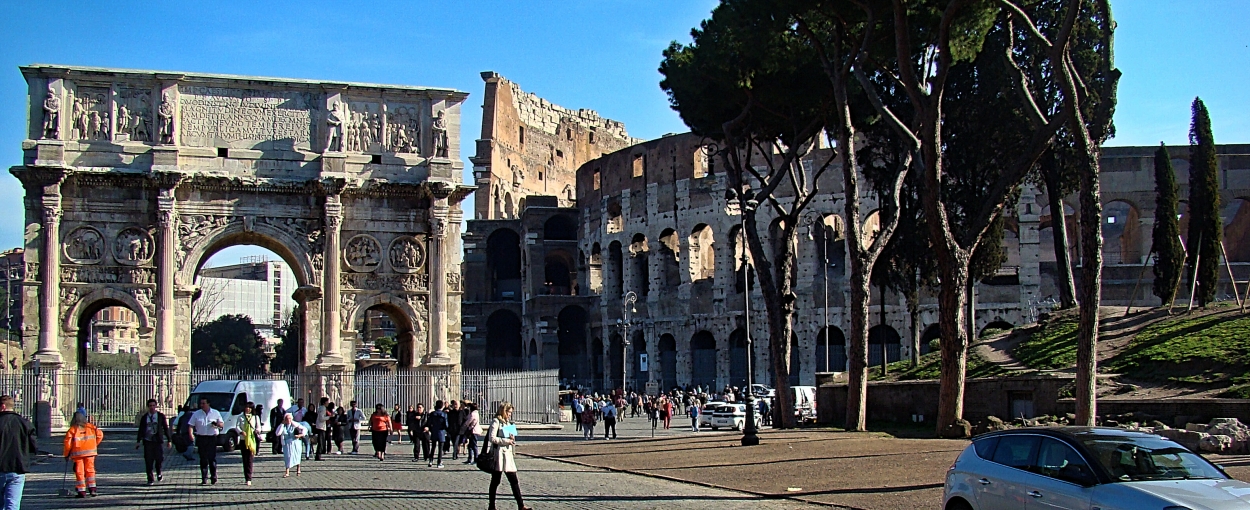
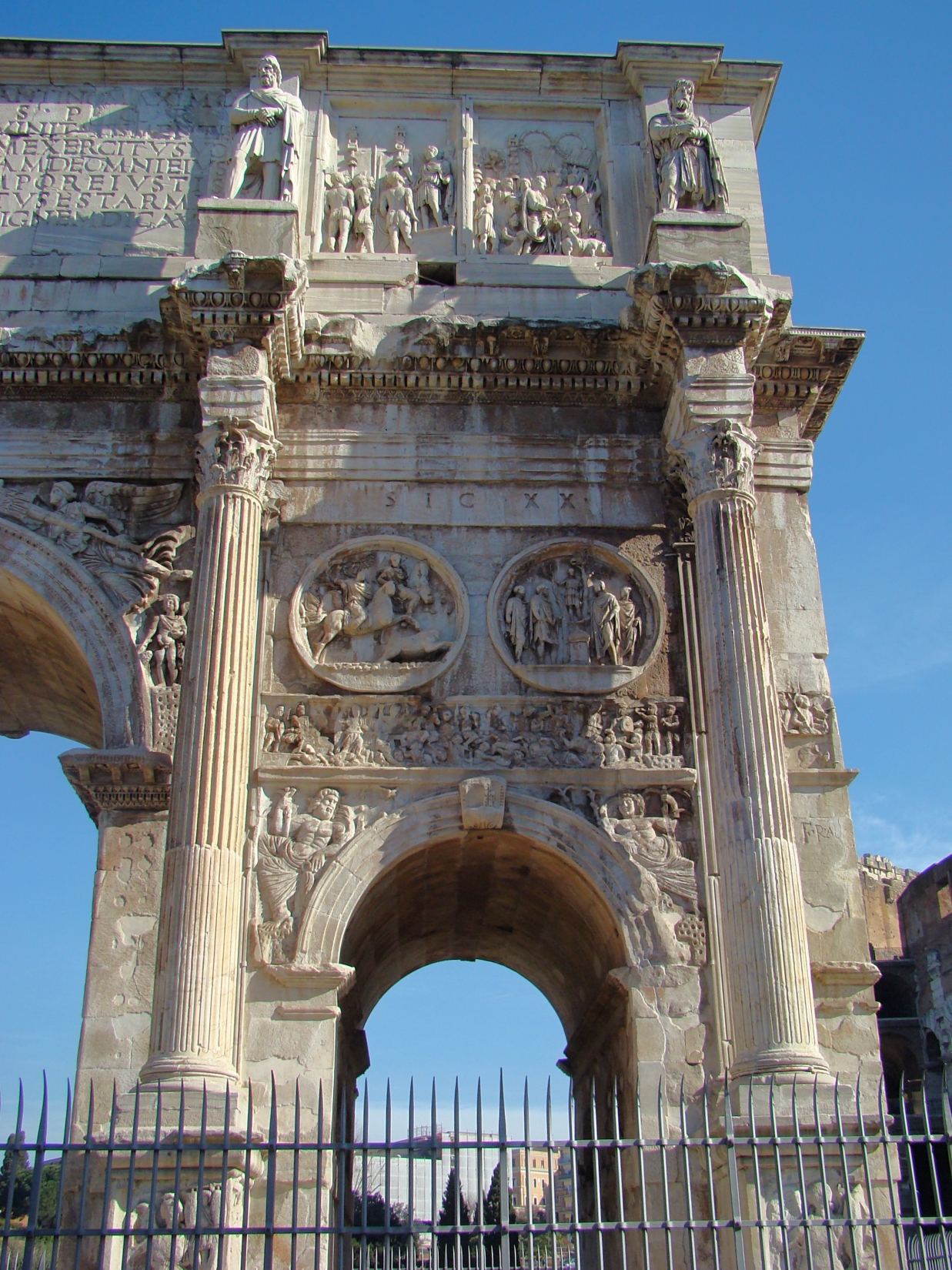
In our previous post we saw Roman Emperor Constantine’s Arch, commemorating his victory over his rival Maxentius at the Milvian Bridge.

Arch of Constantine. (Colosseum on the right). Photo by Leon Mauldin.

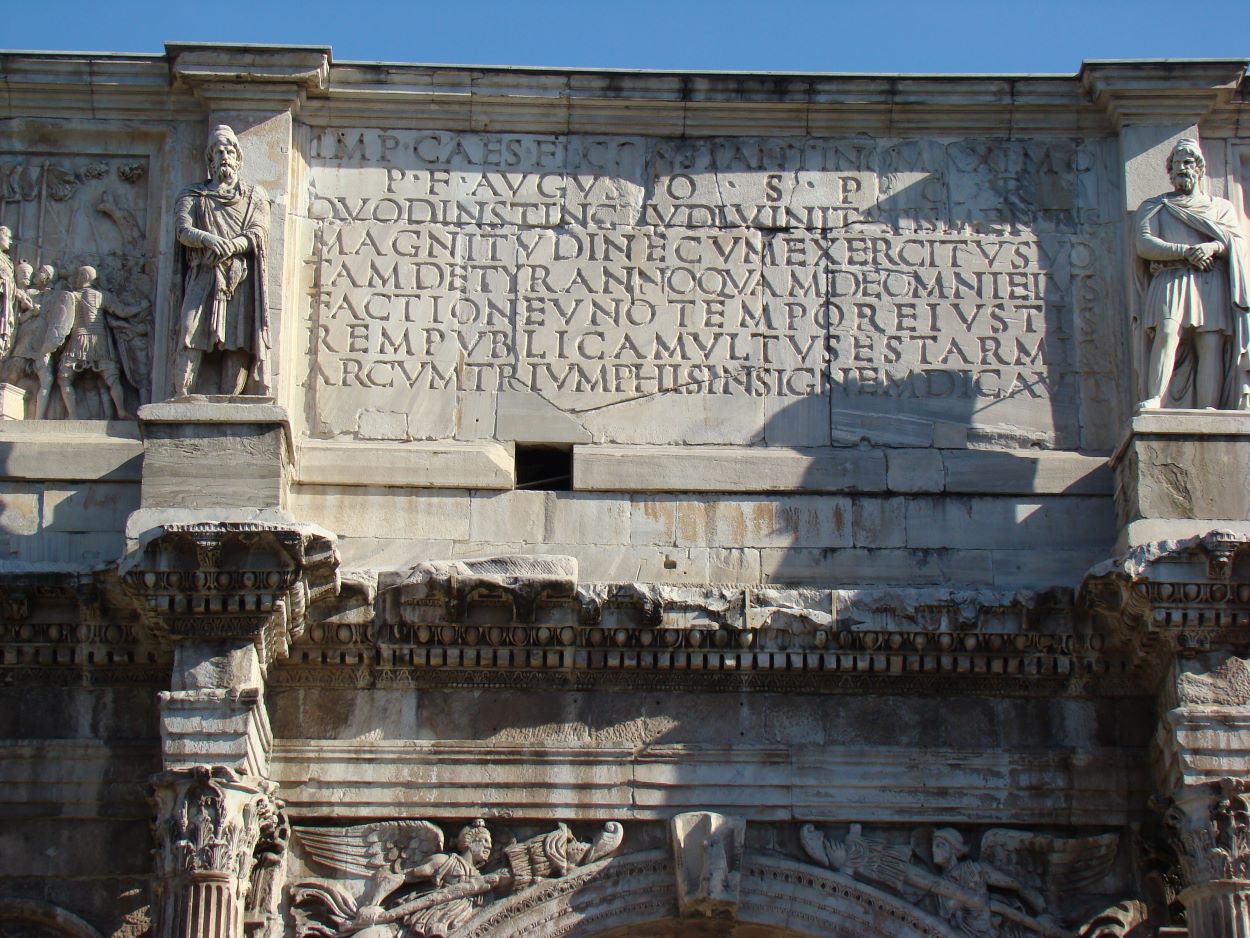
There is a lengthy official inscription at the top center of the arch, explaining its purpose.

Inscription on Arch of Constantine. Photo by Leon Mauldin.

Here is the Latin inscription with the English translation, from Rome, an Oxford Archaeological Guide:

IMP(eratori) CAES(ari) FL(avio) CONSTANTINO MAXIMO
To the emperor Flavius Constantine, the Great, P(io)F(elici) AUGUSTO S(enatus) P(opulus)Q(ue)R(omanus)
pious and fortunate, the Senate and People of Rome, QUOD INSTINCTU DIVINITATIS MENTIS
because by divine inspiration and his own greatness of spirit MAGNITUDINE CUM EXERCITU SUO
with his army TAM DE TYRANNO QUAM DE OMNI EIUS
on both the tyrant and all his FACTIONE UNO TEMPORE IUSTIS
faction at once in rightful REM PUBLICAM ULTUS EST ARMIS
battle he avenged the State, ARCUM TRIUMPHIS INSIGNEM DICAVIT
dedicated this arch as a mark of triumph

Claridge, Amanda. Rome (Oxford Archaeological Guides) (p. 308).

It is very popular to have group photos of tours taken with the arch as the background. Perhaps this will help in some small way to understand its historical significance.


Arch of Constantine, Rome

January 2, 2024

The early 4th Century AD was a tumultuous time in the Roman Empire. Diocletin retired in AD 305 and left power to his chosen successors. Maxentius (one of the previous rulers of Diocletian’s Tetracharchy, ruled over the west) declared himself emperor, 306 AD. This was contested by several rivals, igniting a round of civil wars. Constantine (son of Flavious Constantius, d. AD 306, “senior emperor” under Diocletian) emerged as a major contender.

Initially there were several rival claimants to the throne but two primary factions emerged: Constantine vs Mazentius. In AD 312, Constantine and his troops met Maxentius and his army near the Milvian Bridge (located over the Tiber River in northern Rome. Maxentius’s forces were defeated; in the retreat Maxentius fell into the Tiber River and drowned.

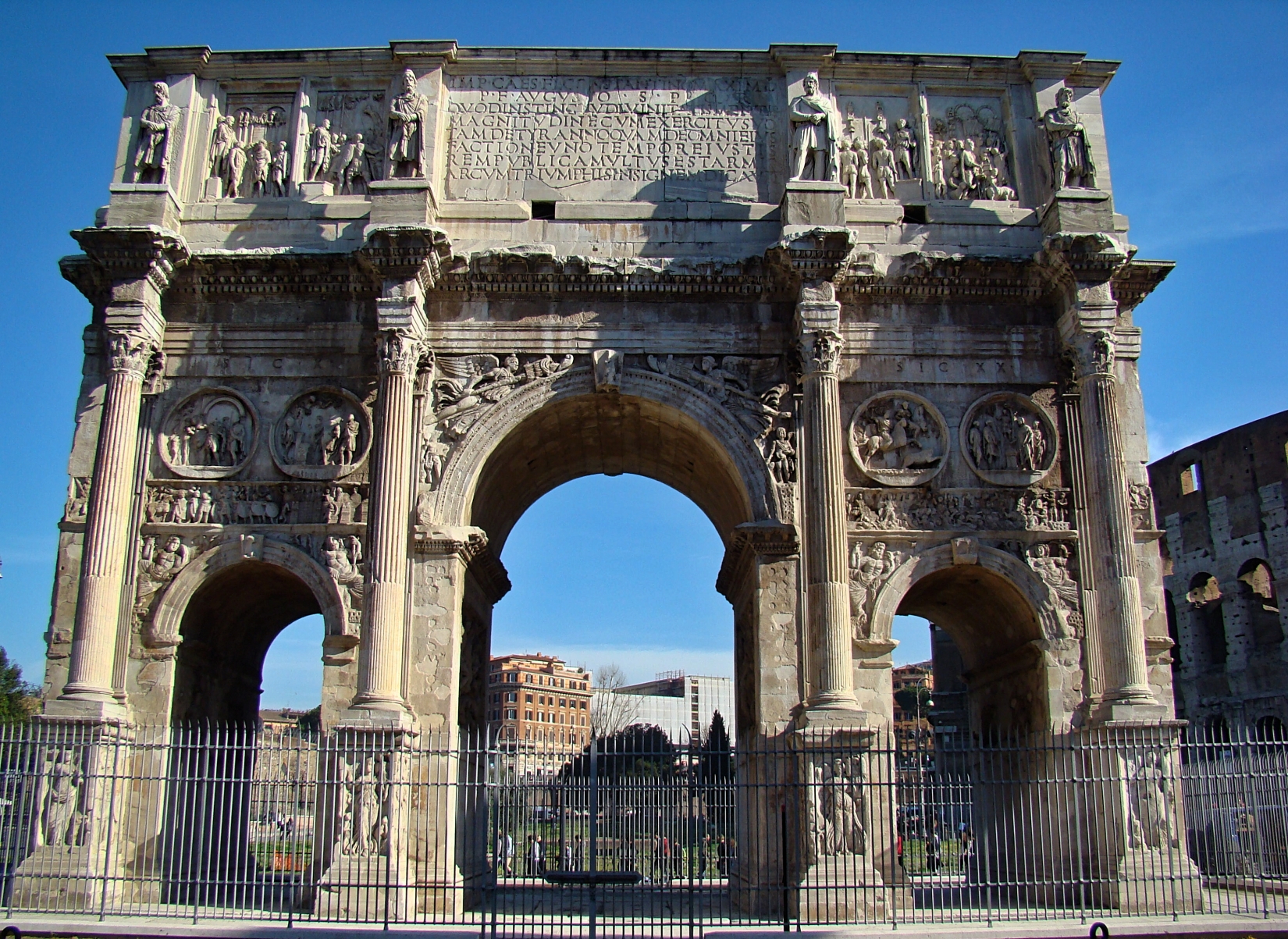
Arch of Emperor Constantine in Rome, Italy. Photo by Leon Mauldin.

Following the battle, the empire was ruled by Constantine (most of the west), Maximinus Daia (the easternmost provences, and Licinius (the area between).

It was just before the Battle of the Milvian Bridge that Constantine was converted to Christianity. Later in AD 313 Constantine (and Licinius) issued the Edict of Milan, which granted toleration to all religions and restored confiscated property to the Christians church.

The Arch of Constantine was dedicated by the Roman Senate in AD 315. It commorates Constantine’s victory over Maxentius.

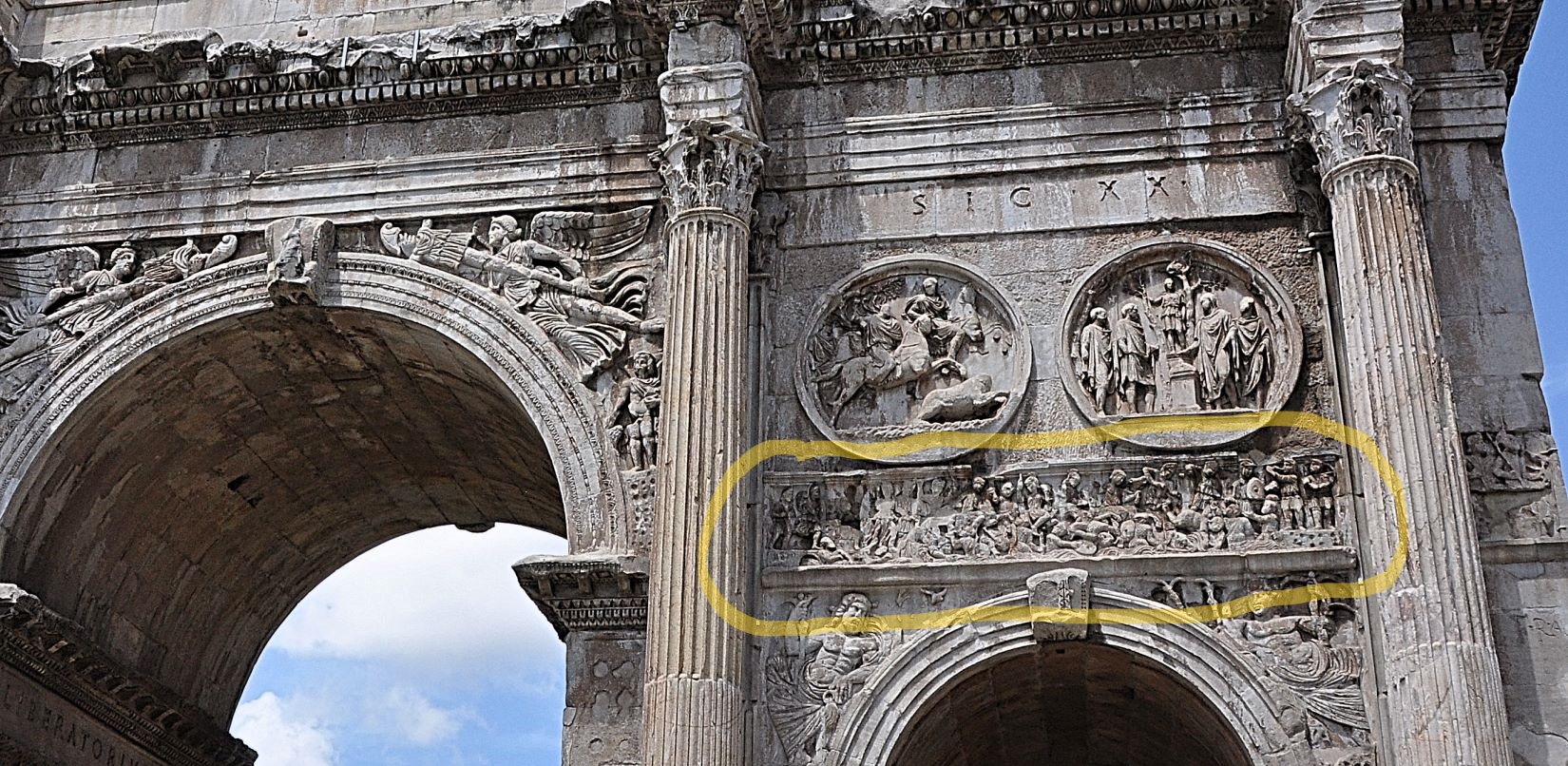
Right hand side of the Arch. Shows Battle at Milvaian Bridge in frieze above smaller arch. Photo by Leon Mauldin.

Here is a close-up of the battle as depicted on the Arch.

Highlighted area depicts the Battle at the Milvian Bridge. Photo by Leon Mauldin.

Professor Gregory Aldrete notes, “The Arch of Constantine is one of the few surviving victory arches at Rome. It marks the first time that such a monument was erected to celebrate a civtory over fellow Romans rather than foreigners.”

Click images for larger view.


Pompeii, the Odeum (Small Theater)

August 25, 2023

We are looking forward to again touring Sicily/Italy in March 2024, the Lord willing. I was recently reviewing some photos from previous trips and wanted to share a few of these. Pompeii was covered with volcanic ash by the eruption of Mount Vesuvius (August AD 79).

In this post we will look at the Odeum at Pompeii. Here is the view of Pompeii just inside the entrance (Mt. Vesuvius is in the background):

One’s initial view of Pompeii at entrance. Mt. Vesuvius is in the background. Photo ©Leon Mauldin.

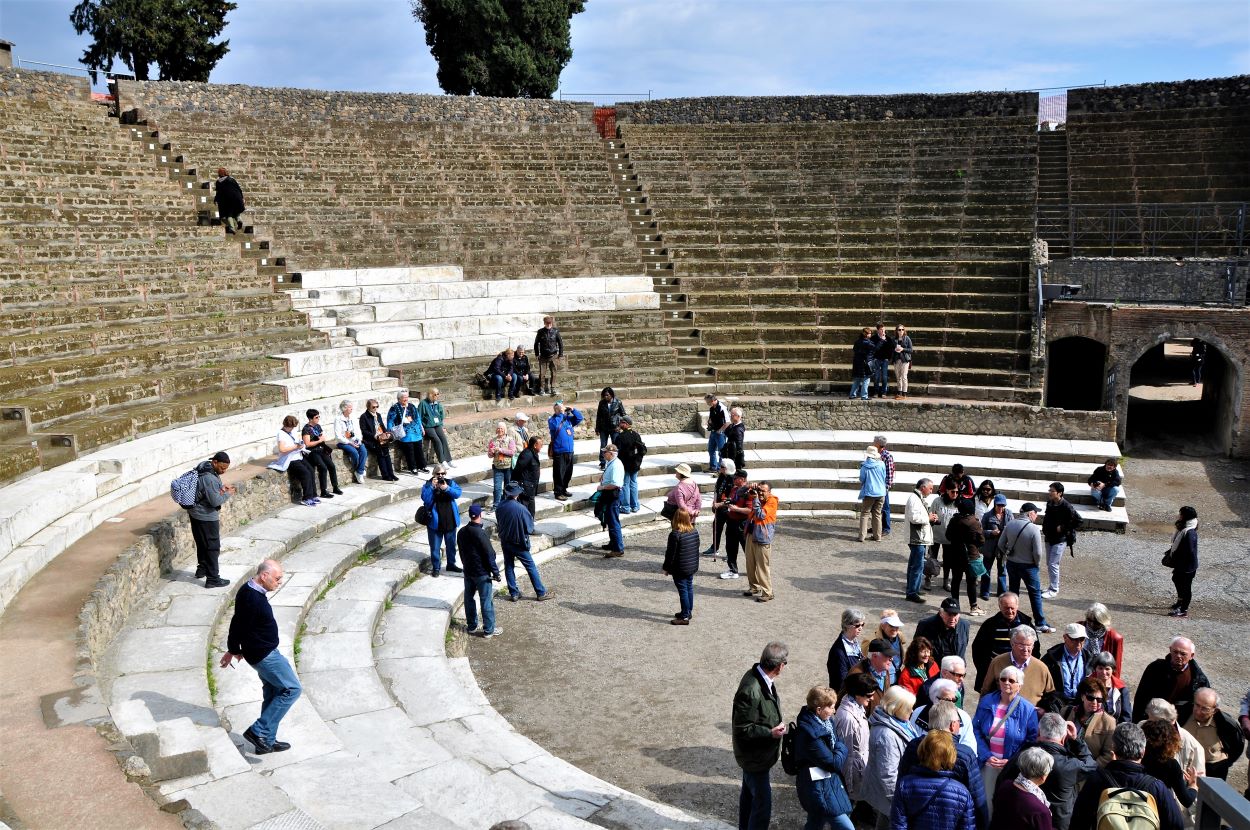
The city had two theaters, the large theater, which seated about 5,000 spectators, and the small theater, the odeon. The seating capacity of this small theater was about 1,000 people. A pyramid-shaped roof would have covered it. It would have been used for musical performances and mime.

Odeum at Pompeii. Photo ©Leon Mauldin.

Here is a photo of my group in the Odeum, March 2016.

Mauldin group photo, 2016. Photo ©Leon Mauldin.

An inscription at the site states that the duumviri C. Quintius Valgus and M. Porcius, two leading citizens of Pompeii, financed the construction of the theater. In 80 BC Pompeii became a Roman colony with the name of Colonia Cornelia Veneria Pompei.

Inscription at Odeon in Pompeii. Photo ©Leon Mauldin.

The Pantheon in Rome

July 8, 2021

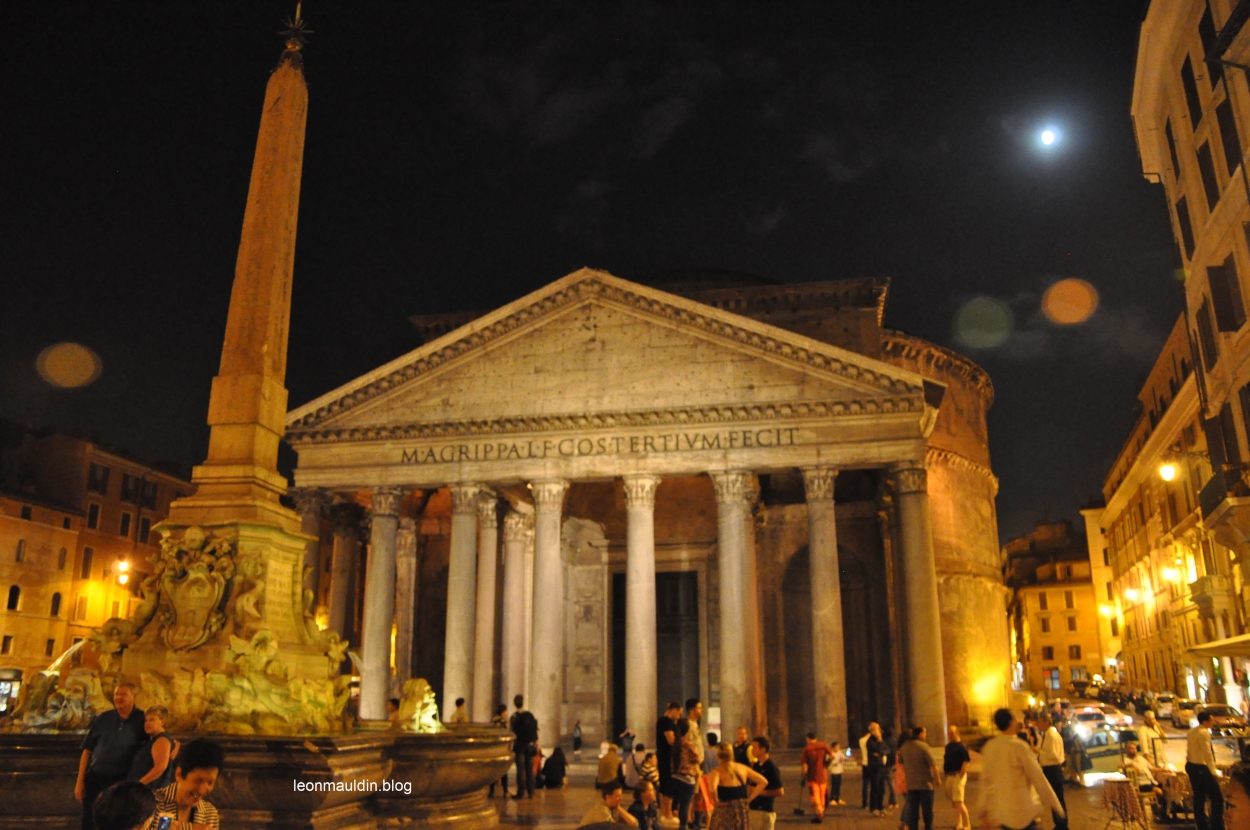
The Pantheon was built to honor all gods of Rome. It was rebuilt (having previously burnt) by Emperor Hadrian AD 126. The dome measures 142 feet high by 142 feet wide, and was the largest freestanding dome until the 20thcentury.

Pantheon in Rome by night. Photo from 2014.

Completed by the emperor Hadrian c. AD 125, the Pantheon has now stood for almost 1,890 years, one of the most magnificent architectural monuments of antiquity. Even today its domed interior space (the Rotunda) inspires a special awe, not just because of its size (the dome held the world record for a concrete span until the CNIT building in Paris in 1958) but also the quality of the light, the colour, and sound. The building owes its survival partly to the fact that it was converted into a church in AD 608 (St Mary of the Martyrs) but even more to the extraordinary strength and stability of its construction. It was the third ‘Pantheon’ on the site. The first, built by Marcus Agrippa in 27–25 BC, was destroyed in the great fire of AD 80. Replaced by Domitian, it then was struck by lightning in AD 110 and burned again. Plans for rebuilding were probably put in hand immediately by Trajan and work may have been fairly well advanced by the time he died in AD 117 but not actually finished. Hadrian (as was his practice in all the buildings he restored or rebuilt in the city, with the exception of the Temple of Deified Trajan) did not dedicate the new Pantheon in his own name but in that of the original dedicant: thus the bold inscription on the front: M. AGRIPPA L. F. COS TERTIUM FECIT (Marcus Agrippa, son of Lucius, thrice consul, made this). Faintly legible beneath is a two-line inscription in small letters which refers to renovations by Septimius Severus and Caracalla in AD 202: pantheum vetustate corruptum cum omni cultu restituerunt (with every refinement they restored the Pantheum, worn by age) but it seems that no rebuilding was involved. The structure comprises two distinct parts: the front porch and the circular drum, which share the same low plinth (1.3 m, 4½ RF high) but are architecturally in strong contrast—even conflict—with each other. The porch belongs firmly in the Classical tradition of monumental entrances, its pedimented front supported on Corinthian columns with monolithic shafts of Egyptian granite and bases and capitals of white Greek (Pentelic) marble, its exterior also once clad in white marble. The design of the Rotunda, on the other hand, although once coated in white stucco to look like a marble building on the outside, comes from the purely Roman world of concrete bath buildings and palatial halls. (Claridge, Amanda. Rome: Oxford Archaeological Guides, 226-227).


Emperor Antoninus Pius (r. A.D. 138-161)

August 27, 2019

In going through some of my photos of Athens, Greece, I came across a shot I had taken of a bust of Antoninus Pius.

Antoninus Pius. Reigned A.D. 138-161. Photo ©Leon Mauldin.

My priority in the limited writing I’ve done on Roman Emperors has been to deal with those who reigned during A.D. 1st century, i.e., those that intersect with biblical history. For example, click here (“Roman Emperors During the Gospels and Acts) and here (“Emperor Galba: the Year of Four Emperors). But here we offer at least a brief introduction to the life and reign of this 2nd century emperor, Antoninus.

Antoninus Pius was born in A.D. 86 at Lanuvium in Latium. He spent his youth at Lorium, not far from Rome. He married Annia Galeria Faustina. When Lucius Aelius Caesar, Emperor Hadrian’s (r. A.D. 117-138) adoptive son and heir died in January 138, Hadrian then adopted Antoninus, February 25. Antoninus ascended the throne upon Hadrian’s death, July 138.

Michael Grant states that Antoninus’s “deferential attitude” to the Roman senators “prompted them to confer on him the unusual title of ‘Pius’, honouring (sic) his religious and patriotic dutifulness” (The Roman Emperors, 83).
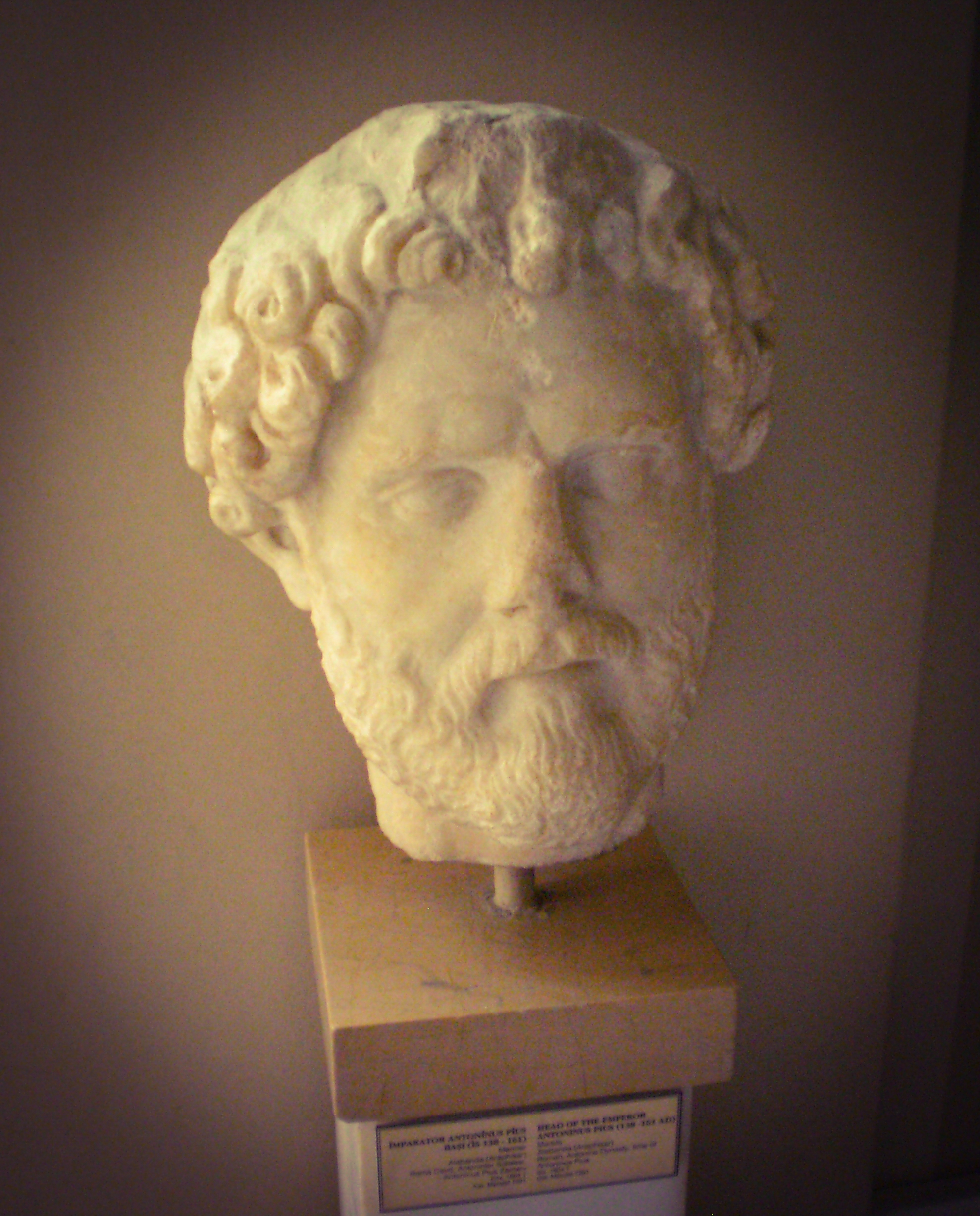
Antoninus Pius. Istanbul Archaeology Museum. Photo ©Leon Mauldin.

Regarding the land and people of Judea, Grant writes:

There Antoninus Pius soon modified, without completely abandoning, his predecessor’s [Hadrian] veto on circumcision; that is to say he allowed Jews to circumcise their sons but forbade them to admit converts to the rite, thus weakening Jewish competition with the actively proselytizing Christians. Moreover, the ban debarring Jews from entry into Jerusalem was maintained, and indeed enforced by the construction of a ring of military posts round the city (86).

However, Grant’s last statement above is contradicted by Nigel Rodgers, who stated, “Later, Antoninus Pius (reigned AD138-161) quietly revoked his predecessor’s decree and allowed any Jews, who wished to, to return to the now utterly desolate site of Jerusalem” (Roman Empire, 219).

Interestingly, as emperor, Antoninus never left Italy (Rodger, 35); “Antoninus himself never once left Italy throughout the course of his reign” (Grant.86).

At his death, his adoptive son Marcus Aurelius said, “Remember his qualities so that when your last hour comes your conscience may be as clear as his” (Grant, 88).

Gibbons lavished much praise on the period which included the reign of Antoninus:

If a man were called to fix the period in the history of the world, during which the condition of the human race was most happy and prosperous, he would, without hesitation, name that which elapsed from the death of Domitian to the accession of Commodus. The vast extent of the Roman empire was governed by absolute power, under the guidance of virtue and wisdom. The armies were restrained by the firm but gentle hand of four successive emperors, whose characters and authority commanded involuntary respect. The forms of the civil administration were carefully preserved by Nerva, Trajan, Hadrian, and the Antonines, who delighted in the image of liberty, and were pleased with considering themselves as the accountable ministers of the laws. Such princes deserved the honor of restoring the republic, had the Romans of their days been capable of enjoying a rational freedom. (Gibbon, E. (2004). The history of the decline and fall of the Roman Empire. (H. H. Milman, Ed.). Bellingham, WA: Logos Bible Software.

That kind of praise and honor somehow puts me in mind of Proverbs 21:2: “Every way of a man is right in his own eyes, But the LORD weighs the hearts.”
The “Horns of Moses”

June 14, 2018

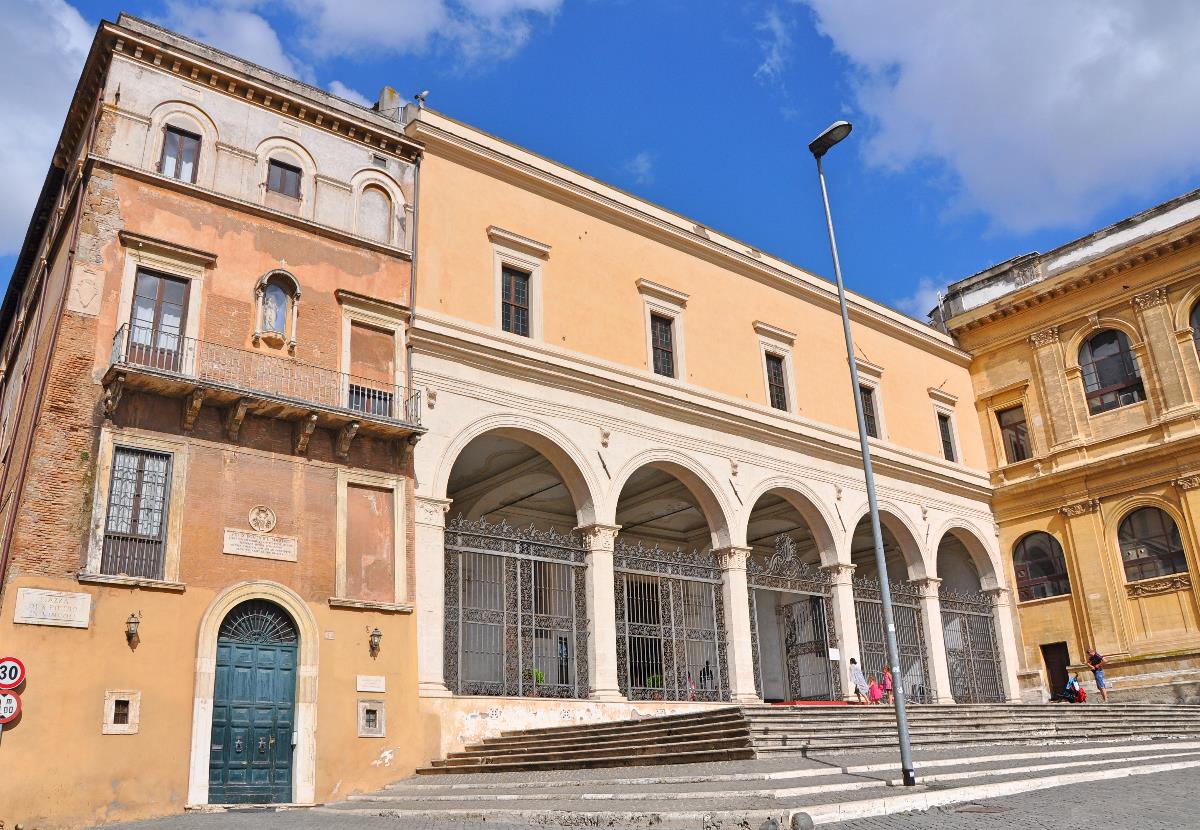
One of the innumerable attractions in Rome which we were able to see last week was that of Michelangelo’s Moses, housed (among other artistic works/artifacts) in the Church of San Pietro in Vincoli. The statue of Moses was sculpted by Italian High Renaissance artist Michelangelo Buonarroti, who created this work in the years 1513-1515. This sculpture was originally commissioned in 1505 by Pope Julius II for his tomb.

Michelangelo’s Moses, in Rome. Photo ©Leon Mauldin.

Moses is here depicted as seated, holding the two tablets of stone. Some suggest the intensity portrayed is meant to represent his holy anger when he cast down the stones upon being confronted with Israel’s idolatry.

But to the point of this post, Moses is seen here with two horns on his head. This is based on a rendering of Exodus 34:29 in the Vulgate, the Latin translation of the Bible in use during Michelangelo’s time. The English Standard Version renders the text, which speaks of Moses coming down from Mt. Sinai after talking with God, “When Moses came down from Mount Sinai, with the two tablets of the testimony in his hand as he came down from the mountain, Moses did not know that the skin of his face shone because he had been talking with God.” The Latin Vulgate renders the Hebrew word qaran, “to shine” as “horned.” Hence the horns on Michelangelo’s Moses.

The NET Bible contains this translator note:

The word qaran is derived from the noun qeren in the sense of a “ray of light” (see Hab. 3:4). Something of the divine glory remained with Moses. The Greek translation of Aquila and the Latin Vulgate convey the idea that he had horns, the primary meaning of the word from which this word is derived. Some have tried to defend this, saying that the glory appeared like horns or that Moses covered his face with a mask adorned with horns. But in the text the subject of the verb is the skin of Moses’ face.

The statue stands 8 feet, 4 inches and is made of solid marble.

Church of San Pietro in Vincoli, Rome. Photo ©Leon Mauldin.

Click images for larger view.


Bologna’s Sea-god Neptune, and More

June 9, 2018

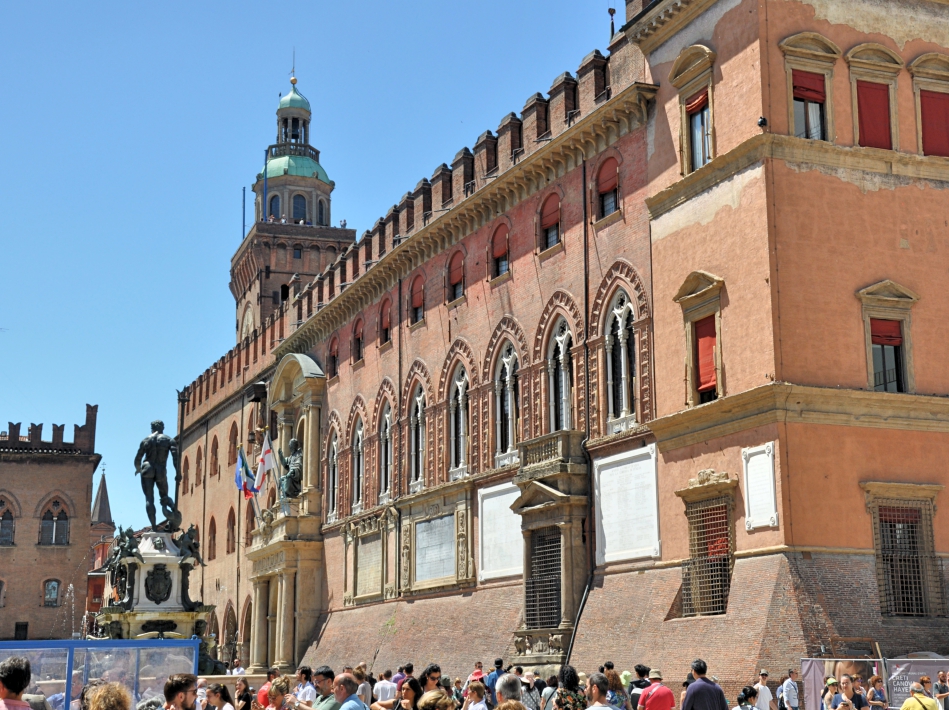
As we continued our travels in Italy, we left Florence this morning and made a lunch stop at Bologna where we saw a statue of the Roman Sea-god Neptune at the square.

Portion of city square at Bologna, Italy. Sea-god Neptune is seen at far left center. Photo by Leon Mauldin.

As we traveled north we crossed the Po River. The terrain had changed as we left the hills and saw flat, very fertile, farmland.

Po River. Photo by Leon Mauldin.

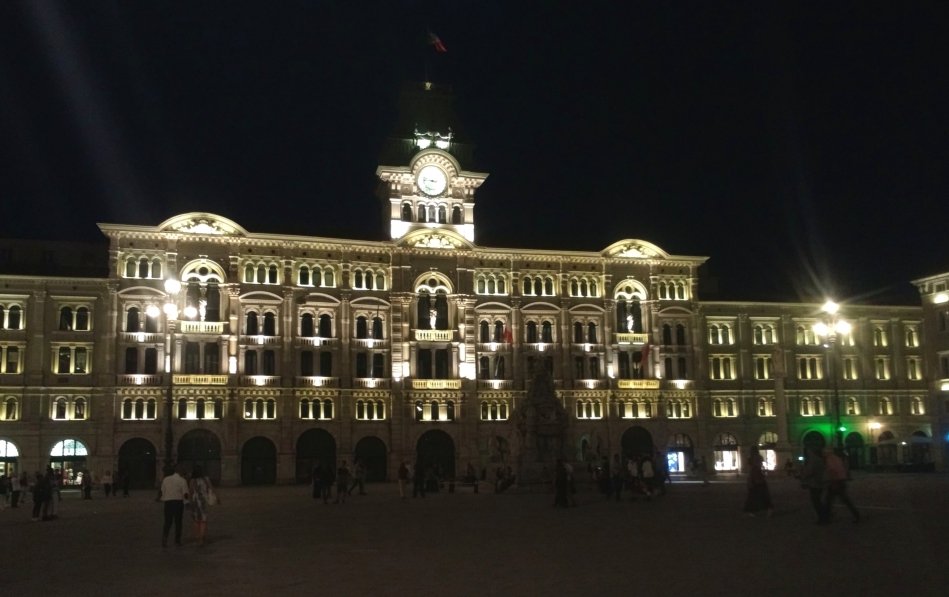
We reached our destiny of Trieste by late afternoon. Tomorrow our group is meeting with a congregation made up of Christians, many of whom have ties and connections with the folks on our tour. Gianni Berdine is the local evangelist here in Trieste. Several of us went for a walk after dinner.

Trieste Square. Photo by Leon Mauldin.

Trieste is located in the extreme northwest of Italy, on the Adriatic Sea, and borders Slovenia. This is one of the great Piazzas of Italy.


St. Paul Outside the Walls

June 5, 2018

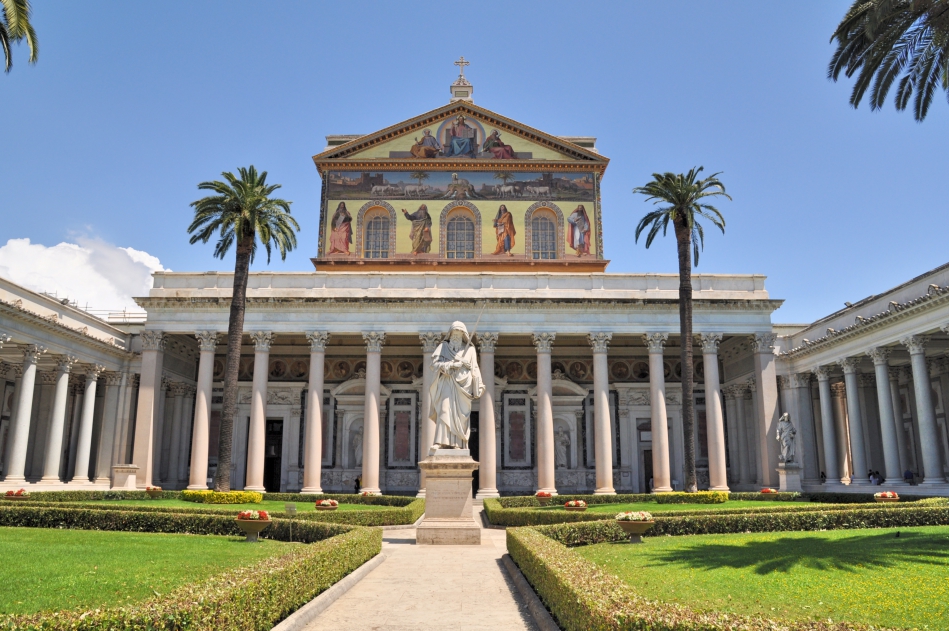
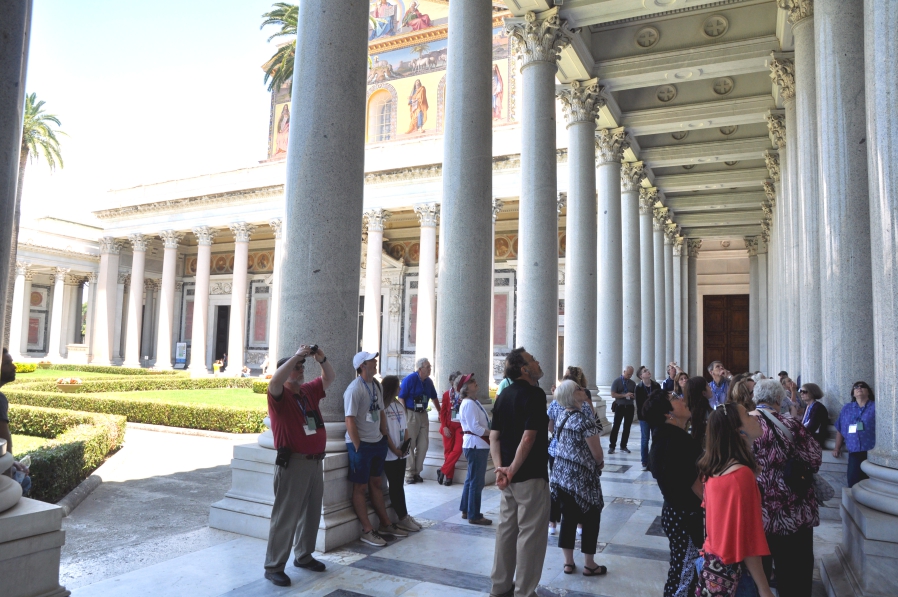
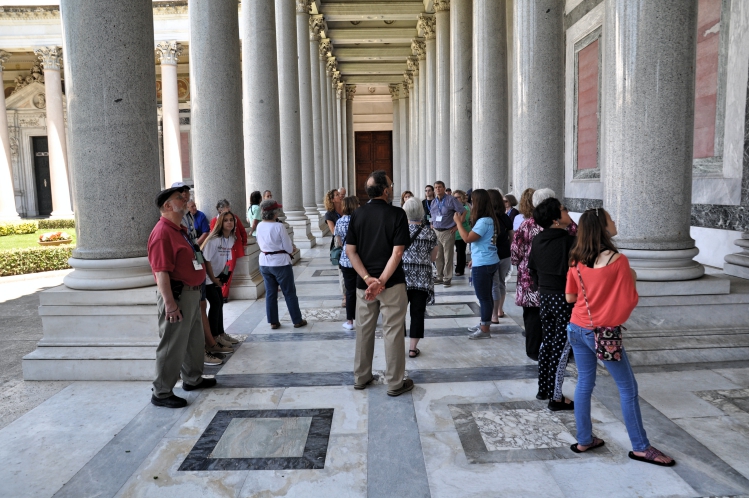
My group arrived safely Tuesday morning in Rome. We visited the Papal Basilica of St. Paul outside the Walls, as well as other stops, including the catacombs, as time permitted before dinner. This building was constructed to honor the martyrdom of Paul.

The facade at the quadriportico at the Basilica of st. Paul outside the Walls. Photo by Leon Mauldin.

As a result of the Edict of Milan in the year 313 AD, the official persecution of Christians cease. The Emperor Constantine had a basilica built over the tomb venerated as that of the Apostle Paul.

Group shot at the basilica. Photo by Leon Mauldin.

Group shot at colonnade at basilica. Photo by Leon Mauldin.

All of our group is well. More to come!