Mikveh at Magdala

October 24, 2013

We’re glad to be back up and running now (our blog, that is).

Yesterday we arrived at ATL on time on our return from Israel. This trip was biblically educational for all: helpful for first-time travelers as well as those returning. It is a fact that you get a lot more out of that 2nd or 3rd trip to Israel; that first visit tends to be overwhelming, there’s so much to take in! I continue to learn on each trip.

Last week I posted on the discovery of the 1st century synagogue at Magdala. Of interest there was the discovery of two mikva’ot (plural of mikveh). A mikveh was used by the Jews for ritual purification (not for bathing; they would bathe first).
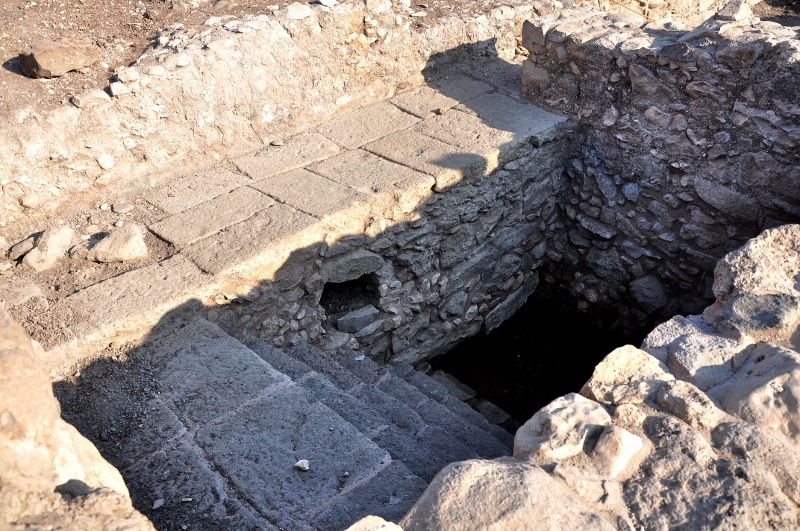
A mikveh at Magdala. Two mikva'ot were found at the site. Photo by Leon Mauldin.

A mikveh at Magdala. Two mikva’ot were found at the site. Photo by Leon Mauldin.

Archaeologist Ronny Reich, in BAR in an article discussing mikva’ot at Sepphoris says:

. . .we often find mikva’ot in pairs, side by side. We must remember that where the mikveh was not served by a continuously flowing spring (as in the vast majority of cases), the pure water had to last from the end of one rainy season, in around March, until the beginning of the next rainy season, about October. If one of a pair of mikva’ot no longer had enough pure water, the other could be used. What’s more, the waters of a pure mikveh could be used to purify the water in the other. Rabbinic literature describes how a moveable pipe or assemblage of pipes could be used for this purpose (Tosefta mikva’ot, 5.5). Pairs of mikva’ot are frequently found in Jerusalem. At Sepphoris I saw five or six pairs or groups that can easily be identified: numbers 4, 5 and 6; 7 and 9; 14 and 15; 17 and 18; 19 and 20; 21 and 22 on the site map (28:02 Mar/Apr 2002).

The view from Magdala is beautiful.
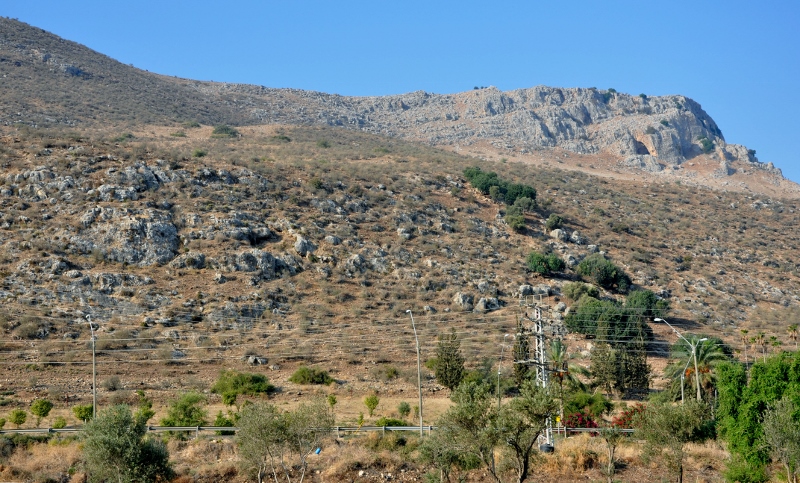
View from Magdala, looking NW. Photo by Leon Mauldin

View from Magdala, looking NW. Photo by Leon Mauldin.

Click on images for larger view.


Traveling in Israel

October 19, 2013

Yesterday we visited Nazareth. Everyone enjoyed the Nazareth Village, which is a realistic recreation of life in the 1st century. Then on to Beth Shean, Jezreel, and then down the Jordan Valley to Jerusalem. We had planned to go through the hill country of Samaria, but found the gate had closed today at 2:00 PM (due to holiday). Also the Spring of Harod, where Gideon’s army was divinely trimmed down to 300 men to face 135,000 Midianites, was closed. We also had some rain, but still it was a good day. Then we made our way to Jerusalem.

Today we saw the Western Wall, which was very busy due to the Sabbath, then we went south. We visited Qumran, where the Dead Sea scrolls were discovered. Then Masada, the Dead Sea at Engdei, then the Jordan River and finally Jericho before returning to Jerusalem.

Since last night I’ve been unable to upload photos. Hopefully I can resolve this soon!


Synagogue at Magdala

October 17, 2013

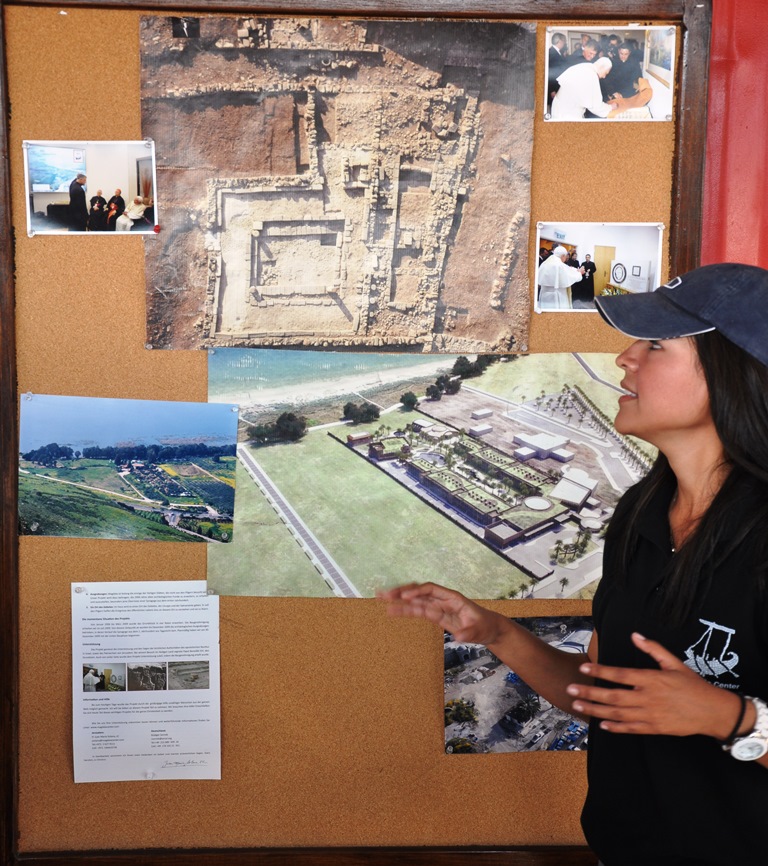
There are numerous ongoing excavations in Israel. We were excited to begin our day today with a stop at Magdala. A volunteer told our group about some of the discoveries there.

Volunteer at Magdala informing our group about discoveries there.

Volunteer at Magdala. Photo by Leon Mauldin

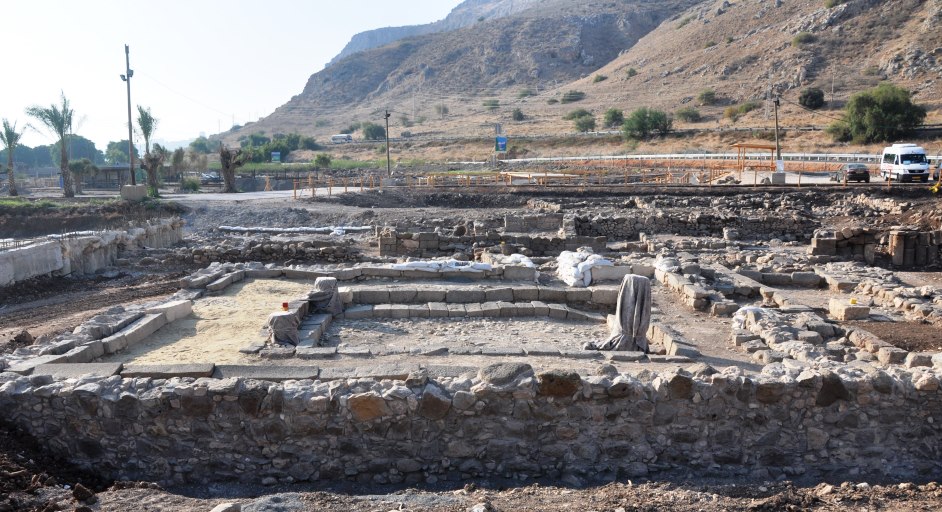
I had been to Magdala twice before, but today was the first time I was able to walk around the site and take photos. There were several matters of interest there, but I especially wanted to see the synagogue, as the remains date back to the first century!

1st century Synagogue at Magdala. Photo by Leon Mauldin.

1st century Synagogue at Magdala. Photo by Leon Mauldin.

Magdala was the home town of Mary Magdalene. The designation means “Mary of Magdala.” This was a fishing village in the time of Jesus. Fish were salted here and exported to Rome.

We had a good day, packed full with good photo opportunities. Everyone is well so far and for that we are thankful.

Click on images for larger view.


Ahab’s Water Tunnel at Megiddo

October 16, 2013

Today our group enjoyed a profitable start at Caesarea, located on the Mediterranean coast, capital of Judea during New Testament times. There is so much to see there. Leaving there we ascended Mt. Carmel, one of my personal favorites because so many biblical locations can be viewed from there. There was considerable haze in the air, so that did not lend itself to good photos.

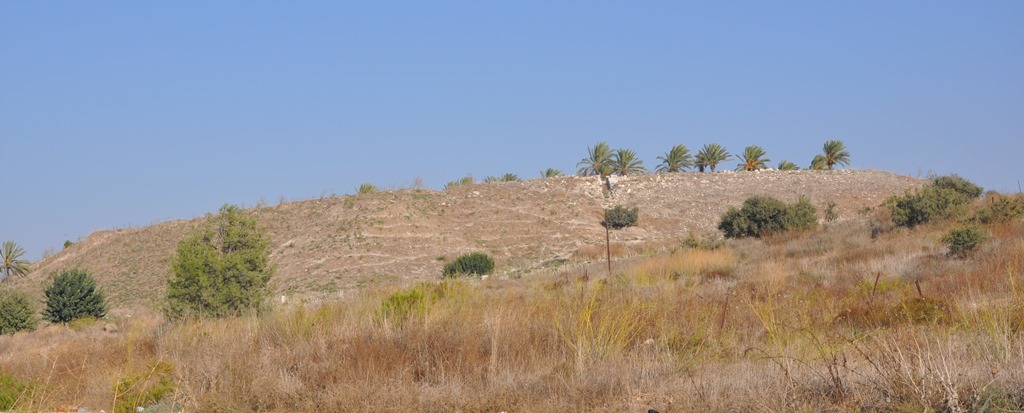
We then proceeded to Megiddo, a very strategic city formerly occupied by the Canaanites (among others) located on the international trade route which connected Egypt to Mesopotamia. Solomon made this one of his fortified cities.

Tel Megiddo. Photo by Leon Mauldin.

Tel Megiddo. Photo by Leon Mauldin.

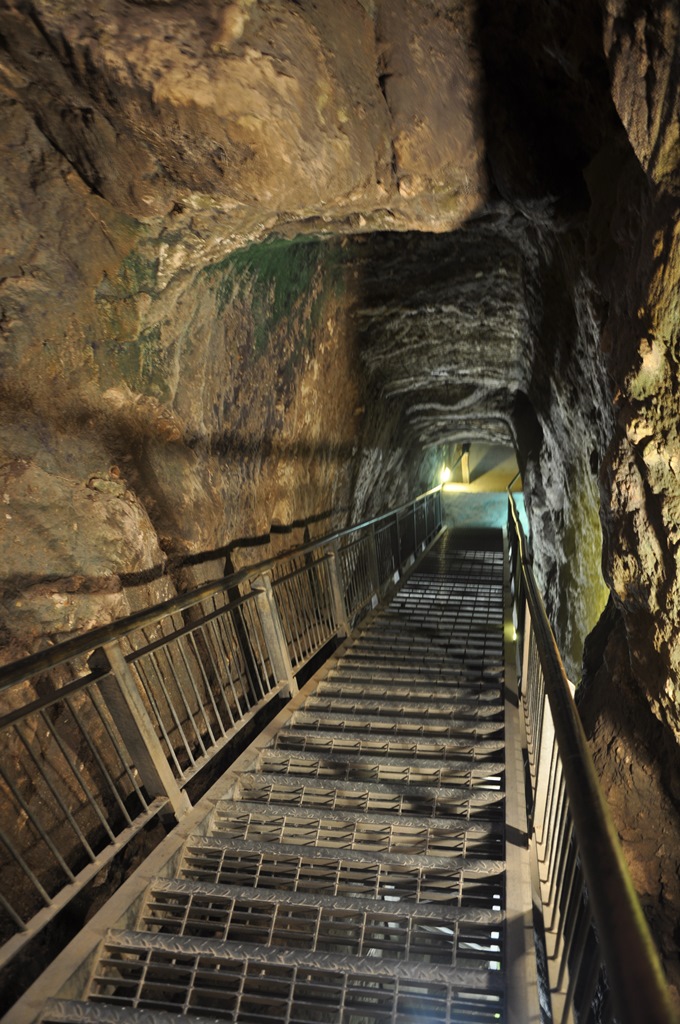
Megiddo was also an important site during the Divided Kingdom period in the days of Ahab, king of Israel. Ahab accomplished an amazing engineering feat of tunneling through solid rock down to the water supply. Our group walked through the tunnel today.

Ahab's water tunnel at Megiddo. Photo by Leon Mauldin.

Ahab’s water tunnel at Megiddo. Photo by Leon Mauldin.

We plan to post more tomorrow. Click images for larger view.


In Netanya, Israel

October 15, 2013

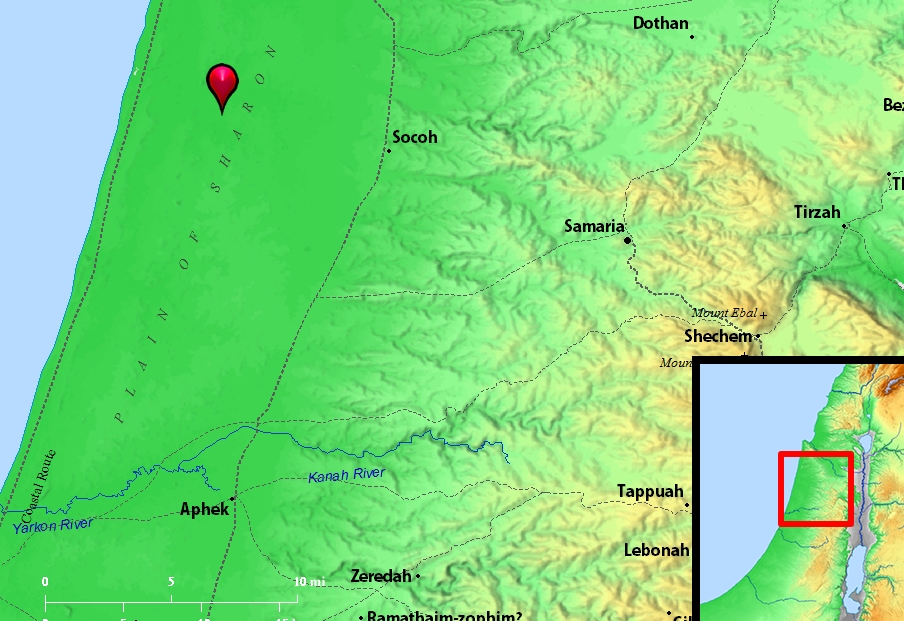
Though Netanya is not a biblical city, it is located on the Mediterranean Coast within the biblical Plain of Sharon. As our bus was transporting our group to Netanya, I noticed a sign which said Ha Sharon, (the Sharon). Texts mentioning Sharon include:

Song of Solomon 2:1 I am the rose of Sharon, And the lily of the valleys.

Acts 9:35 So all who dwelt at Lydda and Sharon saw him [Aeneas, raised from the dead] and turned to the Lord.

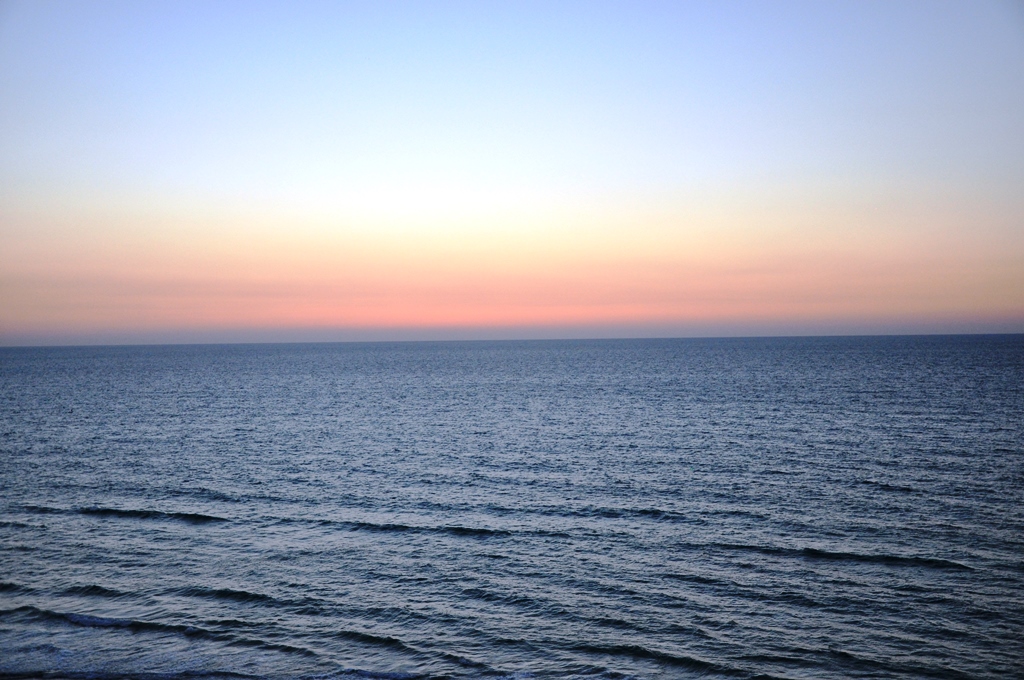
I took this photo just after sunset 2+ hrs. ago.

Natana, located within the biblical Plain of Sharon. Photo by Leon Mauldin.

Netanya, within the biblical Plain of Sharon, facing west. Photo by Leon Mauldin.

Map shows the Plain of Sharon:

Plain of Sharon. BibleAtlas.org

Plain of Sharon. BibleAtlas.org

Wikipedia has this info re Netanya, and its relation to Sharon:

Netanya (Hebrew: נְתַנְיָה, lit., “gift of God”) is a city in the Northern Central District of Israel, and is the capital of the surrounding Sharon plain. It is located 30 km (18.64 mi) north of Tel Aviv, and 56 km (34.80 mi) south of Haifa, between the ‘Poleg’ stream and Wingate Institute in the south and the ‘Avichail’ stream in the north. Netanya was named in honor of Nathan Straus, a prominent Jewish American merchant and philanthropist in the early twentieth century.

Click on images for larger view.


You May Eat the Wild Goat

September 27, 2013

Under Mosaic legislation, Israel was given strict dietary guidelines. This was for a stated purpose: “For you are a people holy to the LORD your God, and the LORD has chosen you to be a people for his treasured possession, out of all the peoples who are on the face of the earth” (Deut. 14:2, ESV). The dietary restrictions were but one means that YHWH used to mold His people into a holy nation and teach them that they were uniquely His.

Deut. 14:4 lists three domestic animals which could be eaten: “These are the animals you may eat: the ox, the sheep, the goat,” (This follows v. 3 which states, “You shall not eat any abomination.”)

Then v. 5 lists seven kinds of wild animals: “the deer, the gazelle, the roebuck, the wild goat, the ibex, the antelope, and the mountain sheep.” “Some of these animals cannot be identified with certainty.” [1] One thing that obviously makes the text challenging is that three of the seven words are hapax legomena (words that appear only once in a document). The word usually translated “wild goat” (ya’el) is a different word than the one used here (aqqo).

ya’el is found in Psalm 104:18 “The high mountains are for the wild goats. . .”

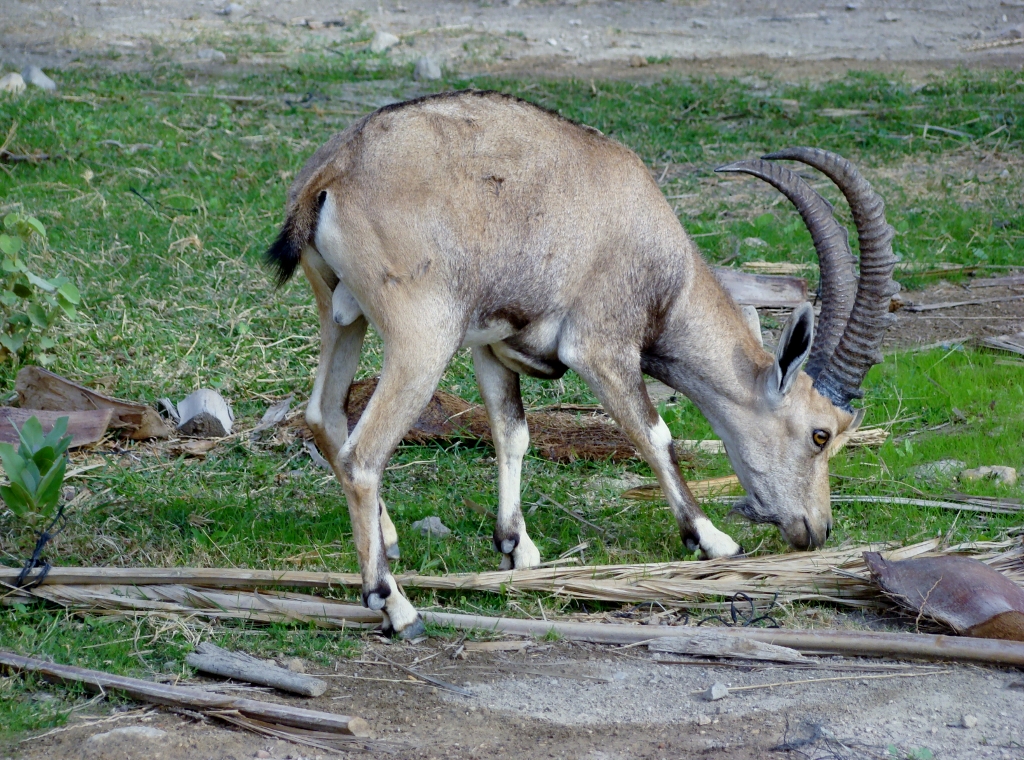
Another interesting text: “When Saul returned from following the Philistines, he was told, ‘Behold, David is in the wilderness of Engedi.’ Then Saul took three thousand chosen men out of all Israel and went to seek David and his men in front of the Wildgoats’ Rocks” (1 Sam. 24:1-2, ESV). Note that the site of Engedi is the location of the Rocks of the Wild Goats. The word Engedi means “spring of a kid,” and is located on the western shore of the Dead Sea. The biblical “wild goat” is still frequently seen there today and is most often identified with the ibex.

Goat at Engedi. Photo by Leon Mauldin.

Goat/Ibex at Engedi. Photo by Leon Mauldin.

See more on the wild goat in Ferrell Jenkin’s posts here and here.

Click on image for larger view.


[1] Christensen, D. L. (2001). Deuteronomy 1–21:9 (Vol. 6A, p. 291). Dallas: Word, Incorporated.


Sarcophagus at Caesarea Maritima

September 23, 2013

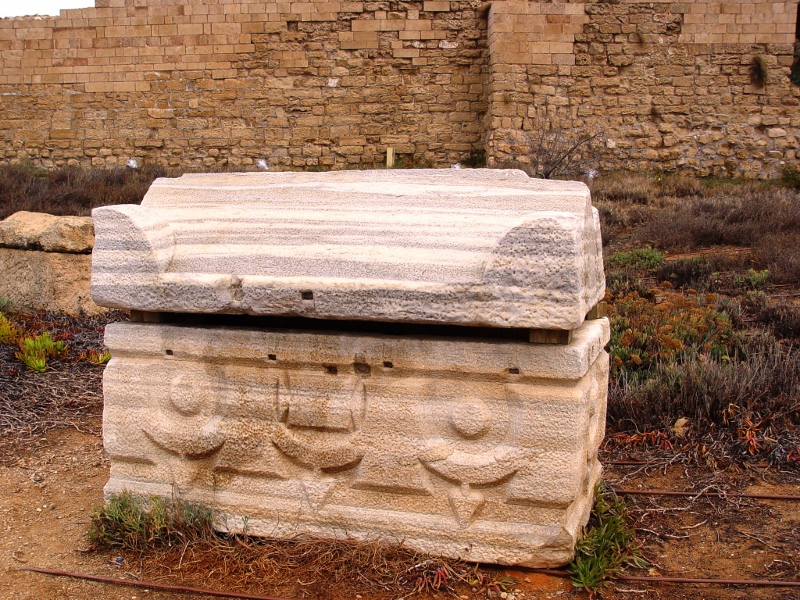
Among the remains near the theater at Caesarea Maritima is a sarcophagus, a burial box. The word sarcophagus means flesh eater. This is due to the fact that a common practice was to remove the bones from the sarcophagus once the flesh had decomposed, and place the bones in an ossuary, a depository for the bones. The sarcophagus would then be reused as needed by other deceased family members.

Sarcophagus at Caesarea Maritima. Photo by Leon Mauldin.

Sarcophagus at Caesarea Maritima. Photo by Leon Mauldin.

The information sign informs us:

Stone coffins were made out of two huge blocks – a cavity in which the corpse was placed and a double-slopped roof lid on which a Greek inscription was engraved: “the grave of Prokopios the Deacon.” The coffins were decorated with flora, hunting mythological scenes or with geometric shapes for more modest coffins.

Most sarcophagi [plural of sarcophagus] discovered in Caesarea belonged to the Roman-Byzantine cemetery which is still to be fully excavated.

Caesarea was the Roman capital of Judea during the ministry of Jesus.

Click image for larger view.


Physical Features of the Land of Israel

September 19, 2013

Fundamental to an understanding of the land of Israel is the feature of four longitudinal zones that define the land.

Features of the Land. Longitudinal Zones. Map by Scott Richardson.

Features of the Land. Four Longitudinal Zones. Map by Scott Richardson.

The land is naturally divided into four narrow zones running north and south.

1. Coastal Plain, from Philistia to Phoenicia. The coastal plain was the highway of commerce and conquest for centuries.

2. Central Hill Country. Rugged terrain, running from Judea though Samaria and into upper Galilee. The only major break in the mountain range is the Plain of Esdraelon also called the Valley of Jezreel. To the SW is the Shephelah,  a belt of gently rolling hills between 500 and 1,000 feet in height. Many of the OT events transpired here.

3. Jordan Valley. Follows the fault  that extends from Lebanon south to the earth’s surface, south to the dry Arabah Valley, the Gulf of Aqabah, and, eventually, the string of lakes on the African continent.

4. Transjordan Plateau. The zone east of the Jordan, where Reuben, Gad and the half-tribe of Manasseh settled.  The setting of Decapolis and Perea in NT times.

These factors helped determine where people lived, what crops could be grown where, and what land was good for cattle, etc. No place on earth has as much variety as the Bible land.


Mount Gerizim, the Mount of Blessing

August 24, 2013

Our previous couple of posts pertain to mounts Ebal and Gerizim, the setting of the curses and blessings of the law’s being read and accepted by all Israel as the basis of their receiving the land promise (Deut. 11:26-32; Deut. 27-28; Josh. 8:30-35).

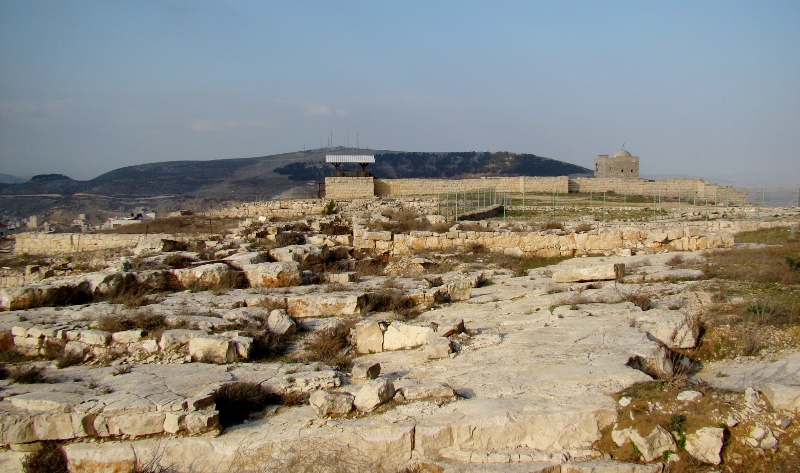
At the top of Gerizim there are archaeological ruins that date to the Persian and Hellenistic periods, as well as a Byzantine church.

Mount Gerizim, view at top. Photo by Leon Mauldin.

Mount Gerizim, view at top. Photo by Leon Mauldin.

In distance at right you are seeing the tomb of a 12th century sheikh. The mountain in background is Mt. Ebal, the mount of cursing. Out of sight below in the valley between lies Shechem.

In later times Mt. Gerizim would become sacred to the Samaritans, and still is today. In the intertestamental period there was a temple here, but it was destroyed by John Hyrcanus (Maccabean ruler) in 111-110 BC.

When Jesus conversed with the woman at the well, she said, “Our fathers worshiped on this mountain” (John 4:20). She was speaking of Mount Gerizim, which was very much in sight of Jacob’s well, where they were talking.

Click image for larger view.

Todd Bolen has an interesting post on the acoustics of mounts Ebal and Gerizim here. See also Ferrell Jenkin’s post here.

Hopefully this info and these photos will help you visualize the events of Joshua 8, at the time of the conquest under Joshua:

33 All the people, rulers, leaders, and judges were standing on either side of the ark, in front of the Levitical priests who carried the ark of the covenant of the LORD. Both resident foreigners and native Israelites were there. Half the people stood in front of Mount Gerizim and the other half in front of Mount Ebal, as Moses the LORD’s servant had previously instructed to them to do for the formal blessing ceremony. 34 Then Joshua read aloud all the words of the law, including the blessings and the curses, just as they are written in the law scroll. 35 Joshua read aloud every commandment Moses had given before the whole assembly of Israel, including the women, children, and resident foreigners who lived among them (Josh. 8:33-35, NET). 


View of Mt. Ebal and Mt. Gerizim

August 15, 2013

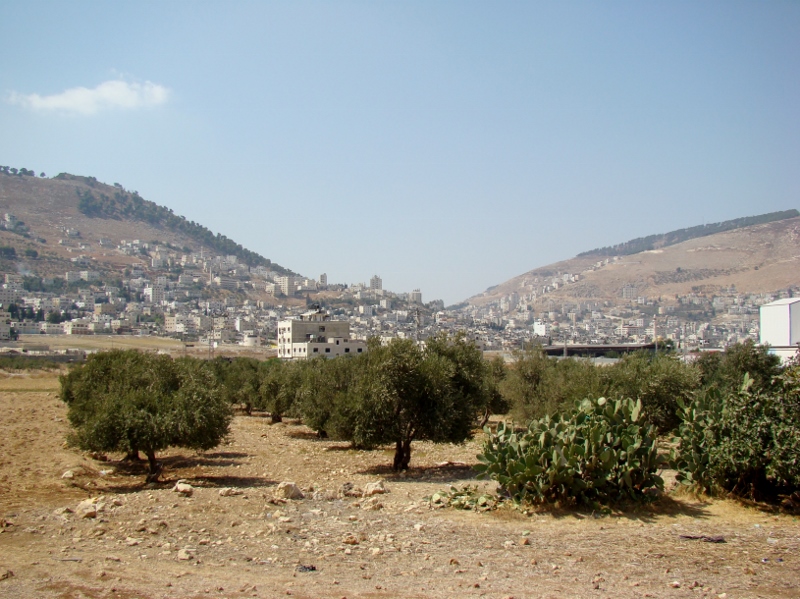
In our last post we referenced some biblical texts regarding Mt. Ebal, the “mount of cursing.” Our photo today shows the view from the east of Mt. Ebal (right) and Mt. Gerizim (left). Shechem is located between the two.

Mt. Ebal (right) and Mt. Gerizim (left). Shechem is at center. Photo by Leon Mauldin.

Mt. Ebal (right) and Mt. Gerizim (left). Shechem is at center. Photo by Leon Mauldin.

When Joshua led Israel to Shechem (Josh. 8) they would have seen this view. Likewise this would have been the scene when Jesus went through Samaria en route to Galilee when he stopped here at Jacob’s well, and had that fascinating conversation with the woman who came to draw water. She left there knowing the Source of the Water of Life (John 4).

We have previously posted on Shechem here, here and here.

Click image for larger view.