“I Am the Door of the Sheep” (John 10:7)

May 17, 2013

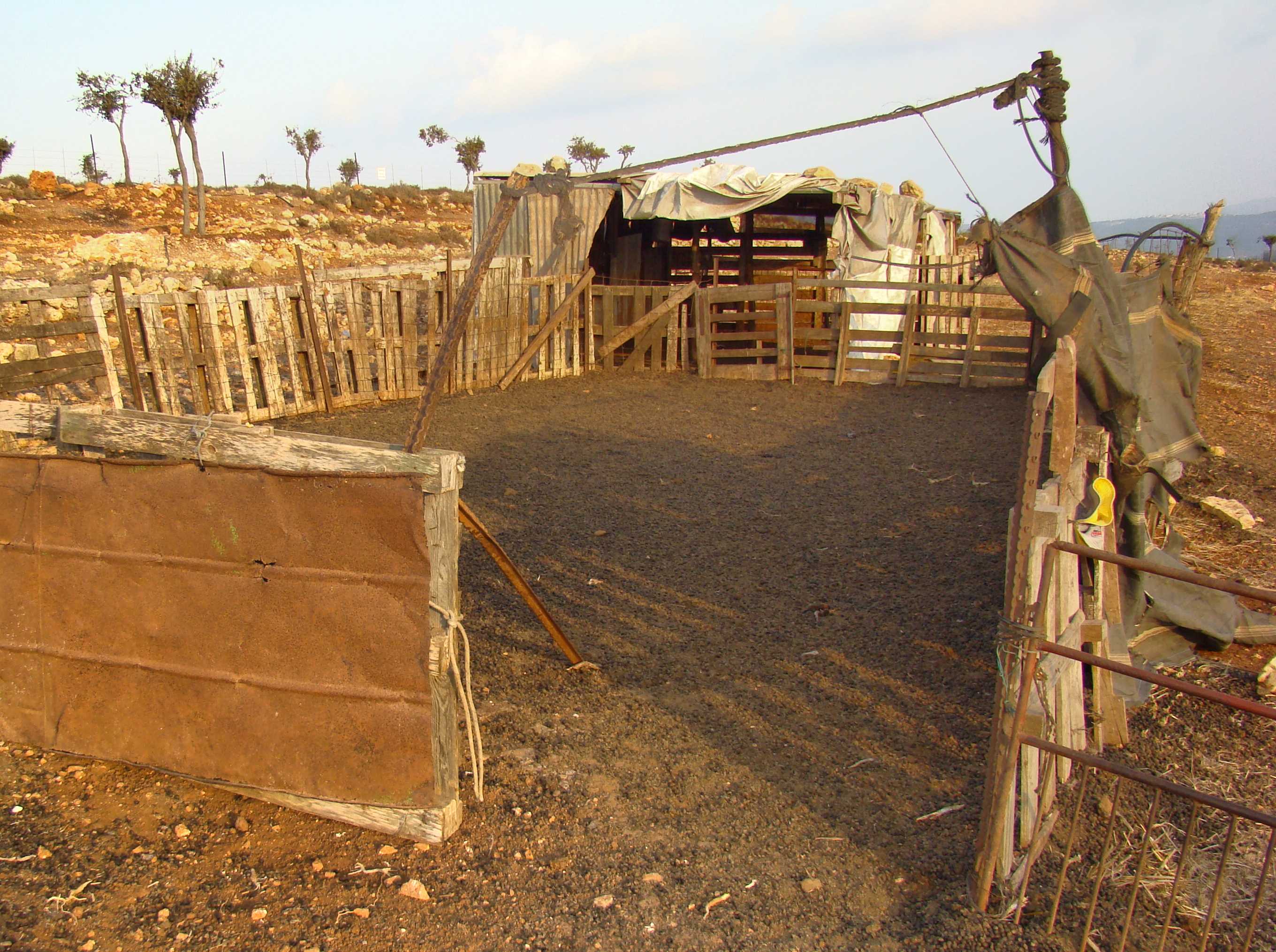
One of Jesus “I Am” statements in the gospel of John is found in John 10:7: “Then Jesus said to them again, ‘Most assuredly, I say to you, I am the door of the sheep'” and again in v.9: “I am the door. If anyone enters by Me, he will be saved, and will go in and out and find pasture.” Because of verses such as these I am intrigued to see sheepfolds in biblical lands.
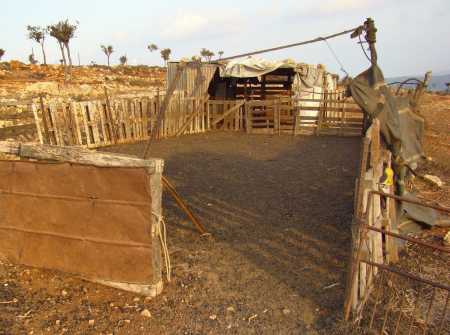
Sheepfold near Yodfat in Israel. Photo by Leon Mauldin.

Sheepfold near Yodfat in Israel. Photo by Leon Mauldin.

Of course a door provides access. Inside is safety. Jesus is our access to the Father (John 14:6). In Him are all spiritual blessings (Eph. 1:3). The reference to going “in and out” is suggestive of going out for pasturage, and at the end of the day going in for rest. All of our spiritual needs are met in Christ.

With this in mind note John 10:1-9:

‘Most assuredly, I say to you, he who does not enter the sheepfold by the door, but climbs up some other way, the same is a thief and a robber. 2 But he who enters by the door is the shepherd of the sheep. 3 To him the doorkeeper opens, and the sheep hear his voice; and he calls his own sheep by name and leads them out. 4 And when he brings out his own sheep, he goes before them; and the sheep follow him, for they know his voice. 5 Yet they will by no means follow a stranger, but will flee from him, for they do not know the voice of strangers.’ 6 Jesus used this illustration, but they did not understand the things which He spoke to them. 7 Then Jesus said to them again, ‘Most assuredly, I say to you, I am the door of the sheep. 8 All who ever came before Me are thieves and robbers, but the sheep did not hear them. 9 I am the door. If anyone enters by Me, he will be saved, and will go in and out and find pasture. 10 The thief does not come except to steal, and to kill, and to destroy. I have come that they may have life, and that they may have it more abundantly’ (NKJV).

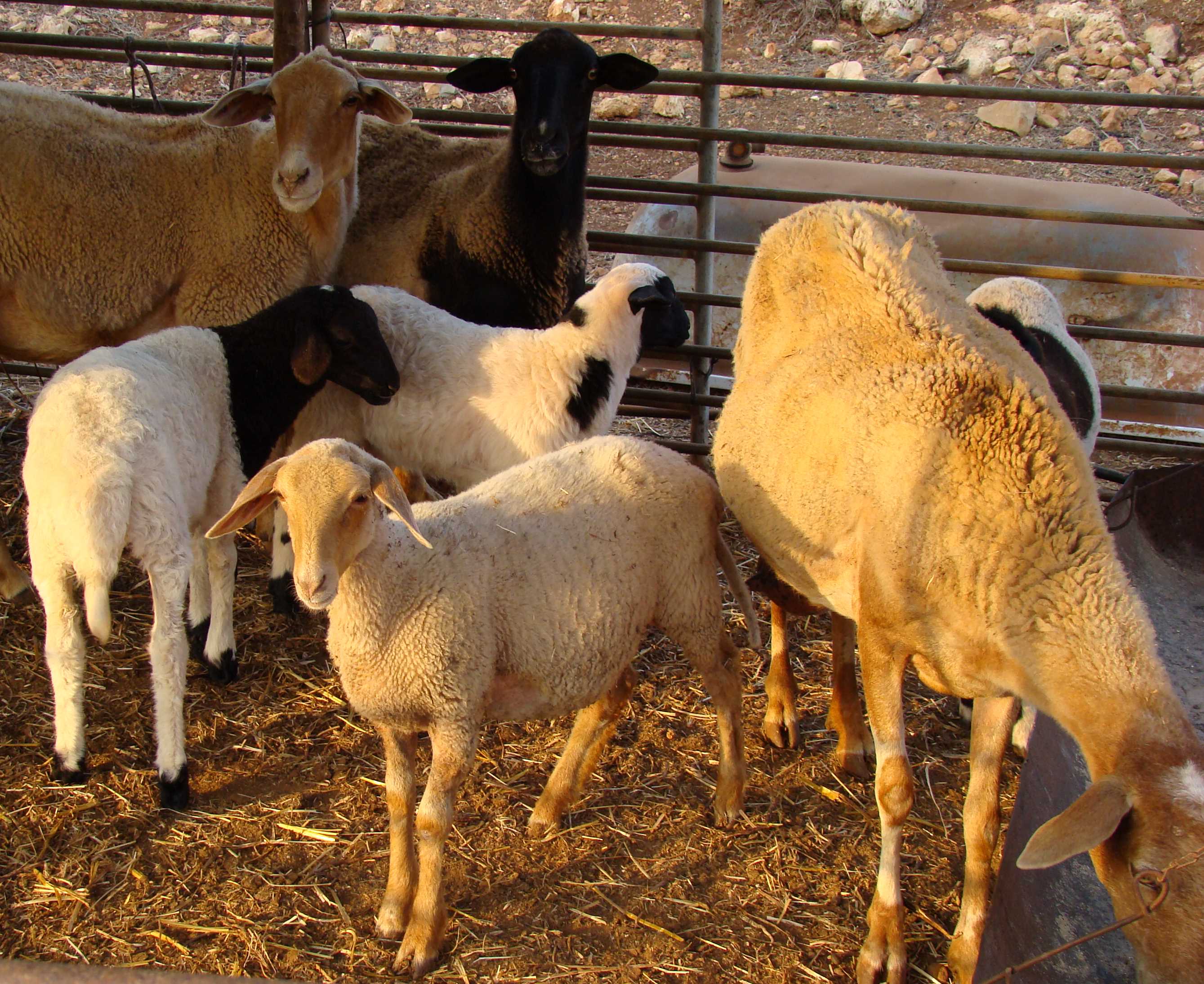
Sheep within the sheepfold. Photo by Leon Mauldin.

Sheep within the sheepfold. Photo by Leon Mauldin.

These sheep within the sheepfold were photographed near Yodfat in Galilee. From this site one can see Cana in the distance.

Wikipedia has this info regarding 1st century Yodfat, a city referenced by the Jewish historian Josephus:

By the first century CE Yodfat had expanded to encompass an area of 50 dunams (13 acres). Its siege and subsequent destruction in 67 CE are described in Josephus Flavius’ The Wars of the Jews, his chronicle of the Great Jewish Revolt against the Romans. Led by future emperor Vespasian, three Roman legions — Legio V Macedonica, X Fretensis, and XV Apollinaris — besieged Yodfat, meeting strong Jewish resistance. After 47 days the city fell by treachery, and Josephus describes the death of 40,000 Jews and the enslavement of 1,200 women and children. Yodfat was razed and burnt on the first of the Hebrew month of Tammuz. While a few dozen remaining fighters committed suicide, Josephus managed to survive this pact and was captured by the Romans.

Click on images for higher resolution.

Pool of Bethesda

May 14, 2013

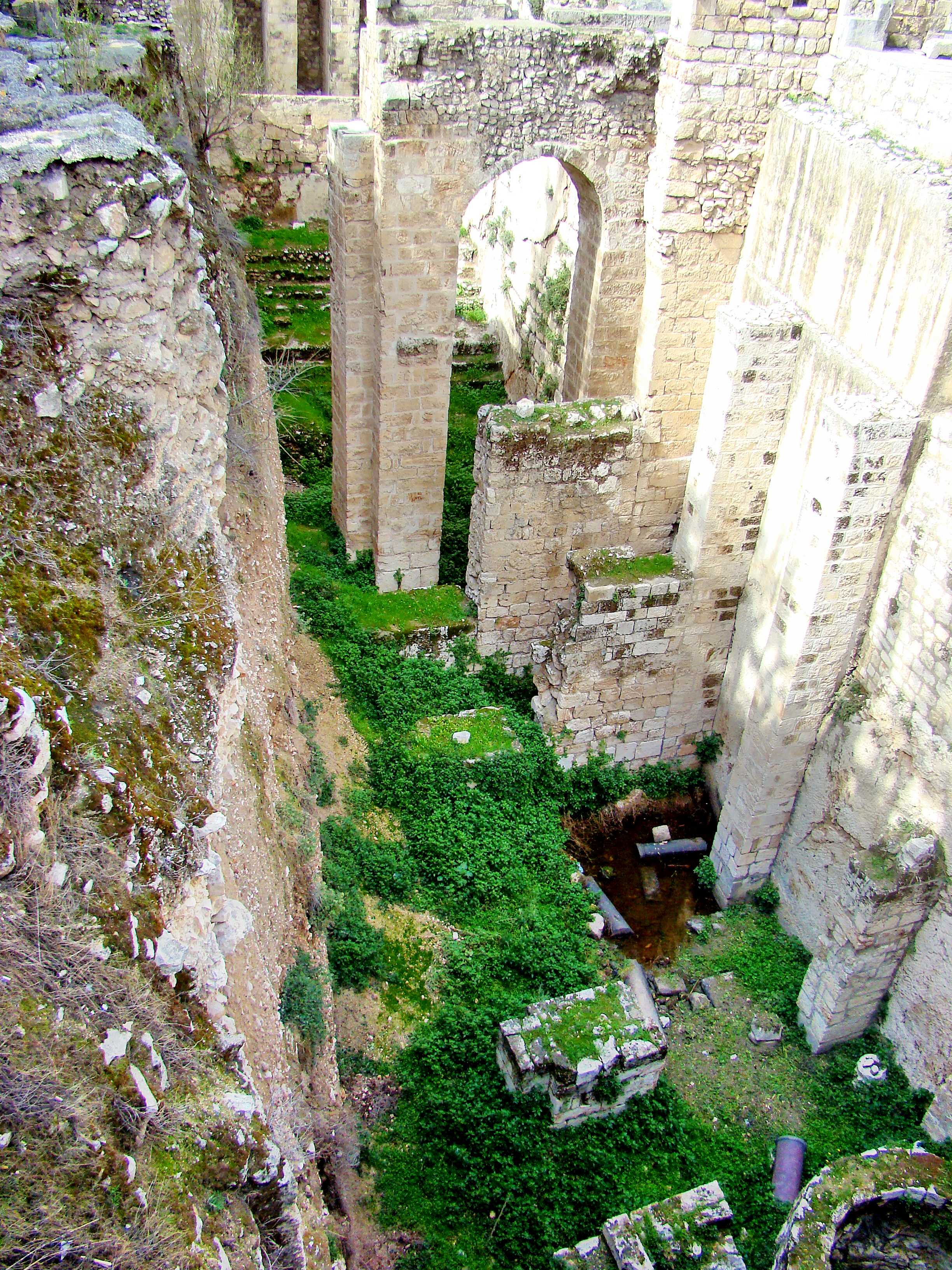
As follow-up on yesterday’s post I wanted to include a photo of the pool of Bethesda. There were actually two adjacent pools. Our photo shows excavations of the southern pool.

Southern Pool of Bethesda. Setting of John 5. Photo by Leon Mauldin.

Southern Pool of Bethesda. Setting of John 5. Photo by Leon Mauldin.

These pools date back to about 200 BC, and furnished water for the temple. As noted yesterday, this is the setting of the miracle of John 5, when Jesus healed the man who had been lame for 38 years.

Click on image for higher resolution.


St. Anne’s Church at Pool of Bethesda

May 13, 2013

John 5 records Jesus’ miraculous healing of a man lame from birth at the pool of Bethesda in Jerusalem. He had been in this condition for 38 years. Such miracles show who Jesus is: He has power over disease. He has power over time; the fact that the man had been in that condition for 38 years did not in any way lessen Jesus’ power to heal. Jesus came to deliver and redeem man from sin. The Good News of the Gospel is that though one may have been in the bondage of sin for many years, Jesus has power to save.

It is possible to see the pools of Bethesda today in the NE section of the Old City in the Muslim Quarter (comprised of 76 acres). St. Anne’s church is located there, dating back to AD 1138. Jerome Murphy-O’Conner describes it as the “loveliest church in the city” (The Holy Land: An Oxford Archaeological Guide from Earliest Times to 1700).

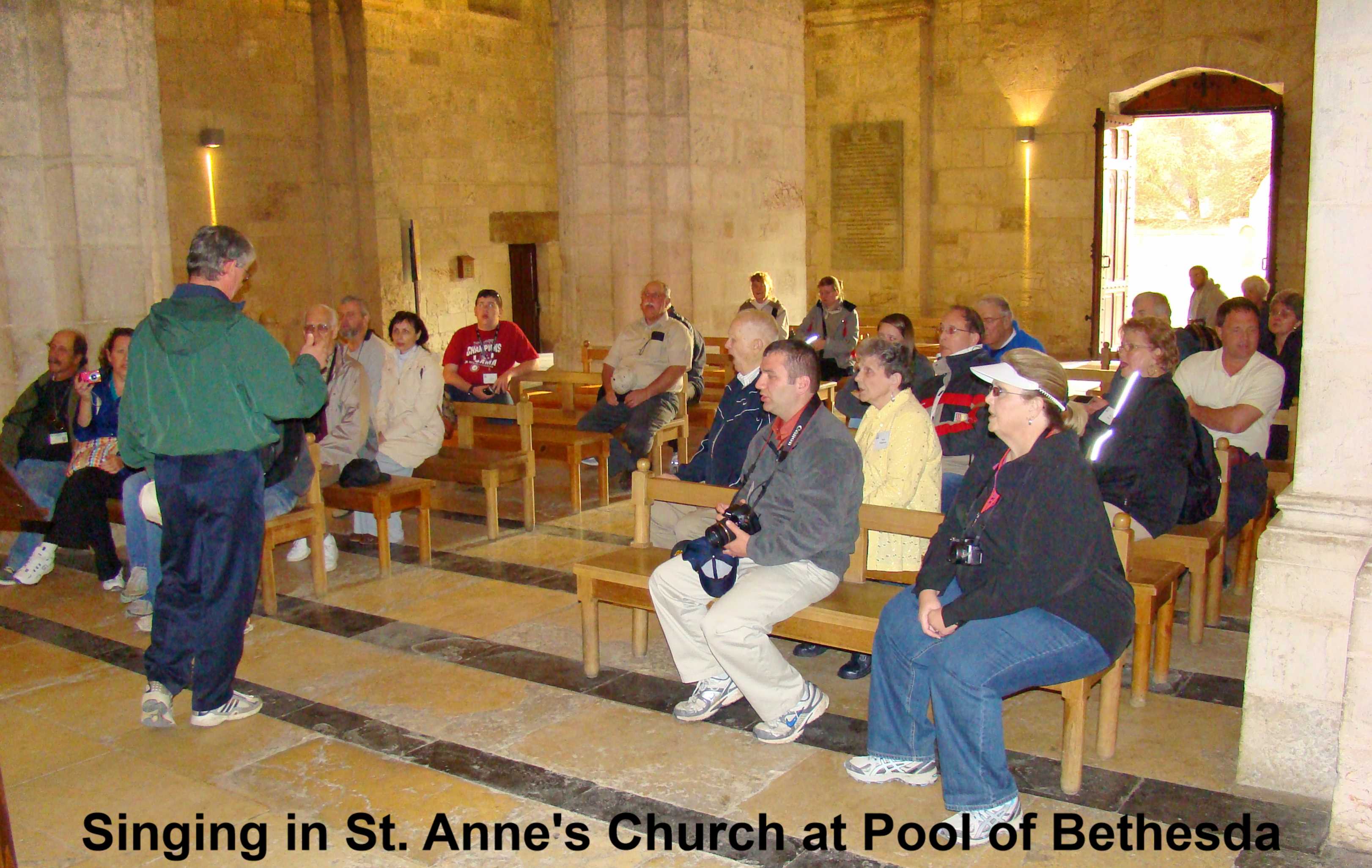
In 2011 my group went inside St. Anne’s and sang spiritual songs, such as “Amazing Grace,” “Alleluia,” and many others. The acoustics are marvelous.

Singing at St. Anne's Church near Pool of Bethesda in Jerusalem. Photo by Leon Mauldin.

Singing at St. Anne’s Church near Pool of Bethesda in Jerusalem. Photo by Leon Mauldin.

Click on photo for larger view.


On the Steps of the Pool of Siloam

May 11, 2013

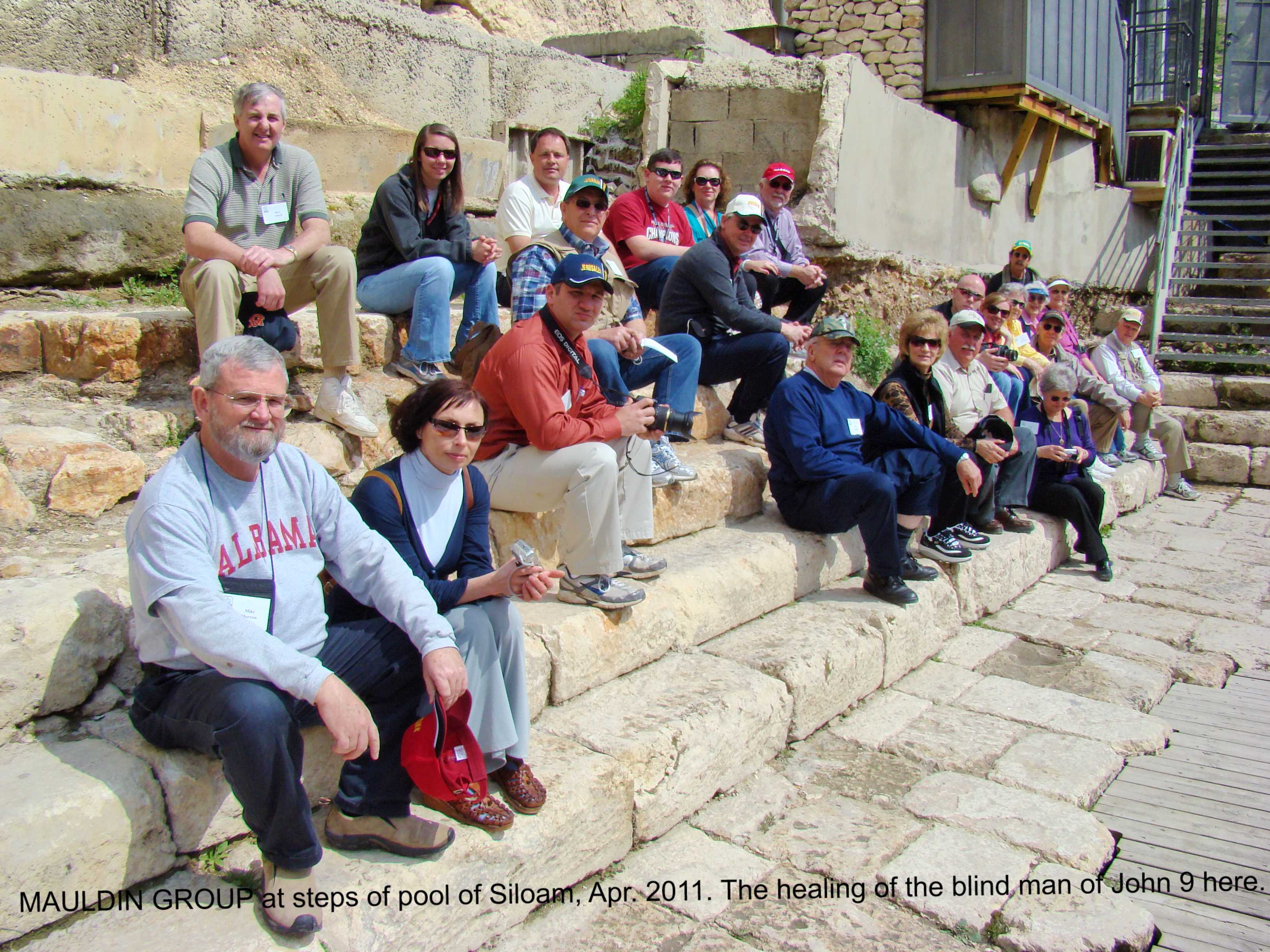
One of the most exciting of recent archaeological discoveries in Israel has been that of the pool of Siloam. I first saw this site in fall of 2005, when it was still “freshly” excavated. This photo illuminated the text of John 9, where Jesus healed the man born blind. Jesus spat upon the ground, made clay of the spittle, anointed the man’s eyes and told him to go to the pool of Siloam and wash. He did so, and received his sight (John 9:1-7).

On Steps of Siloam. Mauldin Group 2011

On Steps of Siloam. Mauldin Group 2011

All manner of pressure was brought to bear upon him by Jewish authorities to renounce Jesus as a sinner, but he refused to cave in. “One thing I know: that though I was blind, now I see” (John 9:25).

This is one of Jesus’ seven miraculous signs recorded in the gospel of John:

Now Jesus performed many other miraculous signs in the presence of the disciples, which are not recorded in this book.  But these are recorded so that you may believe that Jesus is the Christ, the Son of God, and that by believing you may have life in his name (John 20:30-31).

There is great value in on-site biblical study.

I previously posted on the Hezekiah’s tunnel which emptied into the pool of Siloam here and here.

My friend Ferrell Jenkins has recently return from conducting a tour in Israel, and then staying on several days to take more photos. I’m looking to seeing those in the near future here.


Straw in the Bricks

February 7, 2013

Recently I was reading the text of Exodus 5 which tells of Pharaoh’s initial reaction to Moses’ request that Israel be permitted to journey into the wilderness to worship Yahweh:

That same day Pharaoh commanded the slave masters and foremen who were over the people: 7 “You must no longer give straw to the people for making bricks as before. Let them go and collect straw for themselves. 8 But you must require of them the same quota of bricks that they were making before. Do not reduce it, for they are slackers. That is why they are crying, ‘Let us go sacrifice to our God.’ 9 Make the work harder for the men so they will keep at it and pay no attention to lying words!” (Ex. 5:6-9). 

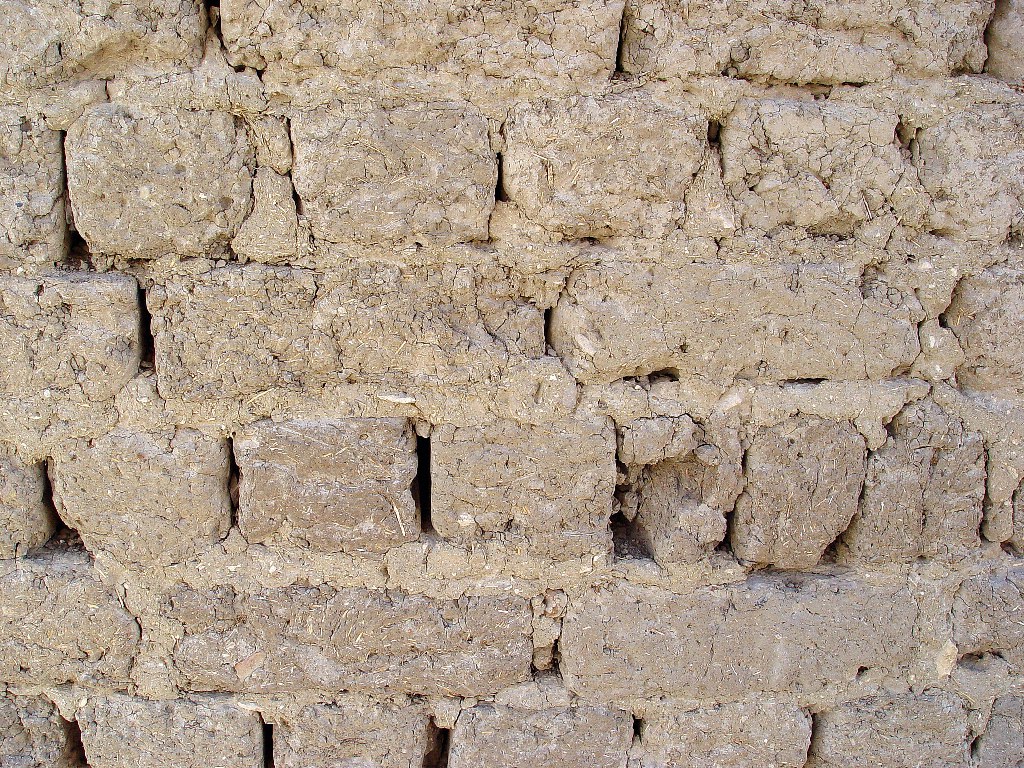
That put me in mind of some bricks I saw in Egypt at Luxor. In these mud bricks you could clearly see light-colored bits of straw.

Bricks made of mud mixed with straw in Luxor, Egypt. Photo by Leon Mauldin.

Bricks made of mud mixed with straw in Luxor, Egypt. Photo by Leon Mauldin.

W. C. Kaiser writes, “Chopped straw was mixed in with the clay to make the bricks more pliable and stronger by first binding the clay together and then by decaying and releasing a humic acid similar to glutamic or gallotanic acid” (The Expositor’s Bible Commentary, Volume 2, p. 337).

Click on image for larger view.


Pilgrims in Cappadocia

December 18, 2012

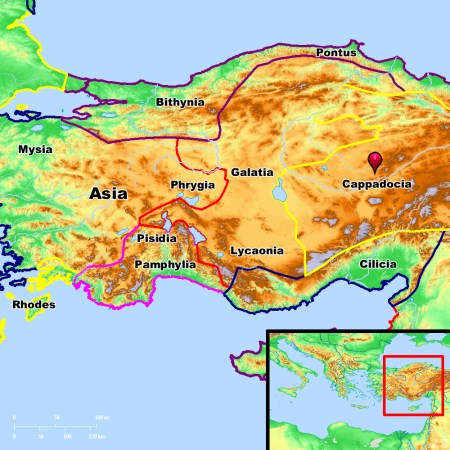
1&2 Peter were written to Christians (likely Jewish) scattered across five Roman Provinces: “To the pilgrims of the Dispersion in Pontus, Galatia, Cappadocia, Asia, and Bithynia” (1 Pet. 1:1). All of these provinces were in what is today Turkey.

The landscape of Cappadocia is fascinating. Ancient volcanic matter covered the area. When wind and rain eroded away the softer elements, the harder material was left behind, causing some really unusual formations.

Formations characteristic of Cappadocia. Photo by Leon Mauldin.

Formations characteristic of Cappadocia. Photo by Leon Mauldin.

So when you pick up your New Testament to read the epistles of Peter, remember that some of his readers lived in this area.

Cappadocia. In NT times, a Roman Province. Currently in Turkey. BibleAtlas.com

Cappadocia. In NT times, a Roman Province. Currently in Turkey. BibleAtlas.com

Click images for larger view.


“Woe Unto Thee, Chorazin!”

December 5, 2012

In Matt. 11:21, Jesus said,

Woe to you, Chorazin! Woe to you, Bethsaida! For if the mighty works which were done in you had been done in Tyre and Sidon, they would have repented long ago in sackcloth and ashes.

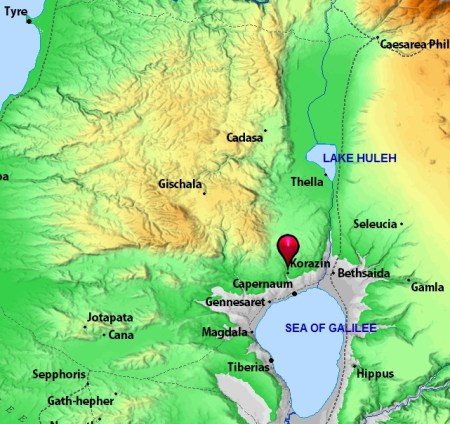
Chorazin was located just to the north of the Sea of Galilee. Note that it is spelled Korazin on our map:

Location of Chorazin, city condemned by Jesus. BibleAtlas.Org.

Location of Chorazin, city condemned by Jesus. BibleAtlas.Org.

One fascinating aspect of Jesus’ denunciation of Chorazin is that this was one of the Galilean cities in which he had done most of His mighty (miraculous) works. As the previous verse words it,

Then He began to rebuke the cities in which most of His mighty works had been done, because they did not repent: (Matt. 11:20).

While we read of many miracles Jesus did in Capernaum, and only one in Bethsaida (the two other cities cited and condemned in our context), we read of none being done in Chorazin. This does not mean something in lacking in the Bible; to the contrary, we have all we need. But it does show there was divine selectivity in that which was recorded (cf. John 20:30-31 for this same principle as stated in regard to the Gospel of John).

The site identified as Chorazin is located 2 miles north of the Sea of Galilee. The ruins that are seen post-date the time of Jesus.

Entrance Sign at Chorazin. Photo by Leon Mauldin.

Entrance Sign at Chorazin. Photo by Leon Mauldin.

Here are the remains of the basalt synagogue at Chorazin,

Basalt synagogue at Capernaum. Photo by Leon Mauldin.

Basalt synagogue at Capernaum. Photo by Leon Mauldin.

Click on images for larger view. 


New Resource: The Big Picture

December 4, 2012

Ferrell Jenkins reviews and recommends a new resource, The Big Picture: A Guide to Learning the Bible’s Story, by Marc Hinds. You may read that review here, including ordering instructions.

I received my copy in yesterday’s mail, and would like to also give my recommendation. This book will be a great resource for beginners as well as for those needing to see the unity and connectivity of the Scriptures.  Marc is a careful student, and capable preacher/teacher.

From Sept. through early Nov., in about an 8 week period, we conducted 6 meetings in several states and Canada. Then on Nov. 12 I had a total knee replacement, with subsequent complications that required more surgery. But things seem to be leveling off now. That has hindered my ability to post on this blog, but we hope to be more regular now. Thanks for your patience.


The Wicked Vinedressers

October 26, 2012

In Mark 12:1-11, in the final week of Jesus’ ministry, He told the Parable of the Wicked Vinedressers (Mark 12:1-11). The vineyard Owner sent a servant to His vineyard for fruit at the proper season. He did not receive fruit; instead, the vinedressers took the servant, beat him, and sent him away empty. Then He sent another servant, at whom they threw stones, wounded him in the head, and sent him away shamefully. Again, He sent another and him they killed. The same treatment happened to other servants sent to the vineyard.

The Owner had one Son. His Beloved Son. The Owner sent Him also. They killed Him and cast Him out of the vineyard!

What vineyard owner would do this? None! But what no one else would do is what God did! He sent His servants, the prophets, again and again to His people. They were treated shamefully; some were killed. Last of all He sent His Son! They killed the Son also, without knowing that His death was the means of our salvation from our sins.

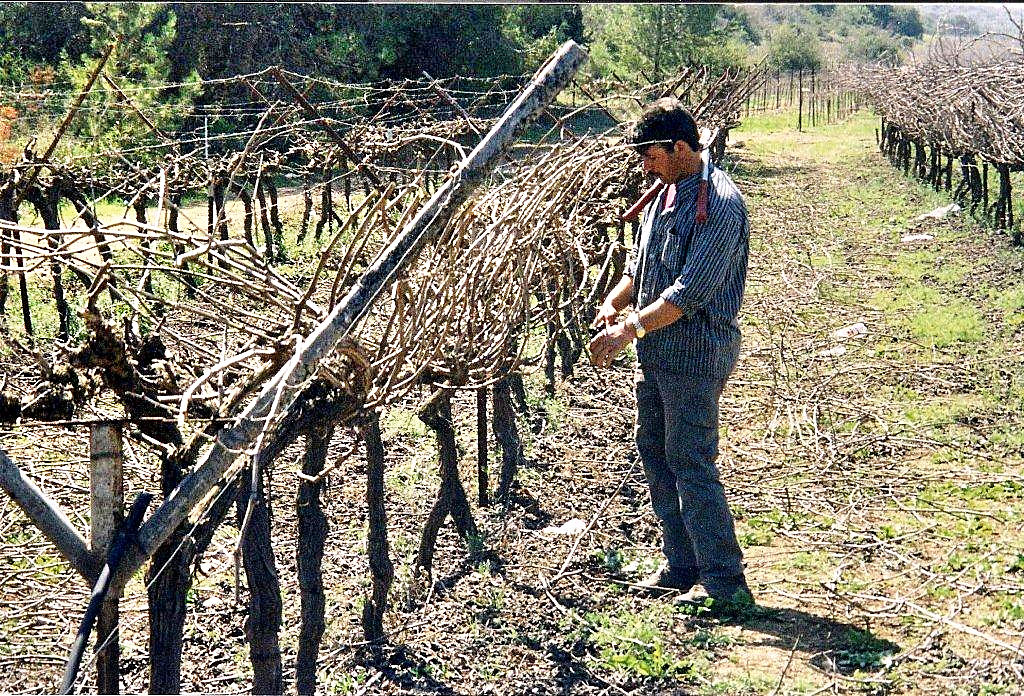
Our photo shows a vineyard at Lachish, with a vinedresser pruning and trimming the vines. This gives the setting for the parable of the text.

Vinedresser working in vineyard at Lachish in Israel. Photo by Leon Mauldin.

This photo was originally a 35 mm slide taken in 1999.

********

We have had a wonderful 6-day meeting at Trilacoochee, Fl., near Dade City, presenting a series of 9 biblical lessons. My good friend Bob Waldron is the local evangelist who works with the congregation here.


Joppa

October 24, 2012

Joppa, an ancient Mediterranean harbor of Canaan, was the geographical setting for several events in biblical history.

When Solomon was to construct the temple, the king of Tyre offered,  “We will get all the timber you need from Lebanon and bring it in raft-like bundles by sea to Joppa. You can then haul it on up to Jerusalem.” (2 Chron. 2:16, NET).

Joppa was again used in this same manner when the second temple was rebuilt (Ezra 3:7). It’s about 35 miles from Joppa to Jerusalem.

Joppa figures in with the narrative of Jonah, who, when God told him to preach to Nineveh, “Instead, Jonah immediately headed off to Tarshish to escape from the commission of the LORD. He traveled to Joppa and found a merchant ship heading to Tarshish. So he paid the fare and went aboard it to go with them to Tarshish far away from the LORD” (Jonah 1:3, NET).

In NT times, there were disciples of Christ at Joppa. It was here that Peter raised Tabitha from the dead (Acts 9:36-43). Peter remained at Joppa for “many days” (Acts 9:43) and was there when the Gentile Cornelius, a Roman centurion stationed at Caesarea,  sent for him, that he could hear the Gospel message of salvation (Acts 10; 11:1-18; see esp. 11:14).

Joppa, ancient harbor on Israel’s coast. Photo by Leon Mauldin.

This photo of Joppa was taken in 1999, a 35mm slide which I had digitalized.

I posted an aerial photo of Joppa here.