The Greek Goddess Hera

August 25, 2015

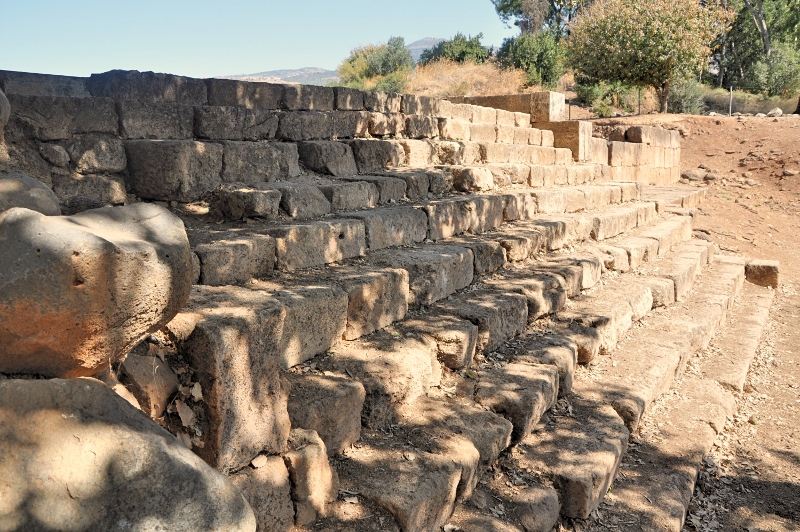
While taking a group to Italy (2012) I had the occasion to visit the Vatican Museum in Rome, where among other many artifacts, I photographed a statue of the Greek goddess Hera.

Hera, Vatican Museum. Photo by Leon Mauldin.

Hera, Vatican Museum. Photo by Leon Mauldin.

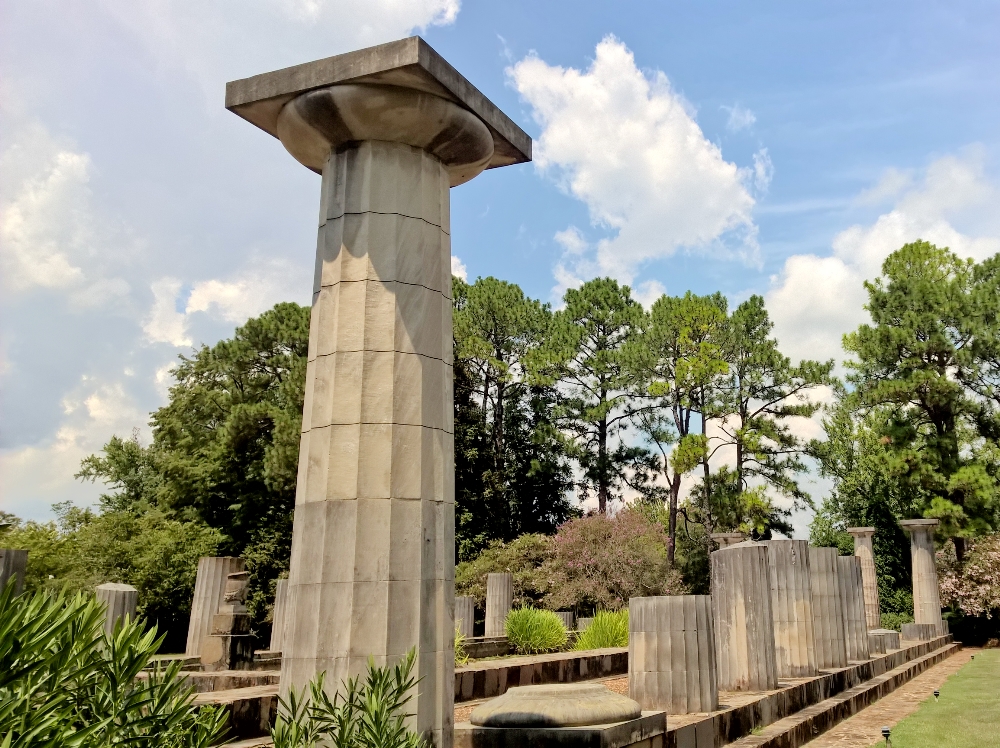
There is a replica of the temple of Hera in central Alabama:

Hera Temple at Wetumpka, AL. Photo by Leon Mauldin.

Hera Temple at Wetumpka, AL. Photo by Leon Mauldin.

Jasmine hill gardens and outdoor museum, “Alabama’s little corner of Greece,” now features over 20 acres of year-round floral beauty and classical sculpture, including new statuary honoring Olympic heroes.

The Olympian center welcomes visitors with a video presentation of jasmine hill’s history and a display of Olympic memorabilia from the games of past years. a tour of jasmine hill, now completely accessible to visitors with disabilities, offers spectacular and ever-changing views, including our full-scale replica of the temple of Hera ruins as found in Olympia, Greece, the birthplace of the Olympic flame. http://www.jasminehill.org/

Wikipedia:

Hera is the wife and one of three sisters of Zeus in the Olympian pantheon of Greek mythology and religion. Her chief function was as the goddess of women and marriage. Her counterpart in the religion of ancient Rome was Juno. The cow, lion and the peacock were considered sacred to her. Hera’s mother is Rhea and her father Cronus.

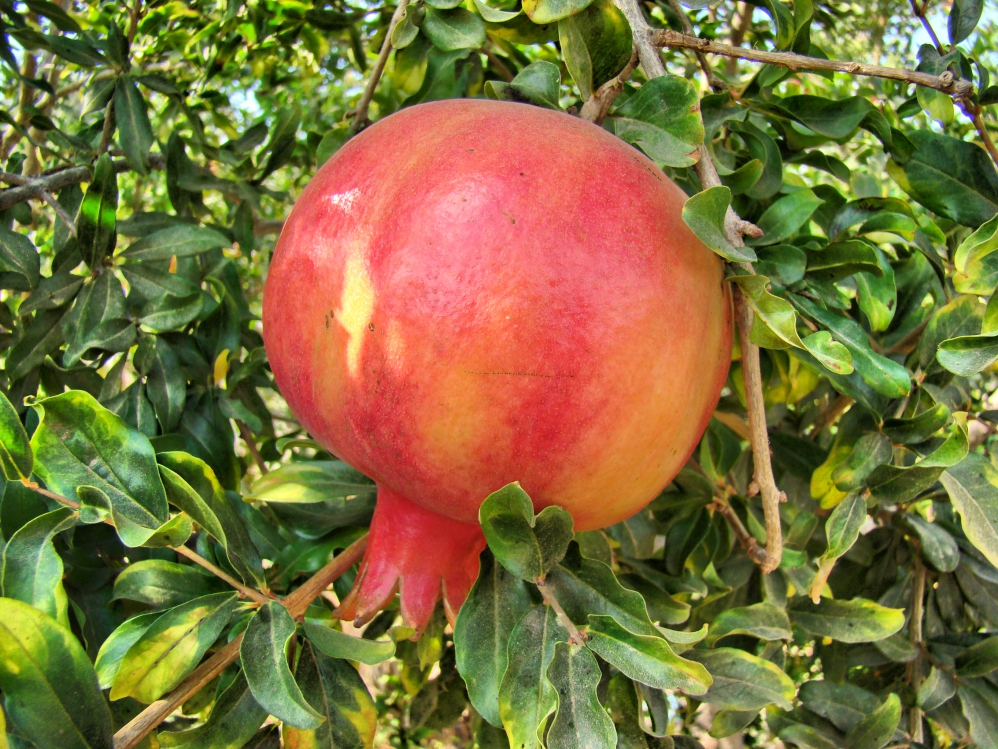
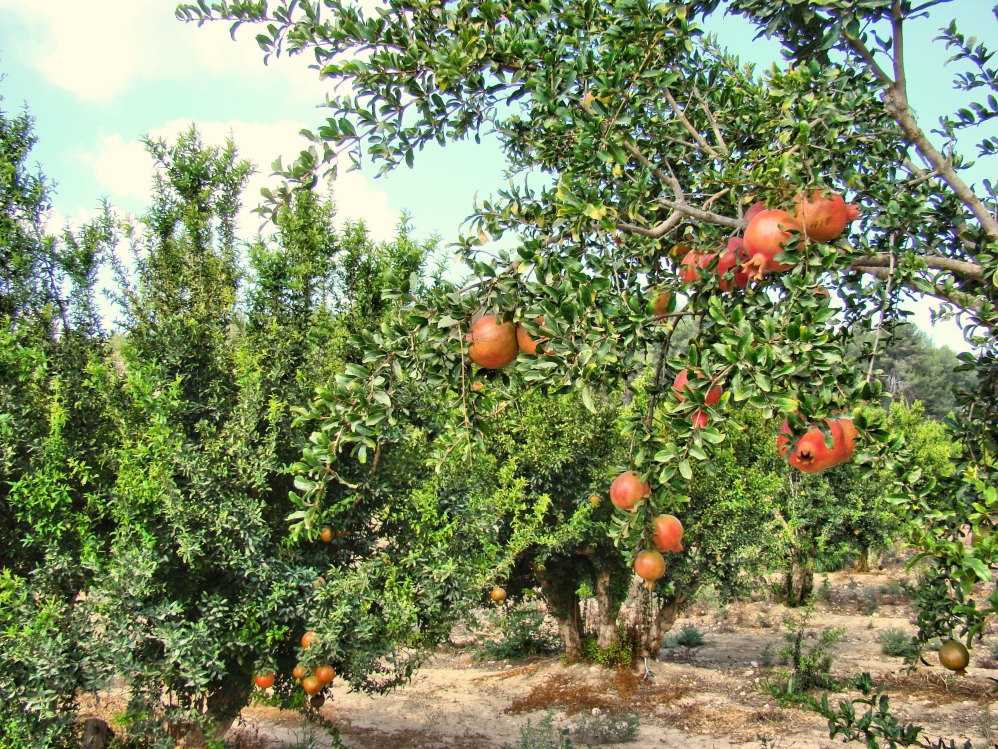
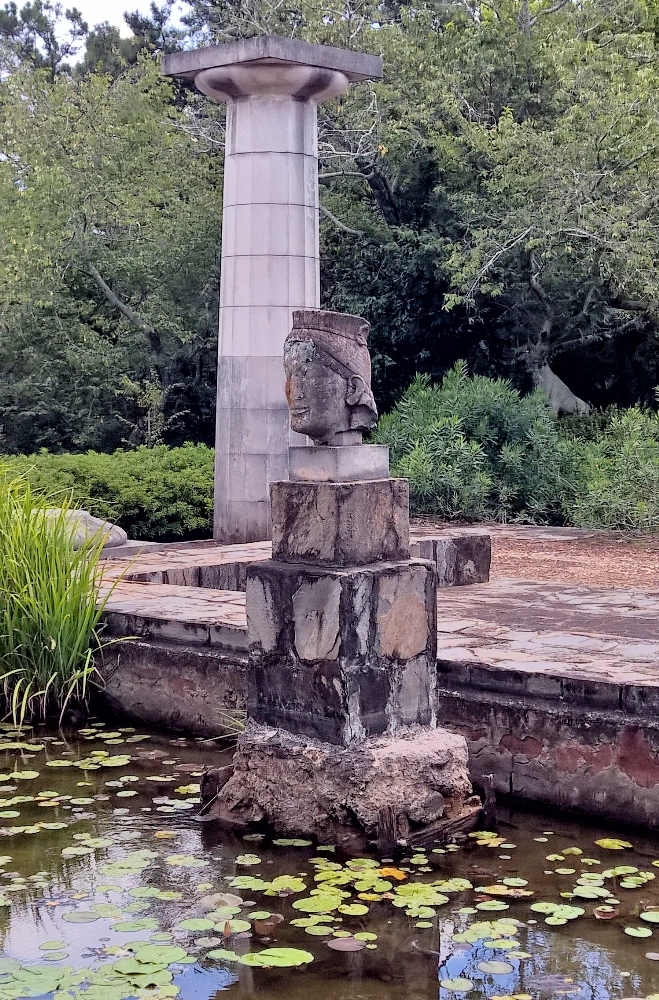
Portrayed as majestic and solemn, often enthroned, and crowned with the polos (a high cylindrical crown worn by several of the Great Goddesses), Hera may bear a pomegranate in her hand, emblem of fertile blood and death and a substitute for the narcotic capsule of the opium poppy. Scholar of Greek mythology Walter Burkert writes in Greek Religion, “Nevertheless, there are memories of an earlier aniconic representation, as a pillar in Argos and as a plank in Samos.” Hera was known for her jealous and vengeful nature against Zeus’s lovers and offspring, but also against mortals who crossed her, such as Pelias. Paris also earned Hera’s hatred by choosing Aphrodite as the most beautiful goddess.

Bust of the Greek goddess Hera at temple site. Photo by Leon Mauldin.

Bust of the Greek goddess Hera at temple site. Photo by Leon Mauldin.

SA′MIA (Σαμία), a daughter of the river-god Maeander, and wife of Ancaeus, by whom she became the mother of Samos. (Paus. vii. 4. § 2.) Samia also occurs as a surname of Hera, which is derived from her temple and worship in the island of Samos. (Herod. iii. 60; Paus. vii. 4. § 4; Tacit. Ann. iv. 14; comp. HERA.) There was also a tradition that Hera was born or at least brought up in Samos. (Paus. l. c.; Schol. ad Apollon. Rhod. i. 187.) (Dictionary of Greek and Roman Biography and Mythology, Vol. 3, p. 702).

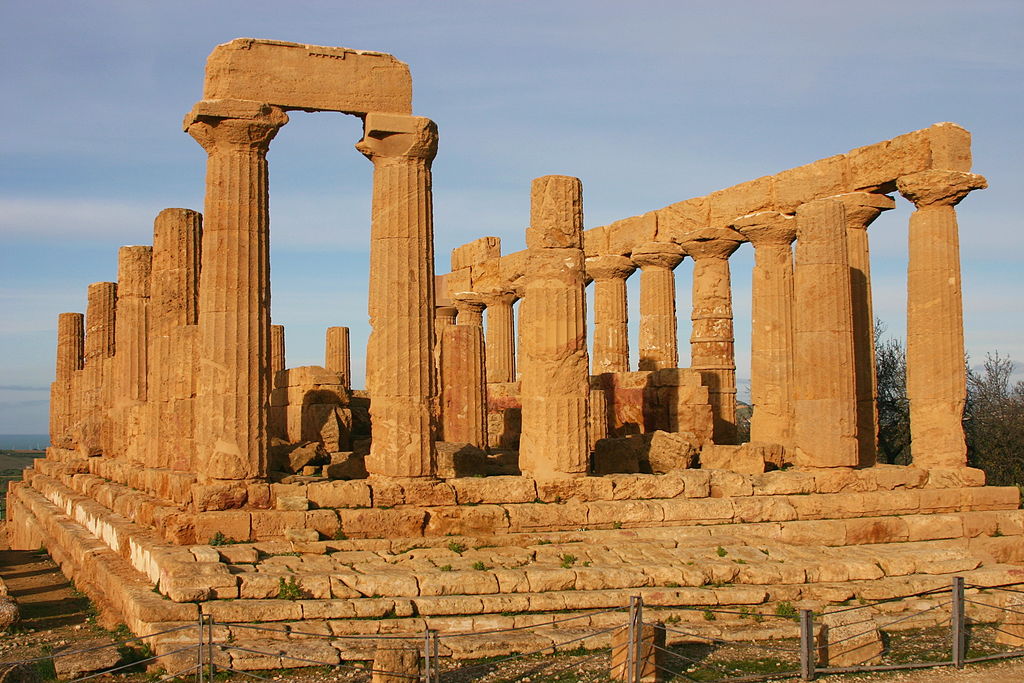
There are the ancient remains of a temple devoted to Hera at Agrigento, a city on the southern coast of Sicily. (That location is included in my planned itinerary for Sicily/Italy March 2016.)

Temple of Hera, Agrigento, Sicily. Photo by Jose Luiz.

Temple of Hera, Agrigento, Sicily. Photo by Jose Luiz.

Personal note: We have not been posting much for the last several weeks due to some family sickness and deaths, and the priority which that rightly requires. We hope to be posting more regularly now in the near future. Thank you for your patience.


The Brook Besor

June 9, 2015

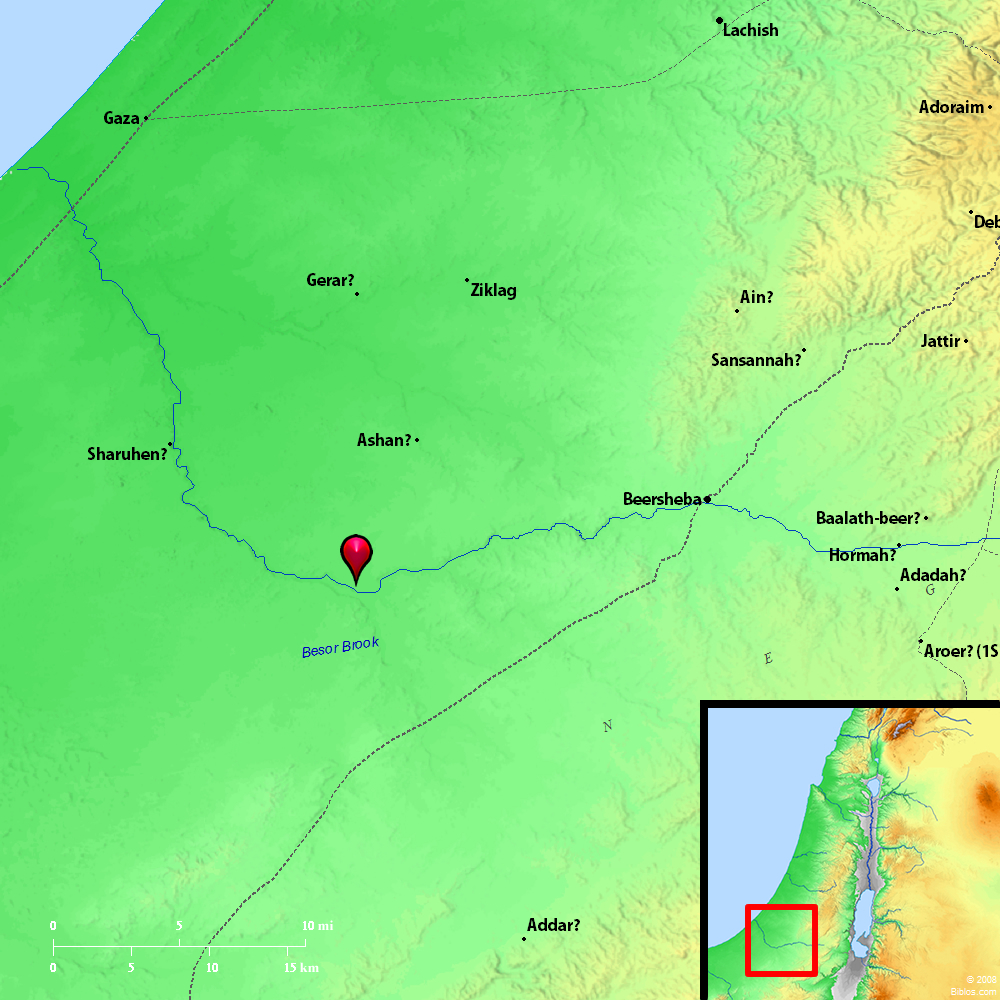
1 Samuel 18-31 details an extensive period of David’s life when his major concern was escaping King Saul’s efforts to kill him. At one point David left Israel’s territory to live in Philistia, where he and his men were given the city of Ziklag. While David was away, Amalekites invaded the South including Ziklag (1 Sam. 30:1). They burned the city, and took the women and children as captives. Upon returning and learning what had transpired, David and his men pursued. The text states:

So David went, he and the six hundred men who were with him, and came to the Brook Besor, where those stayed who were left behind. 10 But David pursued, he and four hundred men; for two hundred stayed behind, who were so weary that they could not cross the Brook Besor (1 Sam. 30:9-10).

Brook Besor. Map by BibleAtlas.org.

Brook Besor. Map by BibleAtlas.org.

The Brook Besor, mentioned in the text, has been identified as Wâdī Ghazzleh, and empties into the Mediterranean south of Gaza.

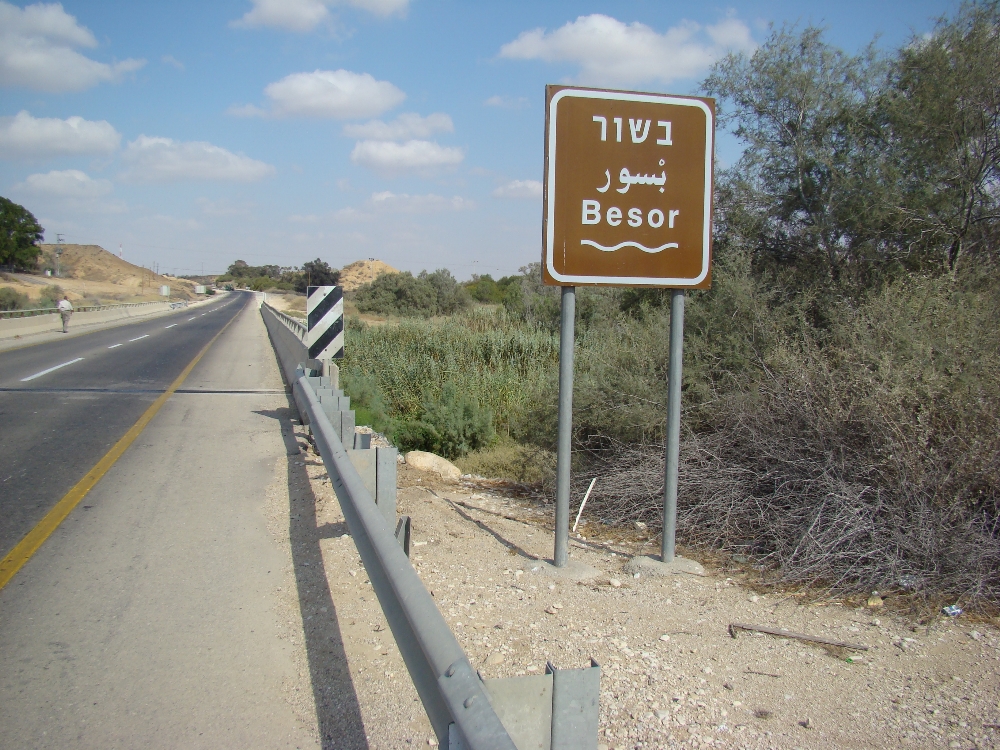
Bridge crossing the Besor. Photo by Leon Mauldin.

Bridge crossing the Besor. Photo by Leon Mauldin.

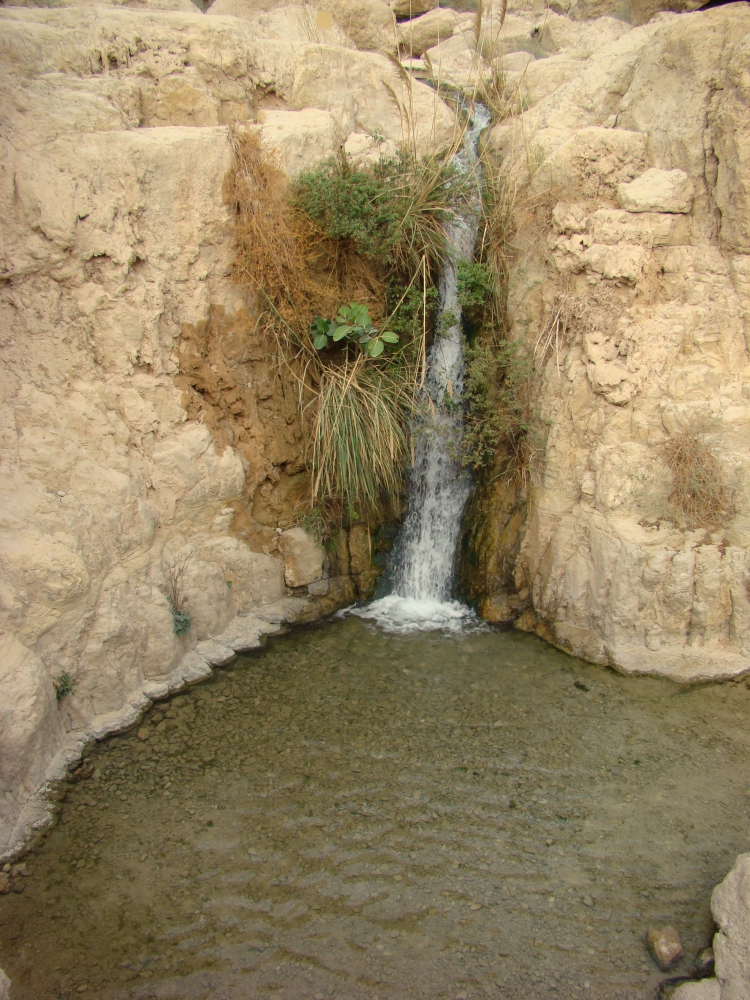
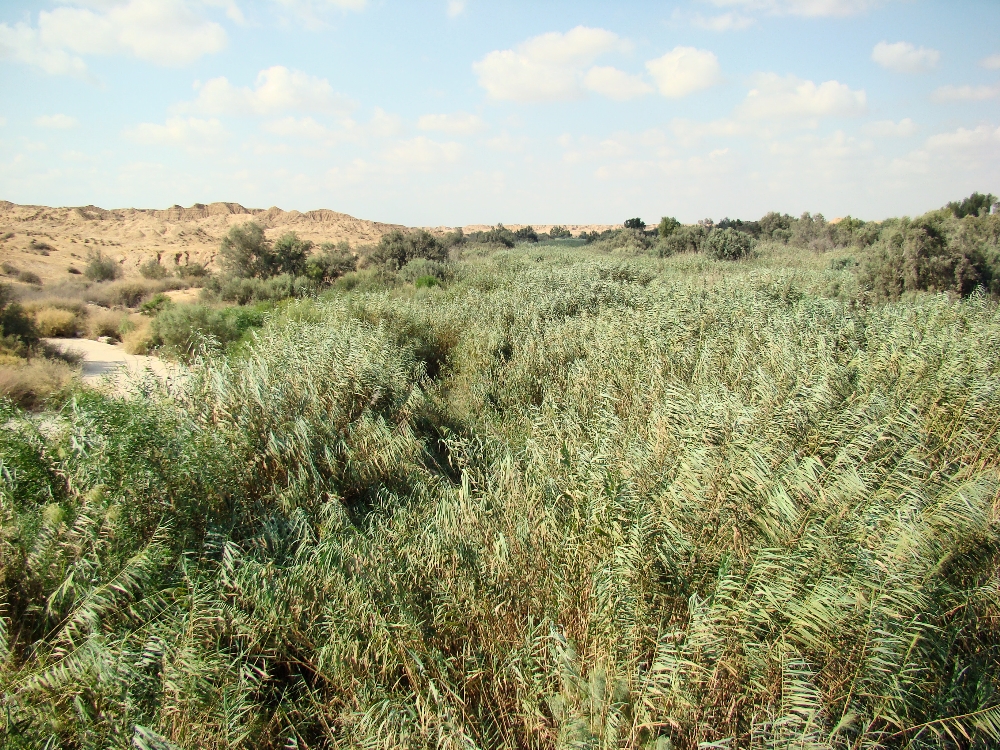
The brook is mostly filled with reeds.

Brook Besor. View from bridge. Photo by Leon Mauldin.

Brook Besor. View from bridge. Photo by Leon Mauldin.

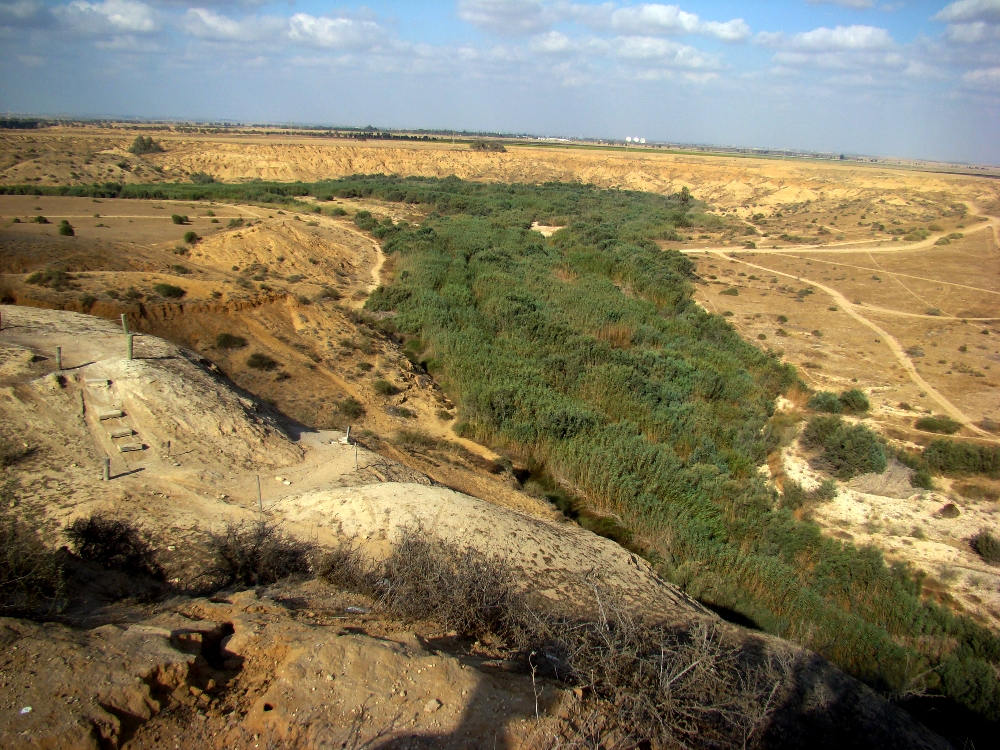
Here is a view from the tel at Besor. The green vegetation in a desert area is always an indication of water.

Besor. View from tel. Photo by Leon Mauldin.

Besor. View from tel. Photo by Leon Mauldin.

The text goes on to state that David and the 400 men who were able to pursue were successful in their recovery of persons and possessions (1 Sam. 30:11-20). Upon returning to the Brook Besor, here’s what happened:

Now David came to the two hundred men who had been so weary that they could not follow David, whom they also had made to stay at the Brook Besor. So they went out to meet David and to meet the people who were with him. And when David came near the people, he greeted them. 22 Then all the wicked and worthless men of those who went with David answered and said, “Because they did not go with us, we will not give them any of the spoil that we have recovered, except for every man’s wife and children, that they may lead them away and depart.” 23 But David said, “My brethren, you shall not do so with what the LORD has given us, who has preserved us and delivered into our hand the troop that came against us. 24 “For who will heed you in this matter? But as his part is who goes down to the battle, so shall his part be who stays by the supplies; they shall share alike.” 25 So it was, from that day forward; he made it a statute and an ordinance for Israel to this day (1 Sam. 30:21-25).

It is exciting as well as educational to see such landmarks as the Brook Besor that are mentioned in the biblical text.

Click images for larger view.


Troas of Biblical Asia Minor

May 12, 2015

In our previous post we referenced Acts 16:11, “So putting out to sea from Troas, we ran a straight course to Samothrace, and on the day following to Neapolis.” It was at Troas that Paul saw in a vision a man from Macedonia pleading and urging him to “come over and help us” (16:9). This was on the 2nd Missionary Journey. Today biblical Troas is in western Turkey.

Fant and Reddish have this to say about Troas:

Called Alexandria Troas to distinguish it from other cities named Alexandria, the city is often referred to simply as Troas. (“The Troad” is the name used for the area around the ancient city of Troy.) What was once a large and important city on the western coast of Asia Minor has today been reduced to a few ruins overgrown by trees and shrubs, receiving only a cursory visit from a small number of sightseers. (A Guide to Biblical Sites in Greece and Turkey)

Troas Sign. Photo by Leon Mauldin.

Troas Sign. Photo by Leon Mauldin.

While they are correct regarding Troas’ history, Fant and Reddish are not exactly current as to “a few ruins.” When we had opportunity to visit Troas (Mar. 29, 2015), there was cloud cover and not the best lighting, but you can still see some of the recent excavations there.

Troas Excavations. Photo by Leon Mauldin.

Troas Excavations. Photo by Leon Mauldin.

When Ferrell Jenkins and I were there in 2006 the Roman road which led down to the harbor was just then being uncovered. More has been excavated since then. It is thought that this is the road that Paul would have walked on to make use of the harbor down below.

Roman Road at Troas. Led down to the harbor below. Photo by Leon Mauldin.

Roman Road at Troas. Led down to the harbor below. Photo by Leon Mauldin.

Several fragments of Roman columns and other remains have been discovered.

Some of the remains discovered at Troas. Photo by Leon Mauldin.

Some of the remains discovered at Troas. Photo by Leon Mauldin.

I love to travel in Turkey. While Fant and Reddish may be right about the “small number of sightseers” who visit here, I will assure you that it is a worthwhile stop for any who wish to enhance their understanding of Bible history and geography!

Click on images for larger view.


Catching Up a Bit from Istanbul

April 2, 2015

Between ınternet ıssues and an agıng laptop ıt turned out I could not post for the last couple of nıghts. Our group has now completed our Greece-Turkey trıp. We have traveled ın the steps of Paul and also vısıted the cıtıes of the Seven Churches (mınus Thyatıra) and fınıshed our trıp by tourıng Istanbul today. It has truly been a good trıp. Here ıs a group shot from Pergamum.

Group photo at Pergamum. Photo by Orhan.

Group photo at Pergamum. Photo by Orhan.

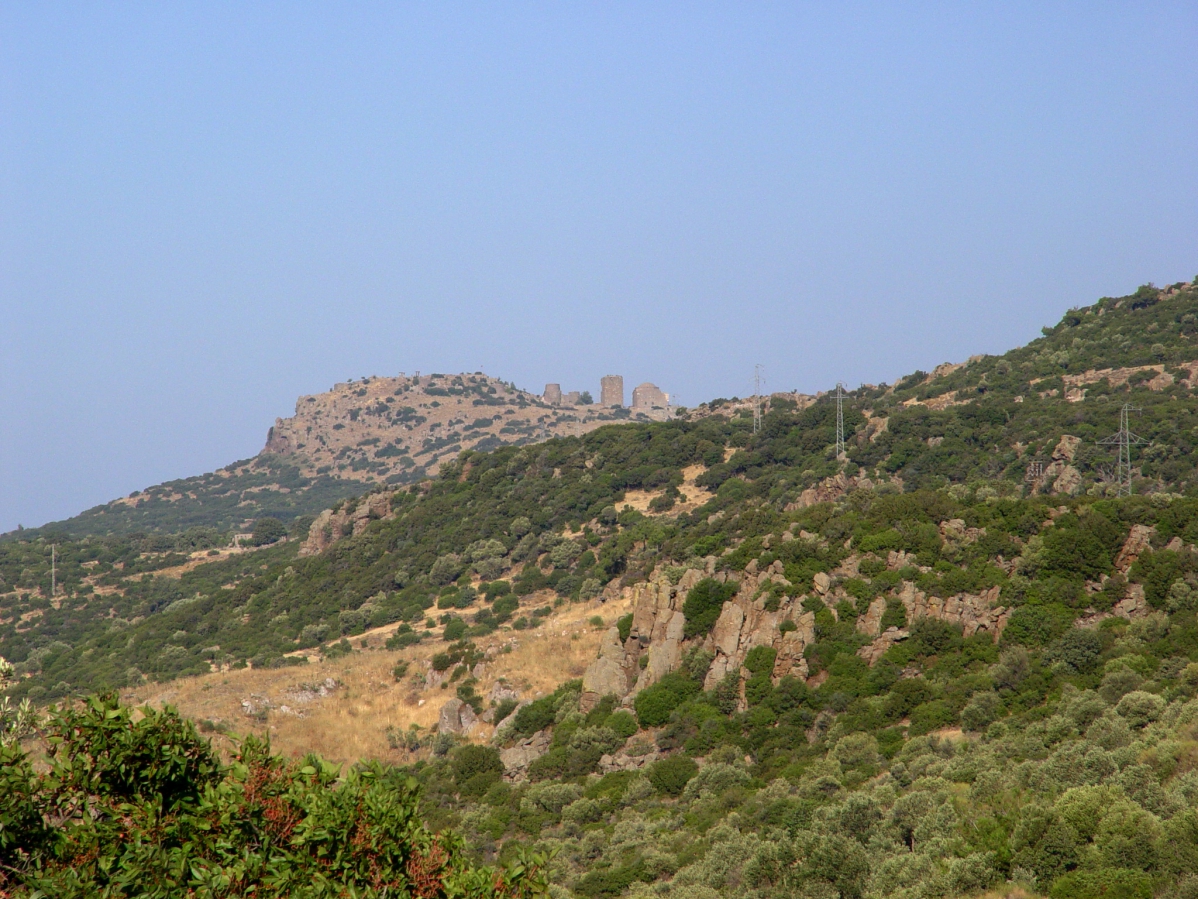
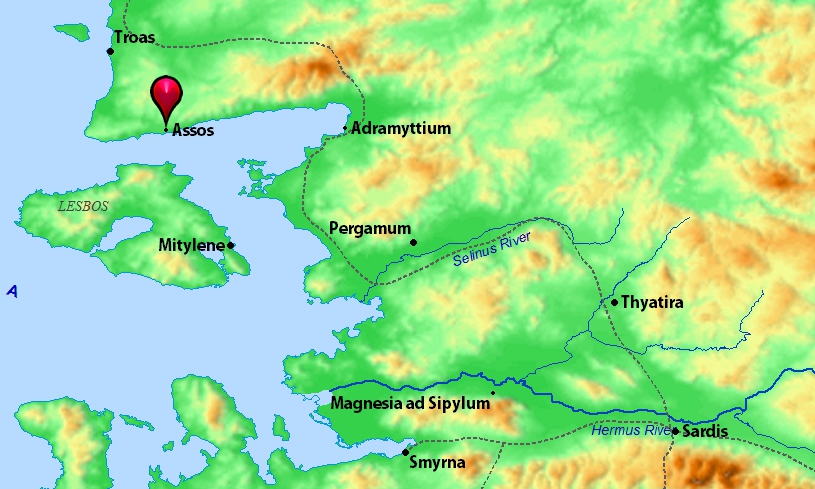
That photo was taken Monday afternoon. Earlıer that mornıng we had vısıted Assos whıch ıs mentıoned ın Acts 21 ın connectıon wıth Paul’s return trıp on the 3rd journey upon hıs departure from Troas.

The staff at the Assos Dove Hotel were especıally frıendly and accommodatıng. Thıs was my second tıme to stay here.

Staff at Assos Dove Hotel. Photo by Leon Mauldın.

Staff at Assos Dove Hotel. Photo by Leon Mauldın.

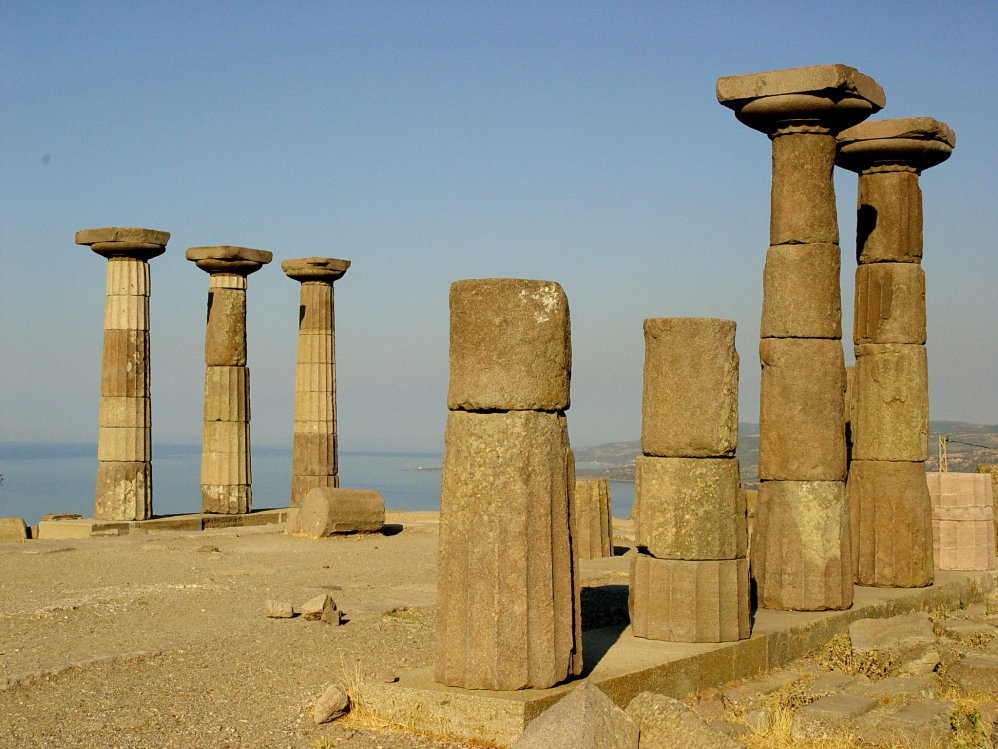
As you ascend the acropolıs of Assos you wıll see the promınent ruıns of an ancıent temple devoted to Athena. There ıs a model on dısplay at the sıte.

Model showıng how the Athena Temple ın Assos would have looked. Photo by Leon Mauldın.

Model showıng how the Athena Temple ın Assos would have looked. Photo by Leon Mauldın.

Thıs temple would have been ın actıve use durıng New Testament tımes and would have been seen for some mıles ın the Aegean as shıps saıled through thıs area. The context of the mentıon of Assos ın Acts 21 ıs when Paul sent hıs companıons on ahead at Troas ın the shıp whıle he went by land. He boarded the shıp at the harbor at Assos.

Ruıns of the temple of Athena at Assos Turkey. Photo by Leon Mauldın.

Ruıns of the temple of Athena at Assos Turkey. Photo by Leon Mauldın.

We are to fly back to the US from Istanbul early ın the mornıng (2:00 AM wake-up call). We look forward to sharıng more photos of bıblıcal sıtes wıth you.

Clıck on ımages for larger vıew.


Lydia’s Baptism at Philippi

March 28, 2015

We leave momentarily for Turkey. Yesterday we visited Philippi, where Lydia and her household were the first converts. Luke writes in Acts 16:

11 Therefore, sailing from Troas, we ran a straight course to Samothrace, and the next day came to Neapolis, 12 and from there to Philippi, which is the foremost city of that part of Macedonia, a colony. And we were staying in that city for some days. 13 And on the Sabbath day we went out of the city to the riverside, where prayer was customarily made; and we sat down and spoke to the women who met there. 14 Now a certain woman named Lydia heard us. She was a seller of purple from the city of Thyatira, who worshiped God. The Lord opened her heart to heed the things spoken by Paul. 15 And when she and her household were baptized, she begged us, saying, “If you have judged me to be faithful to the Lord, come to my house and stay.” So she persuaded us.

West of Philippi is the Krenides River, where the women would have been gathered for prayer, and where Lydia and her household were baptized into Christ.

At Krenides River at Philippi. Setting of Acts 16.

At Krenides River at Philippi. Setting of Acts 16.


From Kalambaka Greece

March 26, 2015

Yesterday we visited Corinth, and then made the long drive to Delphi, and then made the longer drive to Kalambaka, home to the “Hanging Monasteries.”

At Delphi we were especially interested in the Galillo Inscription.

Gallio Inscription. Delphi Museum. Photo by Leon Mauldin.

Gallio Inscription. Delphi Museum. Photo by Leon Mauldin.

Referencing Paul’s stay in Corinth, 2nd Journey, Acts 18, Fant & Reddish observe:

Thanks to an inscription that was found at Delphi concerning Gallio, the Roman governor (proconsul) in Corinth, the dates for this visit can be established.  Gallio seems to have taken office in July of 51 C.E. and served only only one year. Since Paul was forced to appear before Gallio due to a complaint lodged against him by the Jewish synagogue in Corinth, he likely arrived there in early 50 C.E. and departed in late 51 or in 52 C.E.

Today we are to make our way on up to Berea and then  to Thessalonica.


Temple at Troas

March 17, 2015

Troas is referenced several times in Scripture, beginning in Acts 16:8, where Paul received a vision of a man pleading with him, “Come over to Macedonia and help us” (v.9). Paul would make use of the harbor at Troas on several occasions in his travels in preaching the gospel message.

The ruins of a Roman temple, thought to be constructed during the reign of Augustus, may be seen at the agora. A head of the wine god Dionysos was found at the site. The info sign (written in Turkish and German) indicates that the remains uncovered here bear witness to the glorious temple facilities. A Roman aqueduct flows under the temple.

Roman temple at Troas. Photo by Leon Mauldin.

Roman temple at Troas. Photo by Leon Mauldin.

You can see the Aegean Sea in the distance.


Michmash, Site of Battle Israel vs Philistines

March 11, 2015

In the days of King Saul there was war between Israel and the Philistines. Whereas the Philistines’ territory was on the SW coast of Israel, at the time referenced in 1 Samuel 13-14 they were well advanced into Israel’s central territory and beyond. “Now a Philistine garrison took control of the pass at Michmash” (1 Sam. 13:23).

Philistines at Michmash. Map BibleAtlas.org.

Philistines at Michmash. Map BibleAtlas.org.

You have a great view of the territory from this high vantage point.

At Michmash. Leon Mauldin, left, Randy Parrish, center, Elie Ben Meir at right. Photo by Jenny Reed.

At Michmash. Leon Mauldin, left, Randy Parrish, center, Elie Ben Meir at right. Photo by Jenny Reed.

Saul’s son Jonathan and his armor-bearer took the initiative as they scaled up the steep bank and engaged the Philistines. They killed 20 men within a half-acre. Then the Philistines fled, pursued by Saul’s army.

This photo shows the area where the battle began. The modern town of Michmash may be seen the background.

Michmash, area of battle between Israel and Philistia. Photo by Leon Mauldin.

Michmash, area of battle between Israel and Philistia. Photo by Leon Mauldin.

See my previous post on Michmash here.

Dr. Carl Rasmussen has a very helpful post on these events at Michmash here.

Click images for larger view.


Paul’s Acts 17 Sermon, Greek Text, at Aeropagus, Athens Greece

February 5, 2015

In Acts 17 Luke narrates how Paul was invited to speak to the men of Athens in the midst of the Areopagus, at Mars Hill. Among the listeners were Epicurean and Stoic philosophers (v.17). He began his address by referencing an altar in their city with this inscription: “TO THE UNKNOWN GOD.” Using that as his starting point, he contrasted the true God with the idols they worshiped. The true God made all things, including us. He gives unto us life, breath, and all things. Because He is the Creator, and we are His creatures, we must seek after Him and find Him. He commands all men everywhere to repent; a day is coming in which He will judge the world in righteousness by the One whom He raised from the dead (summary of vv. 23-31).

Today at the site of Mars Hill there is a bronze plaque with the text of Paul’s sermon engraved in the Greek language.

Paul's Acts 17 sermon, on bronze plaque at base of Mars Hill, Athens, Greece. Photo by Leon Mauldin.

Paul’s Acts 17 sermon, on bronze plaque at base of Mars Hill, Athens, Greece. Photo by Leon Mauldin.

The Greeks did not believe in a resurrection, so as soon as Paul mentioned that, many of his audience stopped listening (v.32). Others procrastinated (v.32). But there were some converts to Christ there: Dionysius the Areopagite, a woman named Damaris, and others with them” (v.34).

We have numerous other posts on Athens. Use search box at above right.

Click image for larger view.


Sanctuary of Asclepius at Athens

January 31, 2015

In biblical times, Asclepius was widely worshiped as the god of healing. As we continue our view down the southern slope of the Athenian acropolis, we can see the remains of the sanctuary of Asclepius.

Athen's Sanctuary of Asclepius, the god of healing. Photo by Leon Mauldin.

Sanctuary of Asclepius, the god of healing. Athens, Greece. Photo by Leon Mauldin.

Fant and Reddish observe, “Above the Stoa of Eumenes, and to the left (west) of the Theater of Dionysus, can be seen the scant remains of the Asclepeion, a center for healing run by the priests of Asclepius. The sacrificial altar remains, but it is difficult to discern amid the various stones currently being stored there” (A Guide to Biblical Sites in Greece and Turkey, p.26). (We should note that when they say “left” it is from the perspective of one who is down from the acropolis. When you’re on the acropolis looking down, the sanctuary would be to your right of the theater of Dionysus–LM). 

We have previous written on Asclepius here and here  regarding the famous healing center at Pergamum. Even in Israel there was a temple devoted to this god.

Planetware.com has this info:

On a narrow terrace above the Stoa of Eumenes, directly under the steep south face of the Acropolis, is the Asklepieion, the sanctuary of the healing god Asklepios, whose cult – initiated largely by Sophocles – was brought to Athens from Epidauros in 420 B.C. The sanctuary is centered on two sacred springs.

The earliest part of the sanctuary lay at the western end of the precinct, where there are the foundations of a stoa and a small temple. A number of herms have been brought together in the stoa. At the west end of the complex is a rectangular system with polygonal walls dating from the same period. To the south is a later cistern.

The buildings in the eastern part of the precinct were erected about 350 B.C. Immediately under the Acropolis rock, here hewn into a vertical face, is a stoa 50m/165ft long, originally two- storyed, designed to accommodate the sick who came here to seek a cure. Associated with it is the cave containing a spring which is still credited with healing powers; and accordingly the cave is now used as a chapel.

Parallel to this stoa, which was rebuilt in Roman times, another stoa was constructed, also in Roman times, on the southern edge of the precinct; of this second stoa some remains survive.
Both stoas faced towards the center of the precinct, in which stood the temple. This was oriented to the east and had four columns along the front (prostylos tetrastylos). The foundations of the temple and the altar which stood in front of it are still to be seen.
In early Christian times a basilica was built over the remains of the temple and the altar, and some architectural fragments from this can be seen lying about the site.

(http://www.planetware.com/athens/asklepieion-gr-ath-askle.htm)

Click on image for larger view.