We continue to explore some of the exhibits in the Egyptian Museum at Cairo. It is believed that Ka-aper served during the beginning of the 5th dynasty of the Old Kingdom, probably during the reign of Pharaoh Userkaf, (c. 2475-2467 BC). His statue was discovered in 1860 in a mastaba at Sakkara, near the pyramid of Pharaoh Userkaf. “Userkaf, whose reign lasted for only seven years, may have come to the throne as an old man” (Shaw, The Oxford History of Ancient Egypt, p. 109). This life size statue, made of sycamore, is said to be the most celebrated statue of the Old Kingdom.
Ka-aper’s role was that of chief lector-priest, in charge of reciting prayers for the deceased in temples and funerary chapels.
Originally the statue was covered with painted plaster, some traces of which remain. The eyes were made of alabaster, crystal, and black stone and ringed with copper. The facial features are considered to be in the veristic artistic school rather than the idealistic.
One interesting note about the name, Sheikh el Beled: Upon its discovery the workers (under the oversight of the French archaeologist Auguste Mariette) saw a remarkable resemblance to the mayor of their village, translated in Arabic as “Sheikh al-Balad,” which means “chief of the village.” The name stuck!
The study of the biblical books of 1-2 Kings is a study of inspired theological history. That is to say, it is history but with an emphasis always on the divine perspective. The concern of the narrative is consistently whether the king under consideration, whether in the northern kingdom of Israel, or in Judah’s kingdom to the south, did that which was “right in the sight of the LORD.”
The Lord had promised Israel’s King Jehu (r. 841-814 BC) that his sons would reign to the fourth generation (2 Kings 10:30). Meanwhile Syria was ravaging Israel, gobbling up the territory on the eastern side of Jordan. Israel was drastically reduced in size (2 Kings 10:32). Following Jehu’s death, his son Jehoahaz reigned (814-798), and the Aramaic oppression continued (2 Kings 13:3) with its terrible devastation. The fascinating thing about this northern king is that though he was “evil” (2 Kings 13:2), “Jehoahaz pleaded with the LORD” (v. 4). What is further amazing is the mercy of God: though God permitted the Arameans to punish Israel because of national covenant unfaithfulness, “the LORD listened to him; for He saw the oppression of Israel, because the king of Syria oppressed them (Ibid.).
The next verse tells us, “Then the LORD gave Israel a deliverer, so that they escaped from under the hand of the Syrians; and the children of Israel dwelt in their tents as before” (2 Kings 13:5, NKJV). The ESV reads, “Therefore the LORD gave Israel a savior, so that they escaped from the hand of the Syrians, and the people of Israel lived in their homes as formerly.” (Note: the KJV, NRSV also render מושיע as “savior”. Most translations have “deliverer.” The hiphil participle means to deliver, to save).
This is reminiscent of the language of the Judges, where in times of punishment for sin, Israel would cry out to the LORD for deliverance, and He would send the Judge would deliver/save Israel from its oppressor. The biblical text does not name who the deliverer/savior was at the time referenced in 2 Kings 13:5.
Many scholars believe that it is the Assyrian King Adad-Nirari III who is referenced here as Israel’s מושיע.
For example, “Adad-nirari III may have been the ‘savior’ bringing them freedom from Aramean oppression” (Gilboy, The Lexham Bible Dictionary). “Adad-nirari III may have been the ‘deliverer’ of Israel mentioned in 2 Kgs. 13:5” (Chavalas, Eerdmans Dictionary of the Bible, p. 18). “By intervening in the affairs of the Syrian kingdoms, Adad-nerari III put pressure on Damascus, thus relieving Israel from the heavy hand of the Arameans (Mordechai Cogan, The Raging Torrent, p. 41).
David T. Lamb, in a chapter entitled, “An Evil King Praying, Jehoahaz of Israel,” states, “Within the context of this narrative, the most reasonable deliverer for Jehoash is therefore Adad-nirari III of Assyria since, toward the end of Jehoahaz’s reign, he attacked Aram. Adad-nirari’s campaign would have diverted Aram’s attention away from Israel and toward the north. From the perspective of the text, Adad-nirari would play a similar role to Cyrus (Isa 45:1), as a foreign ruler who accomplishes a divinely appointed task” (Lamb, D. T., 1-2 Kings, T. Longman III & S. McKnight, Eds.; p. 399).
D. J. Wiseman supplies the following information regarding Adad-nirari:
Adadnirari III (810–783 B.C.) took five years to quell the widespread revolt led by nobles, high officials, and some provincial governors who, like Dayan-Aššur, the army commander of Shalmaneser, had accumulated much local power. He had to reassert Assyrian authority also over tribes to the north and east who had meanwhile withheld their taxes. This was the beginning of the internal resistance to the central authority of the king which was to recur and ultimately lead to Assyrian weakness in the following century.
When Šamši-Adad died, his queen Sammu-ramat (in part the legendary Semiramis) took over command as co-regent for five years during the minority of her son Adadnirari. In 806 B.C. the young king undertook an expedition to north Syria, reaching the Mediterranean (Arpad), and another the following year, when he took Hazazu and broke up the powerful coalition developing between Damascus and states as far afield as Malatya. In 804 he struck further southwest to Tyre and Sidon. Joash of Israel, anxious to annul the burdensome treaty imposed on him by Hazael, seems to have taken this opportunity, as had Jehu before him, to obtain Assyrian help. The evidence for this is a royal stele (from Tell ar Rimah, Iraq) in which Adadnirari lists tribute from “Joash of Samaria” (Yu’ asu mātSamerinā) before that of Tyre and Sidon. When the Assyrian entered Damascus and took spoil from Ben-hadad it is likely that Israel was allowed to strengthen trade relations with that city and recover some lost territory (2 K. 13:25).
Wiseman, D. J. (1979–1988). Assyria. In G. W. Bromiley (Ed.), The International Standard Bible Encyclopedia, Revised (Vol. 1, pp. 334–335). Wm. B. Eerdmans.
Similarly, the ESV Study Bible in its comments on our text says, “It seems likely that the ‘savior’ in question here is Assyria, whose interest in Syria-Palestine was rekindled in the closing years of the ninth century B.C., resulting in a measure of relief for Israel as the attention of Damascus necessarily turned tot he north.”
On the other hand, Keil & Delitzsch state, “but the Lord gave them the saviour in the two successors of Jehoahaz, in the kings Jehoash and Jeroboam, the former of whom wrested from the Syrians all the cities that had been conquered by them under his father (v. 25), while the latter restored the ancient boundaries of Israel (2 Kings 14:25).” (Keil, C. F., & Delitzsch, F. (1996). Commentary on the Old Testament (Vol. 3, p. 267).
Others have suggested Elisha, who foretold the three-fold victory over Aram, as the “deliverer” under consideration (2 Kings 13:14-19). Could the solution be that Elisha foretold the victory and enlargement of Israel (cf. the later reference to Jonah & Jeroboam II, 2 Kgs. 14:23-25), which was fulfilled in the days of Jehoash and Jeroboam, but was made possible by the role of Adad-nirari? Remember that God rules in the kingdoms of men (Dan. 4:17), and His providential use of the nations could well be under consideration here.
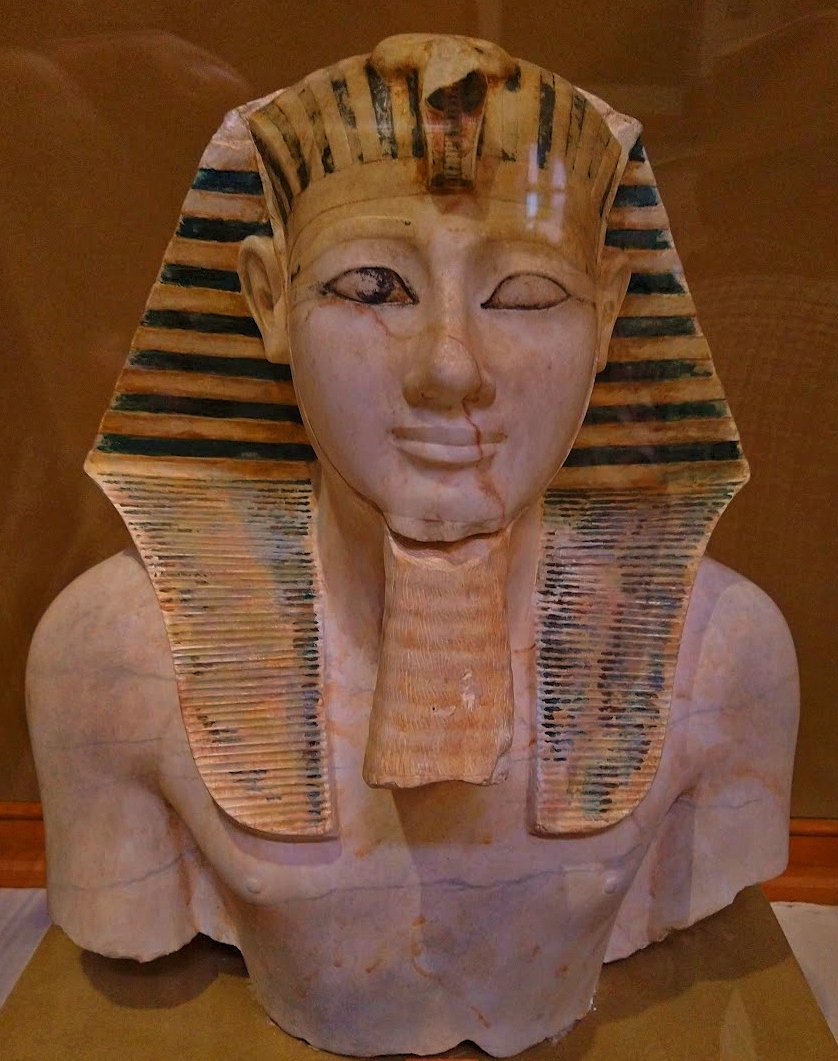
Thutmose III had a co-regency with Hatshepsut. When she died about 1483 BC he began his independent reign (of an additional 32 years). “At the end of some seventeen years of military campaigns, Thutmose III had successfully established Egyptian dominance over Palestine and had made strong inroads into southern Syria. His own reputation was assured, and the proceeds were extravagantly expended on behalf of the temples of Amun and other gods, as well as on those men who followed the king on his quests” (Betsy M. Bryan, The Oxford History of Ancient Egypt, ed. Ian Shaw, p. 243).
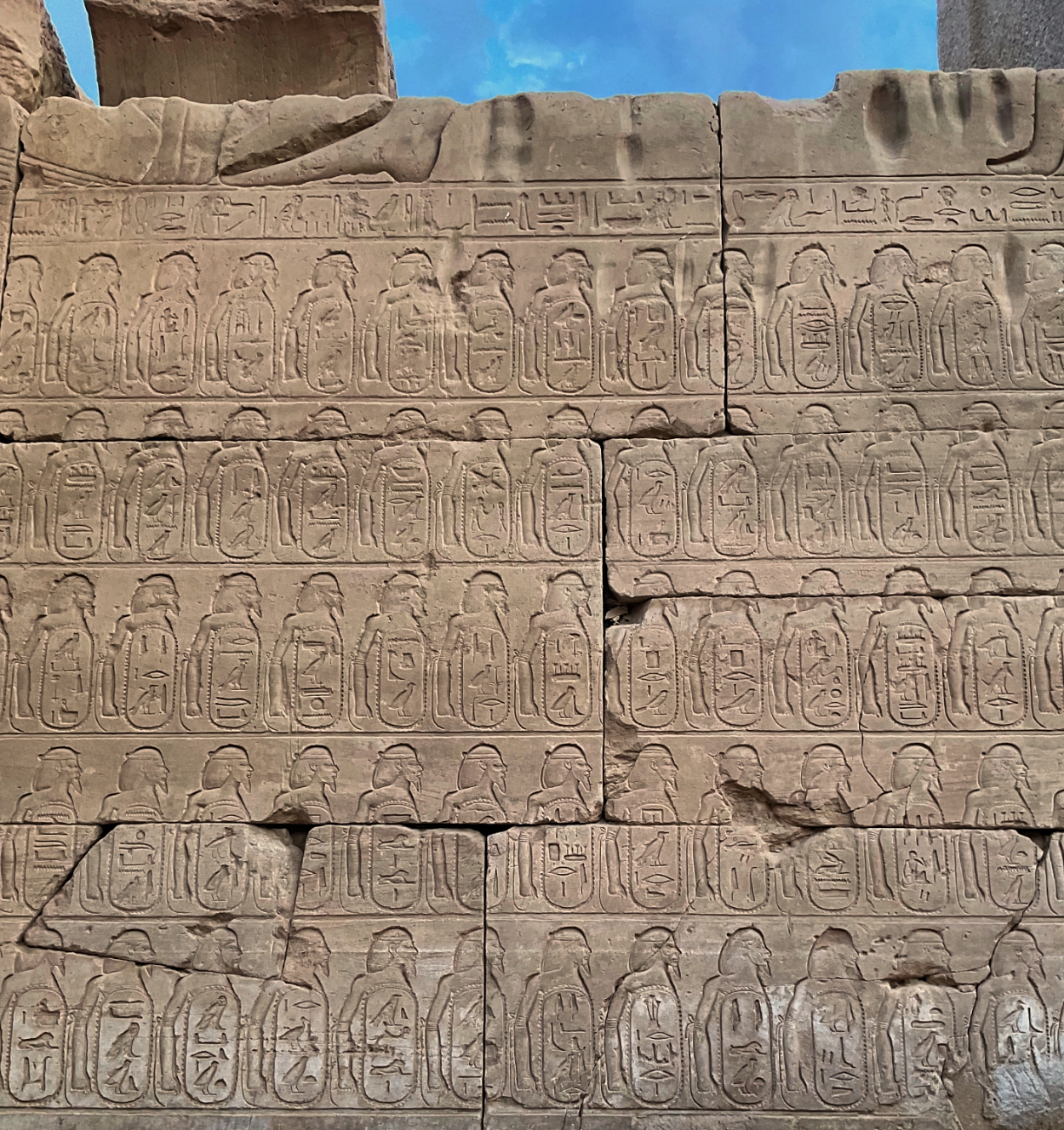
Thutmose III recorded a detailed account of his Near Eastern campaign on the inside walls of the central hallway after the hypostyle hall at the Karnak Temple. These inscriptions describe specific episodes of the warfare and booty lists.
. . . comes from the annals of the 18th Dynasty Pharaoh Thutmose III (r. 1479–1425 BC) inscribed on the walls of the Karnak temple complex in Luxor (ancient Thebes). Thutmose III campaigned into Canaan to quell a rebellion headed by an alliance of Canaanite leaders in the vicinity of Megiddo (appearing in the text as Ma-k-ta). The account indicates that Megiddo was strategically located near the opening of the Wadi Ara, referred to in the annals of Thutmose III as the Aruna pass. The pharaoh defeated the Canaanites, who then fled into the fortified city of Megiddo. Thutmose laid siege to the city and proclaimed that the taking of Megiddo is “the capture of a thousand towns”—a reference to the city’s strategic location (Lichtheim, Ancient Egyptian Literature, 33). Thutmose III’s campaign marked the beginning of Egyptian hegemony over Canaan, characterized by the establishment of numerous Egyptian strongholds in the southern Levant (see Rainey, The Sacred Bridge, 65–69; compare Aharoni, Avi-Yonah, Rainey, and Safrai, The Carta Bible Atlas, 31–33). Megiddo became an Egyptian administrative center and military garrison. Megiddo also appears in Thutmose III’s list of conquered cities (also at the Karnak temple complex; Rainey, The Sacred Bridge, 72–73), and in a list of Canaanite emissaries attributed to Thutmose III (found in Papyrus Leningrad 1116-A).
Kelley, J. L. (2016). Megiddo. The Lexham Bible Dictionary. Lexham Press.
I’ve previously posted on Thutmose III here and here and here.
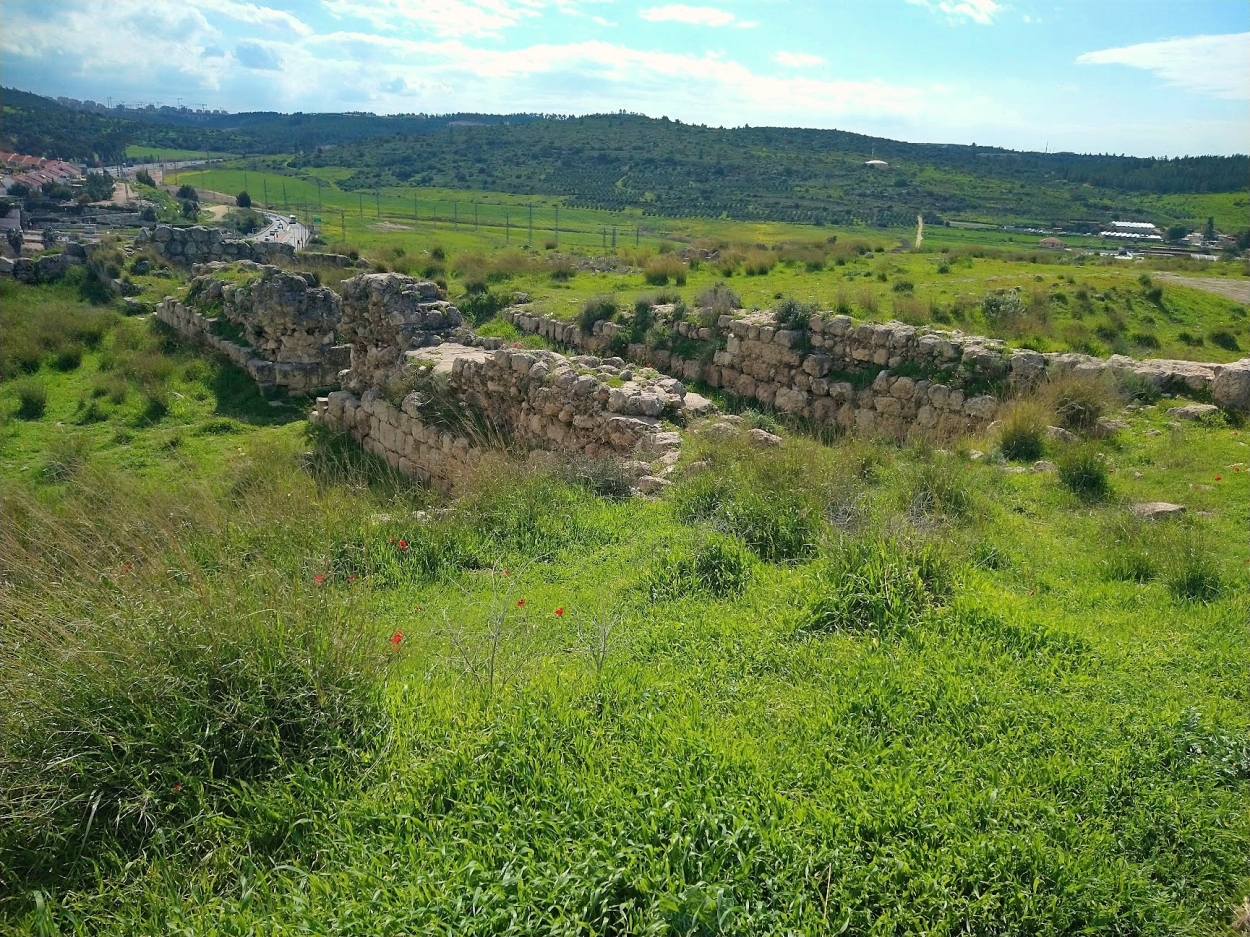
The city of Beth-shemesh was given to the Levites when they were given their possession by lot in the days of Joshua, following the Conquest of Canaan (Josh. 21:16). Years later, during the days of the Judges, the Philistines captured the ark in battle with Israel (1 Sam. 4), but when they were divinely punished they allowed the ark to return. The two cows pulling the cart from Philistian Ekron “headed straight for the road to Beth-shemesh” (1 Sam. 6:12).
Later, in the days of the Divided Kingdom, King Amaziah (Judah) challenged King Jehoash (Israel) to battle. This may have been in retaliation for the destruction and looting carried out by the Israelite mercenaries Amaziah had hired, but then sent back home (2 Chron. 25:6-13). Beth-shemesh was the meeting point of the two armies, which resulted in Amaziah being soundly defeated. The theological reason is given by the inspired historian: “But Amaziah would not listen, for it was from God, that He might deliver them into the hand of Joash because they had sought the gods of Edom.” It was because of Amaziah’s idolatry that God orchestrated events to punish Amaziah. Ironically, it was after God had given Amaziah victory in battle against Edom that Amaziah then decided to worship the gods of Edom!
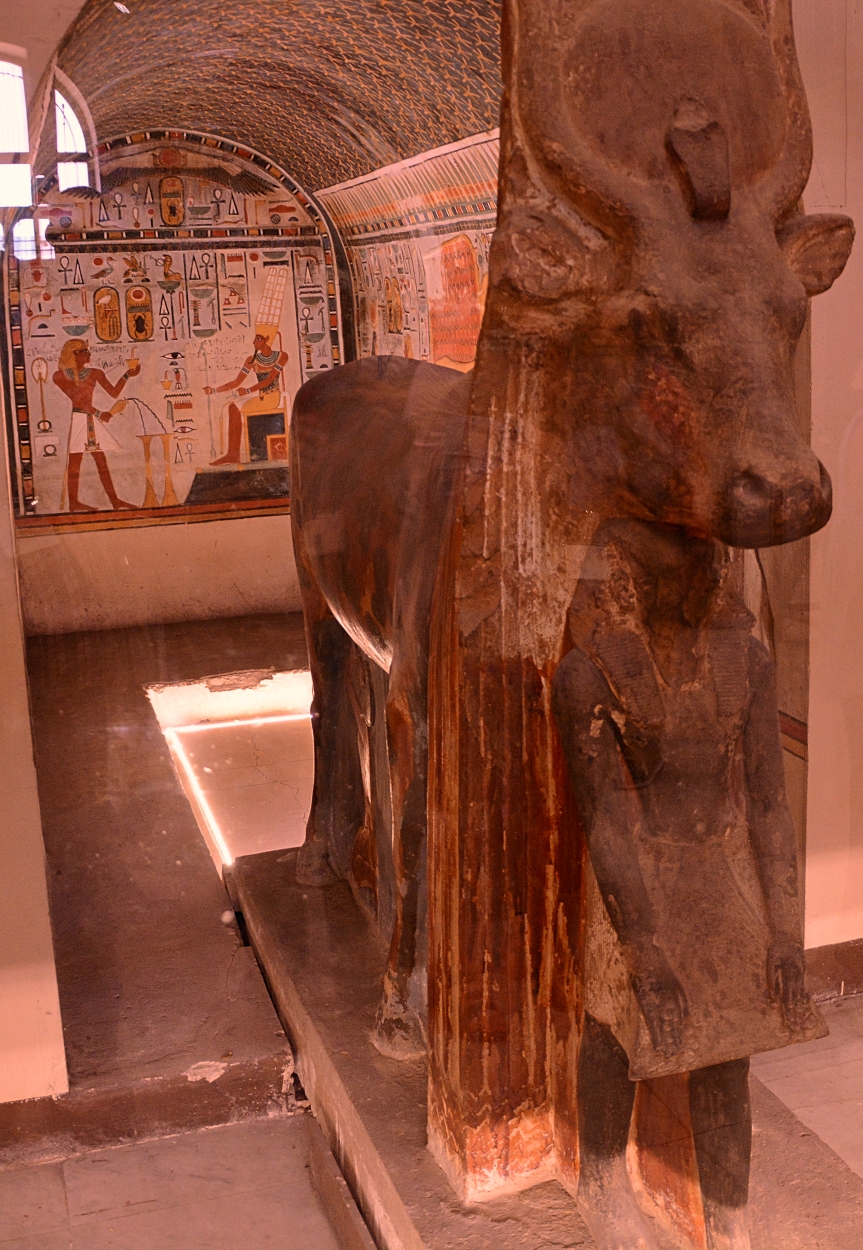
As we continue to explore some of the displays in the Egyptian Museum in Cairo, we look at the shrine dedicated by Tutmosis III to the goddess Hathor at Deir-el-Bahari.
The goddess Hathor appears here in the form of a cow. This was excavated between the temples of Mentuhotep and Hatshepsut by E. Naville, of the Egypt Exploration Fund, 1906, and dates to the 18th dynasty (New Kingdom), at the end of the reign of Tutmosis III (c. 1504-1450) and the beginning of the reign of Amenophis II (c. 1453-1409).
The painting in the back shows Tutmosis III (left) pouring a libation and burning incense to Amon-Re, seated (at right). The dark blue vaulted ceiling depicts the stars of heaven.
The cult of the Sacred Cow was long associated with Hathor, the goddess of the Theban necropolis. Hatshepsut dedicated her sanctuary to the goddess. Prior to its excavation, earthquakes had buried the entrance to the chapel of the Sacred Cow.
The statue of the sacred cow in our photo bears the name of Tutmosis’s successor, Amenophis II. He is here depicted as crouching beneath the head of the sculpture. Hathor is surrounded by papyrus stems. She wears the Hathoric horns with the sun disk and a uraeus serpent on her forehead.
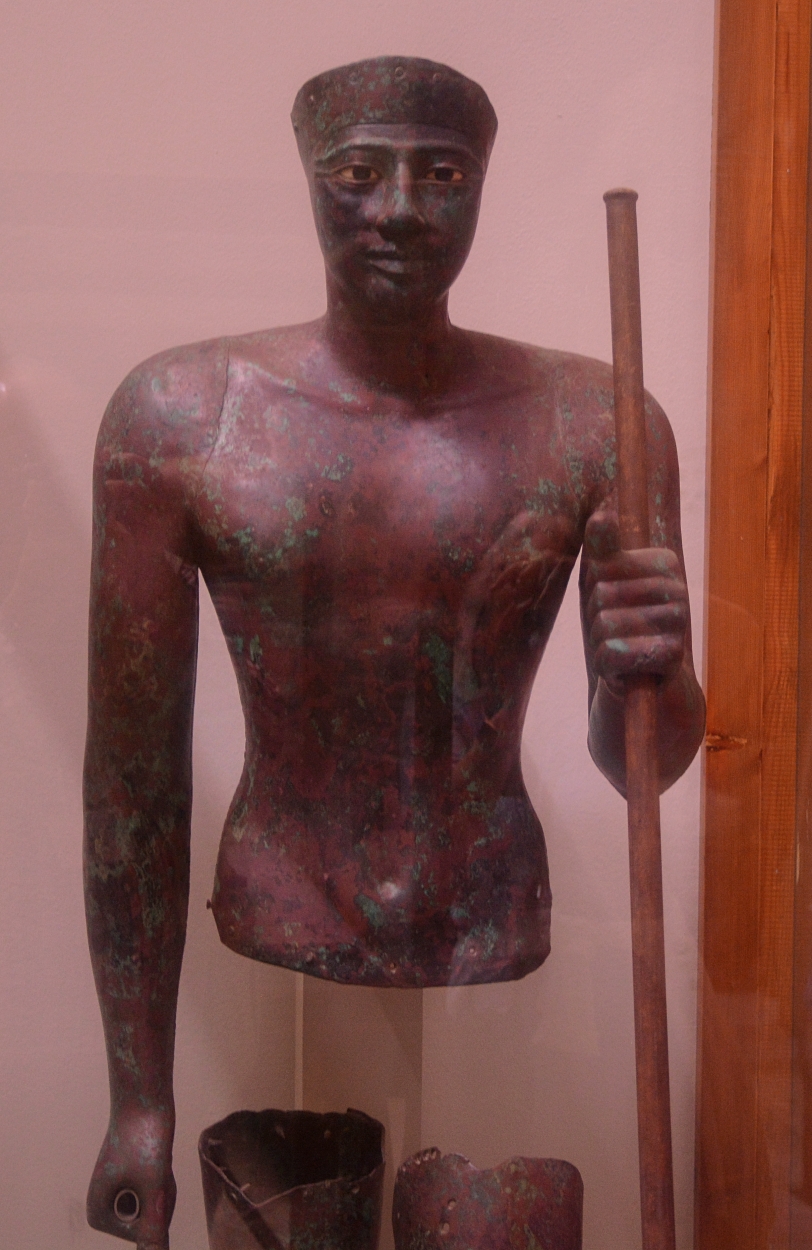
Excavations at the temple of Horus at Hierakonpolis (ancient Nekhen) on the west bank of the Nile (north of Aswan, and south of Edfu), produced some remarkable finds, including a hollow-cast copper statue of Pepi I.
Pepi I had a lengthy reign of about 50 years (c. 2283-2287 BC). His reign is in Dynasty 6, Old Kingdom. Numerous inscriptions record his influence and wealth.
“It is from Pepi’s funerary monument that the modern name of Memphis derives. His pyramid was called Mn-nfr, ‘[Pepi is] established and good'” (Clayton, Chronicles of the Pharaohs, p. 66).
To keep things interesting, Pepi married two daughters of a provincial prince of Abydos who both had the same name, Ankhnesmerire.
Pepi’s pyramid is at South Saqqara, and is badly smashed.
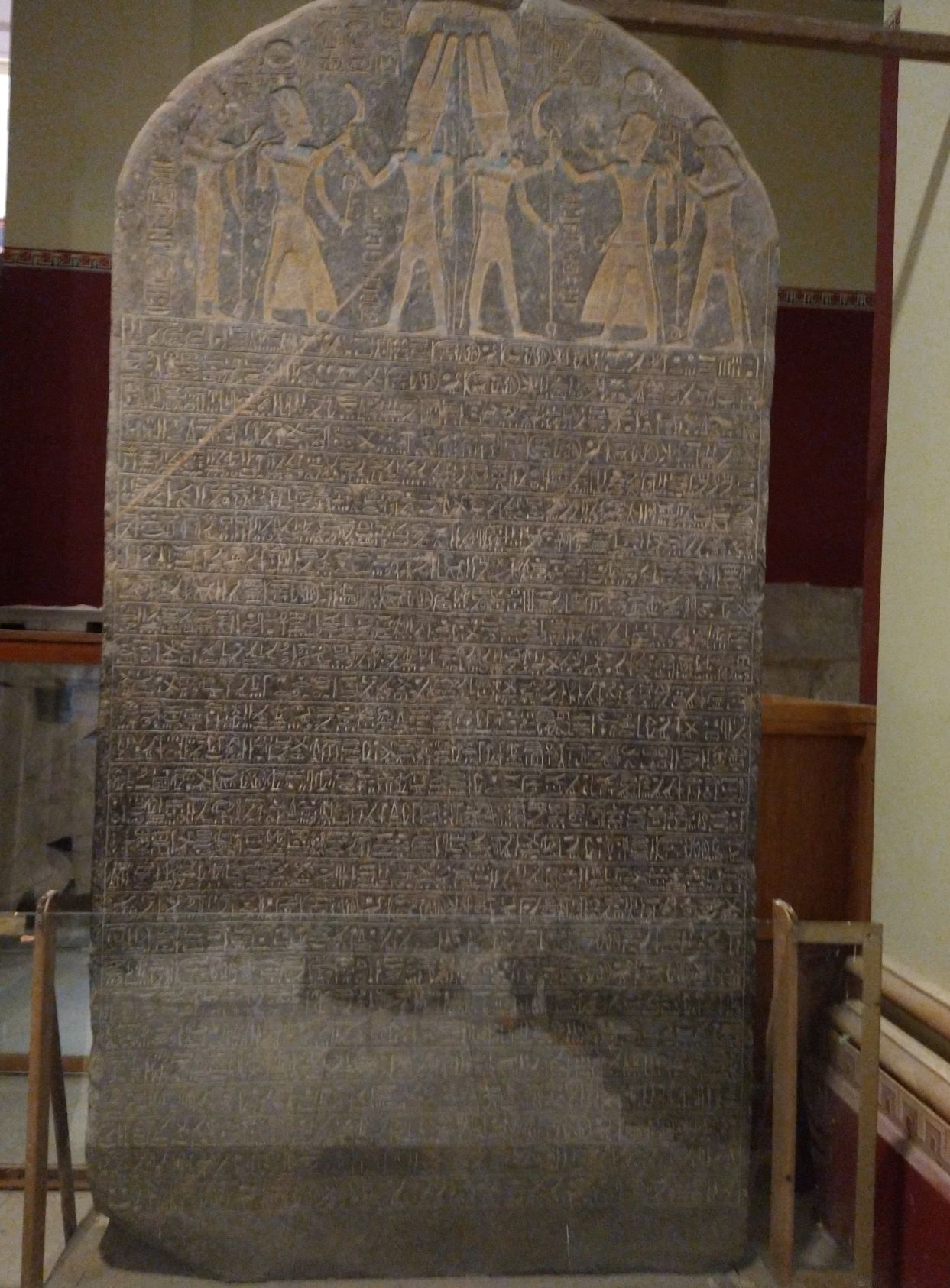
Merneptah, son of Rameses II, ruled Egypt 1213-1203 B.C., in the 19th Dynasty. The Merneptah Stele, made of granit, is an inscription of great archaeological and biblical importance. It contains the first mention of Israel in a source besides the Bible. On our recent tour of Egypt, this is one of the main artifacts I wanted our group to see and photograph while visiting the Egyptian Museum in Cairo.
The stele was discovered in 1896 at Thebes by F. Petrie in 1896. It is 7.5 feet high, and made of black granite. It is displayed now in the Egyptian Museum at Cairo. The inscription includes the lines:
The princes, prostrated, say "Shalom";
None raises his head among the Nine Bows,
Now that Tenhenu has come to ruin, Hatti is pacified.
Canaan has been plundered into every sort of woe. Ashkelon
has been overcome.
Gezer has been captured.
Yano'am was made non-existent.
Israel is laid waste (and) his seed is not.
Hurru has become a widow because of Egypt.
All lands have united themselves in peace.
Anyone who was restless, he has been subdued by the King
of Upper and Lower Egypt, Ba-en-Re-mery-Amun, son
of Re, Mer-ne Ptah Hotep-her-Ma'at, granted life like
Re, daily. (Frank Yurco, BAR, 16:05, Sept/Oct 1990)
The date of this inscription would be about 1207 B.C. By that point in time, Israel was established in the land of Canaan to such an extent that it would be included in a listing of nations defeated by the world’s most powerful monarch.
Many “scholars” deny that Israel even existed as a nation by this point in time, but the inscription proves them to be wrong.
For further reading I recommend Todd Bolen’s article in The Bible and Interpretation. Go to:
At the top of the stele there are two engraved scenes in which Pharaoh Merneptah is wearing ceremonial dress and offers Amun-Ra the reaping hook that symbolized victory and scepters of royalty. In the first scene Merneptah is followed by the goddess ut and in the second by the god Khonsu. Both were members of the Theban triads of gods with Amun-Ra.
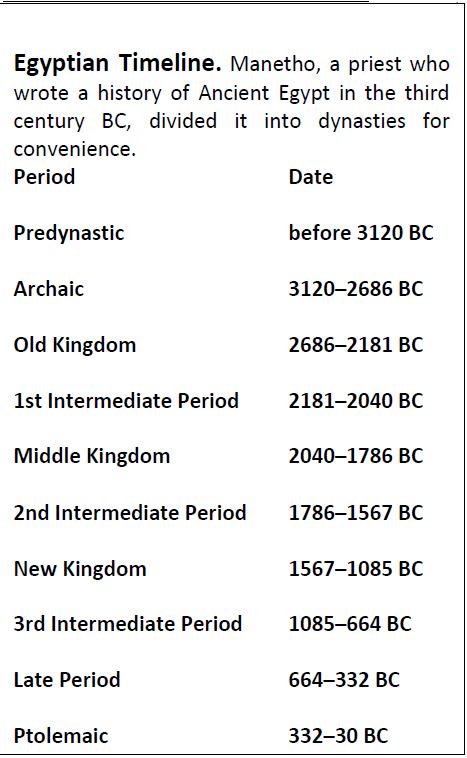
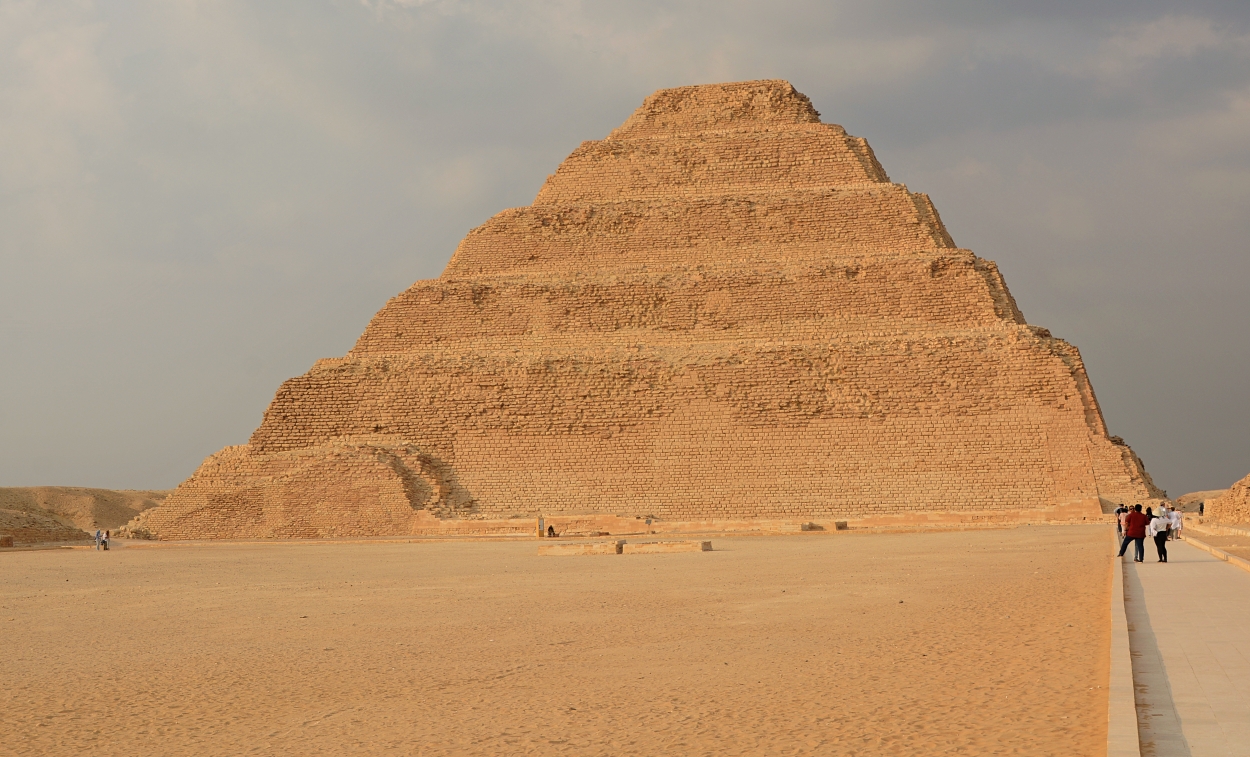
In this post we will give consideration to the first of the pyramid Builders, in the context of Egypt’s Old Kingdom (2686-2181 BC). For your convenience we share the following chart (keep in mind that dates are approximate and may vary):
“Djoser’s pyramid and its surrounding mortuary complex is recognized as the first stone building in the world” (Chronicles of the Pharaoh’s, by Peter Clayton, p. 33), built by his vizier, Imhotep. Though begun “as a simple tomb, the structure was enlarged in height and breadth on five occasions, eventually rising to its present 197 feet. Unlike Egypt’s other pyramids, the Step Pyramid was built with comparatively small limestone blocks” (BAR Nov/Dec 1990, Richard Nowitz).
The pyramid, known as the Step Pyramid, began as a mastaba (an ancient Egyptian tomb rectangular in shape with sloping sides and a flat roof) “but was subsequently subject to several major enlargements, adding one mastaba upon another, until it consisted of six unequal steps rising t to 204 ft 962 m). Its base area is 358 X 411 ft (109 X 125 m)” (Clayton, p. 34).
The statue was found in a small chapel on the north face of the pyramid.
We should note that many have the mistaken notion that the Israelites were used as slave labor to build the pyramids. The pyramids were built some centuries before Israel came into being. They were built prior to the time of Abraham!
Having just returned from a 12-day tour of Egypt, I want to share some of our photos in upcoming posts, beginning with some from the Egyptian Museum in Cairo.
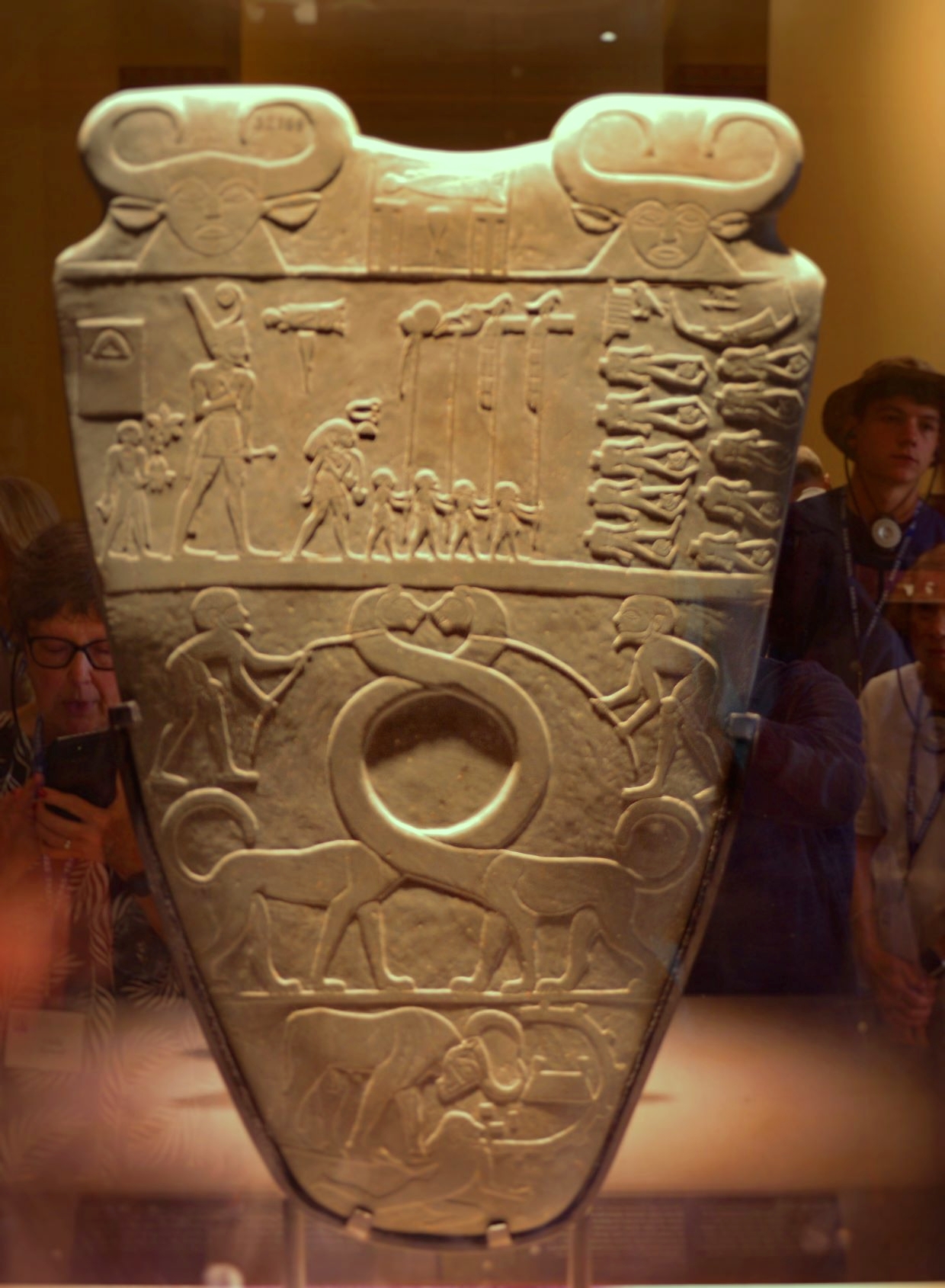
One of the very significant displays considered to be “of major artistic and historical importance” (Illustrated Guide to the Egyptian Museum, eds. Bongioanni and Croce, p. 28, discussed in “Protodynastic and Predynastic Periods”) is the Narmer Palette. This votive tablet “is the earliest record from Egypt (Chronicle of the Pharaohs, Clayton, p.18).
Gary Byers wrote:
More than 100 years ago, archaeologists excavated an ancient Egyptian temple in the Upper Egyptian city of Hierakonpolis. Here they discovered a stone palette used to grind cosmetics, with carving on both sides. One side had the picture of a man wearing the crown of Upper Egypt, and the other side had a man wearing the crown of Lower Egypt. Scholars decided the picture on each side was the same man, and his name was Narmer. This was the earliest representation of anyone wearing the crowns of both Upper and Lower Egypt. It suggests that this was the first king of a united Egypt.
Byers, G. A. (2003). The Scorpion King. Bible and Spade, 15(3), 28.
The hieroglyphs of the royal name are a mud fish depicted horizontally above a vertical chisel, read as the name of Narmer (Chronicles, 18). He is shown in as wearing the White Crown of Upper Egypt (the hedjet) and the Red Crown of Lower Egypt (dishret), indicating that he is now king of both lands, i.e., the unification of the country is commemorated. Narmer is presented as a victorious king, smiting a prisoner with his mace. This became an icon of majesty from ancient Egyptian history down to Roman times.
At the top are facing heads of the cow-faced goddess Hathor. The Horus falcon is depicted in front of Narmer.
On the obverse of the Palette the king is escorted by officials towards two rows of decapitated corpses.
Yesterday (September 14, 2022) marked the 200th anniversary of the date that Jean-François Champollion (1790–1832) cracked the code of the Egyptian hieroglyphic script. The granodiorite stela, which dates to 196 BC, is written in Egyptian hieroglyphic, demotic (cursive Egyptian) and Greek, and is displayed in the British Museum. Previously I posted an article here.
The Biblical Archaeology Society made an informative post yesterday — click here.
Fant and Reddish have the following information:
The Rosetta Stone is the most visited object in the enormous British Museum, viewed by millions of visitors since it was first displayed to the public in 1802. It has been called “the most famous piece of rock in the world.” Unlike many famous ancient artifacts, such as the King Tut treasures, the fame of the Rosetta Stone does not derive from its intrinsic value or beauty, nor from the message of its inscription, as is the case, for example, with the Code of Hammurabi. Yet this inscription has yielded incalculable value for an understanding of ancient history, as it provided the key to unlocking the mystery of Egyptian hieroglyphics. As a result, scholars have been able to decipher the meaning of countless historical writings previously lost to civilization. The inscription itself is unremarkable, a flattering decree issued by the priests of Memphis that granted a royal cult to the young King Ptolemy V, only thirteen years old at the time, in exchange for certain favors. It was written in three languages, representing the languages used by the powerful and literate groups of Egypt at that time: hieroglyphics, understood stood and used only by the priestly class; demotic, the cursive script used by the literate population at that time; and Greek, the language of the ruling government. Since ancient Greek was a language understood by modern scholars, the discovery of the Rosetta Stone enabled them to compare the Greek letters against the hieroglyphic signs and therefore solve the mystery of hieroglyphics.
(Clyde E. Fant; Mitchell G. Reddish. Lost Treasures of the Bible: Understanding the Bible through Archaeological Artifacts in World Museums. Kindle Locations 587-592).
The Lexham Bible Dictionary makes the following observations:
In addition to renewing interest toward Egypt, Napoleon’s expedition to Egypt resulted in the recovery of the Rosetta Stone, which would prove to be of immense importance to the future of Egyptology (Pope, Decipherment, 60). The Rosetta Stone was commissioned by Ptolemy V in 196 BC, and featured a message written in Egyptian hieroglyphs, Demotic (a cursive form of Egyptian), and Greek (Pope, Story, 62). The triscript monument would provide the key to deciphering the previously unintelligible Egyptian language.
Prior to the discovery of the Rosetta Stone, linguists had hypothesized that Coptic (which could be read) was a late form of Egyptian, some hieroglyphs were consonantal, and cartouches demarcated royal names. Several scholars used this information and the Rosetta Stone to decipher Egyptian language. English linguist T. Young made great strides toward deciphering Egyptian, but he was impeded by his belief that hieroglyphs were mostly symbolic rather than phonetic (Bard, Introduction, 33). French philologist J. Champollion proved most successful. His identification of the name Ptolemy in the hieroglyphic portion of the inscription enabled him to begin compiling a list of consonantal hieroglyphic signs. Soon he successfully detected the name Cleopatra on an obelisk from Philae as well as the name Xerxes on a Persian vase inscribed with both hieroglyphs and Persian cuneiform (Pope, Decipherment, 70–75). He published his findings in Precis du systeme hieroglyphique in 1824 (Pope, Story, 76). Subsequent linguists expanded on Champollion’s work, and by the end of the 19th century, scholars were producing translations of entire Egyptian texts.
The decipherment of hieroglyphs was a vital element in the progress of Egyptian archaeology. Egyptian tombs, temples, and public monuments were usually inscribed with a record of who built them and why (see Chavalas and Hostetter, “Epigraphic Light,” 53–58). Funerary texts were written both on the walls of tombs and on scrolls placed within them. Excavators were no longer dealing with just stones, statues, and pots, but with intelligible texts.
Harmon, J. A. (2016). Egypt, Archaeology of. In J. D. Barry, D. Bomar, D. R. Brown, R. Klippenstein, D. Mangum, C. Sinclair Wolcott, L. Wentz, E. Ritzema, & W. Widder (Eds.), The Lexham Bible Dictionary. Lexham Press.


 Posted by Leon Mauldin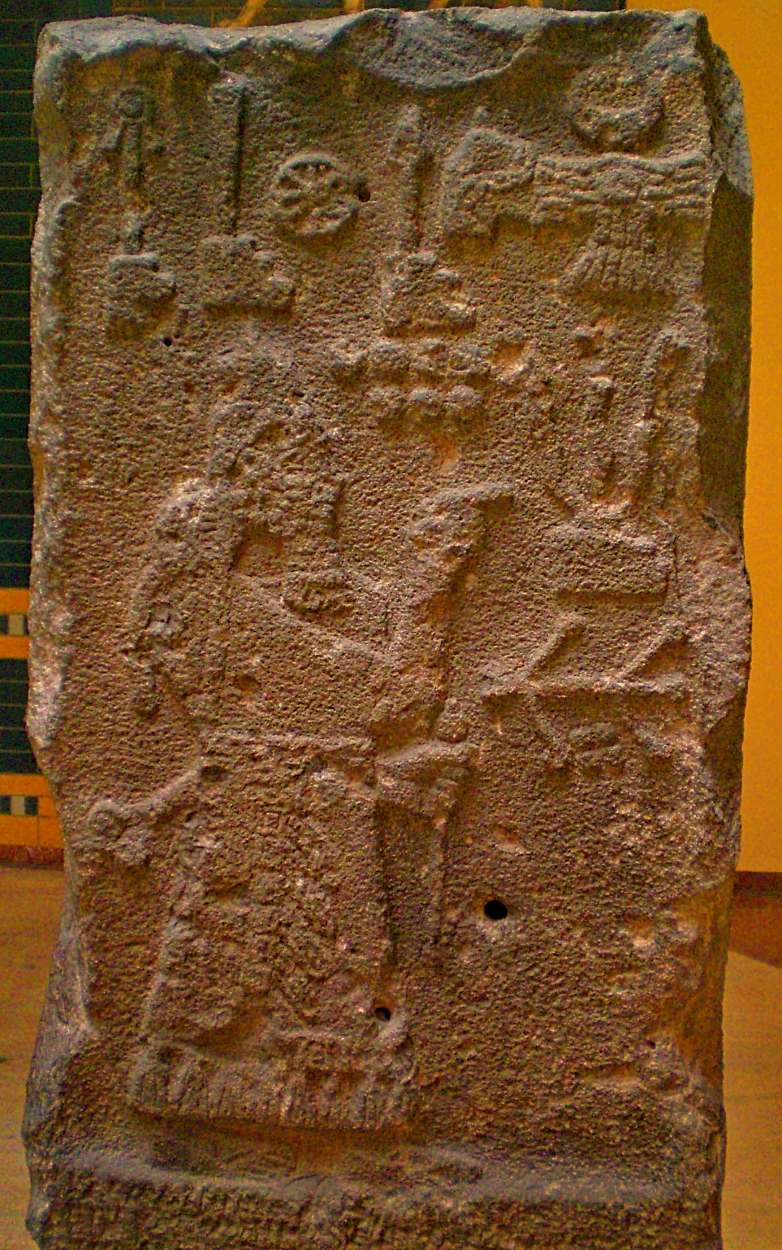




 leonmauldin.blog