Megiddo

April 6, 2011

Megiddo is first mentioned in Scripture in Joshua 12:21 as one of the cities captured under the leadership of Joshua and assigned to the tribe of Manasseh (17:11). Nelson’s NIBD speaks of the importance of this site:

Megiddo was situated on the main road that linked Egypt and Syria. Overlooking the Valley of Jezreel (Plain of Esdraelon), Megiddo was one of the most strategic cities in Palestine. All major traffic through northern Palestine traveled past Megiddo, making it a strategic military strong-hold.

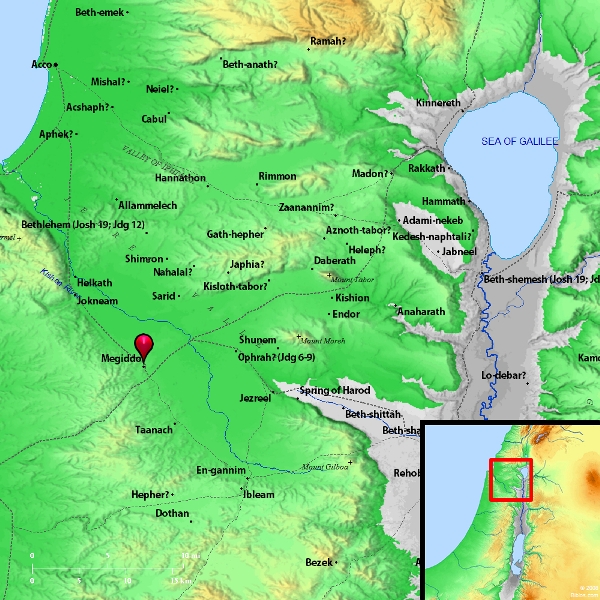
Therefore it was a great loss when Israel subsequently did not retain this city (Judges 1:27), whose location can be seen in the map below:

Megiddo. Map courtesy of BibleAtlas.org

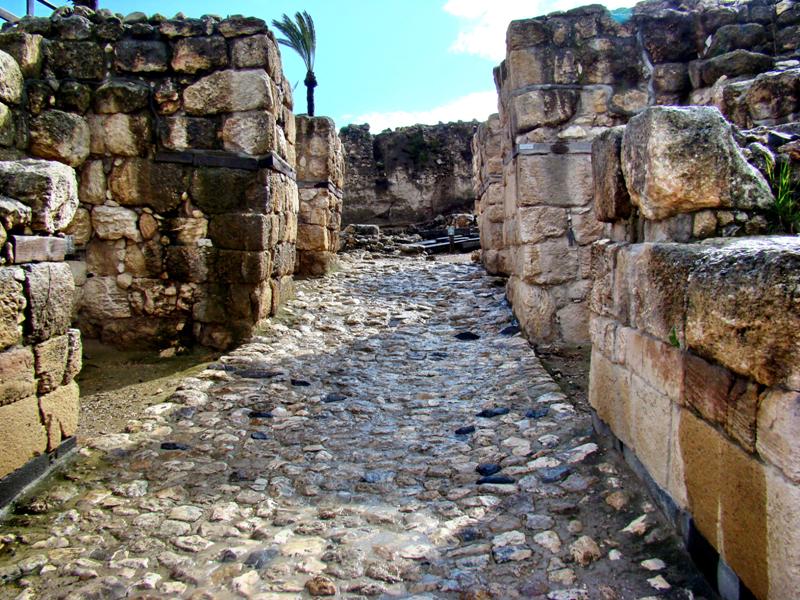
Megiddo was a city of great antiquity. The impressive Canaanite gate can be seen here in our photo:

Canaanite Gate at Megiddo. Photo by Leon Mauldin.

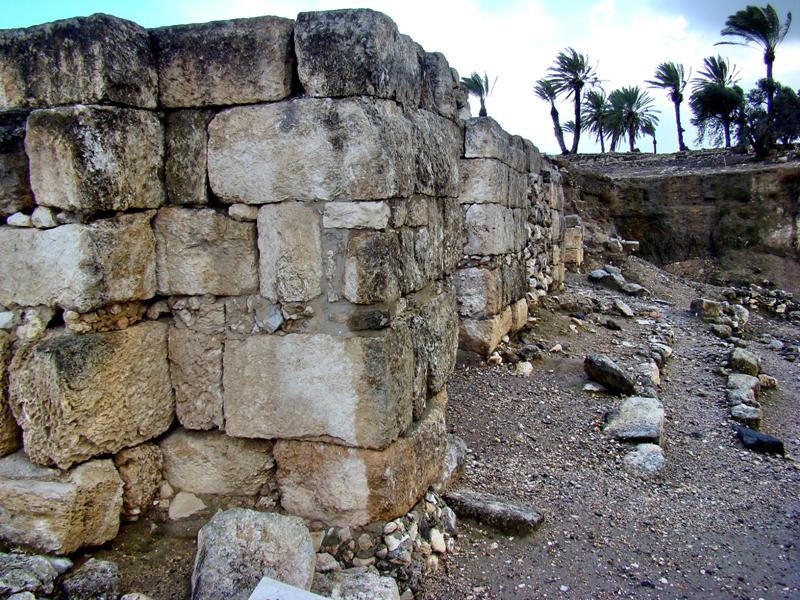
This was one of the cities later fortified by King Solomon (1 Kings 9:15) during the United Kingdom period (Iron Age). The Solomonic gate was here:

Solomonic Gate at Megiddo, a fortress city. Photo by Leon Mauldin.

Crucial battles were fought here or near here.

1.During the time of the Judges, Barak’s forces (Deborah was the Judge and Prophetess) defeated the Canaanite enemy near here (Judges 4-5). From Megiddo one can easily see Mt. Tabor, mentioned in the account (4:14) ; Judges 5:19 refers to the “waters of Megiddo.”

2. In 2 Kings 9:27, Judah’s king Ahaziah died here by the hand of Jehu; the year was 841 BC.

3. Good King Josiah (also of Judah) was killed here by Pharaoh Necho of Egypt; the year was 609 BC.

4. The word Armageddon (Rev. 16:16) is rendered Har-Magedon by the NASB and means The Mount of Magedon, i.e., Mt. Megiddo.

Click on images for higher resolution.


Paul Preached at Caesarea

April 2, 2011

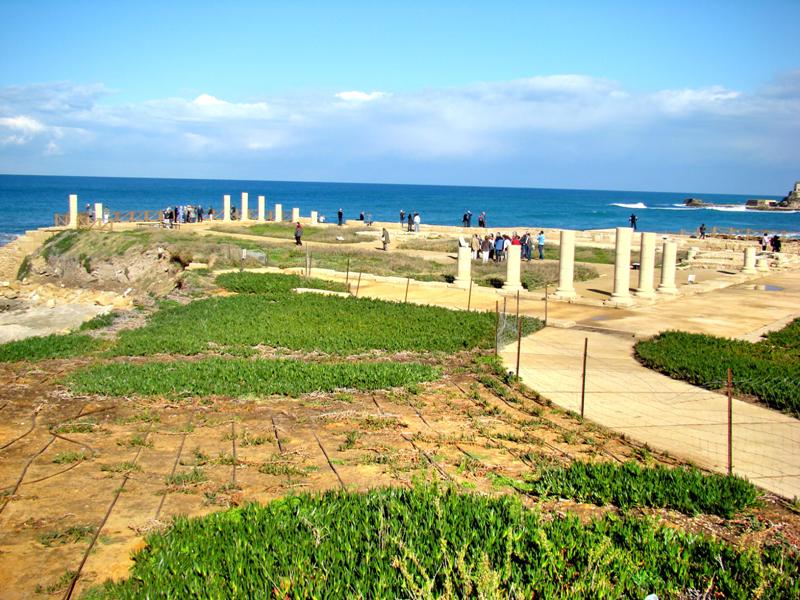
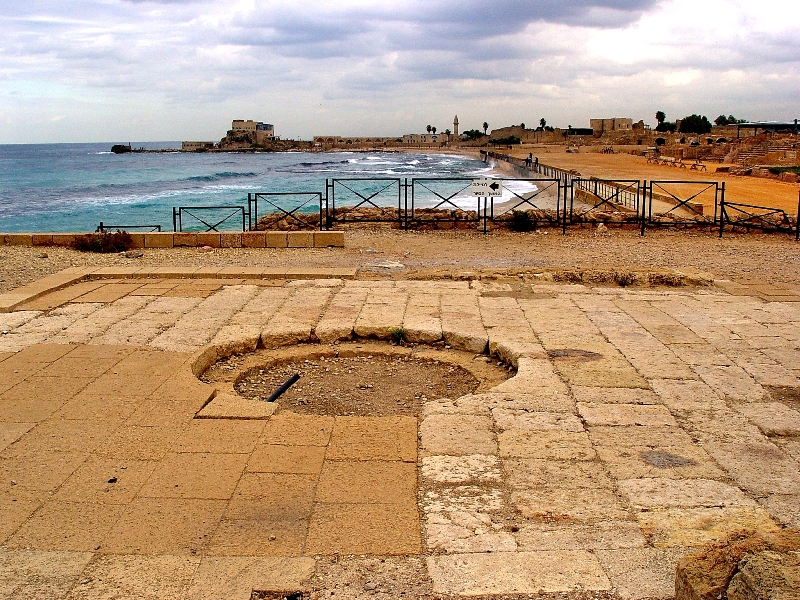
After the third missionary journey, Paul was taken by a military escort from Jerusalem to Caesarea (Acts 23:23ff.). He would be there at Caesarea as a prisoner for two years, although provisions were made for his friends to attend to his needs (Acts 24:23). It is believed that Paul would have been confined in the palace built by Herod the Great, the ruins of which can be seen in our photo.

Governor's Palace at Caesarea. Photo by Leon Mauldin.


BAR informs us,

This ancient building, which we now call the Promontory Palace, was first excavated in 1976 by Ehud Netzer of the Institute of Archaeology of the Hebrew University of Jerusalem. Netzer returned to the site in 1990 and brought in a new American team led by Kathryn Gleason and Barbara Burrell under the auspices of the University of Pennsylvania. Its members are mainly student volunteers, though in 1992 they were joined by a contingent of Israeli workers, most of them new immigrants from Russia (May/June 1993).

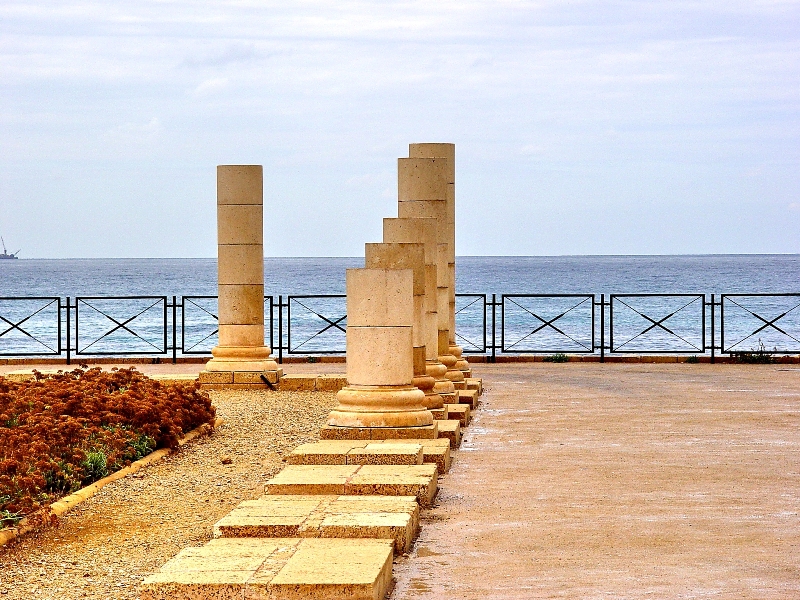
Our previous post featured photos of the swimming pool and mosaics. Below is a more detailed shot of some of the columns.

Palace at Caesarea. Photo by Leon Mauldin.

Paul would have the occasion here to preach before Felix (Acts 24) and his successor Festus (Acts 25) as well as Herod Agrippa II (Acts 26). The audience hall in our photo is likely the site where Paul would have given his defense of the Gospel before these dignitaries.

Audience Hall at Palace at Caesarea. Likely site of Paul's preaching. Photo by Leon Mauldin.


It was here that Paul exercised his right as a Roman citizen–“I appeal to Caesar” (Acts 25:11). Festus responded, “To Caesar you have appealed; to Caesar you shall go” (v.12, ESV).

Click on images for higher resolution.


The Pilate Inscription at Caesarea

March 21, 2011

We arrived safely home Saturday from our Israel tour. It was a great trip and a wonderful opportunity for all of our group to learn more about the geographical setting of the events of Scripture. I agree with James Houston’s observation in his entry, “The Geographical Setting of the Bible”:

The geography of the Bible is relevant to biblical study because the acts of God with men are dealt with in a particular geographical setting and a specific historical context. (The Expositor’s Bible Commentary, Volume 1:, p. 83).

We plan to continue to post some photos from this trip. Today’s photo is that of the “Pilate Inscription,” discovered at Caesarea in 1961.

Pilate Inscription at Caesarea. Photo by Leon Mauldin.

One of the most sensational discoveries at Caesarea was this inscribed stone mentioning Pontius Pilate. Found in a step of the theater, it was originally part of a nearby temple honoring the emperor Tiberius. The stone was moved to the theater to repair a step after the temple fell into disuse. The Latin reads: “Pontius Pilate, the Prefect of Judea, has dedicated to the people of Caesarea a temple in honor of Tiberius” (BAR 08:03 May/June 1982).

John 18 records Pilate’s questioning of Jesus at his “trial:”

33 So Pilate entered his headquarters again and called Jesus and said to him, “Are you the King of the Jews?” 34 Jesus answered, “Do you say this of your own accord, or did others say it to you about me?” 35 Pilate answered, “Am I a Jew? Your own nation and the chief priests have delivered you over to me. What have you done?” 36 Jesus answered, “My kingdom is not of this world. If my kingdom were of this world, my servants would have been fighting, that I might not be delivered over to the Jews. But my kingdom is not from the world.” 37 Then Pilate said to him, “So you are a king?” Jesus answered, “You say that I am a king. For this purpose I was born and for this purpose I have come into the world- to bear witness to the truth. Everyone who is of the truth listens to my voice.” 38 Pilate said to him, “What is truth?” After he had said this, he went back outside to the Jews and told them, “I find no guilt in him.

Pilate really did not want to crucify Jesus. His purpose in scourging Jesus was to satisfy the Jewish leaders and thereby avoid putting Jesus to death (John 19:1-6), but he underestimated their determination. John 19 continues,

7 The Jews answered him, “We have a law, and according to that law he ought to die because he has made himself the Son of God.” 8 When Pilate heard this statement, he was even more afraid. 9 He entered his headquarters again and said to Jesus, “Where are you from?” But Jesus gave him no answer. 10 So Pilate said to him, “You will not speak to me? Do you not know that I have authority to release you and authority to crucify you?” 11 Jesus answered him, “You would have no authority over me at all unless it had been given you from above. Therefore he who delivered me over to you has the greater sin.”

The display in Caesarea is a replica. The original is in the Israel Museum. Click on image for higher resolution.


From Dan to Beersheba

March 17, 2011

Tonight as I write this we are in Beersheba, so we have traveled the biblical “from Dan to Beersheba” that is referenced so many times in Scripture (1 Sam. 3:20, etc.), having been to Dan earlier last week.

Last evening we spent the night at the Dead Sea at En Boqeq, but the internet was down when I was attempting to use it. Yesterday AM before leaving Jerusalem we visited the Wailing Wall. This wall was not part of the temple itself, but was the retaining wall for the temple and the structures on the temple mount.

Wailing Wall in Jerusalem. Photo by Leon Mauldin.

Jerusalem is defined by three valleys: the Kidron, Tyropean and Hinnom. In the above photo we are standing in the Tyropean Valley.

The first several courses of larger stones starting from bottom are Herodian. Jews come here to mourn the destruction of the temple, among other reasons.

Just south of the wailing wall, excavations have reached down to first century street level. There you can see the stones that have been uncovered that were part of the temple buildings, hurled down into the valley during the AD 70 destruction. This photo shows the fulfillment of Jesus’ promise that not 0ne stone would be left upon another, that would not be cast down (Matt. 24:2). He said that this would occur during that generation (v.34).

Temple Stones from AD 70 Destruction. Photo by Leon Mauldin.

After leaving Jerusalem, we went to see Anathoth. This was the site of the city which was home to Jeremiah.

Anathoth, home of prophet Jeremiah. Photo by Leon Mauldin.

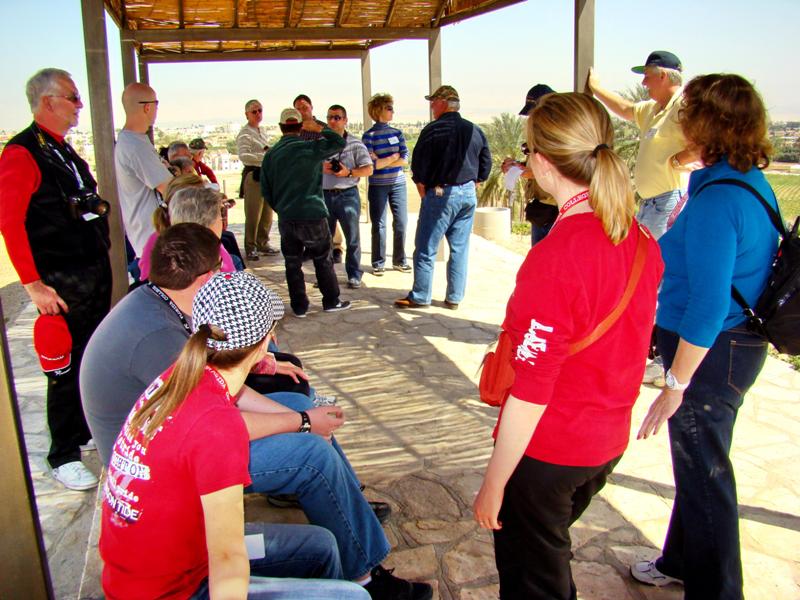
We also went to Old Testament Jericho. While there I took a group photo.

Group Photo at OT Jericho. Photo by Leon Mauldin.

We’ve learned a lot on this journey. We are truly blessed.

This morning upon leaving En Boqeq we went to Masada.

Leon Mauldin at Zoar.

En route to Masada we stopped at Zoar for the view. The brook drains down to the Dead Sea. It is not clear if there is any connection between  this location and the Zoar mentioned in Gen. 19:22ff., in connection with the narrative of lot and the destruction of Sodom and its surrounding cities. The mountains just south of this area are called the Mountains of Sodom.

Masada was a Herodian fortress. It was here that the Zealots fled after the Roman destruction of Jerusalem in AD 70. The Romans laid siege to Masada, and in AD 73 broke through the wall. They found the Jews inside chose death by their own hands rather than be captured by the Romans.

Tomorrow is a full schedule of sites from Tel Sheva (Beersheba) working our way up to Joppa, and from then to TLV for our departing flight home, the Lord willing.  Thanks again for following our travels, and for the many kind notes & prayers.

Click on photos for higher resolution.


Nuzi Tablets and the Patriarchs

March 5, 2011

Many in the scholarly world are dismissive about the historicity of the patriarchs. One source that is helpful in understanding the world of the biblical patriarchs is that of the Nuzi Tablets.

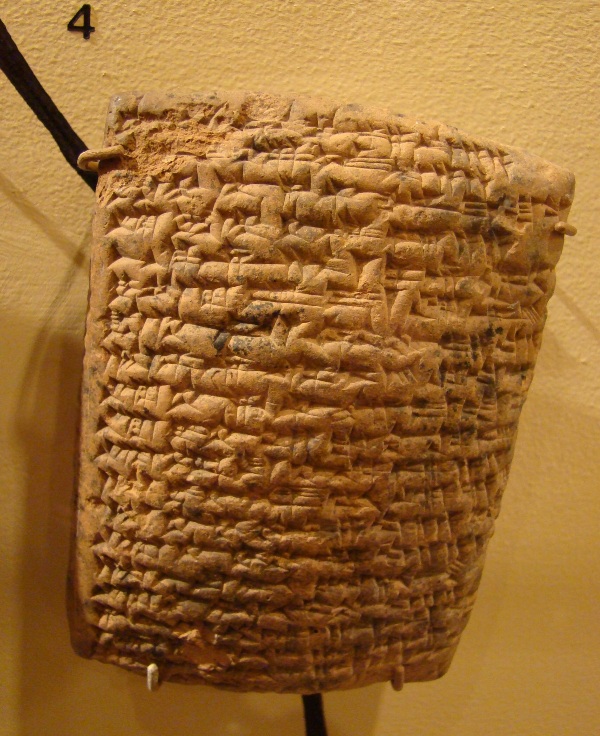
Nuzi was a Hurrian administrative center not far from the Hurrian capital at Kirkuk in northern Iraq. The Hurrians are equivalent to the Horites in the Old Testament, also called Hivites and Jebusites. Excavations were carried out at Nuzi by American teams from 1925 to 1933. The major find was more than 5,000 family and administrative archives spanning six generations, ca. 1450–1350 BC. They deal with the social, economic, religious and legal institutions of the Hurrians. (Bible and Spade 18:32).

Nuzi Tablet. Semitic Museum. Photo by Leon Mauldin.

The tablets tell of practices similar to those in Genesis such as adoption for childless couples (Gn 15:2–3), children by proxy (Gn 16; 21:1–21), inheritance rights (Gn 25:29–34), marriage arrangements (Gn 28–31) and levirate marriage (Gn 38; Dt 25:5–10). They also demonstrate the significance of the deathbed blessing (Gn 27; 48–49) and household gods (Gn 31:14–19, 30–35). Some Nuzi tablets, called “tablets of sistership,” have agreements in which a man adopted a woman as a sister. In the society of the Hurrians, a wife enjoyed both greater protection and a superior position when she also had the legal status of a sister. In such a case, two separate documents were drawn up, one for marriage and the other for sistership. This may explain why both Abraham (Gn 12:10–13; 20:1–2) and Isaac (Gn 26:7) said their wives were their sisters. It is possible that they had previously adopted them to give them higher status, in accordance with the custom of the day.

Family records were highly valued at Nuzi, being passed down from father to son for as many as six generations. Nowhere else in the ancient Near East is this kind of reverence for family documents illustrated, except in the Old Testament. Indirectly, the practice at Nuzi supports the position that Genesis and the other books of history in the Old Testament are grounded in actual family, clan and tribal records carefully passed from generation to generation.

As with Mari, the Nuzi records demonstrate that the cultural practices recorded in the book of Genesis are authentic. The accounts are not fictional stories written at a much later time, as some critics claim, since the customs were unknown in later periods (ibid.).


Also, and ultimately, it is important to remember that Jesus endorsed and taught the historicity of the patriarchs! cf. Matt. 8:11; 22:32, etc.

Click on image for higher resolution.


Arad in the Negev

February 21, 2011

Arad is first mentioned in Scripture in Numbers 21:1, “The king of Arad, the Canaanite, who dwelt in the South, heard that Israel was coming on the road to Atharim, then he fought against Israel and took some of them prisoners.” This was in the last year of the 40 years wilderness wandering.  Israel prayed for deliverance and the LORD gave them victory.

Map by Bibleatlas.org

BAR notes:

The Israelite fortress at Arad is unique in the Land of Israel. It’s the only site excavated with modern archaeological methods that contains a continuous archaeological record from the period of the Judges (c. 1200 B.C.) to the Babylonian destruction of the First Temple (580 B.C.). This distinction promises to make Arad the type-site for pottery chronology, especially in southern Israel, against which pottery from other sites can be confidently tested and dated. Not only is the pottery sequence continuous, but the timelines between the various strata during which the Israelite fortress was built and rebuilt are for the most part clear and can often be connected with well-known historical and datable events.

Arad is also special for other reasons. The Israelite fortress there was found to contain the only Israelite temple ever discovered in an archaeological excavation.

The excavation of the fortress also yielded a unique series of inscriptions. The inscriptions, written for the most part with ink on potsherds—called ostraca (singular, ostracon)—include political, administrative and sometimes even religious documents. Other sites have yielded ostraca collections—for example, the Lachish letters and the Samaria ostraca—but each of those collections belonged to only one major stratum and time period. At Arad the inscriptions span a period of 350 years and cover six different strata. In all, more than one hundred texts and fragments were recovered. (13:02 March/April 1987).

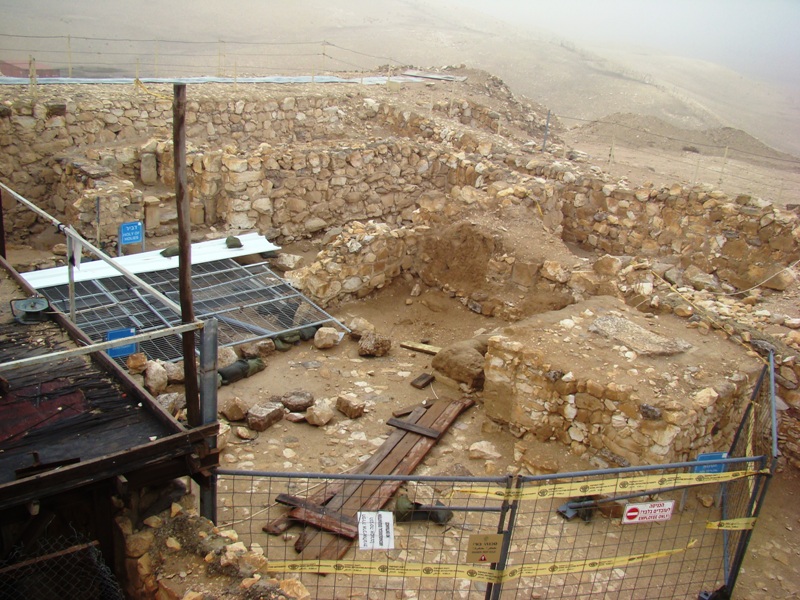
The 2nd paragraph in our quote above mentioned the Israelite temple which has been excavated at Arad. The ruins can be seen in our photo:

Israelite Temple at Arad. Photo by Leon Mauldin.

The raised square platform at right was the altar. This temple was destroyed either in the reforms of Judah’s good king Hezekiah or perhaps Josiah.

Click on images for higher resolution.


Socoh, in the David & Goliath Narrative

October 21, 2010

Our recent posts have included aerial photos of Azekah and Khirbet-Qeiyaffa (Elah Fortress), both of which are in the Valley of Elah. (Some suggest that Khirbet-Qeiyaffa may turn out to be the biblical Ephes Dammim.)

Another site mentioned in the biblical record and featured in today’s post Socoh. 1 Sam. 17 includes this site as the geographical setting is provided for the battle between the Philistines and the Israelites, when David killed Goliath. The text reads:

Now the Philistines gathered their armies for battle; and they were gathered at Socoh which belongs to Judah, and they camped between Socoh and Azekah, in Ephes-dammim.  Saul and the men of Israel were gathered and camped in the valley of Elah, and drew up in battle array to encounter the Philistines.  The Philistines stood on the mountain on one side while Israel stood on the mountain on the other side, with the valley between them. (1 Sam. 17:1-3)

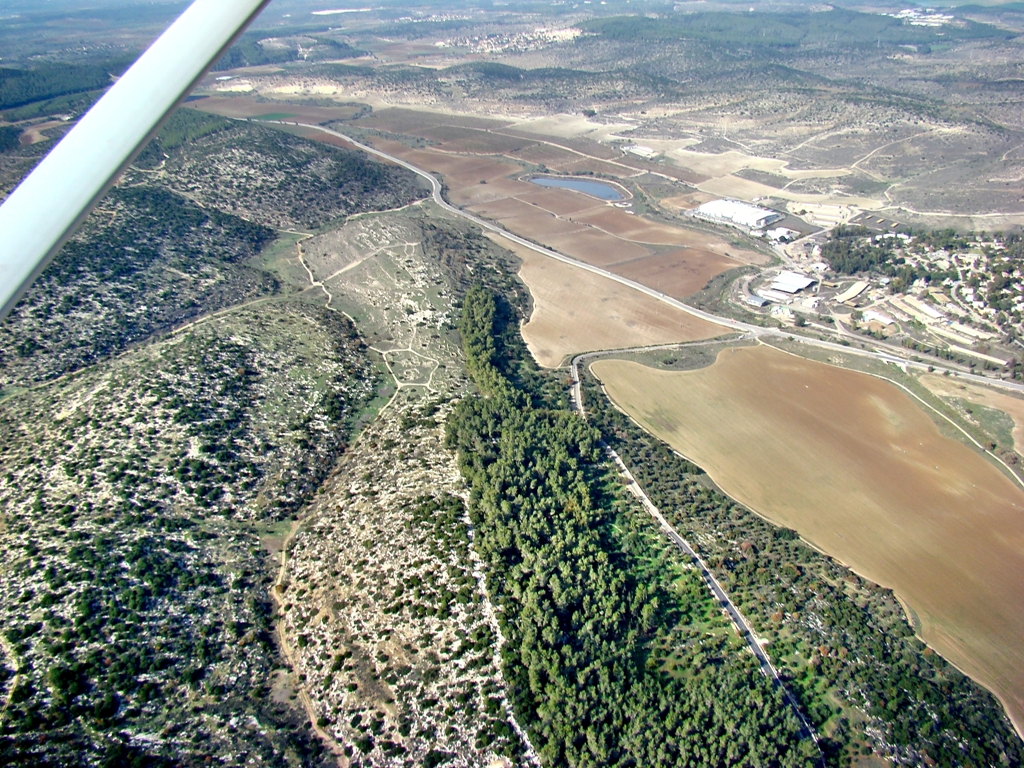
Our photo shows tel Socoh in center (look to the left and above the horizontal road that dissects the field in center).

Aerial of Socoh in Elah Valley. Scene of Philistine-Israel Battle of 1 Sam. 17. Photo ©Leon Mauldin.

If you note the tiny tree-line above tel Socoh, across the road, this is the brook from which David selected five smooth stones, one of which he used to slay Goliath.

In the distance (just right of wing brace at top) you can see tel Azekah. For 40 days this valley rang out with the threatening voice of loud-mouth Goliath, until the shepherd David rose to the challenge, prompted by this faith in the God of Israel.

Socoh (also spelled Sochoh and Soco) had earlier been assigned to the territory of Judah (Josh. 15:35). Later it was fortified by Solomons’ son King Rehoboam (2 Chron. 11:7).  Later still, in the days of King Kezekiah, Socoh was among the cities of the Shephelah listed in 2 Chron. 28:18 as raided and conquered by the Philistines.  Apparently Socho had been an administrative center during Hezekiah’s reign as indicated by the numerous stamped jar handles with the seal of Socoh.

Click on image for higher resolution.


Khirbet-Qeiyafa

October 18, 2010

An archaeological site of current interest is Khirbet-Qeiyafa, the Elah Fortress.  Luke Chandler has been involved in digs there, and his blog reports on some of the findings there and their implications. Go to:

lukechandler.wordpress.com


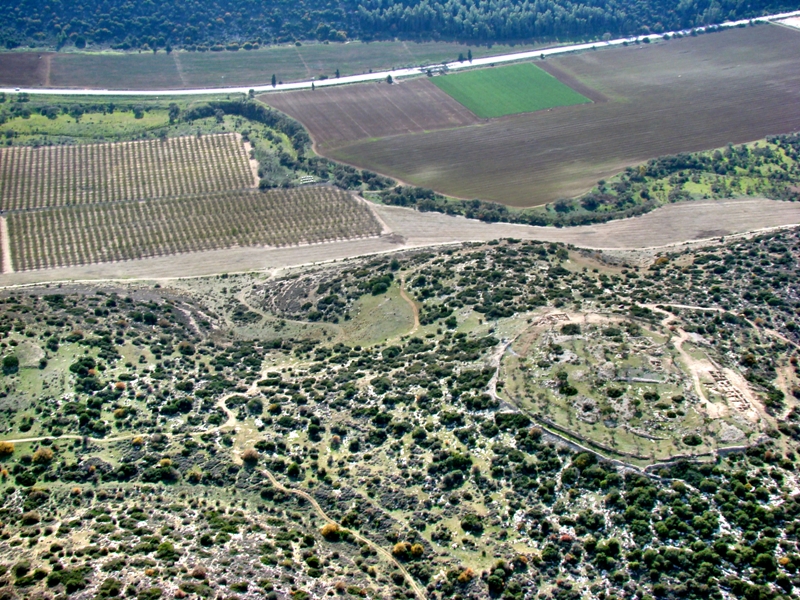
Many believe this site will prove to be an Israelite fortress that dates back to the reign of King David. Our aerial photo below shows the site in its context overlooking the Valley of Elah:

Khirbet-Qeiyafa, the Elah Fortress overlooking Valley of Elah. Photo ©Leon Mauldin.

You can see the circular tel on your right in the photo.  It was in the valley below that David killed Goliath.

Click on image for higher resolution.


Camels in the Times of the Patriarchs, Pt. 2

September 20, 2010

Unbelievers tirelessly charge that the Bible is inaccurate in its references to the camel in the days of the patriarchs (see our previous post).  Accordingly, the twenty-three occurrences of the word camel in Genesis are dismissed as anachronisms. While this is not surprising on the part of skeptics/atheists, it is disturbing when otherwise good reference books, such as Reader’s Digest’s The Bible Through The Ages takes the same position. Likewise the Illustrated Dictionary & Concordance of the Bible, copyright 1986 by G.G. The Jerusalem Publishing House LTD.

Consider this response from The New Unger’s Bible Dictionary, edited by Merrill Unger:

This idea seems to be presumptuous in the light of such evidence as camel statuettes, bones, and other references that appear in archaeological materials beginning about 3,000 B.C. (cf. J.P.Free, “Abraham’s Camels,” Journal of Near Eastern Studies [July 1944]:: 187-93). Free’s research concerned the use of camels in Egypt. In recent years numerous indications of the domestication and use of camels in Mesopotamia and Syria during the patriarchal period have come to light.

Since wild camels were known from earliest times, there is no credible reason why such an indispensable animal in desert and semi-arid lands should not have been sporadically domesticated in patriarchal times and even earlier.  Large scale domestication after the twelfth century B.C., however, greatly expanded desert trade as a result of the advantages of camel nomadism over donkey nomadism, enabling camel traders to travel much greater distances on this animal specially adapted to desert conditions (p.67).
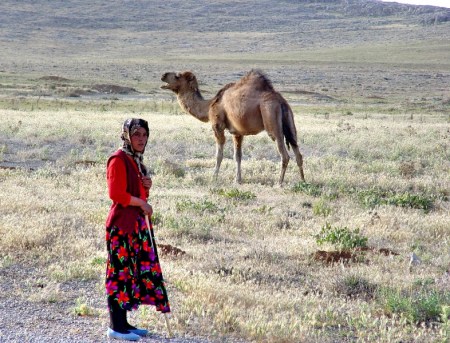
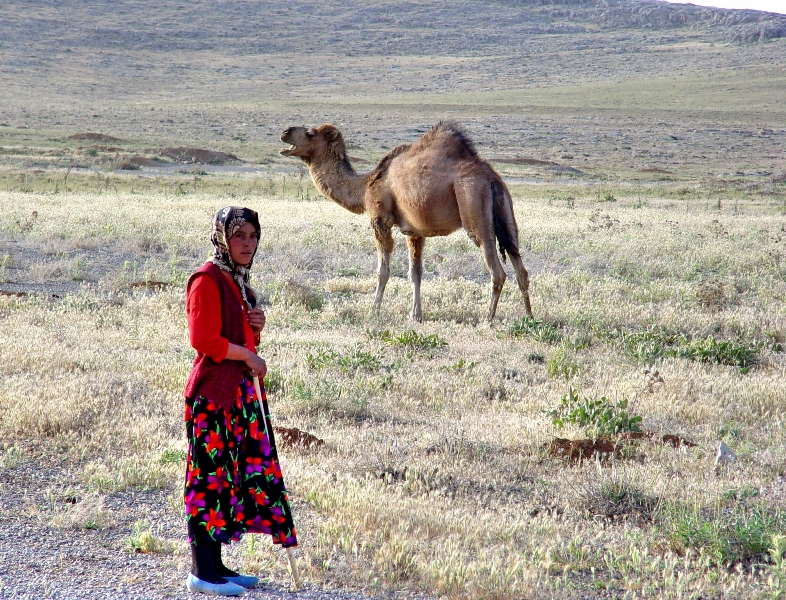
Nomad girl with camel, near Lystra in Turkey. Photo ©Leon Mauldin.

Further, consider this response to the skeptics by Staff and Lyons, of Apologetics Press:

What makes their claims even more disturbing is that several pieces of evidence do exist (and have existed for some time) that prove camels were domesticated during (and even before) the time of Abraham (roughly 2,000 B.C.). In an article that appeared in the Journal of Near Eastern Studies a half-century ago, professor Joseph Free listed several instances of Egyptian archaeological finds supporting the domestication of camels [NOTE: The dates given for the Egyptian dynasties are from Clayton, 2001, pp.14-68]. The earliest evidence comes from a pottery camel’s head and a terra cotta tablet with men riding on and leading camels. According to Free, these are both from predynastic Egypt (1944, pp. 189-190), which according to Clayton is roughly before 3150 B.C. Free also listed three clay camel heads and a limestone vessel in the form of camel lying down—all dated at the First Dynasty of Egypt (3050-2890 B.C.). He then mentioned several models of camels from the Fourth Dynasty (2613-2498 B.C.), and a petroglyph depicting a camel and a man dated at the Sixth Dynasty (2345-2184 B.C.). Such evidence has led one respected Egyptologist to conclude that “the extant evidence clearly indicates that the domestic camel was known [in Egypt—EL] by 3,000 B.C.”—long before Abraham’s time (Kitchen, 1980, 1:228).

Perhaps the most convincing find in support of the early domestication of camels in Egypt is a rope made of camel’s hair found in the Fayum (an oasis area southwest of modern-day Cairo). The two-strand twist of hair, measuring a little over three feet long, was found in the late 1920s, and was sent to the Natural History Museum where it was analyzed and compared to the hair of several different animals. After considerable testing, it was determined to be camel hair, dated (by analyzing the layer in which it was found) to the Third or Fourth Egyptian Dynasty (2686-2498 B.C.). In his article, Free also listed several other discoveries from around 2,000 B.C. and later, which showed camels as domestic animals (pp. 189-190). [Quote from Kitchen is from The Illustrated Bible Dictionary.]

So the archaeological evidence is there, for those willing to see it.  The Bible does not affirm that camels were widely used in the time of the Patriarchs; it affirms that Abraham (and others) had camels and used them.

But the greatest source of proof that the Genesis record is true is not archaeological data. The single greatest proof is that Jesus Christ, the Son of God, believed, endorsed and taught it. Jesus affirmed the inspiration of Scripture. He affirmed the historicity of the patriarchs, for example in such texts as Matt. 22:31-32, “But concerning the resurrection of the dead, have you not read what was spoken to you by God, saying, ‘I am the God of Abraham, the God of Isaac, and the God of Jacob’? God is not the God of the dead, but of the living.”  Jesus believed that Abraham, Isaac, and Jacob were real persons, and what was recorded about them is real and historical. In short, if we accept the evidence that Jesus is the Christ, Son of God, we must believe what He believed, and teach what He taught!
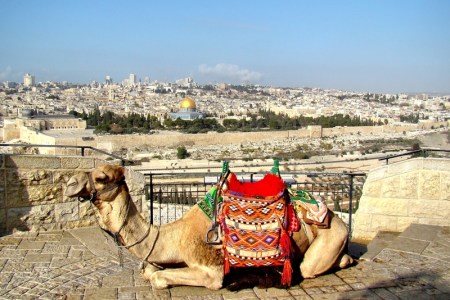
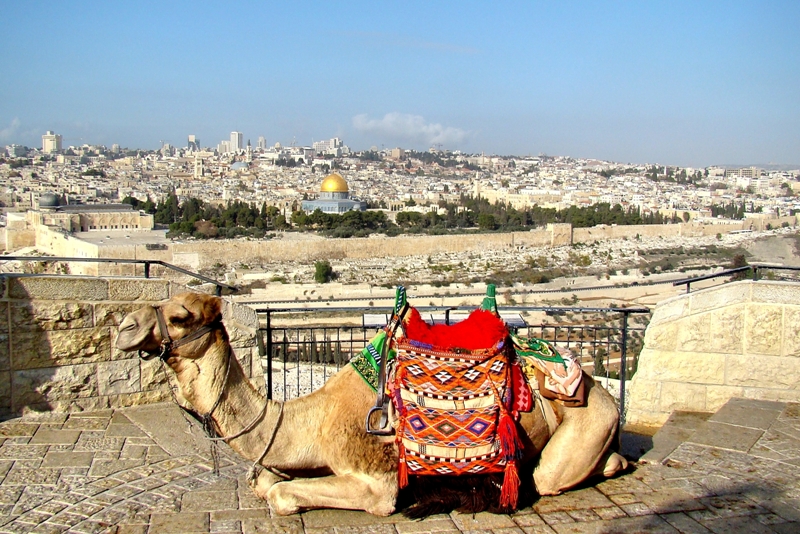
Camel on Mt. of Olives overlooking Jerusalem. Photo ©Leon Mauldin.

In the earlier photo, the young lady with the camel was tending to seven camels.  She appeared to be about 15 years old.  She was part of a nomadic group.  The camel in the above photo at the Mount of Olives overlooking Jerusalem was there for tourists to ride (for a fee).  I would recommend that you ride a camel in some place other than the Mt. of Olives 🙂

Click on photos for higher resolution.

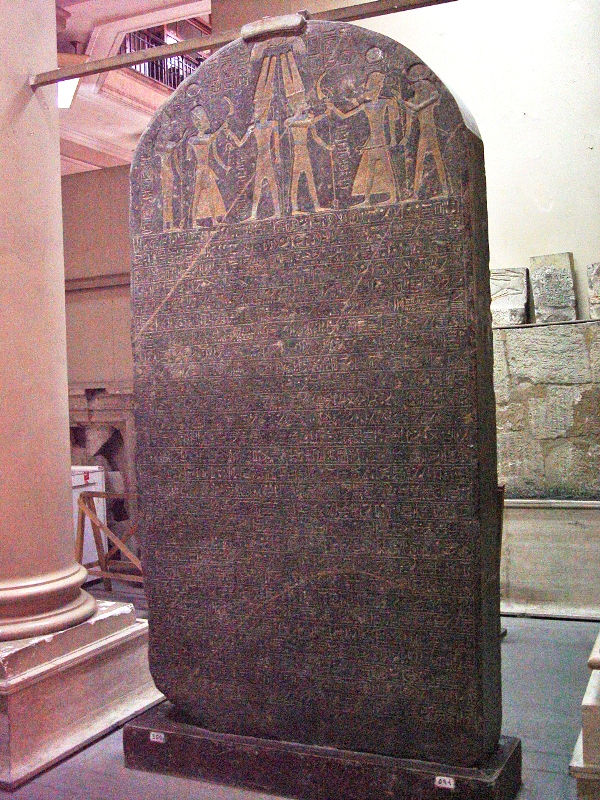
Merneptah Stele

September 9, 2010

Merneptah, son of Rameses II, ruled Egypt 1213-1203 B.C.  The Merneptah Stele is an inscription of great archaeological and biblical importance.  It contains the first mention of Israel in a source besides the Bible.

Merneptah Stele. Egyptian Museum, Cairo. Photo ©Leon Mauldin.

The stele was discovered in 1896 at Thebes. It is 7.5 feet high, and made of black granite.  It is displayed now in the Egyptian Museum at Cairo. The inscription includes the lines:

“The princes, prostrated, say ‘Shalom’;

None raises his head among the Nine Bows.

Now that Tehenu has come to ruin, Hatti is pacified.

Canaan has been plundered into every sort of woe. Ashkelon has been overcome.

Gezer has been captured.

Yano‘am was made non-existent.

Israel is laid waste (and) his seed is not.

Hurru has become a widow because of Egypt.

All lands have united themselves in peace.

Anyone who was restless, he has been subdued by the King of Upper and Lower Egypt, Ba-en-Re-mery-Amun, son of Re, Mer-en-Ptah Hotep-her-Ma‘at, granted life like Re, daily. (BAR 16:05, Sept/Oct 1990).

Note: italics are supplied to emphasize the portion of the inscription that references the area of Canaan and Israel.

The date of this inscription would be about 1207 B.C.  By that point in time, Israel was established in the land of Canaan to such an extent that it would be included in a listing of nations defeated by the world’s most powerful monarch.

Many “scholars” deny that Israel even existed as a nation by this point in time, but the inscription proves them to be wrong.

For further reading I recommend Todd Bolen’s article in The Bible and Interpretation. He wrote on his blog, “I thank God every day for the Merneptah Stele.” Go to:

https://bibleinterp.arizona.edu/opeds/bolen357916

“The princes, prostrated, say ‘Shalom’;

None raises his head among the Nine Bows.

Now that Tehenu has come to ruin, Hatti is pacified.

Canaan has been plundered into every sort of woe. Ashkelon has been overcome.

Gezer has been captured.

Yano‘am was made non-existent.

Israel is laid waste (and) his seed is not.

Hurru has become a widow because of Egypt.

All lands have united themselves in peace.

Anyone who was restless, he has been subdued by the King of Upper and Lower Egypt, Ba-en-Re-mery-Amun, son of Re, Mer-en-Ptah Hotep-her-Ma‘at, granted life like Re, daily.”[i]


Editor, H. S. (2004; 2004). BAR 16:05 (Sep/Oct 1990). Biblical Archaeology Society.