Omrit, cont’d.

September 11, 2012

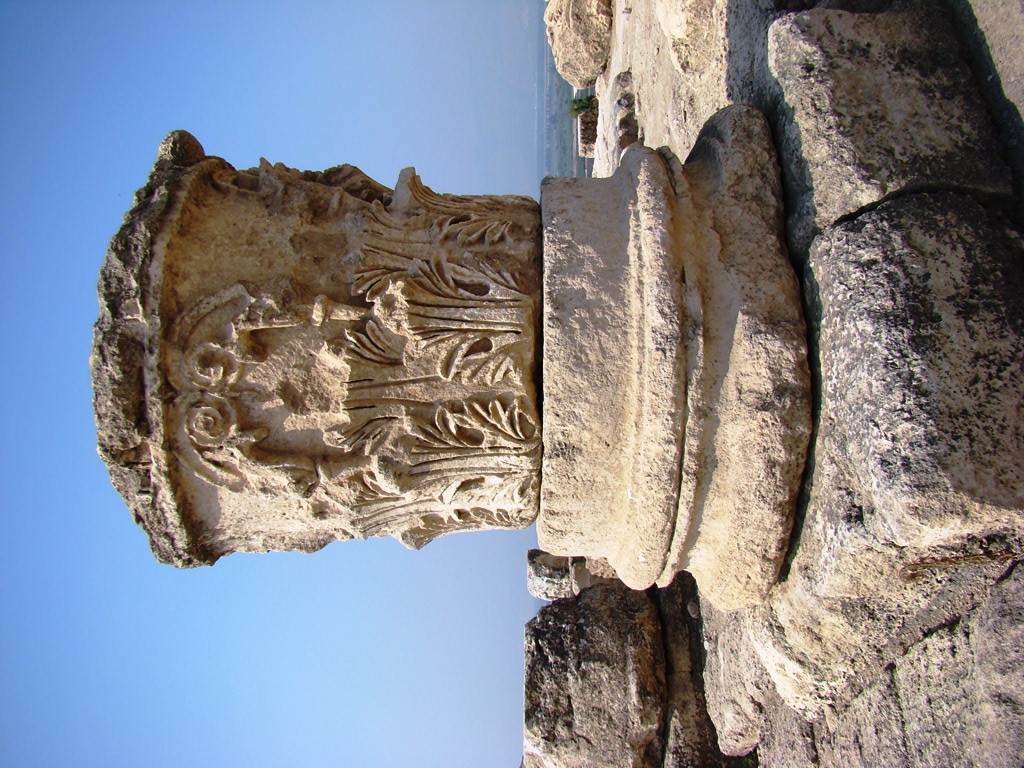
Among the interesting ruins at Omrit are several composite capitals. These are a combination of Corinthians and Ionic orders.

Composite Capital at Omrit. Photo by Leon Mauldin.

Note the beautiful acanthus leaves.

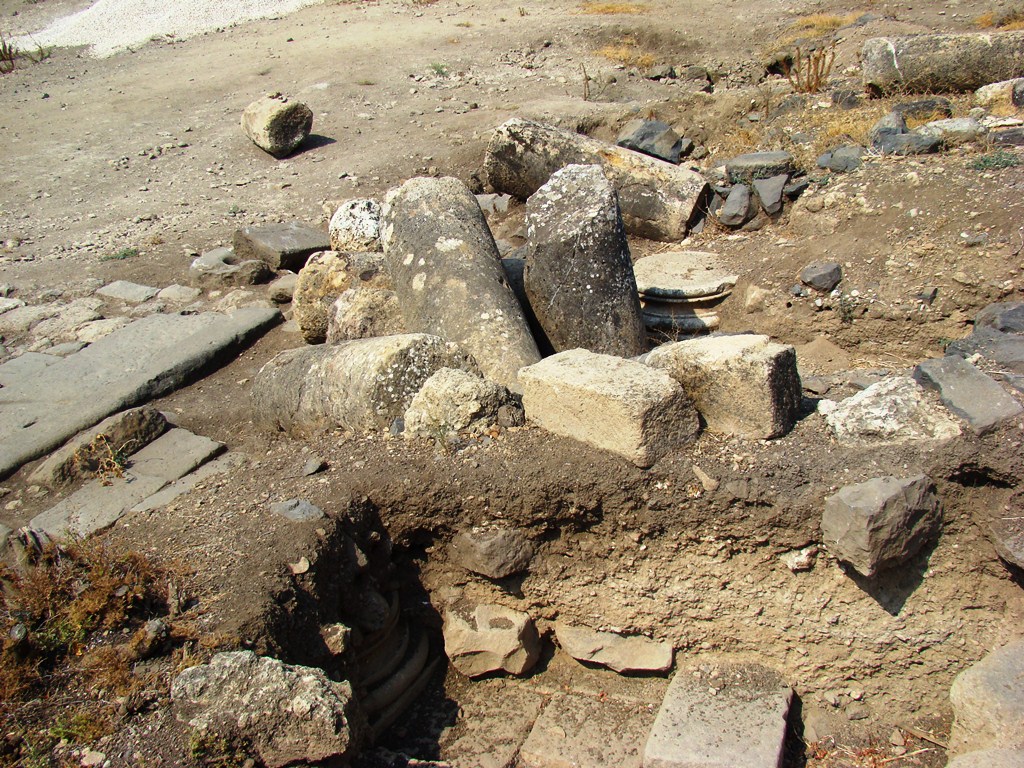
Omrit was destroyed by earthquakes in the 4th and 8th centuries AD.

Evidence of Earthquake at Omrit. Photo by Leon Mauldin.

Click on images for larger view.


Herodian Imperial Cult Temple at Omrit

September 10, 2012

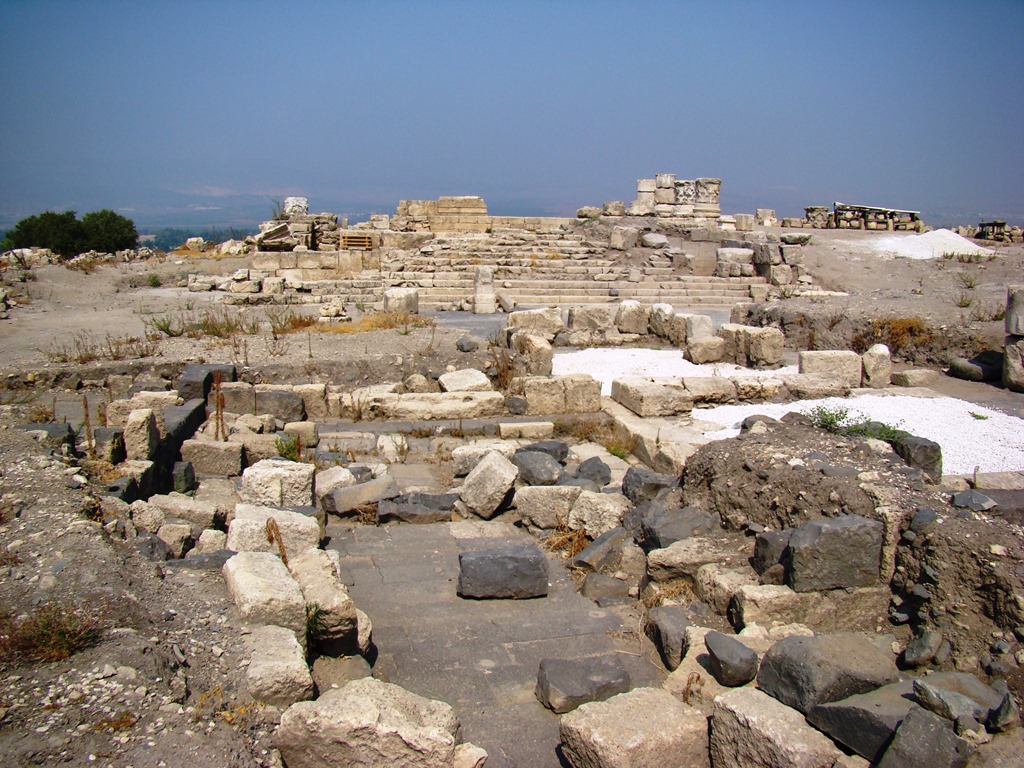
Omrit is located at the foothills of the Hermon Range, and is 2.5 miles from Caesarea Philippi (Banias). It was strategically situated near the crossroads of the Tyre-Damascus and Scythopolis (Beth-shean)-Damascus roads. Impressive remains of a temple devoted to Emperor worship may be seen here.

Herodian Imperial Cult Temple at Omrit. Excavators believe this temple was built by Herod to honor Caesar Augustus. Photo by Leon Mauldin.

I have enjoyed Dr. Carl Rasmussen’s recent posts re: Omrit. He said this was his “favorite site in Israel” (a statement I found very interesting) and just today posted another article on the site, dealing with Emperor worship that took place here in the Bible land. There are interesting implication of Peter’s confession that Jesus was the Christ, the Son of the living God so near a site where the Roman Emperor was worshiped as a “son of god.”

I was glad to visit this site this past September 2011, along with Ferrell Jenkins when he and I made a personal study trip at that time. BTW, Mr. Jenkins is currently directing a tour in Israel. You can follow their journeys here.


Temple of Vesta, Roman Forum

May 2, 2012

The Roman goddess Vesta was the goddess of the hearth. She

was considered the patron of the fire that symbolized the perpetuity of the state. It was the responsibility of the priestesses to maintain this sacred fire and to renew it each year on March 1, the first day of the Roman year (The Wycliffe historical geography of Bible lands).

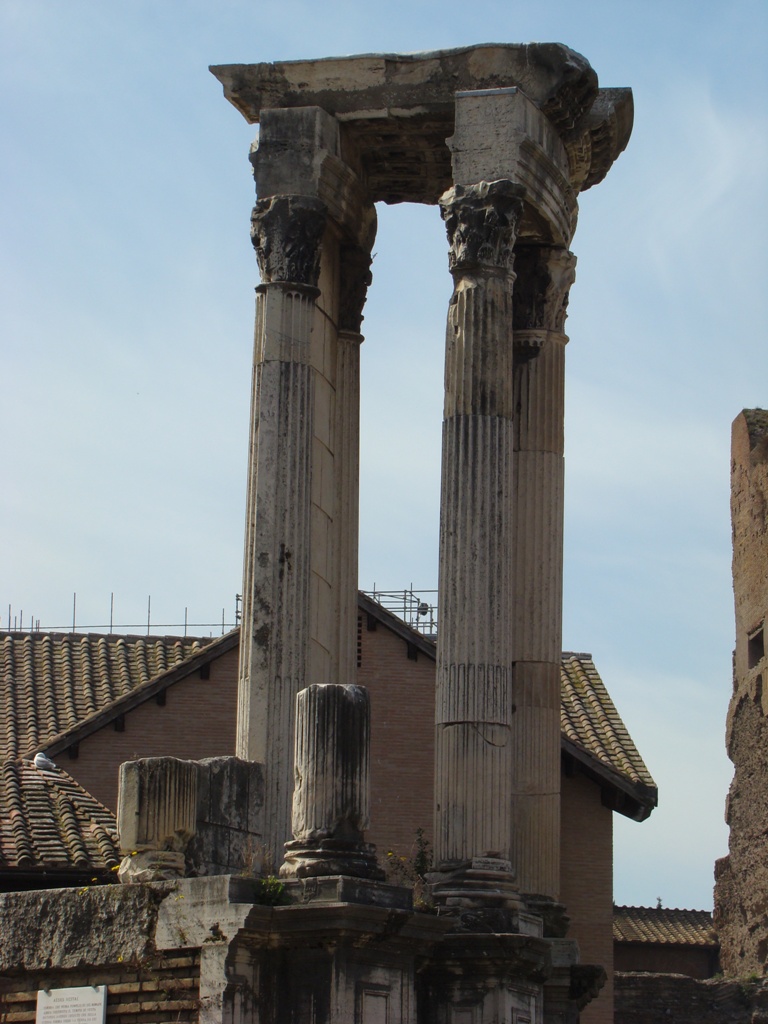
We photographed the remains of the Temple of Vesta in the Roman Forum a few weeks ago.

Temple of Vesta in Roman Forum. Photo by Leon Mauldin.

 Vos, in his work, Nelson’s New Illustrated Bible Manners & Customs: How the People of the Bible Really Lived, asks the reader to suppose that when Paul’s trial was conducted in Rome that he entered the Forum on the east side:

As Paul came into the Forum area down the Sacred Way from the east, the first building he would have passed was the house of the vestal virgins. He might have observed that the house was rather large for a sisterhood of only six priestesses. But such an objection is erased with the observation that the vestals were held in high esteem and that their house was chosen by private citizens and by the state as a safe deposit for documents.

Adjacent to this house was the Temple of Vesta, considered the goddess of the hearth and the patron of the fire that symbolized the perpetuity of the state. It was the responsibility of the priestesses to maintain this sacred fire and to renew it each year on March 1, the first day of the Roman year (p.606).

Wikipedia has this additional info:

The extant temple used Greek architecture with Corinthian columns, marble, and a central cella. The remaining structure indicates that there were twenty Corinthian columns built on a podium fifteen metres in diameter. The roof probably had a vent at the apex to allow smoke release.

***********

My friend Ferrell Jenkins is currently directing a biblical study tour in Turkey & Greece. He will be posting as time permits on Ferrell’s Travel Blog.

Click on image for larger view.


The Twin Brothers, Castor and Pollux

May 1, 2012

After Paul had suffered shipwreck on the island of Malta (Acts 27:39-44; 28:1), and wintered there, he continued his trip (as a prisoner) to Rome. Luke writes, “After three months we sailed in an Alexandrian ship whose figurehead was the Twin Brothers, which had wintered at the island” (Acts 28:11, NKJV). The Twin Brothers were the mythical Greek gods (assimilated by the Romans) Castor and Pollux, sons of the god Zeus.

The NIV renders the text, “After three months we put out to sea in a ship that had wintered in the island. It was an Alexandrian ship with the figurehead of the twin gods Castor and Pollux” (cf. KJV).

The NET Bibles notes:

tn Or “the ‘Twin Gods'”; Grk “the Dioscuri” (a joint name for the pagan deities Castor and Pollux). sn That had the “Heavenly Twins” as its figurehead. The twin brothers Castor and Pollux, known collectively as the Dioscuri or “Heavenly Twins,” were the twin sons of Zeus and Leda according to Greek mythology. The Alexandrian ship on which Paul and his companions sailed from Malta had a carved emblem or figurehead of these figures, and they would have been the patron deities of the vessel. Castor and Pollux were the “gods of navigation.” To see their stars was considered a good omen (Epictetus, Discourses 2.18.29; Lucian of Samosata, The Ship 9).

Remains of the temple of Castor and Pollux may be seen in the Roman Forum.

Temple of Castor and Pollux in Roman Forum. Photo by Leon Mauldin.

The temple was built in gratitude for victory at the Battle of Lake Regillus (495 BC). This site furnishes yet another link between surviving archaeological artifacts and references in the biblical text.

Click image for larger view.


Bible and Archaeology Site

January 25, 2012

Todd Bolen called attention to Bible and Archaeology-Online Museum, a site that features fifty items in chronological order, beginning with the oldest artifacts first. Images are high resolution, and helpful explanations are included. I recommend it as a handy and helpful resource. Visit the site here.

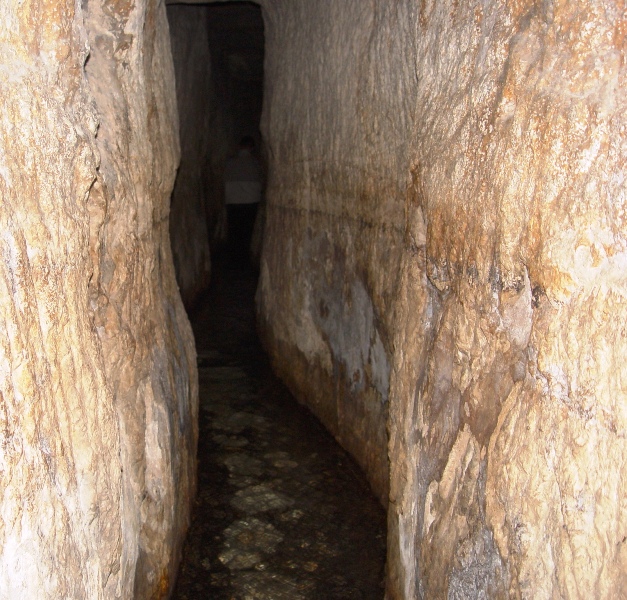
Among the items listed was Hezekiah’s tunnel, dug (701 BC) in anticipation of the Assyrian threat under King Sennacherib. The tunnel brought water from the source, the Gihon Spring, which was outside Jerusalem’s wall, to a pool within the city. Thus the Assyrians would have no water, while the Jewish inhabitants inside Jerusalem would have a ready supply.

Hezekiah's Tunnel in Jerusalem, City of David. Photo by Leon Mauldin.

I previously posted an article on the tunnel here, entitled “The Siloam Inscription.”

Todd’s article may be seen here.


Ancient Street in Tarsus

December 16, 2011

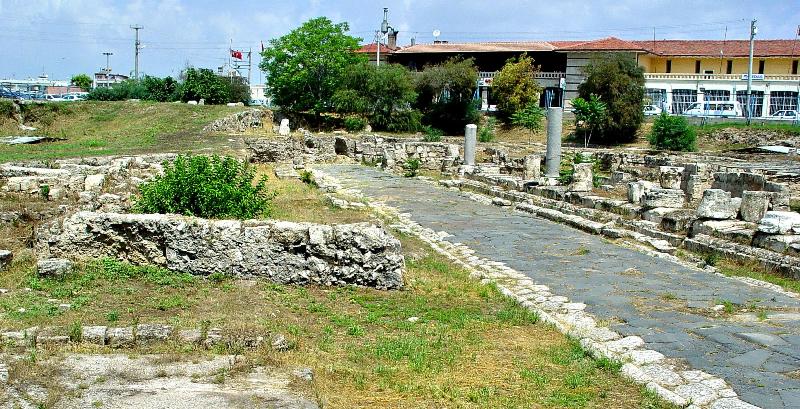
As we further explore what can be seen of ancient Tarsus, one important archaeological point of interest is a street built during the late Hellenistic period, thus predating the Apostle Paul.

Tarsus, Ancient Street. Dates back to the time of Paul. Photo by Leon Mauldin.

The discovery of this street, along with the ancient shops and houses that have been unearthed, is a story that has been often repeated. Work was being initiated for an underground parking deck when this discovery was made. So frequently it is the case that it is in connection with various construction projects that such discoveries are made (see here for “rolling stone tomb” in Israel).

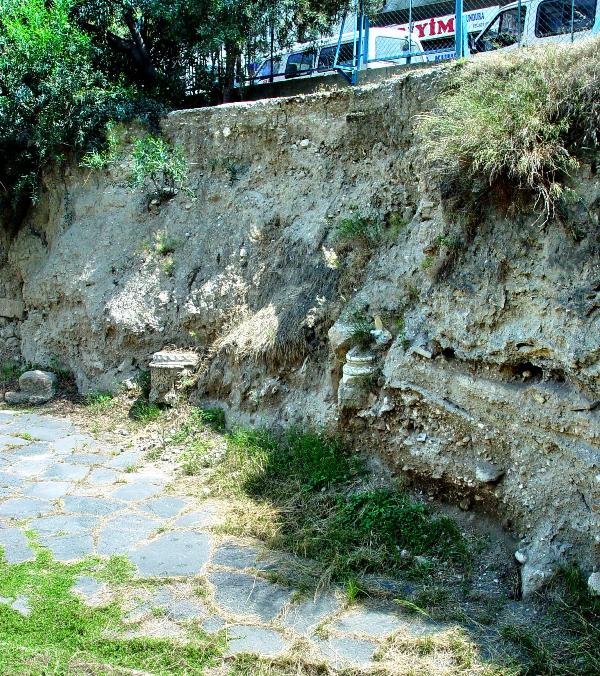
Behind and to our right of our position in the above photo you can get a glimpse of how much silt has built up above street level: 23 feet at this point.

23 feet of silt accumulated above Tarsus Street of Paul's Day. Photo by Leon Mauldin.

This allows you to see the location of the modern city in relation to the ancient ruins below.

Click on image for larger view.


Cities Not Taken in the Conquest, cont’d., Dor

May 23, 2011

Joshua is the biblical book of the conquest of Canaan, and the fulfilling of the land promise given to Abraham (Gen. 12:7). But Israel failed to follow through as they were commanded, thus leaving the seeds of idolatry in their midst, but also leaving themselves politically and economically thwarted. As we have noted in the last couple of posts, it turns out that those cities mentioned as not being taken or retained were in many, if not most, cases strategic sites, needed for defense or commerce.

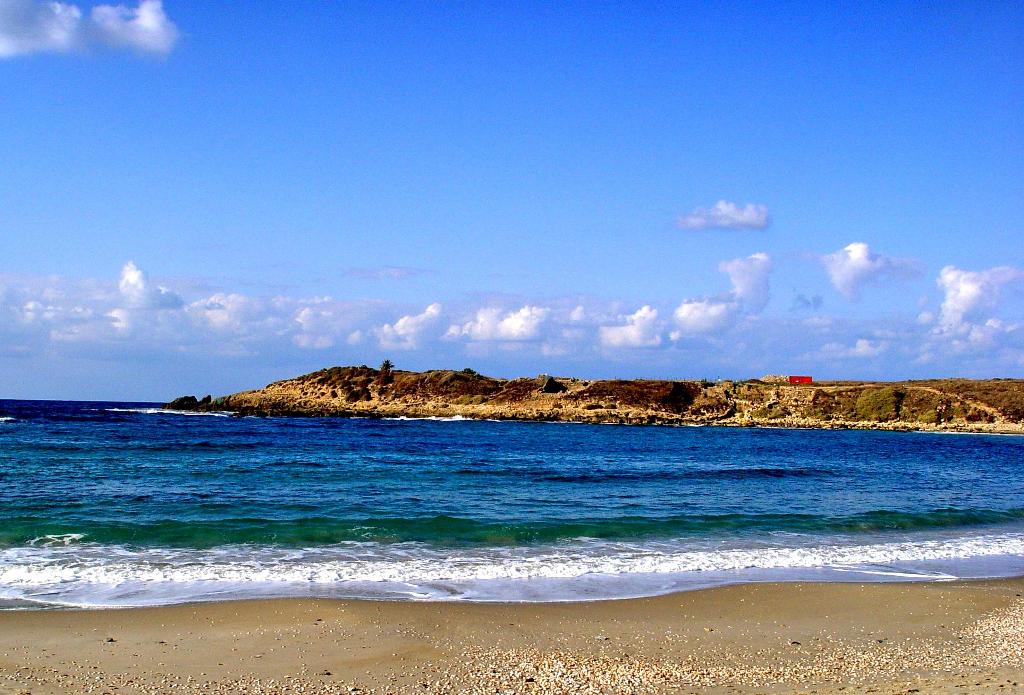
Joshua 17:11-12 mentions Dor in this connection (see also Judges 1:27).
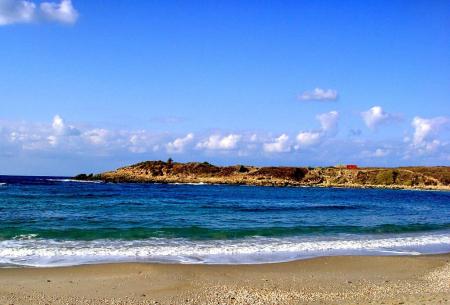
Dor, important harbor not taken during the Conquest. Photo by Leon Mauldin.

In an interesting article in Bible and Spade, author Hela Crown-Tamir writes,

Thirteen miles north of Caesarea. and almost equadistant from Haifa, Dor was a flourishing port and international commercial center throughout the Biblical period. The excavators note four distinct civilizations at Dor: the Canaanites, the Sikil Tribe of Sea Peoples, the Phoenicians, and the Hellenistic-Roman culture. With artifacts from Old Testament Egypt to Napoleon’s cannons found here and displayed at the Dor Museum, the site was inhabited throughout the Biblical period. This coastal city is a perfect illustration of treasures hidden in the sand.

Canaanites first settled Dor during the Middle Bronze Age (2000 BC). While the city was part of Manasseh’s tribal inheritance, the Sikils of the Sea Peoples settled here during the Iron Age (1150–1050 BC). They were followed by the Phoenicians, descendants of the Canaanites, from the 11th century BC on. They inhabited Dor during the Israelite, Assyrian. Babylonian. Persian, and much of the Hellenistic periods.

Finds from the late Bronze Age (1500–1200 BC) at Dor indicate it was exceedingly rich with far-flung international connections. Throughout most of the Old Testament, Dor was one of the important harbor towns along the country’s Mediterranean coastline.

It was from the west, by sea. that the Sikils came to Dor. Possibly coming from as far away as the island of Sicily, this tribe of Sea Peoples made the port city of Dor their home. During the Phoenician occupation, masters of the eastern Mediterranean, the port city rivaled the four major Phoenician cities in size and importance. The excavators are correct in calling Dor “Ruler of the Seas.” ( 2001, Vol. 14, No. 1, P. 12).

Note the portions in the above text with bold print (emp. mine): Reference to the Bronze Age of 1500-1200 BC fits the time period referenced in Joshua, with the conquest occurring about 1406 BC.  Note that Dor is described as having “far-flung international” connections. Also, the “Ruler of the Seas.” Again it would seem that an understand of these facts regarding Dor would be helpful in appreciating the significance of those verses which inform us that Israel did not possess this very important location.

That would change by the time of Solomon. King Solomon divided the land into twelve districts with twelve governors “who provided food for the king and his household: each one made provision for one month of the year” (1 Kings 4:7). v. 11 goes on to list “Ben-Abinadab, in all the regions of Dor; he had Taphath the daughter of Solomon as wife. Thus Dor became the capital of one of Solomon’s administrative districts.

By the way, I am currently in Chipley, FL., conducting a 6-day Gospel Meeting. Wesley Webb is the local preacher here. It always great to see old friends. Waltina Shoraga is our host this week. She was living in Waycross, Ga., and I was preaching in Blackshear when I first met her, in 1973.
Megiddo Stables

April 17, 2011

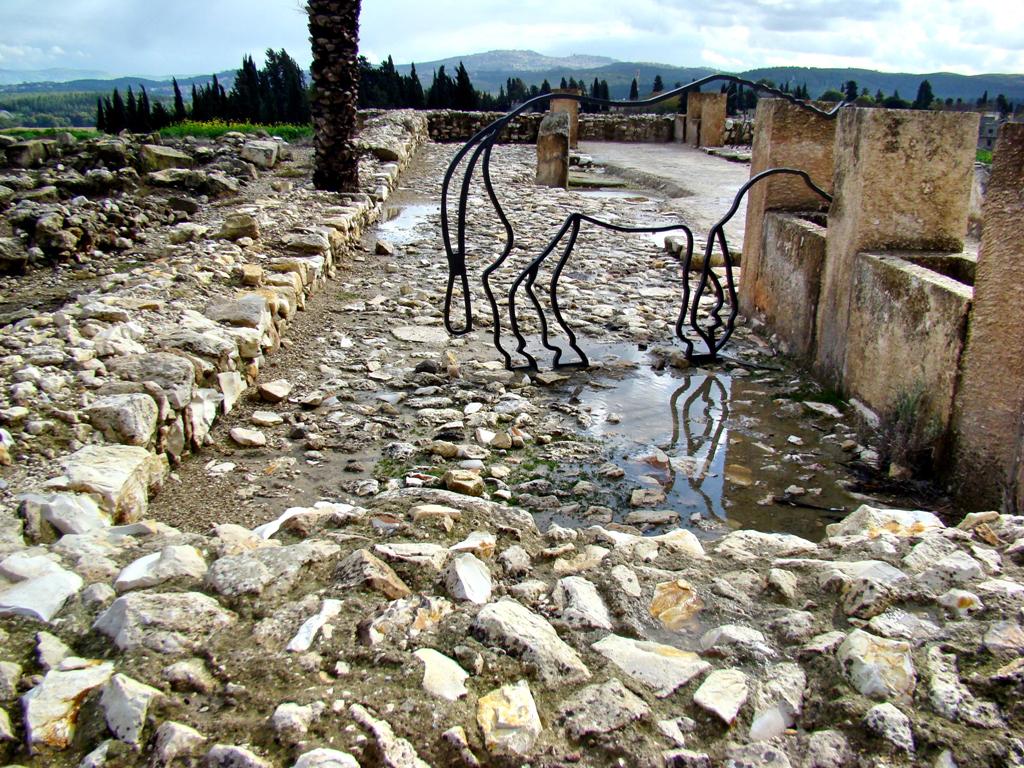
Another interesting discovery at Megiddo is the area which many believe were used for horse stables. The area seen in this photo is sometimes called “Solomon’s stables,” though many believe this should be dated a bit later to the time of King Ahab.

Stables at Megiddo. Photo by Leon Mauldin.

You can see the metal outline of a horse in our photo. Some suggest this site may have been used for barracks, market places, storage facilities, or other usages.

Click on photo for higher resolution.


Megiddo Water System

April 16, 2011

It would be hard to overemphasize the importance of the city of Megiddo. We have referenced the strategic location in our two previous posts. Crucial battles were fought here.

Excavations conducted at Megiddo have been “large and extensive,” and include the efforts of the German Society for Oriental Research (1903-1905), the Oriental Institute of Chicago (1925-1939). Excavations were interrupted with the outbreak of WWII, but were renewed by the Institute of Archaeology at the Hebrew University of Jerusalem (1960, 1961, 1966, 1967, and 1971) under the leadership of Y. Yadin (The New Encyclopedia of Archaeological Excavations in the Holy Land, Vol. 3, pp. 1005-1005).

More recent excavations have been undertaken by Tel Aviv University, with Pennsylvania State University as the senior American partner (ibid. Vol. 5, pp. 1944ff.).

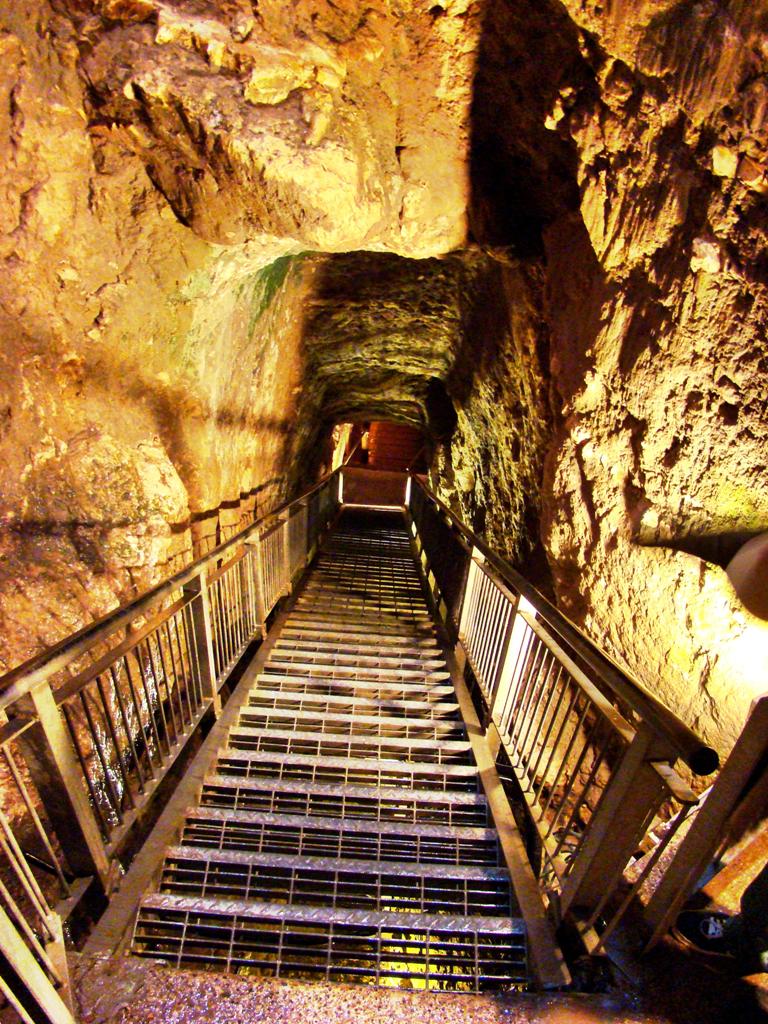
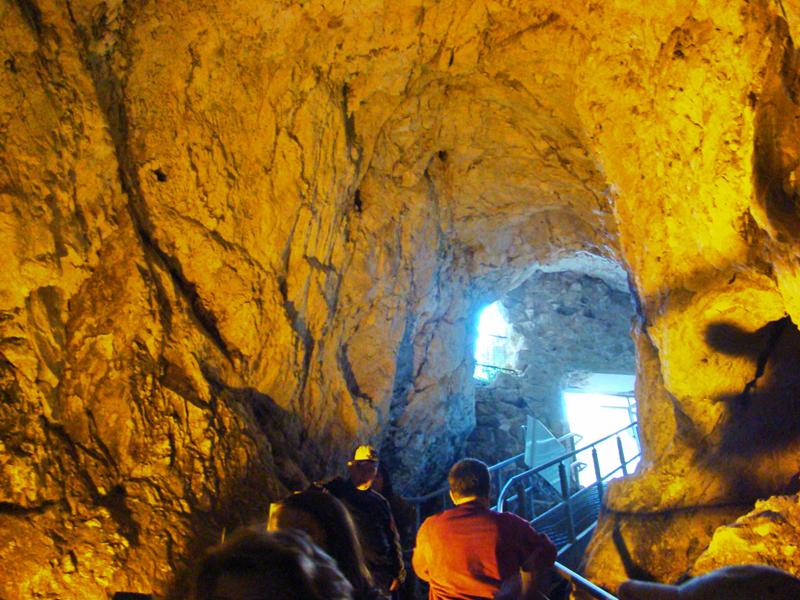
Among the more interesting discoveries is Megiddo’s water system. A 70 meter tunnel hewn through rock led down to the spring.

Megiddo. Tunnel to city spring. Photo by Leon Mauldin.

This dates back to the time of Israel’s king Ahab (874-853 BC). Prior to this engineering feat, it was necessary to go outside the city walls to access the spring.

Megiddo Spring. Citys water supply. Photo by Leon Mauldin.

Here is a view from going up from the spring as you exit:

Megiddo. Exit from spring. Photo by Leon Mauldin.

And finally, a view back to the exit of the spring.

Megiddo. Outside Water System Exit. Photo by Leon Mauldin.

In our next post we plan to feature the stables of Megiddo.


Canaanite Altar at Megiddo

April 13, 2011

Archaeologists have discovered more than 20 layers of occupation at the ancient city of Megiddo.The city was strategically situated on the route that came to be known as the Via Maris, the ancient trade route that connected Egypt with Syria and Mesopotamia.

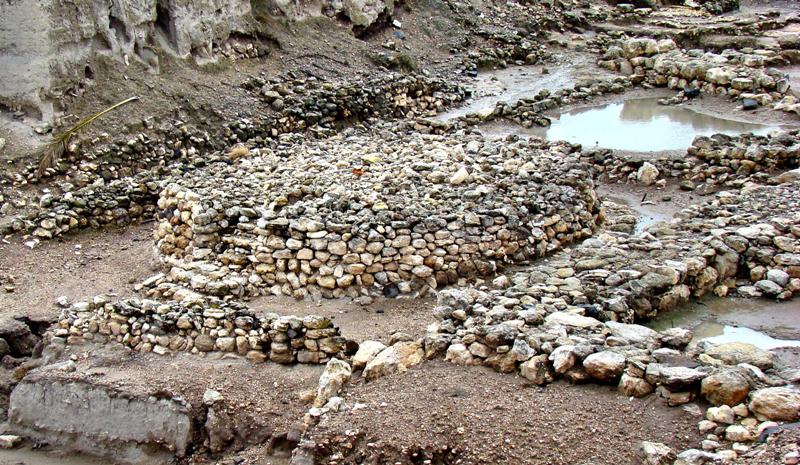
One of the more interesting finds is the circular Canaanite altar. It is nearly 26 feet in diameter and about five feet in height. This would have been used by the Canaanites in their pagan worship, and very likely was the site of human sacrifice. You can see the altar in the center of our photo.

Canaanite Altar at Megiddo. Photo by Leon Mauldin.

This illustrates the kind of thing God had in mind when He commanded Moses, “. . . you are to tear down their altars and smash their sacred pillars and cut down their Asherim” (Ex. 34:13). Likewise, in Deut. 12:3, “You shall tear down their altars and smash their sacred pillars and burn their Asherim with fire, and you shall cut down the engraved images of their gods and obliterate their name from that place.”

In the foreground of the photo and also to the right of the altar you can see the outline of the Canaanite temple.