2 Kings 15:1-7 summarizes the reign of Judah’s good King Uzziah (Azzariah), who reigned 790-740 BC. The parallel in 2 Chronicles 26 gives much more information. There his successful wars with the Philistine and Arabians are recorded. He fortified the walls of Jerusalem. Also he constructed towers in the desert and dug many wells, which promoted agriculture & vine growing. The explanation is given, “for he loved the soil” (2 Chron. 26:10). Azariah also had an organized army of 307,500 (2 Chron. 26:13). Indeed, his “fame spread far and wide, for he was marvelously helped till he became strong” (2 Chron. 26:15).
The next verse however, begins with the word “But.” “But when he became strong, his heart was so proud that he acted corruptly, and he was unfaithful to the LORD his God, for he entered the temple of the LORD to burn incense on the altar of incense” (2 Chron. 26:16). Because of this presumption (only the Levitical priests were authorized to do this; Uzziah was of the tribe of Judah), God struck him with leprosy. “King Uzziah was a leper to the day of his death; and he lived in a separate house” (v.21). When Uzziah died, “they buried him with his fathers in the field of the grave which belonged to the kings” (v.23). I.e., he was not buried in the tomb of the kings, because he was a leper. He was buried in the field.
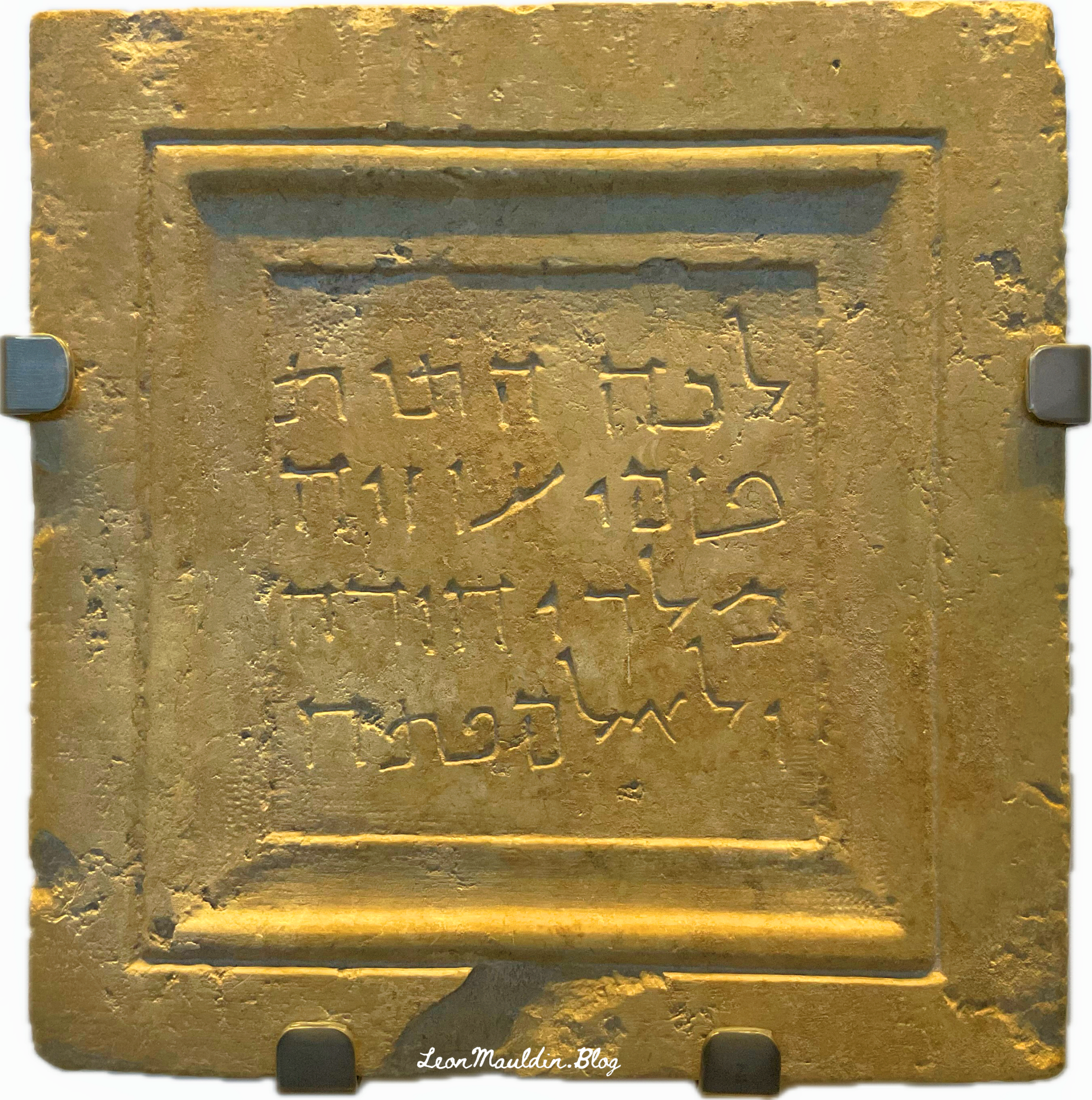
When the city of Jerusalem expanded, the remains of King Uzziah were reinterred. This fascinating grave marker marked the spot of the new burial of Uzziah. The inscription reads, “To this place were brought the bones of Uzziah, king of Judah. Do not open!” This marker is dated ca. 1st century BC.
Linguists tell us that it is written in Aramaic script of the type which was used about the time of Christ. Uzziah, however, was reigning as king of Judah about 775 B.C. II Chronicles 26 describes his successful reign in some detail—how he equipped a large standing army and made war successfully against the Philistines and the Arabians, regaining control of the trade routes to Egypt and to the Red Sea, but how he was stricken with leprosy, died, and was “buried with his fathers in the field of burial which belonged to the kings.” The inscription on the slab dates over six or seven hundred years after his death. It would seem that for one reason or another the traditional grave of Uzziah was cleared, and the bones which were found were gathered up and deposited in a new mausoleum. The gravestone is exceedingly interesting, for one thing because it shows the reverence paid even two thousand years ago to the graves of great men of the past, and also because it has on it the longest connected Aramaic inscription of the time of Christ, and shows the way in which the language commonly spoken in Palestine at that time was written. (Biblical Archaeologist 1-4).
The Lexham Bible Dictionary has the following info:
The Uzziah Inscription
The (Aramaic) Uzziah Inscription reads, “Hither were brought the bones of Uzziah, King of Judah. Do not open” (Bahat, Atlas, 50). From the style of the inscription, Uzziah’s bones seem to have been reburied during the Second Temple period.
Uzziah was apparently buried separately from the other kings of Judah, as the Chronicler states, “they buried him with his fathers in the field of the grave which belonged to the kings, for they said, “He is a leper’ ” (2 Chr 26:23). Josephus notes that “he was buried by himself in his own gardens” (Josephus, Antiquities 9:227). The exact location is unknown; the inscription itself was brought, without noting its place of origin, to the Russian Church on the Mount of Olives during the nineteenth century. In 1968, the Israel Museum purchased the stone, which is still displayed at the museum. (Udd, K. J. Funerary Inscriptions of Ancient Palestine. The Lexham Bible Dictionary)
This important artifact is housed in the Israel Museum in Jerusalem.
Click image for larger view.


 Posted by Leon Mauldin

