Beth-Shemesh and Zorah

December 17, 2025

I’m currently teaching a class (homeschool) on the Judges. Visuals can help provided the setting for biblical events. Samson was born in Zorah (Judges 13:2ff.). Beth-Shemesh is in the foreground in our photo. Zorah can be seen in the distant right at the break in the tree line.
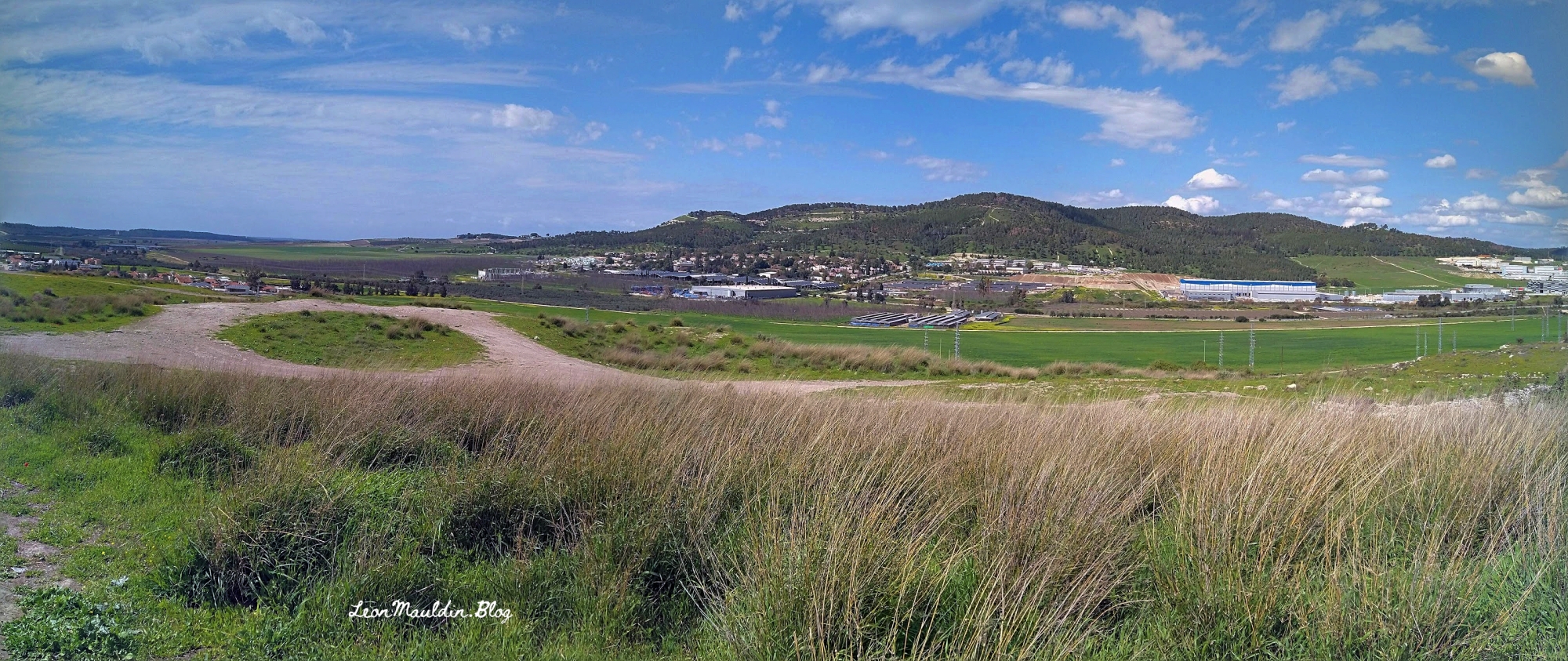
Biblical Beth-Shemesh in foreground; Zorah at far distant right. Photo by Leon Mauldin.

The Revised ISBE has the following info on Zorah:

A city in the Shephelah; the home of Manoah the father of Samson (Jgs. 13:2). Zorah (modern Ṣarʿah) was located in the northernmost district of the Shephelah, 2.5 km (1 1/2 mi) W of Eshtaol (Eshwaʿ) and 6 km (4 mi) S of Latrun. Overlooking the valley of Sorek (Wâdī eṣ-Ṣarâr), it was important to the defense of Judah throughout the history of Israel. Zorah, originally a Canaanite city, is mentioned in the Amarna Letters as one of the cities ruled by the king of Gezer (LBHG [rev ed 1979], p. 174).

According to Josh. 15:33 Zorah was allotted to Judah when the Israelites invaded Canaan. Apparently, however, it was assigned first to the tribe of DAN (Josh. 19:41), which encountered stiff opposition from the Amorites (and later the Philistines) when it attempted to occupy the region (Jgs. 1:34f.). The story of Samson, a Danite born in Zorah, is set in this region (13:2, 24f.). After struggling his entire life against the Philistines, Samson was buried in the city of his birth (16:31). Eventually the Danites decided to migrate north, and they sent out spies from Zorah to survey the land (18:2, 8, 11).
Centuries later, Rehoboam fortified Zorah as part of Judah’s western line of defense (2 Ch. 11:10). This line of fortresses served as an effective defense system for Judah in several wars during the next two or three generations (LBHG [rev ed 1979], pp. 330–33). When the Jews returned from exile in Babylon they occupied the site once again. Even the Crusaders found it an important site for their campaigns in Palestine. Located 335 m (1100 ft) above sea level and 244 m (800 ft) above the valley of Sorek, Zorah (Arab Ṣarʿah) has retained its strategic value throughout the centuries.

(J. E. MCKENNA McKenna, J. E. (1979–1988). Zorah. In G. W. Bromiley (Ed.), The International Standard Bible Encyclopedia, Revised (Vol. 4, pp. 1210–1211). Wm. B. Eerdmans.)


Timnah and the Samson Narrative

October 14, 2011

Nelson’s New Illustrate Bible Dictionary tells us,

Timnah was allotted to the tribe of Dan (Josh. 19:43; Thimnathah, KJV). Some scholars identify it with Tell el-Batashi, about six kilometers (four miles) northwest of Beth Shemesh. At Timnah Samson married a Philistine woman and later told her his riddle of the lion and the honey (Judges 14).

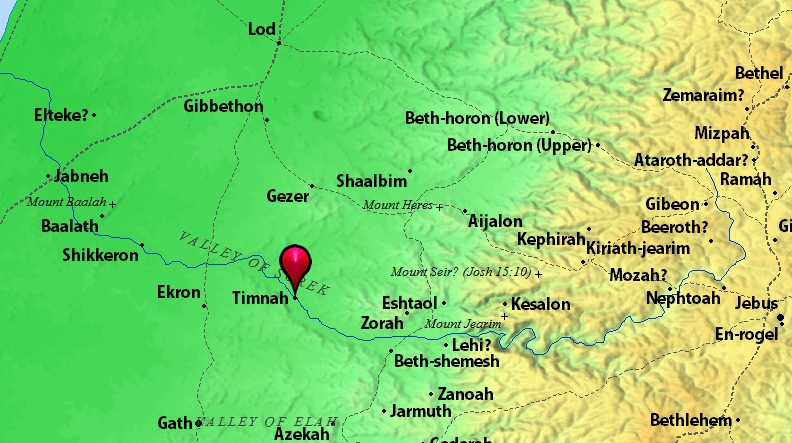
See map for location.

Timnah. Map by BibleAtlas.org

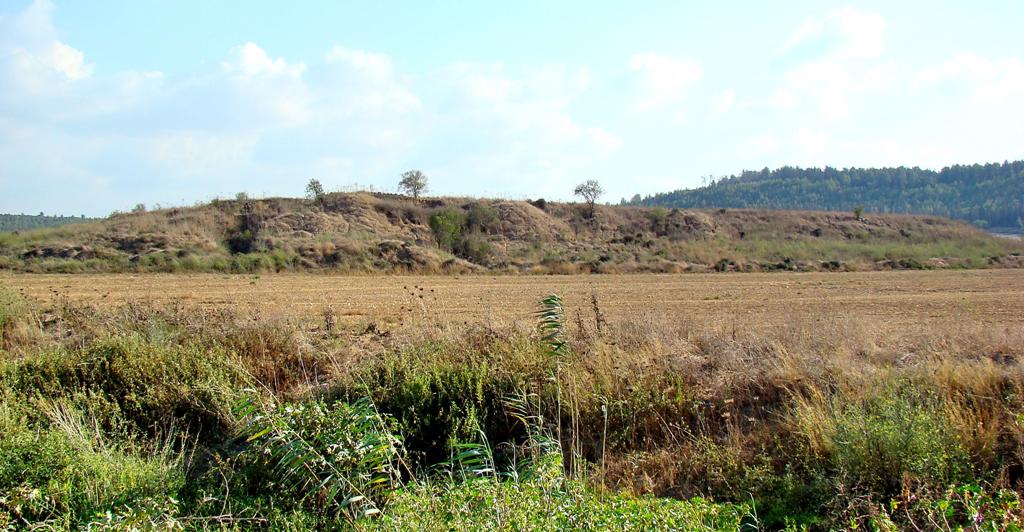
We had the opportunity while in Israel last month to see Timnah. You can see the tel in center of photo.

Timnah. Tel is in center. Photo by Leon Mauldin.

Samson was one of Israel’s judges in the biblical period usually designated “judges,” which preceded Israel’s having a king. Some of the other judges led an army to deliver Israel; Samson WAS the army.

But regarding Timnah, the text reads,

Samson went down to Timnah, where a Philistine girl caught his eye. 2 When he got home, he told his father and mother, “A Philistine girl in Timnah has caught my eye. Now get her for my wife.” 3 But his father and mother said to him, “Certainly you can find a wife among your relatives or among all our people! You should not have to go and get a wife from the uncircumcised Philistines.” But Samson said to his father, “Get her for me, because she is the right one for me” (Judges 14:1-3, NET).

It was here at Timnah (at the vineyards) that a young lion roared against Samson, and he killed it with his bare hands (vv. 5-6).  The verses that follow tell of bees making honey in the carcass of the lion which Samson ate and shared with his parents. He omitted to tell them the source of the honey.

Samson told a riddle which would require the wedding guests (30) at Timnah to each give him a set of clothing. The men could not figure out his riddle,  “Out of the one who eats came something to eat; out of the strong one came something sweet” (v.14). They threatened Samson’s wife who finally got the answer from Samson (the lion).  Samson was angry with his wife, and went home to his parents.  Meanwhile his father-in-law gave Samson’s wife to his “best man” (v. 20 ESV, NET).

Not knowing what had happened Samson went back to Timnah to “make up” with his wife. Upon learning of this new set of circumstances,

4 Samson went and captured three hundred jackals and got some torches. He tied the jackals in pairs by their tails and then tied a torch to each pair. 5 He lit the torches and set the jackals loose in the Philistines’ standing grain. He burned up the grain heaps and the standing grain, as well as the vineyards and olive groves. (Judges 15:4-5, NET).

The biblical narrative continues, with subsequent retaliation both on the part of the Philistines as well as Samson.

We are glad to see such Bible places as Timnah, as such sites provide the geographical setting for the events of Scripture.

Click image for higher resolution.