Capernaum, “His [Jesus’] Own City”

July 16, 2026

As the Gospel records narrate the Galilean ministry of Jesus, we read, “Getting into a boat, Jesus crossed over the sea and came to His own city” (Matt. 9:1, NASB). The parallel passage in Mark states, “When He had come back to Capernaum several days afterward, it was heard that He was at home” (Mark 2:1). Clearly “His own city” during the Galilean ministry is not Nazareth, (where Jesus grew up and lived prior to His public teaching), but Capernaum.

Entrance to Capernaum, where Jesus resided during His Galilean Ministry. Photo ©Leon Mauldin.

The wording of Matthew 4:13 is: “He left Nazareth behind and went to live in Capernaum by the sea, in the region of Zebulun and Naphtali” (CSB). The NASB renders the text, “He came and settled in Capernaum.” The NET Bible reads, “While in Galilee, he moved from Nazareth to make his home in Capernaum by the sea” (also NRS).

In a chapter entitled, “Capernaum: a Strategic Home for the Messiah,” Aubrey Taylor states, “Capernaum, located on the shore of the Sea of Galilee, was a busy town along one of the branches of the international road that connected the Jezreel Valley, Phoenicia, and Damascus” (Lexham Geographic Commentary on the Gospels, p. 88).

Much of Jesus’ teaching, and many of His miracles, were done in Capernaum. The synagogue there was the setting of his teaching as recorded in Mark 1:21: “And they went into Capernaum, and immediately on the Sabbath he entered the synagogue and was teaching” (ESV).

Synagogue in Capernaum. Believed to be the site of Jesus’ teaching. Photo ©Leon Mauldin.

The imported white limestone material you see here postdates the time of Jesus. But it is built upon the foundation of the 1st century structure, as can be seen here:
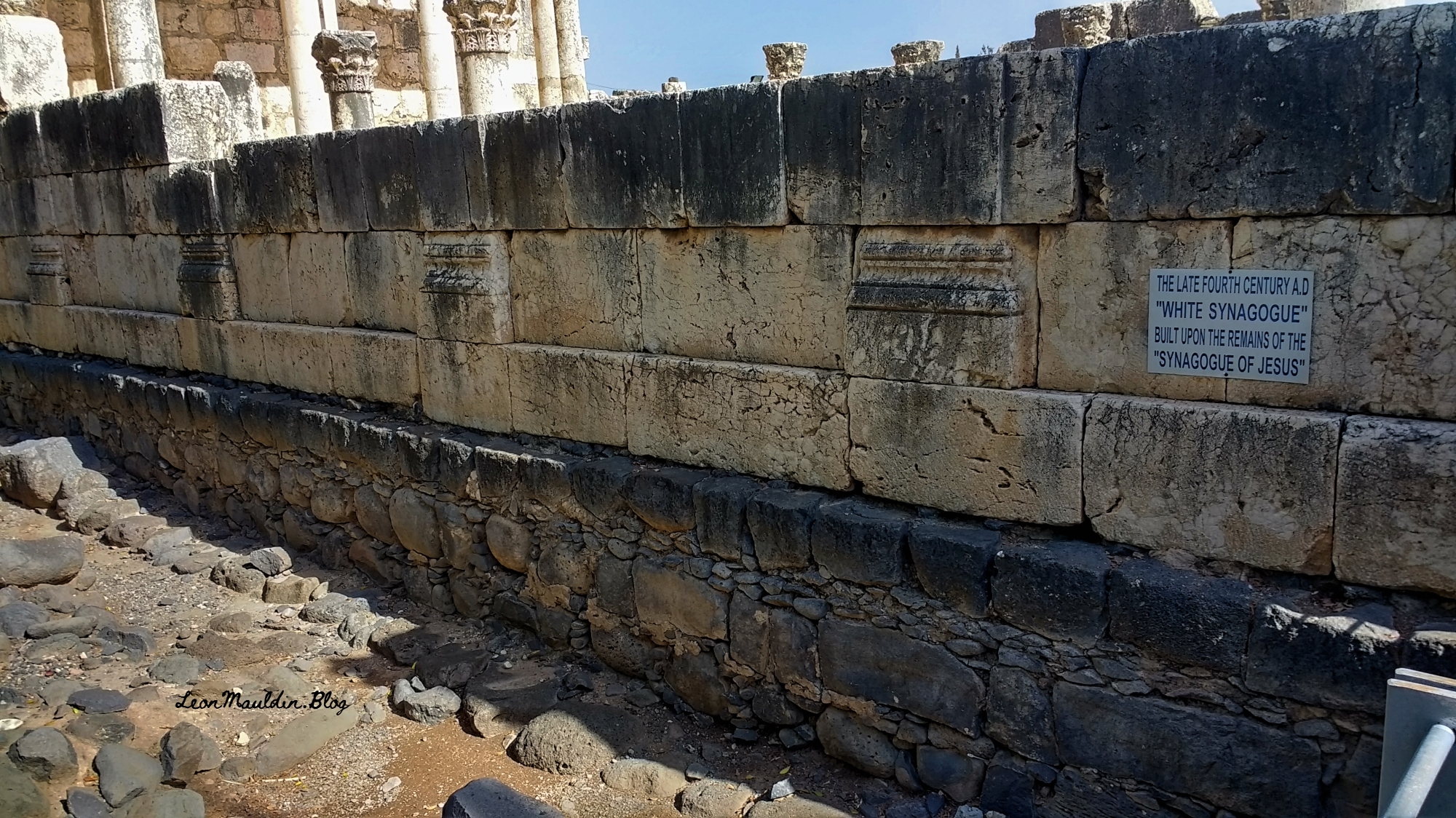
Structure visible today was built on the foundation of 1st century basalt stones. Photo ©Leon Mauldin.

Click images for larger view.


An Empty Grave Is There to Show My Savior Lives

April 20, 2025

Foundational to the Gospel message is the resurrection of Jesus Christ. Luke writes:

Now on the first day of the week, very early in the morning, they, and certain other women with them, came to the tomb bringing the spices which they had prepared. But they found the stone rolled away from the tomb. Then they went in and did not find the body of the Lord Jesus. And it happened, as they were greatly perplexed about this, that behold, two men stood by them in shining garments. Then, as they were afraid and bowed their faces to the earth, they said to them, “Why do you seek the living among the dead? “He is not here, but is risen! Remember how He spoke to you when He was still in Galilee, “saying, ‘The Son of Man must be delivered into the hands of sinful men, and be crucified, and the third day rise again.’ ” And they remembered His words. (Luke 24:1-8).

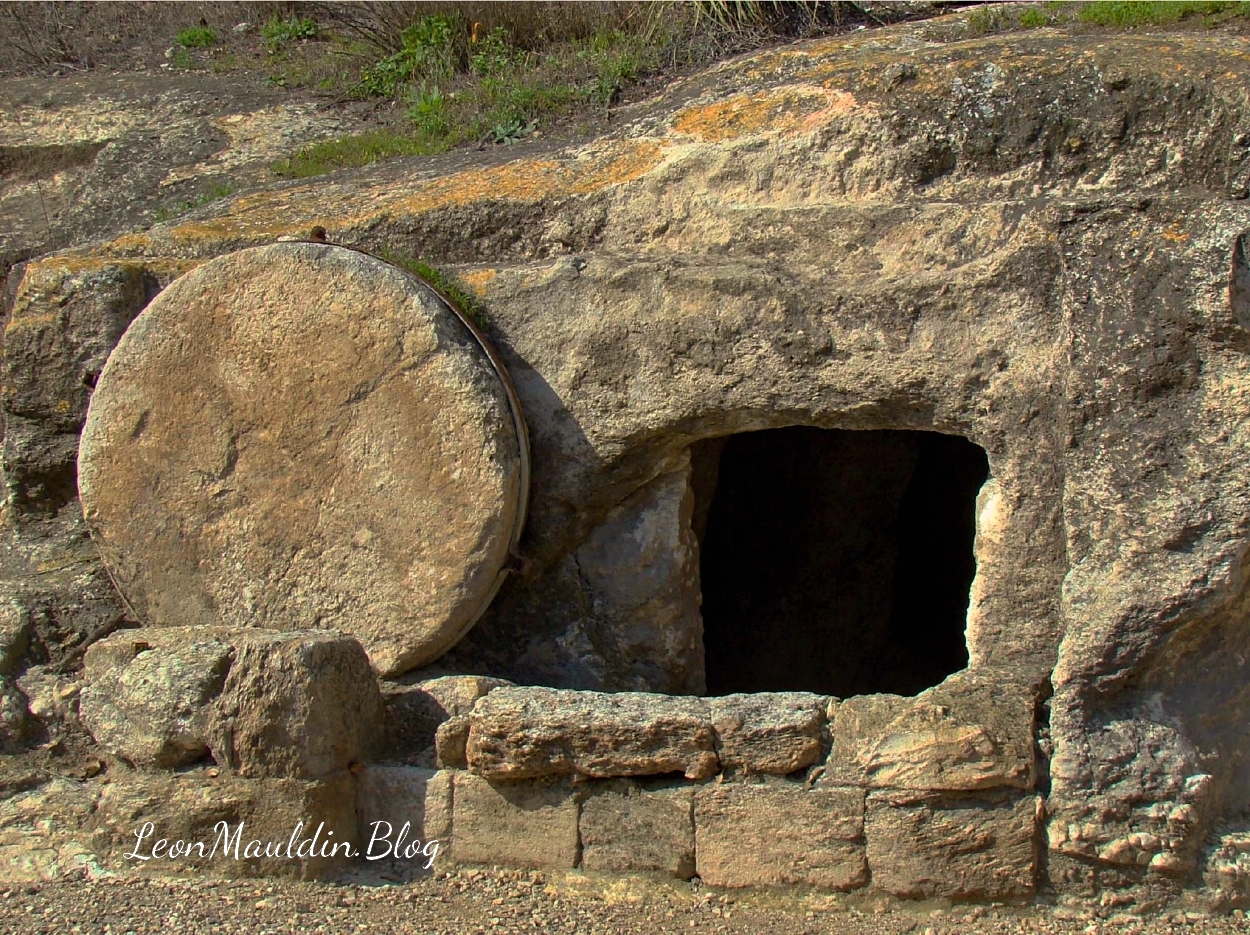
Rolling stone tomb near Megiddo. Photo ©Leon Mauldin

This tomb was discovered during road construction.  It so well illustrates the biblical texts that narrate the burial of Jesus.  Joseph of Arimathea had a new tomb (one which had not been previously used, John 19:38-42).  Assisted by Nicodemus, Joseph wrapped Jesus’ body in a clean linen cloth, “and laid it in his new tomb which he had hewn out of the rock; and he rolled a large stone against the door of the tomb, and departed” (Mt. 27:59-60). The tomb in our photo was hewn out of the rock, and you can see the large stone positioned to the left of the opening.

On Sunday, the 1st day of the week when Jesus was raised from the dead, the text says this about Peter and “the other disciple:”

So they both ran together, and the other disciple outran Peter and came to the tomb first. And he, stooping down and looking in, saw the linen cloths lying there; yet he did not go in. Then Simon Peter came, following him, and went into the tomb; and he saw the linen cloths lying there, and the handkerchief that had been around His head, not lying with the linen cloths, but folded together in a place by itself. Then the other disciple, who came to the tomb first, went in also; and he saw and believed. (John 20:4-8).

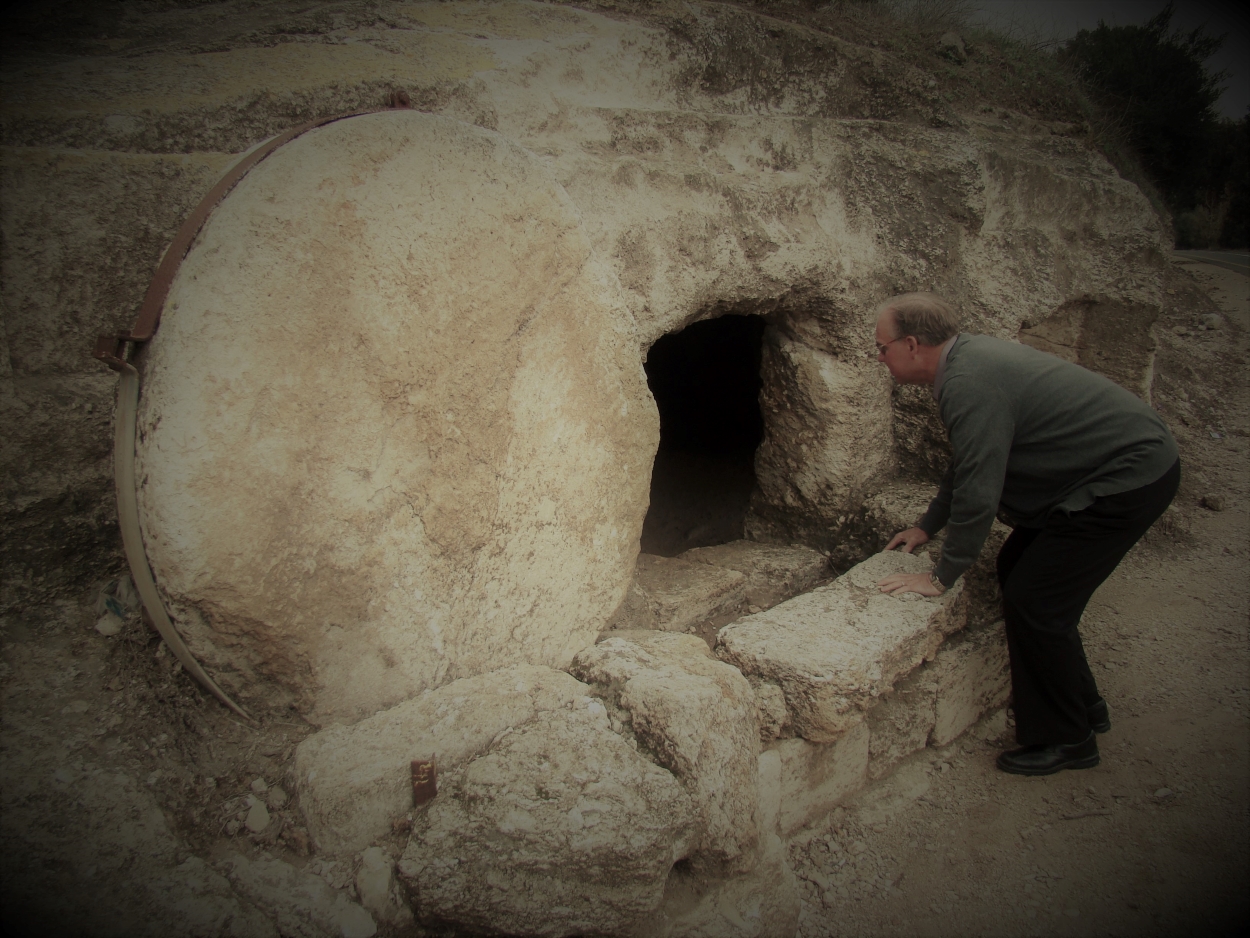
Note the record says the disciple stooped down to look in.  The tomb in our photo shows how this would of necessity be true.

Rolling Stone Tomb. Stooping to Look Inside. Photo by Ferrell Jenkins.

Note that we are not suggesting that this is the tomb in which Jesus was buried; it does however illustrate the type of tomb that would have been used.

For New Testament Christians, each first day of the week is significant.  Christians assemble in the name of Jesus Christ to partake of His memorial feast, the Lord’s Supper.  That Supper points back to His death, His body and His blood.  But we serve a risen Savior!  We proclaim His death till He comes (1 Cor. 11:26).

Click here for an excellent post detailing “The Week of the Death and Resurrection,” by Ferrell Jenkins.

Click images for larger view.