Safe Arrival at Prague

July 31, 2010

My wife and I arrived safely in Prague this morning.  I’m looking forward to teaching at the local congregation Sun AM, and then speaking at the annual lectureship at Kamenice Mon-Fri. It is good to be with Mike Morrow for this effort.

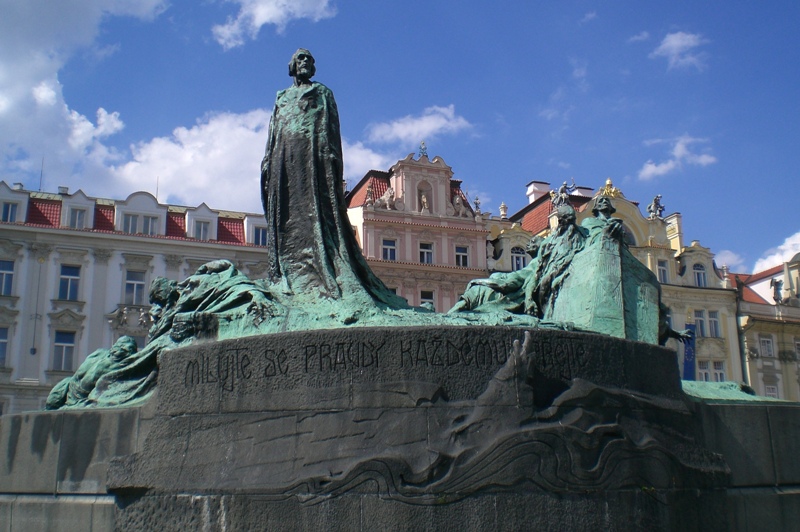
This afternoon Linda and I had the occasion to do some walking in and around the historic square in Prague.  There is a monument to the reformer John Huss, a Czech priest, philosopher and religious reformer.

John Huss. Prague. Photo ©Leon Mauldin.

John Huss was burned at the stake for his faith on July 6, 1415.  He continues to be held in high esteem by the Czechs.

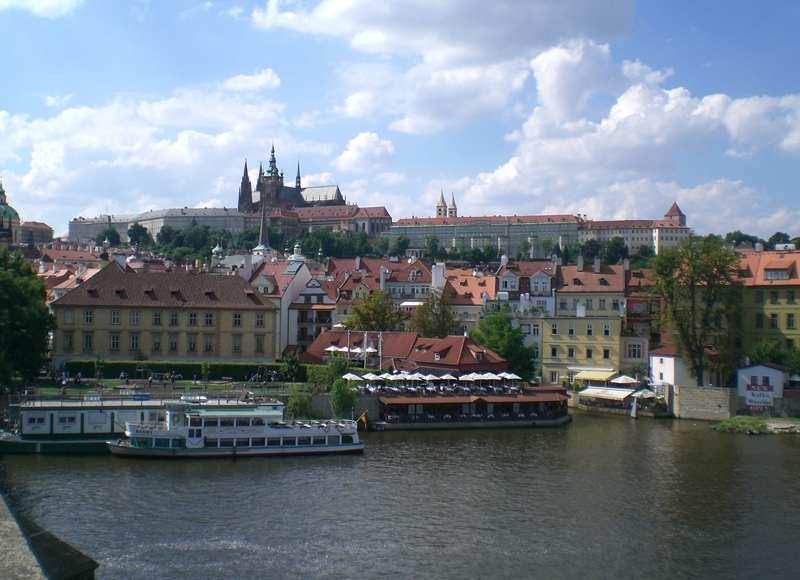
From the Charles Bridge over the Vltava River you have a view of the Czech Castle, seen at skyline of our photo.

Prague Castle. View from Vltava River. Photo ©Leon Mauldin.

Click on images for larger view/higher resolution.


“The next day unto Rhodes” (Acts 21:1)

July 28, 2010

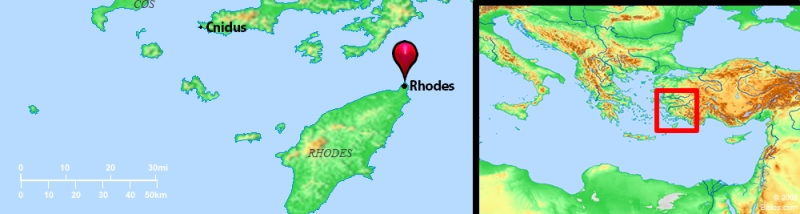
As Paul’s Third Missionary Journey neared its close, with Paul and his fellow travelers sailing the Mediterranean toward their destination of Jerusalem, Luke notes,  “Now it came to pass, that when we had departed from them [Ephesian Elders at Miletus] and set sail, running a straight course we came to Cos, the following day to Rhodes…” (Acts 21:1). Rhodes was an island off the southwestern shore of the Roman province of Asia Minor.  See map:

Island and City of Rhodes. Map courtesy of bibleatlas.org

You will notice both the island of Rhodes, and the city by that same name.  Regarding our Acts 21:1 passage quoted above, F.F. Bruce observes,

“Rhodes” here refers to the city rather than to the island of the same name (the chief island of the Dodecanese). The city of Rhodes, lying at the island’s north-eastern extremity, was founded in 408 B.C. by the amalgamation of three earlier settlements.  As the prevailing wind was from the north-east, they were able to accomplish this part of the voyage with a straight course (NICOT, Acts.420).

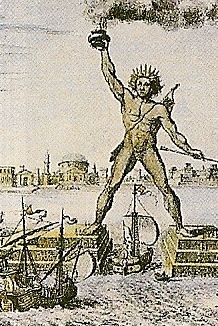
At Rhodes was one of the Seven Wonders of the Ancient World, the Colossus of Rhodes, a huge statue of the sun god Helios. It is traditionally depicted as straddling Mandraki harbor, but other believe it stood at the Temple of Apollo. See artist conception below:

Colossus of Rhodes, Painting by Fischer von Erlach, 1700. Source: Eyewitness Travel, The Greek Islands.

Gareth Reese, quoting Dale, writes:

For 56 years the brazen Colossus of Helios stood across the mouth of the barbor.  It was so large, being 105 feet high, that ships sailed between its legs.  It was considered one of the seven wonders of the ancient world.  The brazen Colossus represented the sun which shown almost every day on the island.  About 224 B.C., an earthquake threw the idol down. [Its fragments were still on the spot at the time of Paul’s visit.] In 600 A.C., its remains were sold to a Jew by the conquering Saracans.  It took 900 camels to carry the brass away (Acts.778).

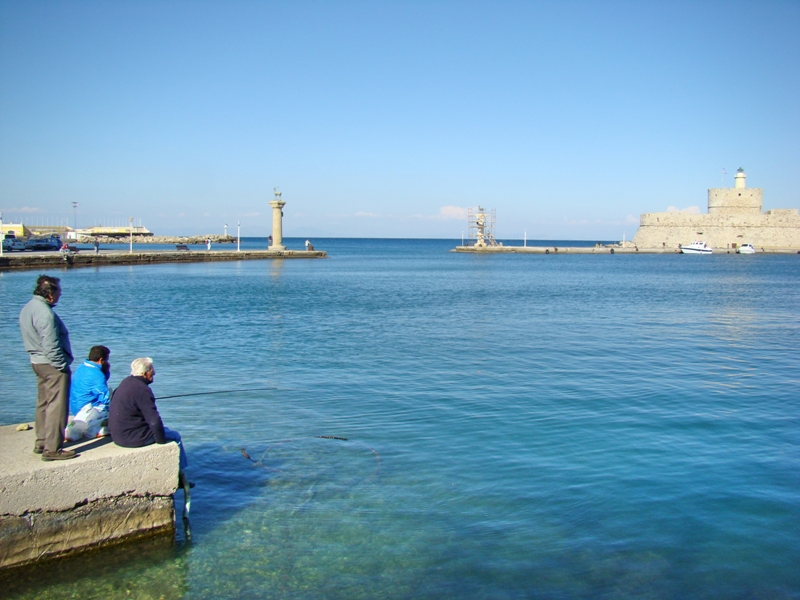
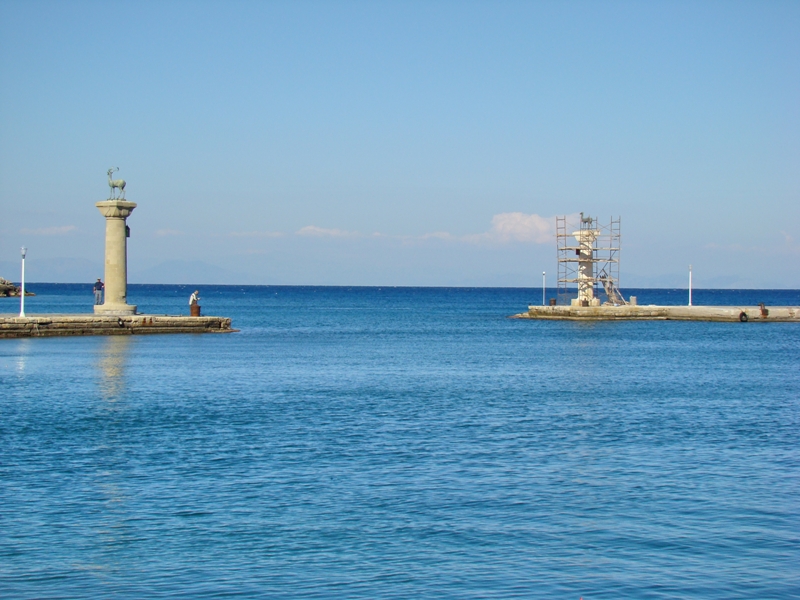
Our photo below, taken in March of this year, shows the harbor looking out through the entrance to the sea.

Harbor of Rhodes. Possible site of Colossus. Photo ©Leon Mauldin.

And here is a closer view:

Rhodes Harbor. Closer View. Photo ©Leon Mauldin.

Click on photos for larger view/higher resolution.


The Palace at Knossos Crete

July 20, 2010

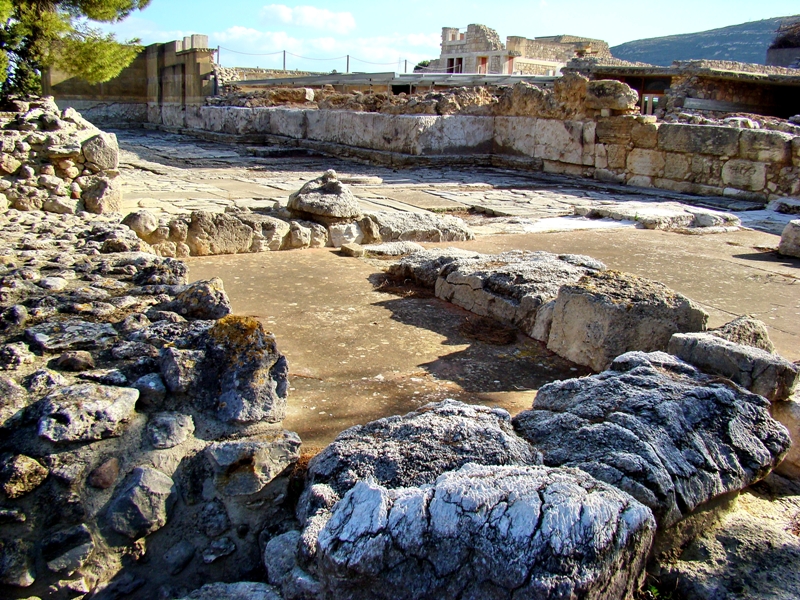
In today’s post I wish to share a few more photos and some info re: Knossos, Crete, specifically pertaining to the palace.  Knossos was the capital of Minoan Crete, and had the largest and most sophisticated palace on the island.  The palace had more than 1,000 rooms.  The archaeologist and excavator Sir Arthur Evans determined that the palace was three to five stories high.

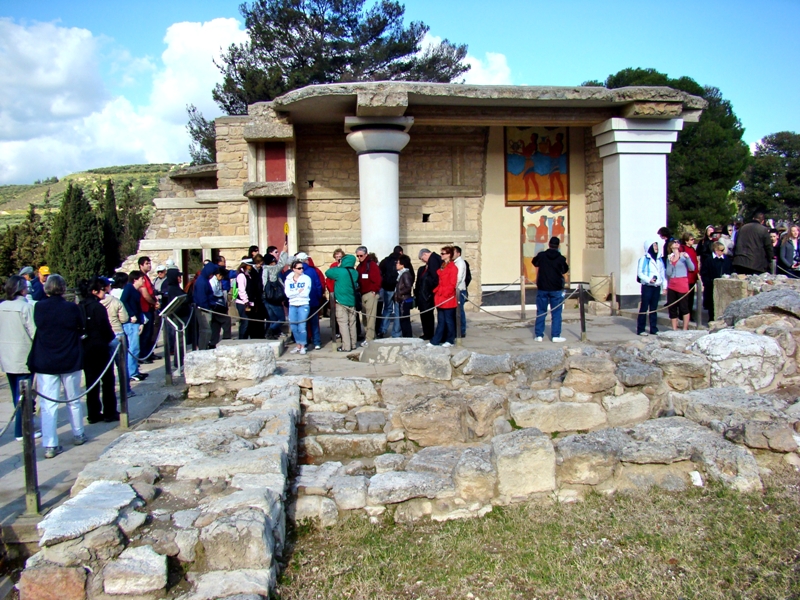
The Great Propylon (monumental gateway) is featured in our photo below:

South Propylon. Entrance to palace at Knossos Crete. Photo ©Leon Mauldin.

Some of our group are among the people in this photo; it was a cool, brisk March morning as you can tell by the coats most are wearing.

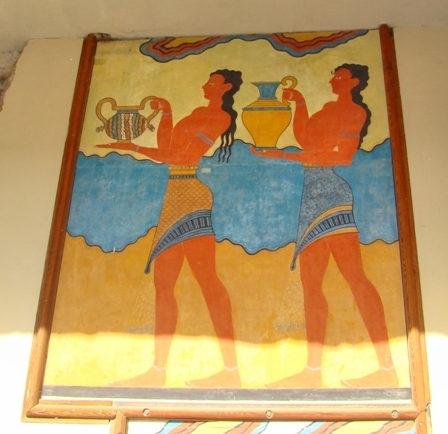
This monumental pillared gateway was the entrance to the palace on the south side. It was decorated with the Cup-Bearer figured.  See photo below.

Cup-Bearer Figure decorating South Propylon. Knossos Crete. Photo ©Leon Mauldin.

The throne room is thought to have been used as council and and law court for King Minos and the priesthood. See photo below.

Throne Room for King Minos. Knossos Crete. Photo ©Leon Mauldin.

Note the griffins which “guarded” the throne.  These mythical beasts with eagle’s head and lion’s body are thought to have symbolized royal and divine power.  In the floor you see a basin, used for ritual cleansing.

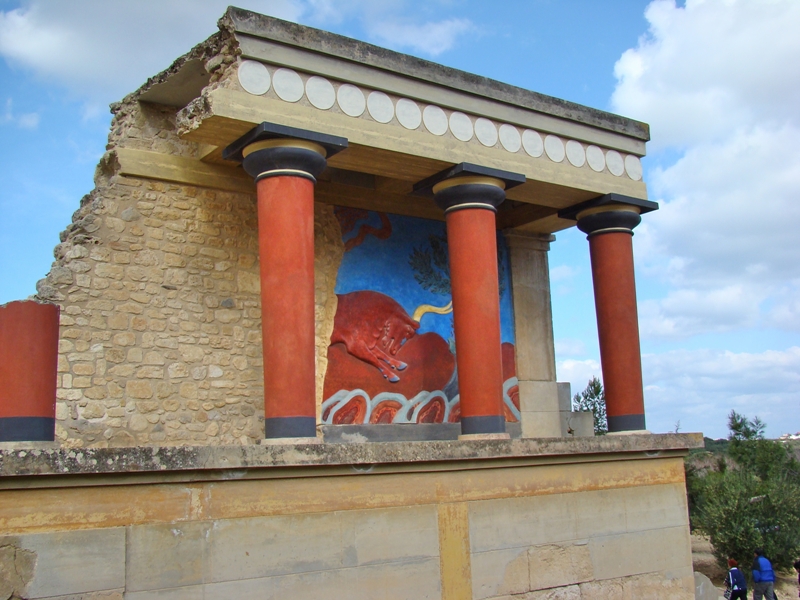
At the north end of the palace, located at the end of the road for the harbor, was another entrance to to the palace. You will notice it is decorated with a “Bull” fresco.  See our photo:

North Entrance for the Palace. Knossos, Crete. Photo ©Leon Mauldin.

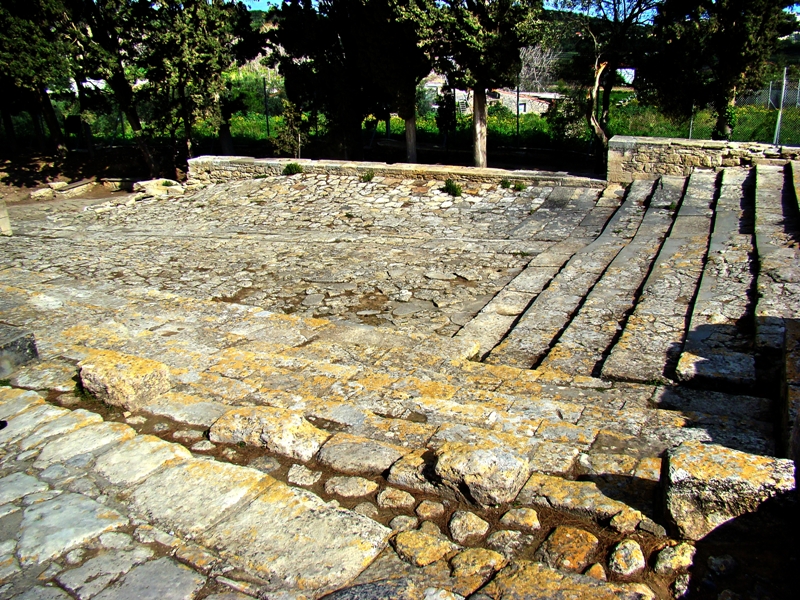
On the west side of the palace is the theater.  It was a stepped court located at the end of the Royal Road.  Some suggest its usage was for rituals associated with the reception of visitors.

Stepped Theater at Knossos, Crete. Photo ©Leon Mauldin.

The theater steps would have seated about 400 people.

Remember to click on images for higher resolution.


Crete, cont’d.

July 16, 2010

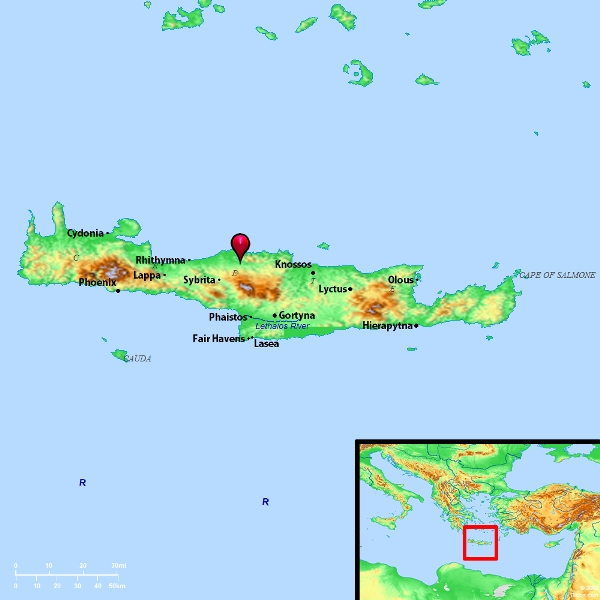
After the Apostle Paul left the younger evangelist Titus at Crete, he wrote, “For this reason I left you in Crete, that you should set in order the things that are lacking, and appoint elders in every city as I commanded you” (Titus 1:5). There were many cities (Greek polis) on the island of Crete, as can be seen from this map by bibleatlas.org:
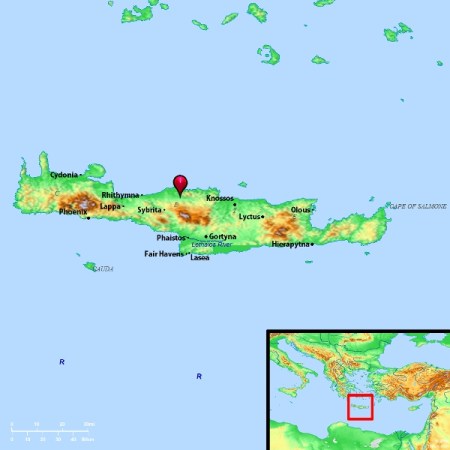
Cities on the Island of Crete. ©bibleatlas.org

In each of these cities where congregations of Christians were established, qualified men were to be appointed to serve as elders (bishops, pastors are biblically interchangeable terms).  The list of qualifications was given in Titus 1:6-9:

if a man is blameless, the husband of one wife, having faithful children not accused of dissipation or insubordination.  For a bishop must be blameless, as a steward of God, not self-willed, not quick-tempered, not given to wine, not violent, not greedy for money,  but hospitable, a lover of what is good, sober-minded, just, holy, self-controlled,  holding fast the faithful word as he has been taught, that he may be able, by sound doctrine, both to exhort and convict those who contradict.

The island of Crete was not only populated, but highly developed, going back to the time of Abraham (ca. 2000 B.C.) and even beyond.  In the years 68-66 BC, Crete was conquered by the Romans, and became a Roman province.  Today it is one of the Greek islands.

In our previous post we mentioned the archaeological excavations of Arthur Evans, which got underway in 1900. He is credited with inventing the term “Minoan,” naming the civilization after King Minos, who ruled the island of Crete, according to legend.

Religion. A deity worshiped by the Minoans was the bull.  In the Biblical Archaeology Society publication (2008), Island Jewels: Understanding Ancient Cyprus and Crete, we read:

Again, we rely on the evidence of frescoes and gems that show how the Minoans practiced an astonishing ritual that consisted of grasping a bull by its horns and leaping over its back.  When we add this to the ubiquity of stylized bulls’ horns, so-called “horns of consecration,” as well as the bull’s head rhyta (drinking vessels; singular, rhyton) and vivid portraits of individual beasts, there can be no doubt that the Minoans treated the bull with deep reverence…The bull may well have represented the young male consort of the goddess of love, a pattern that recurs throughout the ancient near east from Tammuz and Ishtar to Venus and Adonis, although if this is the case we cannot even give names to the Cretan versions of the divine couple (pp. 49-59).

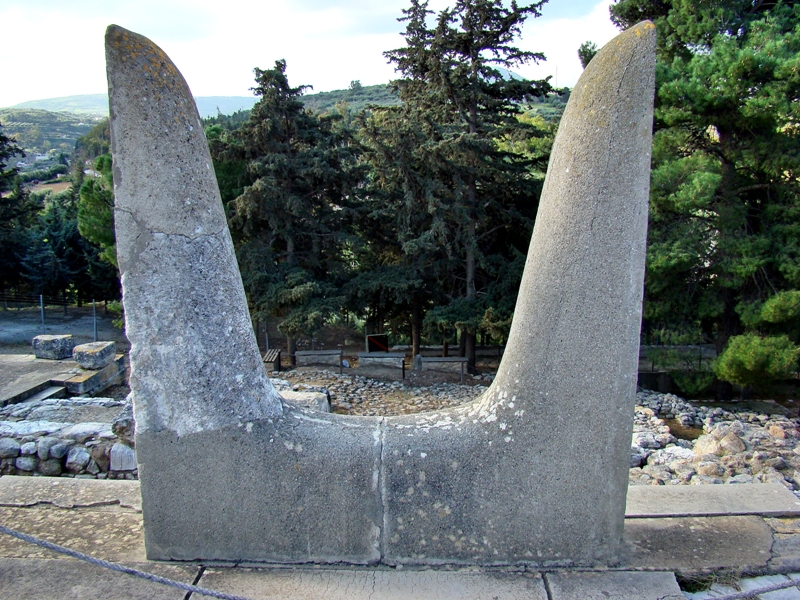
In keeping with this information, note our photo of the gigantic bull’s horns below:
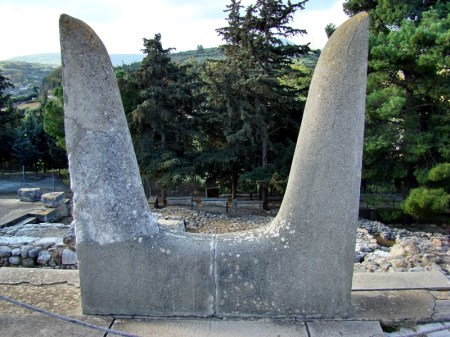
Bull's horns at Knossos, Crete. Photo ©Leon Mauldin.

These restored horns symbolized the sacred bull.  They once adorned the top of the palace at Knossos, Crete.

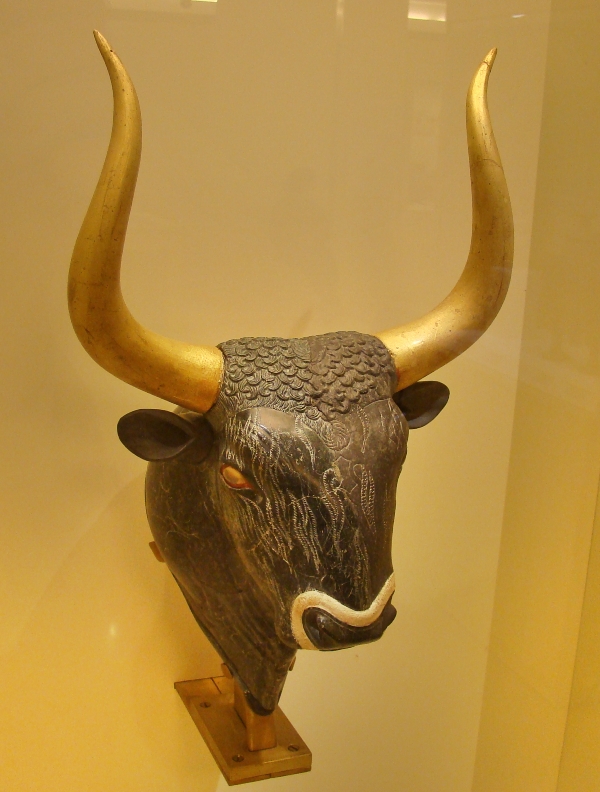
The bull’s head rhyton (ceremonial drinking cup) in photo below is made of steatite (black metamorphic rock) and decorated rock crystal eyes and mother-of-pearl snout.
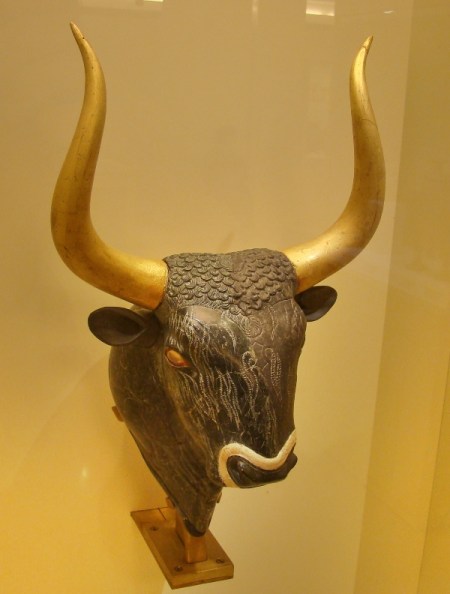
Bull's Head Rhyton. Knossos, Crete. Photo ©Leon Mauldin.

This libation vase is displayed in the Irakleio Archaeological Museum, which is said to house the world’s most important collection of Minoan artifacts. This artifact is dated at 1600-1500 B.C.

Click on images for higher resolution.

“For this reason I left you in Crete…”

July 14, 2010

With our previous post on Laodicea we completed our look at the cities of the seven churches addressed in Revelation 2-3, sites which we visited in March of this year.  We were also able to see some of the biblical islands, including Crete.

Crete is mentioned on two occasions in the New Testament; in Acts 27:7ff., in connection with Paul’s journey (as a prisoner) to Rome, and then later in Titus 1:5. Additionally, Cretans are mentioned as being among those present on the Day on Pentecost (Acts 2:11). In the Titus text Paul wrote the evangelist, “For this reason I left you in Crete, that you should set in order the things that are lacking, and appoint elders in every city as I commanded you.”

Crete is the fourth largest island in the Mediterranean, following Sicily, Sardinia and Cyprus.  Excavations at Knossos, Crete have  confirmed the existence of well established civilizations dating back to the time of Abraham (ca. 2000 B.C.), and beyond.

Palaces were located at such coastline cities as Knossos, which served as the heart of economic, political and religious life.

Palace of Knossos at Crete. Photo ©Leon Mauldin.

Sir Arthur Evans, British archaeologist, excavated this site beginning in 1900. He used what was then newly developed methods of stratigraphy, and kept accurate and careful records of his findings.  His many years of work were published in a four-volumes, The Palace of Minos (1921-1936), Minos being the ancient legendary king.

Large storage jars at Knossos, Crete. Photo by Leon Mauldin.

More to come on Knossos, Crete.  Remember to click on image for larger view.


Laodicea, I wish you were cold or hot!

July 6, 2010

This is the wording to the lukewarm church at Laodicea (Rev. 3:14), one of the seven churches in the Roman province of Asia addressed in Rev. 2-3.  At first glance it would seem plausible to assign the meaning of fervent and zealous to “hot,” and “cold” would mean to just quit altogether.  However, a look at the setting and characteristics of the city may well be the basis for this statement of Jesus.

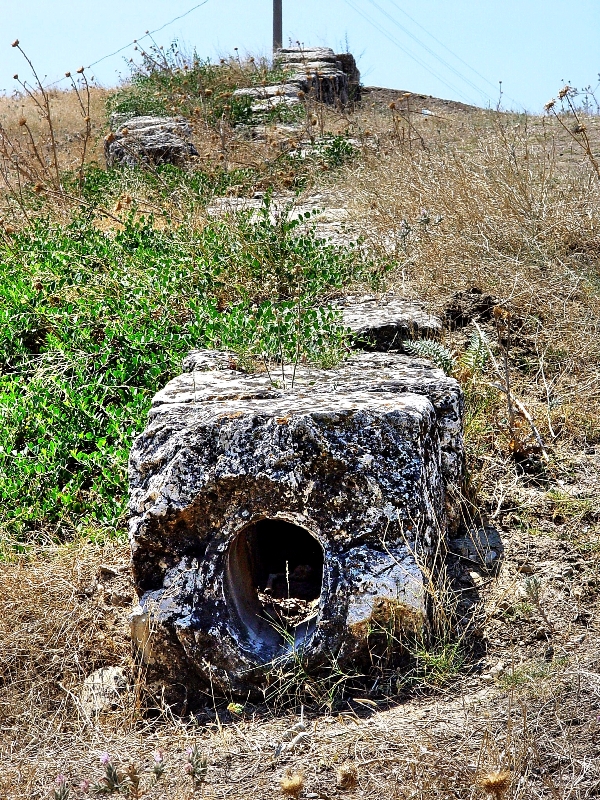
Laodicea, though a wealthy city, was known for its tepid, lukewarm water, which was brought in from the south of the city, five miles distant.

Laodicea. Water was piped in from the south. Photo ©Leon Mauldin.

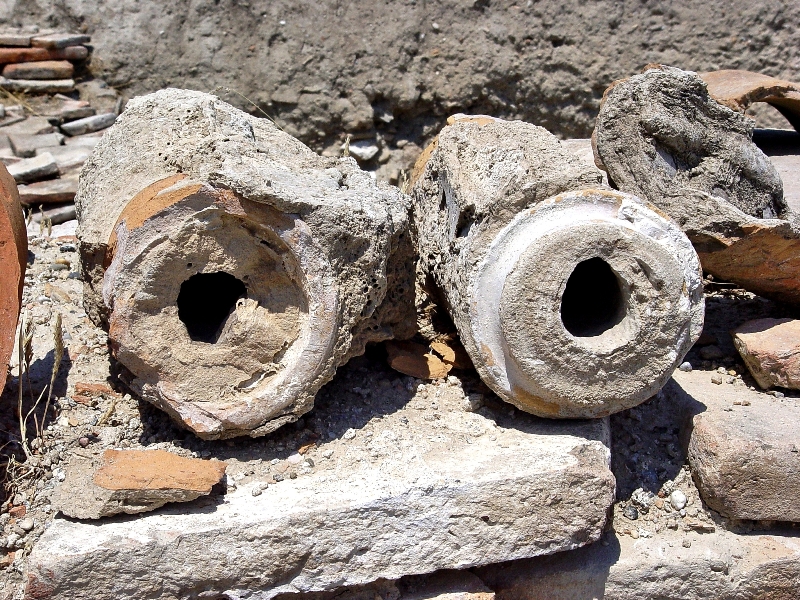
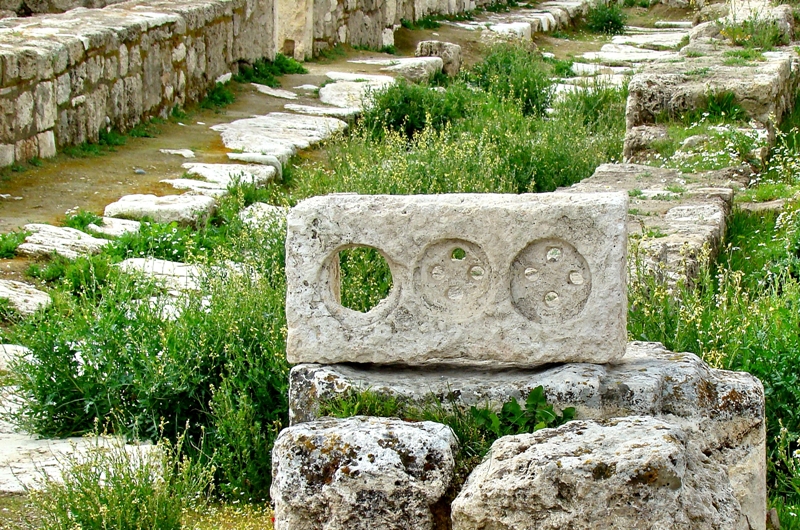
It doesn’t appear that it was too appetizing as you see the tendency of the pipes to clog, as illustrated in our photo. These are some sections of pipe excavated by archaeologists.

Laodicea Clogged Pipes. Photo ©Leon Mauldin.

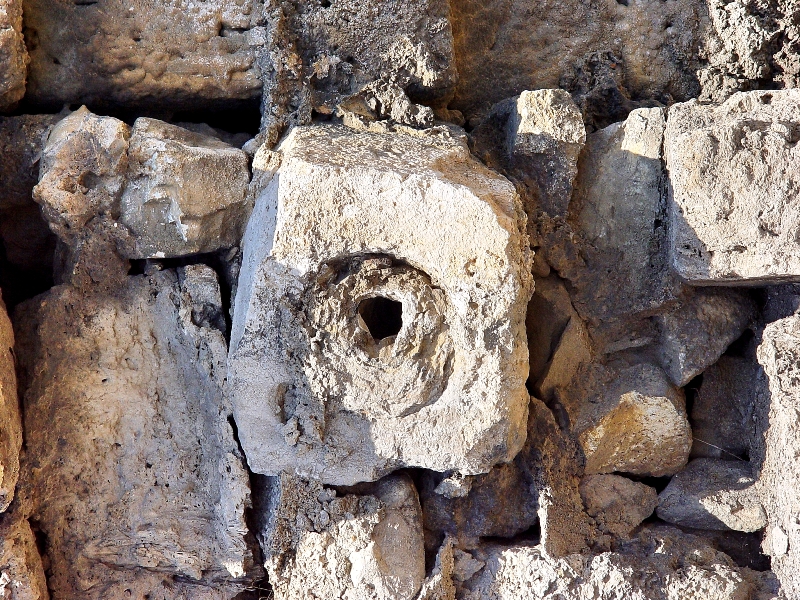
The water distribution tower shows the poor quality of Laodicea’s water.

Clogged Pipe at Laodidea's Water Distribution Tower. Photo ©Leon Mauldin.

But back to our point about the setting of Laodicea.  Nearby to the east Colossae was known for its cold refreshing water.  Cold can be a good thing!

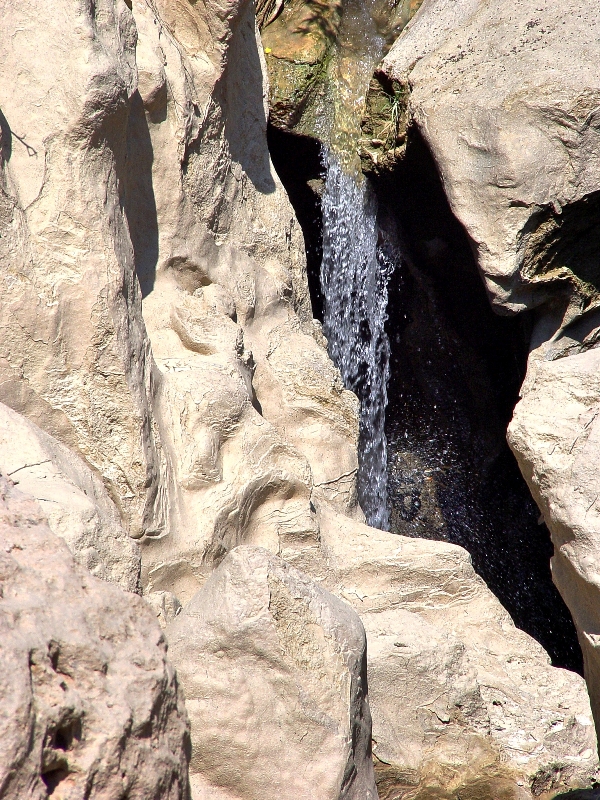
Cold refreshing water at Colossae. Photo ©Leon Mauldin.

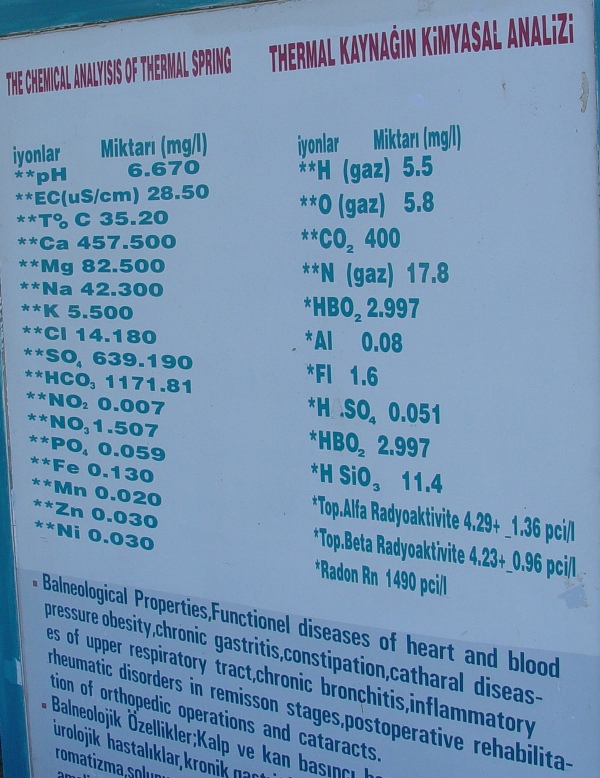
Just to the north and within sight of Laodicea is Hierapolis.  It was known for its hot thermal springs.  Hot is good!  Hot water has medicinal value; Hierapolis became a healing centers. The sign below was photographed there listing all sorts of benefits.  Roman emperors were among those who made the journey here.

Hieraoplis. Hot thermal springs have medicinal value. Photo ©Leon Mauldin.

Again, cold water is good and refreshing; hot water is good for healing, but lukewarm, what good is that?  The church had taken on the characteristic of the city, and had likewise become lukewarm. What Jesus wanted the church to do was not to become cold in the sense of quitting; he wanted them to “be zealous and repent,” to turn from their lukewarmness.

Study and see if you think this fits.  It is consistent with Jesus’ other references to Laodicea’s wool, wealth, and eye care and using these as the basis of His admonitions (Rev. 3:18).

Remember to click on image for larger view.


More on Laodicea

June 28, 2010

One interesting find at Laodicea in a large house just off Syria Street, was this filter connected to indoor plumbing.

Water Filter at Laodicea. Photo ©Leon Mauldin.

The right side and center is for water entering the building, while the left side is designed for water leaving the building. In another post we want to discuss further the water situation at Laodicea.

In our articles/photos posted on the Seven Churches of Rev. 2-3, we have repeatedly seen evidence of temples devoted to various pagan gods.  It is difficult to overstate how widespread and pervasive idolatry was in the biblical world, in both Old Testament as well as New Testament times.  At Laodicea one can see the remains of a temple, known as Temple A, located on the north side of the city.

Temple A. Laodicea. Photo ©Leon Mauldin.

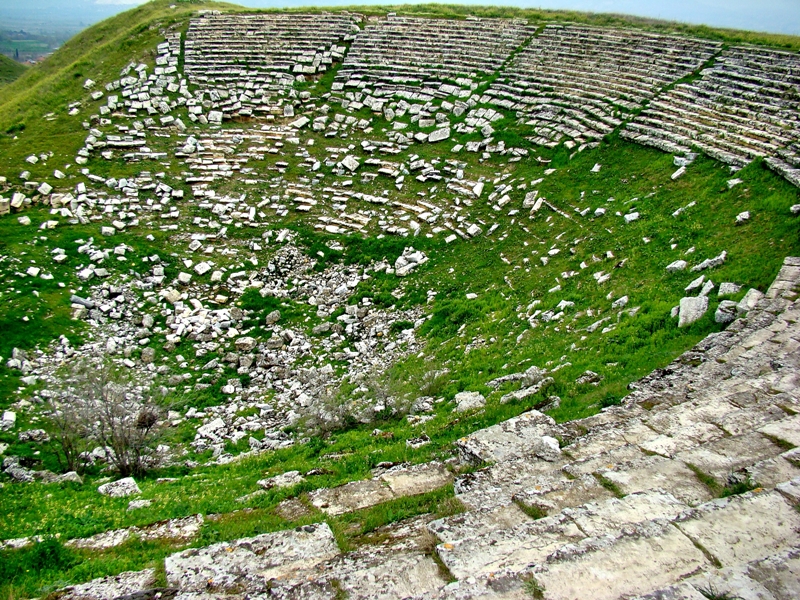
Of course, every city of significance had a theater.  Pictured here is the Hellenistic theater, located on the west side of the city.

Hellenistic Theater at Laodicea. Photo ©Leon Mauldin.

Click on image for larger view.  More to come.


Laodicea, cont’d.

June 26, 2010

In our previous post we saw a startling difference between the Laodiceans’ assessment of themselves, and the Lord’s evaluation.  They thought they were rich and in need of nothing; Jesus said that spiritually they were “wretched, pitiful, poor, blind, and naked” (Rev.3:17).  They were blissfully unaware of their true condition before God! Further, their lukewarmness was a condition that nauseated the Lord.

That’s why we have the Bible. Therein is revealed how to be saved by the provisions of God in Jesus Christ, and then further teaching furnishes the Christian with what God wants His people to be.  In other words, to avoid the condemnation of the Lord, and to have His approval, requires constant looking at the Scriptures as the standard, and examining self in light of that Word.

But we want to explore further the city itself where the church addressed in Rev. 3 was located.

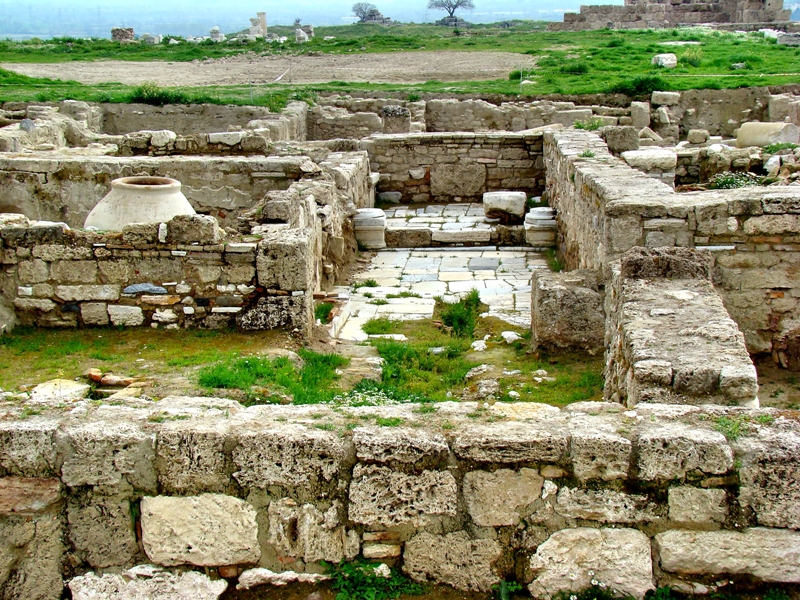
Besides the evidence of many public buildings and facilities, archaeologist have also excavated some private residences, such as the one in this photo. Note the storage jar at left center.

Private Residence at Laodicea. Photo ©Leon Mauldin.

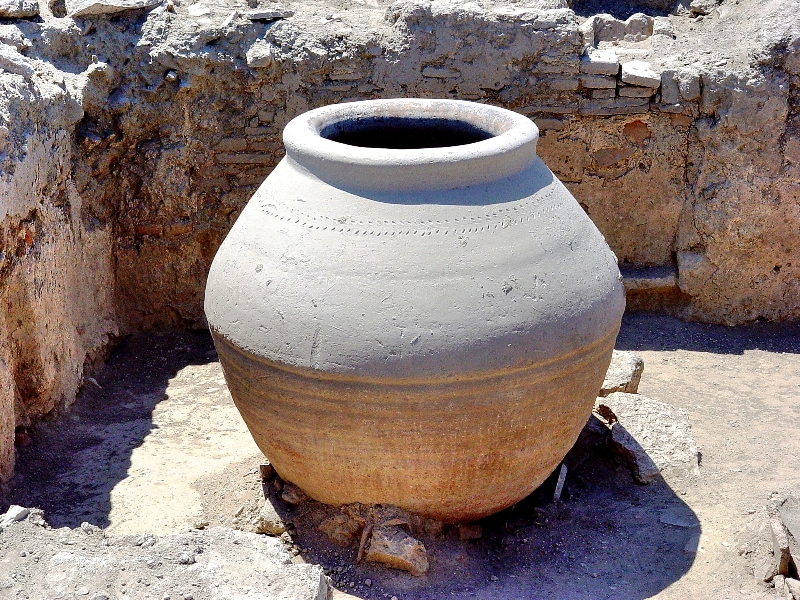
Such storage jars would have been used in homes for storage of grain and other such items.  Such items are indicative of considerable purchasing power.

Storage Jar in Private Residence at Laodicea. Photo ©Leon Mauldin.

Still more to come on Laodicea.  Click on image for larger view.


Laodicea, the Church that Nauseated the Lord

June 25, 2010

Laodicea is the seventh of the seven churches addressed in Revelation 2-3. Laodicea was a biblical city of great importance: it was a wealthy banking center, it was known for its black raven wool and the manufacture of clothing; also it was known for its invention of eye salve.   Located in the Lycus River Valley, Laodicea was strategically situated on an east-west travel route.  Nearby Hierapolis was known for its medicinal hot springs; neighboring Colossae was known for its cold refreshing water.  Laodicea was noted for neither; its water was tepid, lukewarm and sickening. With these things in mind, consider Jesus’ assessment of the church, which had taken on the lukewarm characteristics of the wealthy city:

15 ‘I know your deeds, that you are neither cold nor hot. I wish you were either cold or hot! 16 So because you are lukewarm, and neither hot nor cold, I am going to vomit you out of my mouth! 17 Because you say, “I am rich and have acquired great wealth, and need nothing,” but do not realize that you are wretched, pitiful, poor, blind, and naked, 18 take my advice and buy gold from me refined by fire so you can become rich! Buy from me white clothing so you can be clothed and your shameful nakedness will not be exposed, and buy eye salve to put on your eyes so you can see! (Rev. 3:15-18, NET).

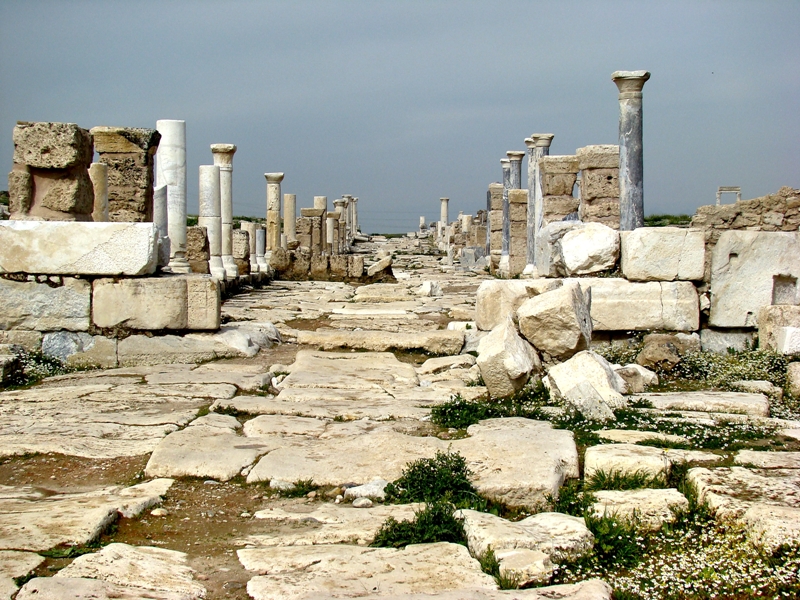
Since 2000, extensive excavation has been done at Laodicea, and continues through the present. Much of the work has been to reveal some of the major streets of the city, including the main street featured in our photo here. This street was called Syria Street.

Laodicea Syria Street. Main Street in City. Photo ©Leon Mauldin.

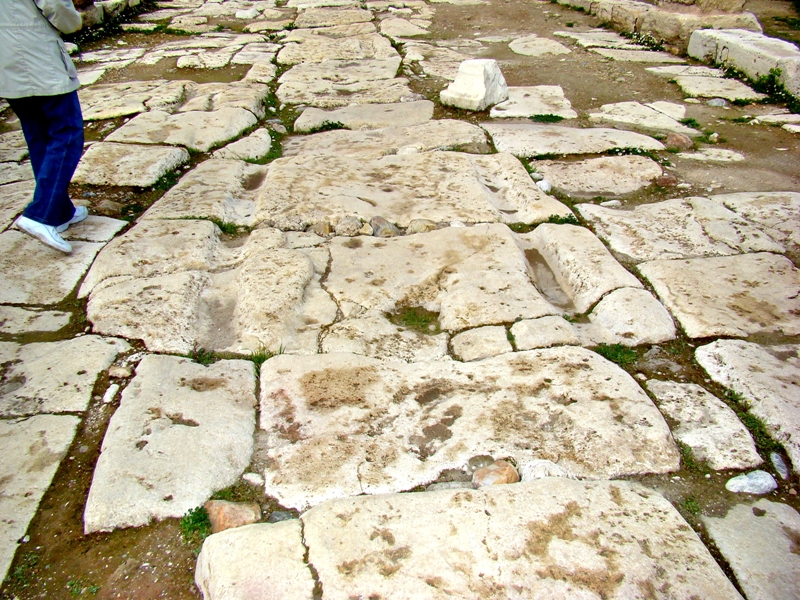
The scoring of pavement stones made by chariot wheels may be seen at some points in the street.

Grooves in Street Made by Chariot Wheels. Photo ©Leon Mauldin.

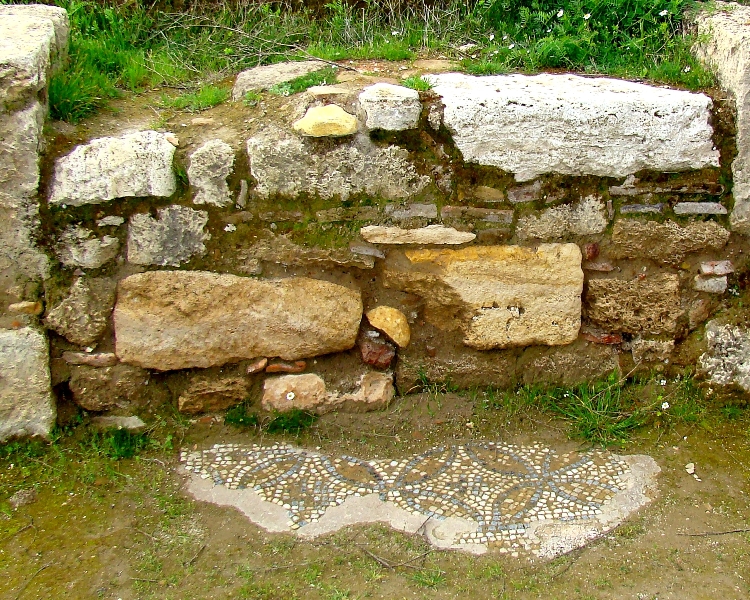
Syria Street as well as other streets would have been lined with shops on either side.  Our photo below depicts a mosaic at the entrance of an ancient shop.

Laodicea Mosaic at Shop Entrance. Photo ©Leon Mauldin.

More to come on Laodicea.  Remember to click on photo for larger view.


Philadelphia, Oxen and Garlands

June 21, 2010

Recent posts have featured the biblical city of Philadelphia, one of the cities with churches addressed in Rev. 2-3.  The Lord had only good things to say about two of those churches — Smyrna and Philadelphia.

Bear in mind that when we speak of churches we are not referring to church buildings, but the people, Christians, who made up those local congregations.

Note this artifact found at Philadelphia.

Oxen and Garlands at Philadelphia. Photo ©Leon Mauldin.

The oxen and garlands featured here put us in mind of Paul’s preaching at Lystra, as recorded in Acts 14:11-18, when the priest of Zeus intended to offer sacrifices of oxen and garlands to Paul and Barnabas, following Paul’s healing of the lame man:

When the crowds saw what Paul had done, they raised their voice, saying in the Lycaonian language, “The gods have become like men and have come down to us.” And they began calling Barnabas, Zeus, and Paul, Hermes, because he was the chief speaker. The priest of Zeus, whose temple was just outside the city, brought oxen and garlands to the gates, and wanted to offer sacrifice with the crowds. 14 But when the apostles Barnabas and Paul heard of it, they tore their robes and rushed out into the crowd, crying out and saying, “Men, why are you doing these things? We are also men of the same nature as you, and preach the gospel to you that you should turn from these vain things to a living God, WHO MADE THE HEAVEN AND THE EARTH AND THE SEA AND ALL THAT IS IN THEM. “In the generations gone by He permitted all the nations to go their own ways;  and yet He did not leave Himself without witness, in that He did good and gave you rains from heaven and fruitful seasons, satisfying your hearts with food and gladness.”  Even saying these things, with difficulty they restrained the crowds from offering sacrifice to them.

A couple of observations: Our text is from the New American Standard Bible, which makes us of capital letters, not for emphasis, but to indicate a quotation from the Old Testament(here cf. Psa. 146:6; Isa. 45:18).  Also, for “oxen and garlands,” the NIV renders, “bulls and wreaths.”

This was not an uncommon motif, as you can see from our photo below, taken in the Ephesus Museum:

Oxen and Garlands. Ephesus Museum. Photo ©Leon Mauldin.

In this photo, note that rams appear on either side, with the ox in the middle. Click on image for larger view.

Next we plan to visit Laodicia.