Sabras, It’s What’s For Dinner

September 15, 2011

Sabras is the Hebrew word for the prickly pear cactus. It is commonly seen in Israel in the summer.

Sabras in the Shephelah. Photo by Leon Mauldin.

I found a site with some recipes for the Sabra for those who may be interested: http://kosherfood.about.com/od/kosherisraelifood/a/sabras.htm

The following tips are included:

  • Choose sabras with even color that give slightly to pressure.
  • Ripen sabras at room temperature until soft.
  • Store sabras in the refrigerator for up to a week.
  • Peel sabras carefully to remove the small spines on the outer skin.
  • Section sabras and remove seeds
  • Serve sabras cold.

In an article entitled, “Persimmon,  loquat,  fig,  pomegranate  and  prickly  pear in Israel,” A. Blumefeld of the Institute of Horticulture, A.R.O. Volcani Center, Bet Dagan, Israel, writes:

Prickly  pear  is widespread  in  Israel,  mainly  as  a fence  plant  in  Arab  villages  where it  separates  fields.  As such it  is an extensive  non-irrigated  crop.  The  fruit  which  begins to  mature  in early  July  is consumed  locally  and  until  recently,  only  very  small  amounts of fruit  reached  organized  markets.

The main extensively  grown  cultivar is a thorny,  orange  cultivar.  The propagation of  the prickly  pear is vegetative  and  most  of  the  plants are similar.  However,  other types  occur  among  the  plants  which  show  different  types  of  “leaves”  and  fruits.

Growers  have  selected  some  with  a different  appearance,  mainly  for  home  gardens, with  some  for  large-scale  cultivation.  One  of  the  selections  is  almost  thornless;  it has been  named  ‘Offer’  and forms  the  basis  for  modern  cultivation  of  the prickly  pear.

Orchards  of  this  cultivar  are  planted  in rows  4×5 m apart  and  irrigation  and  fertilizers are applied. The  fruit  is brushed  in  packing  houses  and  is sold in fruit  shops  like  any other fruit.

On our recent trip to Israel Ferrell Jenkins did not offer to peel me one of these sabras for a snack. I’m sure it was only because he was too busy taking photos 🙂

Sabra, close-up. Photo by Leon Mauldin.

Click on images for higher resolution.

Welcome to new subscribers. In the last couple of days several have subscribed to our blog. It is user-friendly to do so. Go to the box provided under the calendar on this page, type in your email address, and you will be notified via email of new posts to Leon’s Message Board. Thanks for reading!


A Tribute to Sandra Waldron

September 13, 2011

This past Friday funeral services for Sandra Waldron, wife of evangelist Bob Waldron, were conducted at Dade City, Florida. This morning a memorial service was held in Athens, Alabama. In both services Bob spoke lovingly of his wife of some 48 years, and I paid tribute to a dear friend. The two of them have been of tremendous influence in my life.

My relationship with the Waldrons goes back to about 1969. I knew them before that through visiting the church at Sumiton, Al., where they were located, but it was in ’69 that I began to study with Bob. I knew that I wanted to preach, and I knew I needed the help that comes from studying with an older preacher. I was 16, and Bob was 27; he was my older preacher. Those weekly studies in their living room on Monday evenings were a great help to me. Bob had me memorize hundreds of passages; he taught me how to study, to be sensitive to people, that our purpose was to teach people, to help people that their souls might be saved. Sandra was consistently very supportive of what Bob & I were doing.

What Bob & Sandra were doing was not just giving me some of their time—they invested themselves in me; they gave themselves. What emerged is the kind of relationship that Paul discussed in Phil. 1:3,7,9: They are in my mind, in my heart, in my prayers. That friendship that began back in those early days has continued and deepened through the years to the present time.

I think of Bob and Sandra as a team. Sandra was truly a help that was meet, suitable. They were joint-heirs together in the grace of life, of one heart and one soul. What a team! Their writings (published by Truth Magazine) have influenced thousands already. May thousands more be influenced for good in the future. And  what is the emphasis of their teaching? Not cutesy stuff; not obscuring the text under the guise of “making it relevant.” Rather the underlying basis is that the Bible is already relevant, so we need to know the Bible, that we may know the God of the Bible.

Their work on the History and Geography of the Bible, a 52-lesson book that traces the theme of the Bible from Genesis to Revelation, gives the historical and geographical setting of the biblical world, the setting and context of the events of scripture. Their work in this area was a tremendous factor in igniting my own interest in the Bible lands that you see reflected in this blog.

Like all who are saved, Sandra was saved by the grace of God. I’m thankful for the hope that this gives. I’m thankful that she believed in Jesus, she repented of her sins, confessed her faith, and was baptized for the remission of her sins. I’m thankful that she lived in the Lord, and died in the Lord. Oh what a difference the Gospel makes. I’m thankful for the hope and blessed assurance that we have today.

So ultimately this becomes an occasion to praise God, to praise Him from whom all blessings flow. His mercies are new every morning; great is His faithfulness. Trust in Him who will not leave you. Heb. 13:5-6. Whosoever believeth upon Him shall not be put to shame.

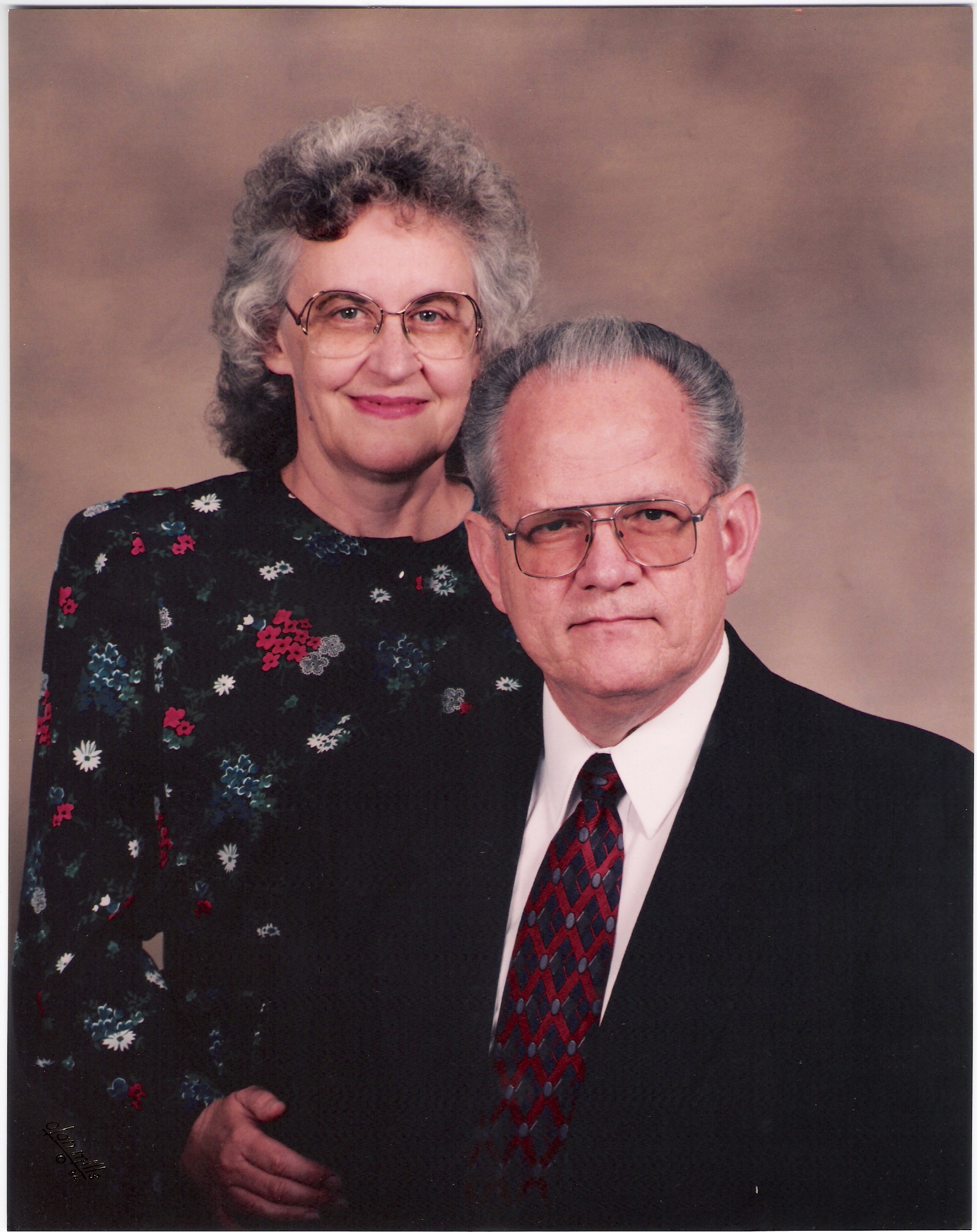
This photo of Bob and myself was taken this morning following the memorial service.

Leon Mauldin and Bob Waldron

May the God of all comfort sustain my brother Bob, and may He use the memory of Sandra for good.


Wilderness of Judea

September 12, 2011

Numerous passages make reference to the wilderness of Judea. John the baptizer, the herald who prepared the Jewish people for Jesus coming, preached in the Wilderness of Judah (Matt. 3:1, CSB; “the Desert of Judea,” NIV).

Jesus was led of the Spirit into the wilderness to be tempted by Satan (Mt. 4:1).

A frequent reaction when folks see for the first time photos of this area is to say, “That’s not at all what I had imagined it to be.”

I never tire of seeing this portion of the Bible lands; it is fascinating to me. This photo, taken just days ago, shows the wilderness of Judea at sea level.

Wilderness of Judea at Sea Level. Photo by Leon Mauldin. Click image for higher resolution.


Tel Ptolemais/Acco/Acre

September 9, 2011

In our previous post we featured a photo of the waterfront of Ptolemais. Ptolemais (Acts 21:8) was mentioned in the Old Testament (designated Acco) among other cities which Israel failed either to capture or to retain after the conquest: “Nor did Asher drive out the inhabitants of Acco or the inhabitants of Sidon, or of Ahlab, Achzib, Helbah, Aphik, or Rehob” (Judges 1:31). Because Acco was a port city, it was a very significant loss to fail to possess this strategic location. Our map below, which shows NW Israel, helps orient us:

Ptolemais/Acco. Bibleatlas.org.

Acco was one of the oldest harbors in existence. In our present photo, we see the remains of the tel itself.

Tel Ptolemais. Photo by Leon Mauldin.


“We Came to Ptolemais”

September 9, 2011

Greetings, friends, now from Dade City, FL. I enjoyed and profited from the trip to Israel, as Ferrel Jenkins & I traveled to numerous biblical sites, many of which we had not seen before. I have held Mr. Jenkins in the highest esteem since my being a student at Florida College (’70-72) and am delighted that we have been able to make numerous trips to Israel and other biblical places. I have learned much from him.

I came back to the states a day earlier than planned in order to attend and participate in the funeral of dear friend & sister in Christ, Sandra Waldron, wife of Bob Waldron. That will be conducted Fri. 2:00 PM here in Dade City.

Our photo displayed in this post was taken at Ptolemais (Hellenistic and Roman times), known as Acco in OT times (Jud. 1:31), and today known as Acre. The ancient tel is Tel-el-Fukhar.

Coast of Ptolemais, mentioned in Acts 21:7. Photo by Leon Mauldin.

As Paul’s 3rd Missionary was concluding, en route to Jerusalem, Acts 21:8 reads, “And when we had finished our voyage from Tyre, we came to Ptolemais, greeted the brethren, and stayed with them one day.”

Click image for higher resolution.

More later. 2:30 AM at present!


Hazor, Head of All These Kingdoms

September 5, 2011

As we have mentioned, our purpose on this current trip to Israel is to visits sites we have not seen before, many of which would not be practical to visit with a tour group. We were successful again today in doing so.

One place Ferrell Jenkins and I have seen previously many times is Hazor, but we included that city because recent visits have been either during or immediately following rain. Today it was dry and sunny. It was hot but it was nice not to have to walk in mud.

The signifance of this city which was conquered during Israel’s conquest of Canaan led by Joshua is seen in Josh. 11:10:

Then Joshua turned back at that time, and captured Hazor and struck its king with the sword; for Hazor formerly was the head of all these kingdoms.

Later during the days of the United Monarchy of Israel, King Solomon fortified this city.

Now this is the account of the forced labor which King Solomon levied to build the house of the LORD, his own house, the Millo, the wall of Jerusalem, Hazor, Megiddo, and Gezer (1 Kings 9:15).

Solomonic City Gate at Hazor. Photo by Leon Mauldin.

All of these cities of this text were fortress cities. Solomon used the same “blueprint” for the gates: the six chambered gate.

Unfortunately, in the process of time, Hazor became a center of cultic worship. Our photo shows the “high place” of Hazor.

High Place at Hazor. Sacrifice to pagan gods occurred here. Photo by Leon Mauldin.

Our photo below further shows an area where pagan worship occurred.

Site of pagan worship at Hazor. Photo by Leon Mauldin.

The forbidden massebah (sacred pillar) can be seen in foreground of photo. On the right hand corner of the tel you can see what was the base of the watchtower of Hazor.

Remember to click on photos for higher resolution.
*************
On a personal note I regret to report the death of a close personal friend, Sandra Waldron, wife of Bob Waldron. She died Sun. PM as the result of a massive heart attack, following some months of illness. The Waldrons have had a tremendous impact on my life, and I mourn this loss.

Some Fell Among the Thorns

September 4, 2011
When Jesus told the “Parable of the Sower” He told of four different kinds of “soils,” representing people, upon which the seed (the word of God) falls.

Among those soils was the thorny ground. Jesus said, “Other seed fell among thorns, which grew up with it and choked the plants” (Luke 8:7, NIV).  I thought of this parable today as we saw a portion of a Roman road in Galilee at the Golani Junction near Cana.

Thorns in Galilee. Photo by Leon Mauldin.

Jesus was asked by the disciples to explain the meaning of the parable. Regarding the thorny ground, He said, “”Now the ones that fell among thorns are those who, when they have heard, go out and are choked with cares, riches, and pleasures of life, and bring no fruit to maturity” (v.14, NKJV).

Thorns. A fitting word picture for things that choke out the word. Photo by Leon Mauldin

It occurs to me that not all cares or pleasures are wrong. Money is not wrong in and of itself. But when one fails to “seek first the kingdom of God and His righteousness” (Mt. 6:33), these things become thorns that choke out the word so that one brings no fruit to the honor of God.

Today our travels have taken us to Nazareth, the city that was Jesus’ home, and to Gath-hepher, home of the prophet Jonah. I am so thankful to God for these good opportunities.

Thanks for following this blog. Be sure to check Ferrell Jenkin’s Travel Blog also. He is on the “blog roll” above and to your right.

Click on images for higher resolution.


He Will Not Break A Bruised Reed

September 3, 2011

Today after leaving Jerusalem when had the opportunity to photograph Gibeah, the home of King Saul, and located in the tribal territory of Benjamin (1 Sam. 10:26).

We stopped at sea level en route to the Jordan, taking some photos of the Wilderness of Judea.

Then we went to Qasr al-Yahud, a recently opened baptismal site on the Jordan. This is likely very near the location where John baptized multitudes of people, including Jesus.

Jordan River at Qasr al-Yahud, newly opened baptismal site. Photo by Leon Mauldin.

There were many reeds along the Jordan at this point. I thought of Matthew 12:20, which quotes from Isaiah 42:3, a text which foretold of Jesus’ ministry and how He would go about His work:

He will not break a bruised reed or extinguish a smoldering wick, until he brings justice to victory (Mt. 12:20 NET Bible).

Bruised Reed at Qasr al-Yahud on Jordan's bank. Photo by Leon Mauldin.

If a reed is bent or bruised, like the one in this photo, it wouldn’t take much to snap it in two. Likewise if the wick is smoldering, that indicates that the oil is running low or the wick needs trimming. Either way, it wouldn’t take much to snuff it out.

But the text is really not talking about reeds or wicks; it is talking about people that are like bruised reeds or smoldering wicks. There is still some interest, there is a spark of life. Jesus would bind and strengthen the bruised reed, and He wants to fan the spark into a flame.

Of course Jesus could rebuke the false teacher or the hypocrite, as is the case in Matt. 23. But not everyone is in those categories; some people are bruised reeds; their strength is small, but someone who is truly a disciple of Christ can take start where they are and strengthen them and help them to get where they need to be.

Well we made other stops en route to Tiberias and are in our room on the shore of the Sea of Galilee.

Click images for larger view.


Reading From the Scroll

September 2, 2011

Today Ferrell Jenkins and I were able to visit a site we’ve both wanted to see for years, the tel and cave of Adullam. This site is mentioned in the biblical narrative of David’s life, specifically of a time in which he was being pursued by the Philistines (2 Sam. 23:13ff.). We were able to secure the services of a local guide with a 4-wheel drive jeep. A memorable day.

Late in the afternoon we were back in Jerusalem. We visited the Western Wall, and just north of the wall we entered Wilson’s Arch. This area is a reading room and prayer room. Today’s photo shows one of the Jews present reading from a scroll.

Reading a Scroll in Wilson's Arch. Photo by Leon Mauldin.

This can be used to illustrate the writing and reading of Scripture in both Old and New Testament times. For example, Luke records a moment Jesus’ Galilean ministry:

16 He came to Nazareth, where He had been brought up. As usual, He entered the synagogue on the Sabbath day and stood up to read. 17 The scroll of the prophet Isaiah was given to Him, and unrolling the scroll, He found the place where it was written: 18 The Spirit of the Lord is on Me, because He has anointed Me to preach good news to the poor. He has sent Me to proclaim freedom to the captives and recovery of sight to the blind, to set free the oppressed, 19 to proclaim the year of the Lord’s favor. 20 He then rolled up the scroll, gave it back to the attendant, and sat down. And the eyes of everyone in the synagogue were fixed on Him. 21 He began by saying to them, “Today as you listen, this Scripture has been fulfilled.” (Luke 4:16-21).

Click on image for higher resolution.


Another Good Day In Israel

September 1, 2011

Today after a brief stop at Lachish we have visited sites in the Negev and in ancient Philistine territory. These sites to the south were “off the beaten path,” including Tel Eiton (proposed site of biblical Eglon, Tel Beit Mirsim, and the brook Besor and Tel Besor (mentioned in David’s activities in 1 Sam. 30:9ff).

At Lachish we saw pomegranate orchards and vineyards. If you want to compliment your wife (or wife to be) you might try this: “Your temples are like a slice of a pomegranate behind your veil” (Song of Solomon 4:3).

Pomegranates at Lachish. Photo by Leon Mauldin.

At Tel Besor you can see the brook in background. 1 Sam. 30:9-10:

So David went, he and the six hundred men who were with him, and came to the Brook Besor, where those stayed who were left behind. But David pursued, he and four hundred men; for two hundred stayed behind, who were so weary that they could not cross the Brook Besor.

Leon at Besor. Brook in background. Photo by Ferrell Jenkins.

Click images for larger view.