Happy New Year–2012 in review

January 1, 2013

We wish for all of our readers a Happy New Year.

At the end of the year Word Press furnishes statistics for bloggers regarding their sites. For 2012 Leon’s Message Board had 84,000 views from 167 countries.

The WordPress.com stats helper monkeys prepared a 2012 annual report for this blog.

Here’s an excerpt:

19,000 people fit into the new Barclays Center to see Jay-Z perform. This blog was viewed about 84,000 times in 2012. If it were a concert at the Barclays Center, it would take about 4 sold-out performances for that many people to see it.

Click here to see the complete report.

On another note, we want to encourage Bible reading with a Bible Reading Schedule: I personally use and highly recommend the Bible Reading Schedule by Mark Roberts. It is free. Go here and then under “Quick Links” click on “5 Day Bible Reading Schedule. Print off a copy, fold it, and place it in your Bible.


Pilgrims in Cappadocia

December 18, 2012

1&2 Peter were written to Christians (likely Jewish) scattered across five Roman Provinces: “To the pilgrims of the Dispersion in Pontus, Galatia, Cappadocia, Asia, and Bithynia” (1 Pet. 1:1). All of these provinces were in what is today Turkey.

The landscape of Cappadocia is fascinating. Ancient volcanic matter covered the area. When wind and rain eroded away the softer elements, the harder material was left behind, causing some really unusual formations.

Formations characteristic of Cappadocia. Photo by Leon Mauldin.

Formations characteristic of Cappadocia. Photo by Leon Mauldin.

So when you pick up your New Testament to read the epistles of Peter, remember that some of his readers lived in this area.

Cappadocia. In NT times, a Roman Province. Currently in Turkey. BibleAtlas.com

Cappadocia. In NT times, a Roman Province. Currently in Turkey. BibleAtlas.com

Click images for larger view.


“Woe Unto Thee, Chorazin!”

December 5, 2012

In Matt. 11:21, Jesus said,

Woe to you, Chorazin! Woe to you, Bethsaida! For if the mighty works which were done in you had been done in Tyre and Sidon, they would have repented long ago in sackcloth and ashes.

Chorazin was located just to the north of the Sea of Galilee. Note that it is spelled Korazin on our map:

Location of Chorazin, city condemned by Jesus. BibleAtlas.Org.

Location of Chorazin, city condemned by Jesus. BibleAtlas.Org.

One fascinating aspect of Jesus’ denunciation of Chorazin is that this was one of the Galilean cities in which he had done most of His mighty (miraculous) works. As the previous verse words it,

Then He began to rebuke the cities in which most of His mighty works had been done, because they did not repent: (Matt. 11:20).

While we read of many miracles Jesus did in Capernaum, and only one in Bethsaida (the two other cities cited and condemned in our context), we read of none being done in Chorazin. This does not mean something in lacking in the Bible; to the contrary, we have all we need. But it does show there was divine selectivity in that which was recorded (cf. John 20:30-31 for this same principle as stated in regard to the Gospel of John).

The site identified as Chorazin is located 2 miles north of the Sea of Galilee. The ruins that are seen post-date the time of Jesus.

Entrance Sign at Chorazin. Photo by Leon Mauldin.

Entrance Sign at Chorazin. Photo by Leon Mauldin.

Here are the remains of the basalt synagogue at Chorazin,

Basalt synagogue at Capernaum. Photo by Leon Mauldin.

Basalt synagogue at Capernaum. Photo by Leon Mauldin.

Click on images for larger view. 


New Resource: The Big Picture

December 4, 2012

Ferrell Jenkins reviews and recommends a new resource, The Big Picture: A Guide to Learning the Bible’s Story, by Marc Hinds. You may read that review here, including ordering instructions.

I received my copy in yesterday’s mail, and would like to also give my recommendation. This book will be a great resource for beginners as well as for those needing to see the unity and connectivity of the Scriptures.  Marc is a careful student, and capable preacher/teacher.

From Sept. through early Nov., in about an 8 week period, we conducted 6 meetings in several states and Canada. Then on Nov. 12 I had a total knee replacement, with subsequent complications that required more surgery. But things seem to be leveling off now. That has hindered my ability to post on this blog, but we hope to be more regular now. Thanks for your patience.


The Wicked Vinedressers

October 26, 2012

In Mark 12:1-11, in the final week of Jesus’ ministry, He told the Parable of the Wicked Vinedressers (Mark 12:1-11). The vineyard Owner sent a servant to His vineyard for fruit at the proper season. He did not receive fruit; instead, the vinedressers took the servant, beat him, and sent him away empty. Then He sent another servant, at whom they threw stones, wounded him in the head, and sent him away shamefully. Again, He sent another and him they killed. The same treatment happened to other servants sent to the vineyard.

The Owner had one Son. His Beloved Son. The Owner sent Him also. They killed Him and cast Him out of the vineyard!

What vineyard owner would do this? None! But what no one else would do is what God did! He sent His servants, the prophets, again and again to His people. They were treated shamefully; some were killed. Last of all He sent His Son! They killed the Son also, without knowing that His death was the means of our salvation from our sins.

Our photo shows a vineyard at Lachish, with a vinedresser pruning and trimming the vines. This gives the setting for the parable of the text.

Vinedresser working in vineyard at Lachish in Israel. Photo by Leon Mauldin.

This photo was originally a 35 mm slide taken in 1999.

********

We have had a wonderful 6-day meeting at Trilacoochee, Fl., near Dade City, presenting a series of 9 biblical lessons. My good friend Bob Waldron is the local evangelist who works with the congregation here.


Joppa

October 24, 2012

Joppa, an ancient Mediterranean harbor of Canaan, was the geographical setting for several events in biblical history.

When Solomon was to construct the temple, the king of Tyre offered,  “We will get all the timber you need from Lebanon and bring it in raft-like bundles by sea to Joppa. You can then haul it on up to Jerusalem.” (2 Chron. 2:16, NET).

Joppa was again used in this same manner when the second temple was rebuilt (Ezra 3:7). It’s about 35 miles from Joppa to Jerusalem.

Joppa figures in with the narrative of Jonah, who, when God told him to preach to Nineveh, “Instead, Jonah immediately headed off to Tarshish to escape from the commission of the LORD. He traveled to Joppa and found a merchant ship heading to Tarshish. So he paid the fare and went aboard it to go with them to Tarshish far away from the LORD” (Jonah 1:3, NET).

In NT times, there were disciples of Christ at Joppa. It was here that Peter raised Tabitha from the dead (Acts 9:36-43). Peter remained at Joppa for “many days” (Acts 9:43) and was there when the Gentile Cornelius, a Roman centurion stationed at Caesarea,  sent for him, that he could hear the Gospel message of salvation (Acts 10; 11:1-18; see esp. 11:14).

Joppa, ancient harbor on Israel’s coast. Photo by Leon Mauldin.

This photo of Joppa was taken in 1999, a 35mm slide which I had digitalized.

I posted an aerial photo of Joppa here.


Joshua’s Defeat of Libnah

October 9, 2012

We read in Joshua 10:29,30:

29 Then Joshua and all Israel with him passed on from Makkedah to Libnah, and fought against Libnah. 30 The LORD gave it also with its king into the hands of Israel, and he struck it and every person who was in it with the edge of the sword. He left no survivor in it. Thus he did to its king just as he had done to the king of Jericho.

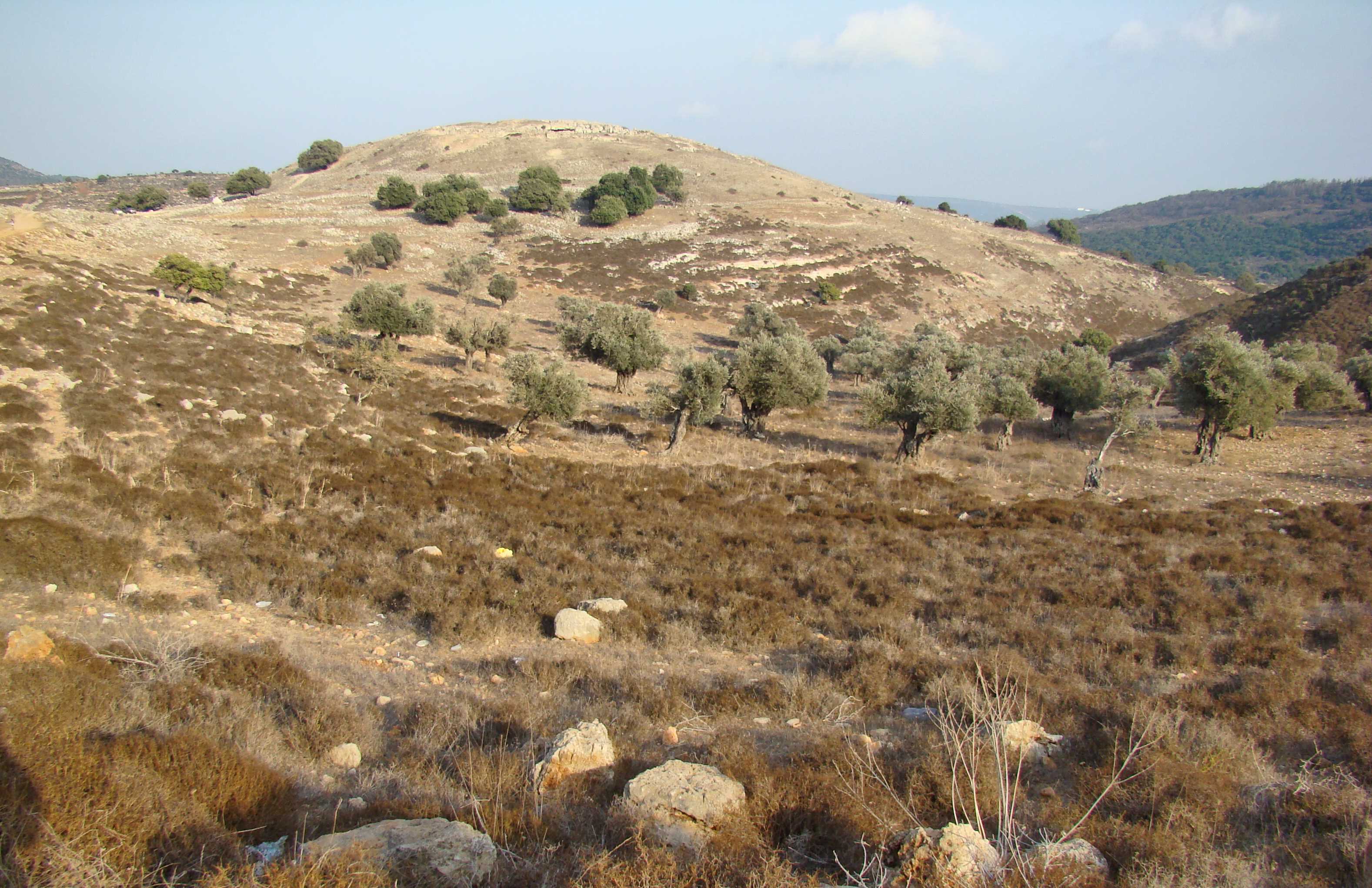
We had the occasion last year to visit Tel Burna, in Israel’s Shephelah, a location which many believe to be biblical Libnah.

Tel Burna, believed to be biblical Libnah. Photo by Leon Mauldin.

The Tel Burna Excavation Project is devoted to this site and may be viewed here.

Another biblical reference to Libnah is found in 2 Kgs. 19:8, contextually speaking of the Assyrian invasion of Judah, 701 BC: “Then Rabshakeh returned and found the king of Assyria fighting against Libnah, for he had heard that the king had left Lachish.”


Jesus and the Woman at the Well

October 4, 2012

I never tire of reading John 4, which narrates Jesus’ stop at Jacob’s well as He left Judea and was en route to Galilee. This was early in Jesus’ ministry, prior to the Galilean ministry. On this occasion He skillfully led an unnamed woman from the mundane task of coming to draw water, to a point of faith in Him as the Messiah. Additionally, it turned out that there were many in the area that became believers in him.

At nearby Mt. Gerizim, the mountain referenced by the woman as the place where the Samaritans worshiped (v.20), there is today the Samaritan Museum. There one can see a painting that points back to that day recorded in John’s Gospel.

Painting depicting Jesus and the Samaritan Woman of John 4. Photo by Leon Mauldin.

We are currently in Canada, speaking in a 6-day meeting at Jordan, Ontario.


Resource: Zondervan Atlas of the Bible

September 22, 2012

A resource I own and would recommend is Dr. Carl G. Rasmussen’s Zondervan Atlas of the Bible. It is currently on sale for the bargain price of 19.99 at Christianbook.com.  Click here to read more. Click here to order.A good resource for a great price!

Publisher’s Description:

Zondervan Atlas of the Bible … a thoroughly revised edition of the most comprehensive Bible atlas ever designed for * Students * Bible Study Groups * Adult Learners * Travelers/Pilgrims to the Lands of the Bible * Pastors * Teachers * All Lovers of the Bible This major revision of the Gold Medallion Award-winning Zondervan NIV Atlas of the Bible is a visual feast that will help you experience the geography and history of Scripture with unprecedented clarity. The first section of the Atlas introduces the ‘playing board’ of biblical history–using three–dimensional maps and photographic images to help the lands of the Bible come alive. The next section, arranged historically, begins with Eden and traces the historical progression of the Old and New Testaments. It provides an engaging, accurate, and faithful companion to God’s Word–illuminating the text with over one hundred full-color, multidimensional maps created with the help of Digital Elevation Modeling data. It concludes with chapters on the history of Jerusalem, the disciplines of historical geography, and the most complete and accurate listing and discussion of place-names found in any atlas. Throughout the Atlas, innovative graphics, chronological charts, and over one hundred specially selected images help illuminate the geographical and historical context of biblical events. The Zondervan Atlas of the Bible is destined to become a favorite guide to biblical geography for students of the Bible. This accessible and complete resource will assist you as you enter into the world of the Bible as never before.


Traveling in Israel (in 2005)

September 21, 2012

In November 2005 Ferrell Jenkins and I made a personal study trip to Israel. One factor that made that trip significant was the fact that this was Mr. Jenkin’s (who has directed scores of tours to Israel) first visit to Israel since the events of 9/11/2001. So the purpose in part was exploratory, to see what had changed and new developments/excavations, etc. He made posts of photos and comments every day.  You can still access that Nov. ’05 Israel trip info here. I thought some of our readers might enjoy the photos and info. This was before the widely read Ferrell’s Travel Blog.

I can tell you, that was a great trip. There is nothing quite like on-site Bible study! I think we each took around 2,500-3,000 photos.

Rolling Stone Tomb in Northern Israel, Nov. 2005. Photo by Leon Mauldin.

This is one of my favorite shots from that trip. You can see there is no green grass, as it was dead and dry in Nov. It is good to be able to see the land at different times of the year if possible.

This Roman tomb is not far from Megiddo. Its use dates back to the time of Jesus, and well illustrates the kind of tomb in which Jesus was buried. Unfortunately it is not possible to get this same photo today as there is a safety railing in front of the tomb.

Click on photo for larger view.