Jericho, First City of the Conquest of Canaan

February 15, 2014

The book of Joshua has one dominant theme: God was fulfilling His promise to the patriarchs Abraham, Isaac and Jacob, that He would give unto their descendants the land of Canaan (Gen. 12:6-7). As Joshua begins, Israel had recently conquered the transjordan territories of Sihon and Og, which would become the possession of Reuben, Gad, and half the tribe of Manasseh (Num. 21:21-35). Though the eastern territory was given to Israel by God, the land of Canaan proper did not include the transjordan, but rather was the land west of the Jordan River. (See discussion on this by Todd Bolen here. 

The book of Joshua is named after its prominent character, Joshua, the successor of Moses. Following Moses’ death (Deut. 34) and a 30-day period of mourning (v.8), Joshua sent out two spies across the Jordan. They were told “Go, view the land, especially Jericho” (Josh. 2:1).

Conquest of Canaan. Map by Marc Hinds.

Conquest of Canaan. Map by Marc Hinds.

One can see that from their location in Shittim (Acacia Grove, NKJV, CSB) that the first city that must be taken in the Conquest was Jericho, believed to be the world’s most ancient city. It was a fortress city and guarded entrance into Canaan from the east. Located in the Jordan Valley, it is 670 feet below sea level, and was one the first cities in Israel to be excavated. The record of Jericho’s destruction by Israel is found in Joshua 6.

From the standpoint of military strategy, Israel would first conquer the central territory (Josh. 7-8), then the southern (Josh. 10), and finally the northern territory (Josh. 11).
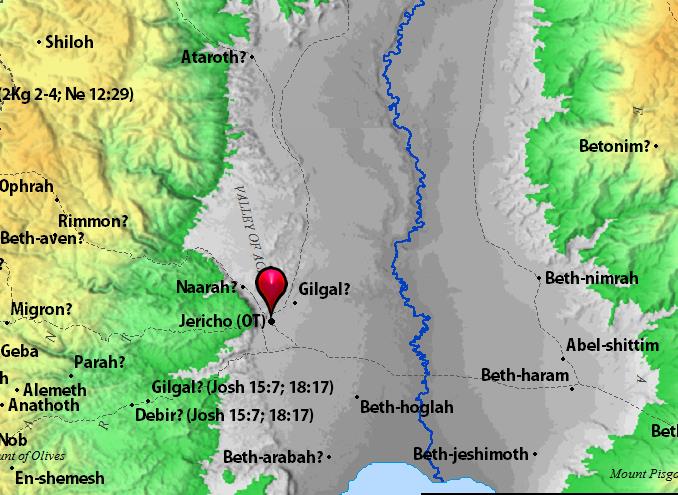
Jericho. Map by BibleAtlas.org.

Jericho. Map by BibleAtlas.org.

I always enjoy seeing Jericho. This past October Jericho was included on our itinerary for my group, though it was later in the day than what is ideal for photos.

Excavations at Jericho. Photo by Leon Mauldin

Excavations at Jericho. Photo by Leon Mauldin.

Recommended reading: see Biblical Archaeology Review, “Did the Israelites Conquer Jericho? A New Look at the Archaeological Evidence,” by Dr. Bryant G. Wood (16:02, March/April 1990).

Click images for larger view.


House of David Inscription

February 12, 2014

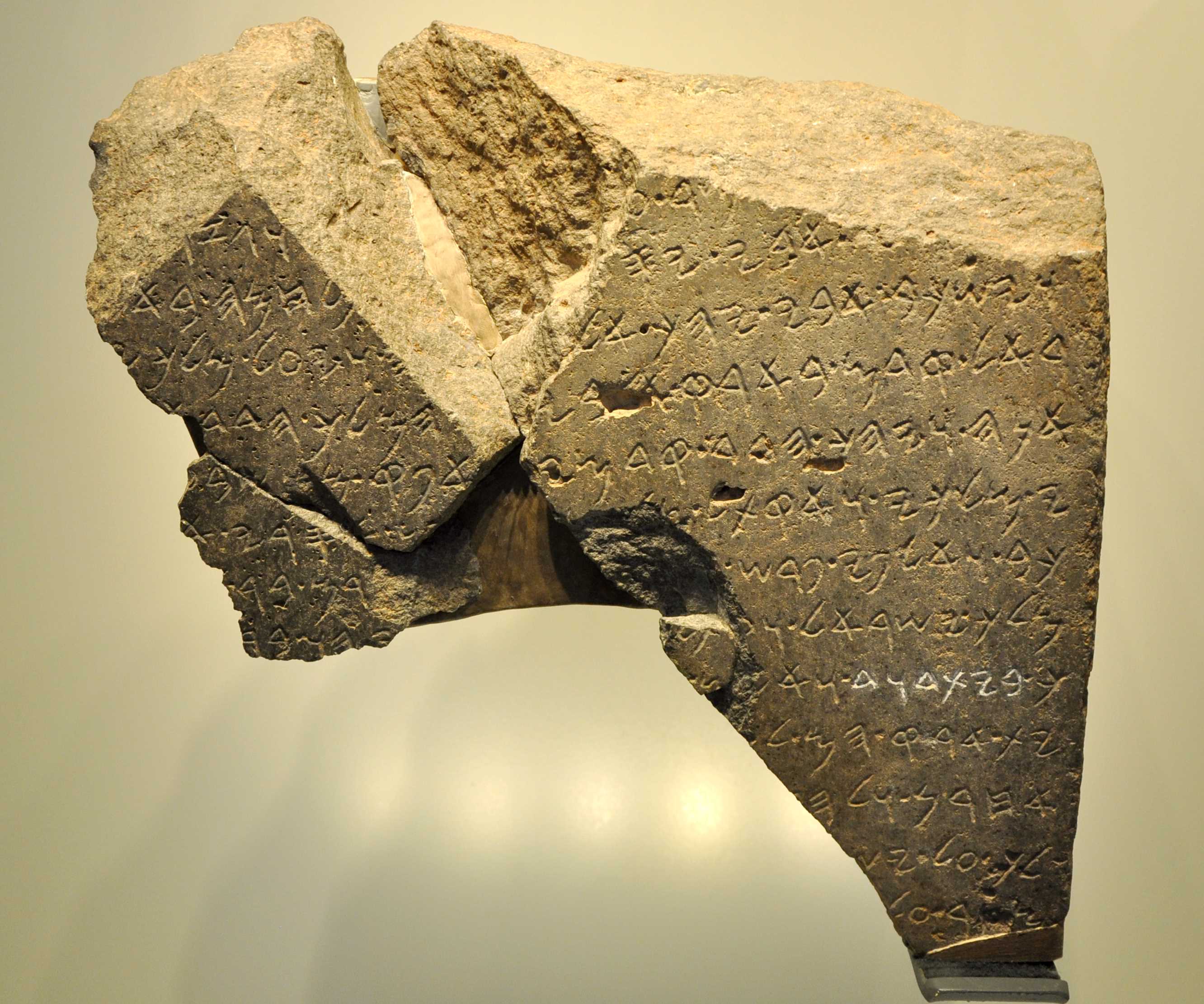
The current issue of Biblical Archaeology Review has an article entitled, “Archaeology Confirms 50 Real People in the Bible,” by Lawrence Mykytiuk. The first in his list is King David, whose name was found in the Tel Dan Stela, found in Tel Dan in July, 1993. Mykytiuk writes:

According to the Bible, David ruled in the tenth century B.C.E., using the traditional chronology. Until 1993, however, the personal name David had never appeared in the archaeological record, let alone a reference to King David. That led some scholars to doubt his very existence. According to this speculation David was either a shadowy, perhaps mythical, ancestor or a literary creation of later Biblical authors and editors. In 1993, however, the now-famous Tel Dan inscription was found in an excavation led by Avraham Biran. Actually, it was the team’s surveyor, Gila Cook, who noticed the inscription on a basalt stone in secondary use in the lower part of a wall. Written in ninth-century B.C.E. Aramaic, it was part of a victory stele commissioned by a non-Israelite king mentioning his victory over “the king of Israel” and the “House of David.” [See BAR 20:02, Mar-Apr 1994] Whether or not the foreign king’s claim to victory was true, it is clear that a century after he had died, David was still remembered as the founder of a dynasty.

This past October I had the occasion to photograph this important stela, which is housed in the Israel Museum in Jerusalem.

"House of David" Inscription. Discovered 1993. Photo by Leon Mauldin

“House of David” Inscription. Discovered 1993. Photo by Leon Mauldin

Gary Byers suggests that the stela “most likely memorializes the victory of Hazael, king of Aram, over Joram, king of Israel, and Ahaziah, king of Judah, at Ramoth Gilead recorded in 2 Kings 8:28–29” (Bible and Spade 16:4, p. 121).

For more information on the House of David see Ferrell Jenkins’ post illustrating Isaiah 7 here.

Click image for larger view.


The Johns Rylands Fragment P52

January 23, 2014

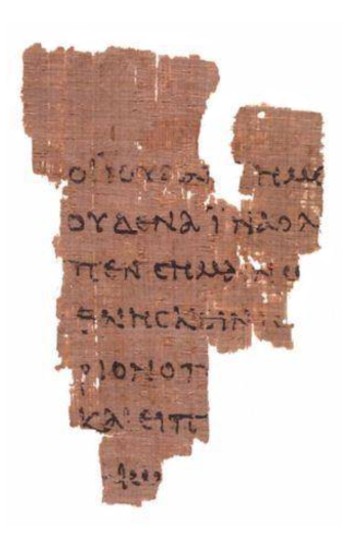
One of the most significant biblical manuscripts is but a fragment measuring only 2 1/2 by 3 1/2 inches, and containing only a few verses from John (18:31-33, 37-38). It is the oldest known copy of any portion of the New Testament, dating back to Hadrian’s reign (AD 117-138). Biblical scholar and textual expert Bruce M. Metzger (deceased, 2007) wrote:

Although it had been acquired in Egypt by Bernard P. Grenfell as long ago as 1920, it remained unnoticed among hundreds of similar shreds of papyri until 1934. In that year C. H. Roberts, Fellow of St. John’s College, Oxford, while sorting over the unpublished papyri belonging to the John Rylands Library at Manchester, recognized that this scrap preserves several sentences from John’s Gospel. Without waiting to edit the fragment along with others of a miscellaneous nature, he immediately published a booklet setting forth a description of the fragment,its text, and a discussion of its significance.

On the basis of the style of the script, Roberts dated the fragment in the first half of the second century. Though not all scholars are convinced that it can be dated within so narrow a range, such eminent palaeographers as Sir Frederic G Kenyon, W. Schubart, Sir Harold I. Bell, Adolf Deissmann, Ulrich Wilcken, and W. H. P. Hatch have expressed themselves as being in agreement with Roberts’s judgment.

Although the extent of the verses preserved is so slight, in one respect this tiny scrap of papyrus possesses quite as much evidential value as would be the complete codes. Just as Robinson Crusoe, seeing but a single footprint in the sand, concluded that another human being, with two feet, was present on the island with him, so p52 proves the existence and use of the fourth Gospel during the first half of the second century in a provincial town along the Nile, far removed from its traditional place of composition (Ephesus in Asia Minor). Had this little fragment been known during the middle of the past century, that school of New Testament criticism which was inspired by the brilliant Tubingen professor, Ferdinand Christian Baur, could not have argued that the Fourth Gospel was not composed until about the year 160. (The Text of the New Testament, 3rd edition, pp. 38-39).

As stated above, the fragment p52 is in Manchester, England, encased in a climate controlled cabinet.

John Rylands Papyrus p52. Photo by wikimedia-commons.

John Rylands Papyrus p52. Photo by wikimedia-commons.


William Ramsay on the Halys River and North Galatia

January 17, 2014

Sir William M. Ramsay (1851-1939), archaeologist, scholar, and author, was a champion of the South Galatia position (i.e., the N.T. letter to the Galatians was addressed to Antioch of Pisidia, Iconium, Lystra and Derbe) at a time when the North Galatia theory had been accepted for centuries. In his book, A Historical Commentary on St. Paul’s Epistles to the Galatians, he deals with the geography of north Galatia, giving evidence to eliminate that as the area intended in the book of Galatians. He was seeking to understand the geography of Galatia especially and specifically in the mid 1st century AD.

In that portion of his historical introduction, Ramsay mentions the Halys River and how it divided Galatia into two parts.

The country afterwards called Galatia was in primitive time divided ethnographically and politically into two parts, eastern and western: the division was made by the river Halys, which in this part of its course runs in a northerly direction towards the Black Sea. Galatia east of the Halys seems to have been originally reckoned to Cappadocia, though part of it was probably sometimes described as included in Paphlagonia; but the bounds of those countries were so indeterminate, and the ancient writers themselves were so ignorant of the geography of those lands, that it is quite impossible to say anything positive and certain on the subject. . .

Eastern Galatia lies mostly in the basin of the Halys (Kizil-Irmak, the “Red River”). The Halys itself has very few and quite insignificant tributaries. In Eastern Galatia the Delije-Irmak (whose ancient name is unknown) is the only tributary of any consequence; and most of the country lies in its basin; but the river, though it looks large on the map, carries very little water except in flood, when it becomes a broad and raging torrent, exactly as its name indicates, the “Mad River”. . .

Galatia west of the Halys, which was much larger than the eastern country, was the most important and the most typical part of the country; most of our scanty information relates to it; and in general, when any statement is made about North Galatia, the writer has the western part of it in his mind. This western region was originally part of the vast land called Phrygia; and, clearly, the population of the country in the early part of the fourth century were known to the Greeks as Phrygians (Φρύγες). (Ramsay, W. M. (1900). A Historical Commentary on St. Paul’s Epistle to the Galatians (pp. 15–17).

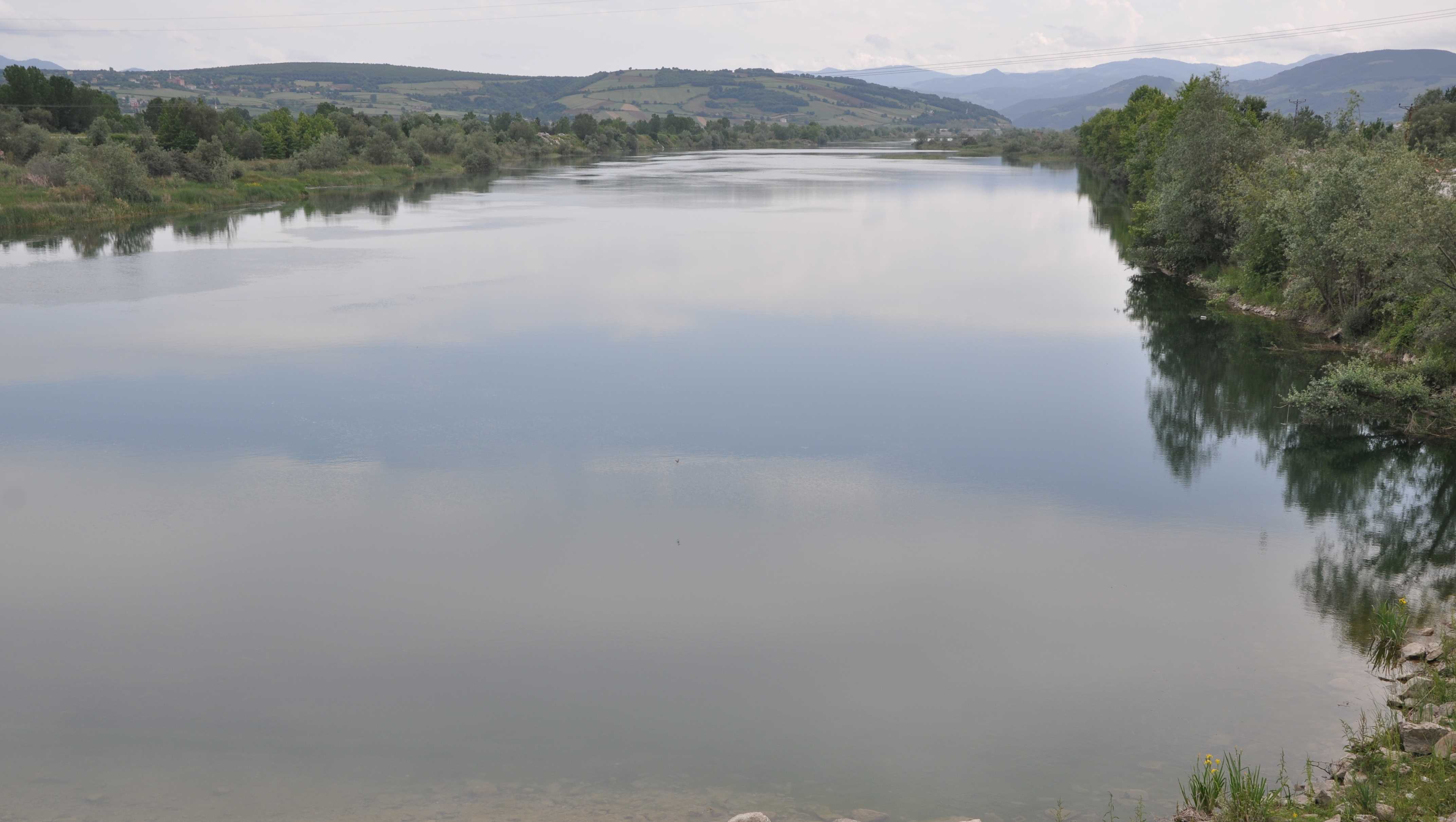
Halys River near the Black Sea. Photo by Leon Mauldin.

Halys River near the Black Sea. Photo by Leon Mauldin.

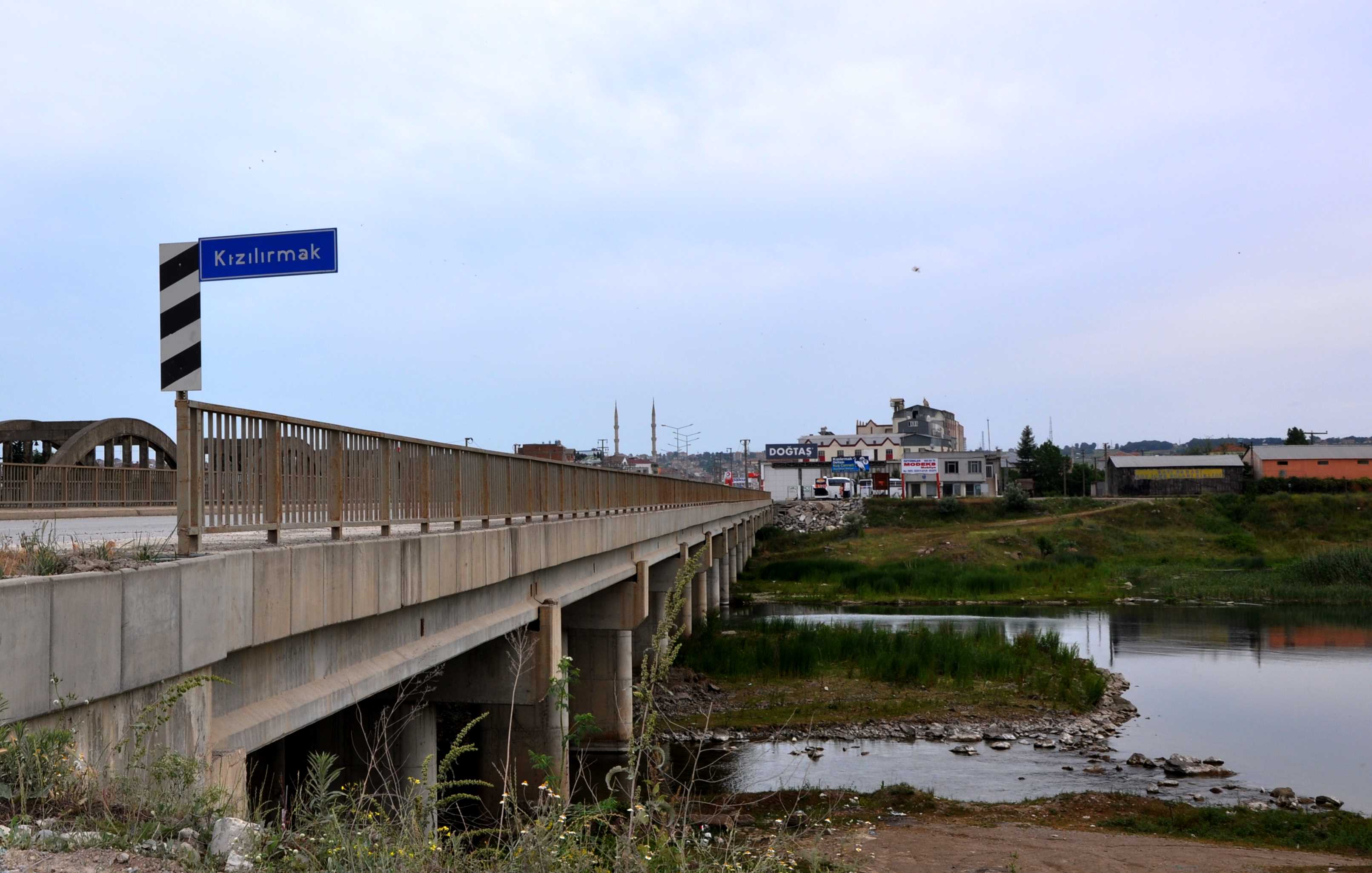
Sir Ramsay referenced the Halys as the Kizil-Irmak. Note the sign here at the bridge crossing the river.

Halys River/Kizil-Irmak. Photo by Leon Mauldin.

Halys River/Kizil-Irmak. Photo by Leon Mauldin.

Click images for larger view.


God Will Send the Hornet

January 3, 2014

I have been thinking today about the hornet. There are three biblical references.

Ex. 23:28: And I will send hornets before you, which shall drive out the Hivite, the Canaanite, and the Hittite from before you.

Deut. 7:20: Moreover the LORD your God will send the hornet among them until those who are left, who hide themselves from you, are destroyed.

Josh. 24:12: I sent the hornet before you which drove them out from before you, also the two kings of the Amorites, but not with your sword or with your bow.

Each of these passages refer to God’s intervention on behalf of Israel during the conquest of Canaan. There is no doubt that when hornets pursue you, that you get out of their path asap.

This afternoon I brought down a hornet’s nest that was situated perhaps 20 feet up in a tree. The nest is fascinating, and a testimony to the work of a wonderful Creator Who has well equipped His creation.

Hornet's nest. Photo by Linda Mauldin.

Hornet’s nest. Photo by Linda Mauldin.

BTW I did not climb the tree. I shot the limb in two at that point just above my thumb.


The Five Day Bible Reading Schedule

January 1, 2014

A Bible reading schedule which we have used and highly recommend is the one arranged by Mark Roberts. It is free. It takes the reader through the Bible in one year. Mark writes:

Are you looking for a reading plan for 2014? Consider the Five Day Bible Reading Schedule. It makes it much easier to complete the Bible in one year because you only have to read five days a week, not seven. This gives you time to catch up if you fall behind. Many Christians have successfully read the Bible with this plan and you can too!
With the Five Day Schedule you can read the entire Bible in 2014 or just the New Testament reading five days a week.
Best of all, it’s FREE. You can download your copy here:
www.BibleClassMaterial.com
May the Lord bless us all to know Him better through His Word.

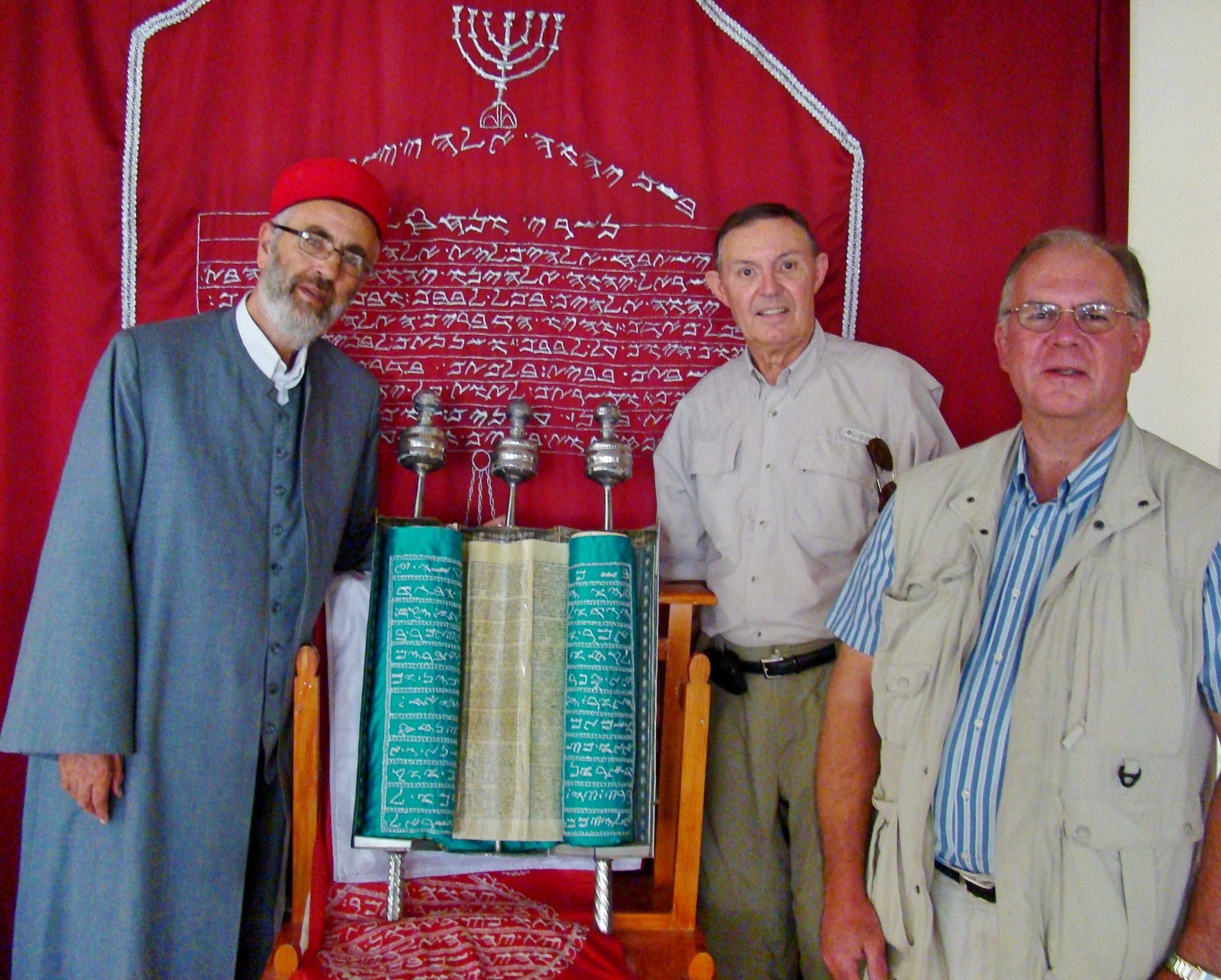
Samaritan Pentateuch at Mt. Gerizim. Photo by Leon Mauldin.

Samaritan Pentateuch at Mt. Gerizim. 

Photo shows Husney W. Cohen, a Samaritan priest and director of the Samaritan Museum, with Samaritan scroll, along with Ferrell Jenkins (center) and Leon Mauldin (right). The Samaritans accept only the first five books of the Old Testament.

I am so thankful for the easy access to the scriptures, and to the proliferation of good translations!


Just Weights and Measures

December 23, 2013

Our last couple of posts have illustrated some texts from Deuteronomy. Yet another text we want to consider is found in Deuteronomy 25:13-15:

13 You shall not have in your bag two kinds of weights, a large and a small. 14 You shall not have in your house two kinds of measures, a large and a small. 15 A full and fair weight you shall have, a full and fair measure you shall have, that your days may be long in the land that the LORD your God is giving you.

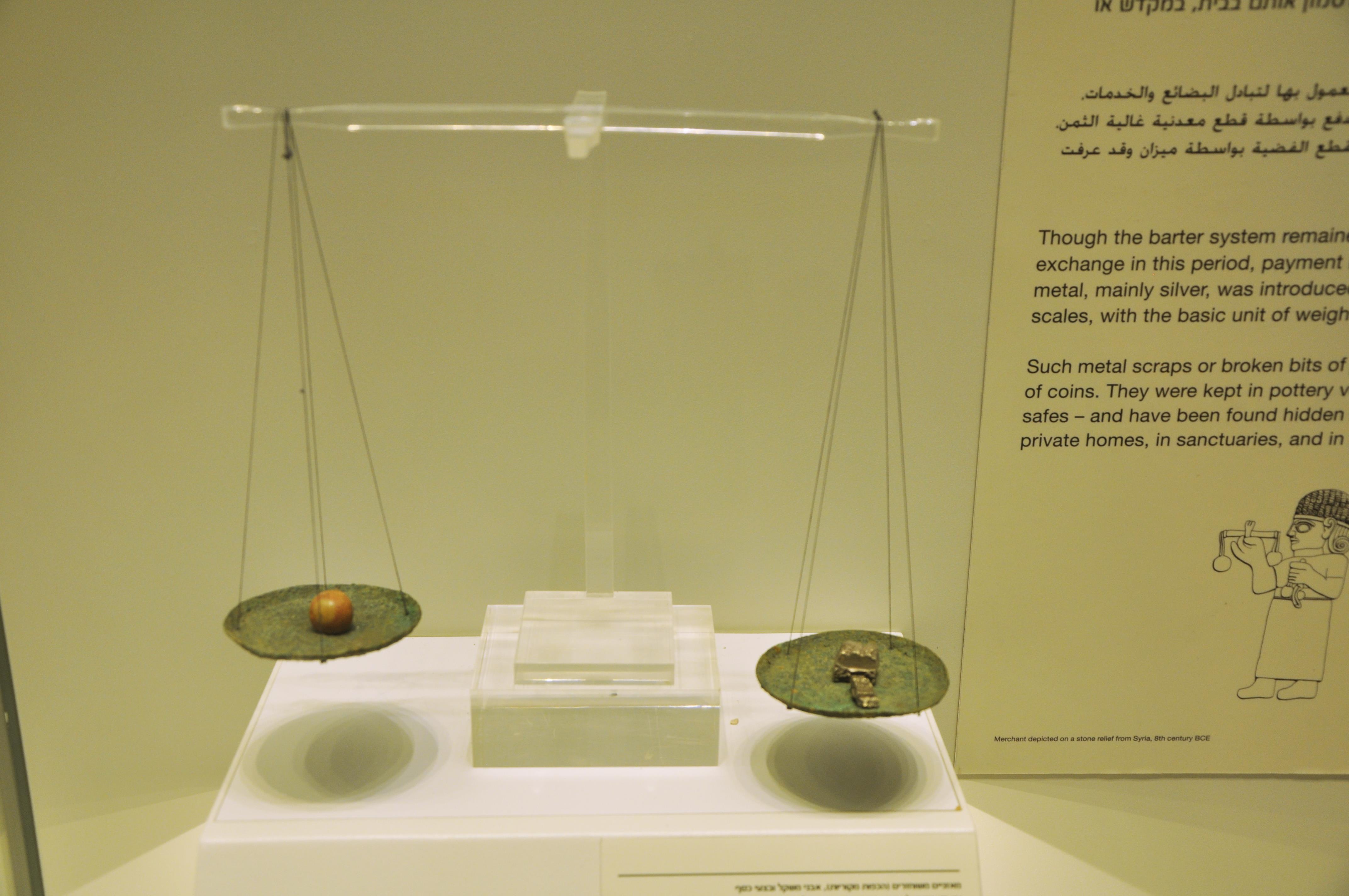
The Israel Museum has a set of scales on display that would be illustrative of this text.

Set of ancient scales. Israel Museum. Photo ©Leon Mauldin.

Set of ancient scales. Israel Museum. Photo ©Leon Mauldin.

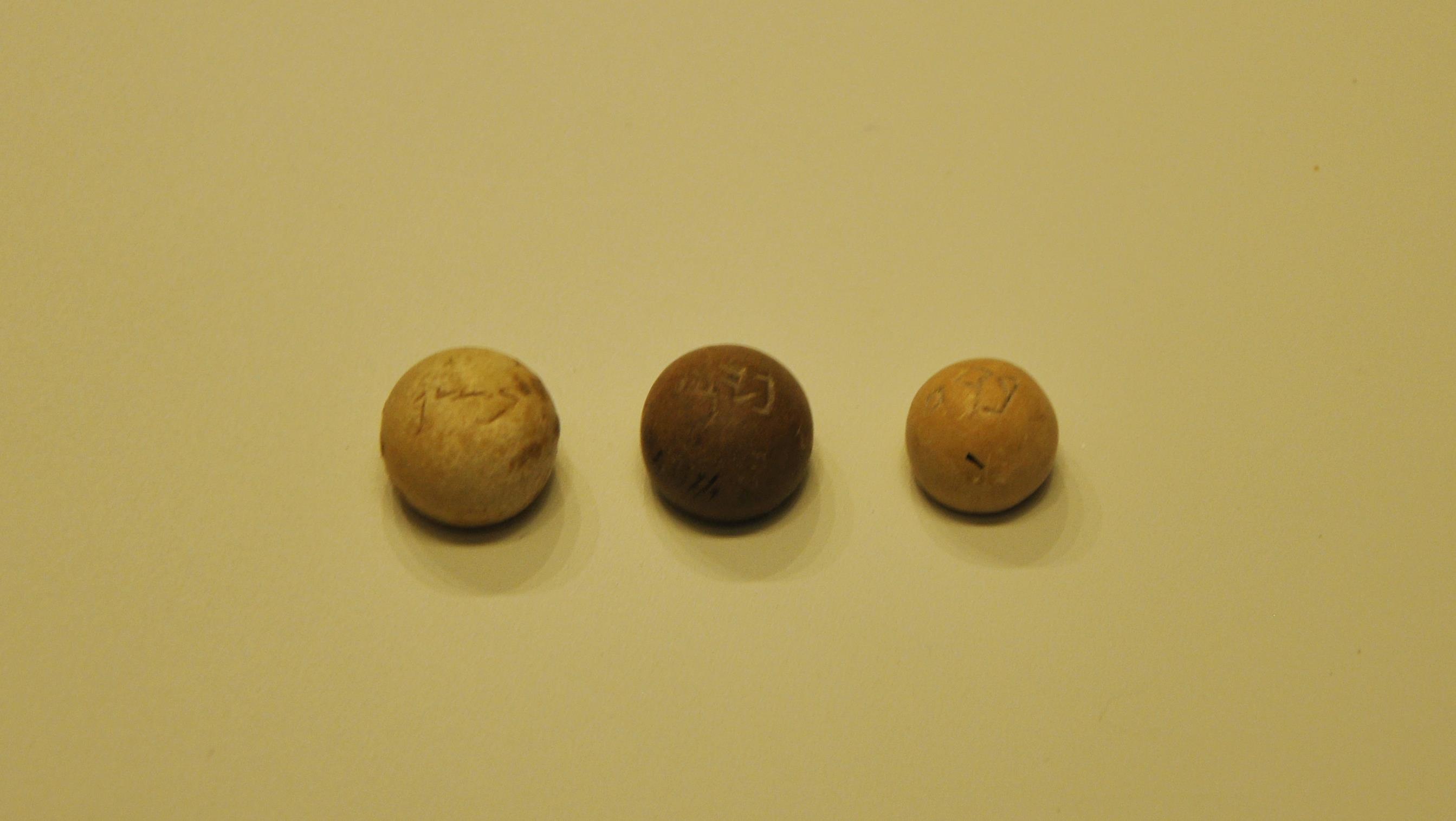
There are also some examples of standard weights.

Standard weights in biblical times. Israel Museum. Photo ©Leon Mauldin.

Standard weights in biblical times. Israel Museum. Photo ©Leon Mauldin.

At left is the beqa, at center is the pym (pim), and at right is the nezif. Of special interest to Old Testament studies is the “pim,” the Hebrew word occurring only in 1 Sam. 13:21: “and the charge for a sharpening was a pim for the plowshares, the mattocks, the forks, and the axes, and to set the points of the goads” (NKJV). This is speaking of the days of King Saul when the Philistines had a monopoly on the blacksmith industry. Others translations render, “They charged two-thirds of a shekel to sharpen plowshares and cutting instruments, and a third of a shekel to sharpen picks and axes, and to set ox goads” (NET).

The NET BIBLE has this textual note:

This word, which appears only here in the OT, probably refers to a stone weight. Stones marked pim have been found in excavations of Palestinian sites. The average weight of such stones is 0.268 ounces, which is equivalent to about two-thirds of a shekel. This probably refers to the price charged by the Philistines for the services listed. See P. K. McCarter, I Samuel (AB), 238; DNWSI 2:910; and G. I. Davies, Ancient Hebrew Inscriptions, 259.

As illustrated above, the pim, the standard would be on one side of the scales. The customer would put an equal weight of silver on the other side (this was before coinage).

Consider some related passages (NKJV).

Leviticus 19:36 You shall have honest scales, honest weights, an honest ephah, and an honest hin: I am the LORD your God, who brought you out of the land of Egypt.

Proverbs 11:1 Dishonest scales are an abomination to the LORD, But a just weight is His delight.

Proverbs 16:11 Honest weights and scales are the LORD’s; All the weights in the bag are His work.

Proverbs 20:10 Diverse weights and diverse measures, They are both alike, an abomination to the LORD.

Proverbs 20:23 Diverse weights are an abomination to the LORD, And dishonest scales are not good.

Ezekiel 45:10 You shall have honest scales, an honest ephah, and an honest bath.

Micah 6:11 Shall I count pure those with the wicked scales, And with the bag of deceitful weights?

We made a previous posts regarding scales to illustrate Daniel 5 here.

Click on images for larger view.


Gleanings for the Poor

December 20, 2013

Mosaic legislation provided for meeting the needs of the poor among Israel:

19 “When you reap your harvest in your field and forget a sheaf in the field, you shall not go back to get it. It shall be for the sojourner, the fatherless, and the widow, that the LORD your God may bless you in all the work of your hands. 20 When you beat your olive trees, you shall not go over them again. It shall be for the sojourner, the fatherless, and the widow. 21 When you gather the grapes of your vineyard, you shall not strip it afterward. It shall be for the sojourner, the fatherless, and the widow. 22 You shall remember that you were a slave in the land of Egypt; therefore I command you to do this (Deuteronomy 24:19-22, ESV).

One instance of the application of these provisions of gleaning after the harvest being left for the poor is found in the book of Ruth (see esp. ch. 2). This text also forms the backdrop for the rhetorical question of Obadiah 1:5 (context: complete destruction of Edom; no “gleaning” to be left.”

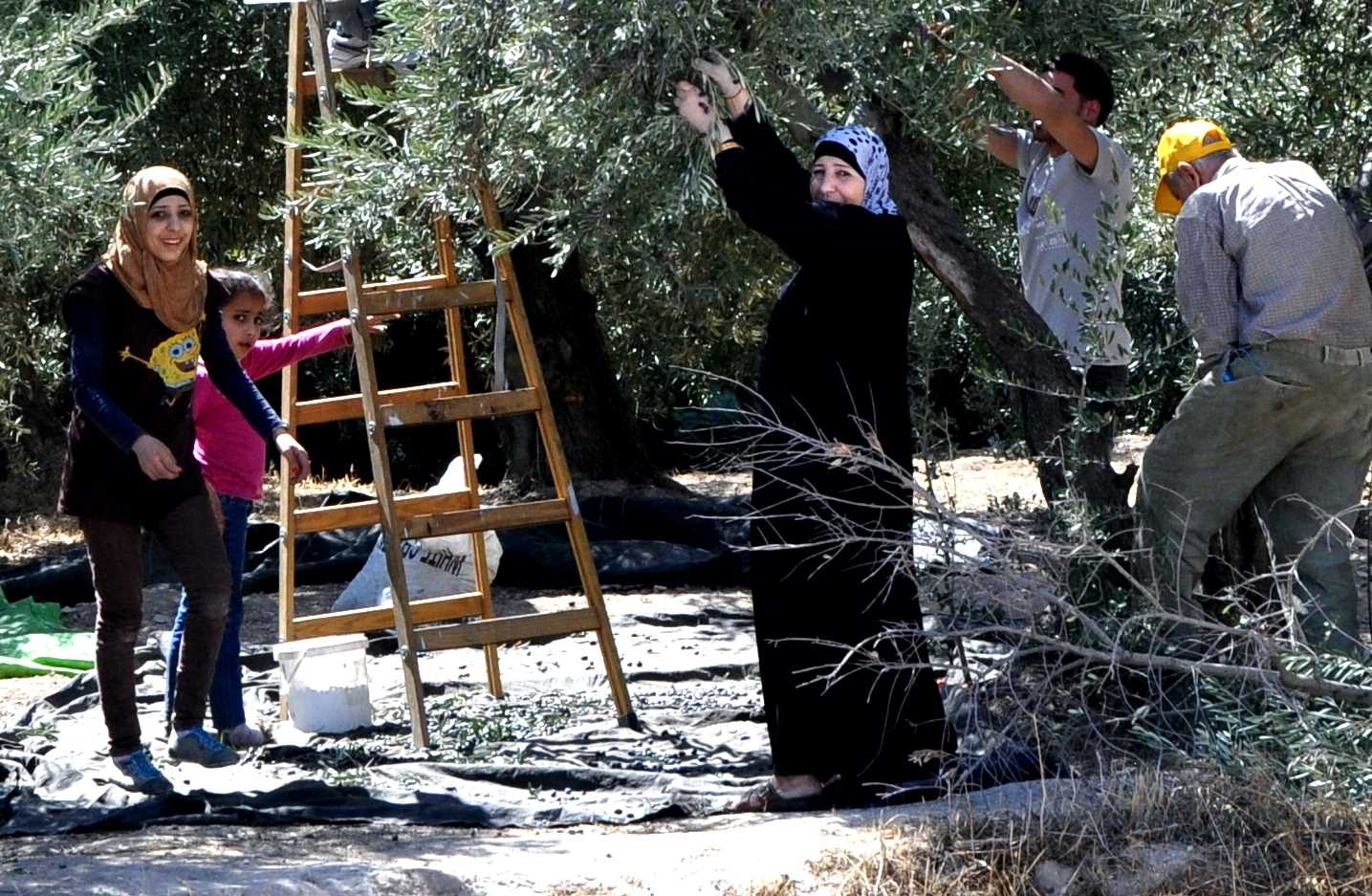
I’m also interest in the inclusion of the olive tree in the Deuteronomy text. Olives were a staple in biblical times. Olive trees are plentiful in Israel today, requiring little water, and can be grown on almost any terrain (including land too steep for farming). Again, the Deuteronomy legislation required that the owners left whatever remained after harvest for the poor of the land.

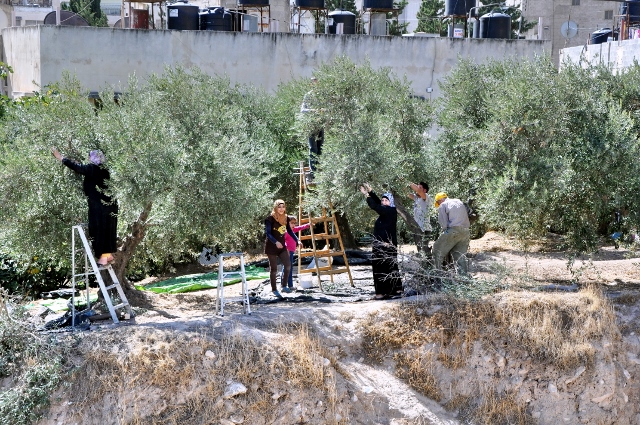
On a recent trip to Israel we spent one day visiting sites in the West Bank (PA), including Shechem. While there we saw some folks (a family?) gathering olives. The work is largely done by hand.

Gathering  Olives at Shechem. Photo by Leon Mauldin.

Gathering Olives at Shechem. Photo by Leon Mauldin.

Behind these folks, but out of sight, is Mt. Gerizim.

Here is a close-up. It looks like they have a tarp of some kind to catch the olives.

Gathering Olives at Shechem, close-up. Photo by Leon Mauldin.

Gathering Olives at Shechem, close-up. Photo by Leon Mauldin.

I think they were looking to see who that was taking their photo, you think?

Click on images for larger view.


Build a Parapet on Your Roof

December 7, 2013

Reading recently in Deuteronomy I came across the following text: “When you build a new house, you shall make a parapet for your roof, that you may not bring the guilt of blood upon your house, if anyone should fall from it” (22:8, ESV). The NET renders, “guard rail.”

It  would be difficult to understand the meaning of that passage if we only read through 21st century eyes. The roof on my house is steep. It is much too steep for me to consider walking on it, or anybody else for that matter, except for roofers or repair men. There is no need for me to put a guard rail around my roof.

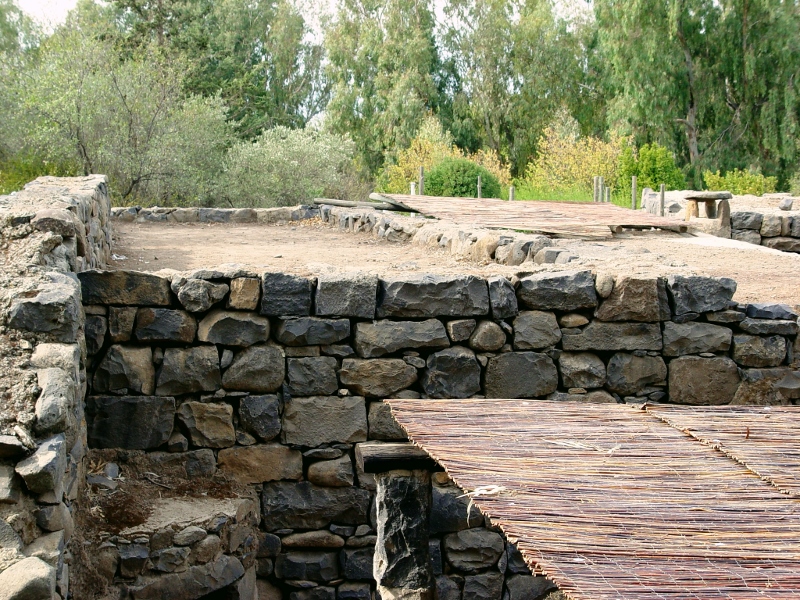
But roofs in biblical times were generally different (both Old and New Testament), being flat, and serving as a sort of “patio” or additional room. This is illustrated by the reconstructed two-story Talmudic house at Katzrin in the Golan:

Housetop at Katzrin in the Golan. Photo by Leon Mauldin.

Housetop at Katzrin in the Golan. Photo by Leon Mauldin.

It is not hard to visualize how several people might be on a housetop such as this. I might note that the above photo does not have a guard rail around the housetop, but does illustrate the need for one and the practical nature of the command in the Deuteronomy text.

Understanding this can make several biblical texts come alive:

Proverbs 21:9 It is better to live on a corner of the housetop than in a house in company with a quarrelsome wife.

Looking ahead to the Roman destruction of Jerusalem, Jesus said, “Whoever is on the housetop must not go down to get the things out that are in his house” (Matt. 24:17).

Acts 10:9: “On the next day, as they were on their way and approaching the city, Peter went up on the housetop about the sixth hour to pray.” Context: Men from Cornelius of Caesarea sent down the coast to Joppa where Peter was residing, to ask him to come to Caesarea to preach the Gospel there.

Click image for larger view.

We have previously posted on Katzrin here.


The Tabernacle at Shiloh

November 23, 2013

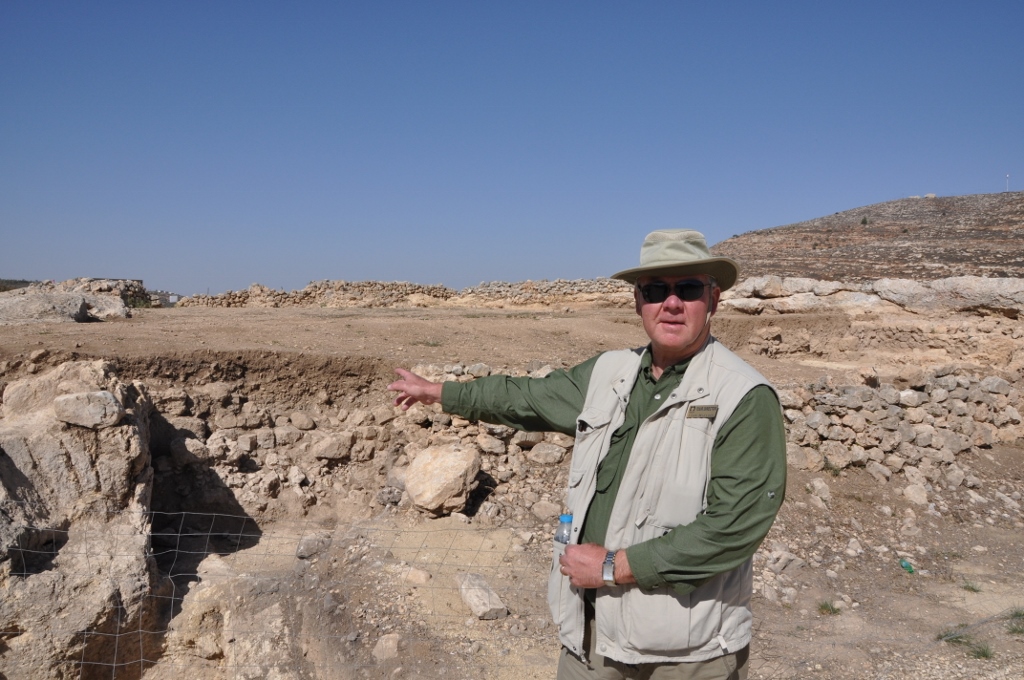
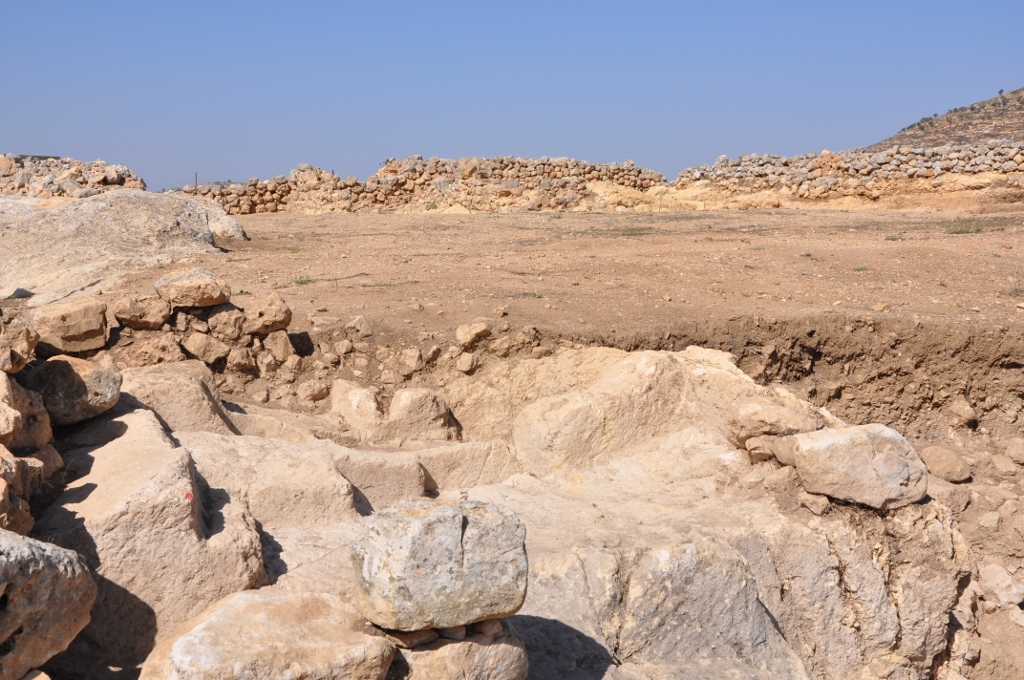
I had the occasion to visit Shiloh while in Israel last month. A special area of interest is the proposed site of the tabernacle.

Proposed site of Tabernacle at Shiloh. Photo by Greg Picogna.

Proposed site of Tabernacle at Shiloh. Photo by Greg Picogna.

The tabernacle stood here for about 400 years, from its installment during the Conquest (Josh. 18:1), to its destruction in the days of the Judges by the Philistines (1 Samuel 4), during the final days of Eli.

Site of Tabernacle at Shiloh. Photo by Leon Mauldin.

Site of Tabernacle at Shiloh. Photo by Leon Mauldin.

Todd Bolen reports that recent excavations have discovered an altar at Shiloh, and provides the link here.

We have previously posted several articles on Shiloh here and here and here.

At this point there are very few info signs on the site.

It is truly an exciting place to visit.

Click on images for larger view.