Hebron, Third City of Refuge

November 8, 2013

Our previous two posts have featured cities of refuge on the western side of Jordan, Kedesh and Shechem. Several passages discuss the cities of refuge, but the one that gives the most information is Numbers 35.

The cities of refuge were Levitical cities. Unlike the other tribes, which were assigned allotments of land for their inheritance, the Levites were given a total of 48 cities, 6 of which were the cities of refuge. “The cities you give the Levites will include six cities of refuge, which you must provide so that the one who kills someone may flee there; in addition to these, give 42 other cities” (Num. 35:6, CSB). Further Moses instructed, “Select three cities across the Jordan and three cities in the land of Canaan to be cities of refuge”(v.14).

The three cities of refuge in Canaan are set forth as follows, “So they designated Kedesh in the hill country of Naphtali in Galilee, Shechem in the hill country of Ephraim, and Kiriath-arba (that is, Hebron) in the hill country of Judah” (Josh. 20:7, CSB).

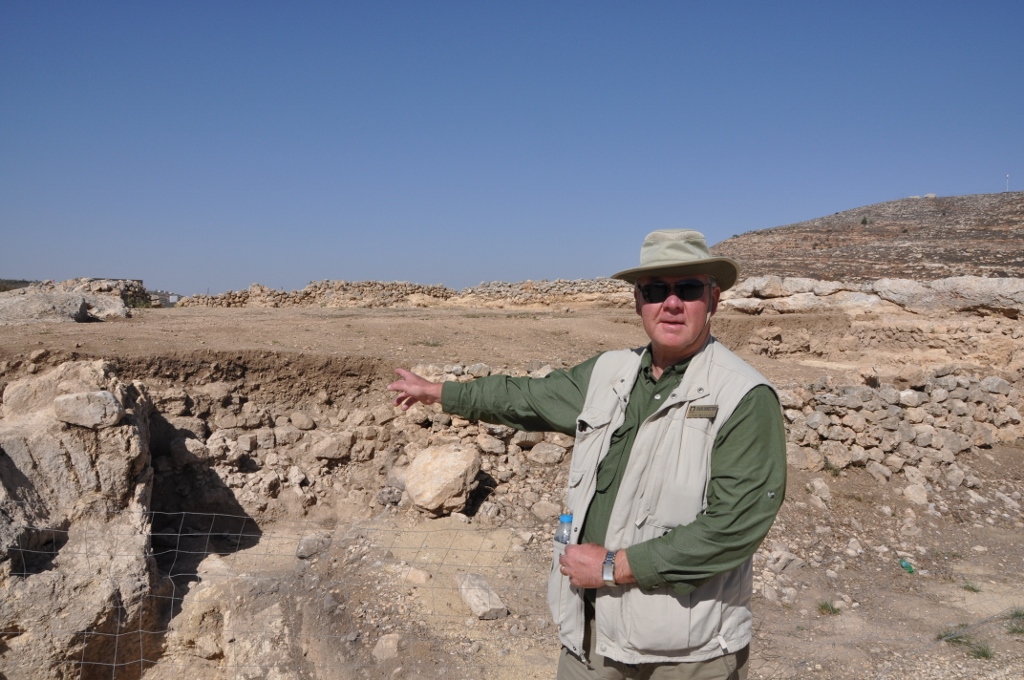
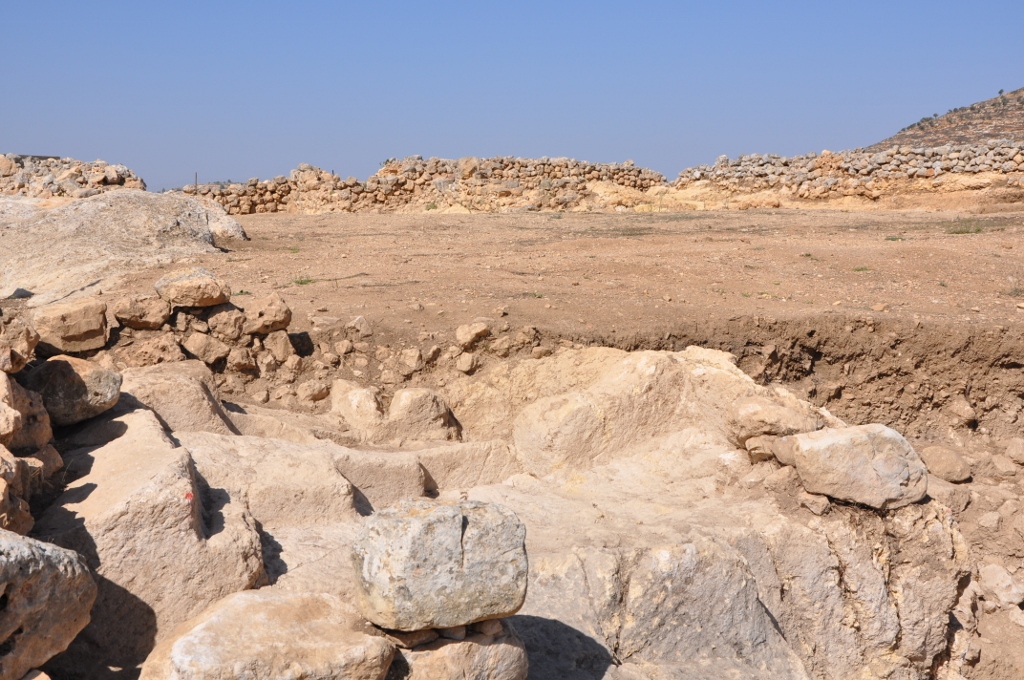
Hebron has a lot of history pertaining to the patriarchs. Not only was it a dwelling place for many of them, it was also a burial-place (Gen. 23:16-20). Our photo here at Hebron was taken with the cave of Machpelah at our back.

Hebron, a city of refuge. Photo by Leon Mauldin.

Hebron, a city of refuge. Photo by Leon Mauldin.

Other posts on Hebron may be viewed here and here.

For security reasons, Hebron is usually not included on tour to Israel.

Click image for larger view.


Shechem, a City of Refuge

November 6, 2013

See our yesterday’s post for a map showing all 6 cities of Refuge.

Another city of refuge was Shechem, a West Bank site known as Tel Balata.

This Old Testament city had an important history. It was here that Abraham (Abram) stood as a childless man (age 75), when God told him he would give to him (his descendants) the land of Canaan (Gen. 12:6-7).

It was here that Joshua assembled Israel with his farewell speech and uttered the famous works, “As for me and my house we will serve the Lord” (Josh. 24:15).

It was very near here that Jesus sat down weary by Jacob’s well, and skillfully led a Samaritan from a point where her only interest was drawing up the water, to a point of faith in Him as Messiah (John 4).

Shechem, a City of Refuge. Photo by Leon Mauldin.

Shechem, a City of Refuge. Photo by Leon Mauldin.

You can see the excavated ruins of the city. At center was the Temple of Baal-berith. At right you see a portion of Mt. Ebal, and at left is Mt. Gerizim. I took our group here Oct. 22, not only for them to see Shechem but also to have a good vantage point to take photos of the mount of cursing (Ebal) and Gerizim (blessing). See further on this in Josh. 8. Again, when cities of refuge were appointed in the days of the conquest, Shechem was the one for the central residents of the land west of the Jordan River.

For a previous post on Shechem see here and several other entries. Use search box and it will bring them all up.

Click on image for larger view.


You can see the excavated ruins of Shechem. At


Kedesh, a City of Refuge

November 5, 2013

Moses instructed the Israelites that they were to appoint three “cities of refuge” once they crossed Jordan under the leadership of Moses (Deut. 19:2). The stated purpose of these (as well as the three cities on the other (eastern) side of Jordan, was to provide a safety net for one who had accidentally killed his neighbor (an example given in the text was when the ax head flew off the handle, resulting in a fatal wound).

The city to which you would flee would be the one closest to you. You would live there until the death of the High Priest. The following map shows all 6 cities of refuge.

Cities of Refuge. Map by Scott Richardson

Cities of Refuge. Map by Scott Richardson

The city of refuge to the north in Galilee  was Kedesh.

Kedesh in Galilee. One of the cities of Refuge. Photo by Leon Mauldin.

Kedesh in Galilee. One of the cities of Refuge. Photo by Leon Mauldin.

In center and to the left you can see the ruins of this ancient city.

A Canaanite city in Galilee, in the territory of Naphtali, whose ruler was one of the 31 kings vanquished by Joshua (Josh. 12:22). To distinguish it from other cities with the same name it was also referred to as Kedesh in Galilee in Mount Naphtali (Josh. 20:7). It was given to the Levites and was a city of refuge (Josh. 21:32). A name which may possibly refer to Kedesh appears in the lists of Tuthmosis III and in the El Amarna letters. It was conquered by Tiglath-Pileser III, King of Assyria (2 Kgs. 15:29), who deported its inhabitants. In the Hellenistic period it is mentioned in the Zenon papyri. Josephus knew it in a different form as the name of a village in the territory of Tyre (Antiq. ii, 459; iv, 104–5). Titus pitched his camp in the vicinity of the village of Cydasa of the Tyrians, because ‘this was a strong inland village of the Tyrians, always at feud and strife with the Galileans’ (War iv, 104-f). Eusebius (Onom. 116:10) calls it ‘the city of Kydisos’, in the vicinity of Paneas, some 20 miles from Tyre. A Roman temple and a mausoleum of the same period were discovered there. Identified with Tell Qades, 12 miles north of Safed, where there are two ancient mounds, one of which was occupied from the 3rd millennium BC to the end of the Israelite period.

Since 1981 the Roman temple has been excavated by a team of Tel Aviv University under the direction of I. Roll. Little of the upper structure of the temple has survived. The entire compound was surrounded by a wall. The temple (60 feet by 54 feet) was built of exquisitely-dressed ashlars. Its eastern façade rose to a height of 33 feet. At the western wall of the shrine is an apse, apparently a later addition which may have held Jupiter’s statue. The triple doors of the temple are richly decorated. On the lintels are engraved Jupiter’s eagle, a wreath in which was a rosette, bunches of grapes, a vine trellis, acanthus leaves, a deer, and a man’s head. According to three Greek inscriptions, the temple was dedicated in AD 117/8 under Hadrian, and repairs were made in ad 214/5 and 280 (The Archaeological Encyclopedia of the Holy Land).

Kedesh, the northern city of Reguge. Map by Scott Richardson.

Kedesh, the northern city of Reguge. Map by Scott Richardson.

Click on images for larger view.


A View of the Sea of Galilee from Sea Level

November 2, 2013

I never tire of seeing the Sea of Galilee, as it was so intertwined with the ministry of Jesus. On the approach to Tiberius from the west, there is a nice pull-off area where a bus or other vehicle can safely get off the road and have a good view of the Sea. One is at sea level at this point at the pull-off.

Sea of Galilee from Sea Level. Photo by Leon Mauldin.

Sea of Galilee from Sea Level. Photo by Leon Mauldin.

The Sea of Galilee is about 700 feet below sea level. It was considerably higher than on my last visit. In the distance you see what would have been the Decapolis during the ministry of Jesus.

I’ll never forget my first view of the Sea. All of my life I had read about it in the Bible, but to have the opportunity to see it was almost surreal. I wonder if on a much higher level, that’s the sort of thing God’s people will experience in heaven. We read about heaven, we believe the promises of God, but one day all the saved will be in heaven and see Him face to face. The precious things we read about will some day be seen and personally experienced. How I want to be among that number!

Recent posts on the Sea of Galilee may be seen here and here.

Click on image for larger view.


Jesus’ Promise at Caesarea Philippi

November 1, 2013

In our previous couple of posts we were looking at Caesarea Maritima, Herod’s capital city on the Mediterranean coast. Presently we are considering another Caesarea, up to the north at the foothills of Mt. Hermon, Caesarea Philippi. This area was ruled by Herod’s son Philip.

On-site Bible study can be a thrilling experience; to be able to walk in the steps of Jesus and various Bible characters is a wonderful opportunity. We had such an occasion in a visit a couple of weeks ago to Caesarea Philippi. It was in this region that Peter made his confession of the Christ, and Jesus promised to build His church.

Caesarea Philippi. Grotto of Pan, and Banias River. Photo by Leon Mauldin.

Caesarea Philippi. Grotto of Pan (center), and Banias River. Photo by Leon Mauldin.

The text does not specify that Jesus entered Caesarea Philippi, but that He came to the “region” (NKJV), “district” (NASB), “the area of” (NET) Caesarea Philippi (Matthew 16:13). It is interesting that Luke does not mention the place, but states, “Once when Jesus was praying by himself, and his disciples were nearby, he asked them, ‘Who do the crowds say that I am?'” (Luke 9:18, NET). Matthew gives the more complete record:

Now when Jesus came into the district of Caesarea Philippi, He was asking His disciples, “Who do people say that the Son of Man is?” 14 And they said, “Some say John the Baptist; and others, Elijah; but still others, Jeremiah, or one of the prophets.” 15 He said to them, “But who do you say that I am?” 16 Simon Peter answered, “You are the Christ, the Son of the living God.” 17 And Jesus said to him, “Blessed are you, Simon Barjona, because flesh and blood did not reveal this to you, but My Father who is in heaven. 18 “I also say to you that you are Peter, and upon this rock I will build My church; and the gates of Hades will not overpower it. 19 “I will give you the keys of the kingdom of heaven; and whatever you bind on earth shall have been bound in heaven, and whatever you loose on earth shall have been loosed in heaven” (Matt. 16:13-19 NASB).

A couple of observations:

1. This passage does not teach the primacy of Peter. What Jesus said here to Peter regarding his apostolic authority was said just two chapters later to all the apostles Matt. 18:1,18.

 2. Regarding the “binding” and “loosing:” the point is not that Peter or the other apostles would bind/loose something on earth and then God would bind/loose it in heaven. What they bound on earth was binding because God had bound it in heaven; what they loosed on earth had authority because God had loosed it in heaven. The rendering of the Christian Standard Bible (Holman) is, “I will give you the keys of the kingdom of heaven, and whatever you bind on earth is already bound in heaven, and whatever you loose on earth is already loosed in heaven” (Matt.16:19). The apostles did not have inherent authority; they were the instruments through which God’s revealed will was made known.

3. Jesus was anticipating the events of Pentecost, Acts 2. It was at that time the Spirit descended upon the apostles, empowering as Jesus had promised, and salvation through the crucified and resurrected Messiah was proclaimed. This was the beginning of the church, and the establishment of the kingdom, the reign/rule of Christ.

Click on image for larger view.


Hippodrome at Caesarea (cont’d)

October 31, 2013

In regard to our previous post of Herod’s hippodrome, a reader writes, “Intriguing photos!  In the top (“dry”) picture, is the twisted metal in the center of the photo just a modern effort to prevent people from falling into ancient holes?  Do you know the function of the hole(s) (is it a Herodian well or cistern)?  Thanks so much for posting these images!”

Though hard to distinguish in the photo he referenced (See that post here), the metal work is an artistic representation of the horses and chariots that would have been used here in the horse races. Caesarea, Herod’s capital, was a Roman city; the hippodrome with its horse races (and other events) was standard Roman entertainment. This view from the side perhaps helps. This photo I took in 2009.

Horses with chariot at hippodrome at Caesarea. Photo by Leon Mauldin.

Horses with chariot at hippodrome at Caesarea. Photo by Leon Mauldin.


The driver would have been standing up in the chariot during the race, urging the horses on in their speed. Here is a close-up:

Horses and chariot close-up. Photo by Leon Mauldin.

Horses and chariot close-up. Photo by Leon Mauldin.

I think the “holes” asked about were just shadows in the photo.

We welcome reader response.

Click on images for larger view.


Herod’s Hippodrome at Caesarea

October 29, 2013

Herod the Great (reigned 37-4 BC) built a hippodrome at his capital city of Caesarea.

Hippodrome at Caesarea. Photo by Leon Mauldin.

Hippodrome at Caesarea. Photo by Leon Mauldin.

Herod’s hippodrome would have seated about 10,000 spectators.

The above photo was taken just two weeks ago. When I was here two years (Spring, 2011) ago this area was under water. Much damage along the coast here had been done by storms.

Hippodrome Spring 2011. Photo by Leon Mauldin.

Hippodrome Spring 2011. Photo by Leon Mauldin.

This photo was taken at the opposite end of the hippodrome.


The Archaeological Encyclopedia of the Bible has this info:

Hippodrome. A course for chariot-racing, the prototype of the Roman circus. Like the stadium, it was long, narrow and elliptical, but straight at the end from which the racing started.

The hippodrome of Gerasa was excavated in 1931–3. Situated outside the city at some distance to the south, its inside length is 266yd, with an inside width of 56yd at the north end and just under 55yd at the south end. The date of construction is not clear. Some scholars believe that it was built at the end of the second or beginning of the 3rd century ad and never completely finished, while others prefer a date of about ad 70. The hippodrome of Gerasa is the only one that has been excavated in Palestine and Transjordan. Remains of others were found at Caesarea Kanath, Bostra (Bozrah), Beth-Shean and Gadara. Josephus, (Life, 132, 138) mentions the hippodrome of Taricheae. (See also Magdala.)

Like all other similar public buildings the hippodrome was an offence to pious Jews and most of the cities referred to above had a primarily Hellenistic population. Only Taricheae had a Jewish population, though the upper class was Hellenized. In similar conditions, Herod had a hippodrome constructed in Jerusalem (Josephus, Antiq. xvii, 193), probably in the Tyropoeon valley.

Click images for larger view.


Behold the Sower Went Forth to Sow

October 28, 2013

The setting of the kingdom parables of Mark 4 (parallels in Mt. 13 and Lk. 8) is on the Sea of Galilee.

Northern Sea of Galilee looking east. Photo by Leon Mauldin.

Northern Sea of Galilee looking east. Photo by Leon Mauldin.

One of the parables was the “Parable of the Sower:”

And again He began to teach by the sea. And a great multitude was gathered to Him, so that He got into a boat and sat in it on the sea; and the whole multitude was on the land facing the sea. 2 Then He taught them many things by parables, and said to them in His teaching: 3 “Listen! Behold, a sower went out to sow. 4 “And it happened, as he sowed, that some seed fell by the wayside; and the birds of the air came and devoured it. 5 “Some fell on stony ground, where it did not have much earth; and immediately it sprang up because it had no depth of earth. 6 “But when the sun was up it was scorched, and because it had no root it withered away. 7 “And some seed fell among thorns; and the thorns grew up and choked it, and it yielded no crop. 8 “But other seed fell on good ground and yielded a crop that sprang up, increased and produced: some thirtyfold, some sixty, and some a hundred.” 9 And He said to them, “He who has ears to hear, let him hear!” 10 But when He was alone, those around Him with the twelve asked Him about the parable. 11 And He said to them, “To you it has been given to know the mystery of the kingdom of God; but to those who are outside, all things come in parables, 12 “so that ‘Seeing they may see and not perceive, And hearing they may hear and not understand; Lest they should turn, And their sins be forgiven them.’ ” 13 And He said to them, “Do you not understand this parable? How then will you understand all the parables? 14 “The sower sows the word. 15 “And these are the ones by the wayside where the word is sown. When they hear, Satan comes immediately and takes away the word that was sown in their hearts. 16 “These likewise are the ones sown on stony ground who, when they hear the word, immediately receive it with gladness; 17 “and they have no root in themselves, and so endure only for a time. Afterward, when tribulation or persecution arises for the word’s sake, immediately they stumble. 18 “Now these are the ones sown among thorns; they are the ones who hear the word, 19 “and the cares of this world, the deceitfulness of riches, and the desires for other things entering in choke the word, and it becomes unfruitful. 20 “But these are the ones sown on good ground, those who hear the word, accept it, and bear fruit: some thirtyfold, some sixty, and some a hundred.” (Mark 4:1-20).

Photo at Nazareth Village. A sower sowing seed.

Photo at Nazareth Village. A sower sowing seed.

A photo of a sower sowing seed is featured on the wall inside an orientation room at the Nazareth village.

Things to remember regarding the parable:

The kingdom is the Lord’s. He is the king. The seed of His kingdom is the word of God.

When the seed is sown there are different results. Some people never respond. They are the wayside soil. Others respond enthusiastically, but fall away. These are represented by the rocky soil. Some are preocccupied and distracted and never bear fruit for the Lord. These are portrayed by the thorny ground. Then there are honest and good hearts that hold fast the word and bear fruit. This is the good ground.

Click on image for larger view.


A Dead Man Raised at Nain

October 26, 2013

The next day after Jesus healed a centurion’s servant in Capernaum, Luke narrates how Jesus went to the Galilean city of Nain.

Location of Nain in Galilee. BibleAtlas.org.

Location of Nain in Galilee. BibleAtlas.org.

Luke narrates as follows:

Now it happened, the day after, that He went into a city called Nain; and many of His disciples went with Him, and a large crowd. 12 And when He came near the gate of the city, behold, a dead man was being carried out, the only son of his mother; and she was a widow. And a large crowd from the city was with her. 13 When the Lord saw her, He had compassion on her and said to her, “Do not weep.” 14 Then He came and touched the open coffin, and those who carried him stood still. And He said, “Young man, I say to you, arise.” 15 So he who was dead sat up and began to speak. And He presented him to his mother. 16 Then fear came upon all, and they glorified God, saying, “A great prophet has risen up among us”; and, “God has visited His people.”  (Lk. 7:11-16).

The purpose of Jesus’ miracles was to show who He was/is. The limited occasions recorded when He raised the dead give proof that He is Life, He is the source of Life. He is the resurrection and the life (John 11:25). And yet such occasions show the very real compassion of Jesus as well. The compassion He had during His ministry on earth He continues to have at this present time.

We had the opportunity to make a quick stop at Nain on the first day of our tour to Israel last week.

Nain in Galilee where Jesus raised the widow's son. Photo by Leon Mauldin.

Nain in Galilee where Jesus raised the widow’s son. Photo by Leon Mauldin.

The mountain in the background is the Hill of Moreh, mentioned in connection with the account of Gideon and his 300 men (Judges 7).


Sea of Galilee by Moonlight

October 25, 2013

The Sea of Galilee is one of my favorite locations in Israel. I’ve enjoyed taking sunrise and sunset photos. Last week during our boat ride across the sea, I had the opportunity to photograph a full moon, which was reflecting nicely on the surface of the waters.

Full moon reflecting on Sea of Galilee. Photo by Leon Mauldin.

Full moon reflecting on Sea of Galilee. Photo by Leon Mauldin.

This was a view Jesus and His disciples had countless times during His ministry.

Matthew 4:18: Now as Jesus was walking by the Sea of Galilee, He saw two brothers, Simon who was called Peter, and Andrew his brother, casting a net into the sea; for they were fishermen.

Click image for larger view.