On to Piazza Armerina and Siracusa, Sicily

March 11, 2016

Leaving Agrigento this morning, we went on to Piazza Armerina, and from there southeast to Siracusa, mentioned in Acts 28:12. While at Piazza Armerina we visited the Roman Villa of Casale. A portion of the Roman wall and one of the entrances is seen here:

Entrance to Roman Villa of Casale in Piazza Armerina, Sicily. Photo by Leon Mauldin.

Entrance to Roman Villa of Casale in Piazza Armerina, Sicily. Photo by Leon Mauldin.

The largest mosaic in the world, a hunting scene, is here.

Mosaic Hunting Scene. Photo by Leon Mauldin.

Mosaic Hunting Scene. Photo by Leon Mauldin.

This villa, as was generally the case when there was running water, was serviced by lead pipes, which caused the inhabitants to have lead poisoning.

Lead pipe at Villa of Casale. Photo by Leon Mauldin.

Lead pipe at Villa of Casale. Photo by Leon Mauldin.

We are looking forward to touring Siracusa tomorrow, as well as Mt. Etna, Europe’s highest and most active volcano.

For now, here is further info re: the Roman villa of Casale:

The Villa Romana del Casale  is a Roman villa built in the first quarter of the 4th century and located about 3 km outside the town of Piazza Armerina, Sicily, southern Italy. It contains the richest, largest and most complex collection of Roman mosaics in the world, and has been designated as one of 49 UNESCO World Heritage Sites in Italy.

Plan of the villa
The villa was constructed (on the remains of an older villa) in the first quarter of the 4th century AD, probably as the center of a huge latifundium (agricultural estate) covering the surrounding area. How long the villa had this role is not known, maybe for fewer than 150 years. The complex remained inhabited and a village grew around it, named Platia (derived from the word palatium (palace). The villa was damaged and perhaps destroyed during the domination of the Vandals and the Visigoths. The outbuildings remained in use, at least in part, during the Byzantine and Arab periods. The site was abandoned in the 12th century AD after a landslide covered the villa. Survivors moved to the current location of Piazza Armerina.

The villa was almost entirely forgotten, although some of the tallest parts of the remains were always above ground. The area was cultivated for crops. Early in the 19th century, pieces of mosaics and some columns were found. The first official archaeological excavations were carried out later in that century.

The first professional excavations were made by Paolo Orsi in 1929, followed by the work of Giuseppe Cultrera in 1935-39. The last major excavations took place in the period 1950-60. They were led by Gino Vinicio Gentili, after which a cover was built over the mosaics. In the 1970s Andrea Carandini carried out a few localized excavations at the site. (Wikipedia)


Selinunte and Agrigento, Sicily

March 10, 2016

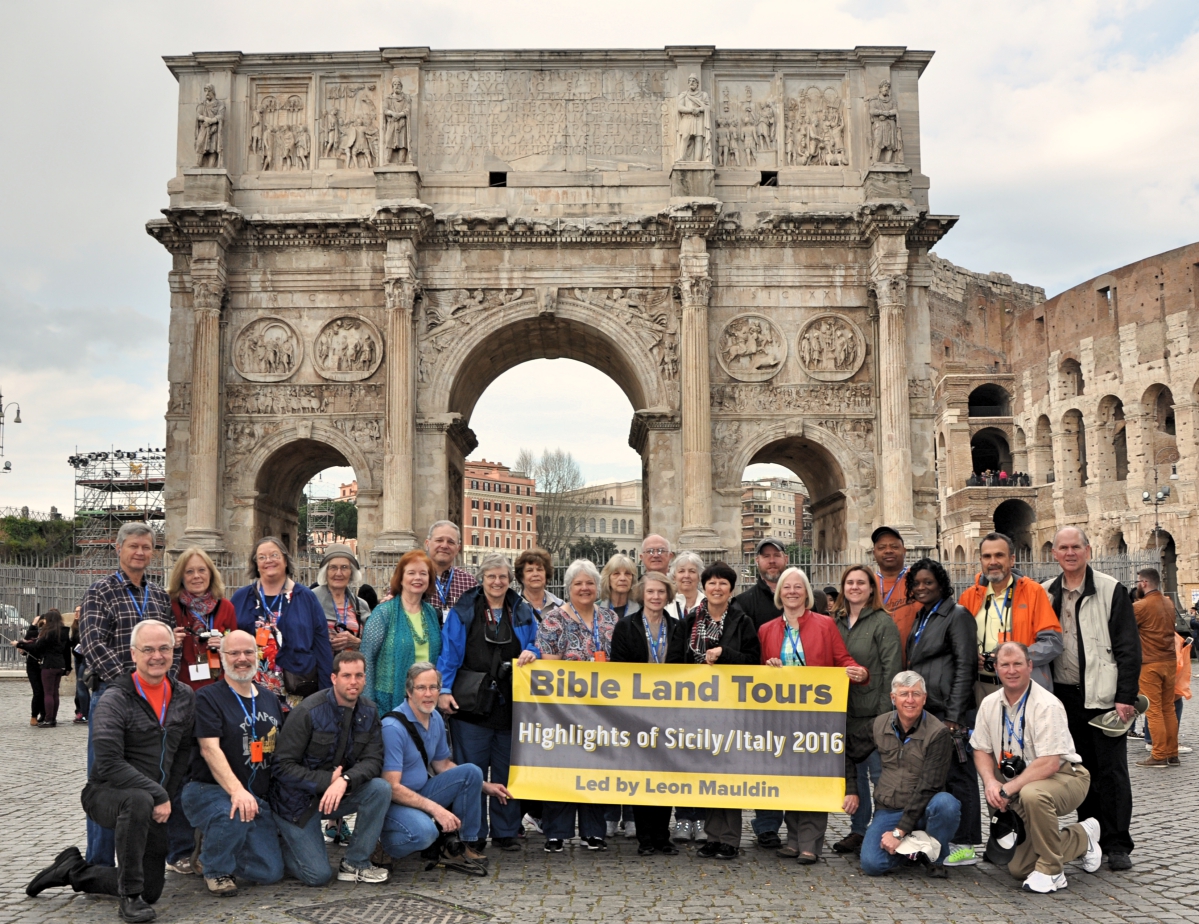
Tonight we are in Agrigento, on the southern coast of Sicily. One of my group, Dr. Eric Awwad, is wearing a pedometer and today logged 5.8 miles of walking in our visiting archaeological sites today. Our local guide took this group photo (minus 2 or 3 of our folks) at the Temple of Concordia in the Valley of the Temples in ancient Agrigento.

Mauldin Group photo at Temple of Concordia at Agrigento.

Mauldin Group photo at Temple of Concordia at Agrigento.

This is the most famous structure of the Valley of the Temples, and is one of the best preserved Doric temples in the world. It dates back to the 5th century BC.

Earlier we were at Selinunte, where among other fascinating ruins we saw the Temple of Hera (also known as “Temple E”).

Temple of Hera at Selinunte. Photo by Leon Mauldin.

Temple of Hera at Selinunte. Photo by Leon Mauldin.

I’m glad my wife Linda is with us on this trip.

OLYMPUS DIGITAL CAMERA

Linda at Selinunte, Sicily. Photo by Sonja Winburn.

Yes, we had a little rain today. Tomorrow we are to visit the Roman villa of Casale and from there make our way to biblical Siracusa.


Monreale and Mondello Beach, Palerma, Sicily

March 9, 2016

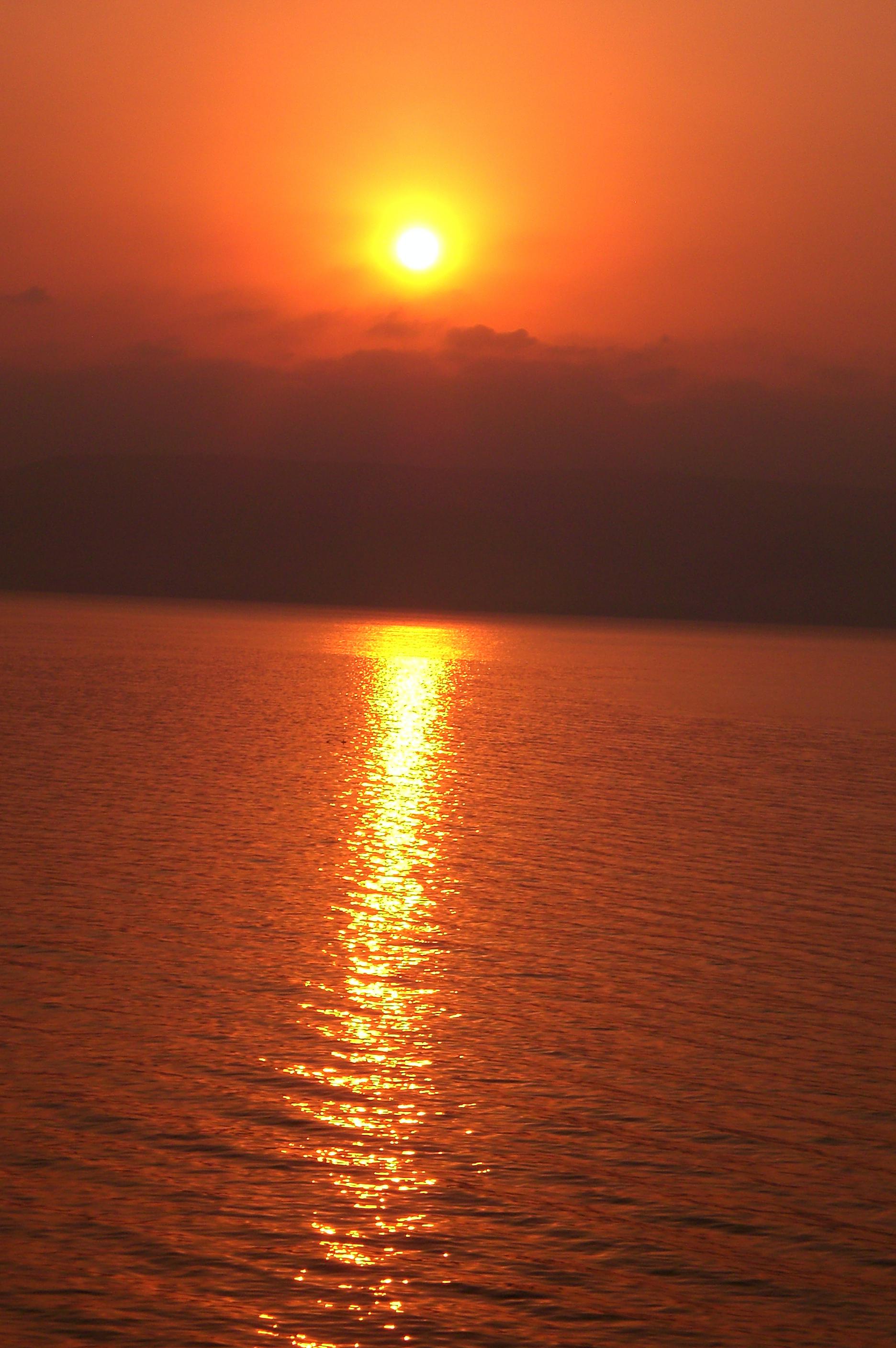
Our trip concluded today with a view looking out from Mondello Beach.

Looking out from Mondello Beach, Sicily. Photo by Leon Mauldin.

Looking out from Mondello Beach, Sicily. Photo by Leon Mauldin.

We’ve had very co-operative weather today (though it is sprinkling tonight). Our morning began with a visit to Monreale where we had the opportunity to visit the Cathedral. “The building of the monument takes us back to the high point of the Norman kingdom in Sicily, which coincides with the reign of William II (1172-1189)” (Monreale: The Cathedral and the Cloister, p.3).

Monreale Cathedral. Dates back to the 12th century. Photo by Leon Mauldin.

Monreale Cathedral. Dates back to the 12th century. Photo by Leon Mauldin.

We are to leave Palermo in the morning for Selinunte and then Agrigento to visit the archaeological areas including the Valley of the Temples. There is an incredible amount of history and historical sites in the country of Sicily, the largest island in the Mediterranean.

We plan to post more as time permits.


Giovanni Falcone Monument in Capaci

March 8, 2016

My group arrived safely in Palermo, Sicily this afternoon, all in apparent good health, and all of our luggage also!

Our actual touring of archaeological and biblical sites begins tomorrow. On our way to our hotel our tour host pointed out the Giovanni Falcone Monument on the A29 Coastal Highway, at the location where Falcone was assassinated, and gave us some interesting information.

Here is a photo I took from inside the bus while we made a quick stop.

Giovanni Falcone Monument near Palermo, Sicily. Photo by Leon Mauldin

Giovanni Falcone Monument near Palermo, Sicily. Photo by Leon Mauldin

Wikipedia has this info:

Giovanni Falcone, 18 May 1939 – 23 May 1992) was an Italian judge and prosecuting magistrate. From his office in the Palace of Justice in Palermo (Sicily), he spent most of his professional life trying to overthrow the power of the Sicilian Mafia. After a long and distinguished career, culminating in the famous Maxi Trial in 1986-1987, he was killed by the Corleonesi Mafia in May 1992, on the A29 motorway near the town of Capaci.

His life parallels that of his close friend Paolo Borsellino. They both spent their early years in the same neighbourhood in Palermo. And though many of their childhood friends grew up in the Mafia background, both men fought on the other side of the war as prosecuting magistrates. They were both killed in 1992, a few months apart. In recognition of their tireless effort and sacrifice during the anti-mafia trials, they were both awarded the Italian “Medaglia d’oro al valore civile” (Gold medal for civil valor). They were also named as heroes of the last 60 years in the November 13, 2006, issue of Time Magazine.

We will plan to post more as we have opportunity along our tour.


Jordan River

February 17, 2016

In preparing for our mid-week Bible study tonight (Life of Christ) I came across a photo of the River Jordan I took back in Sept. 2011.

Jordan River. Photo by Leon Mauldin.

Jordan River. Photo by Leon Mauldin.

This is where the Jordan continues its flow just south of the Sea of Galilee.

Some of my other posts and photos of the Jordan River may be seen by clicking here and here.

Click image for larger view.


Hazor, One of Solomon’s Fortress Cities

February 13, 2016

1 Kings 9:15 reads, “Now this is the account of the forced labor which King Solomon levied to build the house of the LORD, his own house, the Millo, the wall of Jerusalem, Hazor, Megiddo, and Gezer.

During the time of pre-conquest Canaanite occupation, “Hazor formerly was the head of all these kingdoms” (Josh. 11:10), a reference to the city states of northern Canaan. It was located on the strategic Via Maris. This is a view of the tel:

Tel Hazor, one of the cities Solomon fortified. Photo by Leon Mauldin.

Tel Hazor, one of the cities Solomon fortified. Photo by Leon Mauldin.

I have previously written on Hazor here.

Click image for larger view.


Jesus and the Money-changers

February 10, 2016

John records the beginning of Jesus’ ministry, including this visit to Jerusalem for Passover:

The Passover of the Jews was near, and Jesus went up to Jerusalem. And He found in the temple those who were selling oxen and sheep and doves, and the money changers seated at their tables. And He made a scourge of cords, and drove them all out of the temple, with the sheep and the oxen; and He poured out the coins of the money changers and overturned their tables; and to those who were selling the doves He said, “Take these things away; stop making My Father’s house a place of business.” (John 2:13-16).

It is noteworthy that Jesus both began (above text) and concluded (Matt. 21:12-13) His ministry by cleansing the temple (hieros), “My Father’s house,” of its abuses–of its being turned into a “house of merchandise.”

I’ve thought of these biblical texts when walking through Old Jerusalem and seeing signs such as this one:

Money-changers in Jerusalem. Photo by Leon Mauldin.

Money-changers in Jerusalem. Photo by Leon Mauldin.

Money-changers were:

bankers who exchanged one nation’s currency, or one size of coin, for another. These people provided a convenience, charging a fee (often exorbitant) for their services. Some moneychangers operated in the temple area (the Court of the Gentiles), because all money given to the Temple had to be in the Tyrian silver coin. According to Exodus 30:11–16, every Israelite 20 years old or older was required to pay an annual tax of a half-shekel into the treasury of the sanctuary (Nelson’s New Illustrated Bible Dictionary).

Note the location is the hieros (temple area with its spacious courts, John 2:14-15) and not the naos, or sanctuary, where only the priests could go.
What do you think Jesus might do if He were to walk among “modern churches” today? (I know the church in the biblical sense is not the physical church building/meeting place, but rather is the people of God).

Click image for larger view.


His Eternal Power and Deity

February 6, 2016

Paul observed that God’s invisible attributes, his everlasting power and deity, are clearly seen, being understood by the things that are made (Rom.1:20). This is true “since the creation of the world” (ibid.). Several years ago Jonathan Perz paired a text in Psalm 36 with one of my photos. Many of the psalms make reference to God’s power and glory as seen in the creation.

God's Handiwork in Norway. Photo by Leon Mauldin.

God’s Handiwork in Norway. Photo by Leon Mauldin.


Photos Now Allowed At Egyptian Museum

January 30, 2016

I note in Todd Bolen’s BiblePlaces Blog that photography “is once again permitted in the Egyptian Museum with purchase of a camera ticket.” The Egyptian Museum is located at Cairo, and for many years photos have not been permitted. See here. 

I was able to visit the museum in 2003 when photos were permissible.

King Tut's Funerary Mask. Egyptian Museum. Photo by Leon Mauldin.

King Tut’s Funerary Mask. Egyptian Museum. Photo by Leon Mauldin.

Tutankhamun was an Egyptian pharaoh of the 18th dynasty (ruled c. 1332–1323 BC in the conventional chronology), during the period of Egyptian history known as the New Kingdom. He is colloquially referred to as King Tut. His original name, Tutankhaten, means “Living Image of Aten”, while Tutankhamun means “Living Image of Amun”. In hieroglyphs, the name Tutankhamun was typically written Amen-tut-ankh, because of a scribal custom that placed a divine name at the beginning of a phrase to show appropriate reverence. He is possibly also the Nibhurrereya of the Amarna letters, and likely the 18th dynasty king Rathotis who, according to Manetho, an ancient historian, had reigned for nine years—a figure that conforms with Flavius Josephus’s version of Manetho’s Epitome.
The 1922 discovery by Howard Carter and George Herbert of Tutankhamun’s nearly intact tomb received worldwide press coverage. It sparked a renewed public interest in ancient Egypt, for which Tutankhamun’s mask, now in the Egyptian Museum, remains the popular symbol. Exhibits of artifacts from his tomb have toured the world. In February 2010, the results of DNA tests confirmed that he was the son of Akhenaten (mummy KV55) and Akhenaten’s sister and wife (mummy KV35YL), whose name is unknown but whose remains are positively identified as “The Younger Lady” mummy found in KV35. The “mysterious” deaths of a few of those who excavated Tutankhamun’s tomb has been popularly attributed to the curse of the pharaohs. (Wikipedia).

See my previous posts re: the Egyptian Museum here and here. Additionally I have a post on the Valley of the Kings where Tut’s tomb was found. Click here.


Passing of Harry Pickup, Jr.

January 28, 2016

Joshua described his approaching death with the words, “Behold, this day I am going the way of all the earth” (Josh. 23:14). In context, he was encouraging Israel to be faithful to their covenant with the Lord: “And you know in all your hearts and in all your souls that not one thing has failed of all the good things which the LORD your God spoke concerning you. All have come to pass for you; not one word of them has failed” (ibid.).

Another of God’s servants has gone the way of all the earth: Harry Pickup, Jr., of Temple Terrace, Florida, at the age of 91. A faithful gospel preacher, and also for many years in public relations with Florida College, he was an encourager to many.

Harry Pickup, Jr.

In the fall of ’69 Mr. Pickup came to my high school (Corner, in Jefferson Co., AL), to recruit me for Florida College. I had not heard of the college, nor had I previously met Mr. Pickup. My preacher, Pryde Hinton, had mentioned me to him. He came by to see me a second and a third time. I already had determined to be a gospel preacher, and he discussed the ways that Florida College could help me prepare for that work. I attended the Jan. ’70 FC annual lectureship with friends Bob and Sandra Waldron (their 10th class reunion), and by the time we were headed back to north Alabama, I had made the decision to enroll that fall ’70.

That decision impacted my life for good in so many ways. The good men there that influenced me; the tools with which they equipped me to work–I will always be thankful. I’ve told bro. Pickup I was so grateful for his interest in me and encouragement. It was always pleasant to see him from time to time down through the years. The last time we talked was after the untimely death of his son Marty (2013). He has a special place in my heart.

You can hear some of his lessons at sites such as http://www.wordsfitlyspoken.org/audio/irving_tx/

He has a chapter in the book, Letters to Young Preachers, edited by Warren Berkley and Mark Roberts.

Shane Scott noted:

Each summer he would pay for several younger preachers to come and hear a panel of teachers speak for a few days, delving into a wide array of biblical topics. Though the subjects were frequently controversial, brother Pickup created an environment in which issues could be discussed openly, with cheerful fervor. His commitment to truth and to service converged beautifully in Pickup University. And his great sense of humor was reflected in the initials of this “school,” PU! (http://focusmagazine.org/harry-pickup-jr.php)

As King David said, “”Do you not know that a prince and a great man has fallen this day in Israel?” (2 Sam. 3:38). Goodbye for now, Dear Friend.