Sorrento/Pompeii

March 15, 2016

Yesterday morning we crossed the Straits of Messina, leaving Sicily and arriving at the toe of the “boot” of Italy. From there we went south to biblical Rhegium (Acts 28:12-13), then going north to Sorrento, where today we are to visit Pompeii and then make our way to Rome, making some stops along the way.

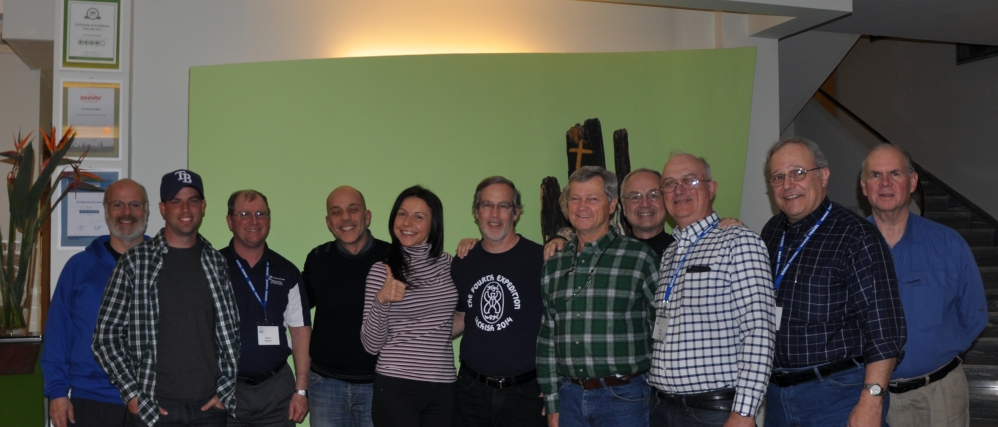
Last night we had opportunity to see Eliodoro Ruggiero(4th from left) and his bride Rosaria. Eliodoro preaches at nearby Poggiomarino.

Eliodoro and Rosaria Ruggiero

Eliodoro and Rosaria Ruggiero


Syracuse, Mt. Etna, and Taromina, Sicily

March 13, 2016

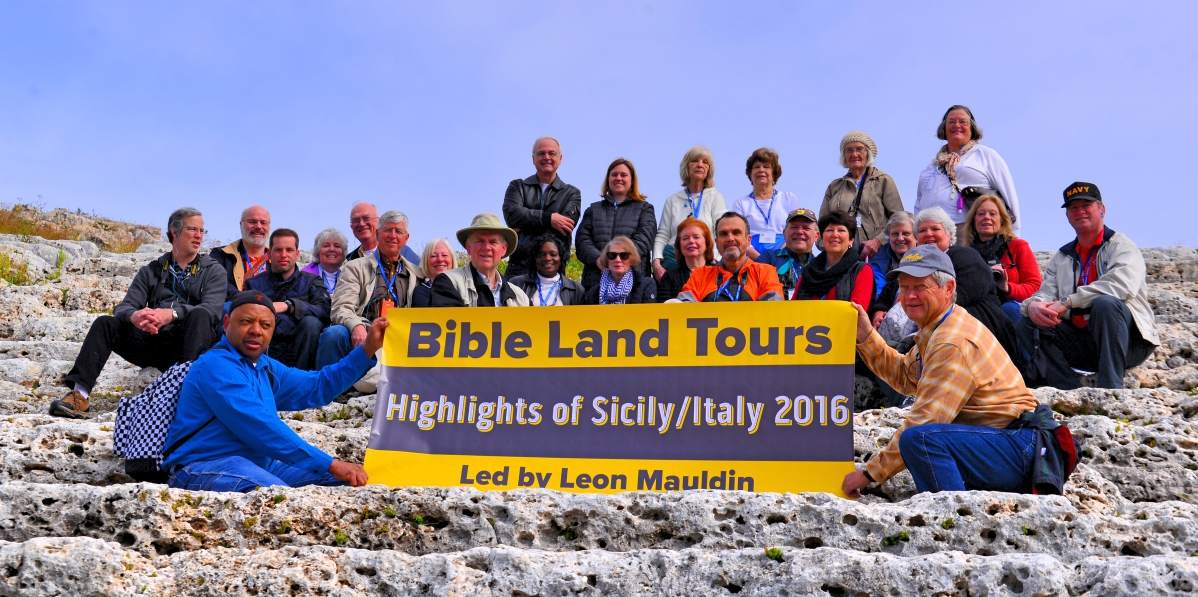
Yesterday (Saturday) we visited the archaeological sites Syracuse, Sicily, and from there went on to Mt. Etna (Europe’s most active volcano), and then to Taromina. While at the Greek theater at Syracuse we took this group photo.

Group photo at Greek Theater at Syracuse, Sicily. Photo by David Deason.

Group photo at Greek Theater at Syracuse, Sicily. Photo by David Deason.

This theater was built in the 5th century BC.

The city of Syracuse was founded in 733 BC by Greek settlers from Corinth. Some names associated with Syracuse include Aeschylus, considered the father of the Greek tragedy. The philosopher Plato was in Syracuse. Syracuse was the birthplace of Archimedes, the famous mathematician and most influential scientist of the ancient world.

But actually none of those names brought us to this ancient site; rather it was its biblical mention in connection with Paul’s journey (as a prisoner) to Rome. Of that point in the journey Luke writes, “And landing at Syracuse, we stayed three days” (Acts 28:12).


2014 in review

December 30, 2014

The WordPress.com stats helper monkeys prepared a 2014 annual report for this blog.

Here’s an excerpt:

The concert hall at the Sydney Opera House holds 2,700 people. This blog was viewed about 49,000 times in 2014. If it were a concert at Sydney Opera House, it would take about 18 sold-out performances for that many people to see it.

Click here to see the complete report.


Florence, Capital of the Province of Tuscany.

July 11, 2014

As we continue our tour of “The Highlights of Italy,” leaving Rome we’ve traveled north to Florence, home of Michelangelo and the birth of the Renaissance. Florence is the capital city of the Italian region of Tuscany and its 370,000 inhabitants makes it the most populous city in Tuscany.

Shortly after we checked into our rooms (late afternoon) there was thunder, rain and some small hail. Afterward the sun came out and much of the cloud cover left. Before time for dinner we had some time to walk to the historic square.

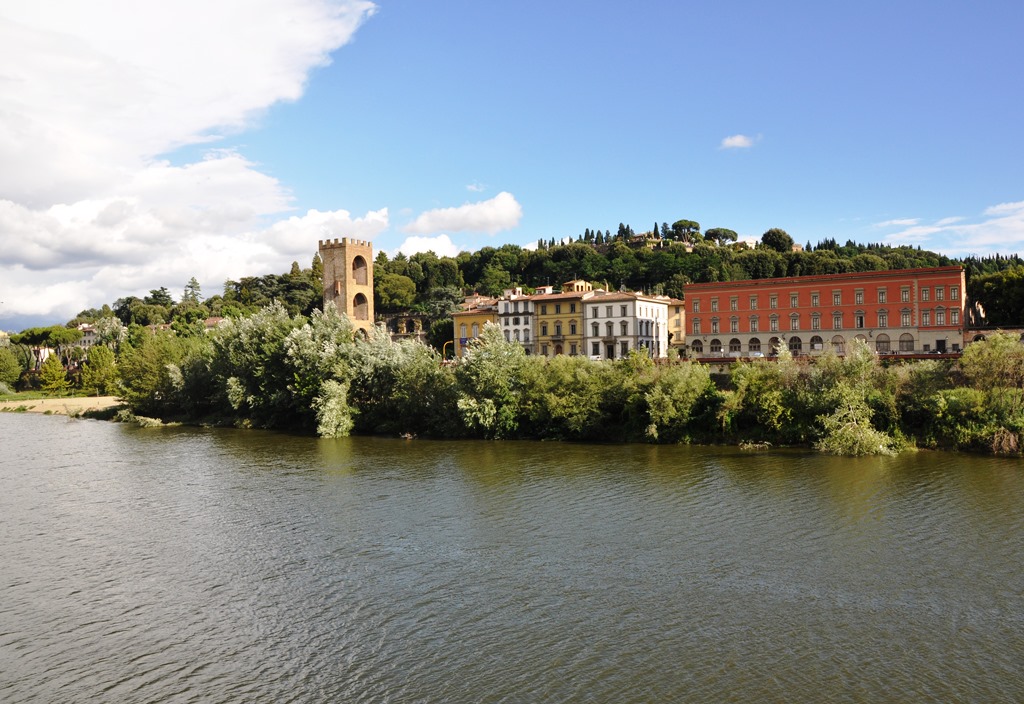
Florence is situated along the banks of  the Arno River.

Arno River in Florence. Photo by Leon Mauldin

Arno River in Florence. Photo by Leon Mauldin


Jericho, First City of the Conquest of Canaan

February 15, 2014

The book of Joshua has one dominant theme: God was fulfilling His promise to the patriarchs Abraham, Isaac and Jacob, that He would give unto their descendants the land of Canaan (Gen. 12:6-7). As Joshua begins, Israel had recently conquered the transjordan territories of Sihon and Og, which would become the possession of Reuben, Gad, and half the tribe of Manasseh (Num. 21:21-35). Though the eastern territory was given to Israel by God, the land of Canaan proper did not include the transjordan, but rather was the land west of the Jordan River. (See discussion on this by Todd Bolen here

The book of Joshua is named after its prominent character, Joshua, the successor of Moses. Following Moses’ death (Deut. 34) and a 30-day period of mourning (v.8), Joshua sent out two spies across the Jordan. They were told “Go, view the land, especially Jericho” (Josh. 2:1).

Conquest of Canaan. Map by Marc Hinds.

Conquest of Canaan. Map by Marc Hinds.

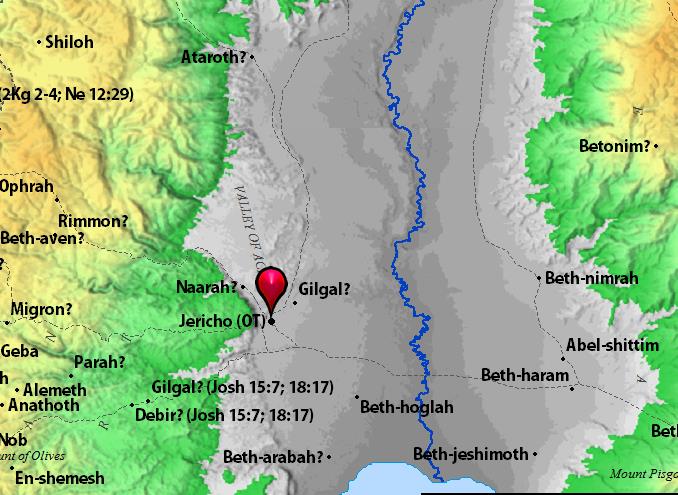
One can see that from their location in Shittim (Acacia Grove, NKJV, CSB) that the first city that must be taken in the Conquest was Jericho, believed to be the world’s most ancient city. It was a fortress city and guarded entrance into Canaan from the east. Located in the Jordan Valley, it is 670 feet below sea level, and was one the first cities in Israel to be excavated. The record of Jericho’s destruction by Israel is found in Joshua 6.

From the standpoint of military strategy, Israel would first conquer the central territory (Josh. 7-8), then the southern (Josh. 10), and finally the northern territory (Josh. 11).

Jericho. Map by BibleAtlas.org.

Jericho. Map by BibleAtlas.org.

I always enjoy seeing Jericho. This past October Jericho was included on our itinerary for my group, though it was later in the day than what is ideal for photos.

Excavations at Jericho. Photo by Leon Mauldin

Excavations at Jericho. Photo by Leon Mauldin.

Recommended reading: see Biblical Archaeology Review, “Did the Israelites Conquer Jericho? A New Look at the Archaeological Evidence,” by Dr. Bryant G. Wood (16:02, March/April 1990).

Click images for larger view.


God Will Send the Hornet

January 3, 2014

I have been thinking today about the hornet. There are three biblical references.

Ex. 23:28: And I will send hornets before you, which shall drive out the Hivite, the Canaanite, and the Hittite from before you.

Deut. 7:20: Moreover the LORD your God will send the hornet among them until those who are left, who hide themselves from you, are destroyed.

Josh. 24:12: I sent the hornet before you which drove them out from before you, also the two kings of the Amorites, but not with your sword or with your bow.

Each of these passages refer to God’s intervention on behalf of Israel during the conquest of Canaan. There is no doubt that when hornets pursue you, that you get out of their path asap.

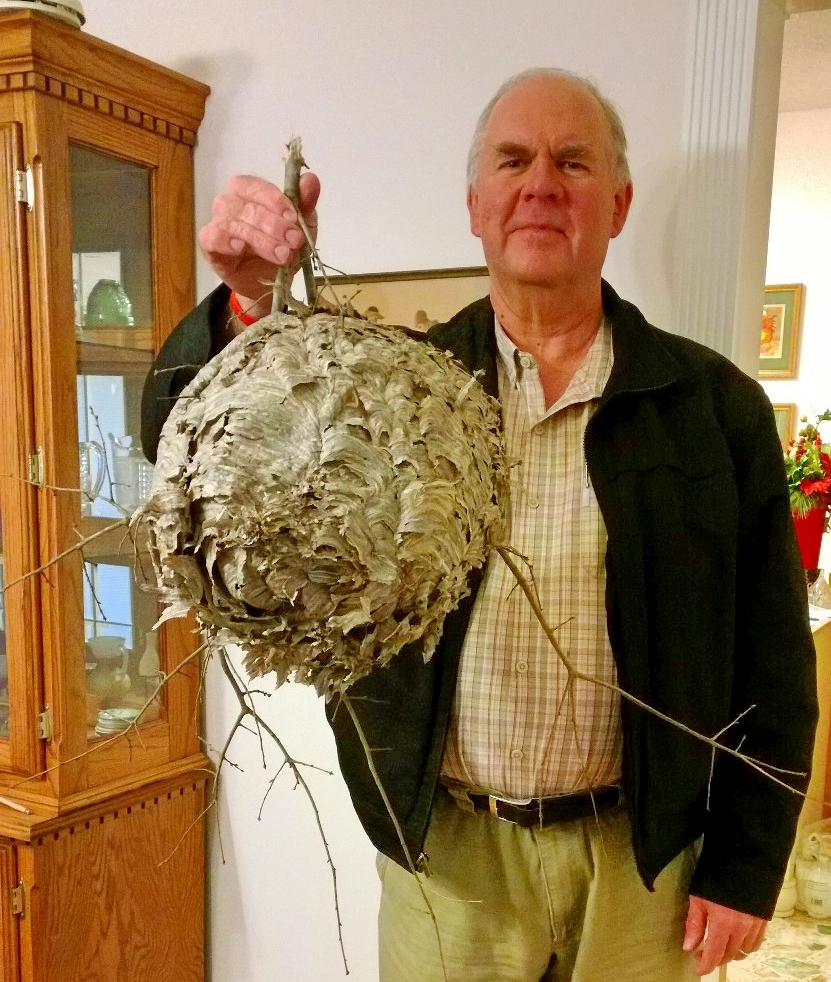
This afternoon I brought down a hornet’s nest that was situated perhaps 20 feet up in a tree. The nest is fascinating, and a testimony to the work of a wonderful Creator Who has well equipped His creation.

Hornet's nest. Photo by Linda Mauldin.

Hornet’s nest. Photo by Linda Mauldin.

BTW I did not climb the tree. I shot the limb in two at that point just above my thumb.


Gleanings for the Poor

December 20, 2013

Mosaic legislation provided for meeting the needs of the poor among Israel:

19 “When you reap your harvest in your field and forget a sheaf in the field, you shall not go back to get it. It shall be for the sojourner, the fatherless, and the widow, that the LORD your God may bless you in all the work of your hands. 20 When you beat your olive trees, you shall not go over them again. It shall be for the sojourner, the fatherless, and the widow. 21 When you gather the grapes of your vineyard, you shall not strip it afterward. It shall be for the sojourner, the fatherless, and the widow. 22 You shall remember that you were a slave in the land of Egypt; therefore I command you to do this (Deuteronomy 24:19-22, ESV).

One instance of the application of these provisions of gleaning after the harvest being left for the poor is found in the book of Ruth (see esp. ch. 2). This text also forms the backdrop for the rhetorical question of Obadiah 1:5 (context: complete destruction of Edom; no “gleaning” to be left.”

I’m also interest in the inclusion of the olive tree in the Deuteronomy text. Olives were a staple in biblical times. Olive trees are plentiful in Israel today, requiring little water, and can be grown on almost any terrain (including land too steep for farming). Again, the Deuteronomy legislation required that the owners left whatever remained after harvest for the poor of the land.

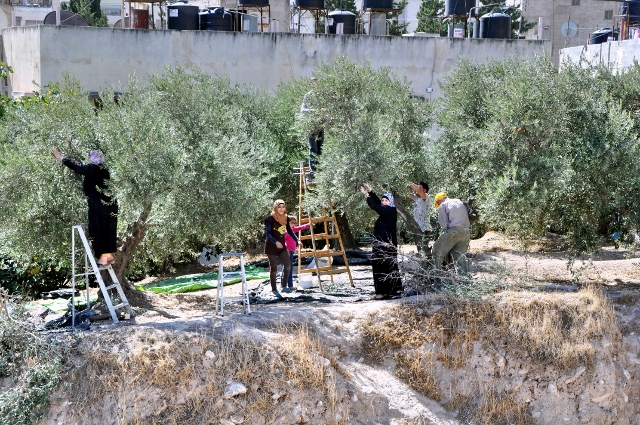
On a recent trip to Israel we spent one day visiting sites in the West Bank (PA), including Shechem. While there we saw some folks (a family?) gathering olives. The work is largely done by hand.

Gathering  Olives at Shechem. Photo by Leon Mauldin.

Gathering Olives at Shechem. Photo by Leon Mauldin.

Behind these folks, but out of sight, is Mt. Gerizim.

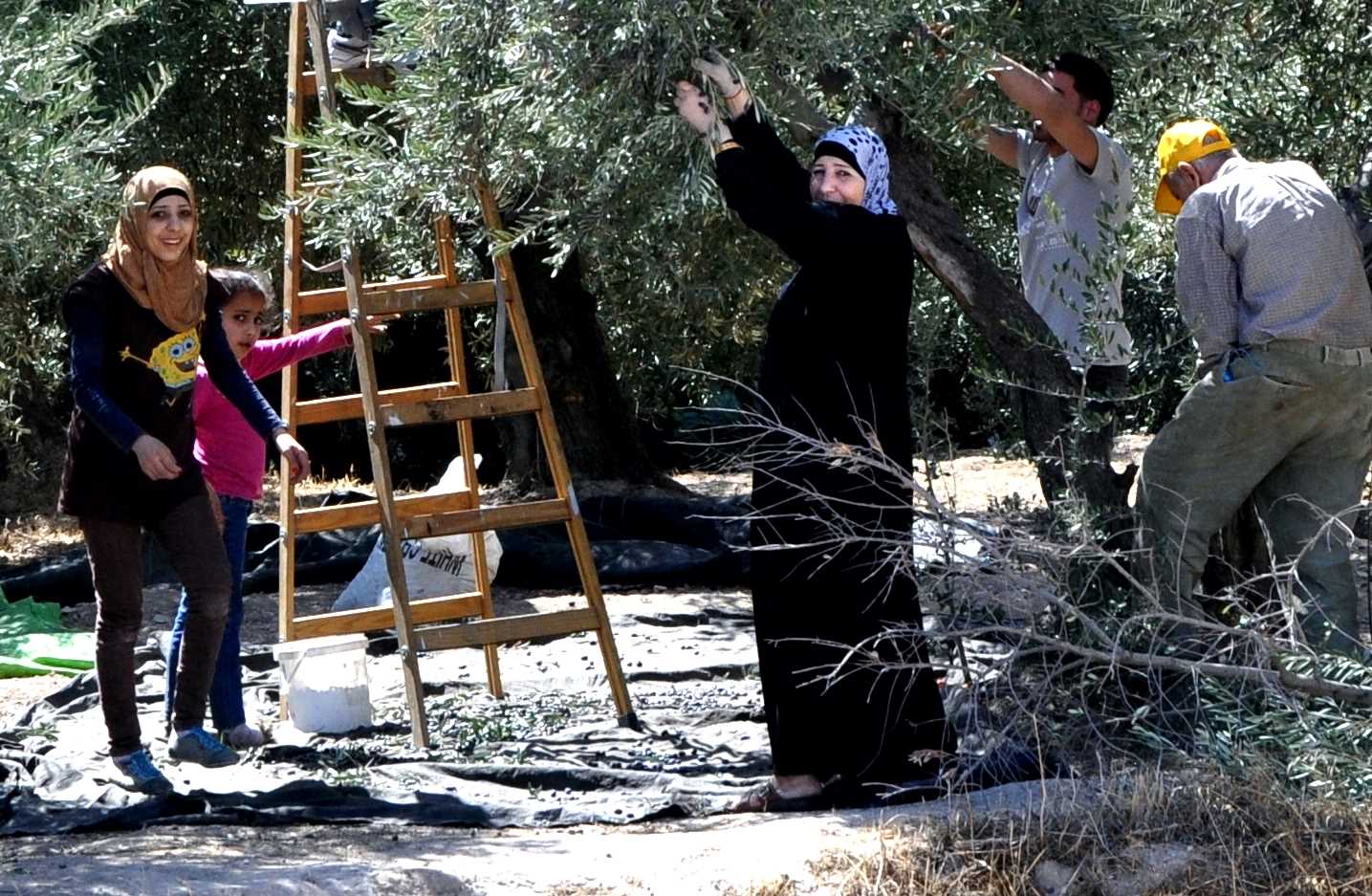
Here is a close-up. It looks like they have a tarp of some kind to catch the olives.

Gathering Olives at Shechem, close-up. Photo by Leon Mauldin.

Gathering Olives at Shechem, close-up. Photo by Leon Mauldin.

I think they were looking to see who that was taking their photo, you think?

Click on images for larger view.


Jesus’ Promise at Caesarea Philippi

November 1, 2013

In our previous couple of posts we were looking at Caesarea Maritima, Herod’s capital city on the Mediterranean coast. Presently we are considering another Caesarea, up to the north at the foothills of Mt. Hermon, Caesarea Philippi. This area was ruled by Herod’s son Philip.

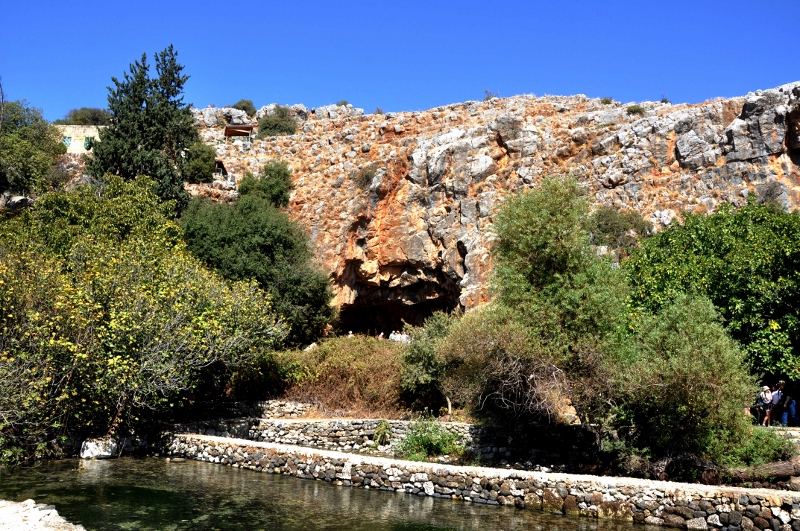
On-site Bible study can be a thrilling experience; to be able to walk in the steps of Jesus and various Bible characters is a wonderful opportunity. We had such an occasion in a visit a couple of weeks ago to Caesarea Philippi. It was in this region that Peter made his confession of the Christ, and Jesus promised to build His church.

Caesarea Philippi. Grotto of Pan, and Banias River. Photo by Leon Mauldin.

Caesarea Philippi. Grotto of Pan (center), and Banias River. Photo by Leon Mauldin.

The text does not specify that Jesus entered Caesarea Philippi, but that He came to the “region” (NKJV), “district” (NASB), “the area of” (NET) Caesarea Philippi (Matthew 16:13). It is interesting that Luke does not mention the place, but states, “Once when Jesus was praying by himself, and his disciples were nearby, he asked them, ‘Who do the crowds say that I am?'” (Luke 9:18, NET). Matthew gives the more complete record:

Now when Jesus came into the district of Caesarea Philippi, He was asking His disciples, “Who do people say that the Son of Man is?” 14 And they said, “Some say John the Baptist; and others, Elijah; but still others, Jeremiah, or one of the prophets.” 15 He said to them, “But who do you say that I am?” 16 Simon Peter answered, “You are the Christ, the Son of the living God.” 17 And Jesus said to him, “Blessed are you, Simon Barjona, because flesh and blood did not reveal this to you, but My Father who is in heaven. 18 “I also say to you that you are Peter, and upon this rock I will build My church; and the gates of Hades will not overpower it. 19 “I will give you the keys of the kingdom of heaven; and whatever you bind on earth shall have been bound in heaven, and whatever you loose on earth shall have been loosed in heaven” (Matt. 16:13-19 NASB).

A couple of observations:

1. This passage does not teach the primacy of Peter. What Jesus said here to Peter regarding his apostolic authority was said just two chapters later to all the apostles Matt. 18:1,18.

 2. Regarding the “binding” and “loosing:” the point is not that Peter or the other apostles would bind/loose something on earth and then God would bind/loose it in heaven. What they bound on earth was binding because God had bound it in heaven; what they loosed on earth had authority because God had loosed it in heaven. The rendering of the Christian Standard Bible (Holman) is, “I will give you the keys of the kingdom of heaven, and whatever you bind on earth is already bound in heaven, and whatever you loose on earth is already loosed in heaven” (Matt.16:19). The apostles did not have inherent authority; they were the instruments through which God’s revealed will was made known.

3. Jesus was anticipating the events of Pentecost, Acts 2. It was at that time the Spirit descended upon the apostles, empowering as Jesus had promised, and salvation through the crucified and resurrected Messiah was proclaimed. This was the beginning of the church, and the establishment of the kingdom, the reign/rule of Christ.

Click on image for larger view.


Mikveh at Magdala

October 24, 2013

We’re glad to be back up and running now (our blog, that is).

Yesterday we arrived at ATL on time on our return from Israel. This trip was biblically educational for all: helpful for first-time travelers as well as those returning. It is a fact that you get a lot more out of that 2nd or 3rd trip to Israel; that first visit tends to be overwhelming, there’s so much to take in! I continue to learn on each trip.

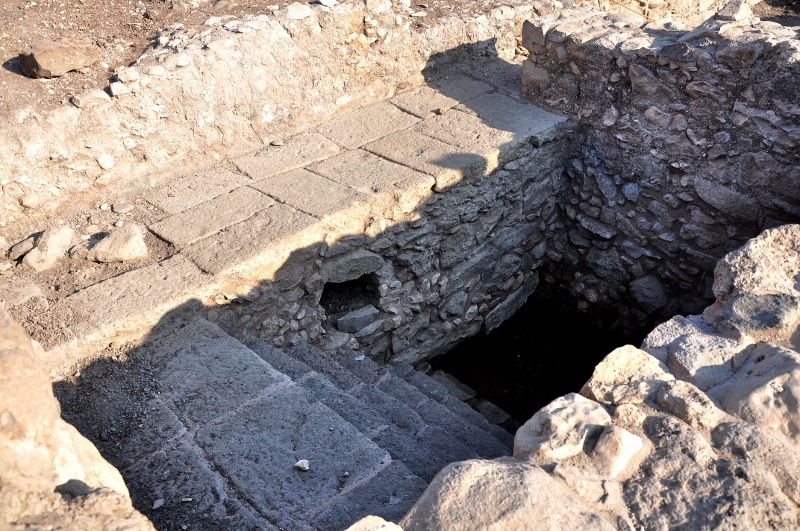
Last week I posted on the discovery of the 1st century synagogue at Magdala. Of interest there was the discovery of two mikva’ot (plural of mikveh). A mikveh was used by the Jews for ritual purification (not for bathing; they would bathe first).

A mikveh at Magdala. Two mikva'ot were found at the site. Photo by Leon Mauldin.

A mikveh at Magdala. Two mikva’ot were found at the site. Photo by Leon Mauldin.

Archaeologist Ronny Reich, in BAR in an article discussing mikva’ot at Sepphoris says:

. . .we often find mikva’ot in pairs, side by side. We must remember that where the mikveh was not served by a continuously flowing spring (as in the vast majority of cases), the pure water had to last from the end of one rainy season, in around March, until the beginning of the next rainy season, about October. If one of a pair of mikva’ot no longer had enough pure water, the other could be used. What’s more, the waters of a pure mikveh could be used to purify the water in the other. Rabbinic literature describes how a moveable pipe or assemblage of pipes could be used for this purpose (Tosefta mikva’ot, 5.5). Pairs of mikva’ot are frequently found in Jerusalem. At Sepphoris I saw five or six pairs or groups that can easily be identified: numbers 4, 5 and 6; 7 and 9; 14 and 15; 17 and 18; 19 and 20; 21 and 22 on the site map (28:02 Mar/Apr 2002).

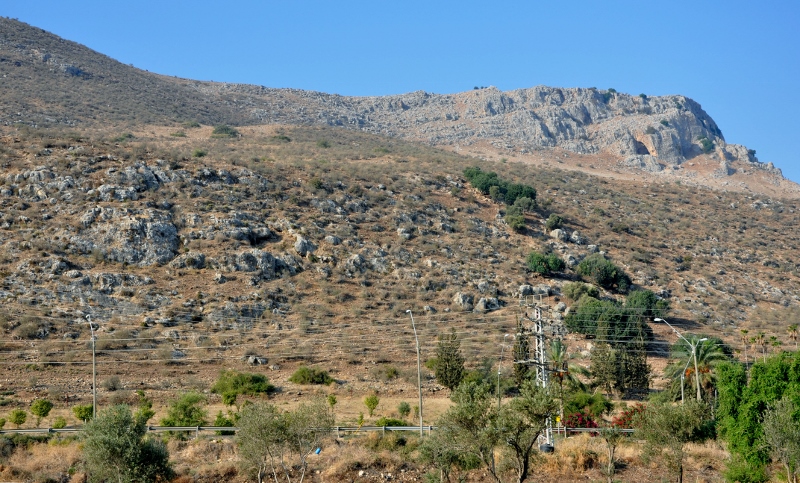
The view from Magdala is beautiful.

View from Magdala, looking NW. Photo by Leon Mauldin

View from Magdala, looking NW. Photo by Leon Mauldin.

Click on images for larger view.


Traveling in Israel

October 19, 2013

Yesterday we visited Nazareth. Everyone enjoyed the Nazareth Village, which is a realistic recreation of life in the 1st century. Then on to Beth Shean, Jezreel, and then down the Jordan Valley to Jerusalem. We had planned to go through the hill country of Samaria, but found the gate had closed today at 2:00 PM (due to holiday). Also the Spring of Harod, where Gideon’s army was divinely trimmed down to 300 men to face 135,000 Midianites, was closed. We also had some rain, but still it was a good day. Then we made our way to Jerusalem.

Today we saw the Western Wall, which was very busy due to the Sabbath, then we went south. We visited Qumran, where the Dead Sea scrolls were discovered. Then Masada, the Dead Sea at Engdei, then the Jordan River and finally Jericho before returning to Jerusalem.

Since last night I’ve been unable to upload photos. Hopefully I can resolve this soon!