“A Shack in a Cucumber Field”

August 17, 2011

The prophet Isaiah said, “Daughter Zion is abandoned like a shelter in a vineyard, like a shack in a cucumber field, like a besieged city” (Isaiah 1:8). What is meant by that statement?

Zion, the city of Jerusalem, became David’s capital city. It was there that Solomon built the temple of the Lord Yahweh. Jerusalem, Mount Zion was central to Israel’s worship, and to their identity as a people. During much of Isaiah’s lengthy career (740-690 BC) Jerusalem was prosperous. “Their land has also been filled with silver and gold and there is no end to their treasures; their land has also been filled with horses and there is no end to their chariots” (Isa. 2:7).

But in saying “The daughter of Zion is left as a booth in a vineyard,” Isaiah speaks of their future desolation as though it has already occurred. Isaiah makes use of the prophetic perfect (perfect meaning “completed action”), a grammatical form used “to present future events as if they have already happened . . . the use of the perfect form to express completeness and factuality is so prominent that it is even used for a future event” (A Biblical Hebrew Reference Grammar.364).

Our photo below illustrates the imagery of the Isaiah text, and was taken near biblical Sardis. Some workers, perhaps family members, have constructed a shelter in the field to have a place to rest and refresh themselves before getting back to work.

Booth in Vineyard Near Sardis. Illustrates Isa. 1:8. Photo ©Leon Mauldin.

Because of the idols which had filled the land of Israel (Isaiah 2:8), God was going to reduce the magnificent city of Zion, Jerusalem the fortress city, to a hut.

Click on image for larger view.


They Smell Like Sheep

August 10, 2011

In Dr. Lynn Anderson’s book, They Smell Like Sheep, he tells of a church member who cornered him after a lesson in which he repeatedly referred to the elders as “shepherds.” His suggestion was basically this: since we sophisticated Americans don’t usually have sheep and don’t work as shepherds, no one connects with that idea. So find a better way to communicate the spiritual leadership idea.

Anderson’s response:

Admittedly, the shepherd metaphor does sound strange in the cyber-world of our daily experience.  We don’t normally see these picturesque, rural characters rolling down the expressways or eating at our local McDonald’s. But, after carefully considering my friend’s suggestion and searching in vain for a contemporary metaphor that would better connect the biblical notion with our times, I finally had to explain, ‘I can’t find any figure equivalent to the shepherd idea in our modern, urban world. Besides, if I drop the shepherd and flock idea, I would have to tear about five hundred pages out of my Bible, plus leave the modern church with a distorted–if not neutered–view of spiritual leadership.’ God keeps pointing shepherds to the pasture to struggle with sheep (pp. 11-12).

The ultimate example of a shepherd is God Himself; in the New Testament Jesus is identified as the Good Shepherd who cares for His sheep (John 10). Anderson is correct to use the biblical image of elders as shepherds (Acts 20:28; 1 Pet. 5:2,3).

Without doubt one of the most well-known, if not THE most well-known scriptural texts using the shepherd metaphor is Psalm 23.

The LORD is my shepherd; I shall not want. He maketh me to lie down in green pastures: he leadeth me beside the still waters. He restoreth my soul: he leadeth me in the paths of righteousness for his name’s sake. Yea, though I walk through the valley of the shadow of death, I will fear no evil: for thou art with me; thy rod and thy staff they comfort me (vv.1-4, KJV).

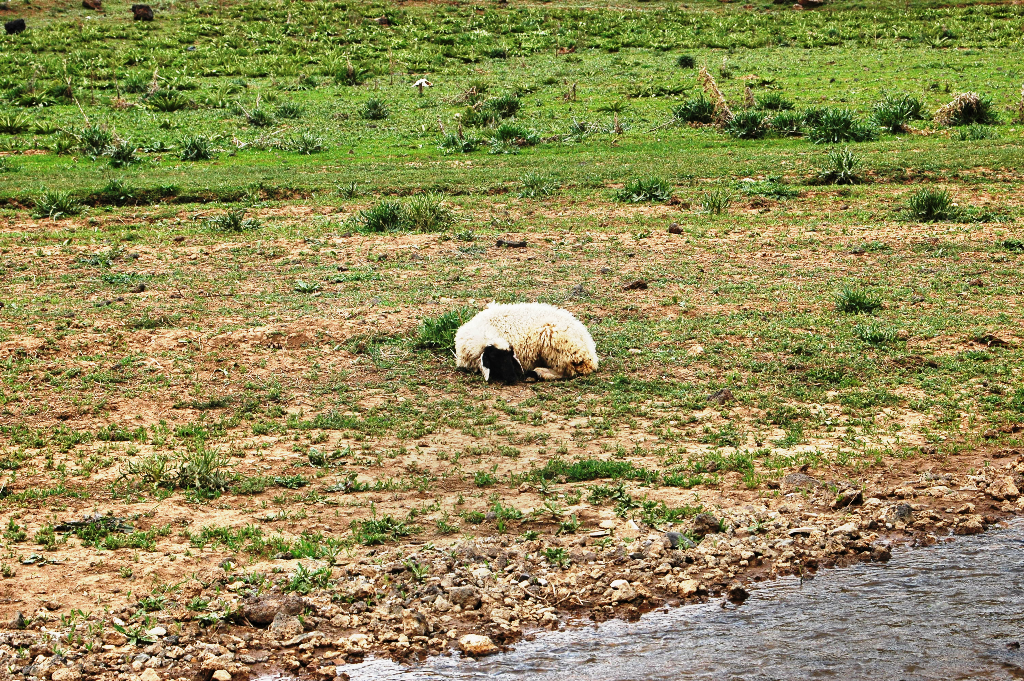
For today’s post we share a photo of a sheep who has been led to the still waters (quiet waters, NASB; refreshing water, NET).

Sheep lying down near green pasture beside refreshing water. Eastern Turkey. Photo ©Leon Mauldin.

What a beautiful metaphor of God’s care for His people!

Click on image for higher resolution.


Haran, cont’d.

November 10, 2010

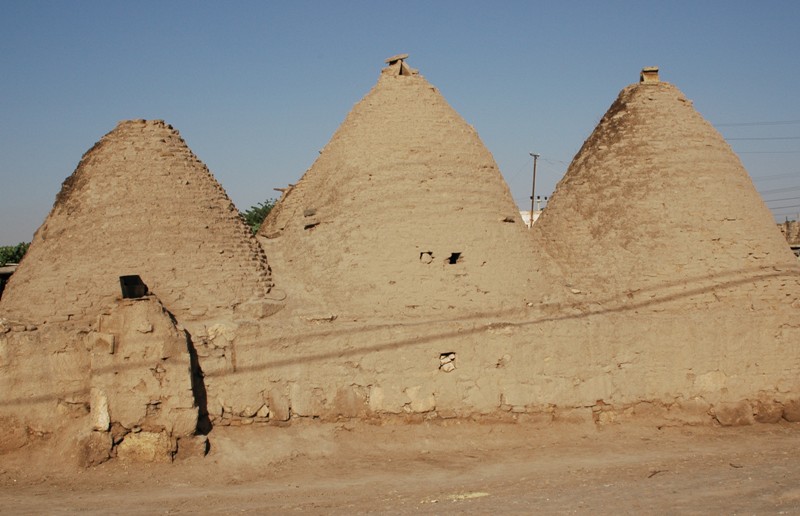
At Haran (Harran) one can see bee-hive houses that are said to be about 200 years old, but built on the same pattern as in the days of the Patriarchs.  On the back of the house on your left you can see the oven.


Bee-Hive structures at Haran. View of Oven. Photo ©Leon Mauldin.


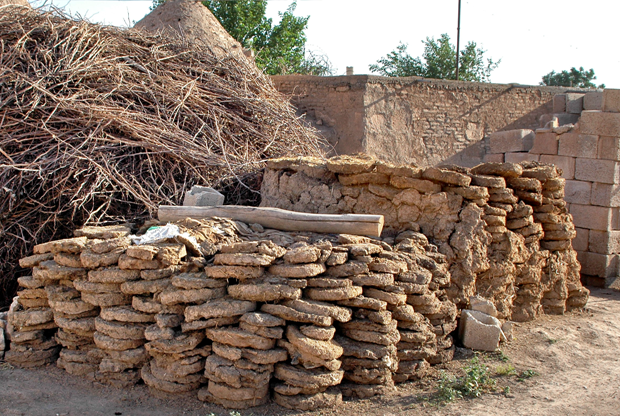
The fuel for such ovens would be wood and/or dung, as seen in photo below.


Fuel for the Fire. Dung cakes & wood for oven fires. Photo ©Leon Mauldin.


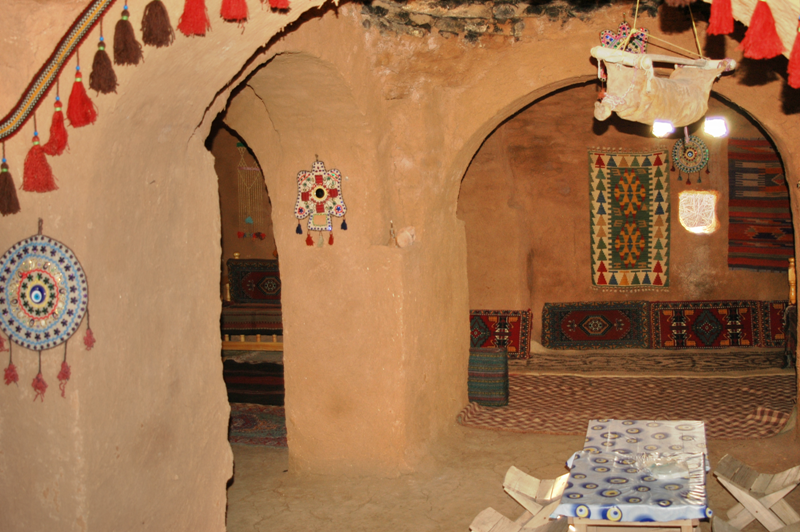
I was able to go inside one of the houses in Haran.  It was quite nice.


Inside a bee-hive house at Haran. Photo ©Leon Mauldin.

Click on image for larger view.