Antioch of Syria, Modern Antakya

April 11, 2017

This week I am enjoying the opportunity to present a Visualized Survey of the New Testament with the Mt. Olive church of Christ, in Mt. Olive, AL. Included in our studies is the book of Acts, in which we are told how the disciples were called Christians first in Antioch: “and when he [Barnabas] had found him [the Apostle Paul], he brought him to Antioch. For a whole year they met with the church and taught a great many people. And in Antioch the disciples were first called Christians” (Acts 11:26, ESV).
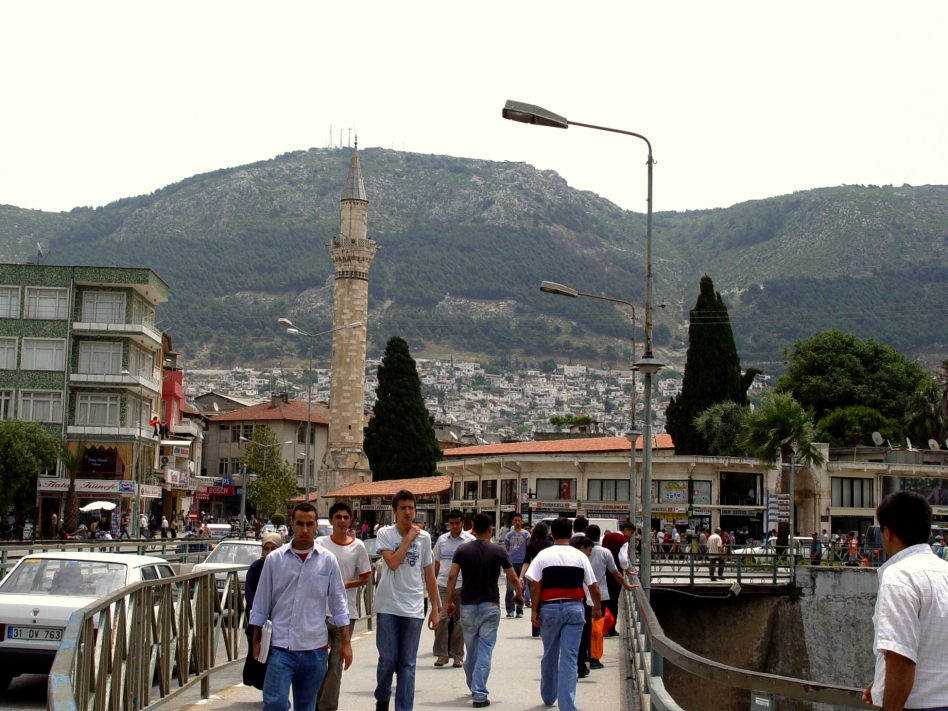
Antioch of Syria, today’s Antakya. Photo ©Leon Mauldin.

It is thrilling to read how that here at Antioch men were “preaching the Lord Jesus” (Acts 11:20). Further, “And the hand of the Lord was with them, and a great number who believed turned to the Lord” (v.21). Then the church at Jerusalem sent Barnabas to help: “When he came and saw the grace of God, he was glad, and he exhorted them all to remain faithful to the Lord with steadfast purpose.” A Christ-centered message, a Christ-centered conversion, and Christ-centered focus and purpose. Such key verses go a long way in helping us to see a biblical definition of a Christian!

Our photo shows Antioch with bridge crossing the Orontes River in foreground. I took this photo in May, 2007.

I have previously written on the biblical site of Antioch here and here. Antioch/Antakya is within Turkey, but is very near the Turkey/Syrian border.


The Threshing Sledge

January 24, 2017

I am currently enjoying teaching 1 Chronicles in our Bible class in our local congregation. The record of David’s ill-advised census and its terrible consequences is found in 1 Chron. 21. An angel and a prophet were used by God to instruct David: “Now the angel of the LORD had commanded Gad to say to David that David should go up and raise an altar to the LORD on the threshing floor of Ornan the Jebusite” (v.18, ESV). David purchased the threshing floor at the “full price” from Ornan, “And David built there an altar to the LORD and presented burnt offerings and peace offerings and called on the LORD, and the LORD answered him with fire from heaven upon the altar of burnt offering” (v.26, ESV).

Ornan had made this offer: “See, I give the oxen for burnt offerings and the threshing sledges for the wood and the wheat for a grain offering; I give it all,” but David insisted that he pay “the full price” (v.24); David would not offer to the Lord “that which costs me nothing.”

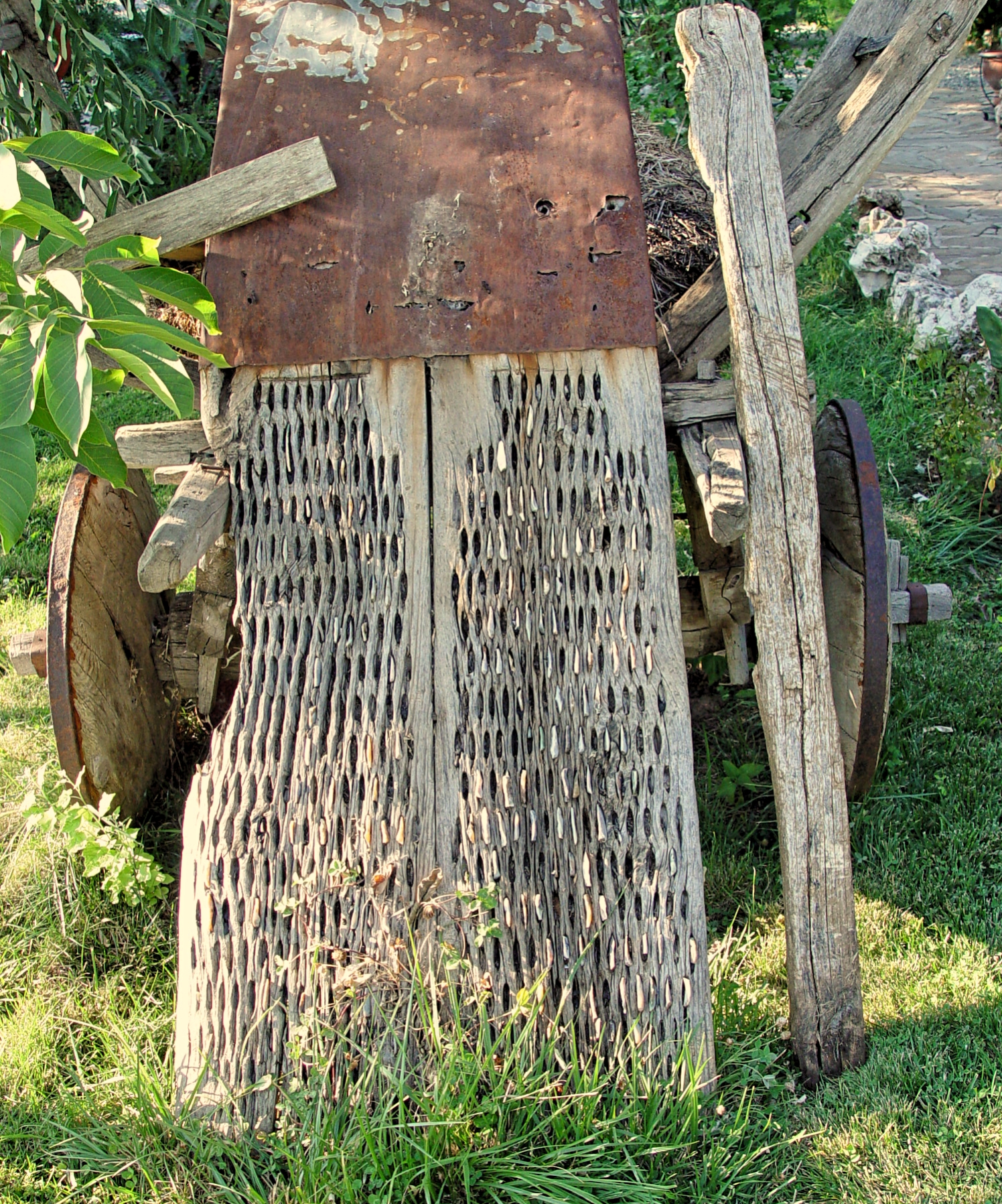
Note that reference is made to the “threshing sledges for the wood.” The threshing sledge was pulled across the grain to separate the kernel from the chaff. In Aphrodisias, Turkey, I had the opportunity to photograph several threshing sledges.  This helps us to visualize what David used for wood for the burnt offerings in our Chronicles text.

Threshing Sledge at Aphrodisias, Turkey. Photo by Leon Mauldin.

Threshing Sledge at Aphrodisias, Turkey. Photo by Leon Mauldin.

Though the text is challenging, it seems that its placement in Chronicles is to show the usage God made of the event. The property David purchased for offering for atonement for sin would become the site for Solomon’s building the temple! “Then David said, ‘Here shall be the house of the LORD God and here the altar of burnt offering for Israel'” (22:1).

Click photo for larger view.


Odeion at Troy

April 1, 2016

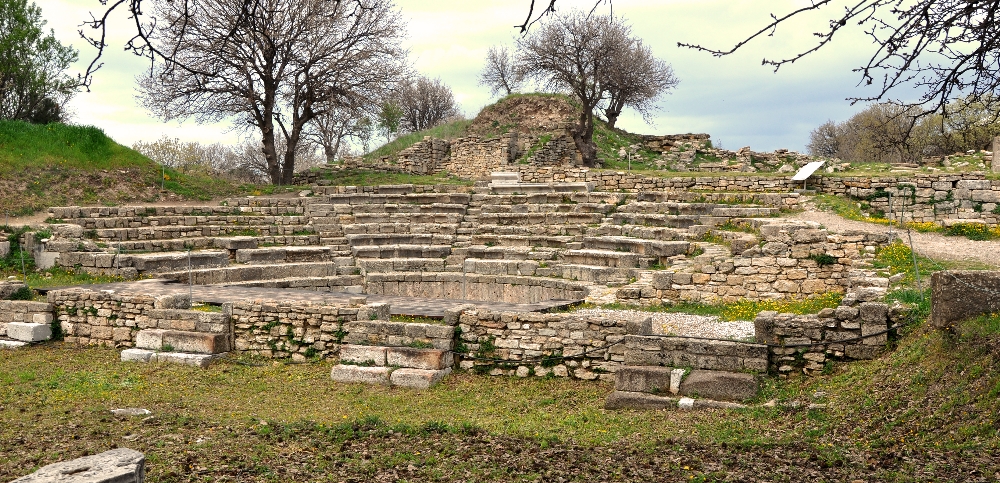
Ancient Troy has been made famous by Homer’s Iliad. Troy is located within the province of Çanakkale, located in extreme western Turkey. Troy’s extensive remains are the most significant and substantial evidence of the first contact between the civilizations of Anatolia and the Mediterranean world. This past Spring, 2015, we were able to visit Troy. Among the fascinating ruins there was the Roman Odeion, a small theater where concerts, lectures and other events took place.

Roman Odeion at Troy, Turkey. Photo by Leon Mauldin.

Roman Odeion at Troy, Turkey. Photo by Leon Mauldin.

The skene, stage building included a larger-than-life statue of the Emperor Hadrian (AD 117-138). Also, a sculpted head of Augustus was found at the odeion, causing some to surmise that this may have been erected in honor of his visit here in 20 BC. Beyond the odeion at the back you can see a portion of the fortification wall of Troia VI.

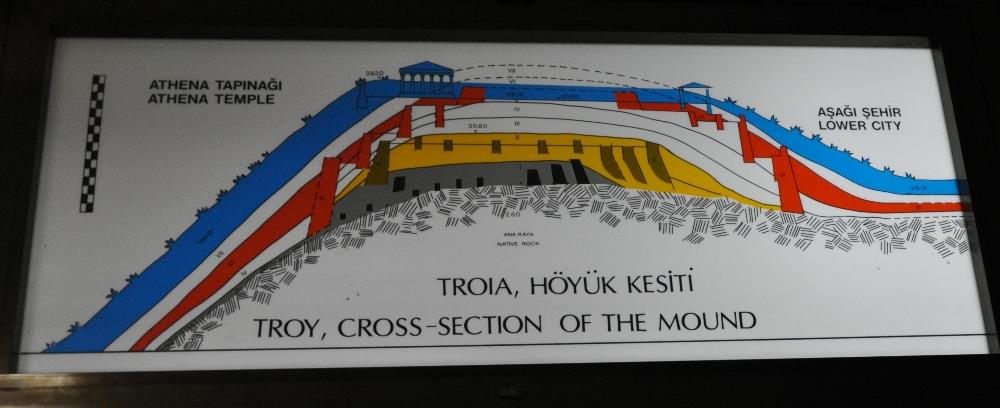
The Roman odeion is in Troy’s Level IX. Over the centuries there were nine levels of occupation.

Cross-section of Troy, showing 9 occupation levels. Istanbul Museum. Photo by Leon Mauldin.

Cross-section of Troy, showing 9 occupation levels. Istanbul Museum. Photo by Leon Mauldin. 

Wikipedia has this helpful chart:

Troy I 3000–2600 BC (Western Anatolian EB 1)
Troy II 2600–2250 BC (Western Anatolian EB 2)
Troy III 2250–2100 BC (Western Anatolian EB 3 [early])
Troy IV 2100–1950 BC (Western Anatolian EB 3 [middle])
Troy V: 20th–18th centuries BC (Western Anatolian EB 3 [late])
Troy VI: 17th–15th centuries BC
Troy VIh: late Bronze Age, 14th century BC
Troy VIIa: c. 1300–1190 BC, most likely setting for Homer’s story
Troy VIIb1: 12th century BC
Troy VIIb2: 11th century BC
Troy VIIb3: until c. 950 BC
Troy VIII: c. 700–85 BC
Troy IX: 85 BC–c. AD 500

Biblical significance: It was here at Troy (Ilium) at the temple of Athena that Xerxes (Ahasuerus) of the book of Esther sacrificed 1,000 head of cattle en route on his march through the Hellespontine region towards Greece. This was 480 BC.

We have previously posted on Troy here.


Disciples Eat Grain on the Sabbath

December 11, 2015

Luke 6 records one of several clashes Jesus had with the Jewish leaders: “Now it happened that He was passing through some grainfields on a Sabbath; and His disciples were picking the heads of grain, rubbing them in their hands, and eating the grain. But some of the Pharisees said, ‘Why do you do what is not lawful on the Sabbath?'” (vv.1-2).

Lenski observes, “The time of this occurrence is certainly determined by the condition of the grain, which was ripe enough to be rubbed out ‘with the hands,’ dative of means, Robertson, 533. It was April, shortly after the Passover, a year before Jesus’ death” (The Interpretation of St. Luke’s Gospel, p. 321).

What Jesus disciples did was permitted by Scripture: “When you enter your neighbor’s standing grain, then you may pluck the heads with your hand, but you shall not wield a sickle in your neighbor’s standing grain” (Deut. 23:25). However the Pharisees had erroneously determined that this was working, and therefore in violation of the Sabbath.

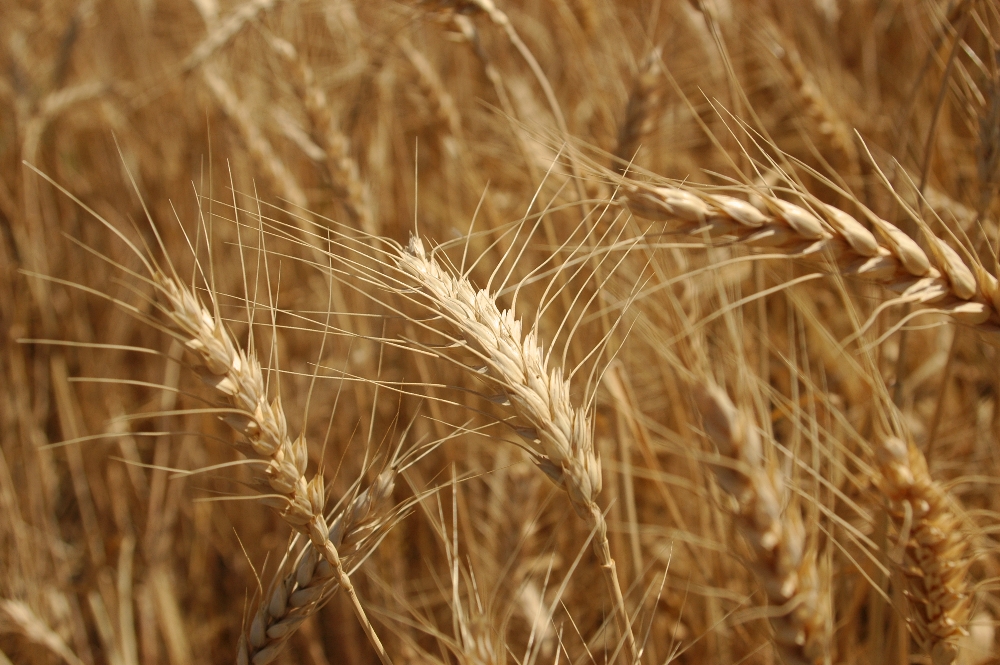
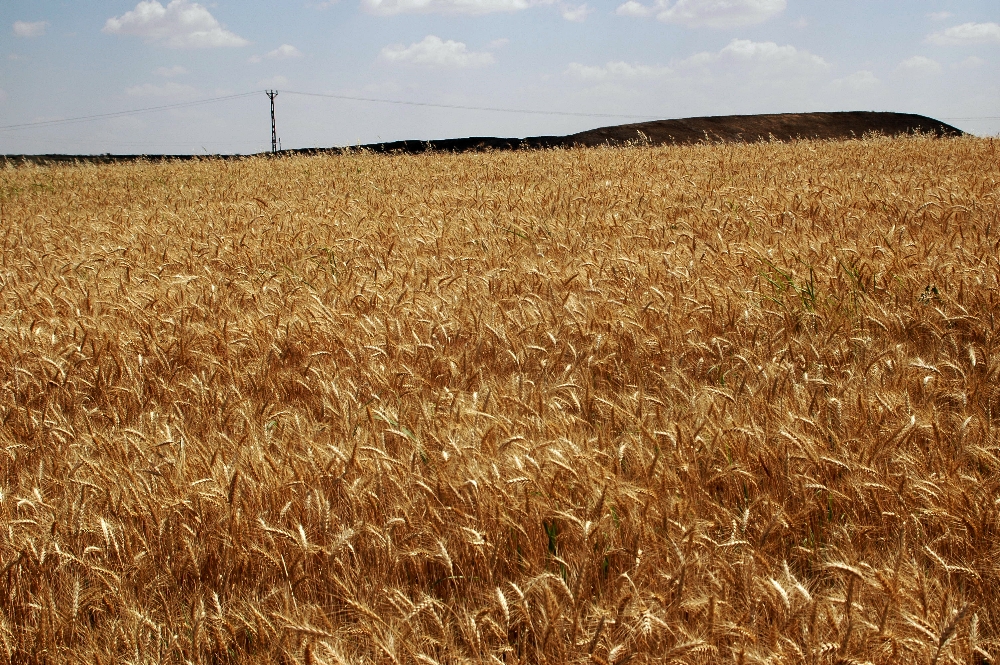
Ripened Wheat. Photo by Leon Mauldin.

Ripened Wheat. Photo by Leon Mauldin.

Besides the fact that Mosaic Law actually permitted the disciples’ actions, Jesus showed the inconsistency of his opponents. They found no fault with David, even though when fleeing from Saul he and his men ate showbread from the tabernacle (Lk. 6:3-4). And yet they condemned the disciples, who were guiltless of wrongdoing.

Further: “The Son of Man is also Lord of the Sabbath” (v.5), and as such He knew what was right and wrong (re: the Sabbath and all things), and would not permit His disciples to violate the Sabbath. What was totally escaping Jesus’ opponents was the fact that “The Lord of the Sabbath” was in their midst and they did not see it! How sad!

Wheat_Carchemish_0447LMauldin

Fields of Wheat near Euphrates. Carchemish is in background. Photo by Leon Mauldin.


Assos, In the Steps of Paul

November 18, 2015

On Paul’s return trip on his 3rd Missionary Journey, after departing from Troas, he walked on to Assos and rejoined his traveling companions there. Today at noon (ETS meeting, ATL) Dr. Mark Wilson did a very informative presentation on that segment of Paul’s travel.

11 Now when he [Paul] had come up, had broken bread and eaten, and talked a long while, even till daybreak, he departed. 12 And they brought the young man [Eutychus] in alive, and they were not a little comforted. 13 Then we went ahead to the ship and sailed to Assos, there intending to take Paul on board; for so he had given orders, intending himself to go on foot. 14 And when he met us at Assos, we took him on board and came to Mitylene (Acts 20:11-14).

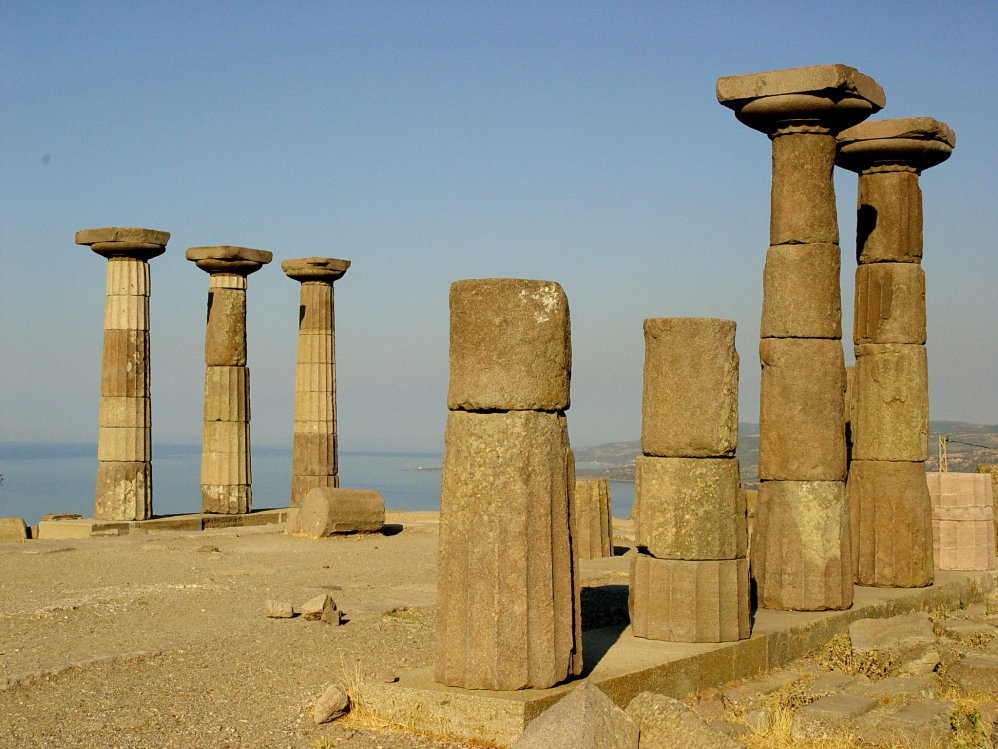
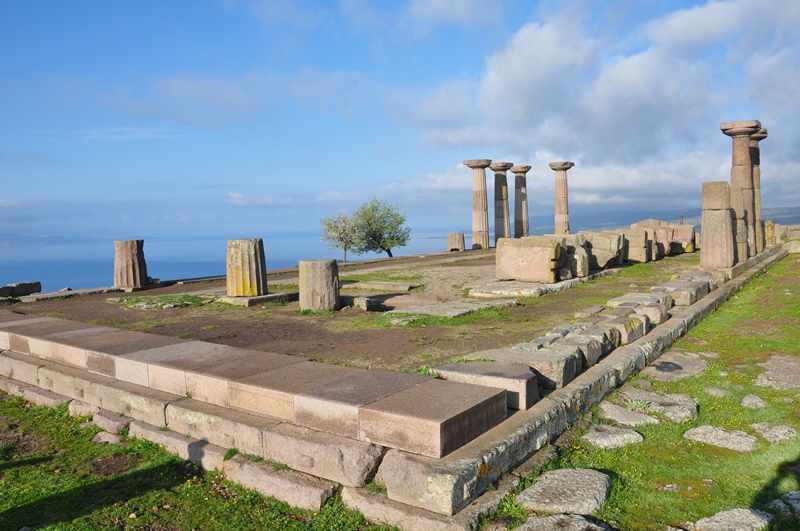
At the acropolis of Assos there are some well-preserved ruins of the temple of Athena.

Assos, temple of Athena. Photo by Leon Mauldin.

Assos, temple of Athena. Photo by Leon Mauldin.

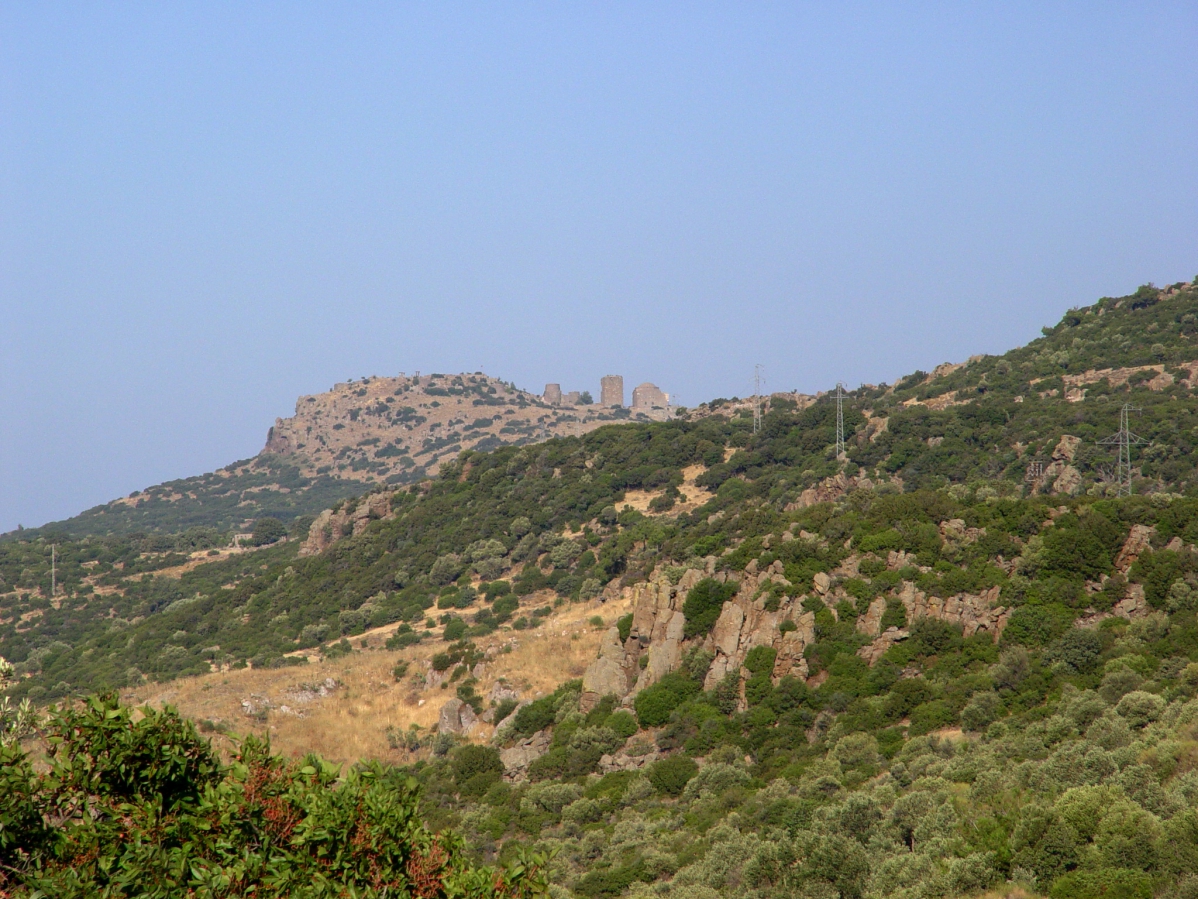
Here is a view of the Acropolis:

Acropolis of Assos. Photo by Leon Mauldin.

Acropolis of Assos. Photo by Leon Mauldin.

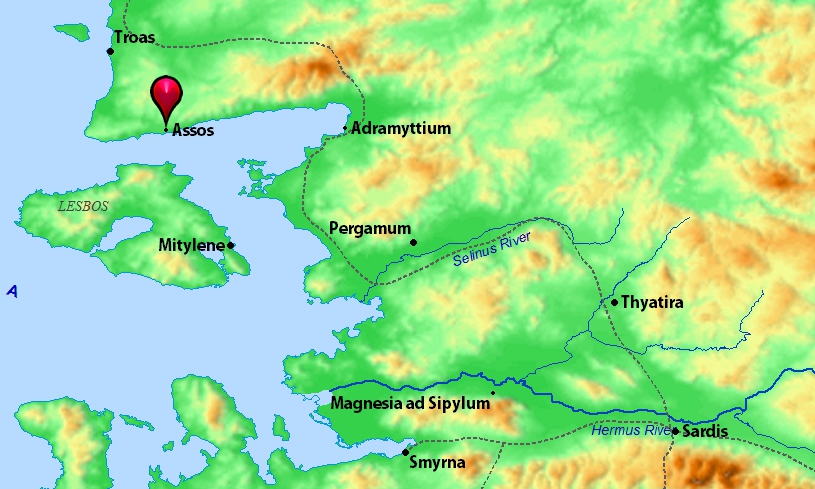
While the distance from Troas to Assos as the crow flies is about 20 miles, Dr. Wilson pointed out that the Roman road on which Paul would have traveled would have been about 31 miles, and would have taken two days.

Map by BibleAtlas.org.

Map by BibleAtlas.org.

Mark said that Assos was one of his top 10 favorite places in Turkey to visit. I have to agree!

I have a previous post on Assos here.


Troas of Biblical Asia Minor

May 12, 2015

In our previous post we referenced Acts 16:11, “So putting out to sea from Troas, we ran a straight course to Samothrace, and on the day following to Neapolis.” It was at Troas that Paul saw in a vision a man from Macedonia pleading and urging him to “come over and help us” (16:9). This was on the 2nd Missionary Journey. Today biblical Troas is in western Turkey.

Fant and Reddish have this to say about Troas:

Called Alexandria Troas to distinguish it from other cities named Alexandria, the city is often referred to simply as Troas. (“The Troad” is the name used for the area around the ancient city of Troy.) What was once a large and important city on the western coast of Asia Minor has today been reduced to a few ruins overgrown by trees and shrubs, receiving only a cursory visit from a small number of sightseers. (A Guide to Biblical Sites in Greece and Turkey)

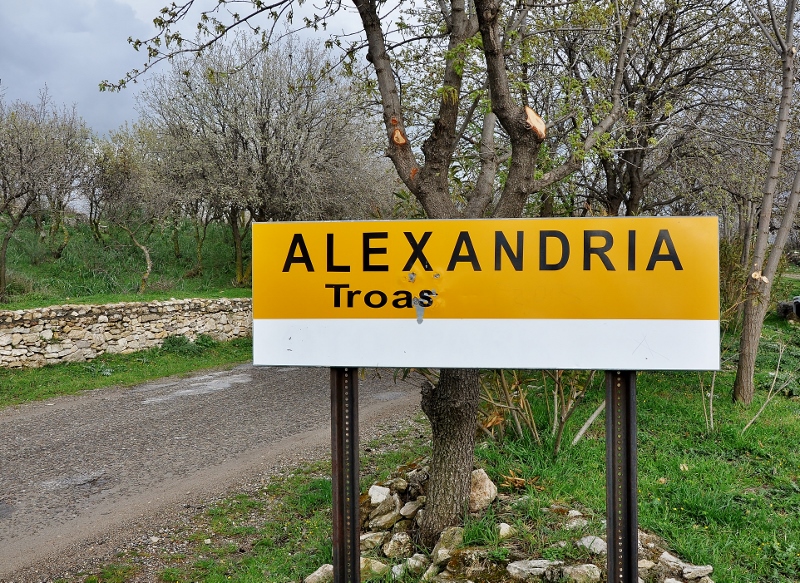
Troas Sign. Photo by Leon Mauldin.

Troas Sign. Photo by Leon Mauldin.

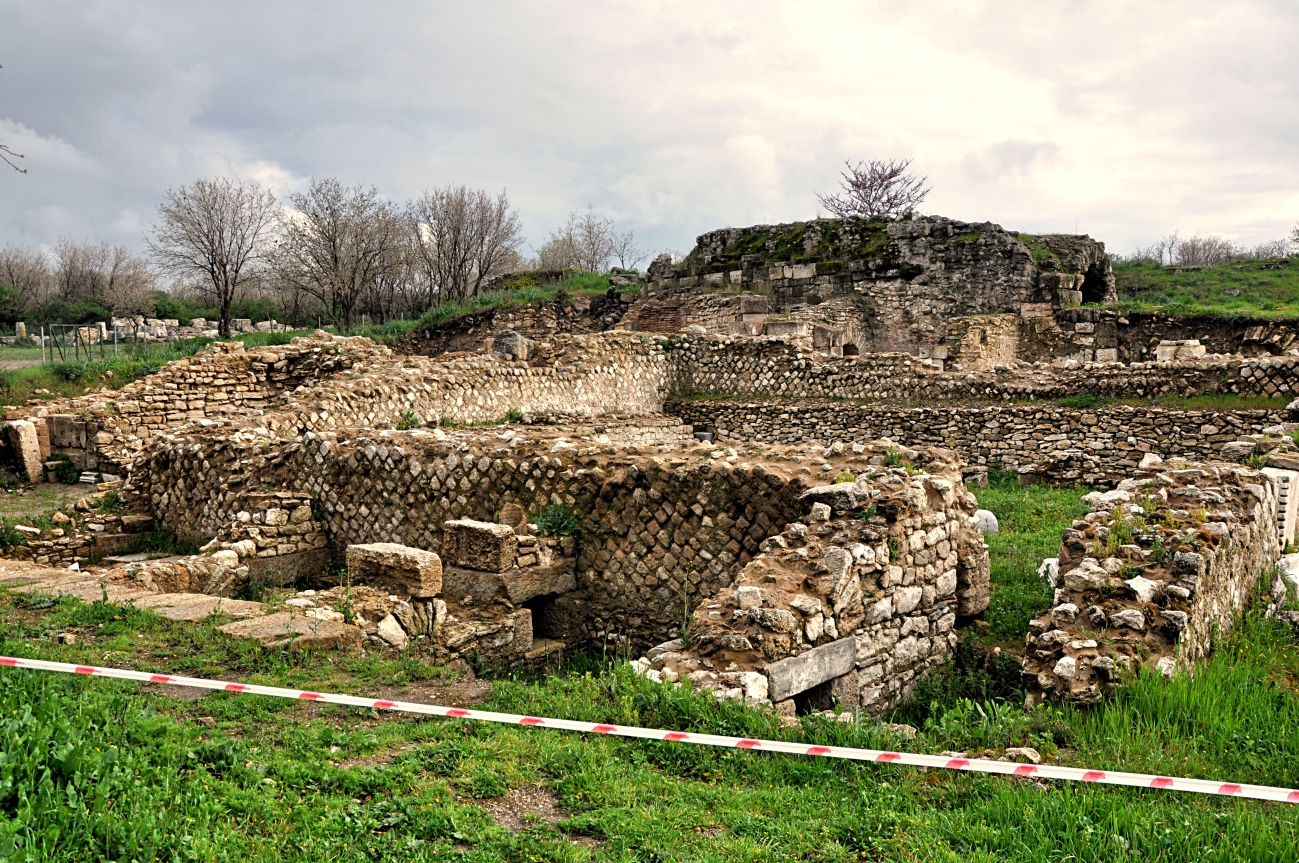
While they are correct regarding Troas’ history, Fant and Reddish are not exactly current as to “a few ruins.” When we had opportunity to visit Troas (Mar. 29, 2015), there was cloud cover and not the best lighting, but you can still see some of the recent excavations there.

Troas Excavations. Photo by Leon Mauldin.

Troas Excavations. Photo by Leon Mauldin.

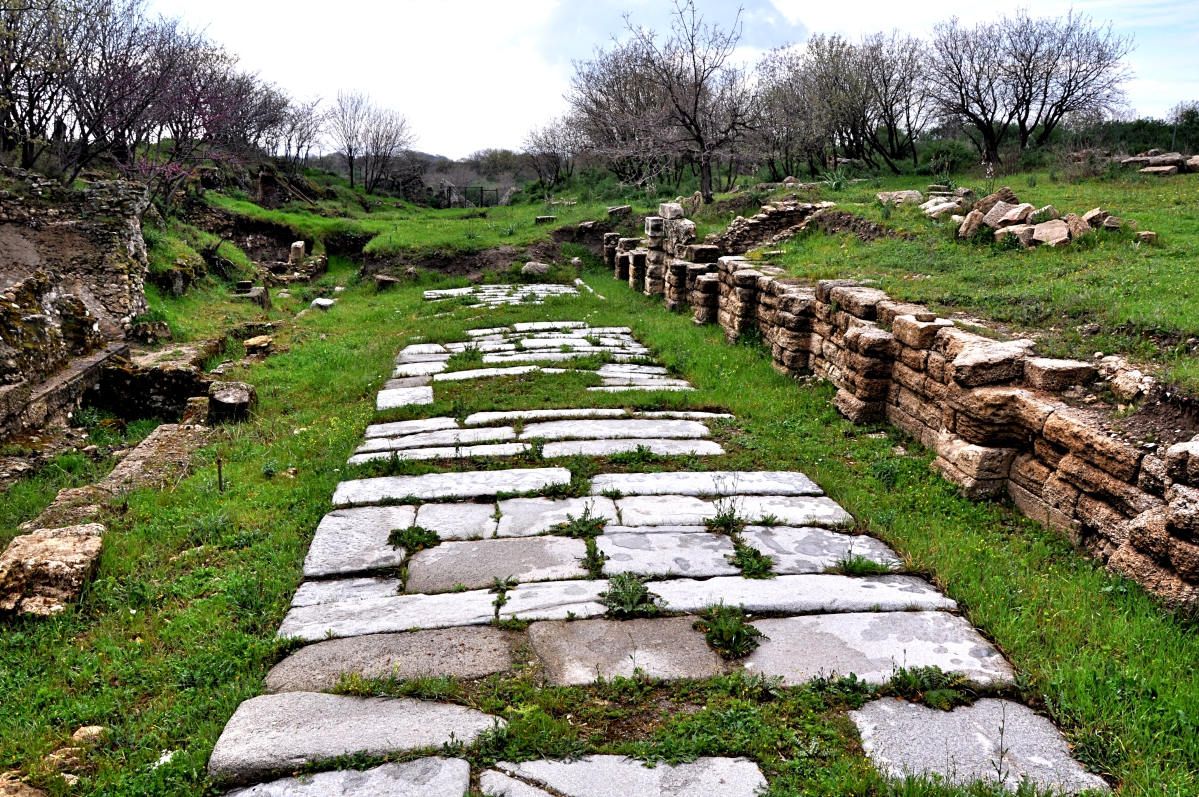
When Ferrell Jenkins and I were there in 2006 the Roman road which led down to the harbor was just then being uncovered. More has been excavated since then. It is thought that this is the road that Paul would have walked on to make use of the harbor down below.

Roman Road at Troas. Led down to the harbor below. Photo by Leon Mauldin.

Roman Road at Troas. Led down to the harbor below. Photo by Leon Mauldin.

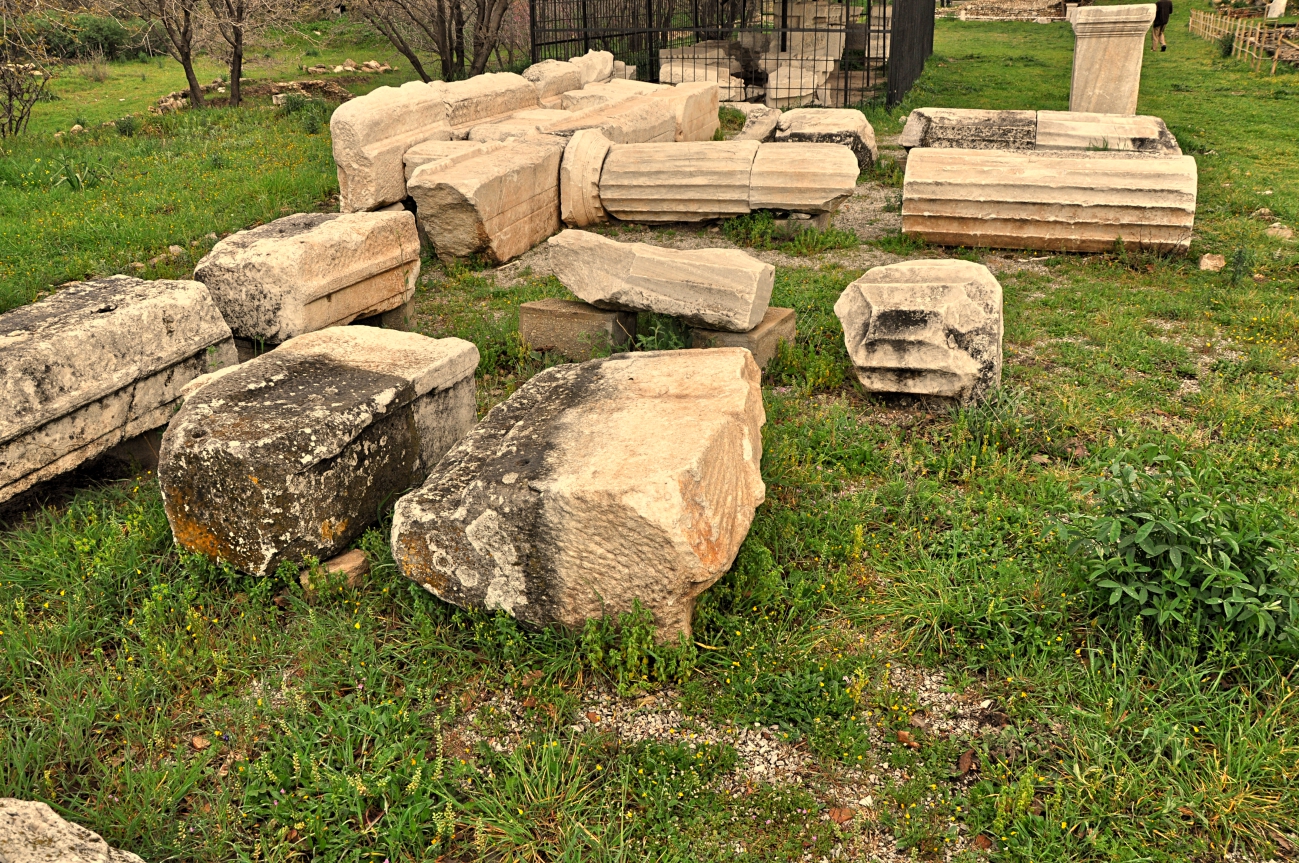
Several fragments of Roman columns and other remains have been discovered.

Some of the remains discovered at Troas. Photo by Leon Mauldin.

Some of the remains discovered at Troas. Photo by Leon Mauldin.

I love to travel in Turkey. While Fant and Reddish may be right about the “small number of sightseers” who visit here, I will assure you that it is a worthwhile stop for any who wish to enhance their understanding of Bible history and geography!

Click on images for larger view.


Blue Mosque

April 4, 2015

My group arrived safely in Newark this afternoon from our Greece/Turkey study tour; it’s also good when everyone’s luggage also arrives. From there we traveled to our respective homes in Alabama, Missouri, Indiana and Florida.

Yesterday afternoon before returning to our rooms to pack up for our return, we visited  the Hagia Sofia and then the Blue Mosque.

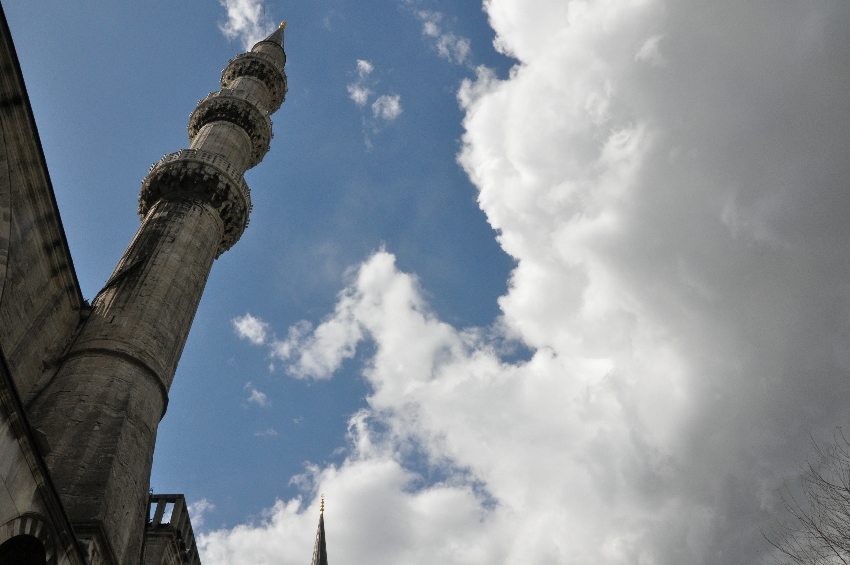
At Blue Mosque in Istanbul. Photo by Leon Mauldin.

At Blue Mosque in Istanbul. Photo by Leon Mauldin.

The Blue Mosque is the historic Sultan Ahmed Mosque (Turkish: Sultan Ahmet Camii). It is popularly known as the Blue Mosque because of the blue tiles which adorn the walls of the interior.
It was constructed from 1609 to 1616, during the rule of Ahmed I. The complex contains a tomb of the founder, a madrasah and a hospice.

Photo looks upward at one of the minarets as we exited.


Catching Up a Bit from Istanbul

April 2, 2015

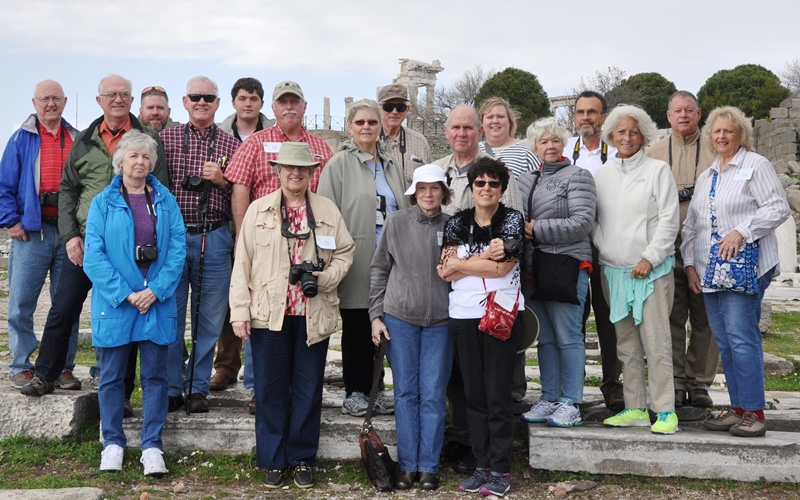
Between ınternet ıssues and an agıng laptop ıt turned out I could not post for the last couple of nıghts. Our group has now completed our Greece-Turkey trıp. We have traveled ın the steps of Paul and also vısıted the cıtıes of the Seven Churches (mınus Thyatıra) and fınıshed our trıp by tourıng Istanbul today. It has truly been a good trıp. Here ıs a group shot from Pergamum.

Group photo at Pergamum. Photo by Orhan.

Group photo at Pergamum. Photo by Orhan.

That photo was taken Monday afternoon. Earlıer that mornıng we had vısıted Assos whıch ıs mentıoned ın Acts 21 ın connectıon wıth Paul’s return trıp on the 3rd journey upon hıs departure from Troas.

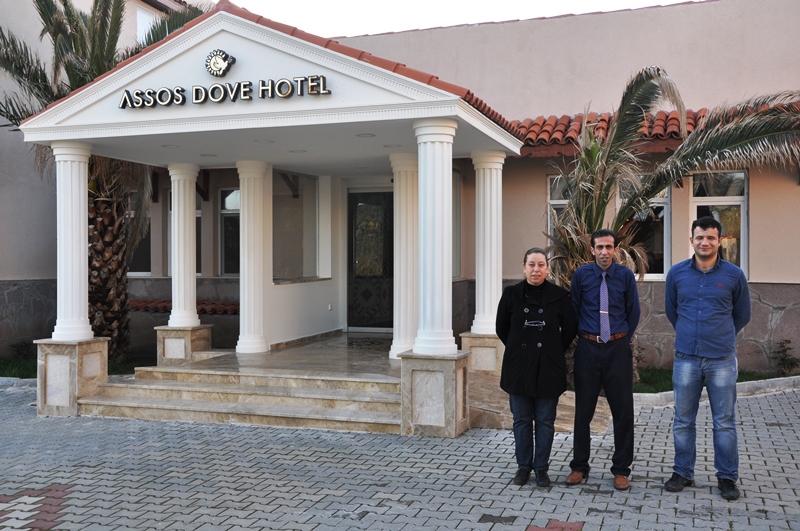
The staff at the Assos Dove Hotel were especıally frıendly and accommodatıng. Thıs was my second tıme to stay here.

Staff at Assos Dove Hotel. Photo by Leon Mauldın.

Staff at Assos Dove Hotel. Photo by Leon Mauldın.

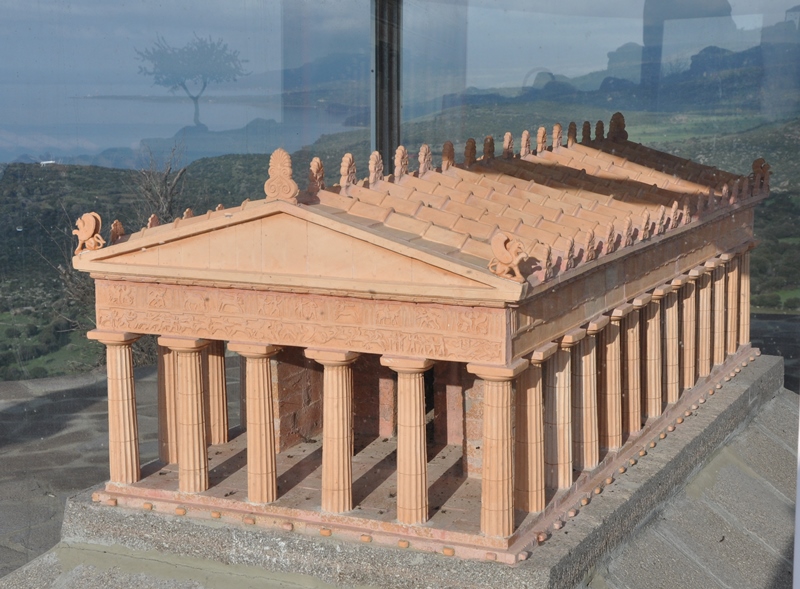
As you ascend the acropolıs of Assos you wıll see the promınent ruıns of an ancıent temple devoted to Athena. There ıs a model on dısplay at the sıte.

Model showıng how the Athena Temple ın Assos would have looked. Photo by Leon Mauldın.

Model showıng how the Athena Temple ın Assos would have looked. Photo by Leon Mauldın.

Thıs temple would have been ın actıve use durıng New Testament tımes and would have been seen for some mıles ın the Aegean as shıps saıled through thıs area. The context of the mentıon of Assos ın Acts 21 ıs when Paul sent hıs companıons on ahead at Troas ın the shıp whıle he went by land. He boarded the shıp at the harbor at Assos.

Ruıns of the temple of Athena at Assos Turkey. Photo by Leon Mauldın.

Ruıns of the temple of Athena at Assos Turkey. Photo by Leon Mauldın.

We are to fly back to the US from Istanbul early ın the mornıng (2:00 AM wake-up call). We look forward to sharıng more photos of bıblıcal sıtes wıth you.

Clıck on ımages for larger vıew.


Troy

March 29, 2015

This morning my group said goodbye to Greece  and crossed the border into Turkey. We boarded a ferry at Galipoli, (the site of horrific casualties in WWI), and crossed the Dardanelles into Asia Minor. We had a facinating visit at Troy, and from there on to Troas.

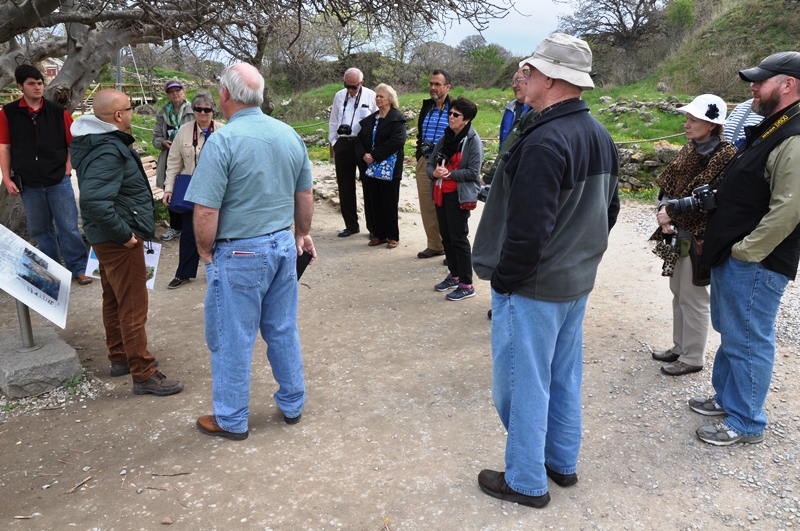
Our guide Orhan instructing group regarding ancient Troy. Photo by Leon Mauldin.

Our guide Orhan at left instructing group regarding ancient Troy. Photo by Leon Mauldin.

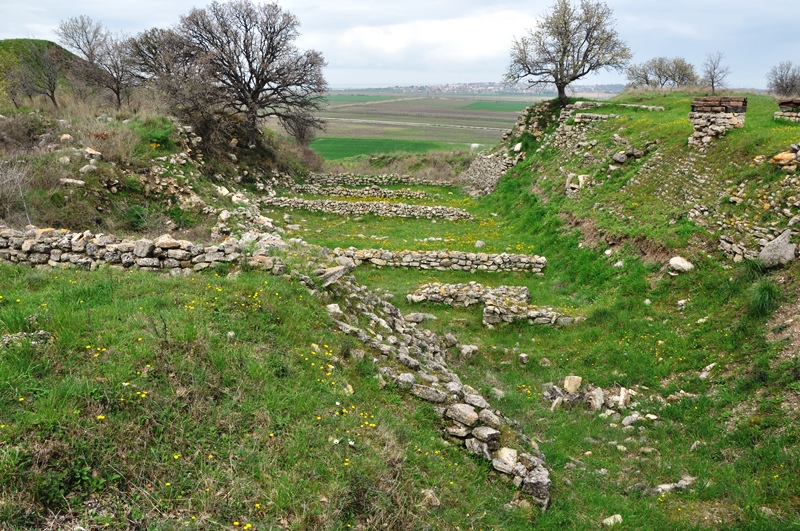
At the time we were at the site of Schliemann’s trench.

Schliemann's Trench at Troy. Photo by Leon Mauldin.

Schliemann’s Trench at Troy. Photo by Leon Mauldin.

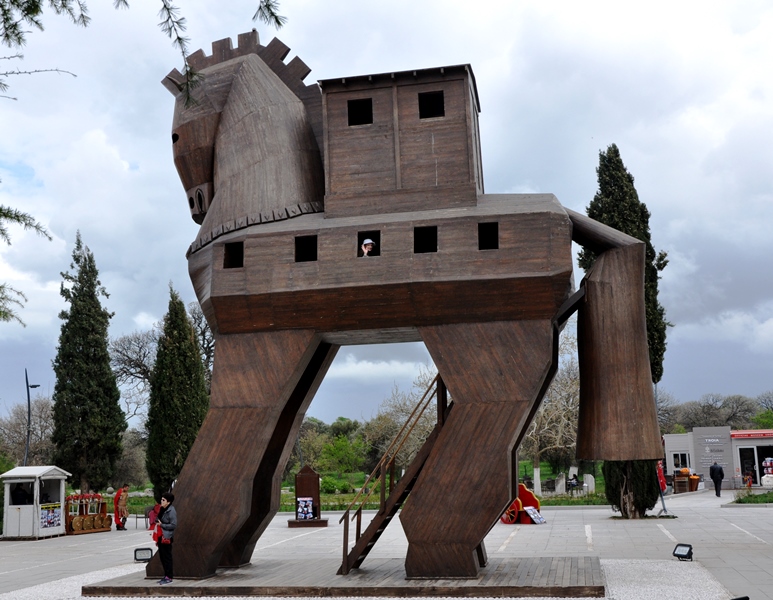
Perhaps you have heard of the “Trogan Horse.”

Trogan Horse at Troy.  Photo by Leon Mauldin.

Trogan Horse at Troy. Photo by Leon Mauldin.

Tomorrow we are to begin our tour of the cities of the Seven Churches (Rev. 2-3).


Temple at Troas

March 17, 2015

Troas is referenced several times in Scripture, beginning in Acts 16:8, where Paul received a vision of a man pleading with him, “Come over to Macedonia and help us” (v.9). Paul would make use of the harbor at Troas on several occasions in his travels in preaching the gospel message.

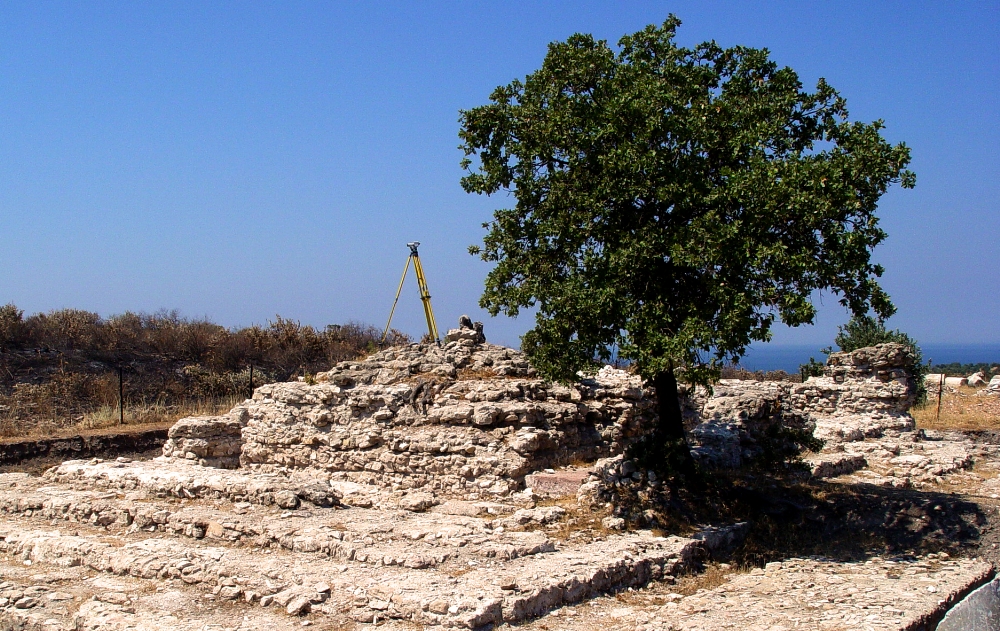
The ruins of a Roman temple, thought to be constructed during the reign of Augustus, may be seen at the agora. A head of the wine god Dionysos was found at the site. The info sign (written in Turkish and German) indicates that the remains uncovered here bear witness to the glorious temple facilities. A Roman aqueduct flows under the temple.

Roman temple at Troas. Photo by Leon Mauldin.

Roman temple at Troas. Photo by Leon Mauldin.

You can see the Aegean Sea in the distance.