The Tigris River is mentioned twice in Scripture. The first time is in the beginning of Creation, as one of the four rivers which defined the Garden of Eden. In Genesis 2:14: “The name of the third river is Tigris; it flows east of Assyria. And the fourth river is the Euphrates” (NASB). The KJV/NKJV transliterates the Hebrew [חִדֶּקֶל] as “Hiddekel.” The Septuagint (LXX) has Τίγρις (from which we get the English: Tigris).
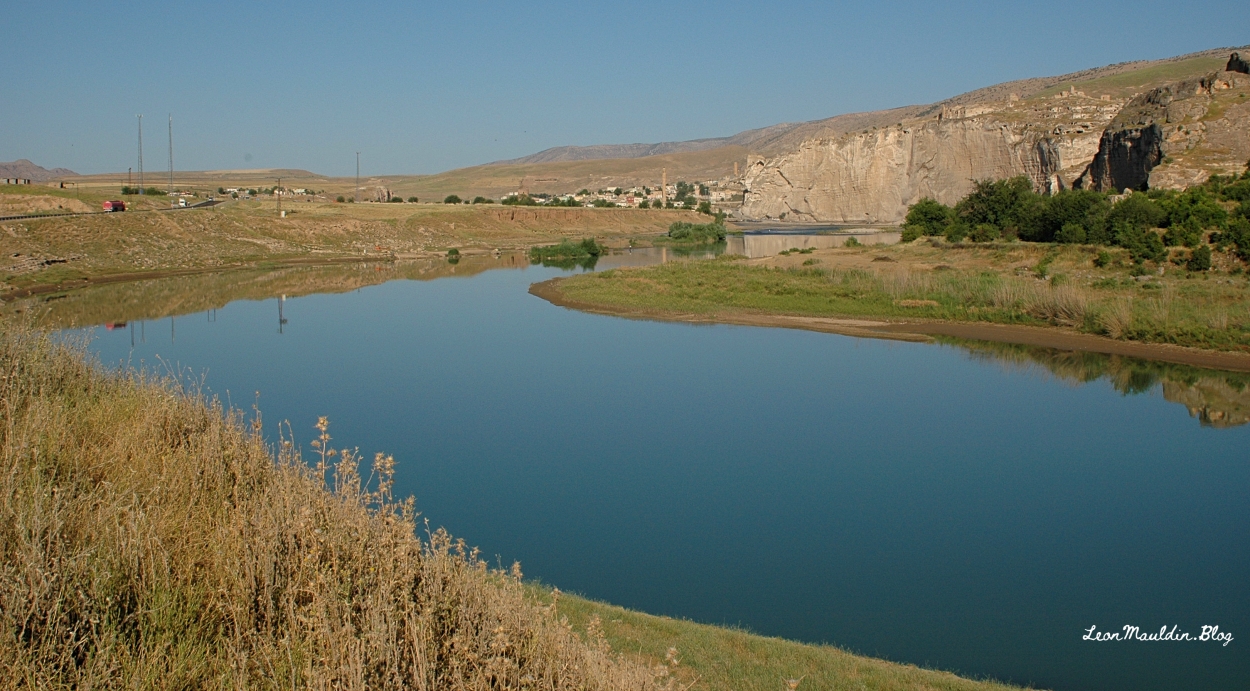
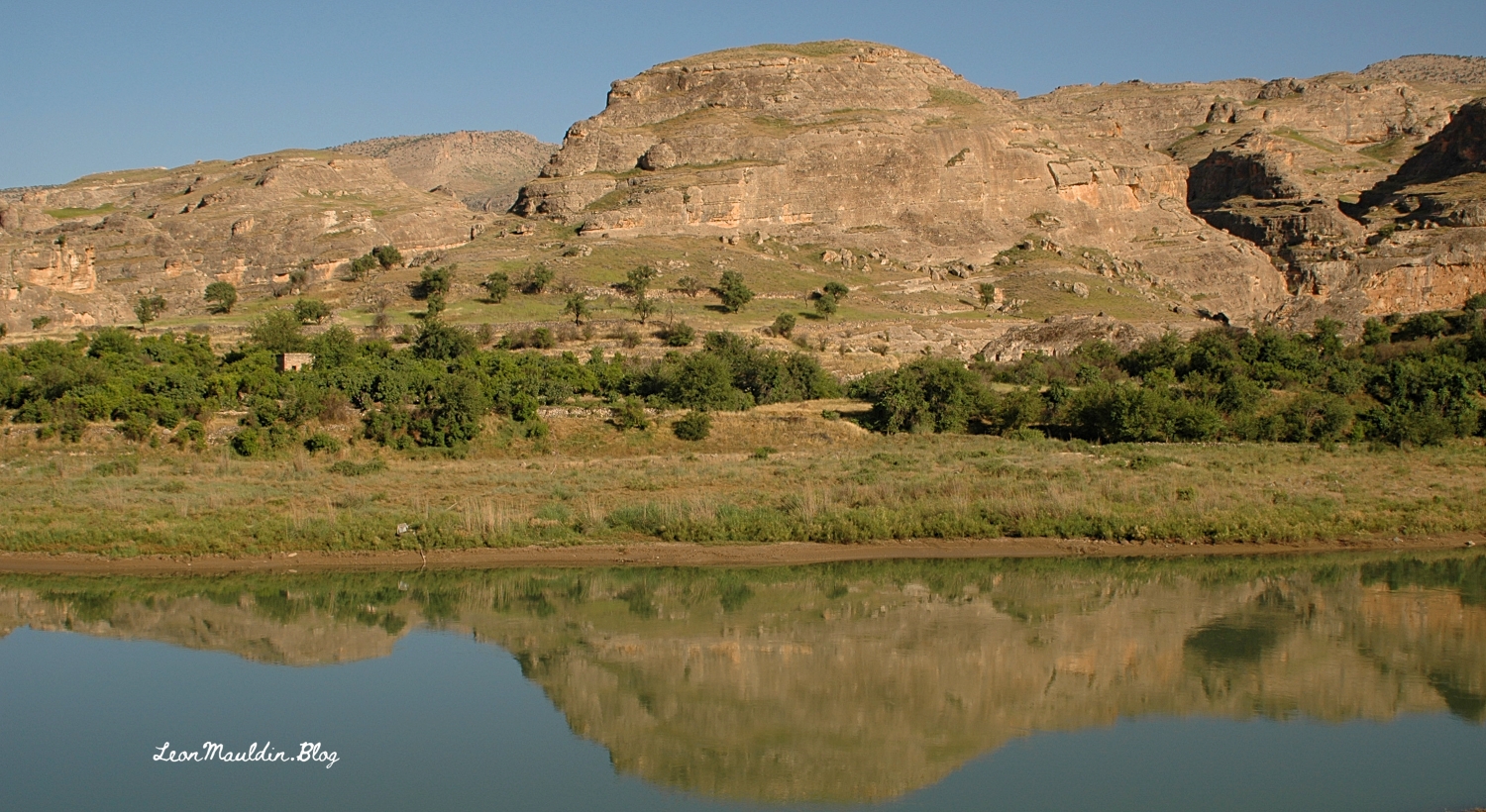
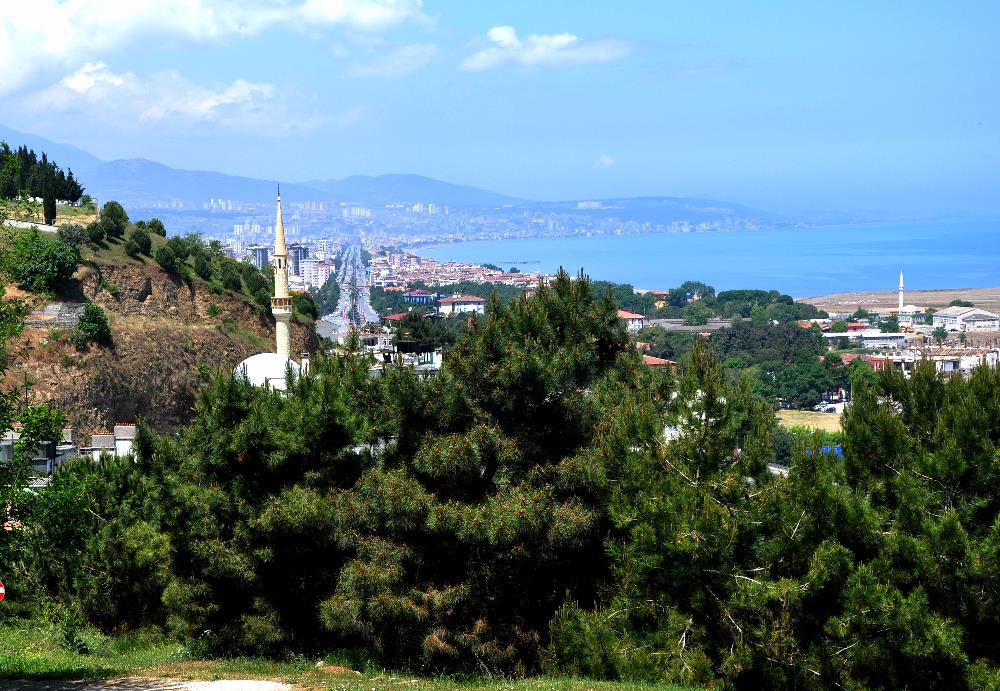
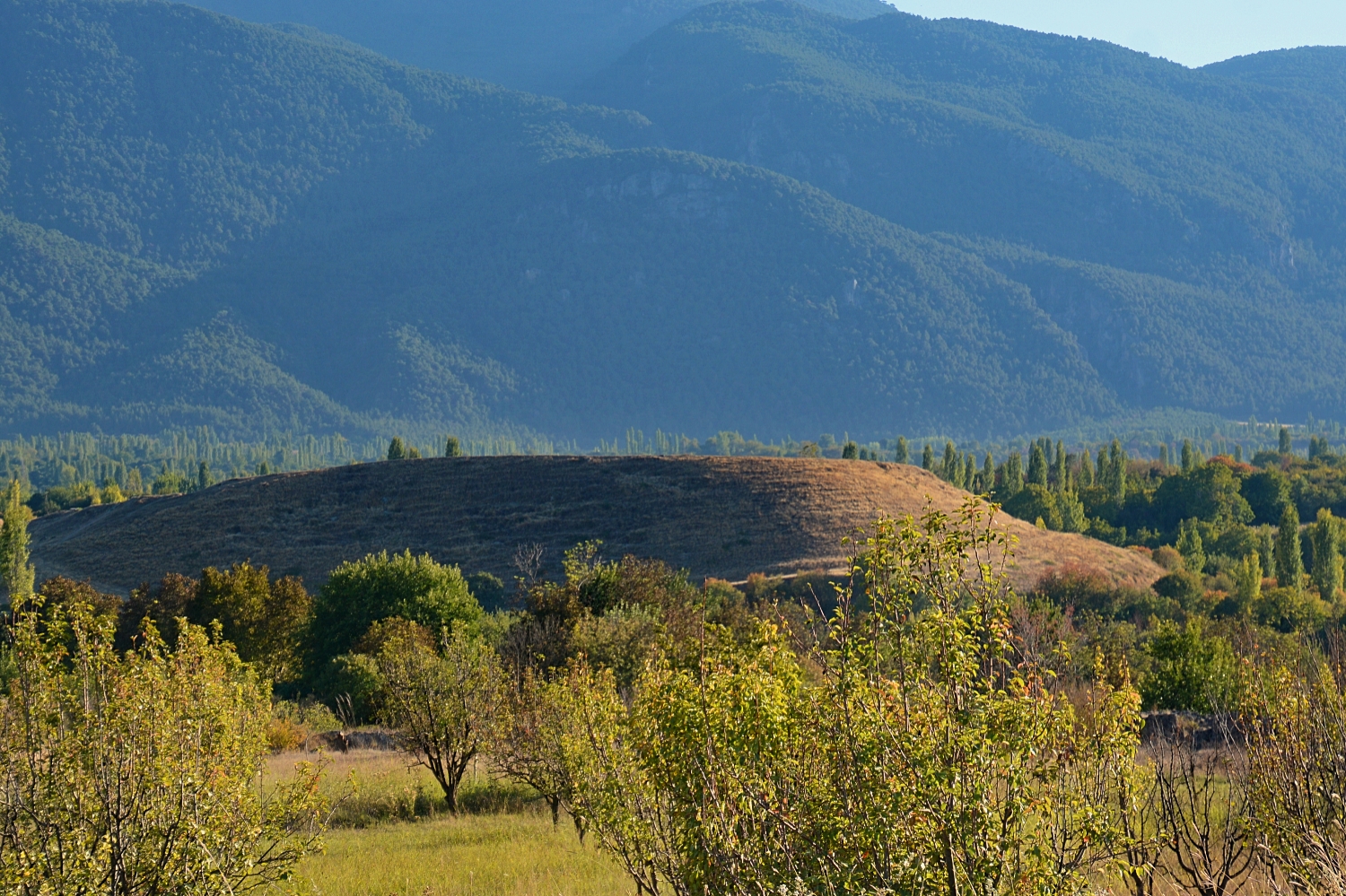
Our photo here is at Hansankeyf, in upper Mesopotamia (which means the land between the rivers: Tigris and Euphrates).
The second mention of the Tigris is found in Daniel 10:4: “On the twenty-fourth day of the first month, while I was by the bank of the great river, that is, the Tigris.” In this vision, it was revealed to Daniel what would transpire, especially during the Intertestamental Period, that historical period following the death of Alexander the Great, and reaching down in time to the Roman Empire. Of special interest was how these events would impact the Jewish people.
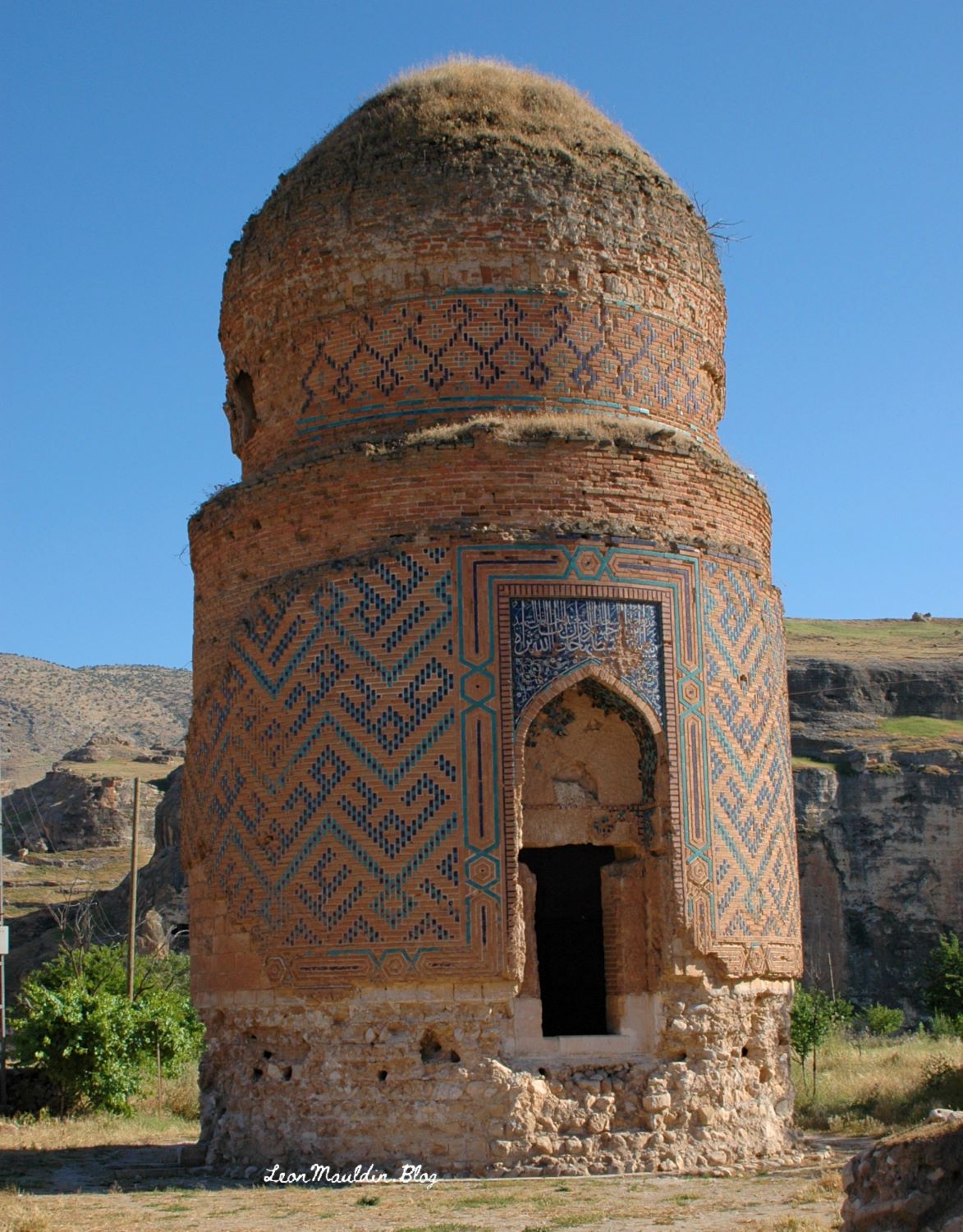
Since these photos were taken the area has been flooded by the Ilısu Dam construction. This photo below shows the Mausoleum of Zeynel Bey, son of Sultan Uzun Hasan of the Aq Qoyunlu dynasty (1378-1508).
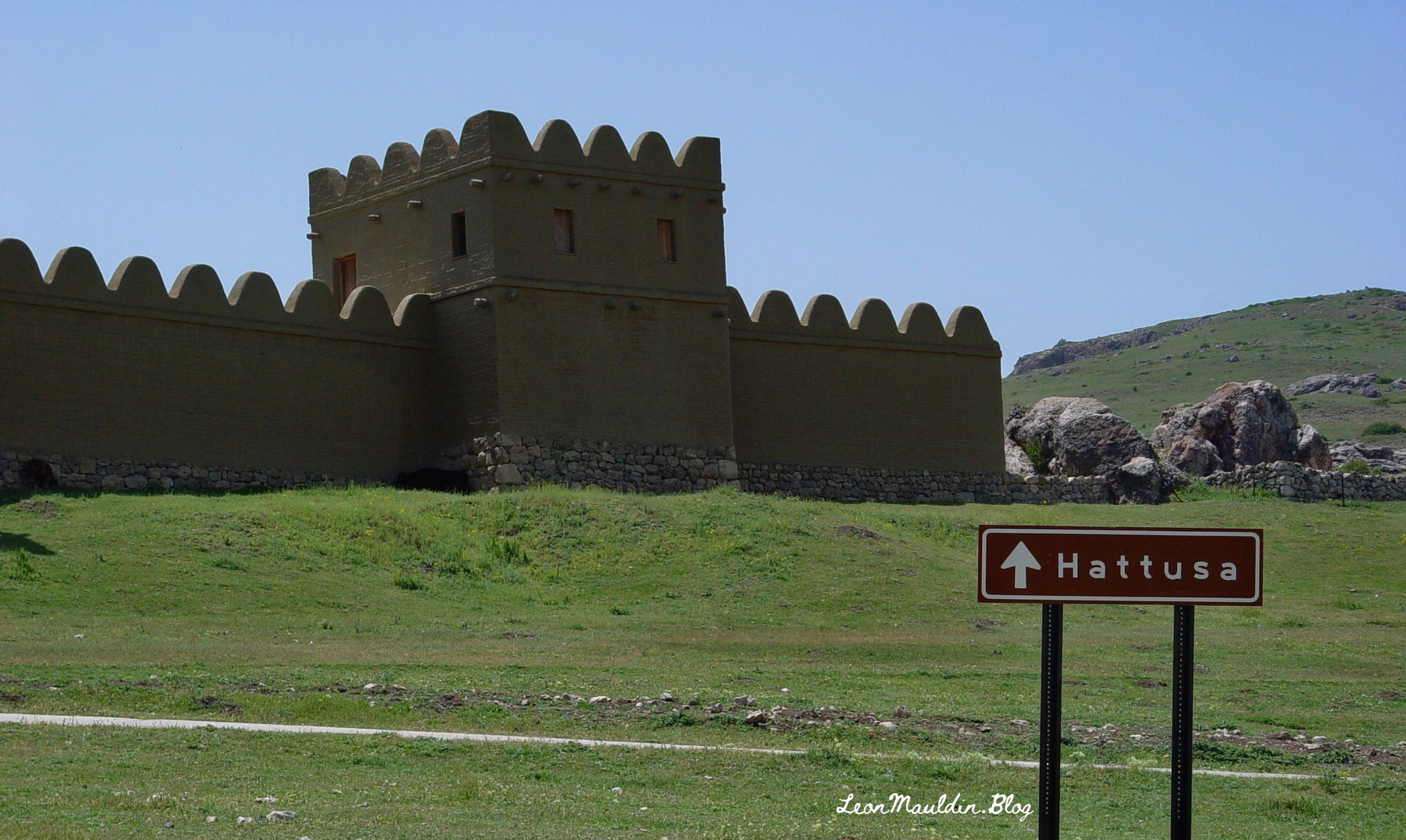
Numerous biblical references are made to the ancient Hittites. Hattuşa was the ancient capital of the Hittite Empire in the Late Bronze Age. Its location is near Boğazkale, Çorum Province, Turkey. One amazing archaeological find is the Lion Gate which features two sculptures of standing lions at the entrance. Previously there would have been an arch above the lions.
Sardis is the fifth of the seven churches addressed by Jesus through the Apostle John, while John was on the Island of Patmos. In summary, Jesus’ assessment of the church there was, “I know your works, that you have a name that you are alive, but you are dead” (Rev. 3:2).
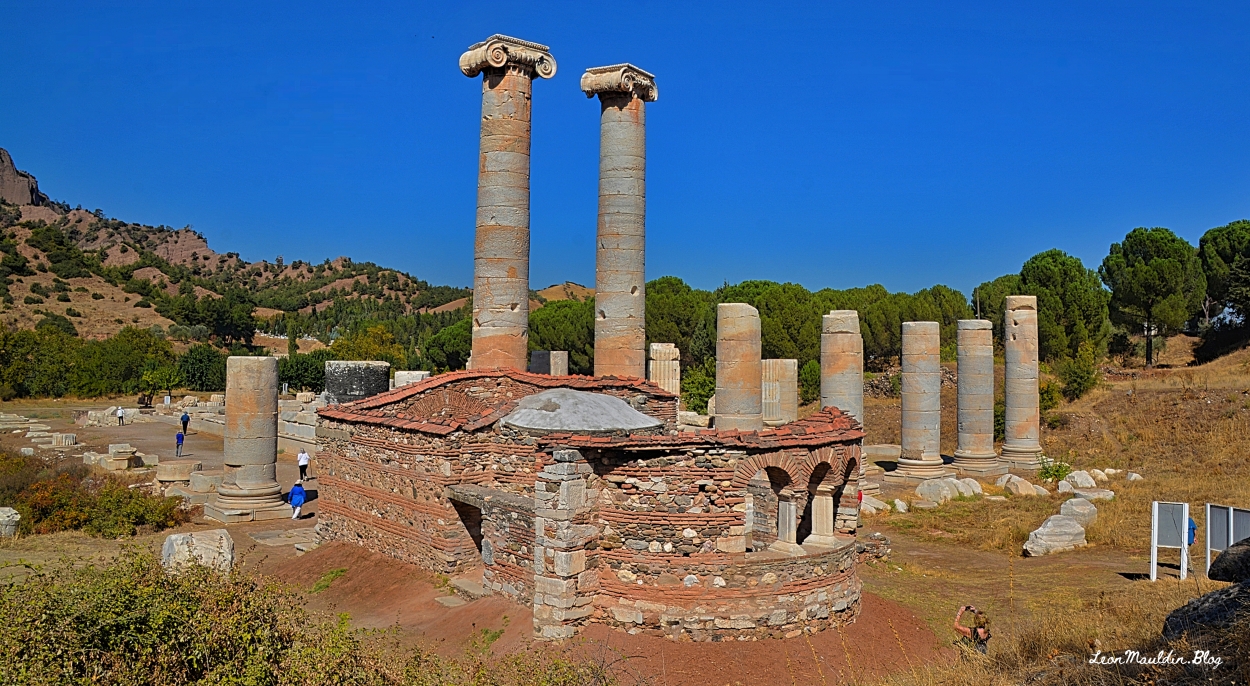
Archaeologists have uncovered and identified many structures and other items of interest at Sardis, including a Byzantine chapel in the southeast corner of the temple of Artemis.
Dr. Mark Wilson writes, “The inner western chapel dates to the 4C [4th century AD] and is one of the earliest preserved churches in western Asia Minor; the larger, outer apse dates to the 6C” (Biblical Turkey, A Guide to the cJewish and Christain sites of Asia Minor, p. 291).
The temple of Artemis, whose partial ruins are in view here, would have been in use when those Christians of the 1st century AD at Sardis received the letter (Rev. 3:1-6). It’s hard to overemphasize how pervasive idolatry was in the biblical world!
We have previously posted several articles on Sardis: click hereherehere and here.
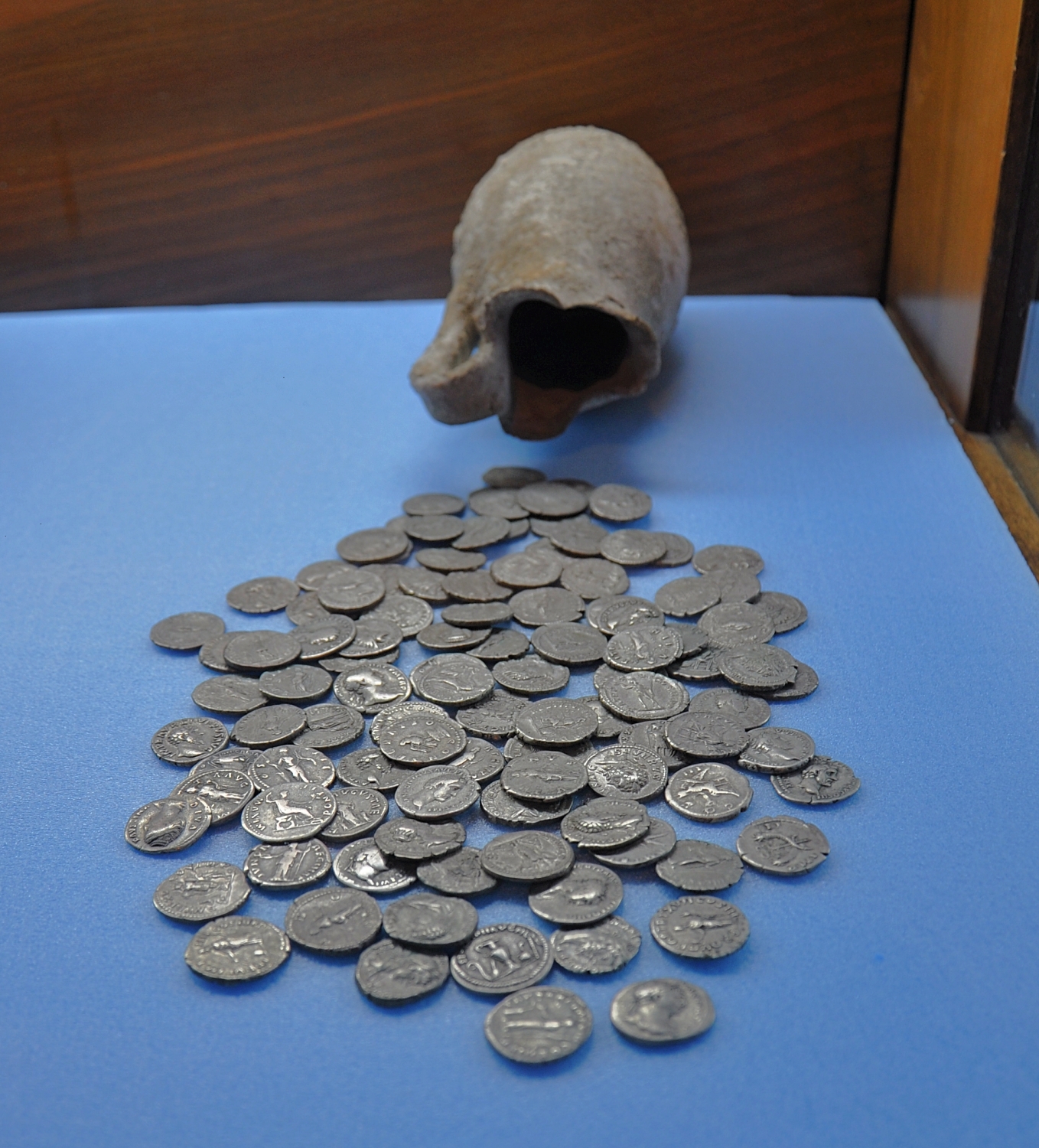
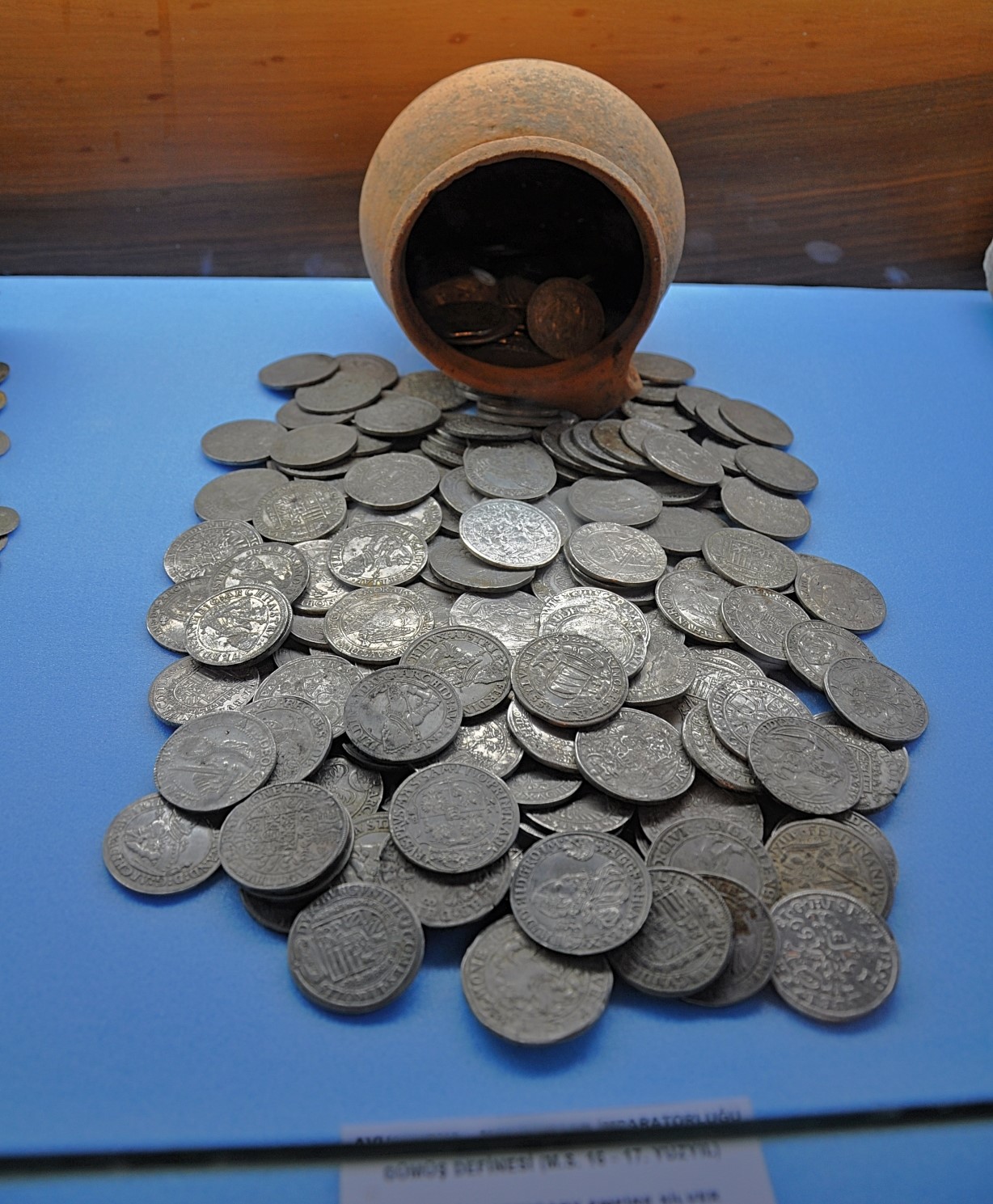
The writer of Hebrews closes with several imperatives, including this admonition in 13:5: “Keep your life free from love of money, and be content with what you have, for he has said, “I will never leave you nor forsake you” (ESV). For comparison: “Make sure that your character is free from the love of money, being content with what you have; for He Himself has said, “I WILL NEVER DESERT YOU, NOR WILL I EVER FORSAKE YOU” (NASB). The NET renders, “Your conduct must be free from the love of money and you must be content with what you have, for he has said, “I will never leave you and I will never abandon you.”
Some years ago, while at Samsun (Biblical Pontus) on the Black Sea, Ferrell Jenkins and I visited the Samsun Archaeology and Ethnography Museum there. Here are some photographs which might be helpful visuals in teaching this biblical text (Heb. 13:5):
One should note that it is not the money that is itself sinful, but the LOVE of money (compare 1 Timothy 6:10).
Also note the Hebrews 13:5 states what “He Himself” (God) has said. What follows is to be the Christian’s response: “So that WE may boldly say, ‘The LORD is my helper; I will not fear, What can man do to me?'” (v.6). This kind of “answering speech” runs throughout scripture: God takes the initiative, He speaks, He reveals Himself, and then there is to be the appropriate repsonse, the answer of faith on the disciple’s part. “Speak, LORD, thy servant heareth” (1 Samuel 3:9).
Pontus is mentioned three times in the New Testament. Jews from Pontus were present in Jerusalem on the Day of Pentecost (Acts 2:9). Aquila, one of Pau’s invaluable helpers, was from Pontus (Acts 18:2). Also the Apostle Peter addressessed Pontus (1 Pet. 1:).
Samsun (Amisus) was a leading city of Pontus. Regarding its biblical significance, Dr. Mark Wilson writes, “Amisus was at the northern terminus of the main road that ran across Asia Minor to Tarsus. Peter’s messenger undoubtedly disembarked at Amisus and initally made his way south along this route” (Biblical Turkey, pp. 334,336). Samsun is located between the deltas of the Kızıl and Yeşil rivers.
We recently began a class study of Paul’s letter “to the saints and faithful brethren in Christ who are of Colossae” (Col. 1:2) in our local congregation. Knowing somewhat of the geographical setting helps one to enter the biblical world as the text is studied.
Colossae (also spelled Colosse) was a city in the Roman province of Asia, located in the Lycus River Valley about 100 miles east of Ephesus. It was situated near the cities of Hierapolis and Laodicea (see map here).
Location of Colossae. Map curtesy of BibleMapper.com.
I took a group to biblical sites in Greece/Turkey this past October, and Colossae was included on our itinerary.
During the Persian period, Colossae was a prosperous city, but by the time of the 1st century, it declined in importance, being eclipsed by Laodicea and Hierapolis. “Though commercially less successful, Colossae continued to be a place of importance in the Roman imperial period, as is shown by an inscription of this time and by second and third century A.D. coins that depict the usual city officials, showing that it had the rights of a city under the Romans” (Mare, W. H. (1976). “Archaeological Prospects at Colossae.” The Near East Archaeological Society Bulletin, 7, 43).
Back in 2006, Ferrell Jenkins and I made a personal study trip that included this site. Here is a photo from that occasion, giving a more distant shot than that above.
Unlike many of the recipients of Paul’s letters, Paul had not personally established the Colossian church, but apparently those who learned the truth of the Gospel during Paul’s stay at Ephesus (Acts 19:10), had taught and converted the Colossians.
Further, a comparative reading of Colossians with the personal letter to Philemon will show that Philemon was a Colossian also, so in reality two of the New Testament books were directed initially to this location.
Both letters were written when Paul was in chains.
Timothy joined Paul in both.
Epaphras, Mark, Aristarchus, Demas & Luke joined in salutations.
Onesimus was one of the messengers by whom Colossians was sent.
Archippus is addressed in both.
Colossae has not been excavated as of yet. Click on photos for larger view.
In our previous post of September 28, I reported that our tour group (of 45 passengers) had arrived safely and were set to begin our Steps of Paul and John Tour. We had a great tour, visiting sites from southern to northern Greece, then crossing the Dardanelles and exploring Troas, Assos, the cities of the Seven Churches, also Colossae and Hierapolis, and finally concluding in Istanbul.
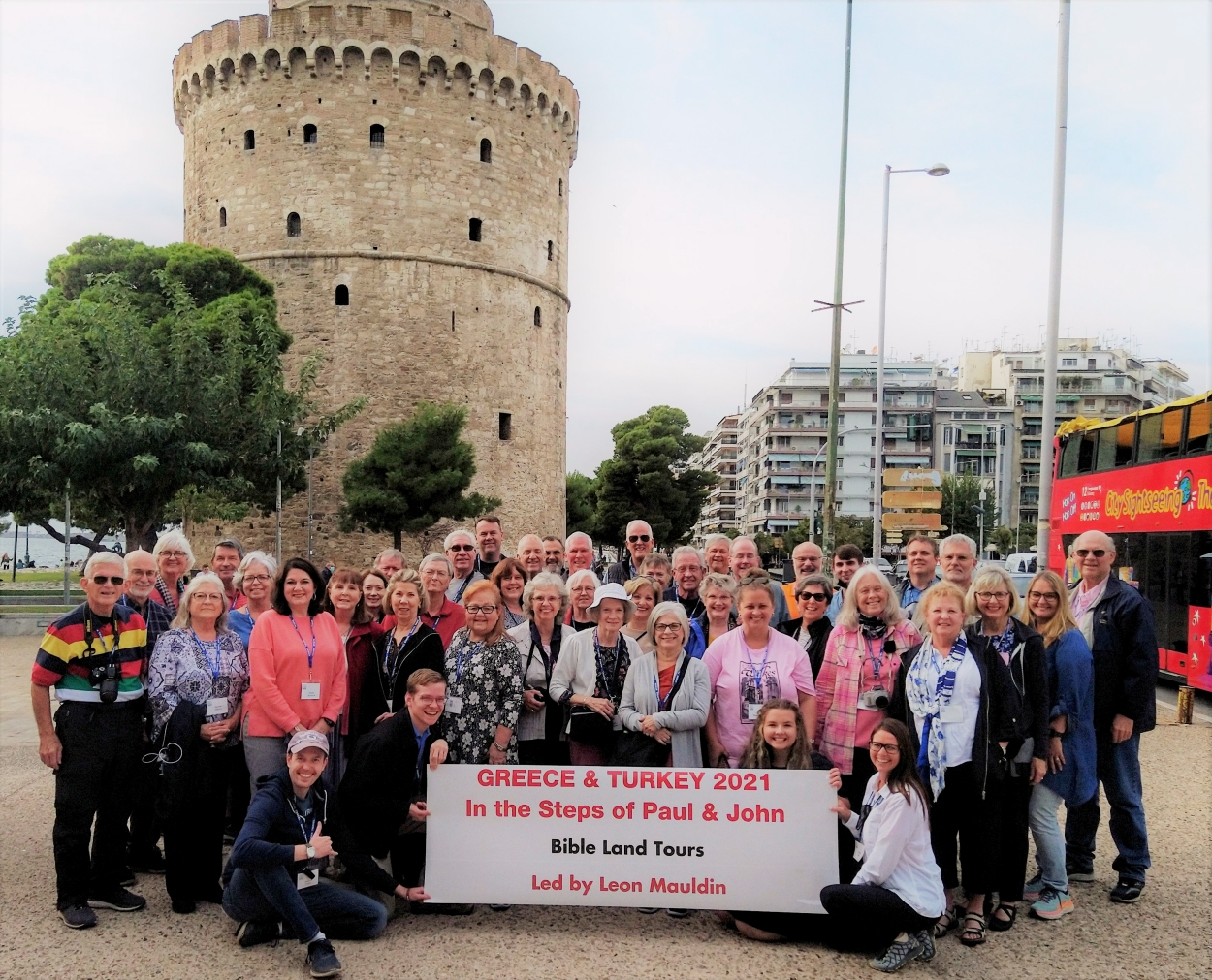
I had intentions of making posts in this blog during the tour, but due to several factors, it turned out to be more workable to use my Facebook account and make posts on my phone. But now that we are back in the states we plan to report on the tour on this site. In upcoming posts I want to begin at Corinth, and basically follow our itinerary with appropriate posts. In this post however, I want to “fast-forward” to Assos, and look at the wonderful Roman road there which we were able to see for the first time. But first, a group photo taken at Thessaloniki, Greece. The famous White Tower is in the background.
Mauldin’s Group at Thessaloniki, Greece. Photo by Maria Psychari.
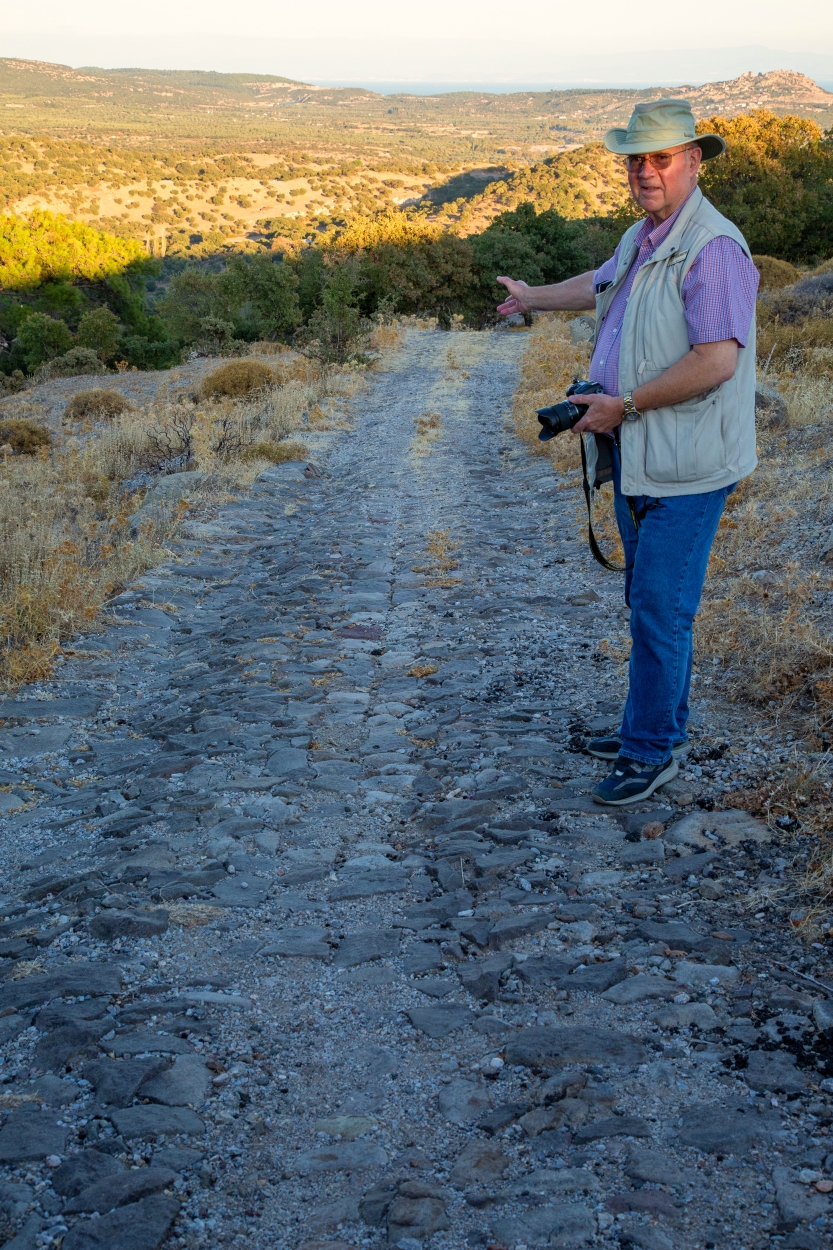
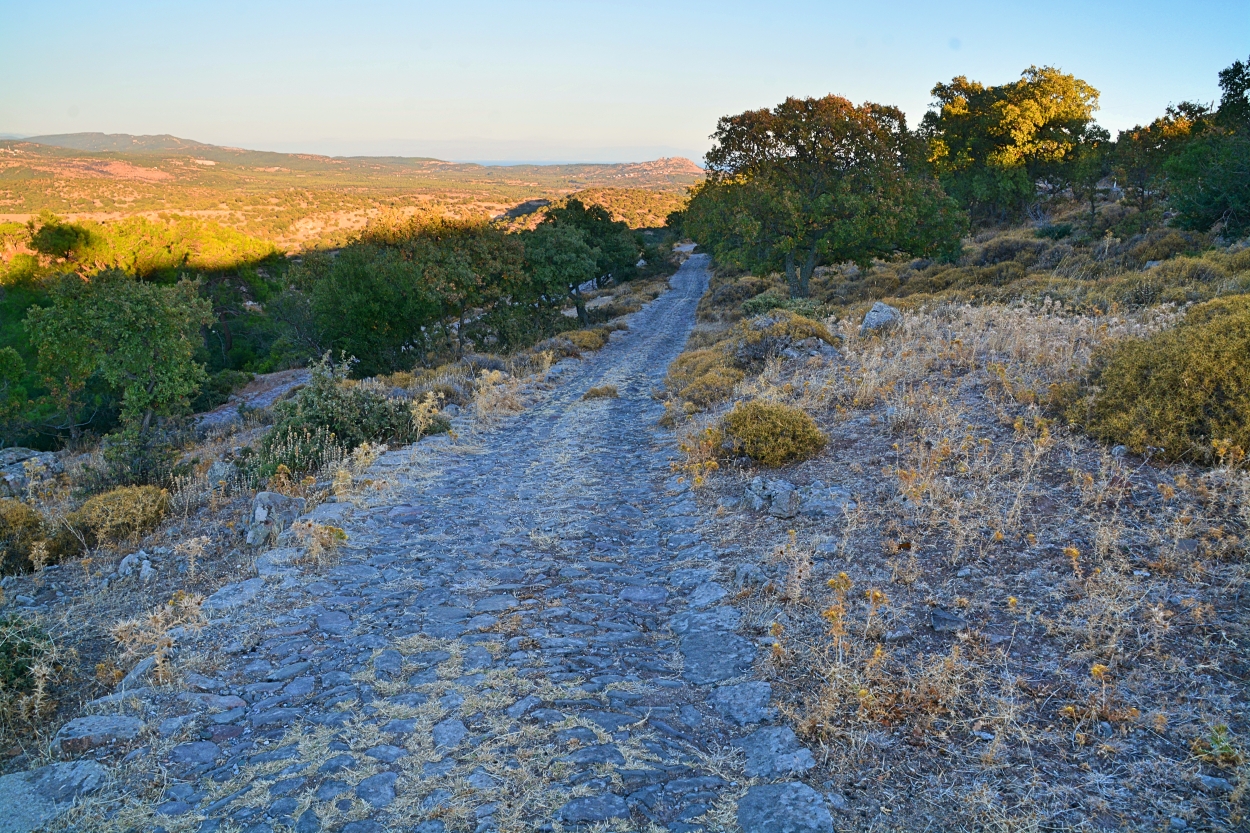
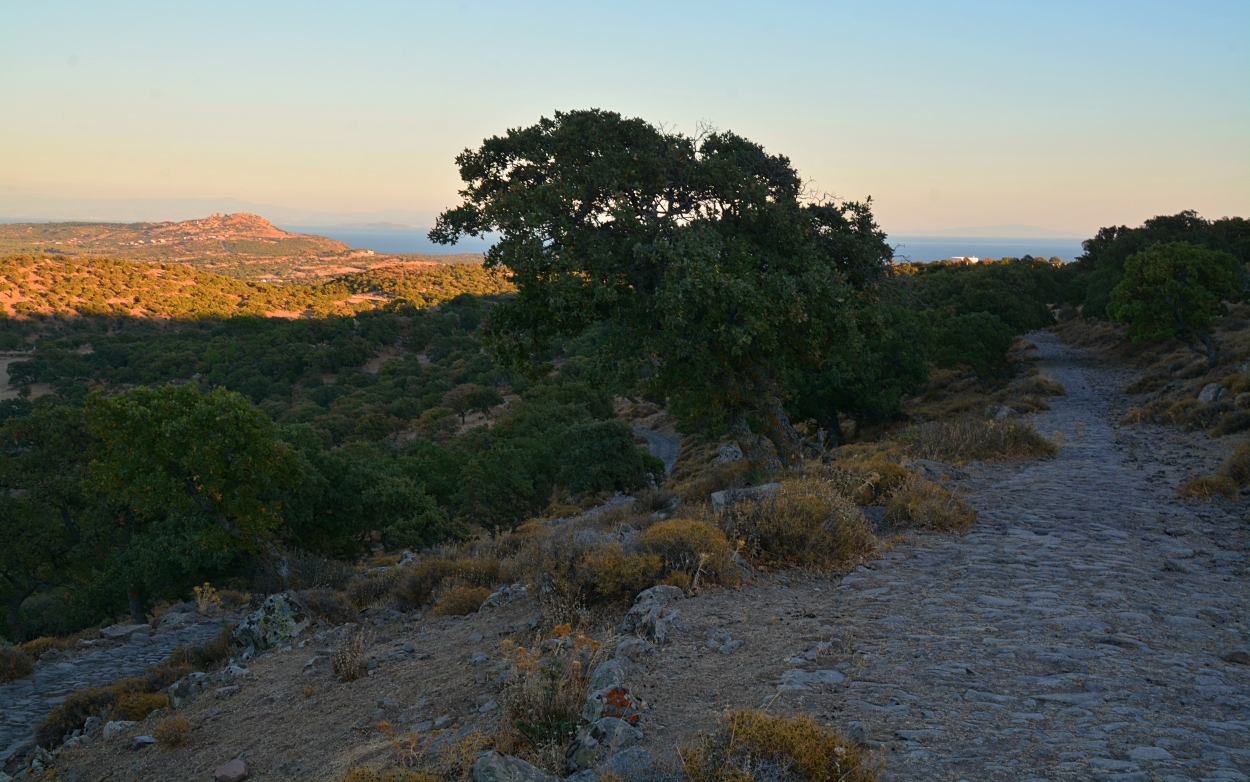
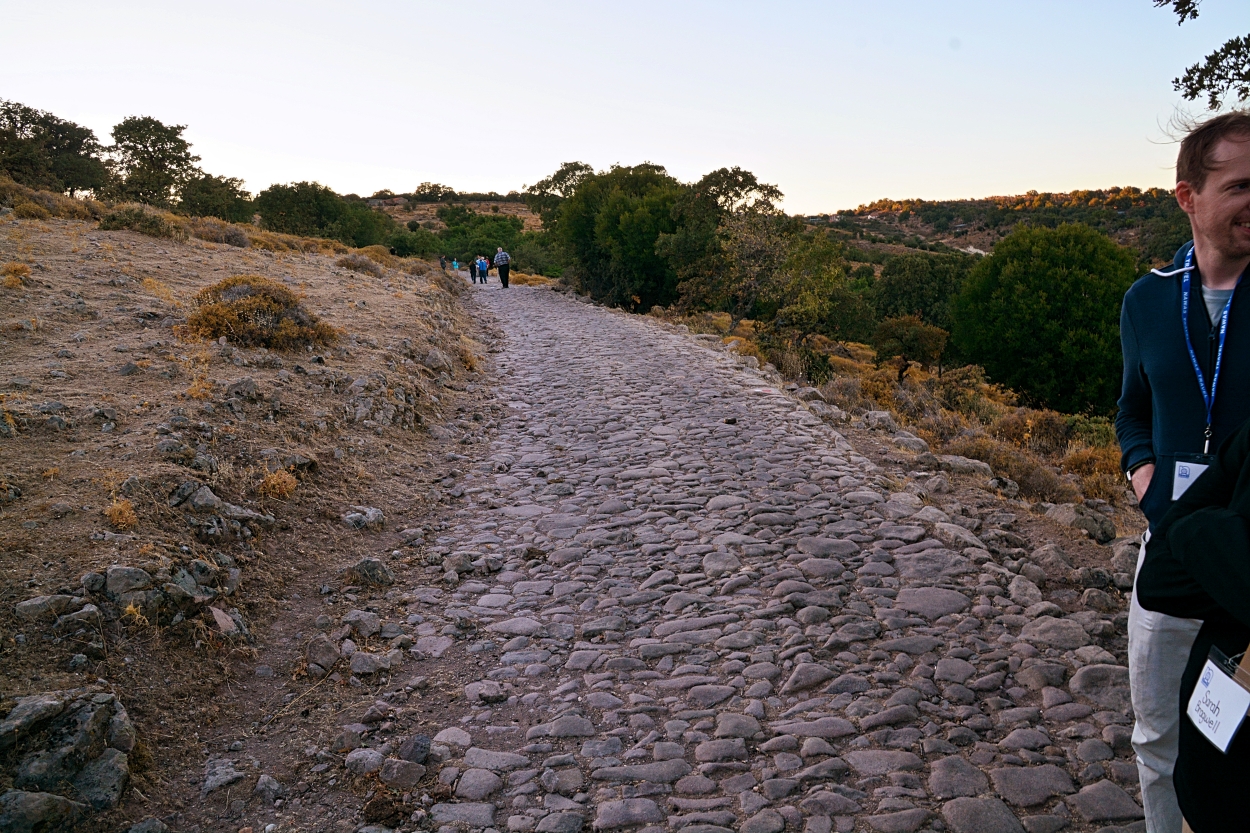
The Road from Troas to Assos.
Assos is only mentioned on one occasion in Scripture. On Paul’s return trip on his 3rd Missionary Journey, after departing from Troas, he walked on to Assos and rejoined his traveling companions there. Paul had preached all night, only stopping at midnight when Eutychus fell from the 3rd floor, and was taken up dead. Paul raised him from the dead. Acts 20 continues the narrative:
11 Now when he [Paul] had come up, had broken bread and eaten, and talked a long while, even till daybreak, he departed. 12 And they brought the young man [Eutychus] in alive, and they were not a little comforted. 13 Then we went ahead to the ship and sailed to Assos, there intending to take Paul on board; for so he had given orders, intending himself to go on foot. 14 And when he met us at Assos, we took him on board and came to Mitylene (Acts 20:11-14).
Paul purposefully traveled overland by himself, and then rejoined his traveling companions on the ship at Assos. The route over land was 31 miles! Luke does not supply the reason why Paul chose to leave the group and travel overland to Assos. A statement Paul made in the larger context of our passage may be helpful: “And see, now I go bound in the spirit to Jerusalem, not knowing the things that will happen to me there, except that the Holy Spirit testifies in every city, saying that chains and tribulations await me” (Acts 20:22-23).
Though not knowing the details, Paul knew that his freedom would soon be taken away, that he was about to enter a period of confinement/imprisonment once he arrived at Jerusalem. On the ship there would be little if any opportunity to be alone. It would seem that those miles on his walk from Troas to Assos furnished time for deep thought and prayer. For sure it would be the final such opportunity before he became “Paul, the Prisoner” (from the point of his arrest in Jerusalem, Acts 21:26ff, until Acts concludes at 28:30-31, Paul will be a prisoner in chains).
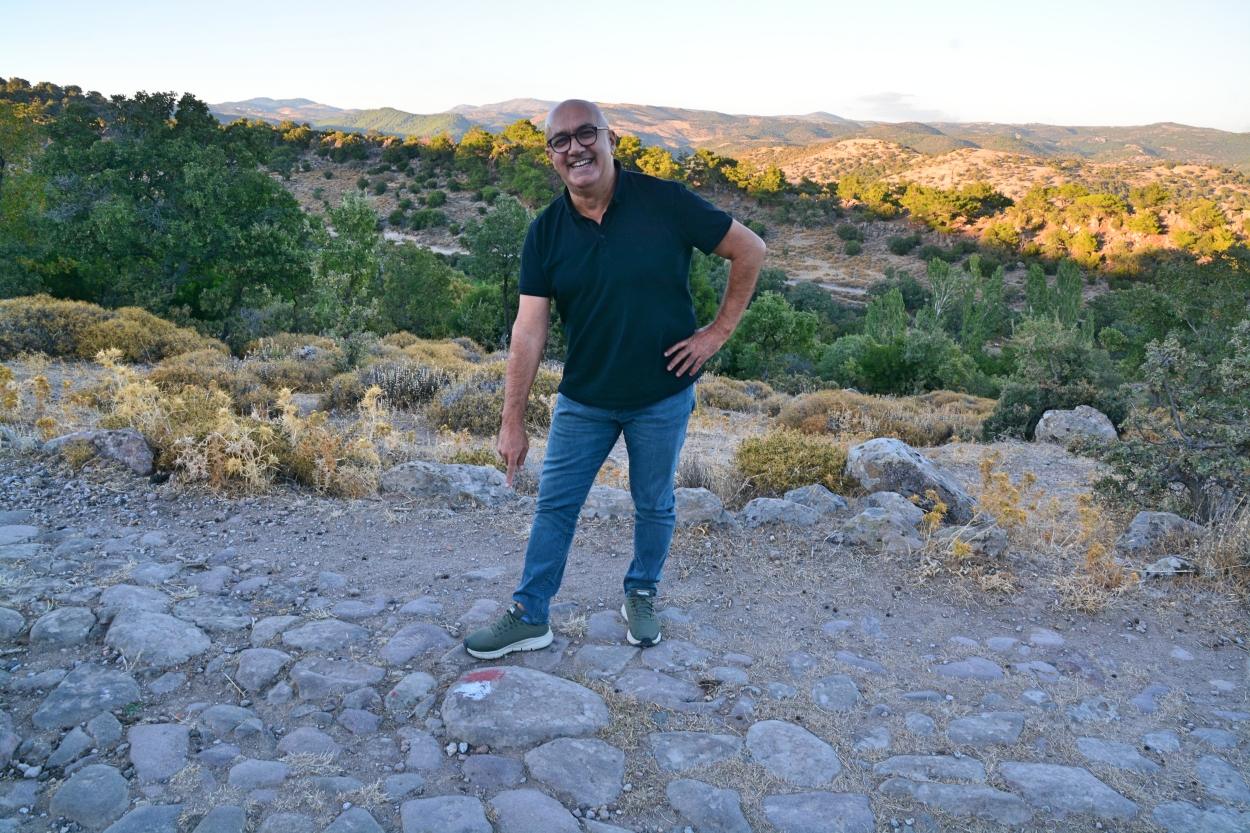
Leon Mauldin on Roman Road on which Paul would have walked from Troas to Assos. Note Acropolis of Assos in upper right. Photo by Dr. Paul Douthitt.
In 2006, former professor Ferrell Jenkins and I made a personal study trip to western Turkey, including Assos and Troas. It was not until then that I “connected the dots” and saw what would have been involved in that two day journey by land. Later, Dr. Carl Rasmussen posted photos of the well-preserved road connecting Troas and Assos: https://holylandphotos.org/browse.asp?s=1,3,7,20,55&img=TWNAAS24. More recently, Dr. Meg Ramey featured this road in an article in BAR, November/December 2019 issue. She reported that “Turkey’s Ministry of Culture and Tourism has caught the vision for preserving and promoting this sacred way.” See https://www.troycultureroute.com/route/.
In short, more than two years ago, when I was putting together the itinerary for this trip, I wanted to include a walk on this road if at all possible. I asked Orhan, who has served as our guide before, to help me with this. He had never seen this little known road, but promised he would make it happen. Because of the pandemic, our trip which was originally scheduled spring ’20, was rescheduled for fall ’20, and then again for the dates of September 27 – October 8, 2021. So finally (Oct 3) the time had come to be on the road to Assos. The group did not know the “surprise” that I had planned for them, but all seemed very pleased!
Today Assos is in a village called Behramkale, in the Turkish province of Çanakkale.The philosopher Aristotle lived at Assos 348-345 BC.
Craig Keener writes, “The temple of Athena in Assos may have been six centuries old by Paul’s day. The city also hosted the imperial cult.” (Acts: An Exegetical Commentary: 15:1–23:35 (Vol. 3, p. 2982). This of course serves as a reminder that idolatry was thoroughly pervasive in the biblical world, both that of the Old as well as the New Testament. Idolatry was truly everywhere! The Gospel entered the world in the first century to challenge that along with every false system, to bring every thought into captivity to the obedience of Christ (2 Cor. 10:4,5).
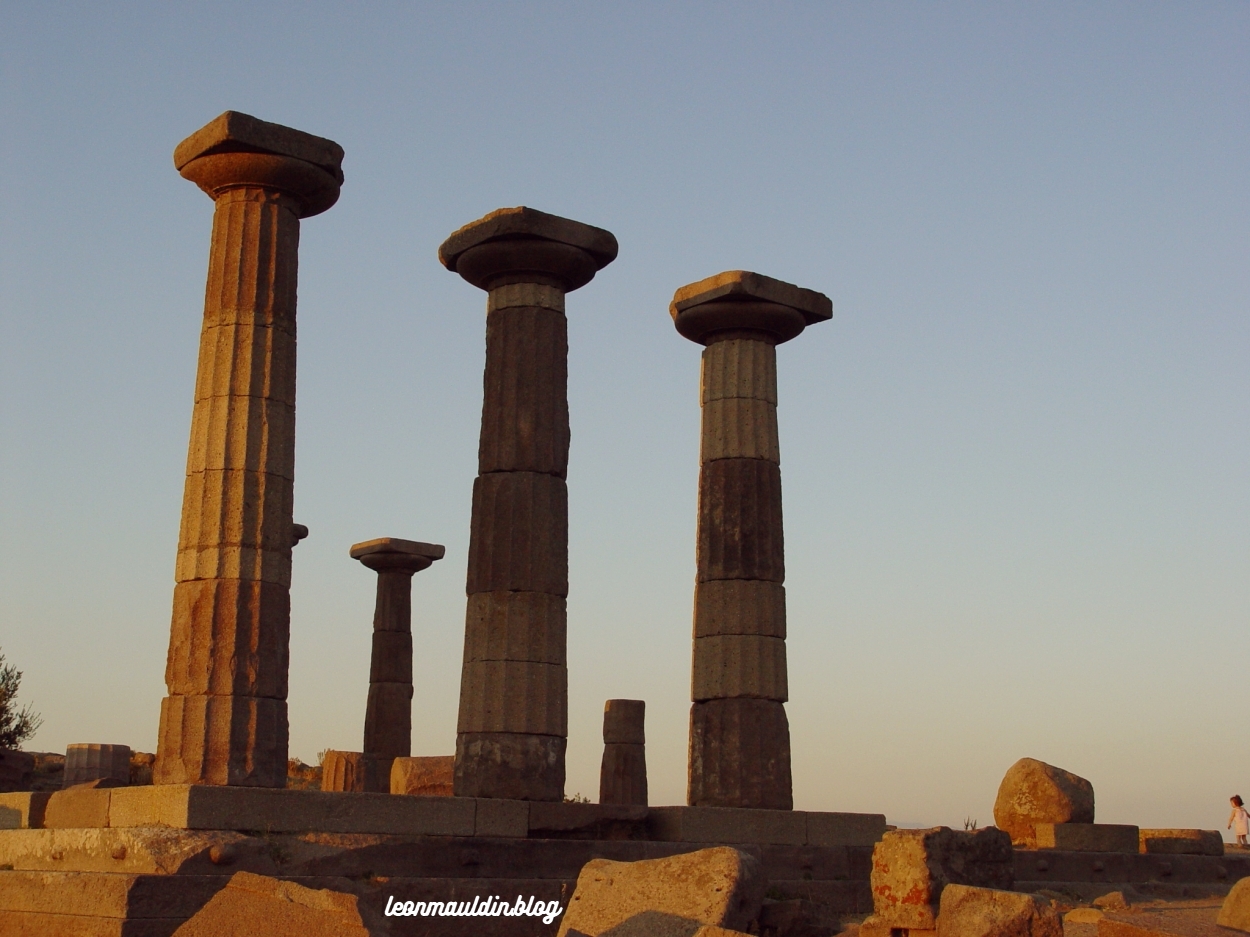
Our photo below shows some of the remaining columns of the temple there at Assos, captured as the sun was setting. Note the little girl at lower right for a sense of scale.
Columns on the Doric order at Assos. Photo by Leon Mauldin.
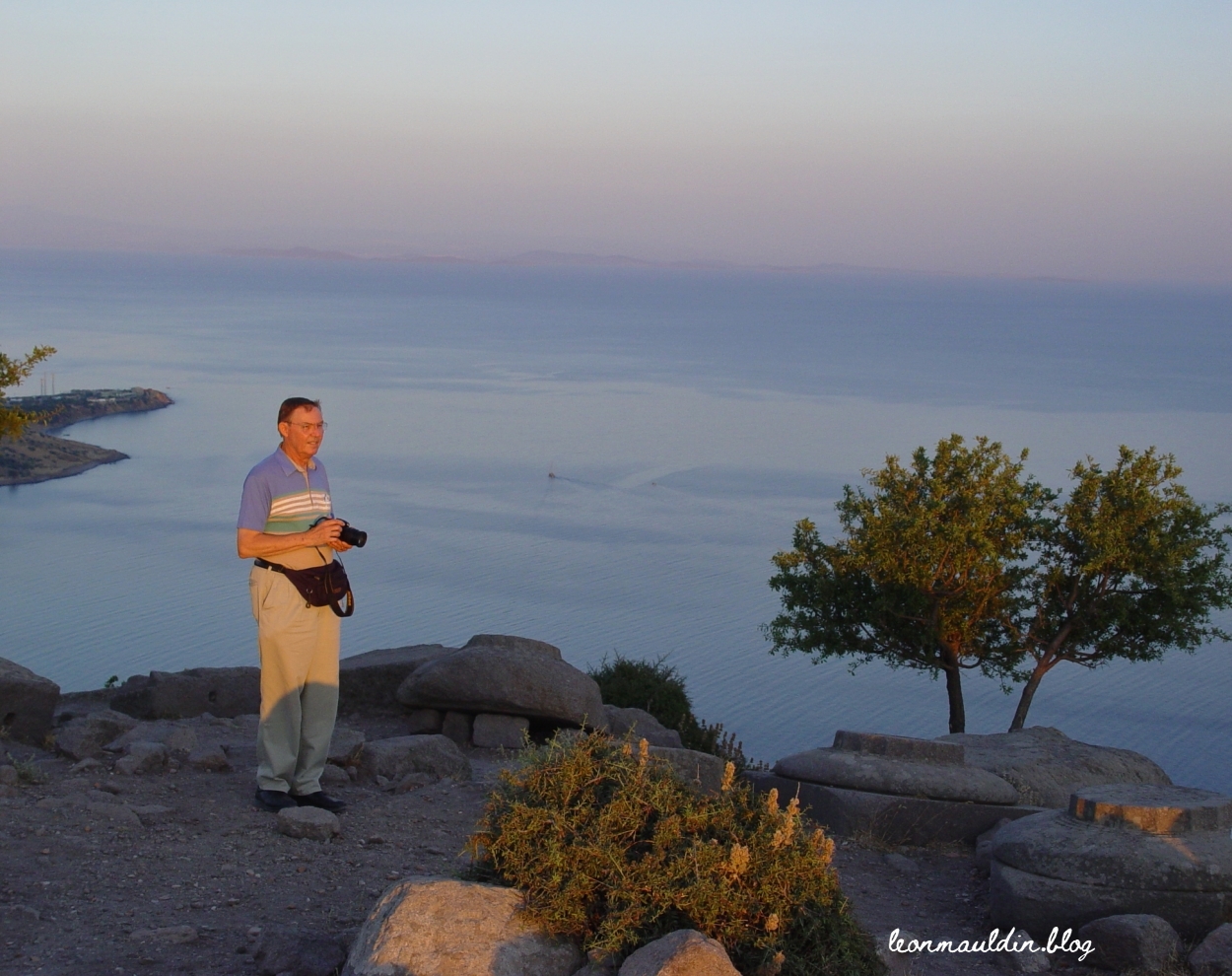
Former professor Ferrell Jenkins and I photographed Assos at evening and then again the following morning. This was in 2006, on a personal study trip.
Ferrell Jenkins on acropolis at Assos. Aegean Sea is in background.
Biblical mention of Assos is found in Acts 20:11-14: “Now when he [Paul] had come up, had broken bread and eaten, and talked a long while, even till daybreak, he departed. And they brought the young man [Eutychus] in alive, and they were not a little comforted. Then we went ahead to the ship and sailed to Assos, there intending to take Paul on board; for so he had given orders, intending himself to go on foot. And when he met us at Assos, we took him on board and came to Mitylene” ( NKJV).
The Roman province of Pontus is mentioned three times in the New Testament in the following passages:
There were residents of Pontus (among many other) present for the Day of Pentecost in Acts 2, the day on which the Gospel message of salvation through the resurrected Christ was preached for the first time: “Parthians and Medes and Elamites, and residents of Mesopotamia, Judea and Cappadocia, Pontus and Asia” (Acts 2:9).
Paul’s dear friend and fellow-tentmaker Aquila, was from Pontus: “And he found a Jew named Aquila, a native of Pontus, having recently come from Italy with his wife Priscilla, because Claudius had commanded all the Jews to leave Rome” (Acts 18:2).
The Apostle Peter wrote the letter of 1 Peter to Christians in Pontus (and other Roman provinces): “Peter, an apostle of Jesus Christ, To those who reside as aliens, scattered throughout Pontus, Galatia, Cappadocia, Asia, and Bithynia. . .” (1 Pet. 1:1).
The coast of Pontus was colonized by the Greeks ca. 700 BC. Sinope was a major port city of Pontus located on the Black Sea. This is in Turkey’s territory today.
Map showing Sinope on the coast of the Black Sea. In biblical times in the Roman province of Pontus. Today in Turkey.
Diogenes, the Cynic philosopher (ca. 412 BC – 323 BC), was a famous resident of Sinope. He was notorious for carrying a lamp during the daytime in Athens, claiming to be looking for an honest man.
Plutarch relates the story of what happened when Alexander sought out Diogenes at Corinth:
[14] [1] And now a general assembly of the Greeks was held at the Isthmus, where a vote was passed to make an expedition against Persia with Alexander, and he was proclaimed their leader. Thereupon many statesmen and philosophers came to him with their congratulations, and he expected that Diogenes of Sinope also, who was tarrying in Corinth, would do likewise. [2] But since that philosopher took not the slightest notice of Alexander, and continued to enjoy his leisure in the suburb Craneion, Alexander went in person to see him; and he found him lying in the sun. Diogenes raised himself up a little when he saw so many persons coming towards him, and fixed his eyes upon Alexander. And when that monarch addressed him with greetings, and asked if he wanted anything, ‘Yes,’ said Diogenes, “stand a little out of my sun.” [3] It is said that Alexander was so struck by this, and admired so much the haughtiness and grandeur of the man who had nothing but scorn for him, that he said to his followers, who were laughing and jesting about the philosopher as they went away, “But verily, if I were not Alexander, I would be Diogenes.” (Plutarch’s Lives, Alexander, 14:1-3).
The closing chapters of the book of Revelation describe for the reader “how beautiful heaven must be.” That heavenly, holy city, new Jerusalem where God “shall wipe away every tear from their eyes; and there shall no longer be any death; there shall no longer be any mourning, or crying, or pain; the first things have passed away” (Rev. 21:3-4, NASB). Moving on to the final chapter, John writes, “Then the angel showed me the river of the water of life– water as clear as crystal– pouring out from the throne of God and of the Lamb, flowing down the middle of the city’s main street. On each side of the river is the tree of life producing twelve kinds of fruit, yielding its fruit every month of the year. Its leaves are for the healing of the nations” (Rev. 22:1-2, NET Bible).
What was lost in the beginning in the Garden of Eden, access to the Tree of Life, is regained in heaven! Oh how I want to be among that number there in that beautiful city! The Tree of Life, along with the Water of Life! This is depicting eternal life, the people of God at home with God.
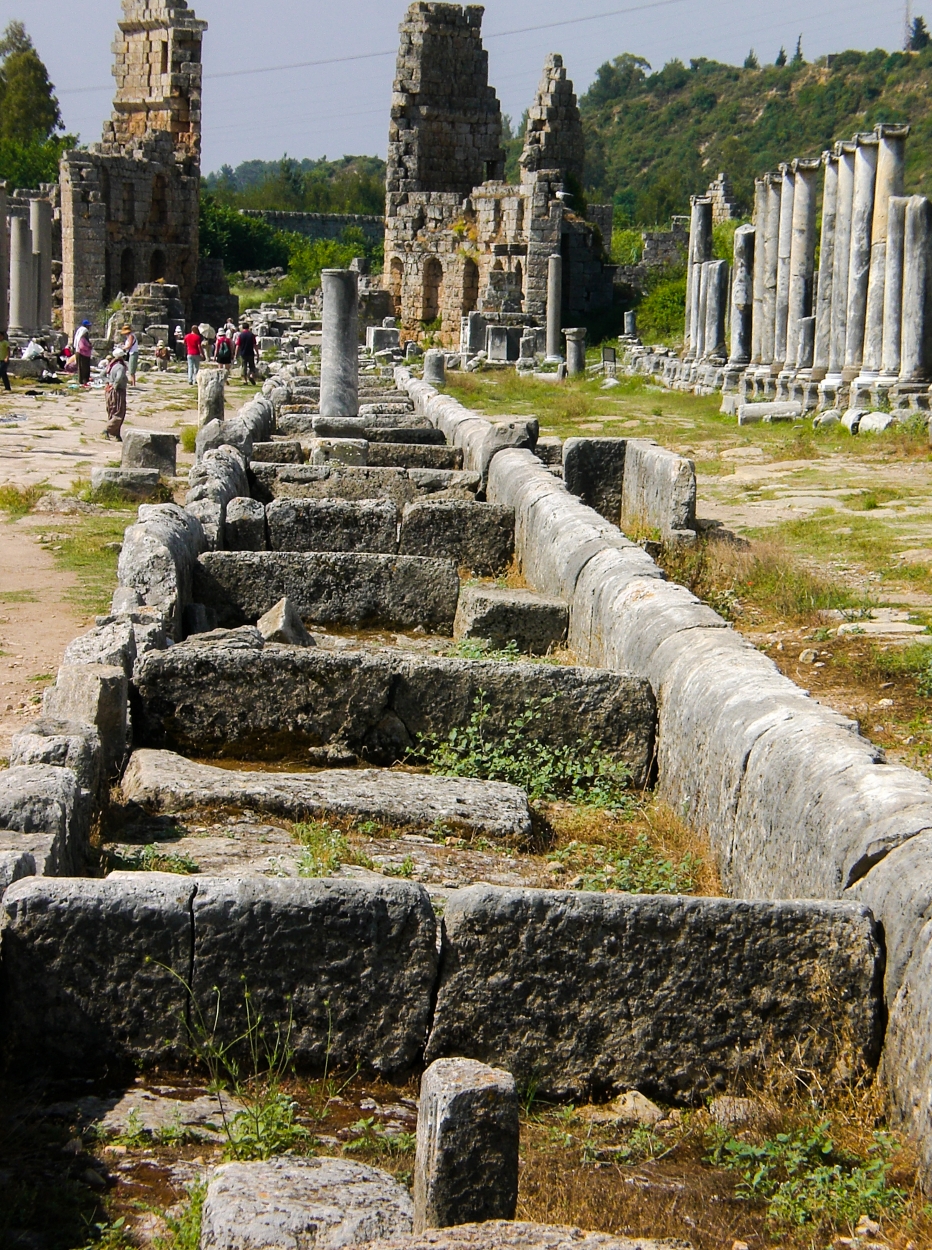
In the text above, the imagery of a river of water flowing through the main street of the city brings to mind the layout of the city of Perga of Pamphylia (today southern Turkey) mentioned in the context of Paul’s First Journey (Acts 13:13-14; 14:25).
Our photo shows how Perga’s water supply flowed down the main street of the city, with the street on either side, to the sides of which various shops and businesses would have been located (where the standing columns can be seen). Images such as these help us to understand and visualize the description employed in our text. The two large structure at the far end are towers that stood at the gate that go back to the Hellenistic period, to the time of Alexander the Great.
To the side of the street a number of ancient columns are still standing.
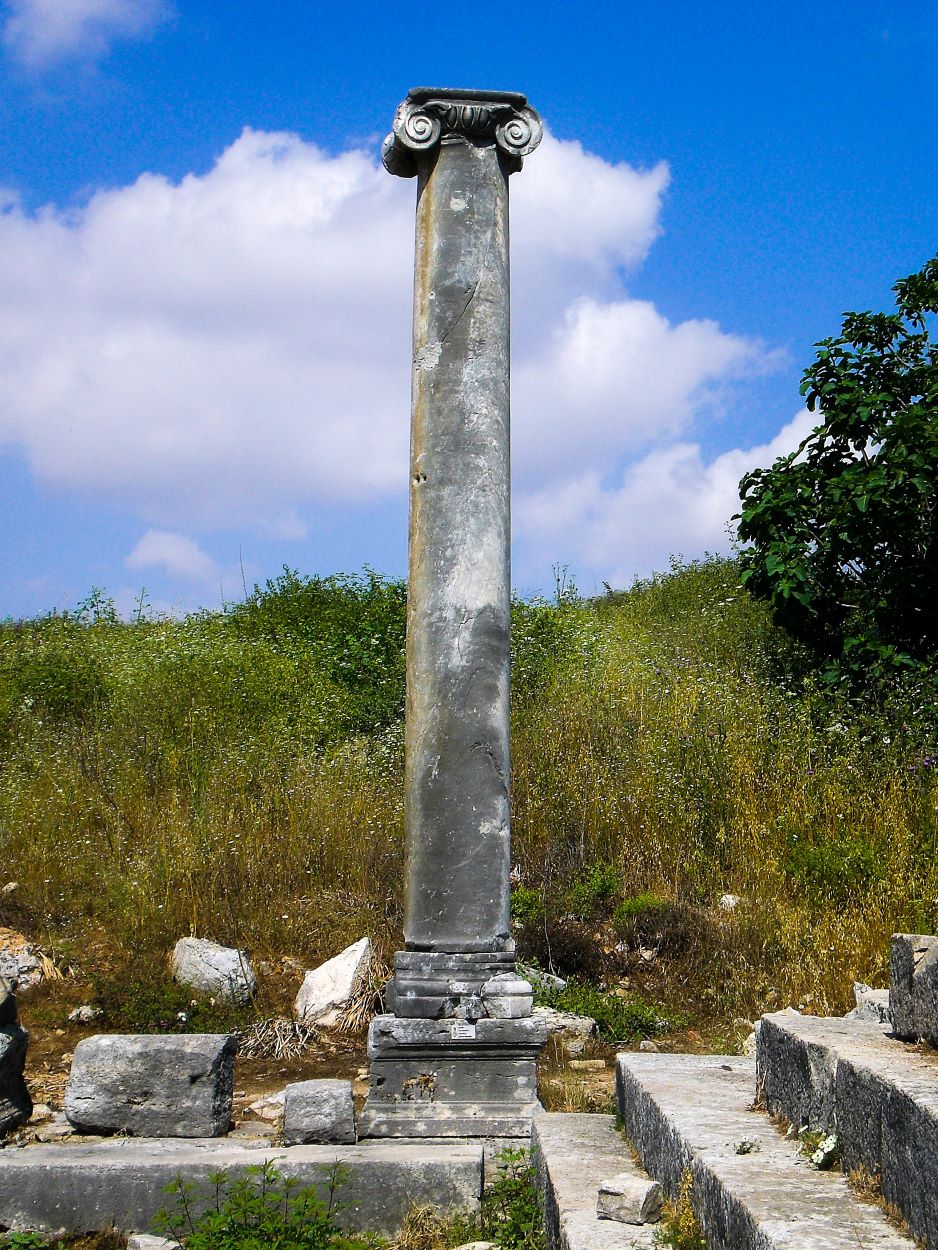
We took this photo of an Ionic column, which was one of the very popular styles in Greek and Roman architecture. This is one of many still to be seen among the remains of Perga.
Fant and Reddish make these interesting observations about biblical Corinth:
No city in the ancient world both benefited and suffered from its location more than Corinth. Situated on the main north-south route between northern and southern Greece, and with two good ports that linked it to Italy on the west and Asia Minor on the east, Corinth quickly became a center for commerce. But the location of Corinth also had its downside. The city often found itself caught in the middle between hostile neighbors, Athens to the north and Sparta to the south. Armies crisscrossed its streets as often as merchants, and more than once the city had to arise from ashes and rubble. Today only Athens attracts more interest in Greece for its historic antiquities than Corinth. It ranks as a must-see location for every traveler to Greece. (A Guide to Biblical Sites in Greece and Turkey, p.45).
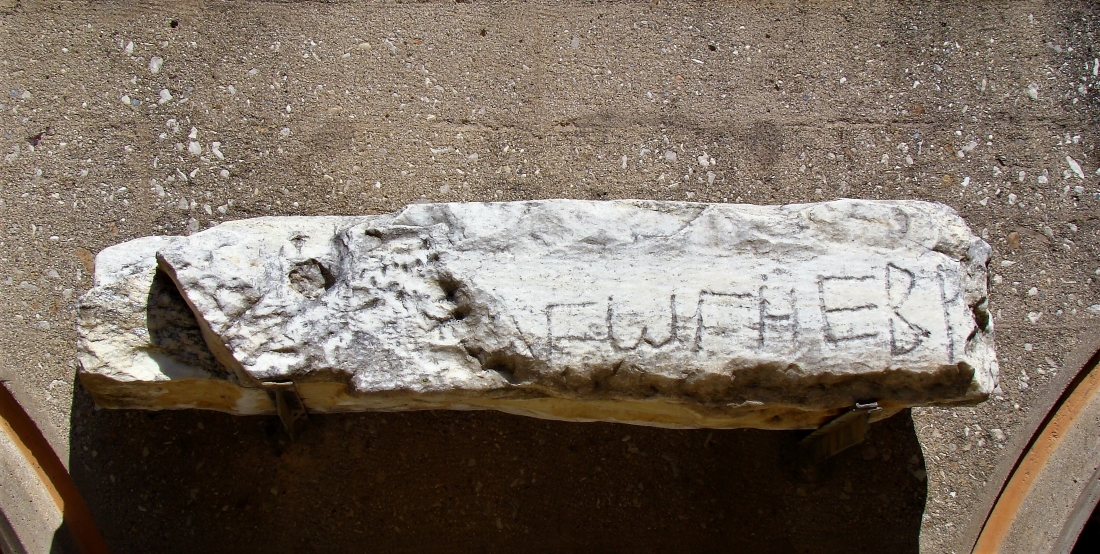
Synagogue Inscription. There is a section of a lintel with a partial inscription, [Syna] goge hebr [aion], “Synagogue of the Hebrews.”
It is thought that this artifact is to be dated as late Roman or early Byzantine, and hence would post-date the time of the Apostle Paul.
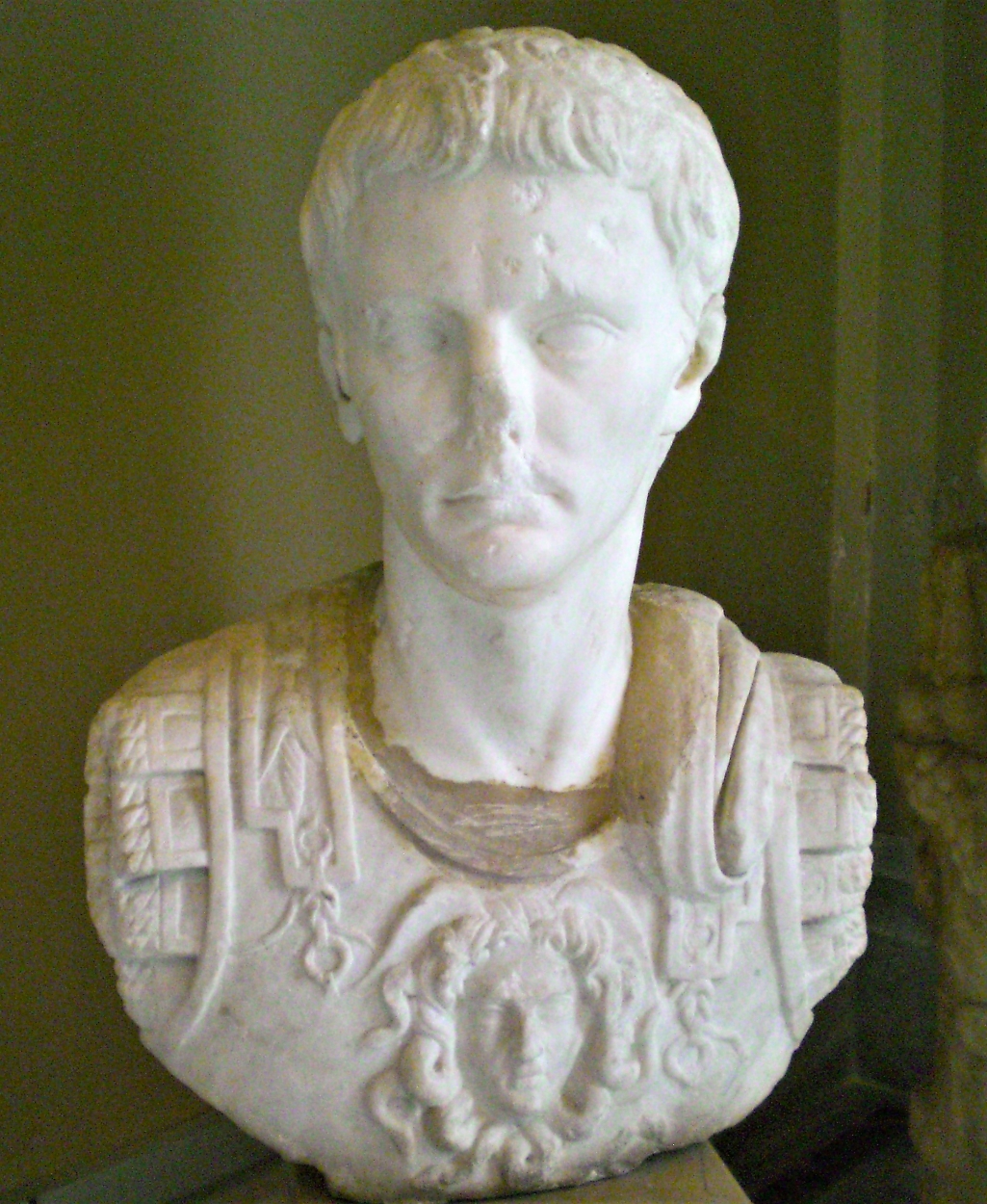
But the Bible shows there was certainly a Jewish presence at Corinth in Paul’s day. In fact, upon Paul’s arrival there (2nd Missionary Journey), he stayed with fellow-tent-makers Aquila and Priscilla, who were Jews, and were there “because Claudius had commanded all the Jews to leave Rome” (Acts 18:1-2). Claudius was emperor AD 41-54.
The text in Acts 18 continues, relating Paul’s “reasoning in the synagogue every Sabbath” (v.4), and also including brief notation of the conversion of Crispus, the ruler of the synagogue:
3 and because he was of the same trade, he stayed with them and they were working, for by trade they were tent-makers. 4 And he was reasoning in the synagogue every Sabbath and trying to persuade Jews and Greeks. 5 But when Silas and Timothy came down from Macedonia, Paul began devoting himself completely to the word, solemnly testifying to the Jews that Jesus was the Christ. 6 But when they resisted and blasphemed, he shook out his garments and said to them, “Your blood be on your own heads! I am clean. From now on I will go to the Gentiles.” 7 Then he left there and went to the house of a man named Titius Justus, a worshiper of God, whose house was next to the synagogue. 8 Crispus, the leader of the synagogue, believed in the Lord with all his household, and many of the Corinthians when they heard were believing and being baptized. (Acts 18:3-8).
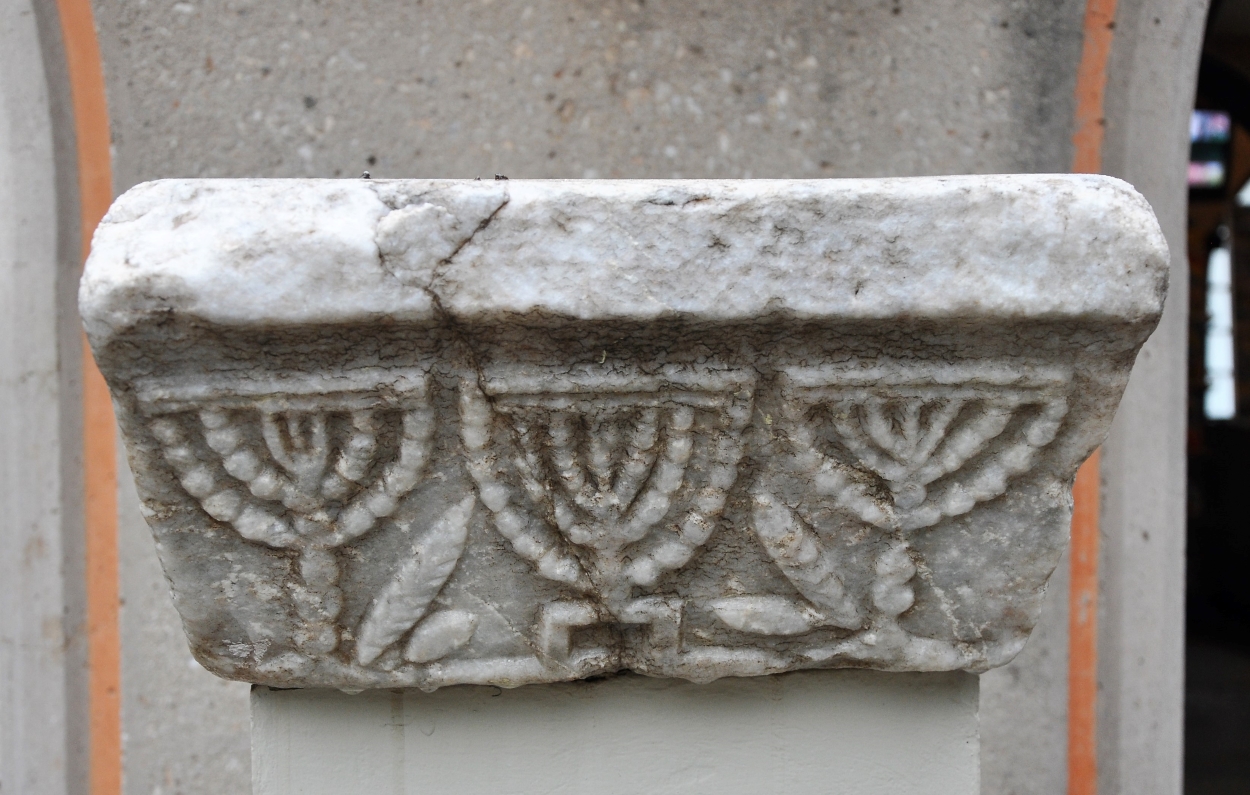
Capital with Menorahs and Palm Branches. There is also on display at the museum there at Corinth a capital decorated with menorahs and palm branches. It is thought that this once decorated the top of a pillar, probably from the synagogue.
Paul’s one desire was to live in such a manner as to save as many as possible, whether Jews or Gentiles:
“To the Jews I became as a Jew, so that I might win Jews; to those who are under the Law, as under the Law though not being myself under the Law, so that I might win those who are under the Law; to those who are without law, as without law, though not being without the law of God but under the law of Christ, so that I might win those who are without law. 22 To the weak I became weak, that I might win the weak; I have become all things to all men, so that I may by all means save some.” (1 Cor. 9:20-22).


 Posted by Leon Mauldin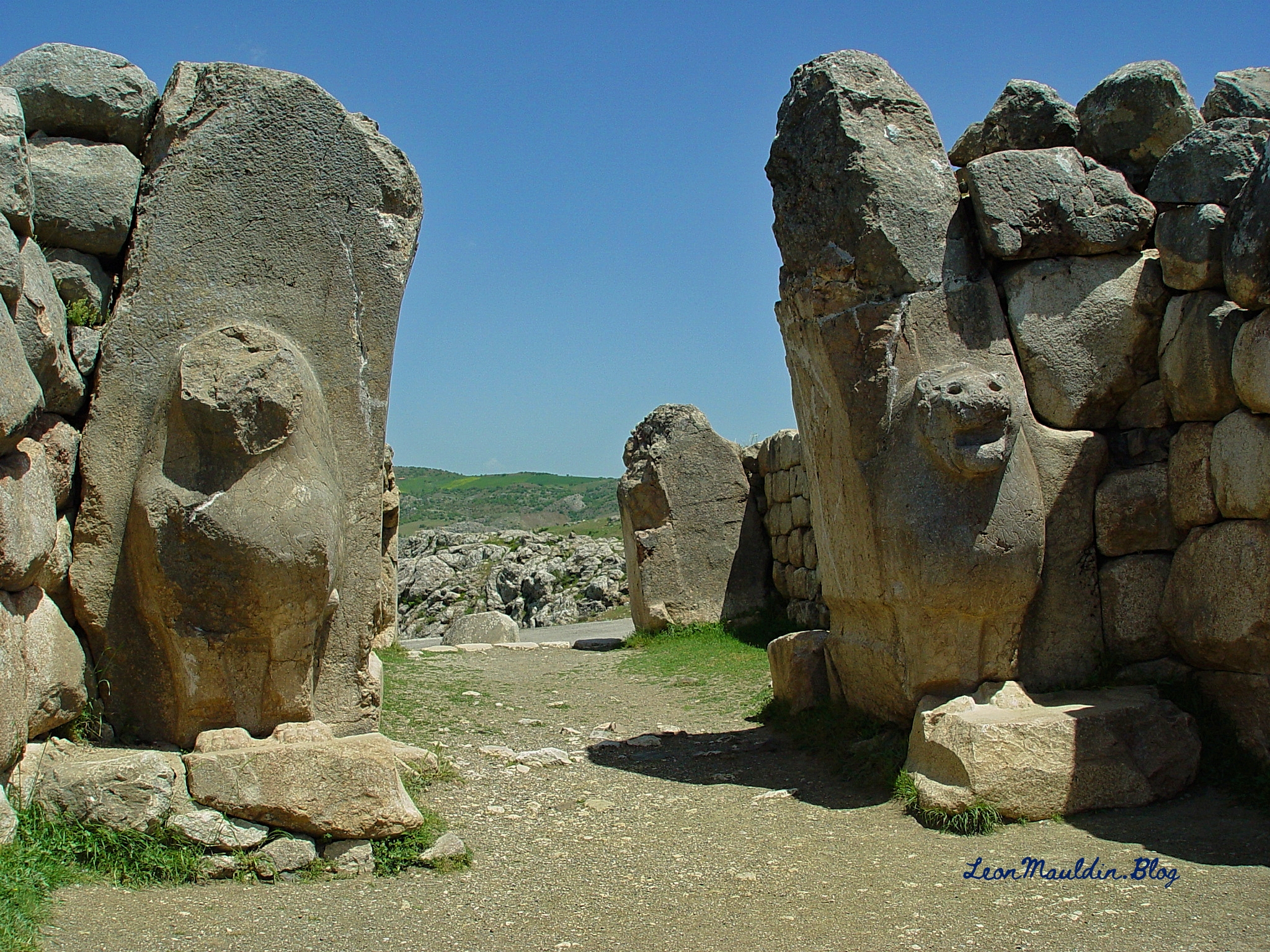






 leonmauldin.blog