Island of Santorini

September 3, 2010

Last March our group tour included the Mediterranean islands of Patmos, Rhodes and Crete, and we have made posts of photos w/info for each of these.  Additionally, the island of Santorini, also know as Thira,  was included.

Santorini is grouped with the Cyclades islands in the Aegean which are essentially the mountain peaks of the sunken continent of Aegeis. The word “Cyclades” is derived from the word Delos, the sacred island of the ancient Greeks.
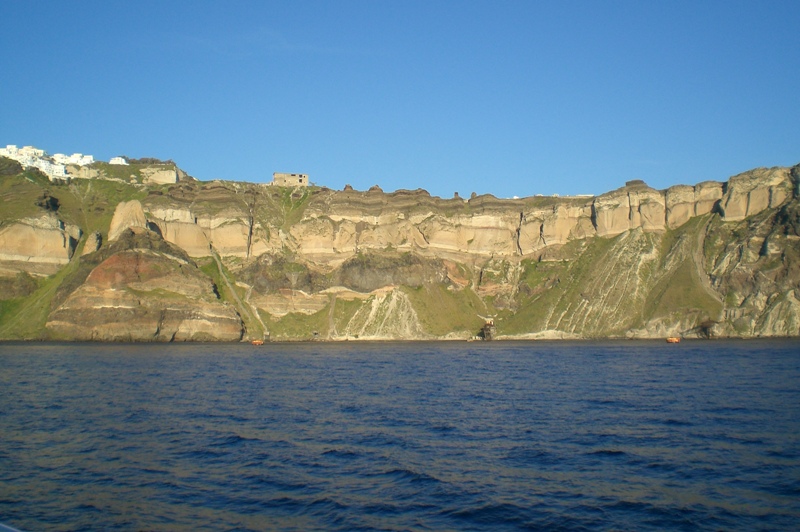
Approach to Santorini, one of the Greek Islands. Photo ©Leon Mauldin.

The Cyclades are geographically positioned as a bridge between East and West, and accordingly played an important role in the history of the Greek World.  Civilization is traced back to the Bronze Age, the most important of which was located at Akrotiri on Santorini. Ruins in excellent condition have been preserved, due to the eruption of the volcano of Thera (ca. 1500 BC), which covered the site with a thick layer of ash.  Evidence abounds of an advanced culture, assimilating that of the Minoans of Crete.

Santorini is a unique sight. Its cliffs tower out of the sea, capped off by whitewashed buildings.  At center of photo you can see towers for the sky-lift; also the zig-zag road for walking, or riding donkeys.
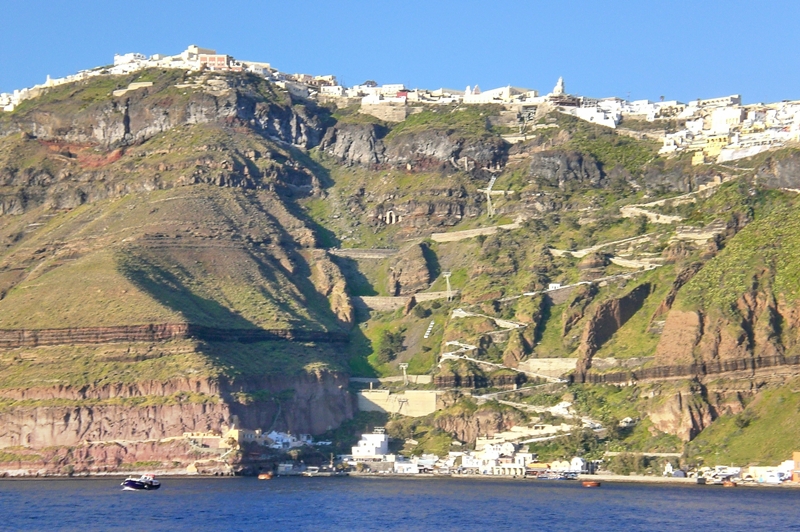
Santorini of the Cyclades. Photo ©Leon Mauldin.

This is the view at sunset:
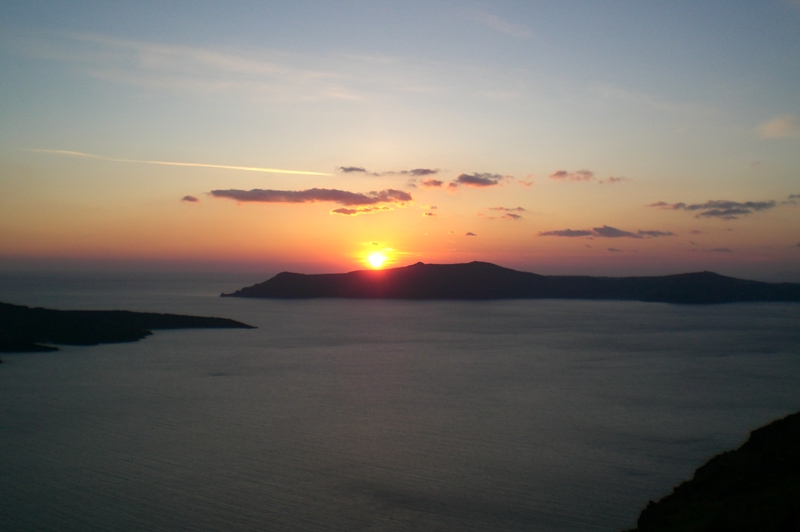
Sunset at Santorini. Photo ©Leon Mauldin.

Click on image for higher resolution.


Lindos, Rhodes

September 1, 2010

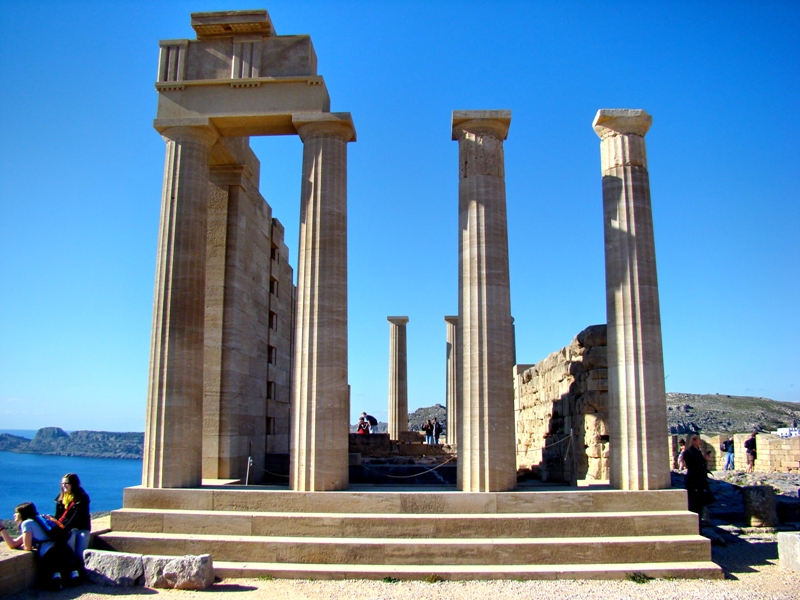
At the highest point of the acropolis at Lindos, Rhodes, there are the remains of a temple devoted to the worship of the goddess Athena.  It is said that architectural remains belong to a temple built in the late 4th century B.C.

Temple of Athena at Lindos, Rhodes. Photo ©Leon Mauldin.

Often the worship of Athena is associated with the city of Athens, and its Parthenon, but the worship of this goddess was geographically widespread.  There was an important temple located at Pergamum, as well as Smyrna (two of the cities of the Seven Churches of Rev.2-3). There was a very visible temple devoted to Athena at the island of Assos (Acts 20:13).

One of the more striking impressions one receives in visiting the Bible lands is just how pervasive idolatry was.  Even today, evidences of such are seen everywhere.

When the Gospel was preached in the 1st century, there were many, such as the Thessalonians, who “turned to God from idols to serve the living and true God” (1 Thes. 1:9). There can be no fellowship with, no agreement of “the temple of God with idols” (2 Cor. 6:16).  Wherever such temples as depicted in our photo existed, the charge was,

Come out from among them and be separate, says the Lord.  Do not touch what is unclean, and I will receive you.  I will be a Father to you, and you shall be My sons and daughters, says the LORD Almighty (2 Cor. 6:17-18).

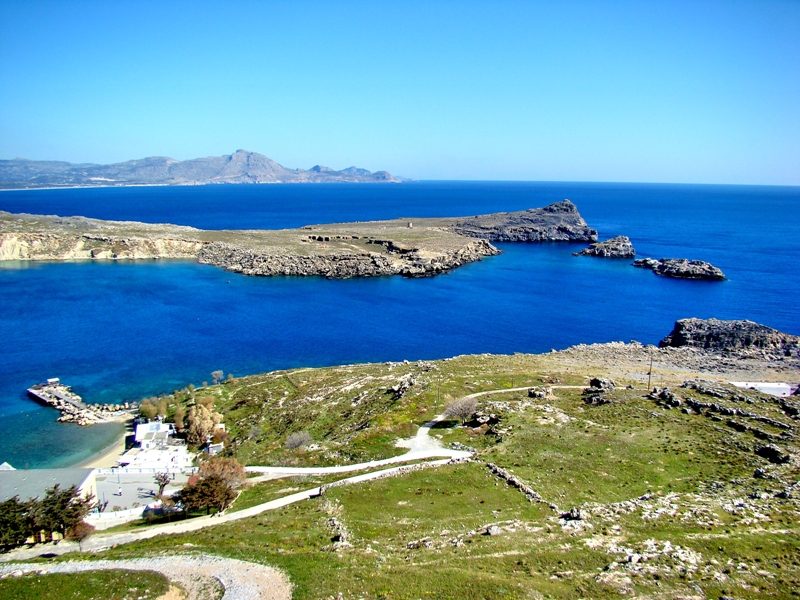
Natural beauty abounds at Rhodes.  Below is a photo of the harbor at Lindos.

Harbor at Lindos, Rhodes. Photo ©Leon Mauldin.

Click on photo for higher resolution.


Rhodes

August 26, 2010

Greetings from Salem, IL., where I’m conducting a 6-day meeting, speaking currently on “The Steps of Paul.”  There has been little time for posting this week, partly due to limited internet access, and also a death in our extended family (my wife’s aunt) that involved unexpected travel this week.

This is farm country, with lots of corn and soybean approaching the time for harvest.

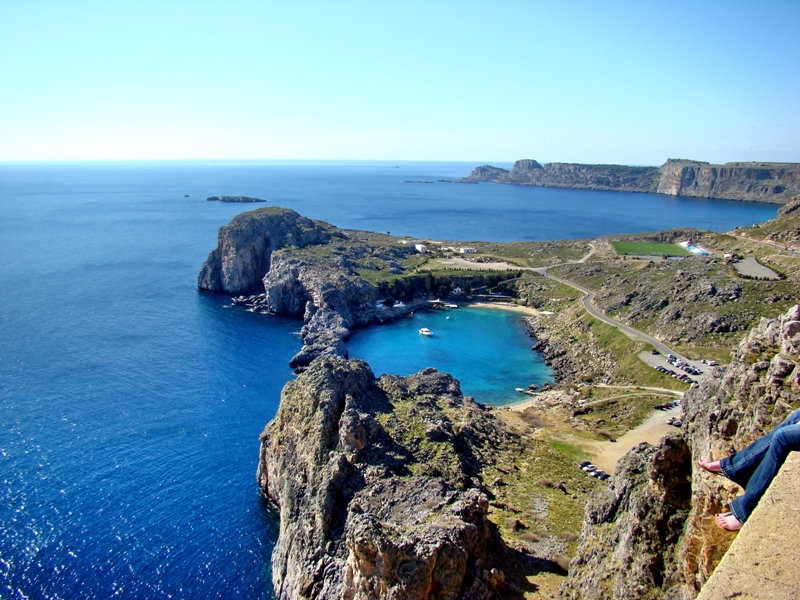
Earlier on July 28 I did a post on Rhodes.  Today I want to share a photo from Lindos, Rhodes.

Lindos, Rhodes. Photo ©Leon Mauldin.

Rhodes is mentioned in Acts 21:1 in the context of Paul’s return from the Third Missionary Journey.  Today it is one of the Greek islands.

Remember to click on image for higher resolution.


On to Ceske Budejovice

August 7, 2010

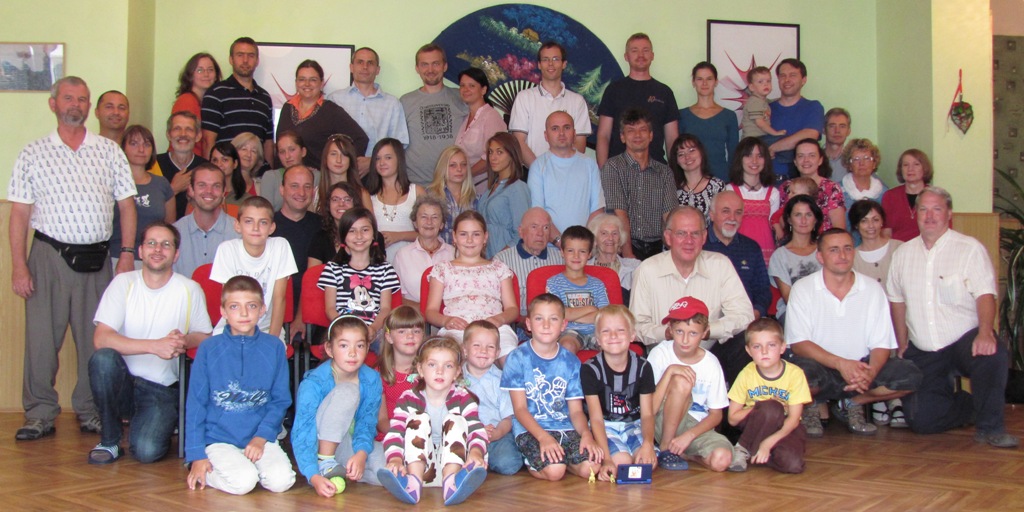
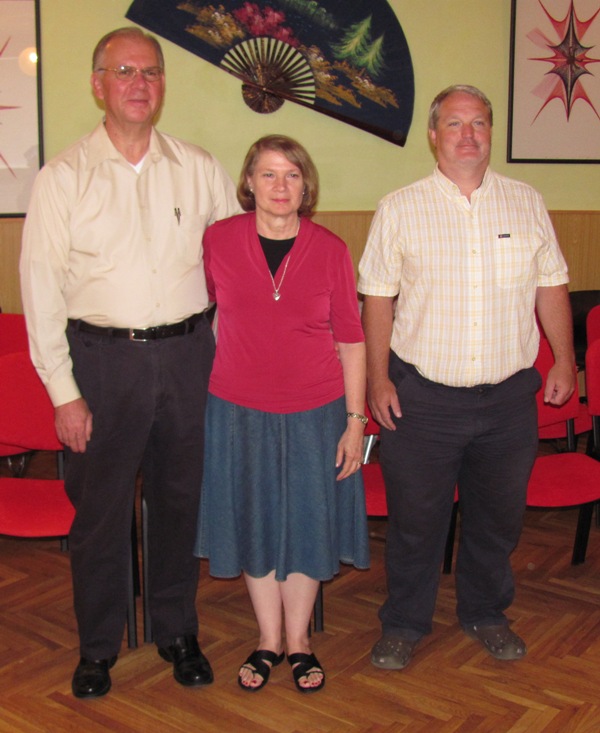
The lectures at Kamenice were well attended and enjoyable in every way.  It is wonderful to see folks we’ve known for many years, and also to meet new brethren.  My wife and I were both tired last night (actually we still are today), but it’s a good kind of tired. As I mentioned on my previous post, families and individuals traveled in some cases great distances, plus there were folks from various places in the Czech Republic.  See group photo below: (Click on image for larger view).

I was speaking each morning, and Bill Bynum each evening.  We also conducted a 2 hr Q&A session each afternoon.  Photo below shows Bill (on right), and my wife Linda and me.

Leon & Linda Mauldin, and Bill Bynum. Kamenice Lectureship 2010.

As I surveyed the Old Testament, I began by giving the setting of the biblical world.  We talked about the amazing variety of the land of Israel.  At Joppa you are at sea level; at Jerusalem 35 miles inland you are 2500+ feet above sea level, and another 14 miles NE at Jericho you are 800 feet below sea level!

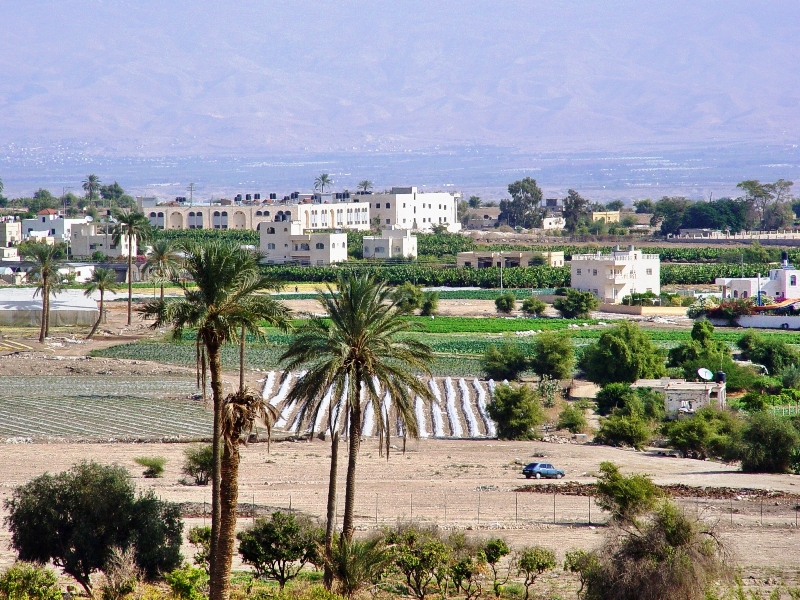
In the Bible Jericho is called the “city of palm trees” (Deut. 34:3).  In the photo below you can see why:

Jericho, biblical "city of palm trees." 800 feet below sea level. Photo ©Leon Mauldin.

In the distance you can see across the Jordan the hill country of Moab.  This was the home of Ruth, who was the great-grandmother of David (Ruth 4:18ff).

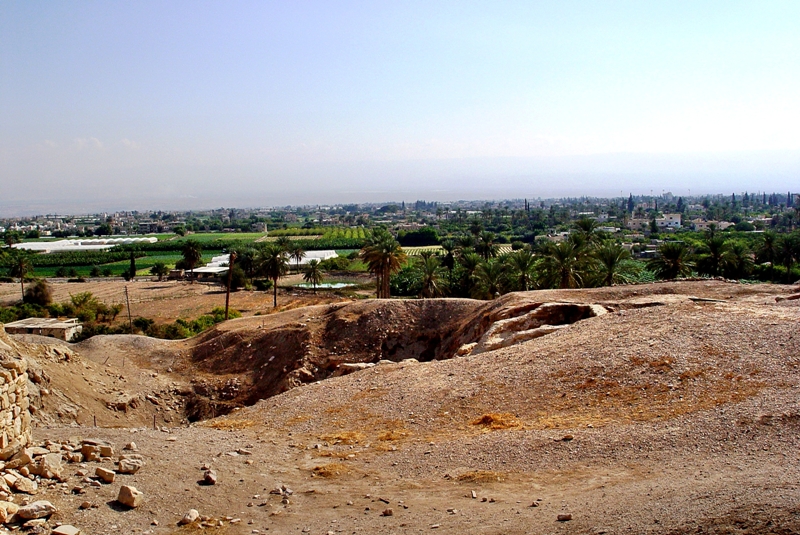
Here’s another shot of Jericho. In the foreground you see a portion of the ancient tel.  This was the first city taken by Joshua and the men of Israel after crossing the Jordan for the conquest of Canaan (see Joshua 6).  Because it was a kind of “first-fruits” of the land, the city was devoted to the Lord, instead of the spoils being divided up among the men of war.

OT Jericho. Ancient tel in foreground. Photo ©Leon Mauldin.

Today it has rained all day.  This morning, Mira, a friend and brother from Ceske Budejovice, arrived at Kamenice and drove my wife and me to Ceske Budejovice.  I am to preach here in the morning at worship services, and then spend some time visiting Mira and his good family on Mon.

This is my fourth trip to the Czech Republic.  I met Mira back in 1992 on that first trip.  It is a joy to see him again.  This city has an ancient history, dating back to the 12 century.  This is Linda’s first opportunity to travel here; I’ve wanted her for a long time to see a place which has been very special to me.


Safe Arrival at Prague

July 31, 2010

My wife and I arrived safely in Prague this morning.  I’m looking forward to teaching at the local congregation Sun AM, and then speaking at the annual lectureship at Kamenice Mon-Fri. It is good to be with Mike Morrow for this effort.

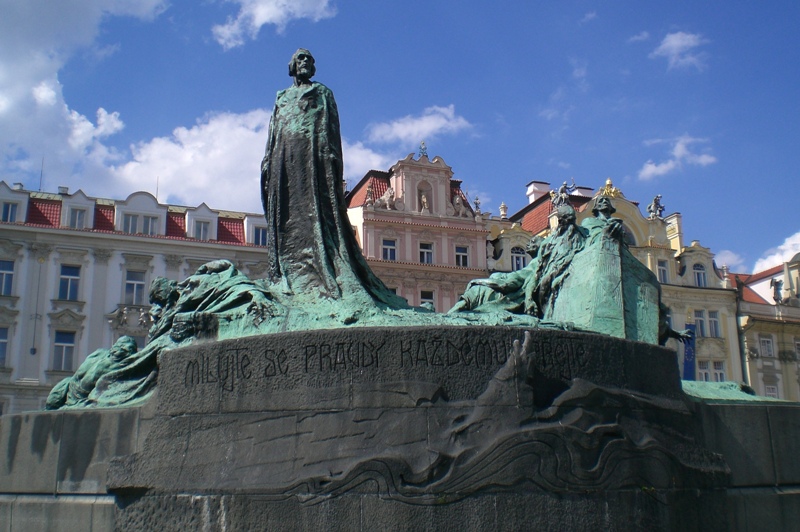
This afternoon Linda and I had the occasion to do some walking in and around the historic square in Prague.  There is a monument to the reformer John Huss, a Czech priest, philosopher and religious reformer.

John Huss. Prague. Photo ©Leon Mauldin.

John Huss was burned at the stake for his faith on July 6, 1415.  He continues to be held in high esteem by the Czechs.

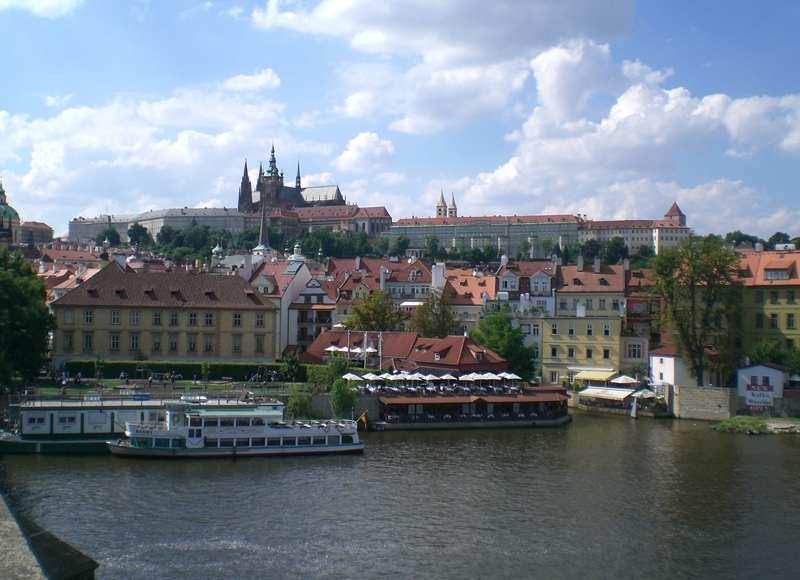
From the Charles Bridge over the Vltava River you have a view of the Czech Castle, seen at skyline of our photo.

Prague Castle. View from Vltava River. Photo ©Leon Mauldin.

Click on images for larger view/higher resolution.


An Empty Tomb

April 4, 2010

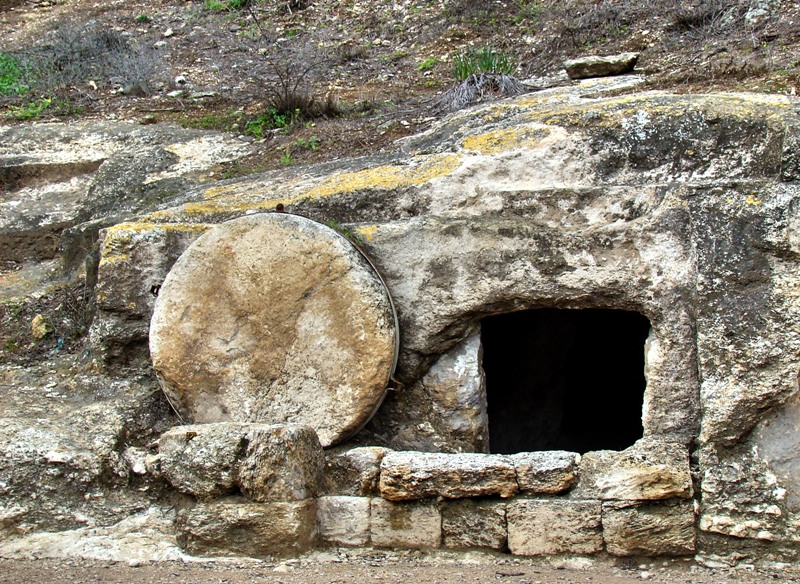
As one descends Mt. Carmel going toward Megiddo, there is a rolling stone tomb whose usage dates back to the first century.

Rolling Stone Tomb Near Carmel. Photo by Leon Mauldin.

This tomb was discovered during road construction.  It so well illustrates the biblical texts that narrate the burial of Jesus.  Joseph of Arimathea had a new tomb (one which had not been previously used, John 19:38-42).  Assisted by Nicodemus, Joseph wrapped Jesus’ body in a clean linen cloth, “and laid it in his new tomb which he had hewn out of the rock; and he rolled a large stone against the door of the tomb, and departed” (Mt. 27:59-60). The tomb in our photo was hewn out of the rock, and you can see the large stone positioned to the left of the opening.

On Sunday, the 1st day of the week when Jesus was raised from the dead, the text says this about Peter and “the other disciple:”

So they both ran together, and the other disciple outran Peter and came to the tomb first. And he, stooping down and looking in, saw the linen cloths lying there; yet he did not go in. Then Simon Peter came, following him, and went into the tomb; and he saw the linen cloths lying there, and the handkerchief that had been around His head, not lying with the linen cloths, but folded together in a place by itself. Then the other disciple, who came to the tomb first, went in also; and he saw and believed. (John 20:4-8).

Note the record says the disciple stooped down to look in.  The tomb in our photo shows how this would of necessity be true.

Rolling Stone Tomb. Stooping to Look Inside. Photo by Ferrell Jenkins.

Note that we are not suggesting that this is the tomb in which Jesus was buried; it does however illustrate the type of tomb that would have been used.

For New Testament Christians, each first day of the week is significant.  Christians assemble in the name of Jesus Christ to partake of His memorial feast, the Lord’s Supper.  That Supper points back to His death, His body and His blood.  But we serve a risen Savior!  We proclaim His death till He comes (1 Cor. 11:26).

Note: this was originally posted on April 3, 2010, but we thought perhaps it was timely to share it again.