Zion Gate in Jerusalem

July 12, 2011

We continue to explore some of the gates of Jerusalem. The present walls of the city were constructed by in AD 1537-1540. The walls were built upon previous foundations, at times utilizing portions of the older walls. Average height is 34-38 feet.

Zion Gate may be seen in our map below designated by number 7:

Old City Map. Wikimedia Commons.

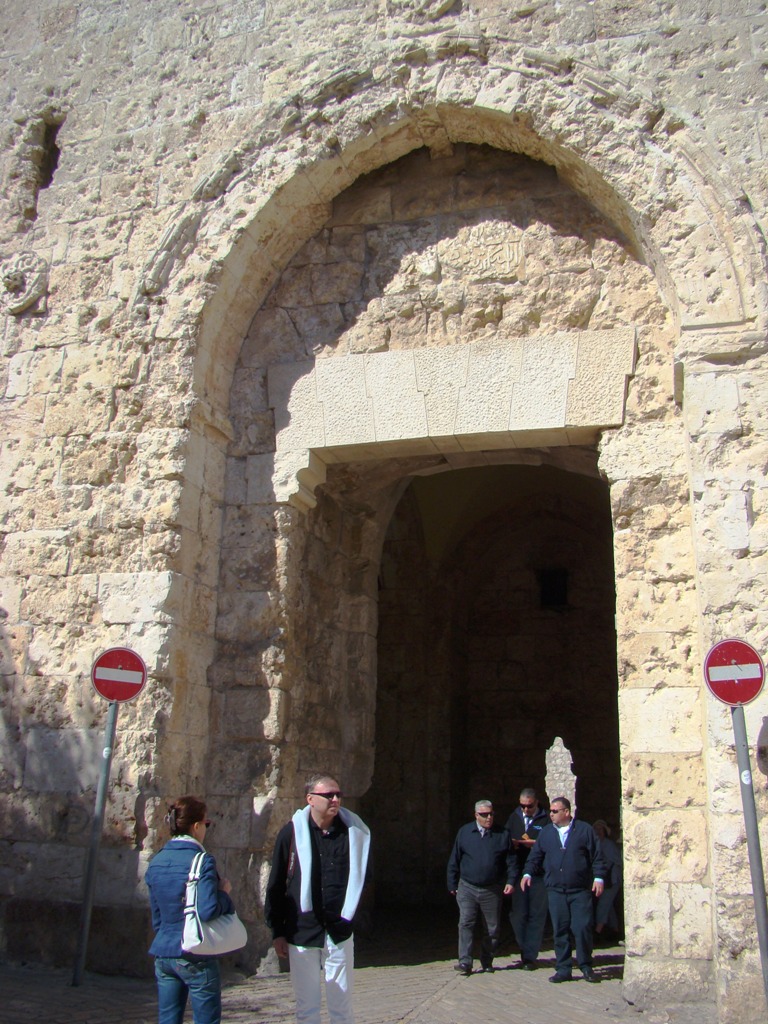
Our photo below shows the Zion Gate:

Zion Gate. Located on SW wall of Jerusalem. Photo ©Leon Mauldin.

The gate serves as entrance to the Armenian as well as Jewish Quarters. Below and to the east of the walls at this point is situated the ancient city of David, Mt. Zion. The gate is also called David’s Gate.

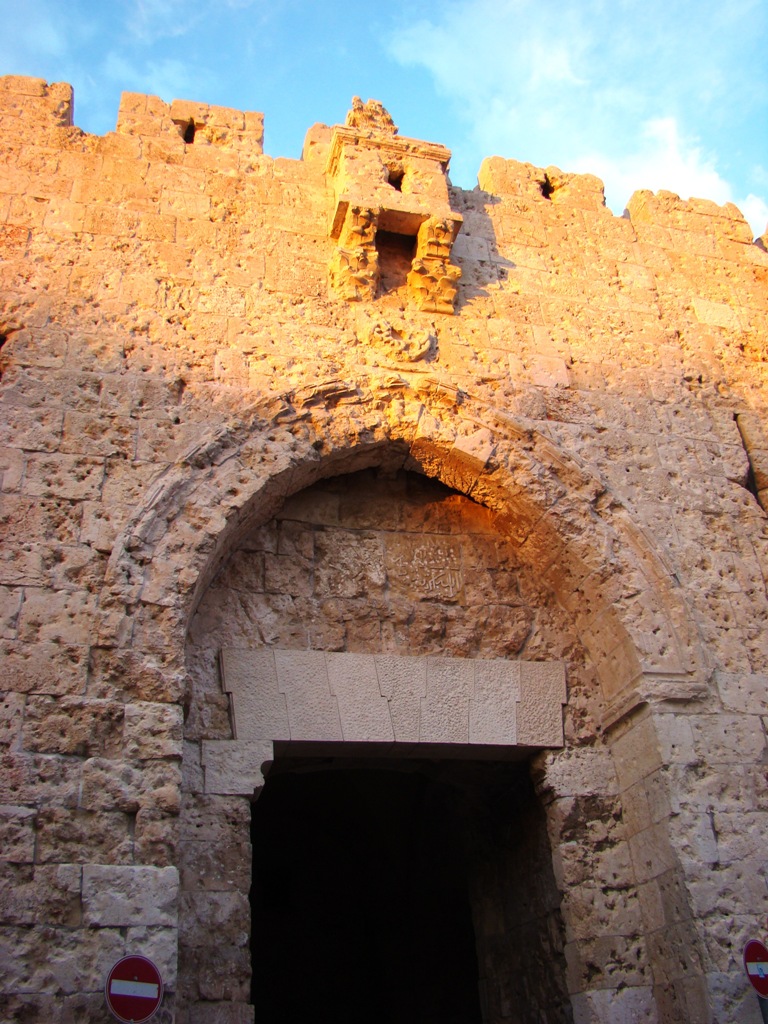
The hundreds of pock-marks were made by bullets in the 1948 Jewish War of Independence.

Zion's Gate. Bullet marks left from Jewish War of Independence 1948. Photo ©Leon Mauldin.

Click on images for higher resolution.


Caleb Inherits Hebron

May 17, 2011

The book of Joshua details the fulfillment of the Land Promise God made to Israel (Josh. 21:43,45). The book consists of twenty-four chapters, and divides exactly in half regarding subject matter. The first twelve chapters record the conquest of Canaan, and the last twelve record the division of the land to each of the tribes of Israel.

Josh 14-15 deal with the inheritance of Judah. It is within that context that the inheritance of Caleb is discussed. Caleb and Joshua were the only two of the 603,550 men of war who were faithful to the Lord and stood their ground at Kadesh-Barnea (Num. 13). All of those men died in the wilderness because of their refusal to take possession of the land (Num. 14ff), except Joshua and Caleb. That was the period of 40 years of wandering in the wilderness of Sinai.

That period passed. At the point where Josh. 14 takes up is 45+ years later; now Caleb is age 85 (v.10). Israel had control of the land, but there was still much to be conquered and possessed.

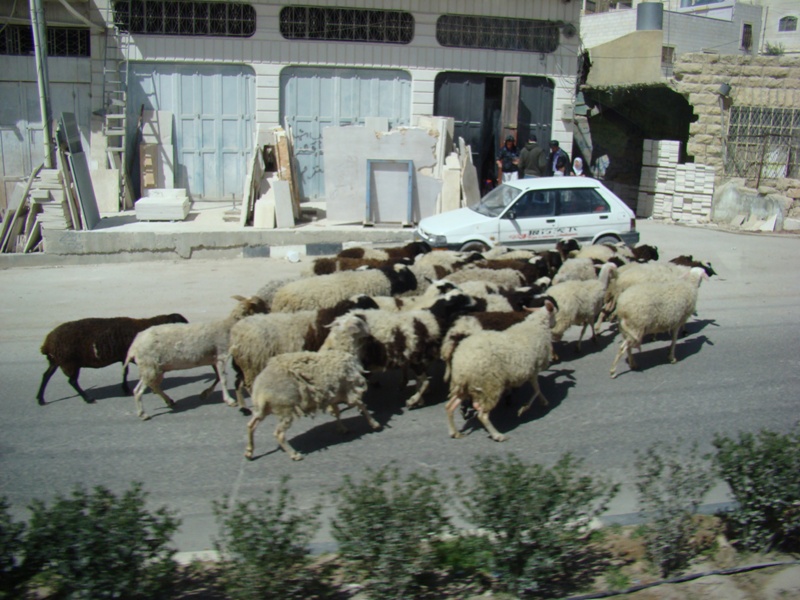
Sheep in street in Hebron. Photo by Leon Mauldin.

The biblical text of Josh. 14:6-13 records Caleb’s inheritance request as well as the background and context of that request:

And Caleb the son of Jephunneh the Kenizzite said to him, “You know what the LORD said to Moses the man of God in Kadesh-barnea concerning you and me. 7 I was forty years old when Moses the servant of the LORD sent me from Kadesh-barnea to spy out the land, and I brought him word again as it was in my heart. 8 But my brothers who went up with me made the heart of the people melt; yet I wholly followed the LORD my God. 9 And Moses swore on that day, saying, ‘Surely the land on which your foot has trodden shall be an inheritance for you and your children forever, because you have wholly followed the LORD my God.’ 10 And now, behold, the LORD has kept me alive, just as he said, these forty-five years since the time that the LORD spoke this word to Moses, while Israel walked in the wilderness. And now, behold, I am this day eighty-five years old. 11 I am still as strong today as I was in the day that Moses sent me; my strength now is as my strength was then, for war and for going and coming. 12 So now give me this hill country of which the LORD spoke on that day, for you heard on that day how the Anakim were there, with great fortified cities. It may be that the LORD will be with me, and I shall drive them out just as the LORD said.” 13 Then Joshua blessed him, and he gave Hebron to Caleb the son of Jephunneh for an inheritance (ESV).

Lessons:

  1. Caleb’s character. Characterized by wholehearted devotion to God (Josh. 14:8,9,14).
  2. Forty-five years earlier during the crisis at Kadesh-Barnea (Num. 13-14), Caleb discerned what was right and was faithful to it. He did not swerve from this principle.
  3. He was basing his request on the promise of God (v.9).
  4. Perhaps one of the greatest lessons is to notice what Caleb was asking for. There were still giants in the land (Anakim, v.12). There were still fortified cities. Caleb was not asking that land already conquered be given to him. He was asking for the opportunity to fight, to seek to defeat and drive out the Canaanite inhabitants, that the territory of Hebron would thus be his inheritance. At age 85, Caleb was not asking for an easy inheritance, but one full of danger. Yet he looked upon it as an opportunity.
  5. His source of strength in battle was the Lord. His victory was predicated upon the Lord’s being with him (v.12).

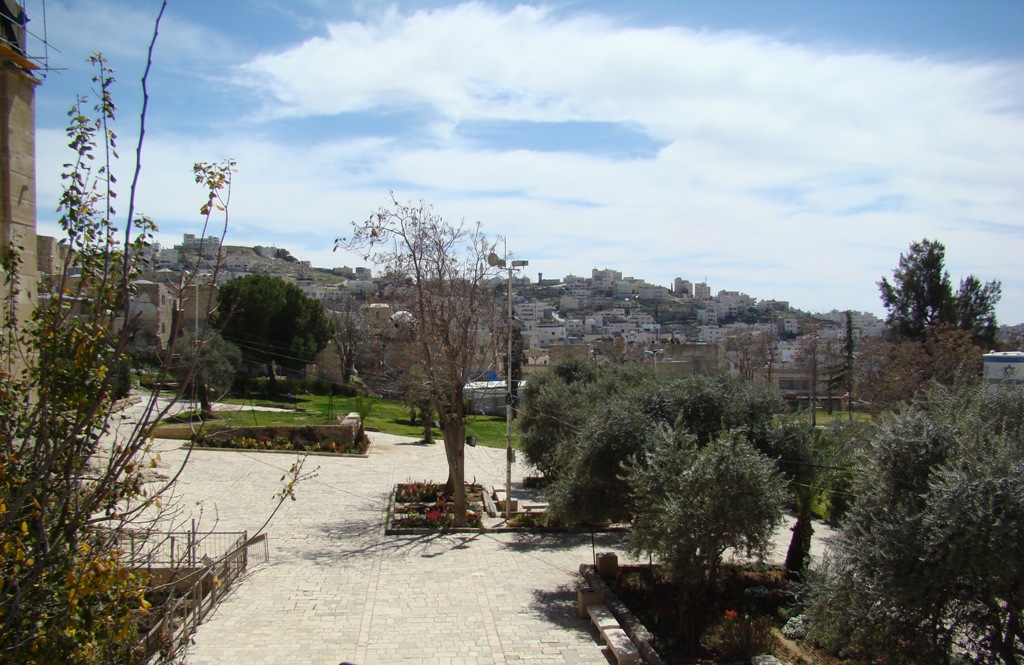
Our photo here shows a view of modern Hebron as we look out from the cave of Machpelah.

Hebron as seen from cave of Machpelah. Photo by Leon Mauldin.

The chapter concludes,

Therefore Hebron became the inheritance of Caleb the son of Jephunneh the Kenizzite to this day, because he wholly followed the LORD, the God of Israel. 15 Now the name of Hebron formerly was Kiriath-arba. (Arba was the greatest man among the Anakim.) And the land had rest from war (Josh. 14:14-15, ESV).

Remember to click on images for larger view.


Saqqara, The Step Pyramid

May 13, 2011

In our local congregation we are currently engaged in a study of Exodus. The emphasis of the book is that of God’s covenant faithfulness. ‘El Shaddai, God Almighty, who promised Abraham, Isaac and Jacob that He would make of them a great nation, and give unto them the land of Canaan, now more fully reveals Himself as YHVH, Yahweh, Jehovah. He would redeem His covenant people. This He did “with outstretched hand,” demonstrating to all the Egyptians, as well as to Israel that He was indeed the LORD.

Israel was a numerous people when the book of Exodus opens, and through His great power God brought them to Mt. Sinai, where they would be for about eleven months. During that time God gave the 10 Commandments as well as the accompanying laws and ordinances, the tabernacle was built, and the Aaronic priesthood was consecrated.

The events of Scripture do not happen in a vacuum; we always do well to consider the historical and geographical setting.  The setting for Exodus 1-13 is Egypt.

When you think of Egypt, you likely think of the pyramids. Sometimes people erroneously believe that the Israelites were used as forced labor to construct the pyramids. Actually the pyramids were built before Abraham! The Israelites built storage cities (Ex. 1:11, NASB).

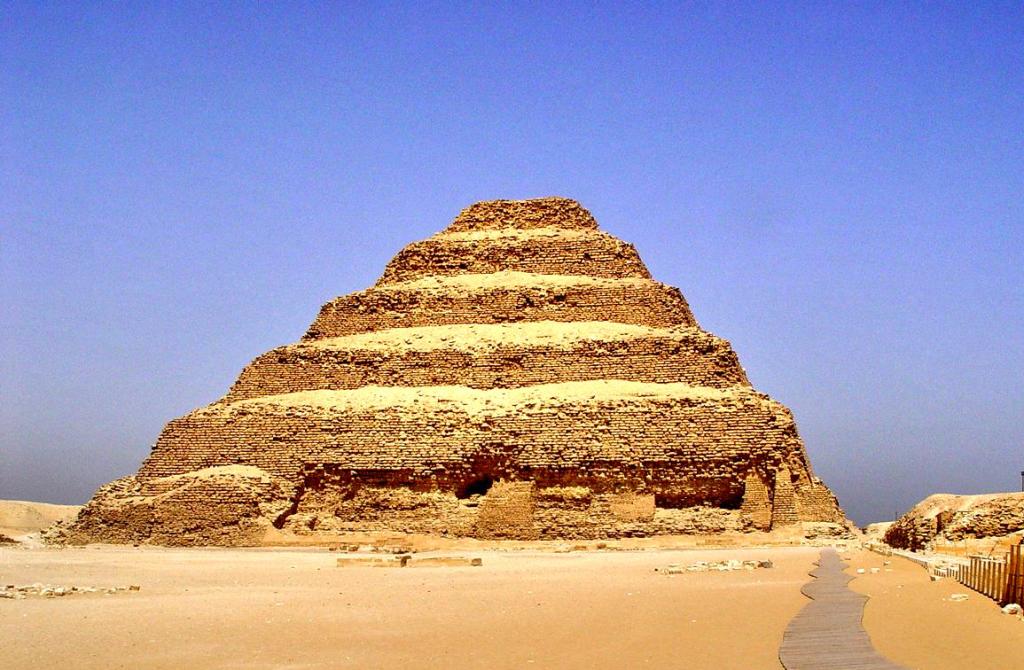
Step Pyramid at Saqqara, Egypt. Photo by Leon Mauldin.

Our photo shows the Step Pyramid at Saqqara, built during the 3rd Dynasty by Pharaoh Djoser. This pyramid is actually a mastaba (Arabic for “bench”),  meaning a structure in the “form of a flat-roofed, rectangular structure with outward sloping sides.” The Step Pyramid consists of six distinct steps. This is the oldest of the pyramids.

The burial chambers were underground. Excavation was done by Jean-Phillipe Lauer.

Click on image for higher resolution.


Royal Palace at Brussels

May 10, 2011

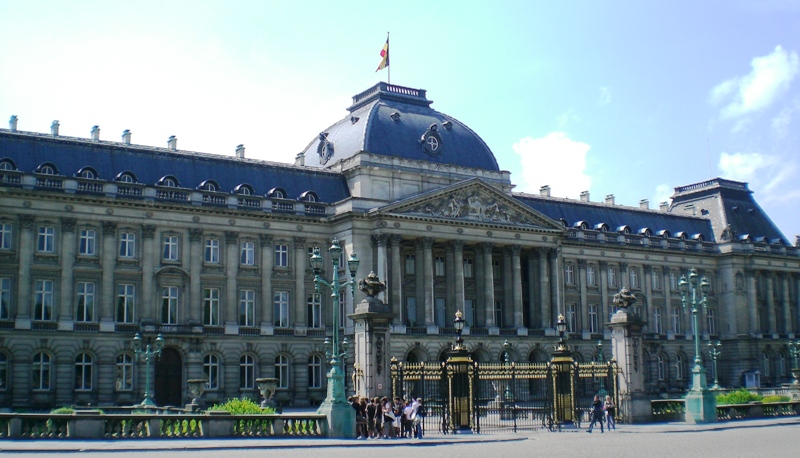
Our lectureship in Belgium is completed; we remained for some additional biblical studies. This morning my wife & I traveled to Brussels for a scheduled study there. While there we had an outside view of the King’s Palace.

Royal Palace of Brussels. Photo by Leon Mauldin.

Regarding the Royal Palace, Wikipedia says,

The Royal Palace of Brussels is the official palace of the King of the Belgians in the centre of the nation’s capital Brussels. However it is not used as a royal residence, as the king and his family live in the Royal Castle of Laeken on the outskirts of Brussels. The website of the Belgian Monarchy describes the function of the palace as follows: “The Palace is where His Majesty the King exercises his prerogatives as Head of State, grants audiences and deals with affairs of state. Apart from the offices of the King and the Queen, the Royal Palace houses the services of the Grand Marshal of the Court, the King’s Head of Cabinet, the Head of the King’s Military Household and the Intendant of the King’s Civil List. The Palace also includes the State Rooms where large receptions are held, as well as the apartments provided for foreign Heads of State during official visits.

The palace is situated in front of Brussels Park.

Tonight we had concluding studies in Genk, and in the morning we are to fly back home, the Lord willing. We have renewed acquaintences and made new friends in Belgium, the Netherlands, and Holland.

Thanks for following our blog. If I might paraphrase Moses, stay with us and we will do you good (Num. 10:29).


Bruges, Belgium

May 8, 2011

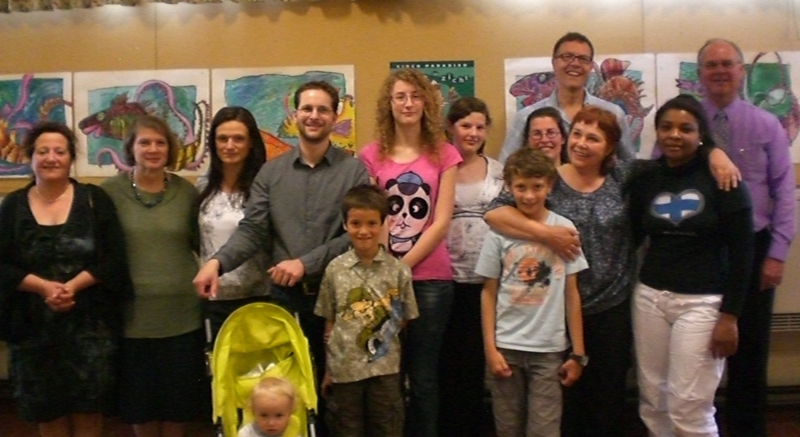
We are continuing to enjoy our association with our friends in Houthalen, Belgium, including folks traveling from some distance away. It is a joy to have such opportunities to teach the Bible. This photo was made following worship services this afternoon.

Group photo following Sunday services at Houthalen, Belgium.

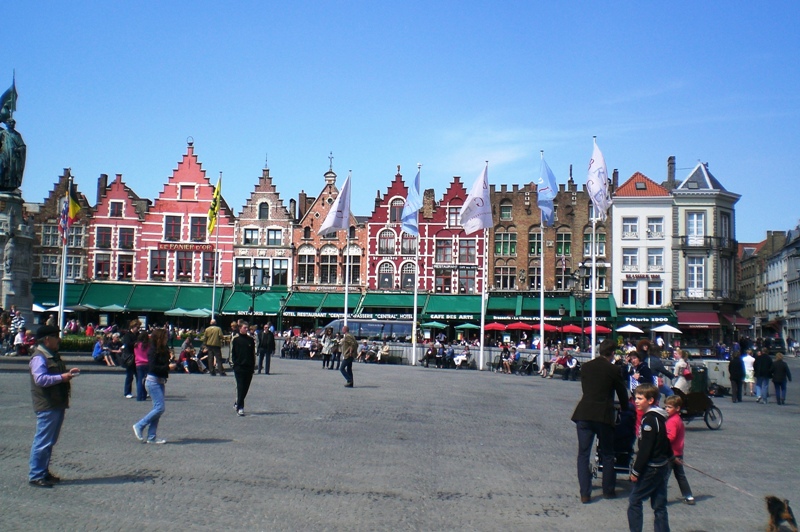
Earlier last week we had the occasion to visit the unique town of Bruges, dominated by 15th, 16th, 17th and 18th century houses and buildings. Our photo shows the market square, dominated by the Belfry and the Government Palace.

Market Square at Bruges, Belgium. Photo by Leon Mauldin

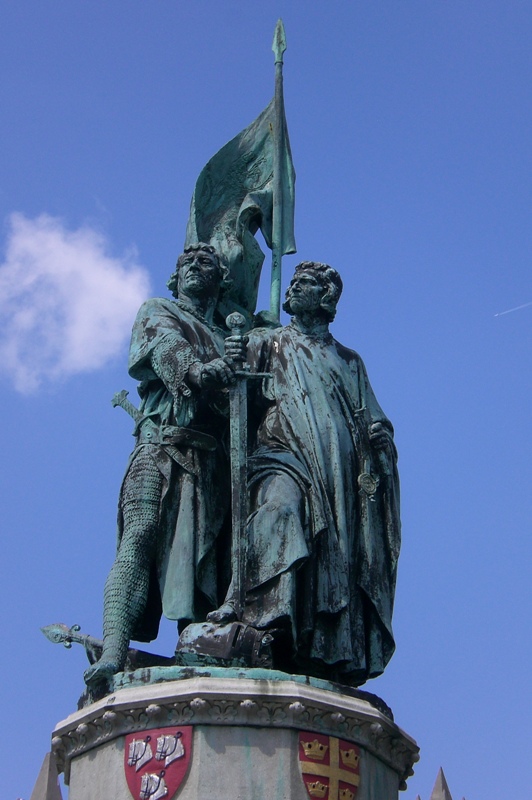
In the square one may see the monument to Jan Breydel and Pieter de Coninck, heroes of the Battle of the Golden Spurs (July 11, 1302). In this battle the French were defeated.

Monument to Jan Breydel and Pieter de Coninck. Photo by Leon Mauldin.

For those interested, Wikipedia has the following info re: Bruges:

Bruges is the capital and largest city of the province of West Flanders in the Flemish Region of Belgium. It is located in the northwest of the country.

The historic city centre is a prominent World Heritage Site of UNESCO. It is oval-shaped and about 430 hectaresin size. The area of the whole city amounts to more than 13,840 hectares, including 1,075 hectares off the coast, at Zeebrugge(meaning “Brugge aan Zee” or “Bruges on Sea”). The city’s total population is 117,073 (1 January 2008), of which around 20,000 live in the historic centre. The metropolitan area, including the outer commuter zone, covers an area of 616 km² and has a total of 255,844 inhabitants as of 1 January 2008.

Along with a few other canal-based northern cities, such as Amsterdam, it is sometimes referred to as “The Venice of the North”.

Bruges has a significant economic importance thanks to its port. At one time, it was the “chief commercial city” of the world.

Click on images for larger view.


Roman Tongeren

May 5, 2011

We are looking forward to the lectureship which begins tomorrow evening in Houthalen, Belgium.This study will survey the biblical text of Acts through Revelation, with emphasis on the geographical setting of these events as we narrate the biblical record. I am thankful to God for every opportunity to teach His word.

Near Genk, where we are currently situated, is the Roman settlement of Tongeren. Tongeren (Atuatuca Tungrorum) is the oldest city in this region, established by the Romans in 10 BC. It is strategically located on the road between Boulogne (France) and Cologne (Germany).

The Gallo-Roman Museum in their very informative booklet observes:

The Romans do not build their cities at random. Tongeren lies on a navigable stream, in the middle of fertile loamy farmland. The city is well connected with the Roman road system. For the Romans it is of crucial importance that the Rhine border can be reached quickly.

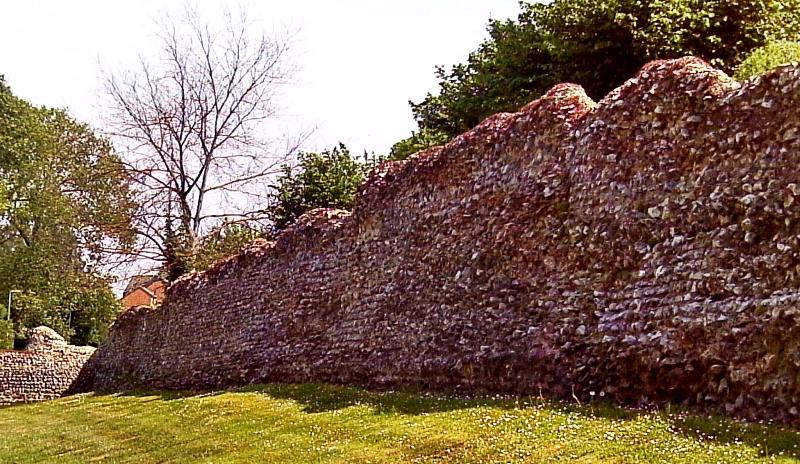
In places the ancient walls can still be seen.
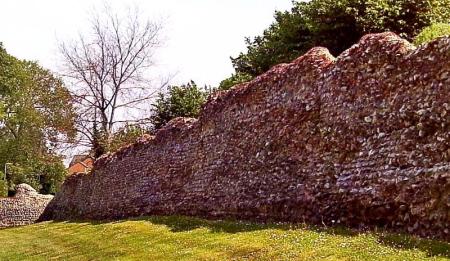
Remnants of Roman Wall at Tongeren. Photo by Leon Mauldin.

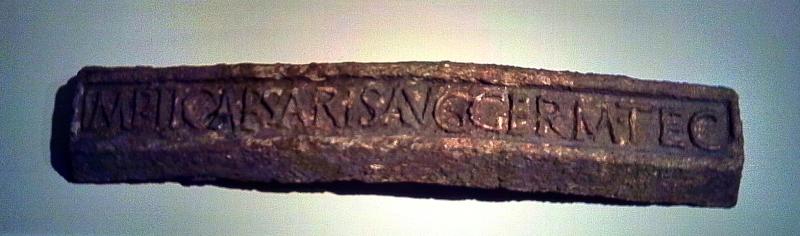
Many interesting Roman artifacts are featured in the museum, among which is this lead bar with the inscription of Caesar Augustus.
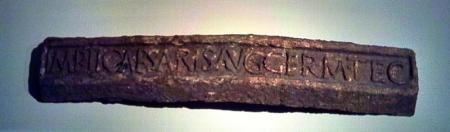
Lead Bar with Caesar Augustus Inscription, Tongeren. Photo by Leon Mauldin.

Again, from the museum booklet:

Lead is an important metal for the construction of, for example, water pipes and drains. Traders ship the metal in the form of bars that are further worked in their place of destination. This bar probably comes from the Eifel region. The inscription IMP(ERATORIS) TI(BERII) CAESARIS AUG(USTI) GERM(ANICUM) TEC(-) means “Property of Emperor Tiberius Caesar Augustus, lead from Germania.” The term TEC probably refers to the person who managed the mine in the name of the Emperor. Of all the objects ever found in Tongeren, this bar is the only object to be marked with the name of a Roman Emperor.

Relation to Scripture: Caesar August was the emperor when in the biblical fullness of time (Galatians 4:4) Jesus was born. Luke writes, “And it came to pass in those days that a decree went out from Caesar Augustus that all the world should be registered” (2:1). Contextually, this is how it came about that Joseph and Mary, who resided in Nazareth of Galilee, made their way to Bethlehem of Judea, because Bethlehem was their ancestral home. Of course Caesar had no idea he was helping to fulfill the 8th century BC prophecy that Jesus would be born in Bethlehem (Micah 5:2).

Notice in the above text that Caesar could command that all the world be enrolled. This of course does not mean the whole globe, but the Roman world, the far-flung Roman Empire.

Remember to click on images for larger view.

Egypt: the Nile Turned to Blood

April 23, 2011

God referred to 10 plagues as “great acts of judgment” (Exodus 6:6). Prior to the 10th plague, the death of the firstborn, God warned, “For I will go through the land of Egypt on that night, and will strike down all the firstborn in the land of Egypt, both man and beast; and against all the gods of Egypt I will execute judgments– I am the LORD” (Ex. 12:12). In reality, all of the plagues showed that YHWH (the LORD) was the true God; all of the plagues were judgments against the gods of Egypt.

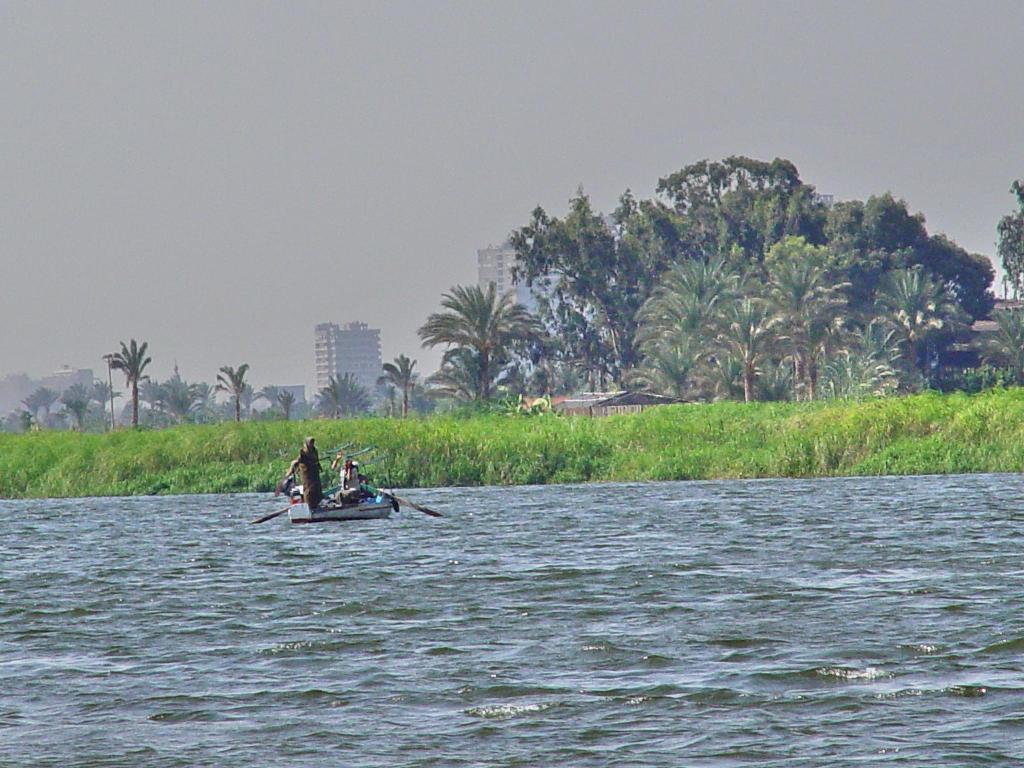
The first plague turned the water of the Nile into blood.

Nile River. Photo by Leon Mauldin.

In an article entitled, “The Plagues and the Exodus,” David Livingston wrote:

This plague was against the god Hapi, spirit of the Nile in flood and “giver of life to all men.” The annual innundation was called “the arrival of Hapi” (57). He was especially worshipped at Gebel Silsileh and Elephantine. The Nile water was the transformed life-blood of Osiris. The fact that the Nile turned to blood, which was abominable to Egyptians, was a direct affront to one of their chief gods. Although the fish-goddess was Hatmeyt, all the fish in the Nile River died! (Bible and Spade Vol. 4, No. 1, P. 4).

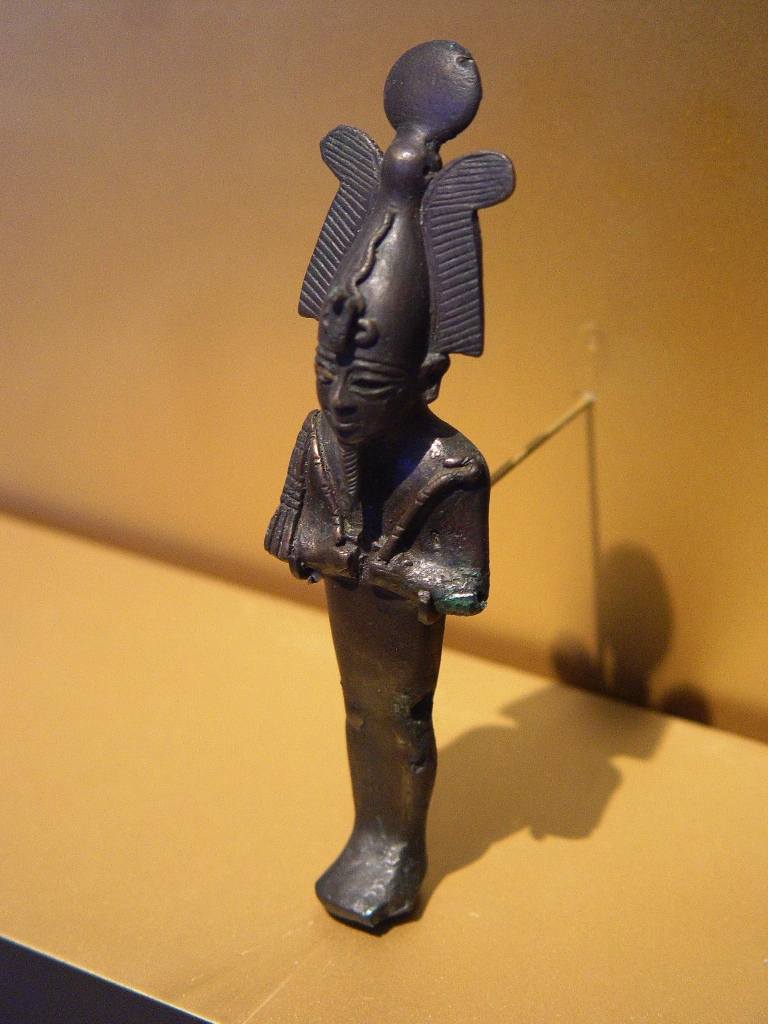
Osiris was believed to be the goddess of the afterlife.

The Goddess Osiris. Brooklyn Museum. Photo by Leon Mauldin.

By the way, I recently added the email subscription feature to this site. If you like, just enter your email address in the box provided, and you will receive notice when new posts are added to this site.


Canaanite Gate at Dan

April 21, 2011

Biblical Dan was a city of about 50 acres. It is located at the foothills of Mt. Hermon in northern Israel. It was situated on the main route from Galilee to Damascus.

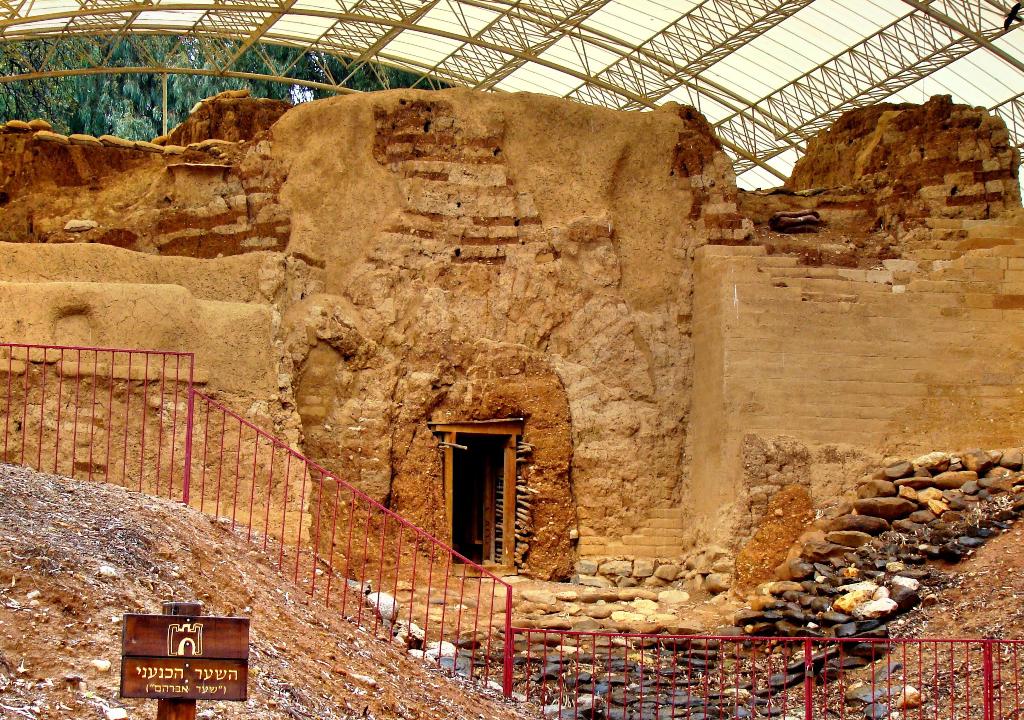
One of the very exciting discoveries at Dan (1979)  is the mud-brick Canaanite Gate. Todd Bolen writes:

Built about 1800 B.C., this mudbrick gate was in use approximately 50 years before it was covered (and thus preserved) by an earthen rampart.

The style of the gate is typical for this period; it is a “Syrian gate” with three pairs of piers and four chambers, like those found at Megiddo, Shechem and Gezer.

Mud-brick Canaanite Gate at Dan. Photo by Leon Mauldin.

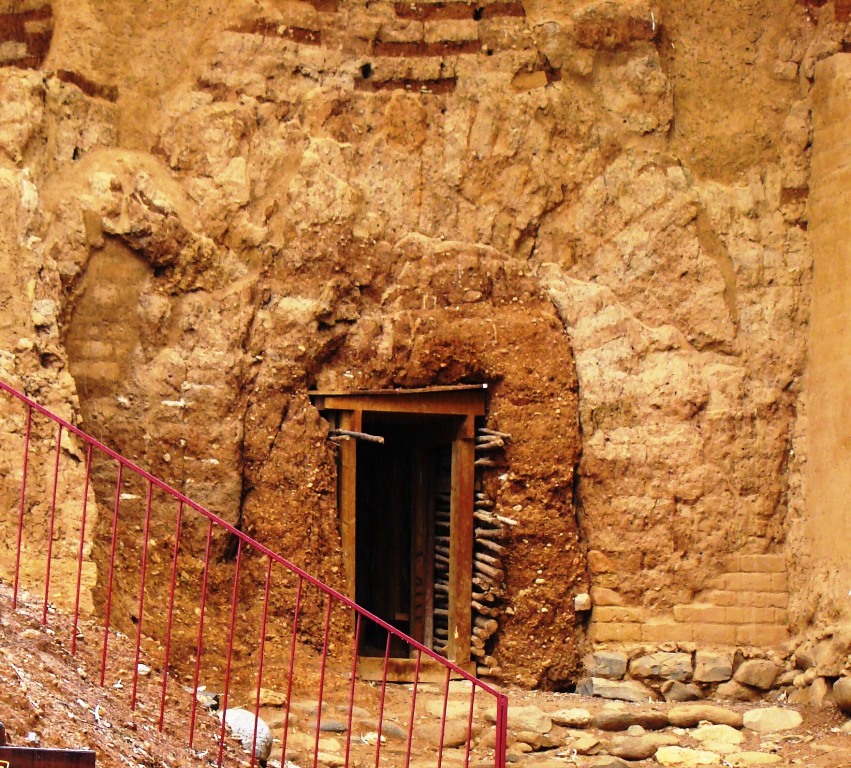
This is said to be the oldest known intact archway–nearly 4,000 years old. It is now under a great canopy for protection from the elements. Here is a closer view:

Close up of Canaanite Gate at Dan. Photo by Leon Mauldin.


Nazareth, Jesus’ Hometown

April 19, 2011

With the exception of the birth and very early childhood of Jesus (which was in Bethlehem and Egypt), Jesus lived in Nazareth until He was about the age of 30 (Luke 3:23).

On one occasion early in His Great Galilean Ministry, Jesus preached in His home town of Nazareth. Unfortunately, it was not well received, concluding with an attempt to push Jesus down to His death:

16 Now Jesus came to Nazareth, where he had been brought up, and went into the synagogue on the Sabbath day, as was his custom. He stood up to read, 17 and the scroll of the prophet Isaiah was given to him. He unrolled the scroll and found the place where it was written, 18 “The Spirit of the Lord is upon me, because he has anointed me to proclaim good news to the poor. He has sent me to proclaim release to the captives and the regaining of sight to the blind, to set free those who are oppressed, 19 to proclaim the year of the Lord’s favor.” 20 Then he rolled up the scroll, gave it back to the attendant, and sat down. The eyes of everyone in the synagogue were fixed on him. 21 Then he began to tell them, “Today this scripture has been fulfilled even as you heard it being read.” 22 All were speaking well of him, and were amazed at the gracious words coming out of his mouth. They said, “Isn’t this Joseph’s son?” 23 Jesus said to them, “No doubt you will quote to me the proverb, ‘Physician, heal yourself!’ and say, ‘What we have heard that you did in Capernaum, do here in your hometown too.'” 24 And he added, “I tell you the truth, no prophet is acceptable in his hometown. 25 But in truth I tell you, there were many widows in Israel in Elijah’s days, when the sky was shut up three and a half years, and there was a great famine over all the land. 26 Yet Elijah was sent to none of them, but only to a woman who was a widow at Zarephath in Sidon. 27 And there were many lepers in Israel in the time of the prophet Elisha, yet none of them was cleansed except Naaman the Syrian.” 28 When they heard this, all the people in the synagogue were filled with rage. 29 They got up, forced him out of the town, and brought him to the brow of the hill on which their town was built, so that they could throw him down the cliff. 30 But he passed through the crowd and went on his way (Luke 4:16-30).

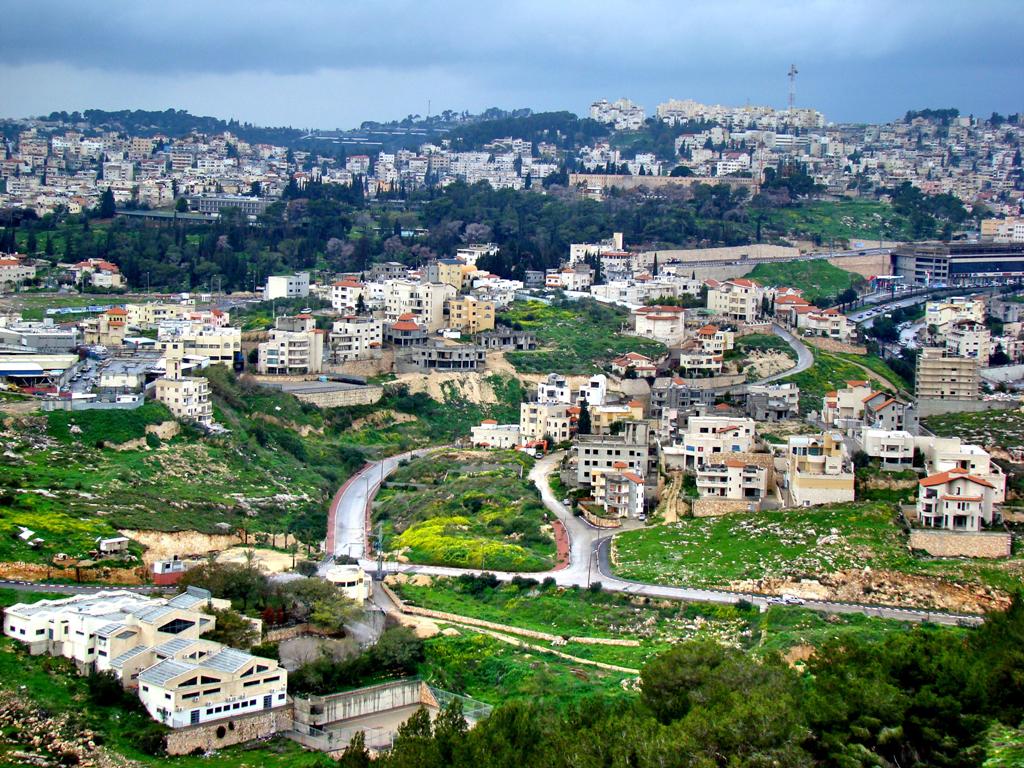
The traditional location of hill from which the residents of Nazareth attempted to push Jesus is known as the Mount of Precipice. It is 397 meters above sea level, and overlooks the Jezreel Valley.

Nazareth. View from Mt. Precipice. Photo by Leon Mauldin.

From here one has a good view of Nazareth.

Nazareth from Mt. Precipice. Photo by Leon Mauldin.

Buildings come and go, but the hills and valleys remain the same (as a rule). I.e., the landscape here pictured is what Jesus and his family would have seen.

Here at Nazareth is the Church of the Annunciation, which commemorates the angelic announcement to Mary of God’s choice of her to be the mother of Jesus (Lk. 1: 26-38).

Nazareth. Church of the Annunciation. Photo by Leon Mauldin.

Inside the church can be seen the spring which was the city’s water supply.

Click on images for higher resolution.


Paul Preached at Caesarea

April 2, 2011

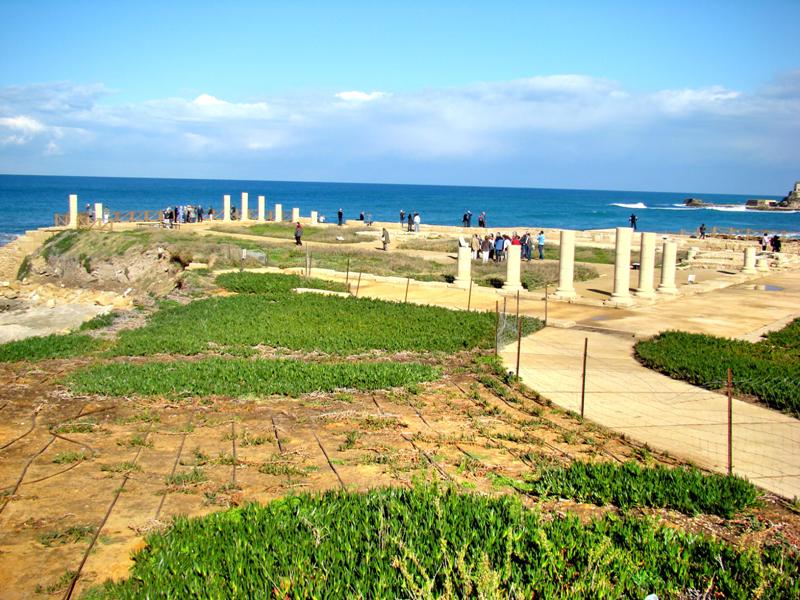
After the third missionary journey, Paul was taken by a military escort from Jerusalem to Caesarea (Acts 23:23ff.). He would be there at Caesarea as a prisoner for two years, although provisions were made for his friends to attend to his needs (Acts 24:23). It is believed that Paul would have been confined in the palace built by Herod the Great, the ruins of which can be seen in our photo.

Governor's Palace at Caesarea. Photo by Leon Mauldin.


BAR informs us,

This ancient building, which we now call the Promontory Palace, was first excavated in 1976 by Ehud Netzer of the Institute of Archaeology of the Hebrew University of Jerusalem. Netzer returned to the site in 1990 and brought in a new American team led by Kathryn Gleason and Barbara Burrell under the auspices of the University of Pennsylvania. Its members are mainly student volunteers, though in 1992 they were joined by a contingent of Israeli workers, most of them new immigrants from Russia (May/June 1993).

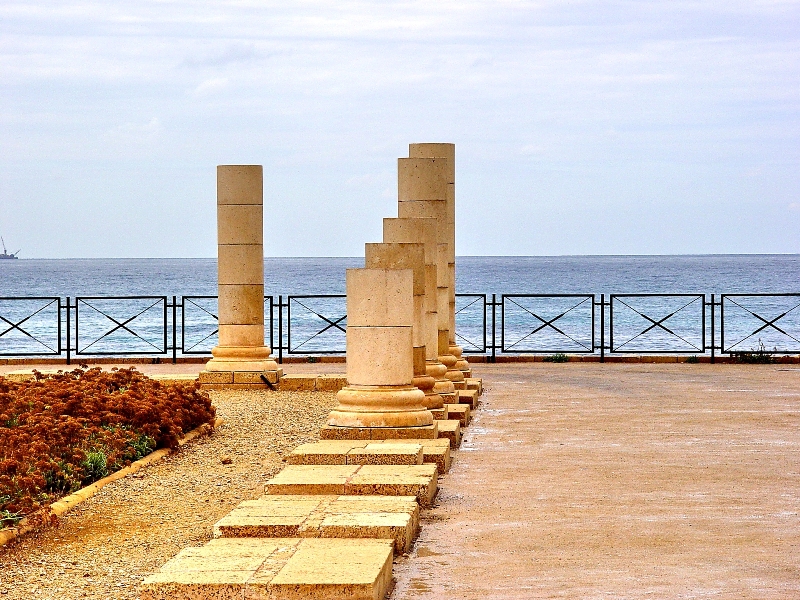
Our previous post featured photos of the swimming pool and mosaics. Below is a more detailed shot of some of the columns.

Palace at Caesarea. Photo by Leon Mauldin.

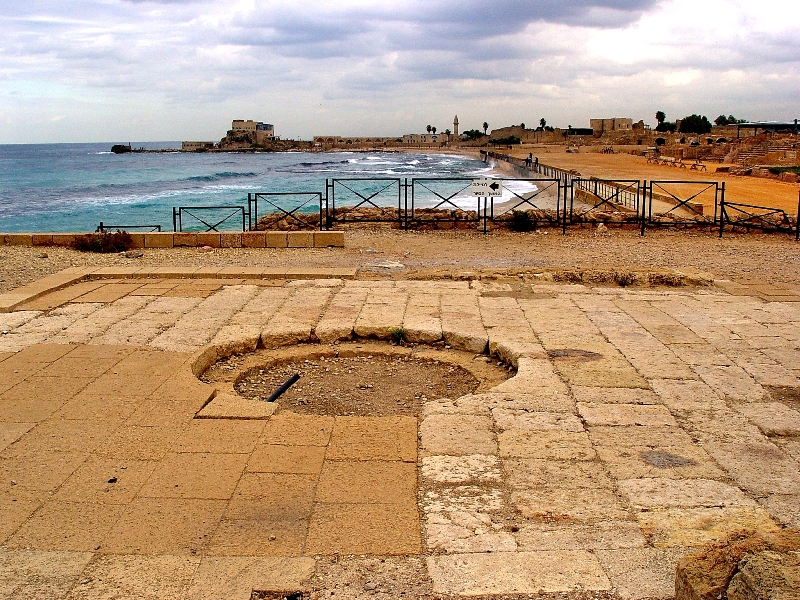
Paul would have the occasion here to preach before Felix (Acts 24) and his successor Festus (Acts 25) as well as Herod Agrippa II (Acts 26). The audience hall in our photo is likely the site where Paul would have given his defense of the Gospel before these dignitaries.

Audience Hall at Palace at Caesarea. Likely site of Paul's preaching. Photo by Leon Mauldin.


It was here that Paul exercised his right as a Roman citizen–“I appeal to Caesar” (Acts 25:11). Festus responded, “To Caesar you have appealed; to Caesar you shall go” (v.12, ESV).

Click on images for higher resolution.