In Ostia, Italy, Rome’s Ancient Port

March 21, 2024

Today my tour group visited Ostia Antica, and saw some of the excavations there. Over time, the port silted up, but in antiquity it was of vital importance to Rome. The Lexham Bible Dictionary has the following information:

OSTIA An ancient port of Rome located at the mouth of the Tiber River. A vital strategic and commercial site of the Roman Empire.

Location and Biblical Relevance

Ostia was the nearest port that granted access to Rome for seafaring travelers of the New Testament world. Its name is derived from the Latin term ostium, meaning “doorway” or “entryway.” The name encapsulates the importance of the site, for it served as the maritime gateway to the capital of the Roman Empire.

The city and port of Ostia was located 22 miles (35 km) downstream from Rome at the mouth of the Tiber River. It was associated with sea trade, which brought in wares and cultural goods from throughout the Mediterranean.

Ostia was also an early base for Roman naval activities. In its first centuries, the city was hardly more than a Roman army camp populated by citizen colonists (Salmon, Roman Colonization, 26–27). Ostia was not an excellent harbor; its anchorage was exposed, leaving it vulnerable to storms and pirates. These problems would not be solved until the first and second centuries ad, when the rival port of Portus was constructed.

Brand, S. The Lexham Bible Dictionary. Lexham Press.

As one first enters the archaeological area, there is a statue of Minerva-Victory.
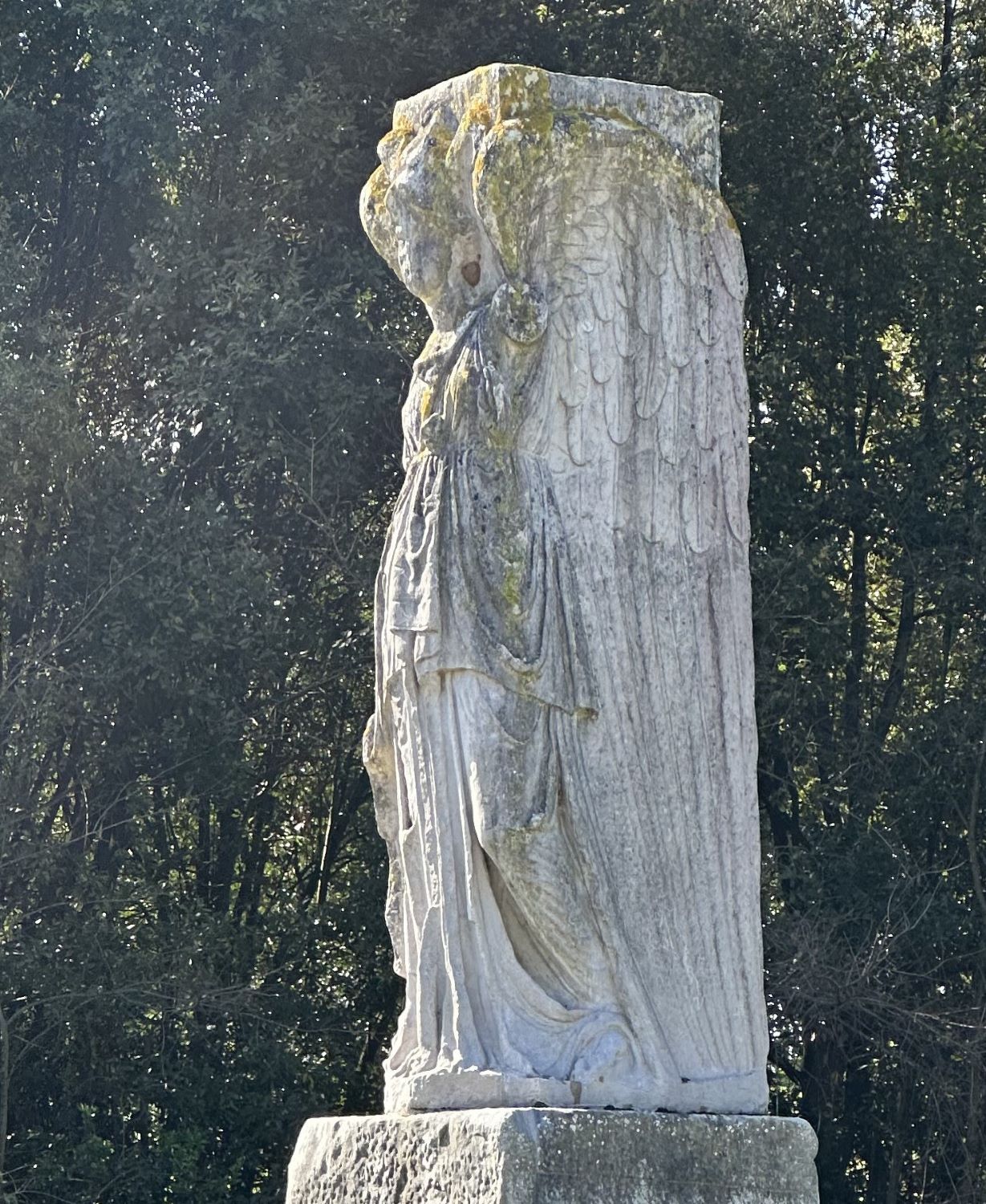
Minerva-Victory Statue. Photo ©Leon Mauldin.

The theater was constructed at the directive of Caesar Augustus, and was enlarged by Commodus and restored by Septimius Severus.
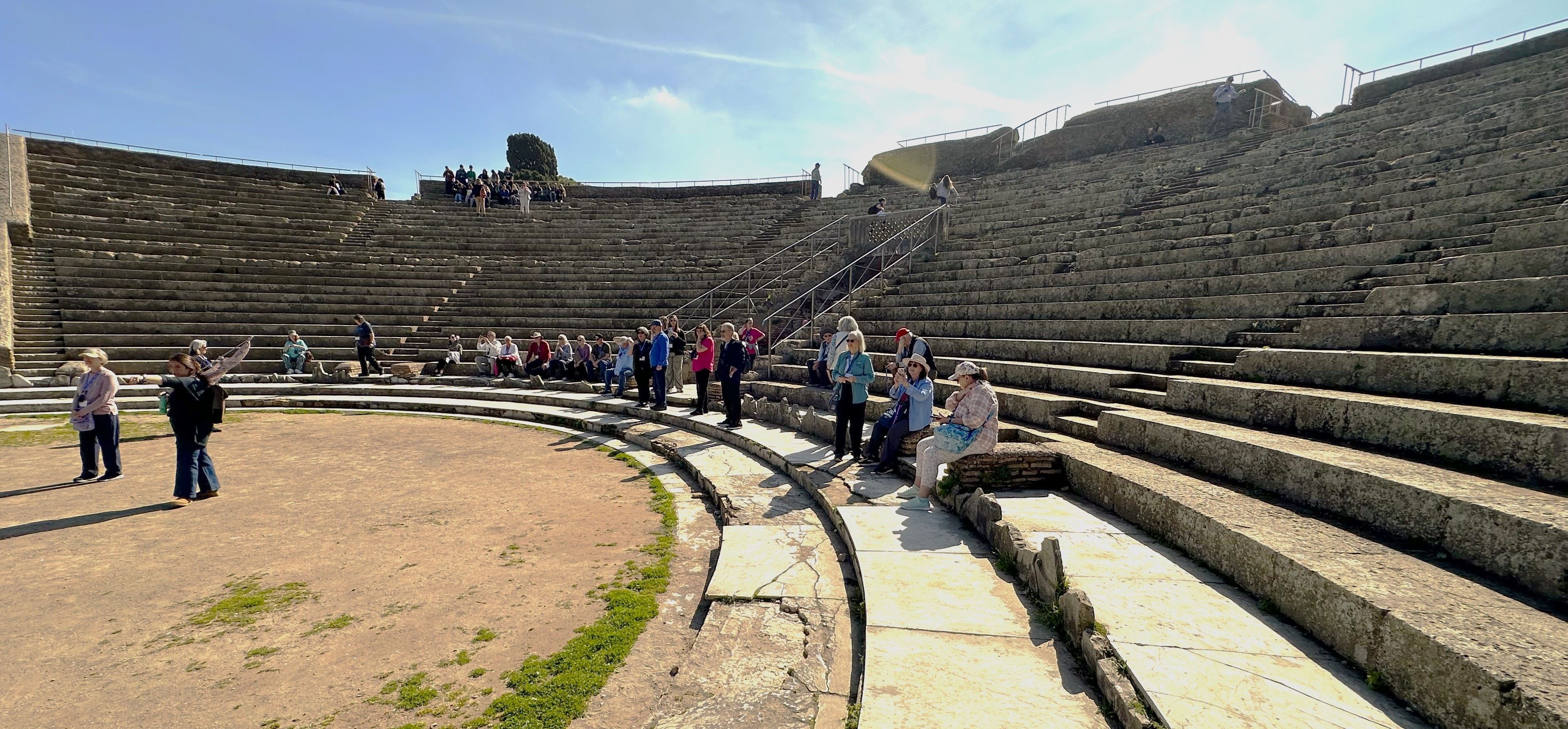
Ostia Theater. Photo ©Leon Mauldin.

There are some typical masks on site behind the stage area.
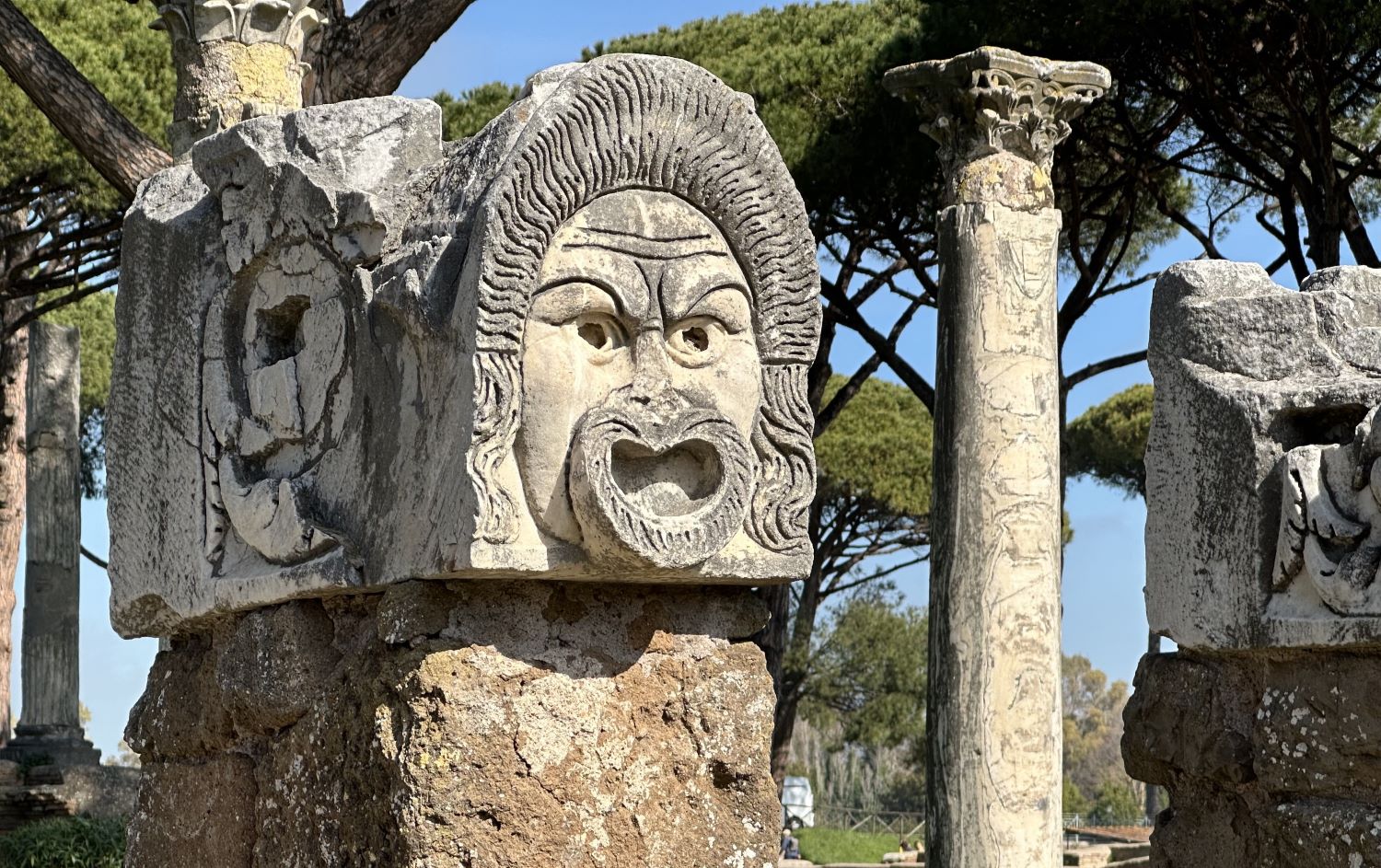
Theactrical mask. Photo ©Leon Mauldin.

We also saw an altar dedicated to Mars and Venus with the representation of the Tiber river god, the she-wolf and the twins Romulus and Remus.
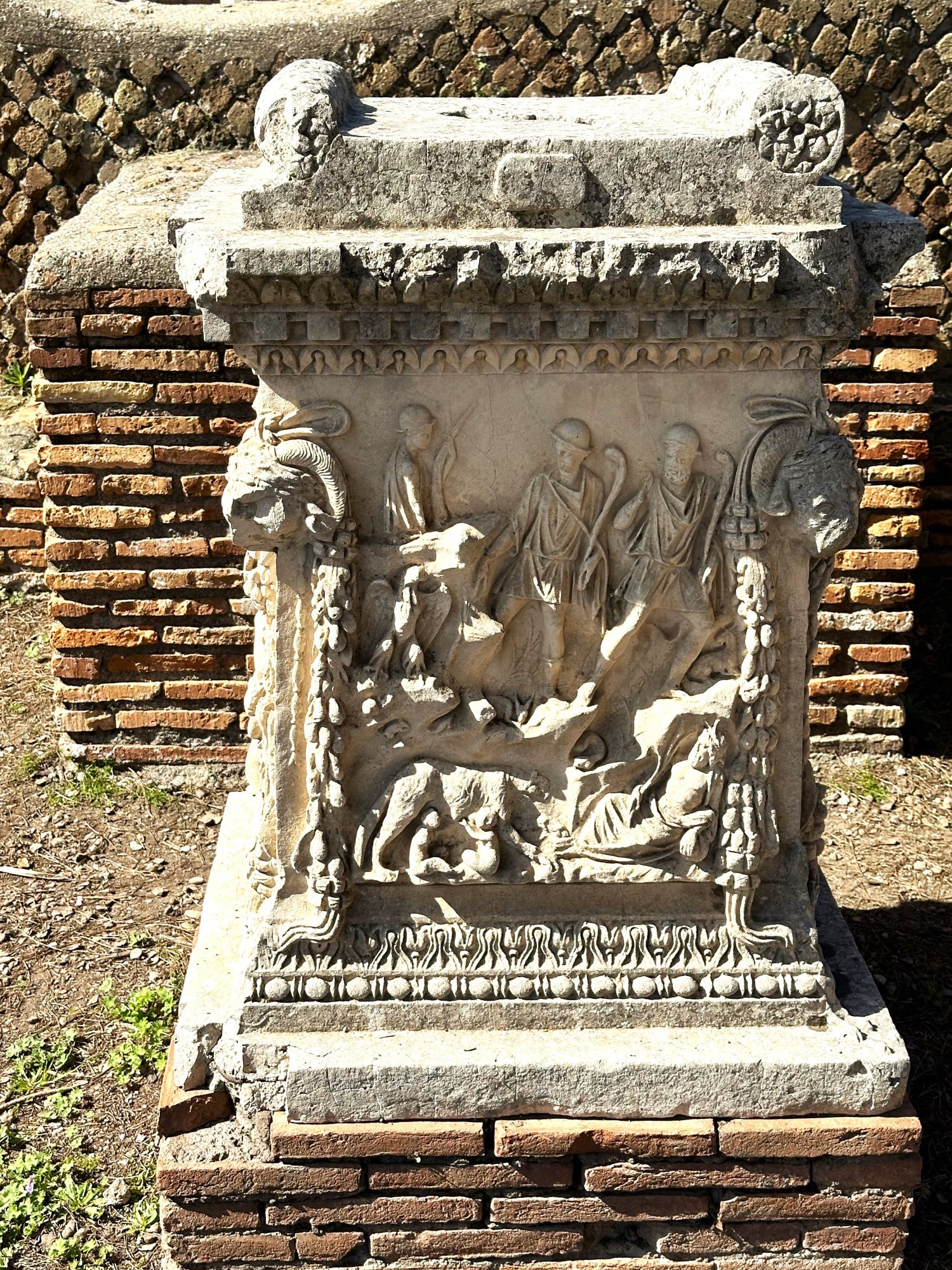
Altar dedicated to Mars and Venus. Photo ©Leon Mauldin.

At the necropolis there are numerous sepulchral buildings, including the Tomb of the Little Arches.
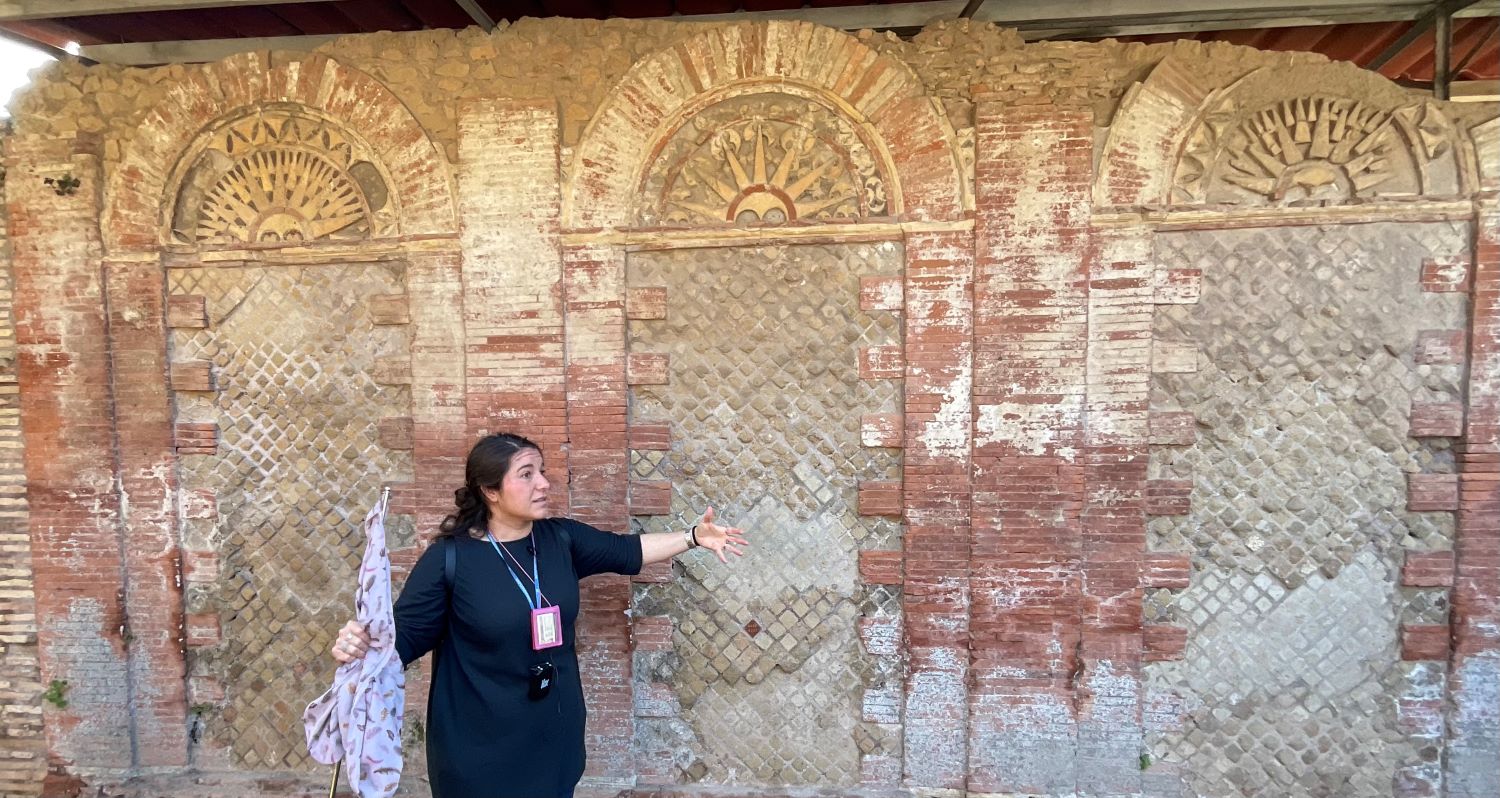
Tomb of the Little Arches. Photo ©Leon Mauldin.

Click on photos for larger view.


Pompeii, the Odeum (Small Theater)

August 25, 2023

We are looking forward to again touring Sicily/Italy in March 2024, the Lord willing. I was recently reviewing some photos from previous trips and wanted to share a few of these. Pompeii was covered with volcanic ash by the eruption of Mount Vesuvius (August AD 79).

In this post we will look at the Odeum at Pompeii. Here is the view of Pompeii just inside the entrance (Mt. Vesuvius is in the background):

One’s initial view of Pompeii at entrance. Mt. Vesuvius is in the background. Photo ©Leon Mauldin.

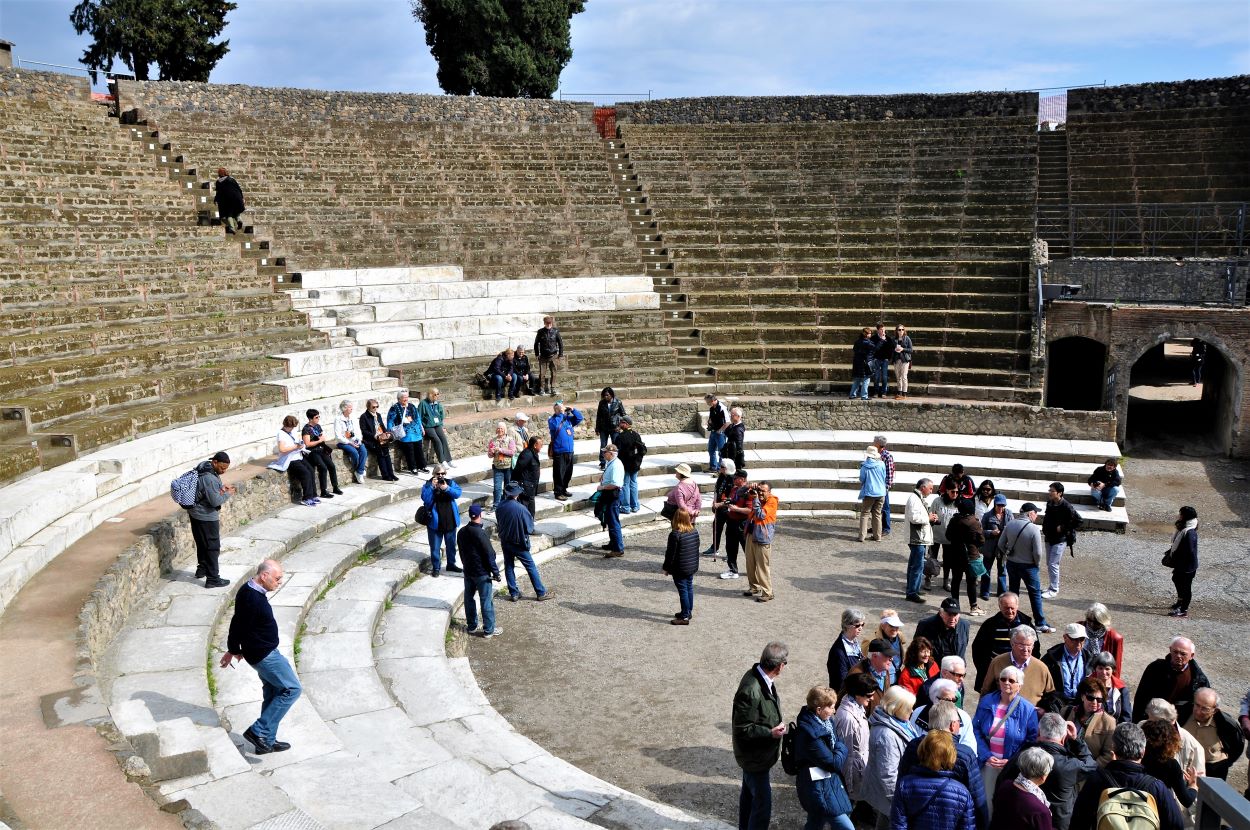
The city had two theaters, the large theater, which seated about 5,000 spectators, and the small theater, the odeon. The seating capacity of this small theater was about 1,000 people. A pyramid-shaped roof would have covered it. It would have been used for musical performances and mime.

Odeum at Pompeii. Photo ©Leon Mauldin.

Here is a photo of my group in the Odeum, March 2016.

Mauldin group photo, 2016. Photo ©Leon Mauldin.

An inscription at the site states that the duumviri C. Quintius Valgus and M. Porcius, two leading citizens of Pompeii, financed the construction of the theater. In 80 BC Pompeii became a Roman colony with the name of Colonia Cornelia Veneria Pompei.

Inscription at Odeon in Pompeii. Photo ©Leon Mauldin.

Beth Guvrin at Mareshah, Israel

December 15, 2017

Beth Guvrin in Israel was a Roman city on the outskirts of biblical Maresha (see Josh. 15:44; Micah 1:15).

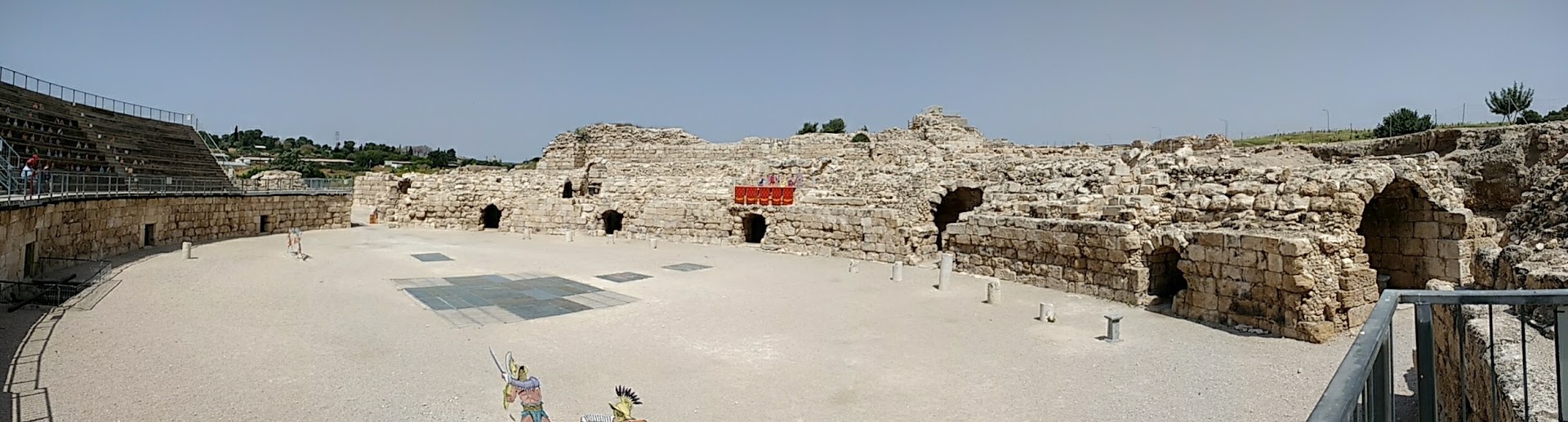
Emperor Septimus Severus turned Beth Guvrin into a major administrative center (ca. 200 AD). I took this photo of the amphitheater on April 27, 2017.

Panorama of amphitheater at Beth Guvrin. Photo by Leon Mauldin.

This amphitheater would have been used for animal and gladiator fights.

BTW: Often folks refer to theaters as “amphitheaters.” There is a difference: the amphitheater makes an oval shape while a theater only makes a half circle.

Click image for larger view.


Syracuse, Mt. Etna, and Taromina, Sicily

March 13, 2016

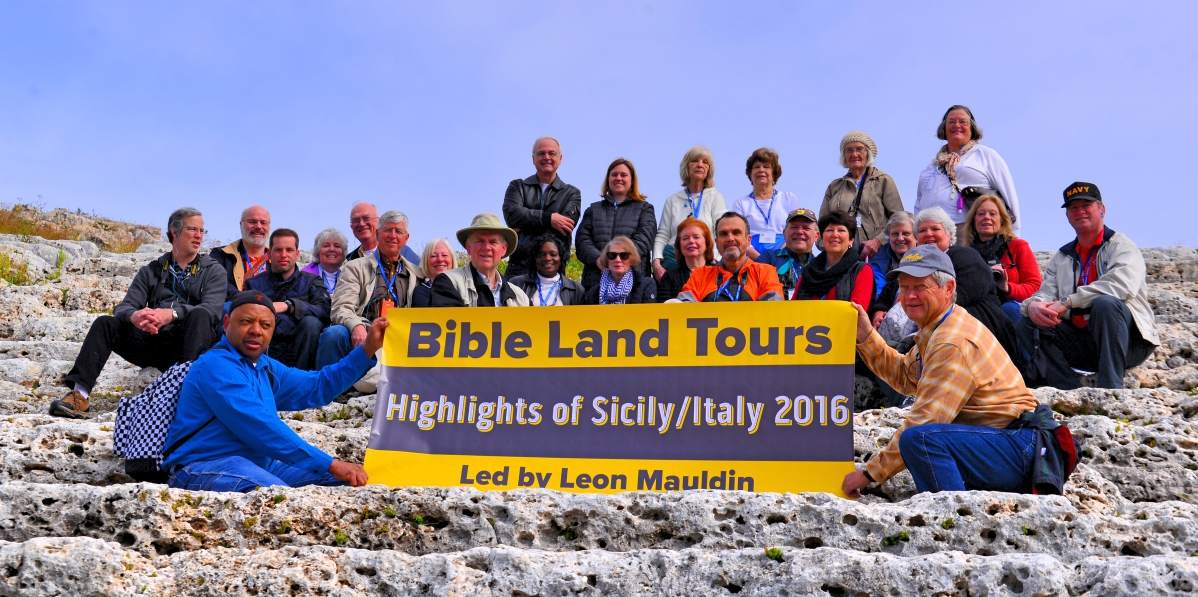
Yesterday (Saturday) we visited the archaeological sites Syracuse, Sicily, and from there went on to Mt. Etna (Europe’s most active volcano), and then to Taromina. While at the Greek theater at Syracuse we took this group photo.

Group photo at Greek Theater at Syracuse, Sicily. Photo by David Deason.

Group photo at Greek Theater at Syracuse, Sicily. Photo by David Deason.

This theater was built in the 5th century BC.

The city of Syracuse was founded in 733 BC by Greek settlers from Corinth. Some names associated with Syracuse include Aeschylus, considered the father of the Greek tragedy. The philosopher Plato was in Syracuse. Syracuse was the birthplace of Archimedes, the famous mathematician and most influential scientist of the ancient world.

But actually none of those names brought us to this ancient site; rather it was its biblical mention in connection with Paul’s journey (as a prisoner) to Rome. Of that point in the journey Luke writes, “And landing at Syracuse, we stayed three days” (Acts 28:12).


Delphi, Greece

February 17, 2015

Though Delphi is not a biblical city, this site was of great importance in antiquity. The

Seat of an important oracle and temple of Apollo at least as early as the seventh century, Delphi received pilgrims from all over Greece. She was enriched, too, as numerous city-states sent their votive gifts and erected shrines there. The Pythian Games, in honor of Apollo, were held at Delphi every four years. (Pfeiffer, The Wycliffe Historical Geography of Bible Lands).

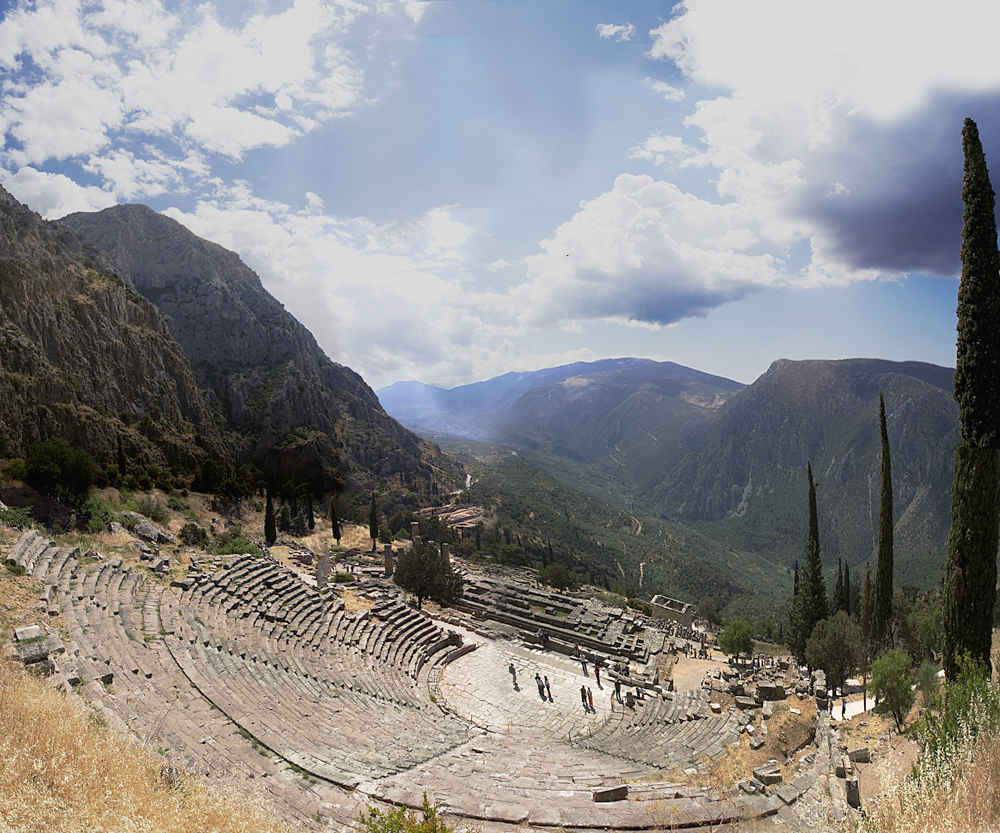
This photo shows the theater of Delphi. At bottom center is the temple of Apollo.

Delphi Theater. Photo by Leonidtsvetkov at en.wikipedia

Delphi Theater. Photo by Leonidtsvetkov at en.wikipedia

Fant and Reddish point out,

When it is surrounded by blooming almond trees in the spring, Delphi is surely one of the most beautiful places in the world. The ancient Greeks agreed and described it as the center (literally, the navel, omphalos) of the world.

The Sacred Precinct of Delphi comprises, in addition to the temple of Apollo, an impressive theater, the Bouleuterion (council chamber) of the city, numerous treasuries of Greek cities that held valuable offerings to Apollo, and many monuments and altars. From the entrance, the Sacred Way leads uphill between the bases of monuments that celebrated military victories and more than twenty treasuries that held votive offerings. The Treasury of the Athenians (510 B.C.E.) has been reerected in the form of a Doric temple. The Temple of Apollo itself was originally built in the 7th century B.C.E.; it burned to the ground in 548 B.C.E. and was rebuilt in 531 B.C.E.  

This later temple collapsed from an earthquake in 373 B.C.E. Only the foundations of the third temple (346–320 B.C.E.) remain today.

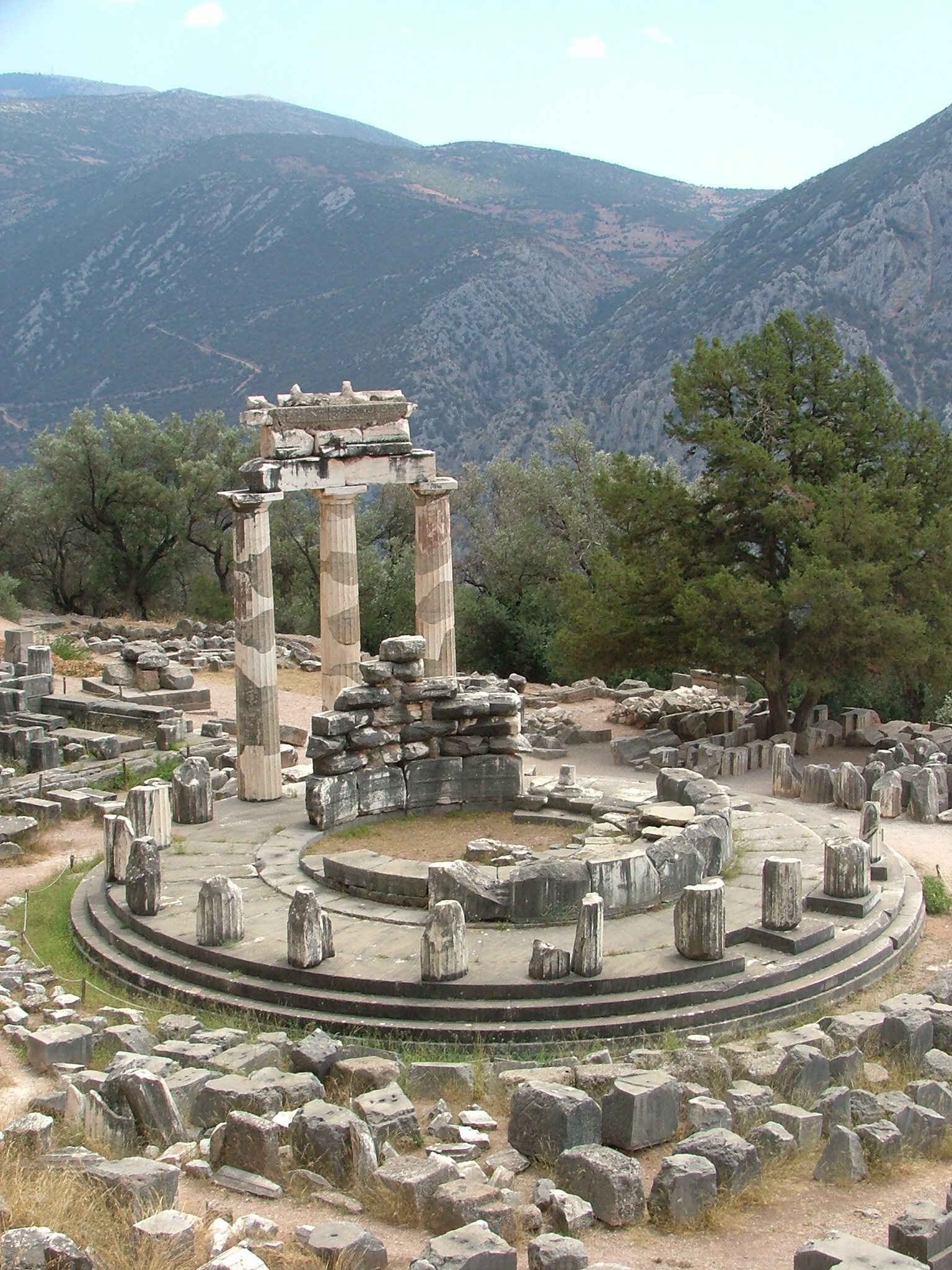
Here is a photo of the Sanctuary of Athena. This tholos, or rotunda, was build early 4th century BC.

Sanctuary of Athens at Delphi. Photo by By KufoletoAntonio De Lorenzo and Marina Ventayol. Wikipedia.

Sanctuary of Athens at Delphi. Photo by By KufoletoAntonio De Lorenzo and Marina Ventayol. Wikipedia.

One very important artifact in the Delphi Museum is the Gallio inscription. Gallio is the Proconsul of Achaia before whom Paul stood for trial at Corinth as related in Acts 18:12ff. For a photo of this inscription click here.

Click images for larger view.


Roman Theater in Trieste

July 15, 2014

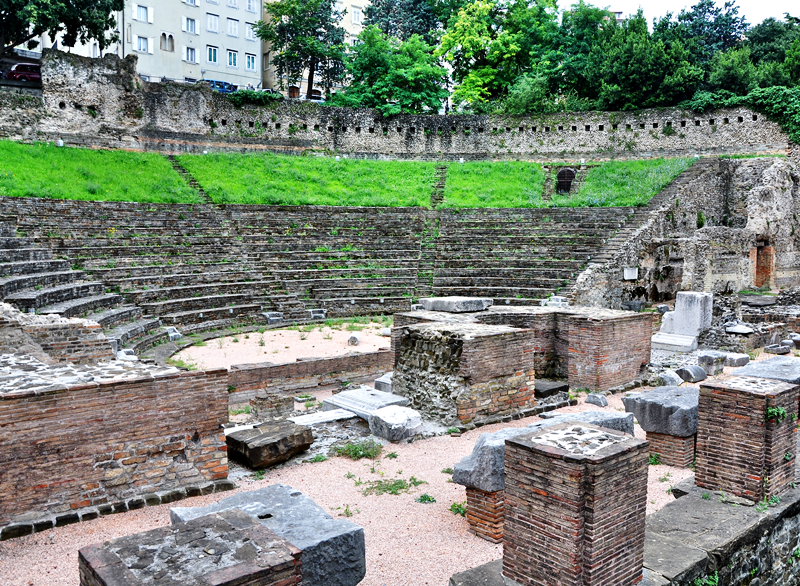
It is an understatement to say that the Roman Empire really left its mark. There are many sites where theaters which date back to Roman times may be seen. When we were leaving Trieste yesterday morning, we went by the Roman theater there.

Roman Theater at Trieste, Italy. Photo by Leon Mauldin.

Roman Theater at Trieste, Italy. Photo by Leon Mauldin.

Yesterday we made our way on to Venice, where we had an afternoon to visit. Then today was an all-day tour of Venice (walking; they do not intend for you to sit anywhere here, at least not for long). Our wake up call is in a few hours at 3:00 AM; then a quick transfer to the airport to make our way home.

More photos to share later. Click on image for larger view.


Theater At Hierapolis

May 27, 2014

Today was devoted to exploring Hierapolis. I think today was the hottest day of our trip, and we did a lot of walking. There is a lot to see here.

First century Christians living in Hierapolis are mentioned in Colossians 4:12-13:

Epaphras, who is one of you, a servant of Christ Jesus, greets you, always struggling on your behalf in his prayers, that you may stand mature and fully assured in all the will of God. 13 For I bear him witness that he has worked hard for you and for those in Laodicea and in Hierapolis.

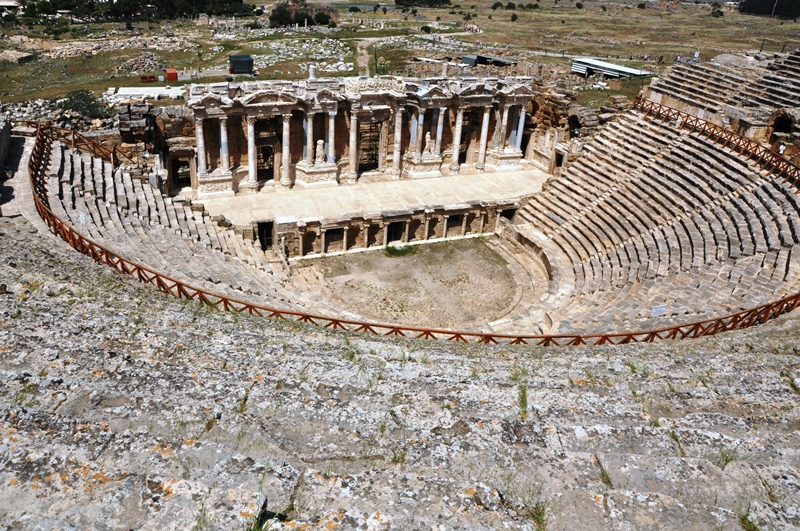
Every significant Roman city ordinarily had a theater.

Hierapolis Theater. Photo by Leon Mauldin.

Hierapolis Theater. Photo by Leon Mauldin.

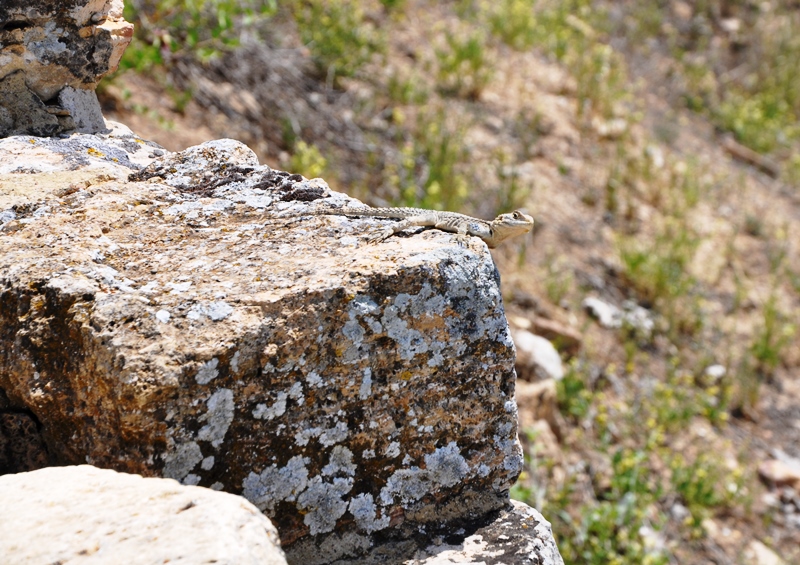
Some flora and fauna at Heriapolis:

Gecko at Hierapolis. Photo by Leon Mauldin.

Gecko at Hierapolis. Photo by Leon Mauldin.

Wild flowers at Hierapolis. Photo by Leon Mauldin.

Wild flowers at Hierapolis. Photo by Leon Mauldin.

Today wraps up this photo/study trip for various sites in Turkey for Ferrell Jenkins & me.  We have made several trips of this nature, and I always enjoy them and learn a lot. Tomorrow morning is a 4 hr. drive back to the airport at Antalya and then a flight to Istanbul and homeward bound from there.


Theater at Salamis, Cyprus

May 17, 2012

It was an exciting time in the early church as Luke narrates his inspired history in Acts 13:

Now in the church that was at Antioch there were certain prophets and teachers: Barnabas, Simeon who was called Niger, Lucius of Cyrene, Manaen who had been brought up with Herod the tetrarch, and Saul. 2 As they ministered to the Lord and fasted, the Holy Spirit said, “Now separate to Me Barnabas and Saul for the work to which I have called them.” 3 Then, having fasted and prayed, and laid hands on them, they sent them away. 4 So, being sent out by the Holy Spirit, they went down to Seleucia, and from there they sailed to Cyprus. 5 And when they arrived in Salamis, they preached the word of God in the synagogues of the Jews. They also had John as their assistant.

Ferrell Jenkins and I had opportunity to visit Salamis today. Fant and Reddish observe that “more than 4 miles of walking are required to cover the entire site” (A Guide to Biblical Sites in Greece and Turkey, p. 542). It is a large site, and does not have the features of your typical tel.

The apostle Paul’s pattern upon entering a city, as seen here in our text of Acts 13, was to begin his preaching in the synagogue. Though Luke almost always describes the results of the preaching, whether favorable or not, he does not do so here.

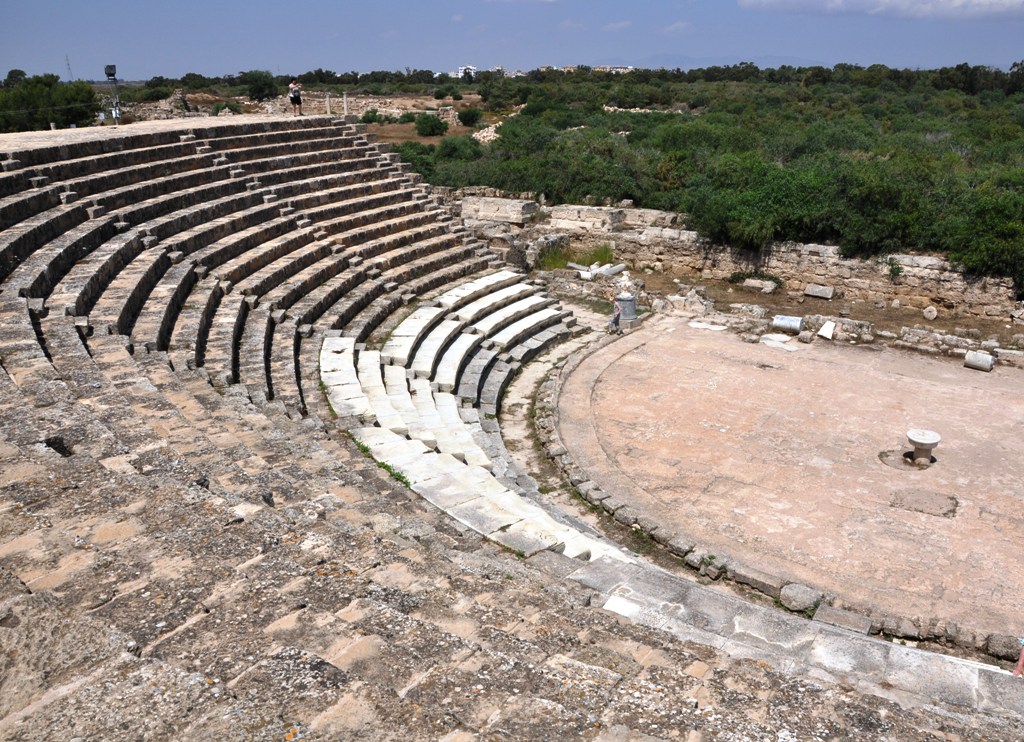
Roman cities of significance typically had a theater. Our photo shows the theater at Salamis.

Salamis Theater. Photo by Leon Mauldin.

This theater would have once seated 15,000 spectators (ibid), making it the largest on the island of Cyprus.

Click image for larger view.