Emperor Claudius, cont’d.

March 29, 2012

Our photo today features a statue of the Emperor Claudius, taken last week at the Vatican Museum in Rome.
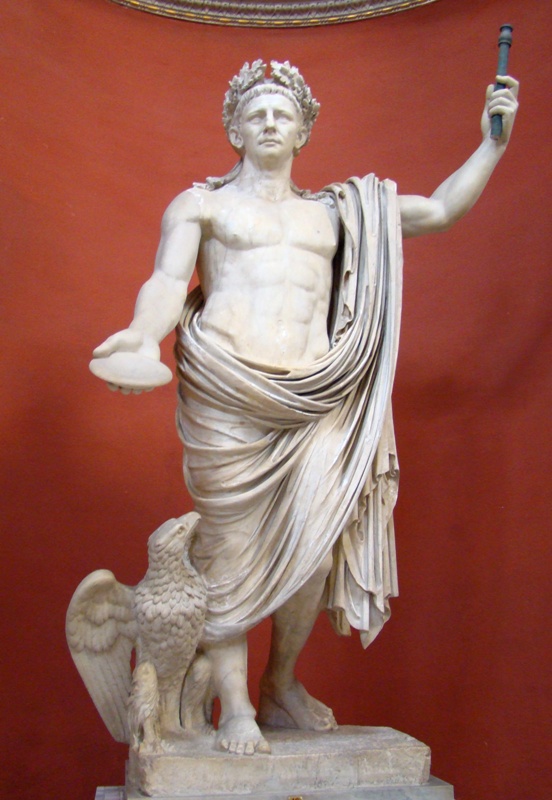
Statue of Emperor Claudius. Vatican Museum. Photo by Leon Mauldin.

Museum info placard: “Found at Lanuvio in 1865, this piece originally decorated the theatre in this Roman settlement. Claudius, emperor from  37 (sic) to 54 AD, is shown as Jupiter, wearing the civil crown of oak leaves and with the eagle at his feet.”

Claudius,

(1 August 10 BC – 13 October AD 54), was Roman Emperor from 41 to 54. A member of the Julio-Claudian dynasty, he was the son of Drusus and Antonia Minor. He was born at Lugdunum in Gaul and was the first Roman Emperor to be born outside Italy. Because he was afflicted with a limp and slight deafness due to sickness at a young age, his family ostracized him and excluded him from public office until his consulship, shared with his nephew Caligula in 37. Claudius’ infirmity probably saved him from the fate of many other nobles during the purges of Tiberius and Caligula’s reigns; potential enemies did not see him as a serious threat. His survival led to his being declared Emperor by the Praetorian Guard after Caligula’s assassination, at which point he was the last adult male of his family.

Despite his lack of experience, Claudius proved to be an able and efficient administrator. He was also an ambitious builder, constructing many new roads, aqueducts, and canals across the Empire. During his reign the Empire conquered Thrace, Noricum, Pamphylia, Lycia and Judaea, and began the conquest of Britain. He took a personal interest in law, presided at public trials, and issued up to twenty edicts a day. However, he was seen as vulnerable throughout his reign, particularly by the nobility. Claudius was constantly forced to shore up his position; this resulted in the deaths of many senators. These events damaged his reputation among the ancient writers, though more recent historians have revised this opinion. After his death in 54, his grand-nephew and adopted son Nero succeeded him as Emperor (Wikipedia).

Scroll down and read our previous post to see some scriptural reverences to Claudius in the NT book of Acts.

Click on image for larger view.


Pantheon by Night

March 23, 2012

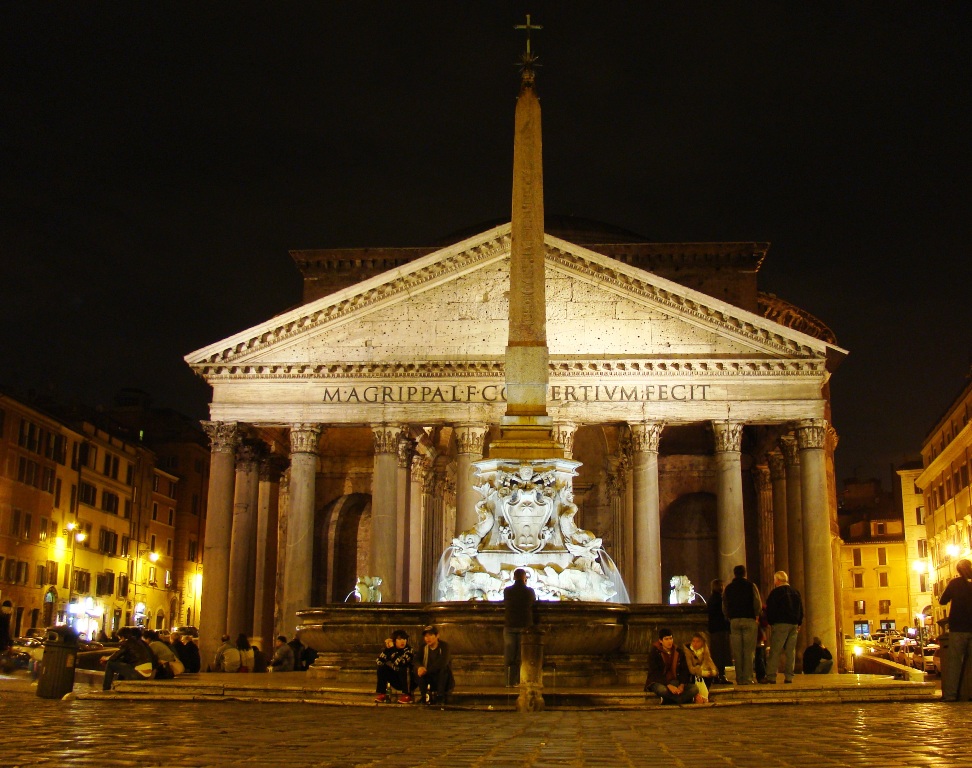
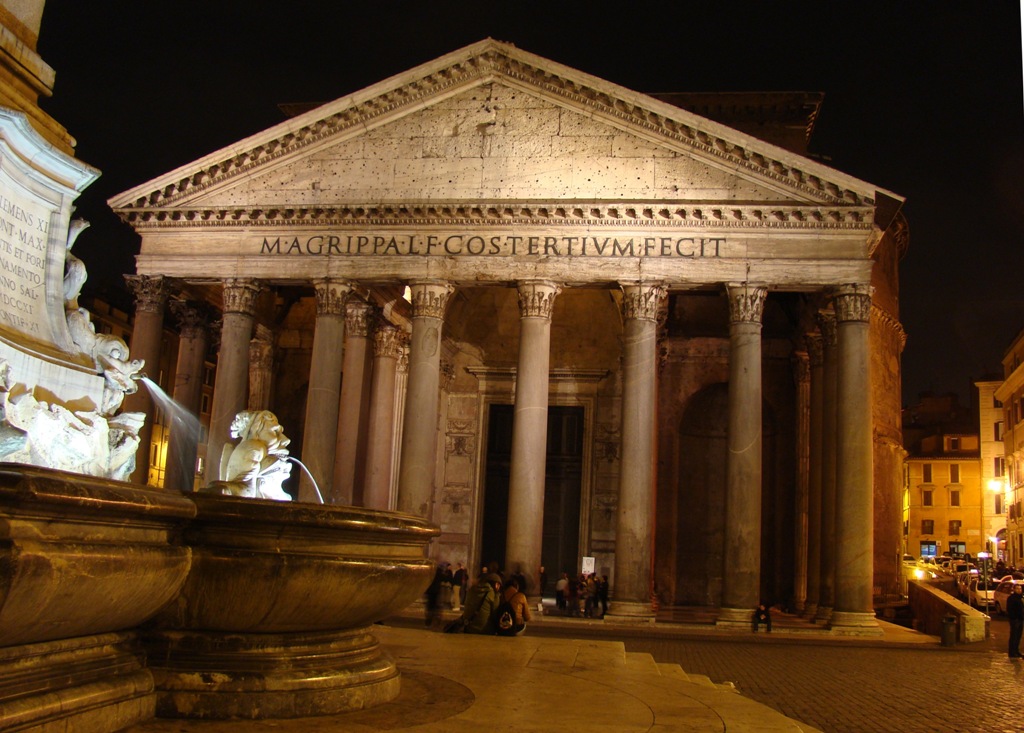
We had the occasion to do a few night shots while in Rome. The Pantheon was built to honor all gods of Rome. It was rebuilt (having previously burnt) by Emperor Hadrian AD 126. The dome measures 142 feet high by 142 feet wide, and was the largest freestanding dome until the 20thcentury.

Pantheon at Night. Photo by Leon Mauldin.

The twelve pantheon deities in Roman mythology were Jupiter, Juno, Neptune, Minerva, Venus, Mars, Apollo, Diana, Mercury, Vesta, Ceres and Vulcan.

Pantheon in Rome. At left is a portion of the Fontana del Pantheon. Photo by Leon Mauldin.

Click on images for larger view.


Arch of Titus

March 3, 2012

The Arch dedicated to Titus is in the Forum at Rome, located at the highest point of the Via Sacra. It was on this street that most of the religious processions took place.

Arch of Titus, located in Forum of Ancient Rome. Photo by Nancy Picogna.

The arch was built to commemorate the Roman defeat of Judea, including the destruction of Jerusalem and its Temple. Inside the arch, one side depicts the Roman soldiers removing the menorah, table of showbread and silver trumpets from the temple as it was destroyed in AD 70. Vespasian was Emperor and Titus was the commander of the Roman army at that time.  Titus was Emperor AD 79-81. After Titus’ death, the arch was constructed ca.AD 81 by Titus’ brother, the new Emperor Domitian.

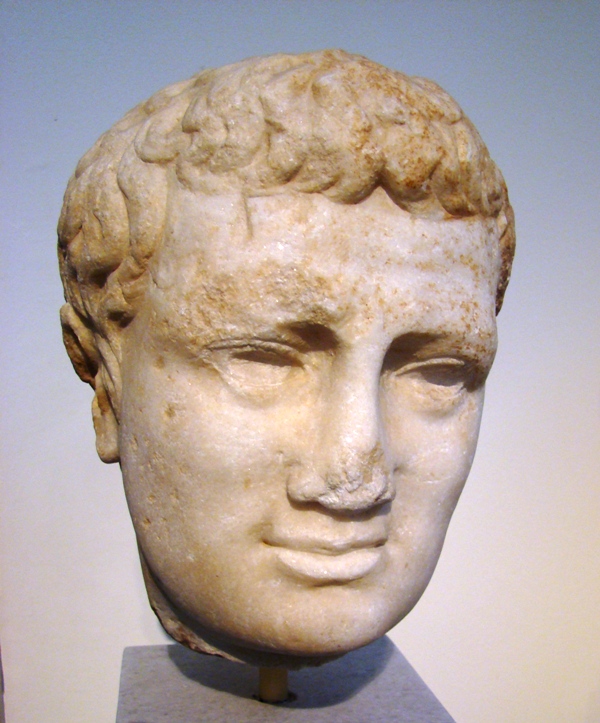
Emperor Titus, AD 79-81. Photo by Leon Mauldin.

This head of Titus (exhibit #348, Athens Museum), is made of Pentelic marble and was “probably found at Smyrna, Asia Minor. It is an earlier portrait head (possibly of the emperor Caligula) with parts reworked to render the features of Titus.”


St. Paul’s Well

December 13, 2011

Paul is said to be a “man of Tarsus” in Acts 9:11, ASV). Tarsus was the capital of the Roman province of Cilicia, located on what is today the southern coast of Turkey. It was a cultural and intellectual center in the first century. Fant and Reddish quote Strabo’s description of Tarsus as having “surpassed Athens, Alexandria, or any other place that can be named where there have been schools and lectures of philosophers” (A Guide to Biblical Sites in Greece and Turkey, p. 324).

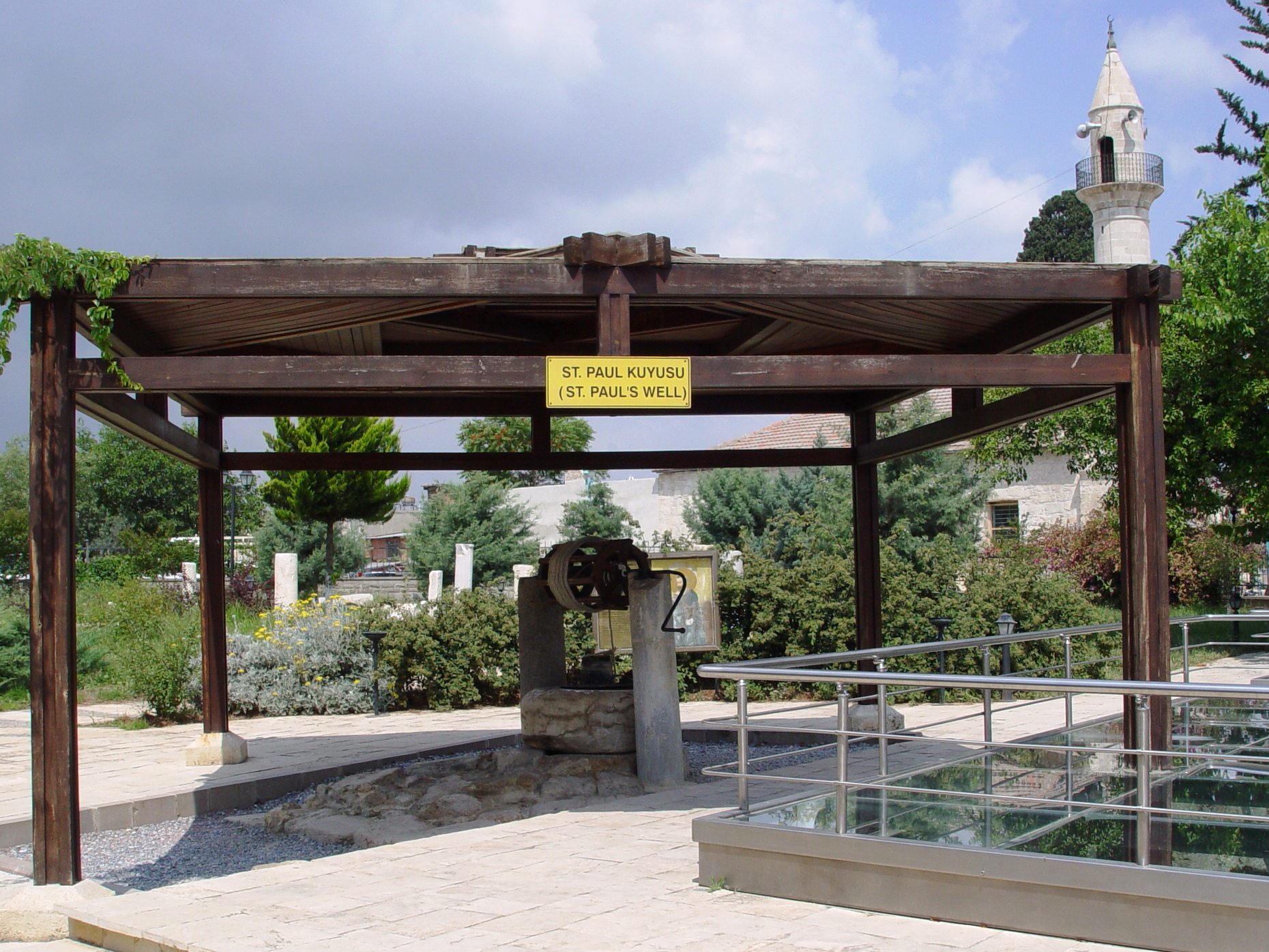
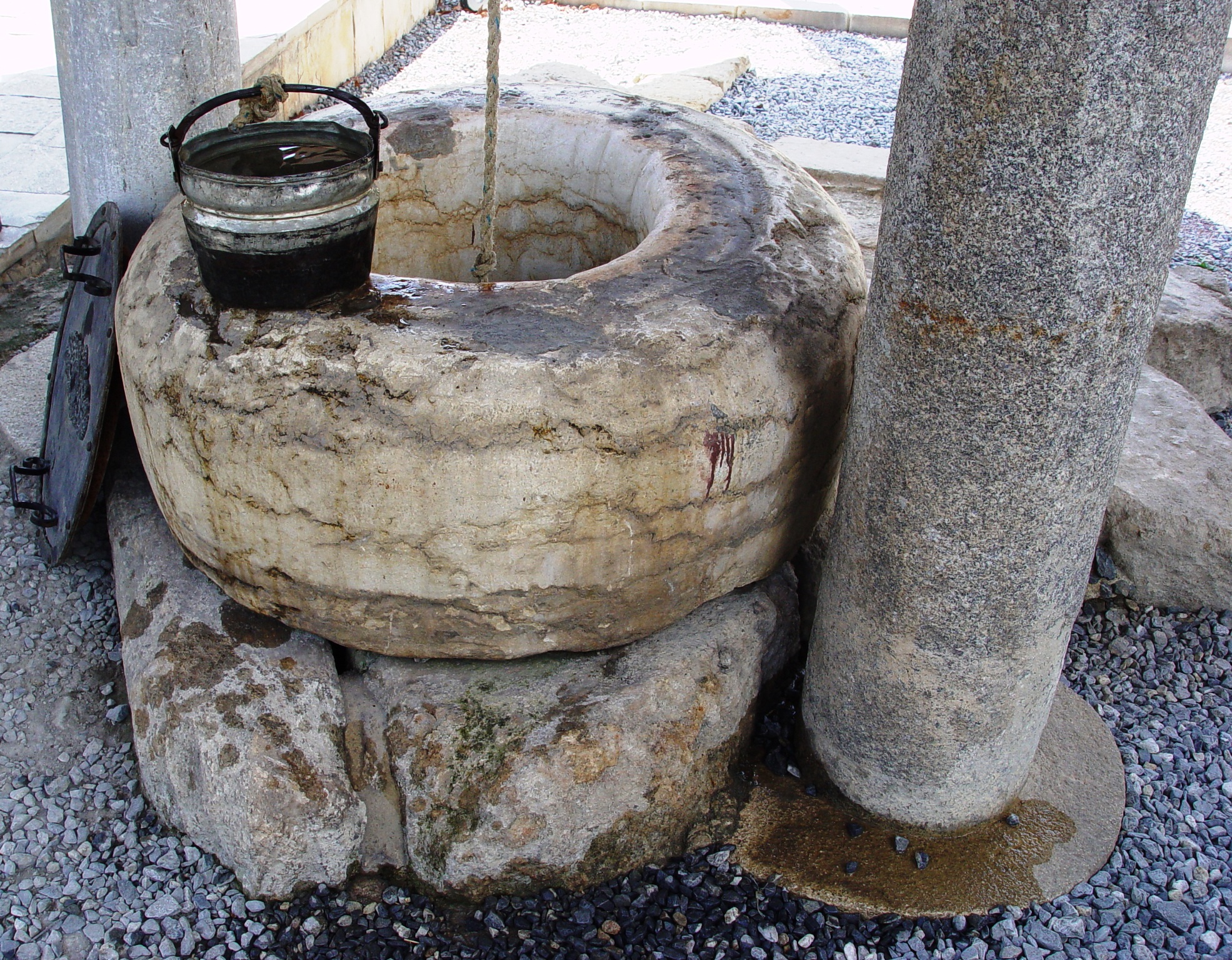
Not much can be seen of the Tarsus of Paul’s day, because the modern city with its population of 350,000+ is built on the ancient ruins. One exception to this is “St. Paul’s Well,” a well that dates back to Roman times.

"St. Paul's Well" at Tarsus. Photo by Leon Mauldin.

Visitors to this site are told that Paul certainly drank of this well, and therefore the waters are said to have curative properties. It would be more accurate to say that because the well certainly dates back to Roman times that Paul may have drunk from this well; the fact that it goes back to the time of Paul is what gives it special value to students of Scripture.

Well at Tarsus, Paul's home. Dates back to Roman Period. Photo by Leon Mauldin.

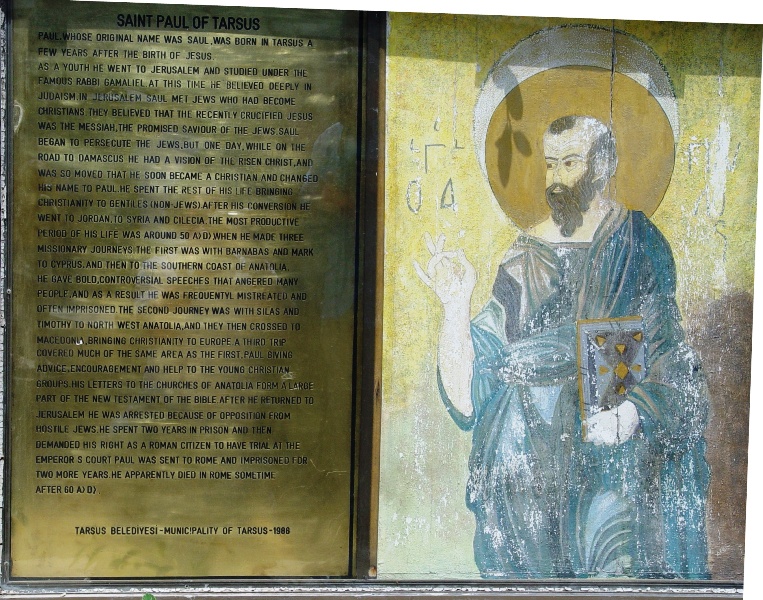
There is an info sign on the premises:

Info Sign on location near well. Photo by Leon Mauldin.

Though Tarsus was Paul’s home, as a youth he was “brought up in this city [Jerusalem], educated with strictness under Gamaliel according to the law of our ancestors” (Acts 22:3 NET). After his conversion there was a period where again Paul was in Tarsus (Acts 9:30), prior to his work in Antioch (Acts 11:25-26).

Click on images for larger view.


Roman Tongeren

May 5, 2011

We are looking forward to the lectureship which begins tomorrow evening in Houthalen, Belgium.This study will survey the biblical text of Acts through Revelation, with emphasis on the geographical setting of these events as we narrate the biblical record. I am thankful to God for every opportunity to teach His word.

Near Genk, where we are currently situated, is the Roman settlement of Tongeren. Tongeren (Atuatuca Tungrorum) is the oldest city in this region, established by the Romans in 10 BC. It is strategically located on the road between Boulogne (France) and Cologne (Germany).

The Gallo-Roman Museum in their very informative booklet observes:

The Romans do not build their cities at random. Tongeren lies on a navigable stream, in the middle of fertile loamy farmland. The city is well connected with the Roman road system. For the Romans it is of crucial importance that the Rhine border can be reached quickly.

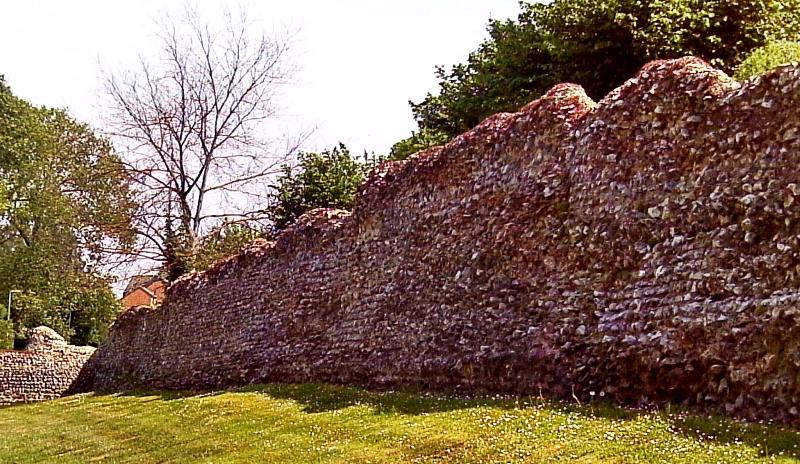
In places the ancient walls can still be seen.

Remnants of Roman Wall at Tongeren. Photo by Leon Mauldin.

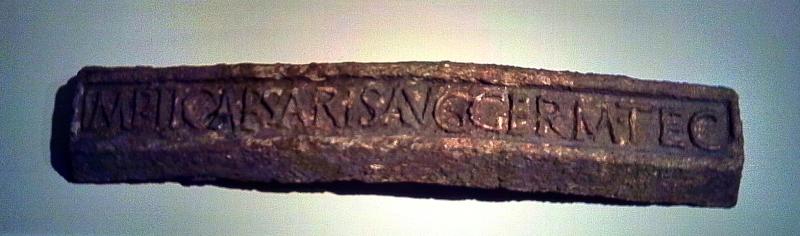
Many interesting Roman artifacts are featured in the museum, among which is this lead bar with the inscription of Caesar Augustus.

Lead Bar with Caesar Augustus Inscription, Tongeren. Photo by Leon Mauldin.

Again, from the museum booklet:

Lead is an important metal for the construction of, for example, water pipes and drains. Traders ship the metal in the form of bars that are further worked in their place of destination. This bar probably comes from the Eifel region. The inscription IMP(ERATORIS) TI(BERII) CAESARIS AUG(USTI) GERM(ANICUM) TEC(-) means “Property of Emperor Tiberius Caesar Augustus, lead from Germania.” The term TEC probably refers to the person who managed the mine in the name of the Emperor. Of all the objects ever found in Tongeren, this bar is the only object to be marked with the name of a Roman Emperor.

Relation to Scripture: Caesar August was the emperor when in the biblical fullness of time (Galatians 4:4) Jesus was born. Luke writes, “And it came to pass in those days that a decree went out from Caesar Augustus that all the world should be registered” (2:1). Contextually, this is how it came about that Joseph and Mary, who resided in Nazareth of Galilee, made their way to Bethlehem of Judea, because Bethlehem was their ancestral home. Of course Caesar had no idea he was helping to fulfill the 8th century BC prophecy that Jesus would be born in Bethlehem (Micah 5:2).

Notice in the above text that Caesar could command that all the world be enrolled. This of course does not mean the whole globe, but the Roman world, the far-flung Roman Empire.

Remember to click on images for larger view.