Mamertine Prison in Rome

July 24, 2014

It is not unusual for a tour group to discuss what was their favorite or most meaningful location/event during their trip. On our recent “Highlights of Italy Tour,” many of our group cited the Mamertine Prison in Rome as being at the top of their list. To be able to walk down to the dark prison cell, and recall Paul’s last words in 2 Tim. 4, really enhances one’s understanding of the text and of Paul’s circumstances:

6 For I am already being poured out as a drink offering, and the time of my departure is at hand. 7 I have fought the good fight, I have finished the race, I have kept the faith. 8 Finally, there is laid up for me the crown of righteousness, which the Lord, the righteous Judge, will give to me on that Day, and not to me only but also to all who have loved His appearing. 9 Be diligent to come to me quickly; 10 for Demas has forsaken me, having loved this present world, and has departed for Thessalonica — Crescens for Galatia, Titus for Dalmatia. 11 Only Luke is with me. Get Mark and bring him with you, for he is useful to me for ministry. 12 And Tychicus I have sent to Ephesus. 13 Bring the cloak that I left with Carpus at Troas when you come — and the books, especially the parchments. 14 Alexander the coppersmith did me much harm. May the Lord repay him according to his works. 15 You also must beware of him, for he has greatly resisted our words. 16 At my first defense no one stood with me, but all forsook me. May it not be charged against them. 17 But the Lord stood with me and strengthened me, so that the message might be preached fully through me, and that all the Gentiles might hear. And I was delivered out of the mouth of the lion. 18 And the Lord will deliver me from every evil work and preserve me for His heavenly kingdom. To Him be glory forever and ever. Amen! (2 Tim. 4:6-18).
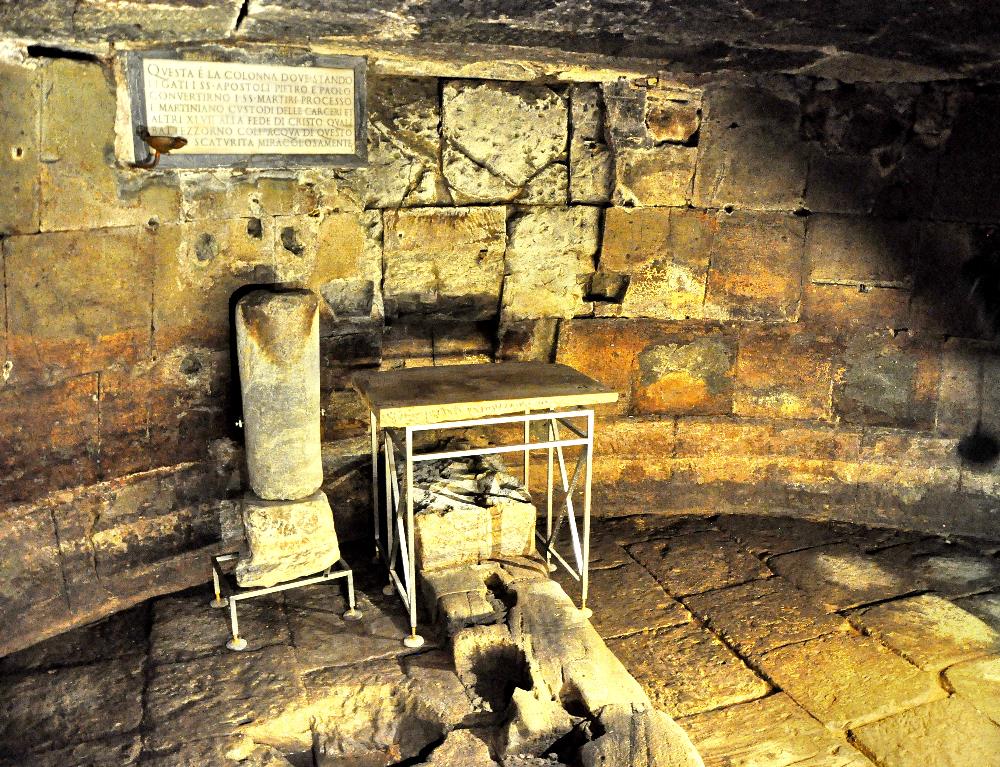
Mamertine Prison in Rome. Photo ©Leon Mauldin.

Mamertine Prison in Rome. Photo ©Leon Mauldin.

We cannot affirm that this is the exact part of the prison that Paul was in as he penned the above text. But this is definitely a part of the state prison complex, and it illustrates the biblical setting as Paul, near death, penned his last letter to his faithful friend and fellow-worker, Timothy. I.e., it is safe to say that Paul was in a cell like this, in this area, awaiting execution. BAS in their photo collection has this information:

Near the Forum, at the base of the Capitoline Hill, is the dungeon of the Mamertine Prison. This was the state prison of Rome, and Paul may have ended his days here.

We see the lower of two chambers constructed of blocks cut from tufa, the local porous rock. Originally, this 30-foot diameter room could be reached only through the hole visible in its ceiling. This would have been the dungeon cell for prisoners; above it is a smaller room for the warders. Conflicting Roman traditions attributed the building of the prison to different rulers of the 7th and 6th centuries B.C.E. Some modern investigations have suggested a 3rd-century B.C.E. date for this lower chamber and a 1st-century B.C.E. date for the room above, but there is no question that it was in use in Paul’s time. Christian tradition also places Peter’s final internment here, at the time of Nero’s persecution. (Biblical Archaeology Society: The Biblical World in Pictures).

The Wycliffe Historical Geography of Bible Lands has this entry:

Tradition has it that during his second imprisonment Paul was detained in the Mamertine Prison in Rome. The name Mamertinus is postclassical; during the Empire the place was known simply as the Carcer. This was the ancient state prison of Rome at the foot of the Capitoline Hill. It was used as a place of detention, not of penal servitude, although executions occurred there. The upper room is a vaulted trapezoid, the sides varying in length from eleven to sixteen feet.

Below it was a subterranean chamber, originally accessible only by a hole in the roof. This Tullianum was nearly twenty-one feet in diameter and, according to Sallust, twelve feet high. All who wrote of the place described it with horror. Sallust (86–34 B.C.) described it as “exceeding dark, unsavory, and able to craze any man’s senses.” Under such circumstances the apostle would indeed have felt the need of the cloak and the books he had left behind at Troas (2 Tim. 4:13).

As Paul wrote Second Timothy, he had none of the optimism expressed in his earlier letters, when he expected release. He had obtained a preliminary hearing, and it had been a dismal failure (2 Tim. 4:16). Though he found himself in dire circumstances, he delivered what sometimes has been called his valedictory, for he was about to “graduate.” “For I am now ready to be offered, and the time of my departure is at hand. I have fought a good fight, I have finished my course, I have kept the faith: Henceforth there is laid up for me a crown of righteousness, which the Lord, the righteous judge, shall give me at that day: and not to me only, but unto all them also that love his appearing” (2 Tim. 4:6–8) (Eds. Pfeiffer & Vos, 1996).

Click on image for larger view.

Scroll down to see more from our recent trip to Italy.


Roman Theater in Trieste

July 15, 2014

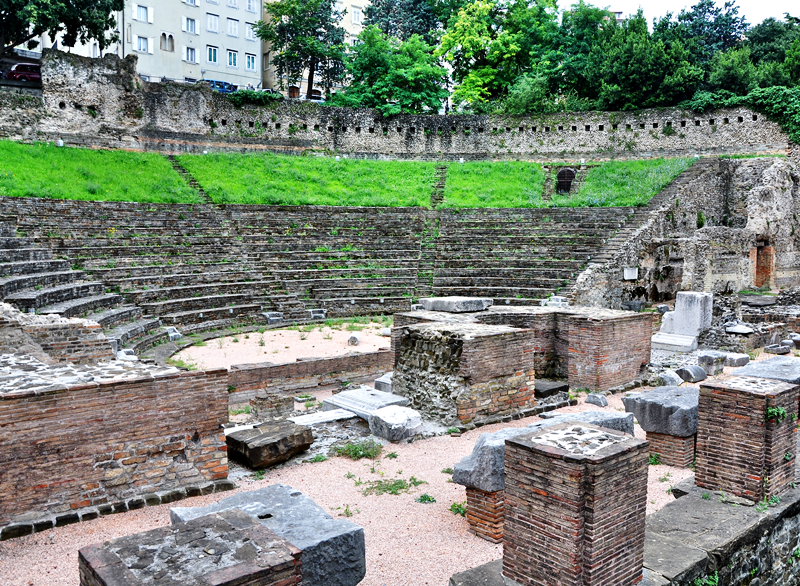
It is an understatement to say that the Roman Empire really left its mark. There are many sites where theaters which date back to Roman times may be seen. When we were leaving Trieste yesterday morning, we went by the Roman theater there.

Roman Theater at Trieste, Italy. Photo by Leon Mauldin.

Roman Theater at Trieste, Italy. Photo by Leon Mauldin.

Yesterday we made our way on to Venice, where we had an afternoon to visit. Then today was an all-day tour of Venice (walking; they do not intend for you to sit anywhere here, at least not for long). Our wake up call is in a few hours at 3:00 AM; then a quick transfer to the airport to make our way home.

More photos to share later. Click on image for larger view.


Travel in Bible Times–Tomb of Merchant Flavius Zeuxis

June 26, 2014

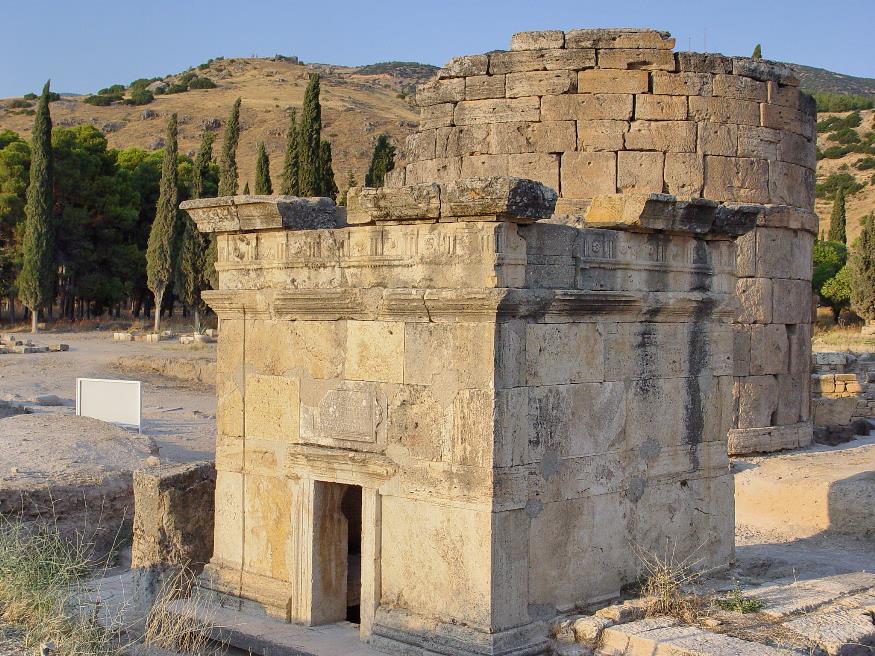
The necropolis of Hierapolis is one of  the largest ancient burial sites in Turkey. Tombs there date from 2nd century BC through 3rd century AD. One of the more interesting is that of T. Flavius Zeuxis and his sons (1st century AD).

Tomb of Flavius Zeuxis, merchant of Hierapolis. Photo ©Leon Mauldin.

Tomb of Flavius Zeuxis, merchant of Hierapolis. Photo ©Leon Mauldin.

Dr. Carl Rasmussen observes: “Note the finely carved doorway with doorposts and lintel, the carved base, the slightly protruding stones of the corners (pilasters) of the tomb, the upper molding, and the Doric frieze composed of triglyphs and metopes filled with rosettes!” Click here.

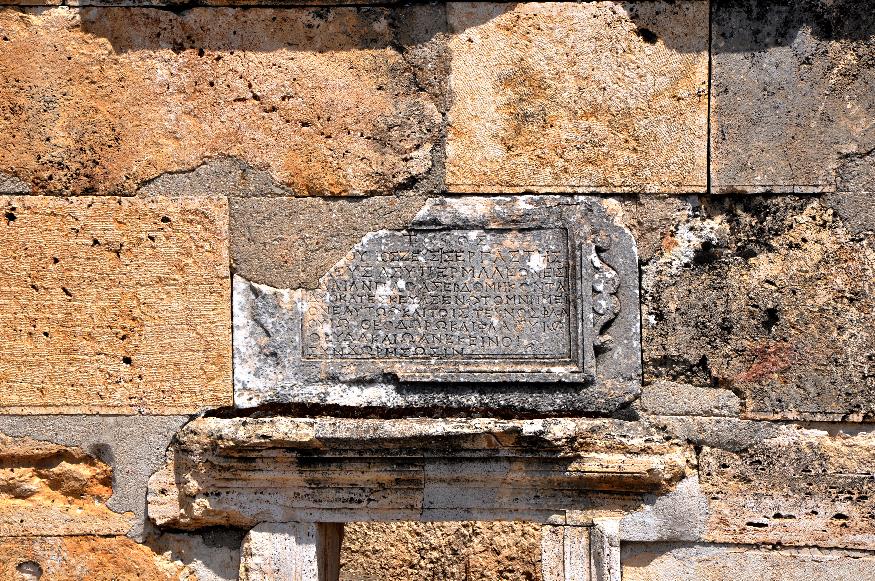
The inscription above the tomb entrance is translated, “Flavius Zeuxis, merchant, who sailed seventy-two trips around Cape Malea to Italy, built this.”

Tomb Inscription above door. Photo ©Leon Mauldin.

Tomb Inscription above door. Photo ©Leon Mauldin.

This inscription is helpful on several counts. Cape Malea is the southern tip of Greece’s Peloponnesus peninsula. It is famous for its treacherous weather and seas. William Barclay wrote:

It was a dangerous cape, and to round Cape Malea had in ancient days much the same sound and implications as to round Cape Horn had in later times. The Greeks had two sayings which showed what they thought of the voyage round Malea-“Let him who sails round Malea forget his home,” and, “Let him who sails round Malea first make his will.” (The Letters to the Corinthians, p.1).

Obviously it would have been considered quite an accomplishment to have made 72 trips around the Cape. This would mean a total of 36 round trips this merchant had made from Hierapolis of Asia Minor to Italy and back! Some have suggested that Zeuxis would have made two or three trips per year from Hierapolis to sell his goods in Italy.

This has implications for several biblical texts. For example, when Paul (as a prisoner under house arrest) was writing the NT letter of Colossians from Rome, Epaphras of Colossae was with him (Col. 1:7). Paul went on to referenced the tri-cities of Colossae, Hierapolis, and Laodicea as he spoke of Epaphras’ work among them:

Epaphras, who is one of you, a bondservant of Christ, greets you, always laboring fervently for you in prayers, that you may stand perfect and complete in all the will of God. For I bear him witness that he has a great zeal for you, and those who are in Laodicea, and those in Hierapolis. (Col. 2:12-13, NKJV).

The Zeuxis inscription shows it would not be unusual for residents of the Lycus River Valley, such as Epaphras, to make the voyage to Rome and back.

The travel of merchants such as Zeuxis also helps us relate to Paul’s journeys recorded in Acts, many of which were by sea. Further, it is not without significance that Paul mentioned the dangers he faced, including those on the sea:

 I have been on journeys many times, in dangers from rivers, in dangers from robbers, in dangers from my own countrymen, in dangers from Gentiles, in dangers in the city, in dangers in the wilderness, in dangers at sea, in dangers from false brothers (2 Cor. 11:26, NET).

But notwithstanding the potential dangers faced, travel by sea in the 1st century was common!

Also we might think of Rev. 18:11-13, with its extensive list of trade good that merchants (like our Flavius Zeuxis) from various locations in the Empire, brought to Rome. Contextually this passage speaks of the mourning that will come as a result of the fall of Rome:

And the merchants of the earth will weep and mourn over her, for no one buys their merchandise anymore: merchandise of gold and silver, precious stones and pearls, fine linen and purple, silk and scarlet, every kind of citron wood, every kind of object of ivory, every kind of object of most precious wood, bronze, iron, and marble; and cinnamon and incense, fragrant oil and frankincense, wine and oil, fine flour and wheat, cattle and sheep, horses and chariots, and bodies and souls of men.

Click on images for larger view.


Decorations at Nicaea’s Eastern Gate

May 31, 2014

Recently we posted here on Nicaea. A remarkable portion of the Roman walls and gates can still be seen.

Some useful info on the decor of the gates at Nicaea and elsewhere can be found here:

Nicaea’s walls are well decorated with reliefs, with large heads, and also with column-shafts, both as horizontal wall-ties and as decoration: in the central one of the three square towers of the north wall, some 37 columns are used to decorate the upper stories and, at the same time, to act as floor-joists. The East Gate has reliefs, still visible, which impressed Kinnear, as did the reliefs and heads on the North (Constantinople) Gate. The south gate, for Bursa, has marble blocks and an inscription. The walls and towers on the north side are noticeably of creamy-white marble (in contrast with the much darker blocks used elsewhere: it is far from fanciful to perceive the desire to create an effect on the side of the city facing Constantinople, since we find exactly the same attention given to marble display in the more important parts of other citadels, such as Seljuk. Thus the antique monuments of Nicaea have been reused in the construction of the first set of mediaeval walls, in a direct echo of the marble prestige of the finest of Constantinople’s set pieces, the Porta Aurea itself.

Nicaea Head Decor at East Gate. Photo ©Leon Mauldin.

Nicaea Head Decor at East Gate. Photo ©Leon Mauldin.

See also Ferrell Jenkins’ earlier post here.


At Nicaea of Bithynia

May 21, 2014

I am thankful for safe arrival yesterday at Istanbul, meeting up with Ferrell Jenkins who had just concluded a tour in Turkey. Today we crossed the Sea of Marmara by ferry to save driving time on our way to Nicaea, called Iznik today. Nicaea was one of the important cities in New Testament times in the Roman Province of Bithynia. Peter addressed Christians over a widely scattered area (covering much of what is the country of Turkey today): “Peter, an apostle of Jesus Christ, To the pilgrims of the Dispersion in Pontus, Galatia, Cappadocia, Asia, and Bithynia” (1 Pet. 1:1). Dr. Mark Wilson writes that Nicaea “vied with Nicomedia for the distinction of being the principle city of Bithynia” (Biblical Turkey: A Guide to the Jewish and Christian Sites of Asia Minor,  p.369).

It was a great opportunity to be in Nicaea today. The weather was very pleasant, and the lighting was excellent for most of the photos we made. Plus it’s just great to be in what was biblical Bithynia. The gospel made inroads there, as evidenced from 1 Peter (most conservative scholars believe that Peter’s second letter was written to the same audience). That means it was highly likely that the messenger with Peter’s letter would have contacted brethren there. Dr. Wilson says it a bit more emphatically, “. . . the messenger caring 1 Peter would certainly have visited Nicaea” p.370).

Nicaea is characterized by an ancient city plan which makes use of the decumanus maximus running east and west and the cardo maximus north and south. Nicaea was a walled city with four gates. Wilson says of the walls and gates that they are the most unique in western Turkey” (v.371). The Roman walls were built on Hellenistic walls, but the Roman walls then were reconstructed by the Goths after the Goths destroyed them (AD 268-270).

In AD 325 the first of the Ecumenical Councils (as well as the seventh) were held in Nicaea. It has been long-standing to date church history as pre-Nicaean and post-Nicaean.

Nicaea is situated on the east side of a beautiful lake which had commercial importance. We drove along side of it at times en route to Nicaea. This city was established under the Greek rule during the intertestamental period, 316 BC).

So Bithyna for sure and Nicaea almost certainly was important to the church in the first century, and Nicaea became very important in church history for time to come. Tonight we share a photo of Nicaea’s east gate.

Nicea East Gate. Photo  ©Leon Mauldin.

Nicaea East Gate. Photo ©Leon Mauldin.

Neither Mr. Jenkins nor I had been to Nicaea before today. We agreed it was really a good day. We got to the ferry with 5 minutes to spare.

Tomorrow we are to fly east to Gaziantep and see such sites as Zeugma and Haran. Haran, today spelled Harran, was Abraham’s home for a time, at of family that are prominent in the biblical Narrative.


Imperial Cult Worship

April 11, 2014

A book I have found helpful in understanding the background of Revelation is Imperial Cults and the Apocalypse of John: Reading Revelation in the Ruins, by Steven J. Friesen (pub Oxford). Friesen states:

The signal development, first manifest in the dedications of the Temple of the Sebastoi but reflecting broader trends in society was the use of neokoros as a technical title for a city with a provincial temple of the emperors. The power of this innovation was explosive. In a matter of years it changed the public rhetoric of empire in Asia. Within a century it had transformed the discourse of Roman imperialism in the eastern Mediterranean. From the late first century onward, the most prestigious self-designation that could be employed by a city in Asia was neokoros, indicating the presence of a provincial temple where the emperors and their relatives were worshipped (p.150).

Neokoros literally means one who sweeps and cleans a temple; one who has charge of a temple, to keep and adorn it. It came to designate a city which maintained a temple for imperial worship. It is a historical fact that cities competed for this “honor.”

G. K. Beale observes, “Revelation presupposes that Christians were being required to participate to some degree in the imperial cult (e.g., 13:4-8,15-17; 14:9-11; 15:2; 16:2; 19:20; 20:4). . . in the Apocalypse persecution arises because of refusal to worship the ungodly king” (NIGTC Revelation, p.5).

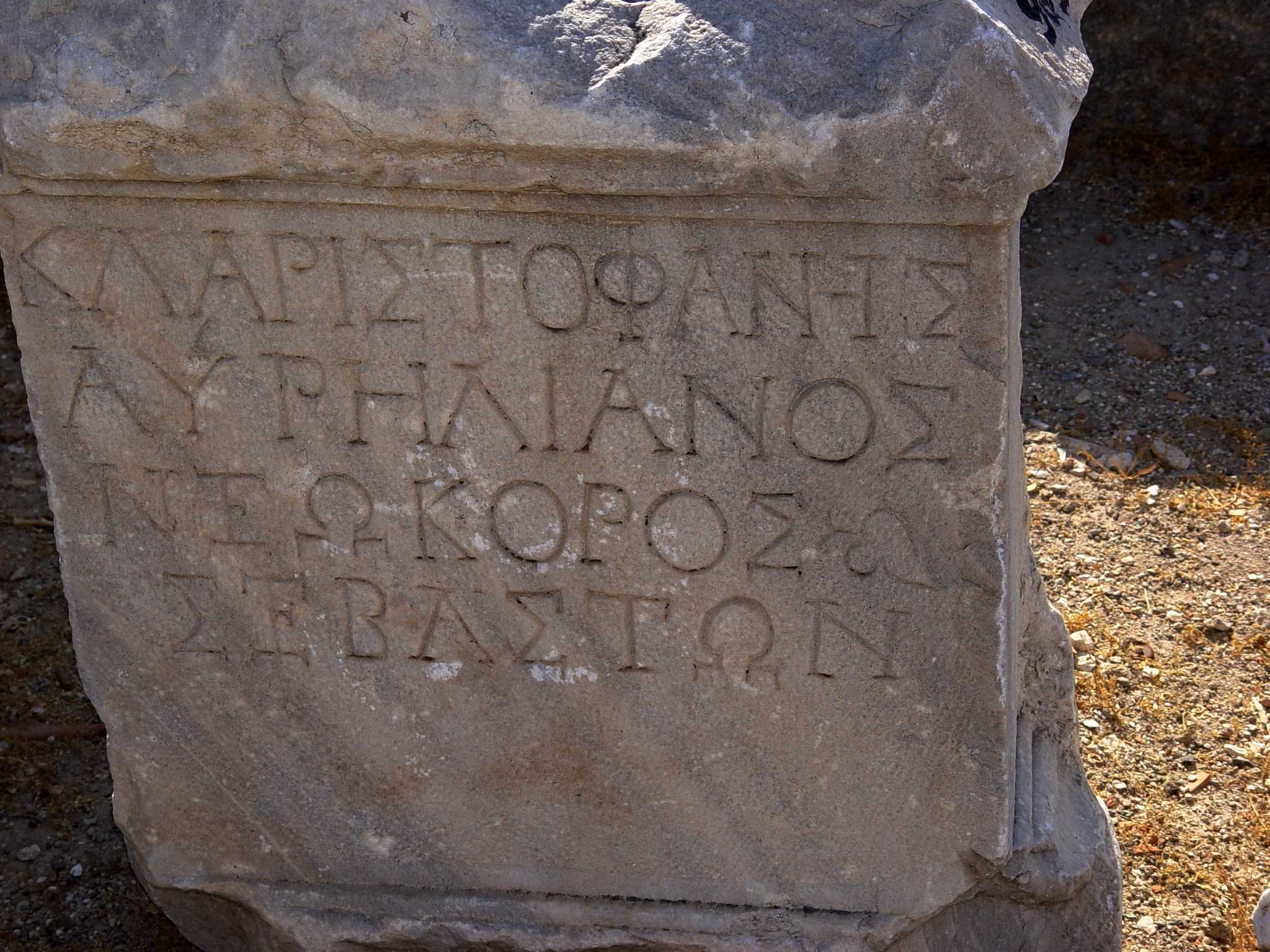
Smyrna Inscription, designating it neokoros. Photo by Leon Mauldin.

Smyrna Inscription, designating it neokoros. Photo by Leon Mauldin.

This inscription found in biblical Smyrna (see Revelation 2:8-11; Smyrna was one of the seven churches of the Roman province of Asia addressed in Rev. 2-3), in lines 3 and 4 designates Smyrna as neokoros of Sebaston [Greek equivalent to Latin Augusti]. Dr. David McClister says, “This inscription is known in the scholarly literature as Smyrna 162. It is an honorary inscription for Cl(audius) Aristophanes Aurelianus,  dated AD 193/235” [lines 1 and 2), and further, “It appears to me to have been a statue base honoring this individual for his leadership in the emperor cult.”


Pilgrims in Cappadocia

December 18, 2012

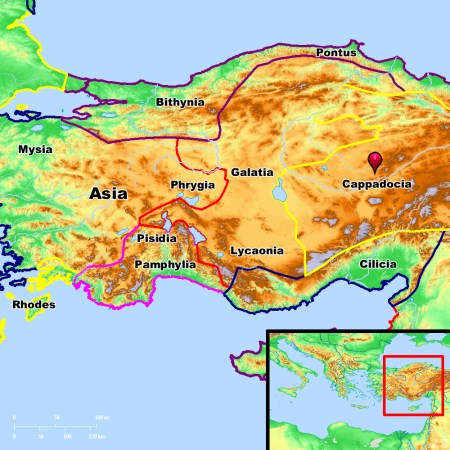
1&2 Peter were written to Christians (likely Jewish) scattered across five Roman Provinces: “To the pilgrims of the Dispersion in Pontus, Galatia, Cappadocia, Asia, and Bithynia” (1 Pet. 1:1). All of these provinces were in what is today Turkey.

The landscape of Cappadocia is fascinating. Ancient volcanic matter covered the area. When wind and rain eroded away the softer elements, the harder material was left behind, causing some really unusual formations.

Formations characteristic of Cappadocia. Photo by Leon Mauldin.

Formations characteristic of Cappadocia. Photo by Leon Mauldin.

So when you pick up your New Testament to read the epistles of Peter, remember that some of his readers lived in this area.

Cappadocia. In NT times, a Roman Province. Currently in Turkey. BibleAtlas.com

Cappadocia. In NT times, a Roman Province. Currently in Turkey. BibleAtlas.com

Click images for larger view.


More Re: Omrit

September 13, 2012

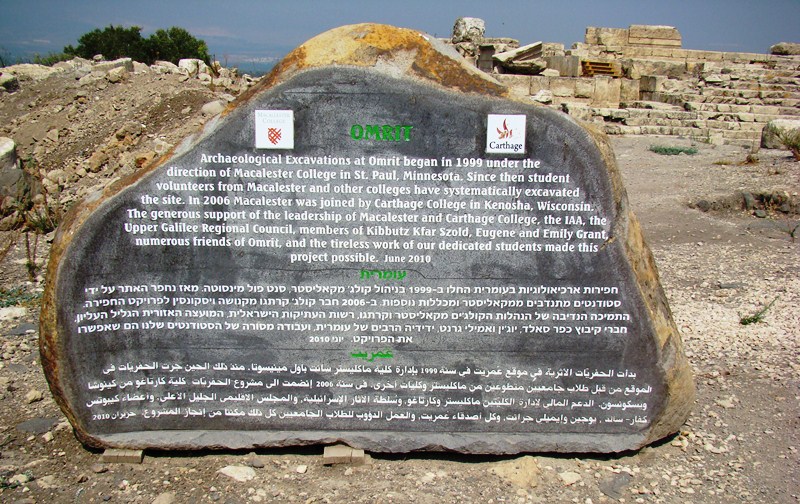
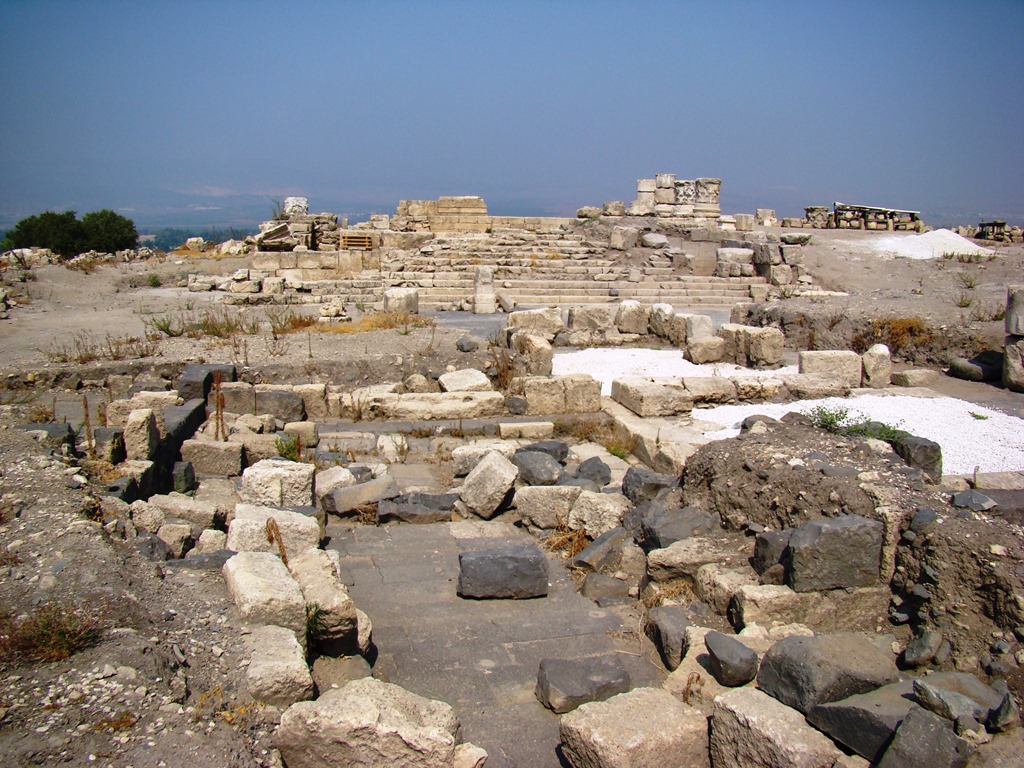
Archaeologists have determined there were three building phases at Omrit: first, the temple built by Herod the Great, second, the temple built probably by Trajan (AD 98-117), and third, an industrial complex to the north constructed in the Byzantine period.

Entrance to Omrit. Photo by Leon Mauldin.

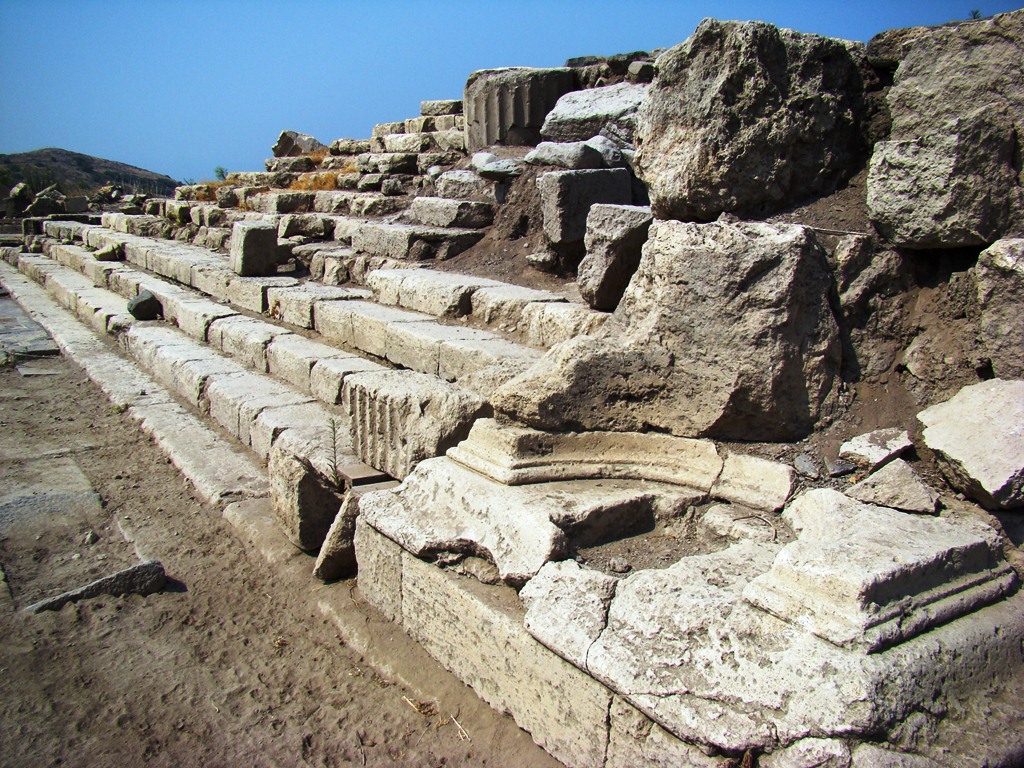
Here you can see the steps leading up to the temple. This site has been identified as a location for Imperial Cult Worship.

Steps to Imperial Temple at Omrit. Photo by Leon Mauldin.

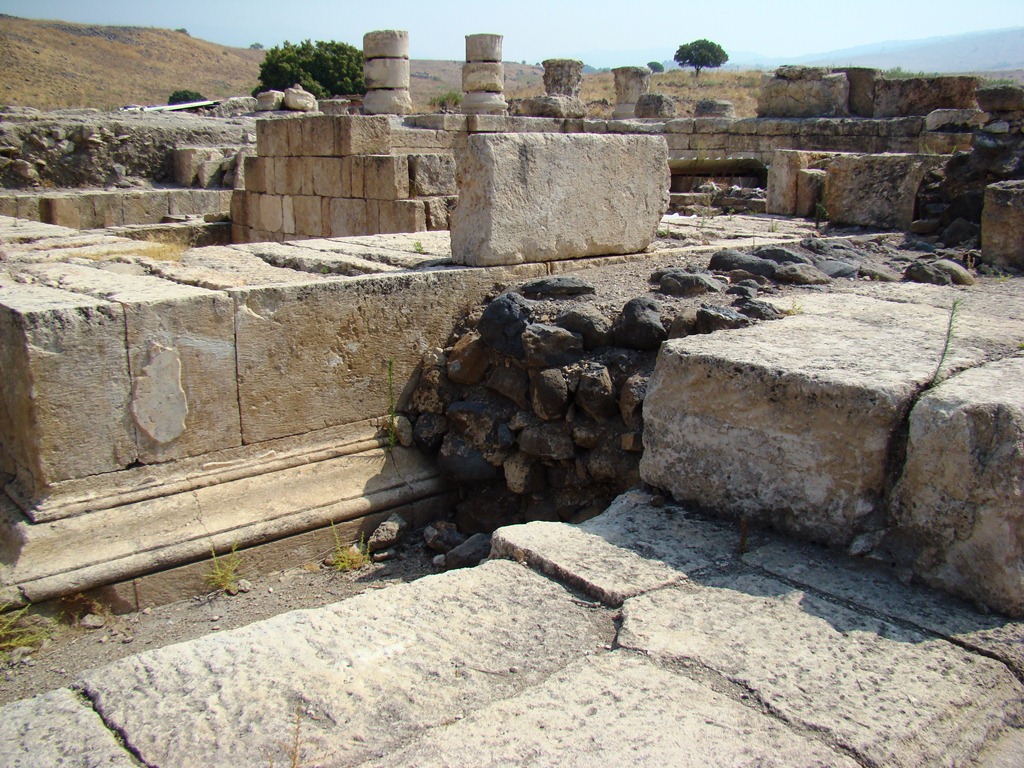
This photo shows the southwest corner of the temple. The large stones horizontally placed at center have been identified as Herodian. Herod was a politician and he overtly courted the favor of the Emperor Augustus.

Section of Herodian stones in Omrit Temple. Photo by Leon Mauldin.

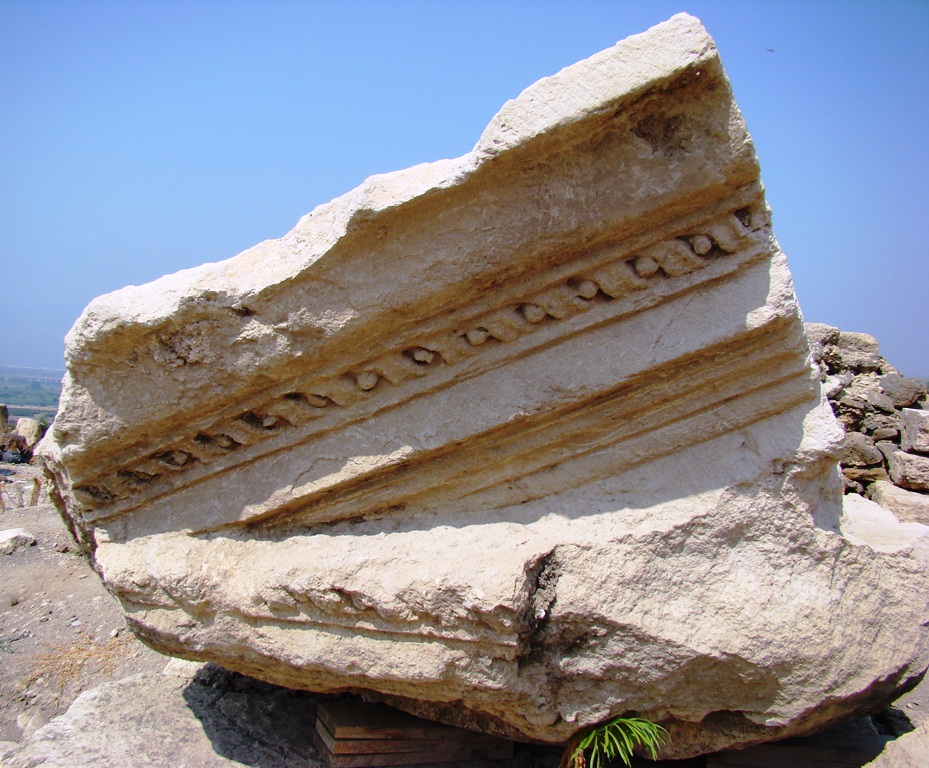
The site abounds with interesting architectural fragments.

Architectural fragment at Omrit. Photo by Leon Mauldin.

Click on images for larger view.


Omrit, cont’d.

September 11, 2012

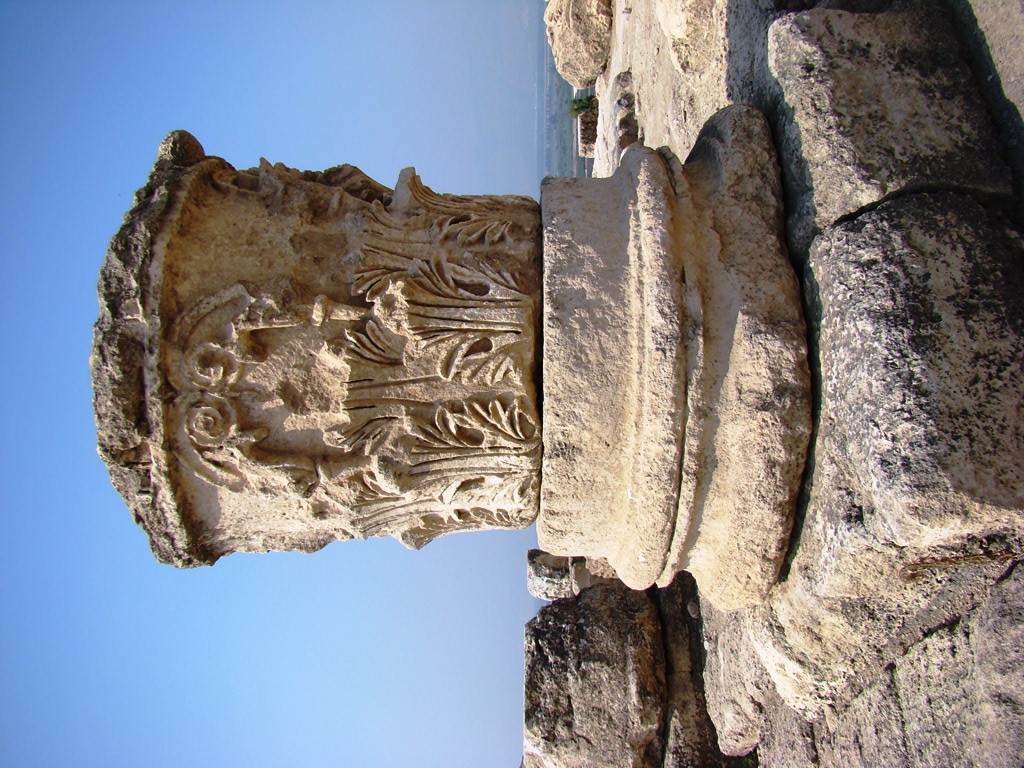
Among the interesting ruins at Omrit are several composite capitals. These are a combination of Corinthians and Ionic orders.

Composite Capital at Omrit. Photo by Leon Mauldin.

Note the beautiful acanthus leaves.

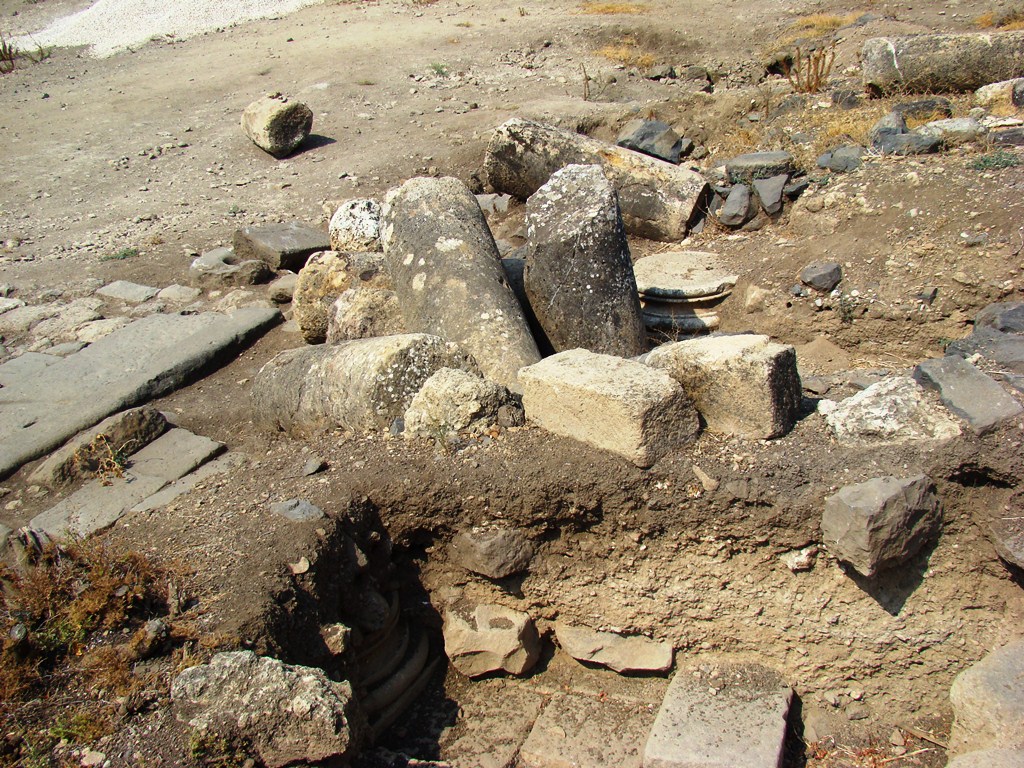
Omrit was destroyed by earthquakes in the 4th and 8th centuries AD.

Evidence of Earthquake at Omrit. Photo by Leon Mauldin.

Click on images for larger view.


Herodian Imperial Cult Temple at Omrit

September 10, 2012

Omrit is located at the foothills of the Hermon Range, and is 2.5 miles from Caesarea Philippi (Banias). It was strategically situated near the crossroads of the Tyre-Damascus and Scythopolis (Beth-shean)-Damascus roads. Impressive remains of a temple devoted to Emperor worship may be seen here.

Herodian Imperial Cult Temple at Omrit. Excavators believe this temple was built by Herod to honor Caesar Augustus. Photo by Leon Mauldin.

I have enjoyed Dr. Carl Rasmussen’s recent posts re: Omrit. He said this was his “favorite site in Israel” (a statement I found very interesting) and just today posted another article on the site, dealing with Emperor worship that took place here in the Bible land. There are interesting implication of Peter’s confession that Jesus was the Christ, the Son of the living God so near a site where the Roman Emperor was worshiped as a “son of god.”

I was glad to visit this site this past September 2011, along with Ferrell Jenkins when he and I made a personal study trip at that time. BTW, Mr. Jenkins is currently directing a tour in Israel. You can follow their journeys here.