Milestones near Beth Shan

May 18, 2016

You’ve heard about “going the second mile.” In His “Sermon on the Mount” in Galilee Jesus said (in a context forbidding retaliation for evil), “And whoever compels you to go one mile, go with him two” (Matt. 5:41). In New Testament times a Roman soldier could compel a Jewish citizen (or others) to carry burdens for them. They were authorized by the Roman government to press civilians into service of this nature; such would have to carry the load for the distance of one mile, but no further.

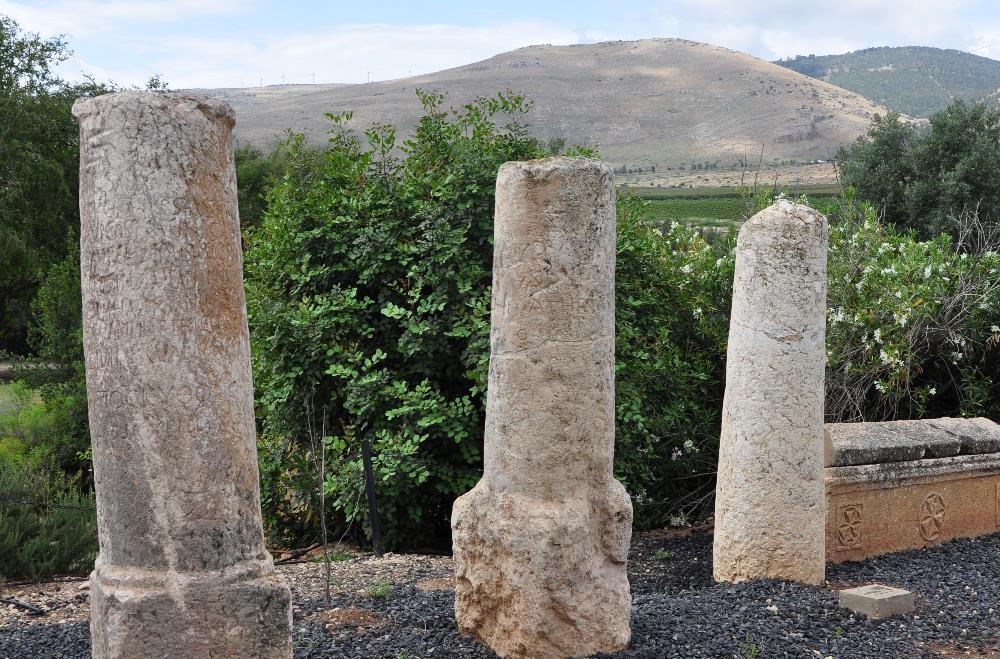
But how would you know when the mile was up? Conveniently, Roman roads had mile markers, such as these below, collected from the Beth Shan area.

Milestones from the Beth Shan area, at Gan Hashlosha National Park. Photo by Leon Mauldin.

Milestones from the Beth Shan area, at Gan Hashlosha National Park. Photo by Leon Mauldin.

Jesus tells His disciples that instead of complaining about an oppressive government, or bemoaning their victimization, they were to go an extra mile. You see, Jesus’ disciples are different; in the world, but not of the world. Who knows but that from time to time this kind of unusual conduct would cause that soldier to ask, “What makes you different; what do you have that I don’t have?” If so then as Peter said, “But sanctify the Lord God in your hearts, and always be ready to give a defense to everyone who asks you a reason for the hope that is in you, with meekness and fear; having a good conscience, that when they defame you as evildoers, those who revile your good conduct in Christ may be ashamed” (1 Pet. 3:15,16).

I’ve previously written on milestones here.


Odeion at Troy

April 1, 2016

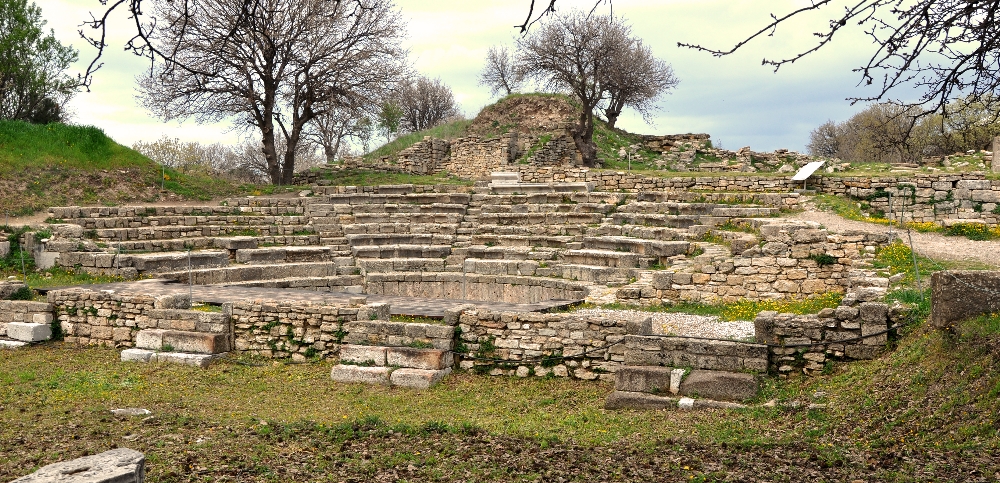
Ancient Troy has been made famous by Homer’s Iliad. Troy is located within the province of Çanakkale, located in extreme western Turkey. Troy’s extensive remains are the most significant and substantial evidence of the first contact between the civilizations of Anatolia and the Mediterranean world. This past Spring, 2015, we were able to visit Troy. Among the fascinating ruins there was the Roman Odeion, a small theater where concerts, lectures and other events took place.

Roman Odeion at Troy, Turkey. Photo by Leon Mauldin.

Roman Odeion at Troy, Turkey. Photo by Leon Mauldin.

The skene, stage building included a larger-than-life statue of the Emperor Hadrian (AD 117-138). Also, a sculpted head of Augustus was found at the odeion, causing some to surmise that this may have been erected in honor of his visit here in 20 BC. Beyond the odeion at the back you can see a portion of the fortification wall of Troia VI.

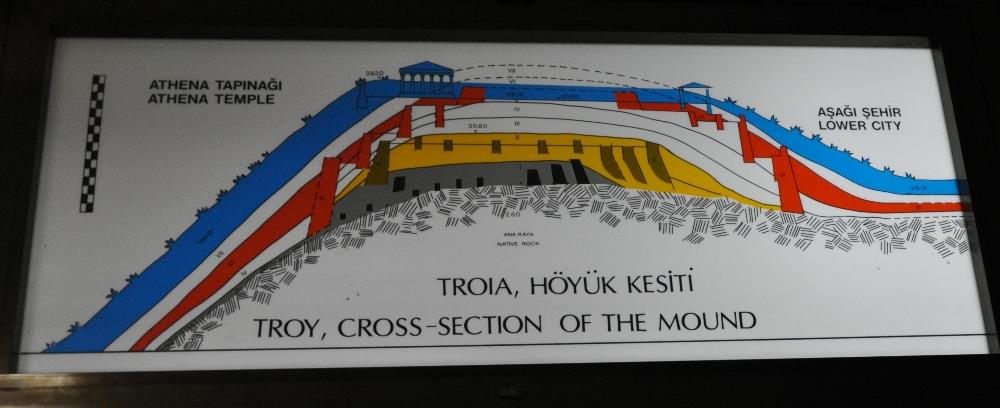
The Roman odeion is in Troy’s Level IX. Over the centuries there were nine levels of occupation.

Cross-section of Troy, showing 9 occupation levels. Istanbul Museum. Photo by Leon Mauldin.

Cross-section of Troy, showing 9 occupation levels. Istanbul Museum. Photo by Leon Mauldin. 

Wikipedia has this helpful chart:

Troy I 3000–2600 BC (Western Anatolian EB 1)
Troy II 2600–2250 BC (Western Anatolian EB 2)
Troy III 2250–2100 BC (Western Anatolian EB 3 [early])
Troy IV 2100–1950 BC (Western Anatolian EB 3 [middle])
Troy V: 20th–18th centuries BC (Western Anatolian EB 3 [late])
Troy VI: 17th–15th centuries BC
Troy VIh: late Bronze Age, 14th century BC
Troy VIIa: c. 1300–1190 BC, most likely setting for Homer’s story
Troy VIIb1: 12th century BC
Troy VIIb2: 11th century BC
Troy VIIb3: until c. 950 BC
Troy VIII: c. 700–85 BC
Troy IX: 85 BC–c. AD 500

Biblical significance: It was here at Troy (Ilium) at the temple of Athena that Xerxes (Ahasuerus) of the book of Esther sacrificed 1,000 head of cattle en route on his march through the Hellespontine region towards Greece. This was 480 BC.

We have previously posted on Troy here.


At Rome

March 16, 2016

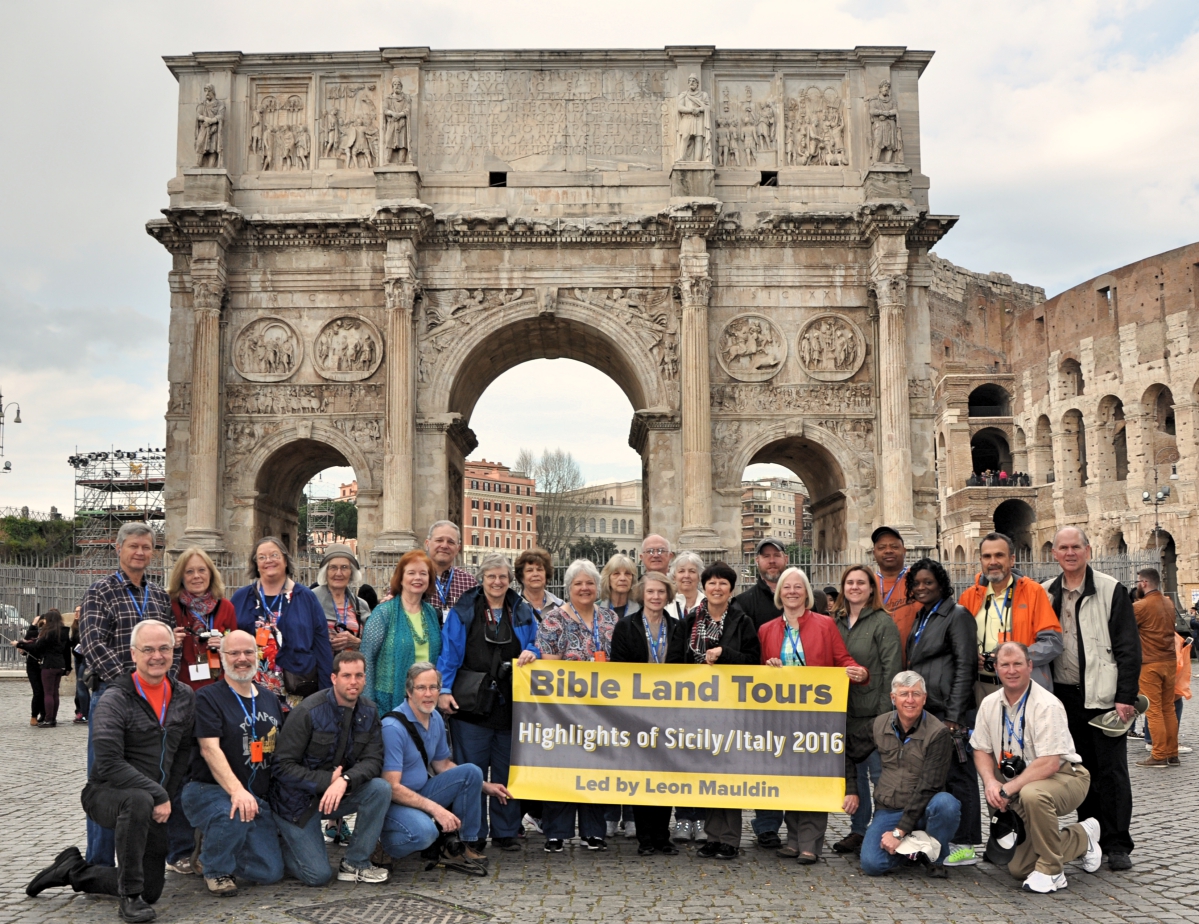
Tonight I thought I’d share a group photo taken today in front of the Arch of Constantine. The Colosseum can be seen at right.

Group photo at Colosseum in Rome.

Group photo at Colosseum in Rome.

There is 3,000 years of history in Rome. More later. Thanks for following our blog.


On to Piazza Armerina and Siracusa, Sicily

March 11, 2016

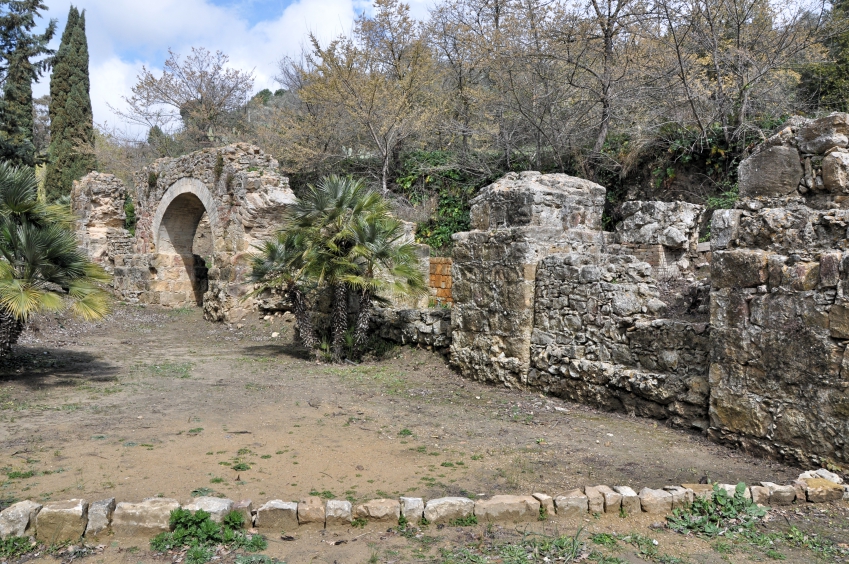
Leaving Agrigento this morning, we went on to Piazza Armerina, and from there southeast to Siracusa, mentioned in Acts 28:12. While at Piazza Armerina we visited the Roman Villa of Casale. A portion of the Roman wall and one of the entrances is seen here:

Entrance to Roman Villa of Casale in Piazza Armerina, Sicily. Photo by Leon Mauldin.

Entrance to Roman Villa of Casale in Piazza Armerina, Sicily. Photo by Leon Mauldin.

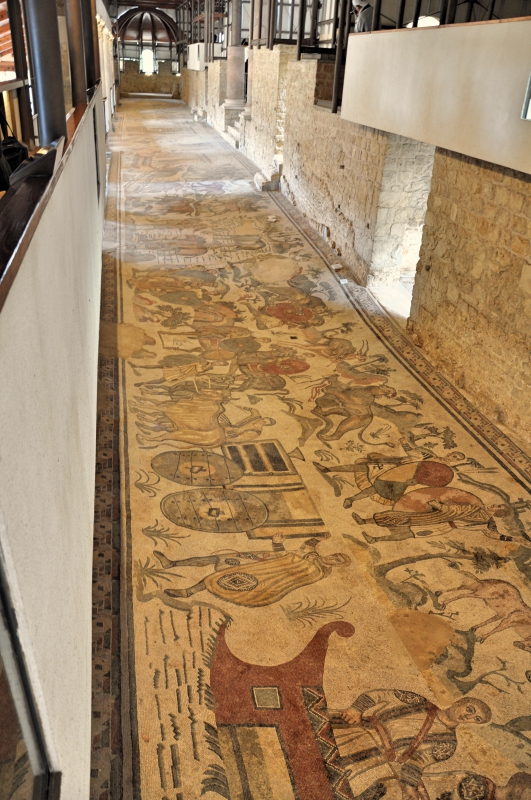
The largest mosaic in the world, a hunting scene, is here.

Mosaic Hunting Scene. Photo by Leon Mauldin.

Mosaic Hunting Scene. Photo by Leon Mauldin.

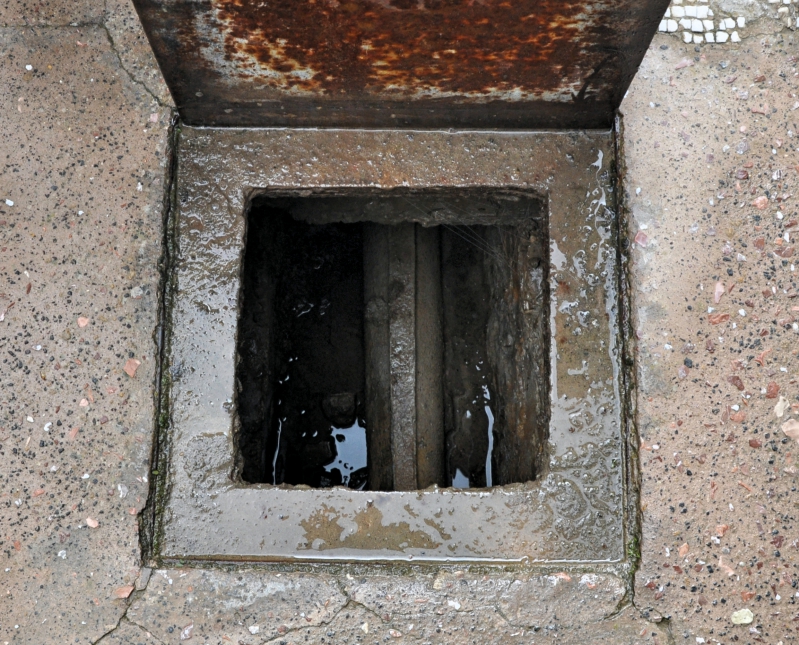
This villa, as was generally the case when there was running water, was serviced by lead pipes, which caused the inhabitants to have lead poisoning.

Lead pipe at Villa of Casale. Photo by Leon Mauldin.

Lead pipe at Villa of Casale. Photo by Leon Mauldin.

We are looking forward to touring Siracusa tomorrow, as well as Mt. Etna, Europe’s highest and most active volcano.

For now, here is further info re: the Roman villa of Casale:

The Villa Romana del Casale  is a Roman villa built in the first quarter of the 4th century and located about 3 km outside the town of Piazza Armerina, Sicily, southern Italy. It contains the richest, largest and most complex collection of Roman mosaics in the world, and has been designated as one of 49 UNESCO World Heritage Sites in Italy.

Plan of the villa
The villa was constructed (on the remains of an older villa) in the first quarter of the 4th century AD, probably as the center of a huge latifundium (agricultural estate) covering the surrounding area. How long the villa had this role is not known, maybe for fewer than 150 years. The complex remained inhabited and a village grew around it, named Platia (derived from the word palatium (palace). The villa was damaged and perhaps destroyed during the domination of the Vandals and the Visigoths. The outbuildings remained in use, at least in part, during the Byzantine and Arab periods. The site was abandoned in the 12th century AD after a landslide covered the villa. Survivors moved to the current location of Piazza Armerina.

The villa was almost entirely forgotten, although some of the tallest parts of the remains were always above ground. The area was cultivated for crops. Early in the 19th century, pieces of mosaics and some columns were found. The first official archaeological excavations were carried out later in that century.

The first professional excavations were made by Paolo Orsi in 1929, followed by the work of Giuseppe Cultrera in 1935-39. The last major excavations took place in the period 1950-60. They were led by Gino Vinicio Gentili, after which a cover was built over the mosaics. In the 1970s Andrea Carandini carried out a few localized excavations at the site. (Wikipedia)


Aqueduct at Beit Hananya

September 25, 2015

In perusing some homeschooling curriculum on the Roman Empire there was a heading entitled “Amazing Architects.”

The Romans were among the best builders in history. They built things that served practical purposes, such as canals, bridges, sewers, harbors, and roads. But it was perhaps in constructing aqueducts that their engineering skills were most impressive.

Aqueducts were developed by the Romans. They are channels for carrying water that were mostly dug into the earth, following the contours of hills. Where this was not possible, the Romans build arches made of concrete and stone. It took great skill to build an aqueduct. The water channels had to slop at exactly the right angle all the way along its length to give a steady flow of water. (Peter Chrisp, Ancient Rome, p.46).

Many sections of the ancient Roman aqueducts still survive in various parts of the former Roman Empire. The aqueduct that emptied into Caesarea on Israel’s coast is a prime example. Caesarea was the capital of Judea during the ministry of Jesus. See our post here.

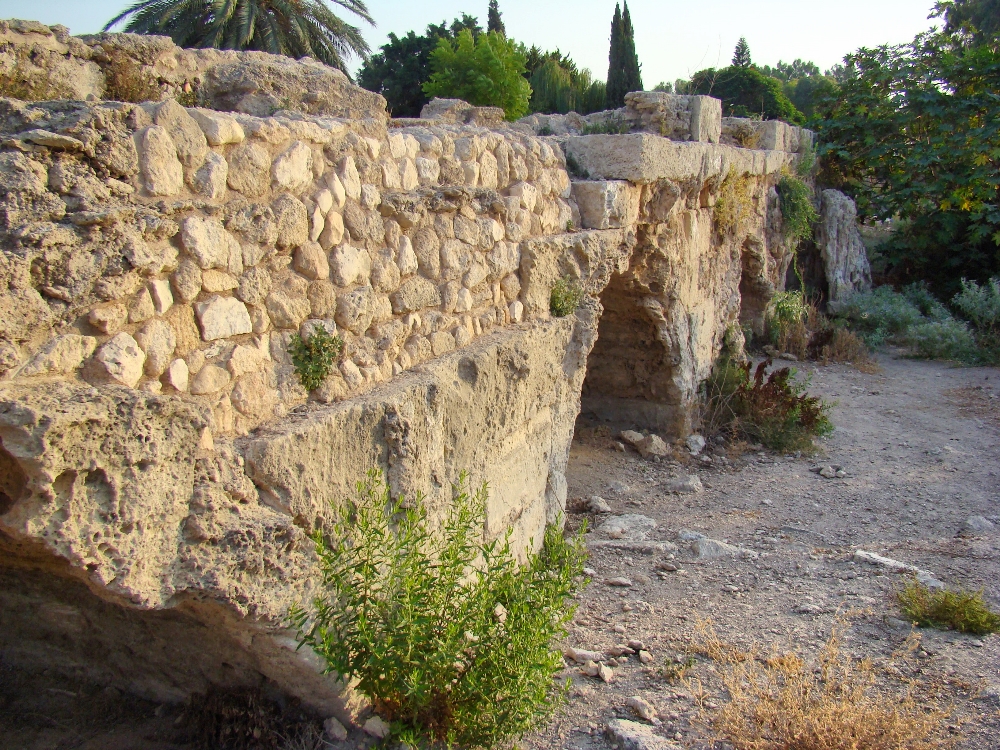
In Sept. 2011, Ferrell Jenkins & I made a personal study trip to Israel that included a stop at Beit Hananya, in the biblical “Plain of Sharon,” where a portion of the aqueduct can still be seen. This is north of Caesarea by a few miles. (Fresh water was channeled to Caesarea  from a distance of 8.5 miles).

Roman Aqueduct at Beit Hananya, north of Caesarea. Photo by Leon Mauldin.

Roman Aqueduct at Beit Hananya, north of Caesarea. Photo by Leon Mauldin.

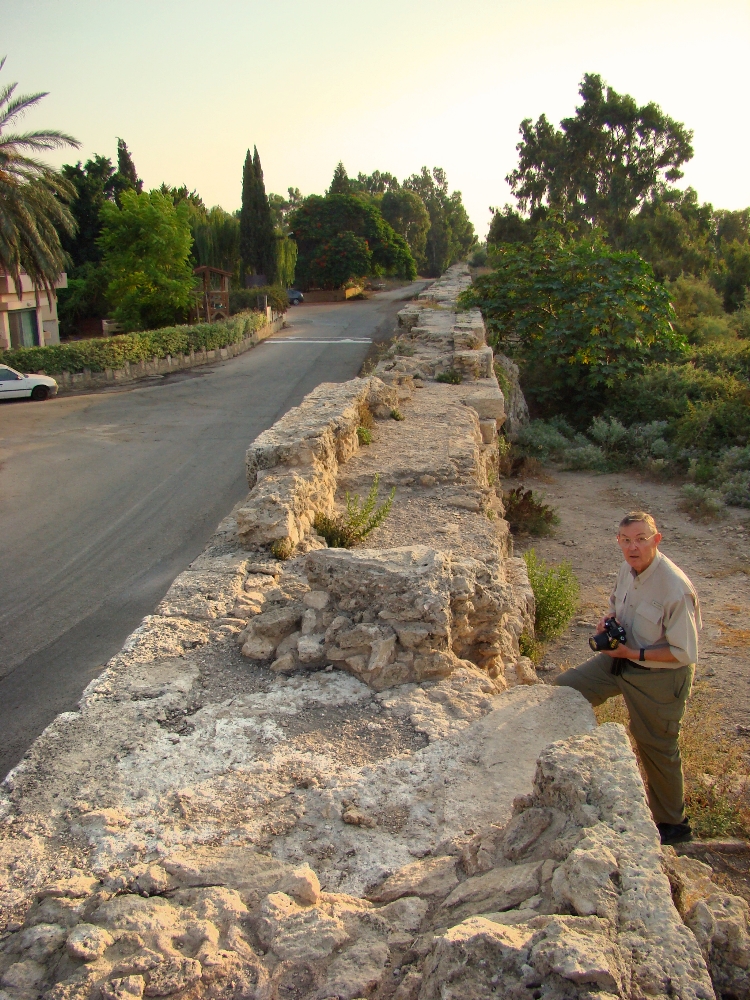
Beit Hananya Aqueduct as seen from top. Photo by Leon Mauldin.

Beit Hananya Aqueduct as seen from top. Photo by Leon Mauldin.

The water was channeled to course down the top of the aqueduct.

Click photos for larger view.


Samsun in Biblical Pontus

December 15, 2014

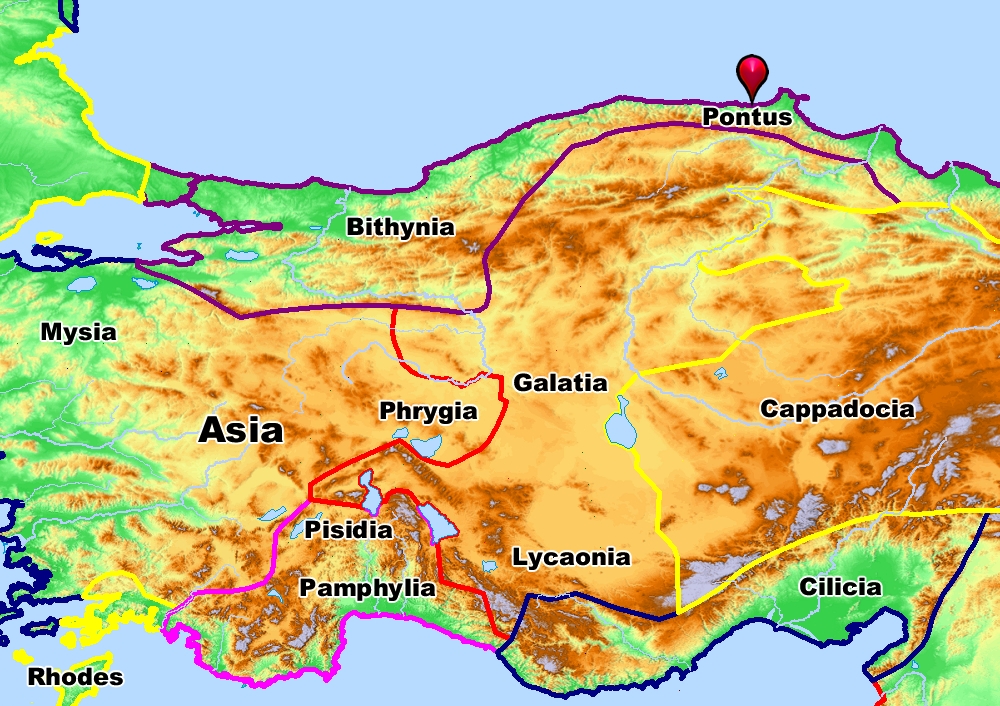
The Roman province of Pontus is mentioned three times in the Bible.

Pontus. Map by BibleAtlas.org.

Pontus. Map by BibleAtlas.org.

There were residents of Pontus (among many other) present for the Day of Pentecost in Acts 2, the day on which the Gospel message of salvation through the resurrected Christ was preached for the first time: “Parthians and Medes and Elamites, and residents of Mesopotamia, Judea and Cappadocia, Pontus and Asia” (Acts 2:9).

Paul’s dear friend and fellow-tentmaker Apollos, was from Pontus: “And he found a Jew named Aquila, a native of Pontus, having recently come from Italy with his wife Priscilla, because Claudius had commanded all the Jews to leave Rome” (Acts 18:2).

The Apostle Peter wrote the letter of 1 Peter to Christians in Pontus (and other Roman provinces): “Peter, an apostle of Jesus Christ, To those who reside as aliens, scattered throughout Pontus, Galatia, Cappadocia, Asia, and Bithynia. . .” (1 Pet. 1:1).

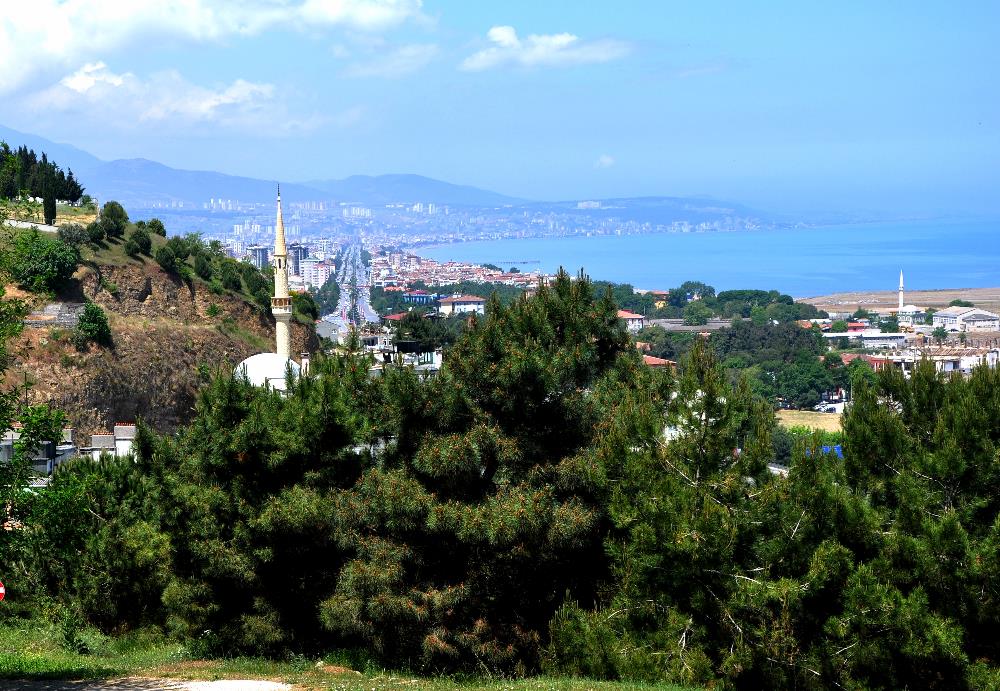
Samsun (also known as Amisus) was a major port city of Pontus located on the Black Sea. This is in Turkey’s territory today.

Samsun, port city of Pontus. Photo by Leon Mauldin.

Samsun, port city of Pontus. Photo by Leon Mauldin.

Many scholars believe that the messenger of 1 Peter (& 2 Peter) would have stopped here at Samsun. I concur. See Ferrell Jenkins here and here.

Click image for larger view.


Equestrian Statue of Marcus Aurelius

August 26, 2014

We continue to share some photos and info from our recent trip to Italy. Capitoline Hill, one of the seven hills of Rome, was the citadel of the earliest Romans. The Campdoglio Piazza, created by Michelangelo in 1536-1546, encompasses Capitoline Hill.

At the center of the piazza is an equestrian (depicting horseback riding) statue of Roman Emperor Marcus Aurelius, (r. AD 161-180).

Emperor Marcus Aurelius at Campdoglio Piazza in Rome. Photo by Leon Mauldin.

Emperor Marcus Aurelius at Campdoglio Piazza in Rome. Photo by Leon Mauldin.

Wikipedia has this info:

The statue was erected in 175 CE. Its original location is debated: the Roman Forum and Piazza Colonna (where the Column of Marcus Aurelius stands) have been proposed.

Although there were many equestrian imperial statues, they rarely survived because it was practice to melt down bronze statues for reuse as coin or new sculptures in the late empire. Statues were also destroyed because medieval Christians thought that they were pagan idols. The statue of Marcus Aurelius was not melted down because in the Middle Ages it was incorrectly thought to portray the first Christian Emperor Constantine. Indeed, it is the only fully surviving bronze statue of a pre-Christian Roman emperor.

In the medieval era it was one of the few Roman statues to remain on public view. In the 8th century it stood in the Lateran Palace in Rome, from where it was relocated in 1538 to the Piazza del Campidoglio (Capitoline Hill) during Michelangelo’s redesign of the Hill. Though he disagreed with its central positioning, he designed a special pedestal for it. The original is on display in the Palazzo dei Conservatori of the Musei Capitolini, while a replica has replaced it in the square.

Click on image for larger view.


In Rome: Fountain of Four Rivers

August 25, 2014

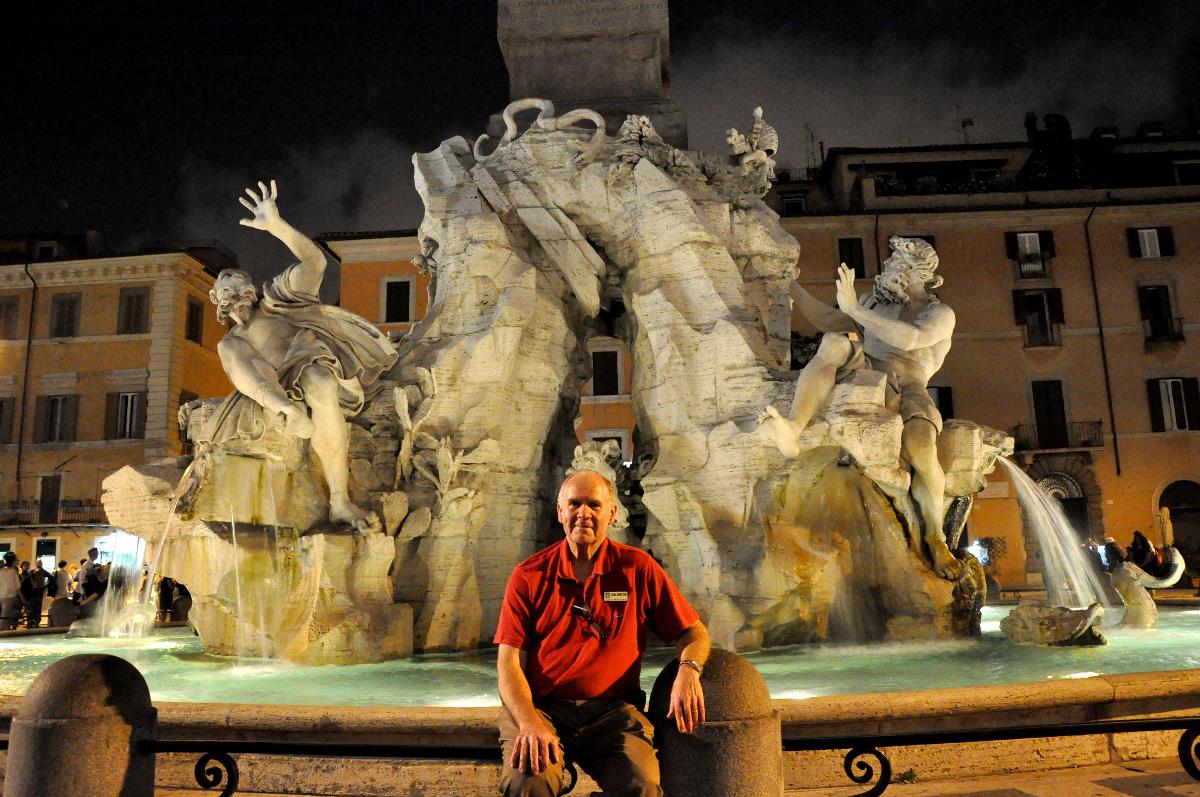
Piazza Navona is a city square in Rome, Italy, built on the site of the Stadium of Emperor Domitian (AD 81-96). The piazza follows the layout of the open space of the stadium. One of the attractions here is the Fountain of Four Rivers.
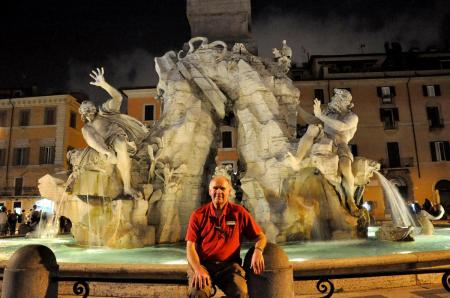
Fountain of Four Rivers. Photo by Nancy Picogna.

Fountain of Four Rivers. Photo by Nancy Picogna.

The fountain, a work of the famous artist Bernini, depicts the four “river gods.” Wikipedia: “Collectively, they represent four major rivers of the four continents through which papal authority had spread: the Nile representing Africa, the Danube representing Europe, the Ganges representing Asia, and the Río de la Plata representing America.”

Info from http://www.rome.info/bernini/fountain-four-rivers/

Rome’s love affair with fountains goes back to antiquity, whilst the city today can boast a collection of public fountains that has no parallel to any other city in the world! In Baroque Rome, fountains were seen as a reflection of the generosity associated with papal families.

The play of water over marble, no matter how humble the design, provided local Romans with entertainments and a much needed, secure supply of water which could easily be carried home. The popes saw this art form as an excellent PR exercise and exploited the concept to the advantage of their standing with the local people. Pope, Innocent X Pamphilj (reigned 1644-1655) eventually commissioned Gian Lorenzo Bernini to sculpt Rome’s greatest achievement in this genre, the Fountain of the Four Rivers, located in Piazza Navona, the ancient stadium of the Emperor Domitian and the site of the Pamphilj family palace. As early as 1647 Innocent had decided to erect an obelisk as a central ornament for the piazza in tandem with a fountain, as he methodically cleaned up and beautified what was one of Rome’s most squalid neighbourhoods!

A competition was announced for design submissions by the leading artists of the day, with the exception of the gifted Bernini, who at the time was out of favor because of his close association with the previous papal regime, the Barberini. 

The greatest artist of the day was not to be deterred however, arranging for the model of his fountain design to be seen by the Pope, upon which Innocent immediately ordered Bernini to begin the execution of his design, reputedly saying afterwards, “that the only way to avoid employing Bernini was not to see his designs.”

The Fountain of the Four Rivers depicts gods of the four great rivers in the four continents as then recognized by the Renaissance geographers: the Nile in Africa, the Ganges in Asia, the Danube in Europe and the Río de la Plata in America. 

Each location is further enhanced by animals and plants of that country. The Ganges carries a long oar, representing the river’s navigability. The Nile’s head is draped with a loose piece of cloth, meaning that no one at that time knew exactly where the Nile’s source was. The Danube touches the Papal coat of arms, since it is the largest river closest to Rome. And the Río de la Plata is sitting on a pile of coins, a symbol of the riches America might offer to Europe (the word plata means silver in Spanish). 

Each River God is semi-prostrate, in awe of the central tower, epitomized by the slender Egyptian obelisk (built for the Roman Serapeum in AD 81), symbolizing Papal power and surmounted by the Pamphilj symbol of the dove. 

The Fountain of the Four rivers is a theater in the round, whose leading actor is the movement and sound of water splashing over and cascading down a mountain of travertine marble. The masterpiece was finally unveiled to the world on June 12, 1651, to joyous celebration and the inevitable criticisms of the day. Then as today the Fountain of the Four Rivers continues to amaze and entertain visitors to Rome. Bernini triumphs yet again!

Click on image for larger view.

Goddess Artemis at Vatican Museum

August 23, 2014

There is a statue of the goddess Artemis housed in the Vatican Museum.

Goddess Artemis in Vatican Museum. Photo by Leon Mauldin.

Goddess Artemis in Vatican Museum. Photo by Leon Mauldin.

This is the goddess mentioned in Acts 19, in the context of Paul’s preaching efforts at Ephesus:

About that time there occurred no small disturbance concerning the Way. For a man named Demetrius, a silversmith, who made silver shrines of Artemis, was bringing no little business to the craftsmen; these he gathered together with the workmen of similar trades, and said, “Men, you know that our prosperity depends upon this business. You see and hear that not only in Ephesus, but in almost all of Asia, this Paul has persuaded and turned away a considerable number of people, saying that gods made with hands are no gods at all. Not only is there danger that this trade of ours fall into disrepute, but also that the temple of the great goddess Artemis be regarded as worthless and that she whom all of Asia and the world worship will even be dethroned from her magnificence.” When they heard this and were filled with rage, they began crying out, saying, “Great is Artemis of the Ephesians!” (verses 23-28).

The ISBE has this info:

She may, however, be identified with the Cybele of the Phrygians whose name she also bore, and with several other deities who were worshipped under different names in various parts of the Orient. In Cappadocia she was known as Ma; to the Syrians as Atargatis or Mylitta; among the Phoenicians as Astarte, a name which appears among the Assyrians as Ishtar; the modern name Esther is derived from it. The same goddess seems to have been worshipped by the Hittites, for a female deity is sculptured on the rocks at Yazili Kaya, near the Hittite city of Boghazkeui. It may be shown ultimately that the various goddesses of Syria and Asia Minor all owe their origin to the earlier Assyrian or Babylonian Ishtar, the goddess of love, whose chief attributes they possessed. The several forms and names under which she appears axe due to the varying developments in different regions.

Tradition says that Diana was born in the woods near Ephesus, where her temple was built, when her image of wood (possibly ebony; Pliny, NH, xvi. 40; Acts 19:35) fell from the sky. Also according to tradition the city which was later called Ephesus was founded by the Amazons, and Diana or Cybele was the deity of those half-mythical people. Later when Ephesus fell into the possession of the Greeks, Greek civilization partly supplanted the Asiatic, and in that city the two civilizations were blended together. The Greek name of Artemis was given to the Asiatic goddess, and many of the Greek colonists represented her on their coins as Greek. Her images and forms of worship remained more Asiatic than Greek. Her earliest statues were figures crudely carved in wood. Later when she was represented in stone and metals, she bore upon her head a mural headdress, representing a fortified city wall; from it, drapery hung upon each side of her face to her shoulders. The upper part of her body was completely covered with rows of breasts to signify that she was the mother of all life. The lower arms were extended. The lower part of the body resembled a rough block, as if her legs had been wrapped up in cloth like those of an Egyptian mummy. In later times her Greek followers represented her with stags or lions standing at her sides. The most renowned of her statues stood on the platform before the entrance to her temple in Ephesus. As the statues indicate, she impersonated the reproductive powers of men and of animals and of all other life.

We have previously referenced Artemis in posts here, here, here and here.

Click on image for larger view.


Forum of Julius Caesar

August 20, 2014

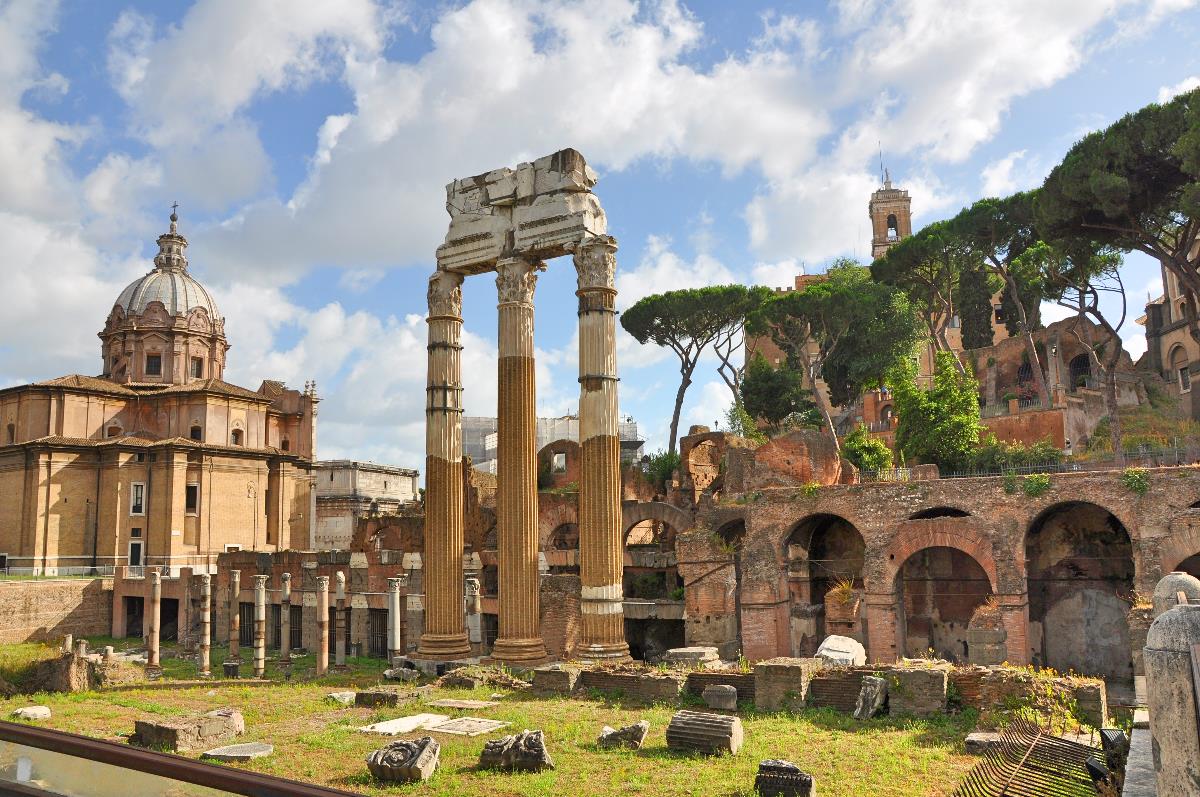
During our recent tour of Italy we were able to take some photos of the Forum of Julius Caesar, the first of the Imperial Forums. Construction was begun by Caesar in 54 BC (Rome: Oxford Archaeological Guides). This is the location where the senate would meet before him. It was also here that Caesar built the Temple of Venus Genitrix.

The temple (Fig. 62) was introduced to Caesar’s original plan at a slightly later stage. It was vowed by Caesar the night before the Battle of Pharsalus in 48 BC, during his civil war with Pompey, to win over Pompey’s favoured goddess Venus Victrix, though when inaugurated in 46 BC (while still unfinished) it actually honoured her as Venus Genetrix, ‘universal mother’, from which Julius Caesar’s family (and thus all the emperors from Augustus to Nero) claimed descent (ibid.)

Forum of Julius Caesar. Photo ©Leon Mauldin.

Forum of Julius Caesar. Photo ©Leon Mauldin.

The three Corinthians columns were added at the time of Hadrian.