Elephantine Island

April 8, 2025

Having just returned from a 13-day tour of Greece & Turkey, I plan to share some of those photos asap. But for now, as I’m preparing for a study on Nehemiah, I wanted to post a photo of Elephantine Island, on the Nile River, as papyri discovered there has a bearing on the timeframe of the book of Nehemiah.
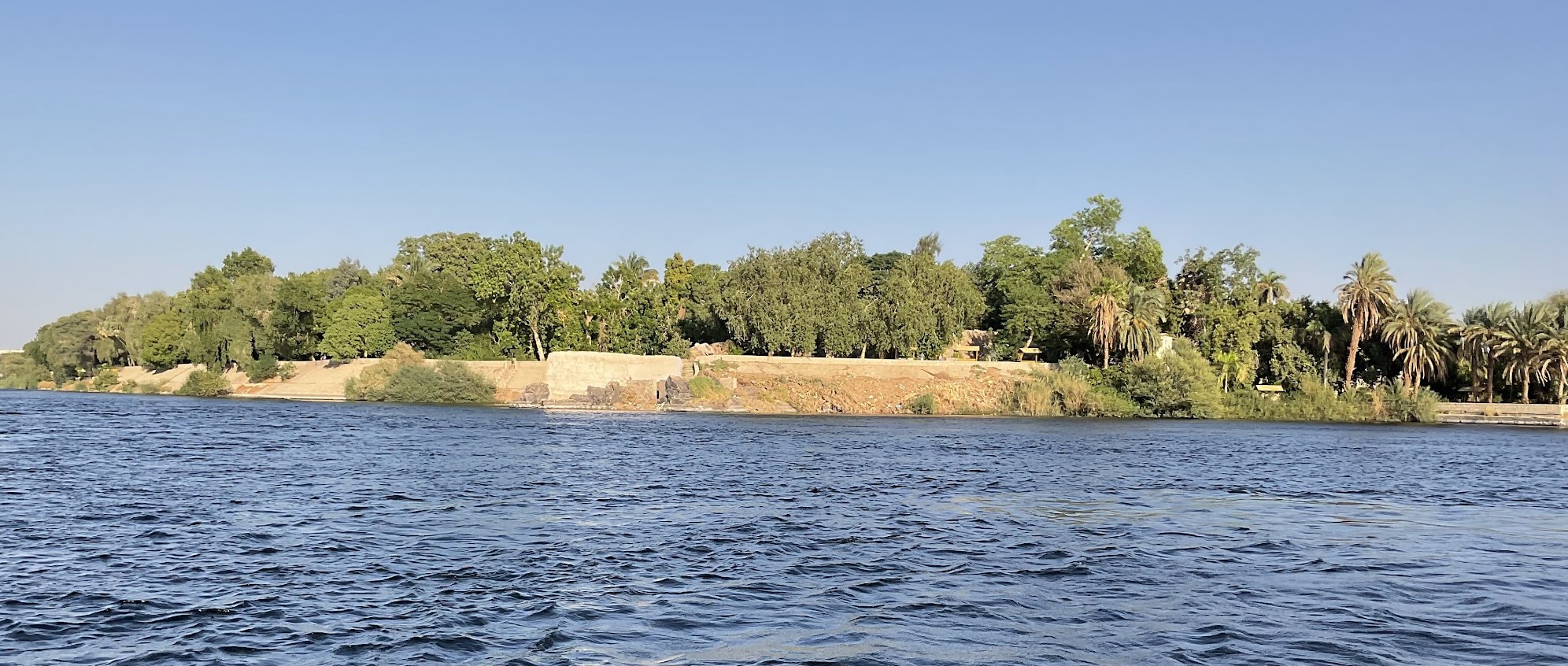
Elephantine Island on the Nile, in Egypt. Photo by Leon Mauldin.

The Lexham Bible Dictionary has this informative entry:

An island located along the Nile in upper Egypt, opposite modern-day Aswan. The island was named Elephantine in Greek, either because it was the center of the ivory trade between Egypt and Nubia or because it is surrounded by black rocks shaped like elephants.

Location and Dates
Elephantine is located along the first cataract of the Nile in upper Egypt. The island was important for trade and as a Persian military garrison. Jewish residents lived on the island, and there is evidence that a temple existed for Yahweh worship.
Little documentation about the island exists apart from fifth-century BC literary and legal texts—there are also inscriptions and letters documenting Elephantine correspondence with Jerusalem. Excavations of the island have revealed a Persian period complex of multistoried, mud-brick houses with earthen floors. An area with tiled flooring was also discovered and determined to be part of the temple courtyard.
It is uncertain how long the Jewish community existed at Elephantine. There are texts that claim the community arrived prior to Cambyses’ arrival in Egypt in 525 BC, but, according to MacLaurin, the community may even date back to Moses’ time (MacLaurin, “Date of the Foundation of the Jewish Colony at Elephantine,” 93–95). Porten argues for a mid-seventh century BC arrival date (Porten, “Settlement of the Jews at Elephantine,” 456–462). Documentation is limited to 495–398 BC, indicating that the community existed on the island during the height of the Persian Empire.

Biblical Relevance
The site of Elephantine is not mentioned in the Bible, but the community that lived there during the Persian period provides us with insights about Judaism. The garrison at Elephantine and neighboring Syene—ultimately controlled by Persian imperial officials—was a multicultural colony of Jews, Aramaeans, Egyptians, and Persians. Much like Jews in other parts of the empire, the inhabitants at Elephantine would have interacted with other peoples of the empire while continuing to identify with other Jews. Although they were geographically separated from Jerusalem and Judaea, they called themselves Judaeans (יהודין, yhwdyn)—the Aramaic form of the biblical word for Judaeans or Jews (יְהוּדִים, yehudim). This suggests a desired identification with other Jews and with Judaea.
In Elephantine, the temple to the Jewish deity Yahu (a variant form of the biblical names for the God of Israel, Yah and Yahweh) was destroyed in the fifth century BC. According to correspondence with the priests in Jerusalem, the destruction was caused by priests of the Egyptian ram god Khnum—to whom a temple was built on Elephantine during the 18th–19th centuries BC (or the 16th–13th centuries BC). The Jewish community responded by praying, fasting, and putting on sackcloth, which were common biblical responses to disaster. The leaders petitioned Jerusalem to permit the rebuilding of the temple, pointing out that they had made no oil, incense, or burnt offerings in the temple since it had been destroyed—indicating both an awareness of the authority of the Jerusalem priesthood and a shared practice of presenting offerings at an authorized temple. The temple was apparently never rebuilt.

(Source: Whitcomb, K. A. (2016). Elephantine. In J. D. Barry, D. Bomar, D. R. Brown, R. Klippenstein, D. Mangum, C. Sinclair Wolcott, L. Wentz, E. Ritzema, & W. Widder (Eds.), The Lexham Bible Dictionary. Lexham Press.).


The Persian Royal Road to Sardis

January 16, 2025

As one studies the biblical text, such as the letter to the church at Sardis (Rev. 3:1-6), one of the Seven Churches of Asia addressed in the book of Revelation, it is helpful to know somewhat of the conditions in which those first century Christians lived.

The city of Sardis has a rich history in many ways. This post will deal with just one: the Royal Road. Cyrus the Great (r. 559-529 BC) was the founder of the Persian Empire following his conquering of the Babylonian Empire. Cambyses II succeeded him (r. 529-522 BC), whose successor was Darius (r.521-486 BC). (This is the king who was defeated in 490 BC at the battle of Marathon).

But scholars make the case that his great achievement was his construction of the Royal Road, which extended from the capitol of Susa to Sardis:

Darius is perhaps best remembered for instituting an advanced highway system throughout the empire, a route traditionally called the “Persian Royal Road.” According to Herodotus, the “father of history,” this roadway stretched from Susa (in Elam) to Sardis (in Lydia) and was comprised of a total of 111 intermediate resting-stages, passing through some six Persian provinces, and requiring a total of 90 days to travel the entire course of approximately 1,685 miles. Herodotus adds that another three days were required to journey from Sardis to the coast at Ephesus, from which some scholars have deduced that the “Royal Road” may have extended as far as the Aegean coast. At its other end, a road continued from Susa that ran to Persepolis and beyond.

Beitzel, B. J. (2009). The New Moody Atlas of the Bible (p. 206). Moody Publishers.

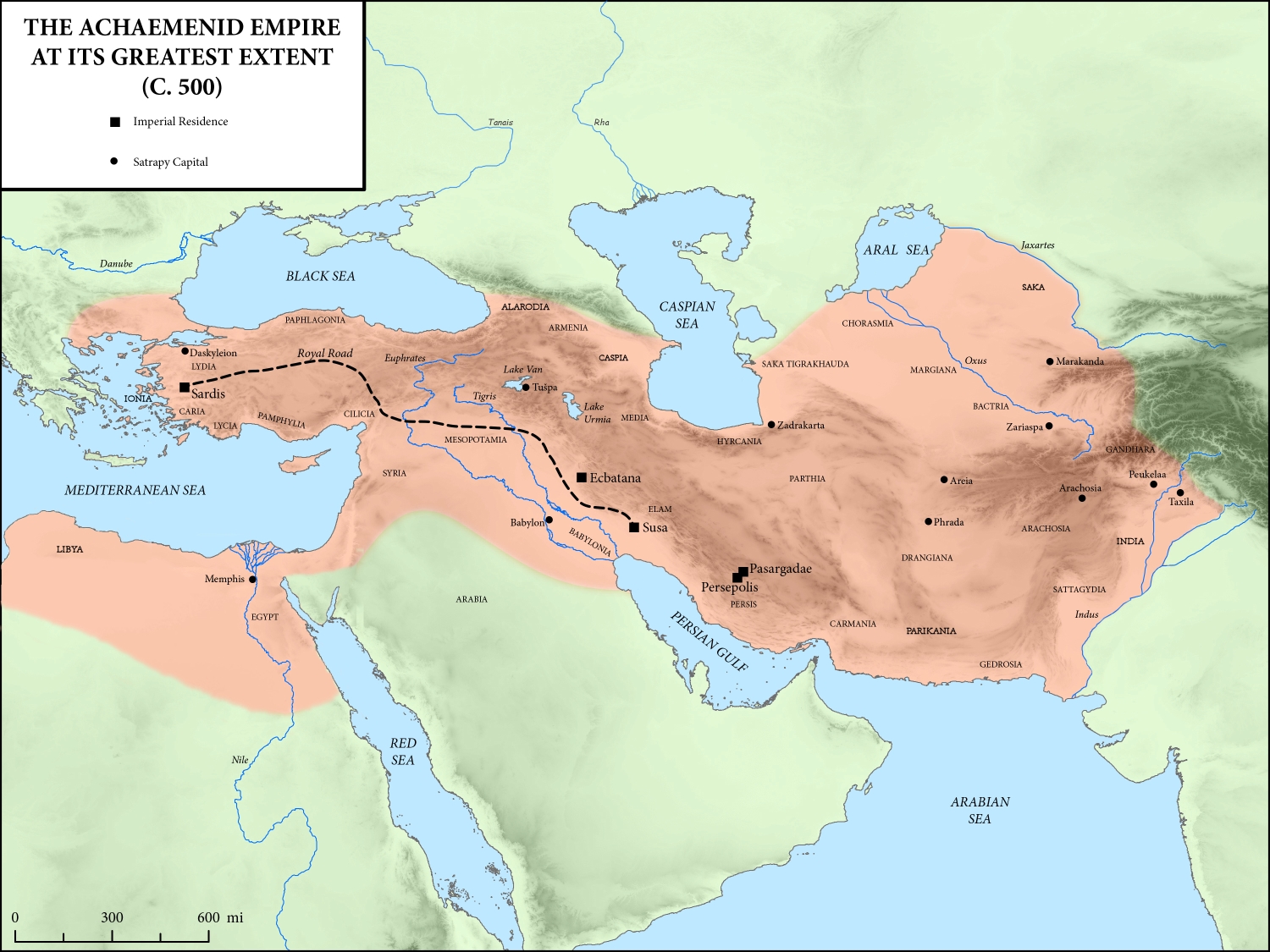
The following map depicts this route:

Map shows route of Royal Road from Persian capital at Susa westward to Sardis. Map courtesy of Wikipedia Commons.

This linkage from the capital to Sardis “located Sardis on a major trade and communications route that persisted into the Roman period, positioning the city for ongoing prosperity” (deSilva, Lexham Geographic Commentary, p. 667).

Royal Road at Sardis. Photo ©Leon Mauldin.

Benefits of this road:

  • Official communication. The historian Herodotus said of the Persian royal messengers:

Now there is nothing mortal that accomplishes a course more swiftly than do these messengers, by the Persians’ skillful contrivance. It is said that as many days as there are in the whole journey, so many are the men and horses that stand along the road, each horse and man at the interval of a day’s journey. These are stopped neither by snow nor rain nor heat nor darkness from accomplishing their appointed course with all speed.

Herodotus. (1920). Herodotus, with an English translation by A. D. Godley (A. D. Godley, Ed.). Harvard University Press.

  • Administration.
  • Rapid Troop Movemnt.
  • Trace and commerce.

In later history, Alexander the Great would make use of the Royal Road in his conquest of Persia. Dr. Mark Wison notes, “After Alexander the Great captured the city from the Persians in 334 BC, Sardis served as the western capital of the Selucid Empire nor nearly a hundred years (281-190 BC)” (Biblical Turkey, p. 290). In 133 BC Sardis became a part of the Roman province of Asia.

God had his people in Sardis. The church at Sardis was the 5th of the Seven Churches addressed by John (Rev. 1-3).


New Resources for Ezra & Nehemiah

November 9, 2023

We are happy to recommend Todd Bolen’s latest collection of biblical photos, Photo Companion for Ezra and Nehemiah. Like the previous Photo Companion volumes, a PPT is prepared for each chapter, with literally hundreds of illustrative photos. The slides are labeled, and also have informative notes. Because the setting of both Ezra and Nehemiah is that of the Persian Empire, including today’s Iran, these sets are especially helpful because of modern difficulties in obtaining photos in these sites!

Here below is a snippet from the current BiblePlaces Newsletter, which includes ordering info:

“We have been building the Photo Companion to the Bible for nine years now, and there is nothing else like it anywhere. There are a wide variety of good commentaries and Bible study guides available, but there is only one photographic resource for Ezra and Nehemiah. Today you can get the best price on the two books together: Ezra ($39), Nehemiah ($49), or Ezra and Nehemiah together for $59 as DVD+download or as download-only.”

I have been using and recommending Dr. Bolen’s materials since 2003! The new publications are welcome additions to the library of any serious Bible student!


Biblical Colossae

September 2, 2022

We recently began a class study of Paul’s letter “to the saints and faithful brethren in Christ who are of Colossae” (Col. 1:2) in our local congregation. Knowing somewhat of the geographical setting helps one to enter the biblical world as the text is studied.

Colossae (also spelled Colosse) was a city in the Roman province of Asia, located in the Lycus River Valley about 100 miles east of Ephesus. It was situated near the cities of Hierapolis and Laodicea (see map here).

Location of Colossae. Map curtesy of BibleMapper.com.

I took a group to biblical sites in Greece/Turkey this past October, and Colossae was included on our itinerary.

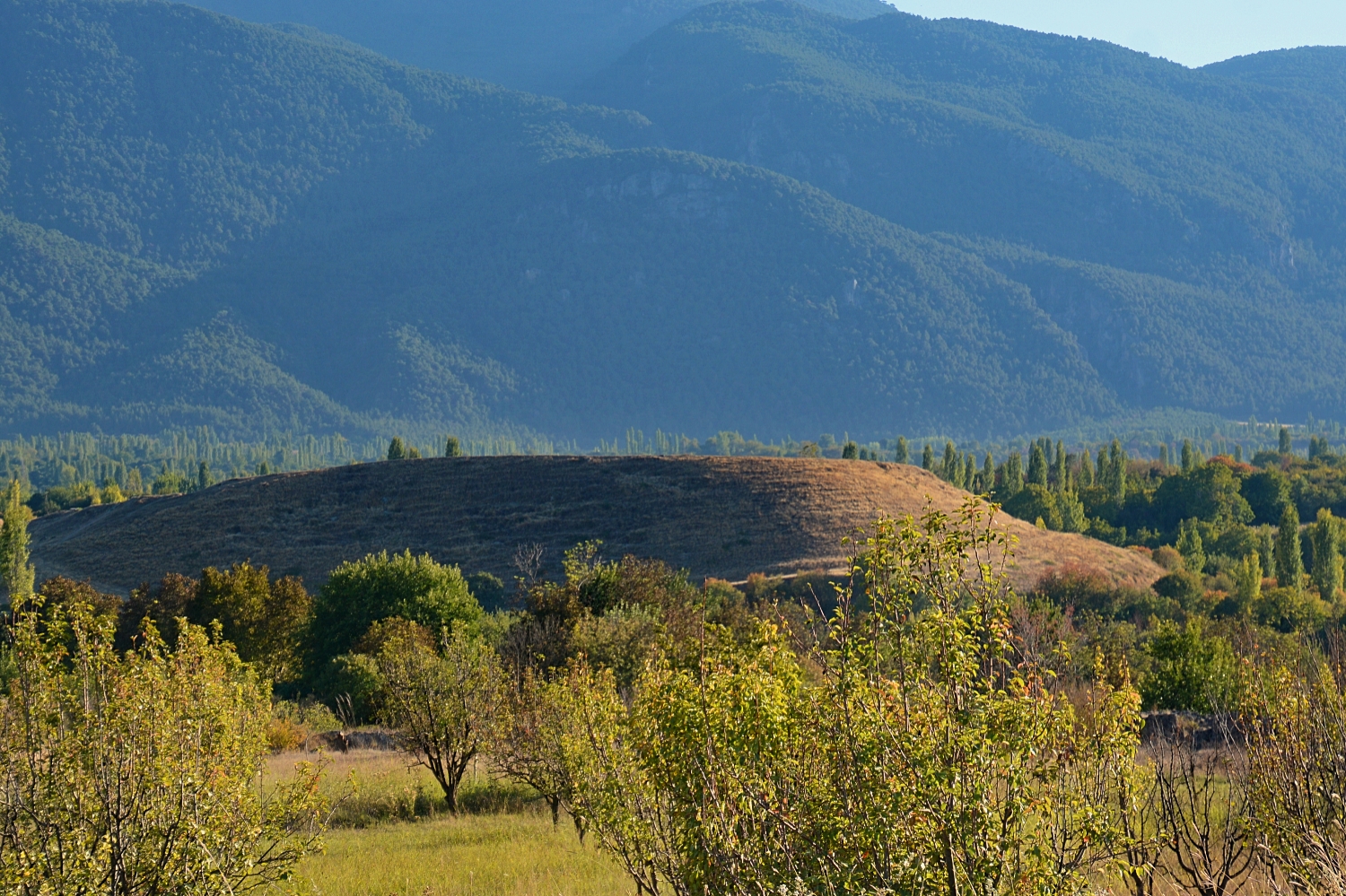
Tel of Colossae. Photo ©Leon Mauldin. Mt. Cadmus is seen in the background.

During the Persian period, Colossae was a prosperous city, but by the time of the 1st century, it declined in importance, being eclipsed by Laodicea and Hierapolis. “Though commercially less successful, Colossae continued to be a place of importance in the Roman imperial period, as is shown by an inscription of this time and by second and third century A.D. coins that depict the usual city officials, showing that it had the rights of a city under the Romans” (Mare, W. H. (1976). “Archaeological Prospects at Colossae.” The Near East Archaeological Society Bulletin, 7, 43).

Back in 2006, Ferrell Jenkins and I made a personal study trip that included this site. Here is a photo from that occasion, giving a more distant shot than that above.

Colossae at center, 2006. Photo ©Leon Mauldin.

Unlike many of the recipients of Paul’s letters, Paul had not personally established the Colossian church, but apparently those who learned the truth of the Gospel during Paul’s stay at Ephesus (Acts 19:10), had taught and converted the Colossians.

Further, a comparative reading of Colossians with the personal letter to Philemon will show that Philemon was a Colossian also, so in reality two of the New Testament books were directed initially to this location.

  1. Both letters were written when Paul was in chains.
  2. Timothy joined Paul in both.
  3. Epaphras, Mark, Aristarchus, Demas & Luke joined in salutations.
  4. Onesimus was one of the messengers by whom Colossians was sent.
  5. Archippus is addressed in both.

Colossae has not been excavated as of yet. Click on photos for larger view.


The Cyrus Cylinder

March 20, 2021

“Who says of Cyrus, ‘He is My shepherd, And he shall perform all My pleasure, Saying to Jerusalem, “You shall be built,” And to the temple, “Your foundation shall be laid.” ‘ (Isa. 44:28)

I often say that every passage has a context; the greater context of our passage here, Isaiah 40-48, addresses the incomparable greatness of  YAHWEH. This is especially seen in these chapters as the true God is contrasted with the idols made by human hands. The gods created in the imaginations of men cannot see anything, or say anything, or do anything (cf. Isa. 44:9-20). But the God of Israel says,  “Thus says the LORD, the King of Israel, And his Redeemer, the LORD of hosts: ‘I am the First and I am the Last; Besides Me there is no God. And who can proclaim as I do? Then let him declare it and set it in order for Me, Since I appointed the ancient people. And the things that are coming and shall come, Let them show these to them.” (Isa. 44:6-7).

One manifestation of the true God’s great power is that only He can foretell the future. So while the Assyrians were still the world power, God foretold through Isaiah (8th century BC) that it would be Babylon who would take Judah captive (Isa. 39). Then God foretold the return from Babylonian captivity (Isa. 48:20). But through Isaiah (prophetic work spanned 740-ca.690 BC) God called the future deliverer by name: it would be Cyrus, king of the Persians (r. 559-530 BC). Approximately two centuries before Cyrus ascended the throne, God called him by name, and foretold that he would be the one who would allow the Jews to return from captivity and rebuild their temple! 

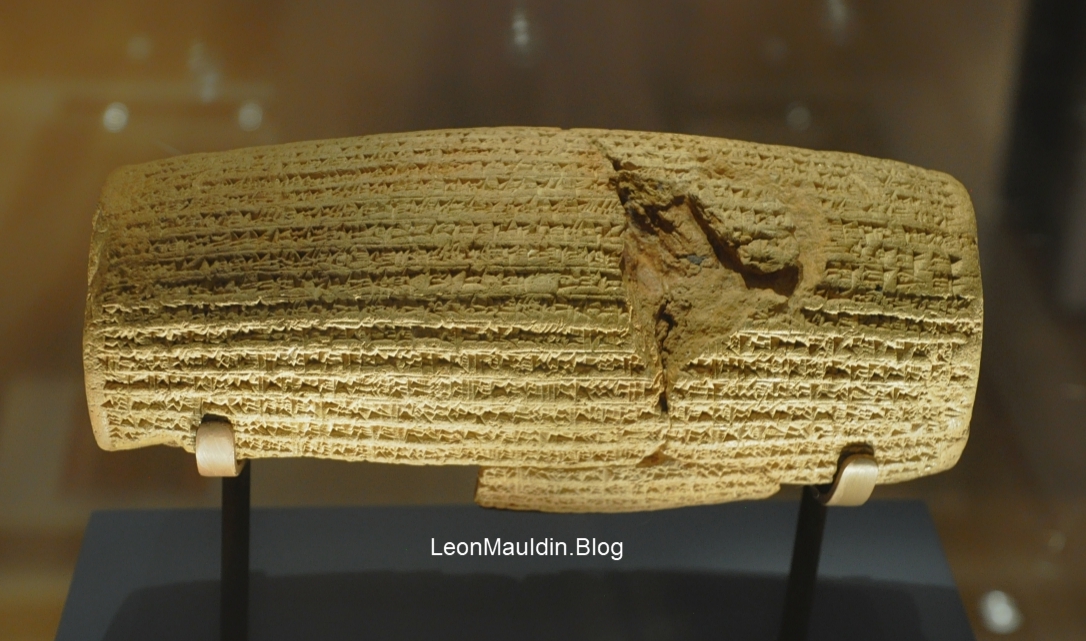
The Cyrus Cylinder. British Museum. Photo by Leon Mauldin.

In addressing the significance of the Cyrus Cylinder, the Lexham Bible Dictionary notes:

The Cyrus Cylinder is an important piece of external evidence for the fall of the Neo-Babylonian Empire. Written in Akkadian, the Cylinder is a building inscription celebrating the restoration of Babylon, which Cyrus king of Persia conquered. The Bible records that Cyrus’ conquest brought an end to the Babylonian exile and allowed for the exiled Judahites to return to their homeland (Ezra 1:3; 2:1–67). The Cyrus Cylinder does not explicitly mention the Judahites, but the book of Ezra opens with a decree from Cyrus that allows the Judahites to return from exile and promises Persian patronage for the reconstruction of the temple in Jerusalem.

Krijgsman, M. (2016). Cyrus Cylinder. In J. D. Barry, D. Bomar, D. R. Brown, R. Klippenstein, D. Mangum, C. Sinclair Wolcott, … W. Widder (Eds.), The Lexham Bible Dictionary. Bellingham, WA: Lexham Press.

Note how this ties in with Ezra’s opening verses that tell of the decree of King Cyrus:

Now in the first year of Cyrus king of Persia, that the word of the LORD by the mouth of Jeremiah might be fulfilled, the LORD stirred up the spirit of Cyrus king of Persia, so that he made a proclamation throughout all his kingdom, and also put it in writing, saying, Thus says Cyrus king of Persia: All the kingdoms of the earth the LORD God of heaven has given me. And He has commanded me to build Him a house at Jerusalem which is in Judah. Who is among you of all His people? May his God be with him, and let him go up to Jerusalem which is in Judah, and build the house of the LORD God of Israel (He is God), which is in Jerusalem. And whoever is left in any place where he dwells, let the men of his place help him with silver and gold, with goods and livestock, besides the freewill offerings for the house of God which is in Jerusalem.

Ezra 1:1-4

Indeed, the true God proclaimed “the things that are coming and shall come”!


Recommended Resource: Dr. Bolen’s New Persia Volume

December 3, 2018

This morning I’ve purchased Todd Bolen’s new Persia volume (#19), in his Pictorial Library of the Bible Lands series.  It will be a valuable addition to the series. One reason is that of the numerous sites themselves (Ecbantana, Persepolis, Susa, Zagros Mountains, plus, People/Scenes of Persia) and the obvious benefit to especially Old Testament and “Between the Testaments” studies. But especially is this true as these sites included have been of recent years the most inaccessible.

The DVD/download includes 22 PPT presentations. The one on Persepolis has 165 slides. 168 slides on the Persepolis staircase reliefs. The usual helpful identification of sites/artifacts and brief notes are included.

I have used Dr. Bolen’s material since 2003, having been introduced to his resources by Ferrell Jenkins. (This Persian volume of the Pictorial Library is dedicated to Ferrell Jenkins. In his “acknowledgements” in the DVD Todd says, “This volume is dedicated to Ferrell Jenkins. Ferrell has been guiding tours throughout the Middle East for over 50 years, and Persia is one of the few places he has not yet visited”).

I have recommended the Pictorial Library to my preacher/teacher friends, as well as including this in our church resource room. I am happy to recommend this new volume. See his current newsletter here:

BiblePlaces Newsletter
Vol 17, #3 – December 3, 2018

I never thought I’d make a photo collection for Persia. Ever since I was a boy watching the US hostage crisis on TV, followed by footage of the Iran-Iraq War, it seemed hardly possible that I’d be able to travel throughout the heart of the Persian Empire. But I was wrong.

The opportunity came earlier this year, and the trip was everything I could have hoped for and more. I was able to visit every site on my itinerary, following in the footsteps of such figures as Cyrus, Darius, Xerxes, and Artaxerxes. I saw the famous Behistun Inscription, walked around one of the best preserved ziggurats, explored numerous museums, and marveled at the well-preserved tomb of King Cyrus. You can still see the ancient necropolis where Darius, Xerxes, and Artaxerxes carved their tombs into a cliffside, and the famous Persian gardens (from whence we get our word “paradise”) are as beautiful as they say. The people were friendly and the food was fantastic. The highlight for me was walking through the ancient palace where Esther approached Ahasuerus to beg him to stop the evil plot of Haman. 

I’m excited now to announce that our new Persia volume is available. It includes more photographs than any other in the Pictorial Library of the Bible Lands series, and everything is included in both jpg and PowerPoint formats. The PowerPoint files include notes that explain what you’re looking at in the photos. Whether this inspires you to plan your own trip or provides a virtual tour in place of your own, we think you’ll find the Persia collection both enjoyable and instructive.

You can order the Persia volume at the introductory price of $25 (download or DVD or both). Keep reading to learn about some of our favorite photos from the trip.

Todd Bolen
Photographer, BiblePlaces.com
Professor of Biblical Studies, The Master’s University


Treasury of the Athenians at Delphi . . . More Background for Esther

September 20, 2017

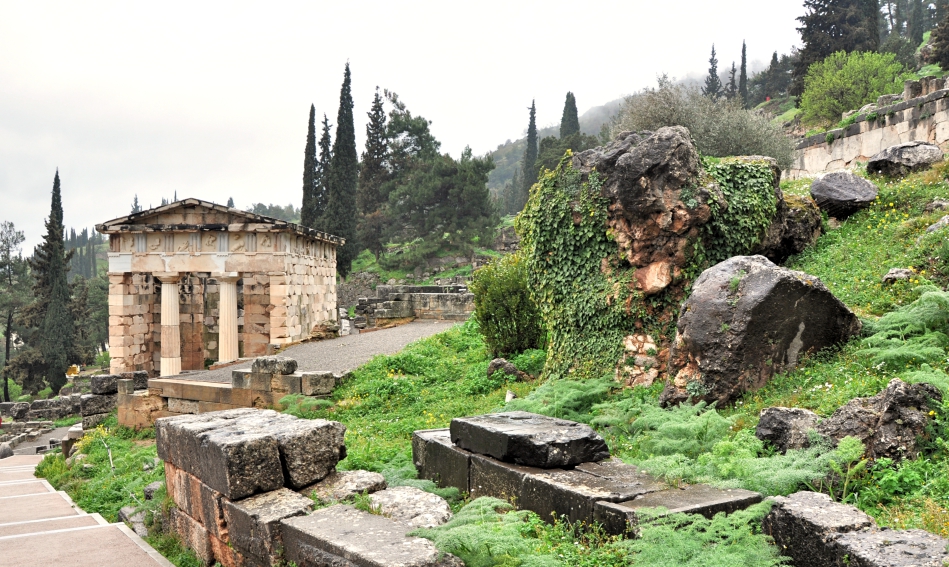
The restored treasury of the Athenians at Delphi:

The Athenian Treasury was a votive building in the form of a reduced scale temple, designed to hold the multitude of Athenian offerings to the Delphi oracle. The building was constructed entirely of Parian marble and had a Doric frieze decorated with 30 metopes. It is a distyle in antis building with a porch before the entrance to the cella, measuring 10 x 6 meters.

The metopes depicted mythological themes of Theseus, Heracles, and Amazons in high relief. It is believed that two Athenian sculptors carved the metopes, each representing a distinct style or generation: one from the Archaic period, and one from the Severe style of classical art (the transition from Archaic to High Classical art). The walls of the treasury were inscribed with various texts, among which are the hymns to Apollo which included melody notation (see below).

Several dates for its construction have been suggested (with Pausanias mentioning that it was built after the battle of Marathon), but it is widely accepted that its was created sometime between 510 and 480 BCE, a period framed by the founding of the Athenian democracy and the defining battle of Marathon. (http://ancient-greece.org/museum/muse-delphi-athenians.html)

Delphi of course is “home of the famous oracle of Delphi, known as the Pythia, and the Temple of Apollo, where the oracle presided” (Fant, Clyde E.; Reddish, Mitchell G.. A Guide to Biblical Sites in Greece and Turkey, Kindle Locations 1180-1181).

Our photo here shows the treasury at left center:

Treasury of the Athenians at Delphi. Photo ©Leon Mauldin.

Regarding the famous battle of Marathon, 490 BC, where the greatly outnumbered Greeks repelled and defeated the Persians, EyeWitnessHistory.com has the following info:

The battle of Marathon is one of history’s most famous military engagements. It is also one of the earliest recorded battles. Their victory over the Persian invaders gave the fledgling Greek city states confidence in their ability to defend themselves and belief in their continued existence. The battle is therefore considered a defining moment in the development of European culture.

In September of 490 BC a Persian armada of 600 ships disgorged an invasion force of approximately 20,000 infantry and cavalry on Greek soil just north of Athens. Their mission was to crush the Greek states in retaliation for their support of their Ionian cousins who had revolted against Persian rule.

Undaunted by the numerical superiority of the invaders, Athens mobilized 10,000 hoplite warriors to defend their territory. The two armies met on the Plain of Marathon twenty-six miles north of Athens. The flat battlefield surrounded by hills and sea was ideal for the Persian cavalry. Surveying the advantage that the terrain and size of their force gave to the Persians, the Greek generals hesitated.

One of the Greek generals – Miltiades – made a passionate plea for boldness and convinced his fellow generals to attack the Persians. Miltiades ordered the Greek hoplites to form a line equal in length to that of the Persians. Then – in an act that his enemy believed to be complete madness – he ordered his Greek warriors to attack the Persian line at a dead run. In the ensuing melee, the middle of the Greek line weakened and gave way, but the flanks were able to engulf and slaughter the trapped Persians. An estimated 6,400 Persians were slaughtered while only 192 Greeks were killed.

The remaining Persians escaped on their ships and made an attempt to attack what they thought was an undefended Athens. However, the Greek warriors made a forced march back to Athens and arrived in time to thwart the Persians. (http://www.eyewitnesstohistory.com/pfmarathon.htm)

In our title I suggested that these events give further background to the biblical book of Esther. In our post here we showed how in 480 BC, ten years after the Battle of Marathon, the Persian King Xerxes was building his forces to again attempt to subjugate Greece. The fact that Persia was still “smarting” after her humiliating defeat by Greece helps us to see the purpose and even urgency behind those opening verses of Esther (1:1-9), where Xerxes is meeting with officials from his 127 provinces, which ranged from India to Ethiopia.

Click image for larger view.


Xerxes at Troy–Some Background for Esther

September 19, 2017

The events narrated in Esther take place during the reign of the Persian King Xerxes. “The Hebrew word used throughout the book is ʾaḥašwērôš (“Ahasuerus”) which is considered a variant of Xerxes’ name. Xerxes is the Greek form of the Persian Khshayârsha” (Huey, F. B., Jr., The Expositor’s Bible Commentary, Vol. 4, p. 797).

The book of Esther begins by telling of a great banquet in Susa, the capital,  in the 3rd year of his reign (483 BC): “in the third year of his reign he gave a banquet for all his princes and attendants, the army officers of Persia and Media, the nobles and the princes of his provinces being in his presence” (Esther 1:3). The biblical author’s intent was not to give the details as to the why of this banquet, but historical sources are helpful. Xerxes was on a mission to gather strength and support for his invasion [ill-fated] into Greece. This is the setting for the opening verses of Esther.

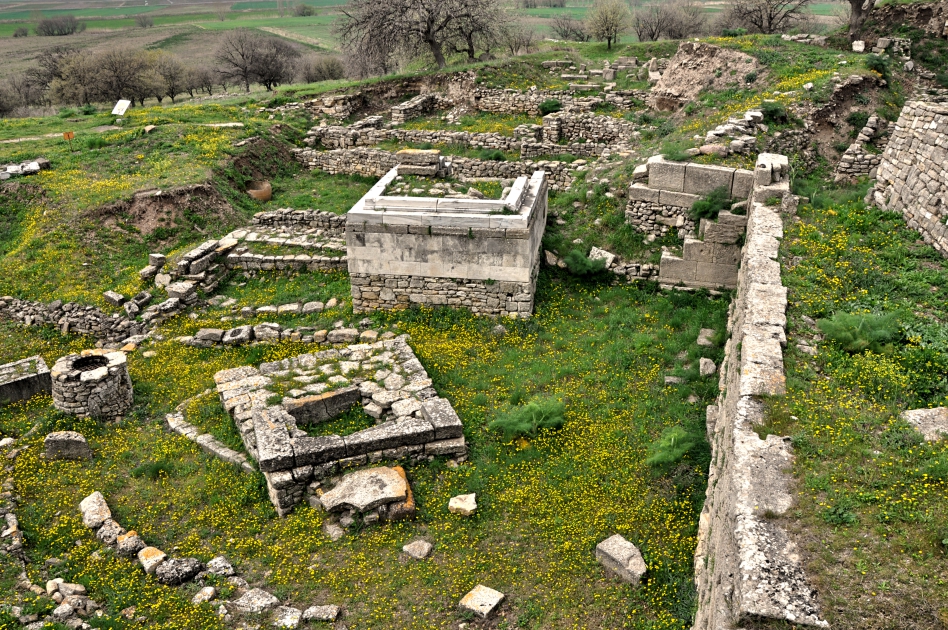
In the year 480 BC Xerxes marched westward to invade and attempt to conquer Greece. En route he passed through ancient Troy, where the historian Herodotus states, “he sacrificed a thousand heifers to Athene of Ilion” (Herodotus 7:43). Ilion is the Greek name for ancient Troy.

Our photo shows the Troy sanctuary area, Stratum VIII (dated ca. 700-85 BC).

Troy Sanctuary Area. Here Xerxes, King of Persia (r.486-464 BC) offered 1,000 heifers in sacrifice to the goddess Athena, in preparation for his war on Greece. Photo ©Leon Mauldin.

Xerxes’ invasion of Greece was a failure. It was after his return from his disappointing catastrophe that the Jewish maiden Esther became his queen, in the “seventh year of his reign” (Esther 2:17), which would be 479 BC.

Regarding the site in our photo above, Manfred O. Korfmann writes, “The earliest structures representing a sanctuary at the nearly deserted site are those established by the Aeolian Greeks sometime after 700 BCE, thus apparently existing within the lifetime of Homer! Votive offerings confirm the existence of much earlier sacred precincts as well” (TROİA/WIL̇USA p.62).

Of the city of Troy itself Korfmann continues, “Illion became the religious and political capital of a federation of municipalities, and to the south and east of the acropolis a lower city (on a grid-plan) arose – overtop and partially dug into remains from Trois VI/VII” (ibid.63).

The ancient city Troy consists of 46 occupational levels which date back to a total of nine different cities!

Our map shows Troy, which is a site on the Unesco World Heritage List.

Map of Troy in today’s Turkey, in relation to Greece.

I have previously posted on Troy here and here.

It is good to be reminded that the events of the Bible did not take place in a vacuum. The covenant people of God interacted with the people of their day, sometimes including the world powers as was the case in the Persian period, the setting for Esther.


Esther and the Providence of God

September 12, 2017

In our local congregation (Hanceville AL) we are soon to begin a study of Esther in our Sun AM class. I’m looking forward to this study, which displays the providence of God to continue, against all odds, to fulfill His plan through the Jewish people. The promise made to Abraham to bring salvation through the promised Seed, would be accomplished, in spite of the efforts of wicked Haman to destroy all the Jews of the Persian Empire.

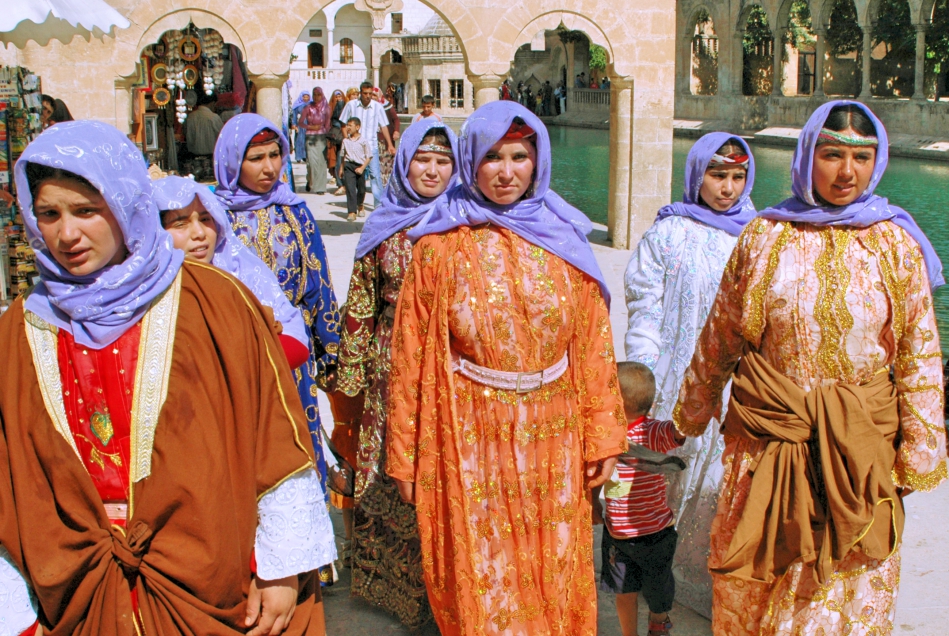
Ladies at Şanlıurfa, or Urfa, Southeastern Turkey. Known in ancient times as Edessa. Photo ©Leon Mauldin.

The festive apparel of these ladies at Şanlıurfa perhaps help us visualize the dress of that ancient culture described in Esther.

Şanlıurfa, often simply known as Urfa or in Arabic, Al-Ruha, in ancient times was Edessa, located in south-eastern Turkey; it is the capital of Şanlıurfa Province. The city is populated with primarily Arabs, Kurds and Turks. Urfa is situated on a plain about 50 miles east of the Euphrates River.

Click image for larger view.


Signing the Covenant–Nehemiah 10

August 18, 2017

I love to study the book of Nehemiah. Jerusalem’s walls that had been in ruins since the Babylonian destruction (586 BC) were rebuilt (444 BC) in just 52 days! (Neh. 6:15). The people had a mind to work (4:6); they had a godly and capable leader in Nehemiah, and the good hand of God was upon them. But the remainder of the book (chapters 7ff.) is about the necessary follow-up; the necessary commitment to covenant faithfulness, without which the newly rebuilt walls would be meaningless.

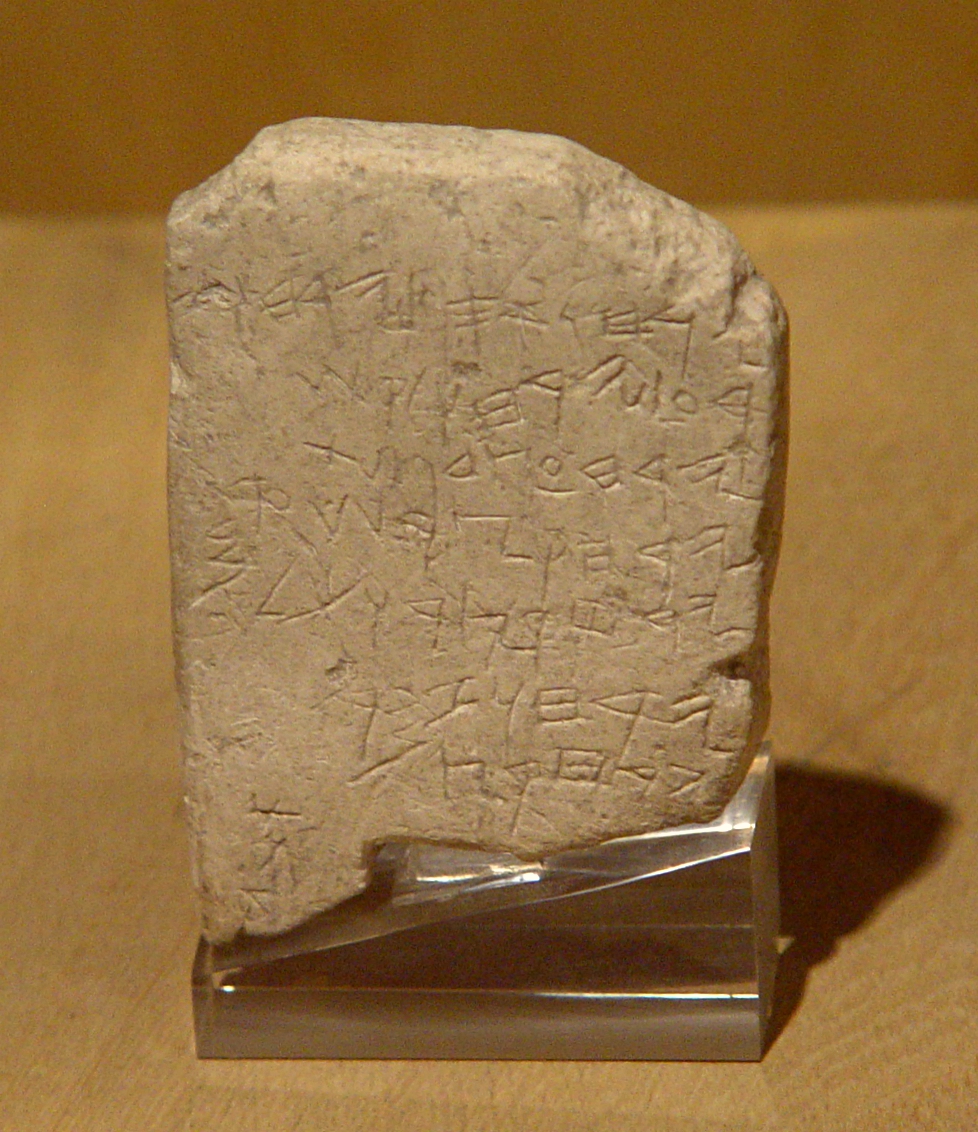
Gezer Calendar. One of the oldest examples of Hebrew script. Istanbul Archaeological Museum. Photo by Leon Mauldin.

To that end Israel’s leaders/Levites promised God: “Now because of all this We are making an agreement in writing; And on the sealed document are the names of our leaders, our Levites and our priests” (Neh. 9:38). What follows is a listing of 84 names (Neh. 10:1-27). Nehemiah’s name appropriately is first.

The Gezer Calendar is one of the oldest examples of Hebrew script. We share it here to illustrate our Nehemiah text. Those men who signed their renewed covenant with God, as well as “the rest of the people” (10:28), were pledging themselves to obey (v.29) in their homes (v.30), their business (v.31) and worship (v.32). In short: “We will not neglect the house of our God” (v.39).

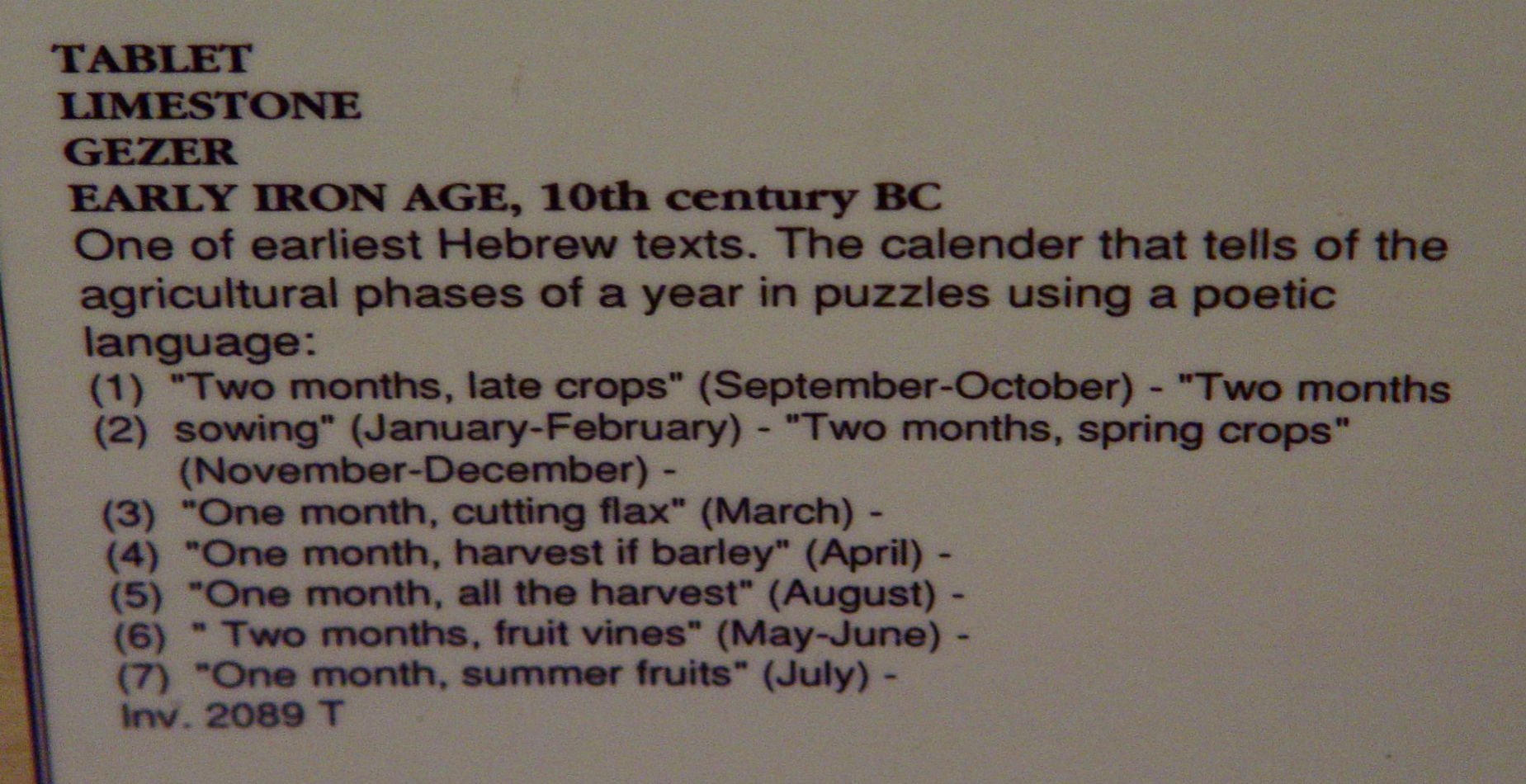
By the way, the Gezer Calendar in our photo is a school-boy’s exercise in learning the months of the year, associated with agricultural events.

Explanation of the Gezer Calendar. Photo by Leon Mauldin.

Click images for larger view.