Jesus’ Ministry, 3+ Years

November 11, 2011

There is general consensus that the earthly ministry of Jesus lasted about three years. How is that determined?

One primary source is the Gospel of John, with its inclusion of feasts.

Jesus' 3+ Yr. Ministry. Chart by Leon Mauldin.

You will note that the reference of John 5:1 just says “feast,” it does not specify. Beauford Bryant notes:

The word for feast (ἑορτή, heortē) was without the definite article in nearly all the earliest Greek manuscripts and versions. If the definite article had been read, then there would have been strong grounds for understanding this festival as a Passover, or possibly as Tabernacles, which was often referred to as “the Feast” (ההג, hahag) (College Press NIV Commentary).

********

This week I have enjoyed the opportunity to present 6 lessons in our local county (Cullman) at the Prospect church of Christ. Kent Persall is the evangelist there. 40+ years ago Kent, his wife Diane and I were students at Florida College.


“Be Not As the Hypocrites”

November 1, 2011

In Matthew 6:5 Jesus said,

And when you pray, you shall not be like the hypocrites. For they love to pray standing in the synagogues and on the corners of the streets, that they may be seen by men. Assuredly, I say to you, they have their reward.

To say, “they have their reward,” means that the only reward such will receive is the praise of men; they will not be rewarded by God. Regarding the words “hypocrite,” and “hypocrisy,” the ISBE states

‘Hypocrisy,’ ‘hypocrite’ are frequent in the New Testament, chiefly in Christ’s discourses in the Gospels. The word hupokrisis (primarily, “an answer,” “response”) meant generally, in classical Greek, stageplaying, acting, the histrionic art; hence, it came to mean acting a part in life, etc. . . but, in general, the meaning is acting a part, false, deceptive and deceived, formally and outwardly religious and good, but inwardly insincere and unrighteous; the hypocrite may come to deceive himself as well as others, but ‘the hypocrite’s hope shall perish’ (Job 8:13, KJV). On no class did our Lord pronounce such severe condemnation as on the hypocrites of His day.

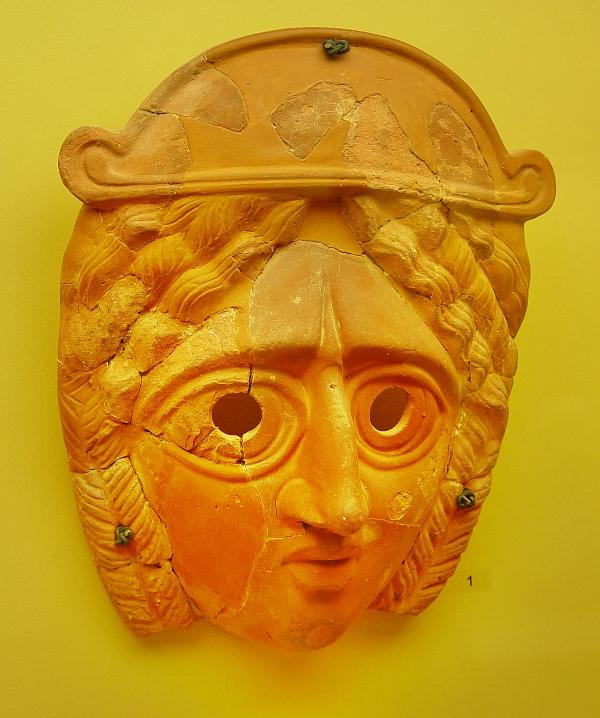
These actors’ masks in our photos below are displayed in Athens near the ancient agora. If the actor were a tragedian, he/she might have a mask like this:

Tragic Mask. Athens, Greece. Photo by Leon Mauldin.

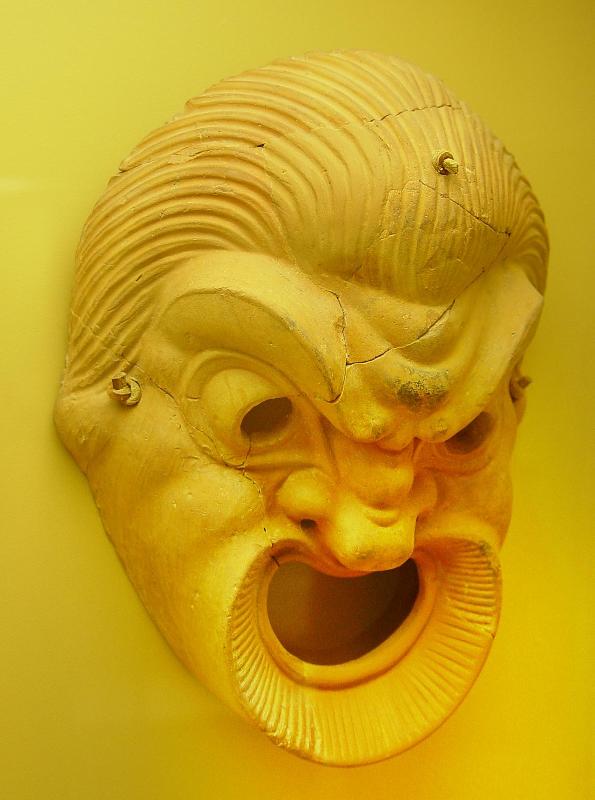
On the other hand, if he were a comic, the mask might look like this:

Comic mask. Athens, Greece. Photo by Leon Mauldin.

Jesus does not want His followers to be actors, playing a part, all the while playing a role that is not real. He requires total, genuine, sincere conversion and commitment to Him. “Be not as the hypocrites.”


Mt. Ebal from Jacob’s Well

October 28, 2011

In Deuteronomy 27:111-26, Moses commanded the people to arrange six tribes on Mount Gerizim (blessing), and six tribes on Mount Ebal (cursing). The blessings and the curses of the Law were to be read–blessing conditioned upon obedience, and curses consequential of disobedience. These instructions were given just before Israel entered Canaan, in anticipation of the Conquest under Joshua.

When they arrived in the land, after taking Jericho and Ai, they immediately went north to obey these instructions. The record is in Joshua 8:30-35.

 Afterwards, Joshua read aloud all the words of the law– the blessings as well as the curses– according to all that is written in the book of the law. There was not a word of all that Moses had commanded that Joshua did not read before the entire assembly of Israel, including the women, little children, and foreigners who were with them (Josh. 8:34-35, CSB).

Joshua also built an altar there (Josh. 8:30), made of whole stones (v.31), on which he wrote the law of Moses (v.32).

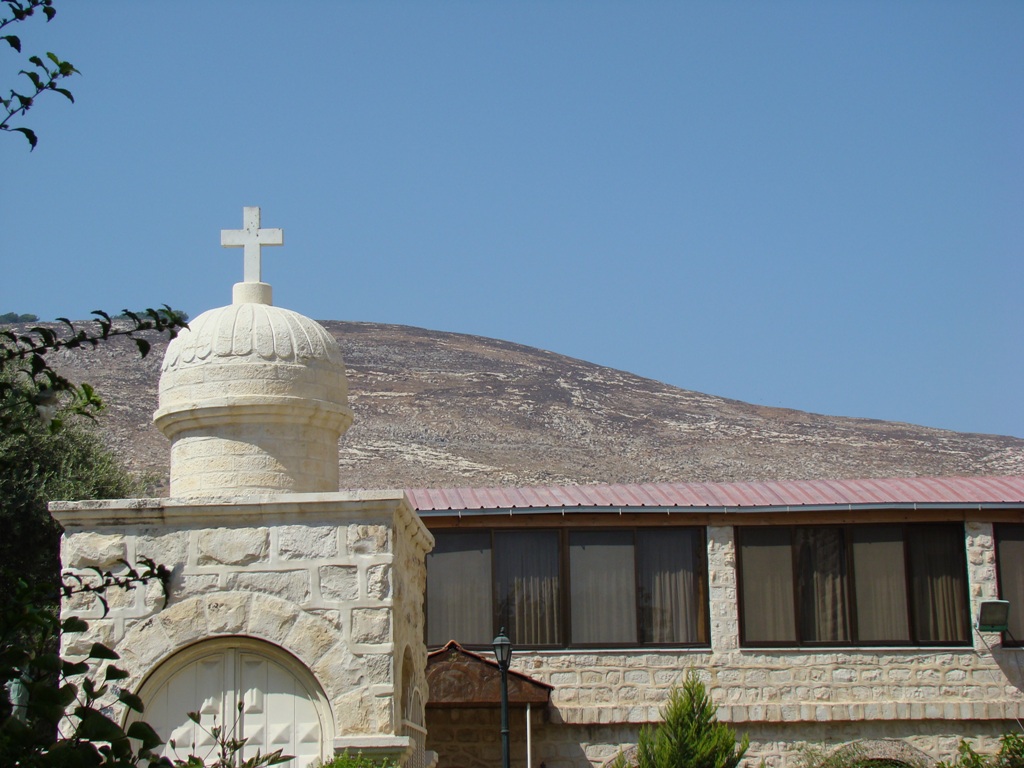
Today’s photo shows Mt. Ebal from Jacob’s well (well is to our right and out of sight).

Mt. Ebal from Jacob's Well. Photo by Leon Mauldin.

Jacob’s well is mentioned in the New Testament as the setting for the conversation between Jesus and the Samaritan woman (John 4).

*******

Our 6-day meeting presenting the Visualized Survey of the Bible here in Lincoln, NE., with the Eastside church of Christ concludes tonight. I’m always thankful to God for such opportunities. Our son Seth preaches here, along with Nathan Quinn. So a special treat was our getting to be with family, including our daughter and her four children who were also here (from AL.) through Thurs. morning.

Our schedule this week has not allowed for frequent posting. Thanks for your understanding, and thanks for reading our blog!


John Baptized in Aenon Near Salim

October 8, 2011

It is the Apostle John’s gospel that uniquely records the early ministry of Jesus; the synoptics (Matthew, Mark and Luke) proceed to the Galilean ministry.

John the Baptizer, the forerunner of Jesus, preached a message of repentance, and baptized those who were receptive. John 3:23 records, “John also was baptizing in Aenon near Salim, because there was much water there; and people were coming and were being baptized” (NASB). Again, this statement is made in a context narrating the early Judean ministry of Jesus.

We had the occasion last month to see Salim, located in the Jordan Valley.

Map showing Salim. John baptized at Aenon near Salim. BibleAtlas.org.

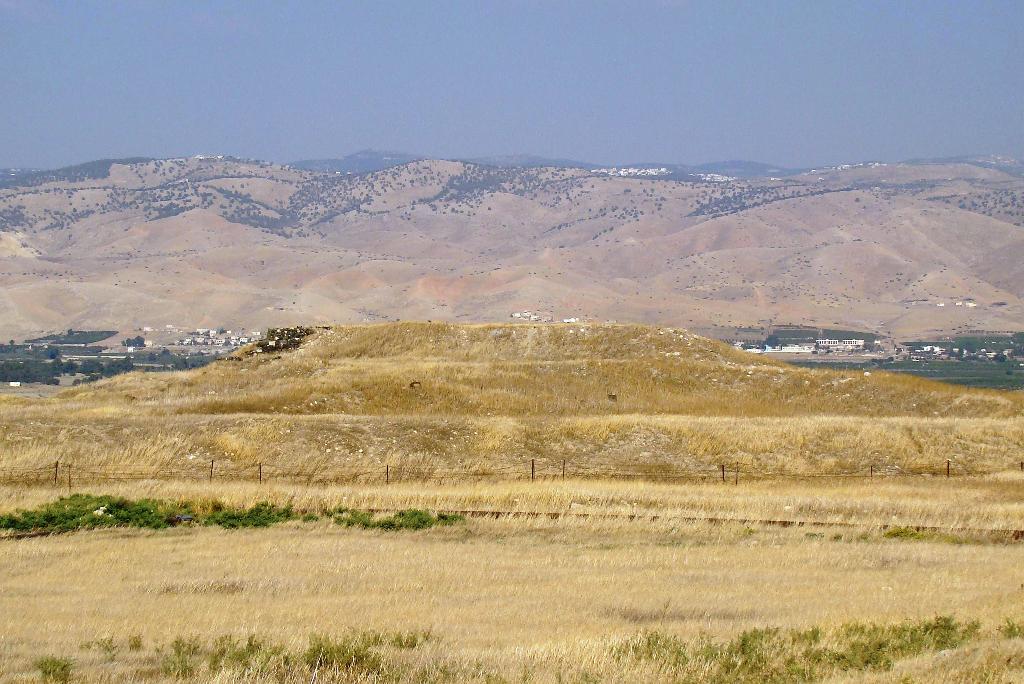
Here is the tel of Salim:

Tel of Salim. Photo by Leon Mauldin.

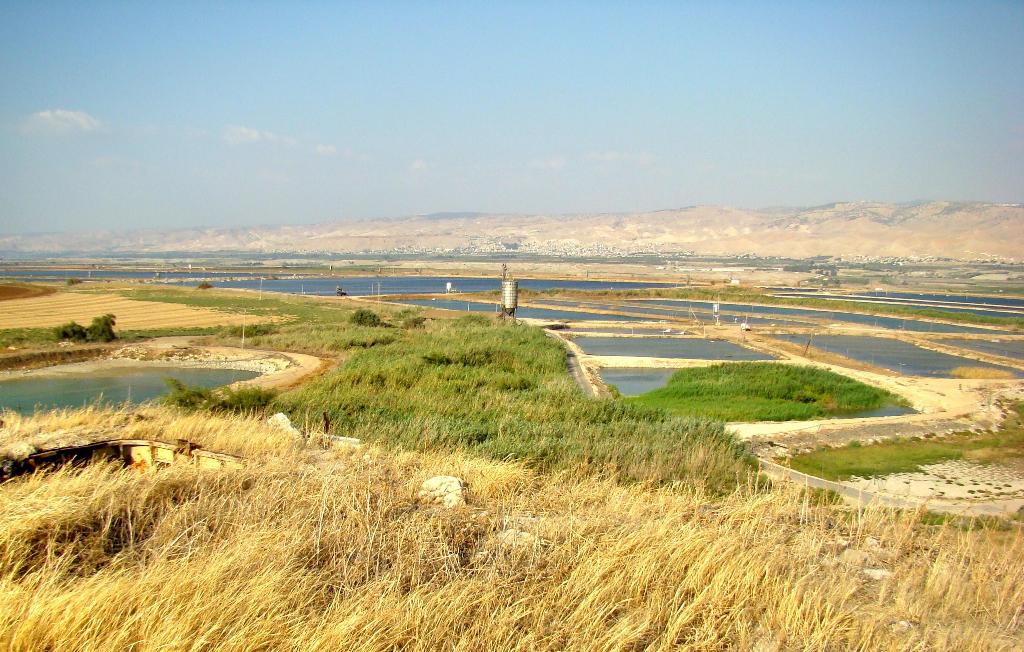
I found it fascinating that you can still see an abundance of pools of water. In the shot below we are on the edge of the Tel Salim, looking north-east toward the Jordan. Note the water in the area.

Pools of water seen from Salim. Tel Salim is in foreground. Photo by Leon Mauldin.

The Transjordan in the distance would have been the Decapolis during Jesus’ ministry.

Biblical baptism is immersion. Such areas as this would lend themselves as good locations for baptism.

Click photos for higher resolution.


Tel Ptolemais/Acco/Acre

September 9, 2011

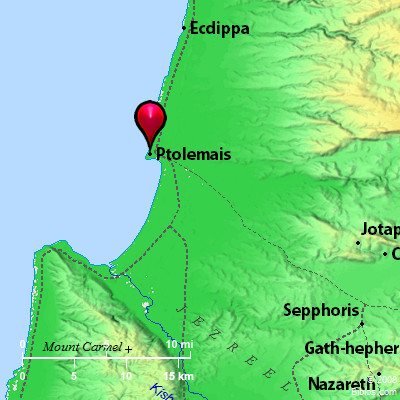
In our previous post we featured a photo of the waterfront of Ptolemais. Ptolemais (Acts 21:8) was mentioned in the Old Testament (designated Acco) among other cities which Israel failed either to capture or to retain after the conquest: “Nor did Asher drive out the inhabitants of Acco or the inhabitants of Sidon, or of Ahlab, Achzib, Helbah, Aphik, or Rehob” (Judges 1:31). Because Acco was a port city, it was a very significant loss to fail to possess this strategic location. Our map below, which shows NW Israel, helps orient us:

Ptolemais/Acco. Bibleatlas.org.

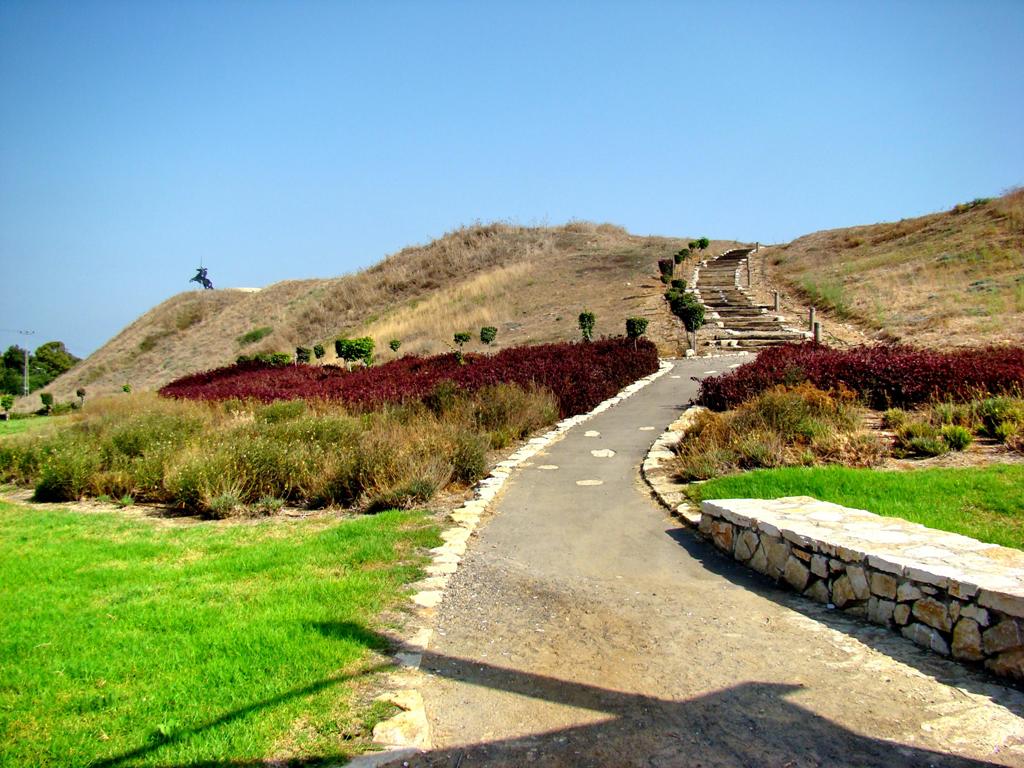
Acco was one of the oldest harbors in existence. In our present photo, we see the remains of the tel itself.

Tel Ptolemais. Photo by Leon Mauldin.


“We Came to Ptolemais”

September 9, 2011

Greetings, friends, now from Dade City, FL. I enjoyed and profited from the trip to Israel, as Ferrel Jenkins & I traveled to numerous biblical sites, many of which we had not seen before. I have held Mr. Jenkins in the highest esteem since my being a student at Florida College (’70-72) and am delighted that we have been able to make numerous trips to Israel and other biblical places. I have learned much from him.

I came back to the states a day earlier than planned in order to attend and participate in the funeral of dear friend & sister in Christ, Sandra Waldron, wife of Bob Waldron. That will be conducted Fri. 2:00 PM here in Dade City.

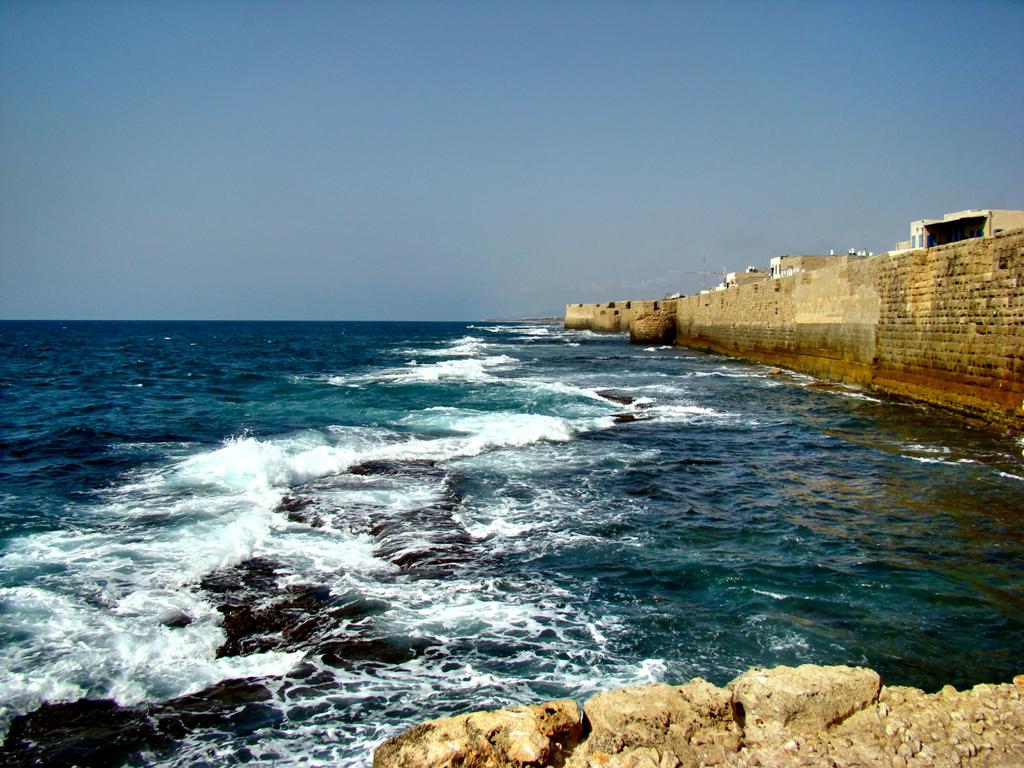
Our photo displayed in this post was taken at Ptolemais (Hellenistic and Roman times), known as Acco in OT times (Jud. 1:31), and today known as Acre. The ancient tel is Tel-el-Fukhar.

Coast of Ptolemais, mentioned in Acts 21:7. Photo by Leon Mauldin.

As Paul’s 3rd Missionary was concluding, en route to Jerusalem, Acts 21:8 reads, “And when we had finished our voyage from Tyre, we came to Ptolemais, greeted the brethren, and stayed with them one day.”

Click image for higher resolution.

More later. 2:30 AM at present!


Millstones at Capernaum

August 26, 2011

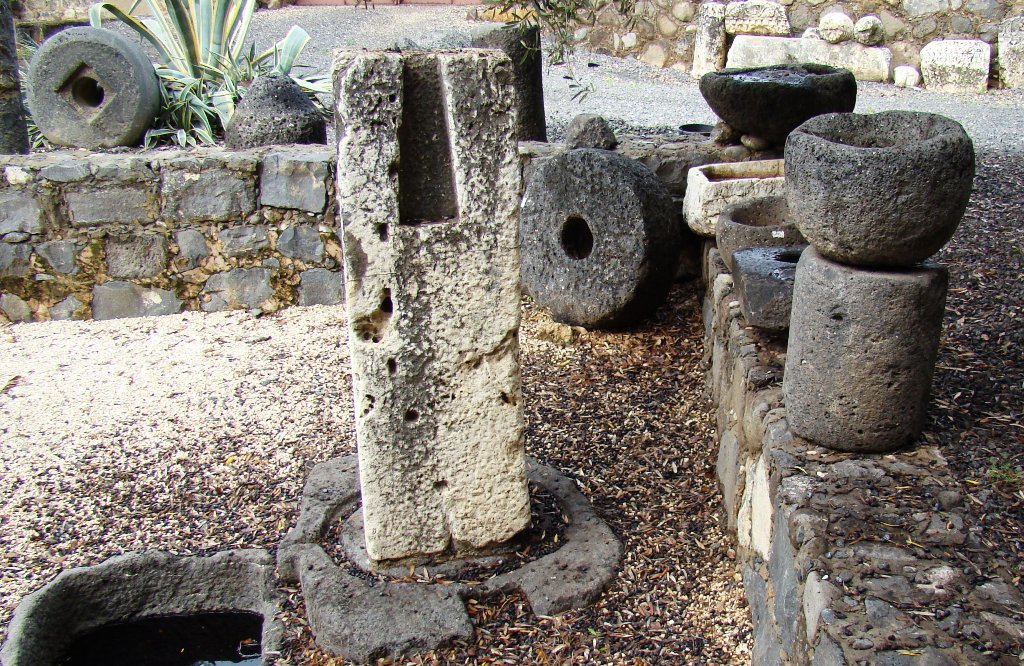
Millstones were manufactured at Capernaum from the volcanic basalt which is so common in the Galilee. The coarse texture was very suitable for grinding wheat.

Such millstones were not only used in Israel, but were exported from Capernaum to many other places. Capernaum was located on a major trade route, the Via Maris.

Millstones manufactured at Capernaum from volcanic basalt. Photo by Leon Mauldin.

On one occasion when Jesus was here at Capernaum with His disciples, He said,

But whoever causes the downfall of one of these little ones who believe in Me– it would be better for him if a heavy millstone were hung around his neck and he were thrown into the sea (Mark 10:42, CSB).

Capernaum was located on the shore of the Sea of Galilee. In this teachable moment Jesus was using word pictures the apostles could relate to: To have a millstone tied about one’s neck and then thrown into the sea to be dragged down by that heavy weight and die such a terrible death! But Jesus is saying that the worst kind of death would be preferable to one’s being the occasion of someone’s being lost eternally.

What a powerful lesson, taught by the Master Teacher.  All of us have influence, and for that influence we will give account unto God; make it good!


“Not one stone upon another”

August 22, 2011

During the final week of the Lord’s ministry, Jesus rebuked the Pharisees, the Jewish rulers, for their hypocrisy and for their basic rejection of truth. His last words before leaving the temple area were

 Jerusalem, Jerusalem, the one who kills the prophets and stones those who are sent to her! How often I wanted to gather your children together, as a hen gathers her chicks under her wings, but you were not willing! 38 See! Your house is left to you desolate; 39 for I say to you, you shall see Me no more till you say, ‘Blessed is He who comes in the name of the LORD!’ (vv. 37-38)

As Jesus and the disciples left, the disciples pointed out the temple buildings to Him. His response no doubt greatly startled them: “”Do you not see all these things? Assuredly, I say to you, not one stone shall be left here upon another, that shall not be thrown down” (Matt. 24:2).

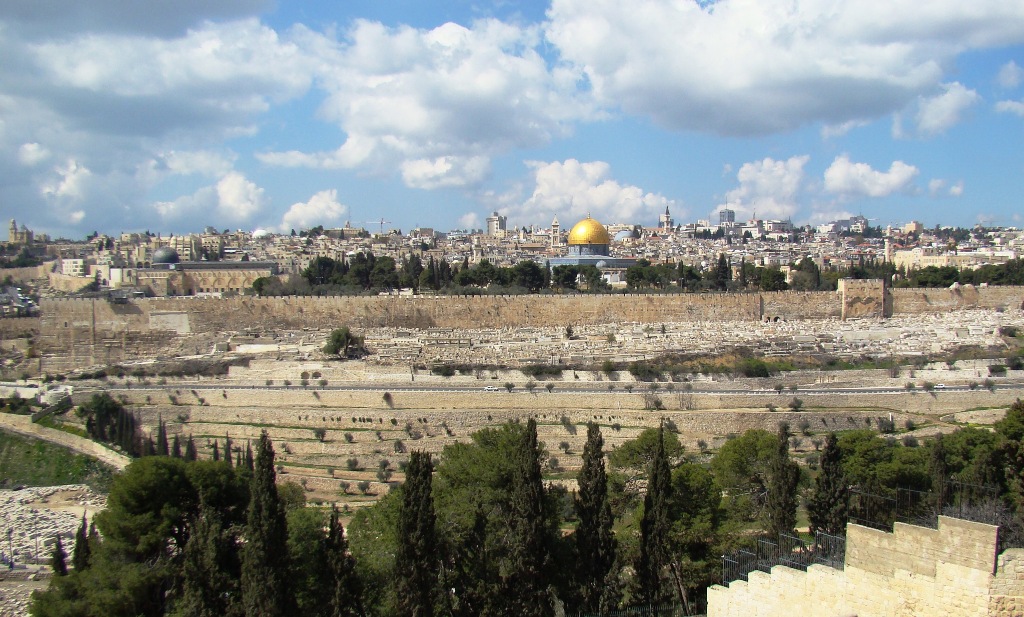
Jesus crossed the Kidron Valley and came to the Mount of Olives and sat down. It was here that the “Olivet Discourse” occurred, in which the disciples asked Him to explain what He meant.

View of Temple Mount, Jerusalem from Mt. of Olives. Photo by Leon Mauldin.

From the Mount of Olives the disciples could have seen the temple area in Jerusalem as Jesus’ foretold its coming destruction.

Excavations which reached 1st century street level uncovered stones of the temple buildings hurled down from above. The destruction took place in AD 70, by Rome’s Tenth Legion.

Stones from temple buildings in Tyropoeon Valley in Jerusalem, from AD 70 destruction. Photo by Leon Mauldin.

Click on images for higher resolution.


The Jordan River

May 26, 2011

In his book, J.W. McGarvey Sermons, McGarvey states,

The river Jordan is the most famous river on the earth.  It does not owe its fame, like our own Mississippi, to its great length, or to the rich commerce that flows upon its bosom … It does not owe its fame, like the Nile, to the fact that its overflow every year makes fertile a land which would otherwise be a desert…Neither does it owe its fame, like the Tiber or the Seine or the Thames, to the fact that some great city like Rome or Paris or London has stood on its banks … To what, then, does this most famous of all the rivers of the face of the globe owe its fame? To three considerations: first, to its peculiar physical characteristics; second, to the historic events that are connected with it; and third, to an association of thought connected with it in the minds of believers (pp. 297-298).

I think we would concur that it is especially number reason number two that makes the Jordan famous–the historical, biblical events which occurred there. Jesus was baptized there (Mt. 3:13-17)!  John baptized with his baptism of repentance there (Mt. 3:5,6) in keeping with the counsel of God (Lk. 7:29-30).  Naaman was cleansed from his leprosy by the God of Israel there (2 Kings 5).  Israel crossed this river on dry land at flood stage to receive the promised land of Canaan (Josh. 3:17).

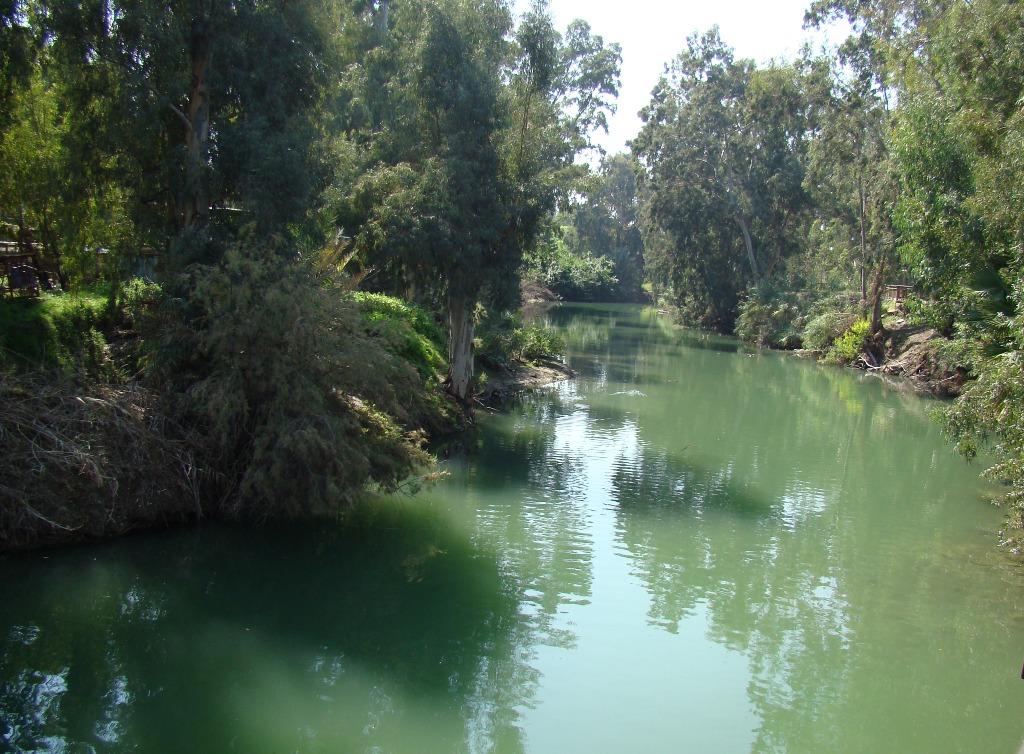
Jordan River, most famous river in the world. Photo by Leon Mauldin.

Today’s traveler to Israel is limited to very few sites from which to view the Jordan.  Most of its flow is on the Palestinian side of the border. Our photo above was taken March, 2011.

Two nights remain of our Gospel Meeting in Chipley, FL. Yesterday I took a photo of the local preacher and his family after we had enjoyed a bite of lunch, Mexican style.

Wes & family, local preacher at Chipley, FL.

My wife & I enjoyed taking a few minutes to view the historic district of Chipley.

House in the historic district of Chipley, FL. Photo by Leon Mauldin.


You Ought To Say, “If the Lord wills…”.

May 1, 2011

To say that our schedule has been altered since this past Wed. would be a bit of an understatement. We are among the thousands w/o electrical power since Wed. AM. We are thankful to have been spared personally from injury as well as property damage. The area of Hanceville and Cullman Alabama looks like a war zone. In Cullman, entire blocks in the downtown area were destroyed and in some cases leveled. You’ve heard of the hundreds of fatalities in AL & our border states.

This morning in a short while we are to have worship services where I preach here in Hanceville. We are fortunate and blessed to be able to do so.

This event has put me in mind of James 4. I frequently use the expression, “the Lord willing,” or something similar, but these events have reinforced and deepened the impression of that text:

13 Come now, you who say, “Today or tomorrow we will go to such and such a city, spend a year there, buy and sell, and make a profit”; 14 whereas you do not know what will happen tomorrow. For what is your life? It is even a vapor that appears for a little time and then vanishes away. 15 Instead you ought to say, “If the Lord wills, we shall live and do this or that.” 16 But now you boast in your arrogance. All such boasting is evil. 17 Therefore, to him who knows to do good and does not do it, to him it is sin (vv. 13-16).

Thanks for following our blog. We hope to be back on schedule soon.

My friend Ferrell Jenkins is currently directing a tour in Israel. See his Travel Blog–you can click on our blog roll to your right on this page.