A Dead Man Raised at Nain

October 26, 2013

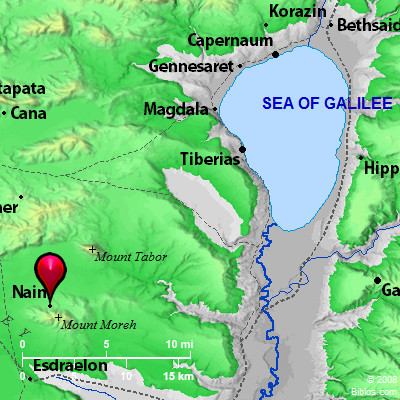
The next day after Jesus healed a centurion’s servant in Capernaum, Luke narrates how Jesus went to the Galilean city of Nain.

Location of Nain in Galilee. BibleAtlas.org.

Location of Nain in Galilee. BibleAtlas.org.

Luke narrates as follows:

Now it happened, the day after, that He went into a city called Nain; and many of His disciples went with Him, and a large crowd. 12 And when He came near the gate of the city, behold, a dead man was being carried out, the only son of his mother; and she was a widow. And a large crowd from the city was with her. 13 When the Lord saw her, He had compassion on her and said to her, “Do not weep.” 14 Then He came and touched the open coffin, and those who carried him stood still. And He said, “Young man, I say to you, arise.” 15 So he who was dead sat up and began to speak. And He presented him to his mother. 16 Then fear came upon all, and they glorified God, saying, “A great prophet has risen up among us”; and, “God has visited His people.”  (Lk. 7:11-16).

The purpose of Jesus’ miracles was to show who He was/is. The limited occasions recorded when He raised the dead give proof that He is Life, He is the source of Life. He is the resurrection and the life (John 11:25). And yet such occasions show the very real compassion of Jesus as well. The compassion He had during His ministry on earth He continues to have at this present time.

We had the opportunity to make a quick stop at Nain on the first day of our tour to Israel last week.

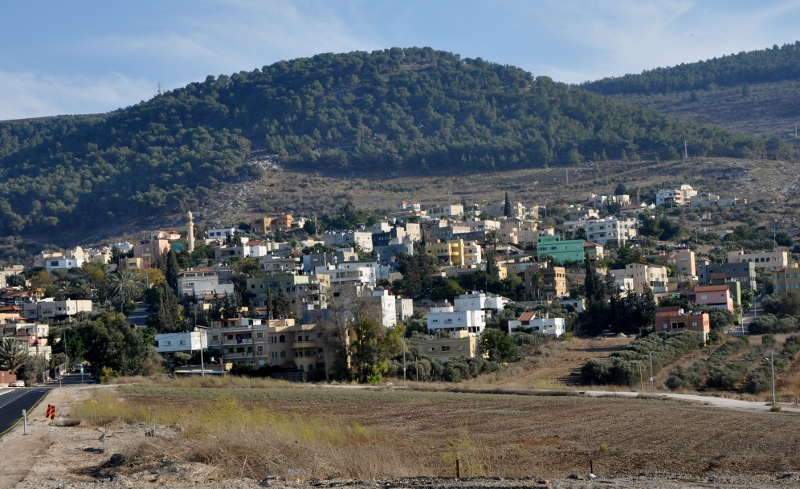
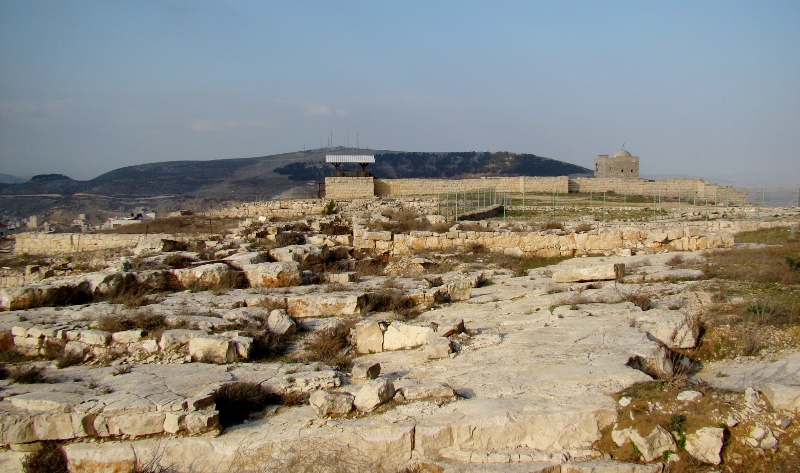
Nain in Galilee where Jesus raised the widow's son. Photo by Leon Mauldin.

Nain in Galilee where Jesus raised the widow’s son. Photo by Leon Mauldin.

The mountain in the background is the Hill of Moreh, mentioned in connection with the account of Gideon and his 300 men (Judges 7).


Sea of Galilee by Moonlight

October 25, 2013

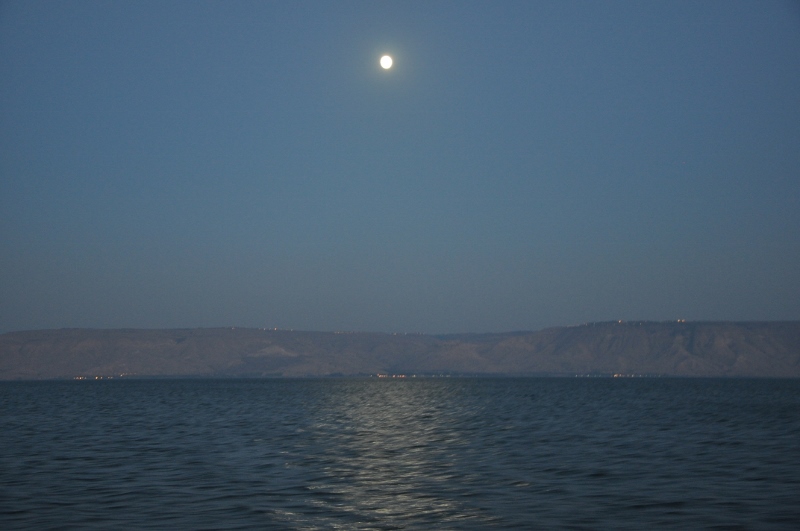
The Sea of Galilee is one of my favorite locations in Israel. I’ve enjoyed taking sunrise and sunset photos. Last week during our boat ride across the sea, I had the opportunity to photograph a full moon, which was reflecting nicely on the surface of the waters.

Full moon reflecting on Sea of Galilee. Photo by Leon Mauldin.

Full moon reflecting on Sea of Galilee. Photo by Leon Mauldin.

This was a view Jesus and His disciples had countless times during His ministry.

Matthew 4:18: Now as Jesus was walking by the Sea of Galilee, He saw two brothers, Simon who was called Peter, and Andrew his brother, casting a net into the sea; for they were fishermen.

Click image for larger view.


Mikveh at Magdala

October 24, 2013

We’re glad to be back up and running now (our blog, that is).

Yesterday we arrived at ATL on time on our return from Israel. This trip was biblically educational for all: helpful for first-time travelers as well as those returning. It is a fact that you get a lot more out of that 2nd or 3rd trip to Israel; that first visit tends to be overwhelming, there’s so much to take in! I continue to learn on each trip.

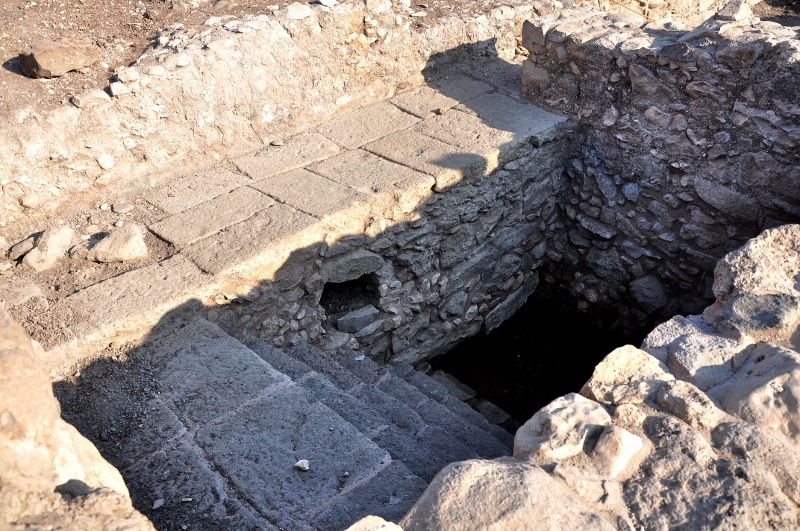
Last week I posted on the discovery of the 1st century synagogue at Magdala. Of interest there was the discovery of two mikva’ot (plural of mikveh). A mikveh was used by the Jews for ritual purification (not for bathing; they would bathe first).

A mikveh at Magdala. Two mikva'ot were found at the site. Photo by Leon Mauldin.

A mikveh at Magdala. Two mikva’ot were found at the site. Photo by Leon Mauldin.

Archaeologist Ronny Reich, in BAR in an article discussing mikva’ot at Sepphoris says:

. . .we often find mikva’ot in pairs, side by side. We must remember that where the mikveh was not served by a continuously flowing spring (as in the vast majority of cases), the pure water had to last from the end of one rainy season, in around March, until the beginning of the next rainy season, about October. If one of a pair of mikva’ot no longer had enough pure water, the other could be used. What’s more, the waters of a pure mikveh could be used to purify the water in the other. Rabbinic literature describes how a moveable pipe or assemblage of pipes could be used for this purpose (Tosefta mikva’ot, 5.5). Pairs of mikva’ot are frequently found in Jerusalem. At Sepphoris I saw five or six pairs or groups that can easily be identified: numbers 4, 5 and 6; 7 and 9; 14 and 15; 17 and 18; 19 and 20; 21 and 22 on the site map (28:02 Mar/Apr 2002).

The view from Magdala is beautiful.

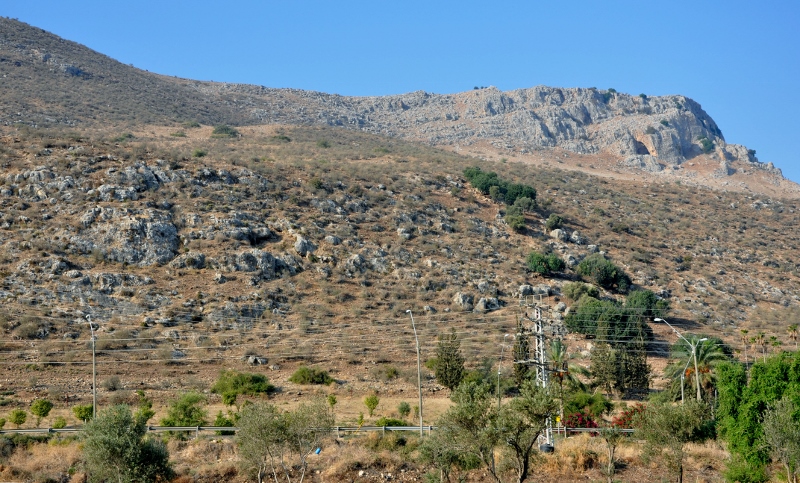
View from Magdala, looking NW. Photo by Leon Mauldin

View from Magdala, looking NW. Photo by Leon Mauldin.

Click on images for larger view.


Synagogue at Magdala

October 17, 2013

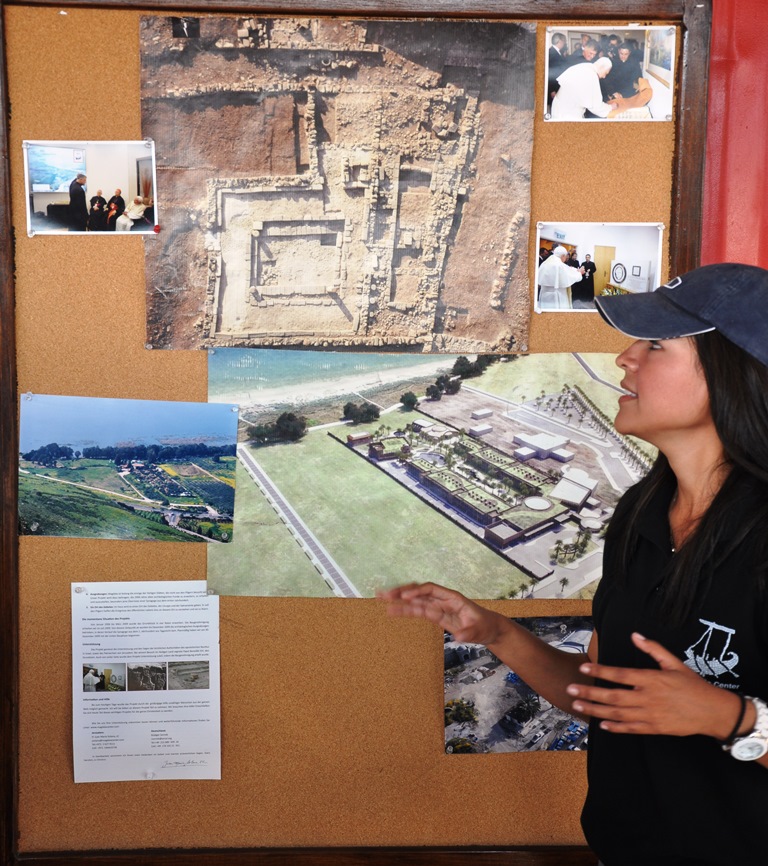
There are numerous ongoing excavations in Israel. We were excited to begin our day today with a stop at Magdala. A volunteer told our group about some of the discoveries there.

Volunteer at Magdala informing our group about discoveries there.

Volunteer at Magdala. Photo by Leon Mauldin

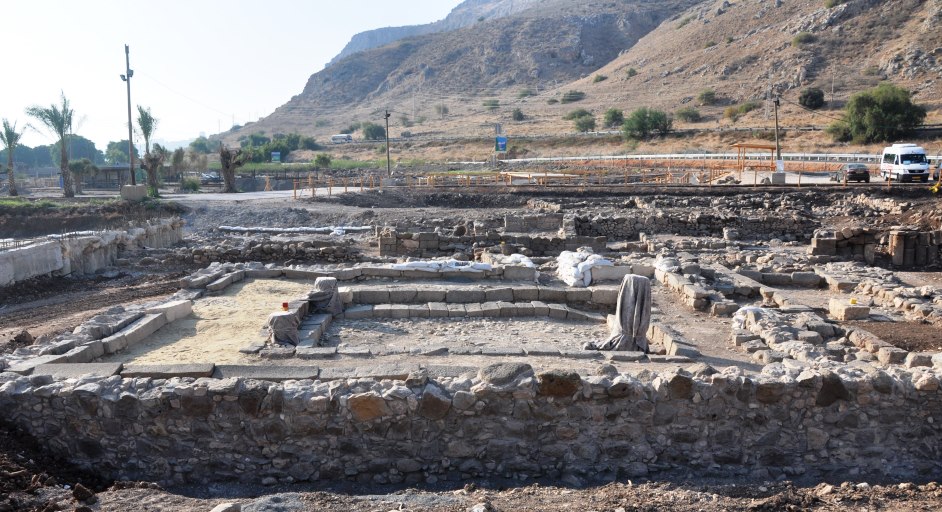
I had been to Magdala twice before, but today was the first time I was able to walk around the site and take photos. There were several matters of interest there, but I especially wanted to see the synagogue, as the remains date back to the first century!

1st century Synagogue at Magdala. Photo by Leon Mauldin.

1st century Synagogue at Magdala. Photo by Leon Mauldin.

Magdala was the home town of Mary Magdalene. The designation means “Mary of Magdala.” This was a fishing village in the time of Jesus. Fish were salted here and exported to Rome.

We had a good day, packed full with good photo opportunities. Everyone is well so far and for that we are thankful.

Click on images for larger view.


Sarcophagus at Caesarea Maritima

September 23, 2013

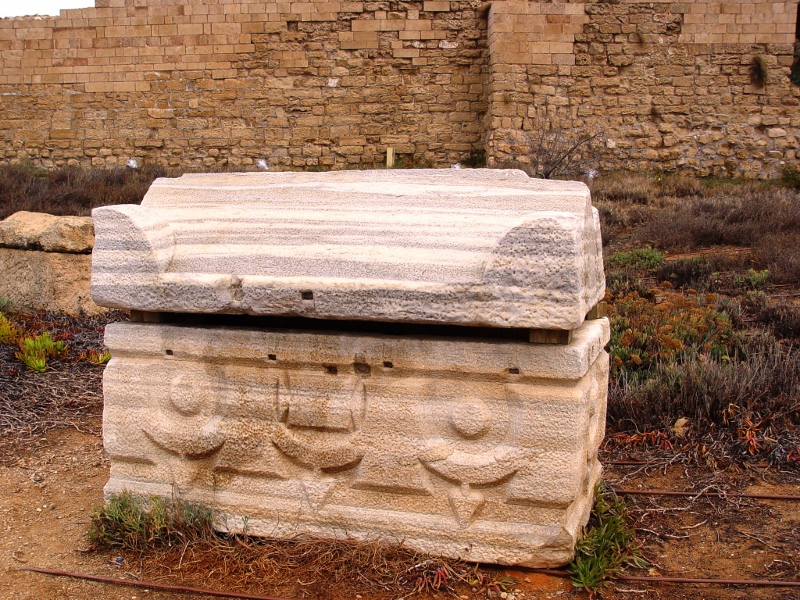
Among the remains near the theater at Caesarea Maritima is a sarcophagus, a burial box. The word sarcophagus means flesh eater. This is due to the fact that a common practice was to remove the bones from the sarcophagus once the flesh had decomposed, and place the bones in an ossuary, a depository for the bones. The sarcophagus would then be reused as needed by other deceased family members.

Sarcophagus at Caesarea Maritima. Photo by Leon Mauldin.

Sarcophagus at Caesarea Maritima. Photo by Leon Mauldin.

The information sign informs us:

Stone coffins were made out of two huge blocks – a cavity in which the corpse was placed and a double-slopped roof lid on which a Greek inscription was engraved: “the grave of Prokopios the Deacon.” The coffins were decorated with flora, hunting mythological scenes or with geometric shapes for more modest coffins.

Most sarcophagi [plural of sarcophagus] discovered in Caesarea belonged to the Roman-Byzantine cemetery which is still to be fully excavated.

Caesarea was the Roman capital of Judea during the ministry of Jesus.

Click image for larger view.


The Egyptian God Serapis

September 14, 2013

I continue to be amazed at how far-flung was the influence and reach of various gods in biblical times. For example, the god Serapis, the Egyptian god of healing, was widely worshiped, and far beyond the territory of Egypt. 

Egyptian god Serapis. Alexandria Museum, Alexandria, Egypt. Photo by Leon Mauldin.

Egyptian god Serapis. Alexandria Museum, Alexandria, Egypt. Photo by Leon Mauldin.

Serapis was worshiped at Pergamum in biblical Asia Minor, where the ruins of his impressive temple can be seen. See our post here.

In an entry, “Idols, Meats Offered to” in the New Bible Dictionary R. P. Martin gives this info under “The Background,” and note his specific reference to Serapis (the Serapeum mentioned is a temple devoted to the worship of Serapis):

Evidence for the practice of a meal in the temple is found in the following well-known Oxyrhynchus papyrus which Lietzmann regards as ‘a striking parallel’ to the reference in 1 Cor. 10:27: ‘Chaeremon invites you to dinner at the table of the lord Serapis (the name of the deity) in the Serapeum tomorrow the 15th at the 9th hour’ (= 3 p.m.) (quoted and discussed in Chan-Hie Kim’s essay, ‘The Papyrus Invitation’, JBL 94, 1975, pp. 391–402). An invitation to a meal of this character, whether in the temple or in a private house, would be commonplace in the social life of the city of Corinth, and would pose a thorny question for the believer who was so invited. Other aspects of life in such a cosmopolitan centre would be affected by the Christian’s attitude to idol-meats. Attendance at the public festivals, which opened with pagan adoration and sacrifice, would have to be considered. Membership of a trade guild, and therefore one’s commercial standing, and public-spiritedness were also involved, as such membership would entail sitting ‘at table in an idol’s temple’ (1 Cor. 8:10). Even daily shopping in the market would present a problem to the thoughtful Christian in Corinth. As much of the meat would be passed on from the temple-officials to the meat-dealers and by them exposed for sale, the question arose: was the Christian housewife at liberty to purchase this meat which, coming from sacrificial animals which had to be free from blemish, might well be the best meat in the market? Moreover, there were gratuitous banquets in the temple precincts which were a real boon to the poor. If 1 Cor. 1:26 means that some of the Corinthian church members belonged to the poorer classes, the question of whether they were free or not to avail themselves of such meals would have been a practical issue.

This information can help clarify some of the concerns expressed in the letter of 1 Corinthians.

Consider also the situation at Thessalonica, where evidence of Serapis worship (as well as other gods) has been discovered. This would illuminate 1 Thess. 1:9 which states, “For they themselves declare concerning us what manner of entry we had to you, and how you turned to God from idols to serve the living and true God.”

The 1939 discovery of a Serapeum offers an indication of the religious life in Thessalonica (Donfried, Paul, Thessalonica and Early Christianity, 22–23). Typically, a Serapeum functions as a temple dedicated to the worship of Serapis. The discovery of Egyptian idols, including Serapis, at the site has led to its generic designation as a Serapeum. Nearly seventy inscriptions related to the worship of Egyptian gods have been discovered in the city (Witt, “The Egyptian Cults,” 324–33)—35 of which come from the Serapeum. Other finds at the location include fragmentary statues of Serapis and Isis and Roman statues of Aphrodite, Isis, and Harpocrates (Hendrix, “Thessalonica,” 523; Vickers, “Hellenistic Thessaloniki,” 164–65).
The relatively diminutive size of the Serapeum (11 meters x 8 meters), coupled with the large number of artifacts related to Egyptian deities, indicates that this building could not have been the primary temple for Serapis in Thessalonica. Two inscriptions from the site to Serapis and Osiris indicate it probably functioned as a healing shrine (Koester, “Egyptian Religion,” 134–38). The early church’s emphasis on divine healing (and exclusivity) would have conflicted with the Serapis religious groups and numerous other such groups in the city. .

The mixture of deities at the Serapeum and throughout the city illustrates the syncretic tendencies of Hellenistic Thessalonica. These tendencies did not wane with the shift to Roman rulership, and accentuate the severity of Paul’s encouragement that the Thessalonian Christians “turned to God from idols to serve the living and true God” (1 Thess. 1:9) (The Lexham Bible Dictionary).

Click on image for larger view.


“The Alpha and The Omega” and Merisms

August 31, 2013

In Revelation 22:13, Jesus said, “”I am the Alpha and the Omega, the first and the last, the beginning and the end.” Revelation is filled with allusions to the Old Testament. Isaiah furnishes the background for Yahweh’s declaration that He is the “first and the last” (41:4; 44:6; 48:12). What is said of the Father is here affirmed of the Son, as He shares the divine essence. Consider the first part of the verse.

“I Am The Α

and The Ω.”  


What does this mean? Beale and McDonough observes:

These divine titles are figures of speech (merisms) in which the figurative point is to mention the opposite poles of something on order to emphasize the totality of all that lies between. The use of the first and last letters of the alphabet was typical of the ancients in expressing merisms. So the Jews could say that the law should be kept from aleph to tau. (Commentary on the NT Use of the OT, p.1055). 

The concept is that of totality, completenessInterestingly, the blessings for obedience are listed in Leviticus 26:3-8, and begin with aleph (first letter of the Hebrew alphebet) and conclude with tau (last letter).

Wikipedia has some helpful info on merisms:

In rhetoric a merism is the combination of two contrasting words, to refer to an entirety. For example, when we mean to say that someone searched thoroughly, everywhere, we often say that someone “searched high and low”. You also say “ladies and gentlemen” and the “young and old”.

Merisms also figure in a number of familiar English expressions. The phrase lock, stock, and barrel originally referred to the parts of a gun, by counting off several of its more conspicuous parts; it has come to refer to the whole of anything that has constituent parts. Basically, and everything in between – all encompassing.

In biology, a merism is a repetition of similar parts in the structure of an organism (Bateson 1894). Such features are called meristic characters, and the study of such characters is called meristics.

Merisms are conspicuous features of Biblical poetry. For example, in Genesis 1:1, when God creates “the heavens and the earth” (KJV), the two parts combine to indicate that God created the whole universe. Similarly, in Psalm 139, the psalmist declares that God knows “my downsitting and mine uprising”, indicating that God knows all the psalmist’s actions. 
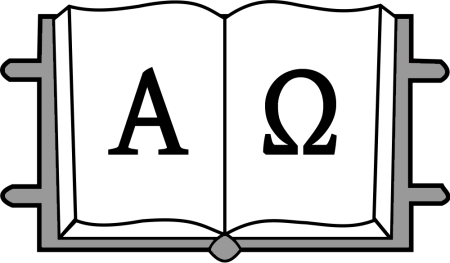

Greek Letters Alpha and Omega. commons.wikipedia.org

Greek Letters Alpha and Omega. commons.wikipedia.org

Alpha is the first letter in the Greek alphabet; omega is the last. We would say, “Everything from A to Z. What is affirmed is that everything is summed up in Jesus. He is the beginning of creation, responsible for its origin. He is the end, and will bring it to a conclusion. He is what all history is about from beginning to end. Contextually in Revelation, it was not ultimately the Roman Emperors who ruled, but rather Jesus is KING OF KINGS AND LORD OF LORDS (Rev.19:16).

Romans 11:36: “For from Him and through Him and to Him are all things. To Him be the glory forever. Amen.”

Ephesians 1:9-10: “He made known to us the mystery of His will, according to His kind intention which He purposed in Him with a view to an administration suitable to the fullness of the times, that is, the summing up of all things in Christ, things in the heavens and things on the earth.”

Col. 1:15-20: 

15 He is the image of the invisible God, the firstborn of all creation. 16 For by Him all things were created, both in the heavens and on earth, visible and invisible, whether thrones or dominions or rulers or authorities– all things have been created through Him and for Him. 17 He is before all things, and in Him all things hold together. 18 He is also head of the body, the church; and He is the beginning, the firstborn from the dead, so that He Himself will come to have first place in everything. 19 For it was the Father’s good pleasure for all the fullness to dwell in Him, 20 and through Him to reconcile all things to Himself, having made peace through the blood of His cross; through Him, I say, whether things on earth or things in heaven.

What is meant by Jesus’ being the Alpha and Omega? He is Everything! Observe:

1. Jesus’ absolute Deity is affirmed.

2. He is Creator.

3. He is Redeemer.

4. He is Sovereign Ruler over all.

5. He is Judge.

“I have found a friend in Jesus,

He’s everything to me,

He’s the fairest of ten thousand to my soul;

He’s the Lily of the Valley, in Him Alone I see

All I need to cleanse and make me fully whole. “

Mount Gerizim, the Mount of Blessing

August 24, 2013

Our previous couple of posts pertain to mounts Ebal and Gerizim, the setting of the curses and blessings of the law’s being read and accepted by all Israel as the basis of their receiving the land promise (Deut. 11:26-32; Deut. 27-28; Josh. 8:30-35).

At the top of Gerizim there are archaeological ruins that date to the Persian and Hellenistic periods, as well as a Byzantine church.

Mount Gerizim, view at top. Photo by Leon Mauldin.

Mount Gerizim, view at top. Photo by Leon Mauldin.

In distance at right you are seeing the tomb of a 12th century sheikh. The mountain in background is Mt. Ebal, the mount of cursing. Out of sight below in the valley between lies Shechem.

In later times Mt. Gerizim would become sacred to the Samaritans, and still is today. In the intertestamental period there was a temple here, but it was destroyed by John Hyrcanus (Maccabean ruler) in 111-110 BC.

When Jesus conversed with the woman at the well, she said, “Our fathers worshiped on this mountain” (John 4:20). She was speaking of Mount Gerizim, which was very much in sight of Jacob’s well, where they were talking.

Click image for larger view.

Todd Bolen has an interesting post on the acoustics of mounts Ebal and Gerizim here. See also Ferrell Jenkin’s post here.

Hopefully this info and these photos will help you visualize the events of Joshua 8, at the time of the conquest under Joshua:

33 All the people, rulers, leaders, and judges were standing on either side of the ark, in front of the Levitical priests who carried the ark of the covenant of the LORD. Both resident foreigners and native Israelites were there. Half the people stood in front of Mount Gerizim and the other half in front of Mount Ebal, as Moses the LORD’s servant had previously instructed to them to do for the formal blessing ceremony. 34 Then Joshua read aloud all the words of the law, including the blessings and the curses, just as they are written in the law scroll. 35 Joshua read aloud every commandment Moses had given before the whole assembly of Israel, including the women, children, and resident foreigners who lived among them (Josh. 8:33-35, NET). 


View of Mt. Ebal and Mt. Gerizim

August 15, 2013

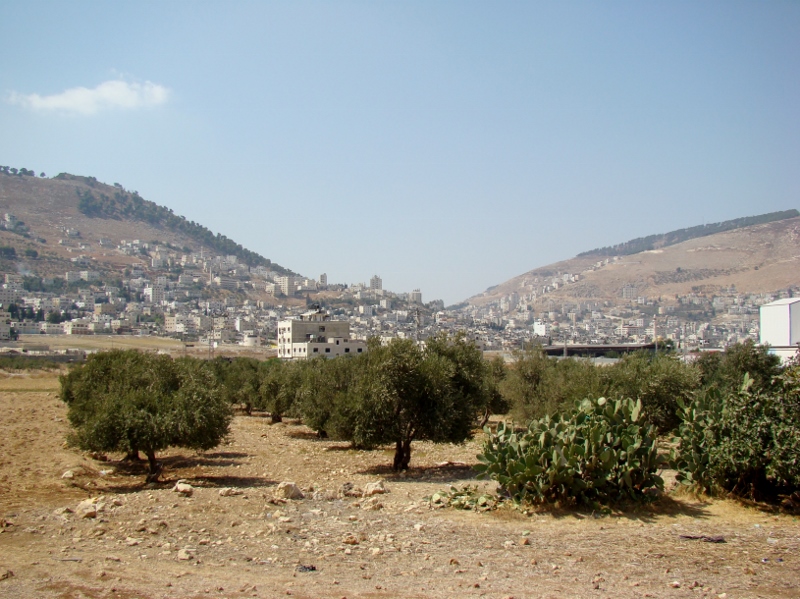
In our last post we referenced some biblical texts regarding Mt. Ebal, the “mount of cursing.” Our photo today shows the view from the east of Mt. Ebal (right) and Mt. Gerizim (left). Shechem is located between the two.

Mt. Ebal (right) and Mt. Gerizim (left). Shechem is at center. Photo by Leon Mauldin.

Mt. Ebal (right) and Mt. Gerizim (left). Shechem is at center. Photo by Leon Mauldin.

When Joshua led Israel to Shechem (Josh. 8) they would have seen this view. Likewise this would have been the scene when Jesus went through Samaria en route to Galilee when he stopped here at Jacob’s well, and had that fascinating conversation with the woman who came to draw water. She left there knowing the Source of the Water of Life (John 4).

We have previously posted on Shechem here, here and here.

Click image for larger view.


Kids at the Herodium

June 19, 2013

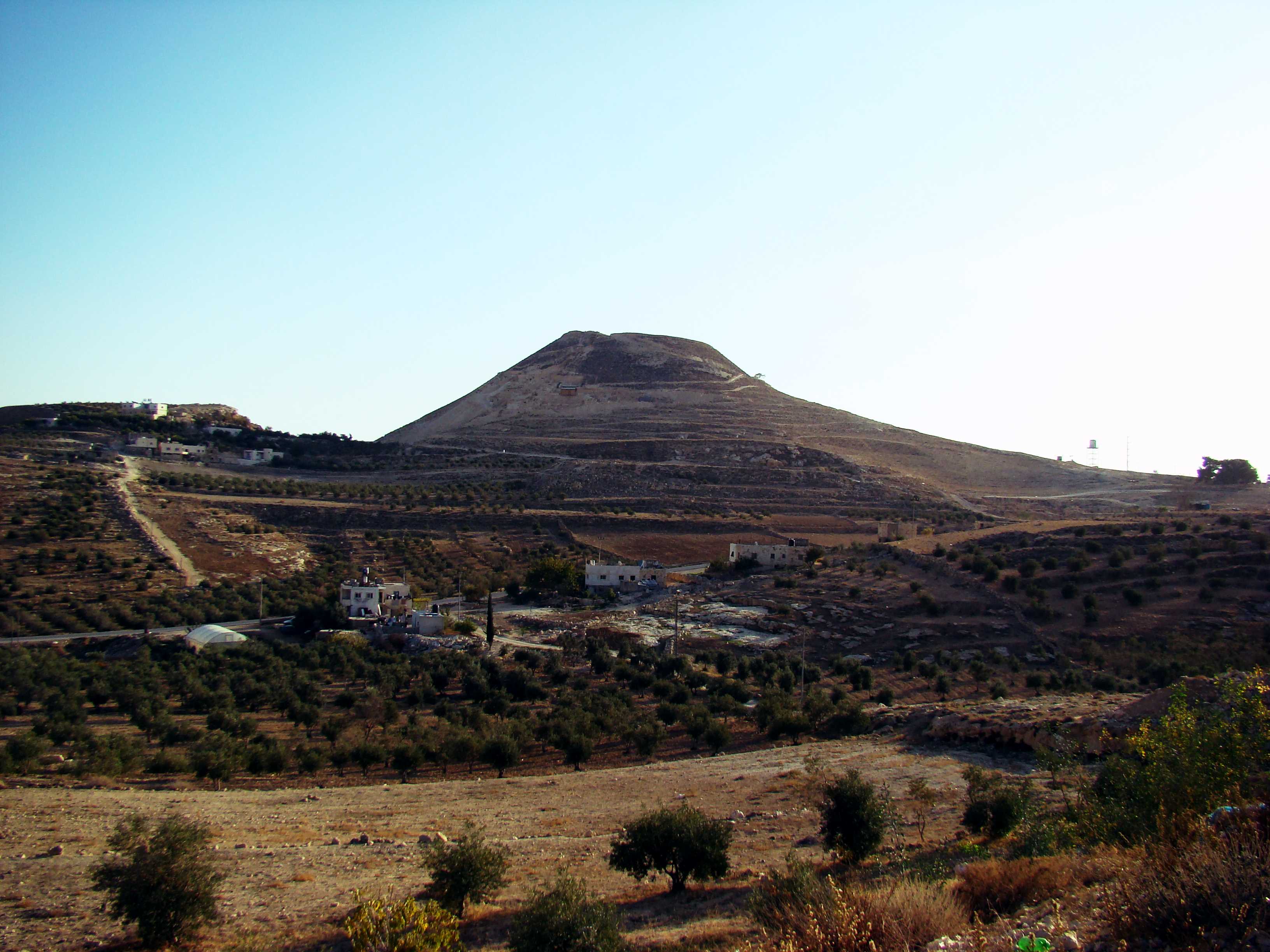
The Herodium was a fortress in sight of Bethlehem built by Herod the Great. It was also where he was buried. His tomb was discovered and excavated by Ehud Netzer, who met an untimely death resulting from a fall at the site.

Herodium, built by Herod. Photo by Leon Mauldin.

Herodium, built by Herod. Photo by Leon Mauldin.

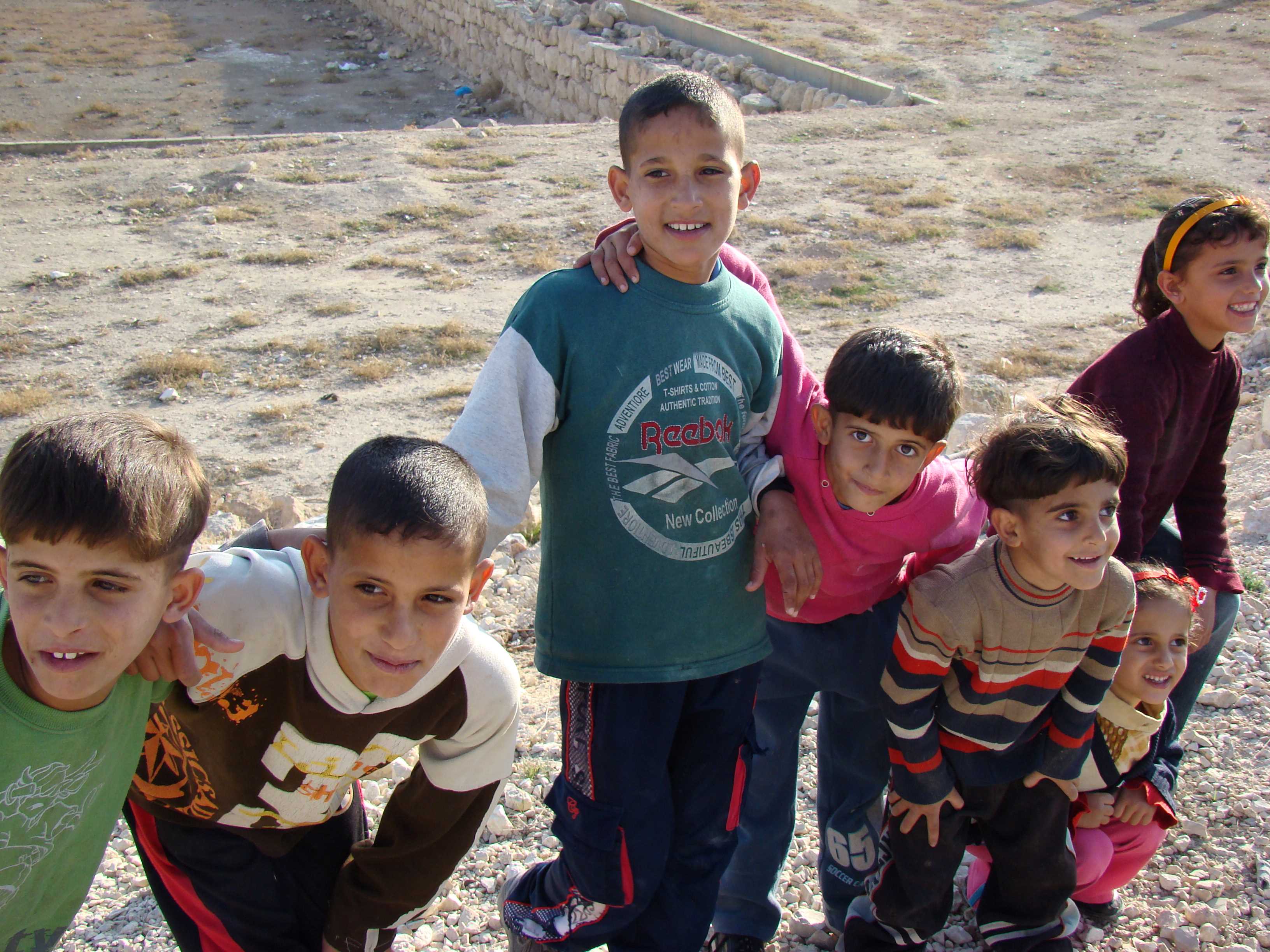
Ferrell Jenkins & I had the opportunity to visit here in 2009. When we made a stop closer to the Herodium where we had a good view for photos, a group of kids approached us. We thought we had the site to ourselves when we stopped, but they seemed to spring up from nowhere.

Kids near Herodium. Photo by Leon Mauldin.

Kids near Herodium. Photo by Leon Mauldin.

We have observed that most kids seem to like having their picture made, even when there is a language barrier.

I have a couple of previous posts on the Herodium here and here.

We are writing this from Houston, TX, where we are visiting with one of our sons and attending some of the lectures at Southside church of Christ at Pasadena. Today we heard Bob Owens, David Posey and Wilson Adams. This week’s theme: “We Would See Jesus.”