Shepherd with His Sheep

December 22, 2014

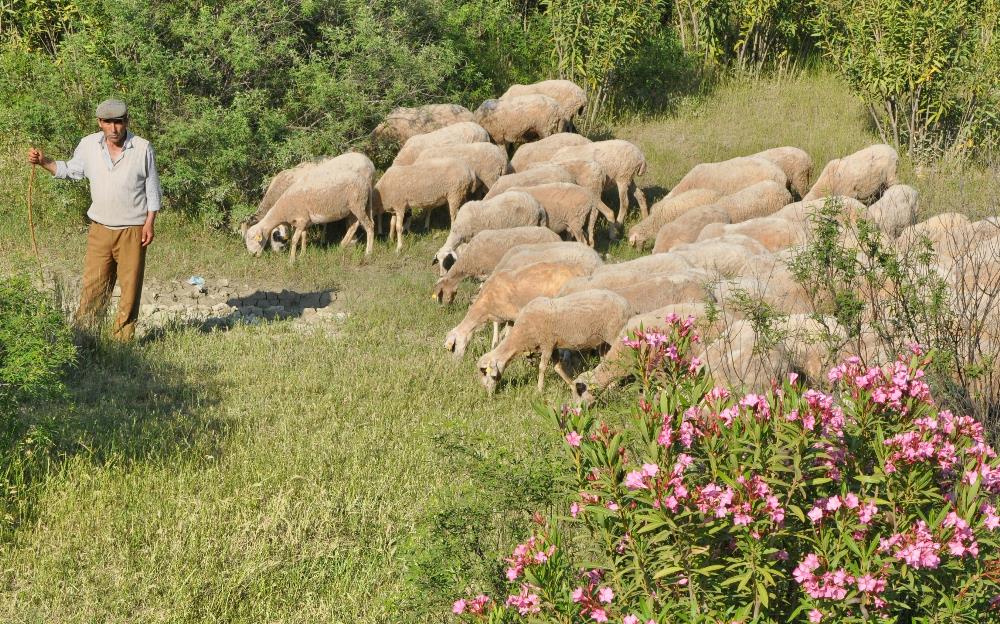
When visiting biblical sites I never tire of seeing sheep and their shepherds. I’m sure that is due in large measure to the frequent references in the Bible, not only to literal shepherds and sheep, but also the metaphorical usage.

Shepherd with sheep in biblical Pamphilia. Photo by Leon Mauldin.

Shepherd with sheep in biblical Pamphylia. Photo by Leon Mauldin.

Isaiah 53:6 All we like sheep have gone astray; We have turned, every one, to his own way; And the LORD has laid on Him the iniquity of us all.

Psalm 23:1 The LORD is my shepherd; I shall not want.

John 1:29 The next day John saw Jesus coming toward him, and said, “Behold! The Lamb of God who takes away the sin of the world!

John 10:27 My sheep hear My voice, and I know them, and they follow Me.

1 Peter 2:25 For you were like sheep going astray, but have now returned to the Shepherd and Overseer of your souls.

Elders of local churches are told: 1 Peter 5:2 Shepherd the flock of God which is among you, serving as overseers, not by compulsion but willingly, not for dishonest gain but eagerly.

Revelation 7:17 for the Lamb who is in the midst of the throne will shepherd them and lead them to living fountains of waters. And God will wipe away every tear from their eyes.


Samsun in Biblical Pontus

December 15, 2014

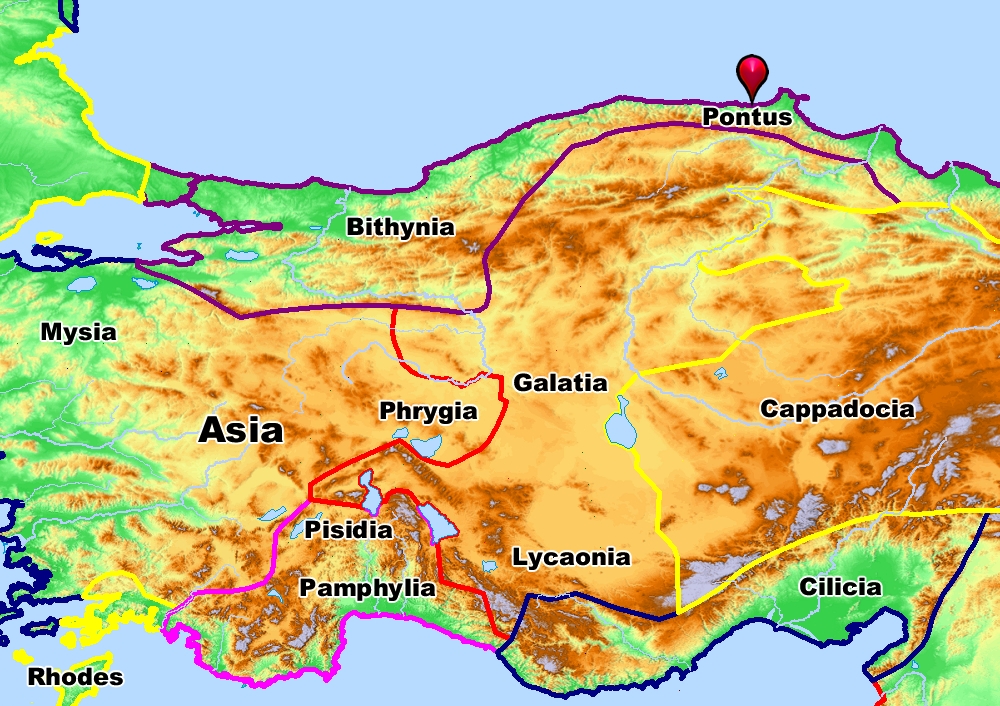
The Roman province of Pontus is mentioned three times in the Bible.

Pontus. Map by BibleAtlas.org.

Pontus. Map by BibleAtlas.org.

There were residents of Pontus (among many other) present for the Day of Pentecost in Acts 2, the day on which the Gospel message of salvation through the resurrected Christ was preached for the first time: “Parthians and Medes and Elamites, and residents of Mesopotamia, Judea and Cappadocia, Pontus and Asia” (Acts 2:9).

Paul’s dear friend and fellow-tentmaker Apollos, was from Pontus: “And he found a Jew named Aquila, a native of Pontus, having recently come from Italy with his wife Priscilla, because Claudius had commanded all the Jews to leave Rome” (Acts 18:2).

The Apostle Peter wrote the letter of 1 Peter to Christians in Pontus (and other Roman provinces): “Peter, an apostle of Jesus Christ, To those who reside as aliens, scattered throughout Pontus, Galatia, Cappadocia, Asia, and Bithynia. . .” (1 Pet. 1:1).

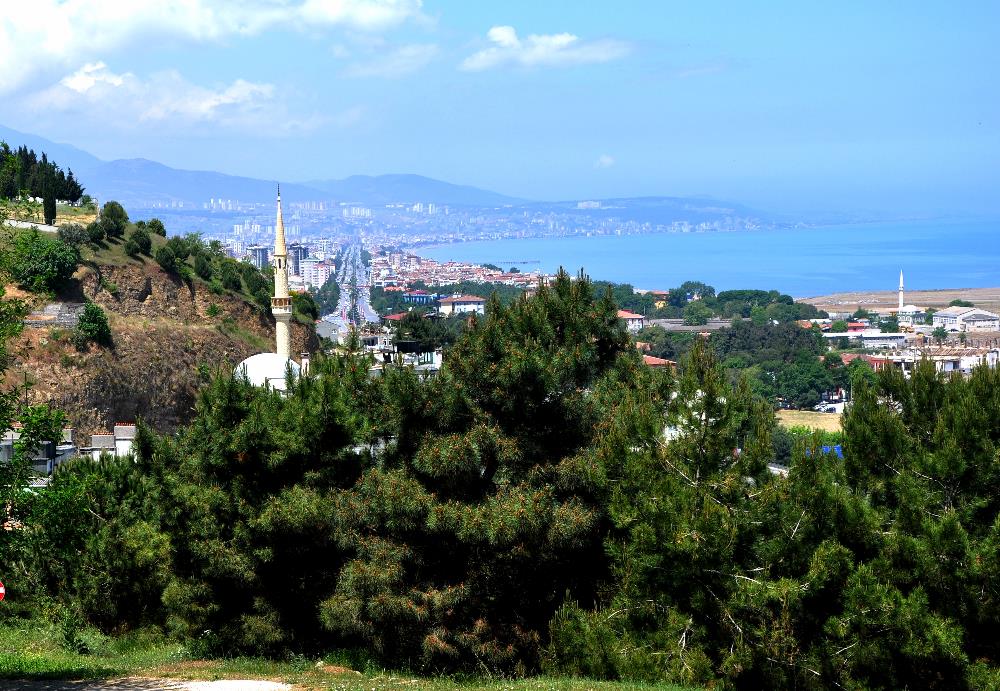
Samsun (also known as Amisus) was a major port city of Pontus located on the Black Sea. This is in Turkey’s territory today.

Samsun, port city of Pontus. Photo by Leon Mauldin.

Samsun, port city of Pontus. Photo by Leon Mauldin.

Many scholars believe that the messenger of 1 Peter (& 2 Peter) would have stopped here at Samsun. I concur. See Ferrell Jenkins here and here.

Click image for larger view.


Mount Tabor

December 5, 2014

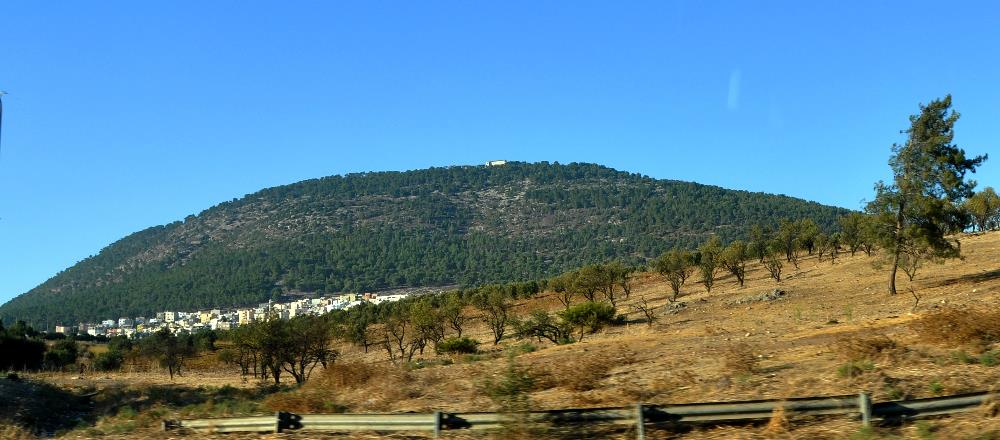
In the days when the judges ruled we read of Deborah, the only woman judge, whom God used to deliver Israel from the Canaanites headquartered at Hazor. Barak led Israel’s army. The ensuing battle took place in the vicinity of Mt. Tabor. The biblical text reads:

She used to sit under the palm tree of Deborah between Ramah and Bethel in the hill country of Ephraim; and the sons of Israel came up to her for judgment. Now she sent and summoned Barak the son of Abinoam from Kedesh-naphtali, and said to him, “Behold, the LORD, the God of Israel, has commanded, ‘Go and march to Mount Tabor, and take with you ten thousand men from the sons of Naphtali and from the sons of Zebulun'” (Judges 4:5-6).

Mt. Tabor in Israel. Photo by Leon Mauldin.

Mt. Tabor in Israel. Photo by Leon Mauldin.

Holman Illustrated Bible Dictionary has this info re: Mt. Tabor:

Mountain in the valley of Jezreel. About six miles east of Nazareth, it has played an important role in Israel’s history since the period of the conquest. It served as a boundary point for the tribes of Naphtali, Issachar, and Zebulun (Josh. 19:12, 22), where the tribes worshiped early (Deut. 33:18–19). Barak gathered an army at Tabor to defend against Sisera (Judg. 4:6). Apparently, it was the site of false worship (Hos. 5:1). Tradition holds that Tabor was the site of Jesus’ transfiguration (Mark 9:2), although no evidence exists to validate the claim.

Note the last statement in the above quotation, that no evidence exists that Mt. Tabor was the site of the transfiguration. Contextually the location of Mt. Hermon is to be preferred (Matt. 17:1), as it is situated in the vicinity of Caesarea Philippi where Jesus and the disciples were in Mt. 16.


Corinthian Helmet

October 30, 2014

From an entry entitled, “Weapons” in the Harper’s Bible Dictionary we read:

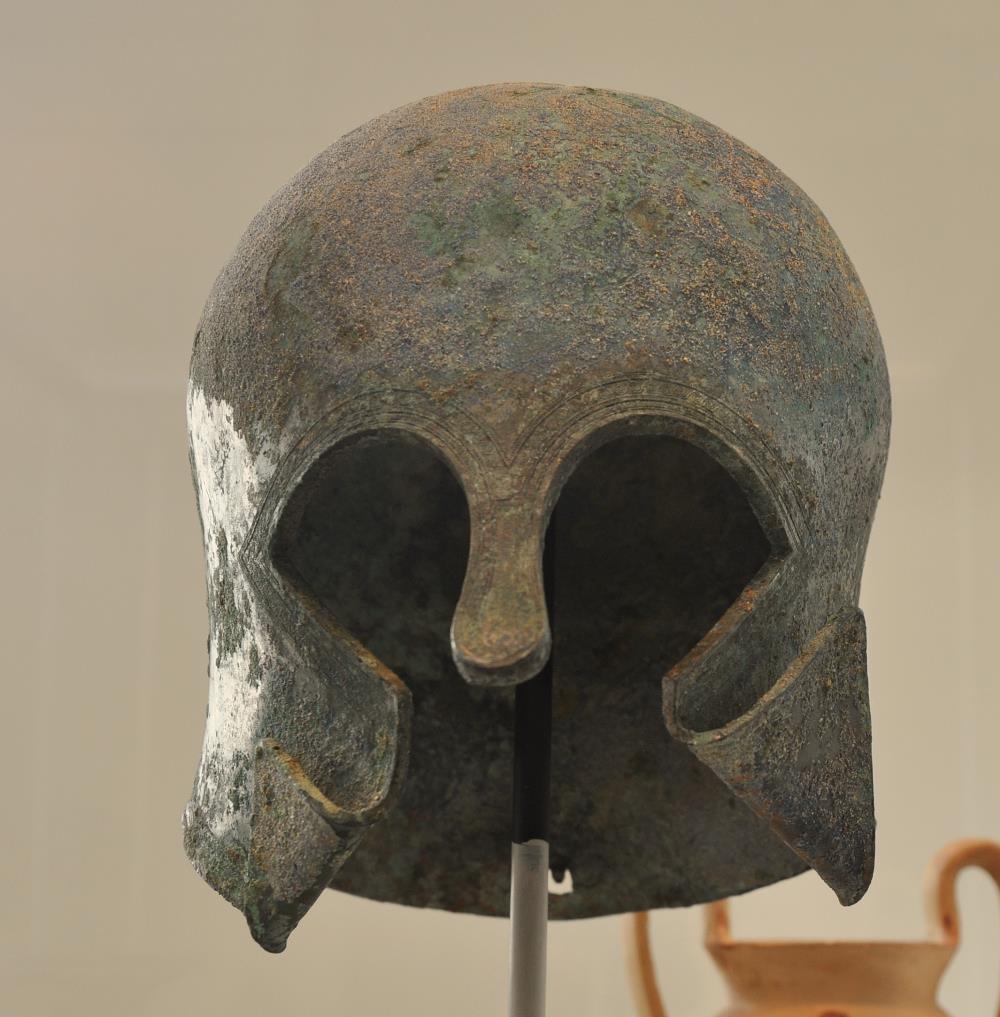
As in the modern world, advancements in ancient technology were quickly adapted for use in instruments of war. One of the most important steps in the history of weapons was the development of carburized iron, a phenomenon that occurred in the eastern Mediterranean toward the end of the second millennium B.C., but earlier improvements in metallurgy (i.e., the production of copper and bronze) had been applied to arms production for nearly two thousand years before the Iron Age. Naturally, the shape, size, and overall durability of dagger and sword blades and spearheads and arrowheads were affected by such improvements in copper, bronze, and iron technology. Another important weapon that improved over time was the chariot, whose speed and maneuverability were increased by changes in design and construction materials, including metals. Other major steps in the development of ancient weaponry include the invention of the composite bow, piercing battle-ax, “Corinthian” helmet, and siege engines (pp. 1123-1124).

The Metropolitan Museum in NY has several such helmets on display.

Corinthian Style Helmet. Photo by Leon Mauldin. Metropolitan Museum, NY.

Corinthian Style Helmet. Photo by Leon Mauldin. Metropolitan Museum, NY.

This Grecian helmet, made of bronze and dating back to 7th-6th century BC, put me in mind of some biblical texts:

–Isaiah 59:17:  He put on righteousness like a breastplate, And a helmet of salvation on His head; And He put on garments of vengeance for clothing And wrapped Himself with zeal as a mantle. (Reference here is to the Lord, YHWH).

–Ephesians 6:17: And take THE HELMET OF SALVATION, and the sword of the Spirit, which is the word of God. The above Isaiah text provides background for this Ephesians passage. The New American Standard Bible uses all caps to indicate a quotation from the OT. The helmet is a vital part of the Christian’s armor listed in Eph. 6:10-17.

–1 Thessalonians 5:8: But since we are of the day, let us be sober, having put on the breastplate of faith and love, and as a helmet, the hope of salvation. A helmet protects the head. Here the hope of salvation possessed by Christians is said to be a helmet. Keep your helmet on. Keeping the hope of salvation constantly in the forefront of the mind serves to protect one against Satan’s devices.

I believe I’ll keep my helmet on!


Temple Inscription Fragment

September 15, 2014

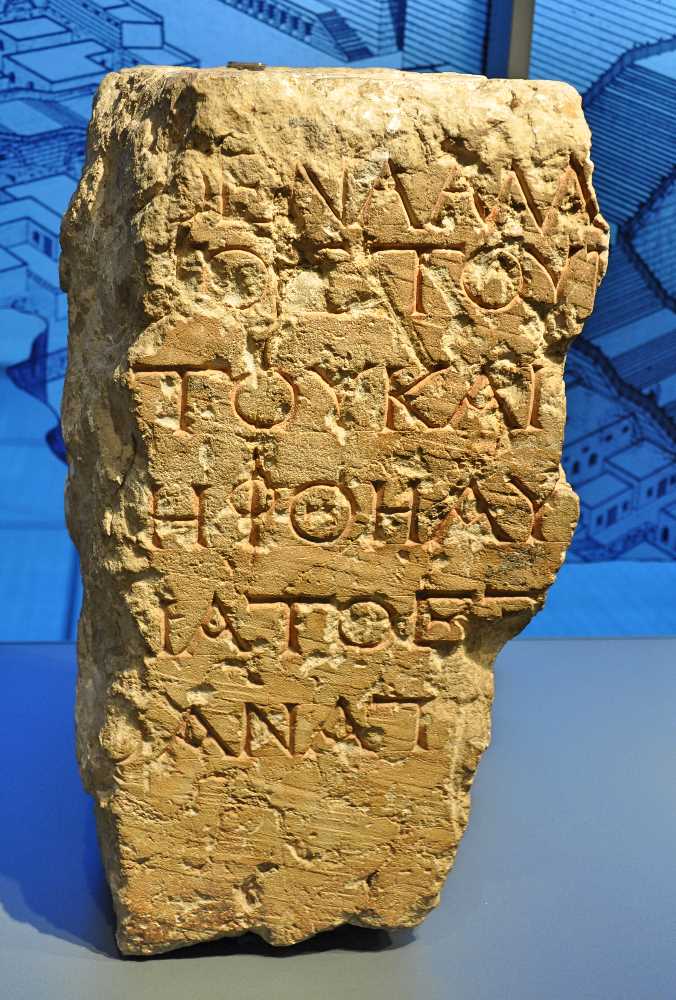
Some biblical texts are especially illuminated by archaeological finds. For example, Acts 21:28 records the false charge against Paul, “He also brought Greeks into the temple and has defiled this holy place” (v.28). The next verse shows this they “supposed” (NET “assumed). Ephesians 2:14 speaks of Jesus’ death breaking down “the middle wall of separation” between Jews and Gentiles.

Temple Inscription Fragment. Israel Museum. Photo by Leon Mauldin.

Temple Inscription Fragment. Israel Museum. Photo by Leon Mauldin.

Our photo shows one of the warnings posted marking the boundary within the temple complex beyond which no Gentile could proceed. The inscription read, “NO FOREIGNER IS TO GO BEYOND THE BALUSTRADE AND THE PLAZA OF THE TEMPLE ZONE. WHOEVER IS CAUGHT DOING SO WILL HAVE HIMSELF TO BLAME FOR HIS DEATH WHICH WILL FOLLOW.”

A complete tablet is housed in the Istanbul Museum, and can be seen in a previous post here.

So the Acts 21 text means that Paul was charged with taking a Gentile beyond the balustrade marked off by signs just like this one.

The Ephesians 2 text shows that with Jesus’ death on the cross, reconciliation is made possible between men (Jew and Gentile) and God, and those reconciled unto God are reconciled to each other. The reconciled are in one body (the church, Eph. 1:22-23). That distinction epitomized by the wall of separation, and reflected by these warning signs, has been removed.


Bethlehem of Galilee

August 28, 2014

In studying the book of Judges, brief mention is made of Ibzan of Bethlehem. The text notes that he had 30 sons and 30 daughters, and states that he judged Israel for seven years (Jud. 12:8-10). Very likely this is the Bethlehem of Galilee, not the Bethlehem of Judah, the latter being remembered of course as the birthplace of Jesus (Micah 5:2; Matt. 2:1). There were two biblical cities named Bethlehem. This is why the Bible is very specific in clarifying that Jesus was born in Bethlehem of Judah in these texts.

Joshua 19 describes the inheritance of Zebulun (of Galilee) and Bethlehem is included in the list: “Included also were Kattah and Nahalal and Shimron and Idalah and Bethlehem; twelve cities with their villages” (v.15). Note the location of the map here:

Bethlehem of Galilee. Map by BibleAtlas.org.

Bethlehem of Galilee. Map by BibleAtlas.org.

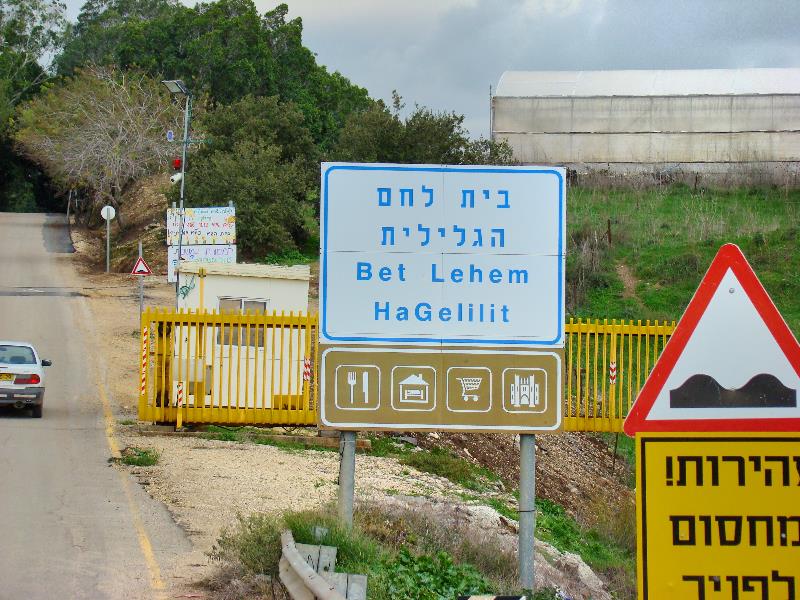
Here is a shot of the city sign upon entering from the south.

Bethlehem of the Galilee sign. Photo by Leon Mauldin.

Bethlehem of the Galilee sign. Photo by Leon Mauldin.

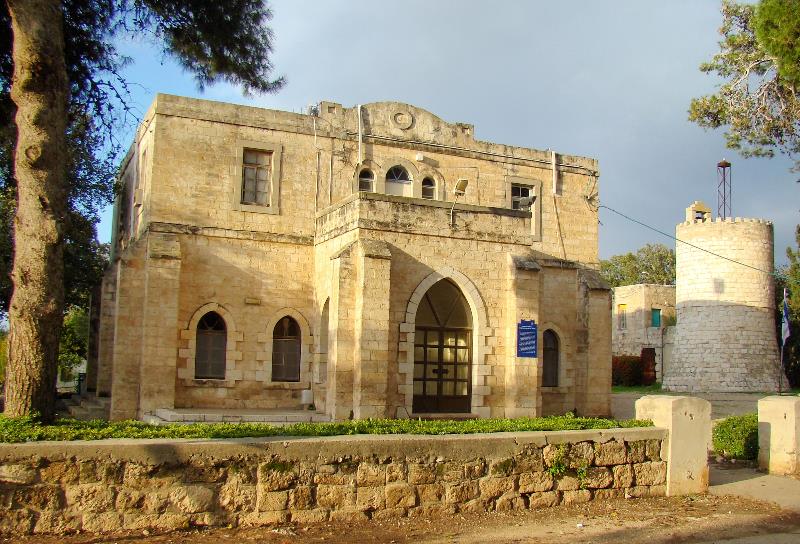
The earlier presence of the Templars may still be seen.

Bethlehem Templar Folk House. Photo by Leon Mauldin.

Bethlehem Templar Folk House. Photo by Leon Mauldin.

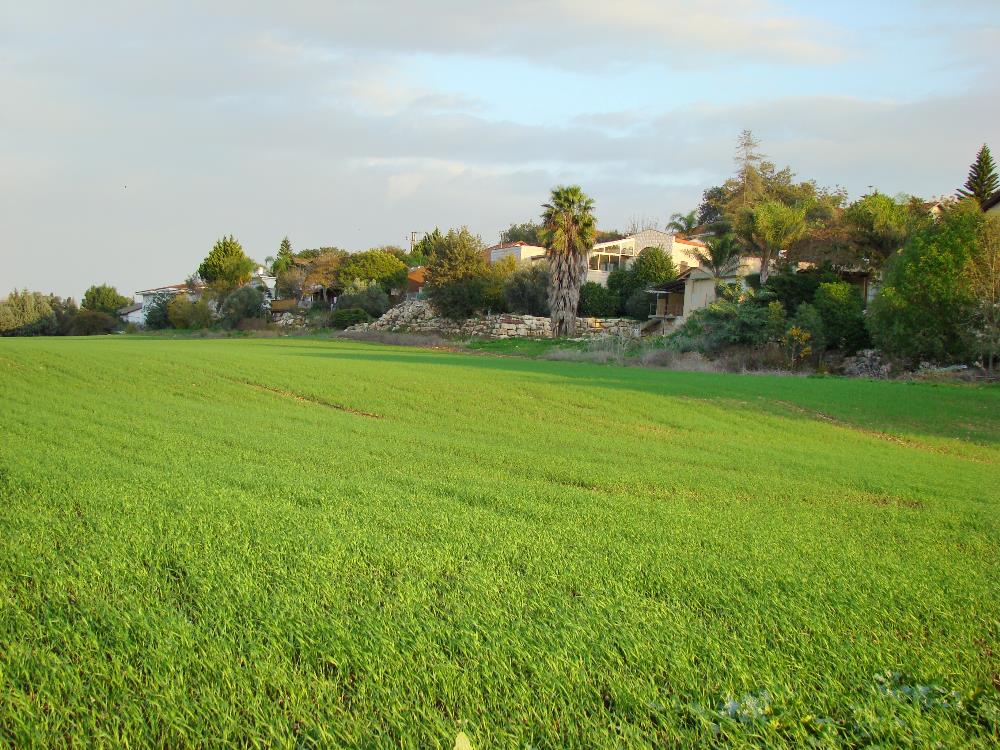
Today Bethlehem of the Galilee is a moshav, a cooperative agricultural community of individual farms.

Pasture in Bethlehem. Photo by Leon Mauldin.

Pasture in Bethlehem. Photo by Leon Mauldin.

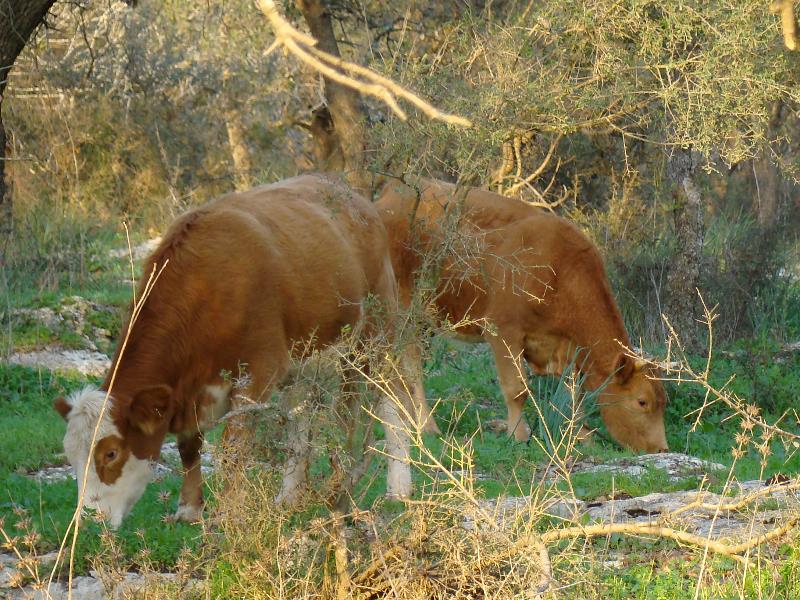
Cattle at Bethlehem. Photo by Leon Mauldin.

Cattle at Bethlehem. Photo by Leon Mauldin.


Goddess Artemis at Vatican Museum

August 23, 2014

There is a statue of the goddess Artemis housed in the Vatican Museum.

Goddess Artemis in Vatican Museum. Photo by Leon Mauldin.

Goddess Artemis in Vatican Museum. Photo by Leon Mauldin.

This is the goddess mentioned in Acts 19, in the context of Paul’s preaching efforts at Ephesus:

About that time there occurred no small disturbance concerning the Way. For a man named Demetrius, a silversmith, who made silver shrines of Artemis, was bringing no little business to the craftsmen; these he gathered together with the workmen of similar trades, and said, “Men, you know that our prosperity depends upon this business. You see and hear that not only in Ephesus, but in almost all of Asia, this Paul has persuaded and turned away a considerable number of people, saying that gods made with hands are no gods at all. Not only is there danger that this trade of ours fall into disrepute, but also that the temple of the great goddess Artemis be regarded as worthless and that she whom all of Asia and the world worship will even be dethroned from her magnificence.” When they heard this and were filled with rage, they began crying out, saying, “Great is Artemis of the Ephesians!” (verses 23-28).

The ISBE has this info:

She may, however, be identified with the Cybele of the Phrygians whose name she also bore, and with several other deities who were worshipped under different names in various parts of the Orient. In Cappadocia she was known as Ma; to the Syrians as Atargatis or Mylitta; among the Phoenicians as Astarte, a name which appears among the Assyrians as Ishtar; the modern name Esther is derived from it. The same goddess seems to have been worshipped by the Hittites, for a female deity is sculptured on the rocks at Yazili Kaya, near the Hittite city of Boghazkeui. It may be shown ultimately that the various goddesses of Syria and Asia Minor all owe their origin to the earlier Assyrian or Babylonian Ishtar, the goddess of love, whose chief attributes they possessed. The several forms and names under which she appears axe due to the varying developments in different regions.

Tradition says that Diana was born in the woods near Ephesus, where her temple was built, when her image of wood (possibly ebony; Pliny, NH, xvi. 40; Acts 19:35) fell from the sky. Also according to tradition the city which was later called Ephesus was founded by the Amazons, and Diana or Cybele was the deity of those half-mythical people. Later when Ephesus fell into the possession of the Greeks, Greek civilization partly supplanted the Asiatic, and in that city the two civilizations were blended together. The Greek name of Artemis was given to the Asiatic goddess, and many of the Greek colonists represented her on their coins as Greek. Her images and forms of worship remained more Asiatic than Greek. Her earliest statues were figures crudely carved in wood. Later when she was represented in stone and metals, she bore upon her head a mural headdress, representing a fortified city wall; from it, drapery hung upon each side of her face to her shoulders. The upper part of her body was completely covered with rows of breasts to signify that she was the mother of all life. The lower arms were extended. The lower part of the body resembled a rough block, as if her legs had been wrapped up in cloth like those of an Egyptian mummy. In later times her Greek followers represented her with stags or lions standing at her sides. The most renowned of her statues stood on the platform before the entrance to her temple in Ephesus. As the statues indicate, she impersonated the reproductive powers of men and of animals and of all other life.

We have previously referenced Artemis in posts here, here, here and here.

Click on image for larger view.


Mamertine Prison in Rome

July 24, 2014

It is not unusual for a tour group to discuss what was their favorite or most meaningful location/event during their trip. On our recent “Highlights of Italy Tour,” many of our group cited the Mamertine Prison in Rome as being at the top of their list. To be able to walk down to the dark prison cell, and recall Paul’s last words in 2 Tim. 4, really enhances one’s understanding of the text and of Paul’s circumstances:

6 For I am already being poured out as a drink offering, and the time of my departure is at hand. 7 I have fought the good fight, I have finished the race, I have kept the faith. 8 Finally, there is laid up for me the crown of righteousness, which the Lord, the righteous Judge, will give to me on that Day, and not to me only but also to all who have loved His appearing. 9 Be diligent to come to me quickly; 10 for Demas has forsaken me, having loved this present world, and has departed for Thessalonica — Crescens for Galatia, Titus for Dalmatia. 11 Only Luke is with me. Get Mark and bring him with you, for he is useful to me for ministry. 12 And Tychicus I have sent to Ephesus. 13 Bring the cloak that I left with Carpus at Troas when you come — and the books, especially the parchments. 14 Alexander the coppersmith did me much harm. May the Lord repay him according to his works. 15 You also must beware of him, for he has greatly resisted our words. 16 At my first defense no one stood with me, but all forsook me. May it not be charged against them. 17 But the Lord stood with me and strengthened me, so that the message might be preached fully through me, and that all the Gentiles might hear. And I was delivered out of the mouth of the lion. 18 And the Lord will deliver me from every evil work and preserve me for His heavenly kingdom. To Him be glory forever and ever. Amen! (2 Tim. 4:6-18).
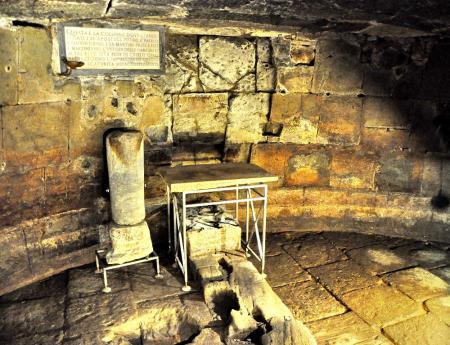
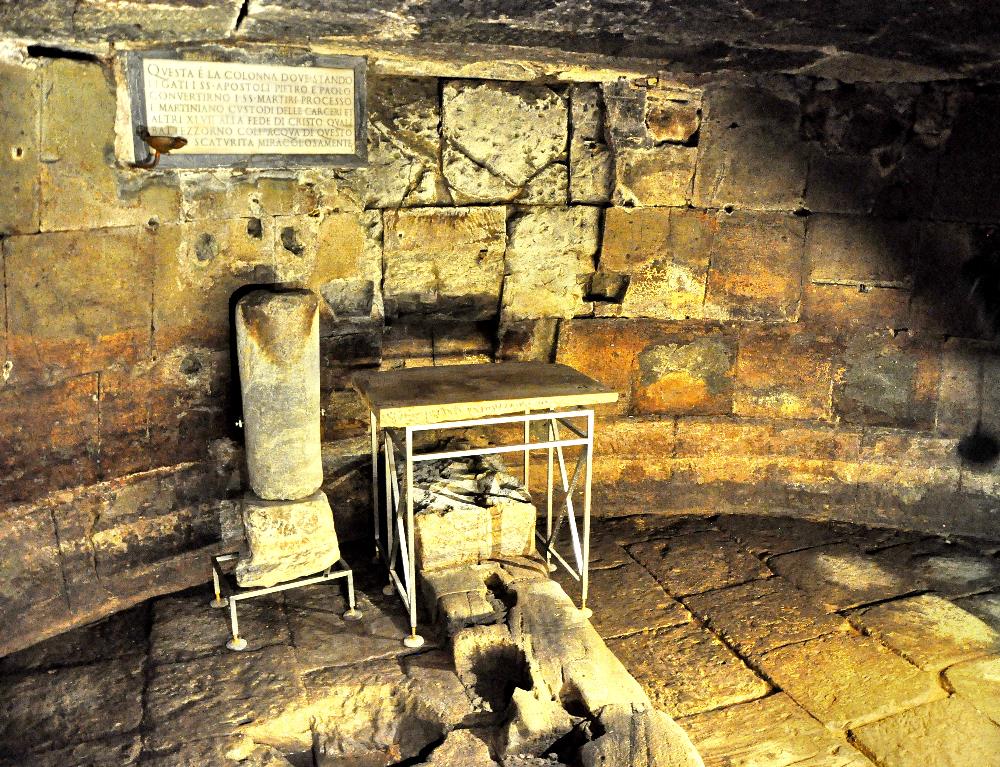
Mamertine Prison in Rome. Photo ©Leon Mauldin.

Mamertine Prison in Rome. Photo ©Leon Mauldin.

We cannot affirm that this is the exact part of the prison that Paul was in as he penned the above text. But this is definitely a part of the state prison complex, and it illustrates the biblical setting as Paul, near death, penned his last letter to his faithful friend and fellow-worker, Timothy. I.e., it is safe to say that Paul was in a cell like this, in this area, awaiting execution. BAS in their photo collection has this information:

Near the Forum, at the base of the Capitoline Hill, is the dungeon of the Mamertine Prison. This was the state prison of Rome, and Paul may have ended his days here.

We see the lower of two chambers constructed of blocks cut from tufa, the local porous rock. Originally, this 30-foot diameter room could be reached only through the hole visible in its ceiling. This would have been the dungeon cell for prisoners; above it is a smaller room for the warders. Conflicting Roman traditions attributed the building of the prison to different rulers of the 7th and 6th centuries B.C.E. Some modern investigations have suggested a 3rd-century B.C.E. date for this lower chamber and a 1st-century B.C.E. date for the room above, but there is no question that it was in use in Paul’s time. Christian tradition also places Peter’s final internment here, at the time of Nero’s persecution. (Biblical Archaeology Society: The Biblical World in Pictures).

The Wycliffe Historical Geography of Bible Lands has this entry:

Tradition has it that during his second imprisonment Paul was detained in the Mamertine Prison in Rome. The name Mamertinus is postclassical; during the Empire the place was known simply as the Carcer. This was the ancient state prison of Rome at the foot of the Capitoline Hill. It was used as a place of detention, not of penal servitude, although executions occurred there. The upper room is a vaulted trapezoid, the sides varying in length from eleven to sixteen feet.

Below it was a subterranean chamber, originally accessible only by a hole in the roof. This Tullianum was nearly twenty-one feet in diameter and, according to Sallust, twelve feet high. All who wrote of the place described it with horror. Sallust (86–34 B.C.) described it as “exceeding dark, unsavory, and able to craze any man’s senses.” Under such circumstances the apostle would indeed have felt the need of the cloak and the books he had left behind at Troas (2 Tim. 4:13).

As Paul wrote Second Timothy, he had none of the optimism expressed in his earlier letters, when he expected release. He had obtained a preliminary hearing, and it had been a dismal failure (2 Tim. 4:16). Though he found himself in dire circumstances, he delivered what sometimes has been called his valedictory, for he was about to “graduate.” “For I am now ready to be offered, and the time of my departure is at hand. I have fought a good fight, I have finished my course, I have kept the faith: Henceforth there is laid up for me a crown of righteousness, which the Lord, the righteous judge, shall give me at that day: and not to me only, but unto all them also that love his appearing” (2 Tim. 4:6–8) (Eds. Pfeiffer & Vos, 1996).

Click on image for larger view.

Scroll down to see more from our recent trip to Italy.

A Good Day in Rome

July 9, 2014

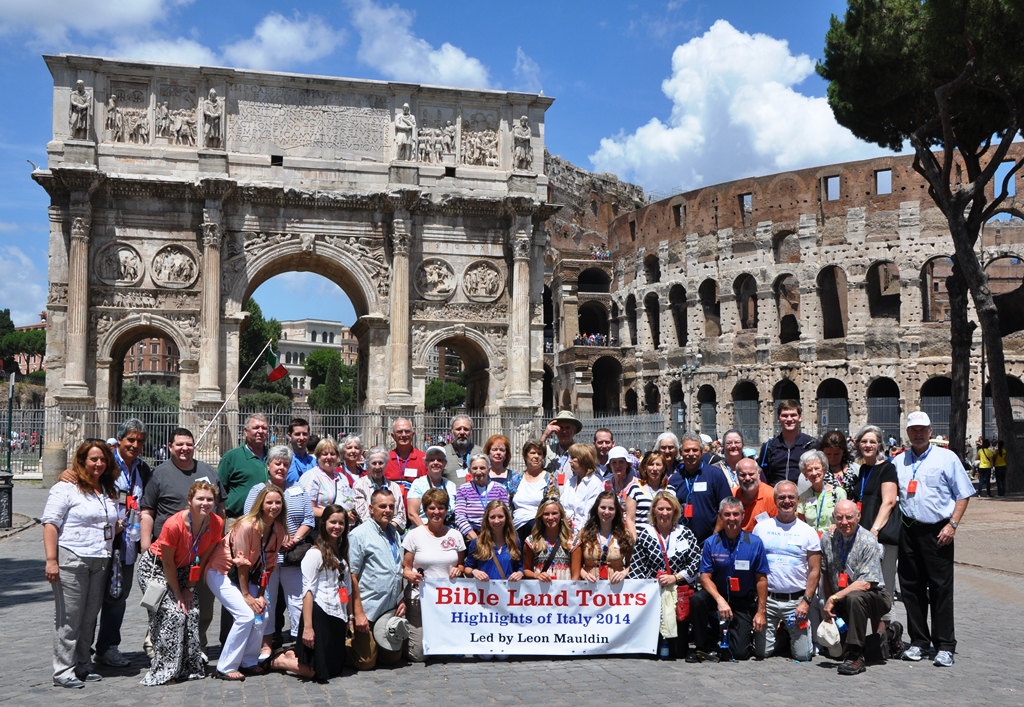
Today’s activities included a tour of the Vatican, the Colosseum, the Roman Forum and the Mamertine Prison. We had a group shot made in front of the Arch of Constantine, the largest and best preserved of Rome’s triumphal arches.

Italy Group Shot.

Italy Group Shot.


In the Heart of Rome

July 8, 2014

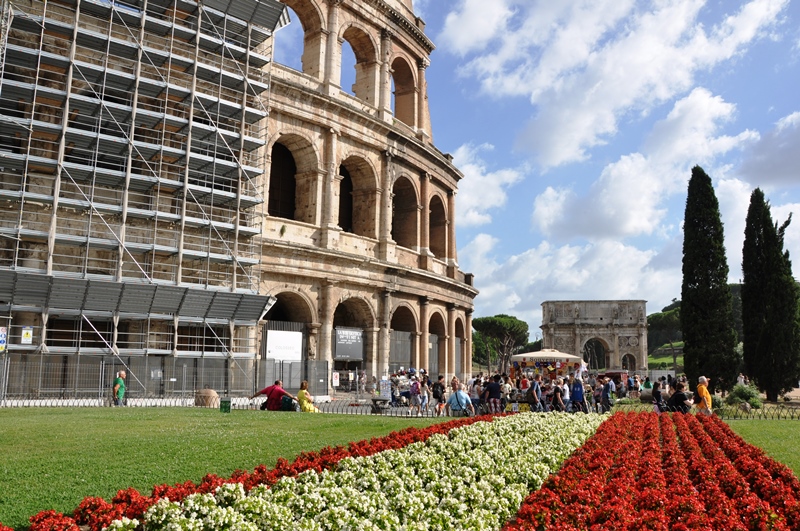
Greetings from Rome. My group all arrived safely today, and everyone’s luggage arrived also! The afternoon was designated as free time, which allowed for lots of walking and seeing many sites of ancient Rome. A familiar landmark, the Colosseum, is on your left. It was completed by Emperor Titus in 80 AD. In the distance is the Arch of Constantine, erected in 315 AD.

Colosseum and Arch of Constantine in Rome. Photo by Leon Mauldin.

Colosseum and Arch of Constantine in Rome. Photo by Leon Mauldin.

Click image for larger view.

Will post more as time permits.