Forum of Julius Caesar

August 20, 2014

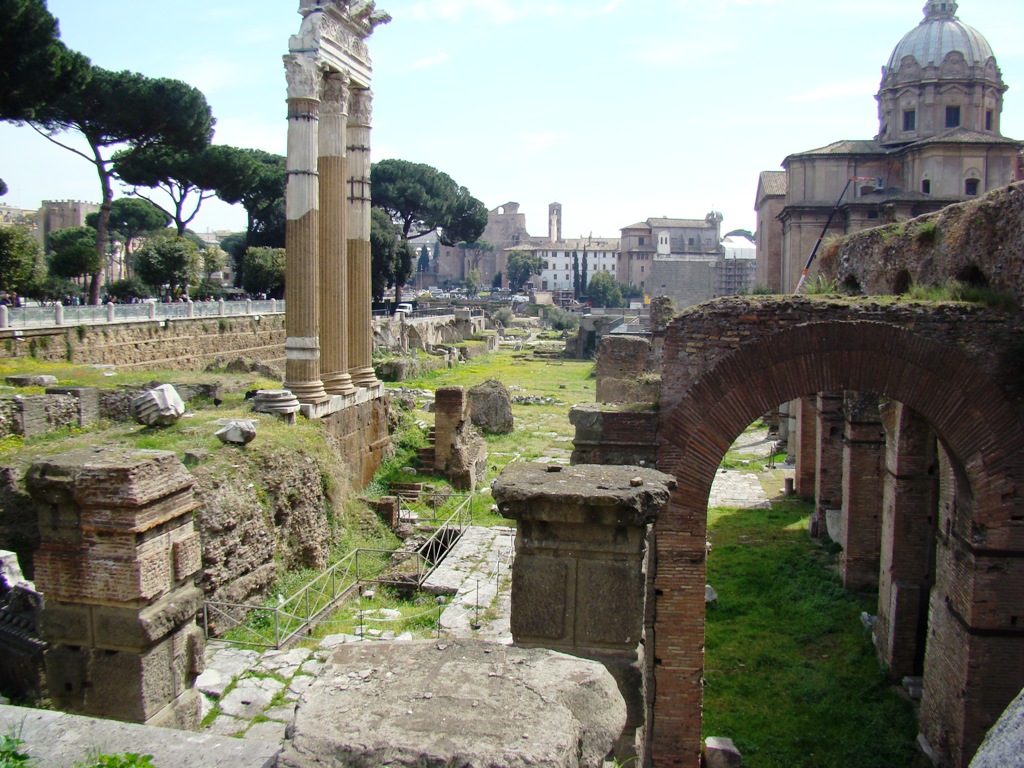
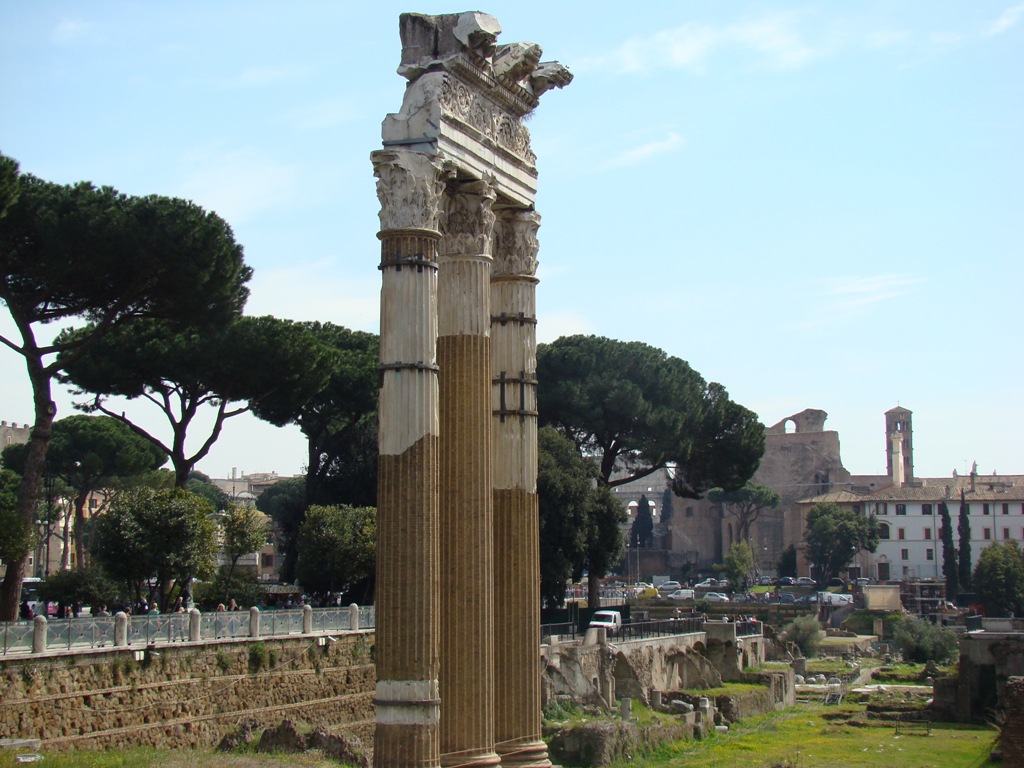
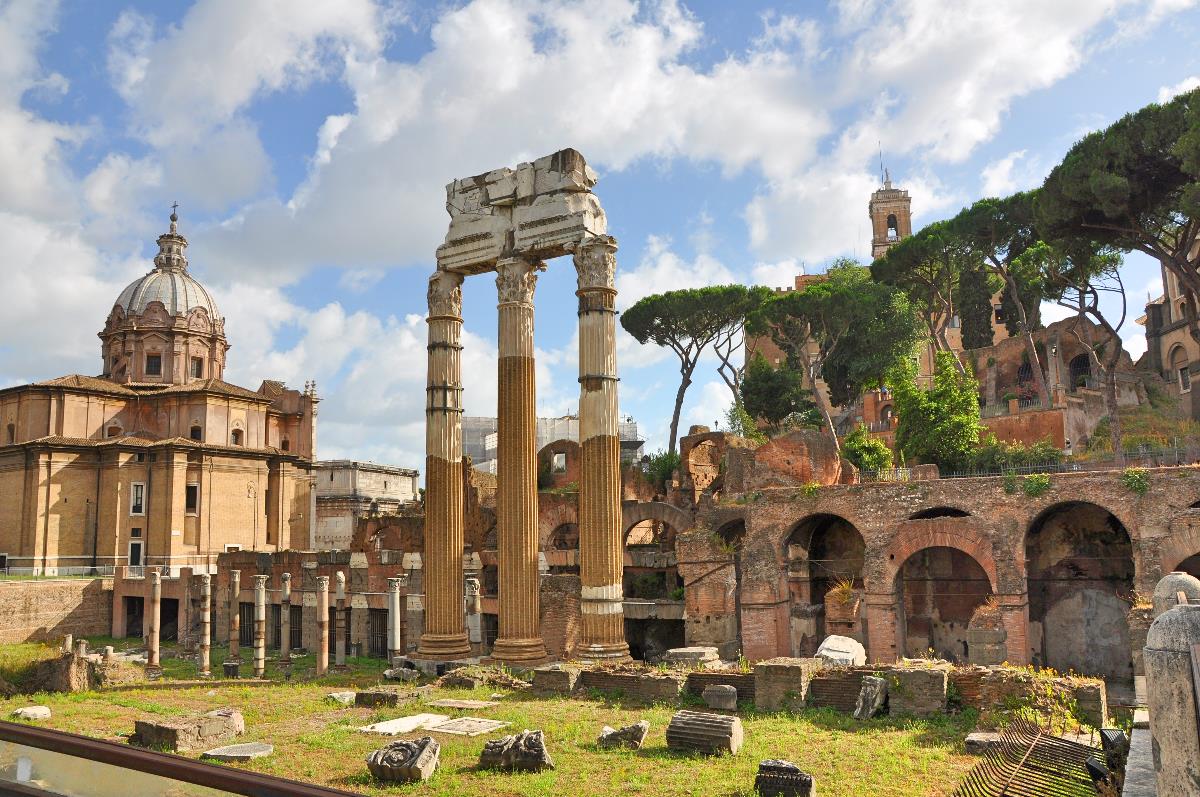
During our recent tour of Italy we were able to take some photos of the Forum of Julius Caesar, the first of the Imperial Forums. Construction was begun by Caesar in 54 BC (Rome: Oxford Archaeological Guides). This is the location where the senate would meet before him. It was also here that Caesar built the Temple of Venus Genitrix.

The temple (Fig. 62) was introduced to Caesar’s original plan at a slightly later stage. It was vowed by Caesar the night before the Battle of Pharsalus in 48 BC, during his civil war with Pompey, to win over Pompey’s favoured goddess Venus Victrix, though when inaugurated in 46 BC (while still unfinished) it actually honoured her as Venus Genetrix, ‘universal mother’, from which Julius Caesar’s family (and thus all the emperors from Augustus to Nero) claimed descent (ibid.)

Forum of Julius Caesar. Photo ©Leon Mauldin.

Forum of Julius Caesar. Photo ©Leon Mauldin.

The three Corinthians columns were added at the time of Hadrian.


Mamertine Prison in Rome

July 24, 2014

It is not unusual for a tour group to discuss what was their favorite or most meaningful location/event during their trip. On our recent “Highlights of Italy Tour,” many of our group cited the Mamertine Prison in Rome as being at the top of their list. To be able to walk down to the dark prison cell, and recall Paul’s last words in 2 Tim. 4, really enhances one’s understanding of the text and of Paul’s circumstances:

6 For I am already being poured out as a drink offering, and the time of my departure is at hand. 7 I have fought the good fight, I have finished the race, I have kept the faith. 8 Finally, there is laid up for me the crown of righteousness, which the Lord, the righteous Judge, will give to me on that Day, and not to me only but also to all who have loved His appearing. 9 Be diligent to come to me quickly; 10 for Demas has forsaken me, having loved this present world, and has departed for Thessalonica — Crescens for Galatia, Titus for Dalmatia. 11 Only Luke is with me. Get Mark and bring him with you, for he is useful to me for ministry. 12 And Tychicus I have sent to Ephesus. 13 Bring the cloak that I left with Carpus at Troas when you come — and the books, especially the parchments. 14 Alexander the coppersmith did me much harm. May the Lord repay him according to his works. 15 You also must beware of him, for he has greatly resisted our words. 16 At my first defense no one stood with me, but all forsook me. May it not be charged against them. 17 But the Lord stood with me and strengthened me, so that the message might be preached fully through me, and that all the Gentiles might hear. And I was delivered out of the mouth of the lion. 18 And the Lord will deliver me from every evil work and preserve me for His heavenly kingdom. To Him be glory forever and ever. Amen! (2 Tim. 4:6-18).
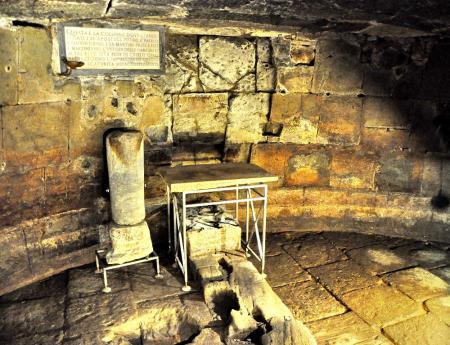
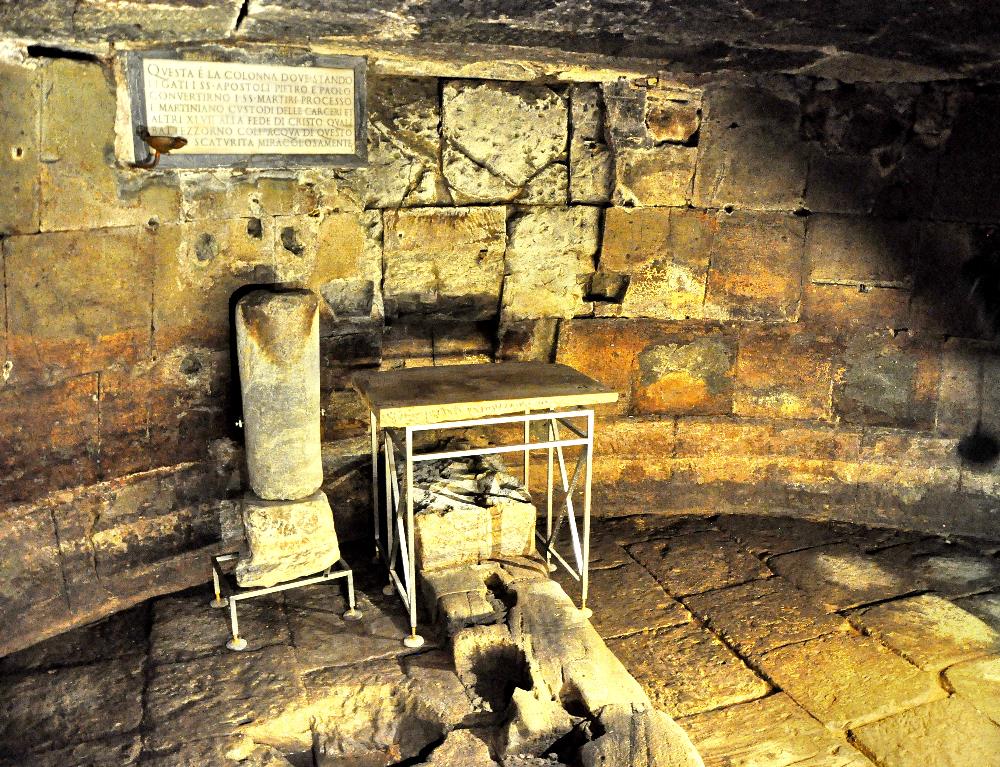
Mamertine Prison in Rome. Photo ©Leon Mauldin.

Mamertine Prison in Rome. Photo ©Leon Mauldin.

We cannot affirm that this is the exact part of the prison that Paul was in as he penned the above text. But this is definitely a part of the state prison complex, and it illustrates the biblical setting as Paul, near death, penned his last letter to his faithful friend and fellow-worker, Timothy. I.e., it is safe to say that Paul was in a cell like this, in this area, awaiting execution. BAS in their photo collection has this information:

Near the Forum, at the base of the Capitoline Hill, is the dungeon of the Mamertine Prison. This was the state prison of Rome, and Paul may have ended his days here.

We see the lower of two chambers constructed of blocks cut from tufa, the local porous rock. Originally, this 30-foot diameter room could be reached only through the hole visible in its ceiling. This would have been the dungeon cell for prisoners; above it is a smaller room for the warders. Conflicting Roman traditions attributed the building of the prison to different rulers of the 7th and 6th centuries B.C.E. Some modern investigations have suggested a 3rd-century B.C.E. date for this lower chamber and a 1st-century B.C.E. date for the room above, but there is no question that it was in use in Paul’s time. Christian tradition also places Peter’s final internment here, at the time of Nero’s persecution. (Biblical Archaeology Society: The Biblical World in Pictures).

The Wycliffe Historical Geography of Bible Lands has this entry:

Tradition has it that during his second imprisonment Paul was detained in the Mamertine Prison in Rome. The name Mamertinus is postclassical; during the Empire the place was known simply as the Carcer. This was the ancient state prison of Rome at the foot of the Capitoline Hill. It was used as a place of detention, not of penal servitude, although executions occurred there. The upper room is a vaulted trapezoid, the sides varying in length from eleven to sixteen feet.

Below it was a subterranean chamber, originally accessible only by a hole in the roof. This Tullianum was nearly twenty-one feet in diameter and, according to Sallust, twelve feet high. All who wrote of the place described it with horror. Sallust (86–34 B.C.) described it as “exceeding dark, unsavory, and able to craze any man’s senses.” Under such circumstances the apostle would indeed have felt the need of the cloak and the books he had left behind at Troas (2 Tim. 4:13).

As Paul wrote Second Timothy, he had none of the optimism expressed in his earlier letters, when he expected release. He had obtained a preliminary hearing, and it had been a dismal failure (2 Tim. 4:16). Though he found himself in dire circumstances, he delivered what sometimes has been called his valedictory, for he was about to “graduate.” “For I am now ready to be offered, and the time of my departure is at hand. I have fought a good fight, I have finished my course, I have kept the faith: Henceforth there is laid up for me a crown of righteousness, which the Lord, the righteous judge, shall give me at that day: and not to me only, but unto all them also that love his appearing” (2 Tim. 4:6–8) (Eds. Pfeiffer & Vos, 1996).

Click on image for larger view.

Scroll down to see more from our recent trip to Italy.

Bridge of Sighs in Venice, Italy

July 17, 2014

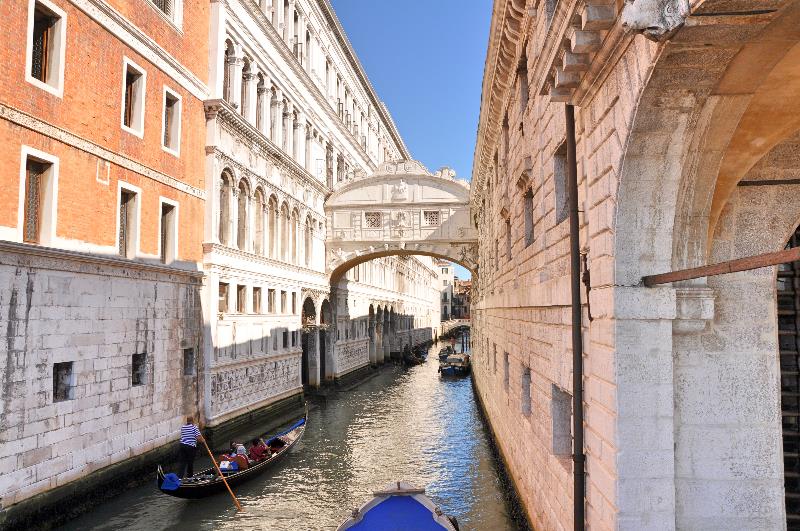
Our tour of Italy concluded in Venice on Tues. One of the landmarks there is the Bridge of Sighs, seen here at center.

Bridge of Sighs in Venice. Photo ©Leon Mauldin.

Bridge of Sighs in Venice. Photo ©Leon Mauldin.

Wikipedia has this info:

The Bridge of Sighs (Italian: Ponte dei Sospiri) is a bridge located in Venice, northern Italy. The enclosed bridge is made of white limestone and has windows with stone bars. It passes over the Rio di Palazzo and connects the New Prison (Prigioni Nuove) to the interrogation rooms in the Doge’s Palace. It was designed by Antonio Contino (whose uncle Antonio da Ponte had designed the Rialto Bridge) and was built in 1600.

The view from the Bridge of Sighs was the last view of Venice that convicts saw before their imprisonment. The bridge name, given by Lord Byron in the 19th century, comes from the suggestion that prisoners would sigh at their final view of beautiful Venice through the window before being taken down to their cells. In reality, the days of inquisitions and summary executions were over by the time the bridge was built and the cells under the palace roof were occupied mostly by small-time criminals. In addition, little could be seen from inside the Bridge due to the stone grills covering the windows.

A local legend says that lovers will be granted eternal love and bliss if they kiss on a gondola at sunset under the Bridge of Sighs as the bells of St Mark’s Campanile toll. This legend served as a plot line for the movie A Little Romance, featuring Laurence Olivier and Diane Lane.

We are thankful for safe arrival back home yesterday PM.


Roman Theater in Trieste

July 15, 2014

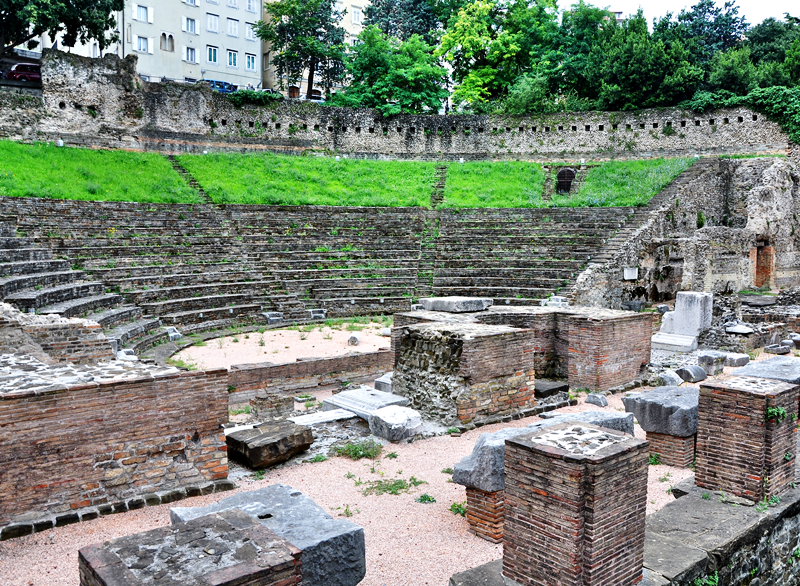
It is an understatement to say that the Roman Empire really left its mark. There are many sites where theaters which date back to Roman times may be seen. When we were leaving Trieste yesterday morning, we went by the Roman theater there.

Roman Theater at Trieste, Italy. Photo by Leon Mauldin.

Roman Theater at Trieste, Italy. Photo by Leon Mauldin.

Yesterday we made our way on to Venice, where we had an afternoon to visit. Then today was an all-day tour of Venice (walking; they do not intend for you to sit anywhere here, at least not for long). Our wake up call is in a few hours at 3:00 AM; then a quick transfer to the airport to make our way home.

More photos to share later. Click on image for larger view.


In Trieste, Italy

July 12, 2014

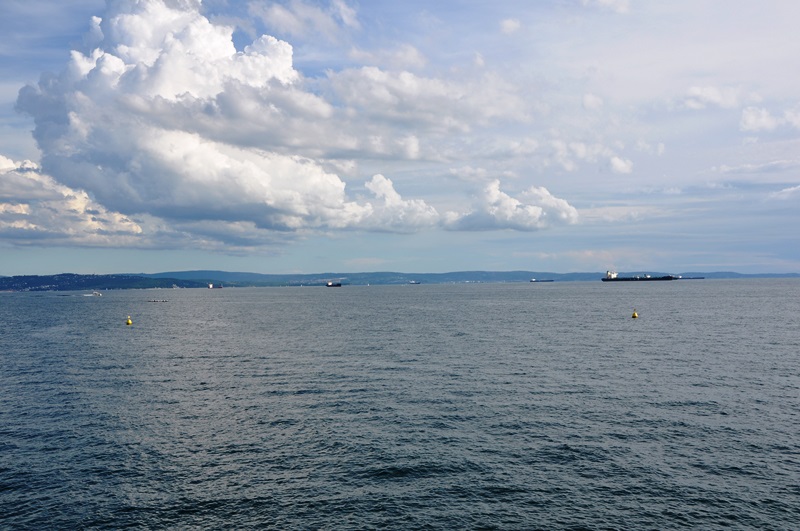
This afternoon we safely arrived in Trieste, situated on the Adriatic Coast.

In Trieste, Italy, looking across the Adriatic to Slovenia. Photo by Leon Mauldin.

In Trieste, Italy, looking across the Adriatic to Slovenia. Photo by Leon Mauldin.

In the distance you can see Slovenia.

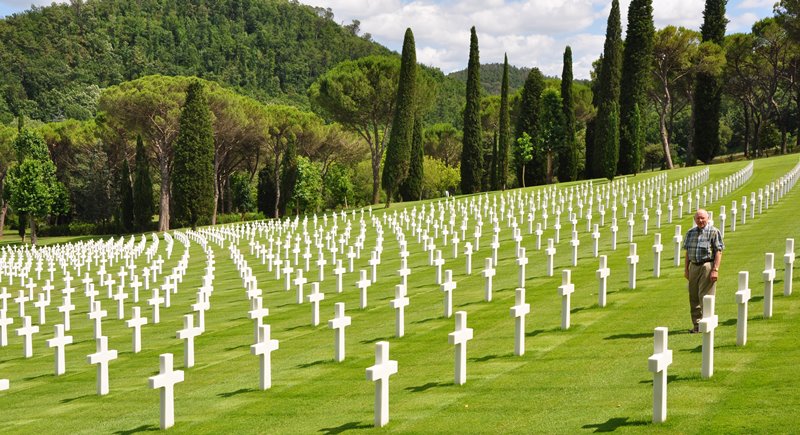
Yesterday we had the occasion to pay our respects at the American Cemetery near Florence. To your right is my friend, Harold Comer.

Florence American Cemetery. Photo by Leon Mauldin.

Florence American Cemetery. Photo by Leon Mauldin.

Some of the soldiers were killed just days before the war ended.

Click images for larger view.


Florence, Capital of the Province of Tuscany.

July 11, 2014

As we continue our tour of “The Highlights of Italy,” leaving Rome we’ve traveled north to Florence, home of Michelangelo and the birth of the Renaissance. Florence is the capital city of the Italian region of Tuscany and its 370,000 inhabitants makes it the most populous city in Tuscany.

Shortly after we checked into our rooms (late afternoon) there was thunder, rain and some small hail. Afterward the sun came out and much of the cloud cover left. Before time for dinner we had some time to walk to the historic square.

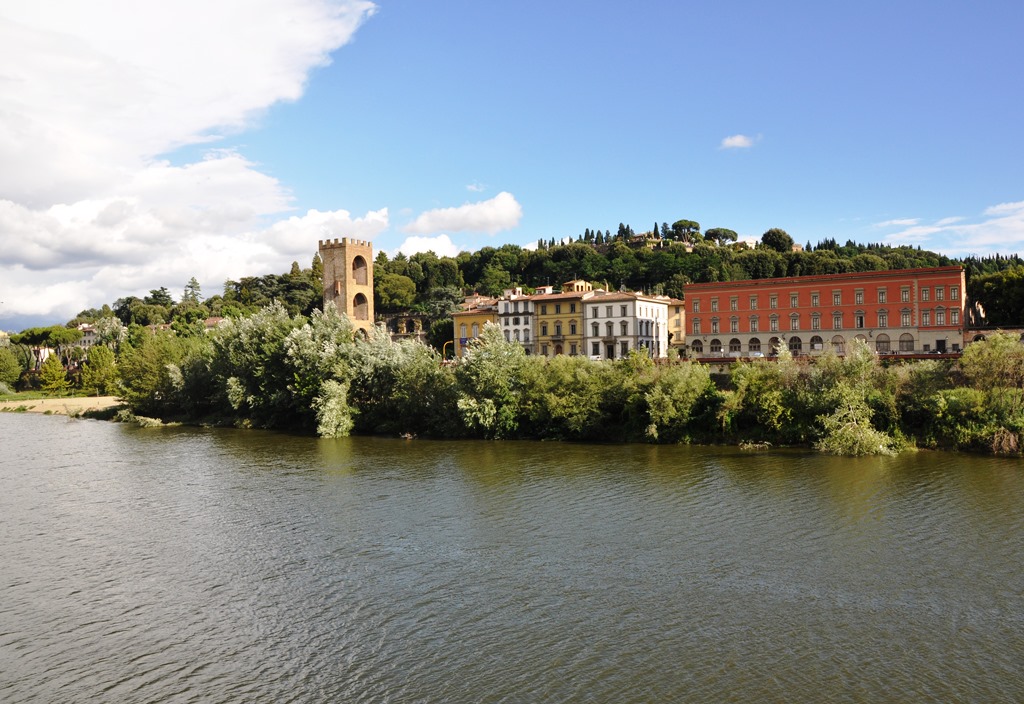
Florence is situated along the banks of  the Arno River.

Arno River in Florence. Photo by Leon Mauldin

Arno River in Florence. Photo by Leon Mauldin


A Good Day in Rome

July 9, 2014

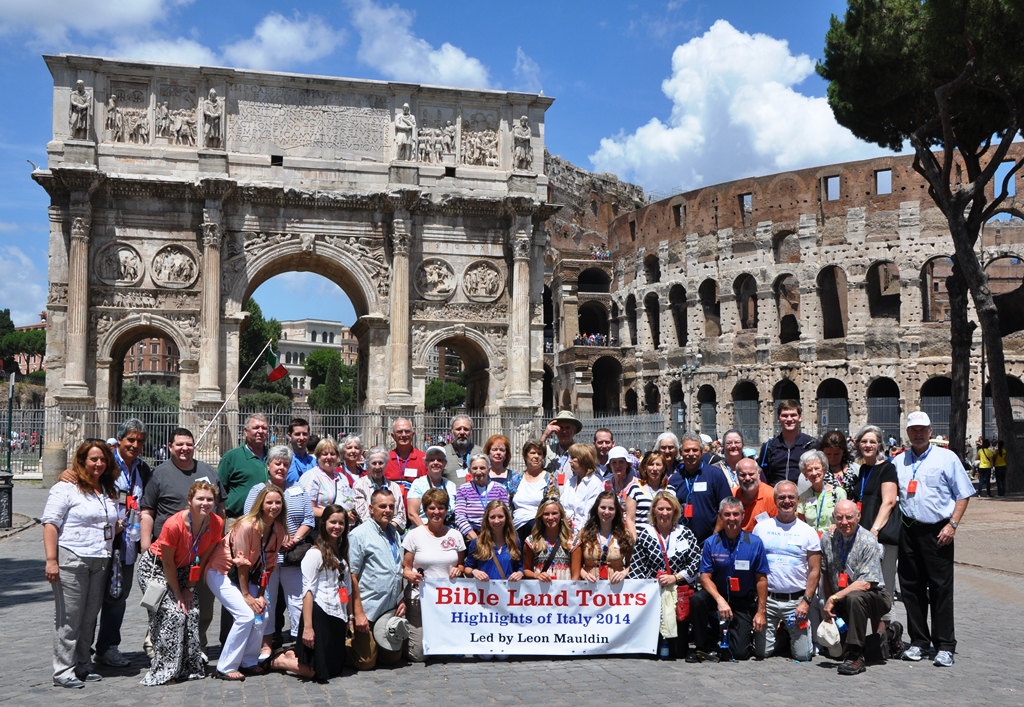
Today’s activities included a tour of the Vatican, the Colosseum, the Roman Forum and the Mamertine Prison. We had a group shot made in front of the Arch of Constantine, the largest and best preserved of Rome’s triumphal arches.

Italy Group Shot.

Italy Group Shot.


In the Heart of Rome

July 8, 2014

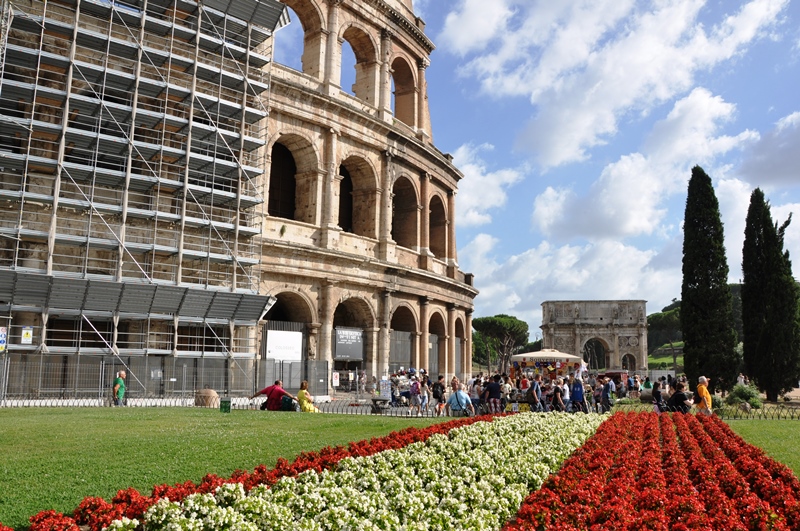
Greetings from Rome. My group all arrived safely today, and everyone’s luggage arrived also! The afternoon was designated as free time, which allowed for lots of walking and seeing many sites of ancient Rome. A familiar landmark, the Colosseum, is on your left. It was completed by Emperor Titus in 80 AD. In the distance is the Arch of Constantine, erected in 315 AD.

Colosseum and Arch of Constantine in Rome. Photo by Leon Mauldin.

Colosseum and Arch of Constantine in Rome. Photo by Leon Mauldin.

Click image for larger view.

Will post more as time permits.


The Tabularium

May 15, 2012

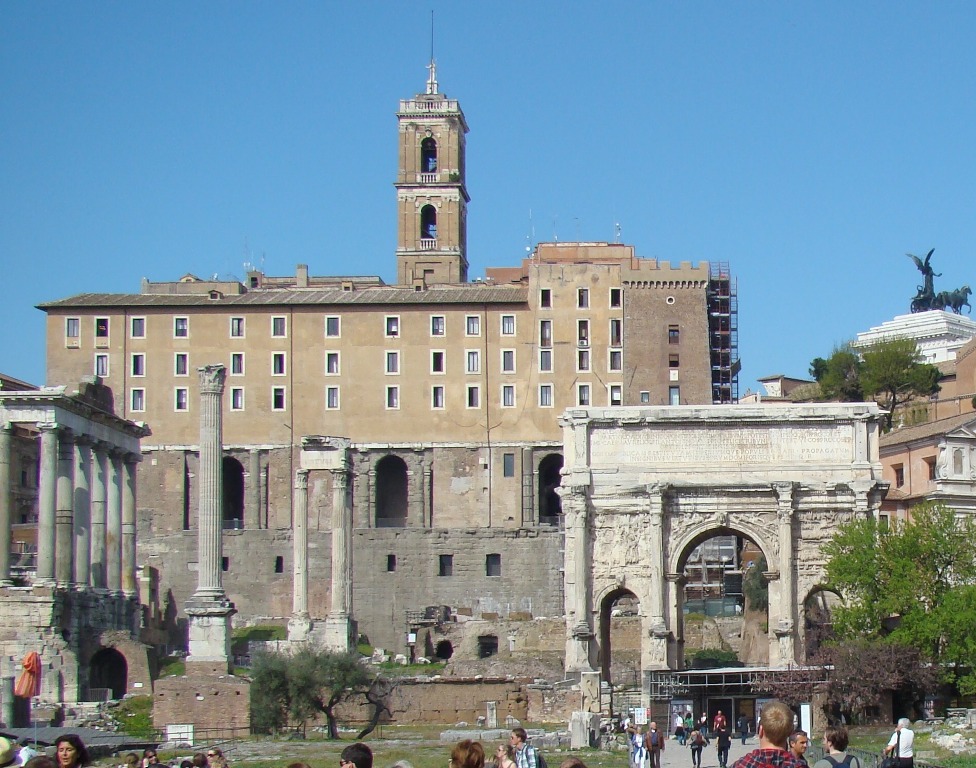
We continue to explore the Roman Forum. In our photo below we see the Tabularium, the large building in the back.

Tabularium in Roman Forum. Photo by Leon Mauldin.

“Tabularium” is a term for a record building. A number of other tabularia were scattered around Rome and other ancient Roman cities, but this article is about the prototype example.

The Tabularium was the official records office of ancient Rome, and also housed the offices of many city officials. Situated within the Roman Forum, it was on the front slope of the Capitoline Hill, below the Temple of Jupiter Optimus Maximus, to the southeast of the Arx and Tarpeian Rock.

Within the building were the remains of the temple of Veiovis. In front of it were the Temples of Vespasian & Concord, as well as the Rostra and the rest of the forum. Presently the Tabularium is only accessible from within the Capitoline Museum, although it still affords an excellent panoramic view over the Forum.

The Tabularium was first constructed around 78 BC, by order of M. Aemilius Lepidus and Q. Lutatius Catulus. It was later restored and renovated during the reign of the Emperor Claudius, about 46 AD. (Wikipedia).

The lower level, the gray portion, is the Roman period; upper level was built later.

In a entry entitled “Obtaining Citizenship,” (Roman citizenship) F.F. Bruce is referenced as stating

that legislation at the turn of the first century A.D. called for a legitimately born child of Roman citizens to be registered within thirty days of birth. Children born in the provinces would be legally acknowledged (professio) before the Roman provincial authority at the public record office (tabularium publicum). The professio was then entered in the register (album professionum). We do not know if Paul’s birth was before or after this legislation, but some such formal procedure had to have been in effect earlier. At regular intervals a citizen’s name, age, status and property holdings would thereafter be recorded by census. (Dictionary of New Testament Background: A Compendium of Contemporary Biblical Scholarship.)

At right in the photo you can see the Arch of Septimius Severus, dedicated in AD 203.

*******

At present I am en route to Cyprus to join Ferrell Jenkins for a few days of photographing biblical sites, and biblically related sites, in Cyprus and Turkey.

Click on image for larger view.


Temple of Venus Genetrix

April 23, 2012

Our photo today shows the Forum of Caesar, located in the north-east corner of the Roman Forum. Construction of Caesar’s Forum was begun in 54 BC. Three remaining columns indicate the location of the Temple of Venus in Caesar’s Forum.

Temple of Venus Genetrix, located in Forum of Caesar, Rome. Photo by Leon Mauldin.

The temple was introduced at a slightly later stage, having been vowed by Caesar the night before the Battle of Pharsalus in 48 BC, during  his civil war with Pompey, to win over Pompey’s favored goddess Venus Victrix, though when inaugurated in 46 BC (while still unfinished) it actually honored Venus as Venus Genetrix, “universal mother,’ from which Julius Caesar’s family (and thus all the emperors from August to Nero) claimed descent. (Rome: An Oxford Archaeological Guide, p.150).

Here is a close-up of the columns:

Temple of Venus Genetrix, close-up of columns. Photo by Leon Mauldin.

The Temple of Venus Genetrix contained an important collection of statues, paintings and engravings. A gilded statue of Cleopatra VII was erected, setting a precedent for dedications to notable women in the precinct. Paintings in the forum included one of Medea, mythological Greek hero of Euripides’ play Medea, as well as one of Ajax, mythological Greek hero of Sophocles’ Ajax, done by Timomachus. Perhaps more personal to Caesar were six collections of engraved gems. These surpassed in number the collection of Mithridates dedicated by Caesar’s rival Pompey. It is not known where or how Caesar obtained these six collections. (Wikipedia).

The location of a temple at the end of a long enclosure was a practice borrowed by the Romans from the Etruscans. This area suffered fire damage in AD 80; the temple was later rebuilt by Domitian and subsequently restored by Trajan.

Click on images for larger view.