Omrit, cont’d.

September 11, 2012

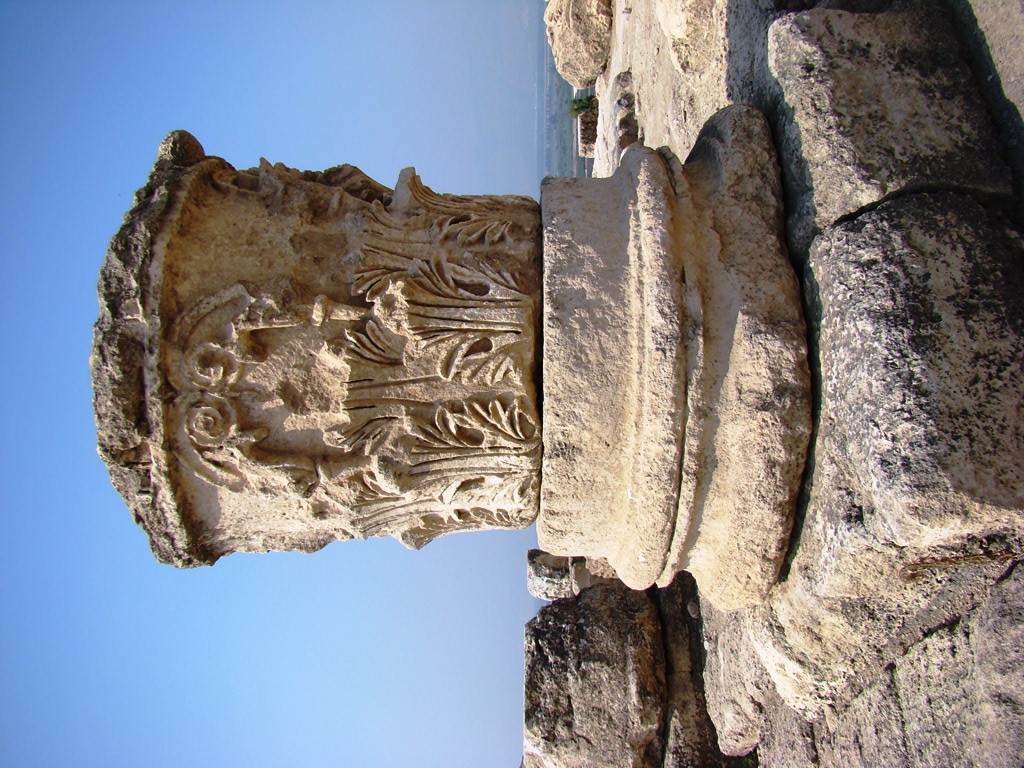
Among the interesting ruins at Omrit are several composite capitals. These are a combination of Corinthians and Ionic orders.

Composite Capital at Omrit. Photo by Leon Mauldin.

Note the beautiful acanthus leaves.

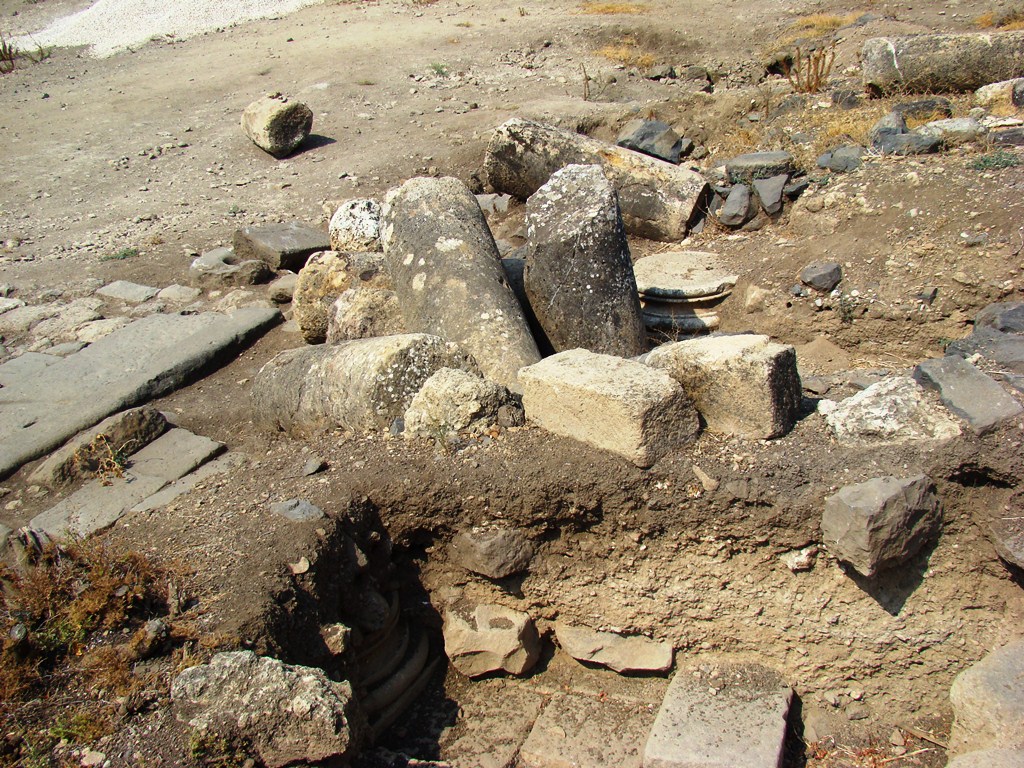
Omrit was destroyed by earthquakes in the 4th and 8th centuries AD.

Evidence of Earthquake at Omrit. Photo by Leon Mauldin.

Click on images for larger view.


Herodian Imperial Cult Temple at Omrit

September 10, 2012

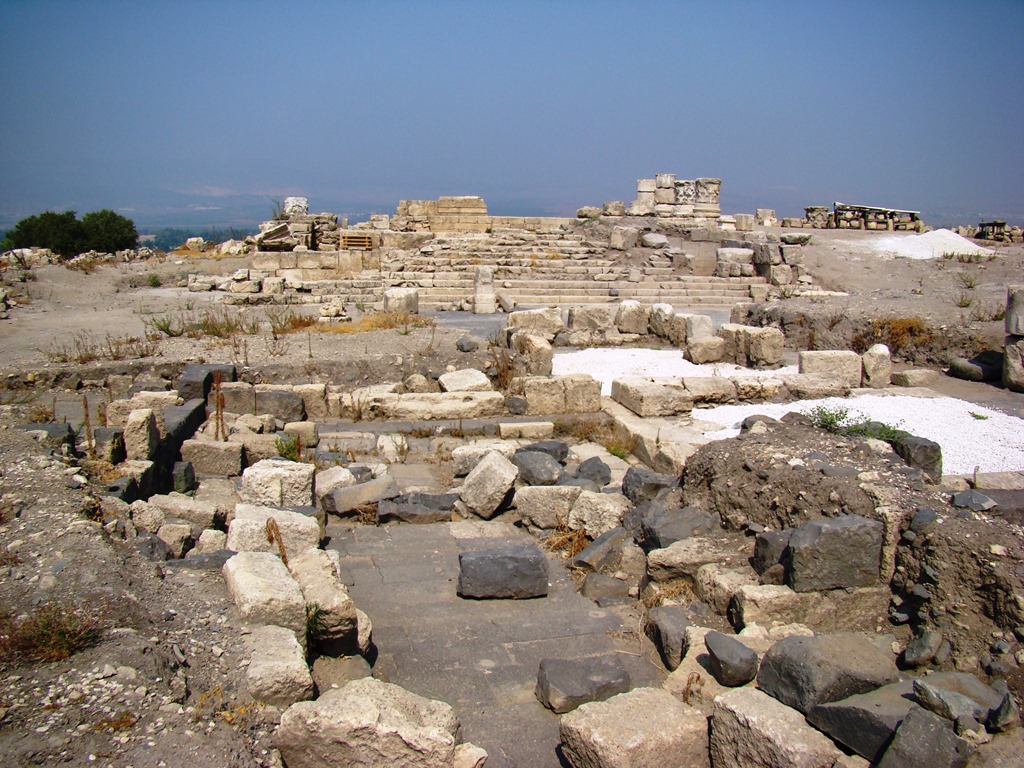
Omrit is located at the foothills of the Hermon Range, and is 2.5 miles from Caesarea Philippi (Banias). It was strategically situated near the crossroads of the Tyre-Damascus and Scythopolis (Beth-shean)-Damascus roads. Impressive remains of a temple devoted to Emperor worship may be seen here.

Herodian Imperial Cult Temple at Omrit. Excavators believe this temple was built by Herod to honor Caesar Augustus. Photo by Leon Mauldin.

I have enjoyed Dr. Carl Rasmussen’s recent posts re: Omrit. He said this was his “favorite site in Israel” (a statement I found very interesting) and just today posted another article on the site, dealing with Emperor worship that took place here in the Bible land. There are interesting implication of Peter’s confession that Jesus was the Christ, the Son of the living God so near a site where the Roman Emperor was worshiped as a “son of god.”

I was glad to visit this site this past September 2011, along with Ferrell Jenkins when he and I made a personal study trip at that time. BTW, Mr. Jenkins is currently directing a tour in Israel. You can follow their journeys here.


“We Remember the Fish” (in good ole Egypt)

August 5, 2012

Memory is an amazing thing. I view it as a gift from God. One of the saddest events imaginable is for one to lose his memory, his ability to remember and recall life’s experiences, what one has learned, etc.

The ability to learn God’s word and apply it to life’s circumstances is a blessing. For that reason I encourage especially young people to spend much time in memorization of God’s word.

If one does not incline his heart Godward, memory can be amazingly quirky. When the nation of Israel was yet in Egypt, all they could think about was their harsh treatment meted out by cruel taskmasters. In their affliction they cried out to God.

God brought them out of Egypt after a mighty display of His power with the 10 plagues, referenced by God Himself as judgments against the gods of Egypt (Exodus 6:6; 12:12). They crossed the Red Sea, and made their way to Sinai, where they encamped for 11 months. During this time they received the Ten Commandments (along with its other laws), built the tabernacle, and consecrated the Aaronic priesthood (Ex. 19-Num. 10).

God was mindful of His covenant with Abraham; at that point it was time to grant Israel possession of the promised land of Canaan. At His command and direction Israel began to march (Num. 10:11ff). But immediately they lost sight of God’s lofty purpose with them and began to murmur (Num. 11:1).

One such instance of murmuring is related:

Now the mixed multitude who were among them yielded to intense craving; so the children of Israel also wept again and said: “Who will give us meat to eat? 5 “We remember the fish which we ate freely in Egypt, the cucumbers, the melons, the leeks, the onions, and the garlic; 6 “but now our whole being is dried up; there is nothing at all except this manna before our eyes!”

Talk about selective memory! Talk about rewriting history! The New Testament identified the problem as a lack of faith (Heb. 3-4). Stephen showed that the heart of the problem was a problem of the heart: “in their hearts they turned back to Egypt” (Acts 7:39).

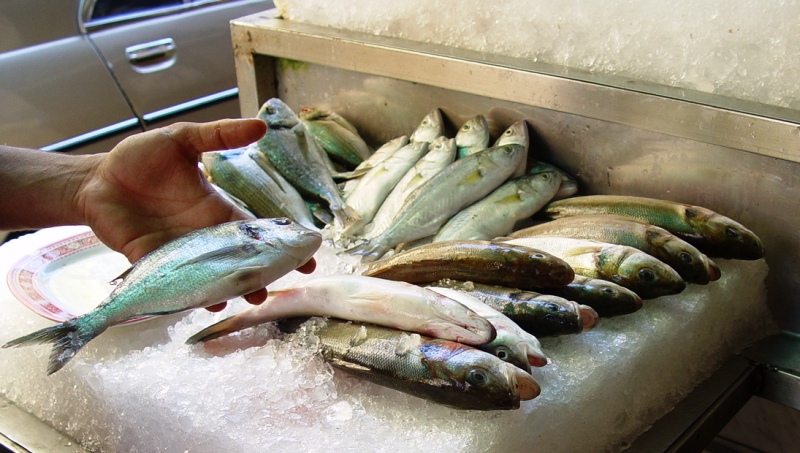
Fish in Alexandria, Egypt. Photo by Leon Mauldin.

I photographed these fresh fish at a local restaurant in Alexandria. My daughter and I dined there.

Israel remembered the fish, but forgot God’s purpose for them. Photo by Leon Mauldin.

Click images for larger view.


Sorrento to Amalfi and on to Rome

March 19, 2012

We had a great day beginning with worship at Poggiomarino, and then to Pompeii for the afternoon. We were able to take some good photos, but I was still unable to post photos on my WordPress site when we arrived at our hotel Flora last evening. Hopefully that will change tonight!

This morning we leave Sorrento for the Amalfi coastline. After lunch we are to make our way to Rome where we will be for the duration of the trip. I’m glad to report that all are currently well, and we are learning a lot, and enjoying the beauty of the country, as well as its people.


Florence American Cemetery

March 16, 2012

Today was spent in the area of Florence, Italy, famed for Michelangelo’s David, among so many other works of art. The visit to the Academy of Fine Arts was interesting.

We also made a short visit to the Florence American Cemetery.

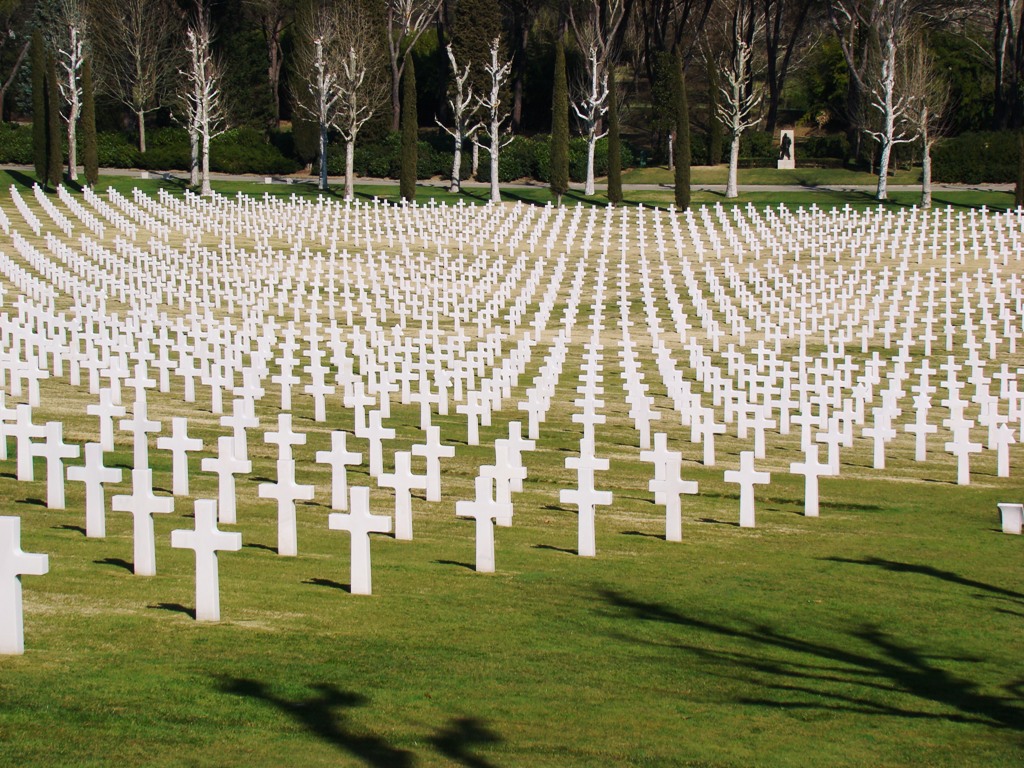
The Florence American Cemetery and Memorial site in Italy covers 70 acres, chiefly on the west side of the Greve “torrente.” The wooded hills that frame its west limit rise several hundred feet. Between the two entrance buildings, a bridge leads to the burial area where the headstones of 4,402 of our military dead are arrayed in symmetrical curved rows upon the hillside. They represent 39 percent of the U.S. Fifth Army burials originally made between Rome and the Alps. Most died in the fighting that occurred after the capture of Rome in June 1944. Included among them are casualties of the heavy fighting in the Apennines shortly before the war’s end. On May 2, 1945, the enemy troops in northern Italy surrendered.

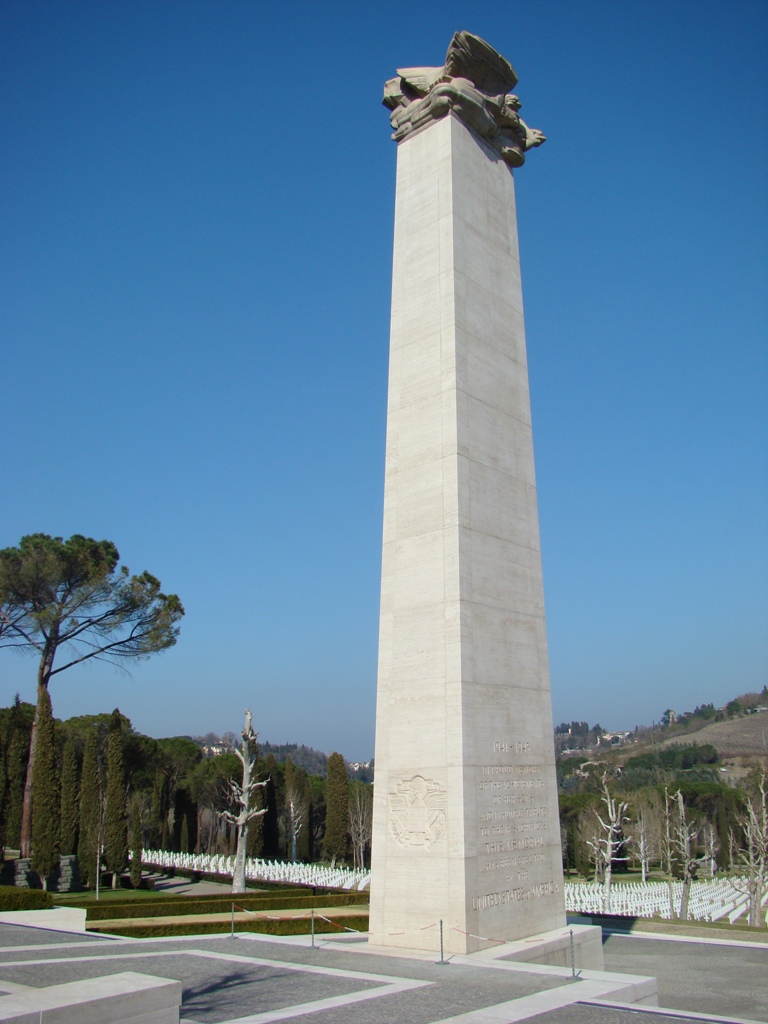
Above the graves, on the topmost of three broad terraces, stands the memorial marked by a tall pylon surmounted by a large sculptured figure. The memorial has two open atria, or courts, joined by the Tablets of the Missing upon which are inscribed 1,409 names. Rosettes mark the names of those since recovered and identified. The atrium at the south end of the Tablets of the Missing serves as a forecourt to the chapel, which is decorated with marble and mosaic. The north atrium contains the marble operations maps recording the achievements of the American armed forces in this region.

The cemetery is open daily to the public from 9 a.m. to 5 p.m. except December 25 and January 1. It is open on host country holidays. When the cemetery is open to the public, a staff member is on duty in the Visitor Building to answer questions and escort relatives to grave and memorial sites http://www.abmc.gov/cemeteries/cemeteries/fl.php

Florence American Cemetery. Photo by Leon Mauldin.

Here is a photo of the above mentioned monument:

Monument at Cemetery. Photo by Leon Mauldin.

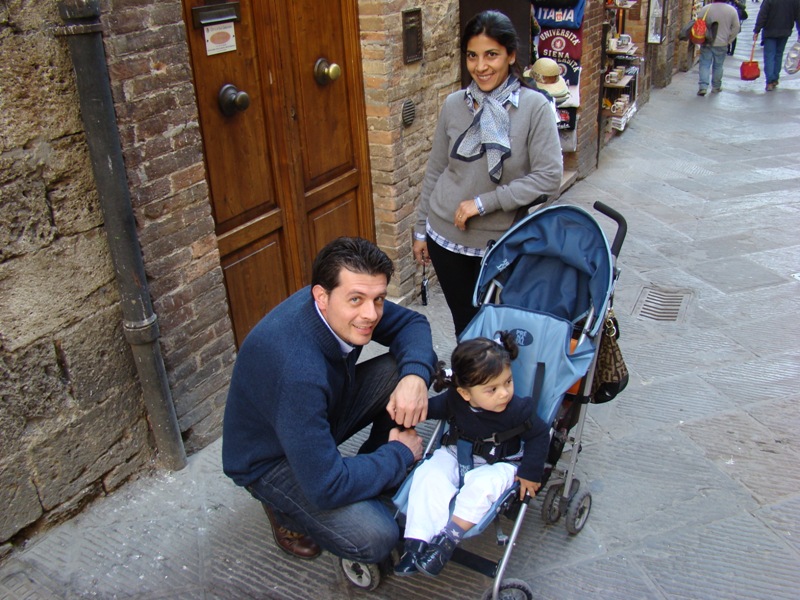
This afternoon some of us went to San Gimignano, a medieval town in a beautiful setting. I asked this family if I could take their photo.

Italian Family in San Gimignano. Photo by Leon Mauldin.

Tomorrow is a full day of travel, from Florence to Sorrento.

Click on images for larger view.


Beth Shean

February 20, 2012

The current issue of BAR features an article entitled, “Was King Saul Impaled on the Wall of Beth Shean?” The author, Amihai Mazar, conducted nine excavation seasons in 1989-1996.

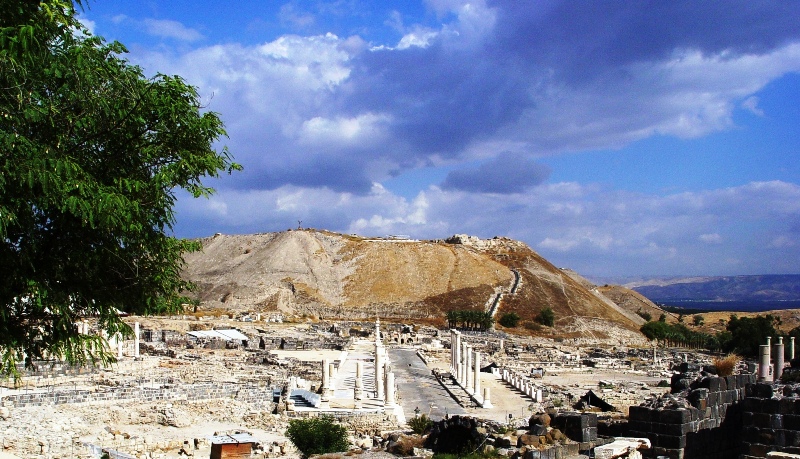
Beth Shean. Photo by Leon Mauldin.

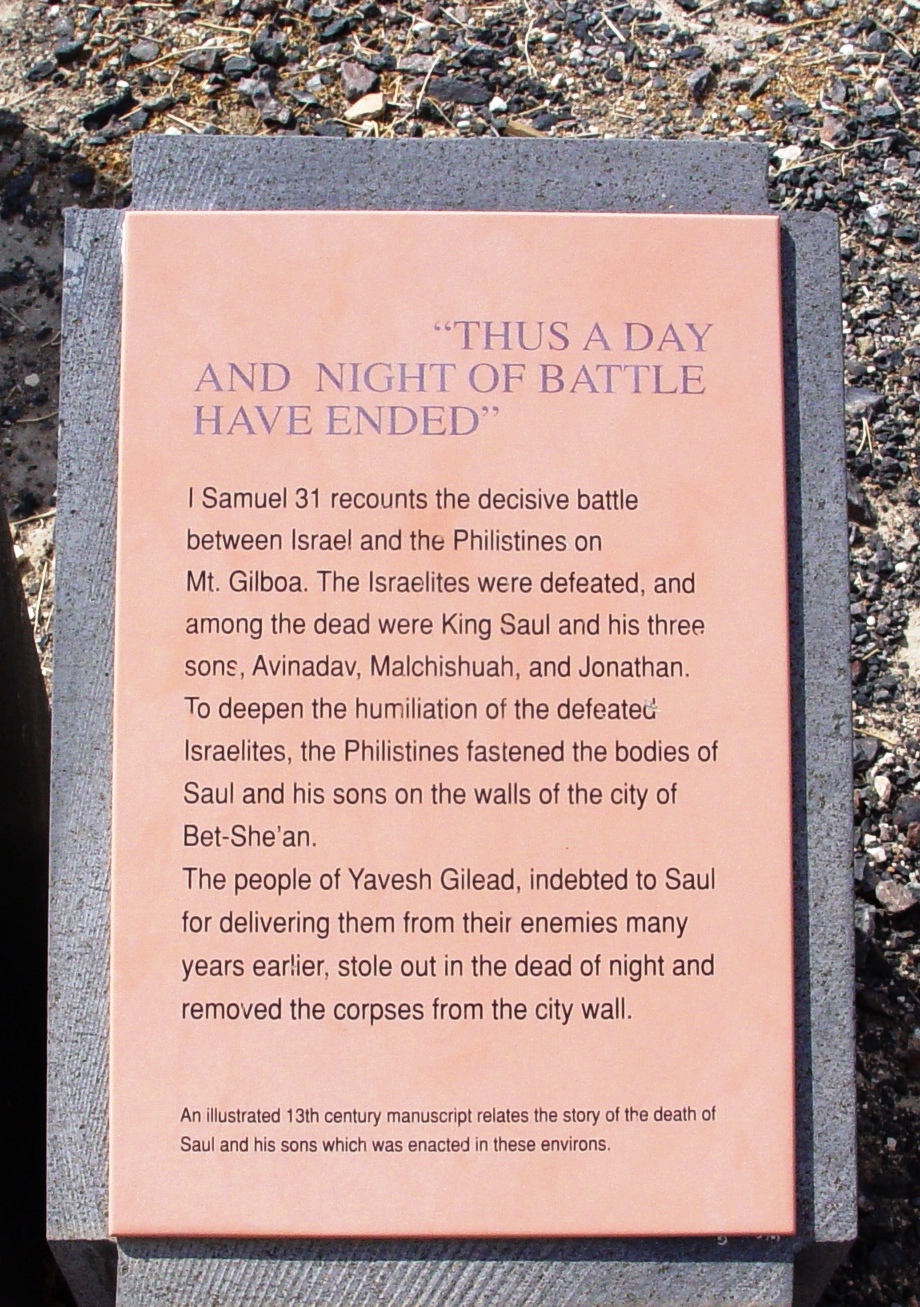
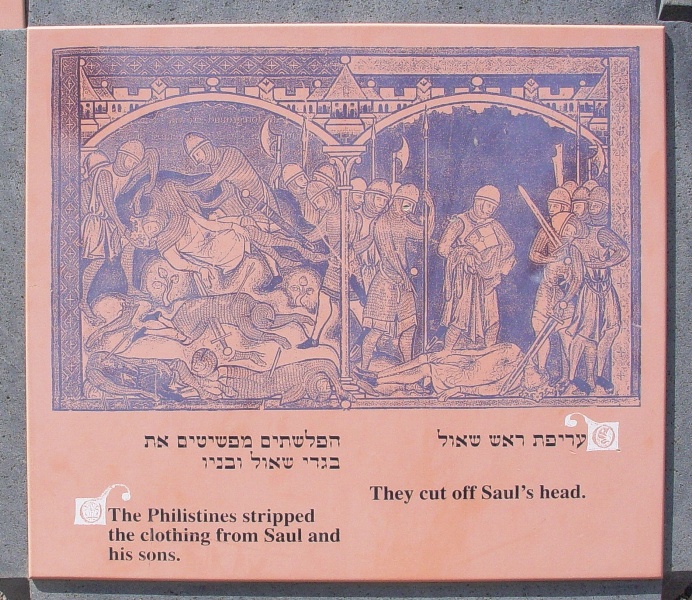
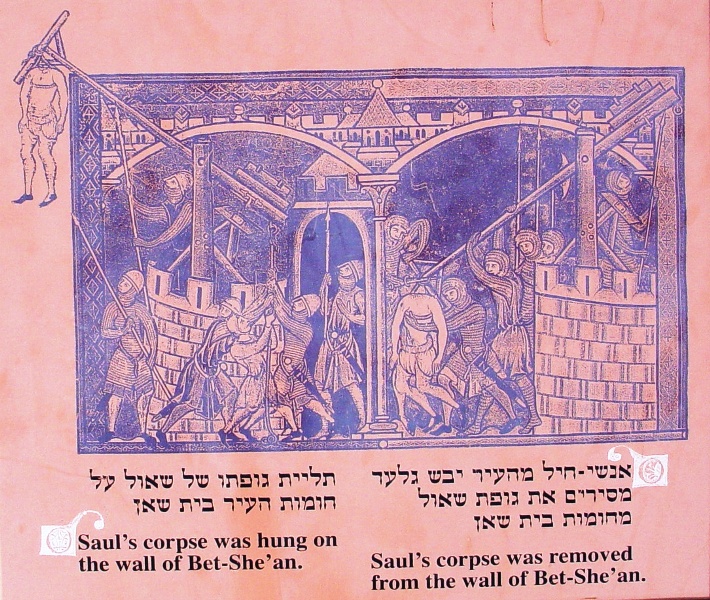
There were some interesting signs on the top of the tel that commemorate Saul’s death at nearby Mt. Gilboa, and the fastening of his body to the walls of Beth Shean (1 Sam. 31).

Info atop tel. Photo by Leon Mauldin.

Illustrations of humiliation to Saul's body. Photo by Leon Mauldin.

Biblical record is in 1 Sam. 31. Photo by Leon Mauldin.

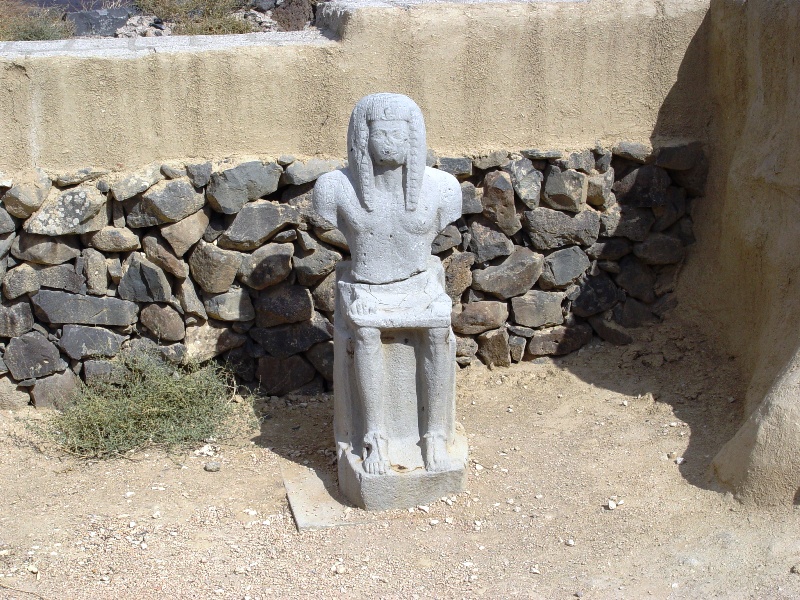
The BAR article explains that excavations have revealed many layers of occupation, including Egyptian.

Statue of Ramesses III. Egyptians occupied Beth Shean prior to Saul's death. Photo by Leon Mauldin.

This statue of Ramesses III (replica) marked the Egyptian victory over the “sea peoples” who invaded the land in the 12 century BC. The statue was made locally, in Egyptian monumental style. Original is in the Israel Museum.

I have previously written on Beth Shean and its strategic significance here.

Click on images for larger view.


Jerusalem, the Kidron, and Mt. of Olives

February 3, 2012

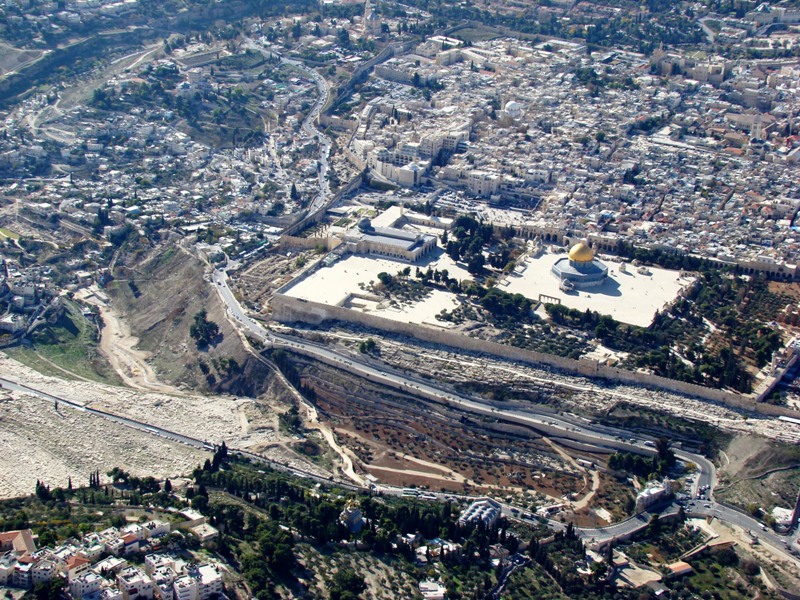
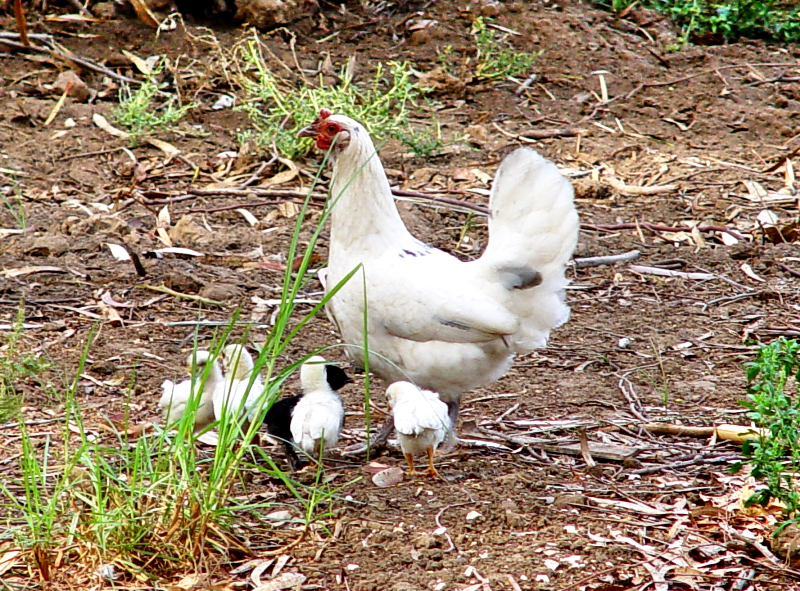
Yesterday’s post featured a photo of a hen with her chicks, imagery used by Jesus Himself in His lamentation over Jerusalem, as He wanted to gather the people unto Himself but they refused. Immediately he left the temple courts, crossed the Kidron with His disciples, and went to the Mount of Olives where He gave what has become known as the “Olivet Discourse” (Matthew 24).

Our photo provides an overview of the setting for these events. You can easily recognize the temple mount. Below that is the Kidron Valley. Next, at bottom of photo is the Mt. of Olives.

Temple Mount in Jerusalem, Kidron, and Mt. of Olives. Photo by Leon Mauldin.

Click on image for larger view.


As a Hen Gathers Her Chicks

February 2, 2012

On the last day of Jesus’ public ministry, the Tuesday before He was betrayed on Thursday night, when Jesus left the temple courts He said,

O Jerusalem, Jerusalem, the one who kills the prophets and stones those who are sent to her! How often I wanted to gather your children together, as a hen gathers her chicks under her wings, but you were not willing! 38 See! Your house is left to you desolate; 39 for I say to you, you shall see Me no more till you say, “Blessed is He who comes in the name of the LORD!” (Matthew 23:37-39).

The imagery of a mother hen shielding her chicks may need explaining to those (city dwellers) who have not seen this display of instinctive protection. It is not “learned behavior;” it is God-given and natural. When danger is perceived, the chicks run to the hen for safety and security.

I could not help but think of the above passage when I saw this scene in Galilee.

Chicks going to the mother hen. Photo by Leon Mauldin.

When I initially approached to take the photo the chicks were a bit scattered. But as I advanced closer, they all went right to the mother hen.

Jesus wanted the inhabitants of Jerusalem to come to Him, for safety, security and for salvation. But sadly, they were not willing. Man is unique to creation. We don’t merely act instinctively. God has given us freedom of choice. He appeals to our heart, He beckons through the Gospel, but He will not force.

For a related post, “Not One Stone Upon Another,” see here.

Click on image for larger view.


Dietary Restrictions in Leviticus

January 2, 2012

We recently referenced the book of Leviticus and its theme of holiness here. Chapter 11 lists the dietary restrictions which Israel was to follow. The basic rule of thumb was this: an animal must have a divided hoof and chew the cud; both were required.

3 Whatever parts the hoof and is cloven-footed and chews the cud, among the animals, you may eat. 4 Nevertheless, among those that chew the cud or part the hoof, you shall not eat these: The camel, because it chews the cud but does not part the hoof, is unclean to you. 5 And the rock badger, because it chews the cud but does not part the hoof, is unclean to you (ESV).

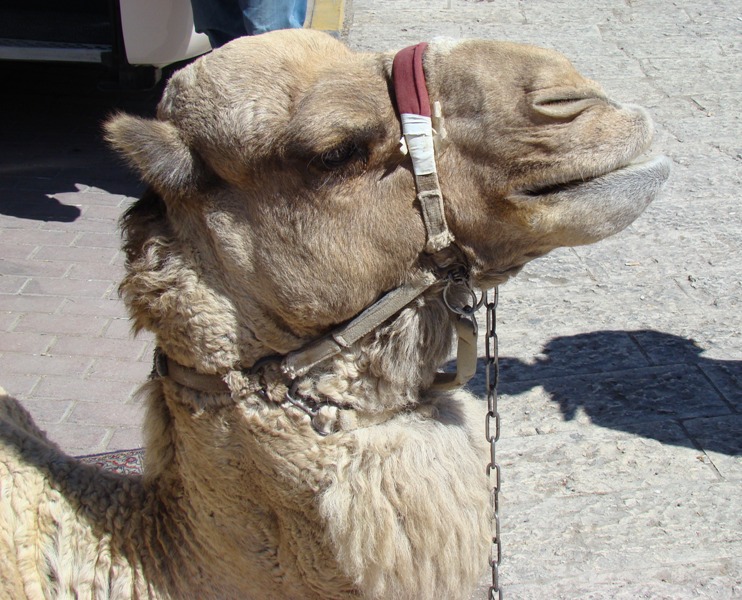
Two examples of animals which met one requirement, but not both, were the camel and the rock badger.

Camel, forbidden in Israel's diet. Photo by Leon Mauldin.

This camel which I photographed in Bethany earlier this year would have been forbidden as food under Mosaic law because though it chews the cud it does not have a divided hoof.

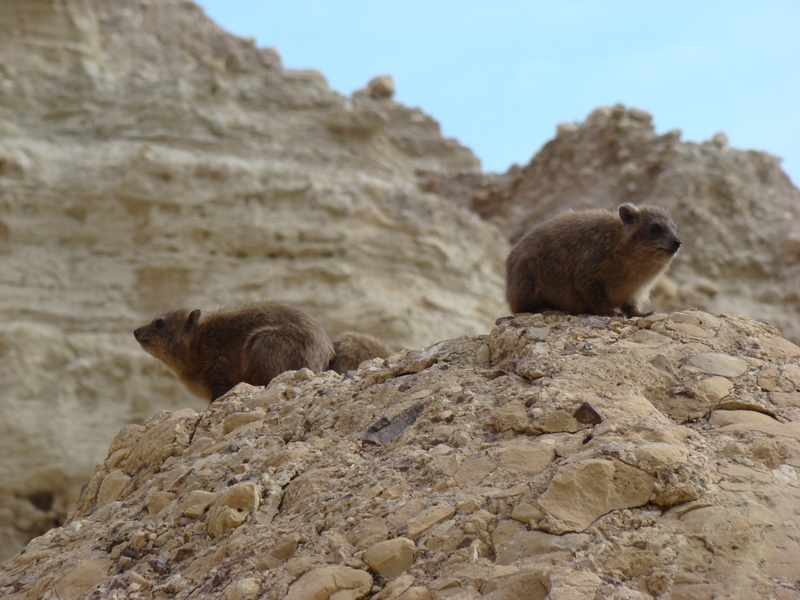
The rock badger was also forbidden.

Rock Badgers at Ein Gedi. Photo by Leon Mauldin.

These rock badgers were at Ein Gedi, where such are commonly seen. Again, such was forbidden in ancient Israel’s diet. Like the camel, it chews the cud, but does not have a parted hoof.

On the other hand, the pig has the parted hoof, but does not chew the cud, so it was unclean also (Lev. 11:7). It occurs to me that I have not photographed any pigs in Israel.

Two observations:

1. God employed such means as these dietary restrictions to mold and shape a special people for His own possession. Such were not the end but the means to an end.

2. In the New Testament such distinctions have been removed.  Jesus said,

Do you not see that whatever goes into a person from outside cannot defile him, since it enters not his heart but his stomach, and is expelled?” ( Thus he declared all foods clean.) (Mark 7:18-19, ESV).

Click on images for larger view.


Lessons from Leviticus?

December 30, 2011

In his preface to his commentary on Leviticus in the New International Commentary on the Old Testament, Gordon Wenham wrote,

Leviticus used to be the first book that Jewish children studied in the synagogue.  In the modern Church it tends to be the last part of the Bible anyone looks at seriously (vii).

The first time I read that statement I did a double-take. Studying Leviticus first in synagogue? What did they see back then that might be overlooked today?

In my lecture at Florida College (entitled “Trusting in gods that Cannot Save,” 2010) I made reference to the above quote and then observed,

The real heart of Leviticus is contained in verses such as 20:26: “Thus you are to be holy to Me, for I the LORD am holy; and I have set you apart from the peoples to be Mine.” Everything about how to approach God in worship, what to eat, wear, plant, along with all the other laws, had to do with that one principle: by all of these things God was teaching them that they were different from the world; they were His special people; they were to partake of His holiness.  Do you agree that this is not a bad idea, to teach a child from infancy that he is special to the Lord; that we are different from the world; that our concern is to be seeking and doing God’s will? (p.76).

The book of Leviticus was not just for the priests. In the opening verses, God said,

Speak to the sons of Israel and say to them, ‘When any man of you brings an offering to the LORD, you shall bring your offering of animals from the herd or the flock (Lev. 1:2, NASB).

The instructions are to the sons of Israel. Re: “Any man of you” the NET notes,

It is the Heb “a man, human being” (‘adam), which in this case refers to any person among “mankind,” male or female, since women could also bring such offerings.

So here is a book that was for everyone during that dispensation, whether priests or other Israelites, men or women.

We are not contending that we are under the specific legislation of that time, but Romans 15:4 teaches,

For whatever was written in former days was written for our instruction, that through endurance and through the encouragement of the Scriptures we might have hope (ESV).

Perhaps you would like a brief outline and chapter content for the book of Leviticus:

Leviticus Outline and Chapter Content

I.          LAWS OF SACRIFICE 1-7

II.        HISTORICAL 8-10

III.       LAWS OF PURITY 11-15

IV.       ANNUAL DAY OF ATONEMENT

V.        HOLINESS OF PEOPLE 17-20

VI.       HOLINESS OF PRIESTS & LAWS RE: SACRIFICES 21-22

VII.     LAWS CONCERNING FEASTS 23-25

VIII.    PROMISES & WARNINGS 26

IX.       LAWS CONCERNING VOWS 27

1. Burnt offering

2. Meal offering

3. Peace offering

4. Sin offering

5. Trespass offering

6-7 Laws of Sacrifice given to priests

8. Consecration of priests

9. Priests begin to serve

10. Death of Nadab & Abihu

11. Clean & unclean foods

12. Purification after childbirth

13-14. Laws concerning Leprosy

15. Laws concerning normal & abnormal issues

16. Day of Atonement

17. Eating of blood forbidden

18. Laws of moral purity

19. Miscellaneous laws

20. Punishment for disobedience

21-22. Laws of holiness for priests; laws re: sacrifices

23. Sabbath, 3 annual feasts, day of atonement

24. Lamps, showbread; punishment for blasphemy

25. Year of Jubilee

26. Blessings of obedience; consequences of disobedience

27. Laws concerning vows