The Goddess Sakhmet

October 9, 2014

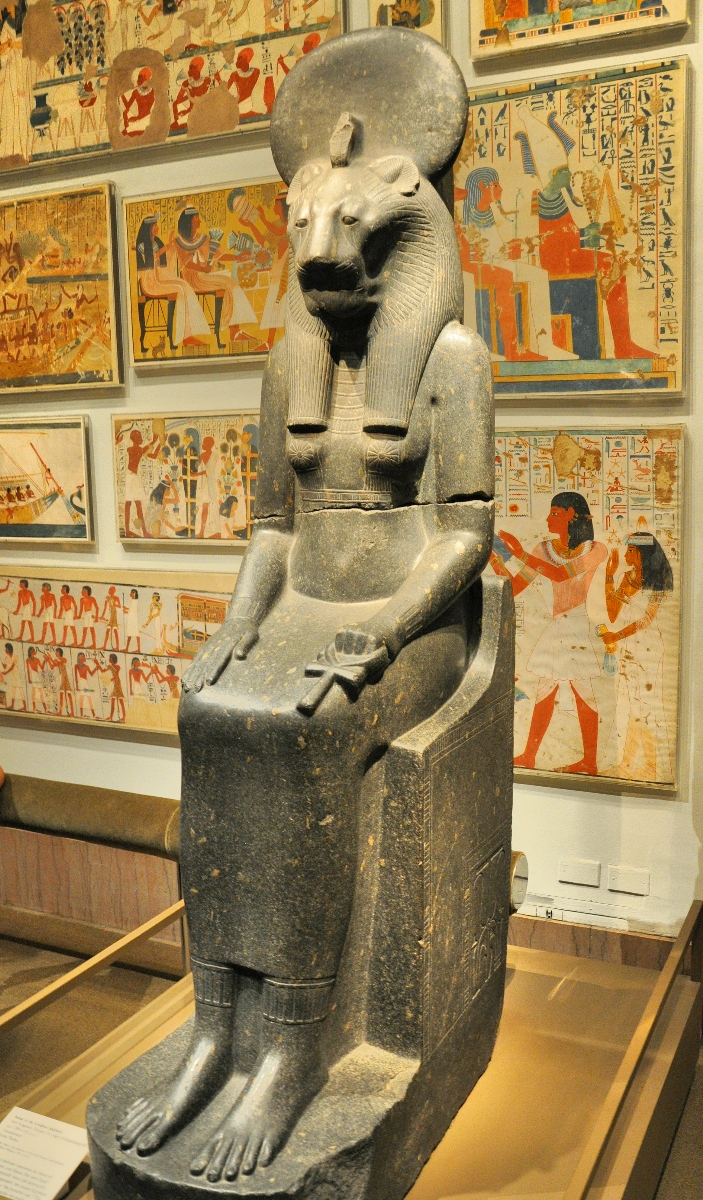
During Egypt’s New Kingdom Period, in the 18th dynasty, Amenhotep III (ca. 1390-1352 BC) commissioned hundreds of statues of the goddess Sakhmet for his mortuary temple in western Thebes. These statues were intended as monumental prayers to appease the goddess and guarantee peace and health.

Goddess Sakhmet. Metropolitan Museum, NY. Photo by Leon Mauldin.

Goddess Sakhmet. Metropolitan Museum, NY. Photo by Leon Mauldin.

“The goddess Sakhmet represents the forces of violence, disaster, and illness. Her lion’s head expresses her potentially fierce and destructive character and, appropriately, her ancient Egyptian name, Sakhmet, means ‘the powerful one.’ The sun disk on her head identifies the goddess as the daughter of the sun god Re” (from museum placard).

This puts me in mind of what YHWH said prior to the 10th of the ten plagues of Egypt: “and on all the gods of Egypt I will execute judgments: I am the LORD” (Ex. 12:12).

Click image for larger view.


Some Sources for Dealing with Ron Wyatt’s Claims

September 28, 2013

I recently received a question from a friend, which says in part:

It concerns the crossing of the Read Sea. There is an awful lot of talk about the “traditional” Red Sea crossing maps versus the so-called “archaeological findings” purportedly found at the Gulf of Aqaba.

. . . However, some of our brethren have begun using maps and pictures that show what is believed to be possibly the “real Mt. Sinai” with charred rock covering its cap, a “split rock” in the wilderness, chariot wheels, etc… (I’m not buying it.) All of these things I see look like the work of Ron Wyatt, but all sorts of people have these things on their internet sites.

. . . All of that said, I was wondering if you had any material or resources dealing with the subject head on. I do not plan on making this an issue… nor do I plan on bringing anyone else’s name into the mix. I would just like to be able to give a “ready defense” if I am ever called upon. I’d greatly value your input on the matter. Thank you.
Others more qualified that I have dealt with the claims of Mr. Wyatt. As a starting point I can recommend the following sources: Ferrell Jenkins has an article entitled, “Pharaoh’s Chariot Wheels and Other Things that Won’t Float — Examining the Claims of the Late Ron Wyatt ,” that you can access here, plus another article entitled, “Pseudo Archaeologists” here. These articles have numerous related links for further reading. Additionally I would recommend Gordan Franz’s site, Life and Land, here. Use the search box. He has several entries under “Cracked Pot Archaeology.” The use of caution in using Mr. Wyatt’s material/claims would be prudent.
While no one can be certain of the exact location of Israel’s crossing. the best evidence would be somewhere along the Suez.

From Sinai looking across Suez to Egypt. Photo by Leon Mauldin.

From Sinai looking across Suez to Egypt. Photo by Leon Mauldin.

I took the above photo in 2003, having crossed the Suez. We are standing on the Sinai side looking back across Egypt.

I personally conclude that the traditional Mt. Sinai (Jebel Musa) best fits the biblical criteria.

Click photo for larger view.


The Egyptian God Serapis

September 14, 2013

I continue to be amazed at how far-flung was the influence and reach of various gods in biblical times. For example, the god Serapis, the Egyptian god of healing, was widely worshiped, and far beyond the territory of Egypt. 
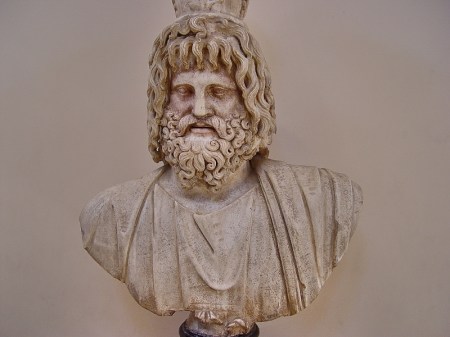
Egyptian god Serapis. Alexandria Museum, Alexandria, Egypt. Photo by Leon Mauldin.

Egyptian god Serapis. Alexandria Museum, Alexandria, Egypt. Photo by Leon Mauldin.

Serapis was worshiped at Pergamum in biblical Asia Minor, where the ruins of his impressive temple can be seen. See our post here.

In an entry, “Idols, Meats Offered to” in the New Bible Dictionary R. P. Martin gives this info under “The Background,” and note his specific reference to Serapis (the Serapeum mentioned is a temple devoted to the worship of Serapis):

Evidence for the practice of a meal in the temple is found in the following well-known Oxyrhynchus papyrus which Lietzmann regards as ‘a striking parallel’ to the reference in 1 Cor. 10:27: ‘Chaeremon invites you to dinner at the table of the lord Serapis (the name of the deity) in the Serapeum tomorrow the 15th at the 9th hour’ (= 3 p.m.) (quoted and discussed in Chan-Hie Kim’s essay, ‘The Papyrus Invitation’, JBL 94, 1975, pp. 391–402). An invitation to a meal of this character, whether in the temple or in a private house, would be commonplace in the social life of the city of Corinth, and would pose a thorny question for the believer who was so invited. Other aspects of life in such a cosmopolitan centre would be affected by the Christian’s attitude to idol-meats. Attendance at the public festivals, which opened with pagan adoration and sacrifice, would have to be considered. Membership of a trade guild, and therefore one’s commercial standing, and public-spiritedness were also involved, as such membership would entail sitting ‘at table in an idol’s temple’ (1 Cor. 8:10). Even daily shopping in the market would present a problem to the thoughtful Christian in Corinth. As much of the meat would be passed on from the temple-officials to the meat-dealers and by them exposed for sale, the question arose: was the Christian housewife at liberty to purchase this meat which, coming from sacrificial animals which had to be free from blemish, might well be the best meat in the market? Moreover, there were gratuitous banquets in the temple precincts which were a real boon to the poor. If 1 Cor. 1:26 means that some of the Corinthian church members belonged to the poorer classes, the question of whether they were free or not to avail themselves of such meals would have been a practical issue.

This information can help clarify some of the concerns expressed in the letter of 1 Corinthians.

Consider also the situation at Thessalonica, where evidence of Serapis worship (as well as other gods) has been discovered. This would illuminate 1 Thess. 1:9 which states, “For they themselves declare concerning us what manner of entry we had to you, and how you turned to God from idols to serve the living and true God.”

The 1939 discovery of a Serapeum offers an indication of the religious life in Thessalonica (Donfried, Paul, Thessalonica and Early Christianity, 22–23). Typically, a Serapeum functions as a temple dedicated to the worship of Serapis. The discovery of Egyptian idols, including Serapis, at the site has led to its generic designation as a Serapeum. Nearly seventy inscriptions related to the worship of Egyptian gods have been discovered in the city (Witt, “The Egyptian Cults,” 324–33)—35 of which come from the Serapeum. Other finds at the location include fragmentary statues of Serapis and Isis and Roman statues of Aphrodite, Isis, and Harpocrates (Hendrix, “Thessalonica,” 523; Vickers, “Hellenistic Thessaloniki,” 164–65).
The relatively diminutive size of the Serapeum (11 meters x 8 meters), coupled with the large number of artifacts related to Egyptian deities, indicates that this building could not have been the primary temple for Serapis in Thessalonica. Two inscriptions from the site to Serapis and Osiris indicate it probably functioned as a healing shrine (Koester, “Egyptian Religion,” 134–38). The early church’s emphasis on divine healing (and exclusivity) would have conflicted with the Serapis religious groups and numerous other such groups in the city. .

The mixture of deities at the Serapeum and throughout the city illustrates the syncretic tendencies of Hellenistic Thessalonica. These tendencies did not wane with the shift to Roman rulership, and accentuate the severity of Paul’s encouragement that the Thessalonian Christians “turned to God from idols to serve the living and true God” (1 Thess. 1:9) (The Lexham Bible Dictionary).

Click on image for larger view.


Straw in the Bricks

February 7, 2013

Recently I was reading the text of Exodus 5 which tells of Pharaoh’s initial reaction to Moses’ request that Israel be permitted to journey into the wilderness to worship Yahweh:

That same day Pharaoh commanded the slave masters and foremen who were over the people: 7 “You must no longer give straw to the people for making bricks as before. Let them go and collect straw for themselves. 8 But you must require of them the same quota of bricks that they were making before. Do not reduce it, for they are slackers. That is why they are crying, ‘Let us go sacrifice to our God.’ 9 Make the work harder for the men so they will keep at it and pay no attention to lying words!” (Ex. 5:6-9). 

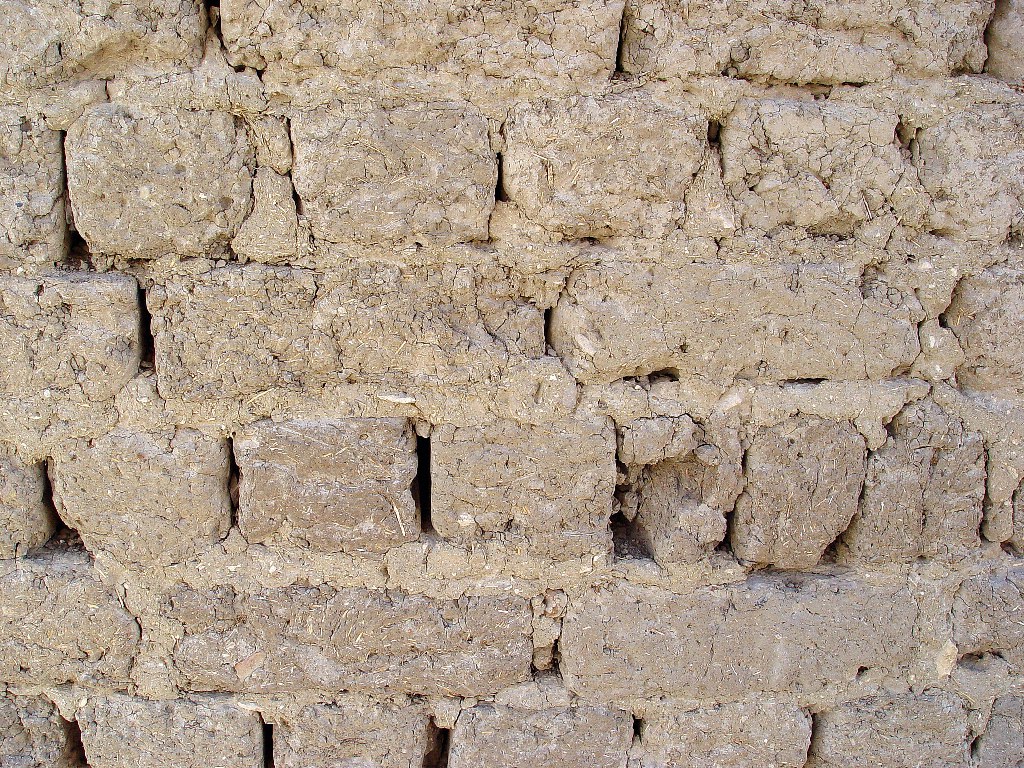
That put me in mind of some bricks I saw in Egypt at Luxor. In these mud bricks you could clearly see light-colored bits of straw.

Bricks made of mud mixed with straw in Luxor, Egypt. Photo by Leon Mauldin.

Bricks made of mud mixed with straw in Luxor, Egypt. Photo by Leon Mauldin.

W. C. Kaiser writes, “Chopped straw was mixed in with the clay to make the bricks more pliable and stronger by first binding the clay together and then by decaying and releasing a humic acid similar to glutamic or gallotanic acid” (The Expositor’s Bible Commentary, Volume 2, p. 337).

Click on image for larger view.


“We Remember the Fish” (in good ole Egypt)

August 5, 2012

Memory is an amazing thing. I view it as a gift from God. One of the saddest events imaginable is for one to lose his memory, his ability to remember and recall life’s experiences, what one has learned, etc.

The ability to learn God’s word and apply it to life’s circumstances is a blessing. For that reason I encourage especially young people to spend much time in memorization of God’s word.

If one does not incline his heart Godward, memory can be amazingly quirky. When the nation of Israel was yet in Egypt, all they could think about was their harsh treatment meted out by cruel taskmasters. In their affliction they cried out to God.

God brought them out of Egypt after a mighty display of His power with the 10 plagues, referenced by God Himself as judgments against the gods of Egypt (Exodus 6:6; 12:12). They crossed the Red Sea, and made their way to Sinai, where they encamped for 11 months. During this time they received the Ten Commandments (along with its other laws), built the tabernacle, and consecrated the Aaronic priesthood (Ex. 19-Num. 10).

God was mindful of His covenant with Abraham; at that point it was time to grant Israel possession of the promised land of Canaan. At His command and direction Israel began to march (Num. 10:11ff). But immediately they lost sight of God’s lofty purpose with them and began to murmur (Num. 11:1).

One such instance of murmuring is related:

Now the mixed multitude who were among them yielded to intense craving; so the children of Israel also wept again and said: “Who will give us meat to eat? 5 “We remember the fish which we ate freely in Egypt, the cucumbers, the melons, the leeks, the onions, and the garlic; 6 “but now our whole being is dried up; there is nothing at all except this manna before our eyes!”

Talk about selective memory! Talk about rewriting history! The New Testament identified the problem as a lack of faith (Heb. 3-4). Stephen showed that the heart of the problem was a problem of the heart: “in their hearts they turned back to Egypt” (Acts 7:39).

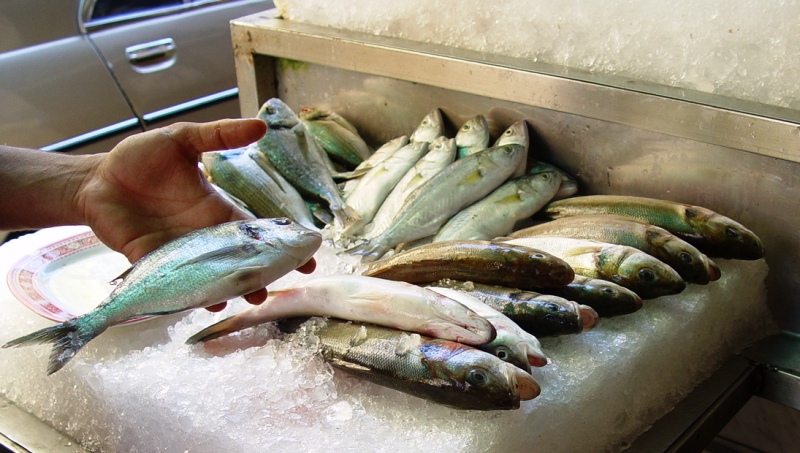
Fish in Alexandria, Egypt. Photo by Leon Mauldin.

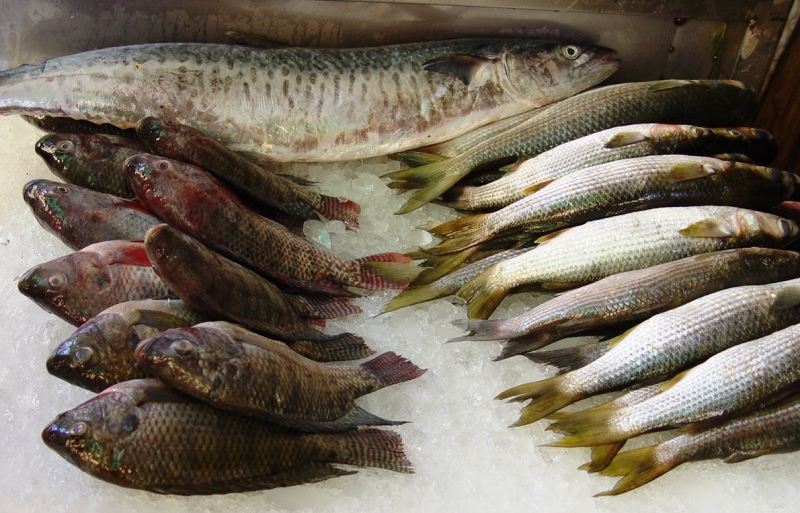
I photographed these fresh fish at a local restaurant in Alexandria. My daughter and I dined there.

Israel remembered the fish, but forgot God’s purpose for them. Photo by Leon Mauldin.

Click images for larger view.


Court of Amenhotep III at Thebes

July 6, 2012

In the oracle against Egypt, God said, “I will make Pathros desolate, Set a fire in Zoan and execute judgments on Thebes” (Ezekiel 30:14). “The phenomenal city [Thebes]was the center of Upper Egypt, and the seat of government during most of the time of Egyptian world power” (Bible and Spade, Vol. 7, p. 33).

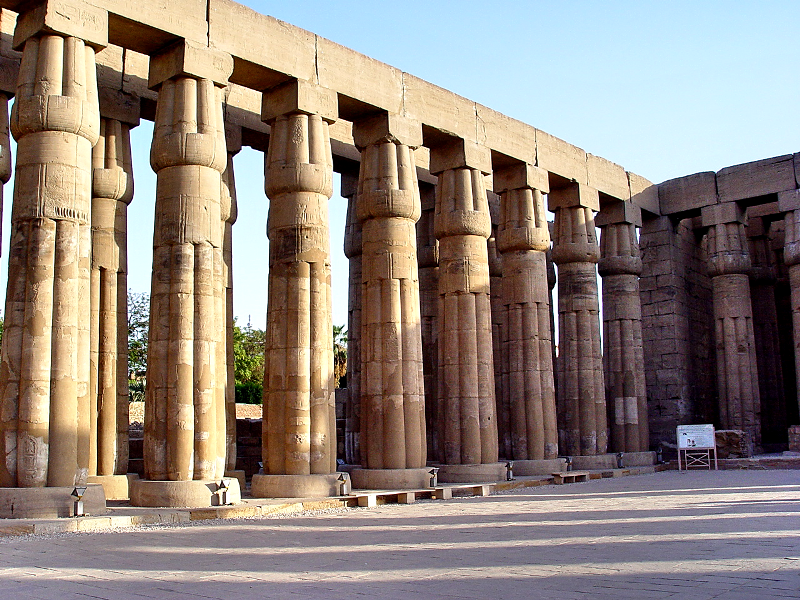
This shot of the Luxor temple at Thebes shows the court of Amenhotep III (reigned 1390-1352 BC), with its double rows of massive columns.

Court of Amenhotep III, at Luxor, biblical Thebes. Photo by Leon Mauldin.

An article in Biblical Archaeological Review entitled “Egyptian Finds Uncovered in Jaffa,” by Judith Sudilovsky contained an interesting reference to Amenhotep III. The mention of Jaffa (biblical Joppa) in this excavation report illustrates the fact that Egyptian rule/influence often included the land of Canaan (and far beyond):

. . . The team also found a 3.5-inch Egyptian scarab, dating to the reign of Pharaoh Amenhotep III (1390–1352 B.C.). The eight lines, engraved in hieroglyphs, enumerate the pharaoh’s achievements, proclaiming his prowess as a hunter and declaring that he had killed 102 lions during the first ten years of his reign. According to the team’s Egyptologist, Deborah Sweeney, such seals were typically sent to the edges of the Egyptian kingdom to praise and glorify the king (BAR 26:02 March/April 2000).

Click image for larger view.


Colossi of Memnon

June 13, 2012

Jesuit Claude Sicard (1677-1726) was commissioned by the French regent Philippe d’Orléans to investigate and identify ancient monuments in Egypt. Sicard visited Upper Egypt four times and was the first in modern times to identify the site of Thebes as well as the colossi of Memnon and the Valley of the Kings.

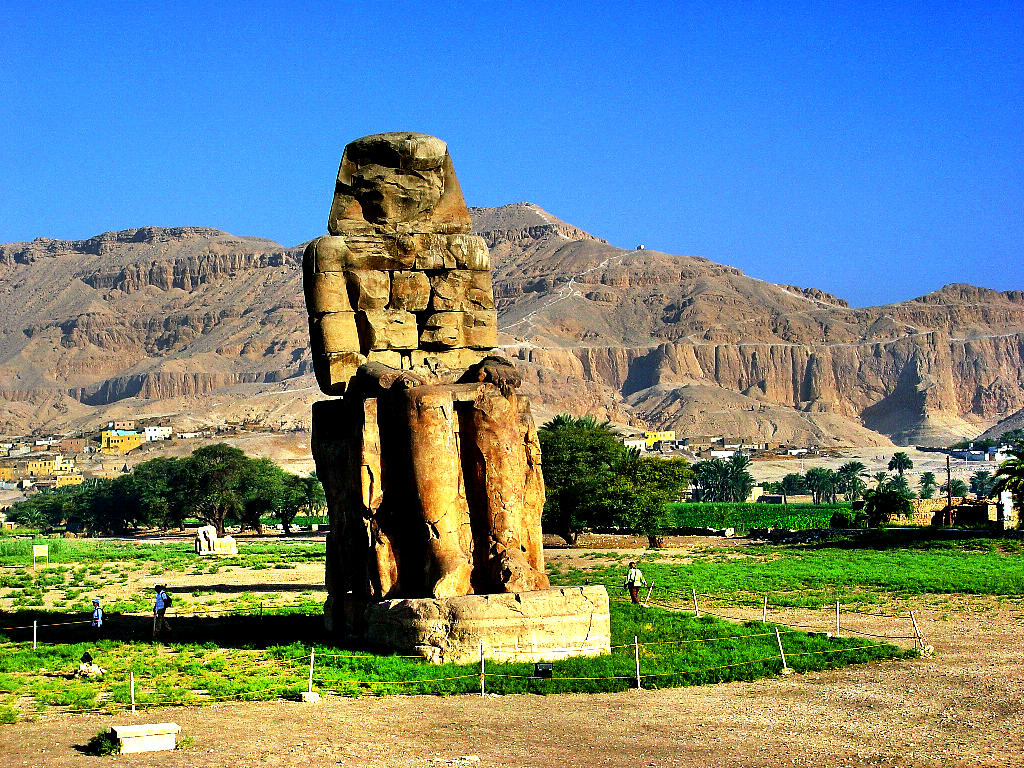
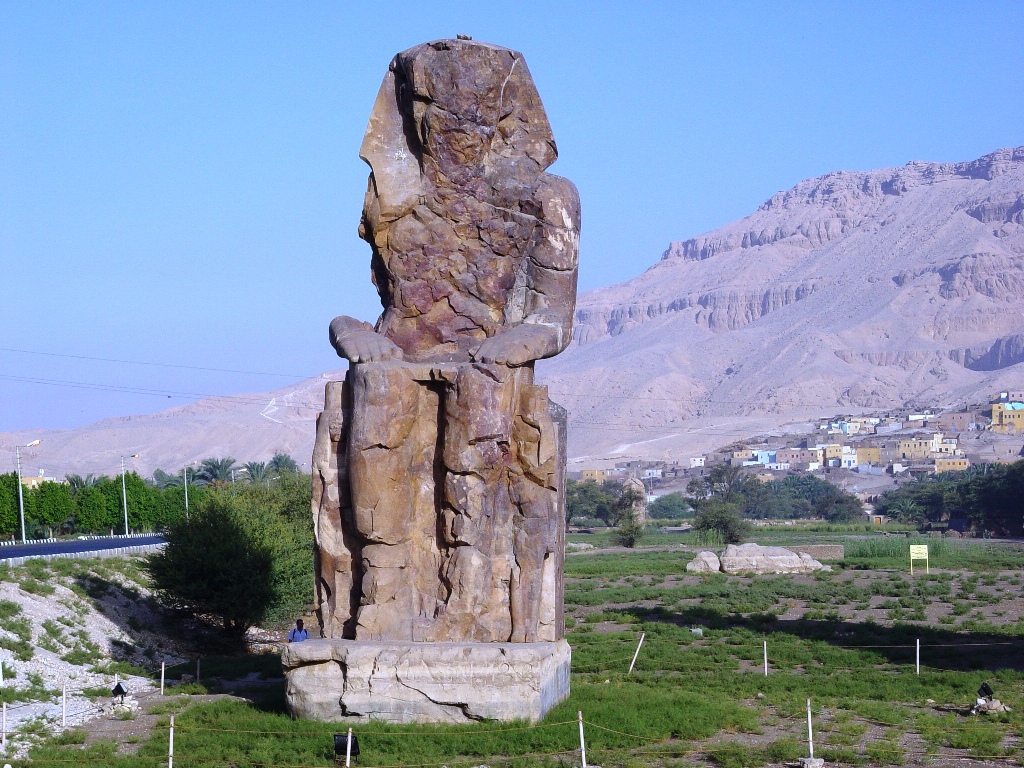
The Memnon Colossi mark the site of the temple of Pharaoh Amenophis III (reigned 1391-1353 BC, Baines & Malek, p. 36). These two massive stone statues depict the Pharaoh, and are positioned in the Theban necropolis, on the west side of the Nile across from Luxor.

Colossi of Memnon. Photo by Leon Mauldin.

This statue is 55 feet tall, on a base of about 5 feet in height. See people on ground for scale. Nebuchadnezzar’s image (Daniel 3) towered 30 feet higher than this!

Colossi of Memnon. Photo by Leon Mauldin.

In his commentary on Daniel, Albert Barnes makes an interesting point regarding the great image Nebuchadnezzar made (Daniel 3) and the possible relation of that to the colossi of Memnon:

It is not impossible that Nebuchadnezzar was led, as the editor of Calmet’s Dictionary has remarked (Taylor, vol. iii. p. 194), to the construction of this image by what he had seen in Egypt. He had conquered and ravaged Egypt but a few years before this, and had doubtless been struck with the wonders of art which he had seen there. Colossal statues in honour of the gods abounded, and nothing would be more natural than that Nebuchadnezzar should wish to make his capital rival everything which he had seen in Thebes. Nor is it improbable that, while he sought to make his image more magnificent and costly than even those in Egypt were, the views of sculpture would be about the same, and the figure of the statue might be borrowed from what had been seen in Egypt.

It is not impossible that Nebuchadnezzar was led, as the editor of Calmet’s Dictionary has remarked (Taylor, vol. iii. p. 194), to the construction of this image by what he had seen in Egypt. He had conquered and ravaged Egypt but a few years before this, and had doubtless been struck with the wonders of art which he had seen there. Colossal statues in honour of the gods abounded, and nothing would be more natural than that Nebuchadnezzar should wish to make his capital rival everything which he had seen in Thebes. Nor is it improbable that, while he sought to make his image more magnificent and costly than even those in Egypt were, the views of sculpture would be about the same, and the figure of the statue might be borrowed from what had been seen in Egypt. An illustration of the subject before us is furnished by the preceding engraving, from a photograph, of the two celebrated colossal figures of Amunoph III. standing in the plains of Goorneh, Thebes, one of which is known as the Vocal Memnon. (Barnes, A.,  Notes on the Old Testament: Daniel, Volume 1, p.204).

Regarding the meaning of the word Memnon,

Memnon was a hero of the Trojan War, a King of Ethiopia who led his armies from Africa into Asia Minor to help defend the beleaguered city but was ultimately slain by Achilles. The name Memnon means “Ruler of the Dawn”, and was probably applied to the colossi because of the reported cry at dawn of one of the statues. Eventually, the entire Theban Necropolis became generally referred to as the Memnonium (Wikipedia).

Click images for larger view.


Sacred Lake at Karnak

July 5, 2011

Biblical Thebes (Ezekiel 30:14-16) is identified with Luxor, Egypt. Karnak was a vast temple complex dedicated primarily to the god Amun.

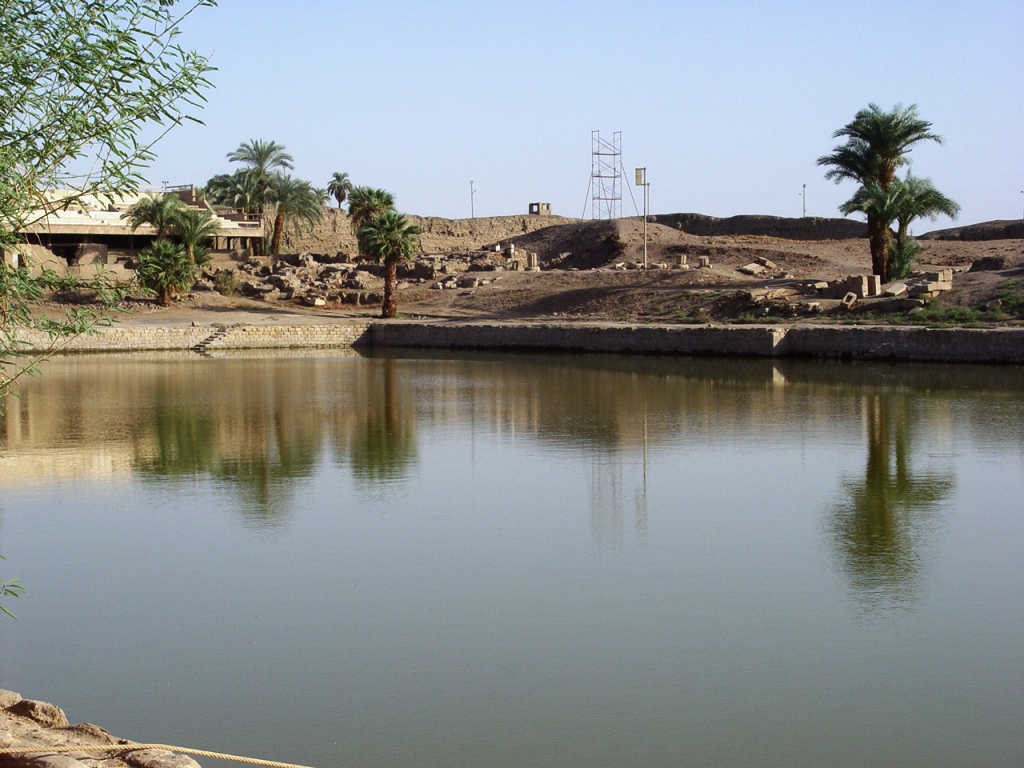
Our photo shows the sacred lake of the Karnak Temple.

Sacred Lake at Karnak Temple. Photo ©Leon Mauldin.

Todd Bolen writes:

Every Egyptian temple had a sacred lake, and the one at Karnak Temple was the largest. Used daily by the priests for purification, the sacred lake was also used in festivals during which images of the gods would travel across the lake in boats. The lake measures 130 x 77 meters and was surrounded by storerooms and homes of the priests.

Our view here of the sacred lake is to the southwest.

Click on image for larger view.


Gods of Egypt: Imhotep

June 4, 2011

In previous posts we have noted that the plagues of Egypt in Exodus were judgments against the gods of Egypt (Exodus 6:6; 12:12). See here and here.

In the plagues God was showing that the false gods were impotent and that Yahweh alone was the true and living God.

In some of the plagues it is possible that more than one Egyptian god may have been targeted. Some scholars believe that Imhotep, the god of medicine, was shown to be powerless with such plagues as the boils.

Imhotep, god of medicine. Brooklyn Museum. Photo by Leon Mauldin.

Imhotep, the polymath and architect of genius employed by Djoser, was deified soon after his death. Imhotep and Amenophis-sa-Hapu, who was Amenophis III’s architect, became a popular pair of gods for the everyday cares of the man in the street, especially in the field of medicine. In common with Thoth, Imhotep became the special tutelary god of scribes and learned men. The Greeks equated him with Asclepius (Egypt, Phaidon, 403-404).

Tomorrow morning I am to begin a 6-Day meeting at Kimberly, north of Birmingham, AL.


Saqqara, The Step Pyramid

May 13, 2011

In our local congregation we are currently engaged in a study of Exodus. The emphasis of the book is that of God’s covenant faithfulness. ‘El Shaddai, God Almighty, who promised Abraham, Isaac and Jacob that He would make of them a great nation, and give unto them the land of Canaan, now more fully reveals Himself as YHVH, Yahweh, Jehovah. He would redeem His covenant people. This He did “with outstretched hand,” demonstrating to all the Egyptians, as well as to Israel that He was indeed the LORD.

Israel was a numerous people when the book of Exodus opens, and through His great power God brought them to Mt. Sinai, where they would be for about eleven months. During that time God gave the 10 Commandments as well as the accompanying laws and ordinances, the tabernacle was built, and the Aaronic priesthood was consecrated.

The events of Scripture do not happen in a vacuum; we always do well to consider the historical and geographical setting.  The setting for Exodus 1-13 is Egypt.

When you think of Egypt, you likely think of the pyramids. Sometimes people erroneously believe that the Israelites were used as forced labor to construct the pyramids. Actually the pyramids were built before Abraham! The Israelites built storage cities (Ex. 1:11, NASB).

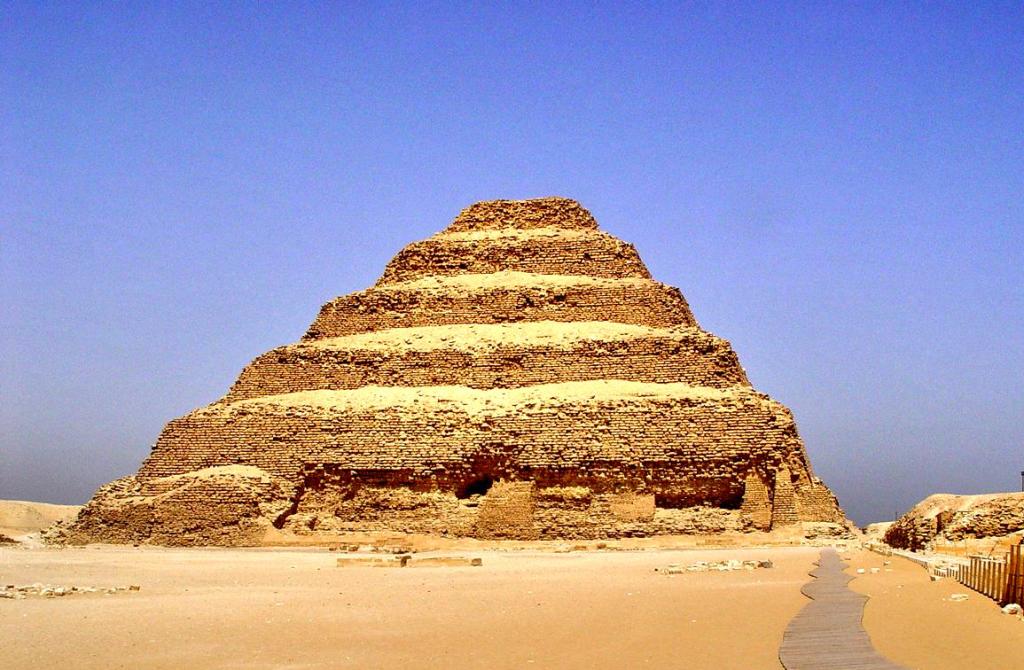
Step Pyramid at Saqqara, Egypt. Photo by Leon Mauldin.

Our photo shows the Step Pyramid at Saqqara, built during the 3rd Dynasty by Pharaoh Djoser. This pyramid is actually a mastaba (Arabic for “bench”),  meaning a structure in the “form of a flat-roofed, rectangular structure with outward sloping sides.” The Step Pyramid consists of six distinct steps. This is the oldest of the pyramids.

The burial chambers were underground. Excavation was done by Jean-Phillipe Lauer.

Click on image for higher resolution.