Gezer’s Defense Gate

March 28, 2010

Our previous post featured a photo of one of Gezer’s boundary stones.  We noted, “Excavations (1964–73) have uncovered a six-chambered gate and defenses” (NBD).  Pharaoh king of Egypt took Gezer from the Canaanites and gave it as dowry for his daughter, who became Solomon’s wife (1 Kings 9:16).  Because of its strategic location in the Shephelah in the south, Solomon made it a fortress city.  The six-chambered gate referenced in the NBD article was characteristic of Solomon’s other fortress cities, such as Hazor and Megiddo (both also strategically located).

This aerial photo shows the tel of Gezer from the south looking north.
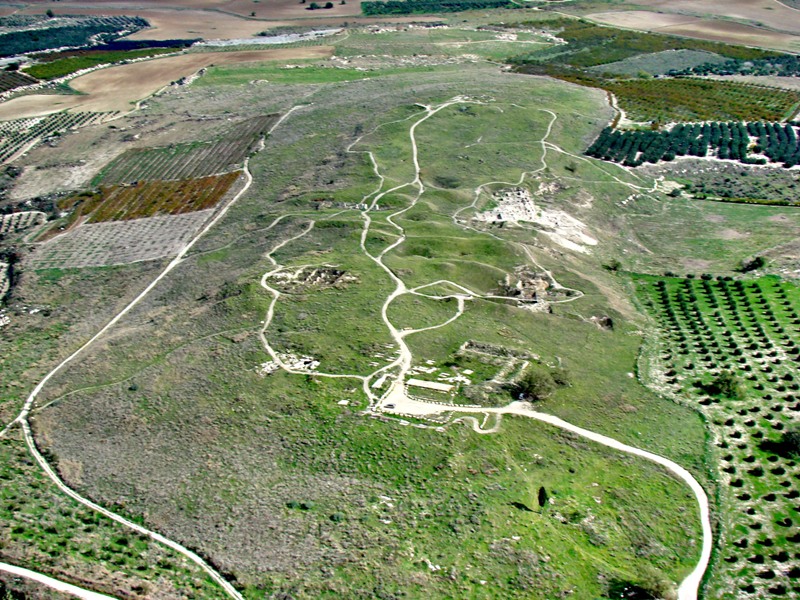
Gezer Aerial Overview. Photo by Leon Mauldin.

In the right center in photo below you can see the 6-chambered  gate.
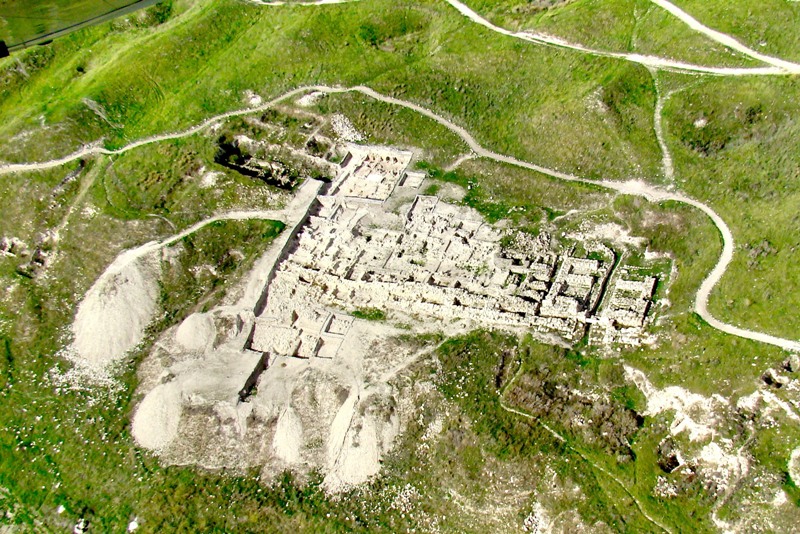
Gezer Aerial Detail. Photo by Leon Mauldin.

This shows the gate at ground level. You can see the central hill country in the background.
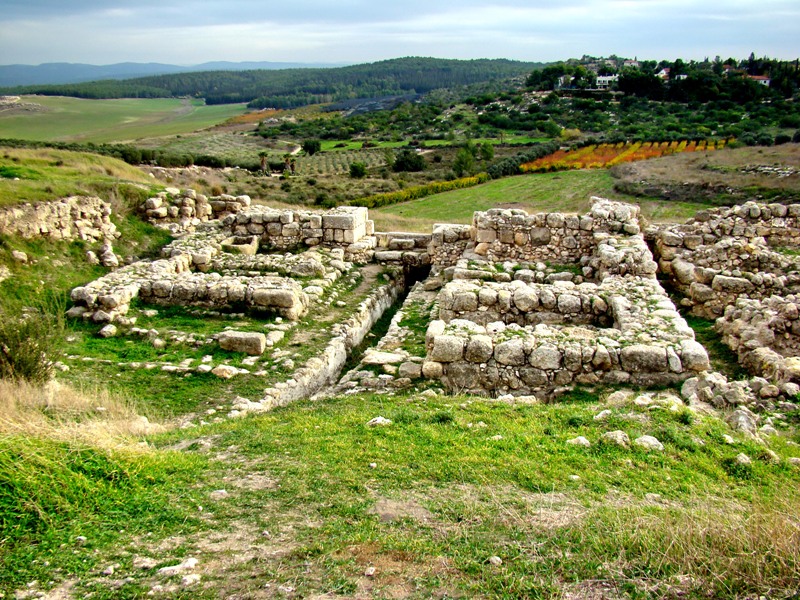
Gezer Six-Chambered Gate. Photo by Leon Mauldin.

Inside the gates there were benches where people could sit and visit, or carry on business transactions. In Dec. 2009 my friend and former professor Ferrell Jenkins and I visited the site.  This photo demonstrates the concept of “sitting at the gates” references in such passages as Gen. 19:1; 2 Sam. 19:8; Prov. 31:23, etc. Visit his blog at http://ferrelljenkins.wordpress.com/
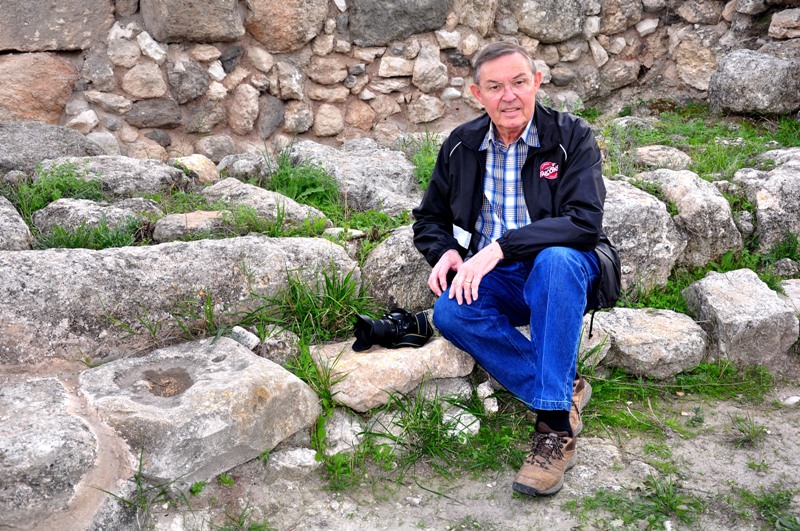
Ferrell Jenkins at Gate at Gezer. Photo by Leon Mauldin.


Gezer Boundary Stone

March 27, 2010

The New Bible Dictionary (3rd ed.) gives this information about the biblical city of Gezer:

One of the chief cities of pre-Roman Palestine from at least 1800 BC. It is strategically located on the road from Jerusalem to Joppa, on the most N ridge of the Shephelah overlooking the Ayyalon valley, and 12 km from the main highway between Egypt and Mesopotamia. Pharaoh Thutmosis III captured the Canaanite city in c. 1468 BC. Ten el-AMARNA letters from Gezer show the city vacillated but finally remained loyal to Egypt in the 14th century BC. At the time of the Hebrew conquest its Canaanite king, Horam, tried to help Lachish but was defeated (Jos. 10:33; 12:12). Gezer, however, was not taken by the Israelites (Jos. 16:10; Jdg. 1:29). Even so the city was included in Ephraim’s territory as a Levitical city (Jos. 21:21). Soon after the conquest Pharaoh Merenptah claims, on his stele, to have recaptured it. Archaeological evidence indicates that after 1200 BC the Philistines controlled the city, possibly with Egyptian approval, which may explain David’s battles in this region (2 Sa. 5:25). Gezer became an Israelite possession when the Egyptian pharaoh gave it to his daughter on her marriage to Solomon, who rebuilt the city and its defenses (1 Ki. 9:15–17). Excavations (1964–73) have uncovered a six-chambered gate and defenses.

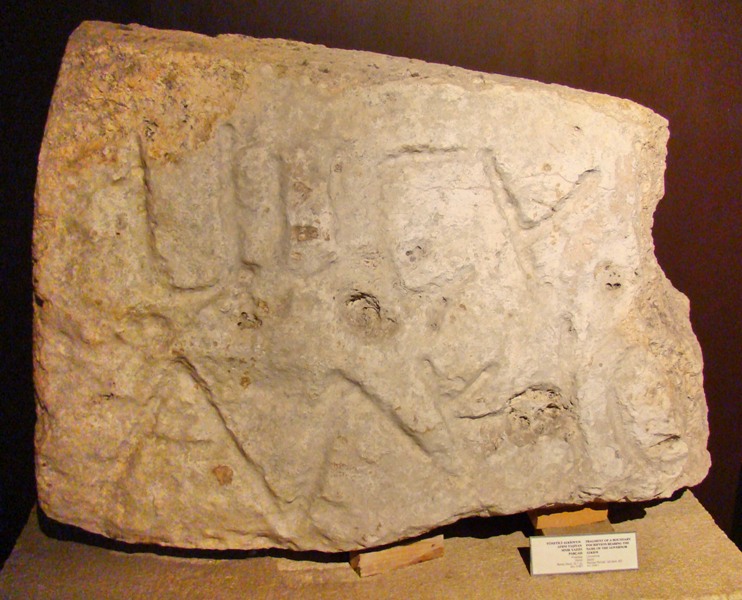
The Biblical Archaeology Review (July/August 1983) observes that the city of Gezer was one of only a handful of biblical cities identified by an inscription found at the site. In the case of Gezer there were eleven boundary stones found, nine of which contain the words, “Boundary of Gezer.” Most of these are bilingual, written in both Hebrew and Greek (see Dictionary of NT Background, entry on “Epigraphy”).  Today’s photo features one of the Gezer boundary stones which is located in the Archaeological Museum at Istanbul.

Gezer Boundary Stone. Istanbul. Photo by Leon Mauldin

When you study the Bible, you are not reading fiction.  It deals with real places, real people, and real events.  Discoveries such as these boundary stones reinforce the factual nature of Scripture.