They Smell Like Sheep

August 10, 2011

In Dr. Lynn Anderson’s book, They Smell Like Sheep, he tells of a church member who cornered him after a lesson in which he repeatedly referred to the elders as “shepherds.” His suggestion was basically this: since we sophisticated Americans don’t usually have sheep and don’t work as shepherds, no one connects with that idea. So find a better way to communicate the spiritual leadership idea.

Anderson’s response:

Admittedly, the shepherd metaphor does sound strange in the cyber-world of our daily experience.  We don’t normally see these picturesque, rural characters rolling down the expressways or eating at our local McDonald’s. But, after carefully considering my friend’s suggestion and searching in vain for a contemporary metaphor that would better connect the biblical notion with our times, I finally had to explain, ‘I can’t find any figure equivalent to the shepherd idea in our modern, urban world. Besides, if I drop the shepherd and flock idea, I would have to tear about five hundred pages out of my Bible, plus leave the modern church with a distorted–if not neutered–view of spiritual leadership.’ God keeps pointing shepherds to the pasture to struggle with sheep (pp. 11-12).

The ultimate example of a shepherd is God Himself; in the New Testament Jesus is identified as the Good Shepherd who cares for His sheep (John 10). Anderson is correct to use the biblical image of elders as shepherds (Acts 20:28; 1 Pet. 5:2,3).

Without doubt one of the most well-known, if not THE most well-known scriptural texts using the shepherd metaphor is Psalm 23.

The LORD is my shepherd; I shall not want. He maketh me to lie down in green pastures: he leadeth me beside the still waters. He restoreth my soul: he leadeth me in the paths of righteousness for his name’s sake. Yea, though I walk through the valley of the shadow of death, I will fear no evil: for thou art with me; thy rod and thy staff they comfort me (vv.1-4, KJV).

For today’s post we share a photo of a sheep who has been led to the still waters (quiet waters, NASB; refreshing water, NET).
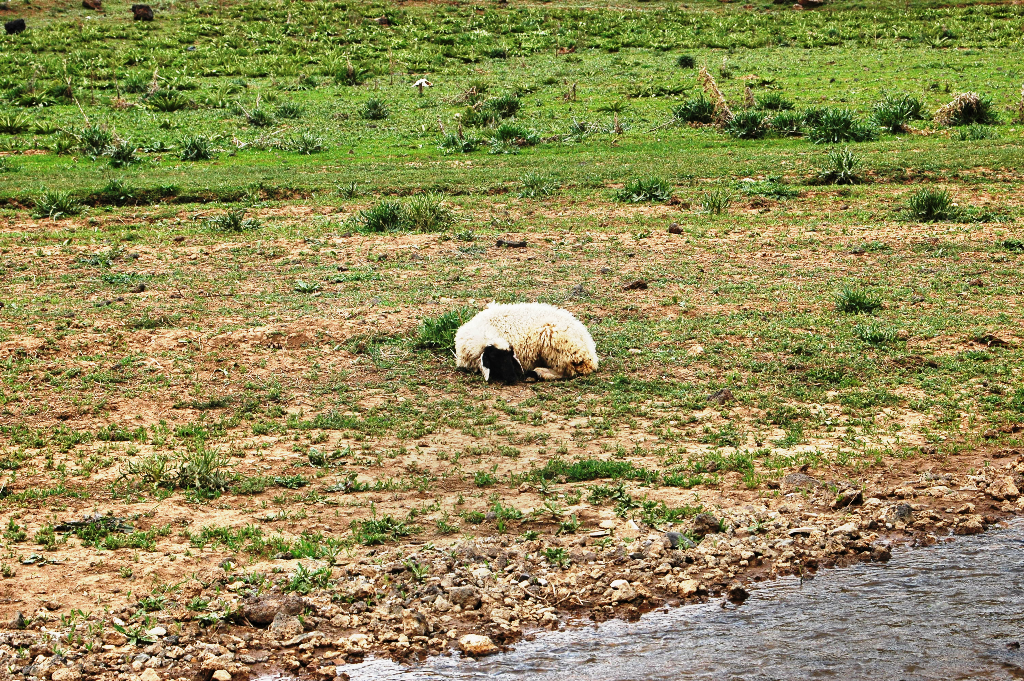
Sheep lying down near green pasture beside refreshing water. Eastern Turkey. Photo ©Leon Mauldin.

What a beautiful metaphor of God’s care for His people!

Click on image for higher resolution.


Not a Prophet or a Prophet’s Son

August 3, 2011

In our last post we introduced the prophet Amos of Tekoa. God sent him from Judah to Israel to cry out against the idolatry there, centered in such locations as Judah. A false prophet named Amaziah tried to intimidate Amos, and told him to go back home to Judah, i.e., we don’t need your kind of preaching here! Amos’ response:

14 Then Amos answered, and said to Amaziah: “I was no prophet, Nor was I a son of a prophet, But I was a sheepbreeder And a tender of sycamore fruit. 15 Then the LORD took me as I followed the flock, And the LORD said to me, ‘Go, prophesy to My people Israel.’ 16 Now therefore, hear the word of the LORD: You say, ‘Do not prophesy against Israel, And do not spout against the house of Isaac.’ 17 “Therefore thus says the LORD: ‘Your wife shall be a harlot in the city; Your sons and daughters shall fall by the sword; Your land shall be divided by survey line; You shall die in a defiled land; And Israel shall surely be led away captive From his own land.'” (Amos 7:14-17).

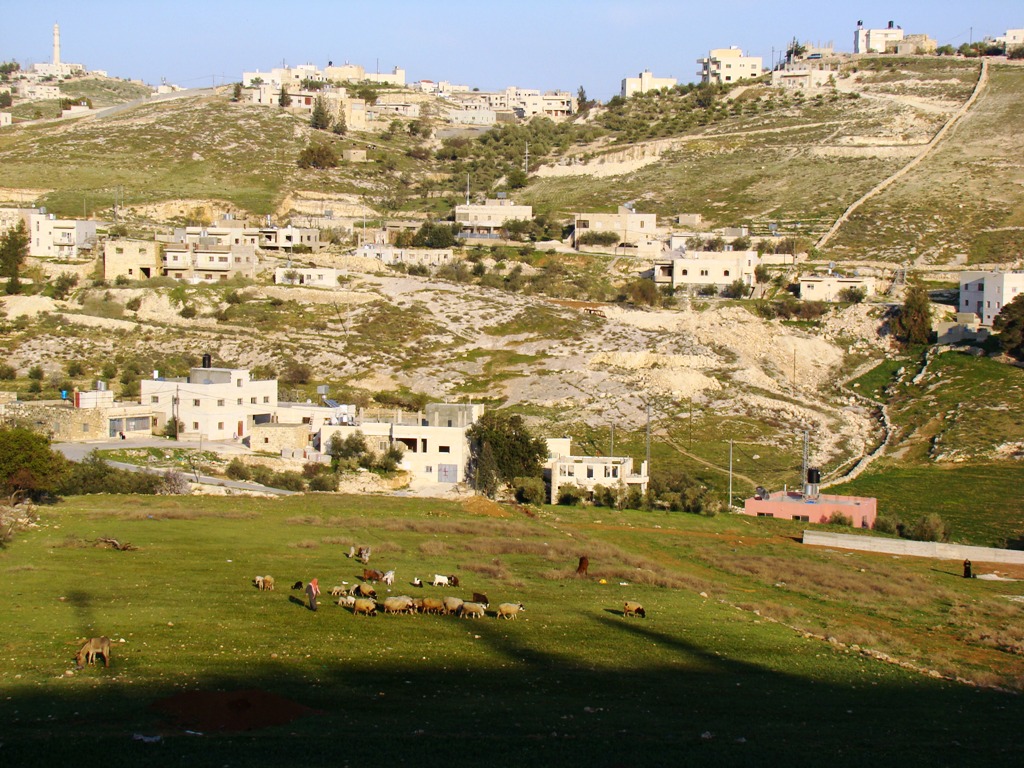
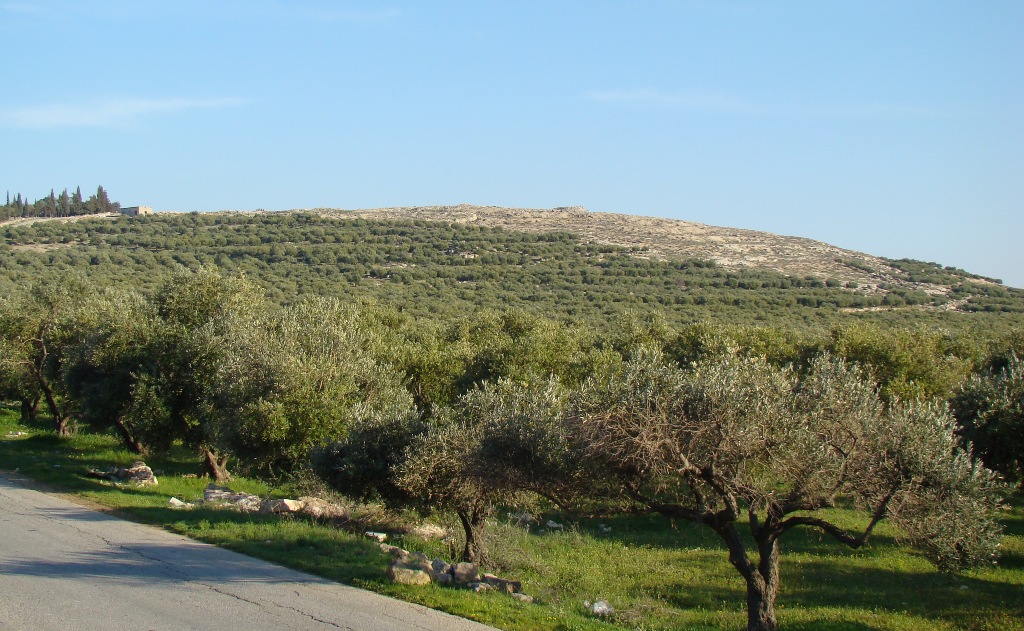
Our photo below was taken on the road between Tekoa and Bethlehem. You can see the sheep in the distance, which illustrate the kind of work Amos would have done in this general area before being called to the prophetic office.

Sheep near Tekoa. Amos was a sheepherder. Photo by Leon Mauldin.

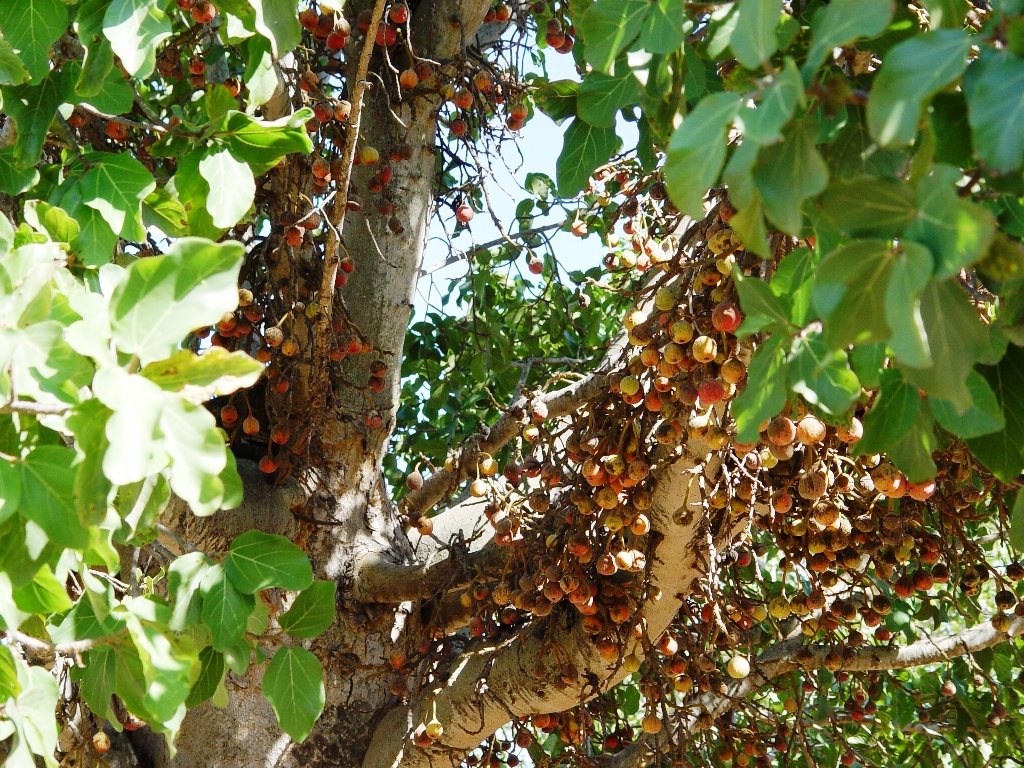
Note also that Amos said that he was a “tender of sycamore fruit” (NASB: “a grower of sycamore figs” and NET: “I was a herdsman who also took care of sycamore fig trees”). Below is a photo of the biblical sycamore tree.

Sycamore tree, which produces figs. Amos tended trees like this. Photo by Leon Mauldin.

Here is a close up of the fruit. The sycamore fig is inferior to the fig produced by the fig tree, and was eaten by the poorer people of the land.

Close-up of sycamore figs. Photo by Leon Mauldin.

*******

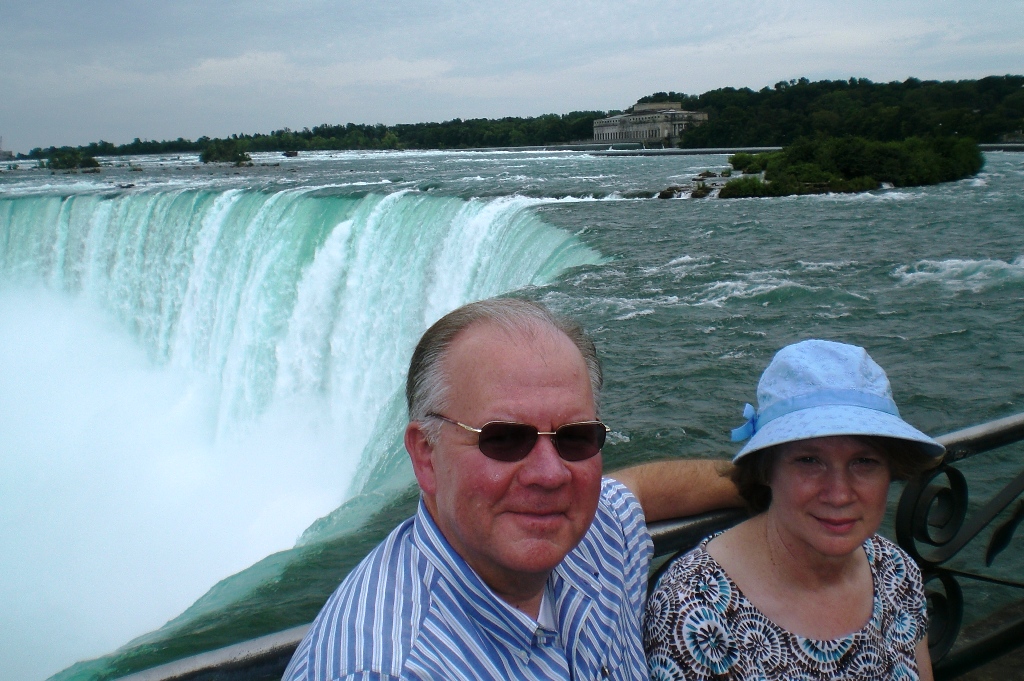
A pleasant surprise: our friends John and Lisa Hains of Jordan, Ontario, invited us to spend the night in their home (when our Sudbury meeting concluded) and then get us to the Toronto airport for our flight home (to “Sweet Home Alabama”). John met us when I turned in our rental car at Toronto, and en route to his home took Linda & me to see Niagara Falls, which was our first time to do so. The Falls are only about 20-25 minutes away from his house.  John took this photo.

Leon & Linda at Niagara Falls. Photo by John Hains.

 Click on images for higher resolution.


Amos of Tekoa

August 2, 2011

The prophet Amos begins his biblical book, “The words of Amos, who was among the sheepbreeders of Tekoa, which he saw concerning Israel in the days of Uzziah king of Judah, and in the days of Jeroboam the son of Joash, king of Israel, two years before the earthquake” (Amos 1:1). Tekoa is just south of Bethlehem.

Tekoa. Home of the prophet Amos. Map by bibleatlas.com

 This rustic southern prophet was sent by God to the northern kingdom of Israel to cry out against the idolatrous shrines there. More to come, but for now a photo of Tekoa, Amos’ home.

Site of Tekoa, home of Amos the Prophet. Photo by Leon Mauldin.

 **********

It has been great to be in Sudbury again. I presented seven lessons in this Fri.-Mon. series. We are heading for home today.


In Sudbury

July 30, 2011

Our meeting for biblical studies in Sudbury, Canada got off to a good start last night. We are dealing with the theme, “Challenges Faced by the Early Church,” and making application to the church of the 21st century.

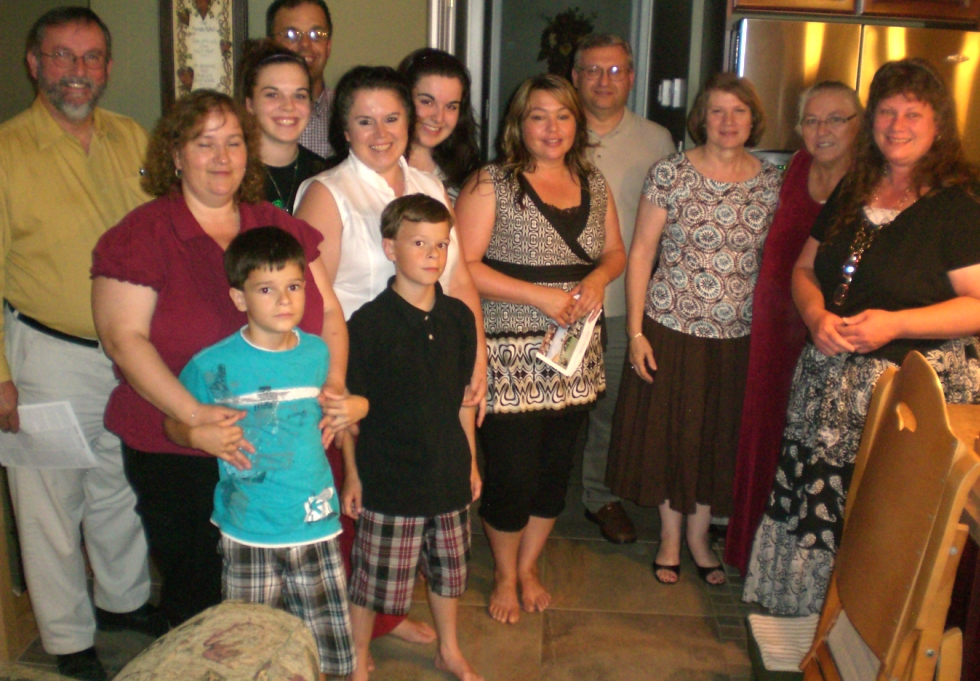
After last night’s meeting we gathered at the home of Denis and Danny Veilleux.

Sudbury, Canada. Gathering at home after meeting. Photo by Leon Mauldin.

John and Lisa Hains are the “bookends” in the photo. They drove up from Jordan. I asked John how long of a drive that was. His answer: “6 1/2 or 7 hours, not bad.”

I consider every such teaching opportunity to be a genuine privilege.

Click on image for larger view.


Priests of the Imperial Cult

July 28, 2011

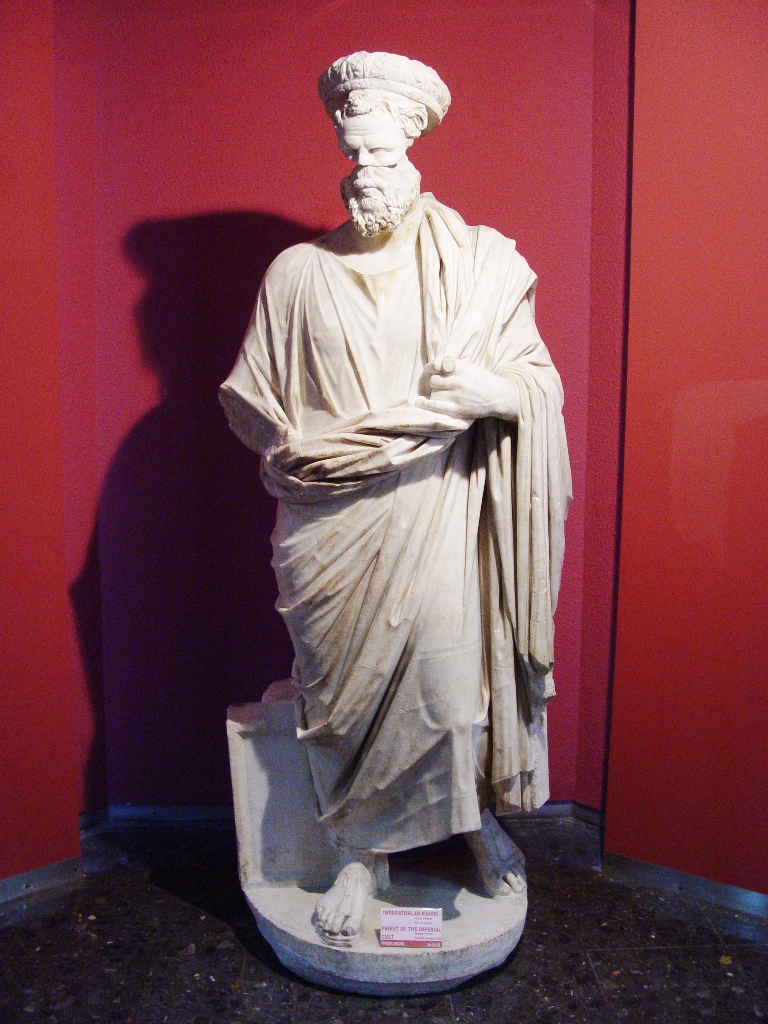
There is much evidence that the Imperial Cult of Caesar Worship was thriving by the end of the 1st century and in the years following. This was the case with many of the cities mentioned in Rev. 2-3, cities where the Seven Churches of Asia were located. (By churches we do not mean church buildings, but seven congregations of Christians in the Roman province of Asia).

Priest of Imperial Cult. Izmir Museum (Smyrna). Photo by Leon Mauldin.

 William Barclay, in his Letters to the Seven Churches said,

Emperor worship had begun as spontaneous demonstration of gratitude to Rome; but toward the end of the first century, in the days of Domitian, the final step was taken and Caesar worship became compulsory. Once a year the Roman citizen must burn a pinch of incense on the altar to the godhead of Caesar; and having done so, he was given a certificate to guarantee that he had performed his religious duty” (Barclay.29).

For the Christian, there was (is) but one Lord, and that is Jesus Christ. But there was tremendous pressure to say that Caesar was Lord, and there were many consequences if one failed to do so.

On a personal note: I enjoyed teaching at Sewell Hall’s Young Men’s Leadership Camp Mon-Wed, surveying the Seven Churches (Rev. 2-3) and making use of lots of photos of the biblical sites.

Tonight my wife and I are in Toronto en route to Sudbury to do a series of Bible lessons there.

Click on image for higher resolution.


The Victor’s Crown

July 25, 2011

In the letter to the church at Smyrna, a church which only received commendation from the Lord, Jesus said, “Be faithful until death, and I will give you the crown of life” (Rev. 2:10, NKJV).

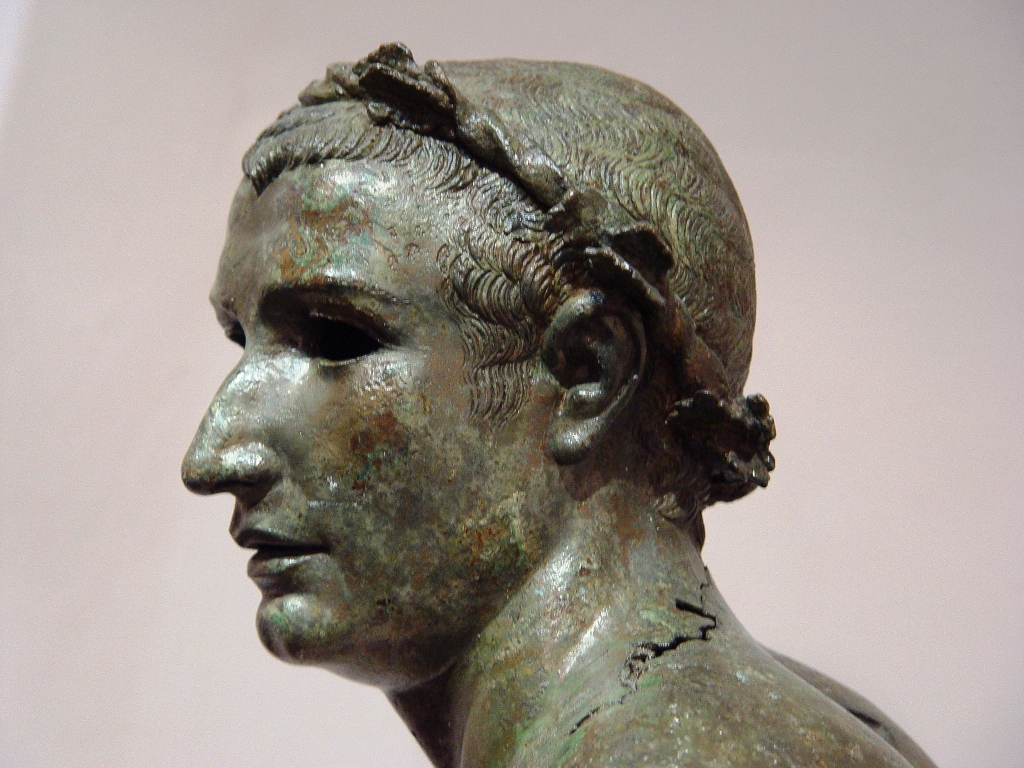
The word rendered crown is the Greek term stephanos. W. E. Vine observes that this word

denotes (a) “the victor’s crown,” the symbol of triumph in the games or some such contest; hence, by metonymy, a reward or prize; (b) “a token of public honor” for distinguished service, military prowess, etc., or of nuptial joy, or festal gladness, especially at the parousia of kings. It was woven as a garland of oak, ivy, parsley, myrtle, or olive, or in imitation of these in gold. In some passages the reference to the games is clear, 1 Cor. 9:25; 2 Tim. 4:8 (“crown of righteousness”); it may be so in 1 Pet. 5:4, where the fadeless character of “the crown of glory” is set in contrast to the garlands of earth. In other passages it stands as an emblem of life, joy, reward and glory, Phil. 4:1; 1 Thess. 2:19; Jas. 1:12 (“crown of life “); Rev. 2:10 (ditto); 3:11; 4:4, 10: of triumph, 6:2; 9:7; 12:1; 14:14.

Greek athlete wearing the victor's wreath. Photo by Leon Mauldin.

Vine continues:

It is used of “the crown of thorns” which the soldiers plaited and put on Christ’s head, Matt. 27:29; Mark 15:17; John 19:2, 5. At first sight this might be taken as an alternative for diadema, “a kingly crown” (see below), but considering the blasphemous character of that masquerade, and the materials used, obviously diadema would be quite unfitting and the only alternative was stephanos (see Trench Syn. Sec.xxxii).

Our photo features a close up of the head of a running athlete and dates back to the late Hellenistic period. This statue was retrieved from the Agean Sea off the coast of Kyme, and is displayed at the Izmir Museum (biblical Smyrna).

Sometimes the question is raised as to whether Jesus meant to be faithful as long as you live or to be faithful to the point of death. The answer is, “Yes.” Yes to both.

Click on image for higher resolution.


Jaffa Gate

July 21, 2011

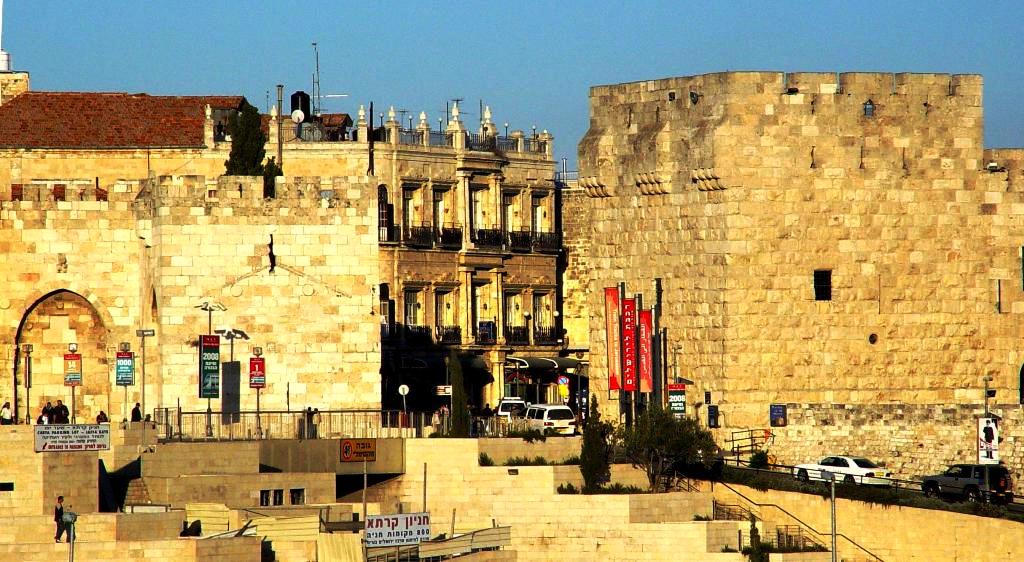
The Jaffa Gate is located on the western side of Jerusalem, thusly named because of its leading out to Joppa to the west.

Jaffa Gate, located on Jerusalem's Western Wall. Photo by Leon Mauldin.

The Jaffa Gate is located on your left in this photo. Crystallinks.com states

This gate is the principal entrance to the Old City. Its name in Arabic is Bab-el-Khalil, the gate of Hebron, as the main road to Hebron started here. It was also called Jaffa Gate because the road to the port city of Jaffa (Joppa) – the coast also started from it. This gate is the only one on the western side of the Old City. A low part of the city wall was torn down and the Crusader moat of the Citadel filled in 1898 for the visit of the German Kaiser Wilhelm II. This gate was also the famous scene of the English General Allenby’s entrance in 1917.

You can see some of our previous posts for a map showing Jerusalem’s gates to help with orientation.

Click on image for higher resolution.


Behind the Golden Gate

July 19, 2011

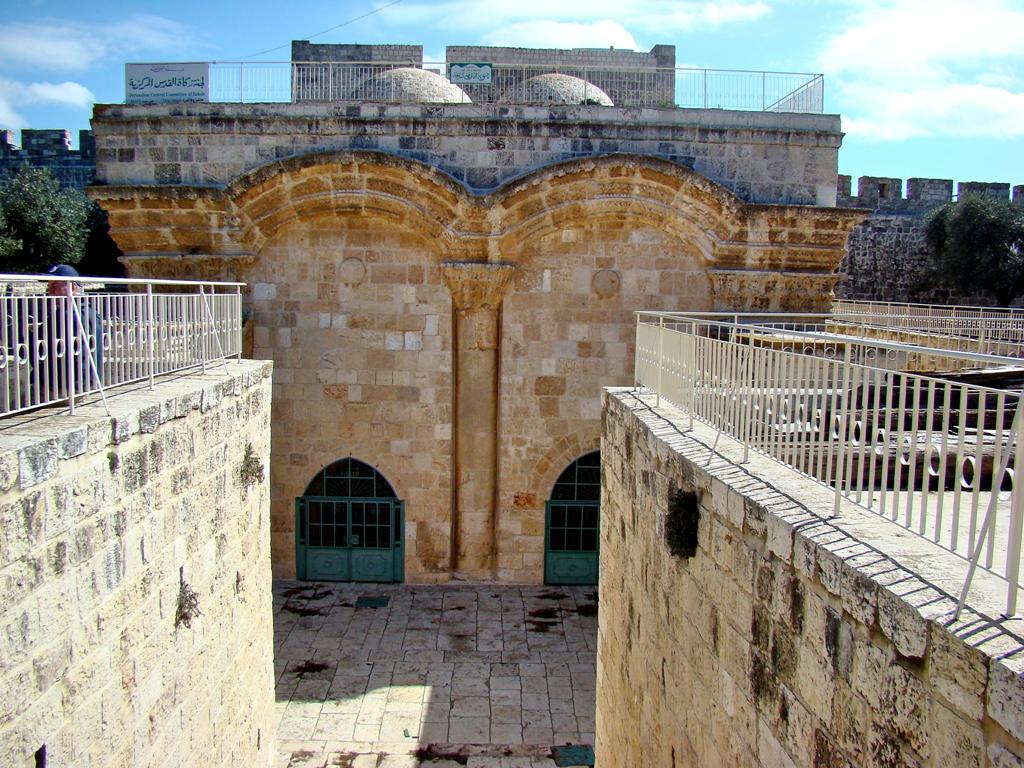
Today’s featured photo takes us behind Jerusalem’s Golden Gate.

Behind Jerusalem's Golden Gate. Photo by Leon Mauldin.

You will remember that the Golden Gate is on the eastern wall. Our photo give you a perspective from atop the temple mount viewing the west side of the Golden Gate area.

Currently this is the location of a Muslim girl’s school.

Some make the suggestion that this would be the site of the Gate Beautiful mentioned in Acts 3:2:

And a man lame from birth was being carried up, who was placed at the temple gate called “the Beautiful Gate” every day so he could beg for money from those going into the temple courts (NET Bible).

Click on image for higher resolution.

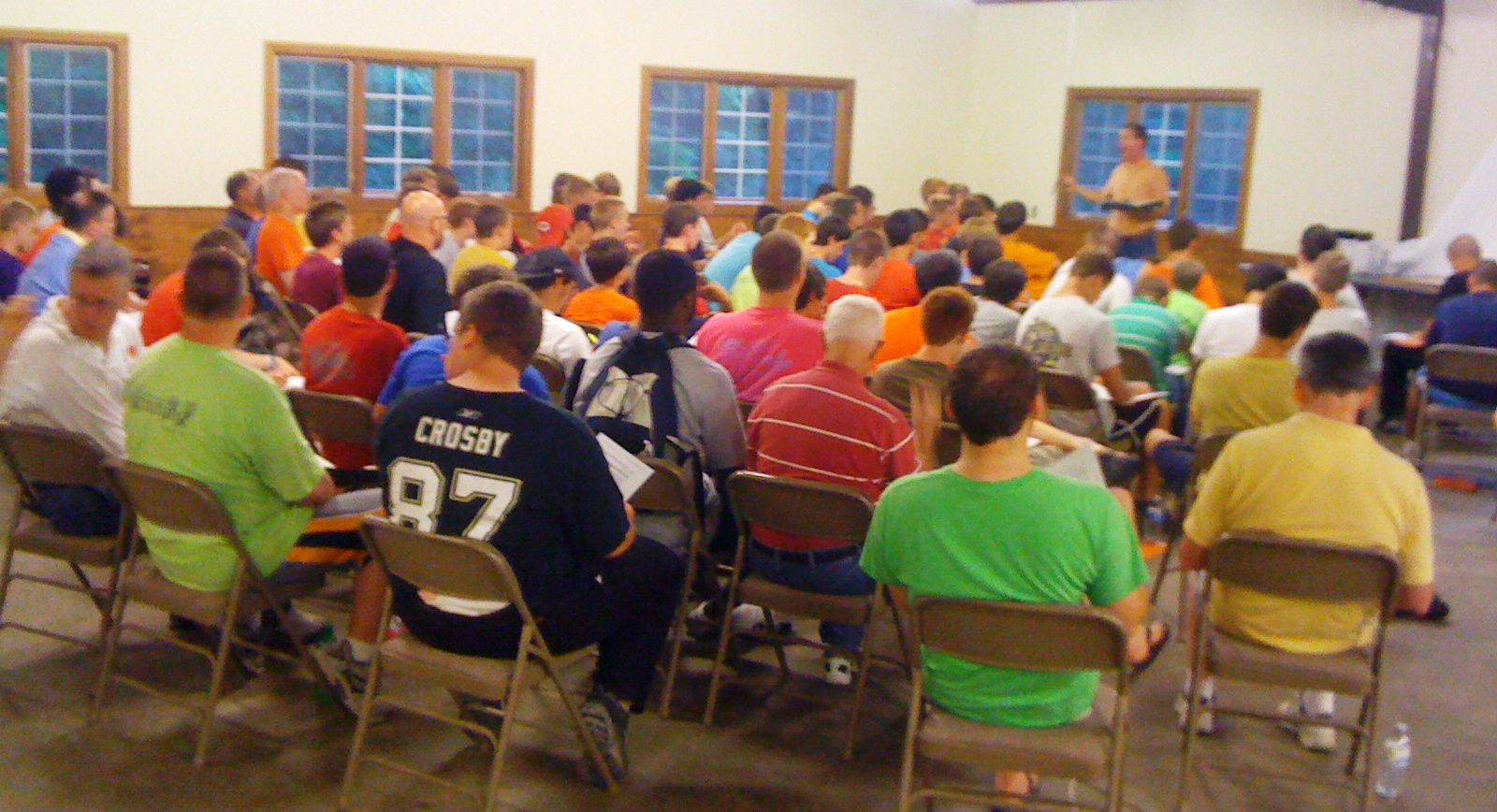
On a personal note, this week I am privileged to be part of Gary Fisher’s Indiana Bible Camp, http://indianabiblecamp.com/ Students range from age 13 to 19. I’m teaching a Visualized Survey of the Bible, its history and geography, from Genesis to Revelation, making use of photos of Bible places as we narrate the text.

Below is a photo from tonight’s assembly, with Jon Babcock speaking.

Shakamak Camp near Jasonville, IN.


Citadel of David

July 16, 2011

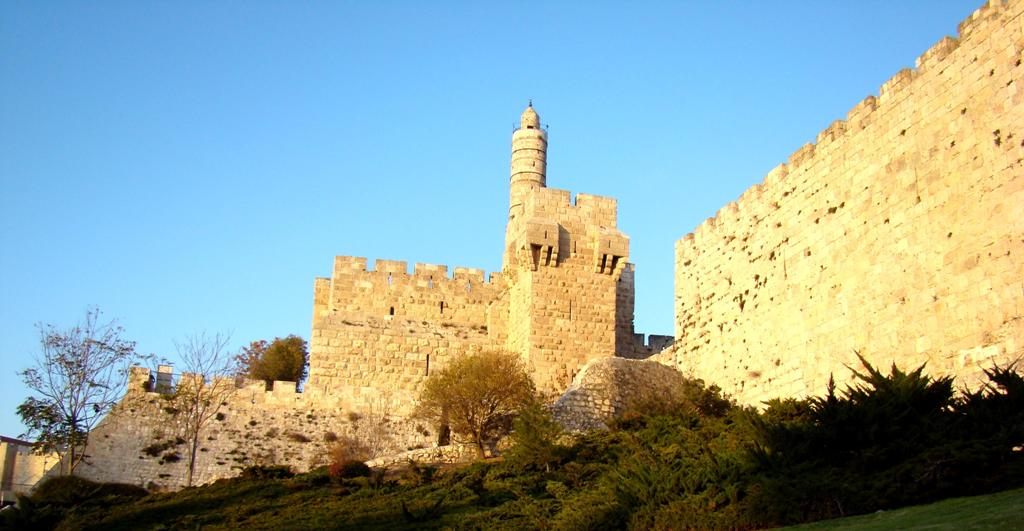
The Citadel of David is located near the Jaffa Gate on Jerusalem’s western wall.

Citadel of David, located at Jerusalem's Western Wall near Jaffa Gate. Photo by Leon Mauldin.

The site, www.jewishvirtuallibrary.org has this helpful info:

The citadel of Jerusalem, known as the “Tower of David,” has been a landmark of the city since ancient times. . .Its location was chosen for topographic reasons – this is the highest point of the southwestern hill of Jerusalem, higher than any other point in the ancient city, including the Temple Mount. A series of fortifications built here in the course of more than twenty centuries, protected Jerusalem from the west and also overlooked and controlled the entire city.

A first archeological survey of the citadel, and excavations, were conducted between 1934 and 1947. Renewed excavations were undertaken after the reunification of the city, between the years 1968 and 1988, preparing the opening of the site to visitors.

Every period has left its mark and has been identified in the assemblage of architectural remains. In the citadel’s foundations are buried the remains of Jerusalem’s fortifications from the end of the monarchic period (8th to 6th centuries BCE) through the early Arab period (seventh to eleventh centuries). The outline of the citadel known today is from the Crusader period; the citadel itself was built in the mid-16th century by the Ottoman sultan Suleiman the Magnificent, and incorporates the remains of earlier citadels dating from Ayyubid and  Mamluk times.

The Citadel is protected by a high wall and large towers, and it is surrounded by a wide, deep moat, part of which was blocked in modern times. The entrance is from the east, via an outer gate, a bridge over the moat and a fortified inner gate house.

Click on image for higher resolution.


Huldah Gate in Jerusalem

July 14, 2011

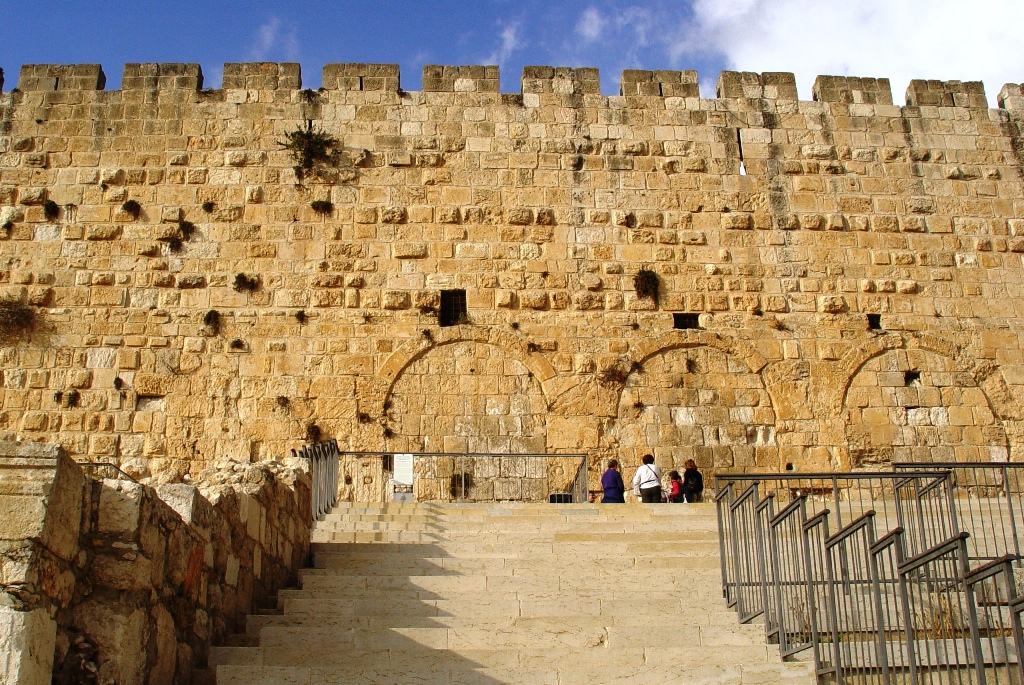
There was a pair of gates located on the south side of the temple mount, known as the Huldah gates. The gate to the west was a double arched gate; the one to the east was triple-arched. The double-arch gate is mostly hidden by a medieval structure. Traces of the eastern gate are still visible. The gates were previously adorned with grand decorated capitols.

Triple-arched Huldah Gate at southern wall of temple mount. Photo ©Leon Mauldin.

Each of the two gates served as a passage way to the temple, entering from the south. The Huldah gates were excavated in the ’70s by Meir Ben-Dov among other Israeli archaeologists. This area is currently a portion of the Southern Wall Archaeological Park.

In our photo above you can see how the triple-arched gate has been blocked and assimilated into the wall.

The name Huldah comes from the Old Testament prophetess, who lived during the days of Judah’s good king Josiah, when the lost book of the law of the LORD was found: “So Hilkiah the priest, Ahikam, Acbor, Shaphan, and Asaiah went to Huldah the prophetess, the wife of Shullam son of Tikvah, the son of Harhas, the supervisor of the wardrobe. (She lived in Jerusalem in the Second District)” (2 Kings 22:14, NET).

Click on image for higher resolution.