Balance and Caution in Use of Archaeology

September 4, 2014

A question from a friend:

It concerns the crossing of the Red Sea. There is an awful lot of talk about the “traditional” Red Sea crossing maps versus the so-called “archaeological findings” purportedly found at the Gulf of Aqaba.

. . . However, some of our brethren have begun using maps and pictures that show what is believed to be possibly the “real Mt. Sinai” with charred rock covering its cap, a “split rock” in the wilderness, chariot wheels, etc… (I’m not buying it.) All of these things I see look like the work of Ron Wyatt, but all sorts of people have these things on their internet sites.

. . . All of that said, I was wondering if you had any material or resources dealing with the subject head on. I do not plan on making this an issue… nor do I plan on bringing anyone else’s name into the mix. I would just like to be able to give a “ready defense” if I am ever called upon. I’d greatly value your input on the matter. Thank you.
Others more qualified that I have dealt with the claims of Mr. Wyatt. As a starting point I can recommend the following sources: Ferrell Jenkins has an article entitled, “Pharaoh’s Chariot Wheels and Other Things that Won’t Float — Examining the Claims of the Late Ron Wyatt ,” that you can access here, plus another article entitled, “Pseudo Archaeologists”here. These articles have numerous related links for further reading. Additionally I would recommend Gordan Franz’s site, Life and Land, here. Use the search box. He has several entries under “Cracked Pot Archaeology.” The use of caution in using Mr. Wyatt’s material/claims would be prudent.
While no one can be certain of the exact location of Israel’s crossing. the best evidence would be somewhere along the Suez.

From Sinai looking across Suez to Egypt. Photo by Leon Mauldin.

I took the above photo in 2003, having crossed the Suez. We are standing on the Sinai side looking back across Egypt.

I personally conclude that the traditional Mt. Sinai (Jebel Musa) best fits the biblical criteria.

The above info was posted Sept. 28, 2013.

See Ferrell Jenkins’ current post, “The Route of the Exodus and the Location of Mt. Sinai,” for a number of links and as well as balanced observations. I recommend it. Click here.

Click photo for larger view.


Follow-up on Bethlehem of Galilee–Reader Response

September 2, 2014

In our previous post (click here) on Bethlehem of Galilee we referenced Ibzan (of Judges 12:8-10) of Bethlehem and observed: “Very likely this is the Bethlehem of Galilee, not the Bethlehem of Judah.” A reader asks, “I’ve learned about the existence of this town sometime ago, but I’ve never found out WHY it is likely that this Bethlehem is Ibzan’s hometown. Which arguments support this assumption?”

That is a good question. First, remember that Joshua 19:15 lists Bethlehem among other cities Zebulun inherited.

Wolf, in The Expositor’s Bible Commentary observes, “The Zebulun location is favored because the southern city is usually identified as “Bethlehem in Judah” (17:7-9; 19:1-2, 18)” (Vol. 3, p.459). Note that is the wording repeatedly in each of these verses. It seems consistent that when the southern Bethlehem is intended, it is indicated, for example, Judges 17:7: “Now there was a young man from Bethlehem in Judah, of the family of Judah, who was a Levite; and he was staying there” (NASB). Note the rendering of the KJV: “And there was a young man out of Bethlehemjudah of the family of Judah, who was a Levite, and he sojourned there.”

Keil & Delitzsch: “Ibzan sprang from Bethlehem,—hardly, however, the town of that name in the tribe of Judah, as Josephus affirms (Ant. v. 7, 13), for that is generally distinguished either as Bethlehem ‘of Judah’ (Judg. 17:7, 9; Ruth 1:2; 1 Sam. 17:12), or Bethlehem Ephratah (Micah 5:1), but probably Bethlehem in the tribe of Zebulun (Josh. 9:15)” (Vol 2, p. 287). To the Micah passage we could add Gen. 35:19: “So Rachel died and was buried on the way to Ephrath (that is, Bethlehem)” (see also Gen. 48:7).

Pulpit Commentary: “But as Bethlehem of the tribe of Judah is generally called Bethlehem of Judah, or Bethlehem-Ephratah, and as Elon and Abdon were judges in North-East Israel, it is perhaps more probable that Bethlehem of Zebulun is meant” (p. 136). In his comment above, author A.C. Hervey is making two points: the fuller designation (of Judah or Ephratah) is used when Bethlehem of the south is intended, and second, the context of Judges 12:8-10. Verse 11 mentions Judge Elon of Zebulun, and Judge Abdon (vv. 13-15), on the border between Ephraim and Manasseh. While it is not conclusive proof, Ibzan’s placement in the text is in the context of judges to the north. Note in this connection that Butler, in the Word Biblical Commentary observes, “The context appears to point to the northern location. . .” (Vol. 8, p. 297).

Avraham Negev states regarding Bethlehem of Galilee: “A town in the territory of Zebulun, (Josh. 19:15), the birth-place of the judge Ibzan and the place where he was buried (Judg. 12:8–10)” (The Archaeological Encyclopedia of the Holy Land).

While I do not think that truth is determined by the number of people who advocate a particular position, it is true that the majority of scholars favor Bethlehem of Zebulun of Galilee as best fitting the text and context of Judges 12:8-10.

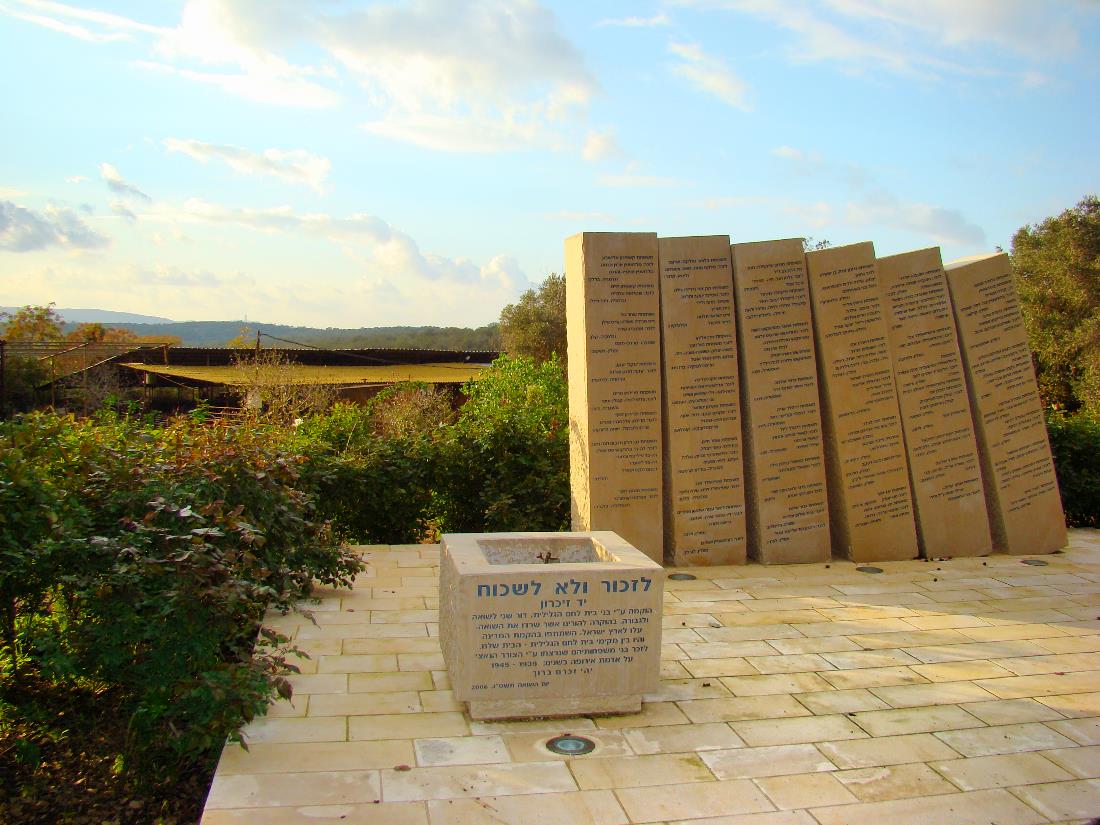
Bethlehem of Galilee. Further remains from the Templars. Photo by Leon Mauldin.

Bethlehem of Galilee. Further remains from the Templars. Photo by Leon Mauldin.

Click image for larger view.


Bethlehem of Galilee

August 28, 2014

In studying the book of Judges, brief mention is made of Ibzan of Bethlehem. The text notes that he had 30 sons and 30 daughters, and states that he judged Israel for seven years (Jud. 12:8-10). Very likely this is the Bethlehem of Galilee, not the Bethlehem of Judah, the latter being remembered of course as the birthplace of Jesus (Micah 5:2; Matt. 2:1). There were two biblical cities named Bethlehem. This is why the Bible is very specific in clarifying that Jesus was born in Bethlehem of Judah in these texts.

Joshua 19 describes the inheritance of Zebulun (of Galilee) and Bethlehem is included in the list: “Included also were Kattah and Nahalal and Shimron and Idalah and Bethlehem; twelve cities with their villages” (v.15). Note the location of the map here:

Bethlehem of Galilee. Map by BibleAtlas.org.

Bethlehem of Galilee. Map by BibleAtlas.org.

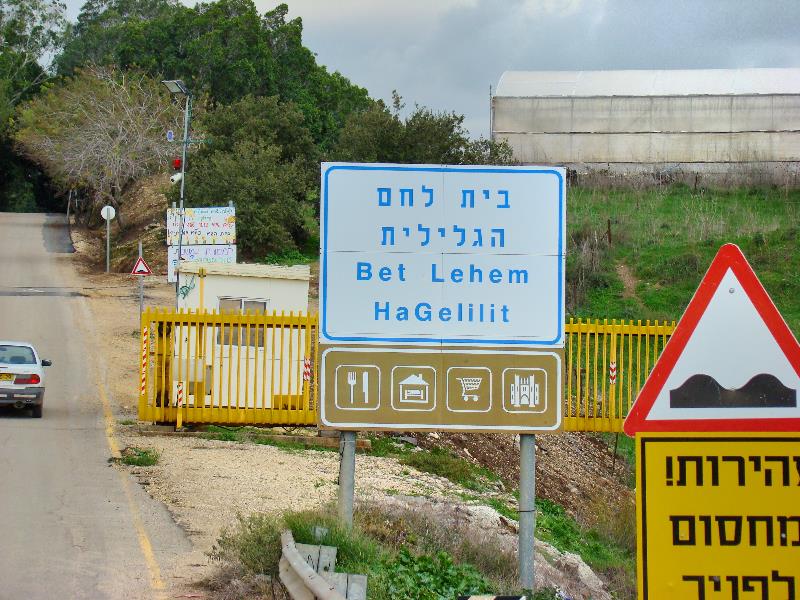
Here is a shot of the city sign upon entering from the south.

Bethlehem of the Galilee sign. Photo by Leon Mauldin.

Bethlehem of the Galilee sign. Photo by Leon Mauldin.

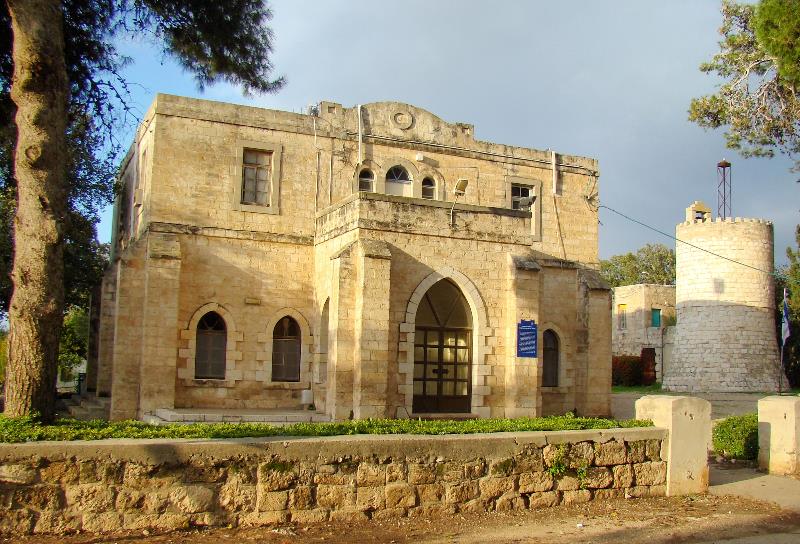
The earlier presence of the Templars may still be seen.

Bethlehem Templar Folk House. Photo by Leon Mauldin.

Bethlehem Templar Folk House. Photo by Leon Mauldin.

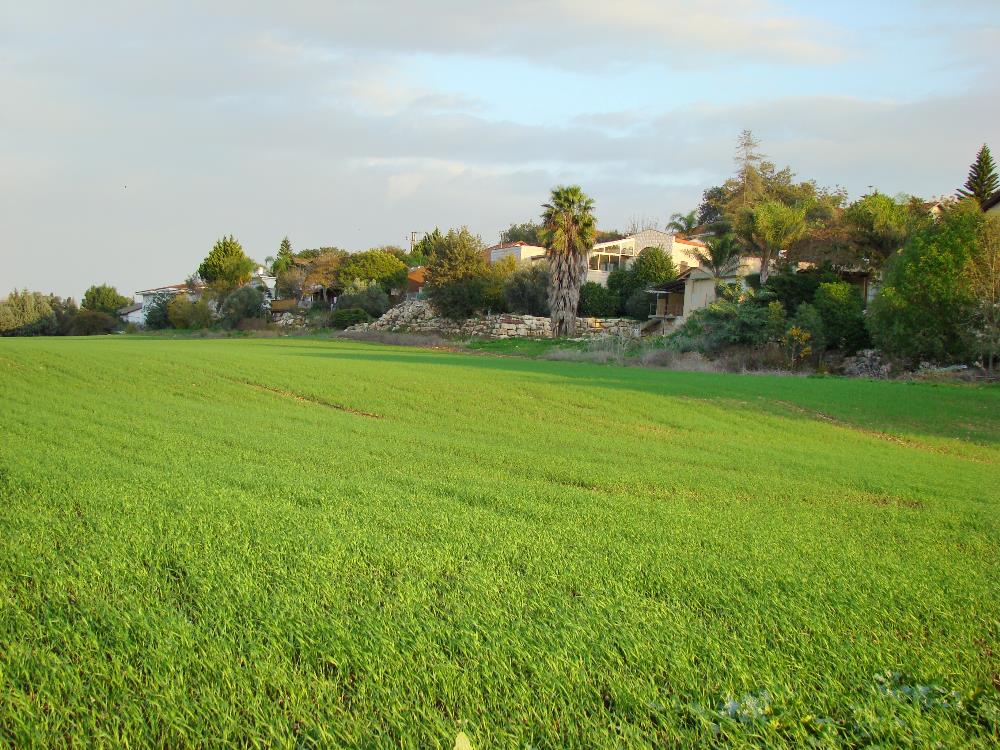
Today Bethlehem of the Galilee is a moshav, a cooperative agricultural community of individual farms.

Pasture in Bethlehem. Photo by Leon Mauldin.

Pasture in Bethlehem. Photo by Leon Mauldin.

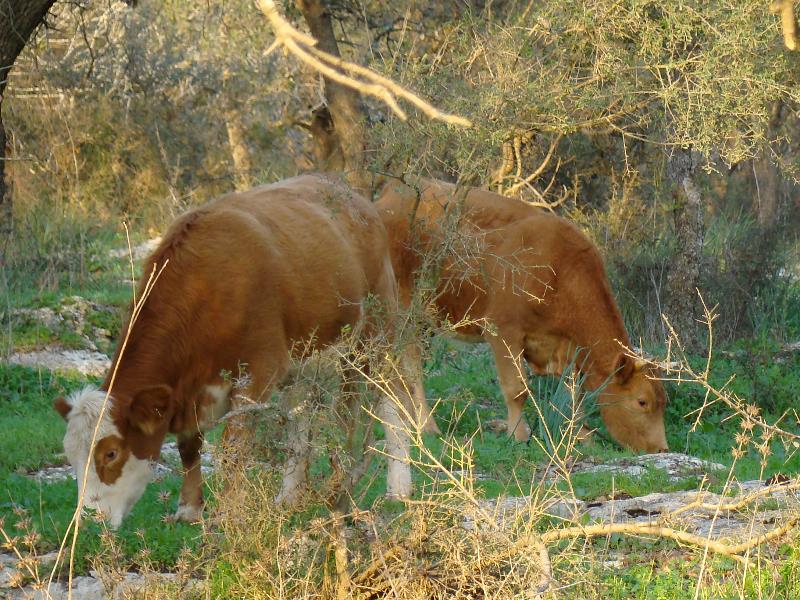
Cattle at Bethlehem. Photo by Leon Mauldin.

Cattle at Bethlehem. Photo by Leon Mauldin.


Goddess Artemis at Vatican Museum

August 23, 2014

There is a statue of the goddess Artemis housed in the Vatican Museum.

Goddess Artemis in Vatican Museum. Photo by Leon Mauldin.

Goddess Artemis in Vatican Museum. Photo by Leon Mauldin.

This is the goddess mentioned in Acts 19, in the context of Paul’s preaching efforts at Ephesus:

About that time there occurred no small disturbance concerning the Way. For a man named Demetrius, a silversmith, who made silver shrines of Artemis, was bringing no little business to the craftsmen; these he gathered together with the workmen of similar trades, and said, “Men, you know that our prosperity depends upon this business. You see and hear that not only in Ephesus, but in almost all of Asia, this Paul has persuaded and turned away a considerable number of people, saying that gods made with hands are no gods at all. Not only is there danger that this trade of ours fall into disrepute, but also that the temple of the great goddess Artemis be regarded as worthless and that she whom all of Asia and the world worship will even be dethroned from her magnificence.” When they heard this and were filled with rage, they began crying out, saying, “Great is Artemis of the Ephesians!” (verses 23-28).

The ISBE has this info:

She may, however, be identified with the Cybele of the Phrygians whose name she also bore, and with several other deities who were worshipped under different names in various parts of the Orient. In Cappadocia she was known as Ma; to the Syrians as Atargatis or Mylitta; among the Phoenicians as Astarte, a name which appears among the Assyrians as Ishtar; the modern name Esther is derived from it. The same goddess seems to have been worshipped by the Hittites, for a female deity is sculptured on the rocks at Yazili Kaya, near the Hittite city of Boghazkeui. It may be shown ultimately that the various goddesses of Syria and Asia Minor all owe their origin to the earlier Assyrian or Babylonian Ishtar, the goddess of love, whose chief attributes they possessed. The several forms and names under which she appears axe due to the varying developments in different regions.

Tradition says that Diana was born in the woods near Ephesus, where her temple was built, when her image of wood (possibly ebony; Pliny, NH, xvi. 40; Acts 19:35) fell from the sky. Also according to tradition the city which was later called Ephesus was founded by the Amazons, and Diana or Cybele was the deity of those half-mythical people. Later when Ephesus fell into the possession of the Greeks, Greek civilization partly supplanted the Asiatic, and in that city the two civilizations were blended together. The Greek name of Artemis was given to the Asiatic goddess, and many of the Greek colonists represented her on their coins as Greek. Her images and forms of worship remained more Asiatic than Greek. Her earliest statues were figures crudely carved in wood. Later when she was represented in stone and metals, she bore upon her head a mural headdress, representing a fortified city wall; from it, drapery hung upon each side of her face to her shoulders. The upper part of her body was completely covered with rows of breasts to signify that she was the mother of all life. The lower arms were extended. The lower part of the body resembled a rough block, as if her legs had been wrapped up in cloth like those of an Egyptian mummy. In later times her Greek followers represented her with stags or lions standing at her sides. The most renowned of her statues stood on the platform before the entrance to her temple in Ephesus. As the statues indicate, she impersonated the reproductive powers of men and of animals and of all other life.

We have previously referenced Artemis in posts here, here, here and here.

Click on image for larger view.


Mamertine Prison in Rome

July 24, 2014

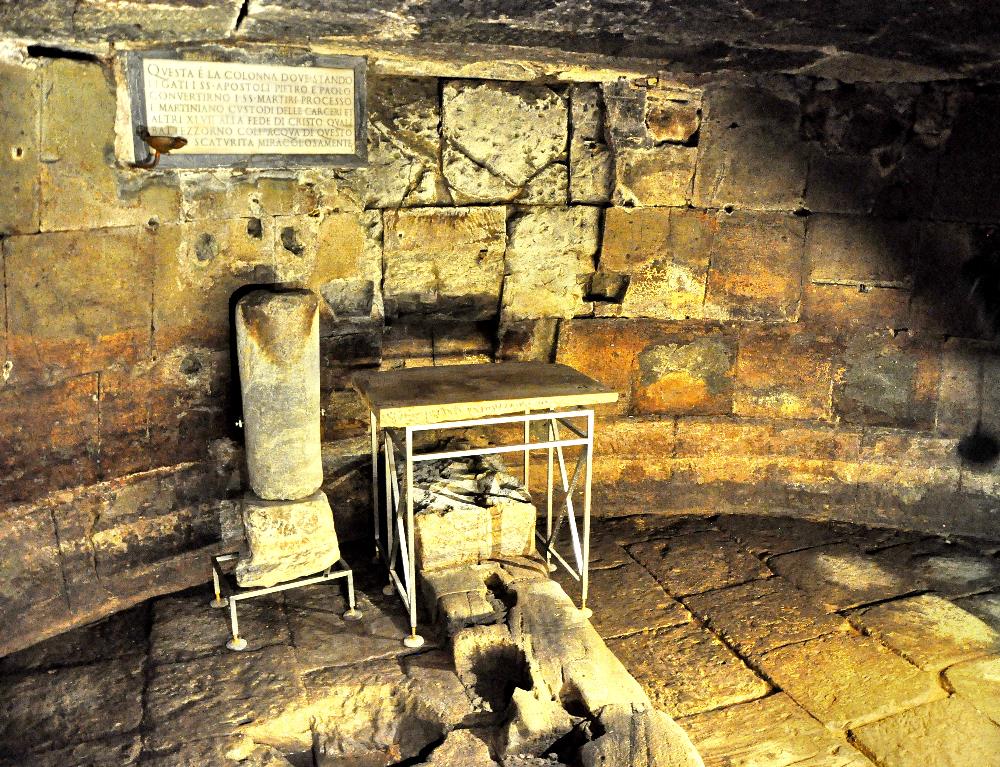
It is not unusual for a tour group to discuss what was their favorite or most meaningful location/event during their trip. On our recent “Highlights of Italy Tour,” many of our group cited the Mamertine Prison in Rome as being at the top of their list. To be able to walk down to the dark prison cell, and recall Paul’s last words in 2 Tim. 4, really enhances one’s understanding of the text and of Paul’s circumstances:

6 For I am already being poured out as a drink offering, and the time of my departure is at hand. 7 I have fought the good fight, I have finished the race, I have kept the faith. 8 Finally, there is laid up for me the crown of righteousness, which the Lord, the righteous Judge, will give to me on that Day, and not to me only but also to all who have loved His appearing. 9 Be diligent to come to me quickly; 10 for Demas has forsaken me, having loved this present world, and has departed for Thessalonica — Crescens for Galatia, Titus for Dalmatia. 11 Only Luke is with me. Get Mark and bring him with you, for he is useful to me for ministry. 12 And Tychicus I have sent to Ephesus. 13 Bring the cloak that I left with Carpus at Troas when you come — and the books, especially the parchments. 14 Alexander the coppersmith did me much harm. May the Lord repay him according to his works. 15 You also must beware of him, for he has greatly resisted our words. 16 At my first defense no one stood with me, but all forsook me. May it not be charged against them. 17 But the Lord stood with me and strengthened me, so that the message might be preached fully through me, and that all the Gentiles might hear. And I was delivered out of the mouth of the lion. 18 And the Lord will deliver me from every evil work and preserve me for His heavenly kingdom. To Him be glory forever and ever. Amen! (2 Tim. 4:6-18).

Mamertine Prison in Rome. Photo ©Leon Mauldin.

Mamertine Prison in Rome. Photo ©Leon Mauldin.

We cannot affirm that this is the exact part of the prison that Paul was in as he penned the above text. But this is definitely a part of the state prison complex, and it illustrates the biblical setting as Paul, near death, penned his last letter to his faithful friend and fellow-worker, Timothy. I.e., it is safe to say that Paul was in a cell like this, in this area, awaiting execution. BAS in their photo collection has this information:

Near the Forum, at the base of the Capitoline Hill, is the dungeon of the Mamertine Prison. This was the state prison of Rome, and Paul may have ended his days here.

We see the lower of two chambers constructed of blocks cut from tufa, the local porous rock. Originally, this 30-foot diameter room could be reached only through the hole visible in its ceiling. This would have been the dungeon cell for prisoners; above it is a smaller room for the warders. Conflicting Roman traditions attributed the building of the prison to different rulers of the 7th and 6th centuries B.C.E. Some modern investigations have suggested a 3rd-century B.C.E. date for this lower chamber and a 1st-century B.C.E. date for the room above, but there is no question that it was in use in Paul’s time. Christian tradition also places Peter’s final internment here, at the time of Nero’s persecution. (Biblical Archaeology Society: The Biblical World in Pictures).

The Wycliffe Historical Geography of Bible Lands has this entry:

Tradition has it that during his second imprisonment Paul was detained in the Mamertine Prison in Rome. The name Mamertinus is postclassical; during the Empire the place was known simply as the Carcer. This was the ancient state prison of Rome at the foot of the Capitoline Hill. It was used as a place of detention, not of penal servitude, although executions occurred there. The upper room is a vaulted trapezoid, the sides varying in length from eleven to sixteen feet.

Below it was a subterranean chamber, originally accessible only by a hole in the roof. This Tullianum was nearly twenty-one feet in diameter and, according to Sallust, twelve feet high. All who wrote of the place described it with horror. Sallust (86–34 B.C.) described it as “exceeding dark, unsavory, and able to craze any man’s senses.” Under such circumstances the apostle would indeed have felt the need of the cloak and the books he had left behind at Troas (2 Tim. 4:13).

As Paul wrote Second Timothy, he had none of the optimism expressed in his earlier letters, when he expected release. He had obtained a preliminary hearing, and it had been a dismal failure (2 Tim. 4:16). Though he found himself in dire circumstances, he delivered what sometimes has been called his valedictory, for he was about to “graduate.” “For I am now ready to be offered, and the time of my departure is at hand. I have fought a good fight, I have finished my course, I have kept the faith: Henceforth there is laid up for me a crown of righteousness, which the Lord, the righteous judge, shall give me at that day: and not to me only, but unto all them also that love his appearing” (2 Tim. 4:6–8) (Eds. Pfeiffer & Vos, 1996).

Click on image for larger view.

Scroll down to see more from our recent trip to Italy.


A Good Day in Rome

July 9, 2014

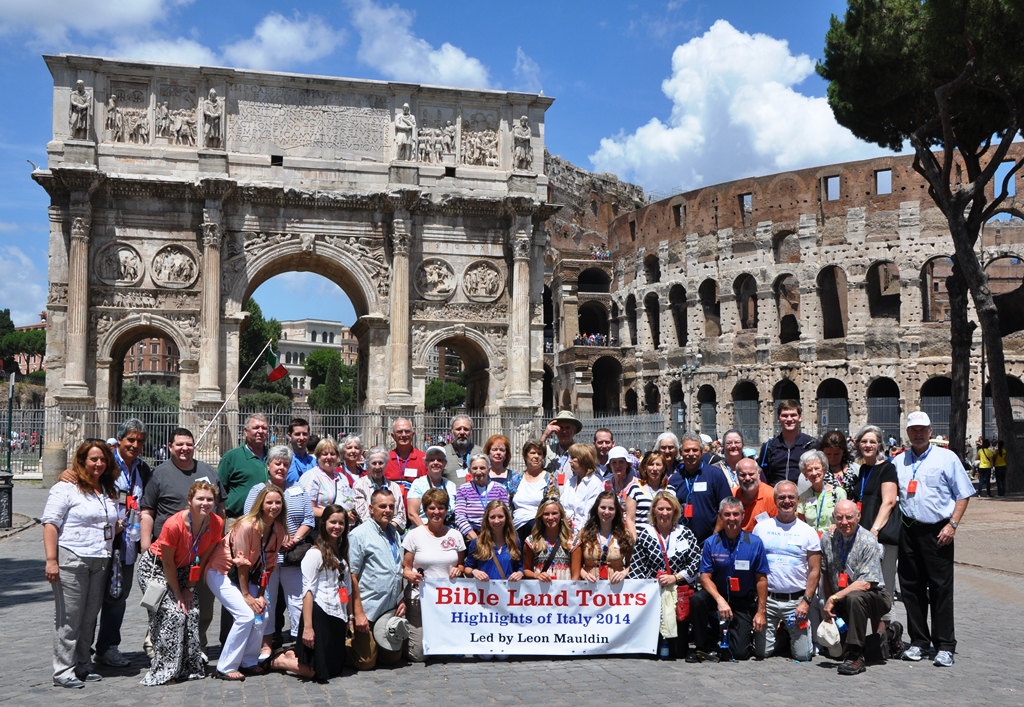
Today’s activities included a tour of the Vatican, the Colosseum, the Roman Forum and the Mamertine Prison. We had a group shot made in front of the Arch of Constantine, the largest and best preserved of Rome’s triumphal arches.

Italy Group Shot.

Italy Group Shot.


In the Heart of Rome

July 8, 2014

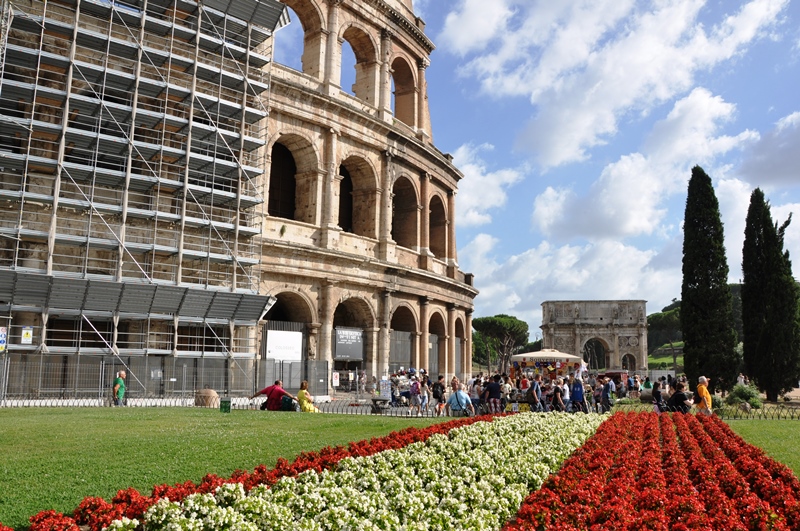
Greetings from Rome. My group all arrived safely today, and everyone’s luggage arrived also! The afternoon was designated as free time, which allowed for lots of walking and seeing many sites of ancient Rome. A familiar landmark, the Colosseum, is on your left. It was completed by Emperor Titus in 80 AD. In the distance is the Arch of Constantine, erected in 315 AD.

Colosseum and Arch of Constantine in Rome. Photo by Leon Mauldin.

Colosseum and Arch of Constantine in Rome. Photo by Leon Mauldin.

Click image for larger view.

Will post more as time permits.


King Eumenes, Brother of Attalus II

July 1, 2014

The biblical city of Philadelphia, one of the seven churches of Asia Minor (Rev. 3:7-13) was founded by Attalus II, king of Pergamum (159–138 BC).

W.M. Ramsay tells us that Attalus II’s “truth and loyalty to his brother Eumenes won him the epithet Philadelphus” (The Letters to the Seven Churches of Asia, p. 391). Hence the name of the city, Philadelphiawhich means brotherly love.

“Because of its strategic location, it [Philadelphia] served as a vital link in communication and trade between Sardis and Pergamum to the west and Laodicea and Hierapolis to the east. It was a center of agriculture, leather production, and textile industry” (Harper’s Bible Dictionary). Today Philadelphia is called Alaşehir.

Attalus II was also the founder of Attalia, mentioned in Acts 14:25-26 in connection with Paul’s return trip on his 1st Missionary Journey. This is the site of today’s Antalya, one of Turkey’s largest cities.

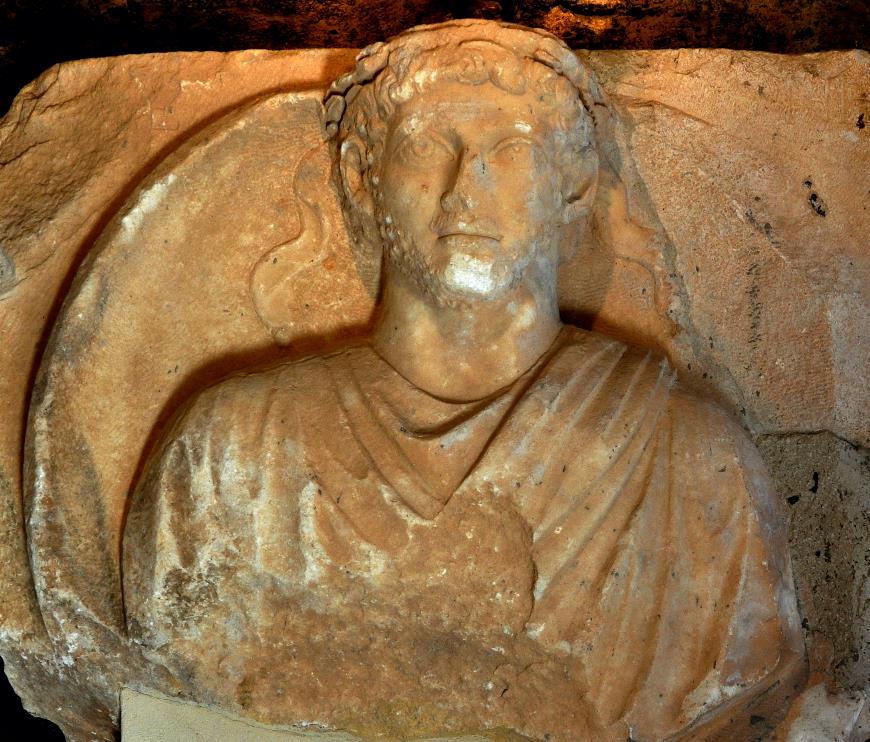
Eumenes, brother of Attalus II, was king of Pergamun 197-157 BC. He was the founder of the city of Hierapolis (Col. 4:13). It is fitting that there is a bust of Eumenes in the museum at Hierapolis.

King Eumenes II, brother to Attalus II Philadelphus. Photo ©Leon Mauldin.

King Eumenes II, brother to Attalus II Philadelphus. Photo ©Leon Mauldin.

Click image for larger view.


Travel in Bible Times–Tomb of Merchant Flavius Zeuxis

June 26, 2014

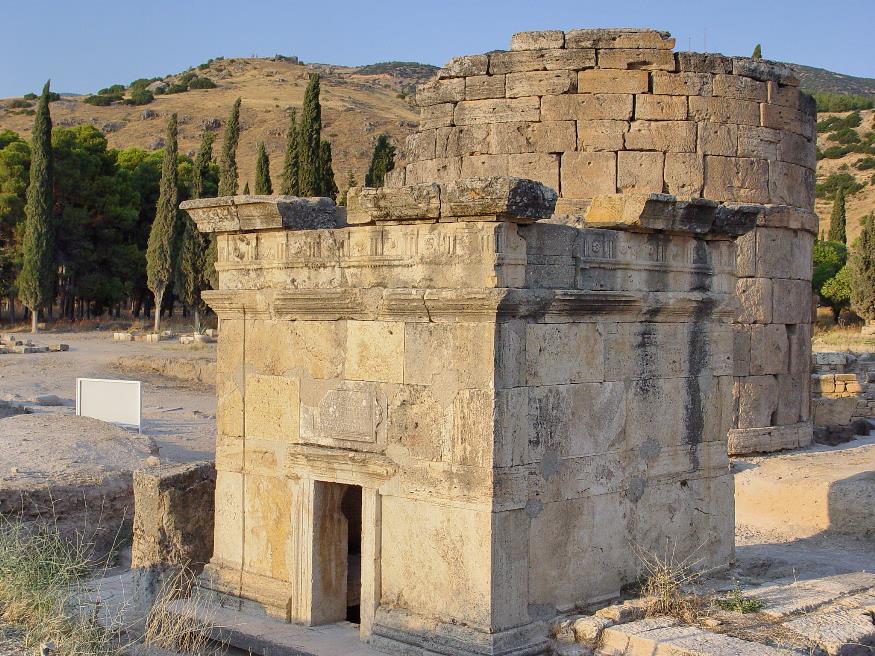
The necropolis of Hierapolis is one of  the largest ancient burial sites in Turkey. Tombs there date from 2nd century BC through 3rd century AD. One of the more interesting is that of T. Flavius Zeuxis and his sons (1st century AD).
Tomb of Flavius Zeuxis, merchant of Hierapolis. Photo ©Leon Mauldin.

Tomb of Flavius Zeuxis, merchant of Hierapolis. Photo ©Leon Mauldin.

Dr. Carl Rasmussen observes: “Note the finely carved doorway with doorposts and lintel, the carved base, the slightly protruding stones of the corners (pilasters) of the tomb, the upper molding, and the Doric frieze composed of triglyphs and metopes filled with rosettes!” Click here.

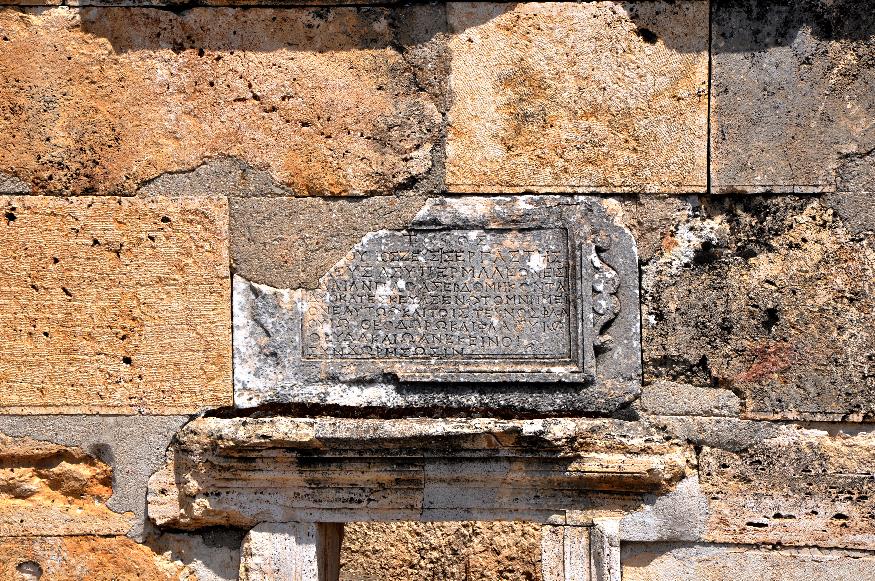
The inscription above the tomb entrance is translated, “Flavius Zeuxis, merchant, who sailed seventy-two trips around Cape Malea to Italy, built this.”
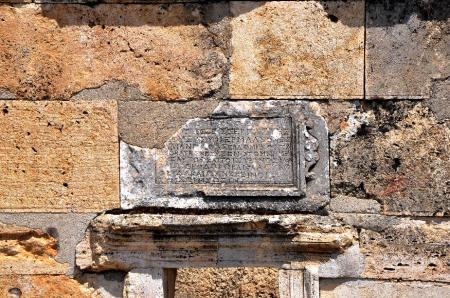
Tomb Inscription above door. Photo ©Leon Mauldin.

Tomb Inscription above door. Photo ©Leon Mauldin.

This inscription is helpful on several counts. Cape Malea is the southern tip of Greece’s Peloponnesus peninsula. It is famous for its treacherous weather and seas. William Barclay wrote:

It was a dangerous cape, and to round Cape Malea had in ancient days much the same sound and implications as to round Cape Horn had in later times. The Greeks had two sayings which showed what they thought of the voyage round Malea-“Let him who sails round Malea forget his home,” and, “Let him who sails round Malea first make his will.” (The Letters to the Corinthians, p.1).

Obviously it would have been considered quite an accomplishment to have made 72 trips around the Cape. This would mean a total of 36 round trips this merchant had made from Hierapolis of Asia Minor to Italy and back! Some have suggested that Zeuxis would have made two or three trips per year from Hierapolis to sell his goods in Italy.

This has implications for several biblical texts. For example, when Paul (as a prisoner under house arrest) was writing the NT letter of Colossians from Rome, Epaphras of Colossae was with him (Col. 1:7). Paul went on to referenced the tri-cities of Colossae, Hierapolis, and Laodicea as he spoke of Epaphras’ work among them:

Epaphras, who is one of you, a bondservant of Christ, greets you, always laboring fervently for you in prayers, that you may stand perfect and complete in all the will of God. For I bear him witness that he has a great zeal for you, and those who are in Laodicea, and those in Hierapolis. (Col. 2:12-13, NKJV).

The Zeuxis inscription shows it would not be unusual for residents of the Lycus River Valley, such as Epaphras, to make the voyage to Rome and back.

The travel of merchants such as Zeuxis also helps us relate to Paul’s journeys recorded in Acts, many of which were by sea. Further, it is not without significance that Paul mentioned the dangers he faced, including those on the sea:

 I have been on journeys many times, in dangers from rivers, in dangers from robbers, in dangers from my own countrymen, in dangers from Gentiles, in dangers in the city, in dangers in the wilderness, in dangers at sea, in dangers from false brothers (2 Cor. 11:26, NET).

But notwithstanding the potential dangers faced, travel by sea in the 1st century was common!

Also we might think of Rev. 18:11-13, with its extensive list of trade good that merchants (like our Flavius Zeuxis) from various locations in the Empire, brought to Rome. Contextually this passage speaks of the mourning that will come as a result of the fall of Rome:

And the merchants of the earth will weep and mourn over her, for no one buys their merchandise anymore: merchandise of gold and silver, precious stones and pearls, fine linen and purple, silk and scarlet, every kind of citron wood, every kind of object of ivory, every kind of object of most precious wood, bronze, iron, and marble; and cinnamon and incense, fragrant oil and frankincense, wine and oil, fine flour and wheat, cattle and sheep, horses and chariots, and bodies and souls of men.

Click on images for larger view.

Laodicea, a Wealthy City — a Poor Church

June 18, 2014

There is some beautiful scenery as you make the drive from the Mediterranean coast at Antalya (biblical Attalia) north and west to Laodicea.

En Route NW to Laodicea from Med. coast. Photo ©Leon Mauldin.

En Route NW to Laodicea from Med. coast. Photo ©Leon Mauldin.

Laodicea was known to be a wealthy city. It was a banking center, had a medical school specializing in ophthalmology, and manufactured clothing, especially known for its black wool market.

It is always a danger that God’s people become like the world around them. Jesus addressed the church at Laodicea (Revelation 3:14-21) and rebuked them for their self-satisfied, complacent attitude:

Because you say, “I am rich, and have become wealthy, and have need of nothing,” and you do not know that you are wretched and miserable and poor and blind and naked, I advise you to buy from Me gold refined by fire so that you may become rich, and white garments so that you may clothe yourself, and that the shame of your nakedness will not be revealed; and eye salve to anoint your eyes so that you may see (vv.16-18).

Excavations have shown numerous indications of Laodicea’s wealth.

Columns lining street in Laodicea. Photo ©Leon Mauldin.

Columns lining street in Laodicea. Photo ©Leon Mauldin.

W.M. Ramsay wrote:

It is characteristic of a city devoted to commercial interests and the material side of life, that the Church of Laodicea is entirely self-satisfied. It says, as the city said in A.D. 60, when it recovered its prosperity after the great earthquake without any of that help which the Imperial government was generally ready to bestow, and which the greatest cities of Asia had always been ready to accept, “I have grown rich, and have need of nothing.” It has never seen its real condition: it is poor and blind and naked (Letters to the Seven Churches, p.428).

Their complacency led to lukewarmness, and this nauseated the Lord (v.16). This is the only church of the seven addressed in Rev. 2-3 about which nothing good is said.

We have made several other posts on Laodicea. Use search box at upper right for more articles & photos.

Click on images for larger view.