From Dan to Beersheba

March 17, 2011

Tonight as I write this we are in Beersheba, so we have traveled the biblical “from Dan to Beersheba” that is referenced so many times in Scripture (1 Sam. 3:20, etc.), having been to Dan earlier last week.

Last evening we spent the night at the Dead Sea at En Boqeq, but the internet was down when I was attempting to use it. Yesterday AM before leaving Jerusalem we visited the Wailing Wall. This wall was not part of the temple itself, but was the retaining wall for the temple and the structures on the temple mount.

Wailing Wall in Jerusalem. Photo by Leon Mauldin.

Jerusalem is defined by three valleys: the Kidron, Tyropean and Hinnom. In the above photo we are standing in the Tyropean Valley.

The first several courses of larger stones starting from bottom are Herodian. Jews come here to mourn the destruction of the temple, among other reasons.

Just south of the wailing wall, excavations have reached down to first century street level. There you can see the stones that have been uncovered that were part of the temple buildings, hurled down into the valley during the AD 70 destruction. This photo shows the fulfillment of Jesus’ promise that not 0ne stone would be left upon another, that would not be cast down (Matt. 24:2). He said that this would occur during that generation (v.34).

Temple Stones from AD 70 Destruction. Photo by Leon Mauldin.

After leaving Jerusalem, we went to see Anathoth. This was the site of the city which was home to Jeremiah.

Anathoth, home of prophet Jeremiah. Photo by Leon Mauldin.

We also went to Old Testament Jericho. While there I took a group photo.
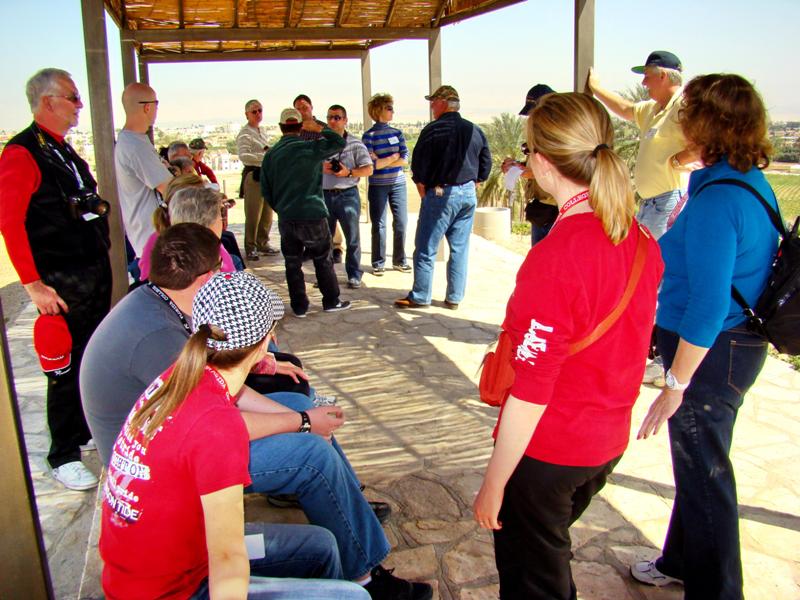
Group Photo at OT Jericho. Photo by Leon Mauldin.

We’ve learned a lot on this journey. We are truly blessed.

This morning upon leaving En Boqeq we went to Masada.

Leon Mauldin at Zoar.

En route to Masada we stopped at Zoar for the view. The brook drains down to the Dead Sea. It is not clear if there is any connection between  this location and the Zoar mentioned in Gen. 19:22ff., in connection with the narrative of lot and the destruction of Sodom and its surrounding cities. The mountains just south of this area are called the Mountains of Sodom.

Masada was a Herodian fortress. It was here that the Zealots fled after the Roman destruction of Jerusalem in AD 70. The Romans laid siege to Masada, and in AD 73 broke through the wall. They found the Jews inside chose death by their own hands rather than be captured by the Romans.

Tomorrow is a full schedule of sites from Tel Sheva (Beersheba) working our way up to Joppa, and from then to TLV for our departing flight home, the Lord willing.  Thanks again for following our travels, and for the many kind notes & prayers.

Click on photos for higher resolution.


Gordon’s Calvary

March 15, 2011

Today was a walking tour of Jerusalem, and beginning at Herod’s Gate included the sites of the Old City such as the Via Dolorosa, the Cardo, as well as the Temple Model, and finally Calvary.

Dr. W. Harold Mare discussed the merits of Calvary as the actual location of Jesus’ crucifixion in Bible and Spade:

Gordon’s Calvary and the Garden Tomb are located a short distance north of the present Damascus Gate, just east of Nablus Road. In 1885 General Charles Gordon, following the proposal made by Otto Thenius of Dresden in 1842, argued that a rocky hill there, 250 yards northeast of the Damascus Gate, was Calvary. The identification was based on several arguments: It was presumed to be a Jewish place of stoning, it lay outside the city wall, and what looked like the face of a skull could be seen in the rocky hillside.
As to location, Gordon’s Calvary fits the biblical requirements of being outside the gate. Although the side of the hill looks like the face of a skull, this may be due to man-made cuttings in the hill. The biblical reference to Calvary as the place of a skull (Matthew 24:33, etc.), may mean that it was shaped like a skull, or simply that skulls of crucified criminals could be found there.

Gordon’s Calvary. Photo by Leon Mauldin.

The nearby rock-hewn Garden Tomb, though aesthetically satisfying, is not of the first century A.D. It contains a Byzantine (fourth to sixth centuries A.D.) trough-type burial place, and two Byzantine crosses were found painted on one wall (Vol.3, no. 2).

Garden Tomb at Calvary. Photo by Leon Mauldin.


Mare went on to say, “The Church of the Holy Sepulcher, besides being outside the walls of Jerusalem in Jesus’ time, has other supportive evidence” (ibid). We will plan to write more re: this on a future post.

I do like the truth engraved on the door of the garden tomb:

Thanks again for following our travels. Tomorrow we are to leave Jerusalem and visit sites southward to the Dead Sea.

Click on images for higher resolution.


Gibeon, El-Jib

March 14, 2011

Today’s biblical sites included Gibeon. Gibeon is the Canaanite city whose residents (the Hivites Josh. 9:7) pretended to be a long distance away from the land of Canaan, as they approached Joshua and the men of Israel in the days of the Conquest. They brought old dry, moldy bread and wore worn out clothes, and said the bread was fresh when they left, and their garments had worn out along the way. The text says, “Then the men of Israel took some of their provisions; but they did not ask counsel of the Lord” (Josh 9:14).

Later the Israelites found out they had been deceived. They honored their covenant with the Gibeonites, but made them wood cutters and water carriers for the house of God (v.23).

Because the Gibeonites had made a treaty with Israel, a coalition of kings to the south, led by the king of the Jebusites (ancient Jerusalem), attached. They sent to Joshua for help, and he responded, defeating these southern kings. Needed extra daylight to make the victory complete, Joshua prayed to the Lord, and the day was lengthened, giving the necessary time to defeat Israel’s enemies. “Sun, stand still over Gibeon; and Moon, in the Valley of Aijalon. So the sun stood still, and the moon stopped, Till the people had revenge upon their enemies” (Josh. 10:12-13).

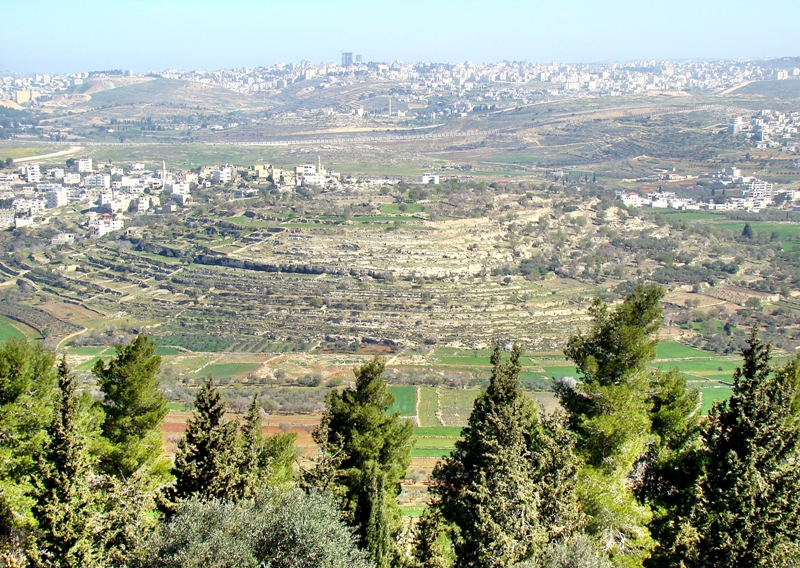
Our photo today shows the tel of Gibeon, which is the Arab village of El-Jib. This photo was taken from Nabi Samwil.

Tel of Gibeon. Modern Arab El-Jib. Photo by Leon Mauldin.


When the land was distributed, Gibeon became part of the tribal territory of Benjamin (Josh. 18:25), and was designated as a Levitical city (Josh. 21:17).

Click image for higher resolution.


Capernaum, Jesus’ Home During Galilean Ministry

March 13, 2011

Last evening we arrived in Jerusalem, but I did not post last night as I was having internet problems.

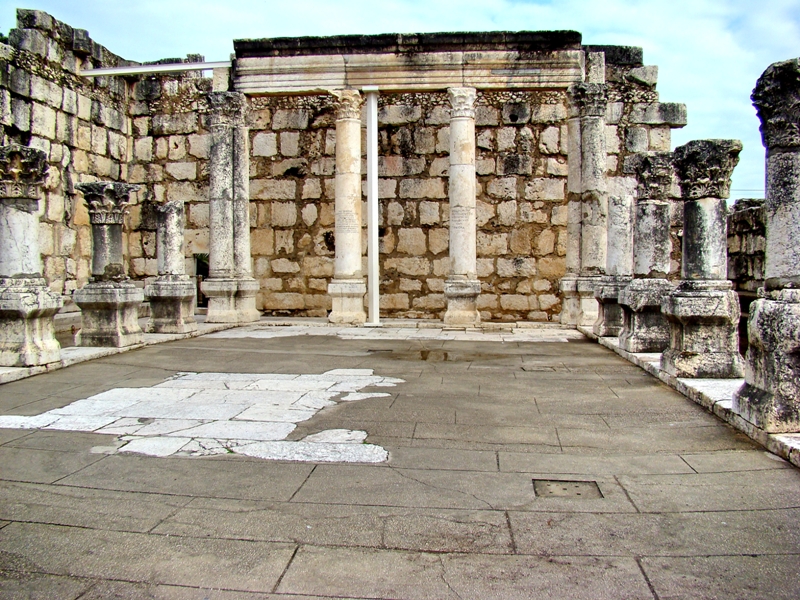
Before leaving Galilee yesterday morning we visited Capernaum. Capernaum means “town of Nahum” (New Unger’s Bible Dictionary, p.209), and is called “the most important city on the northern shore of the Sea of Galilee (Nelson’s New Illustrated Bible Dictionary, p. 245). Though Jesus’ home town was Nazareth, Capernaum was where He lived during the Galilean ministry. Note the wording of the NET in Matt. 4:13, “While in Galilee, he moved from Nazareth to make his home in Capernaum by the sea, in the region of Zebulun and Naphtali.” To that compare Mark 2:1: “Now after some days, when he returned to Capernaum, the news spread that he was at home,” with its parallel in Matt. 9:1, which says Jesus came “to His own city.”

The impressive remains of a beautiful white limestone synagogue can be seen at Capernaum. While these ruins are post 1st century, excavations below these remains show evidence of an earlier synagogue, built of black basalt stones, which hasbeen determined to be of AD 1st century usage.

Synagogue at Capernaum. Photo by Leon Mauldin.


Capernaum was among three cities Jesus publicly rebuked for their unbelief manifested in their refusal to repent at the preaching of Jesus. The inhabitants of Capernaum had received much, but believed litt.e There is a biblical principle here: “For everyone to whom much is given, from him much will be required; and to whom much has been committed, of him they will ask the more” (Lk. 12:48).

While at Capernaum I took a group shot as our guide Elie was giving info re: the site.

Group shot at Capernaum. Photo by Leon Mauldin.


Thanks for following our travels. It is a joy to do biblical studies on location.

Click on images for higher resolution.


Caesarea Philippi

March 11, 2011

Today’s photo shows the Banias River, at Caesarea Philippi. One of the largest springs in the world, and one of the major sources of the Jordan River.

Banias River at Caesarea Philippi. Photo by Leon Mauldin.

It was in this vicinity that we have the setting for the text of Matt. 16:13-19

13 Now when Jesus came into the district of Caesarea Philippi, He was asking His disciples, “Who do people say that the Son of Man is?” 14 And they said, “Some say John the Baptist; and others, Elijah; but still others, Jeremiah, or one of the prophets.” 15 He said to them, “But who do you say that I am?” 16 Simon Peter answered, “You are the Christ, the Son of the living God.” 17 And Jesus said to him, “Blessed are you, Simon Barjona, because flesh and blood did not reveal this to you, but My Father who is in heaven. 18 “I also say to you that you are Peter, and upon this rock I will build My church; and the gates of Hades will not overpower it. 19 “I will give you the keys of the kingdom of heaven; and whatever you bind on earth shall have been bound in heaven, and whatever you loose on earth shall have been loosed in heaven.

Whatever else we know, it is imperative and vital that we get the correct answer to the questions Jesus asked. The purpose of the gospel records is to show us who Jesus is. No other answer will do. He is the Christ, the Son of the Living God!

You can see there was a very nice, full flow of water at Banias. Our group also saw the Senir River, as well as the Dan River. These converge further south to form the upper Jordan.

In the distance you can see the grotto of Pan, where this pagan deity was worshipped. The ruins of many idolatrous sites can be seen here, actually side by side, one right after another as you continue to move to your right from the grotto. You are at the base of Mt. Hermon.

It’s just after 3:00 AM as I’m presently writing. Today we are to visit Capernaum, one of the cities where Jesus did most of His miracles. Also Beth Shean, where the bodies of Saul and his sons were hung after their death at Mt. Gilboa (1 Sam. 31). We are to make our way down the Jordan Valley on to Jerusalem as the day progresses, the Lord willing.

Click on image for higher resolution.


Aqueduct at Caesarea

March 10, 2011

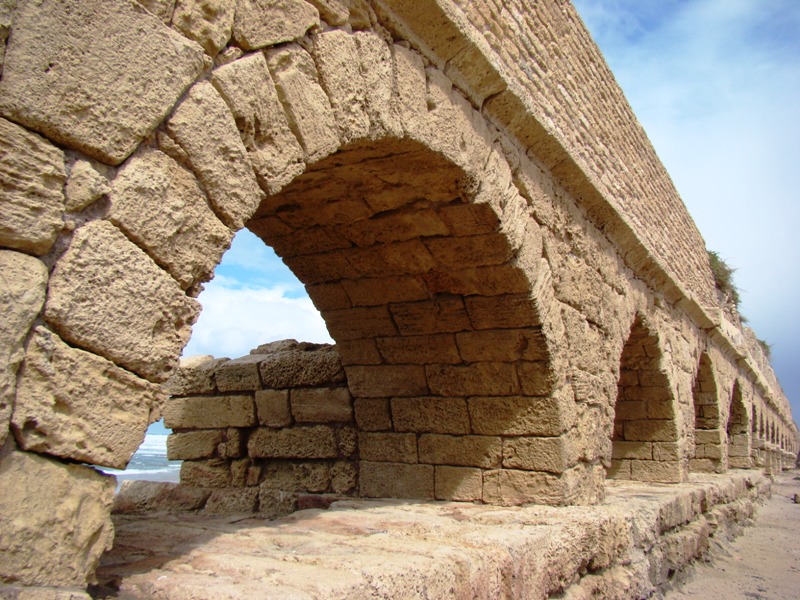
Greetings from Tiberius. Today has been a mixture of wind, rain, and sunshine. We began with a visit to Caesarea. There was lots of wave action today, but I selected a photo of the Aqueduct. In order to have a fresh water supply sufficient for the needs of the capital city, Herod the Great brought in water from eight miles away.

Caesarea Aqueduct. Photo by Leon Mauldin.

Much is said in the Bible about Caesarea.  I understand Daniel 11:45 to be a prophecy of the Roman Capital located here: “He will pitch the tents of his royal pavilion between the seas and the beautiful Holy Mountain; yet he will come to his end, and no one will help him” (NASB).

Philip the Evangelist preached here (Acts 8:40; 21:8). Cornelius the centurion was converted here, as God opened the door of the gospel to the Gentiles (Acts 10-11). Paul used the harbor here in his travels in preaching the gospel. He was taken here under military escort for his own protection, and remained here two years (Acts 23:32; 24:27).

All of our folks are well. Thanks for following the blog—we will try to post something each day as time and opportunity permits.

Click on image for higher resolution.


En Route to Israel

March 8, 2011

What a wonderful opportunity to visit Israel again with friends who want to be better Bible students. My group is presently waiting at Newark, with a slightly delayed departure time.

The Ben Gurion airport is located on the site of OT Lod, NT Lydda. Peter was a Lydda when brethren came from Joppa with the news that Dorcas had died, asking him to hurry there. Upon arriving, he raised her from the dead (Acts 9:32-41).

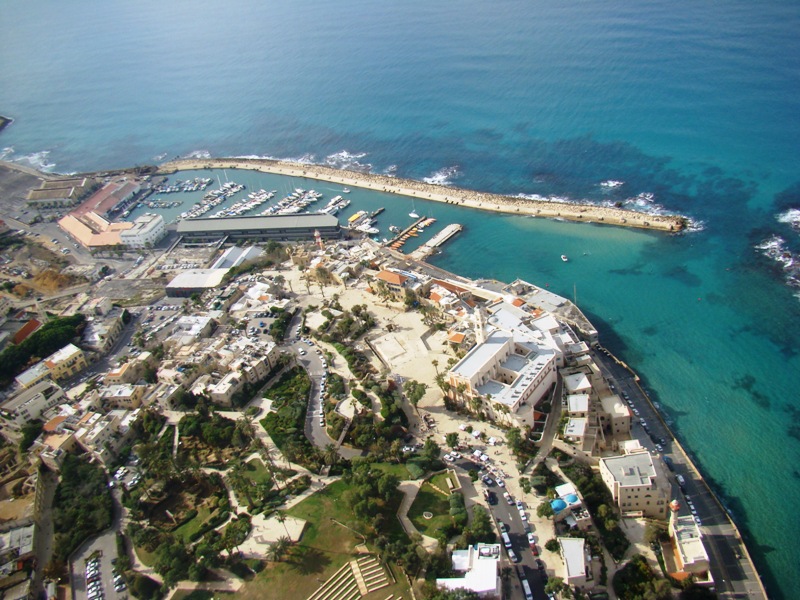
Check our blog to follow our travels; we will post as time permits. For now here is an aerial of Joppa, taken Dec. ’09.

Aerial of Joppa. Photo by Leon Mauldin.

Joppa is immediately south of Tel Aviv.

Click on image for higher resolution.


Nuzi Tablets and the Patriarchs

March 5, 2011

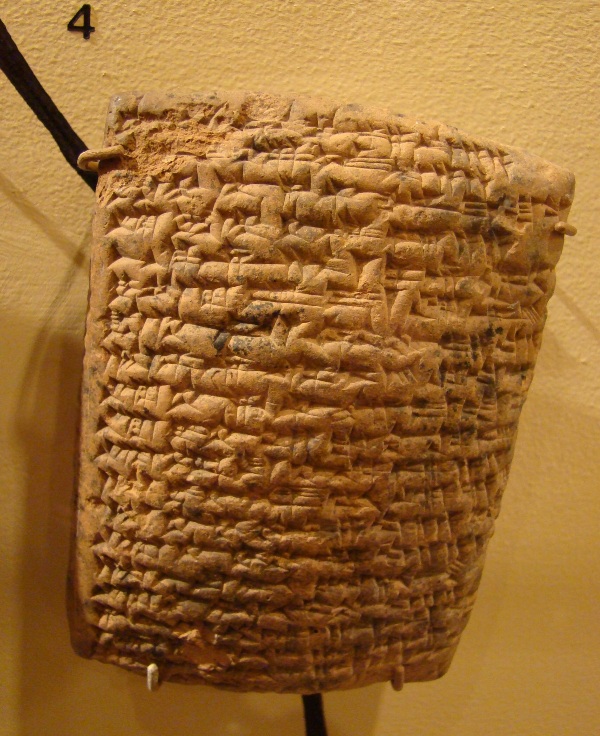
Many in the scholarly world are dismissive about the historicity of the patriarchs. One source that is helpful in understanding the world of the biblical patriarchs is that of the Nuzi Tablets.

Nuzi was a Hurrian administrative center not far from the Hurrian capital at Kirkuk in northern Iraq. The Hurrians are equivalent to the Horites in the Old Testament, also called Hivites and Jebusites. Excavations were carried out at Nuzi by American teams from 1925 to 1933. The major find was more than 5,000 family and administrative archives spanning six generations, ca. 1450–1350 BC. They deal with the social, economic, religious and legal institutions of the Hurrians. (Bible and Spade 18:32).

Nuzi Tablet. Semitic Museum. Photo by Leon Mauldin.

The tablets tell of practices similar to those in Genesis such as adoption for childless couples (Gn 15:2–3), children by proxy (Gn 16; 21:1–21), inheritance rights (Gn 25:29–34), marriage arrangements (Gn 28–31) and levirate marriage (Gn 38; Dt 25:5–10). They also demonstrate the significance of the deathbed blessing (Gn 27; 48–49) and household gods (Gn 31:14–19, 30–35). Some Nuzi tablets, called “tablets of sistership,” have agreements in which a man adopted a woman as a sister. In the society of the Hurrians, a wife enjoyed both greater protection and a superior position when she also had the legal status of a sister. In such a case, two separate documents were drawn up, one for marriage and the other for sistership. This may explain why both Abraham (Gn 12:10–13; 20:1–2) and Isaac (Gn 26:7) said their wives were their sisters. It is possible that they had previously adopted them to give them higher status, in accordance with the custom of the day.

Family records were highly valued at Nuzi, being passed down from father to son for as many as six generations. Nowhere else in the ancient Near East is this kind of reverence for family documents illustrated, except in the Old Testament. Indirectly, the practice at Nuzi supports the position that Genesis and the other books of history in the Old Testament are grounded in actual family, clan and tribal records carefully passed from generation to generation.

As with Mari, the Nuzi records demonstrate that the cultural practices recorded in the book of Genesis are authentic. The accounts are not fictional stories written at a much later time, as some critics claim, since the customs were unknown in later periods (ibid.).


Also, and ultimately, it is important to remember that Jesus endorsed and taught the historicity of the patriarchs! cf. Matt. 8:11; 22:32, etc.

Click on image for higher resolution.


Bethany

February 23, 2011

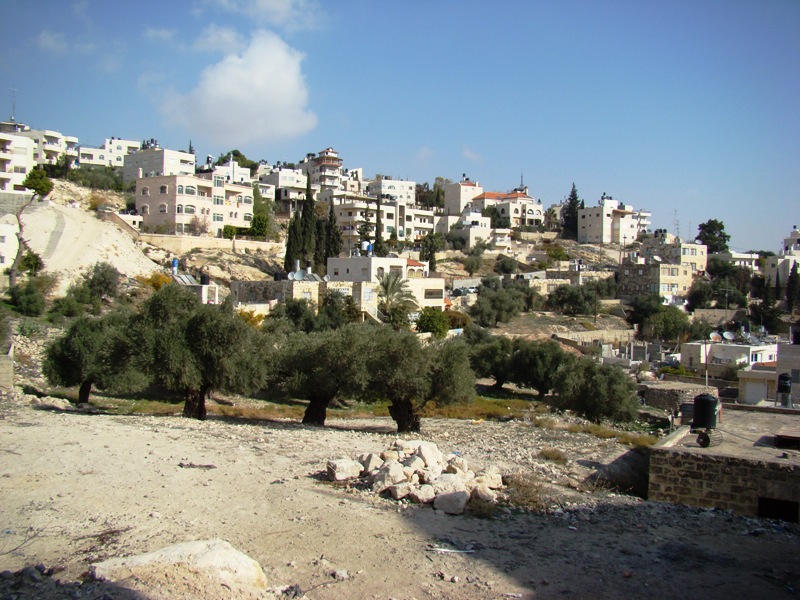
Bethany is designated as the home of Jesus’ good friends Mary, Martha and Lazarus (John 11:1). When Lazarus was sick Jesus deliberately waited until his death, that he might raise Lazarus from the dead, thus demonstrating that He is the “Resurrection and the Life” (John 11:25). Modern Bethany can be seen in our photo:

Bethany, home of Jesus' friends Mary, Martha and Lazarus. Photo by Leon Mauldin.

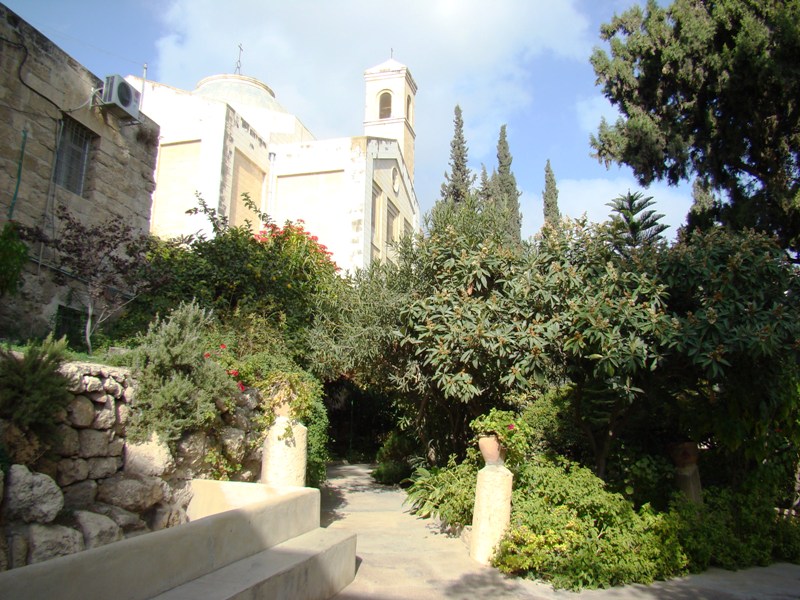
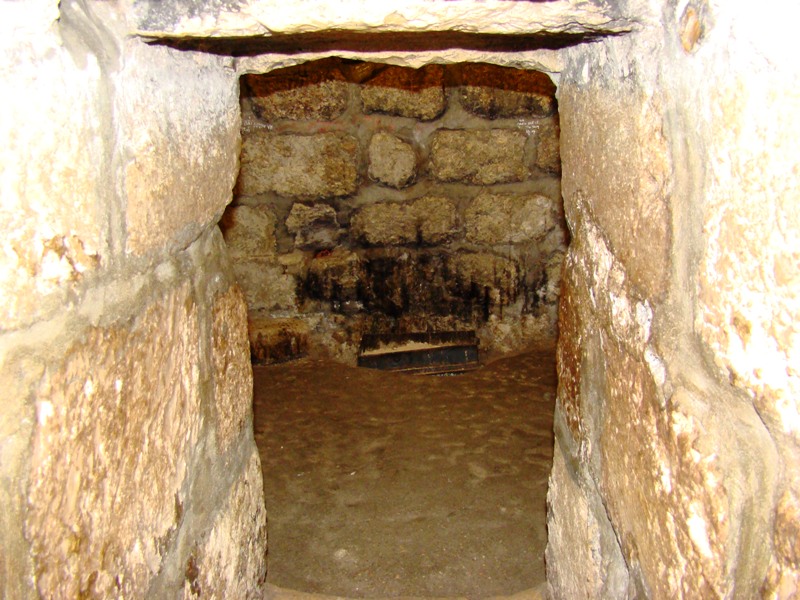
There is a tomb shown at Bethany which is said to be Lazarus’ tomb. To me the value of such is for illustration purposes, and not to identify this as the actual tomb of Lazarus.

"Lazarus' Tomb." Photo by Leon Mauldin.

It was from Bethany and nearby Bethphage that Jesus entered Jerusalem, riding on a donkey in what is knows at the Triumphal Entry, fulfilling the prophecy of Zechariah 9:9.

Bethany was the scene of Jesus’ being anointed with the precious ointment in anticipation of His death, Matt. 26:6ff. We learn from the parallel in John 12 that the woman was Mary, sister of Martha and Lazarus.


Bethany. Photo by Leon Mauldin.

It was also from Bethany, which is on the slope of the Mount of Olives, that Jesus ascended back into heaven: And He led them out as far as Bethany, and He lifted up His hands and blessed them. Now it came to pass, while He blessed them, that He was parted from them and carried up into heaven. And they worshiped Him, and returned to Jerusalem with great joy, and were continually in the temple praising and blessing God. Amen (Lk. 24:50-53).

Street in Bethany. Photo by Leon Mauldin.

Click on images for higher resolution.


Arad in the Negev

February 21, 2011

Arad is first mentioned in Scripture in Numbers 21:1, “The king of Arad, the Canaanite, who dwelt in the South, heard that Israel was coming on the road to Atharim, then he fought against Israel and took some of them prisoners.” This was in the last year of the 40 years wilderness wandering.  Israel prayed for deliverance and the LORD gave them victory.

Map by Bibleatlas.org

BAR notes:

The Israelite fortress at Arad is unique in the Land of Israel. It’s the only site excavated with modern archaeological methods that contains a continuous archaeological record from the period of the Judges (c. 1200 B.C.) to the Babylonian destruction of the First Temple (580 B.C.). This distinction promises to make Arad the type-site for pottery chronology, especially in southern Israel, against which pottery from other sites can be confidently tested and dated. Not only is the pottery sequence continuous, but the timelines between the various strata during which the Israelite fortress was built and rebuilt are for the most part clear and can often be connected with well-known historical and datable events.

Arad is also special for other reasons. The Israelite fortress there was found to contain the only Israelite temple ever discovered in an archaeological excavation.

The excavation of the fortress also yielded a unique series of inscriptions. The inscriptions, written for the most part with ink on potsherds—called ostraca (singular, ostracon)—include political, administrative and sometimes even religious documents. Other sites have yielded ostraca collections—for example, the Lachish letters and the Samaria ostraca—but each of those collections belonged to only one major stratum and time period. At Arad the inscriptions span a period of 350 years and cover six different strata. In all, more than one hundred texts and fragments were recovered. (13:02 March/April 1987).

The 2nd paragraph in our quote above mentioned the Israelite temple which has been excavated at Arad. The ruins can be seen in our photo:

Israelite Temple at Arad. Photo by Leon Mauldin.

The raised square platform at right was the altar. This temple was destroyed either in the reforms of Judah’s good king Hezekiah or perhaps Josiah.

Click on images for higher resolution.