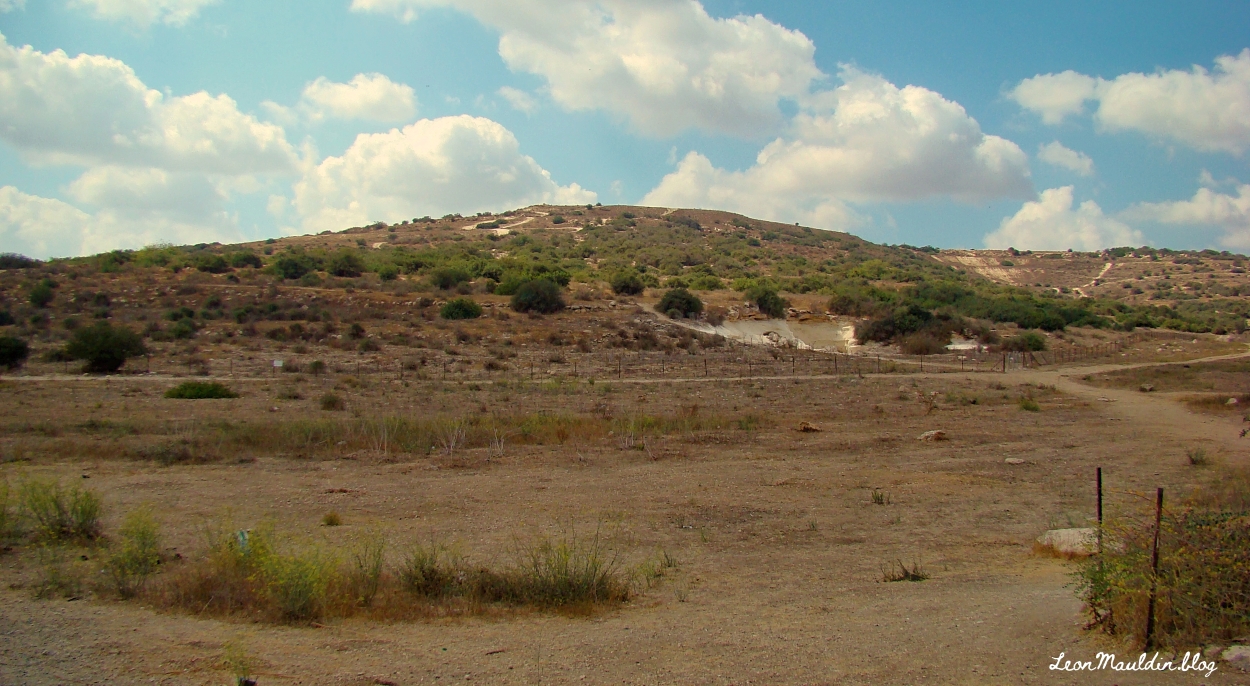
The 8th century BC prophet Micah identifies himself as “Micah of Moresheth” (Mic. 1:1). As his message continues in chapter one, he references “Moresheth Gath” (1:14). Moresheth Gath is tentatively identified by many scholars as Tel Goded (Tell ej-Judeideh).
The geography of Israel is defined by four longitudinal zones: The Coastal Plain, the Central Hill Country, the Jordan Valley, and the Transjordan Plateau. As one goes east from the coastal plain, before arriving in the hill country, one passes through the Shephelah (שְׁפֵלָה, usually rendered “lowland” in Scripture), which consists of gently rolling hills (see Deut. 1:7, etc.). See map here:
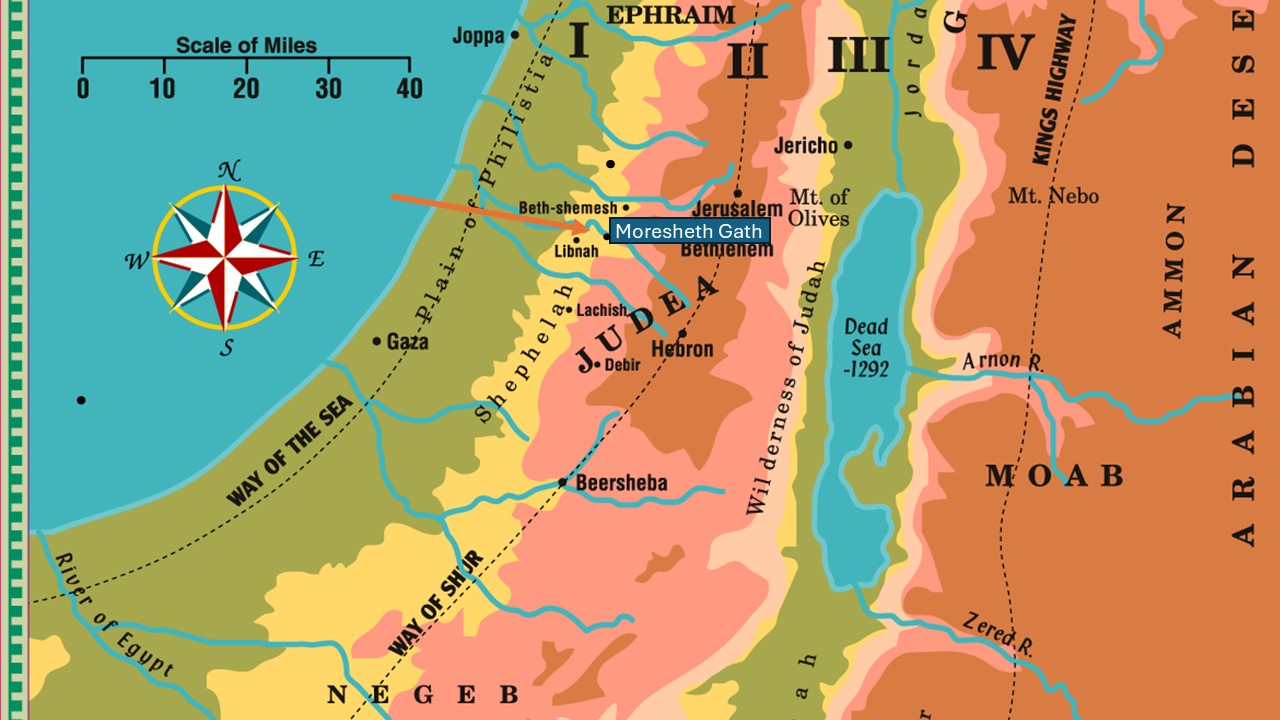
It is in this area that Micah’s home was located. See our photo here:
Among the important things to remember from the prophet Micah:
He is the prophet who foretold Bethlehem as the place of the Savior’s birth (5:2).
He spoke of the latter days (the Gospel Dispensation in which we now live) (4:1-3).
He described God as a God of mercy providing for forgiveness, casting our “sins into the depths of the sea” (7:18-20).
Click photos for larger view.


Thank you for this valuable information about the prophet Micah. A closer look at Micah 4:1-3 may point to a yet future fulfilment (the Kingdom).
LikeLike
Thank you. Did you mean Micah 7?
LikeLike
Good catch. Yes, I made correction earlier this morning.
LikeLike