Pharaoh Chephren/Khafra/Khafre

June 11, 2022

Chephren was pharaoh during Egypt’s 4th dynasty, reigning ca. 2520-2494 BC. He was the son of Cheops (builder of the Great Pyramid), and builder of the second pyramid at Giza. He is also the creator of the Great Sphinx.

This life-sized statue is housed in the Egyptian Museum in Cairo, having been discovered by Auguste Mariette in 1860, in Chephren’s valley temple at Giza. It is made of diorite, a high quality stone. On the stature throne are carved symbols of royalty, the lion paws on the front, and on the sides are displayed the symbol of the sema-tauy, representing the uniting of Upper and Lower Egypt.
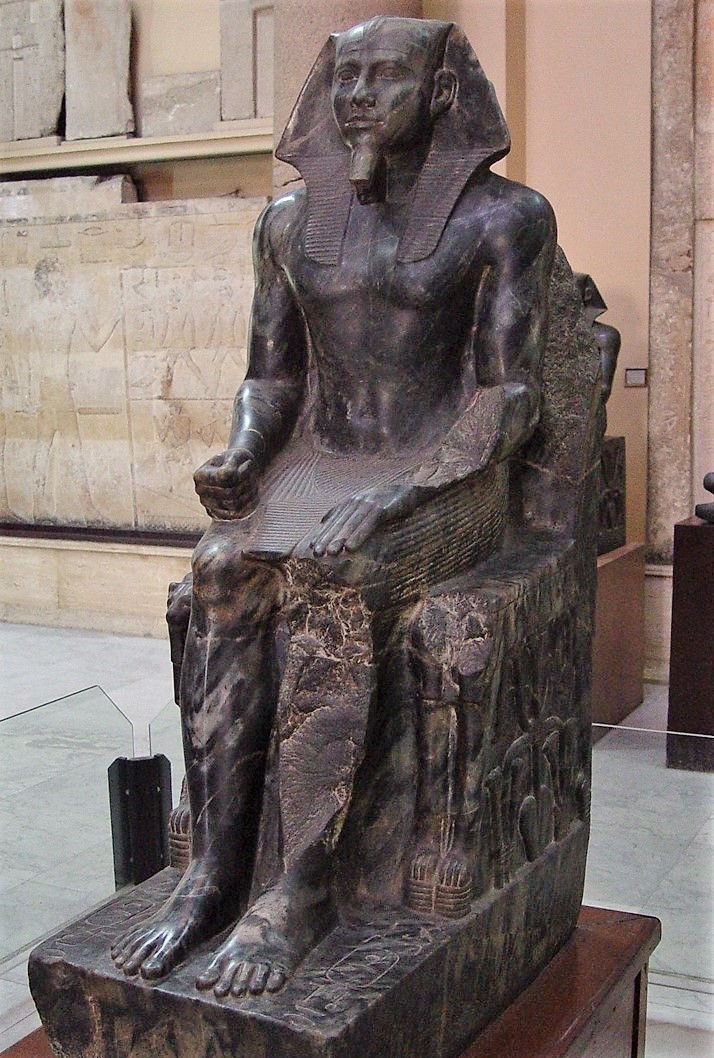
Statue of Pharaoh Chephren, Egyptian Museum. Photo ©Leon Mauldin.

Chephren’s feet are bordered by his cartouche. On the back of the royal headdress is the falcon god Horus, god of dynastic divinity in Egyptian mythology. It was believed that Pharaoh was the representative of Horus on earth, while the god manifested himself in the person of the Pharaoh, the living Horus.

Chephren, sideview, shows Egyptian god Horus on his shoulder. Photo ©Leon Mauldin.

Click images for larger view.


Recommended Resource: 1 & 2 Kings Photo Companion

June 10, 2022

I have received the Photo Companion to the Bible on 1 & 2 Kings, from Dr. Todd Bolen. This is a portion of scripture on which I’m currently focused in study and writing, so it is a very welcome resource to me personally. I’ve made use of the BiblePlaces library for almost 20 years now, and am glad to highly recommend this most recent addition. More info and how to order is found here: https://www.bibleplaces.com/june-2022-newsletter/

The Books of Kings has long been an area of specialized study for Dr. Bolen, as explained in his newsletter.

This new resource has PowerPoint presentations on all 47 chapters of 1 & 2 Kings, with more than 7,400 slides! But this is not just a collection of photos–the descriptive text and explanatory notes are most helpful.

This type of resource is most helpful in giving the text of scripture its cultural and geographical context, and thus enhancing ones understanding of the Bible.

Thanks to Dr. Bolen and his colleagues for yet another great resource in this series!


Pharaoh Amenemhat III, cont’d.

May 20, 2022

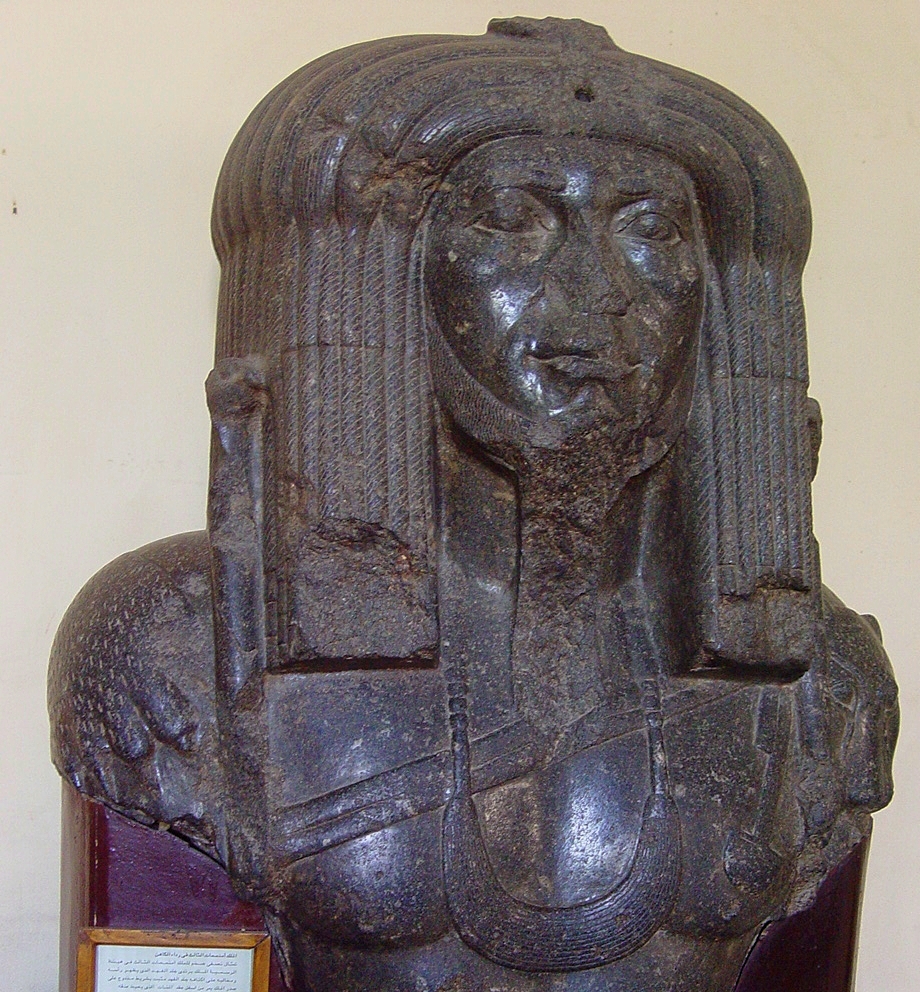
In our previous post we featured the Sphinx of Amenemhat III (ca. 1859-1813), who ruled during the time of the biblical patriarchs. This unique colossal bust of Amenemhat III was found on the site of the ancient capital of The Fayum, Shedet (the Crocodilopolis of the Greeks). The Pharaoh is dressed in a panther skin, with its head and paws lying on the king’s shoulders. A double band across his chest passes under the menat collar worn about his neck. The upper portion of two scepters terminating in falcon heads are visible on each side of his head.

Amenemhat III in priestly attire. Photo ©Leon Mauldin. Egyptian Museum, Cairo.

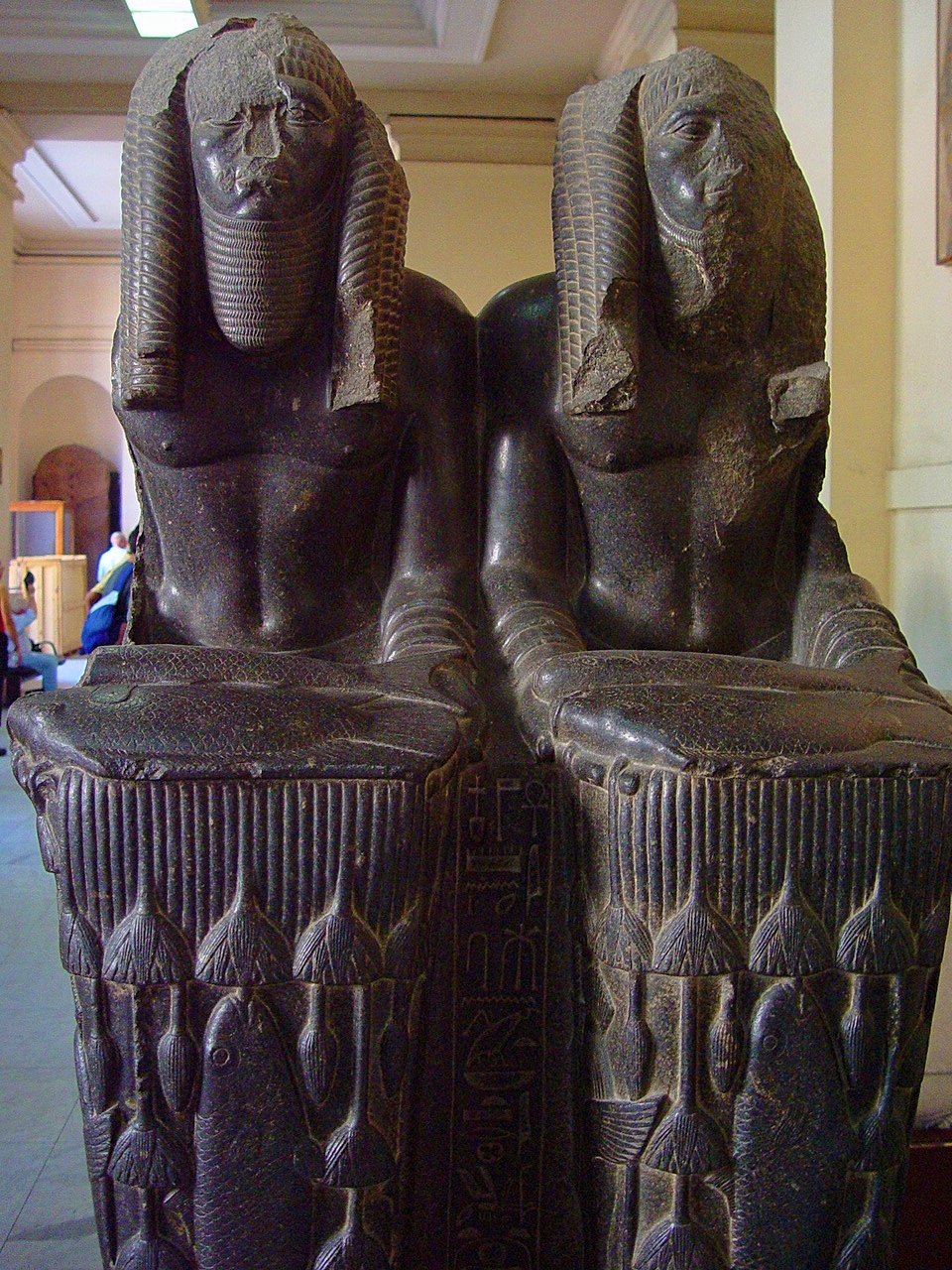
The Egyptian Museum also displays a double statue of Amenemhat III as a Nile god, “The offering bearers of Tanis.”

Double Statue of Amenemhat III bearing lotus flowers, fish and geese. Photo ©Leon Mauldin.

In this double statue, Amenemhat III is represented as the Nile god bearing all the nourishment indispensable to life. One explanation of the doubling of the king is that the two figures represent him as ruler of both Upper and Lower Egypt. Others suggest that one image depicts the reigning king and the other his deified counterpart.

During his long reign, Amenemhet III had almost continual turquoise mining expeditions in the Sinai. More than fifty rock inscriptions have been found there referencing this. He was the last great ruler of the Middle Kingdom.


Sphinx of King Amenemhet III

May 14, 2022

The Egyptian Museum in Cairo displays the sphinx of King Amenemhet III, who ruled in the Middle Kingdom, 12th dynasty. This is one of seven sphinxes of Amenemhat III that were found in Tanis in the eastern Delta.

Sphinx of King Amenemhet III. Photo ©Leon Mauldin.

The sphinx has the head of the king and the body of a lion, symbolizing the vitality and power of the pharaoh.

Amenemhet III reigned for 45 years (ca. 1859-1813 BC), which included a long coregency with his father Sesostris III. Dr. Douglas Petrovich states:

The major project of his reign was the reclamation of more arable land in the Fayyum by manipulating the water level of Lake Moeris, which led to his veneration in the Fayyum. His long and peaceful reign is viewed as the time when the MK [Middle Kingdom] reached its cultural peak. He also strengthened the border at Semna and enlarged some of the fortresses, in addition to constructing a large temple to Sobek at the site of Crocodilopolis, in the Fayyum.

(Origins of the Hebrews, p. 13).

Petrovich identifies Sesostris III (ca. 1878-1840 BC) as the pharaoh of the famine at the time Joseph (Ibid., 29). The patriarch Jacob’s death is dated as 1859 BC (Ibid., cf. Andrew E. Steinmann, From Abraham to Paul, p. 74). “Amenemhet III ascended the throne as coregent with his father in ca. 1860/59 BC, which took place either just before so soon after Jacob’s death” (Petrovich, 29).

Click photo for larger view.

, , , , , ,