Our recent tour visiting biblical sites in Greece and Turkey concluded in the city of Istanbul (Byzantion, Byzantium, Constantinople). Sites on this final leg of our itinerary included the Chora Church, the Yedikule Fortress, the dungeon, the city walls, and one of the underground water systems. (The Fall 2023 issue of Biblical Archaeology Review had a feature article on this city, which it entitled, “Explore Christianity’s First Capital.”)
The underground cistern we visited (the Basilica Cistern) is presently beneath Istanbul’s streets (rediscovered in 1545 by Petrus Gyllius). It was built by Justinian I in the 6th century BC, and supplied water to Justinian’s palace, the Hagia Sophia, and other major structures of Constantinople. It has 336 marble columns and holds up to 20 million gallons of water. Justinian believed in “recycling.” He used architectural elements from other buildings, as illustrated here:
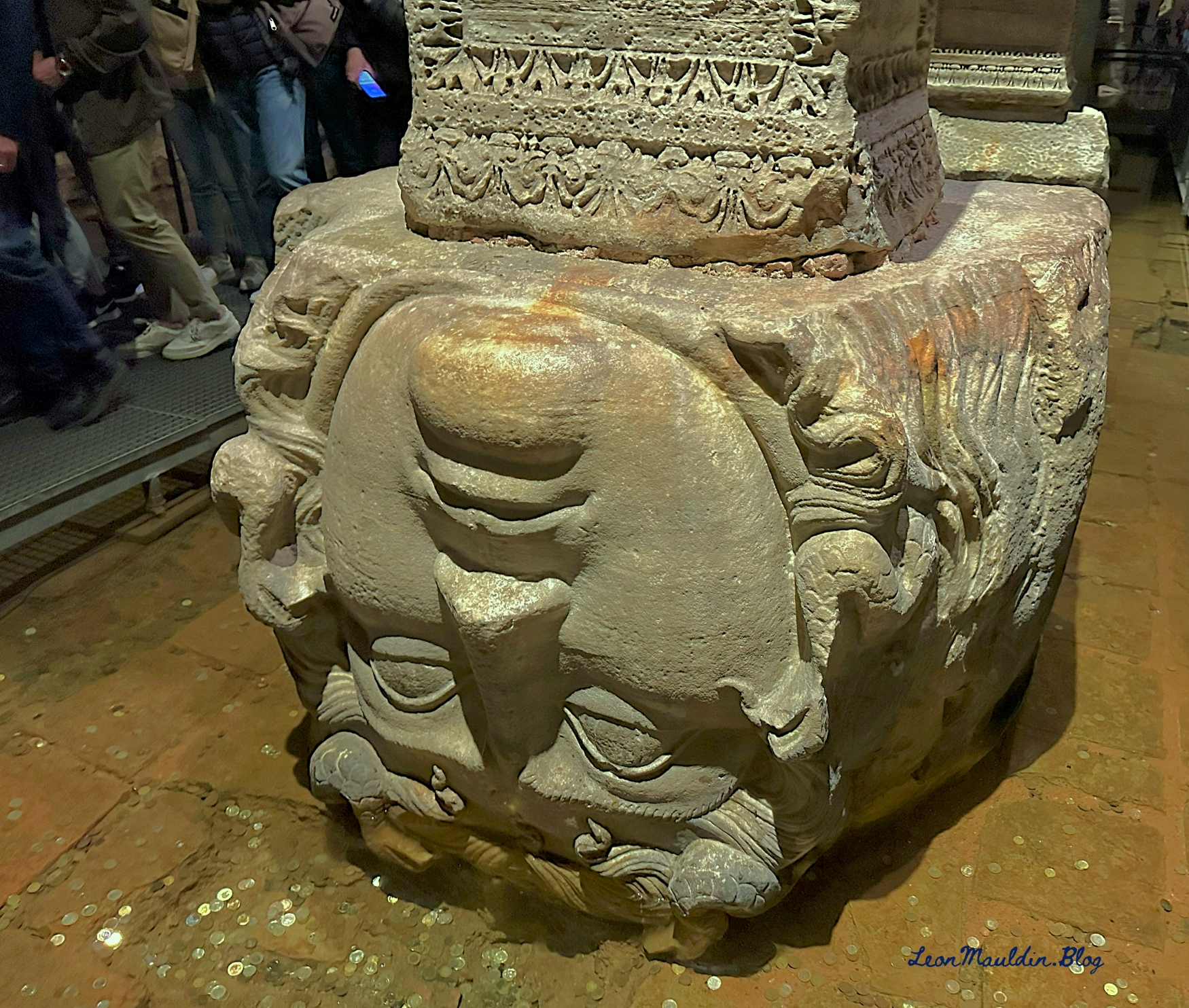
This was the first time I had seen this underground cistern (likewise re: all our group). We were all amazed! Here are some more photos:
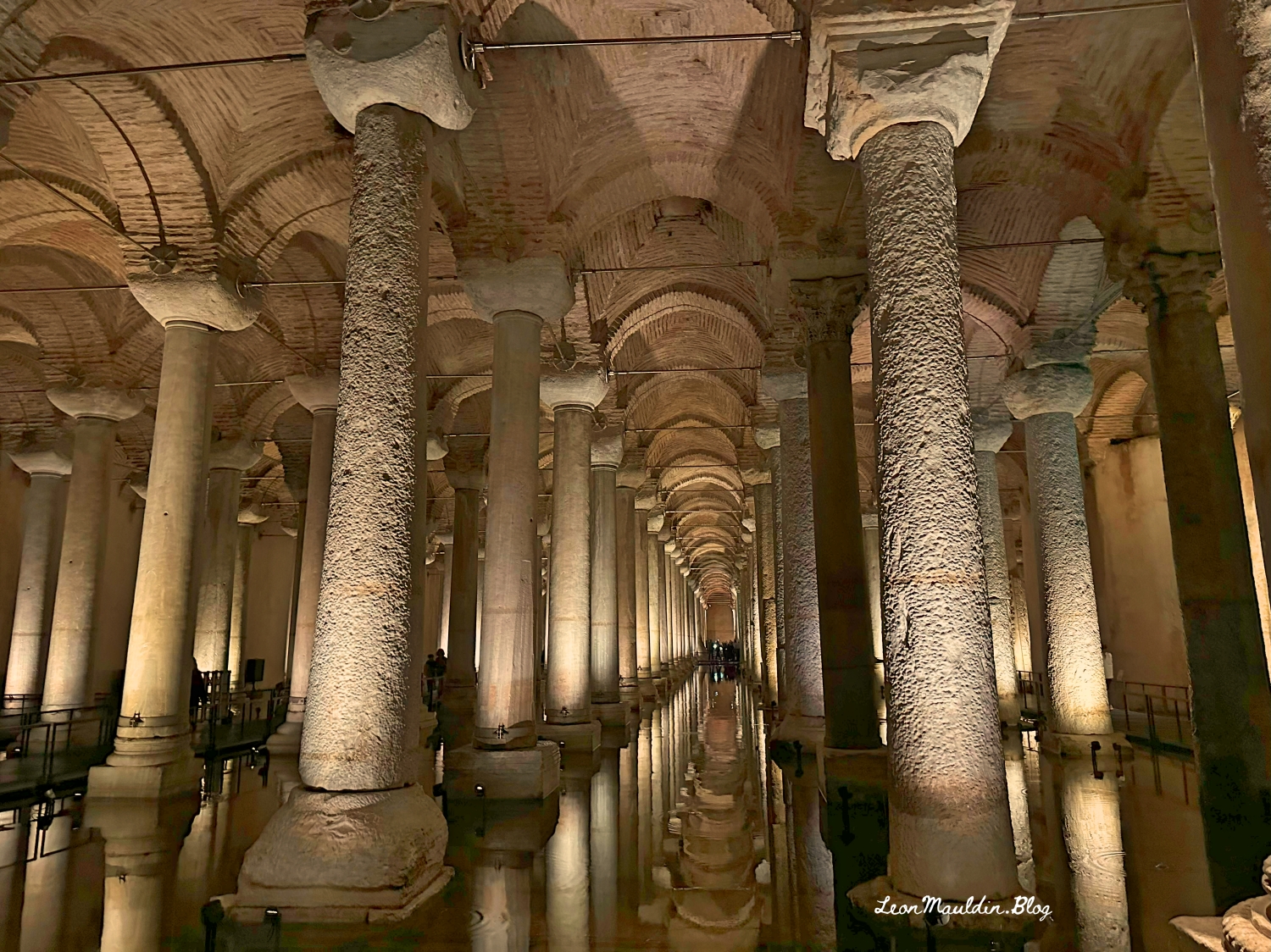
One more:
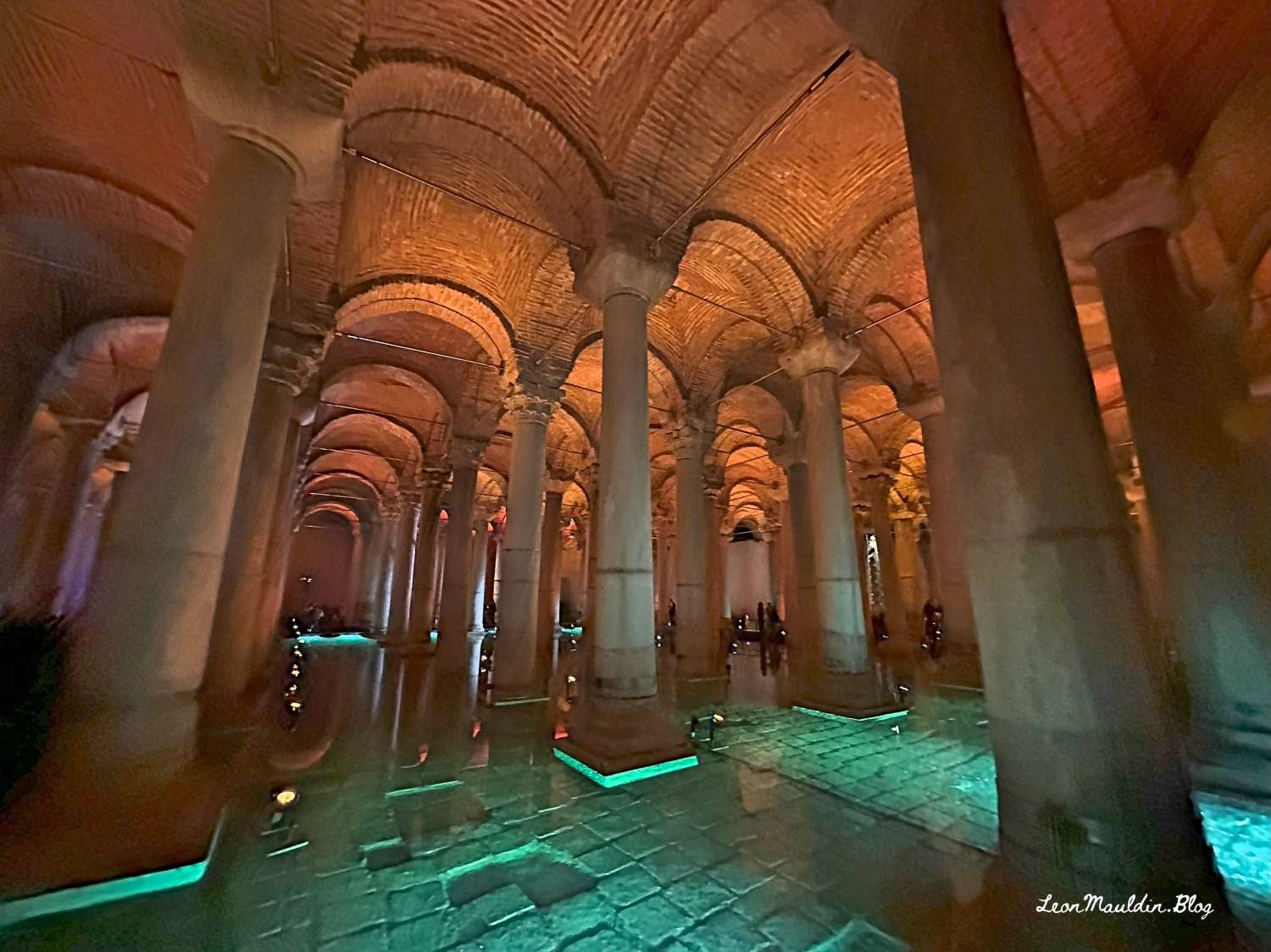
Lonely Planet Istanbul notes that “the cistern has played a starring role in innumerable motion pictures (remember From Russia with Love?) and is now one of the city’s best-loved tourist attractions” (p. 25). The authors lists the Basilica Cistern as among “Istanbul’s Top 10” attractions to visit.
Click images for larger view.


 Posted by Leon Mauldin

 leonmauldin.blog